

Page 1
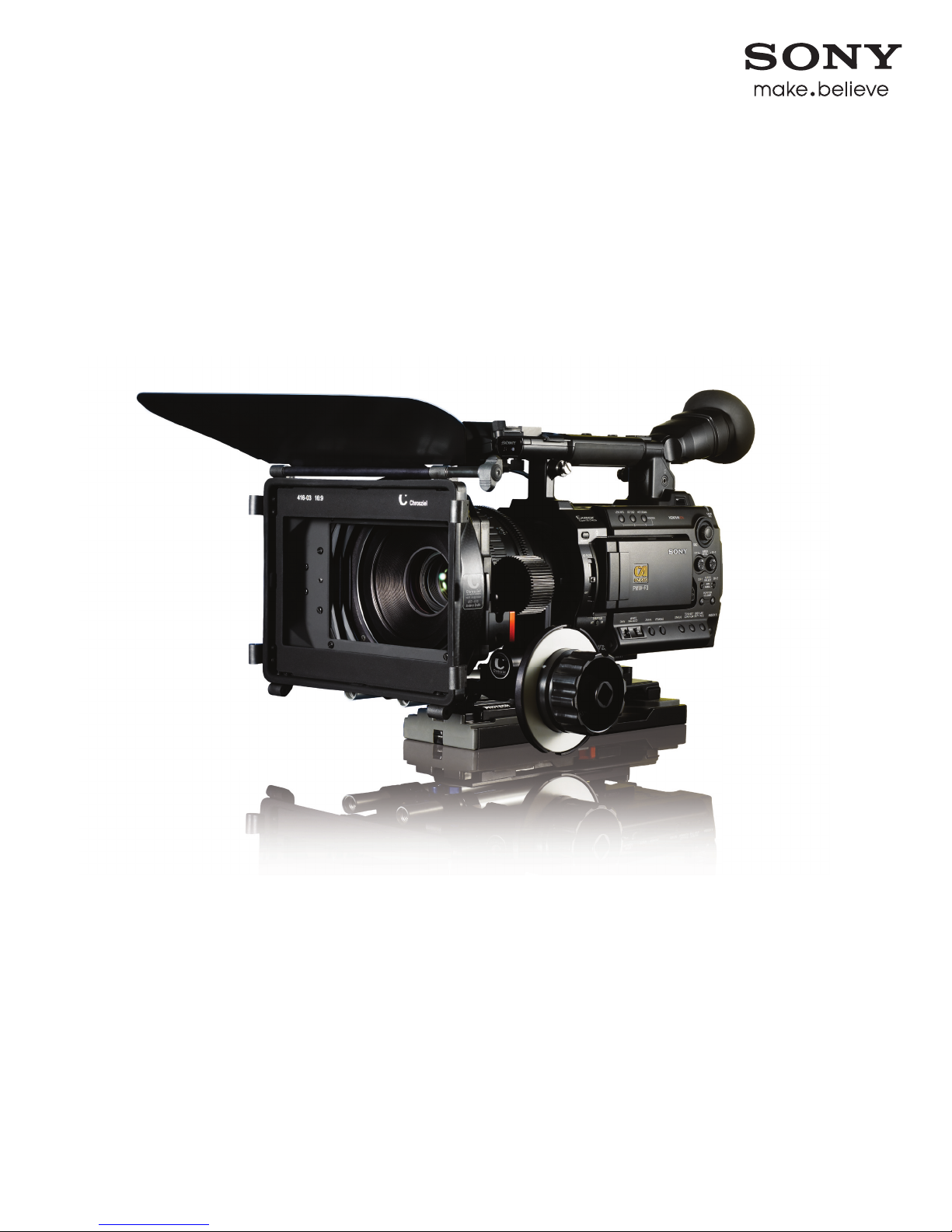
PMW-F3 within budget, beyond imagination
A breakthrough in cost performance, the Sony PMW-F3 starts at $16,000 MSRP. Here’s a true
Super 35mm image sensor designed from the ground up for moving pictures. So you’ll get
gorgeous images without gotchas like aliasing and moiré. The PL mount works directly with
the 35mm cinema lenses you love. The on-board XDCAM EX™ recording takes advantage of
Sony’s well-established post workfl ow. Even RGB output is an option (expected availability Fall
2011). With all the facilities of a true camcorder, the F3 is everything you expect. And beyond.
CAMERA
Page 2
Super 35mm image sensor
Amazing low-light sensitivity. Gorgeous highlight handling.
Able to see into dark areas without undue noise. The PMW-F3
responds to light and color beautifully, as directors of
photography can attest. It’s all made possible by an original
Sony Exmor™ CMOS image sensor purpose-built for the
PMW-F3. This is not some DSLR image sensor retrofitted for
video. In fact, the F3 image sensor pixels are four times the
size of typical DSLR pixels, equal to a two-stop advantage. It
all adds up to one of the most eagerly anticipated cameras
in Sony’s history.
Full Super 35mm image size
When it comes to image sensors, size definitely
matters. Other things being equal, a bigger sensor equates
to better low-light sensitivity and lower image noise. Even
more important to some photographers is the pursuit of
“bokeh,” the defocused backgrounds made possible by
shallow depth of field. A common technique for directing
audience attention within the frame, shallow depth of
field is far easier to achieve with a large sensor. And that’s
exactly what the PMW-F3 delivers, with a single sensor that
closely approximates a Super 35mm motion picture film
frame. Bigger sensors also make it easier to capture wideangle shots; the field of view is wider for any given focal
length lens.
Hold the three-CCD prism. The PMW-F3 features a single
Super 35mm image sensor.
Not just a bigger sensor,
bigger pixels
Low-light sensitivity and powerful highlight
handling depend in part on the imager size
and also on the size of the pixels on that
imager. That’s why Sony developed a new
image sensor for the PMW-F3 with pixels that
are four times the size of typical DSLR sensor
pixels. Thanks to this two-stop advantage, the
F3 achieves a sensitivity of F11 at a signal-tonoise ratio of 63 dB and an exposure index
of ISO 800. Dynamic range extends to 460%
of nominal peak white. All told, you’ll capture
images of incredible exposure latitude,
whether you’re seeing deep into the shadows
at night or capturing the highlights in
daytime exteriors.
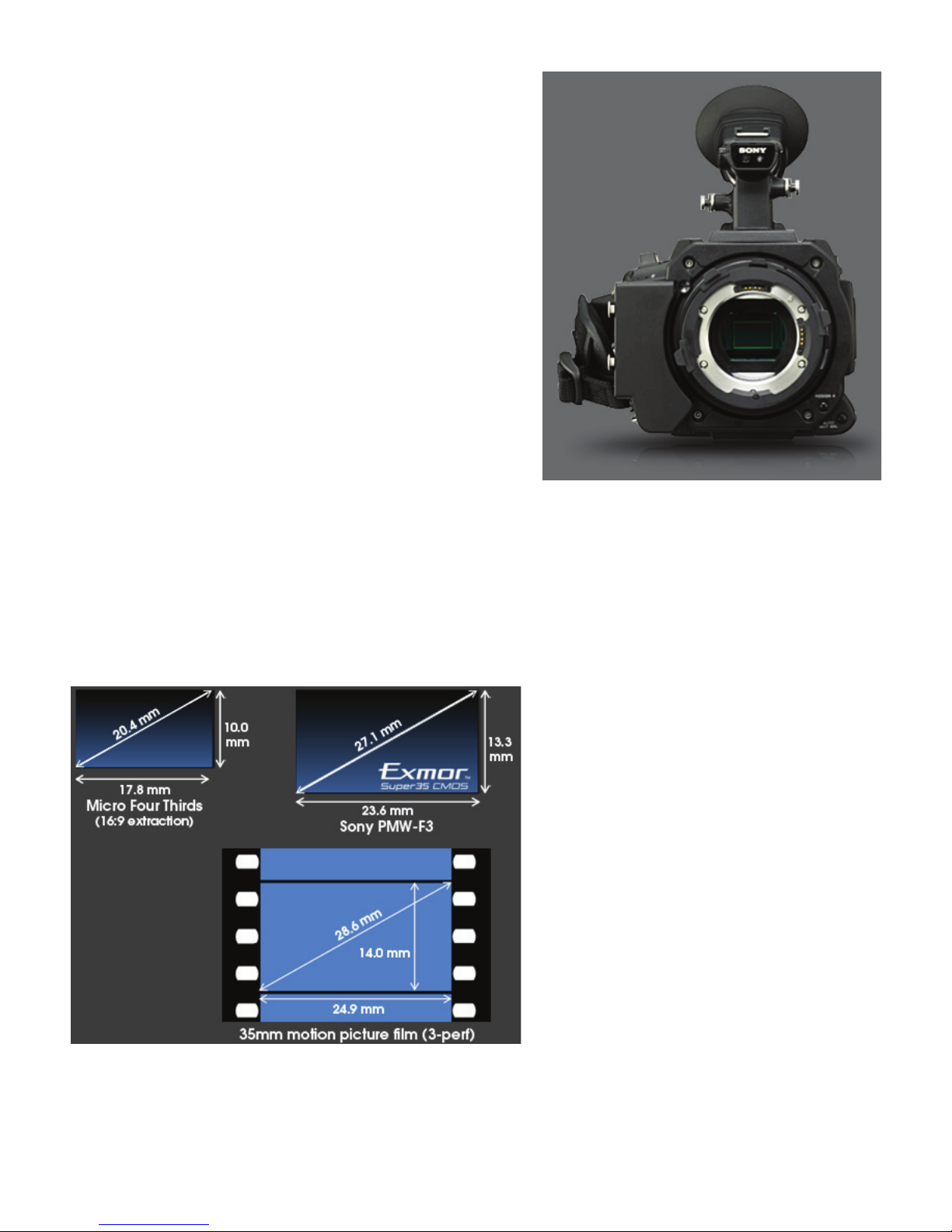
The Micro Four Thirds™ sensor (left) imposes a significant crop factor
versus 35mm. The PMW-F3 sensor has nearly twice the surface area of the
Micro Four Thirds sensor in 16:9 operation, making the F3 a significantly
better match to the Super 35mm film frame.
Page 3
RGB output
From color grading to compositing and chroma key the most demanding Hollywood postproduction
processes benefit from RGB recording. Once an option, the CBK-RGB01 RGB and S-LOG Gamma output
module is now standard equipment. This enables the camcorder to output an image with spectacular
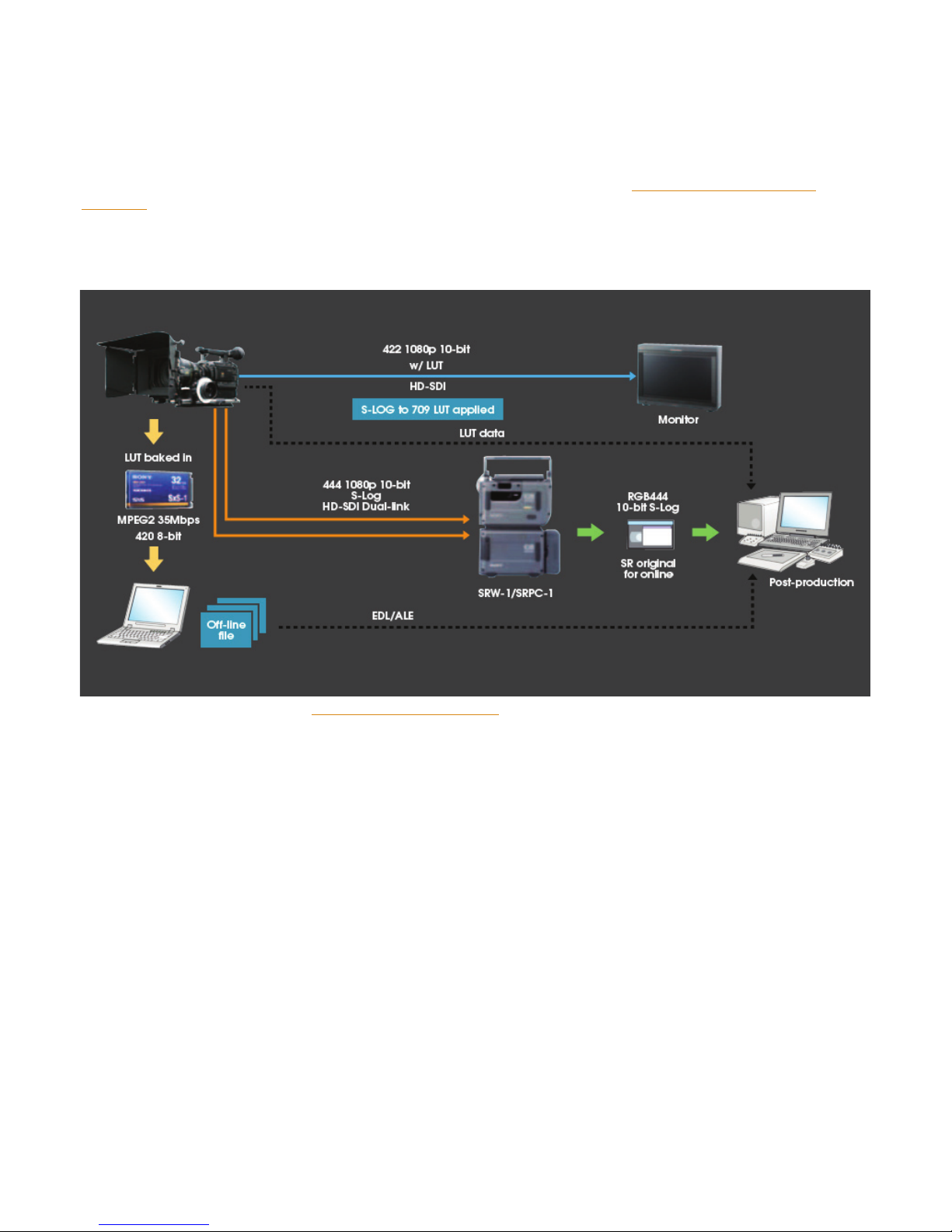
resolution, color quality and bit depth: uncompressed 10-bit RGB 4:4:4 1080p, over industry-standard
Dual-link HD-SDI. You’ll be able to record this signal on the likes of Sony’s SRW 1 HDCAM SR™ field
recorder and the SR-R1 SRMaster™ field recorder, either of which is capable of visually lossless 880
Megabits per second image capture. Simultaneous recording means you can capture to the XDCAM
EX™ and HDCAM SR recordings in perfect sync, for
simultaneous online and offline versions of your production.
Pure file-based 4:4:4 workflow with the SRW-1 HDCAM SR field recorder and the CBK-RGB01 RGB and S-LOG Gamma upgrade,
expected in Fall 2011.
Page 4
Direct to edit
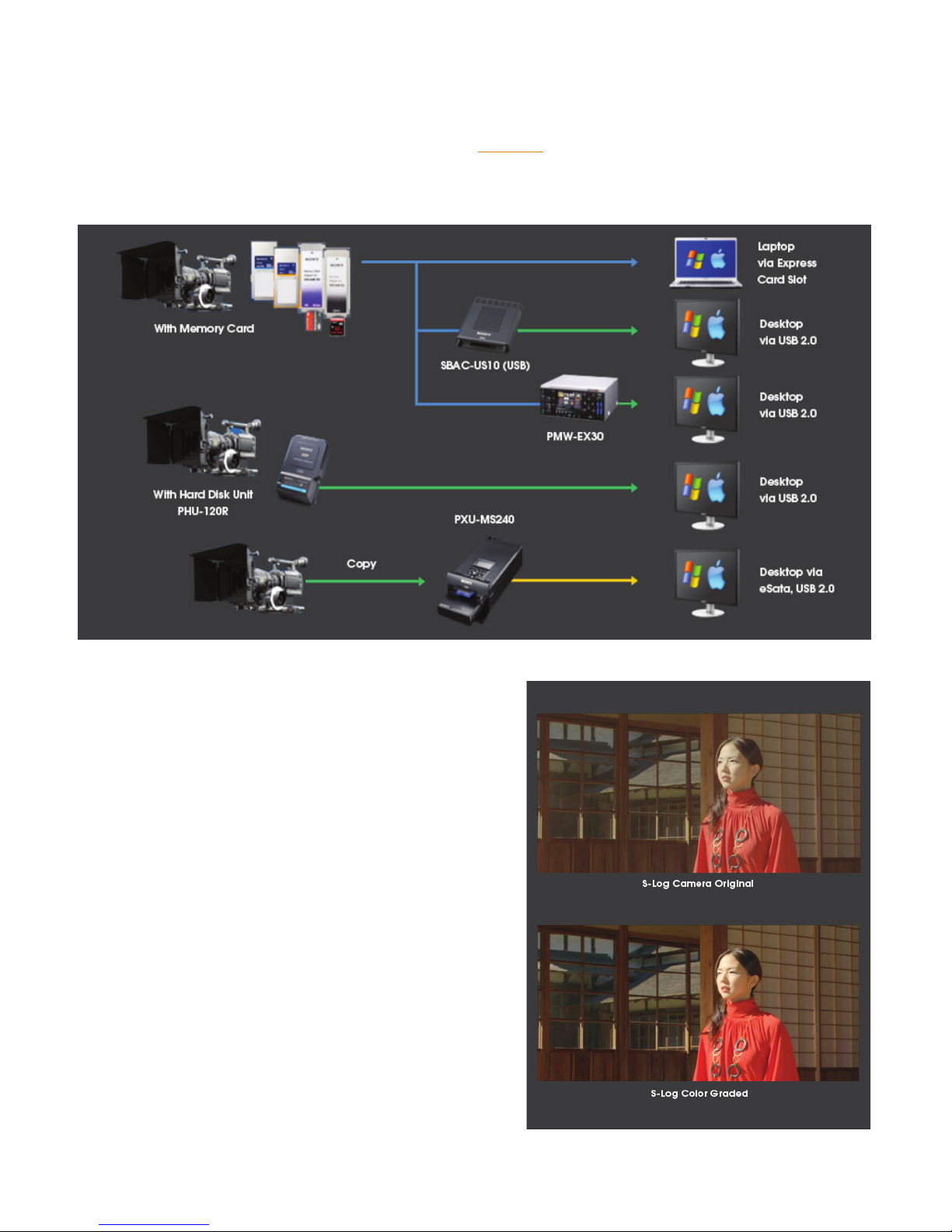
Right out of the box, the XDCAM EX™ system offers a mature workflow. In the edit bay, the XDCAM EX
codec enables direct-to-edit operation with leading NLEs from Sony, Avid, Apple, Adobe and Edius. Final
Cut Pro® users can take advantage of Sony’s affordable cinémon® plug-in for native, direct-to-edit operation—
no need to rewrap files. The modest bitrate of XDCAM EX recording also enables fast, easy file transfers
over data networks and affordable storage on hard disk arrays. And instead of burdening your production
with data wrangling and backup headaches, Sony provides robust, reliable solutions.
It’s never been easier to go from shoot to edit.
S-LOG Gamma
For even greater recording capability, Sony includes
the RGB and S-LOG Gamma output module, called
the CBK-RGB01. S-LOG Gamma represents unique
encoding, carefully tailored to the capabilities of the
PDW-F3 image sensor. S-LOG Gamma mimics the tonal
response of a film negative, so you retain full flexibility
in color correction and a seamless workflow with post
production facilities geared toward Cineon® files, DPX
files and other LOG encoded material.
Be the master of incredible dynamic range. Capture
up to 800% of nominal peak white using Sony’s S-LOG
Gamma upgrade.
Page 5
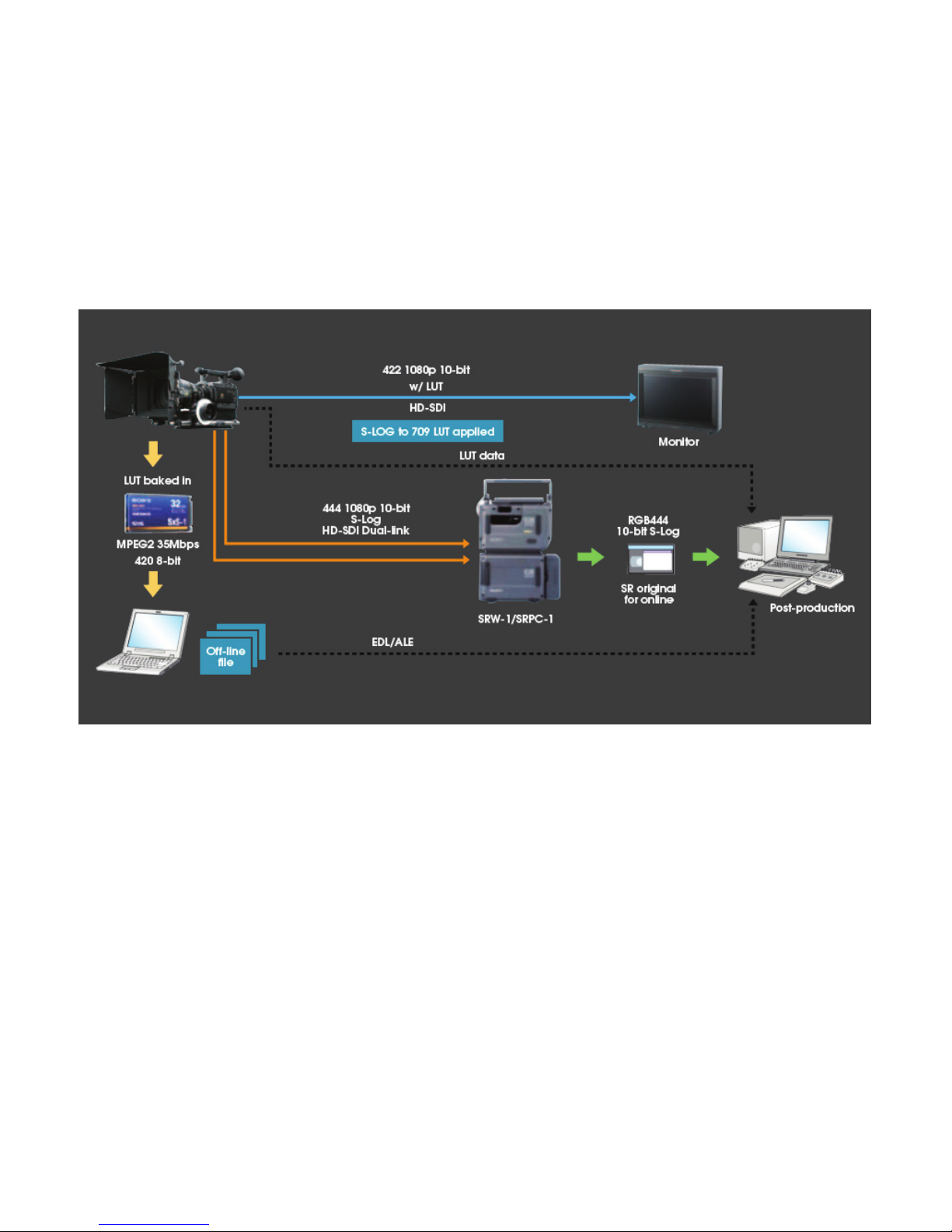
LUT Support
Without the correct processing, Sony’s S-LOG Gamma appears “flat,” missing deep blacks or piercing
highlights. While many DPs are accustomed to looking at such LOG encoded images, many producers
and clients are not. For this reason, Sony Look-up-Tables (LUTs) convert S-LOG Gamma to conventional
Rec. 709 video for real-time monitoring on the set and for offline recording onto SxS memory cards. With
the included CBK-RGB01 RGB and S-LOG output module, you get four viewing LUTs. For example, the
S-LOG to R709 conversion LUT delivers converted images to the HD-SDI output, for monitoring in the field.
You can also “bake in” the LUT to images recorded on SxS cards, suitable for making EDL/ALE off-line files.
At the same time, you can record S-LOG encoded RGB output onto HDCAM SR™ tapes and use these
as on-line material. By using both HDCAM SR tapes and SxS cards, the PMW-F3 enables efficient
post-production workflow.
LUT support enables you to have it both ways: S-LOG Gamma output for super-quality outboard recording, plus Rec.709 output for
on-set monitoring and on-board recording.
Exmor CMOS technology
Sony is a world leader in semiconductor image sensors and a leader in the fundamentals of CMOS
technology. We sought to minimize the “rolling shutter” artifact common among CMOS sensors by
speeding up the readout process. Conventional sensors use only a handful of digital-to-analog
converters, creating a traffic jam that slows down the readout process. Sony’s Exmor™ CMOS design
supplies each column of pixels with its own, dedicated converter. The sensor has literally hundreds of
converters, reducing rolling shutter to a minimum.
1080/60p high-speed shooting
The Exmor sensor design also supports 1080/60p high-speed shooting, a capability that actually outstrips
the on-board recorder but will work with compatible outboard recorders via Dual-Link HD-SDI output.
Even at high data rates, the sensor is extraordinarily kind to your battery pack. Power consumption is a
remarkably low 24 watts.
Page 6
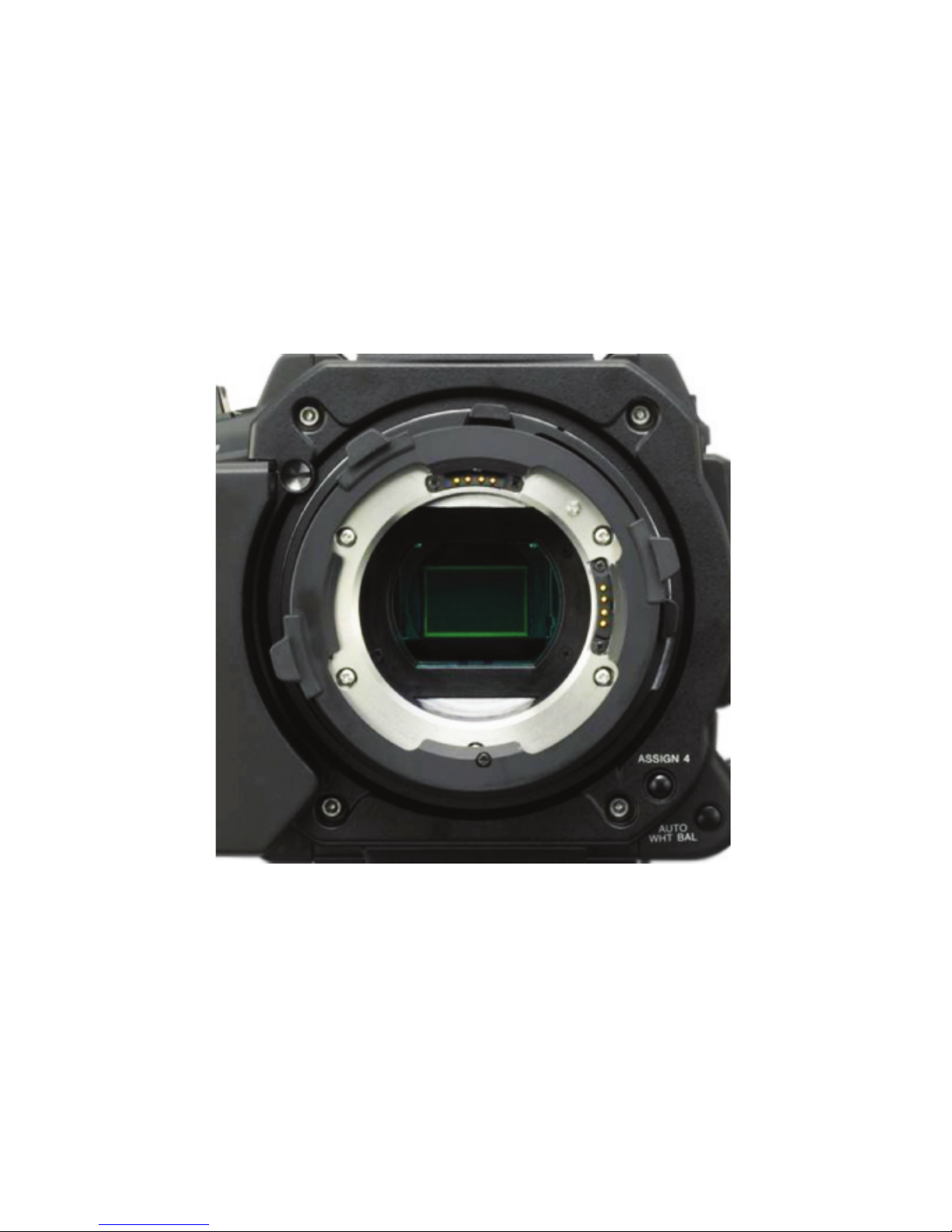
35mm PL lens mount
From Cooke to Angenieux to Fujinon to Zeiss, 35mm motion picture lenses inspire critical appreciation
and passion among the professionals who use them. An entire culture of movie production has arisen to
support the creative potential and operational requirements of these lenses. Not only does Sony provide
the PMW-F3 with an industry-standard PL mount to accept these lenses, we also incorporate an image
sensor that approximates the Super 35mm motion picture film frame. This means no 24% crop factor to
introduce unwanted telephoto conversion. This means no scrambling for wider apertures to achieve
shallow depth of field. All the familiar lenses behave in all the familiar ways, to achieve predictable,
comfortable results.
Hot shoe for Cooke/i and ARRI LDS lens systems
Some of the latest cinema lenses include a hot shoe for intelligent lens-to-camera communication. The
PMW-F3 lens mount supports this with electronic contacts for the Cooke/i and ARRI LDS lens interfaces.
The hot shoe contacts are for Cooke/i lenses (at the 12 o’clock position) and
ARRI LDS lenses (at 3 o’clock).
Page 7
Original Sony F3 lens mount
Remove the supplied PL lens adaptor and the camera offers its own, native F3 lens mount. The Sony
F3 mount supports Sony’s SCL-Z18X140 14x zoom, which brings the convenience of auto focus, auto iris,
image stabilization and servo zoom to Super 35 cinematography.
New Sony PL Mount Lenses
While the PMW-F3L is offered as a body only, the PMW-F3K includes three Sony PL mount prime lenses.
Compact and lightweight, the lenses form a perfect complement to the handheld camcorder. All three
have consistent operation, including a common location for the follow focus gear. The set includes a
35mm T2.0, 50 mm T2.0 and 80mm T2.0. An attractive option is the Sony 11-16mm T3.0 1.5x wide zoom,
the SCL-P11X15.
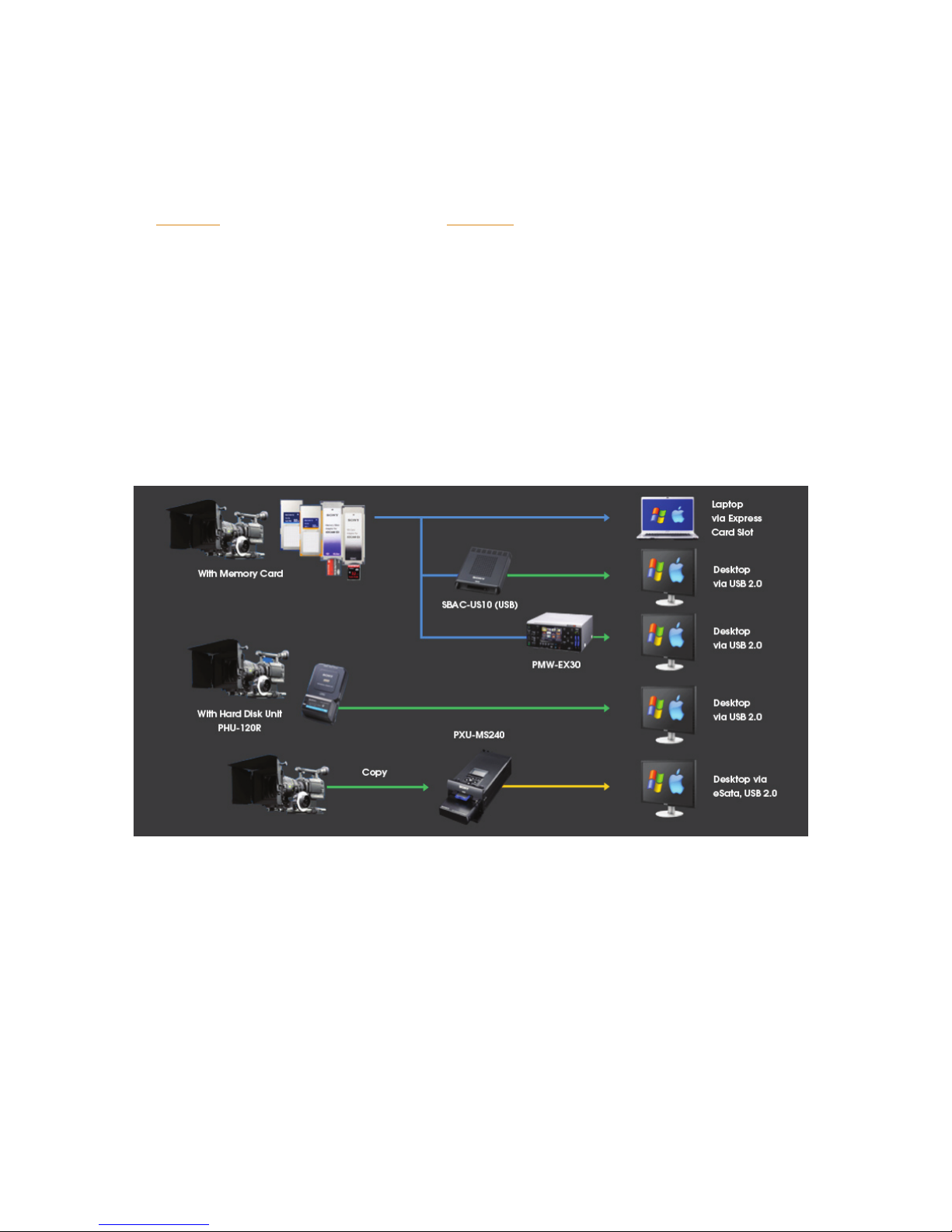
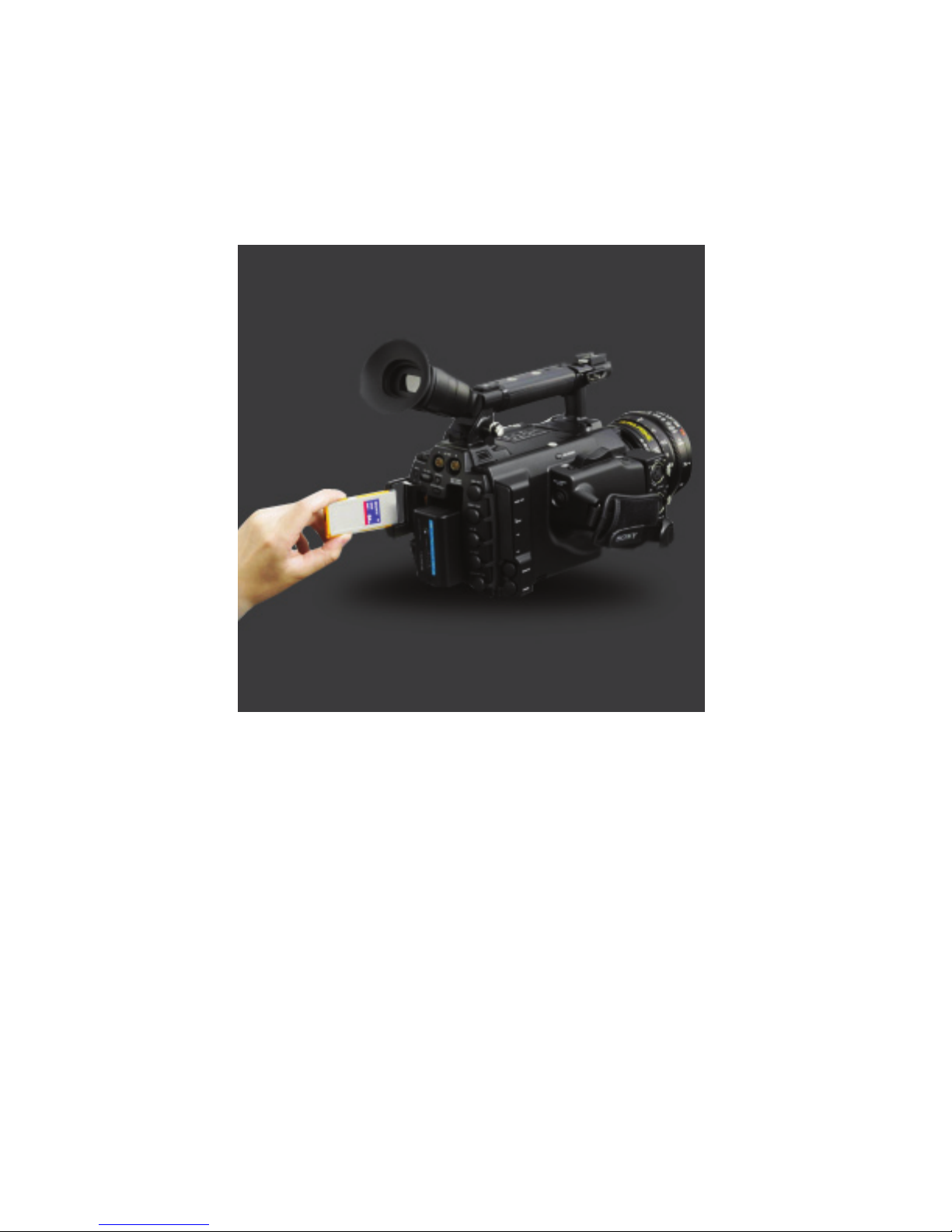
On-board XDCAM EX™ recording
From the very outset, Sony understood that professional camcorders are only the beginning of a
workflow that can include significant post production. That’s why Sony camcorders are designed to
work with a robust production “platform” that includes convenient recording media, compatible studio
decks, direct-to-edit operation with major nonlinear editors and more. The PMW-F3 is no exception. By
including XDCAM EX recording and two slots for solid-state SxS® memory cards, the F3 offers a proven,
versatile workflow solution right out of the box.
It’s not just a camcorder, it’s the gateway to a complete XDCAM EX production platform.
Page 8
High recording quality
XDCAM EX recording delivers the glories of full-resolution 1920x1080 progressive scan imagery. For vivid
detail, brilliant color and lifelike motion, Sony’s XDCAM EX™ system records 4:2:0 signals at a choice of
25 or 35 Megabits per second. Your images are securely stored on compact, lightweight SxS flash media
(sold separately). The 35 Mbps data rate captures full HD with long loads, up to 200 minutes on a single 64
GB card. Two slots enable over six hours of continuous recording without changing cards. The system uses
the robust MPEG-2 Long GOP codec, with a highly sophisticated content-aware encoding engine.
XDCAM EX recording is easy to handle in every respect, from the solid-state
SxS memory cards to the network-friendly data rates to the NLE-friendly
codec.
Slow & Quick Motion
Film cameras enable the director of photography to vary the frame rate: overcranking for dramatic slow
motion to emphasize a crucial scene or undercranking for an often-humorous fast motion effect. Sony’s
Slow & Quick Motion delivers this capability for native 24p projects.
Page 9
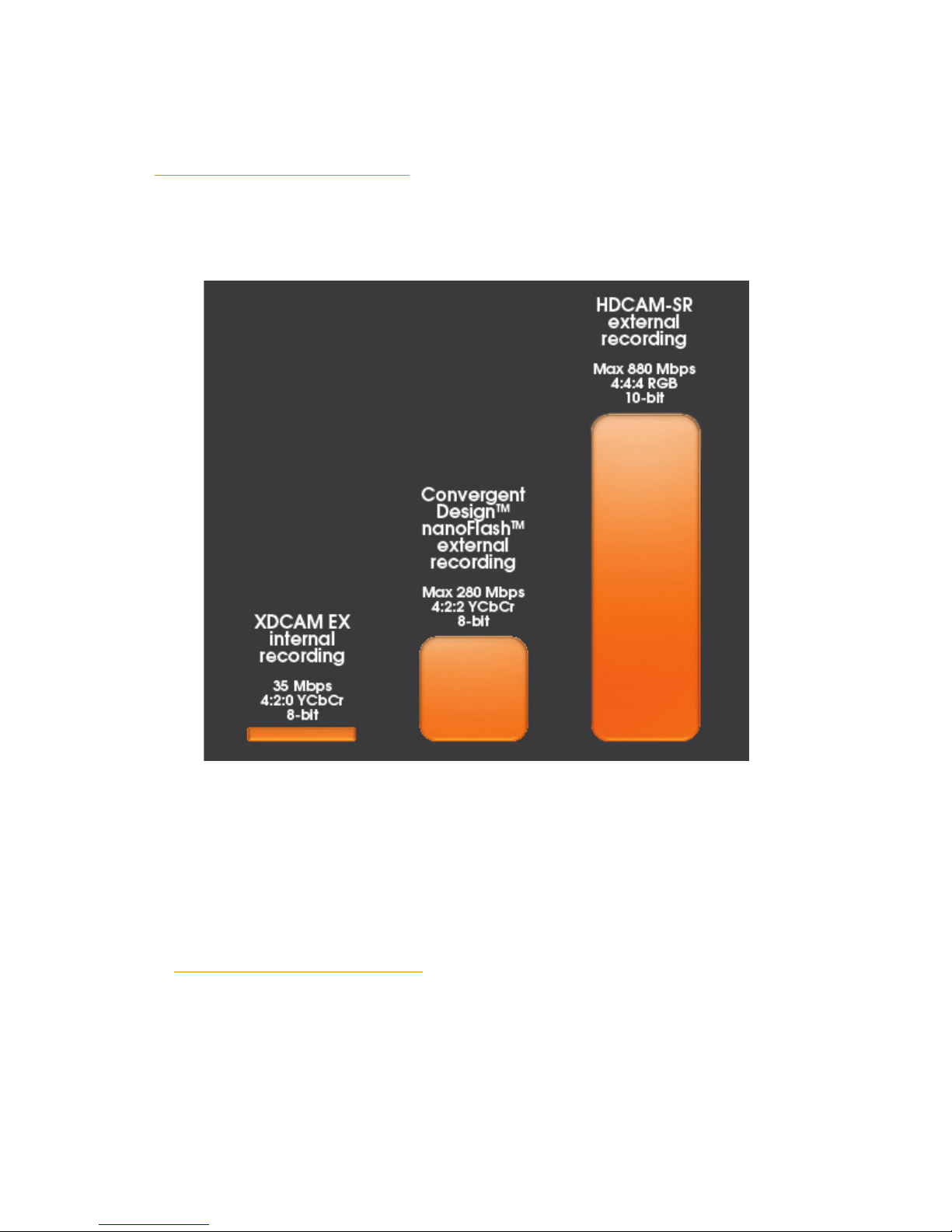
Uncompressed 10-bit HD-SDI 4:2:2 output
For critical applications that demand even higher recording quality, you can connect the uncompressed
10-bit HD-SDI 4:2:2 output and enjoy simultaneous recording onto external decks. Thanks to DualLink HD-SDI, you can even record frame rates up to 1080/60p on compatible external recorders such
as Sony’s SRW-1 HDCAM SR™ field recorder. Other outboard options include the Convergent Design
nanoFlash™ and Gemini 4:4:4™ recorders. Based on the hardware codec that Sony builds into XDCAM HD™
products, the nanoFlash recorder empowers you with superlative 4:2:2 recording at up to 280 Megabits
per second. Simultaneous recording means you can capture to onboard XDCAM EX and outboard
recorders in perfect sync.
Good, better, best. The PMW-F3 will support a phenomenal range of recording systems—
and a complete range of requirements from student productions to the most demanding
Hollywood features.
Output up to 1080/60p
The image sensor of the PMW-F3 is capable of full-resolution 1080/60p image capture, even though
the on-board recorder can’t handle that avalanche of data. That’s why Sony provides Dual-Link HD-SDI
output. This enables two coax cables to convey 1080/60p to a compatible outboard recorder, such
as the Sony SRW-1 HDCAM SR™ field recorder or the SR-R1 SRMaster recorder. Both recorders will enable
high-speed capture for dramatic, full-resolution overcranking effects.
 Loading...