

Page 1

INSTRUCTION MANUAL
SMART
Digital blood presure monitor
TM
Page 2
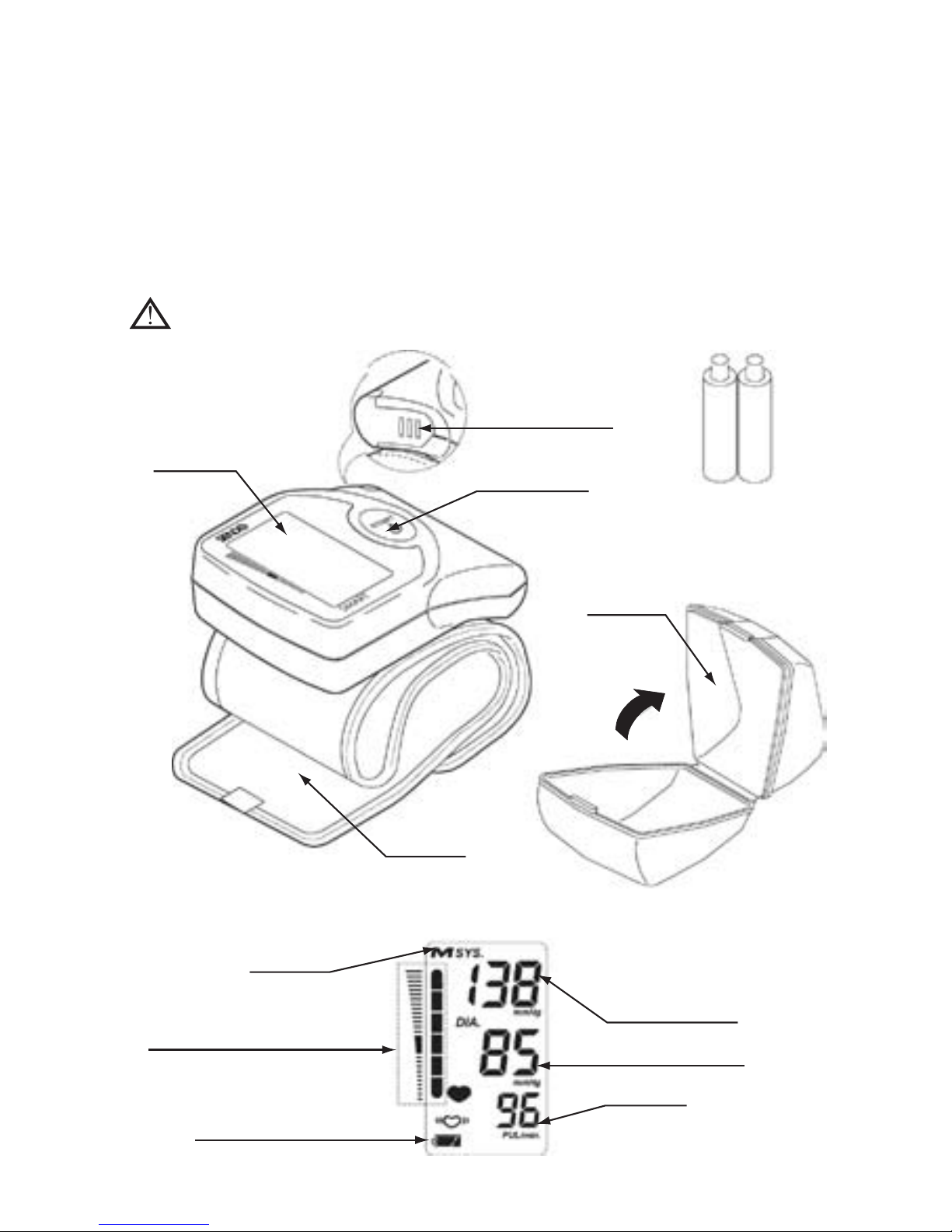
Display
Memory
Pulse rate
Diastolic pressure
Systolic pressure
Pressure bar indicator and
WHO classication indicator
Battery indicator
Part of display
Alkaline batteries
(LR03 or ААА)
START button
Cu
Case
Battery
holder cover
Introduction
Thank you for purchasing a state-of-the-art Sendo blood pressure monitor. Sendo
will give you years of accurate measurements, if it is used properly. We are always
ready to provide help on our telephone lines for your country.
5 years guarantee.
Please read carefully the instructions before using this blood pressure monitor.
2
Page 3
About 1 cm
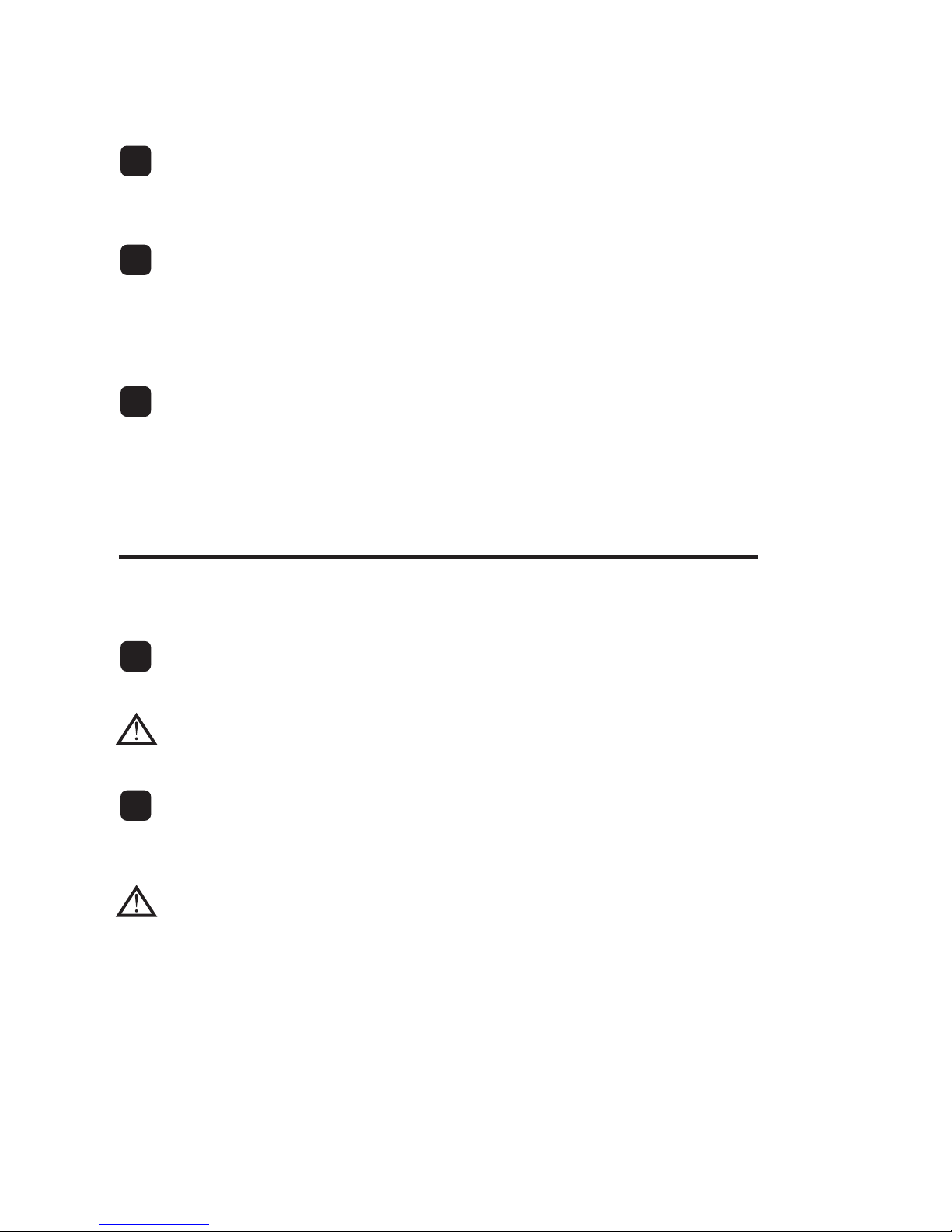
Installing / Changing the Batteries
Slide the battery cover as shown to remove it
from the device.
Insert two AAA / LR03 size batteries in the battery
compartment, with positive (+) and negative (-)
terminals matching those indicated on the battery
compartment.
Slide the battery cover back on the device.
Use only AAA/LR03 batteries.
Fastening the Cu
Wrap the cu around your wrist about 1 cm above your hand as shown in
the gure at the right.
The monitor should be placed on inner side of the arm.
Fasten the cu
tightly using the
Velcro strip.
Note: For proper
measurements,
fasten the cu tightly
and measure on a
bare wrist.
1
1
2
2
3
3
Page 4

Heart level
START button
Systolic
pressure
WHO
classication
I.H.B.
indicator
Diastolic
pressure
Pulse rate
Measurements
Sit comfortably in a chair with
your feet at on the oor. Place
your left arm on a table at a slight
angle.
1
Raise your hand so that the cu is
at the same level as your heart.
Press the START button. The
average recorded blood pressures
and data number are displayed
briey. Then the measurement
begins. The cu starts to inate. It
is normal for the cu to feel very
tight. Note: If you wish to stop
ination at any time, press the
START button again.
When measurement is complete,
the systolic and diastolic pressure
readings and pulse rate are
displayed. The cu exhausts the
remaining air and completely
deates automatically.
After the measurement:
Press the start button to turn o the device. The device is provided with an
automatic power shut-o function.
2
3
4
4
Page 5
How to Take Proper Measurements
For the most accurate blood pressure measurement:
Sit down in a comfortable position. Place the arm to be used for the measure-
ment on a table or other support so that the center of the cu will be at the
same height as your heart.
Relax before taking a measurement. If you are excited or depressed by
emotional stress, the measurement will reect this stress as a higher (or lower)
than normal blood pressure reading and the pulse reading will usually be faster
than normal.
An individual's blood pressure varies constantly, depending on what you are
doing and what you have eaten. What you drink can have a very strong and
rapid eect on your blood pressure.
This device bases its measurements on the heartbeat. If you have a very weak or
irregular heartbeat, the device may have diculty determining your blood
pressure.
Should the device detect a condition that is abnormal, it will stop the
measurement and display an error symbol. Refer to page 4 for the description of
the symbols.
This device is intended for use by adults only. Consult with your physician before
using this device on a child. A child should not use this device unattended.
Place the center of the cu at the same height as your heart.
Remain still and keep quiet during measurement.
Do not measure right after physical exercise or a bath. Rest before taking the
measurement.
Try to measure your blood pressure at the same time every day.
Insert the batteries as shown in the battery compartment. If not, the device will
not work.
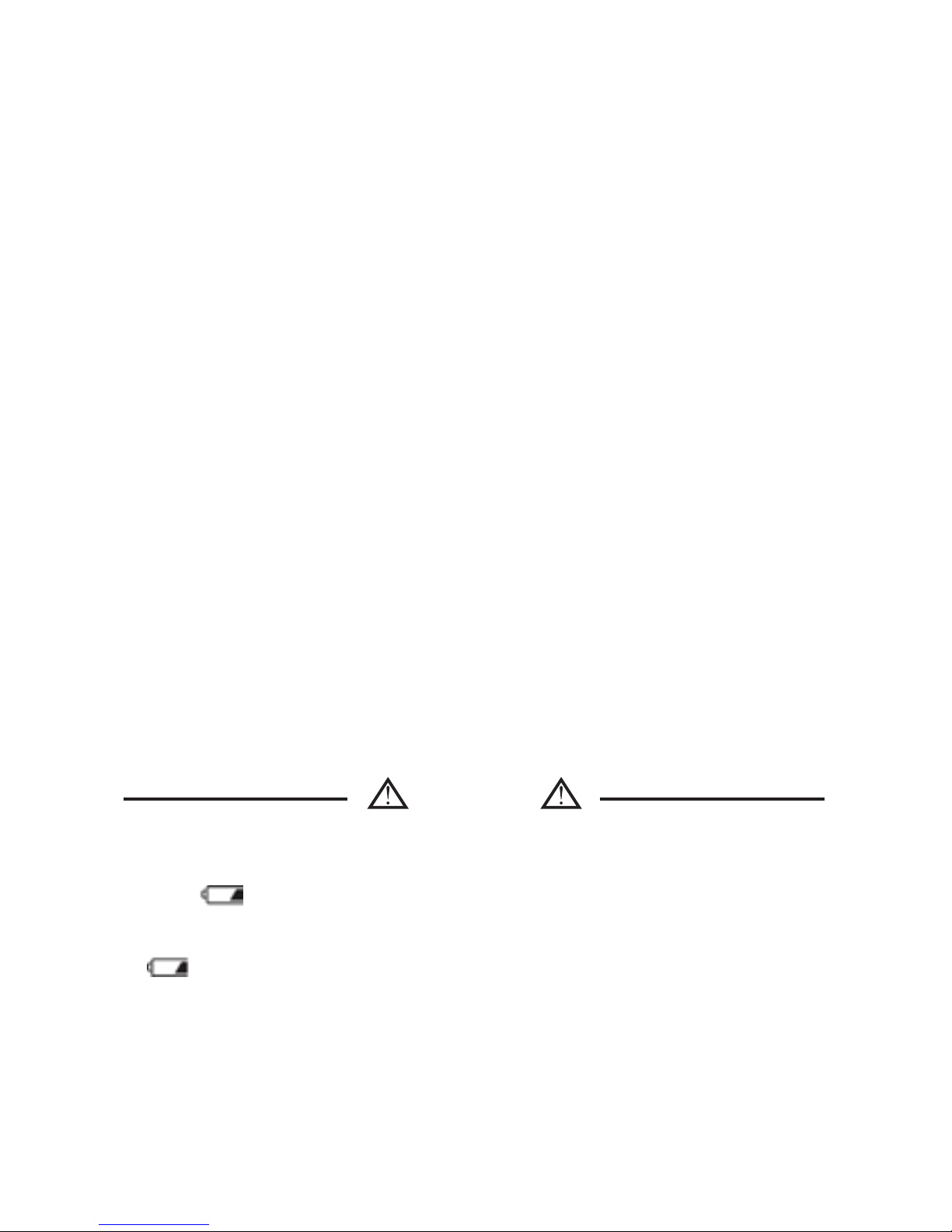
When (LOW BATTERY mark) blinks on the display, replace all batteries
with new ones. Do not mix old and new batteries. It may shorten the battery life,
or cause the device to malfunction.
(LOW BATTERY mark) does not appear when the batteries are drained.
Battery life varies with the ambient temperature and may be shorter at low
temperatures.
Use the specied batteries only. The batteries provided with the device are for
testing monitor performance and may have a limited life.
Remove the batteries if the device is not to be used for a long time. The batteries
may leak and cause a malfunction.
The stored data are cleared when the batteries are removed.
CAUTION
5
Page 6

About Memory
The device automatically stores up to thirty blood pressure and pulse measurements in memory. Data stored in memory are assigned a data number in the order
of the newest to the oldest. The oldest data displays as "n01". The M symbol in the
upper left corner of the display indicates that you are viewing previous data stored
in memory.
1
2
3
1
2
3
Recalling Data
When nothing is displayed, press and hold the
START button to display the data number.
The data number of the most recent
measurement and the data are displayed.
The data are automatically displayed in turn.
The display will shut o automatically after all
data is displayed.
Clearing Data
Remove the batteries to clear all data.
Re-install them again.
If there is no data stored in memory, you will see two 0s displayed vertically
followed by a blinking "A00".
6
Page 7
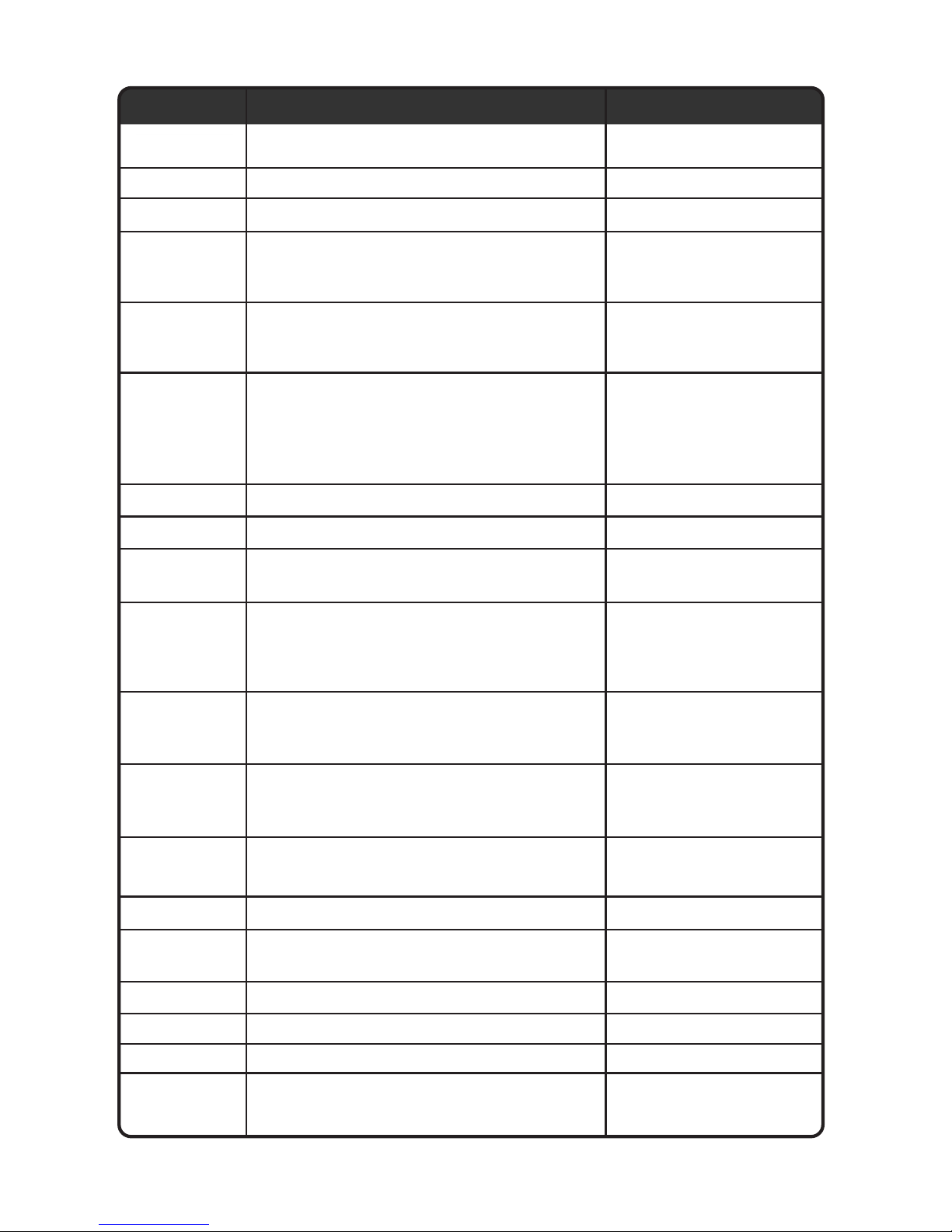
Symbols Function / Meaning Recommended Action
Standby and Turn the device on.
Battery installation guide
Serial number
Type BF: Device, cu and tubing are designed to
provide special protection against electrical shocks.
The indicator that appears while measurement is in
progress. It blinks when the pulse is detected.
Irregular Heartbeat indicator. (I.H.B.)
The indicator that appears when an irregular
heartbeat or any excessive body movement is
detected during the measurement.
Previous measurements stored in MEMORY.
The battery power indicator during measurement.
The battery is low when it blinks.
Unstable blood pressure due to movement during
the measurement.
The systolic and diastolic values are within 10
mmHg of each other.
The pressure value did not increase
during ination.
The cu is not fastened correctly.
The pulse is not detected correctly.
Systolic blood pressure
in mmHg
Diastolic blood pressure in mmHg
Pulse per minute
EC directive medical device label
WEEE label
Measurement is in progress.
Remain as still as possible.
Replace all batteries with
new ones.
Try the measurement again.
Remain very still during the
measurement.
Fasten the cu correctly,
and try the measurement
again.
Fasten the cu correctly,
and try the measurement
again.
Fasten the cu correctly, and
try the measurement again.
7
Page 8

WHO Classication Indicator
Each six segments of the bar indicator correspond to the WHO blood pressure
classication described on the next page.
Example:
The indicator displays a segment, based on the current data,
corresponding to the WHO classication.
Moderate
hypertension
Mild
hypertension
High
normal
WHO Classication Indicator
Severe hypertension
Moderate hypertension
Mild hypertnsion
High normal
Normal
Optimal
8
Page 9

What is an irregular heartbeat
Sendo Advance provides a blood pressure and pulse rate measurement even
when an irregular heartbeat occurs. An irregular heartbeat is dened as a
heartbeat that varies by 25% from the average of all heartbeats during the blood
pressure measurement. It is important that you be relaxed, remain still and do not
talk during measurements.
Note: We recommend contacting your physician if you see this
indicator frequently.
What Is Blood Pressure?
Blood pressure is the force exerted by blood against the walls of the arteries.
Systolic pressure occurs when the heart contracts. Diastolic pressure occurs when
the heart expands. Blood pressure is measured in millimeters of mercury (mmHg).
One's natural blood pressure is represented by the fundamental pressure, which is
measured rst thing in the morning while one is still at rest and before eating.
What Is Hypertension And How Is It Controlled?
Hypertension, an abnormally high arterial blood pressure, if left unattended, can
cause many health problems including stroke and heart attack. Hypertension can
be controlled by altering lifestyle, avoiding stress, and with medication under a
doctor’s supervision.
To prevent hypertension or keep it under control:
Do not smoke
Exercise regularly
Reduce salt and fat intake
Have regular physical checkups
Maintain proper weight
Blood Pressure Variations
An individual’s blood pressure varies greatly on a daily and seasonal basis. It may
vary by 30 to 50 mmHg due to various conditions during the day. In hypertensive
individuals, variations are even more pronounced. Normally, the blood pressure
rises while at work or play and falls to its lowest levels during sleep. So, do not be
overly concerned by the results of one measurement.
Take measurements at the same time every day using the procedure described
in this manual to get to know your normal blood pressure.
Consult your doctor to interpret your blood pressure data.
9
Page 10
Typical uctuation within a day
(35 years old male)
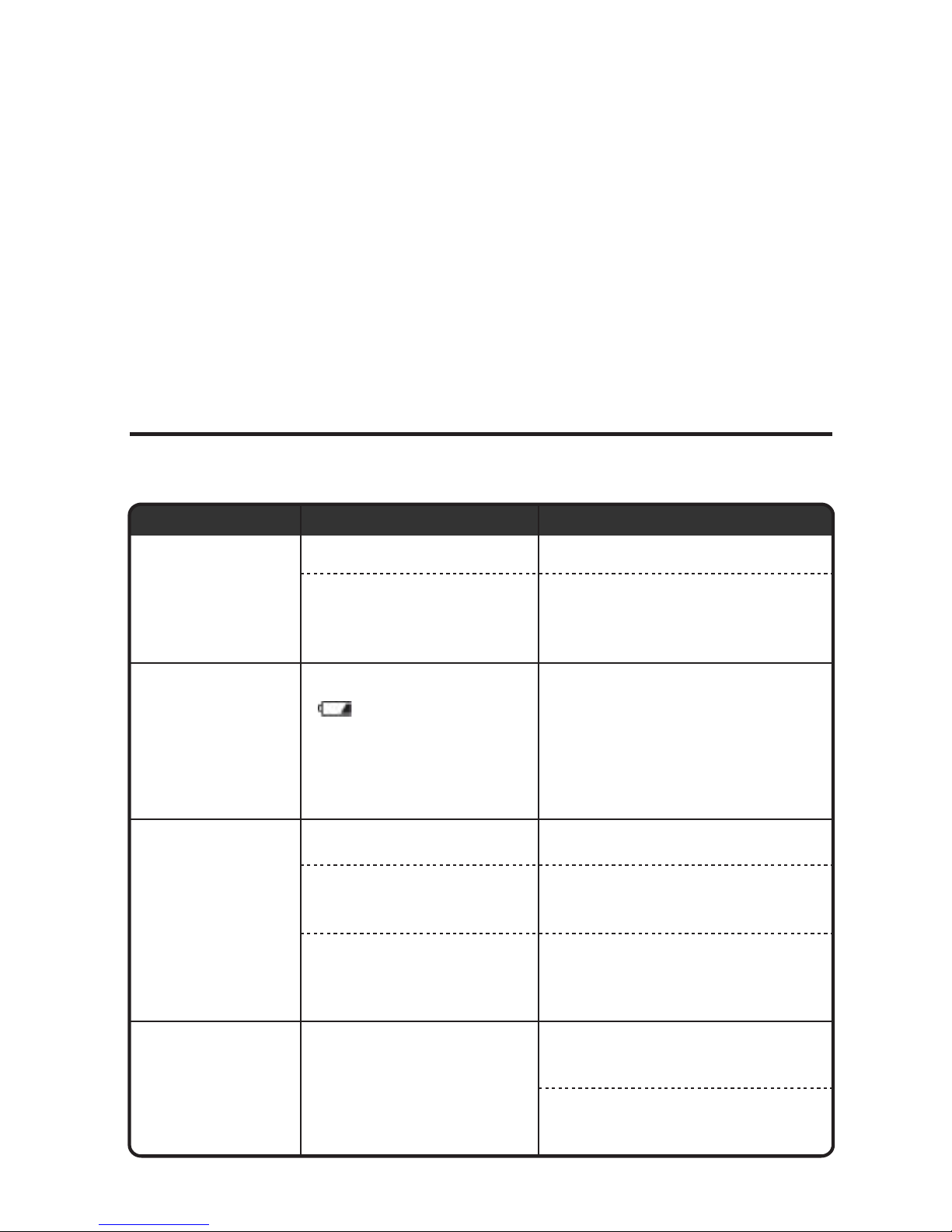
Troubleshooting
Problem
Nothing appears
on the display,
even when the
power is turned on.
The cu
does not inate.
The device
does not measure.
Readings are
too high or too low.
Other
Recommended Action
Replace all batteries with new ones.
Reinstall the batteries with negative
and positive terminals matching those
indicated on the battery compartment.
Replace all batteries with new ones.
Fasten the cu correctly.
Make sure you remain very still and
quiet during the measurement.
Sit comfortably and still. Raise your
hand so that the cu is at the same
level as your heart.
Refer to “Why Measure Blood Pressure At
Home"
Remove the batteries. Place them back
properly and try the measurement again.
Possible Reason
Batteries are drained.
Battery terminals are not in
the correct position.
Battery voltage is too low.
(LOW BATTERY mark)
blinks.
If the batteries are drained
completely, the mark
does not appear.
The cu is not fastened properly.
You moved your arm or body
during the measurement.
The cu position is not correct.
The value is dierent from that
measured at a clinic or doctor’s
oce.
10
Page 11
Maintenance
Do not open the device. It uses delicate electrical components and an intricate air
unit that could be damaged. If you cannot x the problem using the troubleshooting instructions, request service at our hot line.
The device was designed and manufactured for a long service life.
However it is generally recommended to have the device inspected every 2 years,
to ensure proper functioning and accuracy.
DO NOT TRY TO DISSASEMBLE AND FIX THE UNIT BY YOURSELF!
Note: Specications are subject to change without prior notice.
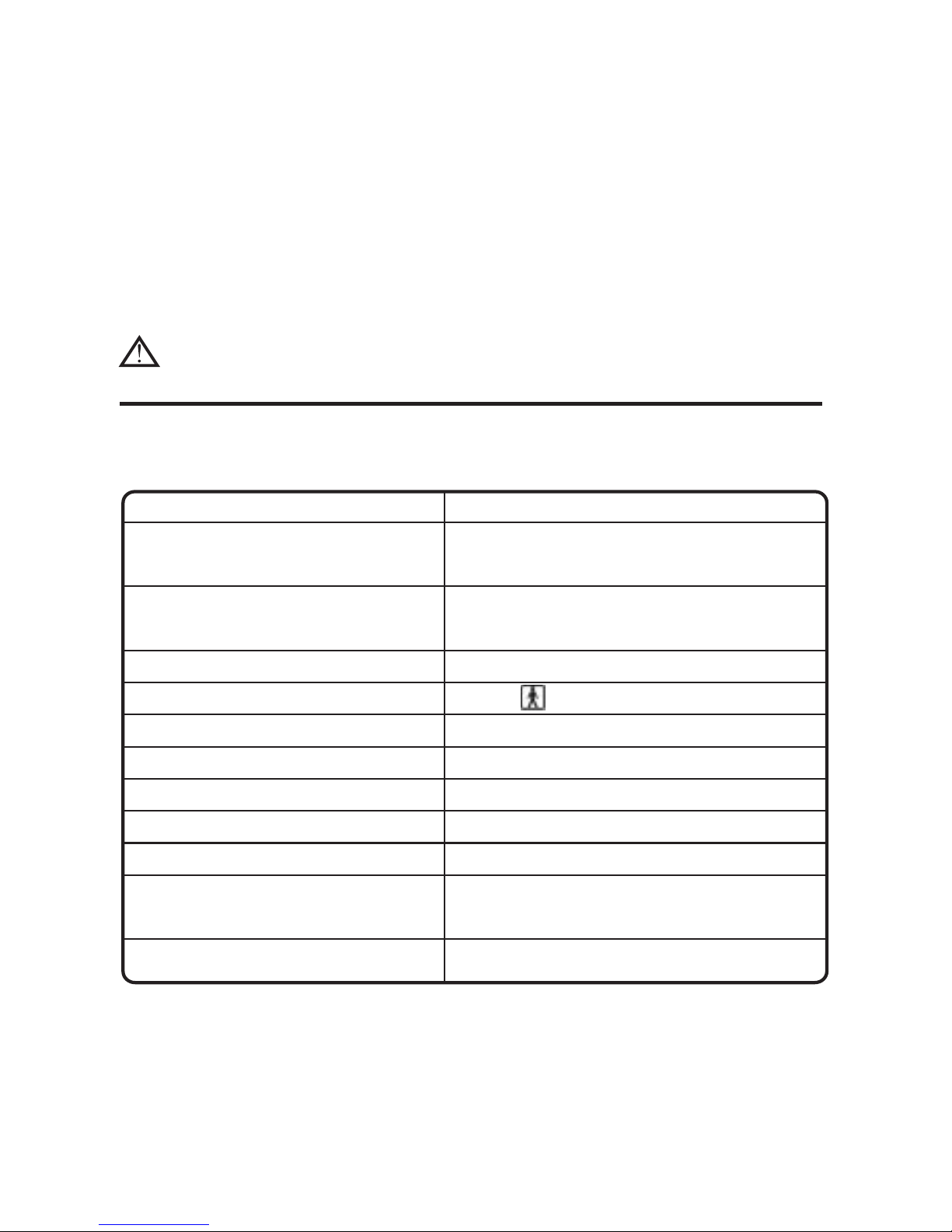
Technical Data
Measurement method
Measurement range
Measurement accuracy
Power supply
Classication
Clinical test
EMC
Memory
Operating condition
Storage condition
Dimensions
Weight
Oscillometric measurement
Pressure: 20 - 280 mmHg
Pulse: 40 - 180 beats/minute
Pressure: ±3 mmHg or 2%, whichever is greater
Pulse: ±5%
2 x 1.5V batteries (LR3 or AAA)
Type BF
According to ANSI / AAMI SP-10 1987
IEC 60601-1-2: 2001
Last 30 measurements
+10°C to +40°C / 30%RH to 85 %RH
-10°C to +60°C / 30%RH to 95 %RH
Approx. 63 mm (width) x
56 mm (height) x 21 (depth) mm
Approx. 260 g, excluding the batteries
EMC Table information is listed on our website: www.unicoms.com/sendo-emc
11
Page 12
Guarantee
As long as the instructions are followed your Sendo device should last for long
years. In the event your Sendo monitor fails to operate due to manufacturing or
materials related defects, we will repair it free of charge for the period of the
guarantee. The apparatus have 5 years guarantee for its electrical components. The
parts made from rubber and textile, as well as mechanical components have 2
years guarantee. The guarantee does not cover damages caused by improper use.
Any claim for damages covered by the guarantee must be accompanied by the
purchase receipt (cash register receipt)
The guarantee does not cover damages caused by improper use; damage caused
by dust; liquids or stress on the mechanism.
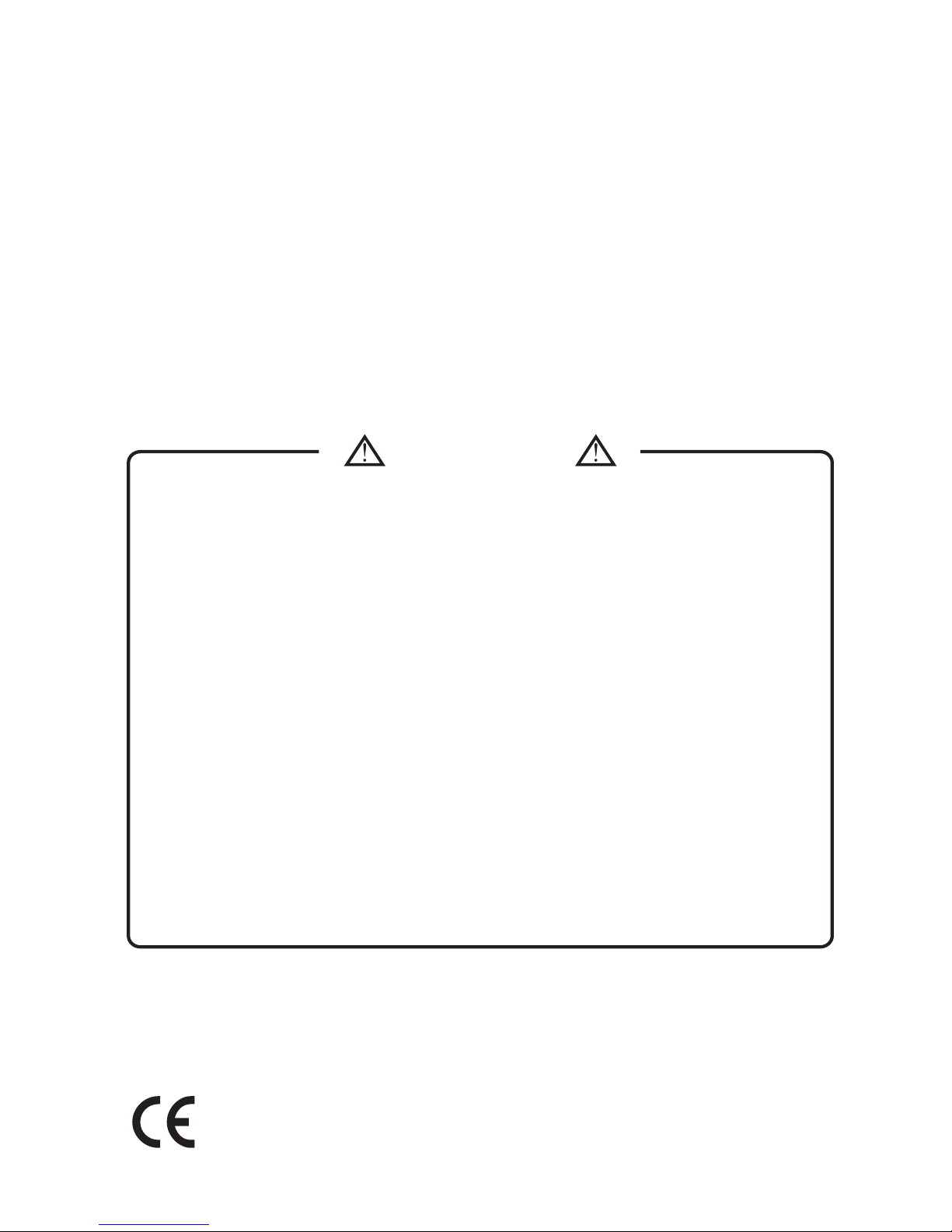
Precision components are used in the construction of this device.
Extremes in temperature, humidity, direct sunlight, shock or dust should
be avoided.
Clean the device with a soft, dry cloth. Never use thinner, alcohol,
benzine, or wet cloth.
Avoid tightly folding the cu or storing the hose tightly twisted for long
periods, as such treatment may shorten the life of the components.
The device and cu are not water resistant. Prevent rain, sweat and water
from soiling the device and cu.
Measurements may be distorted if the device is used close to televisions,
microwave ovens, cellular telephones, X-ray or other devices with strong
electrical elds.
Used, equipment, parts and batteries are not treated as ordinary
household waste and must be disposed of according to the applicable
local regulations.
PRECAUTIONS
0366
A&D Medical, Tokyo, JAPAN
12
Page 13

16
 Loading...