

Page 1
Metalúrgica Skymsen Ltda.
Rodovia Ivo Silveira 9525
Volta Grande
88355-202 Brusque/SC/Brasil
www.skymsen.com - Fone: +55 47 3211 6000
CNPJ: 82.983.032/0001-19 - IE 250.064.537
23747.7 - ESPANHOL
Data de Correção: 11/04/2013
- Besides this equipment, a complete range of other products are manufactured, consult our dealers.
- Due to the constant improvements introduced to our equipments, the informaon
contained in the present Instrucon Manual may be modified without previous noce.
DOUGH DIVIDER
MODEL
DMS-30
Page 2

SUMÁRIO
1. Introducon ......................................................................................3
1.1 Safety .................................................................................................................... 3
1.2 Main Components ................................................................................................. 3
1.3 Technical Characteriscs ........................................................................................ 4
2. Installaon and Pre Operaon ...........................................................4
2.1 Installaon ............................................................................................................ 4
2.2 Pre Operaon ........................................................................................................ 4
3. Operaon ..........................................................................................5
3.1 Operaon Procedure ............................................................................................. 5
3.2 Cleaning ................................................................................................................. 5
3.3 Cauons with Stainless Steel ................................................................................. 6
4. General Safety Pracces ....................................................................7
4.1 Basic Operaon Pracces ....................................................................................... 7
4.3 Roune Inspecon ................................................................................................. 8
4.2 Safety Procedures and Notes Before Switching Machine ON .................................. 8
4.4 Operaon .............................................................................................................. 9
4.5 Aer Finishing The Work ........................................................................................ 9
4.6 Maintenance ......................................................................................................... 9
PROBLEMS CAUSES SOLUTIONS
- The machine does not the
dough.
TABLE 03
- The quanty of douh is not
correct.
- Divider plate not adjusted.
- Check the quanty of dough.
- Call technical assistance.
5. Análisis y Resolución de Problemas ................................................. 10
5.1 Problems, causes and soluons ............................................................................10
Page 3
5. Análisis y Resolución de Problemas
1. Introducon
5.1 Problems, causes and soluons
The Dough Dividers DMS were designed to operate with minimum maintenance, but the
natural wearing caused by long me use of the equipment may eventually cause some
malfuncons.
If you have any problems with your Dough Divider, check the Table 02 next, on which the
most common situaons are listed with recommended soluons.
1.1 Safety
The Dough Divider DMS-30C is simple to operate and easy to clean. Maintenance, cleaning
or any other service on the machine must be made only by competent staff. For beer
safety, read the following instrucons to avoid accidents.
To avoid accidents respect the following instrucons:
1.1.1 Never use any instruments which are not part of the machine to help operang it.
1.1.2 Aer removing any safety parts of the equipment, replace them and make sure all
the safety items are properly posioned.
1.1.3 Keep your hands away from sharp parts.
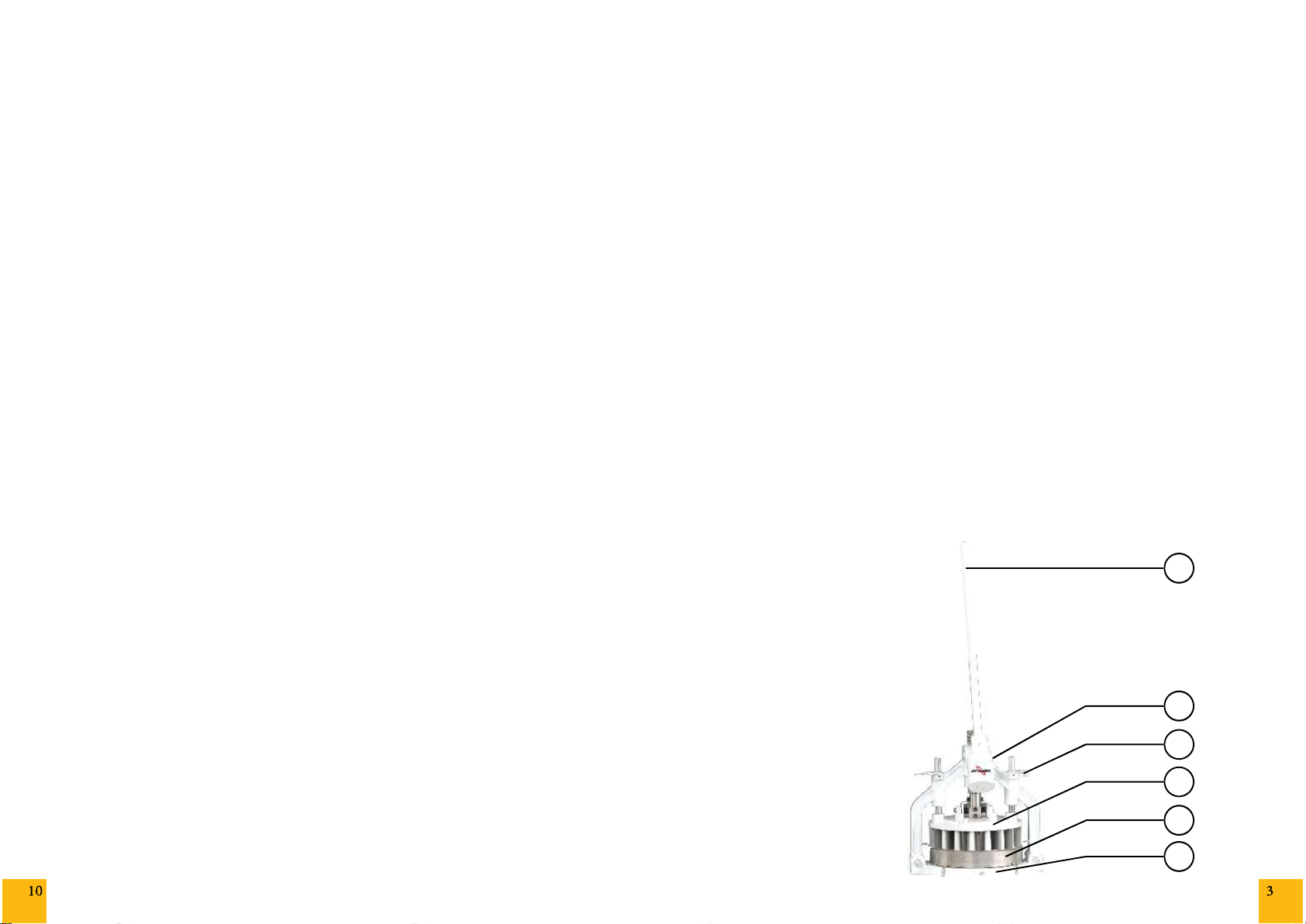
1.2 Main Components
All components of this machine were designed and manufactured using carefully selected
materials proper to their funcon according to test standards and experience of Skymsen.
PICTURE 01
01 - Tray
02 – Lever
03 – Divider Plate
04 - Lock
05 – Lock Handle
06 – Base
02
04
05
03
01
06
Page 4
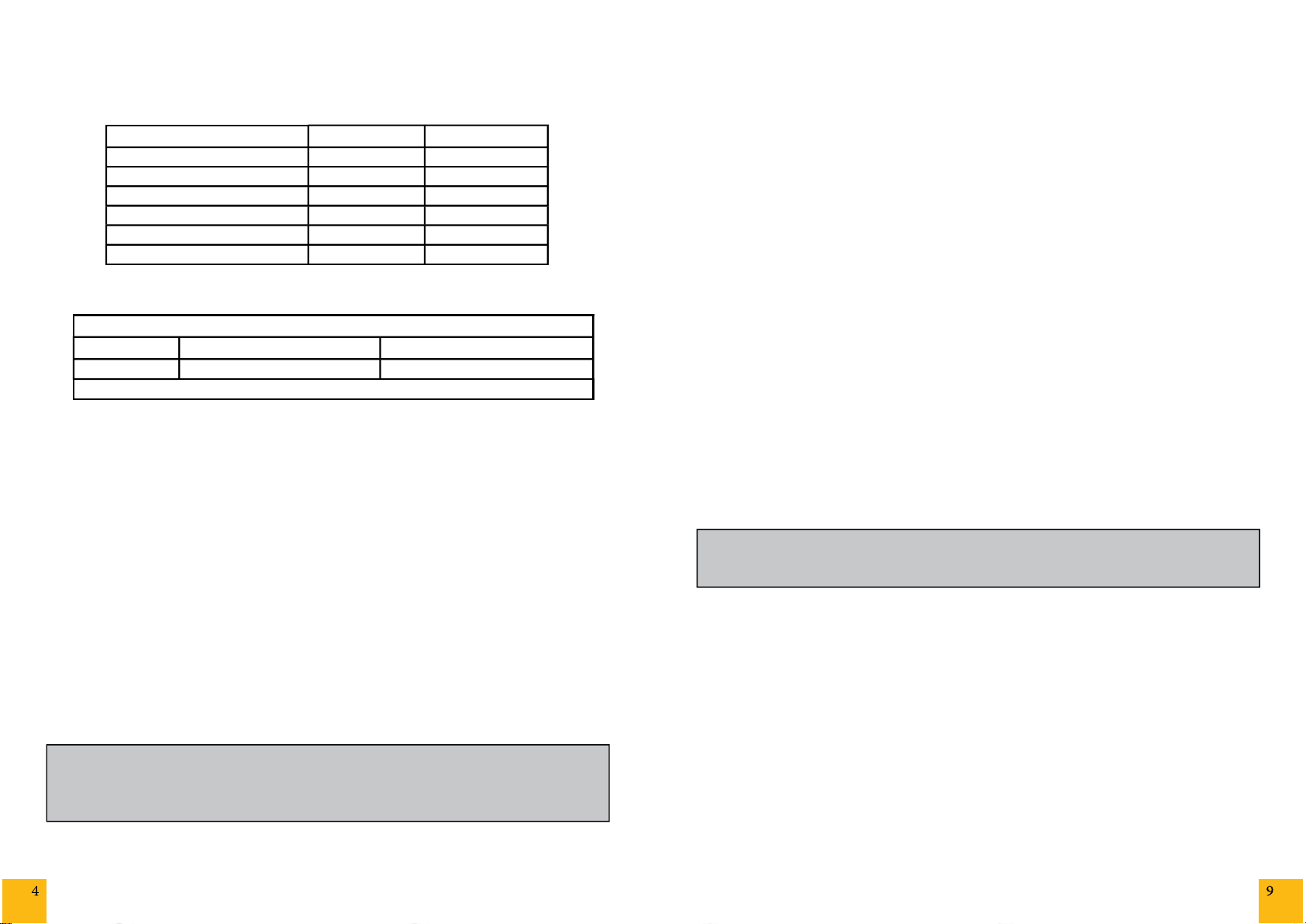
1.3 Technical Characteriscs
CHARACTERÍSTICS UNIT DMS-30
Height mm 1100
Width mm 450
Depth mm 430
Net Weight kg 41
Shipping Weight kg 54
Average Producon kg/h hasta 30
MODEL MINIMUM LOAD MAXIMUM LOAD
DMS-30 1kg of dough/ 30 rolls with 33gr 3kg of dough / 30 rolls with 100gr.
For 50gr rolls, put 1,8Kg of dough
2. Installaon and Pre Operaon
2.1 Installaon
TABLE 01
TABLE 02
LOAD CHART
4.4 Operaon
4.4.1 Advice
Be sure your hair is not loose in order to avoid geng caught by turning parts which could
lead to a serious accident. Tie your hair well up and/or cover your head with a scarf.
The operaon performed by not trained or skilled personnel shall be forbidden.
Never touch turning parts with your hands or in any other way.
NEVER operate machine without all original safety devices under perfect condions.
4.5 Aer Finishing The Work
4.5.1 Precauons
Always TURN THE MACHINE OFF by removing the plug from the socket before cleaning the
machine.
Never clean the machine unless it has come to a COMPLETE STOP.
Put all components back to their funconal posions before turning it ON again. DO NOT
place your fingers in between belts and pulleys nor chains and gears.
4.6 Maintenance
4.6.1 Danger
Any maintenance with the machine in working situaon is dangerous. TURN IT OFF BY
PULLING THE PLUG OFF THE SOCKET DURING MAINTENANCE.
You have just acquired a Dough Divider for Rolls. To operate it and benefit from its quality,
durability and efficiency with safety, see below some important instrucons:
1 - Firstly read the Technical Table;
2 - Check if the machine is firm upon a stable surface.
The Dough Divider model DMS-30 is not recommended for the processing of dough with
more than 60% of humidity.
2.2 Pre Operaon
IMPORTANT
Make sure that all the components are properly posioned before using the
equipment.
Inially check if the Dough Divider is firm on its posion.
IMPORTANT
Always unplug the machine when emergency cases arise.
4.6.2 Advice
Electrical or mechanical maintenance must be done by qualified personal for such
operaon.
Person in charge has to be sure that the machine is under TOTAL SAFETY condions when
working.
Page 5

DO NOT REMOVE, TEAR OFF or MACULATE ANY SAFETY or
IDENTIFICATION LABELS stuck on the machine. If any label has been removed or is no
longer legible, contact your nearest dealer for replacement.
3. Operaon
3.1 Operaon Procedure
4.2 Safety Procedures and Notes Before Switching Machine ON
IMPORTANT
Carefully read ALL INSTRUCTIONS of this manual before turning the machine ON.
Be sure to be familiar with the instrucons and that you have well understood
all informaon contained in this manual. If you have any queson contact your
supervisor or your nearest Dealer.
4.2.1 Danger
An electric cable or electric wire with damaged jacket or bad insulaon could cause
electrical shocks as well as electrical leak. Before use, check condions of all wires and
cables.
4.2.2 Advices
Be sure ALL INSTRUCTIONS in this manual have been thoroughly understood. Every
funcon and operaonal procedure have to be very clear to the operator. Contact your
nearest Dealer for further quesons.
Any manual command (switch, buon or lever) shall be given only aer being sure it is the
correct one.
4.2.3 Precauons
The electric cable has to be compable with the power required by the machine. Cables
touching the floor or close to the machine need to be protected against short circuits.
4.3 Roune Inspecon
IMPORTANT
Do not touch the Blade while it is moving, in any circumstances.
3.1.1 Accommodate the dough uniformly inside the Tray;
3.1.2 Place the Tray in the machine, lower the Lever Nº. 02 (Pic-01) unl the dough is
properly compressed. The Lock Handle N°. 5 (Pic.01) must be in the locked posion;
3.1.3 Lower down the lock N°. 4 (Pic.01) and place the lock handle N° .5 (Pic.01) in the
unlocked posion to realize the cung of the dough, then loosen up the lock N°.4 (Pic.01)
and bring the Lever N°.2 (Pic.01) up.
3.1.4 If the dough scks to the Divider Nº. 03 (Pic-01), lower the Lever Nº. 02 (Pic-01)
with the Handle Nº. 05 (Pic-01) on locked posion and the Lock Nº. 04 (Pic-01) on lowed
posion, unl the dough gets loose;
3.1.5 Remove the Tray from the equipment to remove the dough.
3.2 Cleaning
Machine cleaning procedure:
- Remove the Tray;
- Clean all the parts with a wet cloth;
- Follow the inverse sequence to reassemble parts.
IMPORTANT
Be careful and always use the machine correctly and with safety. This will only
bring you benefits.
4.3.1 When checking the tension of the belts or chains, DO NOT introduce your fingers
between the belts and the pulleys and nor between the chain and the gears.
4.3.2 Precauons
Check if motors and sliding or turning parts of the machine produce abnormal noises.
Check the tension of the belts and chains and replace the set when belt or chain show
signs of being worn out.
When checking tensions of belts or chain DO NOT introduce your fingers between belts
and pulleys, nor between the chains and gears.
Check protecons and safety devices to make sure they are working properly.
Page 6

3.3 Cauons with Stainless Steel
4. General Safety Pracces
The Stainless Steel may present rust signs, which ARE ALWAYS CAUSED BY EXTERNAL
AGENTS, especially when the cleaning or sanizaon is not constant and appropriate.
The Stainless Steel resistance towards corrosion is mainly due to the presence of chrome,
which in contact with oxygen allows the formaon of a very thin protecve coat. This
protecve coat is formed through the whole surface of the steel, blocking the acon of
external corrosive agents.
When the protecve coat is broken, the corrosion process begins, being possible to avoid
it by means of constant and adequate cleaning.
Cleaning must always be done immediately aer using the equipment. For such end, use
water, neutral soap or detergent, and clean the equipment with a so cloth or a nylon
sponge. Then rinse it with plain running water, and dry immediately with a so cloth, this
way avoiding humidity on surfaces and especially on gaps.
The rinsing and drying processes are extremely important to prevent stains and corrosion
from arising.
IMPORTANT
Acid soluons, salty soluons, disinfectants and some sterilizing soluons
(hypochlorites, tetravalent ammonia salts, iodine compounds, nitric acid
and others), must be AVOIDED, once it cannot remain for long in contact
with the stainless steel:
These substances aack the stainless steel due to the CHLORINE on its composion,
causing corrosion spots (ping).
Even detergents used in domesc cleaning must not remain in contact with the stainless
steel longer than the necessary, being mandatory to remove it with plain water and then
dry the surface completely.
Use of abrasives:
Sponges or steel wool and carbon steel brushes, besides scratching the surface
and compromising the stainless steel protecon, leave parcles that rust and react
contaminang the stainless steel. That is why such products must not be used for cleaning
and sanizaon. Scrapings made with sharp instruments or similar must also be avoided.
Main substances that cause stainless steel corrosion:
Dust, grease, acid soluons such as vinegar, fruit juices, etc., saltern soluons (brine),
blood, detergents (except for the neutral ones), common steel parcles, residue of sponges
or common steel wool, and also other abrasives.
IMPORTANT
If any item from the GENERAL SAFETY NOTIONS secon is not applicable to your
product, please disregard it.
The following safety instrucons are addressed to both the operator of the machine as
well as the person in charge of maintenance. The machine has to be delivered to the
operator in perfect condions of use by the Distributor to the user. The user shall operate
the machine only aer being well acquainted with the safety procedures described in the
present manual.
READ THIS MANUAL WITH ATTENTION.
4.1 Basic Operaon Pracces
4.1.1 Dangerous parts
Some parts of the electric devices are connected to high voltage points. These parts when
touched may cause severe electrical shocks or even be FATAL.
Never touch commands such as buons, switches and knobs with wet hands, wet clothes
and/or shoes. By not following these instrucons operator could be exposed to severe
electrical shocks or even to a FATAL situaon.
4.1.2 Warnings
The operator has to be well familiar with the posion of ON/OFF Switch to make sure the
Switch is easy to be reached when necessary.
Before any kind of maintenance, physically remove plug from the socket.
Provide space for a comfortable operaon thus avoiding accidents.
Water or oil spilled on the floor will turn it slippery and dangerous. Make sure the floor is
clean and dry.
Before giving any manual command (switch, buons, turn keys or lever) be sure the
command is the correct one. Check this manual for further details if necessary.
Never use a manual command (switch, buons, lever) unadvisedly.
If any work is to be made by two or more persons, coordinaon signs will have to be given
for each operaon step. Every step of the operaon shall be taken only if the sign has been
made and responded.
4 .1 .3 Advices
In case of power shortage, immediately turn the machine OFF.
Use recommended or equivalent lubricants, oils or greases.
Avoid mechanical shocks as they may cause failures or malfuncon.
Avoid penetraon of water, dirt or dust into mechanical or electrical components of the
machine.
DO NOT MODIFY original characteriscs of the machine.
 Loading...