

Page 1

(English)
User's Manual
UM-L800B-000
SPD Pedals
https://si.shimano.com
Page 2

Contents
IMPORTANT NOTICE........................................................................................ 3
Important safety information........................................................................ 4
Notice............................................................................................................... 6
Regular inspections before riding the bicycle .............................................. 7
Names of parts................................................................................................ 8
Cleat types, and using the cleats................................................................... 9
Types of cleats ......................................................................................................9
How to use .........................................................................................................10
• How to engage ....................................................................................................................................... 10
• How to release ....................................................................................................................................... 10
• When installing cleat spacers ................................................................................................................11
Adjusting the cleat holding force of the pedals......................................... 12
Replacing cleats, replacing body covers...................................................... 14
2
Page 3
IMPORTANT NOTICE
IMPORTANT NOTICE
Contact the place of purchase or a distributor for information on installation, adjustment, and replacement of
the products which are not found in the user's manual. A dealer's manual for professional and experienced
bicycle mechanics is available on our website ( https://si.shimano.com ).
For safety, be sure to read this user's manual thoroughly before use, follow it for correct use, and store it so
that it can be referenced at any time.
The following instructions must be observed at all times in order to prevent personal injury and physical damage
to equipment and surroundings. The instructions are classified according to the degree of danger or damage
which may occur if the product is used incorrectly.
DANGER
WARNING
CAUTION
Failure to follow the instructions will result in death or serious injury.
Failure to follow the instructions could result in death or serious injury.
Failure to follow the instructions could cause personal injury or physical damage to
equipment and surroundings.
3
Page 4
Important safety information
Important safety information
In order to ensure child safety for children using this product, children should be given instruction on the
correct use after both guardians and children have fully understood the following information. Failure to
follow the provided instructions may lead to serious injury.
Do not disassemble or modify the product. This may cause the product to not operate correctly, and you
may suddenly fall and be seriously injured.
Before attempting to ride with these pedals and cleats (shoes), make sure you understand the operation of
the engagement/release mechanism for the pedals and cleats (shoes). SPD pedals are designed to be
released only when intended. They are not designed to be released automatically when you have fallen
off the bicycle.
Use only SPD-compatible shoes with this product. Other types of shoes may not release from the pedals, or
may release unexpectedly.
Use only SHIMANO cleats (SM-SH51 / SM-SH56) and make sure that the mounting bolts are tightened
securely to the shoes. Failure to securely tighten the bolts may result in a fall in which the cleats do not
release.
Before attempting to ride with these pedals and cleats, apply the brakes, then place one foot on the
ground and practice engaging and releasing each cleat from its pedal until you can do so naturally and
with minimal effort.
Ride on level ground first until you become accustomed to engaging and releasing your cleats from the
pedals.
Before riding, adjust the cleat holding force of the pedals to your liking. If the cleat holding force of the
pedals is low, the cleats may become accidentally released and you may lose balance and fall off the
bicycle. If the cleat holding force of the pedals is high, the cleats cannot be easily released.
When riding at low speed or when there is a possibility that you might need to stop riding (for example,
when doing a U-turn, nearing an intersection, riding uphill, or turning a blind curve), release your cleats
from the pedals beforehand so that you can quickly put your feet onto the ground at any time.
Use a lighter cleat holding force for attaching the pedal cleats when riding in adverse conditions.
Keep cleats and bindings out of dirt and debris to ensure proper engagement and release.
Remember to check the cleats periodically for wear. When the cleats are worn, replace them, and adjust
the cleat holding force before riding and after replacing the pedal cleats.
If the warnings above are not followed, your shoes may not come out of the pedals when you intend or they may come out
unexpectedly or accidentally, and severe injury may result.
Be sure to attach reflectors to the bicycle when traveling on roads. Reflectors are sold separately for
models that do not come with reflectors equipped as standard. For information on compatible reflectors,
contact the place of purchase or a distributor.
Do not continue riding the bicycle if the reflectors are dirty or damaged. Otherwise, it becomes more
difficult for oncoming vehicles to see you.
<Models with pins for adjusting gripping force>
4
Page 5

Important safety information
If you are not sure about how to adjust the pins on the pedals, consult your place of purchase or a
distributor.
Raise your feet from the pedals then slide them sideways to disengage your feet from the pedals. With
one foot firmly on the ground, practice engaging and disengaging the other foot from the pedal
repeatedly until you become used to the operation, otherwise, you may fall and be seriously injured. If you
cannot get used to this operation, use the product with spacers installed.
Be sure to wear clothing and protective gear which is suitable for the way in which the bicycle is to be
used. Because the pins are long, they may cause injury if they come into direct contact with your skin.
5
Page 6

Notice
Notice
If pedaling performance does not feel normal, perform an inspection again.
If you experience any trouble with the rotating parts of the pedal, the pedal may require adjustment. Consult
your place of purchase or a distributor.
Products are not guaranteed against natural wear and deterioration from normal use and aging.
For maximum performance we highly recommend SHIMANO lubricants and maintenance products.
6
Page 7

Regular inspections before riding the bicycle
Regular inspections before riding
the bicycle
Before riding the bicycle, check the following items. If any problems are found, consult your place of purchase or
a distributor.
Are the fastening sections fixed securely?
Has excess play increased between the cleat and pedal due to wear?
Are there any abnormalities when the cleat engages or releases?
Are there any abnormal noises?
7
Page 8
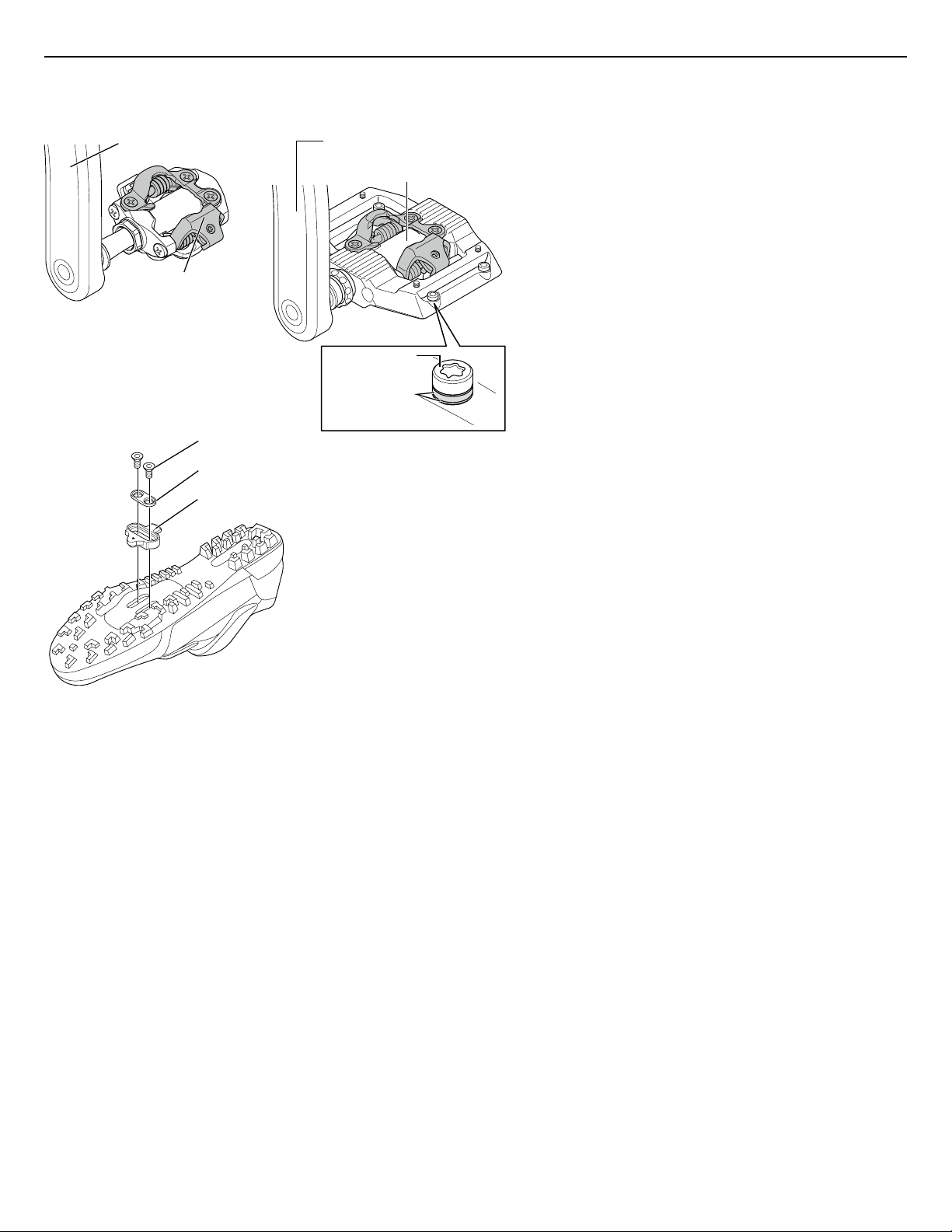
Fastening section
Binding
Fastening section
Binding
Pin
Spacer
Cleat mounting bolt
Cleat adapter
Cleat
Names of parts
Names of parts
8
Page 9
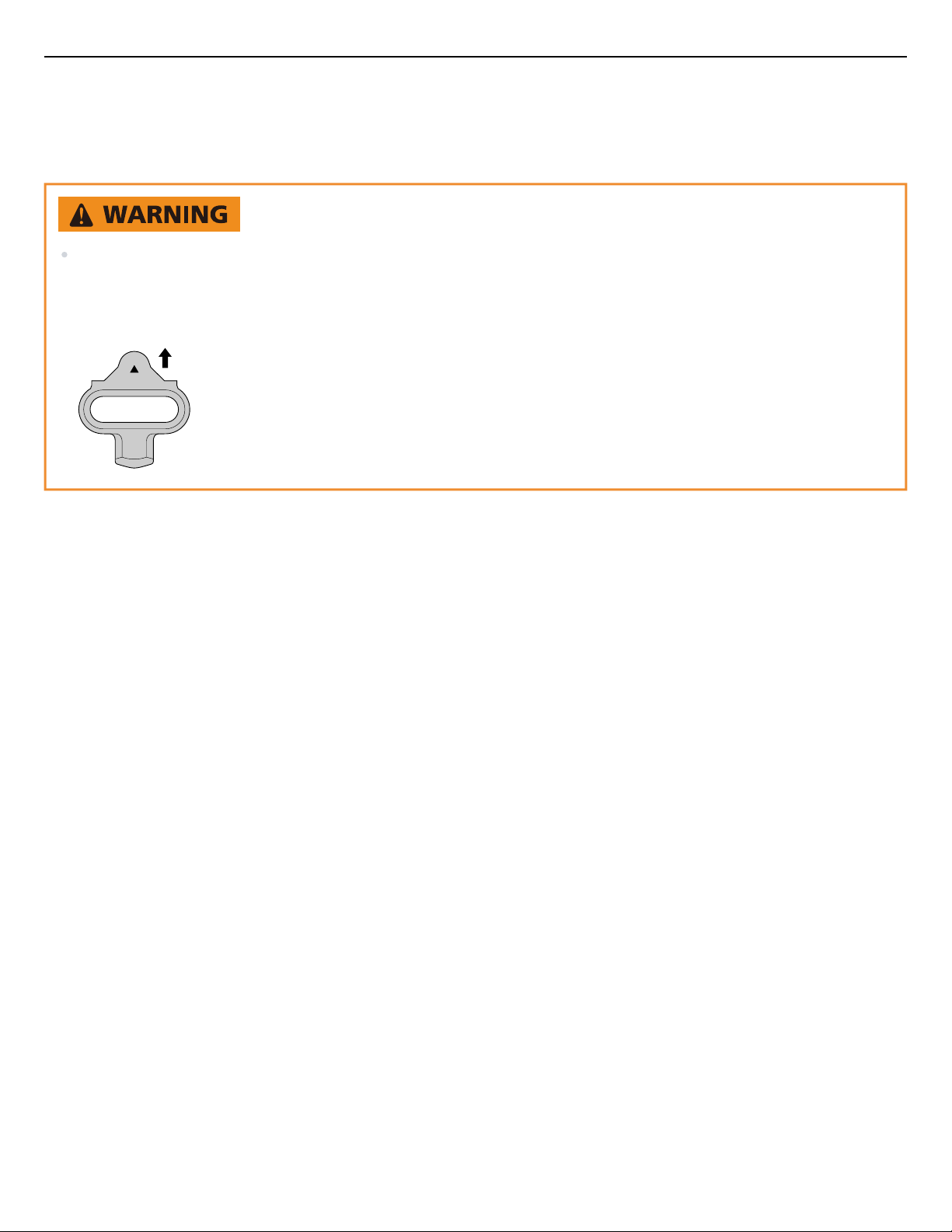
Front
Cleat types, and using the cleats
Types of cleats
Cleat types, and using the cleats
Types of cleats
Do not use the pedals or cleats in any way not described in the user's manual. When the cleat and pedal
are facing forwards, the cleat can be released and engaged with the pedal.
Read the user's manual carefully for instructions on using the cleats. Failure to follow the instructions may
lead to serious injury.
Single release mode cleats (SM-SH51) and multiple release mode cleats (SM-SH56) are available for use with these
pedals.
Read the manual and chose the correct type for your needs, based on a consideration of your riding style, riding
terrain, and conditions.
Cleats such as the single release mode cleats (SM-SH52) and multiple release mode cleats (SM-SH55) cannot be
used as they lack certain features, such as stable step-out performance and sufficient holding force.
9
Page 10
Cleat types, and using the cleats
How to use
How to use
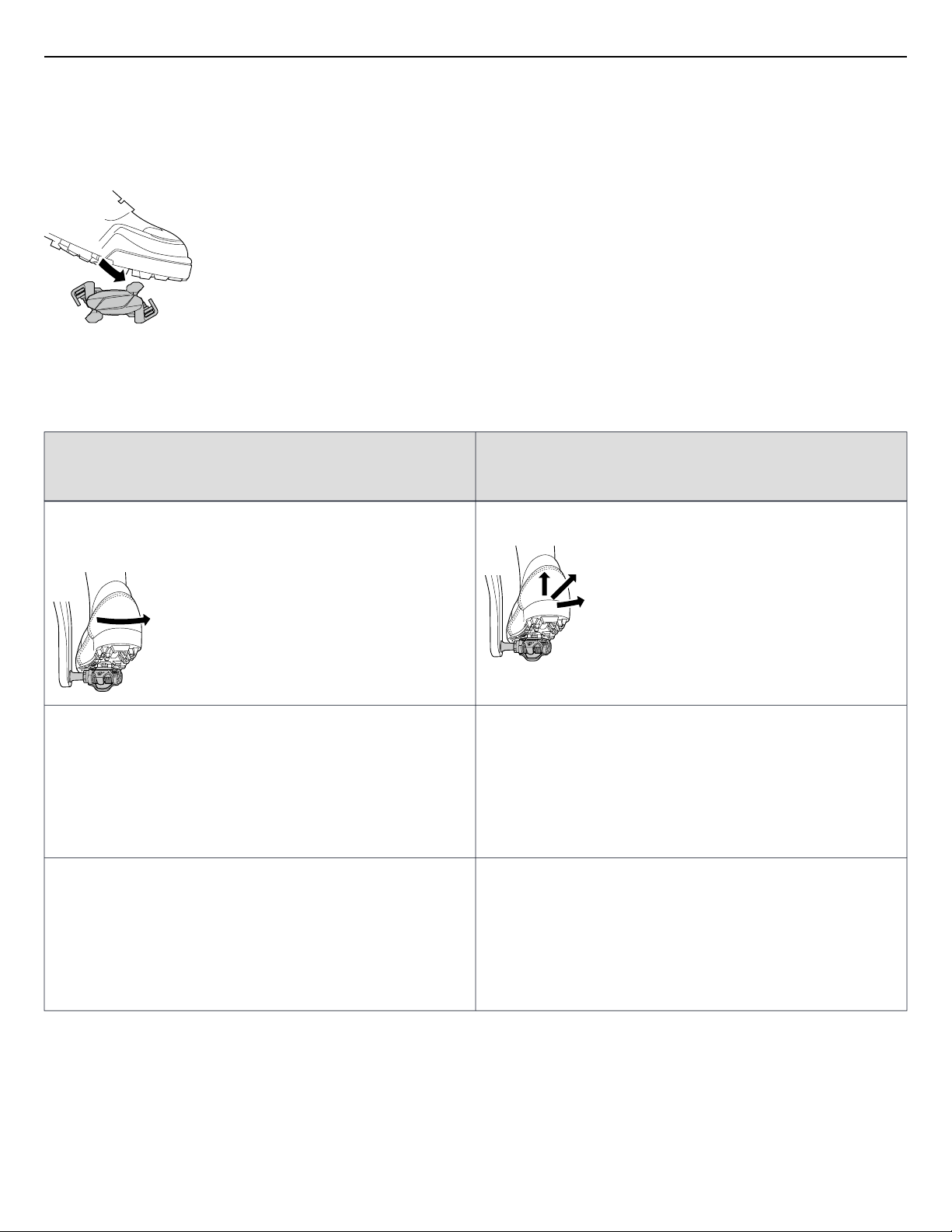
How to engage
Press the cleats into the pedal binding with an angled downward motion.
How to release
The release mode can be selected depending on the type of cleat being used.
(Check the cleat model number and color for the appropriate release method.)
Single release mode cleats: SM-SH51
(Black)
Only release when the heel is moved outward .
They will not release if the heel is twisted in any other direction.
Upward force may be applied to the pedal, since the cleat will
not release unless the foot is twisted.
The cleats will not necessarily release if you lose your balance.
Accordingly, for places and conditions where it looks as though
you may lose balance, make sure that you have sufficient time
to release the cleats beforehand.
Multiple release mode cleats: SM-SH56
(Silver, Gold / sold separately)
Can be released by twisting in any direction.
The cleat may release in an upward direction. Therefore, pulling
up on the pedal may result in the cleat unexpectedly
disengaging.
Therefore, do not use this cleat if you pull up on the pedals
when riding, or if you perform jumps or similar in which forces
act on the foot in the direction of cleat release.
Although the cleats do release in directions other than the
horizontal, they will not necessarily release if you lose your
balance.
Accordingly, for places and conditions where it looks as though
you may lose balance, make sure that you have sufficient time
to release the cleats beforehand.
10
Page 11
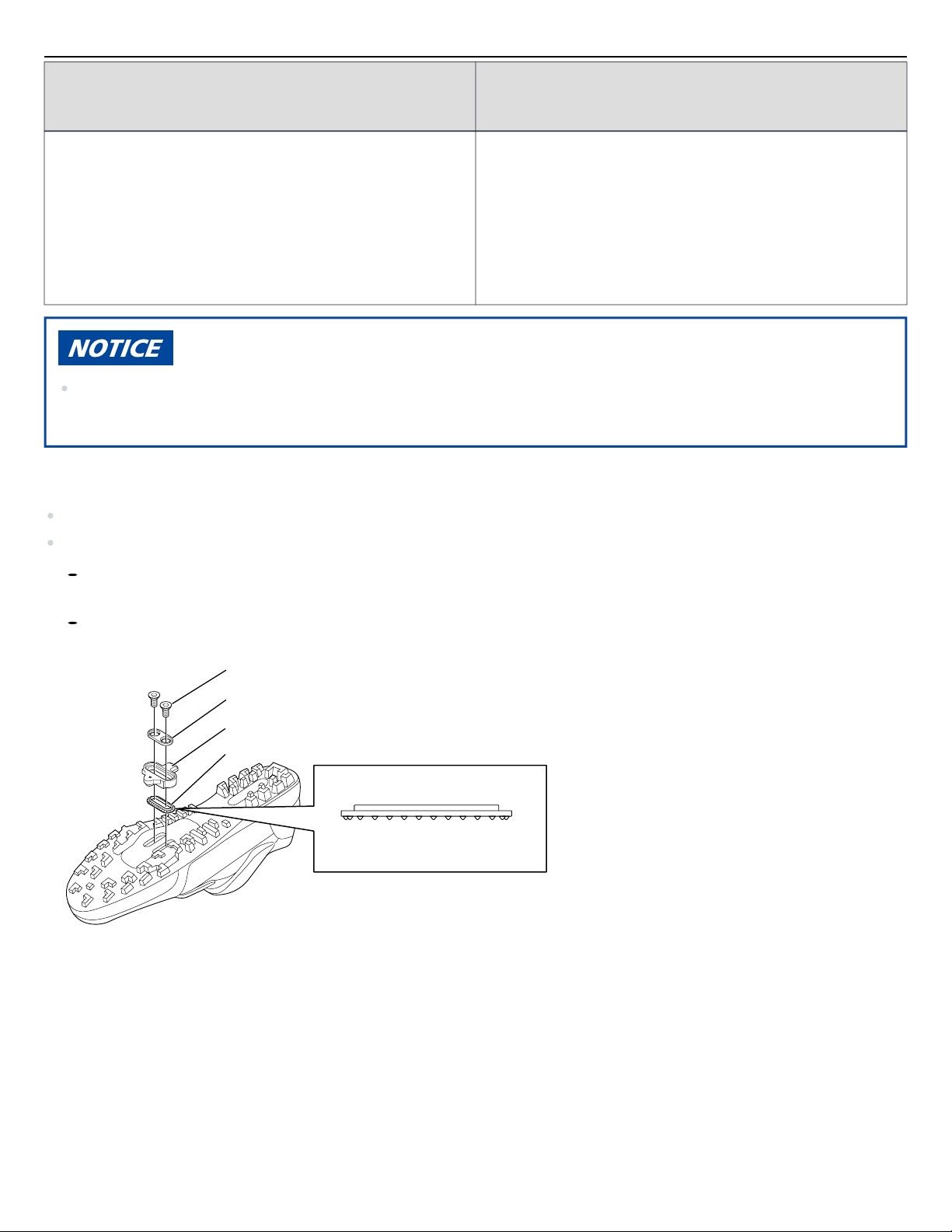
Side to be inserted into cleat
Side to be inserted into sole (side with
small protrusions)
Cleat mounting bolt
Cleat adapter
Cleat
Cleat spacer
Cleat types, and using the cleats
How to use
Single release mode cleats: SM-SH51
(Black)
When, for example, you are pedaling vigorously, your heel may
inadvertently twist sideways and this may cause the cleat to
release accidentally.
Once you have adjusted the cleats, practice engaging and
releasing until you are fully familiar with the amount of force
and foot angle required. An unexpected release may cause you
to fall off the bicycle and serious injury may result.
If the characteristics of multiple release mode cleats are not
sufficiently understood or used correctly, they are more likely
than single release mode cleats to release unexpectedly.
Once you have adjusted the cleats, practice engaging and
releasing until you are fully familiar with the amount of force
required in each direction. An unexpected release may cause
you to fall off the bicycle and serious injury may result.
Multiple release mode cleats: SM-SH56
(Silver, Gold / sold separately)
It is necessary to practice releasing until you become accustomed to the technique.
* In multiple release mode, releasing by lifting your heel requires particular practice.
When installing cleat spacers
If the cleat spacer is only compatible with SHIMANO cleats (SM-SH51 / SM-SH56).
Only use cleat spacers in the following cases. When using spacers, use only one per SPD-compatible shoe.
If blocks on the shoe soles are high, causing them to get caught on the pedals, it prevents smooth
engagement of the shoes with the pedals.
If dirt and debris build up on the shoe soles or pedals, it prevents smooth engagement of the shoes with
the pedals.
11
Page 12
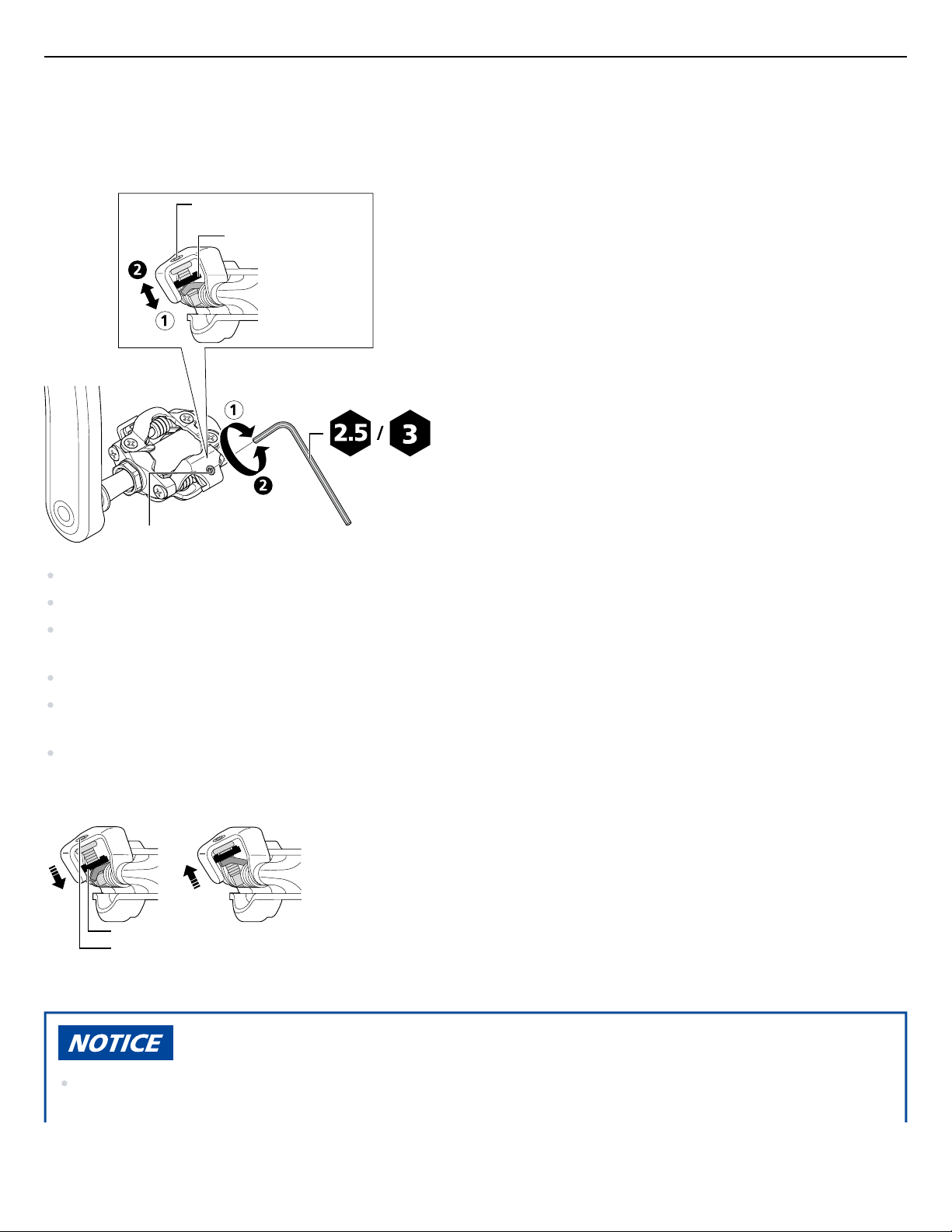
Adjustment bolt
Adjustment plate
Increase
Decrease
Adjustment bolt
Weakest positionStrongest position
Adjustment plate
Adjustment bolt
Adjusting the cleat holding force of the pedals
Adjusting the cleat holding force of
the pedals
The spring tension of the pedals can be adjusted by turning the adjustment bolt.
Clicking the adjustment bolt once changes the tension one step. There are four clicks per turn.
The adjustment bolt is located at the rear of each binding, resulting in four positions in total for the two
pedals. (Some models have a total of two adjustment bolts, counting both pedals.)
Adjust the spring force to the optimal cleat holding force when releasing the cleats from the bindings.
Equalize the cleat holding forces at all four positions (or two positions, on some models) by checking the
adjustment plate position and counting the number of turns of the adjustment bolts.
Turning the adjustment bolt clockwise increases the cleat holding force, and turning it counterclockwise
decreases it.
If the adjustment plate is at the strongest or the weakest position, do not turn the adjustment bolt any further.
In order to prevent accidental cleat release and ensure that release is possible when needed, make sure
that the cleat holding force is properly adjusted.
12
Page 13

Adjusting the cleat holding force of the pedals
If the cleats are not adjusted equally, it can cause the rider difficulty in engaging or releasing the cleats.
The cleat holding force for the right and left pedals should be adjusted so they are equal.
13
Page 14
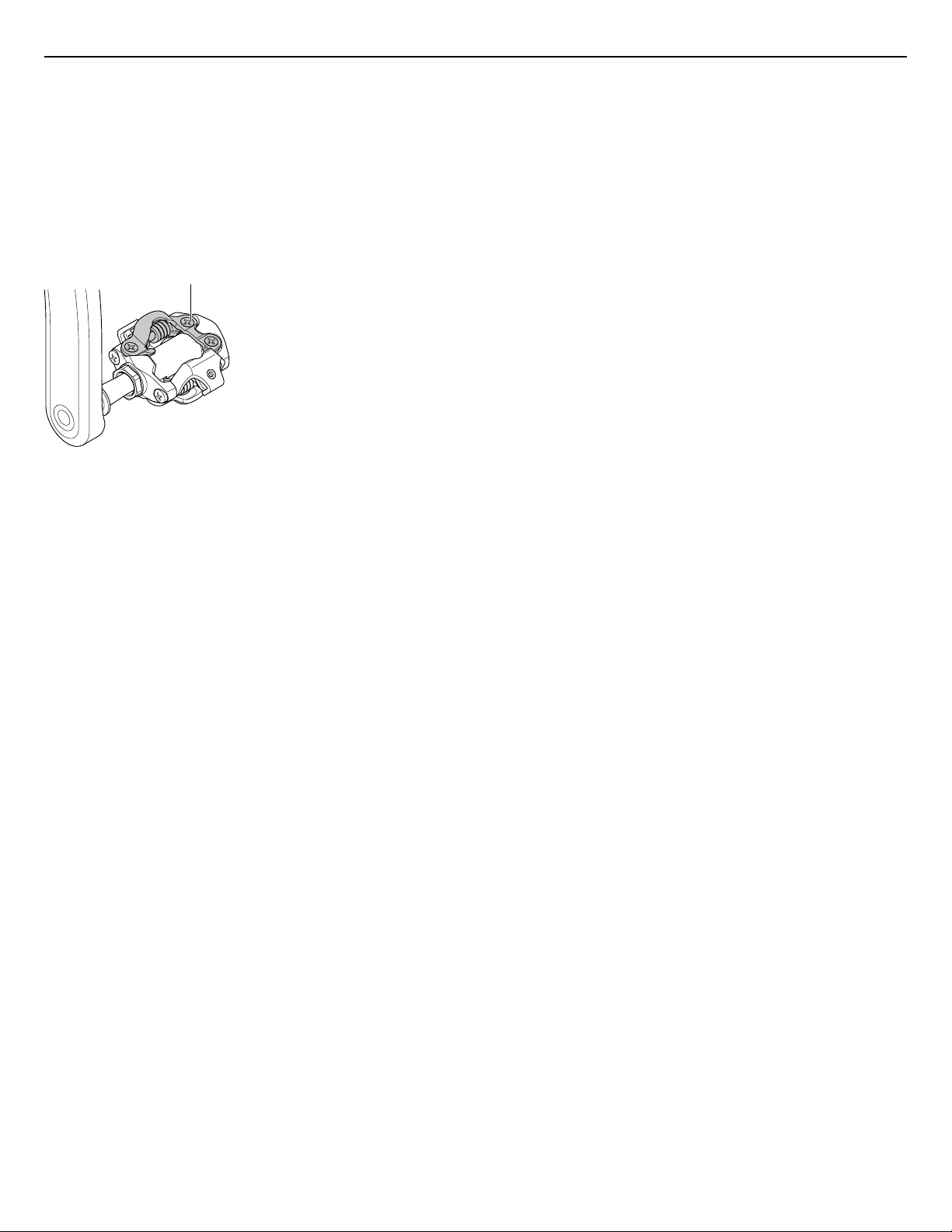
Body cover
Replacing cleats, replacing body covers
Replacing cleats, replacing body
covers
Cleats and body covers become worn and need to be replaced periodically.
When, due to wear, the cleat release starts to become too tight or too loose, immediately contact the place of
purchase or a distributor and replace the cleats and body covers with new ones.
14
Page 15

One Holl and, Irvine, California 92 618, U.S.A. Ph one: +1-949-9 51-5003
High Tec h Campus 92, 5656 AG Eindho ven, The Neth erlands Phone : +31-402-6122 22
3-77 Oim atsu-cho, Sak ai-ku, Sakai City, Osaka 59 0-8577, Japan
Please note: specifications are subject to change for improvement without notice. (English)
© Jul. 2024 by SHIMANO INC. ITP
 Loading...