

Page 1
SAFETY DATA SHEET
Issue date
This Safety Data Sheet (SDS) is intended to provide product information for workplaces, emergency personnel and other situations where there is potential for
longer exposure or exposure to larger quantities of product. For consumer use, applicable precautionary information is provided on the product label. This SDS is
designed to cover both U.S. and Canadian requirements. Differences between U.S. and Canadian requirements are noted where applicable.
18 May 2015
FM000002‐00,01.1
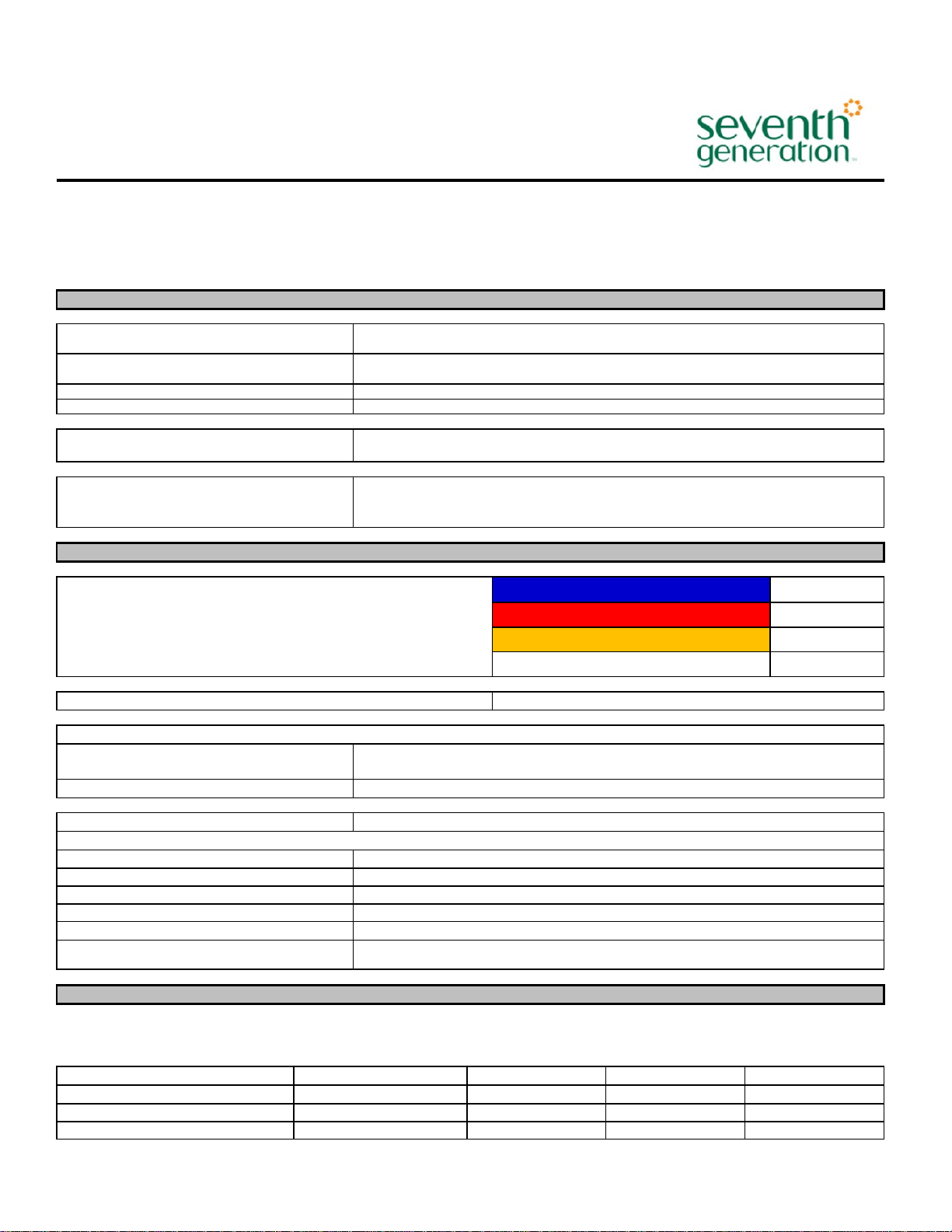
Section 1: Identification of Product and Company
Product Name
Synonyms
Product Use
Restrictions on Use Follow directions on the product label
Manufacturer Name
Address
Emergency Telephone Number U.S. Canada
Monday -Friday 8 am - 5 pm ET (except holidays)
Outside these hours
Automatic Dishwasher Detergent Gel
Natural Automatic Dishwasher Detergent Gel
Automatic Dishwashing
Seventh Generation, Inc.
60 Lake Street, Burlington, VT 05401, USA
1‐800‐211‐4279
1‐800‐255‐3924 (ChemTel)
Section 2: Hazards Identification
Hazardous Materials Identification System (HMIS) Rating
Legend: 4‐Severe, 3‐Serious, 2‐Moderate, 1‐Slight, 0‐Minimal
HEALTH
FLAMMABILITY
PHYSICAL HAZARDS
PERSONAL PROTECTION
0
0
0
A
National Fire Protection Association (NFPA) Rating
Classification
U.S.
Canada
Emergency Overview No known health hazards.
Precautionary Statements
Eyes Minimal Irritant
Skin Non‐Irritant
Ingestion Non‐Toxic
Inhalation No health effects are expected.
Hazards not otherwise identified None known
Percent ingredients with unknown acute toxicity 0% of the product consists of ingredients of unknown acute oral toxicity. Refer to Section 3.
This product is not considered hazardous under the 2012 OSHA Hazard Communication Standard (29 CFR
1910.1200).
This product is not considered hazardous under the WHMIS 2015.
Not determined
Section 3: Composition, Information on Ingredients
Regardless of hazard classification, Seventh Generation discloses all intentionally added ingredients and, if applicable incidental ingredients ≥1% on the consumer
product label.
Ingredient Function CAS Number
aqua (water) diluent 7732‐18‐5 30% ‐ 100% Not applicable
sodium citrate water softener 68‐04‐23% ‐ 10% >8000 mg/kg
ppg‐10‐laureth‐7 cleaning agent 68439‐51‐03% ‐ 10% >2000 mg/kg
Concentration
1
LD50
2
Page 1 of 6
Page 2
SAFETY DATA SHEET
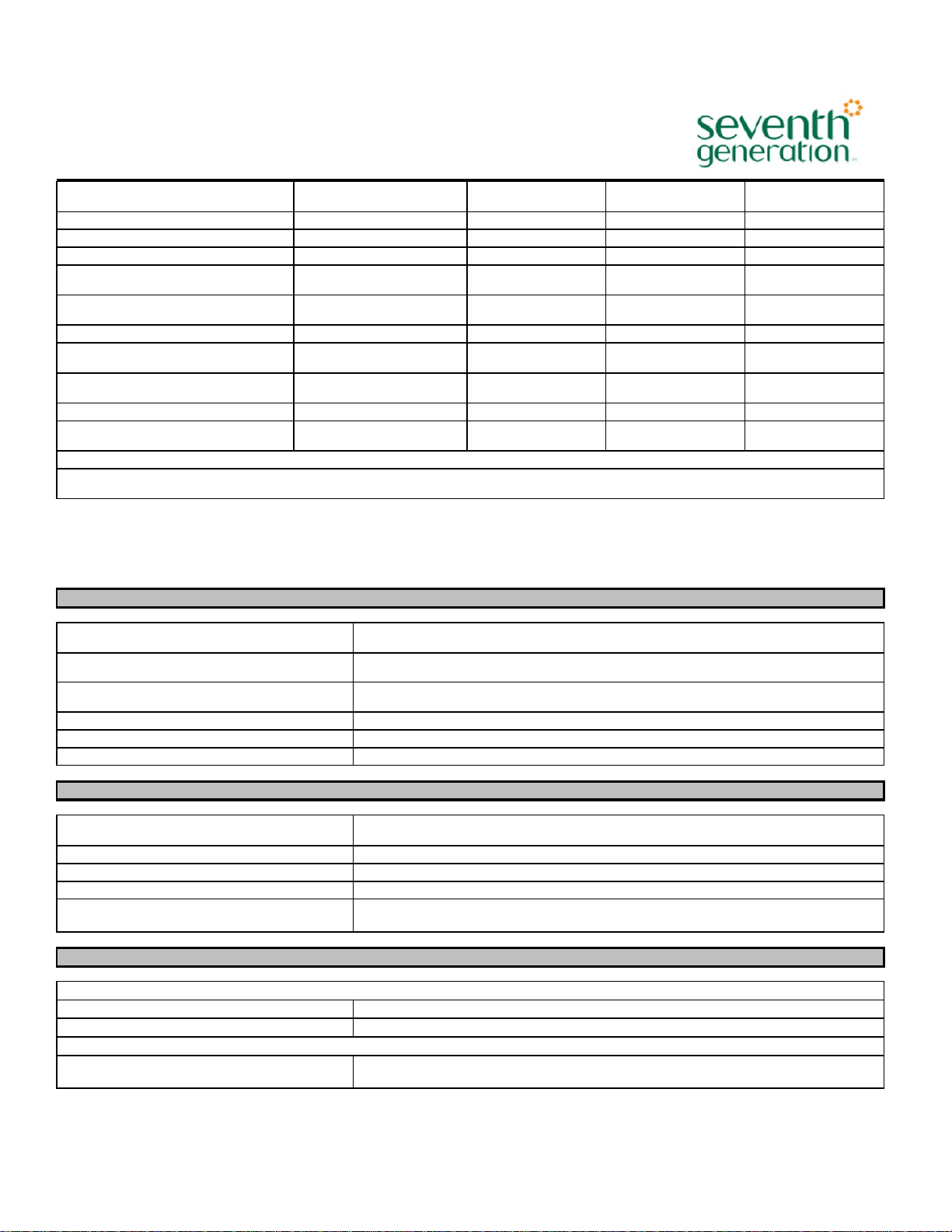
glycerin enzyme stabilizer 56‐81‐51% ‐ 3% >12600 mg/kg
sodium silicate alkalinity builder 1344‐09‐81% ‐ 3% 1960 mg/kg
citric acid pH adjuster 77‐92‐91% ‐ 3% 3000 mg/kg
xanthan gum thickener 11138‐66‐2 ≤1% >5000 mg/kg
sodium borate enzyme stabilizer 1303‐96‐4 ≤1% 2660 mg/kg
calcium chloride enzyme stabilizer 10043‐52‐4 ≤1% 1000 mg/kg
sodium hydroxide pH adjuster 1310‐73‐2 ≤1% 140 mg/kg
protease enzyme soil remover 9014‐01‐1 ≤1% 1800 mg/kg
amylase enzyme soil remover 9000‐90‐2 ≤1% >2000 mg/kg
essential oils & botanical extracts* mixture ≤1% >5000 mg/kgfragrance
benzisothiazolinone (and)
methylisothiazolinone
*Free & Clear: not applicable.
*Lemon: citrus grandis (grapefruit) peel oil, citrus limon (lemon) peel oil, cymbopogon schoenanthus (lemongrass) oil. d‐Limonene is a component of these essential
oils.
1
Where ranges are shown, the exact concentration has been withheld as a trade secret.
2
LD50 Acute oral toxicity (rat) – This is a value provided by the raw material supplier or scientific literature. It is not a value generated by Seventh Generation by
testing using rats. Seventh Generation uses alternative, non‐animal based methods and scientific literature to determine the safety classification of our products
and their ingredients.
preservatives
2634‐33‐5 &
2682‐20‐4
≤1% >2500 mg/kg
Section 4: First Aid Measures
Eye Contact Flush eyes with water immediately after contact. Call a physician if irritation develops or persists.
Skin Contact Rinse thoroughly with water if skin contact occurs. Call a physician if irritation develops or persists.
Ingestion Drink 4‐8 ounces of water or milk immediately. If prolonged nausea or pain occurs call a doctor.
Inhalation No need for first aid is expected.
Notes to Physician Treat symptomatically.
Most important symptoms and effects Acute exposure may result in eye irritation.
Section 5: Fire Fighting Measures
Suitable Extinguishing Media As appropriate for surrounding fire. Use water, dry chemical, carbon dioxide or foam.
Unsuitable Extinguishing Media Not available.
Specific Hazards arising from the chemical mixture Not available.
Hazardous Combustion Products Not available.
Protective Equipment and Precautions for Firefighters
Fire fighters should wear full protective clothing and self contained breathing apparatus as for
surrounding fire.
Section 6: Accidental Release Measures
Personal Precautions
Industrial Setting Wear appropriate personal protective equipment (refer to Section 8).
Environmental Precautions Avoid entry into lakes, streams, ponds or public waterways.
Methods for Containment and Cleaning Up
Household Setting
Small spills and leaks may be cleaned up and disposed of in normal household trash or diluted and
disposed of via sewer.
Page 2 of 6
Page 3
SAFETY DATA SHEET
Before attempting clean up, refer to hazard data given. Material may be slippery if spilled and wet.
Industrial Setting
Section 7: Handling and Storage
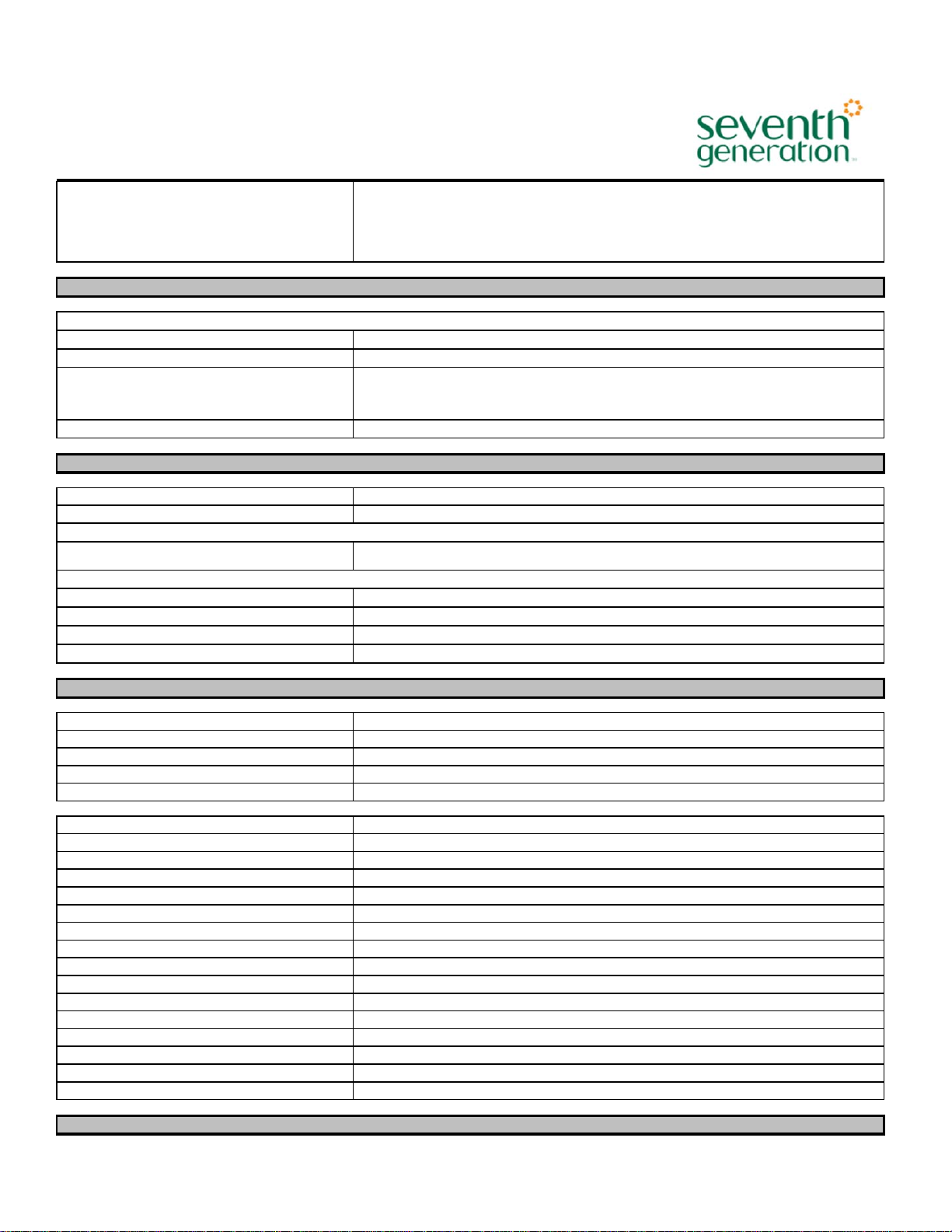
Safe Handling
Household Setting Use as directed on product label.
Industrial Setting Wear appropriate personal protective equipment (refer to section 8).
Safe Storage
Storage Incompatibilities None known.
Section 8: Exposure Controls, Personal Protection
Exposure Limits None known.
Engineering Controls Not applicable.
Personal Protective Equipment (PPE)
Household Setting No special precautions necessary as long as product is used as directed.
Industrial Setting
Respiratory Protection None required under normal conditions. General ventilation required.
Eye Protection Goggles or other protective eye wear may be worn for protection.
Skin Protection Gloves may be worn for protection.
Hygiene Measures Handle in accordance with good industrial hygiene and safety practice.
Prevent spill from entering a waterway. Stop spill at source and contain material. Dispose liquid in
accordance with all applicable local, state, and federal regulations. Small amounts may be flushed to
sewer.
KEEP OUT OF REACH OF CHILDREN AND PETS.
Store in original container and keep container closed when not in use.
Avoid freezing.
Section 9: Physical and Chemical Properties
Physical State Liquid (gel).
Color White
Clarity Opaque
Odor Unscented: Characteristic of the ingredients. Scented: Characteristic of the ingredients.
Odor Threshold Not available.
pH 7.2 ‐ 7.8
Melting Point Not available.
Freezing Point Not available.
Initial Boiling Point and Boiling Range Not available.
Flash Point Not available. Aqueous Solution.
Evaporation Rate Not available.
Upper Explosive Limit (UEL) Not applicable.
Lower Explosive Limit (LEL) Not applicable.
Vapor Pressure (mmHg) Not available.
Specific Gravity (H2O = 1) 1.07 ‐ 1.10
Relative Density Not available.
Vapor Density (Air = 1) Not available.
Solubility in Water Miscible
Partition Coefficient: n-octanol/water Not available.
Viscosity Not available.
VOC (weight %) Not available.
Section 10: Stability and Reactivity
Page 3 of 6
Page 4
SAFETY DATA SHEET
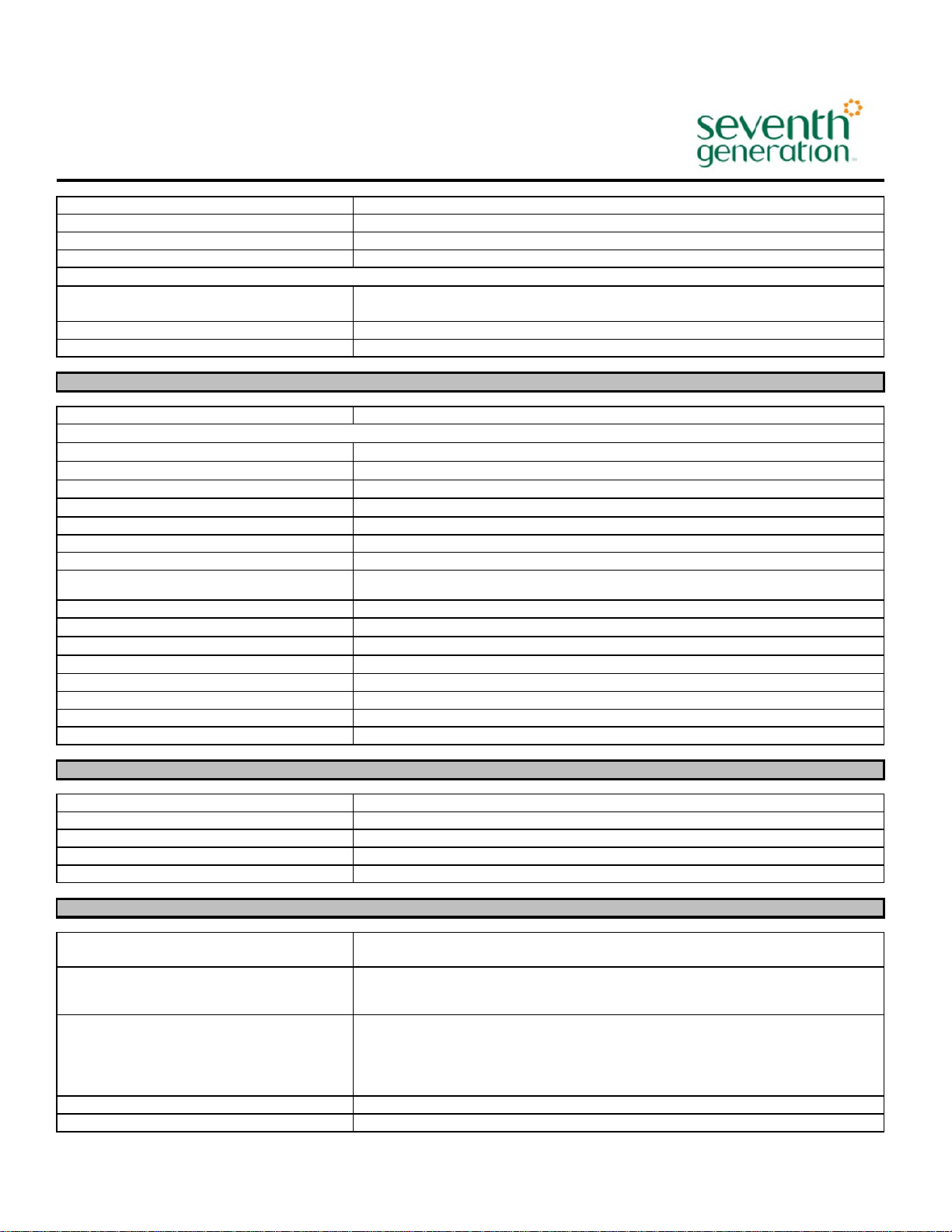
Reactivity Not available.
Chemical Stability Stable.
Possibility of Hazardous Reactions None known.
Conditions to Avoid None known.
Incompatible Materials
Household Setting
Industrial Setting None known.
Hazardous Decomposition Products None known.
Section 11: Toxicological Information
Potential Route(s) of Exposure Eyes. Skin. Ingestion.
Effects of Acute Exposure
Oral Toxicity LD50 >5000 mg/kg, calculated based on ingredients.
Dermal Toxicity Not available.
Inhalation Toxicity Not available.
Eye Contact
Skin Contact Non‐Irritant, based on Human Repeat Insult Patch Test (HRIPT).
Component Information Refer to section 3 for ingredient LD50 (acute oral).
Effects of Chronic Exposure
Sensitization
Carcinogenicity Not expected to have chronic health effects.
NTP No Ingredients Listed
IARC No Ingredients Listed
OSHA No Ingredients Listed
Teratogenicity Not expected to have chronic health effects.
Mutagenicity Not expected to have chronic health effects.
Target Organ Effects Not expected to have chronic health effects.
In general, cleaning products should not be mixed with other household chemicals, unless specifically
provided for in the use directions.
Minimal Irritant, based on in‐vitro data.
Not expected to have chronic health effects.
Does not indicate a potential for allergic contact sensitization, based on Human Repeat Insult Patch Test
(HRIPT).
Not expected to have chronic health effects.Reproductive Effects
Section 12: Ecological Information
Ecotoxicity Not available.
Persistence and Degradability This product is biodegradable, based on ingredients.
Bioaccumulative Potential Not applicable.
Mobility in Soil Not available.
Environmental Fate No adverse effects expected.
Section 13: Disposal Considerations
Product Waste
Household Setting Product residues in the bottle may be discarded in trash, or diluted with water and disposed via sewer.
Industrial Setting
California Hazardous Waste Code 561
Connecticut Hazardous Waste Code CT04
Any disposal must be in compliance with applicable local, state, provincial and federal laws and
regulations.
When used as directed, the product is septic‐safe.
When disposed as waste in its original form, this product is not considered hazardous waste under
Federal regulations, however regulations may vary by state or province and may designate it as
hazardous waste. Check with your local waste and waste water authorities. We are aware of the
following state waste classifications:
Page 4 of 6
Page 5
SAFETY DATA SHEET
Michigan Liquid Waste Code 029L
Washington Hazardous Waste Code WT02
Empty Packaging
Offer empty container for recycling. If recycling
is not available, discard in trash.
Section 14: Transport Information
U.S. DOT (Surface Transport) Not regulated.
Not regulated as finished product.
U.S. States (Surface Transport)
Canadian TDG (Surface Transport) Not regulated.
IATA (Air Transport) Not regulated.
IMDG (Marine Transport) Not regulated.
Regulated in some states if the product is disposed of in its original form as waste by commercial
users/handlers. Refer to Section 13. for applicable state waste codes.
Section 15: Regulatory Information
U.S.
Toxic Substances Control Act (TSCA) This product complies with the inventory requirements of the U.S. Toxic Substances Control Act (TSCA).
California Prop 65 This product is not subject to the labeling requirements of California’s Proposition 65.
California Air Resources Board (CARB) Not applicable.
Canada
Domestic Substances List (DSL) This product complies with the inventory requirements under Canada’s Domestic Substances List (DSL).
Regardless of hazard classification, Seventh Generation discloses all intentionally added ingredients and,
Right to Know
Other
if applicable incidental ingredients ≥1% on the product label. Please refer to Section 3. of this SDS for
ingredient listing.
Fragrances used in this product comply with applicable International Fragrance Association (IFRA)
guidance.
Section 16: Other Information
Prepared by Seventh Generation Inc.
Issuing Date 18 May 2015
Revision Date 18 May 2015
Revision Note Revised format as per OSHA 2012 and WHMIS 2015.
Please note: This product is manufactured and marketed for consumer use and should be used as directed on the product label for the intended purpose. Seventh
Generation warrants that this product conforms to our standard specification when released to the market and when used according to directions. To the best of
our knowledge, the information contained herein is accurate. However, we do not assume any liability whatsoever for the accuracy or completeness of the
information contained herein. Final determination of the suitability of any product is the sole responsibility of the user. All products may present unknown hazards
and should be used with requisite caution. Although certain hazards are described herein, we cannot guarantee that these are the only hazards that exist.
Other abbreviations used in this document:
DOT – (U.S.) Department of Transportation
EPA – (U.S.) Environmental Protection Agency
IARC – International Agency for Research on Cancer
Page 5 of 6
Page 6

SAFETY DATA SHEET
NTP – (U.S. Department of Health and Human Services) National Toxicology Program
OSHA – (U.S.) Occupational Safety and Health Administration
TDG – (Canadian) Transport of Dangerous Goods
WHMIS – (Canadian) Workplace Hazardous Materials Information System
End of Safety Data Sheet
Page 6 of 6
 Loading...