

Page 1
Self-operated Temperature Regulators
Type 2040
Safety Temperature Monitor (STM)
Mounting and
Operating Instructions
EB 2090 EN
Edition October 2014
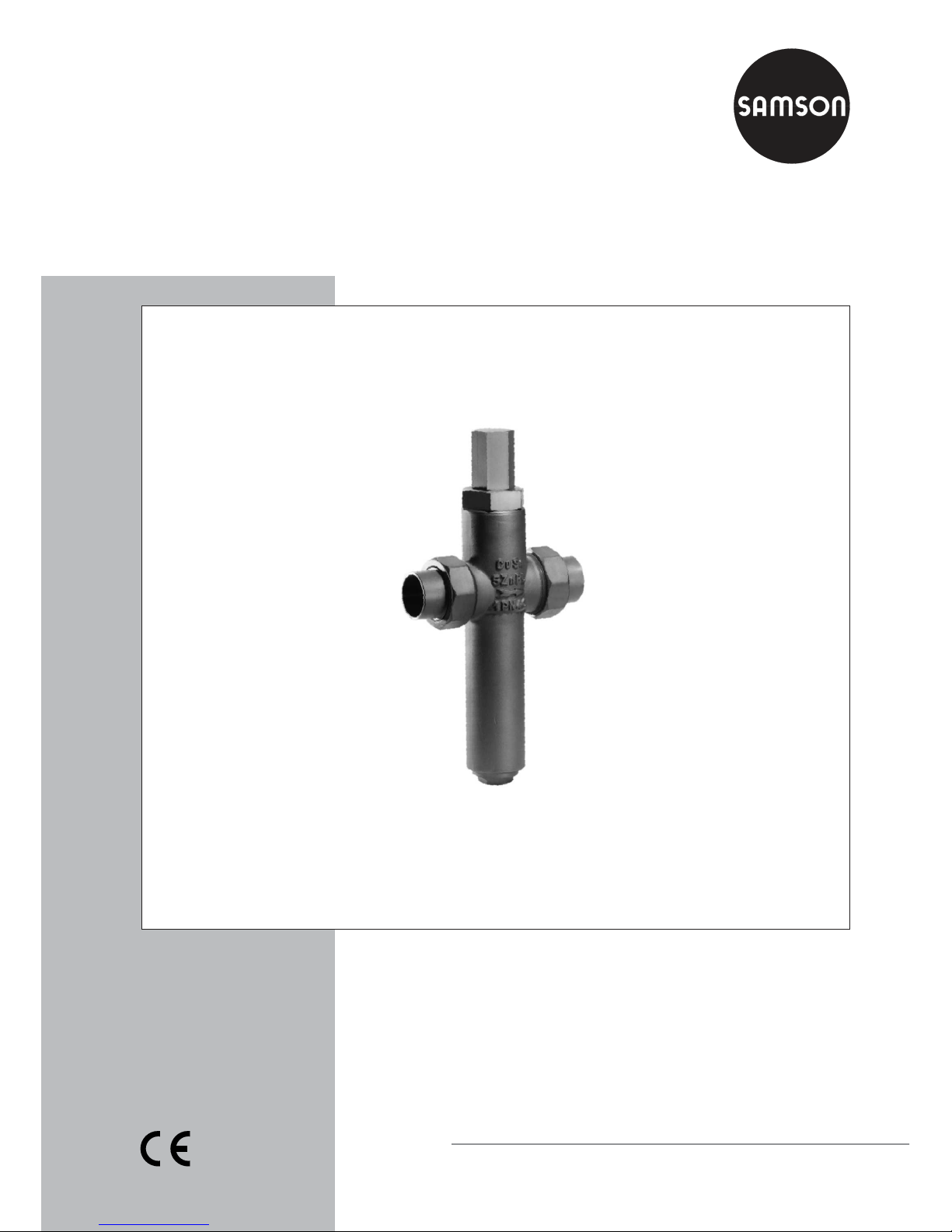
Fig. 1 · Type 2040 Safety Temperature Monitor
Page 2

Contents Page
1 Design and principle of operation. . . . . . . . . . . . . . . . . . . . 4
2 Installation . . . . . . . . . . . . . . . . . . . . . . . . . . . . . . . 6
3 Set point adjustment . . . . . . . . . . . . . . . . . . . . . . . . . . 6
3.1 New adjustment . . . . . . . . . . . . . . . . . . . . . . . . . . . . 7
3.2 Set point adjuster with set point indication . . . . . . . . . . . . . . . . 7
4 Maintenance . . . . . . . . . . . . . . . . . . . . . . . . . . . . . . 8
5 Service . . . . . . . . . . . . . . . . . . . . . . . . . . . . . . . . . 8
6 Dimensions. . . . . . . . . . . . . . . . . . . . . . . . . . . . . . . 9
7 Technical data . . . . . . . . . . . . . . . . . . . . . . . . . . . . 10
8 Nameplate . . . . . . . . . . . . . . . . . . . . . . . . . . . . . . 11
2 EB 2090 EN
Contents
CAUTION!
Indicates a hazardous situation which, if not
avoided, could result in minor or moderatein
-
jury.
Note! Indicates supplementary explanations,
information and tips.
Definitions of the signal words used in these instructions
Page 3

EB 2090 EN 3
Safety instructions
General safety instructions
4
The regulator may only be mounted, started up or operated by trained and
experienced personnel familiar with the product.
According to these mounting and operating instructions, trained personnel refers
to individuals who are able to judge the work they are assigned to and recognize
possible dangers due to their specialized training, their knowledge and
experience as well as their knowledge of the relevant standards.
All safety instructions and warnings in these mounting and operating instructions,
particularly those concerning assembly, start-up and maintenance, must be
observed.
4
For appropriate operation, make sure that the regulator is only used in
applications where the operating pressure and temperatures do not exceed the
operating values based on the sizing data submitted in the order.
4
Note that the manufacturer does not assume any responsibility for damage
caused by external forces or any other external factors.
Any hazards which could be caused in the regulator by the process medium or
operating pressure are to be prevented by means of appropriate measures.
4
The Type 2040 Safety Temperature Monitors do not have their own potential
ignition source according to the ignition risk assessment stipulated in
EN 13463-1: 2001, section 5.2, even in the rare incident of an operating fault.
Therefore, they do not fall within the scope of Directive 94/9/EC.
4
The regulator complies with the requirements of the European Pressure Equipment
Directive 97/23/EC. The declaration of conformity issued for a valve bearing the
CE marking includes information on the applied conformity assessment procedure.
The declaration of conformity can be provided on request.
TÜV typetesting/EC type examination
The Type 2040 Safety Temperature Monitors are typetested by TÜV (German technical surveil
lance association). The test mark is available on request.
An EC type examination according to Pressure Equipment Directive 97/23/EC, Module B has
been performed on the Type 2040 Safety Temperature Monitor.
Page 4
1 Design and principle of oper
-
ation
The Type 2040 Safety Temperature Monitor
protects downstream plants against exces
-
sively low temperatures in applications in
volving the storage of cryogenic media as
well as liquids, gases and vapors.
These safety temperature monitors close
whenever the medium temperature falls be
low the adjusted temperature set point (limit)
to prevent cold media entering the connected
consumer plant.
The safety temperature monitor consists of the
body (1) with integrated temperature sensor
(6) and set point adjuster (3). It operates ac
cording to the liquid expansion principle.
The volume of the temperature-sensitive filling
medium confined in the integrated temperature sensor (6) expands as the temperature
rises and contracts again as the temperature
falls. The valve is normally open. If the medium temperature falls below the adjusted set
point (when the medium is too cold), the liquid
inside the sensor contracts and the tubular
plug (5) is pushed by the positioning springs
(4) against the soft-sealed seat (2). As the me
dium temperature drops, the plug moves in
the closing direction, restricting the medium
flow. If the medium temperature drops fur
ther, the valve is closed completely when the
temperature reaches the adjusted set point.
The set point temperature and the throttling
range in front of it can be adjusted within the
set point range. The valve first opens again
when the medium temperature has exceeded
the adjusted set point by 2 K.
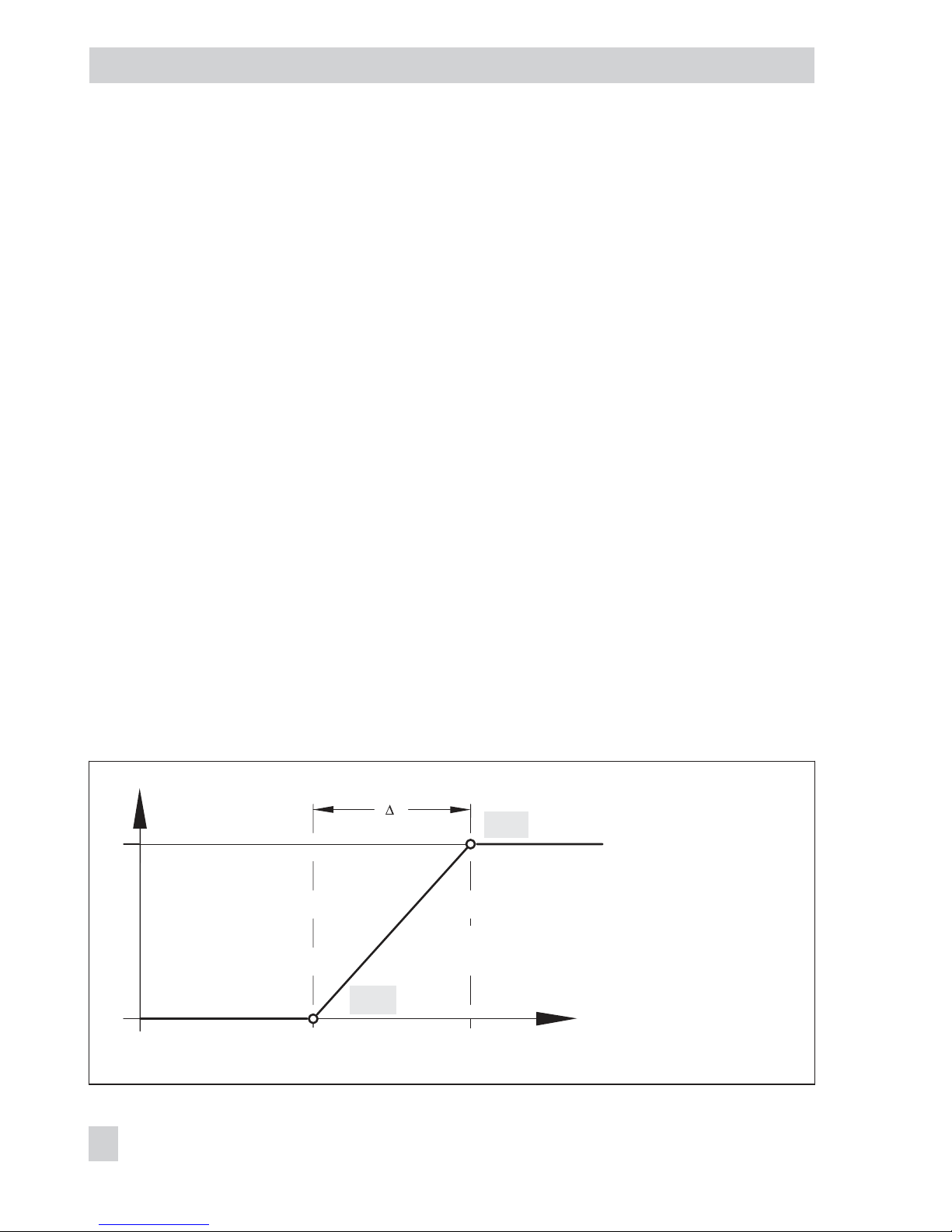
The temperature span between the adjusted
set point temperature T
set point
and the point at
which the regulator starts to close is 17 K. The
valve is fully open (KV= 5) at a medium tem
-
perature of >T
set point
+ 17 K. At a medium
temperature less than T
set point
+ 17 K the medium flow is already throttled and the KVcoefficient gets smaller (Fig. 2).
If the sensor system is defective, the valve
closes (fail-safe position).
4 EB 2090 EN
Design and principle of operation
K
v
-200
0
-3
5
T
T
[˚C]
Fig. 2 · Control behavior
∆
T = 17 K temperature differential between
open and closed (throttling range)
T
set point
= –20 °C (point at which the
regulator is fully closed)
The regulator starts to close when the
medium temperature has dropped below a
value which is still approx. 17 K above the
adjusted set point.
Closed
Open
–20
T
set point
Normal range of
medium temperature
–3
Page 5
EB 2090 EN 5
Design and principle of operation
3
1
2
4
5
6
7
3.1
3.2
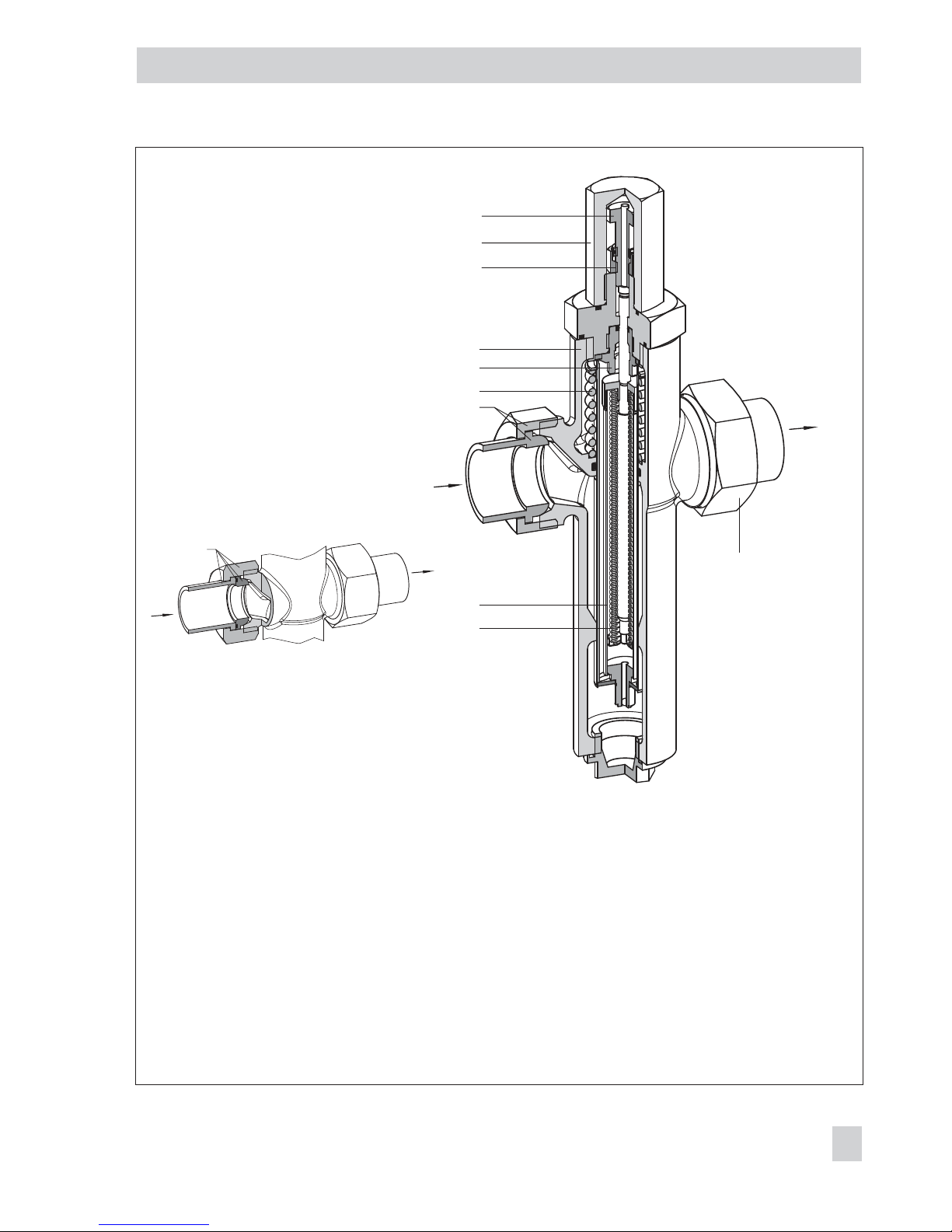
Fig. 3 · Functional diagram of Type 2040 Safety Temperature Monitor
1 Body with connection
2 Valve seat with soft sealing
3 Set point adjuster
3.1 Cap
3.2 Lock nut
4 Positioning spring
5 Tubular plug
6 Temperature sensor
7 Connection nut with spherical liner (accessories)
8 Connection nut with flat gasket (accessories)
8
Connection nut with flat gasket · Connection with
soldering nipples (brass) or welding ends (stain
-
less steel)
Connection nut with
soldering nipples (brass)
or welding ends
(stainless steel)
Page 6
2 Installation
Connection fittings (accessories) must be pro
-
vided at the site of installation.
Note!
Do not install the regulator directly next to an
air vaporizer. Otherwise, the regulator could
close due to the low outdoor temperature. The
closing function of the regulator does not de
pend on whether the sensor temperature is
determined by the outdoor air or by the me
dium.
For outdoor installation, we recommend an
adjusted set point temperature of –37 °C together with the point at which the regulator is
fully closed at –20 °C (set point range –45 to
–10 °C).
The following points generally apply:
4
The regulator can be installed in any de
-
sired position
4
The direction of flow must match the ar
-
row on the valve body
3 Set point adjustment
See Figs. 3 and 4
The safety temperature monitor has been ad
-
justed by the manufacturer to a set point tem
-
perature (limit) of T
set point
= –10 °C (set point
range from –30 to +10 °C) or –37 °C (set
point range from –45 to –10 °C).
After removing the cap (3.1) and undoing the
lock nut (3.2), the required set point
temperature (T
set point
) can be adjusted within
the set point range using the set point adjuster
(3).
6 EB 2090 EN
Installation
2.0
1.5
1.0
0.5
0.5
1.0
1.5
2.0
10-10 -5 0 5-30 -25 -20 -15
[˚C]
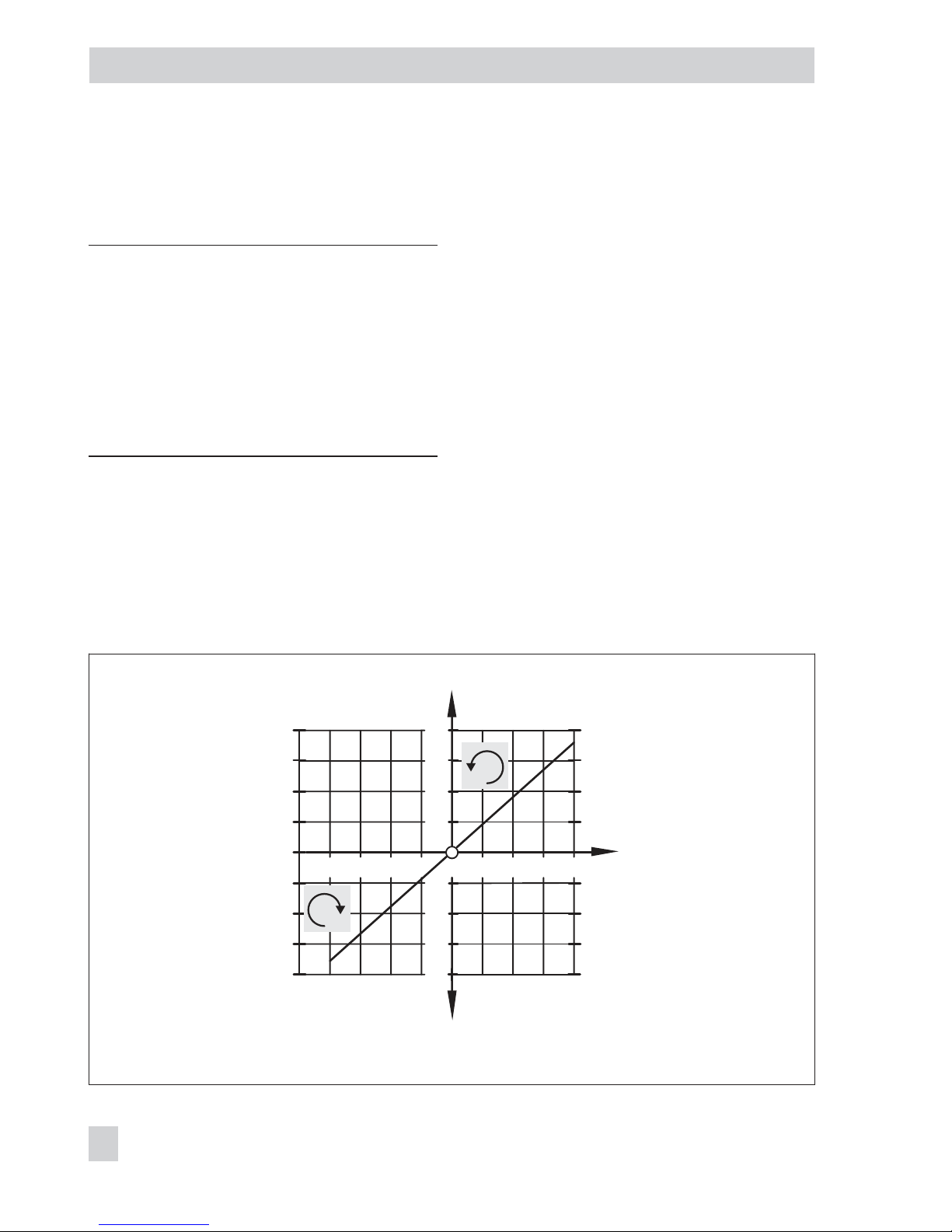
Fig. 4 · Adjustment diagram at a set point temperature T
set point
= –10 °C (point at which regulator is fully closed)
Turns of the set
point adjuster
T
set point
Turns of the set
point adjuster
Page 7

Use the adjustment diagram (Fig. 4) as a
guide to change the set point temperature
from the default setting. One turn of the set
point adjuster corresponds to a change in set
point temperature of approx. 13 K.
The set point temperature together with the
point at which the regulator is fully closed shift
to lower temperatures when the set point
adjuster (3) is turned clockwise P.
3.1 New adjustment
Adjustment of the set point temperature from
an unknown setting:
Note! The ambient temperature must be
within the set point range.
4
Remove cap (3.1) and undo lock nut
(3.2). Make sure that the medium flow
and outside air have the same temperature.
4
Turn the set point adjuster (3) counterclockwise until the flow noise inside the
regulator ceases, i.e. the valve is closed.
4
Calculate the temperature difference be
tween the momentary ambient
temperature and the required set point
temperature (T
set point
) to be adjusted.
4
Divide the calculated temperature differ
ence by 13. The result shows how may
turns of the set point adjuster (Fig. 4) are
required.
4
Turn the set point adjuster clockwise by
the determined number of turns.
4
Lock set point adjuster (3) with the lock
nut (3.2) and screw cap (3.2) back on.
4
Secure setting, if necessary, with sealing
wire through the holes in the cap and
valve.
3.2 Set point adjuster with set
point indication
In a special version, the set point adjuster is
fitted with a marked ring for set point
indication. The distance between two marks
corresponds to a temperature difference of
approx. 10 K (10 °C).
EB 2090 EN 7
Set point adjustment
Page 8

4 Maintenance
CAUTION!
Prior to performing any work on the regula
-
tors, decommission the plant by slowly clos
-
ing the shut-off valves. Depressurize and, de
pending on the process medium, drain the
plant section as well.
CAUTION!
Regulators for oxygen service are labeled to
indicate that the regulators must be kept free
of oil and grease for oxygen service.
These versions are cleaned and assembled
under special conditions. Gloves must be
worn when exchanging parts which come
into contact to oxygen. These parts must not
come into contact with oil or grease.
When returning regulators for oxygen service
to SAMSON for repair, the sender is responsible for ensuring that the regulators are han
dled in conformance with the specifications in
the German regulation VBG 62 or equivalent
regulations until receipt at SAMSON. If this is
not the case, SAMSON AG will not assume
any responsibility for the suitability of these
regulators for oxygen service.
If the point at which the regulator closes devi
ates strongly from the adjusted set point, shut
off may be impaired because the seat and
plug are clogged up with dirt or due to natu
ral wear.
In this case, remove the regulator from the
pipeline and clean it. If necessary, replace the
plug seal with a new one.
5 Service
If malfunctions or defects occur, contact the
SAMSON After-sales Service for support.
The addresses of SAMSON AG, its subsidiar
ies, representatives and service facilities
worldwide can be found on the Internet at
www.samson.de, in a SAMSON product cat
alog or on the back of these mounting and
operating instructions.
Include the following details when making in
quiries:
4
Type and nominal size of the regulator
4
Process medium
4
Set point temperature range
4
Production number 3- ...
4
Model number with modification index
4
Flow rate in m³/h
4
Installation drawing indicating the exact
location of the regulator (e.g. outdoors
or indoors) and all additionally mounted
units (shut-off valves, pressure gauges
etc.)
8 EB 2090 EN
Maintenance
Page 9
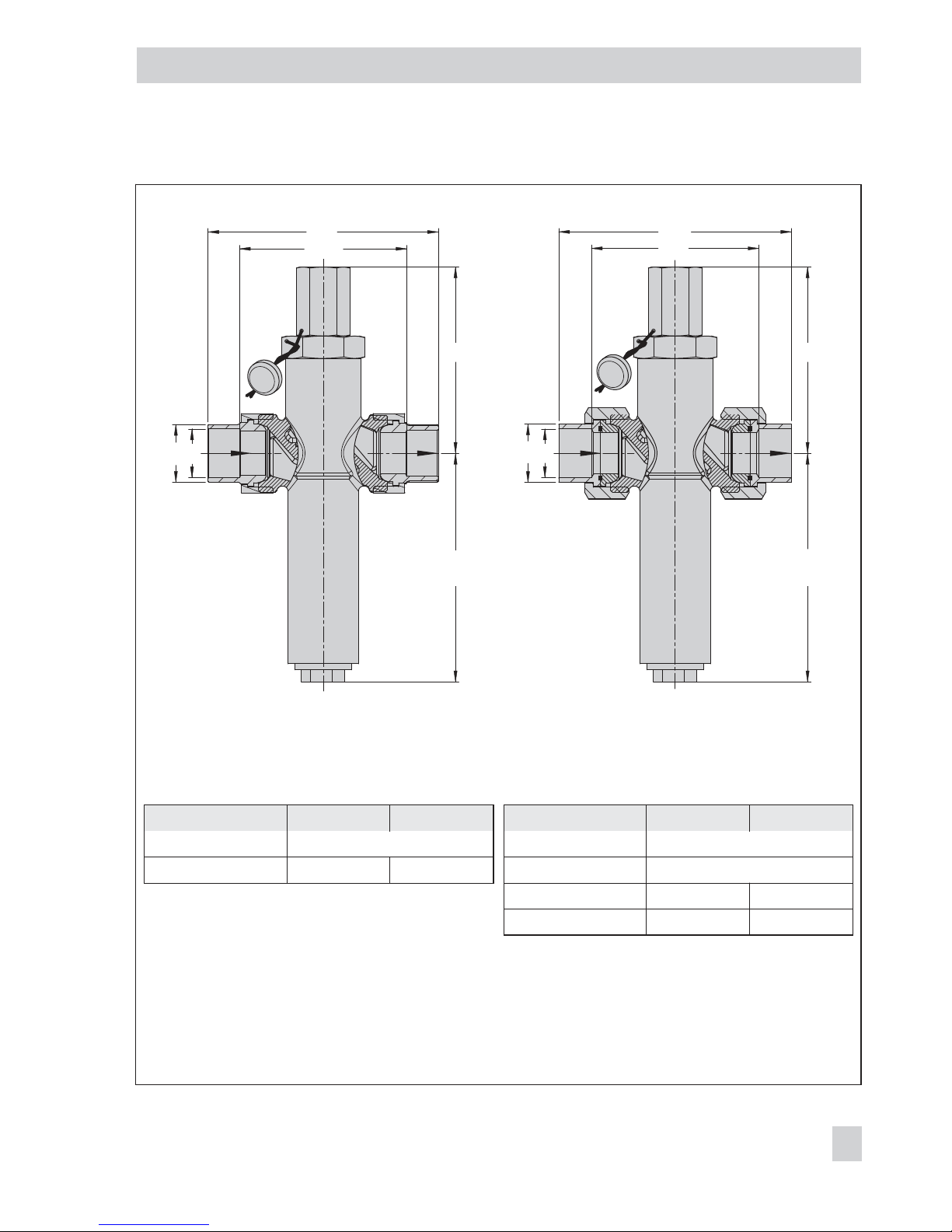
6 Dimensions
EB 2090 EN 9
Dimensions
ØD
Ød
ØD
Ød
L1±1
H1
133±1
L3 ±3
L3 ±3
L2 ±1
H1
133±1
Fig. 5 · Dimensions
Dimensions in mm DN 15 DN 25
L3
100
∅
d
For pipe∅16 For pipe∅28
Soldering nipple (brass)
Dimensions in mm DN 15 DN 25
L1
155
L2
165
∅
d
16.1 28.5
∅
D
21.3 33.7
Welding ends (stainless steel)
Height H1
Without set point indication: H1 = 108±1 mm
With set point indication: H1 = 116±1 mm
Weight: 1.8 kg (without connecting parts)
Connecting parts with spherical liner
Connecting parts with flat gasket
Page 10

7 Technical data
10 EB 2090 EN
Technical data
Table 1 · Technical data · All pressures in bar (gauge)
Type 2040 Safety Temperature Monitor
Body connection
G 1¼ (see Fig. 4 for connecting parts)
K
VS
coefficient
5
Set point ranges
–30 °C to +10 °C
–45 °C to –10 °C
1)
Max. perm. operating pressure
40 bar
Max. perm. differential pressure∆p
25 bar
Leakage rate
≤
0.05 % of KVSat –10 °C
≤
0.1 % of KVSat –45 °C
Hysteresis
2 K
Accuracy
±
1 °C
Permissible temperature range
–60 °C to +60 °C
Temperature differential between open/closed
17 K
1)
On request
Table 2 · Materials · Material number according to DIN EN
Type 2040 Safety Temperature Monitor
Body
CC491K (G-CuSn5ZnPb)
Bellows
CW453K (CuSn8F40)
Spring
1.4310
O-ring
NBR
Seat
CW617N (CuZn40Pb2)/NBR
Tubular plug
1.4571/1.4404
Page 11

8 Nameplate
Laser inscription on the regulator body
EB 2090 EN 11
Nameplate
Fig. 6 · Nameplate specifications
Flow of direction
Production number: 3- ...
Model number with modification index
Valve coefficient KVS= 5
Set point temperature with unit
Test mark
1)
Keep regulator free of oil and grease
1)
Omitted at a set point temperature between –31 °C and –45 °C
Page 12

SAMSON AG · MESS- UND REGELTECHNIK
Weismüllerstraße 3 · 60314 Frankfurt am Main · Germany
Phone: +49 69 4009-0 · Fax: +49 69 4009-1507
Internet: http://www.samson.de
EB 2090 EN
S/Z 2016-12
 Loading...