

Page 1

Hearing Aid
Listening Impaired Audio/Sound Amplifier
User Manual
PHLHA42
Page 2

Sound Amplifier Instructions
■ Please retain instructions for future reference.
This sound amplifier will help to amplify sound up to 30x, without
the worry of having to replace the batteries. It is equipped with
a rapid charging dock and a rechargeable battery that can last up
to 8-10 hours of continuous use. It includes 6 interchangeable
ear buds to seal out outside noise.
ACCESSORIES
Rechargeable Sound Amplifier
■Adapter
■Charging Docking Station
■Cleaning Brush
■Six (6) Silicone Adjustable Tips
SPECIFICATIONS
■Battery: 1.2V
■Working Current ≦3mA
■Signal to Noise Ration ≦28db
■Frequency: 100-4000Hz
■Gain: 30db
■Distortion: ≦6%
Page 3
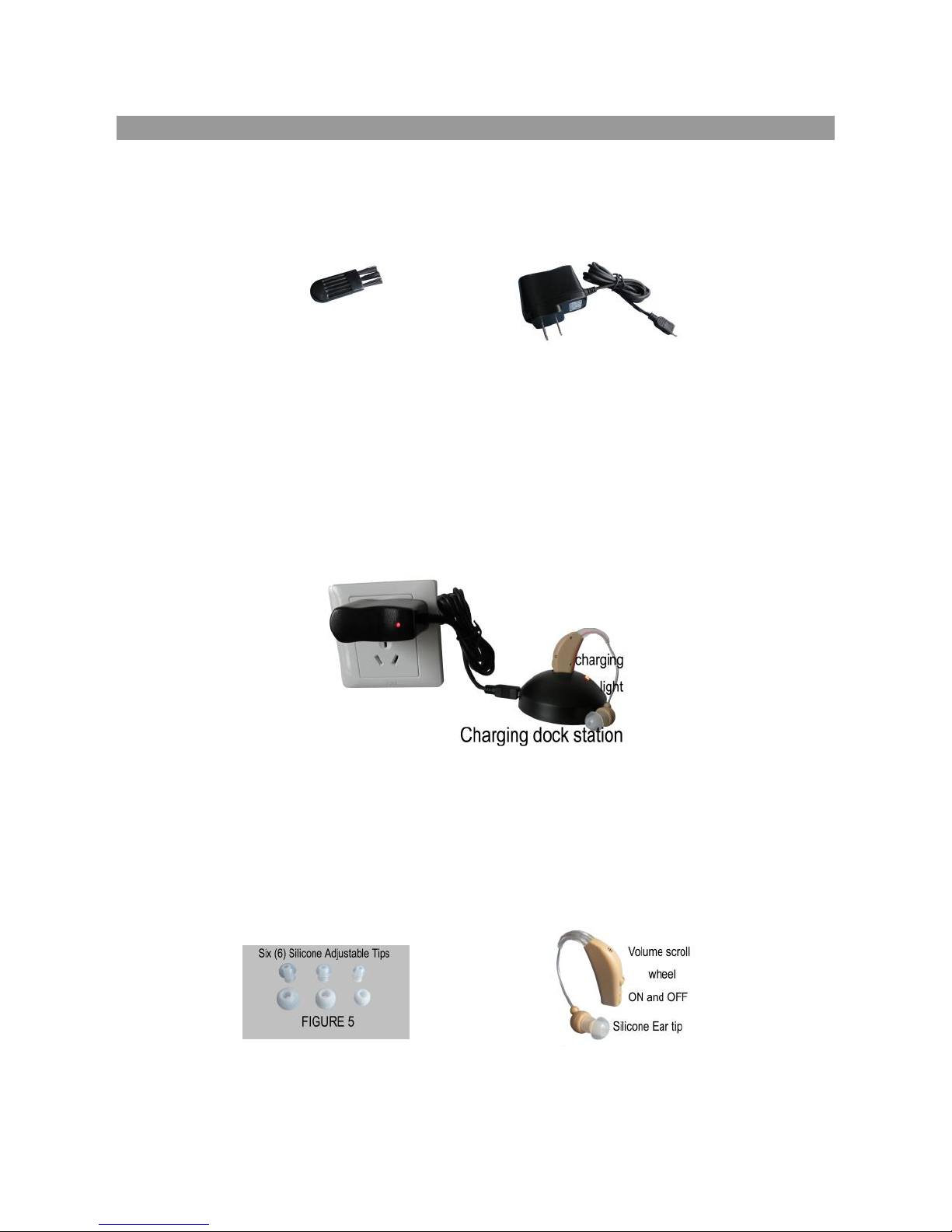
DIAGRAM Ⅰ
Cleaning Brush Adapter
FIGURE 1 FIGURE 2
Adapter Red Light "ON" while Charging
FIGURE 3 FIGURE 4
Sound Amplifier
Page 4
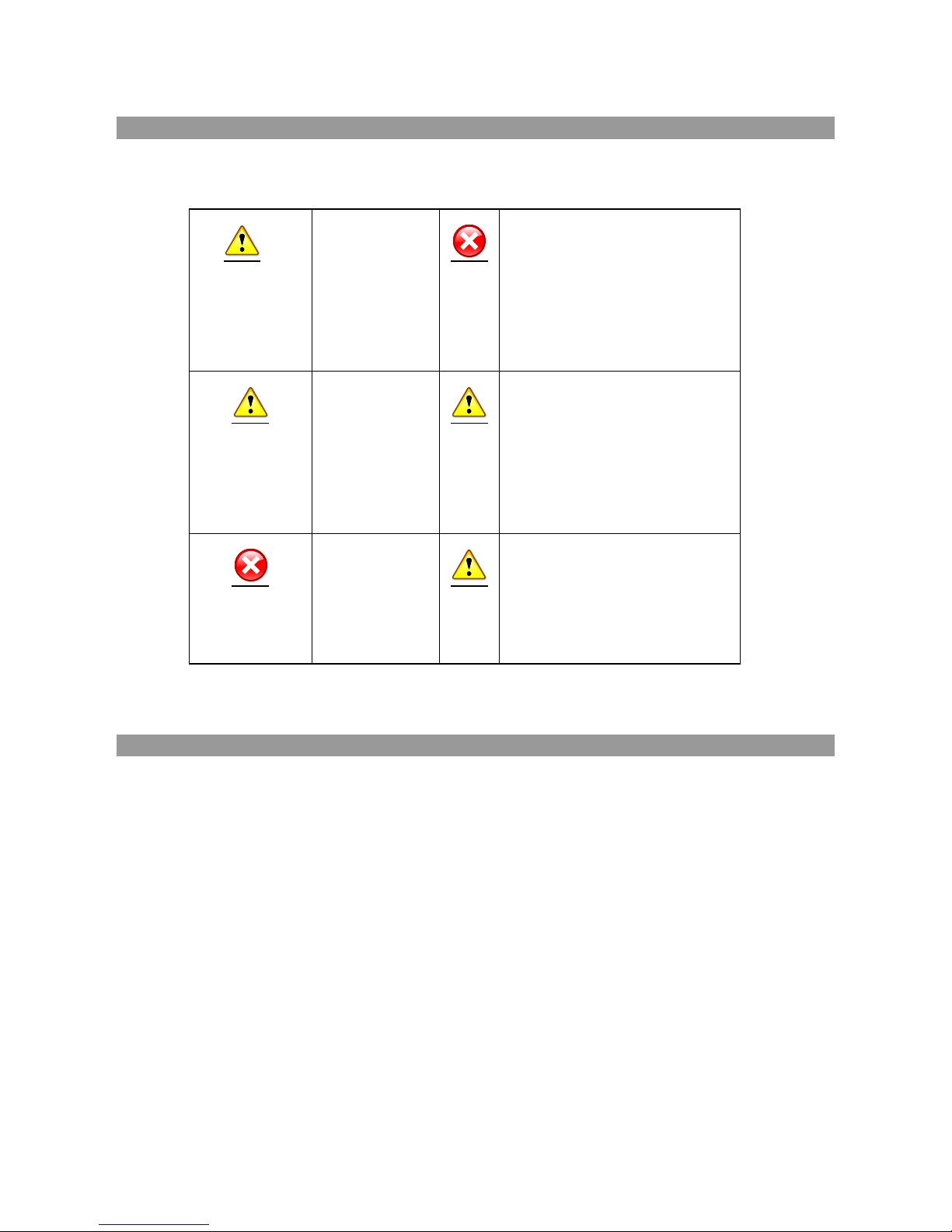
CAUTION
Note
Rechargeable
Sound Amplifier
is NOT for use
by children
under age 15.
Note
DO NOT WET THE DEVICE
Note
Keep out
of reach of
children
and pets.
Note
Discontinue use of product in the
event of irritation. It is
recommended that you consult a
doctor before continued use of
this product.
Note
The supply
terminals are
not to be
short-circuited
Note
DO NOT remove the Rechargeable
Sound Amplifier from the docking
station until the light turns green
(again) – signaling fully charged.
GETTING STARTED
■ It is important to follow the instructions (1-3) below for the first two times charging the Rechargeable Sound
Amplifier
1. Slide the switch down located on the back of the earpiece to turn the Rechargeable Sound Amplifier ON/OFF.
2. Connect the adapter’s cord into the rechargeable docking station, and then plug the opposite end of the
adapter’s cord into an outlet. Upon plugging, the red light on the adapter will shine.
3. Place the Rechargeable Sound Amplifier into the top of the recharging docking station. The green light on the
docking station will turn red if connected properly.
■ Note: DO NOT remove the Rechargeable Sound Amplifier from the docking station until the light turns green
(again) – signaling that it was fully charged.
■ Important: Follow the steps below to ensure longer time.
Page 5

DIRECTIONS
How to wear the Rechargeable Sound Amplifier
■ The Rechargeable Sound Amplifier comes with additional 6 different silicone ear tips. Select the one that fits
best.
■ The silicone tip that best fits your ear should be placed onto the Rechargeable Sound Amplifier
■ Rechargeable Sound Amplifier can be worn in either the right or left ear.
■ Below the volume scroll wheel is the on/off switch. This must be in the “on” position or in the “up” position
for use, and slide down "OFF" turn the device OFF.
■ Take the ear piece and place it over the top of the desired ear. The ear piece will curve around and fit behind
the ear.
■ Then take the ear bud of the Rechargeable Sound Amplifier Sound Amplifier which is at the end of the small
wire and carefully insert into the ear canal (you should not feel any extreme discomfort).
■ Adjust the volume to the desired level using the volume control slider next to the ON/OFF switch.
GENERAL CARE
■ Clean Rechargeable Sound Amplifier Sound Amplifier daily with the provided brush to avoid unwanted
earwax build up.
■ Brush the device back-and forth across the ear bud (using the supplied brush) to remove wax and dirt
deposited within the ear bud.
■ Make sure the ear bud is clear of all debris and dirt.
■ Wipe the Rechargeable Sound Amplifier with a clean, dry cloth only.
STORAGE
When you are not using your Rechargeable Sound Amplifier clean it and store in a dry cool place.
TROUBLESHOOTING
Important information
■ It is recommend to be seen by a certified physician before deciding to wear any sound amplifier. Also, it is
recommended to follow up with constant checkups to make sure none of the following apply:
■ The following are conditions under which you should NOT wear the Rechargeable Sound Amplifier. Do not
wear the Sound Amplifier if:
You have pain and discomfort in your ear.
You have traumatic or visible congenial deformities on your ear.
Have acute or chronic dizziness.
Have history of sudden or rapidly progressive hearing loss that has occurred within the last 90 days.
Have unilateral hearing loss or sudden/recent onset within the last 90 days.
Bone conduction thresholds are better than your air conduction thresholds by 15dB or greater.
Significant build up of wax or other materials in your ear canal.
 Loading...