

Page 1
BEHOLD
Furniture Polish
SAFETY DATA SHEET
Product name
Recommended use and
restrictions
:
Supplier's information
:
BEHOLD
Use only for the purpose on the product label.
:
Section 1. Chemical product and company identification
Product dilution information
:
Not applicable
Ecolab Inc. Institutional Division
370 N. Wabasha Street
St. Paul, MN 55102
1-800-352-5326
EMERGENCY HEALTH INFORMATION: 1-800-328-0026
Outside United States and Canada CALL 1-651-222-5352 (in USA)
Code
Date of issue
::09 Dec 2013
907253
GHS Classification
:
Signal word
:
Hazard statements
:
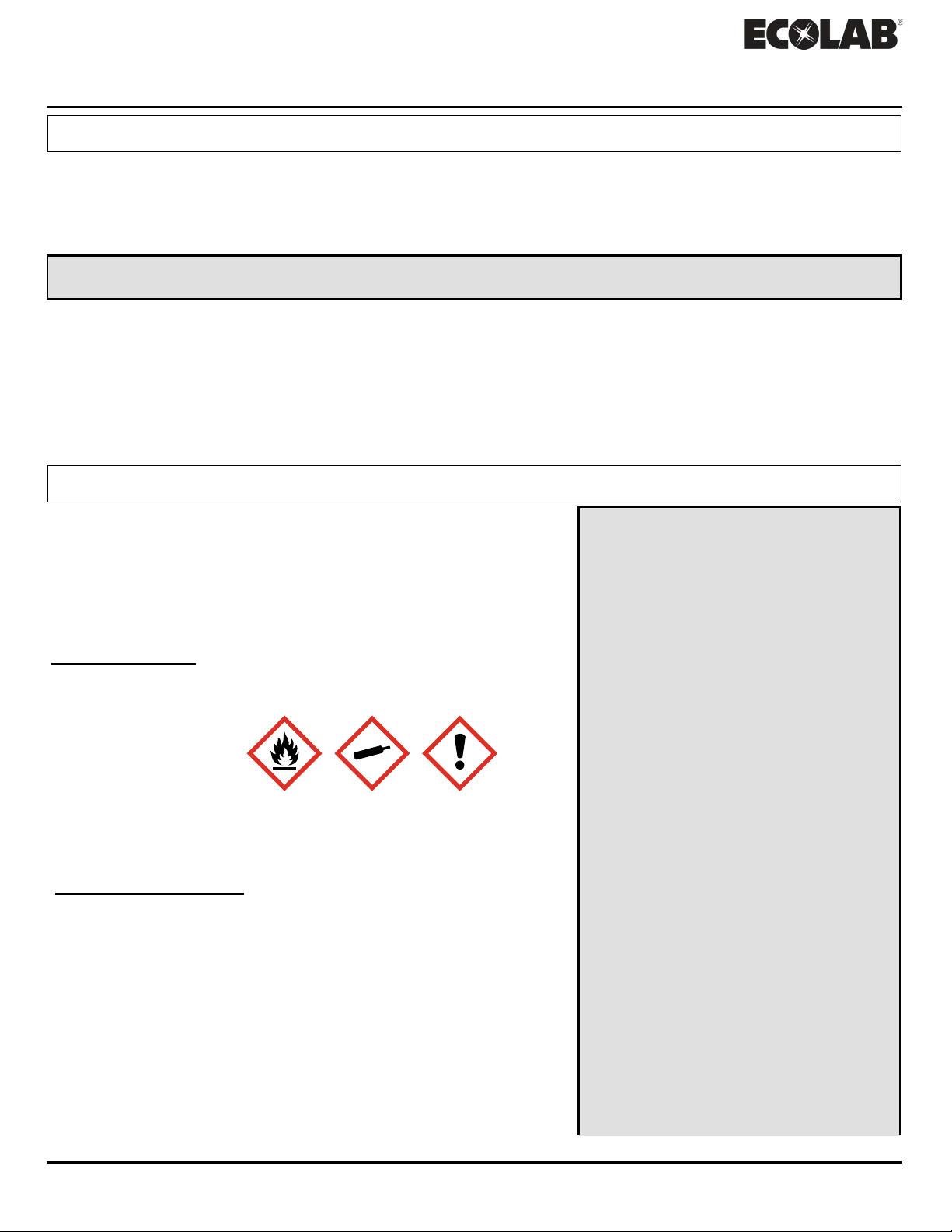
Symbol
:
Precautionary statements
Prevention
:
Response
:
Storage
:
Section 2. Hazards identification
GHS label elements
Product AS SOLD
Product AT USE DILUTION
FLAMMABLE AEROSOLS. - Category 2
GASES UNDER PRESSURE - Compressed
gas
SPECIFIC TARGET ORGAN TOXICITY
(SINGLE EXPOSURE) [Narcotic effects] Category 3
Warning
Flammable aerosol.
Contains gas under pressure; may explode if
heated.
May cause drowsiness and dizziness.
Keep away from heat, sparks, open flames and
hot surfaces. - No smoking. Pressurized
container: Do not pierce or burn, even after use.
Use only outdoors or in a well-ventilated area.
Avoid breathing vapor. Intentional misuse by
deliberate inhalation may be harmful or fatal.
IF INHALED: Remove victim to fresh air and
keep at rest in a position comfortable for
breathing. Call a POISON CENTER or
physician if you feel unwell.
Product is sold ready to use.
Page: 1/7
Page 2

BEHOLD
09 Dec 2013
Section 2. Hazards identification
Disposal
:
Other hazards
:
Protect from sunlight. Do not expose to
temperatures exceeding 50 °C/122 °F. Store in
a well-ventilated place.
See section 13 for waste disposal information.
None known.
Mixture
Section 3. Composition/information on ingredients
Substance/mixture
:
Hazardous ingredients
CAS number
Concentration Range (%)
Product is sold ready to use.
Hazardous ingredients
CAS number
Concentration Range (%)
Product AS SOLD
Product AT USE DILUTION
distillates (petroleum), hydrotreated light
5 - 20
64742-47-8
BUTANE
5 - 20
106-97-8
PROPANE
1 - 5
74-98-6
Eye contact
Skin contact
Inhalation
Ingestion
:
:::
Protection of firstaiders
:
Notes to physician
:
See toxicological information (section 11)
Section 4. First aid measures
Product AS SOLD
Product AT USE DILUTION
No known effect after eye contact. Rinse with
water for a few minutes.
Product is sold ready to use.
No known effect after skin contact. Rinse with
water for a few minutes.
Remove victim to fresh air and keep at rest in a
position comfortable for breathing. Get medical
attention if you feel unwell.
Get medical attention if symptoms occur.
No action shall be taken involving any personal risk or without suitable training. It may be
dangerous to the person providing aid to give mouth-to-mouth resuscitation.
Treat symptomatically. Contact poison treatment specialist immediately if large quantities have
been ingested or inhaled.
Hazardous thermal
decomposition products
Specific hazards arising
from the chemical
:
:
Suitable fire extinguishing
media
:
Specific fire-fighting
methods
:
Section 5. Fire-fighting measures
Product AS SOLD
Use water spray, fog or foam.
Flammable aerosol. In a fire or if heated, a pressure increase will occur and the
container may burst, with the risk of a subsequent explosion. Gas may accumulate
in low or confined areas or travel a considerable distance to a source of ignition and
flash back, causing fire or explosion. Bursting aerosol containers may be propelled
from a fire at high speed. Runoff to sewer may create fire or explosion hazard.
Decomposition products may include the following materials:
carbon dioxide
carbon monoxide
Promptly isolate the scene by removing all persons from the vicinity of the incident if
there is a fire. No action shall be taken involving any personal risk or without
suitable training. Move containers from fire area if this can be done without risk.
Use water spray to keep fire-exposed containers cool.
Page: 2/7
Page 3
BEHOLD
09 Dec 2013
Section 5. Fire-fighting measures
Special protective
equipment for fire-fighters
:
Fire-fighters should wear appropriate protective equipment and self-contained
breathing apparatus (SCBA) with a full face-piece operated in positive pressure
mode.
Environmental
precautions
Personal
precautions
:
:
Methods for
cleaning up
:
Section 6. Accidental release measures
Product AS SOLD
Product AT USE DILUTION
Use personal protective equipment as required.
Product is sold ready to use.
Avoid contact of large amounts of spilled material
and runoff with soil and surface waterways.
Use a water rinse for final clean-up.
Handling
Storage
:
:
Section 7. Handling and storage
Product AS SOLD
Product AT USE DILUTION
Store between the following temperatures: 0 and
40°C
Store and use away from heat, sparks, open
flame or any other ignition source. Liquid and
vapor under pressure. Do not puncture,
incinerate or store the container at temperatures
above 49°C (120°F) or in direct sunlight. Use
only with adequate ventilation. Wash thoroughly
after handling.
Product is sold ready to use.
Keep out of reach of children. Keep container
tightly closed and sealed until ready for use.
Keep container in a cool, well-ventilated area.
Avoid all possible sources of ignition (spark or
flame). Do not puncture or incinerate container.
Control parameters
Section 8. Exposure controls/personal protection
distillates (petroleum), hydrotreated light
ACGIH TLV (United States, 3/2012).
Absorbed through skin.
TWA: 200 mg/m³, (as total hydrocarbon
vapor) 8 hours.
BUTANE
ACGIH TLV (United States, 3/2012).
TWA: 1000 ppm 8 hours.
NIOSH REL (United States, 6/2009).
TWA: 800 ppm 10 hours.
TWA: 1900 mg/m³ 10 hours.
PROPANE
ACGIH TLV (United States, 3/2012).
TWA: 1000 ppm 8 hours.
OSHA PEL (United States, 6/2010).
TWA: 1800 mg/m³ 8 hours.
TWA: 1000 ppm 8 hours.
NIOSH REL (United States, 6/2009).
TWA: 1000 ppm 10 hours.
TWA: 1800 mg/m³ 10 hours.
Ingredient name
Exposure limits
Page: 3/7
Page 4

BEHOLD
09 Dec 2013
Section 8. Exposure controls/personal protection
Hand protection
Eye protection
Respiratory
protection
:
:
:
Skin protection
:
Appropriate
engineering controls
:
Hygiene measures
:
Personal protection
Product AS SOLD
Product AT USE DILUTION
Use only with adequate ventilation. If user
operations generate dust, fumes, gas, vapor or
mist, use process enclosures, local exhaust
ventilation or other engineering controls to keep
worker exposure to airborne contaminants below
any recommended or statutory limits. The
engineering controls also need to keep gas,
vapor or dust concentrations below any lower
explosive limits.
Product is sold ready to use.
No protective equipment is needed under normal
use conditions.
Wash hands, forearms and face thoroughly after handling chemical products, before eating,
smoking and using the lavatory and at the end of the working period. Appropriate techniques
should be used to remove potentially contaminated clothing. Wash contaminated clothing
before reusing.
No protective equipment is needed under normal
use conditions.
No protective equipment is needed under normal
use conditions.
A respirator is not needed under normal and
intended conditions of product use.
Physical state
Melting point
Vapor pressure
Relative density
Vapor density
Solubility
Aerosol
Not available.
0.88 to 0.95 (Water = 1)
Not available.
Not available.
Easily soluble in the following materials: cold
water and hot water.
citrus
Odor
pH
White
Color
Evaporation rate
(butyl acetate = 1)
Not available.
Auto-ignition
temperature
Flash point
Not available.
Not applicable.
Not available.
Not applicable
Partition coefficient:
n-octanol/water
:::
:
:
:
:
:
:
:
:
:
:
Boiling point
:
<35°C (<95°F)
Flammability (solid,
gas)
:
Not available.
Explosion limits
:
Lower: 0.9%
Upper: 7%
Section 9. Physical and chemical properties
Product AS SOLD
Product AT USE DILUTION
Product is sold ready to use.
Decomposition
temperature
Odor threshold
::Not available.
Not available.
Page: 4/7
Page 5
BEHOLD
09 Dec 2013
Section 9. Physical and chemical properties
Viscosity
Kinematic (room temperature): 0 cm2/s (0 cSt)
:
Aerosol product
Type of aerosol
:
Spray
Heat of combustion
:
10.75 kJ/g
Ignition distance
:
<15 cm
Flame height
:
Not available.
Flame duration
:
Not available.
Hazardous decomposition
products
Conditions to avoid
Stability
Not available.
:
:
:
Materials to avoid
:
Possibility of hazardous
reactions
:
Section 10. Stability and reactivity
Product AS SOLD
The product is stable.
Under normal conditions of storage and use, hazardous reactions will not occur.
Avoid all possible sources of ignition (spark or flame).
Under normal conditions of storage and use, hazardous decomposition products
should not be produced.
Toxicity data
Product/ingredient name
Route of exposure
:
Skin contact, Eye contact, Inhalation, Ingestion
Acute toxicity
Inhalation
::Ingestion
Skin contact
::Eye contact
Section 11. Toxicological information
Symptoms
Skin contact
Ingestion
Inhalation
:
::Eye contact
:
Product AS SOLD
Product AT USE DILUTION
No specific data.
Product is sold ready to use.
No specific data.
Adverse symptoms may include the following:
respiratory tract irritation
coughing
nausea or vomiting
headache
drowsiness/fatigue
dizziness/vertigo
unconsciousness
No specific data.
No known significant effects or critical hazards.
No known significant effects or critical hazards.
Can cause central nervous system (CNS)
depression. May cause drowsiness and
dizziness. Intentional misuse by deliberate
inhalation may be harmful or fatal.
Can cause central nervous system (CNS)
depression.
distillates (petroleum), hydrotreated light
LC50 Inhalation
Dusts and mists
Rat
>5.68 mg/l
LD50 Dermal
Rabbit
>2000 mg/kg
LD50 Oral
Rat
>5000 mg/kg
butane
LC50 Inhalation
Gas.
Rat
280000 ppm
Page: 5/7
Page 6
BEHOLD
09 Dec 2013
Section 11. Toxicological information
Carcinogenicity
:
Mutagenicity
:
Teratogenicity
:
Developmental effects
:
Fertility effects
:
Chronic toxicity
No known significant effects or critical hazards.
No known significant effects or critical hazards.
No known significant effects or critical hazards.
No known significant effects or critical hazards.
No known significant effects or critical hazards.
Other adverse effects
:
Aquatic and terrestrial toxicity
Product/ingredient name
Species
Result
Exposure
Ecotoxicity
:
This material is harmful to aquatic life with long lasting effects.
Section 12. Ecological information
Product AS SOLD
distillates (petroleum), hydrotreated light
Chronic LC50 >1 mg/l
Fish
96 hours
butane
Acute LC50 22.03 mg/l
Fish
96 hours
No known significant effects or critical hazards.
:
Disposal methods
Section 13. Disposal considerations
Product AS SOLD
Product AT USE DILUTION
Avoid disposal. Attempt to use product
completely in accordance with intended use.
Disposal should be in accordance with applicable
regional, national and local laws and regulations.
Do not puncture or incinerate container. Discard
empty container in trash.
Product is sold ready to use.
Section 14. Transport information
Product AT USE DILUTION
Not intended for transport.
Certain shipping modes or package sizes may have exceptions from the transport regulations. The classification
provided may not reflect those exceptions and may not apply to all shipping modes or package sizes.
DOT
DOT Classification
DOT Proper shipping name
Class
Packing group
IMO/IMDG
IMO/IMDG Classification
IMO/IMDG Proper shipping name
Class
Packing group
UN1950
Aerosols, flammable, limited quantity
2.1-UN1950
AEROSOLS, FLAMMABLE, LIMITED QUANTITY
2.1
-
For transport in bulk, see shipping documents for specific transportation information.
Page: 6/7
Page 7
BEHOLD
09 Dec 2013
Section 15. Regulatory information
U.S. Federal regulations
:
TSCA 8(b) inventory
All components are listed or exempted.
Product AS SOLD
SARA 302/304/311/312 extremely hazardous substances
: No listed substance
No listed substance
SARA 302/304 emergency planning and notification
: No listed substance
SARA 313
Product name
CAS number
Concentration
No listed substance
Form R - Reporting
requirements
:
California Prop. 65
:
Date of issue
The above information is believed to be correct with respect to the formula used to manufacture the product in
the country of origin. As data, standards, and regulations change, and conditions of use and handling are
beyond our control, NO WARRANTY, EXPRESS OR IMPLIED, IS MADE AS TO THE COMPLETENESS OR
CONTINUING ACCURACY OF THIS INFORMATION.
Notice to reader
:
Section 16. Other information
Prepared by
:
Regulatory Affairs
09 Dec 2013
Product AS SOLD
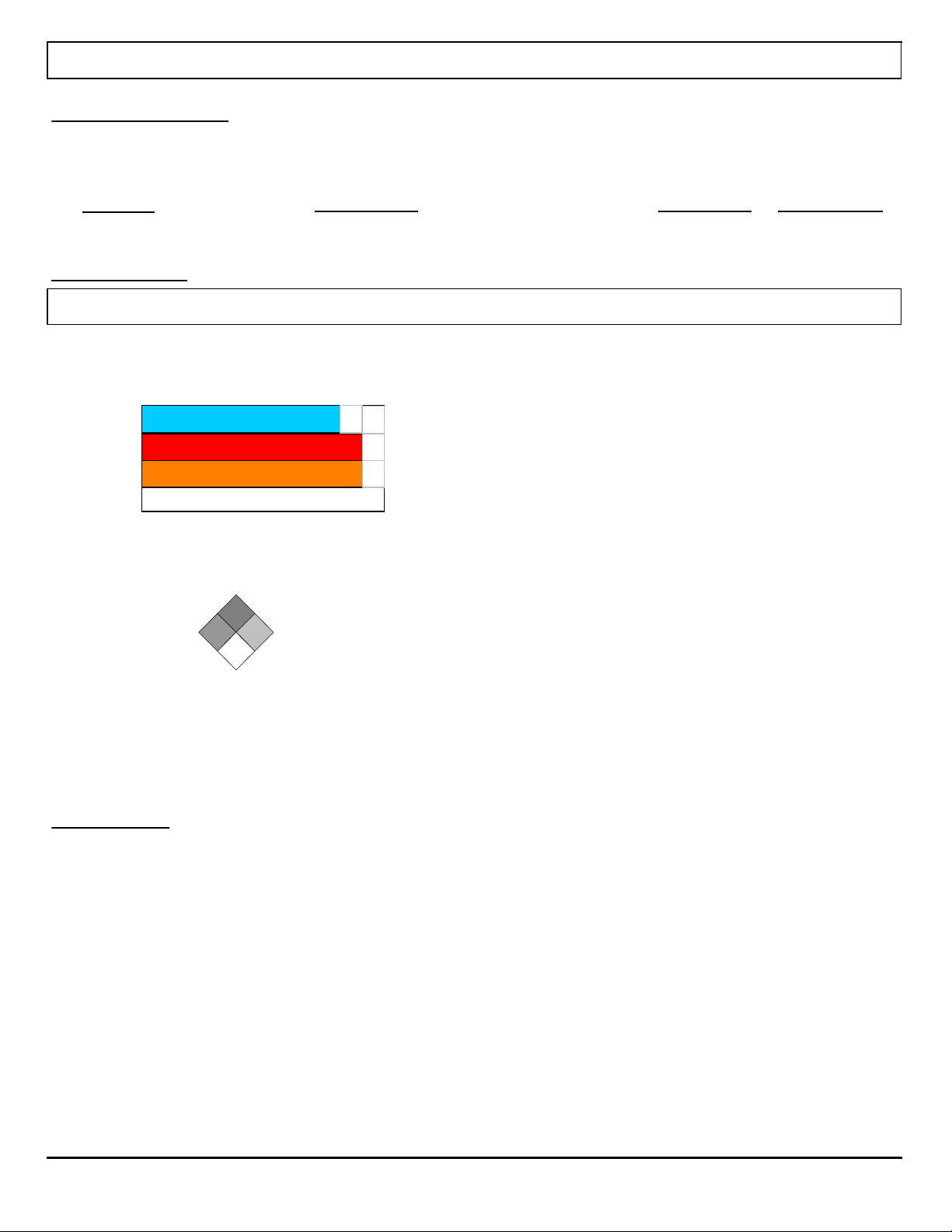
Hazardous Material
Information System (U.S.A.)
021
National Fire Protection
Association (U.S.A.)
Health
Special
Instability/Reactivity
Flammability
Health
Flammability
Physical hazards
:
:
NFPA Aerosol Level
:
Level 1
102
*
1-800-352-5326
Page: 7/7
 Loading...