

Page 1
Highly Tuned Athletes
User guide on how to use Polar Heart Rate Sensors
1.1 Wearing the Polar Heart Rate Sensor
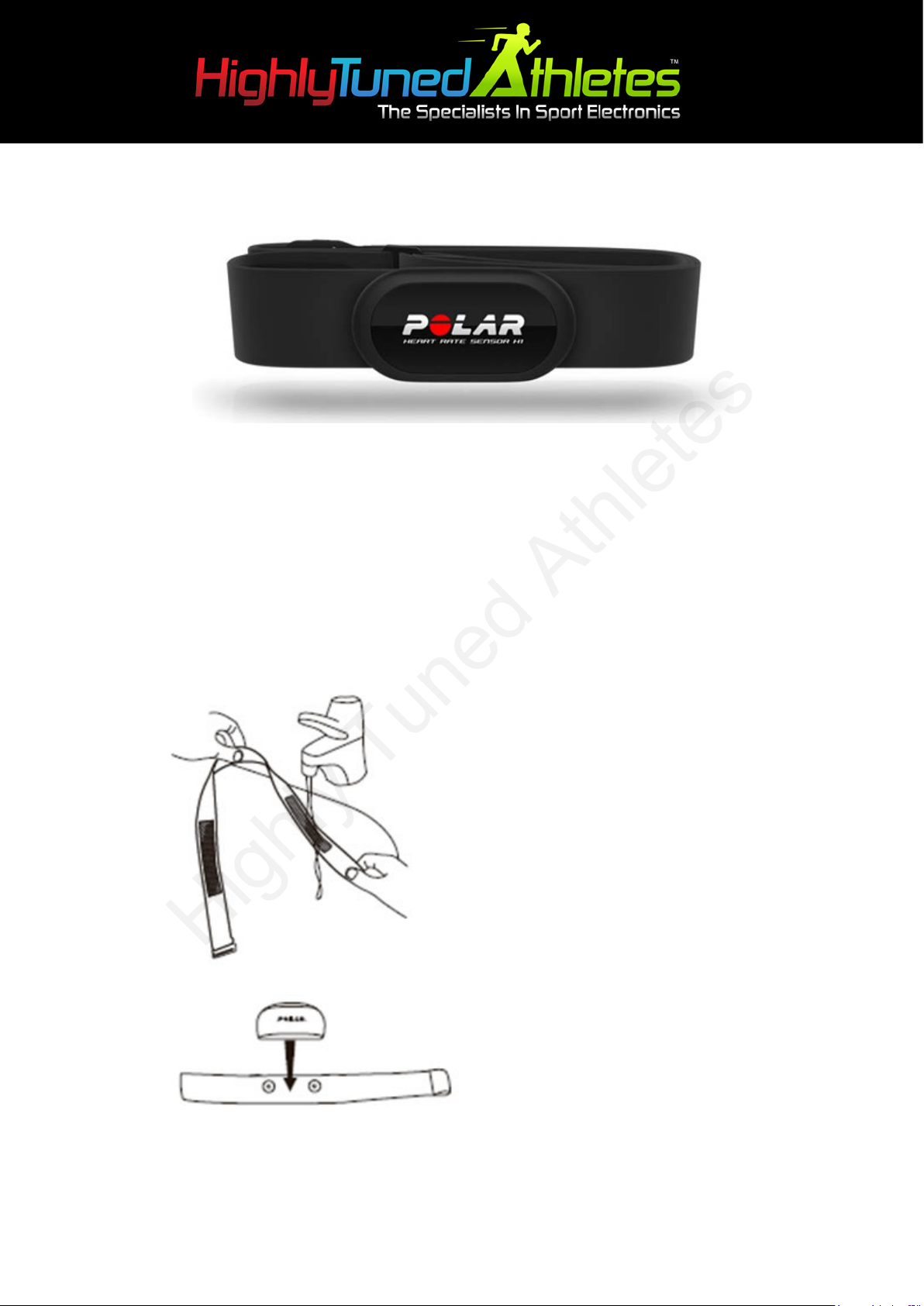
The electrode areas on the reverse side of the strap detect heart rate. The connector sends
the heart rate signal to the Performance Monitor.
*Note: The Polar H1 Heart Rate Sensor was previously called the Polar Wearlink chest belt.
To wear the chest belt:
1. Wet the electrode areas of the strap under running water and make sure that they are
well moistened.
2. Attach the connector to the strap. Adjust the strap length to fit snugly and comfortably.
Page 2
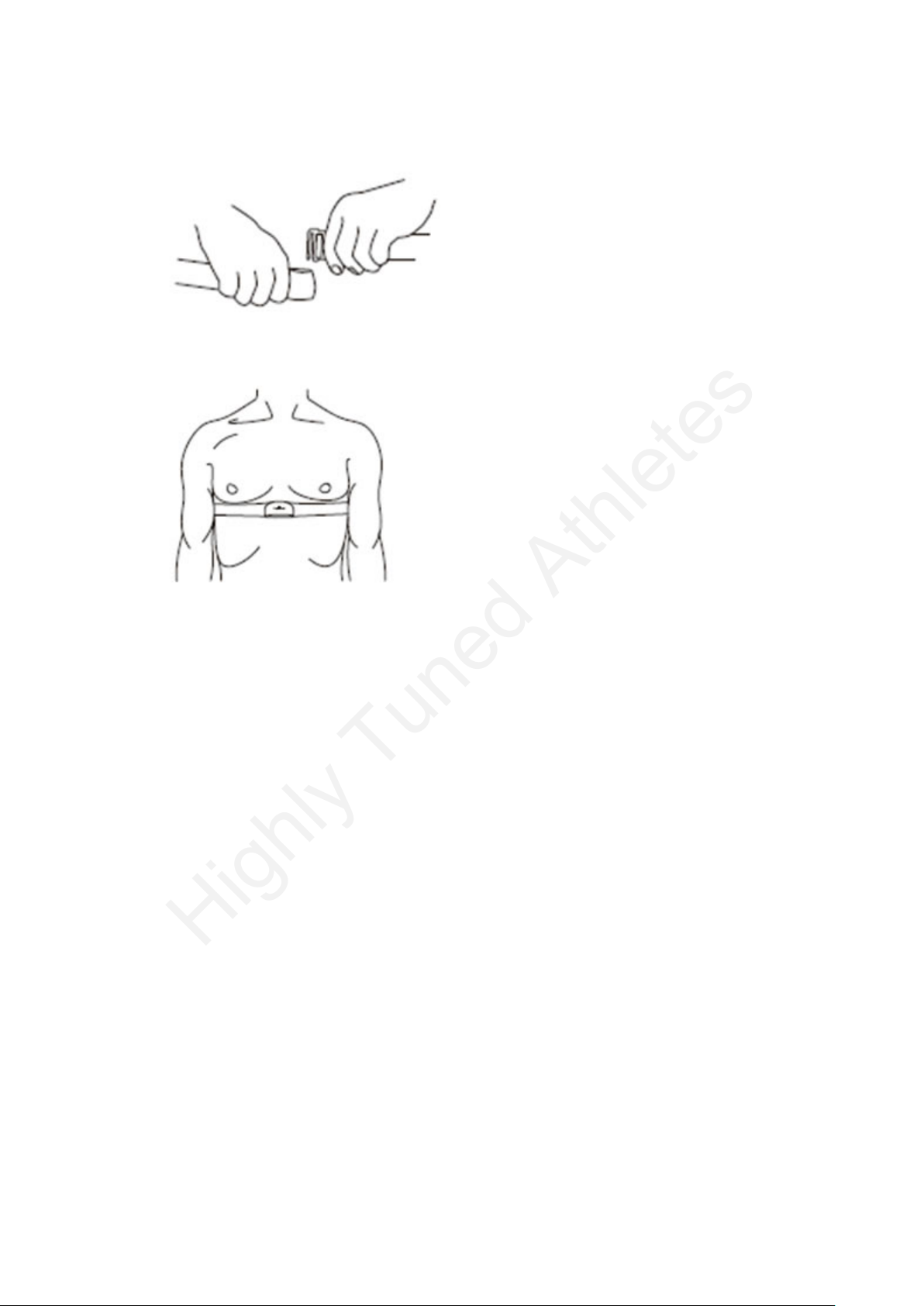
3. Tie the strap around your chest, just below the chest muscles, and attach the hook to
Highly Tuned Athletes
the other end of the strap.
4. Check that the wet electrode areas are firmly against your skin and that the Polar logo of
the connector is in a central, upright position.
Additional Tips
Review the following tips to ensure successful heart rate transmission.
• If the chest belt is having trouble picking up your heart rate, try rotating the chest belt to
the left side of your torso (closer to the heart). You can also try moving the chest belt
higher or lower on your torso.
• Warm up, so that you are sweating a bit, before putting the chest belt on; this can help
establish a connection between the skin and the contacts.
• Try using electrode gel on the contacts.
• Excessive body hair can degrade performance; shaving or moving the transmitter to a
smoother area can help.
• Excessive body fat can block the signal from the chest belt. Position the transmitter in the
leanest area possible, and avoid body parts, like the breasts, that are composed primarily
of fatty tissue.
Page 3

1.2 Cleaning Polar Heart Rate Sensors
Highly Tuned Athletes
The following cleaning is recommended:
• After every use: Detach the transmitter connector from the strap and rinse only the strap
under running water after every use. Dry the connector with a soft towel. Never use
alcohol or any abrasive material (steel, wool or cleaning chemicals).
• After every fifth use: Wash the strap regularly in a washing machine in warm water or at
least after every fifth use. This ensures reliable measurement and maximizes the life span
of the transmitter. Use a washing pouch. Do not soak, spin-dry, iron, dry clean or bleach
the strap. Do not use detergent with bleach or fabric softener. Never put the transmitter
connector in the washing machine or dryer!
1.3 Storing Polar Heart Rate Sensors
Dry and store the strap and connector separately, to maximize the transmitter battery
lifetime. Wash the strap in a washing machine before long-term storage, and always after
use in pool water with high chlorine content.
Keep the transmitter in a cool and dry place. Do not store wet in non-breathing material,
such as a sports bag. Sweat and moisture keep the electrodes wet and activated. Do not
expose to direct sunlight for extended periods.
 Loading...