

Page 1
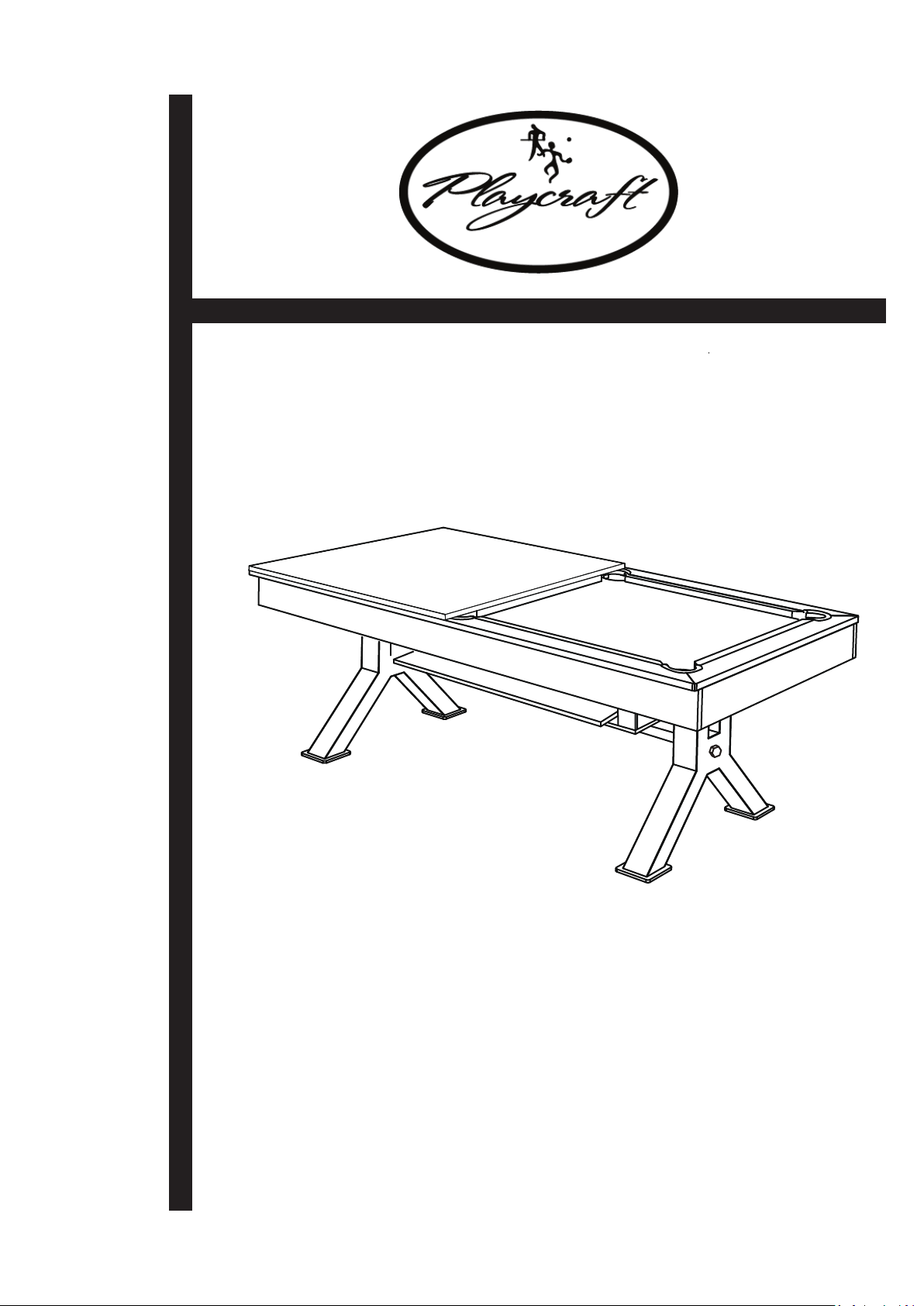
Black Canyon
Model: WPTBCABEA07
ASSEMBLY INSTRUCTIONS
Page 2

Congratulaons on selecng a Playcra Black Canyon pool table. Please contact us
via email at support@playcra.com should you require any assistance.
Please carefully read all safety instrucons and direcons before proceeding
1) Your table is designed for use indoors in a climate controled environment only.
Damage can occur if the table is exposed to water, dampness, high humidity,
freezing temperatures, etc.
2) This pool table is heavy. Two or more people are required for assembly.
3) Only use the table for its intended purpose.
4) Damaged or worn parts may be dangerous for users and the integrity of the table.
Replace worn or damaged components immediately and do not use the table unl any
issues have been resolved. For best results, use only spare parts supplied by Playcra.
5) Unauthorized repairs or altering the table’s design or funcons may be dangerous and
will void the warranty.
6) Check all screws, bolts, etc. on a regular basis to ensure that they are in good working
condion and have not loosened over me.
7) Keep your table covered. If there is dust on the playfield or the aprons, use a vacuum
or wipe with a clean, so cloth to remove. Do not sit on the table and do not use the
table outside.
8) DO NOT li the table by placing your hands under the pockets, and do not sit, lean or
put pressure on the pockets.
9) Check that the leg bolts are ght. When moving the table, li table off of its legs and
place it down squarely on the legs, do not drag the table( and do not li by the pockets.)
page 1
Page 3
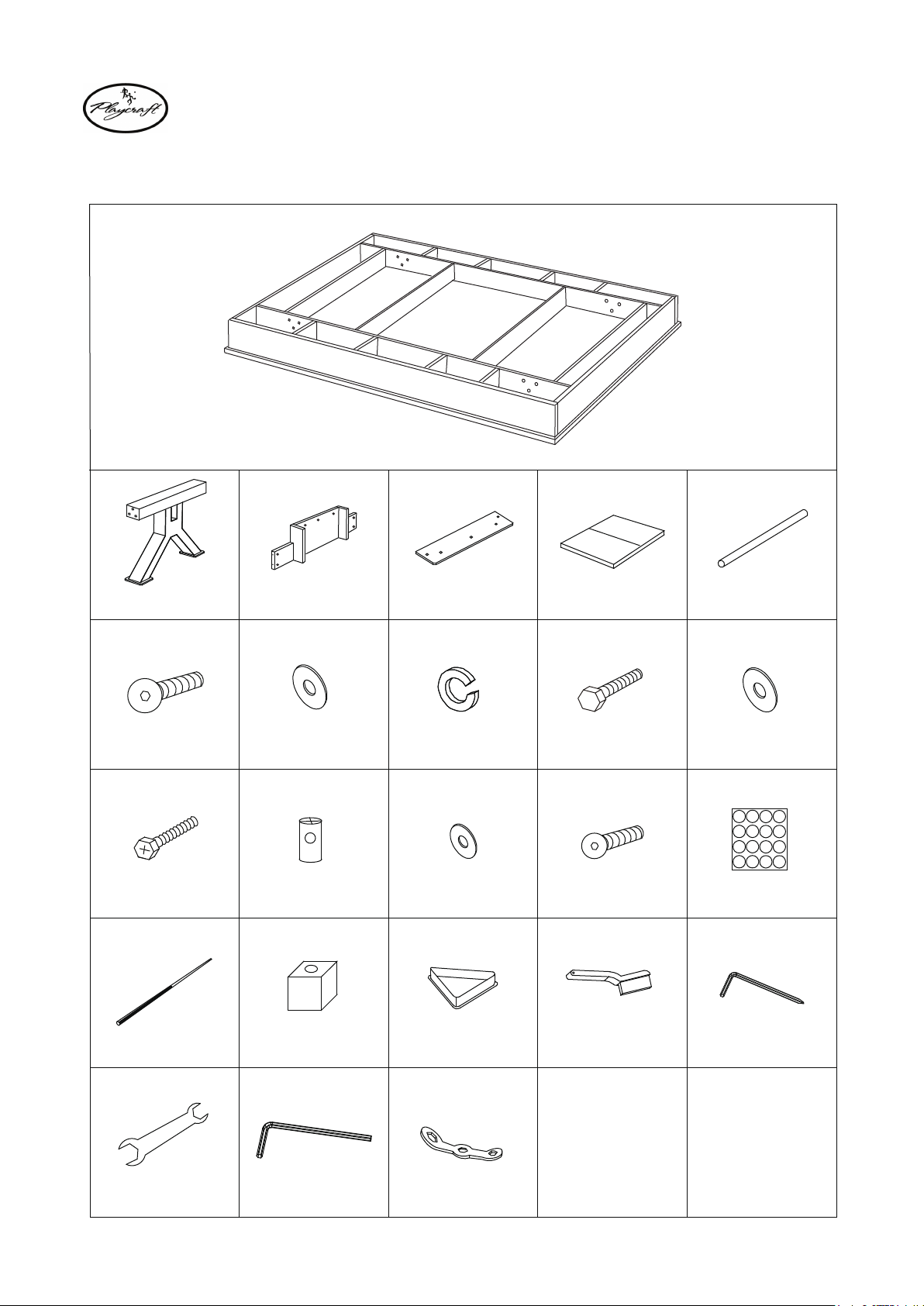
Part list
#1
#2 #3 #4 #5 #6
Table Body
1PC
Legs
2PCS
Board 1
2PCS
Board 2
2PCS
Dinning Table
1SET
#7 #8 #9 #10 #11
M10x60mm Bolts
12PCS
M10 Washers
12PCS
M10 Spring Washers
12PCS
M16x120mm
2PCS
#12 #13 #14 #15 #16
1/4”x2” Bolts
10PCS
#17 #18
Cues
2PCS
1/4” Nuts
18PCS
Chalks
2PCS
1/4”x16mm Washers
18PCS
#19 #20 #21
2-1/4” Triangle
1PC
1/4”x2-1/2” Bolts
8PCS
Brush
1PC
Leg Connected Bar
1PC
5/8” Washers
2PCS
Pool Balls
1SET
4mm Allen Key
1PC
#22 #23 #24
24-22mm Wrench
1PC
6mm Allen Key
1PC
Wrench
1PC
page 2
Page 4
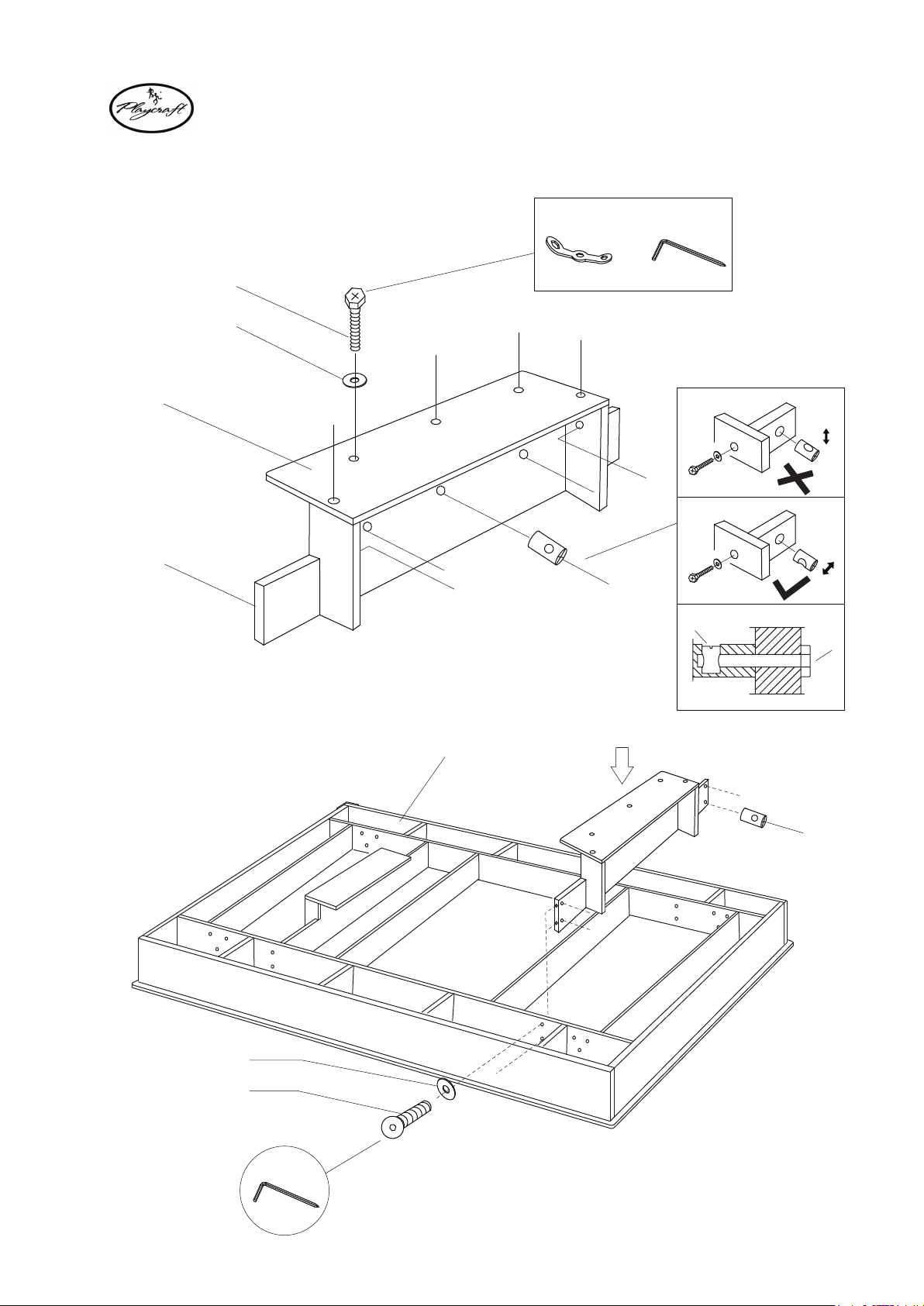
STEP 1
#4
#3
#21#24
&
#12
#14
#13
#13
#12
STEP 2
OK
#1
#13
#14
#15
#21
page 3
Page 5
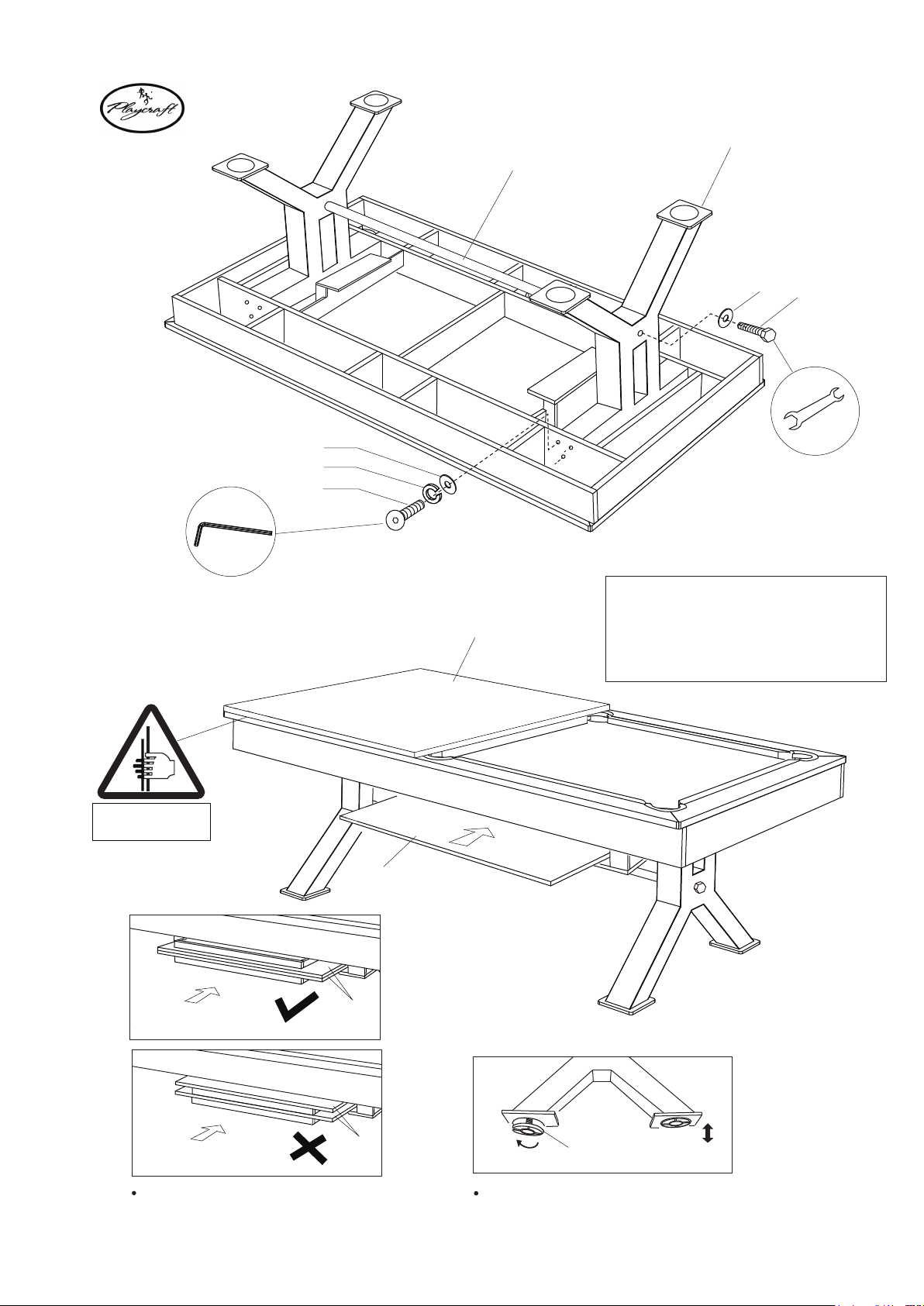
STEP 3
#6
#2
#11
#10
#22
STEP 4
Cauon
Risk of Pinching Hand
#23
6mm
#8
#9
#7
#5
#5
24mm
CAUTION:
1.
2.
3.
4. Do not use the legs for leverage.
Four adults are recommended to turn the table
over as shown.
Lift the table off the ground.
Turn the table over.
Place it on all four feets at the same time on the ground.
#5
#5
To reduce the risk of scraches, dinning tables should
be placed face to face and then inserted in storage.
leg leveler
An-skid, crush resistant, easy adjusng leg leveler.
page 4
Page 6
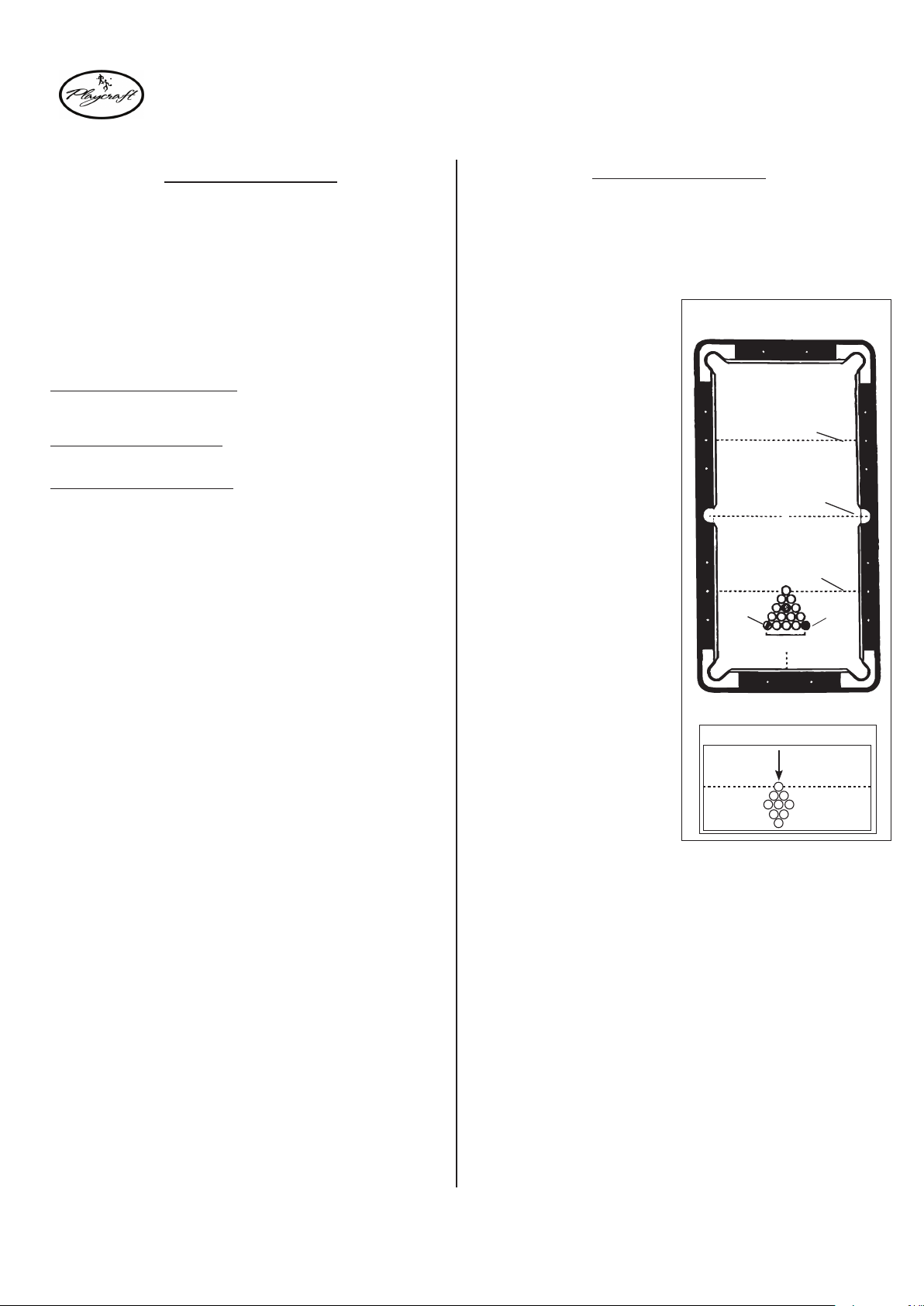
RULES OF PLAY - 8 BALL
RULES OF PLAY - 9 BALL
OBJECT OF THE GAME:
8 Ball is a simple game enjoyed by players of all skill levels. It is a Called Shot
Game, meaning that players must announce their intended shot in advance in
order for it to count. In 8 Ball, one player shoots at solid balls (numbers 1 though 7),
while the opponent shoots at striped balls (numbers 9 through 15). The player who
pockets his or her ball group first and then sinks the 8 ball is the winner.
THE BREAK:
The balls are racked as shown in the illustration. A flip of a coin determines which
player gets to break. In subsequent games, the loser of the previous game gets to
break. The cue ball must be placed behind the head string and the shooter must
either : (a) pocket a ball, or (b) drive four balls to the rails. If the shooter fails to
make a legal break, the opponent has the option of accepting the balls in this
position or re-racking the balls and shooting the opening break again.
If any balls are pocketed on the break: the shooter stays on the table, however
the table is still Open, meaning that the choice of the stripes or solids is not yet
determined. The choice of stripes or solids is determined by the first
called shot
made after the break.
If the 8 ball is pocketed on the break: the shooter stays on the table with the option
of spotting the 8 ball and continuing play, or re-racking the balls and breaking
again.
If the shooter scratches on the break: if the cue ball is pocketed on the break :
(a) all balls pocketed remain pocketed, except the 8 ball which is spotted, (b) the
table is open, (c) the opposing player has the cue ball in hand and may place it
anywhere behind the head string and shoot at any ball that is not behind the head
string.
PLAYING THE GAME:
After the break, regardless of whether any balls were pocketed on the break, the
table is Open, with the choice of stripes or solids determined by the next legally
pocketed ball.
In the course of play, a shooter must call each shot in advance, by indicating the
ball to be made and the pocket into which it will be made. It is not necessary to
indicate details such as cushions, banks, caroms, etc. Failure to make the shot as
called results in a loss of turn. If the shot is made as called, then any other balls
pocketed remain pocketed. However, if the called shot is not made and
any other
balls are pocketed, then the shooter’s ball(s) that were pocketed would be spotted
and any of the opponent’s balls would remain pocketed.
In order to execute a Legal Shot, the first ball hit must be one of the balls in the
shooter’s group (stripes or solids) and the object ball must be pocketed or the cue
ball or any object ball must come into contact with a rail. (Note: It is legal for the
shooter to bank the cue ball off a rail before hitting the object ball.)
A player who legally pockets a ball continues play until missing or committing a
Foul. Once a player’s ball group (stripes or solids) is pocketed, the player may
play the 8 ball. Again, the player must clearly indicate the intended pocket, even
if it appears obvious. A player who legally pockets all of his ball group and the 8
ball is the winner.
FOULS:
1. Failure to execute a legal shot as defined above.
2. A scratch shot (shooting the cue ball into a pocket or off the table)
3. Moving or touching any ball by means other than legal play.
4. Shooting an intentional jump shot over another ball by scooping the cue stick
under the cue ball. A jump shot executed by striking the cue ball above center
is legal.
5. Using the 8 ball first in a combination shot when the table is not open.
FOUL PENALTY:
Opposing player gets “cue ball in hand”. This means that the player can place the
cue ball anywhere on the table (does not have to be behind
the head string except
on the opening break).
SPOTTING BALLS:
Whenever an object is to be spotted, the object ball is spotted on the long string as
close to the foot spot as possible.
LOSS OF GAME:
A player committing any of the following infractions loses the game:
1. Fouls when pocketing the 8 ball.
2. Pockets the 8 ball on the same stroke as the last of his group of balls.
3. Scratches when the 8 ball is his legal object ball.
4. Jumps the 8 ball off the table at any time.
5. Pockets the 8 ball in a pocket other than the one designated.
6. Pockets the 8 ball when it is not the legal object ball (except on the break).
OBJECT OF THE GAME:
Nine-Ball is a popular game enjoyed by players of all skill levels. In 9 Ball, the
shooter must make contact with the lowest numbered ball first. The player who
sinks the 9 ball is the winner.
THE BREAK:
Balls numbered 1 through 9 are racked in a “diamond” shape with the 1 Ball at
the top of the diamond and on the foot spot and the 9 Ball in the center. See
the illustration. The cue ball must be
placed behind the head string and the
shooter must make contact with the 1
HEAD OF TABLE
Ball first andeither: (a) pockets a ball,
or (b) drives four balls to the rails. If the
shooter fails to make a legal break, the
opponent has the option of accepting the
HEAD SPOT
balls in this position or re-racking the balls
and shooting the opening break again. If
the cue ball is scratched on the break,
the incoming player may not play a “Push
Out” (see PUSH OUT), but places the
“cue ball in hand” anywhere on the table.
PLAYING THE GAME:
After the break, the next shot may be
played as a “Push Out”, or,
if the breaker
pockets one or more balls, he continues
HEAD STRING
CENTER SPOT
CENTER STRING
FOOT SPOT
to shoot until he misses, fouls, or wins the
game. Once a player misses or fouls, the
opponent begins to shoot until missing,
committing a foul, or winning. The game
FOOT STRING
ends when the 9 Ball is pocketed on a
legal shot.
PUSH OUT:
STRIPE
SOLID
LONG STRING
The player shooting immediately following
a legal break may play a Push Out in an
attempt to move the cue ball into a better
position. In a Push Out, a ball does not
have to make contact with any ball or
rail and is not considered a foul unless
other foul rules apply. The player must
FOOT OF TABLE
9 - BALL
announce the intention of playing a Push
Out before the shot, or it is considered
normal play. Any ball pocketed on a
Push Out does not count and remains
pocketed (except the 9 Ball). Following a
Push Out, the incoming player: a) must
1
9
FOOT STRING
shoot from that position or b) may pass the
shot back to the other player.
FOULS:
1. Failure to execute a legal shot as defined above.
2. Failure to make first contact with the lowest numbered ball on the table.
3. A scratch shot (shooting the cue ball into a pocket or off the table)
4. Moving or touching any ball by means other than legal play.
5. When the object ball is not pocketed, failure to drive the any ball to a rail after
the cue ball has made contact with the object ball.
6. Shooting an intentional jump shot over another ball by scooping the cue stick
cue ball. A jump shot executed by striking the cue ball above center
under the
is legal.
7. Driving any ball off of the table. The object balls are not re-spotted (except the
9 Ball).
FOUL PENALTY:
Opposing player gets “cue ball in hand”. This means that the player can place the
cue ball anywhere on the table. Balls pocketed on the foul are NOT re-spotted
(except the 9 Ball). Any player that commits a foul three consecutive times on
three successive shots without making a legal shot in between loses the game.
page 5
Page 7

Customer Service
For quesons on assembly or for missing or damaged parts, please contact us
via email at support@playcra.com. Please visit our website at
www.playcra.com to see more industry leading Playcra and Playcra Sport game tables.
Thank you for choosing Playcra!
Global Merchants, Inc.
12 Lunar Drive
Woodbridge, CT 06525
page 6
 Loading...