

Page 1
phil&teds
tott
Instruction Set
GROUP 1+2+3
SUITABLE FROM 9 MONTHS – 11 YEARS APPROXIMATELY
9 to 36kg (20 to 79lbs)
tott instructions
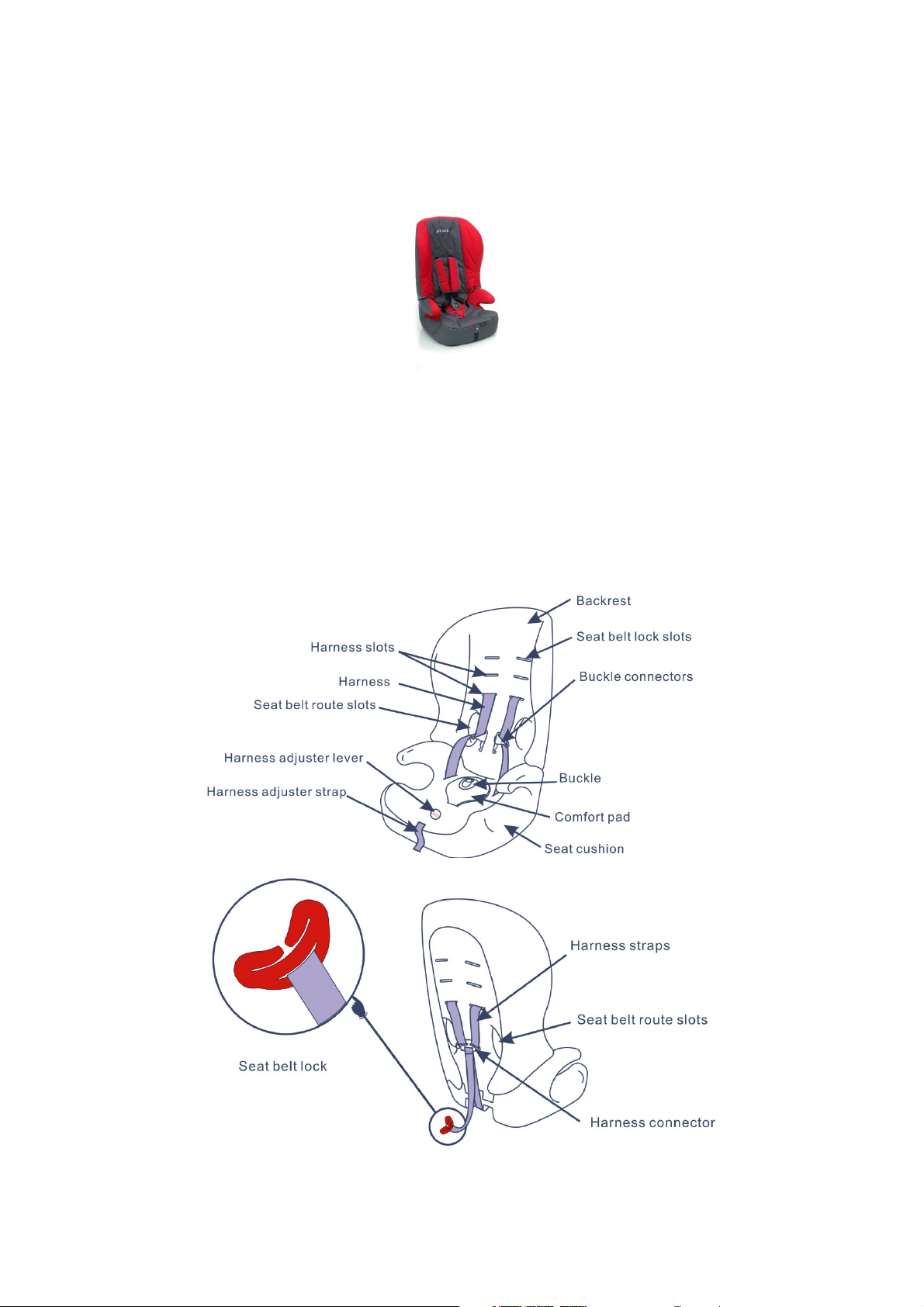
assembling and installing your new phil&teds tott car seat is effortless, just follow these simple
instructions and in 5 minutes you’ll be off.
Page 2

safe & sound
we’ve attained ECE R44/03 safety standard
Instructions for fitting & use
NOTICE
4. If in doubt, consult either the child restraint manufacturer or the retailer.
Only suitable if the vehicle is fitted with 3-point static, 3-point retractor safety belts, approved to UN/ECE
Regulation No. 16 or other equivalent standards.
EXTREME HAZARD
Do not use in passenger seats equipped with airbags (SRS)
THESE INSTRUCTIONS ARE IMPORTANT. PLEASE READ CAREFULLY AND RETAIN FOR FUTURE USE.
The correct use and maintenance of your car seat will ensure it gives long and trouble free use. When
somebody else is using your car seat, ensure they also know how to use it, especially the correct way to
adjust it. The safety of your child is your responsibility.
Warnings!
1. PLEASE RE AD THOROUGHLY BEFORE COMMENCING INSTALLATION, A S AN
INCORRECT INS T A LLATION COULD BE DANGEROUS.
2. DO N OT USE THIS CHILD RESTRAINT ON A PASSENGER S E A T EQUIPPED WITH
AN A I RBAG.
3. The child seat can be used with the backrest and harness for children of 9 – 25kg in weight
(approx. 9 months to 7 years).
4. This child seat can be used without the backrest and harness fitted for children of 22 – 36kg in
weight (approx. 4 years to 11 years).
5. This child seat can only be installed forward facing using a three-point lap and diagonal seat belt.
6. Do not use this child seat in the home. It has not been designed for home use and should only
be used in your car.
7. The safest seating position for a child car seat is on the rear seat of a vehicle.
8. Never use the child seat without fastening the child’s harness correctly, and never attempt to use
it without fastening it into the car.
9. Do not add to or modify the seat in any way.
10. Do not leave a child in the seat unattended at any time.
11. Car interiors can become very hot when left standing in direct sunlight – it is therefore
recommended that the child seat, when not in use, is covered by a towel etc. This prevents
components, particularly those attached to the child seat, becoming hot and burning the child.
12. In the event of an emergency it is important that the child can be released quickly. This means
that the buckle is not fully tamperproof and therefore your child should be persuaded never to
play with the buckle.
13. Luggage and other heavy objects should be secured in the car. Loose objects are liable to
cause injury in the event of an accident.
14. Periodically inspect the harness for wear, paying particular attention to attachment points,
stitching and adjusting devices.
15. Store this child seat in a safe place when it is not being used. Avoid placing heavy objects on
top of it.
1. This is a “Universal” child restraint; it is approved to Regulation No. 44.03 series of amendments, for
general use in vehicles and will fit most, but not all, vehicle seats.
2. A correct fit is likely if the vehicle manufacturer has declared in the vehicle handbook that the vehicle is
capable of accepting a "Universal" child restraint for this group.
3. This child restraint has been classified as “Universal” under more stringent conditions than those which
applied to earlier designs which do not carry this notice.
Page 3
16. It is most important that the seat belt is correctly routed and the child seat tightened down on the
upholstery as firmly as possible to ensure maximum protection – a recommended method is
shown in these instructions.
17. Never use this product if it has been in an accident, or if it has become badly worn. Periodically
inspect the harness for wear, paying particular attention to attachment points, stitching and
adjusting devices.
18. Ensure that no part of the seat or seat belt is trapped in a door or a folding seat. If your car has a
folding rear seat, ensure that it is correctly latched in its upright position.
19. The child seat must not be used without the cover.
Instructions for fitting & use
shoulder strap
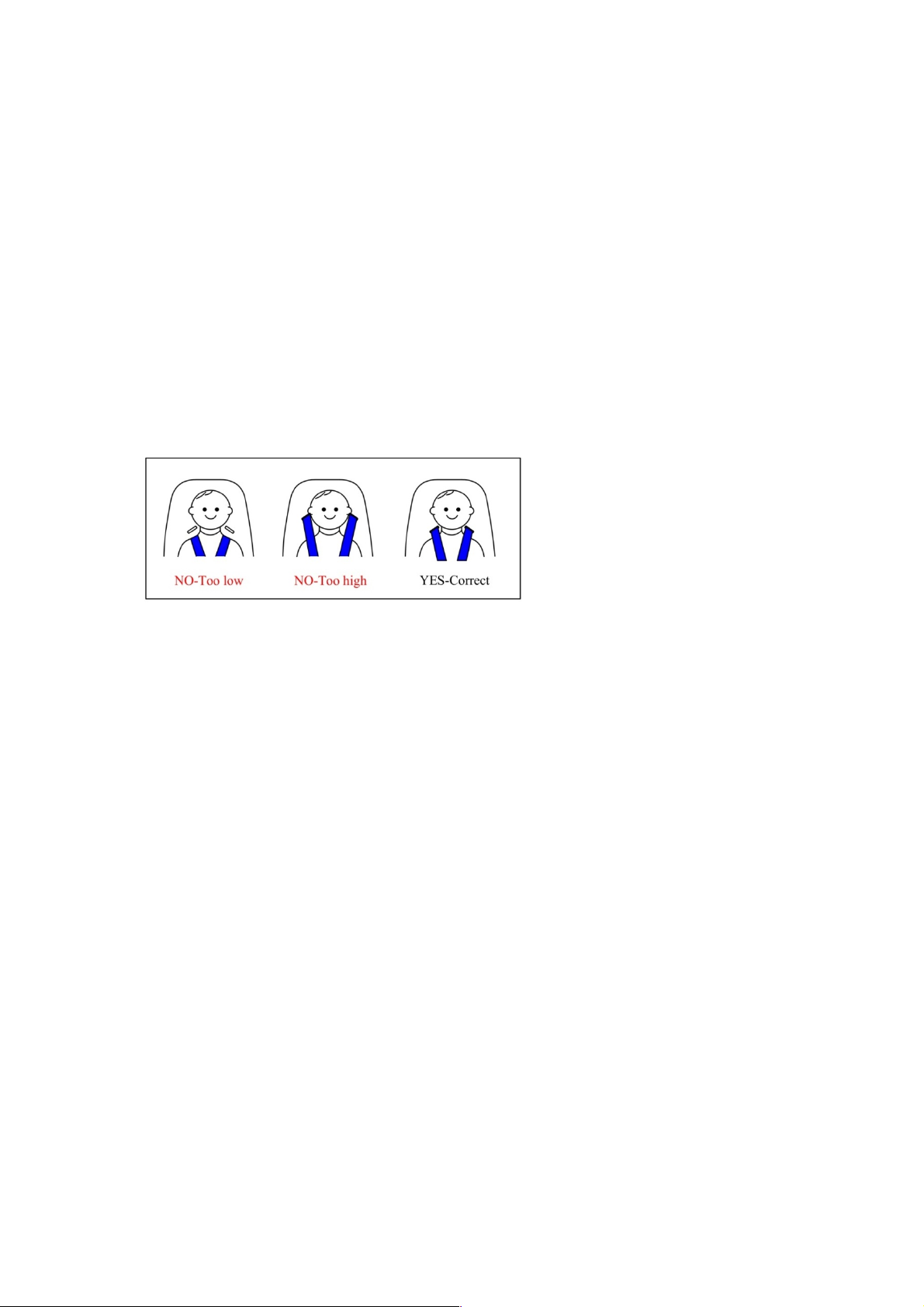
Before installing the tott into a car, always check that the shoulder straps are at the correct height for your
child. The child’s shoulders should always be below the slot for the harness.
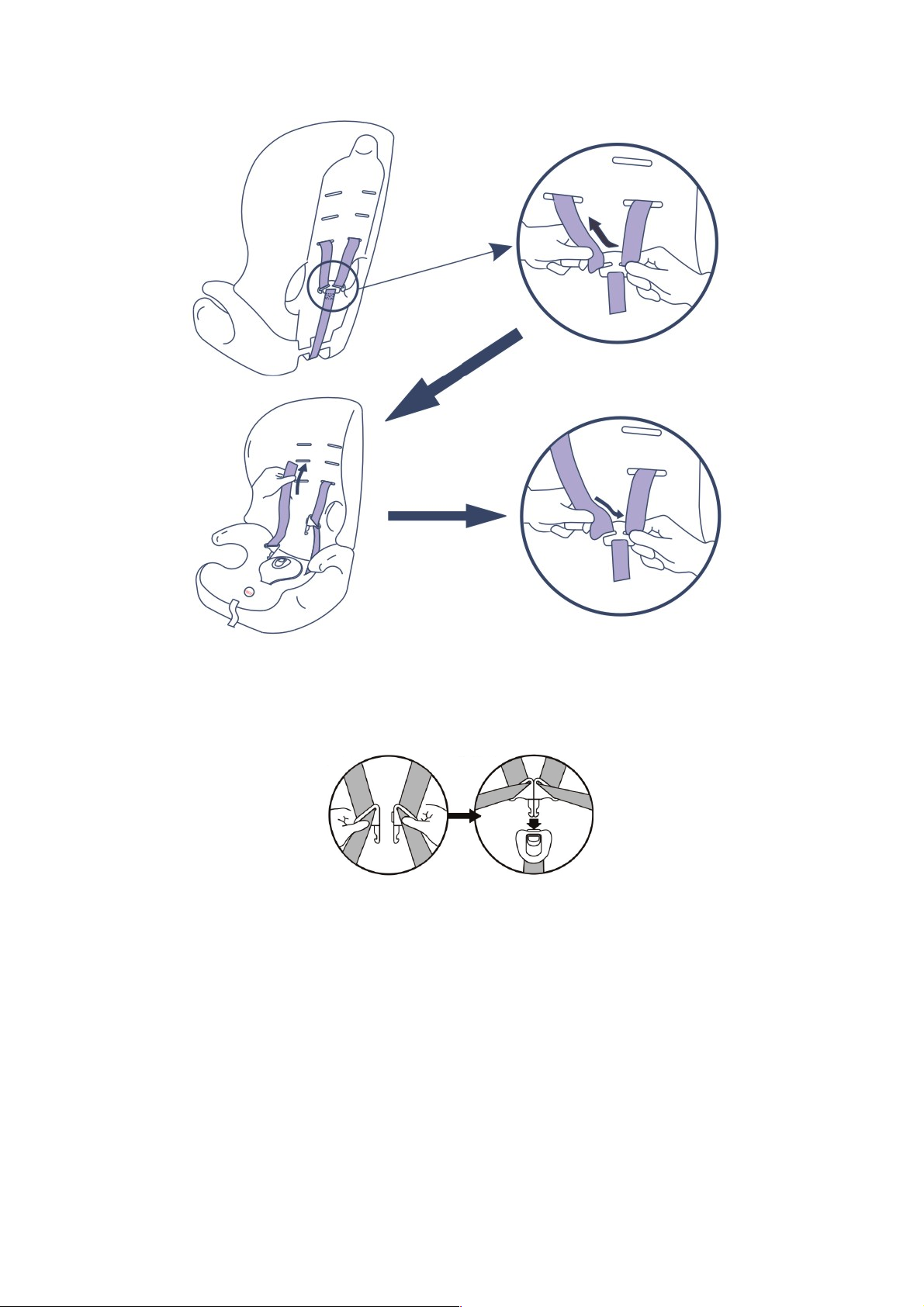
adjusting the shoulder strap height:
Release the strap holding the backrest cover to gain access to the harness. Slide one of the harness
straps off the harness connector. From the front of the seat, pull the harness through the slot in the seat’s
backrest and fabric cover. Thread the harness strap back through the desired slot on the seat’s backrest.
Re-thread the harness strap back onto the harness connector at the back of the seat. Repeat the same
process for the other harness strap (make sure both of the straps go through the slots at the same
height).
DO NOT USE THE UPPER SLOTS ON THE BACKREST. THESE ARE FOR THE SEAT BELT LOCK ONLY.
Page 4
fastening the harness:
Slot the two metal sections of the buckle connectors together. Insert the two buckle connectors into the
slot in the top of the buckle until they “click” into place. Always check that the harness is correctly locked
by pulling the shoulder straps upwards.
tightening the harness:
To tighten the harness, pull down on the adjustment strap until the harness is the correct tightness. (The
harness should be adjusted as tightly as possible without causing discomfort to the child. A loose harness
is dangerous and should be checked each time that you use the seat).
slackening the harness:
The harness is loosened by pulling on both straps at the same time as pressing down on the harness
adjuster located on the shell underneath the “Press” word stitched on the cover.
unfastening the harness:
To release the harness, push the red button in the middle of the harness buckle. You can now lift your
child from the seat; ensure that the buckle connectors do not catch on clothing.
removing the crotch strap and safety harness lap straps:
Page 5
Turn the webbing retainers on their narrowest end and feed them through the slots in the base of the seat
and then through the slots in the fabric cover.
fitting your car seat into the car
WARNING: THIS CAR SEAT SHOULD NOT BE FITTED IN A PASSENGER SEAT OF A CAR THAT HAS
AN AIR BAG FITTED (SRS)
THE TYPE OF APPROVED SEAT BELT YOU MUST HAVE
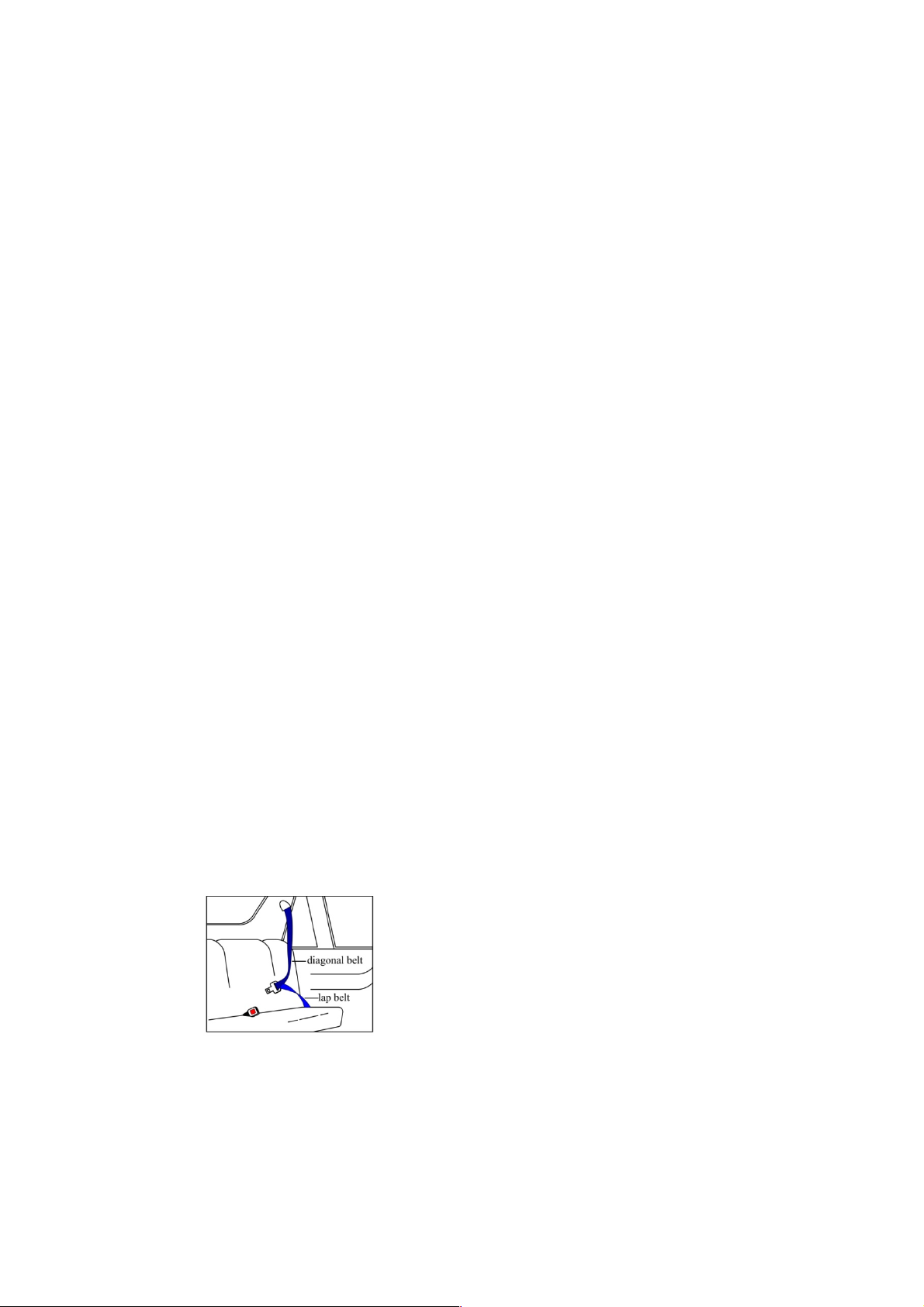
Your child seat can only be installed forward facing using a three-point lap and diagonal seat belt in the
front or rear passenger seats of the car.
Installation:
Page 6
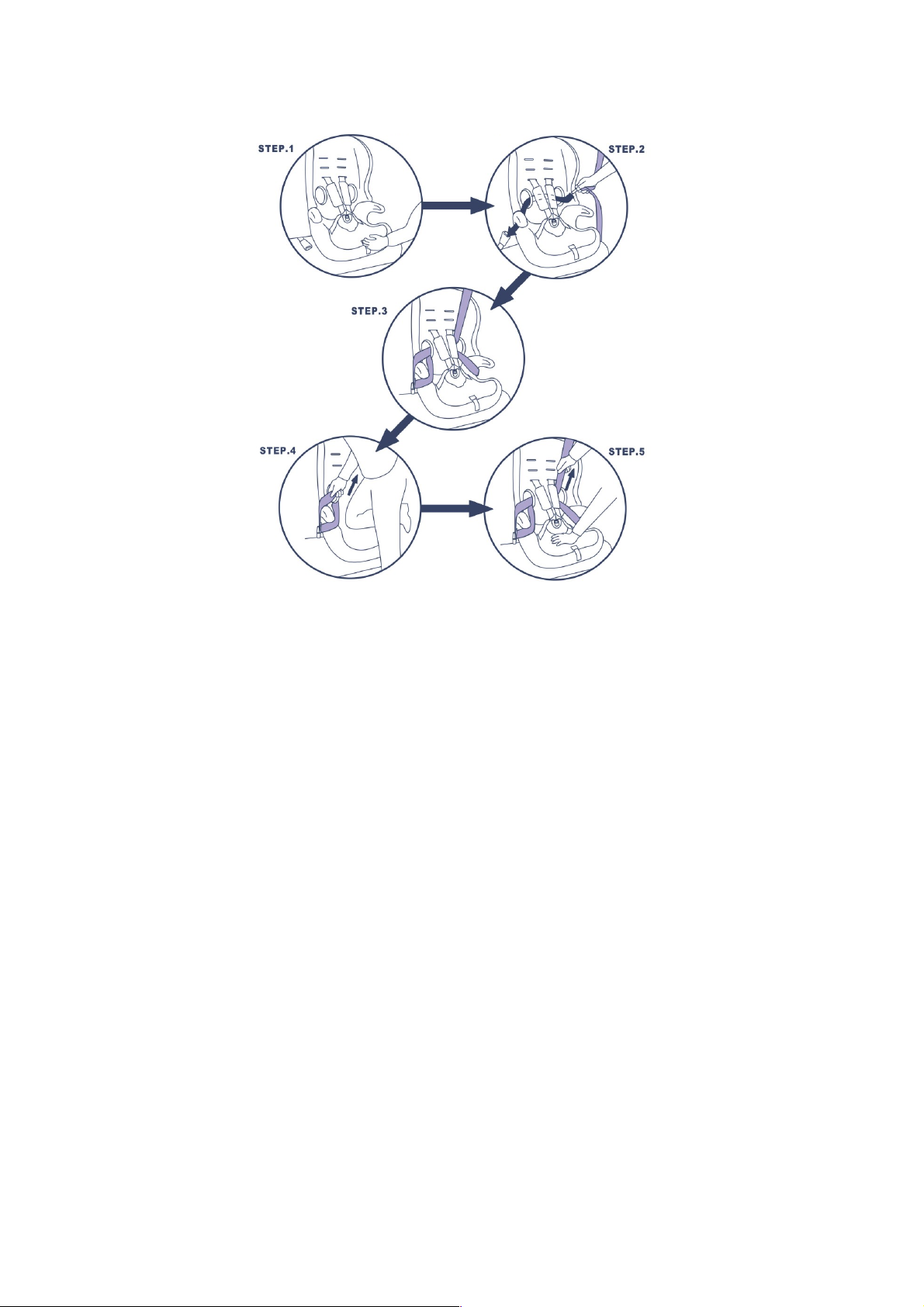
Step 1. Place the tott on the vehicle seat ensuring it is firmly pressed against the car seat backrest.
Step 2. Thread the car seat belt in through the hole in the seat’s plastic backrest (on car door side), and
then out through the hole on the opposite side and fasten it into the seat belt buckle.
Step 3. Check the webbing of the seat belt has not become twisted or tangled and that the lap belt goes
under the arm rest and diagonal belt covers armrest before proceeding.
Step 4. Place your knee on the base of the tott and grip the top piece of seatbelt webbing. Pull the
webbing upwards to tighten the seat belt.
Step 5. Take out all the slack in the seat belt (both the lap and shoulder sections) and ensure there are no
twists or kinks. The seat should be firmly in place before using.
fitting the seat belt lock (for use with adult seat belt)
The seat belt lock can be found inside the cover at the back of the booster cushion.
IMPORTANT: Before fitting the seat, remove the shoulder straps, crotch strap and lap strap and then fit
the seat belt lock only in the top set of slots as shown in the instructions.
Feed the diagonal portion of the adult seat belt through the seat belt lock and check that all of the slack
has been removed from the seat belt. Make sure the seat belt has not become twisted. Also check that
the cover is not impeding the movement or fit of the seat belt webbing in any way. To release your child
unfasten the seat belt in the normal way.
Page 7
removing the seat backrest
To remove the backrest, tilt it backwards and release it from the armrests, then push further towards the
ground (in one swift movement) until it releases from the booster seat. The backrest will release when it
reaches a 20˚ - 30˚ angle from the ground (initially this may need some force).
fitting the booster seat
recommended for use by children from 22kg – 36kg (approx. 4 years to 11 years)
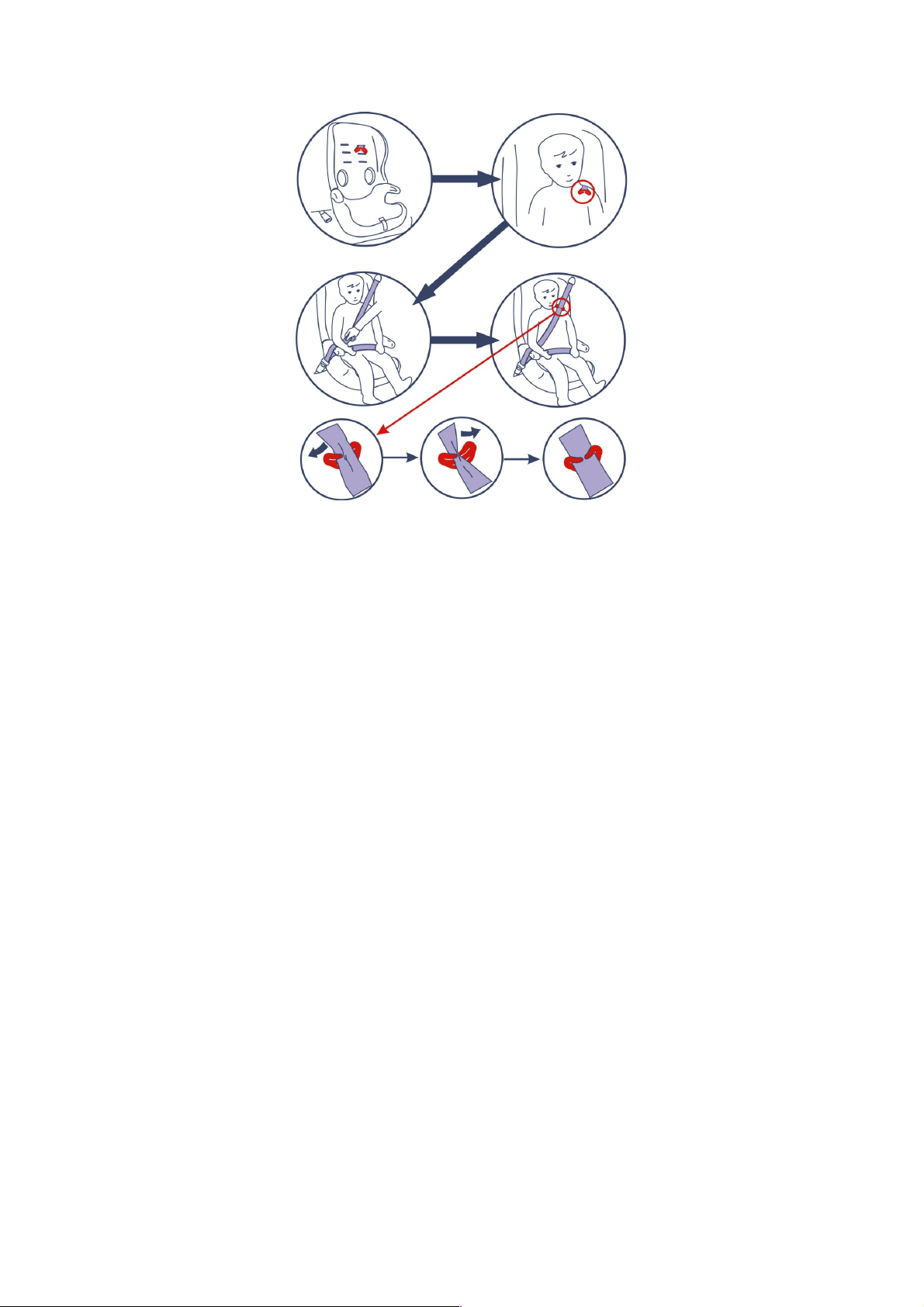
Place the booster seat on the seat of the car ensuring it is firmly against the car seat’s backrest. Place the
child on the booster seat. Fasten the seat belt, making sure that the lap belt webbing goes under both
armrests and the diagonal belt webbing goes over the armrest nearest the buckle. Check that the
webbing has not become twisted then tighten the seat belt by pulling the diagonal strap upwards.
Use the red belt lock to position the diagonal belt securely on the child’s shoulder.
cuts & bruises
cleaning and caring for your tott
THESE INSTRUCTIONS ARE IMPORTANT. PLEASE READ CAREFULLY AD RETAIN FOR FUTURE
REFERENCE
Page 8

removing the backrest cover: pull the plastic button at the back of the backrest cover off the backrest.
Take it out from the back of the backrest cover. Slide the cover off. The covers can now be cleaned.
removing the booster seat cover: first, remove the seat backrest. Release the elastic strap, slide the cover
off. The covers can now be cleaned.
cleaning the covers: use mild hand soap and warm water. Do not use chemical cleaners and never
attempt to bleach or dye the webbing. Always dry fabric naturally.
rights & remedies
*consumers may have extra rights in some countries or states.
Our products are warranted against defects in materials and workmanship for one year from date of
purchase. if the product has a manufacture fault we will repair it for free. if not practical to repair it, we will
at our discretion, replace the part in question. if the product fails due to wear and tear, neglect or
negligence, or is outside the warranty, we will happily repair if for a reasonable charge.*
who is covered? original purchaser buying product from an authorized dealer. Proof of purchase is
required.
what is covered? workmanship or materials that are deemed faulty, providing car seat has at all times
been used in normal conditions, in accordance with instructions, and been properly maintained.
what is not covered? second hand product. modified product. poorly maintained product. normal wear,
fading and fabric cuts. Improper use (by way of example): abnormal use; not following instructions; child
left unattended; excessive load; transport damage i.e. airline or freight damage.
customer costs within warranty. customer is responsible for any inwards freight charge to return product
to manufacturer’s representative for warranty and or service.
customer costs outside warranty. Where proof of purchase is not provided or product is outside of one
year period. Manufacturer’s representative reserves right to charge service fee and/or charge for parts
replaced / repaired. a return freight charge may apply.
exclusions. any consequential loss or damage to any person or property directly or indirectly as a result of
using product.
who do I contact? please discuss any warranty or service queries with your store of purchase. you will be
required to show proof of purchase. they will inform you of the next step. products that are returned
directly to the manufacturer by customers will NOT be eligible for warranty.
log on & relax
please register your product purchase through our online warranty registration by visiting
www.philandteds.com
 Loading...