

Page 1
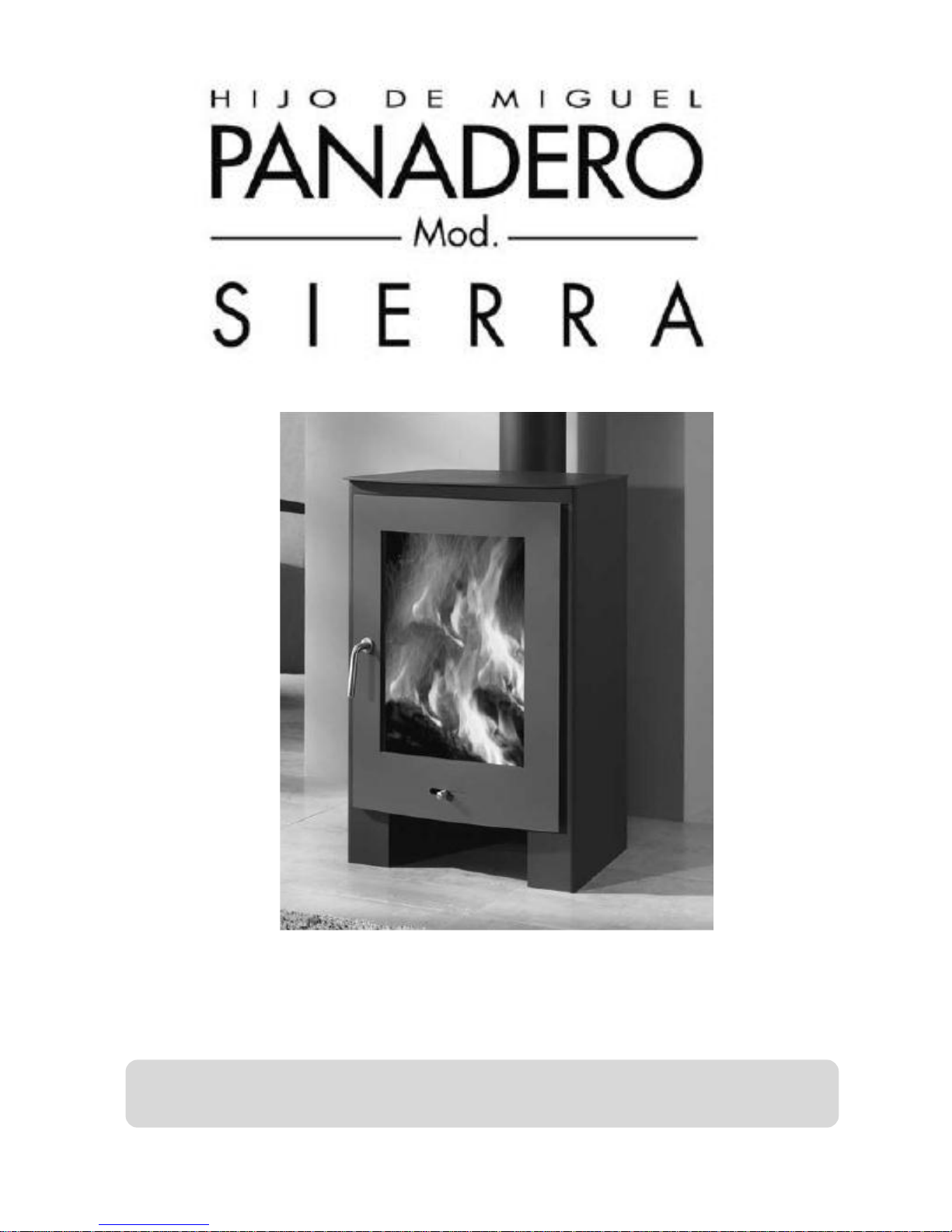
WOOD BURNING STOVE
USAGE AND MAINTENANCE INSTRUCTIONS
Page 2
HIJO DE MIGUEL
PANADERO
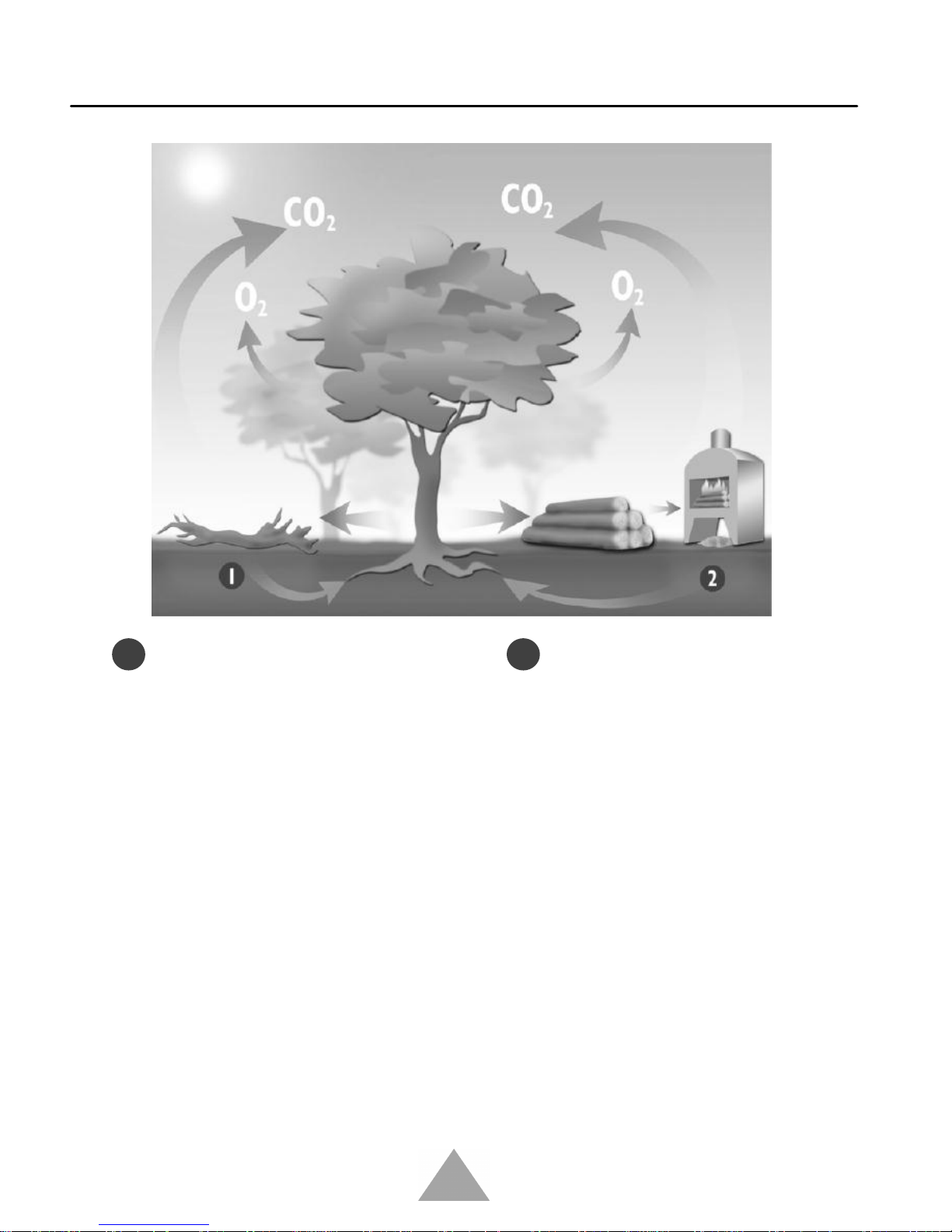
1 Nutrients 2 Ashes/Fertilizer
Wood: an ecological fuel
Wood is a renewable source of energy which answers the energy and
environmental demands of the 21st century.
Throughout its long life, a tree grows from sunlight, water, mineral salts and
CO2. Following the general pattern of nature, it soaks up energy from the sun
and supplies us with the oxygen essential for animal life.
The quantity of CO2 given off during the combustion of wood is no greater
than that given off by its natural decomposition. This means we have a source of
energy that respects the natural cycle of millions of years. Burning wood does not
increase the CO2 in the atmosphere, making it an ecological source of energy
which plays no part in the greenhouse effect.
In our wood-burning stoves logs are burnt cleanly without leaving any
residue. Wood ash is a high quality fertilizer, rich in mineral salts.
By buying a PANADERO wood burning stove, you will help the environment,
your heating will be very economical and you will be able to enjoy watching the
flames, something no other form of heating can offer.
2
Page 3

Mod.
SIERRA
USAGE AND MAINTENANCE INSTRUCTIONS
You have purchased a PANADERO product. Apart from correct maintenance,
our wood stoves require installation strictly in accordance with legislation. Our
product conform to the EN13240:2001 and A2:2004 European norm, however,
it is very important for you the consumer to know how to correctly use your
woodstove following the recommendations we set out. For this reason, before
installing the product you must read this manual carefully and follow the usage
and maintenance instructions.
READ THE INSTRUCTION BOOKLET AND THESE SUPPLEMENTARY
INSTRUCTIONS CAREFULLY BEFORE INSTALLATION
These instructions together with those in the instruction booklet
cover the basic principles to ensure the satisfactory installation of the
stove, although detail may need slight modification to suit particular
local site conditions.
In all cases the installation must comply with current Building
Regulations, Local Authority Byelaws and other specifications or
regulations as they affect the installation of the stove.
It should be noted that the Building Regulations requirements may be
met by adopting the relevant recommendations given in British
Standards BS 8303, BS EN 15287-1:2007 as an alternative means
to achieve an equivalent level of performance to that obtained
following the guidance given in Approved Document J.
Please note that it is a legal requirement under England and
Wales Building Regulations that the installation of the stove is either
carried out under Local Authority Building Control approval or is
installed by a Competent Person registered with a Government
approved Competent Persons Scheme. HETAS Ltd operate such a
Scheme and a listing of their Registered Competent Persons can be
found on their website at www.hetas.co.uk.
3
Page 4
HIJO DE MIGUEL
PANADERO
HEALTH AND SAFETY PRECAUTIONS
Special care must be taken when installing the stove such that the
requirements of the Health and Safety at Work Act are met.
You have purchased a woodstove with a vermiculite covered
combusting chamber. Do not take the vermiculite pieces off the stove.
Handling
Adequate facilities must be available for loading, unloading and site
handling.
Fire Cement
Some types of fire cement are caustic and should not be allowed to
come into contact with the skin. In case of contact wash immediately
with plenty of water.
Asbestos
This stove does not contain asbestos. If there is a possibility of
disturbing any asbestos in the course of installation then please seek
specialist guidance and use appropriate protective equipment.
Metal Parts
When installing or servicing this stove care should be taken to avoid
the possibility of personal injury.
CO Alarms: Building regulations require that when ever a new or replacement
fixed solid fuel or wood/biomass appliance is installed in a dwelling a
carbon monoxide alarm must be fitted in the same room as the
appliance. Further guidance on the installation of the carbon monoxide
alarm is available in BS EN 50292:2002 and from the alarm
manufacturers instructions. Provision of an alarm must not be considered
a substitute for either installing the appliance correctly or ensuring
regular servicing and maintenance of the appliance and chimney
system.
4
Page 5

Mod.
SIERRA
STOVE PERFORMANCE
Please refer to the table in the main instruction manual for details of
the stoves performances
PREPARATORY WORK AND SAFETY CHECKS
IMPORTANT WARNING
This stove must not be installed into a chimney that serves any other
heating appliance.
There must not be an extractor fan fitted in the same room as the
stove as this can cause the stove to emit fumes into the room.
Chimney
In order for the stove to perform satisfactorily the chimney height
must be sufficient to ensure an adequate draught of approximately 15Pa
so as to clear the products of combustion and prevent smoke problems
into the room.
NOTE: A chimney height of not less than 4.5 metres measured vertically
from the outlet of the stove to the top of the chimney should be
satisfactory. Alternatively the calculation procedure given in EN 133841 may be used as the basis for deciding whether a particular chimney
design will provide sufficient draught. BS EN 15287-1:2007 gives
additional details.
The outlet from the chimney should be above the roof of the building
in accordance with the provisions of Building Regulations Approved
Document J.
If installation is into an existing chimney then it must be sound and
have no cracks or other faults which might allow fumes into the house.
Older properties, especially, may have chimney faults or the cross
section may be too large i.e. more than 230 mm x 230 mm. Remedial
action should be taken, if required, seeking expert advice, if necessary.
If it is found necessary to line the chimney then a flue liner suitable for
solid fuel must be used in accordance with Building Regulations
Approved Document J.
5
Page 6

HIJO DE MIGUEL
PANADERO
Any existing chimney must be clear of obstruction and have been
swept clean immediately before installation of the stove. If the stove is
fitted in place of an open fire then the chimney should be swept one
month after installation to clear any soot falls which may have occurred
due to the difference in combustion between the stove and the open fire.
If there is no existing chimney then any new system must be to the
designation described above and in accordance with Building
Regulations Approved Document J.
A single wall metal fluepipe is suitable for connecting the stove to the
chimney but is not suitable for use as the complete chimney. The
chimney and connecting fluepipe must have a minimum diameter of 150
mm and its dimension should be not less than the size of the outlet
socket of the stove.
Any bend in the chimney or connecting fluepipe should not exceed
45. 90 bends should not be used.
Combustible material should not be located where the heat
dissipating through the walls of fireplaces or flues could ignite it.
Therefore when installing the stove in the presence of combustible
materials due account must be taken of the guidance on the separation
of combustible material given in Building Regulations Approved
Document J and also in these stove instructions.
If not a metal plate covering the bottom surface area of the stove
must be placed underneath it and extend further than 15cm at the sides
and 30cm at the front.
If it is found that there is excessive draught in the chimney then a
draught stabiliser should be fitted. Fitting of a draught stabiliser will
affect the requirement for the permanent air supply into the room in
which the stove is fitted in accordance with Approved Document J (see
also combustion air supply).
Adequate provision e.g. easily accessible soot door or doors must
be provided for sweeping the chimney and connecting fluepipe where it
is not intended for the chimney to be swept through the appliance.
6
Page 7

Mod.
SIERRA
Combustion air supply
In order for the stove to perform efficiently and safely there must be
an adequate air supply into the room in which the stove is installed to
provide combustion air. The provision of air supply to the stove must be
in accordance with current Building Regulations Approved Document J.
An opening window is not appropriate for this purpose.
Connection to chimney
Stoves may have a choice of either a rear or top flue gas connector
that allows connection to either a masonry chimney or a prefabricated
factory made insulated metal chimney in accordance with their
instructions. In some cases it may be necessary to fit an adaptor to
increase the diameter of the flue to the minimum required 150 mm
section of the chimney or liner.
Position of the smoke pipe
1) Place the first tube in the smoke outlet circle at the top of the stove,
and attach the other tube onto the end.
2) Join it to be rest of the chimney.
3) If the tubing reaches the exterior of your home, place the hat onto the
end.
The tube connections should be sealed with a refractory putty to
prevent soot from falling through the joints.
While the stove is in use, remove any material nearby which could
be damaged by the heat: furniture, curtains, paper, clothes,... The
minimum safety distance from adjacent combustible materials is as
shown on the last page of this manual.
The ease of access for the cleaning of the product, smoke outlet and
chimney must be considered. If you intend to install your stove near an
inflammable wall, we advise you to leave a minimum distance to
facilitate cleaning.
The stove should be installed on flooring with adequate support. If
your current floor does not comply with this criterion, it should be
adapted with appropriate measures (for example, a weight distribution
plate).
7
Page 8

total quantity of 2kg of wood (two logs weighing 1kg each)
HIJO DE MIGUEL
PANADERO
Fuel
Use only dry wood with a maximum moisture content of 20%. Wood
with a moisture content higher than 50 or 60% does not heat and
combusts very badly, and creates a lot of tar, releases excessive
amounts of vapor and deposits excess sediments onto the stove, glass
and smoke outlet.
The fire should be lit using special fire lighters, or paper and small
pieces of wood. Never try to light the fire using alcohol or similar
products.
Do not burn domestic rubbish, plastic materials or greasy products
that can pollute the environment and lead to risks of fire due to
obstruction of the pipes.
Function
It is normal for smoke to appear during the first few uses of the
stove, as certain components of the heat-resistant paint burn while the
pigment of the actual stove is fixed. Therefore the room should be aired
until the smoke disappears.
The woodstove is not designed to function with the door open under
any circumstances.
The stove is intended to function intermittently with intervals for
recharging the fuel.
For the lighting process of the stove it is recommended you use
paper, fire lighters or small sticks of wood. Once the fire starts to burn,
add to it two logs of wood each weighing 2 to 2.5kg as a first initial
charge. In this lighting process the air inlets of the stove must be kept
completely open. If necessary the drawer for removing ashes can also
be opened to begin with. Once the fire is more intense, close the
drawer completely (if open) and regulate the intensity of the fire by
closing and opening the air inlets.
In order to achieve the stated nominal heat output of this stove a
8
Page 9

. The must be placed inside at intervals of
Mod.
SIERRA
45 minutes
logs should be positioned horizontally and separate from one another,
to assure a correct combustion. In any instance a charge of fuel must not
be added to the stove until the previous charge has been burnt, leaving
only a basic fire bed which is enough to light the next charge but no
stronger.
To achieve a slow combustion you should regulate the fire with the
air draughts, which must be kept permanently unblocked to allow the
combustion air to be distributed.
It is normal for the seal of the glass door panel to melt with use. Even
though the stove can function without this seal, it is recommended that
you replace it seasonally.
The lower can be removed in order to clear out ash. Empty it
regularly without waiting for it to fill up too much, to avoid the grill
becoming damaged. Take care with the ash which may still be hot up to
24 hours after the stove has been used.
Do not open the door abruptly in order to avoid smoke being
released, and never open it without opening the air draught
beforehand. Open the door only in order to put in the appropriate fuel.
The glass, and stove in general may reach very high temperatures.
Do not expose yourself to risks of burns. When handling metal pieces,
use the glove provided with the stove.
In case of the stove becoming too hot, close the air draughts to
reduce the intensity of the fire.
In case of malfunction, contact us the manufacturers.
Maintenance
It is advisable to clean the glass door panel periodically to avoid
blackening by soot deposits. Professional cleaning products are
available for this. Never use water.
Never clean the stove while it is in use.
9
Page 10

HIJO DE MIGUEL
PANADERO
It is also important to clean the smoke outlet tubing periodically and
check there are no blockages before relighting fuel after a long period
of non-use. At the start of each season a professional should carry out a
revision of the installation.
Any replacement part which you may need must be recommended
by us.
Commissioning and handover
Ensure all parts are fitted in accordance with the instructions.
On completion of the installation allow a suitable period of time for
any fire cement and mortar to dry out, before lighting the stove. Once
the stove is under fire check all seals for soundness and check that the
flue is functioning correctly and that all products of combustion are
vented safely to atmosphere via the chimney terminal.
On completion of the installation and commissioning ensure that the
operating instructions for the stove are left with the customer. Ensure to
advise the customer on the correct use of the appliance and warn them
to use only the recommended fuel for the stove.
Advise the user what to do should smoke or fumes be emitted from
the stove. The customer should be warned to use a fireguard to BS
8423:2002 (Replaces BS 6539) in the presence of children, aged
and/or infirm persons.
10
Page 11

Mod.
SIERRA
SUPPLEMENTARY OPERATING INSTRUCTIONS FOR THE UK
MARKET
WARNING NOTE
Properly installed, operated and maintained this stove will not emit
fumes into the dwelling. Occasional fumes from de-ashing and re-fuelling
may occur. However, persistent fume emission is potentially dangerous
and must not be tolerated. If fume emission does persist, then the following
immediate action should be taken:(a) Open doors and windows to ventilate the room and then leave the
premises.
(b) Let the fire go out.
(c) Check for flue or chimney blockage and clean if required
(d) Do not attempt to relight the fire until the cause of the fume emission
has been identified and corrected. If necessary seek expert advice.
The most common cause of fume emission is flueway or chimney
blockage. For your own safety these must be kept clean at all times.
IMPORTANT NOTES
General
Before lighting the stove check with the installer that the installation
work and commissioning checks described above have been carried out
correctly and that the chimney has been swept clean, is sound and free
from any obstructions. As part of the stoves commissioning and
handover the installer should have shown you how to operate the stove
correctly.
CO Alarm
Your installer should have fitted a CO alarm in the same room as the
appliance. If the alarm sounds unexpectedly, follow the instructions
given under Warning Note above.
READ THE INSTRUCTION BOOK AND THESE
INSTRUCTIONS CAREFULLY BEFORE USING THE STOVE
11
Page 12

HIJO DE MIGUEL
PANADERO
Use of fireguard
When using the stove in situations where children, aged and/or
infirm persons are present a fireguard must be used to prevent
accidental contact with the stove. The fireguard should be
manufactured in accordance with BS 8423:2002 (Replaces BS 6539).
Chimney cleaning
The chimney should be swept at least twice a year. It is important that
the flue connection and chimney are swept prior to lighting up after a
prolonged shutdown period.
If the stove is fitted in place of an open fire then the chimney will
require sweeping after a month of continuous operation. This is a
precaution to ensure that any softer deposits left from the open fire usage
have not been loosened by the higher flue temperatures generated by the
closed stove.
In situations where it is not possible to sweep through the stove the
installer will have provided alternative means, such as a soot door.
After sweeping the chimney the stove flue outlet and the flue pipe
connecting the stove to the chimney must be cleaned with a flue brush.
Periods of Prolonged Non-Use
If the stove is to be left unused for a prolonged period of time then it
should be given a thorough clean to remove ash and unburned fuel
residues. To enable a good flow of air through the appliance to reduce
condensation and subsequent damage, leave the air controls fully open.
Extractor fan
There must not be an extractor fan fitted in the same room as the
stove as this can cause the stove to emit smoke and fumes into the room.
12
Page 13

Mod.
SIERRA
Aerosol sprays
Do not use an aerosol spray on or near the stove when it is alight.
Use of operating tools
Always use the operating tools provided when handling parts likely
to be hot when the stove is in use.
Chimney Fires
If the chimney is thoroughly and regularly swept, chimney fires
should not occur. However, if a chimney fire does occur turn off the
stove immediately and isolate the mains electricity supply (if applicable),
and tightly close the doors of the stove. This should cause the chimney
fire to go out. If the chimney fire does not go out when the above action
is taken then the fire brigade should be called immediately. Do not
relight the stove until the chimney and flueways have been cleaned and
examined by a professional.
Permanent air vent
The stove requires a permanent and adequate air supply in order for
it to operate safely and efficiently.
In accordance with current Building Regulations the installer may have
fitted a permanent air supply vent into the room in which the stove is
installed to provide combustion air. This air vent should not under any
circumstances be shut off or sealed.
USER OPERATING INSTRUCTIONS
Please read the important notices given above before referring to the
main instruction book for detailed operating instructions.
Recommended fuels
Stoves may be designed to burn dry seasoned wood logs and/or
solid mineral fuel as indicated in the main stove manuals.
13
Page 14

HIJO DE MIGUEL
PANADERO
HETAS Ltd Approval
HETAS approval may be limited to specific fuel types as detailed in
the main instruction manuals. Approval does not cover the use of other
fuels either alone or mixed with the recommended fuel, nor does it cover
instructions for the use of other fuels.
GUARANTEE
This is a high quality stove, manufactured with great care. Even so, if
any defect is found, please, first contact your distributor. If they are
unable to solve the problem they will contact us and send us the stove if
necessary. Our company will replace any faulty parts free of charge up
to two years from the date of purchase. We will not charge for repair
work, however any transport costs must be paid by the client.
Our guarantee does not cover the following instances:
- Installation not in accordance with the assembly and usage
instructions.
- Inappropriate use.
- Wrong or negligent use, such as damage to the glass door
panel, breakage or misuse.
In the interior of the packaging, you will find a quality control slip.
We request that you send this to your distributor in case of any claim.
14
Page 15
Mod.
SIERRA
MEASUREMENTS AND CHARACTERISTICS
15
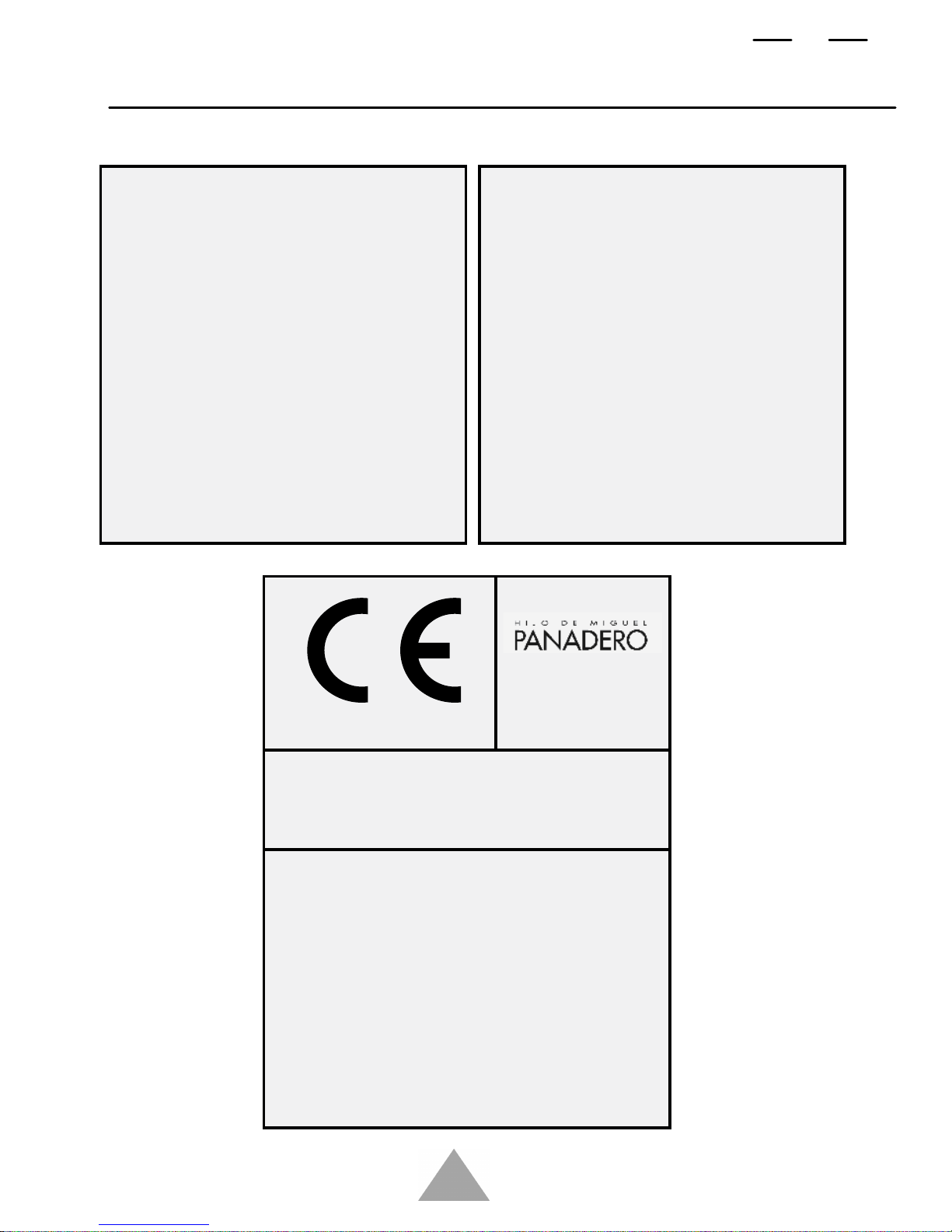
- Height
...................................................
795 mm
- Width
...................................................
520 mm
- Depth
.....................................................
440 mm
- Weight
......................................................
86 Kg
- Firewood entrance
......
470 x 330 mm
- Smoke outlet
.........................
150-153 mm
- Iron sheet body of 5 mm.
- Cast iron grill
- Paint, resistant up to 800 °C
- Vitro-ceramic glass, 750 °C
- Firewood up to 50 cm long
- Nominal heat output
...................
8.9 kW
- Energy efficiency
...........................
74,9 %
- CO emission
.....................................
0.18 %
- Minimum flue draught for
nominal heat output
..................
11.9 Pa
- Flue gas mass flow
......................
9.7 g/s
- Flue gas temperature
..................
285 °C
- Distance to adjacent
combustible materials
...........
50 cm
- Heating volume (aprox.)
..........
250 m
3
Thermal output
.................................................................
8.9 kW
Energy efficiency
...........................................................
74,9 %
Emission of CO in combustion products
.....
0.18 %
Flue gas temperature
.................................................
285 °C
Distance to adjacent combustible materials 50 cm
Fuel types
...................
Firewood and briquetted wood
“SIERRA” WOODSTOVE
..................................
11
FREESTANDING ROOMHEATER FIRED BY SOLID FUEL
CERTIFICATE Nº EZKA/11/054-6
EN 13240: 2001 & A2: 2004
P.I. CAMPOLLANO
AVDA. 5ª NORTE, 13-15
02007 ALBACETE -SPAIN
Page 16

 Loading...