

Page 1
WARNING : This charger is not a domestic appliance, it should be only used and positioned in the
correct environment. Due to the power volatility of Lithium batteries it should be positioned on a fireproof
base at least 1.5 meters from any flamable materials
WARNING : Never leave the charger unattended
Never exceed maximum battery charge rate
Never charge non-approved or non EU compliant Batteries
Never charge in the wrong mode
Never charge near flammable material
Warning : Read and familiarise yourself with the instruction manual before operating the charger, seek
advice from other charger users or Overlander is you are unsure of any proceedures
Page 2
WARNING: Read the ENTIRE
instruction manual to become
familiar with the features of
the product before operating.
WARNING: Never leave charger
unattended, exceed maximum
charge rate, charge with nonapproved batteries or charge
batteries in the wrong mode.
Failure to comply may result
in excessive heat, fire and
serious Injury
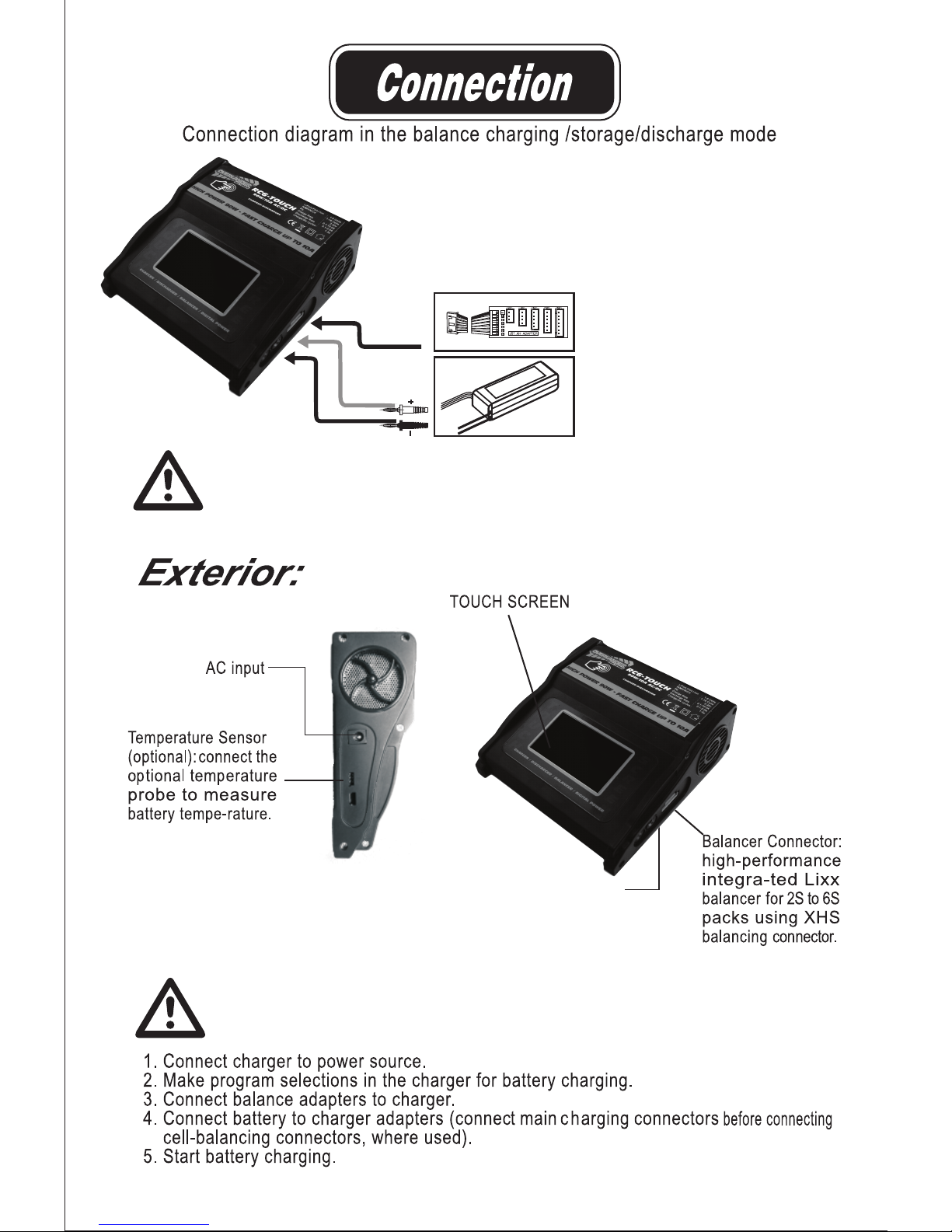
CAUTION: Always power on the charger before connectiong a battery to the
charger, or damage to the charger and the battery can result
Output Socket: Connect battery
to be charged to the 4.0mm
Socket, using supplied charge
wires. Caution: Be careful to
ensure correct polarity
CAUTION: Always ensure the battery you are charging meets the specifications of this charger and that the charger settings are correct. Not doing so
can result in excessive heat and other realted product malfunctions, which
can lead to user injury or property damage
Page 3
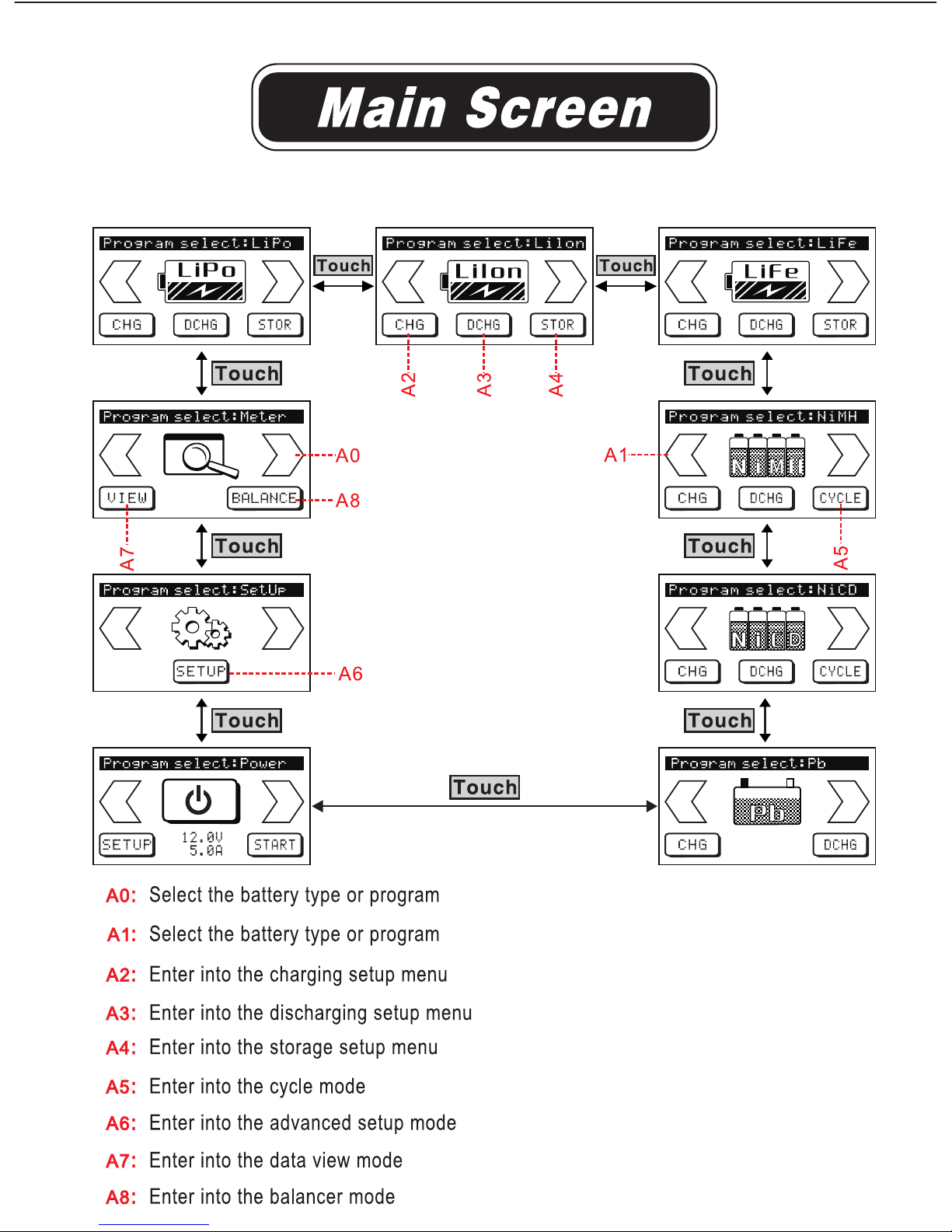
After switching on the charger, the main menu will be visible. Press the arrow keys (”<” or”>”)
to toggle between the LiPo/LiIon/LiFe/NiMH/NiCd/Pb/Digital Power/Setup/Data View functions
Page 4
This charger recognises the cell count of Lithium
batteries automatically. If the battery voltage is below
the defined lowest safe voltage, then the charger will
not start the charge process.
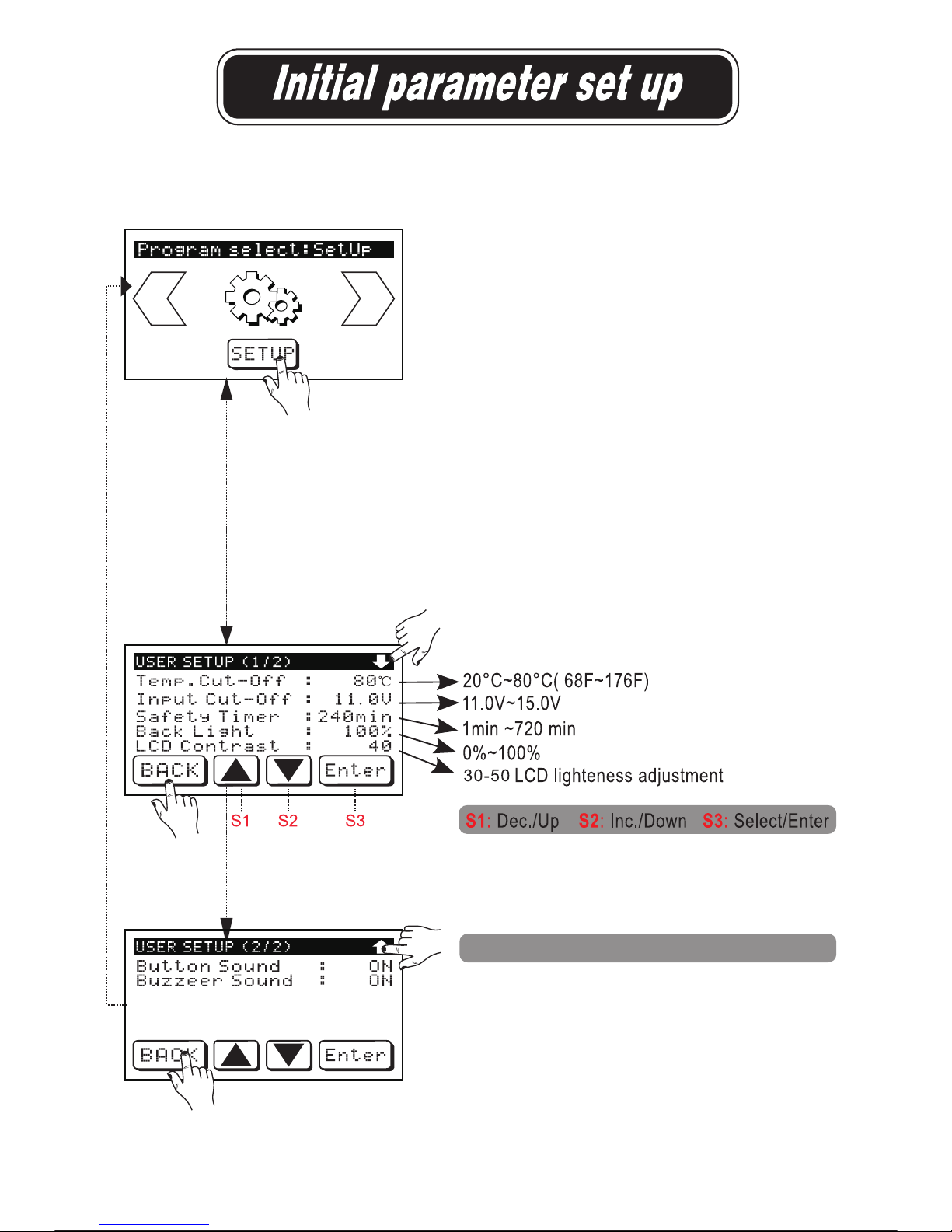
Tip: We suggest setting parameters in the ‘User Set’ menu before using charger for the first time.
Press here to toggle between screens
Page 5
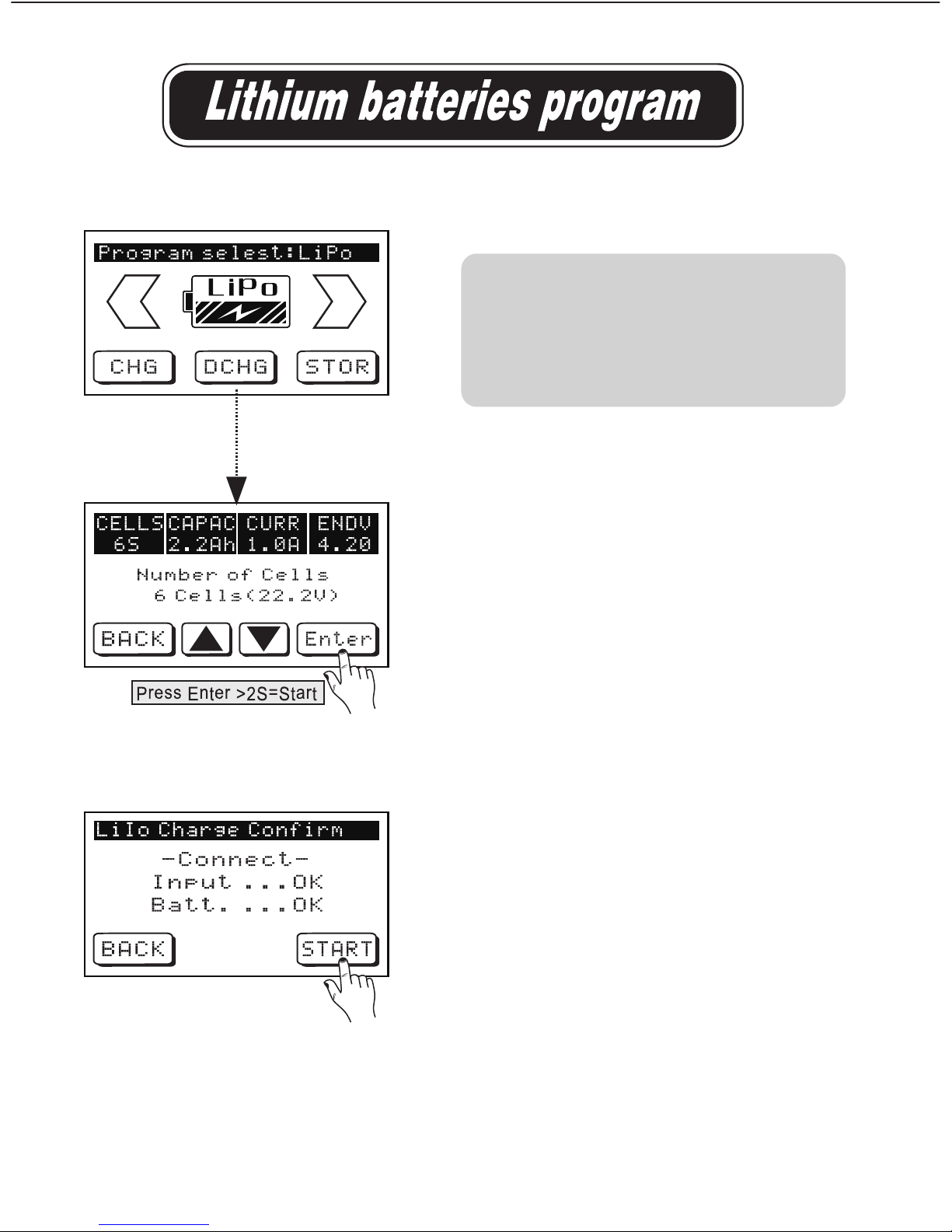
The charger can accept three types of Lithium batteries: LiPo/LiIon/LiFe. IMPORTANT: Please
ensure that you use the correct setting for your type of battery and that it is connected
appropriately. Failure to do this may risk fire, explosion and serious injury.
Note: Charger will set the charge current
according a rate of 1C automatically when
you set the capacity of the battery pack.
(recommended) If you charge a high-rate
battery pack you can set the value of the
“Current” higher.
To commence charge/discharge: Select appropriate
mode then press touch key for more than 2 seconds
to start the process.
This screen displays both the number of cells selected
by you, and the number of cells the processor detects.
“Read” shows the number of cells found by the charger
and “Set” is the number of cells selected by you at the
previous menu. If both numbers are identical you can
start the charging process by pressing the “Start”
button. If not, press the “BACK” button to return to the
previous menu, then carefully check the number of
cells in the battery pack to attempt again.
Page 6
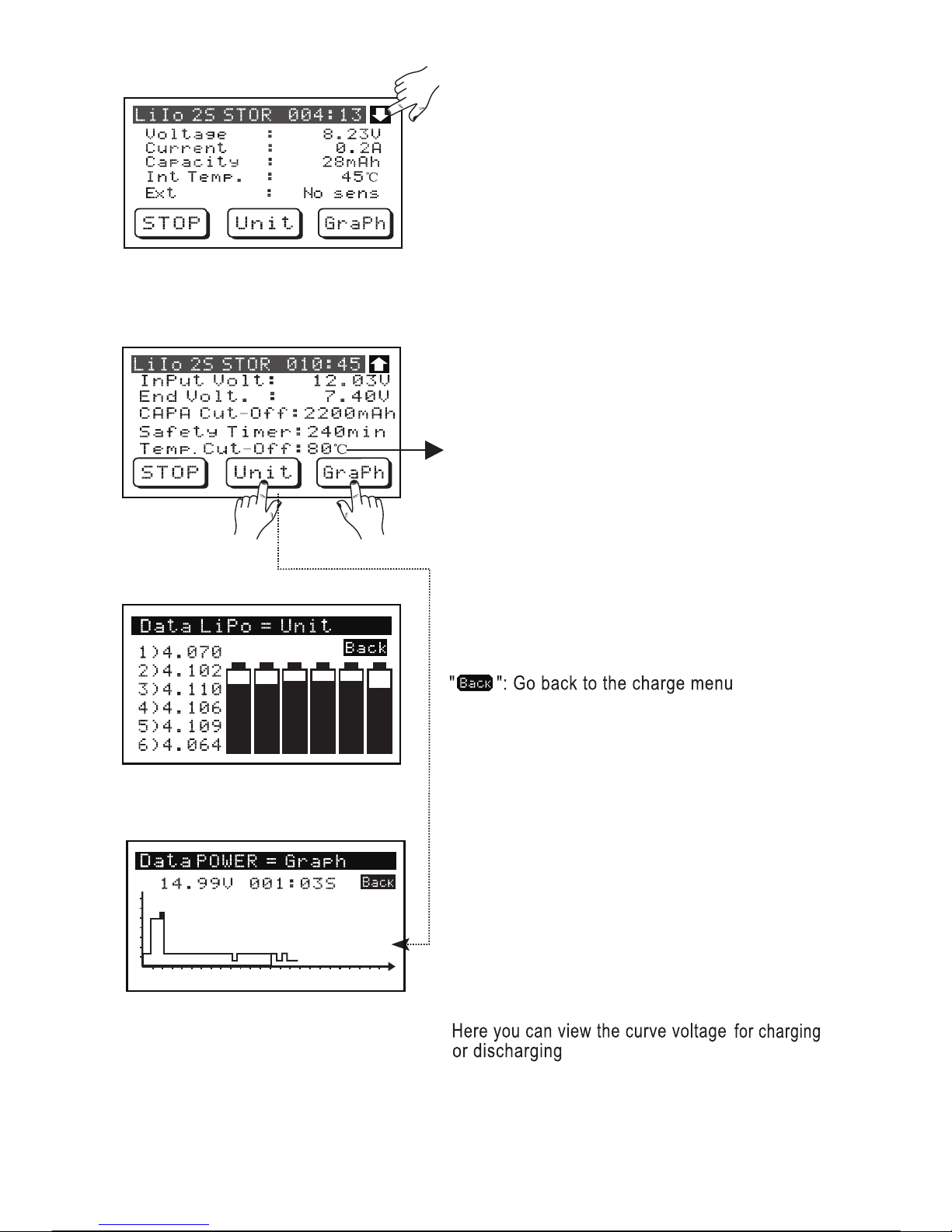
Peak temperature, measured by the
temperature sensor
Page 7
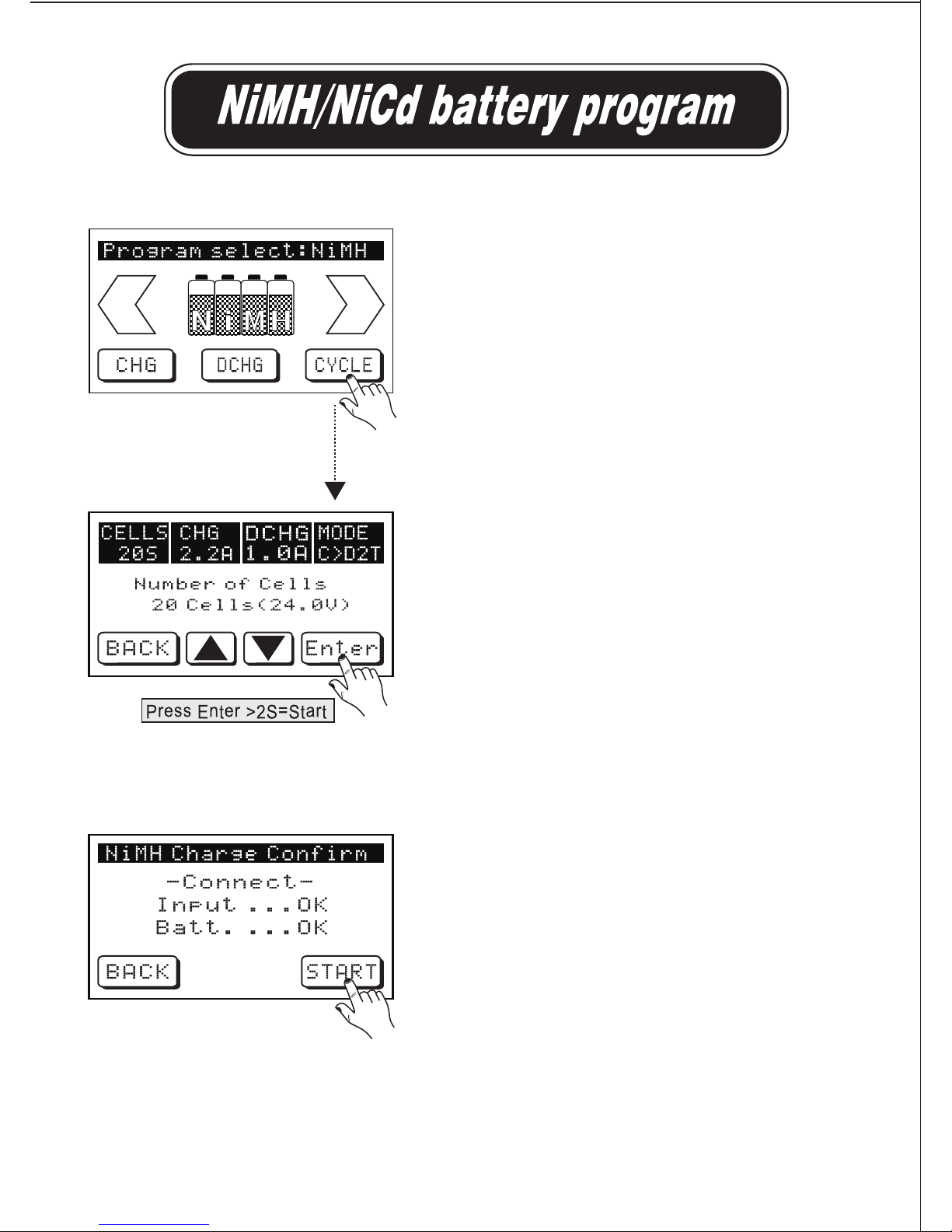
“CHARGE” mode can be “Man” or “Auto”. In
“Man” mode, the battery will charge at
the current you set at the display. However
in “Auto” mode, you need to set the upper limit
of charge current to avoid possible damage to
the battery. This is because some batteries of
low impedence and small capacity can lead to
a higher charge current by the processor in
automatic charge mode
The trigger voltage for automatic charger termination
of NiMH and NiCd batteries ranges from 5 to 20mV
per cell. If set higher, there is a danger of overcharging
the battery; if it is set lower, there is a possibility of
premature termination. Please refer to the technical
specifications of the battery, but this is best left at
the default setting
In “DISCHARGE” mode the discharge current ranges
from 0.1A to 5.0A and the final voltage ranges from
0.1 to 24.0V. The final voltage of NiMH batteries is
1.0V/Cell and NiCd is 0.85V/cell. Please refer to the
instructions recommended by the battery manufacturer
In “CYCLE” mode the charger can perform 1-5 cycles
of DCHG>CHG or CHG>DCHG continually. Please
set up carefully to avoid risk of damage to the battery.
To set the parameters, please follow the “Cycle set”
Menu.
Page 8
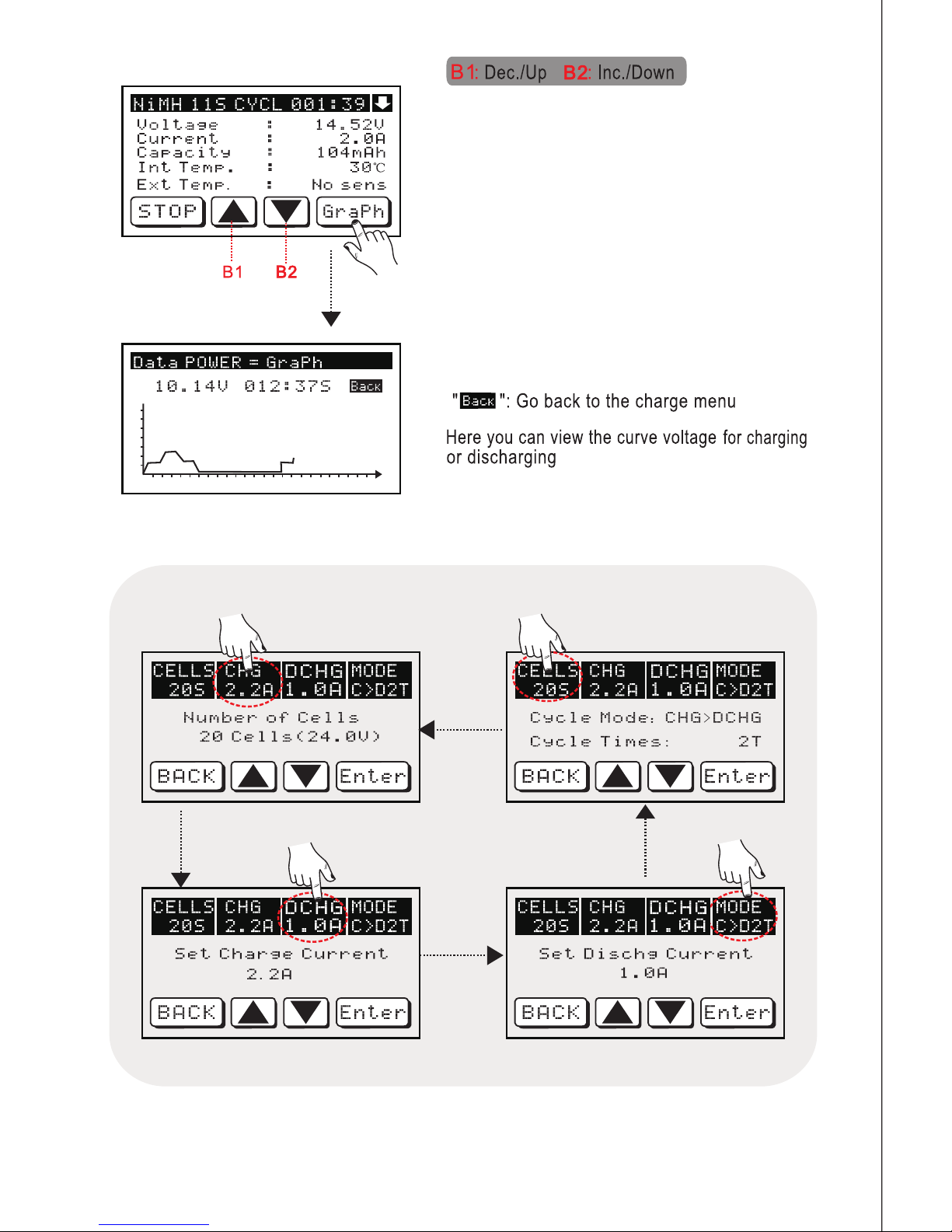
When NiMH or NiCd battery is on the cycling
process of charge/discharge, it may become
warm. The program incorporates a time delay
function to allow the battery enough time to
cool down during the two cycle process. The
value ranges from 1 to 60 minutes. If you are
not sure, we advise you to set the time above
15 minutes or longer, to allow the batteries
to fully cool
Page 9
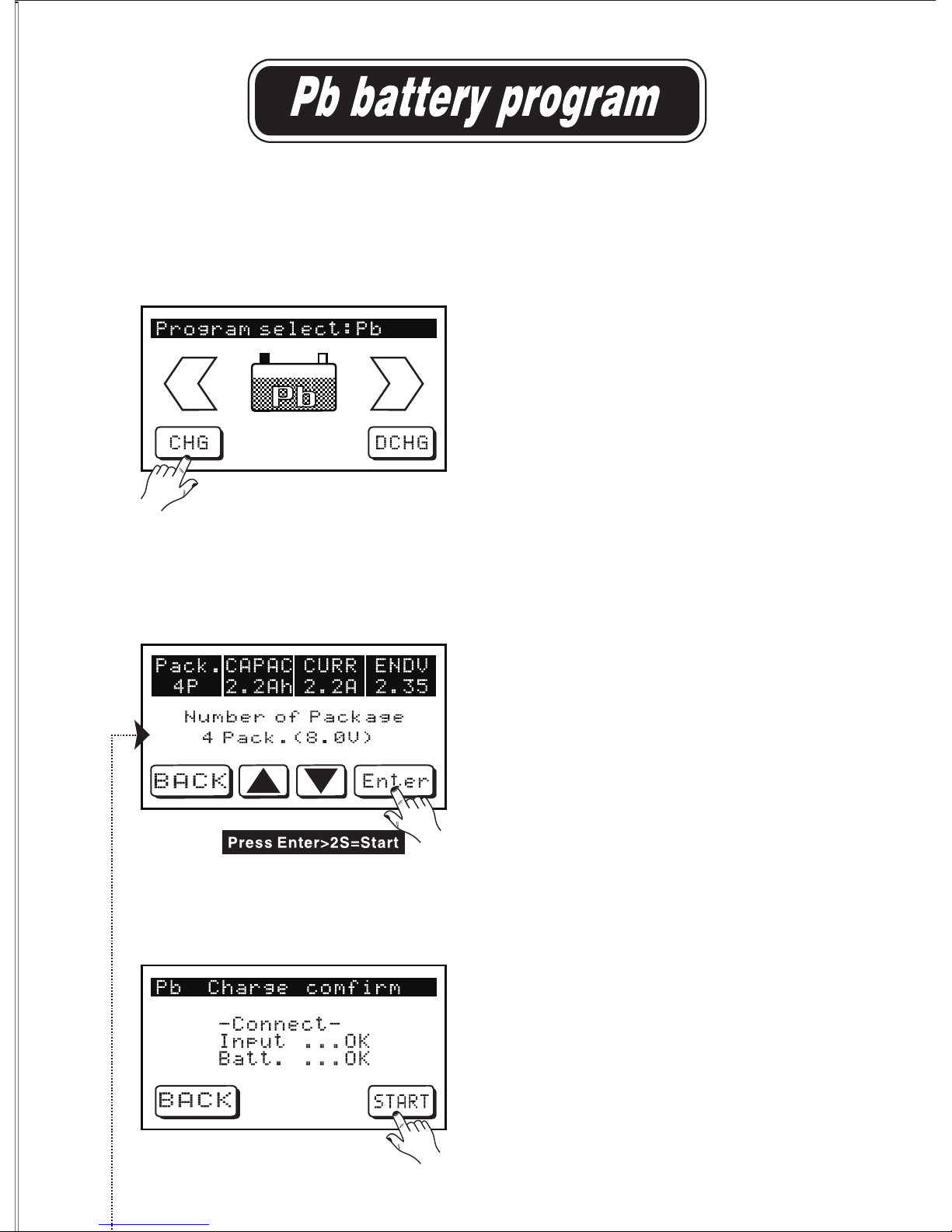
This is programmed for charging Pb batties with nominal voltages from 2 to 20V. Pb batteries
cannot be charged rapidly as they can only deliver relatively low current compared to their
capacity. The optimal charge current will be 1/10 of the capacity. Please follow the instructions
supplied by the battery manufactuer
Pb mode is for charging Pb batteries only. You
can set up the charge current using the settings.
It is possible to set the Pack./
CAPAC/CURR/ENDV for the battery. The
charge current ranges from 0.1-10.0A and the
voltage needs to be matched with the battery
being charged. Start the charge process by
pressing the “Enter” key for more than 2
seconds
Set the cell count, discharge current and battery
capacity in this menu. The discharge current
ranges from 0.1-2.0A and the voltage should be
matched with the battery being discharge. Start
the discharge process by pressing the “Enter”
key for more than 2 seconds
The screen shows the state of the charge/
discharge process. To stop the process, press
“Back” key once.
Page 10
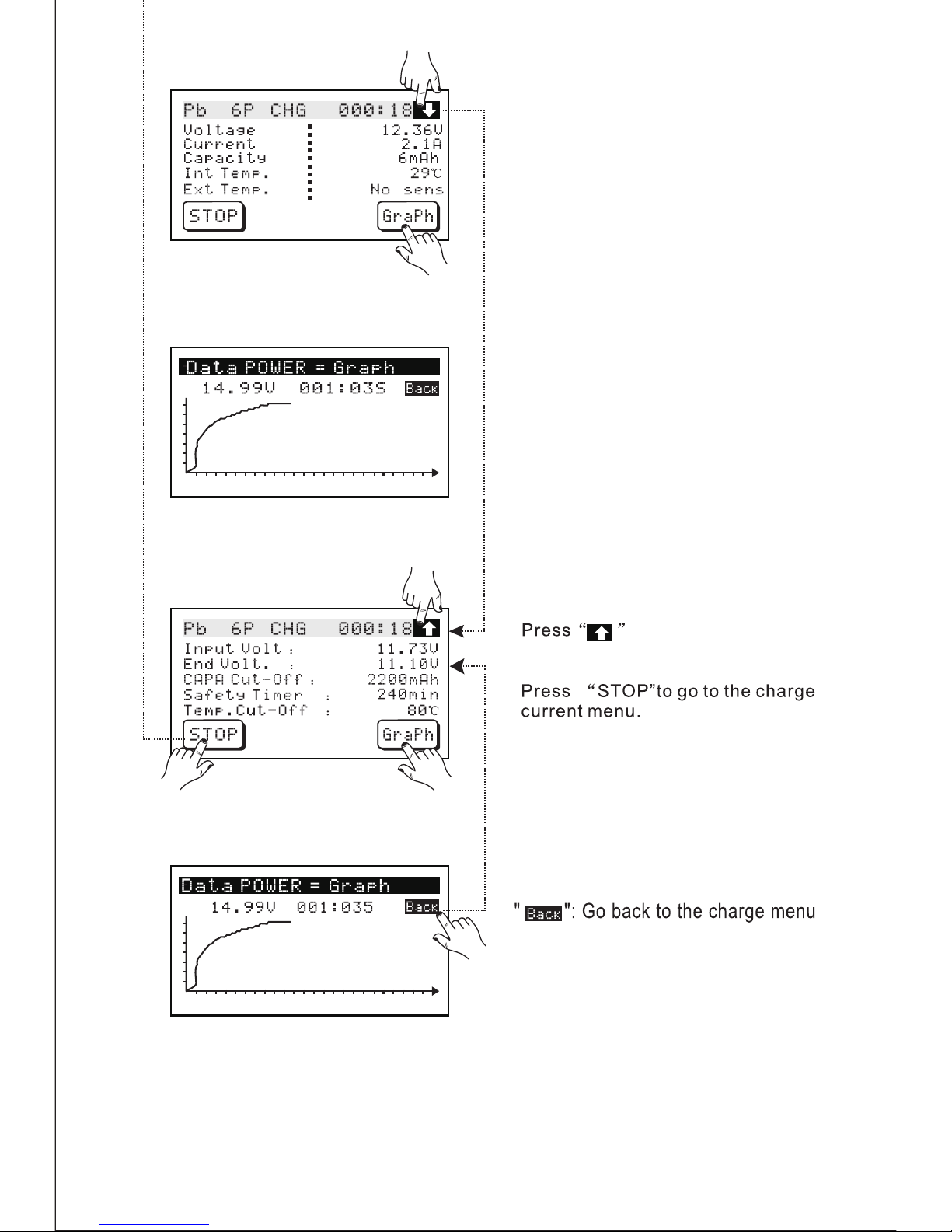
to key back to previous
screen
Page 11
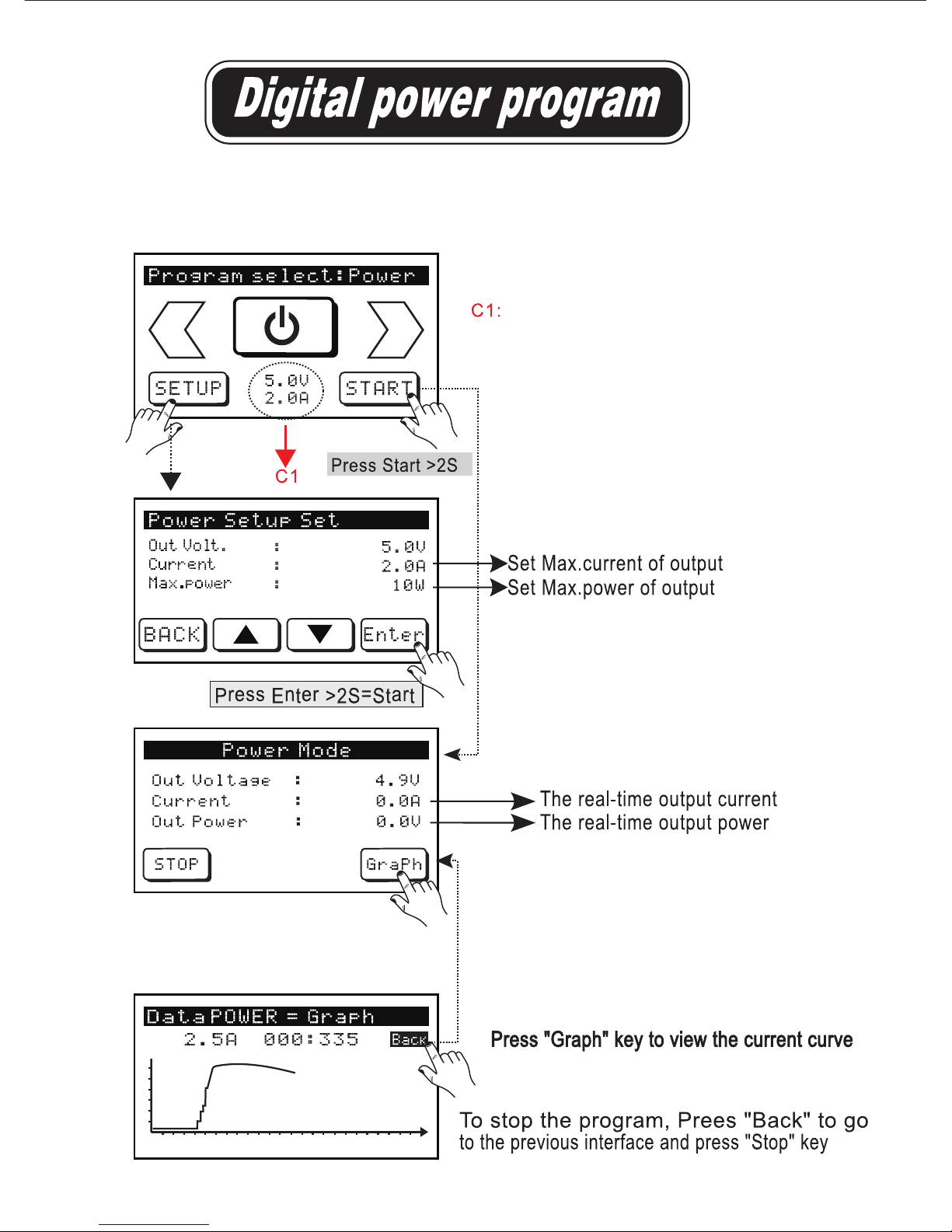
In this mode, charger can provide output power of DC3.0V-24V for the other electronic equipment to
a max of 60 watt output for the power supply application.
In the digital power menu, the charger shows the
parameters defined by the user previously. If you
do not need to modify the settings, press the
“START” button for more than 2 seconds
Page 12
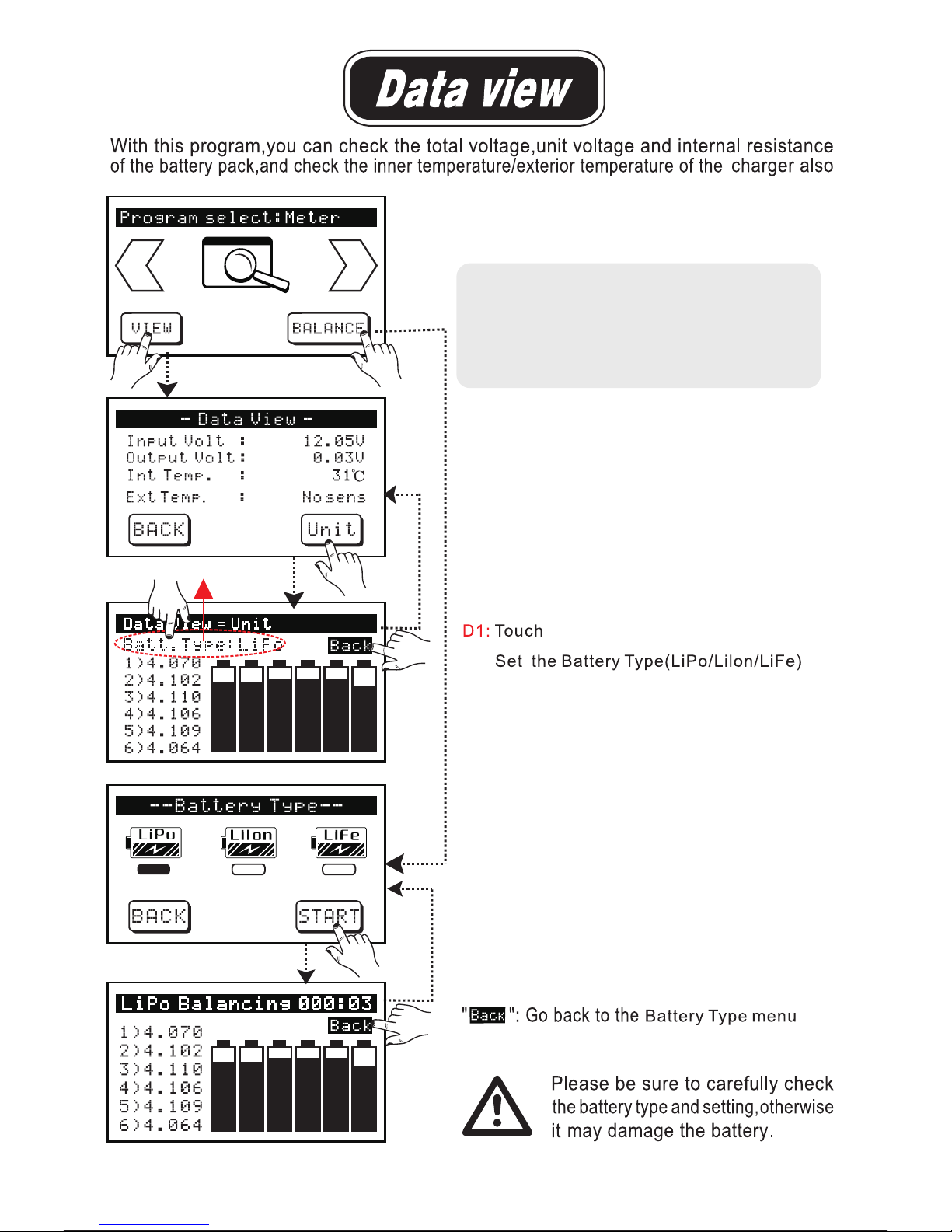
D1
Tips: When you press “view”, the charger
will enter into the resistance measurement
process for one time only. Please ensure
that you have connected the battery to the
output socket port of the charger
You can use the balance function to correct
unbalanced battery packs.
Press “balance” to choose battery types.
Then, “Start” button to begin balancing
Page 13
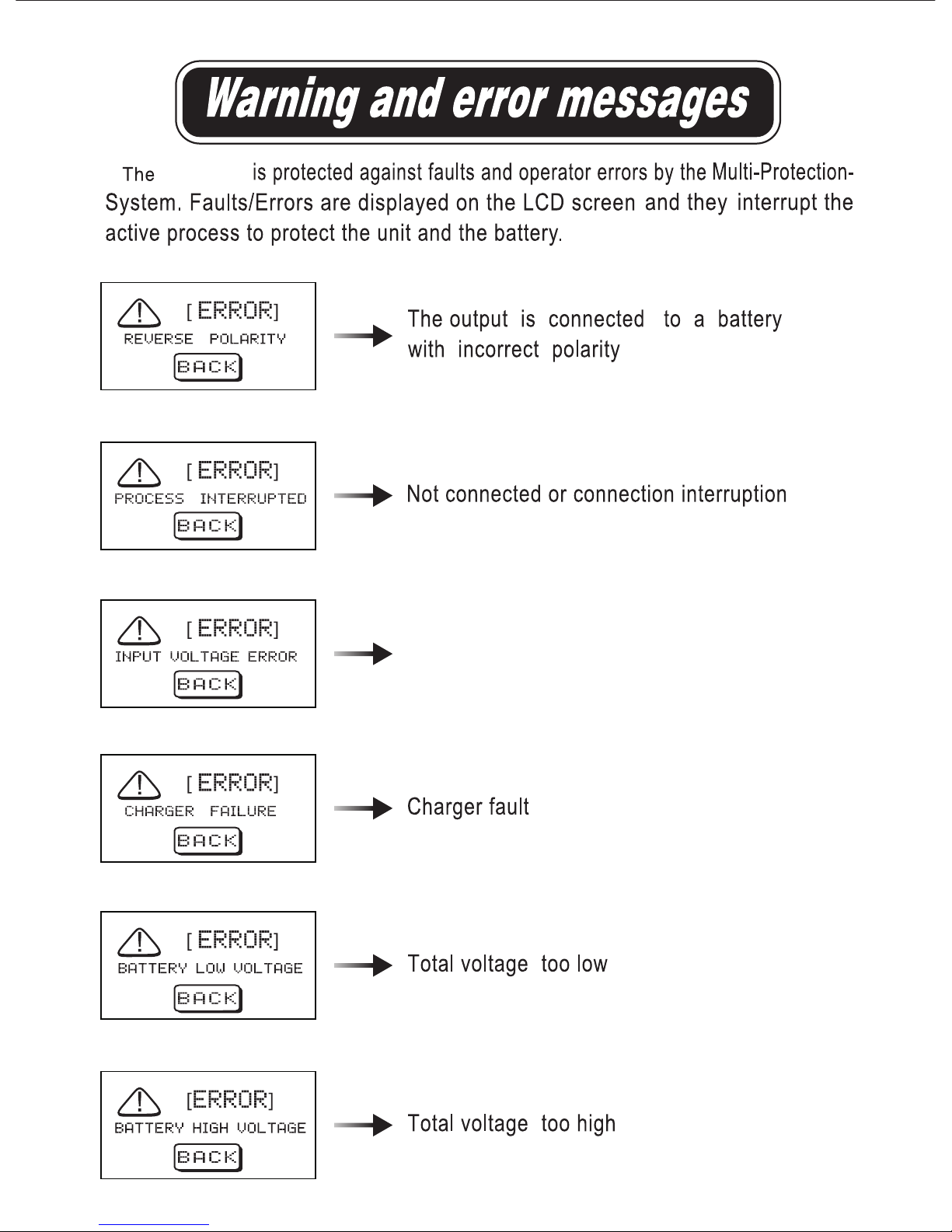
RC6 Touch
Input voltage error. Either below or above the
limit of 11-18V
Page 14
Page 15
RC6 Touch
Thankyou for purchasing the RC6-Touch Balance charger. We will do our best to
provide you with a comprehensive after-sales service and protect your rights and
interests.
We provide a warranty for this product for a period of one year from the date of
purchase. In cases where customers can not provide an effective proof of purchase, we
will refer to the date of the charger’s construction.
Overlander accepts no liability in the case of user disassembly, alteration, or damage
caused by improper use.
Page 16
The Waste Electrical and Electronic Equipment (WEEE) Directive is now UK law. The legislation
aims to make producers pay for the collection, treatment and recovery of waste electrical
equipment. The regulations also mean that suppliers of equipment like high street shops and
internet retailers must allow consumers to return their waste equipment free of charge.
The amount of WEEE we throw away is increasing by around 5% each year, making it the fastest
growing waste stream in the UK.
● Much of the UK’s WEEE ends up in landfill, where the lead and other toxins it contains can cause
soil and water contamination. This can have a harmful effect on natural habitat, wildlife and also
human health.
● Many electrical items that we throw away can be repaired or recycled. Recycling items helps to
save our natural finite resources and also reduces the environmental and health risks associated
with sending electrical goods to landfill.
Distributors of new Electric and Electronic Equipment (EEE) have a part to play in reducing the
amount of WEEE going into landfill sites.
Overlander Batteries is obliged under these regulations to offer our customers free take-back of their
WEEE on a like-for-like basis when they buy a new Electrical or Electronic product from us.
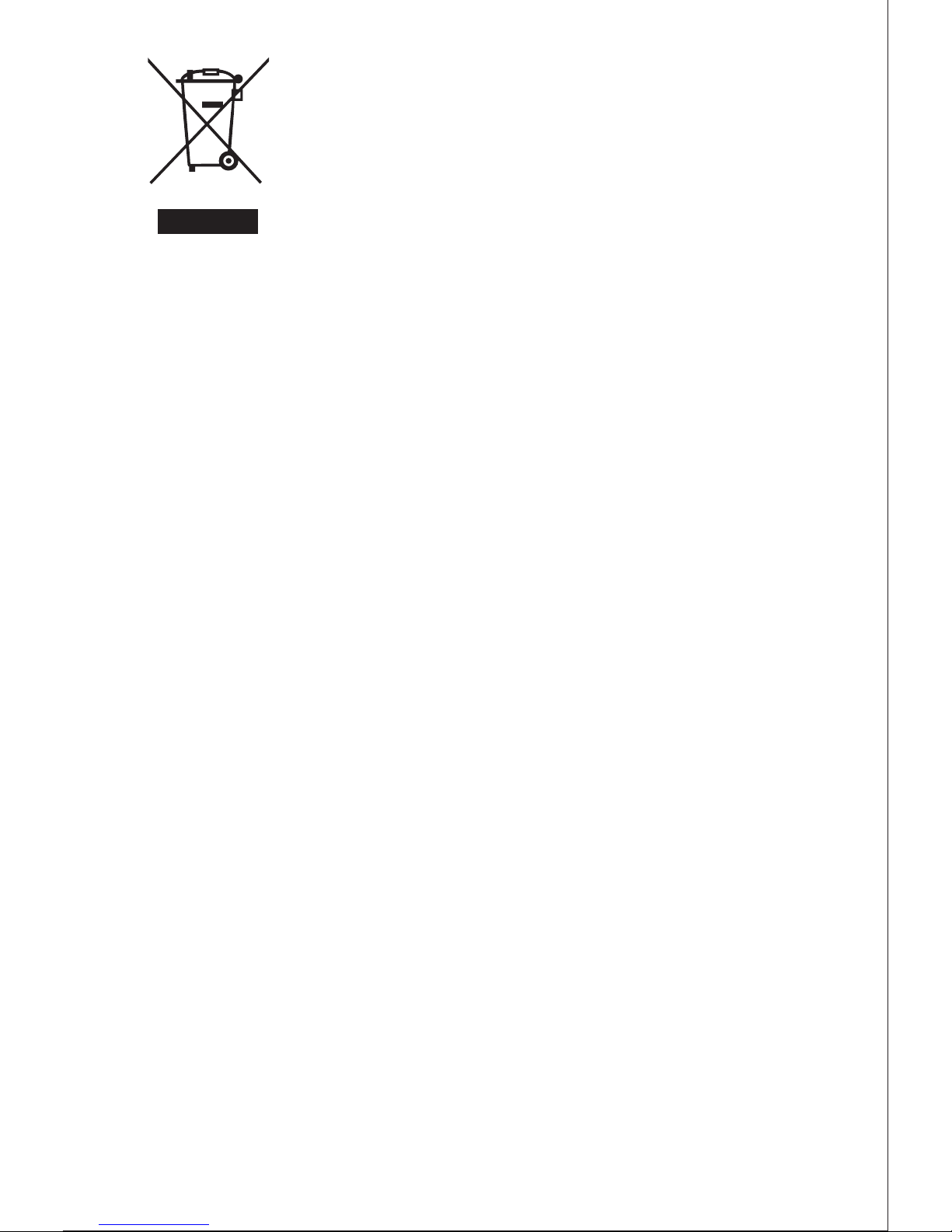
Goods are marked with this symbol to show that they were produced after 13th August 2005, and
should be disposed of separately from normal household waste so that they can be recycled.
If you have any more questions regarding battery recycling please feel free to contact us.
This product must not be disposed of with other waste.
Instead, it is the user’s responsibility to dispose of their
waste equipment by handing it over to a designated
collections point for the recycling of waste electrical and
electronic equipment. (WEEE) The sperate collection and
recycling of your waste equipment at the time of disposal
will help to conserve natural resources and ensure that is
is recycled in a manner that protects human health and
the environment
Under the Waste Battery regulations, Overlander Batteries are also now offering a take back
scheme for all portable waste batteries. You can return your waste batteries to our business
premises in person (please do not post). Alternatively, you can find your local recycling facility at
www.BatteryBack.org
 Loading...