

Page 1

Android Media Player
User Manual
Page 2

Page 3
About This Guide
Thank you for purchasing an i DISPLAY product. We recommend reading this
user guide carefully in order to achieve optimal pleasure and performance and to
maximize the service life of this product.
This guide describes how to setup the Android Media Player. This guide is
intended for retail personnel, sales people and anyone who wants to set up the
Android Media player.
Introducing the i DISPLAY Android Media player, page 6, and components.
Getting Started , page 9, describes how to set up and start the Android Media
player.
Playing Content, page 13, describes the various options for displaying videos,
pictures and applications on the Android Media player.
Android OS Main Page, page 18, describes the Android Media player Home screen
and Application Drawer, which provides access to media player settings and other
standard Android tools.
Accessories, page 19, describes the mounting attachments and other accessories
that can be connected to the Android Media player.
You may also refer to
http://www.i-display.com/products/media-player-technical-specication
to download the latest version of this user guide.
For support contact: [email protected]
Important Notice
Copyright © 2012 Outform Ltd. All rights reserved.
All intellectual property rights in this publication are owned by Outform and
protected by applicable copyright laws and international treaty provisions.
Outform retains all rights not expressly granted. No part of this publication may be
reproduced in any form whatsoever or used to make any derivative work without
prior written approval by Outform.
Outform reserves the right to revise this publication, and/or make improvements
or changes in the product(s) and/or the program(s) described in this
documentation at any time without prior notice. The information in this document
is provided in good faith, but without any representation or warranty whatsoever,
whether it is accurate, or complete or otherwise, and on express understanding
that i Outform shall have no liability whatsoever to other parties in any way arising
from or relating to the information or its use.
All other trademarks are the property of their respective owners. Other company
and brand products and service names are trademarks or registered trademarks of
their respective holders.
This device complies with CE/FCC regulations.
Page 4

Index
Safety and Warnings 5
Introducing the i DISPLAY Android Media Player 6
Getting Started 9
Playing Content 13
Main Android OS Screen (Home Screen) 18
Media Player Accessories 19
Page 5
Safety and Warnings
NOTE
This mark is applied to indicate that the equipment conforms to European safety
and electro-magnetic compatibility standards.
WARNING!
Main Supply: This equipment is designed to operate from a 100-240 Volt, 50/60Hz
AC main supply. The use of other power sources may damage this equipment.
Check that the voltage marked on the rating plate located at the rear of the power
adaptor states 100-240V. The manufacturer will NOT accept responsibility for
damage or injury caused by connecting to the wrong voltage.
WARNING!
Main Adaptor: The supplied power adaptor is compatible with a standard main
socket. NB. If the power adaptor or lead gets damaged, it must be replaced by a
qualied service agent with an approved adaptor of the same type and rating.
WARNING!
Dangerous voltage constituting a risk of electric shock is present inside this
equipment.
WARNINGS!
The main plug shall be the main disconnect device and shall remain operable at all
times.
Do not push objects into holes and ventilation slots.
Do not expose this product to dripping or splashing or place any objects lled
with liquids on or near the product.
Do not place a naked ame source, such as lighted candles, on or near this
product.
Do not attempt to repair this product yourself. Always use a qualied service agent
to perform adjustments or repairs.
5
Page 6

Introducing the i DISPLAY Android
Media Player
This chapter introduces the Android Media Player and its components.
What is the Android Media Player?
The Android Media Player is an Android-based (Android OS 2.3), media player
that is specically designed to be used by the retail market. The media player is a
robust, yet slim line unit that features an embedded Wi-Fi and 3G (optional) with
full HD 1080P resolution that can support almost any screen size. The Android
Media Player features include content auto-play, auto-copy and auto-detect
features
You may refer to the www.i-DISPLAY.com for more information.
Android Media Player Components
The following components are provided with the Media Player:
Media Player
Power Supply Unit
HDMI Cable (2m long)
6
Introducing the i DISPLAY Android Media Player
Page 7

Android Media Player top view
1
Android Media Player bottom view
2
3 3
2
Introducing the i DISPLAY Android Media
7
Page 8
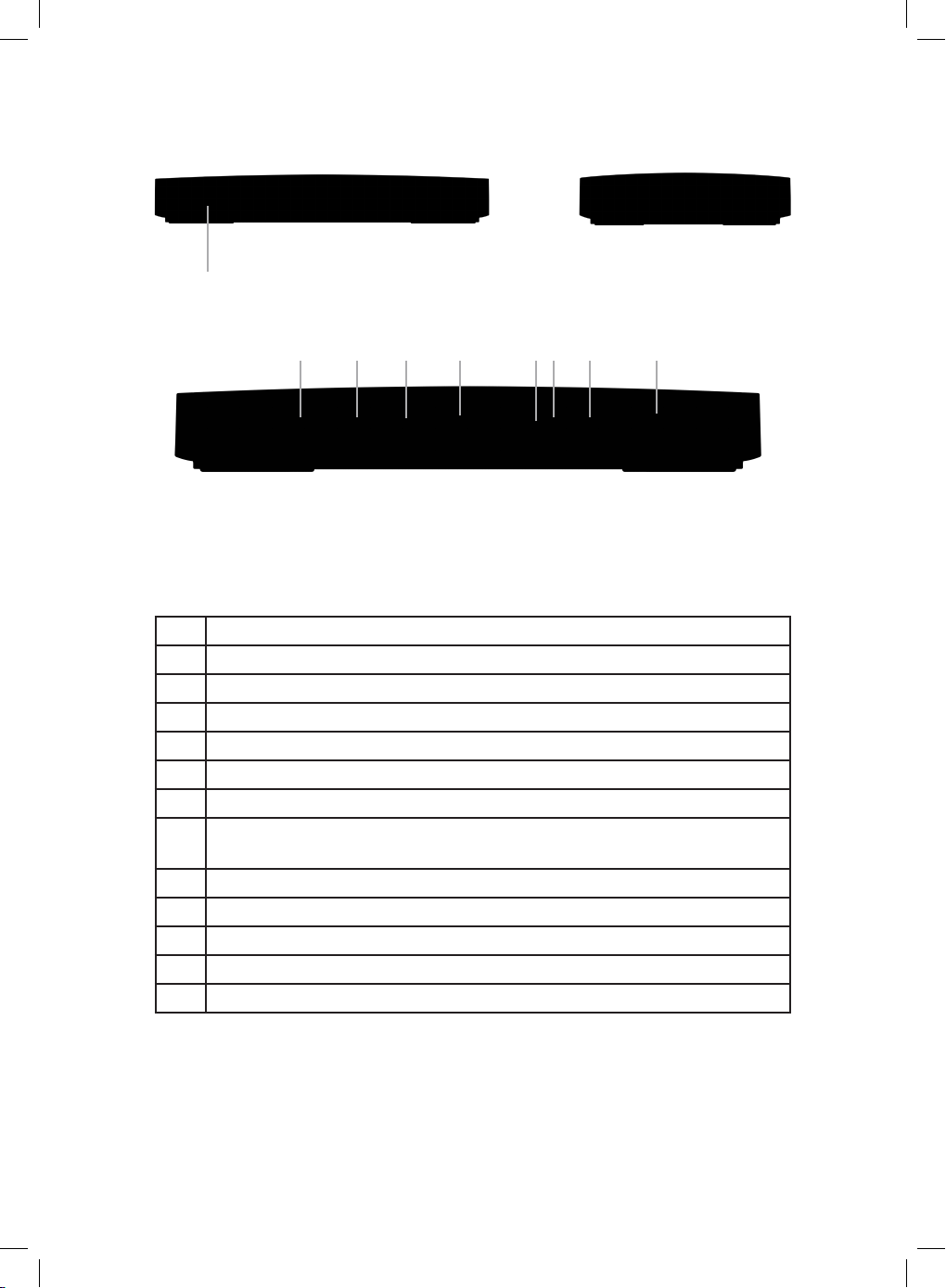
Android Media Player front view Android Media Player side view
4
8
Android Media Player back view
11105 7 96 12
No. Description
1. Power Indicator
2. Mounting option
3. 3M Mounting stickers
4. ON / OFF Button
5. Micro SD port for playing content
6. USB Port
7. PB-Molex connector for a Connect Box. A Connect box has up to 12
buttons (push or touch) and one motion sensor.
8. DC In – Power Input
9. Micro HDMI port for connecting the media player to screen
10. Reset Pin Hole
11. USB Port
12. SIM Card Port
8
Introducing the i DISPLAY Android Media Player
Page 9

Getting Started
This chapter describes how to set up and start the Media Player.
Setting Up the Android Media Player
To set up the Media Player:
Remove the Media Player from the box.
1.
Connect one side of the power supply to the Media Player socket located on back
2.
of the unit.
Plug the power supply into a standard electrical outlet.
3.
Connect the HDMI cable to the display screen you wish to connect the unit to.
4.
Press the On/O button on the Media Player for approximately seven seconds.
5.
NOTE
Each time the Media Player is powered on (after being o), it may take up to
two minutes to begin to play.
Connect a USB Mouse to the Media Player if you wish to change/adjust the
6.
settings of the Media Player. Once connected, you will see the cursor of the mouse
on the screen.
Logging Out of the Media Player Autoplay Application
The Android Media Player is precongured to automatically start its Autoplay
application when it is turned on. The following describes how to log out of the i
DISPLAY Autoplay application in order to go to a standard Android OS screen.
By default, the Android Media Player is not password protected. You have the
option to disable/enable the requirement to enter a password using the Enable/
Disable Password in order to ensure that only authorized retail personnel can
modify and congure it.
Getting Started
9
Page 10
To access the Android OS screen:
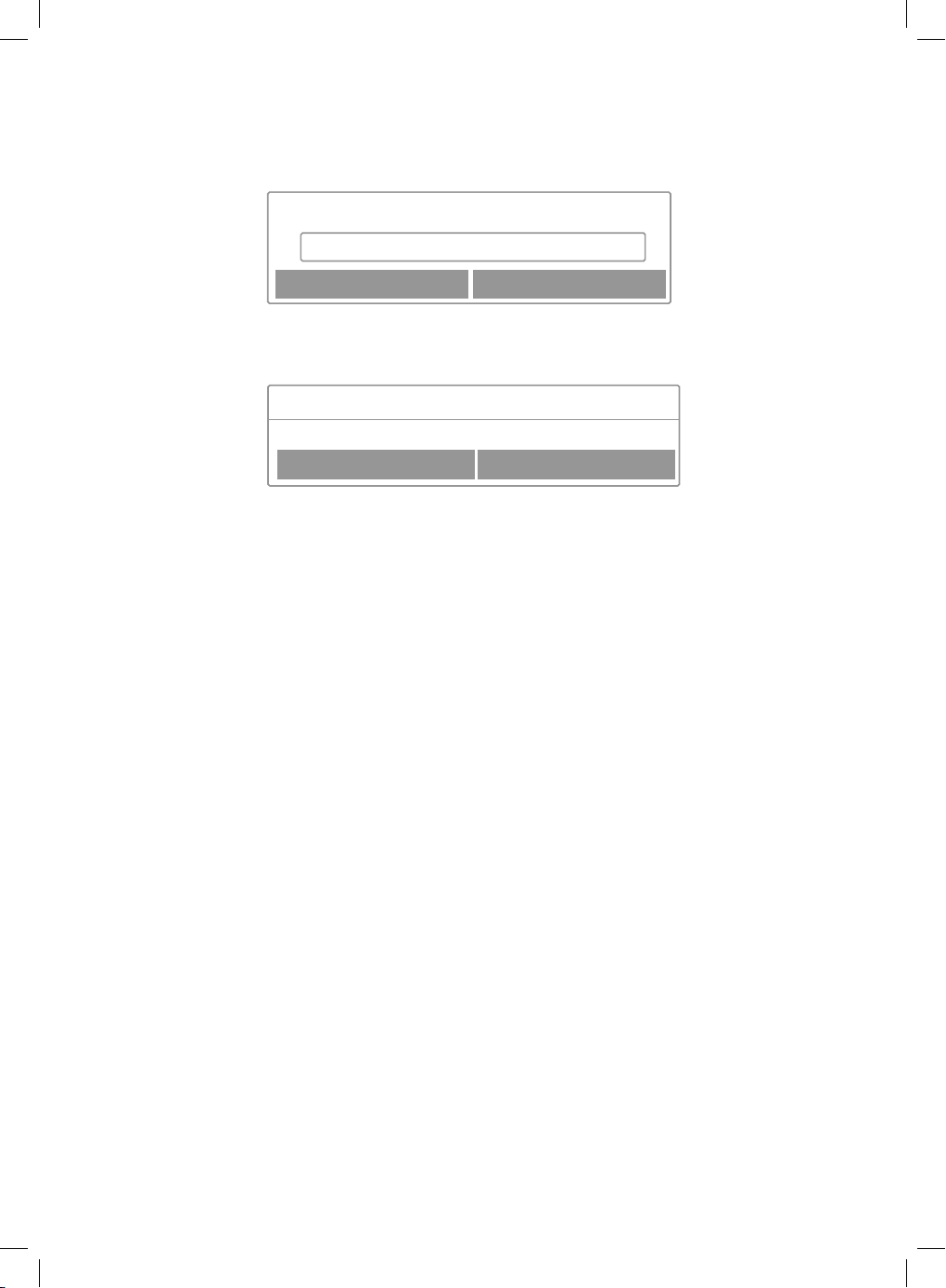
1.
While content is playing, quickly press the On/O (front) button (for one second).
A password window is displayed, as shown below:
Please input password
OK
2.
Click in the white eld with a USB Mouse to display the virtual keyboard.
3.
Type in the password. The default password is: 11223344
4.
Click the Done button and then the OK button. The following window is displayed:
Hint
Please select set password or exit.
Set Password
5.
Click the Exit button to exit the Autoplay application and to display the Android
Cancel
Exit
OS main screen.
– OR –
Click the Set password button to enter a new password.
6.
Enter the password twice (once in each eld) and click the OK button. A success
message is then displayed. Click the OK button.
The tablet then either:
Starts to play the content of Folder 0 (in ON mode), or
Goes into standby and displays the START indicator which can be clicked to start
playing the content of Folder 0.
10
Getting Started
Page 11

If you change the password, please make sure to write it down and remember it. If
you forget your password, then you must contact i Display for a new password.
A standard Android Home screen is then displayed, as shown below:
To turn o the Android Media Player:
While the Media Player is playing, quickly press the On/O button on the front of
1.
the Media Player. If password in enabled, a password window pops up.
Enter the password and click the OK button. The media player opens a standard
2.
Android screen.
Press and hold the On/O button on the front of the Media Player. The media
3.
player will then ask you to conrm that you want to power o. Use USB mouse to
conrm.
Getting Started
11
Page 12

12
Page 13

Playing Content
This chapter describes the various options for displaying videos, pictures and
applications on the Android Media Player.
What Does the Media Player Play?
The Android Media Player runs standard Android applications (apk) using Android
OS 2.3.
Video Formats: The Media Player plays the following video formats:
•
MPEG1 / MPEG2 / MPEG4
•
Divx4 / Divx5 / Divx6
•
H.264
•
AVI
Image Formats: The Media Player displays the following image formats:
•
JPG
•
BMP
•
PNG
•
GIF
You may refer to the
http://www.i-display.com/products/media-player-technical-specication
to download the latest Android Media Player specication sheet.
How Does the Android Media Player Play?
The following describes the various options for displaying videos, pictures and
applications (Android apk) on the Android Media Player.
Default AutoPlay – Folder 0
The Android Media Player disk drive contains a Root folder that can contain subfolders. By default, the Media Player plays the content of a folder named 0. This
folder is located in the Root folder.
If Folder 0 contains multiple content les, then each is played one after the other in
the order in which they were added to the Media Player.
Video les are played one after another.
•
Image les are each displayed for three seconds.
•
Applications continue running until there has been no user interaction for over
•
three minutes (and the tablet is in Standby mode) or if you exit the application by
quickly pressing the On/O (Back) button. If you place an application in Folder 0,
then it should be the only le in that folder.
Playing Content
13
Page 14

For example, if a folder contains an image le and two video les in the following
order:
car-choice-banner.jpg
•
car-choice-banner.mpeg
•
•
top-of-range.mpeg
then the Android Media Player will rst display the car-choice-banner.jpg image
for three seconds, and then play the discount-car.mpeg video and then play the
top-of-range.mpeg video.
While the Android Media Player is playing, all the content in Folder 0 will play the
sequence repeatedly in an endless loop.
Connect Box – Selecting Folders 1 – 12
The Android Media Player can also play the content of folders named from 1 to
12 if a Connect Box is connected to it. This Connect Box has 12 connectors for 12
push buttons or touch sensors.
The Android Media Player plays the content of Folder 0 by default. If one of
the Connect Box buttons is pressed, then the Android Media Player plays the
corresponding numbered folder once.
After it nishes:
The content of Folder 0 will then play repeatedly.
•
For example:
If button number 1 is pressed on the Connect Box, then the content of Folder 1 is
•
played once and then the content of Folder 0 is played repeatedly.
Motion Sensor
The Android Media Player can also have an additional connector for a motion
sensor. The motion sensor enables the Android Media Player to play the content of
a folder named MS, as follows:
This option enables you to set up the Android Media Player so that by default it
plays the contents of Folder 0 until the sensor detects motion. Then the Android
Media Player automatically starts playing the content of the MS folder.
The content in the MS folder is played repeatedly as long as motion is detected.
When motion is no longer detected, the Media Player goes back to playing the
content of Folder 0 repeatedly. If the Media Player is playing an application and it
is not touched (if connected to touch screen) for more than three minutes, then it
returns to playing the content of Folder 0 repeatedly.
You may refer to the
http://www.i-display.com/products/media-player-technical-specication
to download the latest Android Media Player specication sheet.
14
Playing Content
Page 15
Barcode Reader – Plays Per Barcode
The Android Media Player can be used to automatically play the content of a
specic le in the Root directory of the Media Player when a barcode reader is
connected.
Copy a le onto the Android Media Player with the same exact name as the
barcode. The media player will then automatically play the content of that le
when a product with that barcode is read.
For example, If the barcode of a product is 12345678, then a le named 12345678
can be placed in the Root folder of the Android Media Player. The Android Media
Player will then play the le named 12345678 when the barcode reader scans the
product barcode 12345678.
How Do I Load Content?
Android Media Player auto copy feature makes loading content simple!
You can load content les using either a USB drive, a Micro SD, Wi-Fi or a mobile
network (using a SIM card), as follows.
USB – Loading Content
Loading Content into Folder 0
To load from a USB drive into Folder 0:
1.
Create a folder named 0 on a USB disk. Remove all other content from the USB
drive.
2.
If a video or image is playing, then insert the USB drive into one of the two USB
ports on the back of the Media Player.
If an application is playing, then insert the USB drive into one of the two USB ports
on the back of the Media Player and then after ten seconds, quickly press the On/
O button on the front of the Media Player.
After a few seconds a window pops up requesting a password.
3.
Enter the password and click the OK button. If this is the rst time you are using
the Media Player, then the password is: 11223344. The following window is
displayed:
Hint
Folder 0 exists.
Replace
4.
Click the Replace button to delete the content of Folder 0 on the tablet and
Append
replace it with the content of Folder 0 on the USB drive.
– OR –
Click the Append button to add the content of Folder 0 on the USB drive to the
content of Folder 0 on the Media Player.
5.
A success message is displayed after the content has been copied. The le(s) in
Playing Content
15
Page 16
Folder 0 will automatically start playing. If multiple les are in Folder 0, then they
play one after another repeatedly.
If the tablet does not start to play the content, then restart it and the content
should start playing automatically after restart.
NOTE
Do not turn o the Media Player or remove the USB drive while it is copying.
We recommend removing the USB disk after its content has been successfully
copied.
Loading Content into Other Folders
You can use the standard Android Explorer to copy folders/les to the Media
Player. For example, into the Folders 1 through 12, the MS folder or a le with the
same name as a barcode.
By default, the Android Media Player automatically runs i DISPLAY’s Autoplay
application. For instructions on how to log out of the Autoplay application in order
to access standard Android OS screens, refer to the Logging Out of the Android
Media Player Autoplay Application section.
Loading an Application
If one of the les that was copied to the Android Media Player is an application
(Android apk) then an installation wizard automatically starts.
1.
Click the Install button
2.
Click the Open or Done button to run the application.
Micro SD – Playing Content
A Micro SD card can be used to play content on the Media Player. After it is entered
the Media Player will start repeatedly playing the content on the Micro SD. This
procedure does not aect the contents already on Folder 0 of the Android Media
Player, meaning that when you remove the Micro SD card, the media player will go
back to playing the content in Folder 0.
To play Micro SD content:
Insert the Micro SD card into the Micro SD port on the back of the Media Player.
A password window is automatically displayed.
The content of the Micro SD card will automatically play in a loop.
You must leave the Micro SD card inserted in the Media Player as long as it is
playing.
Browser and Market – Downloading Content
You can download content using Wi–Fi or mobile connection to the Root folder of
the tablet and then move the content to Folder 0 (or Folders 1 through 12) using
Explorer which can be accessed from the Applications Drawer.
as described in the Logging Out of the Android Media Player Autoplay Application
16
Playing Content
Page 17

section on page 9.
To use the Browser and the Market you must connect a USB Mouse into the USB
socket in the back of the media player.
- OR If the Media Player is connected to a touch screen with Android 2.3 OS drivers then
you can use the touch screen instead of a mouse.
Playing Content
17
Page 18
Android OS - Main page
This chapter describes the Android Media Player standard Android Home screen
and Application Drawer, which provides access to Media Player settings and other
standard Android tools.
Home Screen
While you navigate in the Android environment, you can return to this Home
screen by click ping the Home button.
The Home screen provides the following options:
Browser: Click to open a standard web browser in which you can access the
Internet and surf the web.
Applications: Click to display the Applications Drawer which enables access to the
applications and tools installed on the Android Media Player. You may refer to the
Applications Drawer section below for more information.
Applications Drawer
The Android Media Player provides a standard Android Application Drawer which
enables access to the applications and tools installed on the media player. The
following describes some that are especially relevant to the Android Media Player
Settings: Click to congure media player settings, such as Wi-Fi, Mobile and so on.
i Display: Click to return to autoplaying the content of Folder 0 in a loop.
Explorer: TClick to open a standard le explorer window which you can use to
transfer les to/from the Android Media Player. This option is especially useful for
transferring les downloaded from the Internet to Folder 0.
Market: Android Market is an online software store developed by Google for
Android OS devices. You can use it to download applications to the Android Media
Player.
Settings
Click the Settings button to congure typical Android setting options. Take
note of the following options that are particularly relevant for the Media Player.
Setting Up Wireless Networks
You can click the Settings Wireless & networks option to congure Wi-Fi and
18
Android OS - Main page
Page 19

Mobile networks settings in order to download content to the Android Media
Player.
This menu also enables you to congure Bluetooth settings for working with
Bluetooth accessories, such as Bluetooth earphones.
Display Brightness
Use the Settings --> Display --> Brightness option, which can be accessed from the
Android OS screen.
Display Volume
Use the Settings --> Display --> Volume option which can be accessed from the
Android OS screen.
Media Player Accessories
This chapter describes the mounting attachments and other accessories that can
be connected to the Android Media Player.
Touch Screen
The Android Media Player can be connected to a touch screen that supports
standard Android OS 2.3 drivers. This enables the connection of a Media Player to
a touch screen to create an interactive experience and to be used by applications
(apks) that you load, such as games.
Printer
The Android Media Player supports standard Android OS 2.3 printer drivers. This
enables the connection of a printer that can be used by the applications (apks)
that you load, such as coupon printer
Barcode Reader
The Android Media Player can be used with barcode readers that support standard
Android OS 2.3 drivers to automatically play the content of a specic folder by
connecting a barcode reader. You can copy a folder onto the media player that has
the same name as the barcode. The media player will then automatically play the
content of that folder when a product with that barcode is read.
For example, If the barcode of a product is 12345678, then a le named 12345678
Android OS - Main page / Media Player Accessories
19
Page 20

Connect Box and Buttons
The Android Media Player can be connected to a Connect Box that has 12 push
buttons or touch sensors. Android Media Player will then play the relevant folder
according to which button is pressed, as described in the Connect Box – Selecting
Folders 1 – 12 section on page 16.
This Connect Box can also have one motion sensor which enables the display of a
folder named MS when motion is detected, as described on page 16.
20
Media Player Accessories
Page 21

Page 22
For further information or support, please contact: [email protected]
Page 23

FCC Statement
This device complies with part 15 of the FCC rules. Operation is subject to the following two conditions:
(1) this device may not cause harmful interference, and
(2) this device must accept any interference received, including interference that may cause undesired operation.
NOTE: The manufacturer is not responsible for any radio or TV interference caused by unauthorized
modifications to this equipment. Such modifications could void the user’s authority to operate the equipment.
NOTE: This equipment has been tested and found to comply with the limits for a Class B digital device, pursuant
to part 15 of the FC C Rules. These limits are desi gned to provide reasonable protection against harmful
interference in a residential installation. This equipment generates uses and can radiate radio frequency energy
and, if no t installed and used in accordance with the instructions, may cause harmful interference to ra dio
communications. However, there is no guarantee that interference will not occur in a particular installation.
If this equipment does cause harmful interference to radio or television reception, which can be determined by
turning the equipment off and on, the user is encouraged to try to correct the interference by one or more of the
following measures:
- Reorient or relocate the receiving antenna.
- Increase the separation between the equipment and receiver.
-Connect the equipment into an outlet on a circuit different from that to which the receiver is connected.
-Consult the dealer or an experienced radio/TV technician for help.
 Loading...