

Page 1

Things that Work!
Exeltech’s
1000 W att
Sine W a ve
Things that Work!
tested by
Home Power
In verter
Tested by Richard Perez, Bob-O
Schultze, and Sam Coleman
©1994 Home Power Magazine
e have been running all of
Home P o w er
W
equipment on this Exeltech
true sine wave inverter for the last
seven months. This inverter produces
the purest sine wave power that we
have ever measured in any inverter.
This inverter delivers sine wave
electricity that is cleaner and more
reliable than any utility can provide!
The Exeltech SI 1000 Inverter
This inverter takes 12 Volt DC power and converts it
into 120 vac, 60 Hz, true sine wave electric power just
like the power company rents out downtown, only
cleaner. Physically the inverter is tiny in relation to its
output power. The SI 1000 measures 8.75 inches wide
by 7.75 inches deep by 6.5 inches tall. It weighs a
scant ten pounds.
This particular model accepts 12 VDC as input power.
Maximum operating voltage is 17.5 VDC and minimum
is 10.2 VDC — the widest operating window of any 12
VDC inverter I know. This wide window makes
Exeltechs compatible with alkaline battery technologies
like nickel-cadmium and nickel-iron. Exeltech also
makes inverters which accept 24, 33, 36, 48 or 120
VDC as input power.
Output power of the SI 1000 is rated at 1,000 watts
continuous and surge wattage is rated at 2,360 watts.
Exeltech makes sine wave inverters from 250 watts to
5000 watts output in all the input voltages listed above.
The inverter is internally protected against overvoltage,
undervoltage, overtemperature, and output short
circuit. The inverter’s input is internally fused which
also protects it against reverse input polarity.
’s computer
Installation
I installed the SI 1000 in Home Power’s main system in
June 1993. Here it feeds from our main battery of 150
NIFE HIP-10 nickel-cadmium cells (1,500 Amperehours at 12 VDC). The SI 1000 is connected to the
Ananda Power Center with two 0 gauge copper cables
with a combined length of five feet. The input lugs on
the larger (1000 watts and greater) inverters will accept
0 to 4/0 gauge cable. The Ananda is equipped with a
Deltech 500 Ampere, 50 milliVolt shunt for measuring
the inverter’s input current. The inverter is protected by
a 400 Ampere fused disconnect built into the Ananda
Power Center. Installation was simple. The SI 1000 is
small enough for wall mounting, so I attached it to the
power room wall next to the Ananda.
This Exeltech 1000 watt inverter has been powering
our office and home for seven months. The only loads
not operated on the SI 1000 are the laser printer, which
with all the computers also running is too large for the
SI 1000, and Therese’s 1500 watt toaster oven. We
have been leaving this inverter up all night, running a
variety of electronics that demand 24 hour-a-day power
(i.e., VISA/MC machine, cordless phone, and FAX).
Inverter Performance
We have been publishing
the last six years. During this time all of our computer
equipment has been powered by solar energy via an
inverter. We have operated eight different computers
and a fleet of peripherals — everything from laser
printers to 35 mm color slide scanners to 1.2 gigabyte
hard drives. We have used seven different inverters
over the years to power not only our office, but our
home. Of all these inverters, this Exeltech SI 1000 has
produced the cleanest and most stable power.
Since we have been powering our computer equipment
with sine wave power, we have had much more reliable
operation. Gone are system crashes, weird printouts,
and dancing glitches on the monitors. Gone is the buzz
on the TV, stereo, radiotelephone, FAX, and answering
machine. All of our inductive loads, like the microwave
and all motors, run quieter, faster, and cooler.
After seven months of 24 hour-a-day sterling
performance, I decided it was time to break out the
instruments and do some serious testing on the SI
1000. I called on Bob-O Schultze and Sam Coleman to
lend a hand.
Testing Exeltech’s SI 1000 inverter
Bob-O brought his monster mogul base lamp bar up to
our system on Agate Flat. This lightbar has switched
outlets for five incandescent lamps (25 watts to 1250
watts). All measurements were made with the inverter
powering these resistive loads. We used a Beckman
Home Power Magazine
for
74
Home Power #39 • February / March 1994
Page 2

Things that Work!
2020 and four Fluke 87 digital multimeters to make the
measurements. On the inverter’s input side, we used
the Beckman 2020 to measure input voltage and a
Fluke 87 (in 4 digit mode) to measure current via a 500
Ampere, 50 milliVolt. Deltech shunt. The inverter’s 120
vac output voltage was measured in rms and peak
modes by two Fluke 87s. The inverter’s output current
was run through a Fluke 87 for measurement.
The Test Data
This is the data just as we took it. Over the last seven
months I had come to suspect that the Exeltech was
very stable because it never even hiccuped. The data
we took was astounding!
The rms and peak voltages of this inverter are rock
solid. By definition, 60 Hz sine wave power should
have an rms voltage of 117 vac. The peak of this sine
wave has a voltage of 164 volts peak. From no load to
1200 watts, the inverters output voltage changed by
Exeltech SI1000 Inverter Date: 29 December 1993
Serial #: 100055
INPUT DATA OUTPUT DATA
ON THE 12 VDC SIDE ON THE 120 VAC SIDE
Battery Amps Watts Vpp Vrms amps watts Eff
Volts IN IN OUT OUT OUT OUT %
15.18 0.8 12.1 166.4 118.4 0.00 0.0
15.09 2.5 37.7 166.4 118.4 0.20 23.4 62.1%
15.06 3.8 57.2 166.4 118.4 0.34 39.8 69.5%
15.05 5.1 76.8 166.4 118.4 0.51 59.8 77.9%
15.07 6.8 102.5 166.4 118.3 0.70 83.0 81.0%
15.08 8.0 120.6 166.4 118.3 0.84 99.1 82.2%
14.98 9.8 146.8 166.0 118.3 1.03 122.3 83.3%
14.84 12.2 181.0 166.0 118.3 1.28 151.8 83.8%
14.99 13.9 208.4 165.4 118.3 1.48 174.8 83.9%
15.03 22.9 344.2 166.0 118.2 2.45 289.7 84.2%
14.97 30.7 459.6 166.0 118.1 3.28 386.8 84.2%
14.90 36.8 548.3 166.0 118.1 3.91 461.3 84.1%
14.85 47.2 700.9 165.2 118.0 4.99 588.8 84.0%
14.73 60.4 889.7 166.0 117.9 6.27 739.2 83.1%
14.62 72.7 1062.9 165.2 117.9 7.41 873.6 82.2%
14.54 81.7 1187.9 165.2 117.8 8.22 968.3 81.5%
14.36 89.6 1286.7 165.6 117.7 8.87 1044.0 81.1%
14.42 100.3 1446.3 164.8 117.6 9.84 1157.2 80.0%
14.11 111.6 1574.7 165.2 117.6 10.59 1245.4 79.1%
Averages to 1000 Watts
165.9 118.2
only 0.8 volts rms. The peak output voltage varied only
1.2 volts from no load to 1200 watts output. This is the
most stable performance we have ever seen from any
inverter.
After making the test measurements, we put a HewlettPackard AN/USM-339 oscilloscope on the inverter’s
output. Sam, Bob-O, and I ran around the house
turning on and off the nastiest loads — like the 800
watt microwave oven, and the 600 watt swamp cooler
blower. The trace on the oscilloscope remained a pure,
smooth sine wave regardless of the load. We used the
oscilloscope to zoom in on a portion of the waveform.
We were looking for glitches, overshoot, undershoot,
and general noise. We couldn’t find any. According to
Exeltech, the output sine wave is synthesized at 25
kHz. This means that each sine wave is broken down
into about 416 pieces. Whatever the folks at Exeltech
are doing is definitely working — this inverter’s
waveform is as smooth as a baby’s butt.
During the last seven months we have
inadvertently overloaded the SI 1000 at
least six times. It protected itself and shut
off. During this round of testing we operated
1250 watts of lights on the SI 1000 for ten
minutes. In my estimate, this inverter is
very conservatively rated. The SI 1000 is a
very quiet inverter, both to the ear and to
radios. The only audio noise is the
operation of the SI 1000’s thermally
activated cooling fan. We measured the
inverter’s no load power consumption at
12.1 watts which is very low for a sine wave
inverter.
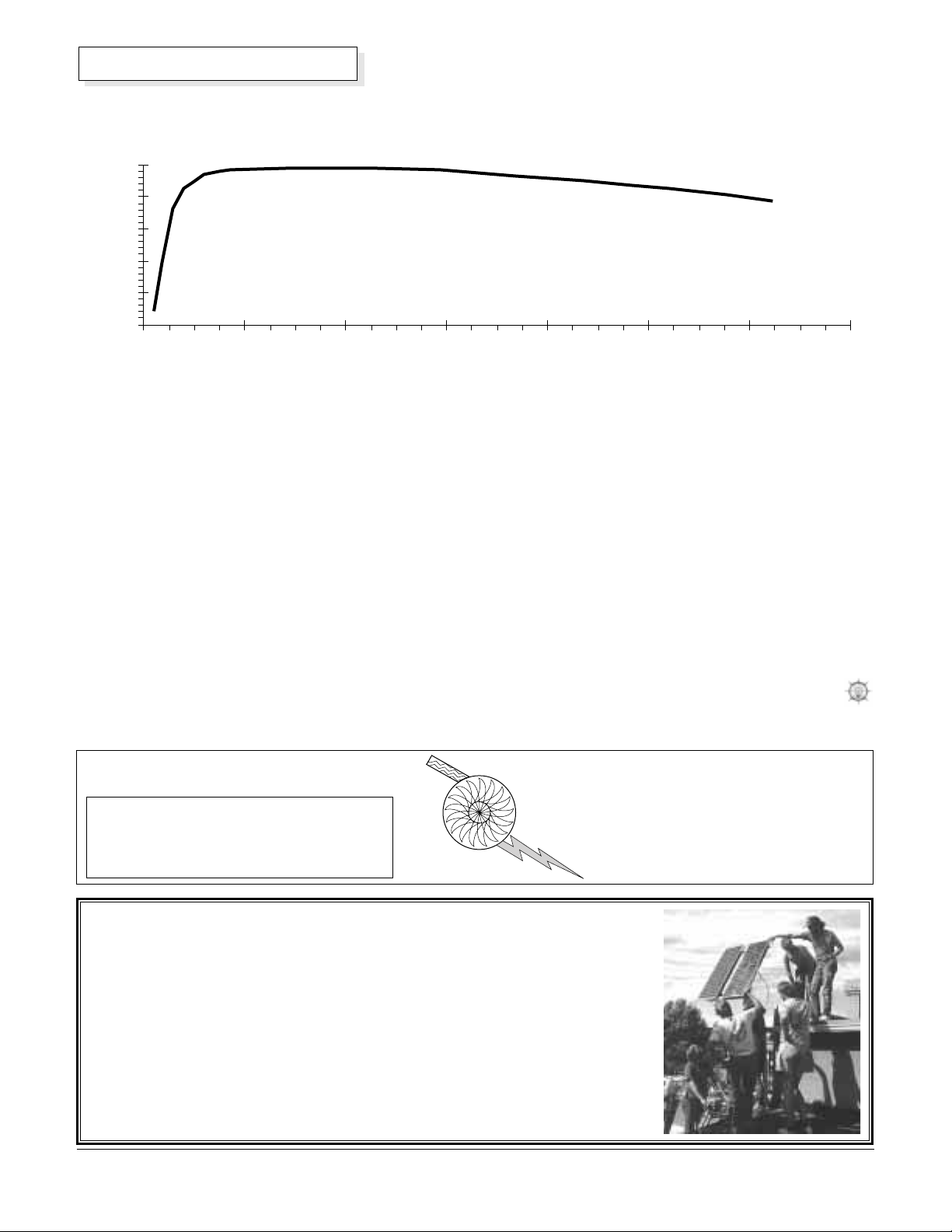
I was going to do graphs of the inverter’s
output rms and peak voltages verses its
power output, but the graphs were boring
straight lines — the rms and peak voltages
don’t vary. Instead I’ll graph this inverter’s
least attractive feature, its efficiency.
Efficiency
While sine wave inverters produce cleaner
power, they do so at a price — efficiency.
The SI 1000 showed efficiency over 81%
from 75 to 1000 watts output. This is about
ten percent less efficient than a typical
modified sine wave inverter of the same
output power. In our case, the added
inefficiency is more than balanced by the
cleaner power. I figure that in our system it
costs us the energy produced by two PV
modules to support this additional ten
percent inefficiency.
Home Power #39 • February / March 1994
75
Page 3
Things that Work!
85%
80%
75%
70%
Efficiency
65%
60%
0 200 400 600 800 1000 1200 1400
Exeltech 1000 Sine Wave Inverter — Efficiency vs. Output Power
120 vac output power in watts
Where to use the Exeltechs
Anywhere that a modified sine wave inverter is too
noisy or its power is too dirty. Some devices, like laser
printers and magneto optical hard drives require sine
wave power. Almost every appliance will run quieter
and in most cases cooler on sine wave power — it’s
what they’re built to digest. Many home-powered,
home businesses use computers. We know inverters
are powering publishing companies, video editing
suites, and recording studios. Just about everyone has
video and audio equipment. Inverter-produced noise,
both audible noise and distortion on the inverter’s
power output, can be a very real problem. In the case
of
Home Power
the inverter on our radiotelephone system. Changing
over to sine wave power has increased the modem’s
speed from 1200 baud to 4800 baud over our
radiotelephone. We have become accustomed to a
clean picture on the TV. It’s easy to get spoiled.
Powerhouse Paul’s Stream Engines
Small Scale Water Power Equipment
’s system, we are overjoyed not to hear
™
FIRST TO MARKET:
– Small Turgo Turbines –
– Low Head High Flow Machines –
– Induction Generators –
– Brushless Alternators –
Conclusion
At a price of $1,190, Exeltech’s SI 1000 is an
outstanding value. Many systems will continue to
operate modified sine wave inverters successfully. Sine
wave models are more expensive to buy and operate
than modified sine wave inverters. But if the cleaner,
more stable power is worth the extra expense, then this
is the inverter to use.
Access
Author: Richard Perez, c/o Home Power, POB 520,
Ashland, OR 97520 • voice and FAX 916-475-3179 •
E-mail via the Home Power BBS 707-822-8640.
Inverter’s Maker: Exeltech, 2225 East Loop 820 North,
Fort Worth, TX 76118 • 800-886-4683 • 817-595-4969 •
FAX 817-595-1290
IN BUSINESS SINCE 1980
– operates on heads of 4 feet to over 400
– Battery voltage or high voltage for long distances
– Pelton and turgo turbines runners sold separately
ENERGY SYSTEMS & DESIGN
P.O. Box 1557, Sussex, N.B., Canada E0E 1P0
506-433-3151
Join us and get your hands on!
Learn the practical use of
solar, wind, and water power.
Solar Energy International
Renewable Energy Education and Sustainable Development
Box 715, Carbondale, Colorado 81623 (303) 963-8855 • FAX (303) 963-8866
76
Home Power #39 • February / March 1994
Page 4
46
Home Power #58 • April / May 1997
Things that Work!
Things
that
Work!
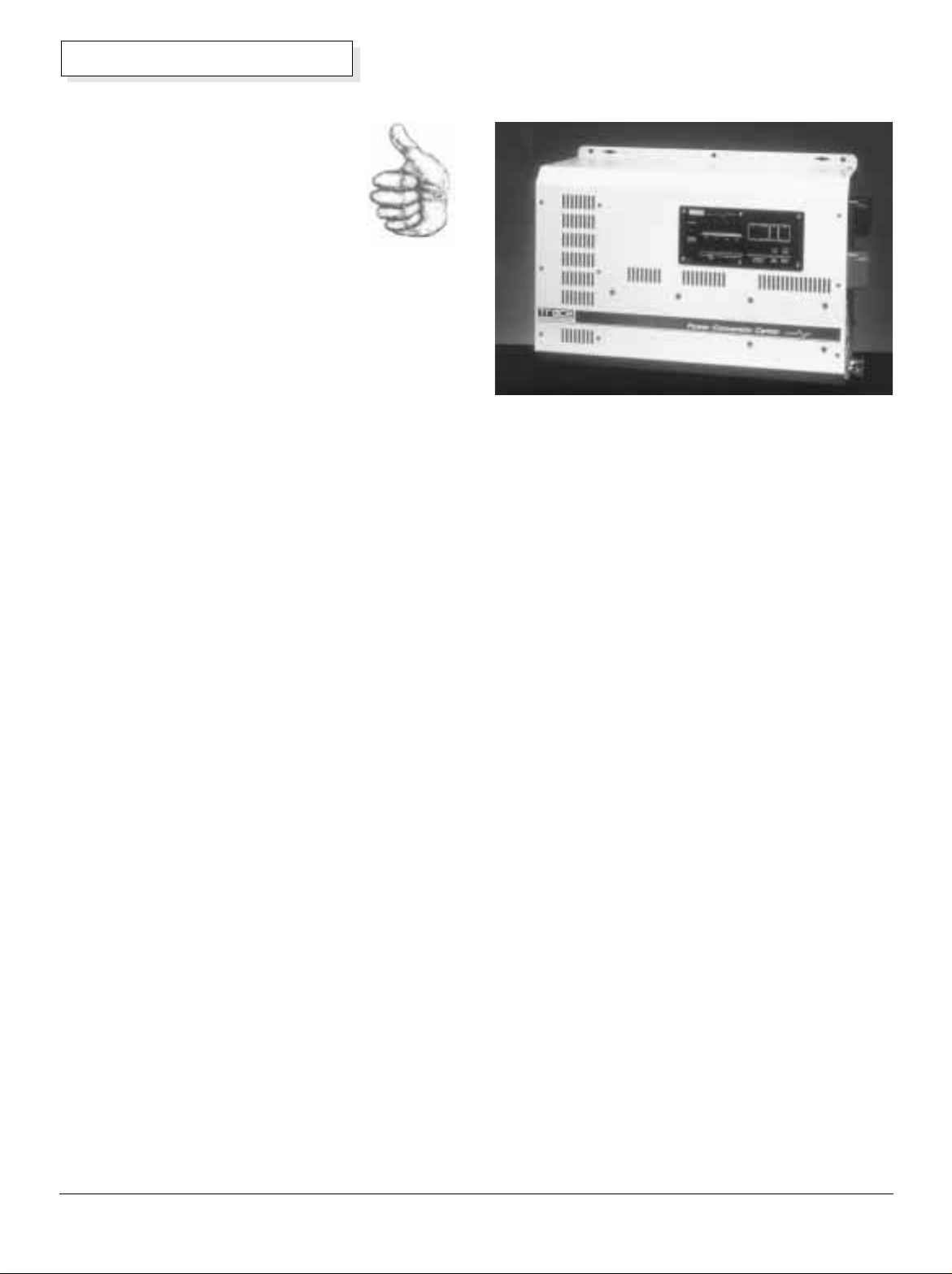
T race’ s
SW2512
Inverter
Richard Perez
T
he T race sine wave inverters are
the most versatile and robust that
we’ve tested. They offer high
power , high ef ficiency, and interface
easily with power sources and loads.
Here’s the results of a year long test on
Trace’ s smallest sine wave inverter, the
12 V olt to 117 vac SW2512.
Shipping Container and Documentation
The Trace SW2512 inverter arrived in fine shape via
UPS shipping and a six mile bumpy ride in the back of a
4WD pickup truck. The carton and its foam containment
allow shipping virtually anywhere without damage.
Which is good because the shipping weight of this
inverter is 96 pounds (44 kg).
The documentation supplied is outstanding. Which is
also a good thing because the days when the only
control on an inverter was an “on/off” switch are over.
The 90+ page owner’s manual covers everything from
setup to operation. It is generic and covers all Trace
sine wave inverters, not just the SW2512, possible
since all the SW series inverters use the same
microprocessor control. If you know how to program
any Trace sine wave, then you know how to program
them all.
SW2512 Specifications
This is a big inverter—2,500 watts output continuous at
117 vac. Input is 12 VDC nominal, but the unit functions
from 11.8 to 16.5 VDC. It is also big physically—15
inches (38 cm) high, by 22.5 inches (57 cm) wide, by 9
inches (40 cm) deep.
The SW2512 functions both as an inverter and a
battery charger capable of delivering 150 Amperes DC.
The charger is equipped with the latest three stage
recharge technique to fully recharge lead acid cells
without stressing them out. The charger is
programmable so it will not overload small 120 vac
sources like low power generators.
The SW2512 will also interface with the utility grid to
sell your excess renewable energy. This is
revolutionary! Those who are grid connected can
efficiently contribute their excess solar, wind, or hydro
energy back to the gird and also recharge their battery
from the grid when the RE sources are not up to
consumption.
The list of things which this inverter will do is too long to
go into here. It is unlikely that a single system will ever
use all these functions, but it’s nice to know that
whatever you may need is already built-in. For
example, the Trace SW2512 can start your 120 vac
engine/generator, automatically recharge the battery,
and then shut the generator off. And, if your RE sources
are going strong and the battery is fully recharged—no
problem, the Trace will automatically divert excess
power into a 120 vac load such as a water or space
heater. These are just a sample of the power built into
the microprocessor in the Trace SW inverters. The
Trace SW2512 we tested used the latest rev. 4
software. Yes, inverters now come with software built in.
This allows considerable fine tuning of operation
without rebuilding the inverter’s hardware. If you are a
Trace SW series owner using an older inverter with the
Page 5
47
Home Power #58 • April / May 1997
Things that Work!
older software, then call Trace, or your installing dealer,
and see about a software upgrade.
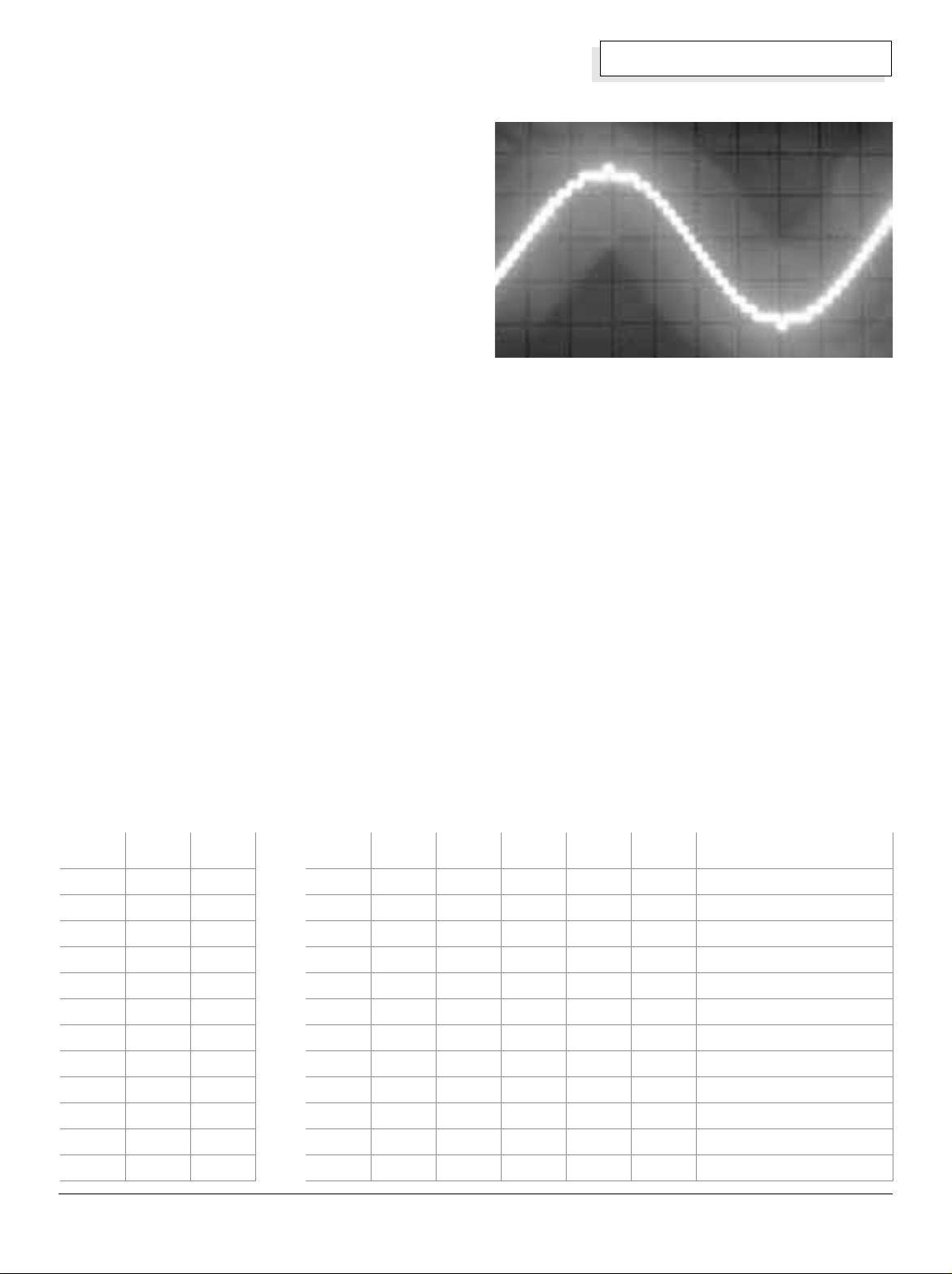
The SW2512 inverter’s output is a stepped sine wave
with between 34 and 52 steps for each alternating
current cycle (see photo). Total harmonic distortion
(THD) of the output power is rated at 3 to 5%. This
means that the SW2512 makes electric power which is,
on average, far purer than the utility grid can deliver.
The SW2512’s sine wave is clean enough to operate
virtually any appliance without the problems associated
with the older, modified sine wave inverters. Perhaps a
word on the difference between modified and sine wave
power is in order.
The reason to use a sine wave inverter is simple—sine
wave electricity is what every 117 vac appliance was
designed to consume. The mod sine wave inverters will
power many appliances, but they certainly won’t power
them all. This list of mod sine incompatible appliances
is wide and long—everything from rechargers for
cordless drills to laser printers. Even appliances which
digest mod sine power will work better if fed pure sine
wave power. Our 120 vac well pump pumps about 30%
more water per minute with sine wave electricity over
being fed mod sine power. Most electric motors will run
faster and cooler (which means more efficiency and
longer motor life) when fed sine wave power. Computer
power supplies run quieter and cooler. TV and radio
devices run quieter. This is why the purity of the
inverter’s power production (measured as THD) is so
important. Most mod sine wave inverters make power
with 25 to 40% THD. Sine wave inverters make power
with between 1 and 5% THD. The Trace SW2512
makes power that is pure enough to be approved for
utility intertie by Pacific Gas & Electric, California’s
mega-utility and the largest investor owned utility in the
world.
Installing the SW2512
We installed the Trace SW2512 on 1 March 1996, and
have had it running continuously since then. It is
installed in our main system here on Agate Flat. We
used 4/0 copper cables to tie it to the battery bus bars.
An Ananda “Big Switch” with 400 Ampere Class T fuse
to protects the inverter against overcurrent. We gave
the SW2512 its own 500 Ampere, 50 mV. shunt for our
instrumentation.
Above: a photo of the Trace’s 117 vac waveform
taken from our oscilloscope. Note the stepped nature
of the synthesized sine waveform.
Trace SW 2512 INVERTER TEST - 24 February 1997
INPUT DATA OUTPUT DATA
ON THE 12 VDC SIDE ON THE 120 VAC SIDE
Battery Amps Watts Vrms Amps Vpp+ Vpp- Watts Eff. Appliance
Volts DC DC OUT ac OUT OUT OUT % Notes
16.10 3.1 50 119.5 0.20 168.8 -168.8 23 47% Incandescent Lights
16.08 5.7 92 119.0 0.56 167.6 -167.2 67 73% Incandescent Lights
16.06 7.7 124 118.5 0.84 166.8 -166.8 99 80% Incandescent Lights
16.12 9.2 148 118.5 1.03 167.2 -167.2 122 83% Incandescent Lights
16.04 12.2 196 118.6 1.39 165.2 -164.8 165 84% Incandescent Lights
16.00 13.7 219 118.1 1.58 164.8 -164.8 187 85% Incandescent Lights
16.00 17.5 280 117.8 2.08 164.0 -163.6 245 87% Incandescent Lights
15.04 98.0 1474 117.4 11.40 171.6 -170.8 1338 91% Water Heater
14.90 113.0 1684 118.6 12.50 167.6 -167.6 1483 88% Space Heater
14.10 201.0 2834 117.4 18.90 162.0 -160.8 2219 78% Both Heaters
13.50 272.0 3672 117.0 22.70 161.6 -160.4 2656 72% Both Heaters (Hi)
15.20 308.0 4682 116.5 26.20 158.0 -158.8 3052 65% Both Heaters & Toaster
Page 6

48
Home Power #58 • April / May 1997
Things that Work!
One note on installing the SW series Trace sine wave
inverters—get help! It takes at least three people to bolt
a SW series inverter to the wall. Two to hold the inverter
and one to run the wrenches. This inverter is heavy.
Trace recommends using 1/4 inch diameter bolts to
mount the inverter.
Performance
The performance of the Trace SW2512 meets its
maker’s specifications (see table). Power stability, volts
rms, volts peak, and efficiency are all on spec. We even
overloaded the SW2512 for a while (see last entry on
the table). In terms of real world service, we’ve been
using the SW2512 for the last year. It has worked
flawlessly. We primarily use it for our larger 120 vac
loads. The SW2512 powers our microwave oven,
espresso maker, toaster, coffee grinder, food processor,
deep well pump, myriad power tools, laser printer,
swamp cooler, and more, just like downtown. In addition
to the well pump mentioned earlier, our swamp cooler
really loves sine wave power. It has a “low” speed fan
setting. Using mod sine wave, the fan on the low speed
setting would just sit there and buzz—no air out. With
the sine wave inverter, the low speed fan works and is
what we use most of the time. Best of all—no buzzzz.
What surprised me in our application was the powerful
battery charger. We set it to maximum (150 Amperes
DC) and it actually delivered the full 150 Amperes when
powered by our Honda 6.5 kW engine/generator. Most
chargers built into inverters only run at about 60% of
rated capacity when powered by engine/generators.
High power, coupled with the three stage charge
regime, will make better use of generator power, reduce
fuel consumption, and lengthen battery life. The charger
has wide voltage limits, high enough to recharge our
NiCd battery. The Trace SW series inverters have the
best battery chargers I have ever seen in an inverter.
The SW2512 is the most efficient 12 VDC sine wave
inverter we have tested at
Home Power
. Mod sine
inverters, however, are more efficient than sine wave
models. I started thinking about the 30% more water I
was getting from our deep well pump and the low speed
that actually worked on the swamp cooler. I decided to
enlarge the circle around which efficiency was
calculated to include the performance of the appliance.
If you are using the electricity for anything other than
resistive loads (heaters and incandescent lights), then
the sine wave is as efficient, or more efficient, than the
mod sine wave. This efficiency calculation includes the
appliance’s performance (i.e. more water pumped or
more air moved). What we haven’t yet determined is
appliance longevity. The fact that most appliances run
cooler on sine wave power makes me believe that they
will last longer. Time will tell….
Can I imagine anything better than this inverter? You
bet! I spend most of my working life dealing with
computers. Being confronted with the possibilities and
complexities of Trace’s microprocessor, I am frustrated
at only having eight push buttons, a two line alpha
numeric LCD display, and eight LED indicators to
program/operate the inverter. An energy program of the
intensity of Trace’s deserves better data output and
better user input. Does this mean I could not figure out
how to program the inverter? No, but I had to read the
manual thoroughly and pay attention. I’d like this entire
process simpler and more straightforward. In order to
communicate easily with a microprocessor system, you
need more than a few lines of text and eight keys. I
hear Trace is already at work on this problem.
Conclusions
The Trace SW2512 inverter is great for medium-sized
home systems. It interfaces RE sources, generators,
batteries, and the utility grid into seamless, sine wave
electricity . It costs US$2,585 and is worth the money.
Access
Author: Richard Perez, c/o Home Power, PO Box 520,
Ashland, OR 97520 • 916-475-3179
E-Mail: [email protected]
Web: www .homepower.com
Inverter Maker: Trace Engineering Company, Inc
5916 - 195th Street N.E., Arlington, WA 98223
360-403-9513 • FAX: 360-403-0541
Web: www .traceengineering.com
SNORKEL STOVE CO
camera ready b/w
3.5 wide
3.4 high
 Loading...