

Page 1
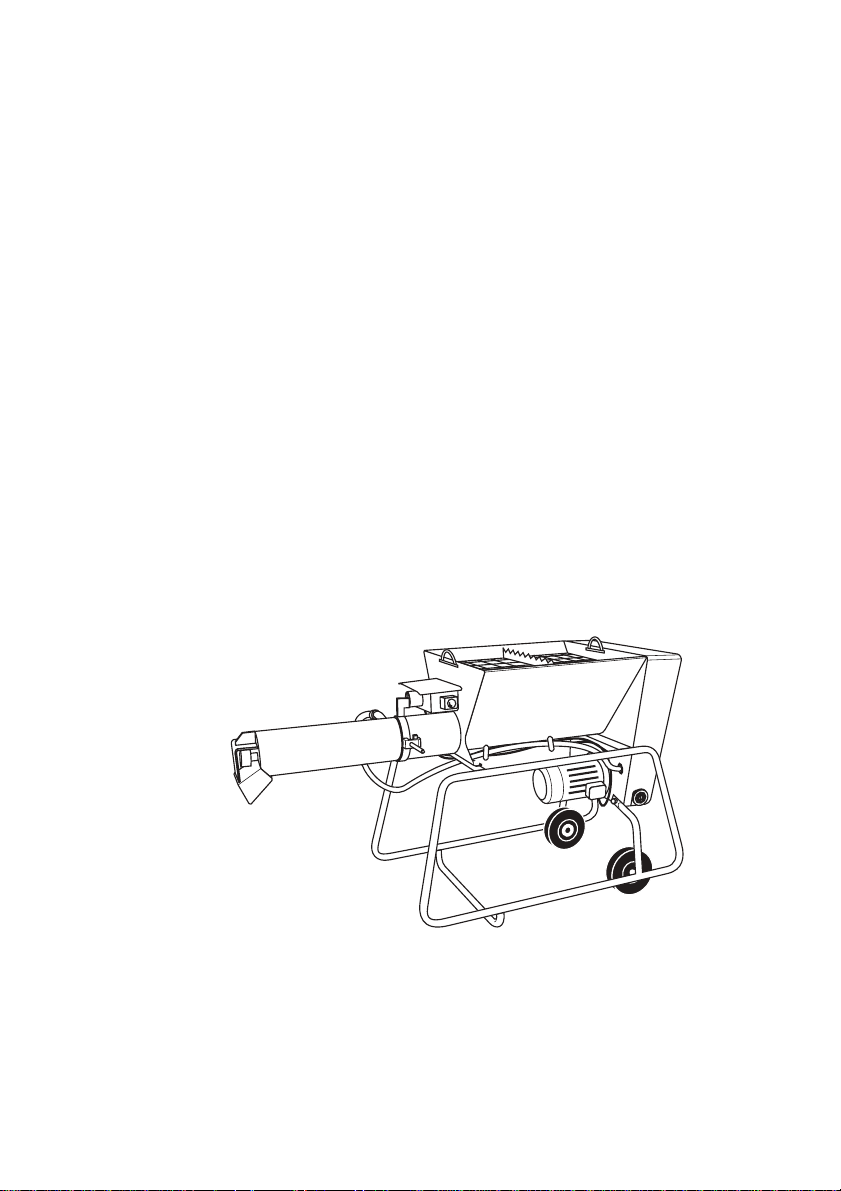
Continuous Mixer D20
230/400 V 50 Hz
Operating Instructions
392570 – 01/99
Supplied by :- Markham (Sheffield) Ltd - Tel:- +44 (0)1909 730861 - www.markham-sheffield.co.uk
Page 2

2 Continuous Mixer D20
© 1999 m-tec mathis technik gmbh
Copyright in these operating instructions is owned by m-tec mathis technik gmbh. These operating instructions are
intended for use by installation, operating and maintenance personnel. They contain technical regulations and
drawings which may not be copied, distributed, used for advertising purposes, or communicated to third parties
either in whole or in part without authorisation.
Technical development:
The manufacturer reserves the right to modify technical data without notification in order to reflect the current state
of technical development. For information regarding the current status, alterations or additions to these operating
instructions, please contact m-tec.
Supplied by :- Markham (Sheffield) Ltd - Tel:- +44 (0)1909 730861 - www.markham-sheffield.co.uk
D20 230/400 V – 392570 – 01/99
Page 3
3
Dear Customer,
this machine represents the current state of the art and complies fully with
general standards and EEC guidelines. This is indicated by the CE symbol and
the enclosed declaration of conformity in the pocket on the machine.
Before starting the machine for the first time, please remove the
declaration of conformity from the pocket and keep it in a safe
place.
Before starting the machine up, please complete the form below. This is the
easiest way to familiarise yourself with the characteristics of the machine, and
the main data can be consulted at any time without reading them off the rating
plate on the machine. If you wish to consult us at any time, please have the
information on this page ready at hand. The data you require can be found on the
machine plate.
Type
Machine no.
Year of manufacture
Connected load
Current consumption
(total)
Date of first use
Application
D20 230/400 V – 392570 – 01/99
Supplied by :- Markham (Sheffield) Ltd - Tel:- +44 (0)1909 730861 - www.markham-sheffield.co.uk
Page 4

4 Continuous Mixer D20
D20 230/400 V – 392570 – 01/99
Supplied by :- Markham (Sheffield) Ltd - Tel:- +44 (0)1909 730861 - www.markham-sheffield.co.uk
Page 5

Table of contents
1 Safety ........................................................................................................................................... 6
1.1 Symbols used in these Operating Instructions .............................................................. 7
1.2 Safety notes ........................................................................................................................ 8
2 Description of machine ........................................................................................................... 10
2.1 Intended use ..................................................................................................................... 10
2.2 Method of function ........................................................................................................... 10
2.3 Machine diagram ............................................................................................................. 11
2.4 Operating elements ......................................................................................................... 12
2.5 Signs and markings on the machine .............................................................................. 13
2.6 Technical Data .................................................................................................................. 14
3 Transport and positioning ..................................................................................................... 16
3.1 Transporting the machine ............................................................................................... 16
3.2 Positioning the machine .................................................................................................. 17
4 Start-up ...................................................................................................................................... 18
4.1 Preparations for filling with bagged material ............................................................... 18
4.2 Water connection ............................................................................................................. 19
4.3 Power supply ..................................................................................................................... 19
4.4 Setting direction of rotation (400-V version only) ......................................................... 20
5 Ope ration .................................................................................................................................. 21
5.1 Filling with bagged material ........................................................................................... 21
5.2 Filling with silo material ................................................................................................. 21
5.3 Adjusting material consistency ...................................................................................... 22
5.4 Intervals in work ............................................................................................................... 23
5.5 Winter operation .............................................................................................................. 23
6 Clean ing .................................................................................................................................... 24
7 Maintenance and servicing .................................................................................................... 26
7.1 Routine maintenance ....................................................................................................... 26
7.2 Sliding bearing .................................................................................................................. 27
7.3 Wedge belt ........................................................................................................................ 28
7.3 Cleaning the water sieves ............................................................................................... 29
8 Trouble sho oti ng ...................................................................................................................... 30
9 Spare parts and accessories ................................................................................................... 31
10 Circuit diagrams ....................................................................................................................... 32
5
D20 230/400 V – 392570 – 01/99
Supplied by :- Markham (Sheffield) Ltd - Tel:- +44 (0)1909 730861 - www.markham-sheffield.co.uk
Page 6

6 Continuous Mixer D20
1 Safety
This machine has been built in accordance with
!
the current state of the art and has left the
manufacturer ’s plant in perfect condition. However,
it may be dangerous if used incorrectly, for the
wrong purpose, or by untrained personnel. All
persons using the machine must therefore read and
understand the operating instructions, in particular
the section entitled “Safety” before starting the
machine. To avoid unnecessary damage and ensure
efficient operation, the user should also familiarise
himself with the operation of the machine.
To ensure that they are permanently available for
consultation, the operating instructions should be
kept in the special pocket on the machine at all
times.
It is prohibited to modify the machine in any way.
Use only spare parts and lubricants approved by
m-tec mathis technik gmbh.
Supplied by :- Markham (Sheffield) Ltd - Tel:- +44 (0)1909 730861 - www.markham-sheffield.co.uk
D20 230/400 V – 392570 – 01/99
Page 7
Safety
1.1 Symbols used in these Operating
Instructions
In these instructions, the following symbols are used:
This symbol is used to identify danger of serious
injury. Pay particular attention to these instructions
and to the safety of other persons in the vicinity of
the machine and its components.
This symbol is used to identify potential danger to
the material or the machine. Observe these
instructions to avoid damage to property.
This symbol is used to indicate that environmental
legislation must be observed.
This symbol is used to indicate additional information
on the machine which may be useful or helpful.
7
!
D20 230/400 V – 392570 – 01/99
Supplied by :- Markham (Sheffield) Ltd - Tel:- +44 (0)1909 730861 - www.markham-sheffield.co.uk
Page 8

8 Continuous Mixer D20
1.2 Safety notes
When transporting, assembling, dismantling,
!
operating, cleaning, and servicing the machine, the
applicable national and international safety
regulations and legislation must always be
observed, even if such regulations and legislation
are not explicitly mentioned in these instructions.
The following instructions must also be observed
at all times:
• The machine must be positioned firmly on a level
surface. It must be secured to prevent it from tilting
or moving.
• The machine must be positioned in an area where
no objects can fall onto it from above. If this is not
possible, it must be protected by a roof.
• The machine must be positioned in such a way that
all the operating elements are easily accessible at
all times.
• Before working on electrical components, always
pull out the power plug, as certain components
remain live even when the machine is switched off.
• Before every shift, the machine must be carefully
inspected for signs of damage, in particular to
electric cables, plugs and couplings. Any damage
must be repaired before beginning work!
• Safety fittings – the grid on the mortar funnel and
the hood protecting the wedge-belt drive – must be
correctly installed and fastened before starting the
machine.
• The machine must be connected only to a
regulation site distributor box fitted with an FI
automatic circuit breaker.
Supplied by :- Markham (Sheffield) Ltd - Tel:- +44 (0)1909 730861 - www.markham-sheffield.co.uk
D20 230/400 V – 392570 – 01/99
Page 9

Safety
• For the 230 V version of the machine, fuse protection
must be at least 16 A.
• For the 400 V version of the machine, fuse protection
must be at least 10 A.
• The connection cable for the 230 V version of the
machine must have a cross section of at least
3 x 2.5 mm2 and be fitted with a connector with an
earthing contact.
• The connection cable for the 400 V version of the
machine must have a cross section of at least
5 x 1.5 mm2 and be fitted with an EEC connector
coupling.
• Never put your hands into the machine when it is in
operation!
• Do not put your hands into the mortar outlet!
• Before repairing malfunctions or cleaning or
maintaining the Continuous Mixer D20, always
switch it off and pull out the power plug.
9
D20 230/400 V – 392570 – 01/99
Supplied by :- Markham (Sheffield) Ltd - Tel:- +44 (0)1909 730861 - www.markham-sheffield.co.uk
Page 10

10 Continuous Mixer D20
2 Description of machine
2.1 Intended use
The Continuous Mixer D20 is a universally applicable
machine for mixing dry, ready-mixed mortars such as:
Masonry mortar
Various types of plaster
Adhesive mortar
Floor cement
Fine concrete
The machine is designed to be filled with bagged
material. Additional fittings are required for use with
material from a silo.
!
Use of the machine for any other purpose than
those described above is prohibited.
2.2 Method of function
An electric motor powers a belt drive which in turn
drives a feed screw which transports the dry material
from the material trough into the mixing pipe. In the
mixing pipe, the material is mixed with water by a
mixing shaft and then conveyed out of the pipe.
The consistency of the material can be set by
adjusting the amount of water at the fine-adjustment
valve. A solenoid valve cuts off the water supply when
the machine is switched off.
The machine can also be supplied with a built-in
pump for increasing the water pressure.
A safety flag ensures that the mixing pipe is
uncoupled only when the power plug has been
extracted previously.
Supplied by :- Markham (Sheffield) Ltd - Tel:- +44 (0)1909 730861 - www.markham-sheffield.co.uk
D20 230/400 V – 392570 – 01/99
Page 11
Description of machine
2.3 Machine diagram
11
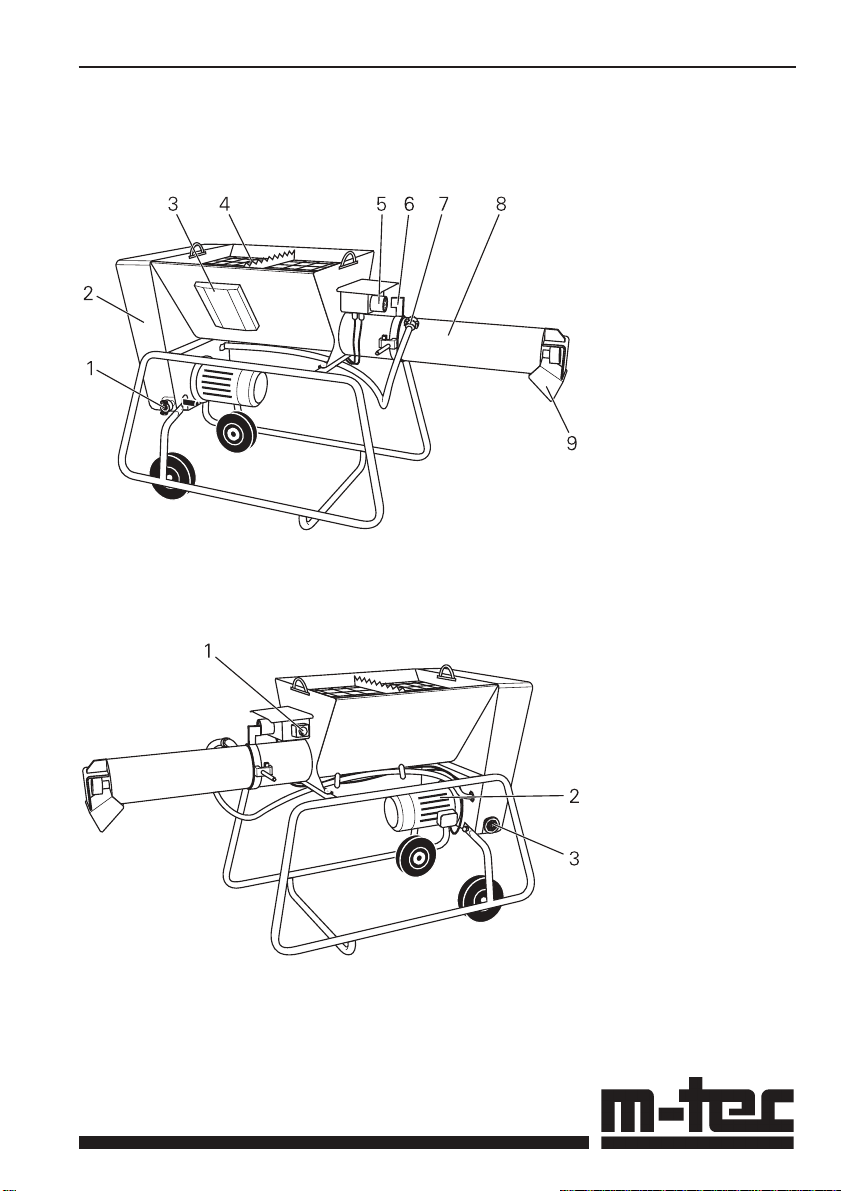
Fig. 1: Overall
view, right
1 Water inlet
2 Covering hood
3 Pocket for Opera-
ting Instructions
4 Safety grid with
bag opener
5 Infeed plug
6 Safety flag
7 Water connection
for mixing pipe
8 Mixing pipe
9 Mortar outlet
Fig. 2: Overall
view, left
1 Switch cabinet
with On/Off switch
2 Drive motor
3 Fine-adjustment
valve, water
D20 230/400 V – 392570 – 01/99
Supplied by :- Markham (Sheffield) Ltd - Tel:- +44 (0)1909 730861 - www.markham-sheffield.co.uk
Page 12
12 Continuous Mixer D20
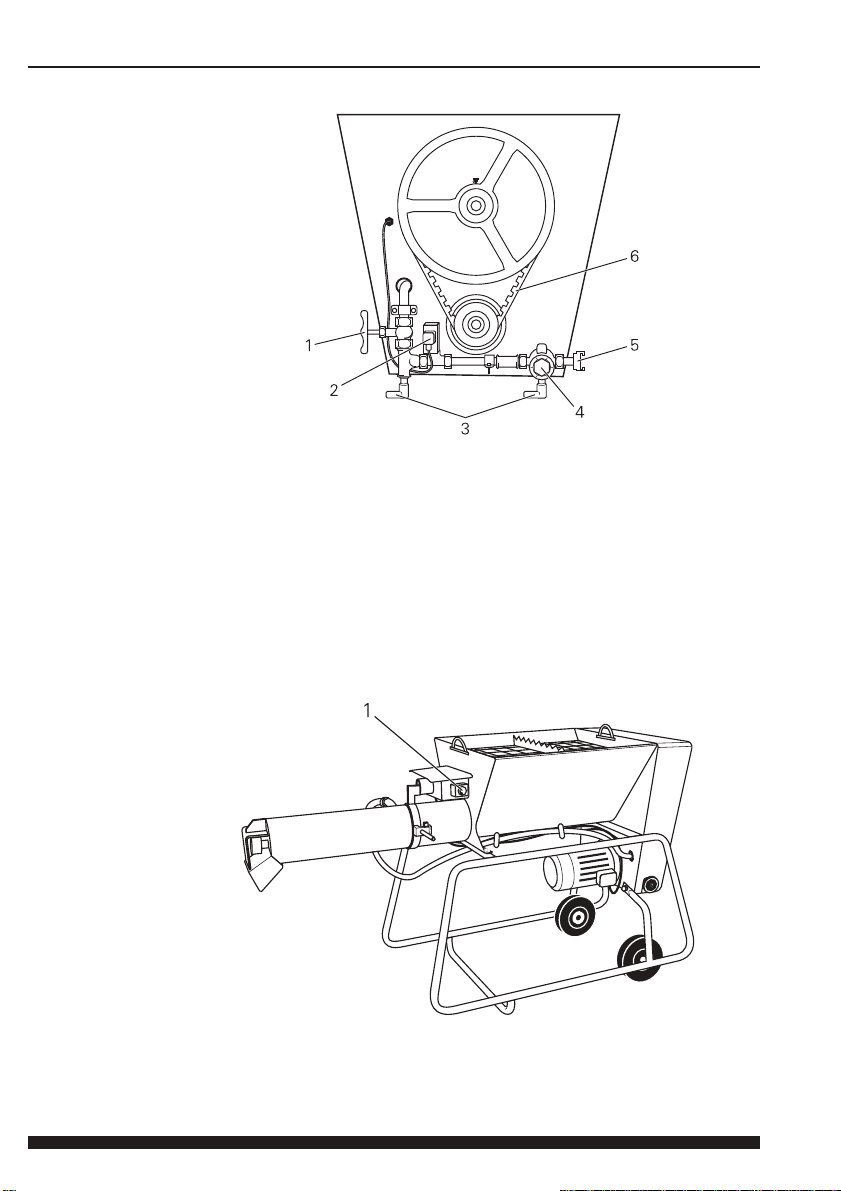
Fig. 3: Drive system
and water fitting
1 Fine-adjustment
valve, water
2 Solenoid valve
3 Draining valve
4 Pressure reducer
with water sieve
5 Water inlet with
sieve
6 Wedge belt
2.4 Operating elements
The machine is switched on and off by means of a
double push button on the switch box. In emergencies, the machine can be switched off quickly via a
red emergency switch.
Fig. 4:
On/Off switch
1 Button On/Off with
emergency stop
Supplied by :- Markham (Sheffield) Ltd - Tel:- +44 (0)1909 730861 - www.markham-sheffield.co.uk
D20 230/400 V – 392570 – 01/99
Page 13
Description of machine
2.5 Signs and markings on the machine
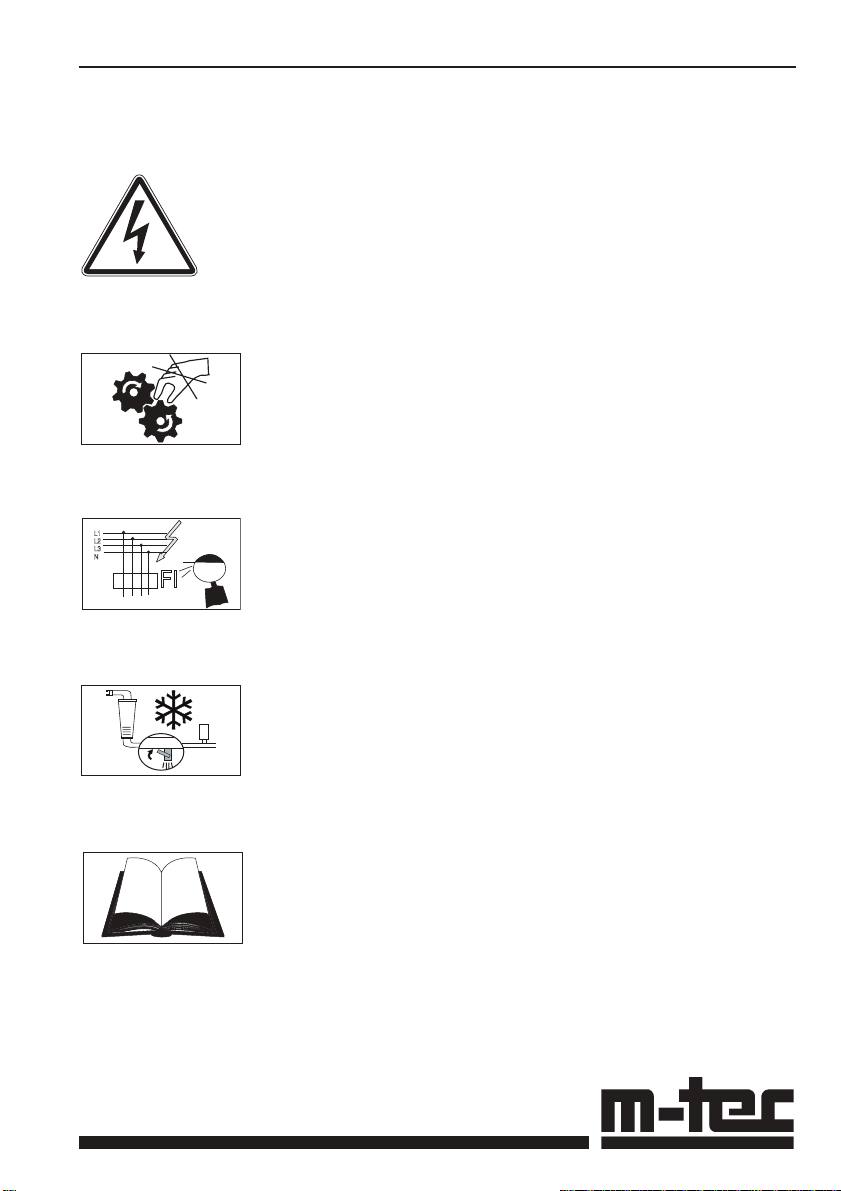
Danger! High voltage
Keep hands away from running machine!
L1
L2
L3
N
FI
13
Connect via FI safety switch only
Empty water fitting at low temperatures
Storage pocket for Operating Instructions
D20 230/400 V – 392570 – 01/99
Supplied by :- Markham (Sheffield) Ltd - Tel:- +44 (0)1909 730861 - www.markham-sheffield.co.uk
Page 14

14 Continuous Mixer D20
2.6 Technical Data
Weights and dimensions
Dimensions Length: 1700 mm
Width: 700 mm
Height: 1000 mm
Weight: approx. 90 kg
Noise level: 66 dB (A); noise-pressure level at 1 m
distance, free-field measurement
during operation
Water connection
Connection: 3/4"-water hose with GEKA coupling
(supplied)
Water pressure: min. 4 bars
Motor 230 V
Voltage: 230 V 1 Ph
Frequency: 50 Hz
Power: 2.2 kW
Rated speed : 262 r.p.m. (200 r.p.m. for D20 with
enhanced starting torque)
Mixing power: approx. 20 l/min
Connection: via FI-safety switch, fuse protection
min. 16 A, connected load 14 A,
power-supply cable 3 x 2.5 mm
2
Water pump 230 V
(model with water pump only)
Voltage: 230 V 1 Ph
Frequency: 50 Hz
Power: 0.37 kW
Supplied by :- Markham (Sheffield) Ltd - Tel:- +44 (0)1909 730861 - www.markham-sheffield.co.uk
D20 230/400 V – 392570 – 01/99
Page 15

Description of machine
Motor 400 V
Voltage: 400 V 3 Ph
Frequency: 50 Hz
Power: 2.2 kW
Rated speed : 262 r.p.m.
Mixing power: approx. 20 l/min
Connection: via FI-safety switch, fuse protection
min. 10 A, connected load 6 A,
power-supply cable 5 x 1.5 mm
Water pump 400 V
(model with water pump only)
Voltage: 400 V 3 Ph
Frequency: 50 Hz
Power: 0.37 kW
15
2
D20 230/400 V – 392570 – 01/99
Supplied by :- Markham (Sheffield) Ltd - Tel:- +44 (0)1909 730861 - www.markham-sheffield.co.uk
Page 16
16 Continuous Mixer D20
3 Transport and positioning
When transporting, assembling, dismantling,
!
operating, cleaning, and servicing the machine, the
applicable national and international safety
regulations and legislation must always be
observed, even if such regulations and legislation
are not explicitly mentioned in these instructions.
3.1 Transporting the machine
• Empty the material trough before moving the
machine
• When moving the machine with a crane or lifting
gear, the tackle used (e.g. rope or belt) must have a
minimum load-bearing capacity of 300 kg.
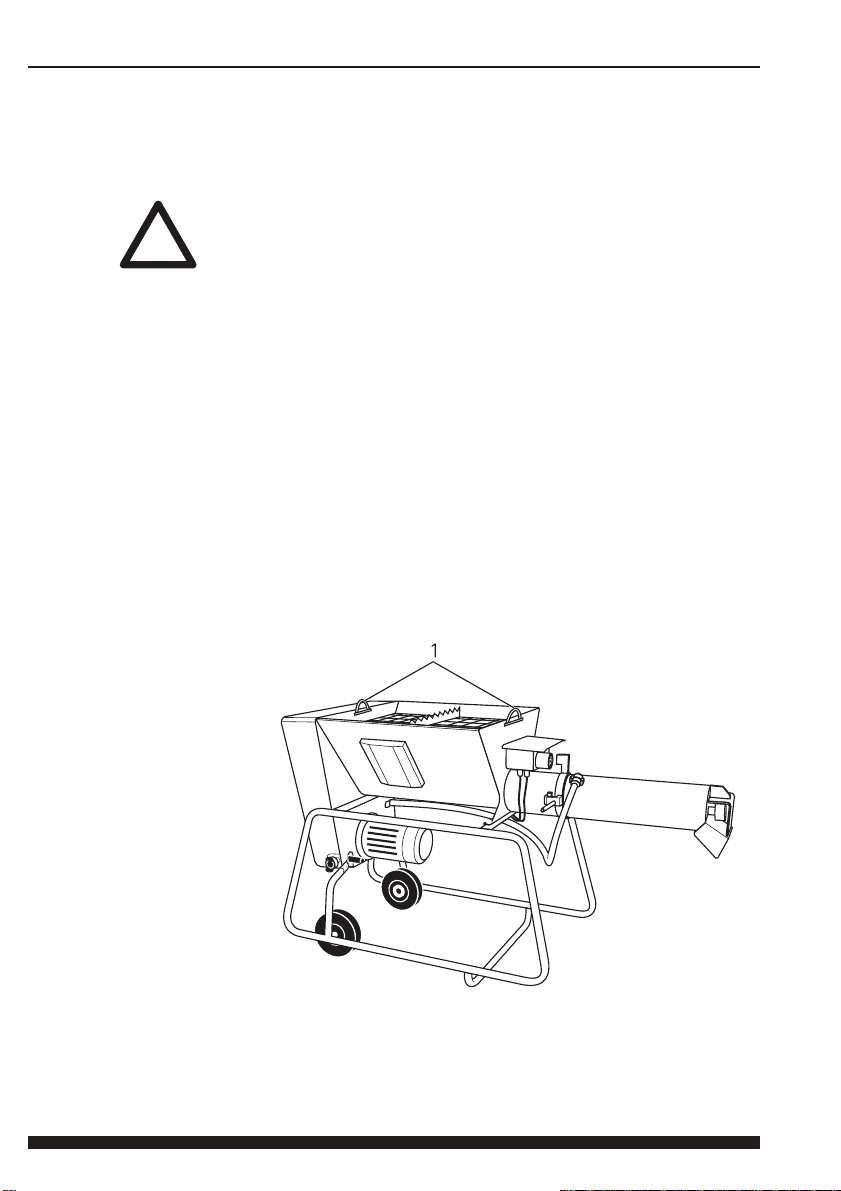
• Fasten the belt or rope to the special lugs on the
machine (Fig. 5)
Fig. 5.
Transporting the
machine
1 Lugs
Supplied by :- Markham (Sheffield) Ltd - Tel:- +44 (0)1909 730861 - www.markham-sheffield.co.uk
D20 230/400 V – 392570 – 01/99
Page 17

Transport and positioning
3.2 Positioning the machine
The machine must be positioned firmly on a level
surface. It must be secured to prevent it from
tilting or moving.
The machine must be positioned outside danger
zones where overhead work is in progress. If this is
not possible, it must be protected from falling
objects by a roof.
The machine must be positioned in such a way
that all the operating elements are easily accessible
at all times.
17
!
D20 230/400 V – 392570 – 01/99
Supplied by :- Markham (Sheffield) Ltd - Tel:- +44 (0)1909 730861 - www.markham-sheffield.co.uk
Page 18

18 Continuous Mixer D20
4 Start-up
When transporting, assembling, dismantling,
!
operating, cleaning, and servicing the machine, the
applicable national and international safety
regulations and legislation must always be
observed, even if such regulations and legislation
are not explicitly mentioned in these instructions.
Before every shift, the machine must be carefully
inspected for signs of damage, in particular to
electric cables, plugs and couplings. Any defects or
damage must be repaired before beginning work
4.1 Preparations for filling with bagged
material
The machine is designed for filling with material
supplied in bags. For use with material from a hopper,
additional fittings are required (filter hood and feeder
unit or transfer hood). See section 9, Accessories.
When assembling, observe the instructions for the
!
Supplied by :- Markham (Sheffield) Ltd - Tel:- +44 (0)1909 730861 - www.markham-sheffield.co.uk
feeder unit and/or transfer hood.
Pull the power-supply cable out of the coupling in
the switch box.
• Remove the safety grid from the mortar trough
• When using a feeder unit: mount the filter hood and
connect the feeder hoses of the feeder unit
• When using a transfer hood: fasten the transfer
hood securely to the continuous mixer with the
fastening set supplied. Couple the adapter to the
flange of the silo and open the rotating flap of the
silo.
D20 230/400 V – 392570 – 01/99
Page 19

Start-up
4.2 Water connection
• Connect the internal water hose to the GEKA
coupling on the mixing pipe
• Connect the machine to the water inlet using a hose
with a 3/4" GEKA coupling
• Turn on the water supply
4.3 Power supply
The machine must be connected only to a
regulation site distributor box fitted with an FI
automatic circuit breaker.
For the 230 V version of the machine, fuse
protection must be at least 16 A.
For the 400 V version of the machine, fuse
protection must be at least 10 A.
The connection cable for the 230 V version of the
machine must have a cross section of at least
3 x 2.5 mm2 and be fitted with a connector with an
earthing contact.
19
!
The connection cable for the 400 V version of the
machine must have a cross section of at least
5 x 1.5 mm2 and be fitted with an EEC connector
coupling.
Before connecting the machine to the power
supply, ensure that the mixing pipe is correctly
attached.
• Connect the power cable to the infeed plug.
D20 230/400 V – 392570 – 01/99
Supplied by :- Markham (Sheffield) Ltd - Tel:- +44 (0)1909 730861 - www.markham-sheffield.co.uk
Page 20
20 Continuous Mixer D20
4.4 Setting direction of rotation
(400 V version only)
• Switch the machine on at the main On switch
• Observe the direction of rotation of the feeder screw
in the material trough.
If the direction does not correspond to that
indicated by the arrow on the machine, the correct
direction must be set.
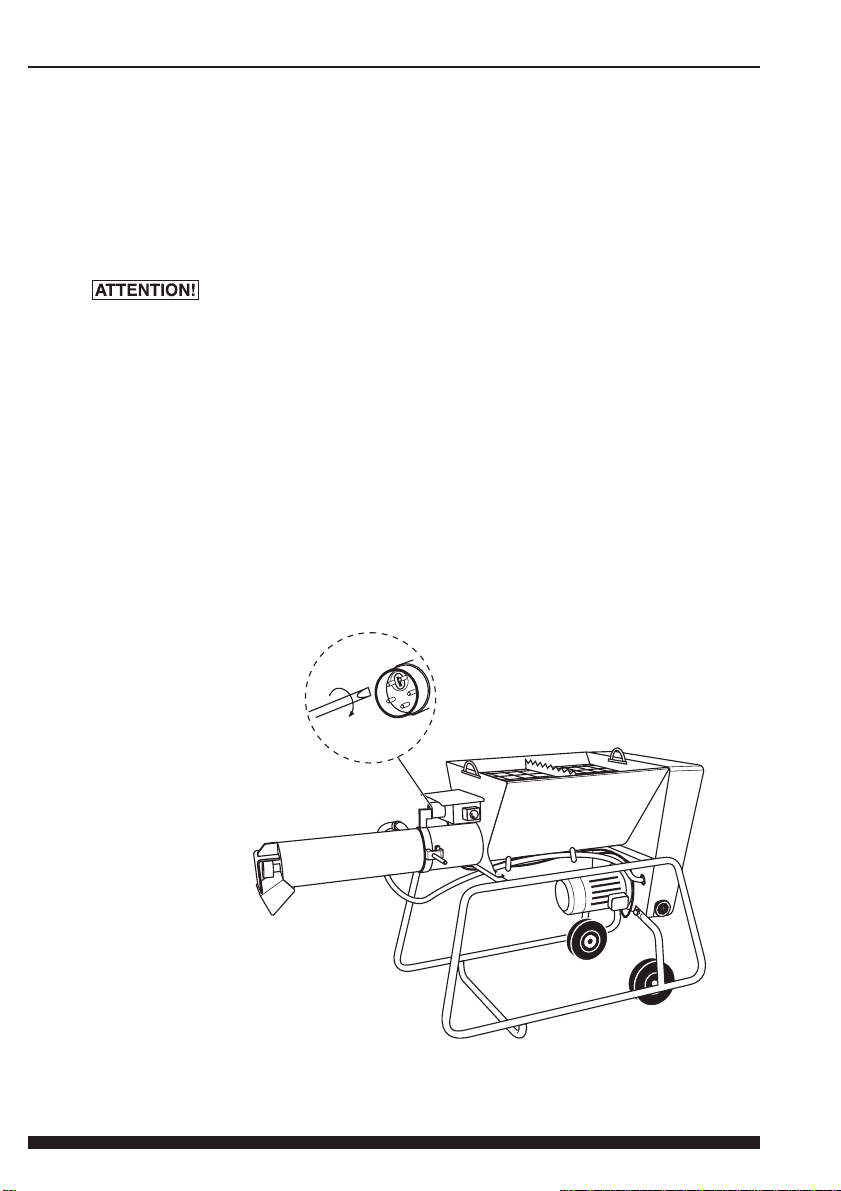
To do this:
• switch the machine off at the Off switch
• pull the power-supply cable out of the coupling in
the switch box
• using a screwdriver, turn the polarity inverter on the
input plug 180 degrees
• re-insert the coupling of the power cable
Fig. 6:
Setting direction of
rotation
Supplied by :- Markham (Sheffield) Ltd - Tel:- +44 (0)1909 730861 - www.markham-sheffield.co.uk
D20 230/400 V – 392570 – 01/99
Page 21
Operation
5 Operation
When transporting, assembling, dismantling,
operating, cleaning, and servicing the machine, the
applicable national and international safety regulations and legislation must always be observed,
even if such regulations and legislation are not
explicitly mentioned in these instructions.
Safety fittings – the grid on the mortar funnel and
the hood protecting the wedge-beld drive – must
be correctly installed and fastened before starting
the machine.
Do not put your hands into the mortar outlet!
5.1 Filling with bagged material
• Open one sack at a time on the grid of the material
trough and allow material to fall into the trough.
21
!
Dispose of empty mortar sacks in accordance with
environmental legislation.
5.2 Filling with silo material
Always observe the operating instructions for the
feeder equipment or transfer hood!
D20 230/400 V – 392570 – 01/99
Supplied by :- Markham (Sheffield) Ltd - Tel:- +44 (0)1909 730861 - www.markham-sheffield.co.uk
!
Page 22
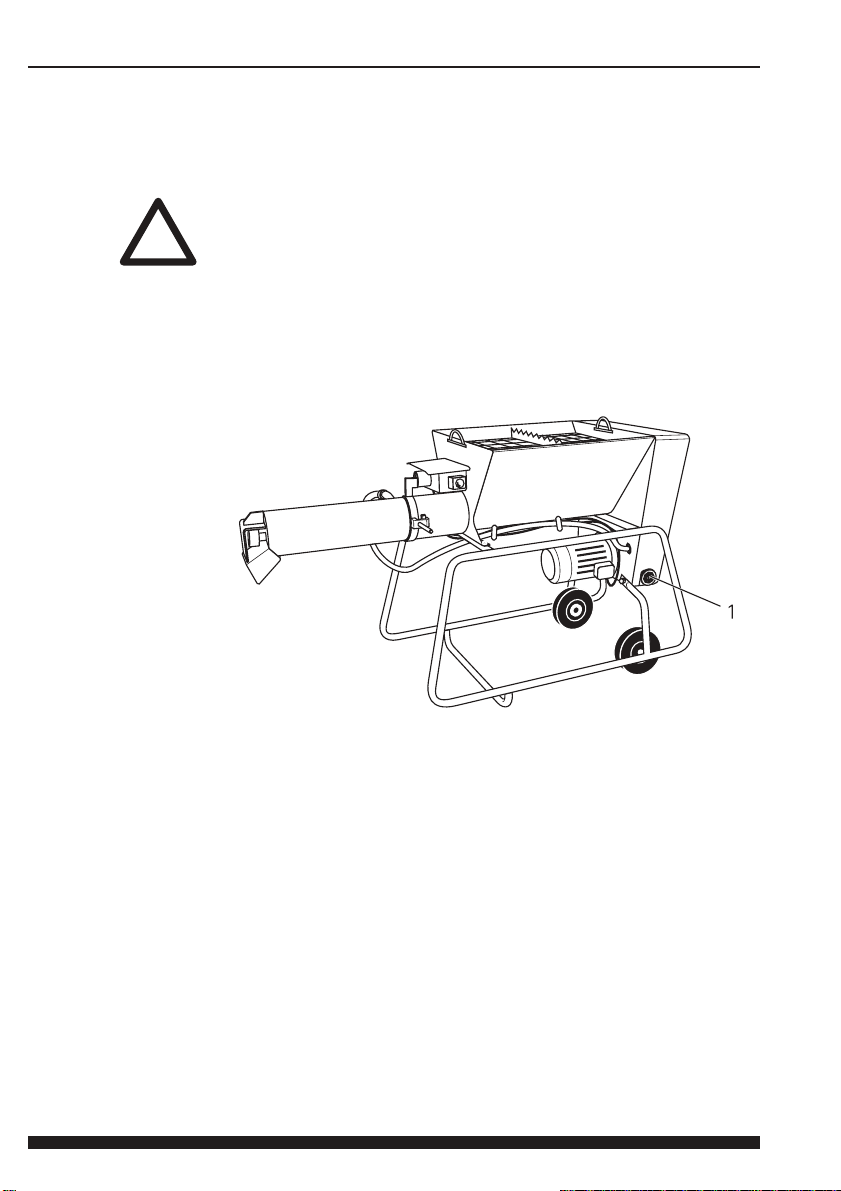
22 Continuous Mixer D20
5.3 Adjusting material consistency
• Switch the machine on at the main On switch
• Check the mortar emerging from the material outlet
!
Fig. 7:
Adjusting the
material
consistency
1 Fine-adjustment
valve
Do not put your hands into the mortar outlet!
• If required, adjust the material consistency by
setting the fine-adjustment valve (anti-clockwise
direction = more water, clockwise direction = less
water)
Supplied by :- Markham (Sheffield) Ltd - Tel:- +44 (0)1909 730861 - www.markham-sheffield.co.uk
D20 230/400 V – 392570 – 01/99
Page 23
Operation
5.4 Intervals in work
During intervals in work, remember the setting
time of the material being used. Hardened or
partially set material may cause difficulty in
starting the machine. The machine may also be
seriously damaged.
The material sets more rapidly at high
temperatures.
• Before long intervals in work, empty the machine
and clean it thoroughly. See section 6.
5.5 Winter operation
Under sub-zero temperatures, the machine may be
seriously damaged if components filled with water
are allowed to freeze!
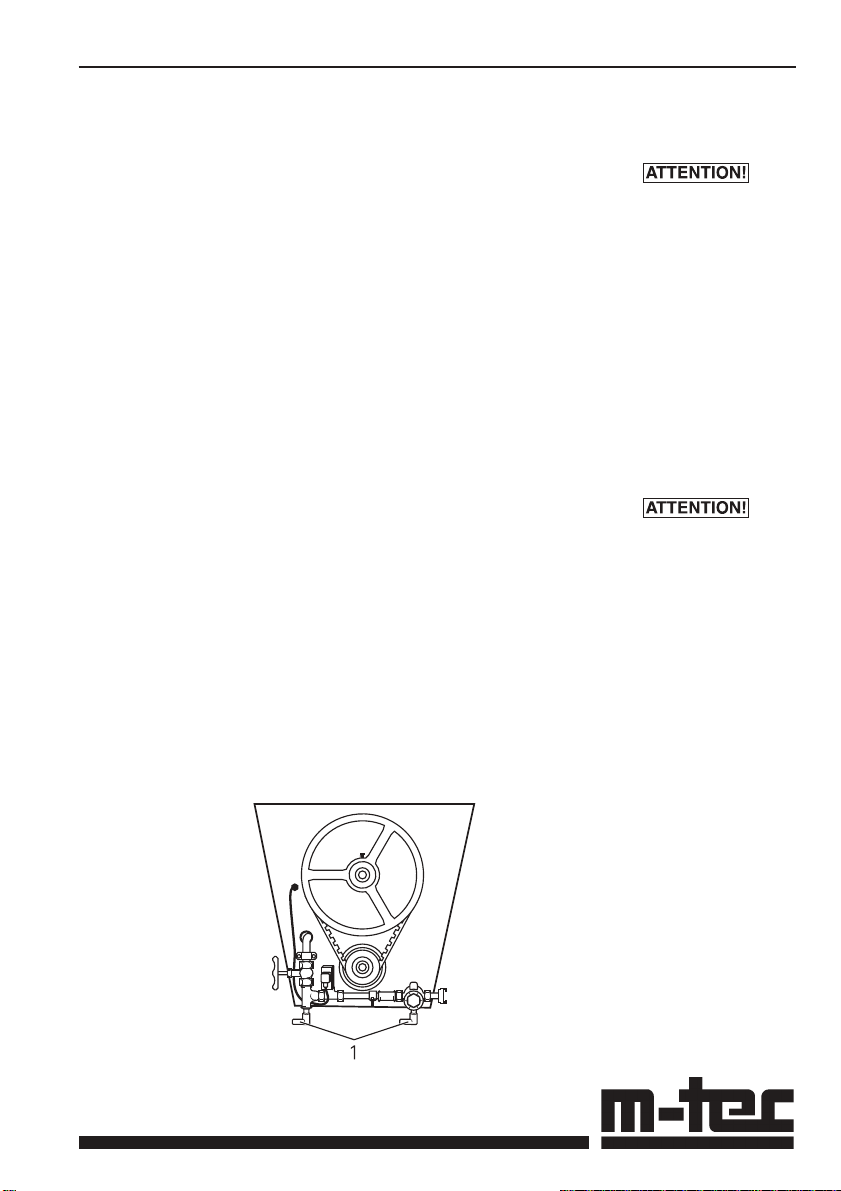
Before intervals in work and after cleaning the
machine, the water fittings must be completely
emptied. To do this:
23
• remove the feed hoses and empty them
• open the draining valves of the water fittings
• close the draining valves before using the machine
again.
Fig. 8:
Emptying the
water fitting
1 Draining valves
D20 230/400 V – 392570 – 01/99
Supplied by :- Markham (Sheffield) Ltd - Tel:- +44 (0)1909 730861 - www.markham-sheffield.co.uk
Page 24
24 Continuous Mixer D20
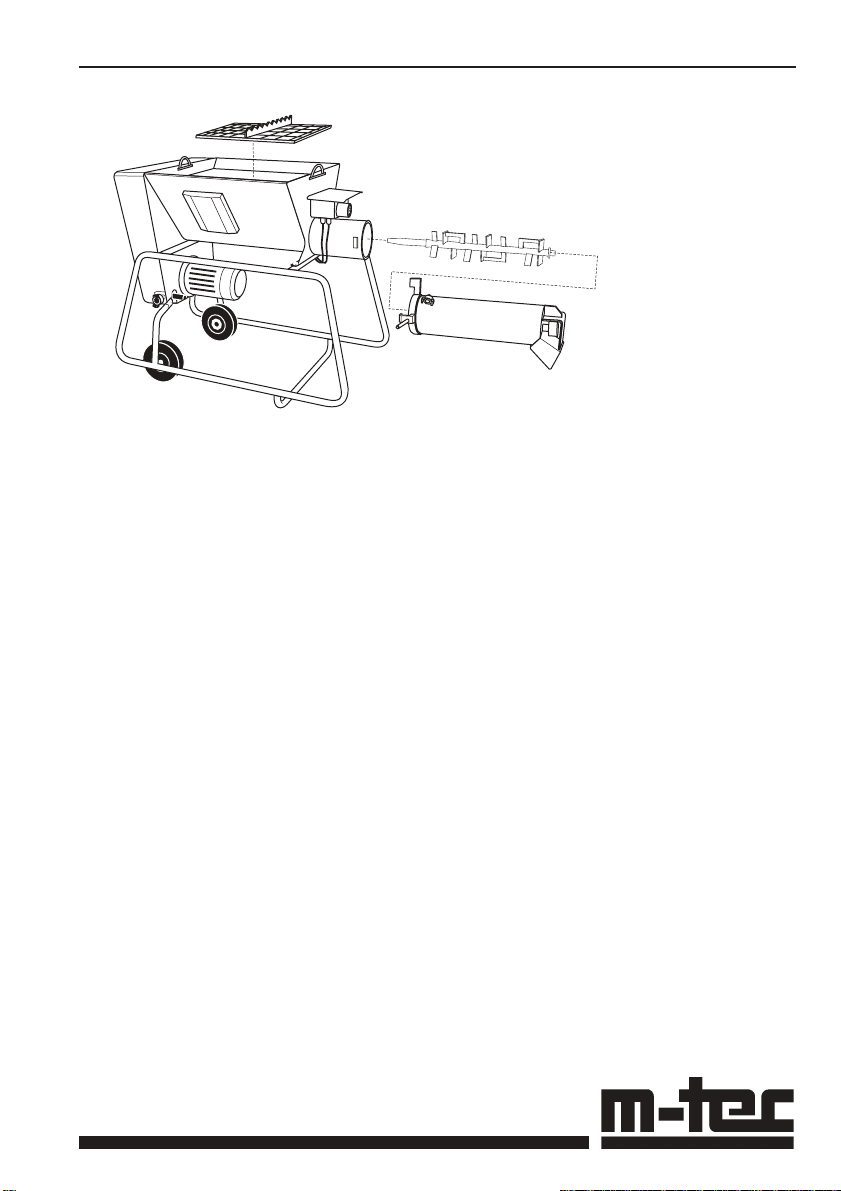
6 Cleaning
• Allow the machine to run until empty
• Switch the machine off at the off switch
!
!
Pull out the power plug
• Shut off the water supply
• Disconnect the hose from the mixing pipe
• Remove the mixing pipe; turn it by the hand grips
until it releases and then pull it off the machine
Caution! Do not allow the mixing pipe to drop to
the ground!
• Remove the mixing shaft
• Clean the mixing pipe and shaft with a water hose
and brush
• Remove the safety grid on the material trough
Always keep the material trough and material pipe
dry!
• Clean the dry material trough and pipe with a brush
• Replace the safety grid and secure it with the bolt
Ensure that the coupling of the mixing shaft is
clean, dry and free of grease. Otherwise it may be
impossible to release the coupling!
• Replace the clean mixing shaft in the pipe
• Couple the mixing pipe with shaft back onto the
machine
Supplied by :- Markham (Sheffield) Ltd - Tel:- +44 (0)1909 730861 - www.markham-sheffield.co.uk
D20 230/400 V – 392570 – 01/99
Page 25
Cleaning
25
Fig. 9:
Cleaning the
machine
D20 230/400 V – 392570 – 01/99
Supplied by :- Markham (Sheffield) Ltd - Tel:- +44 (0)1909 730861 - www.markham-sheffield.co.uk
Page 26
26 Continuous Mixer D20
7 Maintenance and servicing
Before carrying out maintenance work, always pull
out the power plug, as certain components remain
live even when the machine is switched off.
To ensure its safety in operation, the machine must
!
be inspected by a specialist technician in
accordance with the regulations in force. It should
be inspected at least once per year.
7.1 Routine maintenance
• Check the condition of cable connections, plugs
and hoses at regular intervals
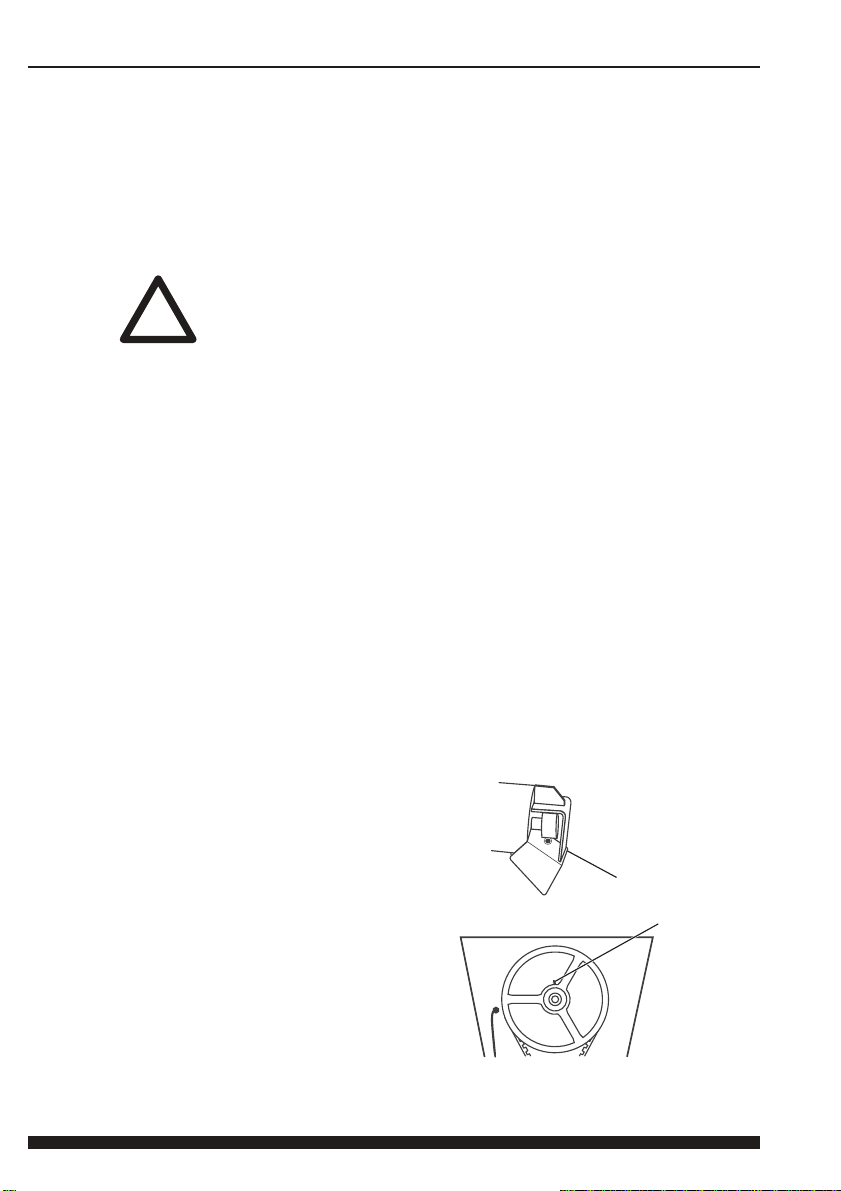
Lubricate the following grease points with 1 or 2 shots
of grease every four to six weeks using a grease gun
• mixing shaft bearings (Fig. 10, 1) unless the
machine is fitted with a sliding bearing (see section
7.2)
• drive-shaft bearing (Fig. 10, 2) after removing the
cover hood
Fig. 10:
Lubrication points
1 Mixing shaft bearing
2 Drive-shaft bearing
Supplied by :- Markham (Sheffield) Ltd - Tel:- +44 (0)1909 730861 - www.markham-sheffield.co.uk
1
2
D20 230/400 V – 392570 – 01/99
Page 27
Maintenance and servicing
7.2 Sliding bearing
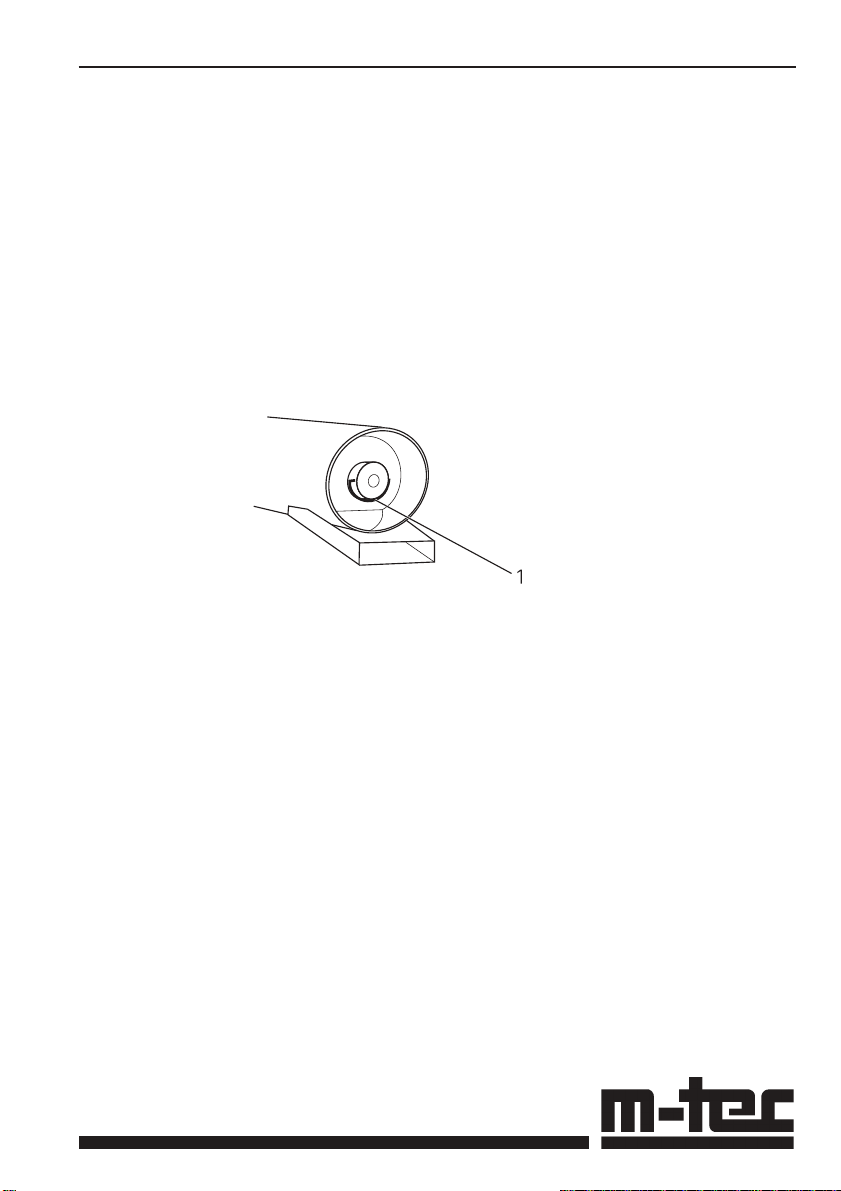
The sliding bearing and the bearing bush must be
checked regularly for signs of wear and if necessary
replaced:
• Remove metal clamp (Fig. 11, 1)
• Remove the sliding bearing. If necessary press it
out from behind with a rod and replace
• Re-attach the metal clamp in the recesses
provided on the bearing.
27
Fig. 11:
Replace sliding
bearing
1 Metal clamp
D20 230/400 V – 392570 – 01/99
Supplied by :- Markham (Sheffield) Ltd - Tel:- +44 (0)1909 730861 - www.markham-sheffield.co.uk
Page 28
28 Continuous Mixer D20
7.3 Wedge belt
The tension of the wedge belt should be checked
every four to six weeks.
• Remove the cover hood
• Check wedge-belt tension
It should not be possible to press the wedge belt
down by more than 1 cm.
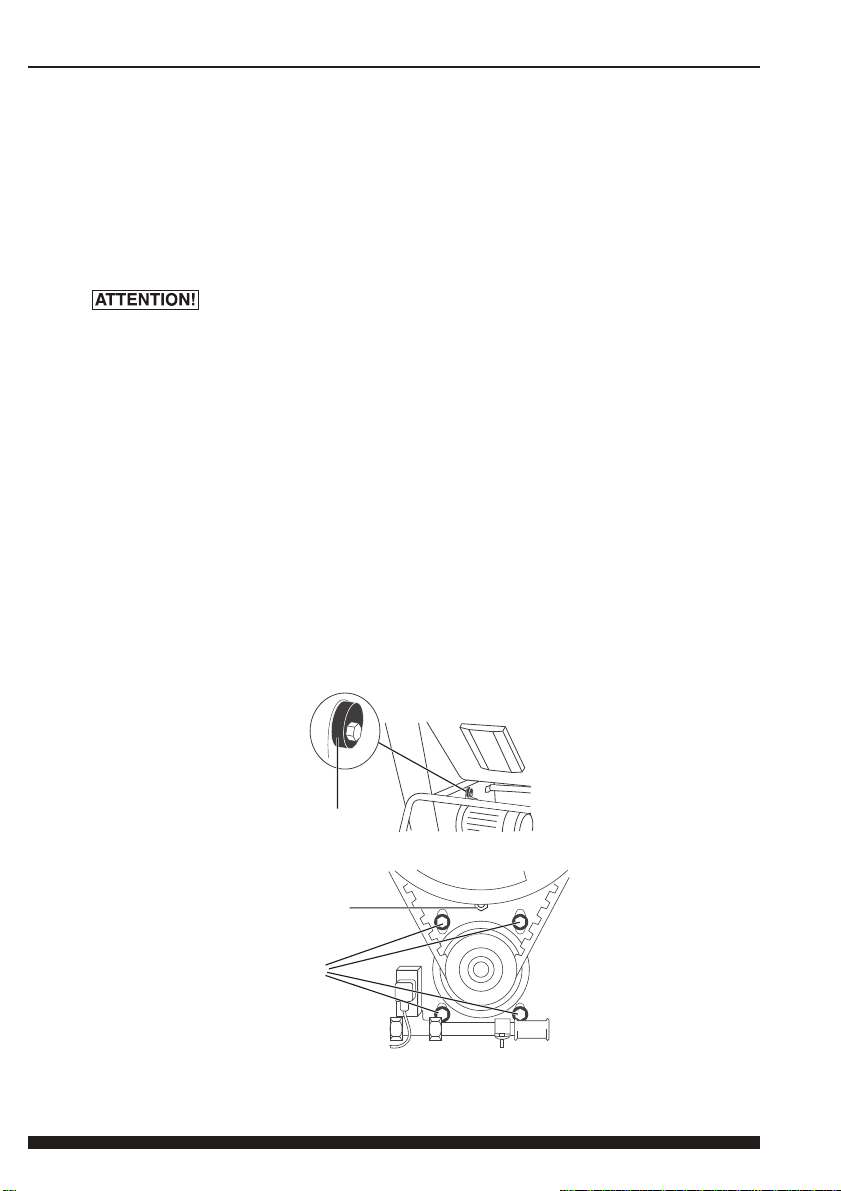
If necessary, tension the wedge belt ; to do this:
• Loosen the locking nut of the tensioning cam (Fig.
12,2)
• Loosen the mounting bolts of the motor flange (Fig.
12, 3)
• Turn the tensioning cam (Fig. 12, 1) until the belt
reaches the correct tension
• Re-tighten the locking nut on the tensioning cam
and the mounting nuts of the motor flange
• Replace and fasten the cover hood
Fig. 12:
Tensioning the
wedge belt
1 Tensioning cam
2 Locking nut of the
tensioning cam
3 Mounting bolts of
the motor flange
1
2
3
Supplied by :- Markham (Sheffield) Ltd - Tel:- +44 (0)1909 730861 - www.markham-sheffield.co.uk
D20 230/400 V – 392570 – 01/99
Page 29
Maintenance and servicing
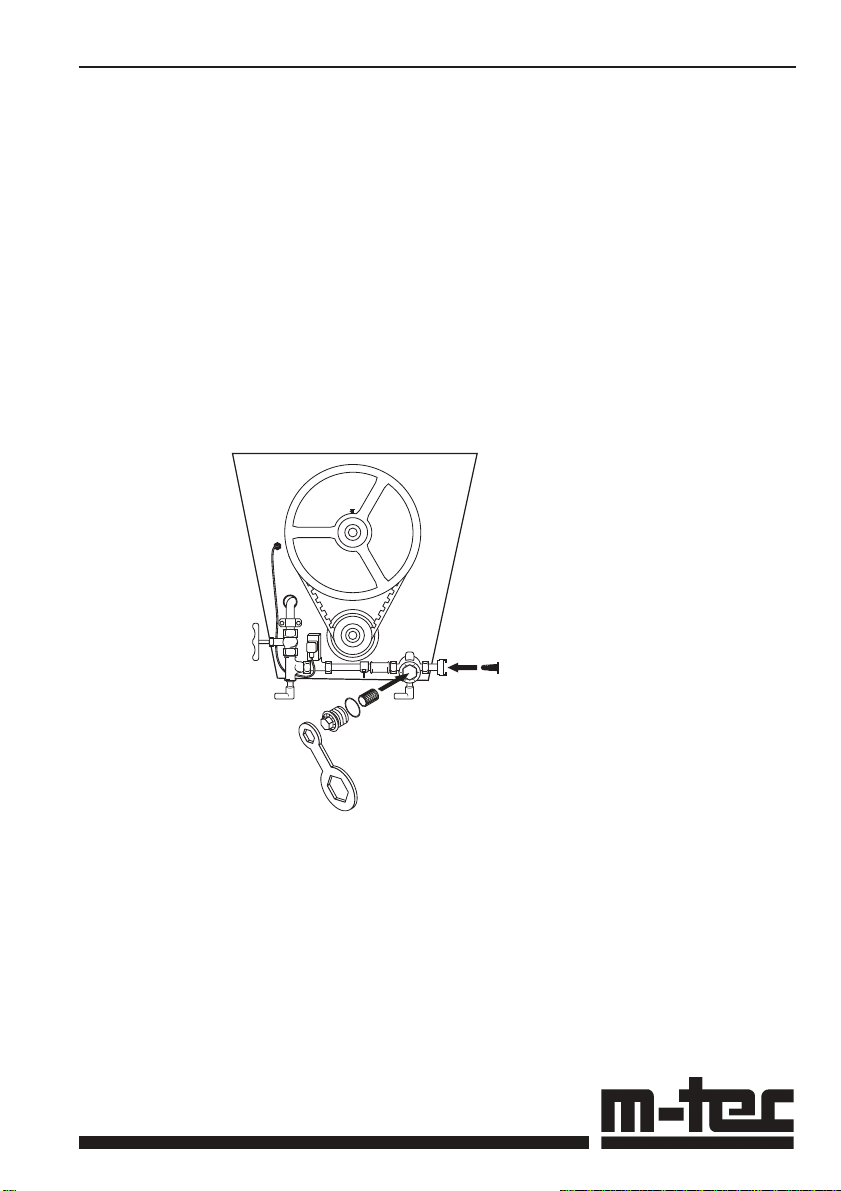
7.3 Cleaning the water sieves
The water sieves in the water fitting must be removed
and cleaned every four to six weeks. To do this:
• Remove the cover hood
• Remove and clean the water sieves in the water
infeed and pressure reducer: rinse them with water
and – if necessary – blow them out with air (Fig. 13)
• Replace the clean sieves
• Replace and fasten the cover hood.
29
Fig. 13:
Cleaning the
water sieves
D20 230/400 V – 392570 – 01/99
Supplied by :- Markham (Sheffield) Ltd - Tel:- +44 (0)1909 730861 - www.markham-sheffield.co.uk
Page 30

30 Continuous Mixer D20
8 Troubleshooting
The troubleshooting table is not intended to replace the detailed
instructions in the individual sections of these Instructions. Always
!
observe the safety instructions in the above sections.
Fault
Motor does not start
No water feed
Mortar too thick
Mortar too thin
Uneven mortar consistency
Machine does not mix,
squeaking noises
Cause
No power
Overload fuse (thermal circuit
breaker) triggered; this causes
the On switch to de-activate
automatically
Mortar has set in mixing pipe
(interval too long)
Water infeed not open
Solenoid valve does not open
Too little water
Too much water
Water sieve in pressure reducer
or water infeed clogged
Wedge-belt tension too low
Remedy
Check plug and cable
Allow overload switch to cool
off; find reason for overload (e.g.
blockage of mixing shaft) and
remedy it; press the On switch
in again
Clean mixing pipe
Open water feed
Solenoid-valve cable or coil
defective; replace
Open the fine-adjustment valve
If water pressure under 4 bars,
use additional water pump
Close fine-adjustment valve
slightly
Clean water sieve
Tension wedge belt and replace
if necessary
Supplied by :- Markham (Sheffield) Ltd - Tel:- +44 (0)1909 730861 - www.markham-sheffield.co.uk
D20 230/400 V – 392570 – 01/99
Page 31

Spare parts and accessories
9 Spare parts and accessories
Modifications to the machine are prohibited. Use
only spare parts and accessories supplied by m-tec
mathis technik gmbh. If spare parts and accessories
of other types are used, m-tec mathis technik gmbh
will assume no liability for any accidents which
may occur.
Orders for spare parts and accessories should be
addressed to:
m-tec mathis technik gmbh, Sales Dept.
Tel.: +49 (0) 7631 / 709-112 or -216
Fax: +49 (0) 7631 / 709-116
The following accessories can be ordered separately:
•Additional water pump
•Flow meter
•Rim for increasing capacity of material trough when
processing insulating plaster
•Filter hood for filling with a feeder conveyor
•Transfer hood for filling with a silo
31
D20 230/400 V – 392570 – 01/99
Supplied by :- Markham (Sheffield) Ltd - Tel:- +44 (0)1909 730861 - www.markham-sheffield.co.uk
Page 32
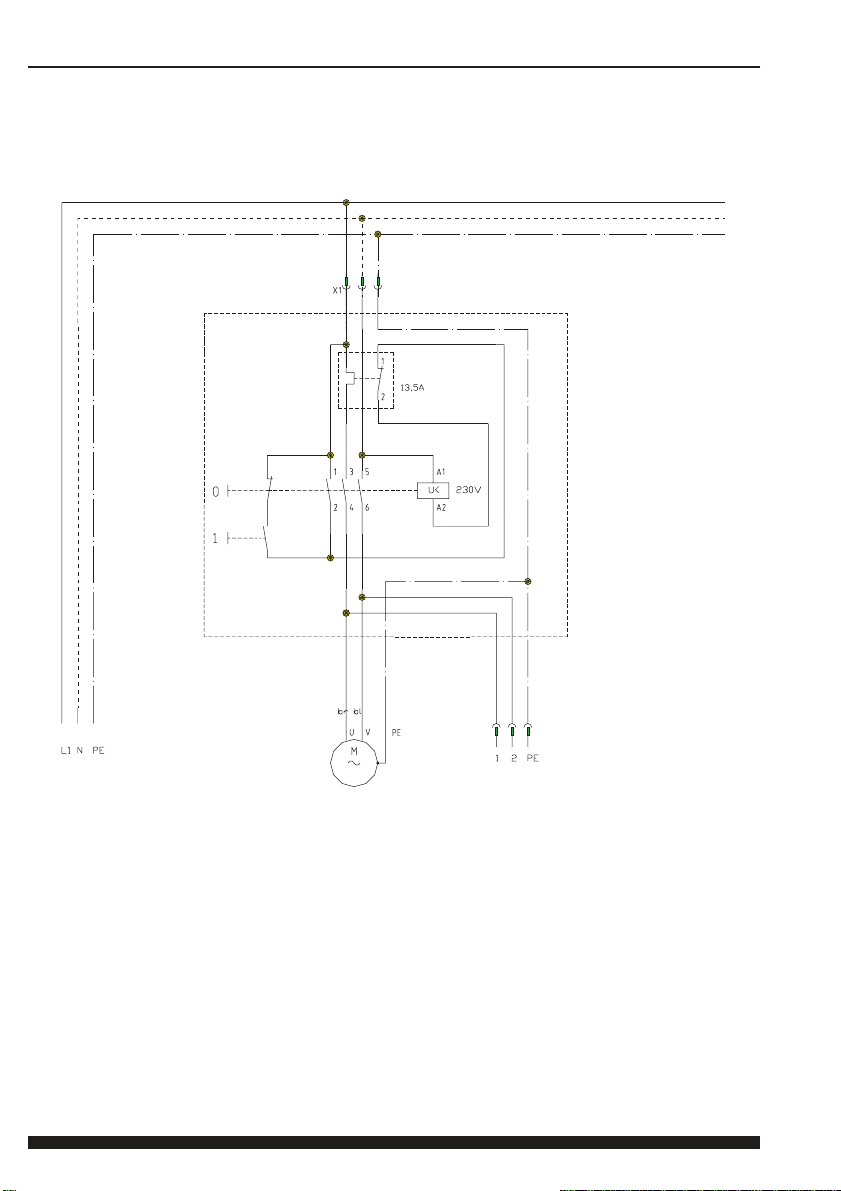
32 Continuous Mixer D20
10 Circuit diagrams
Overload release
Solenoid valve
Mixer motor
230 V / 50 Hz /
16 V A
Fig. 14: Circuit diagram D 20 230 V 1 ph 50/60 Hz
Supplied by :- Markham (Sheffield) Ltd - Tel:- +44 (0)1909 730861 - www.markham-sheffield.co.uk
D20 230/400 V – 392570 – 01/99
Page 33
Circuit diagrams
33
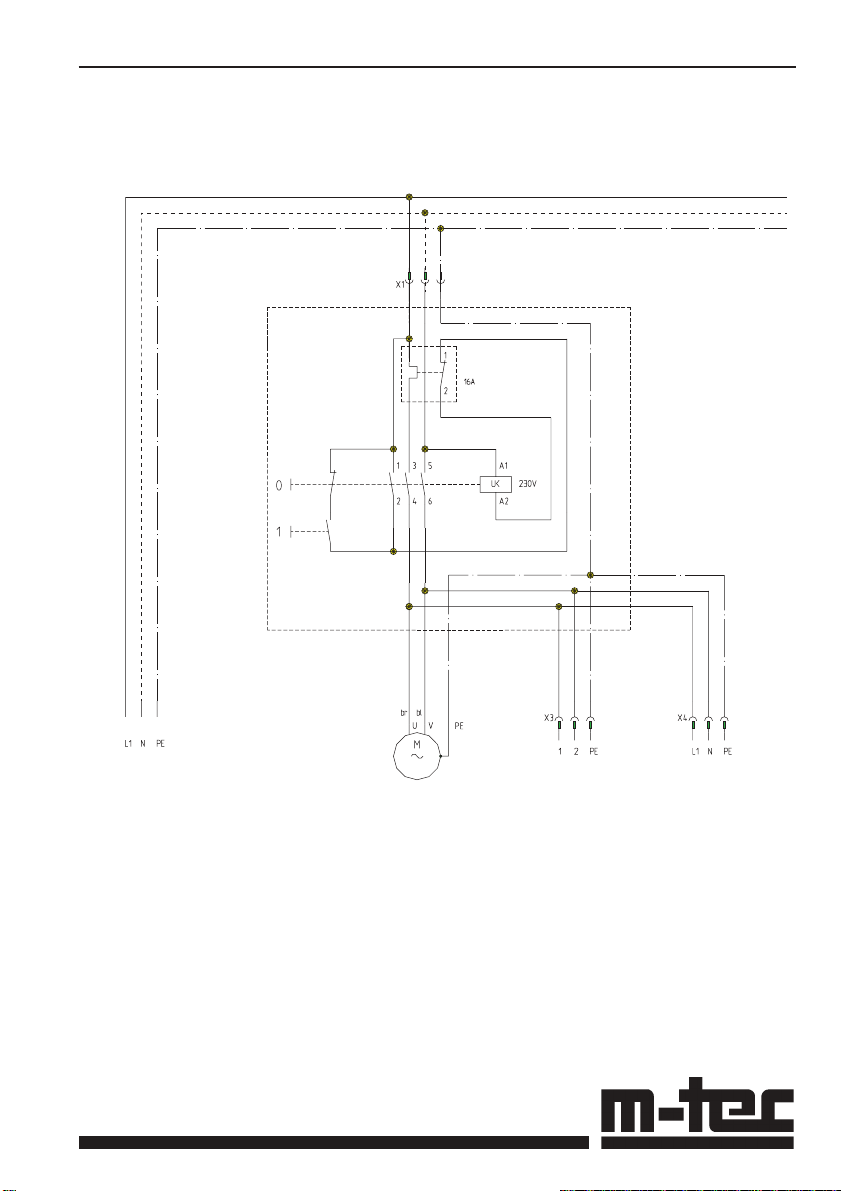
Overload release
Mixer motor
Solenoid valve
230 V / 50 Hz /
16 V A
Earthed
socket
230 V
Fig. 15: Circuit diagram D 20 with earthed socket 230 V 1 ph 50/60 Hz
D20 230/400 V – 392570 – 01/99
Supplied by :- Markham (Sheffield) Ltd - Tel:- +44 (0)1909 730861 - www.markham-sheffield.co.uk
Page 34
34 Continuous Mixer D20
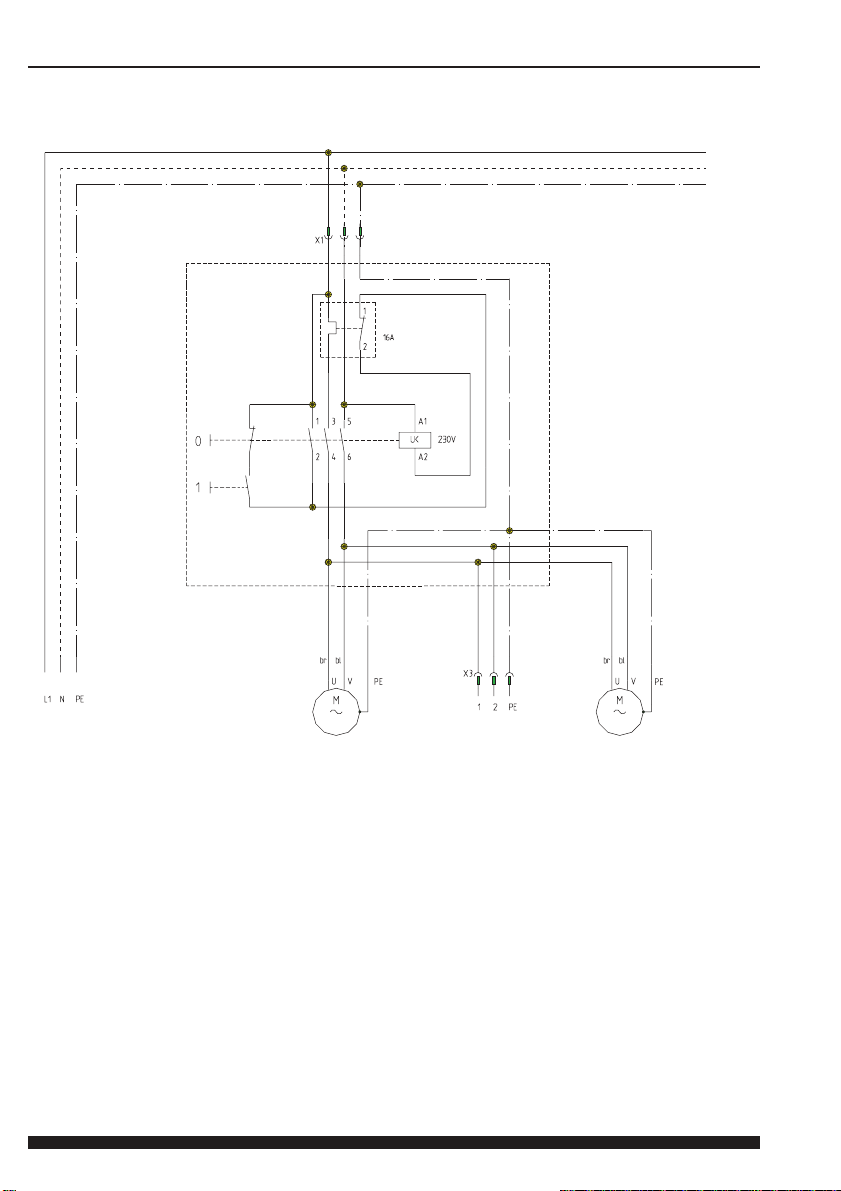
Solenoid valve
Mixer motor
230 V / 50 Hz /
16 V A
Water pump
230 V / 50 Hz /
2,5 A
Fig. 16: Circuit diagram D 20 with water pump 230 V 1 ph 50/60 Hz
Supplied by :- Markham (Sheffield) Ltd - Tel:- +44 (0)1909 730861 - www.markham-sheffield.co.uk
D20 230/400 V – 392570 – 01/99
Page 35
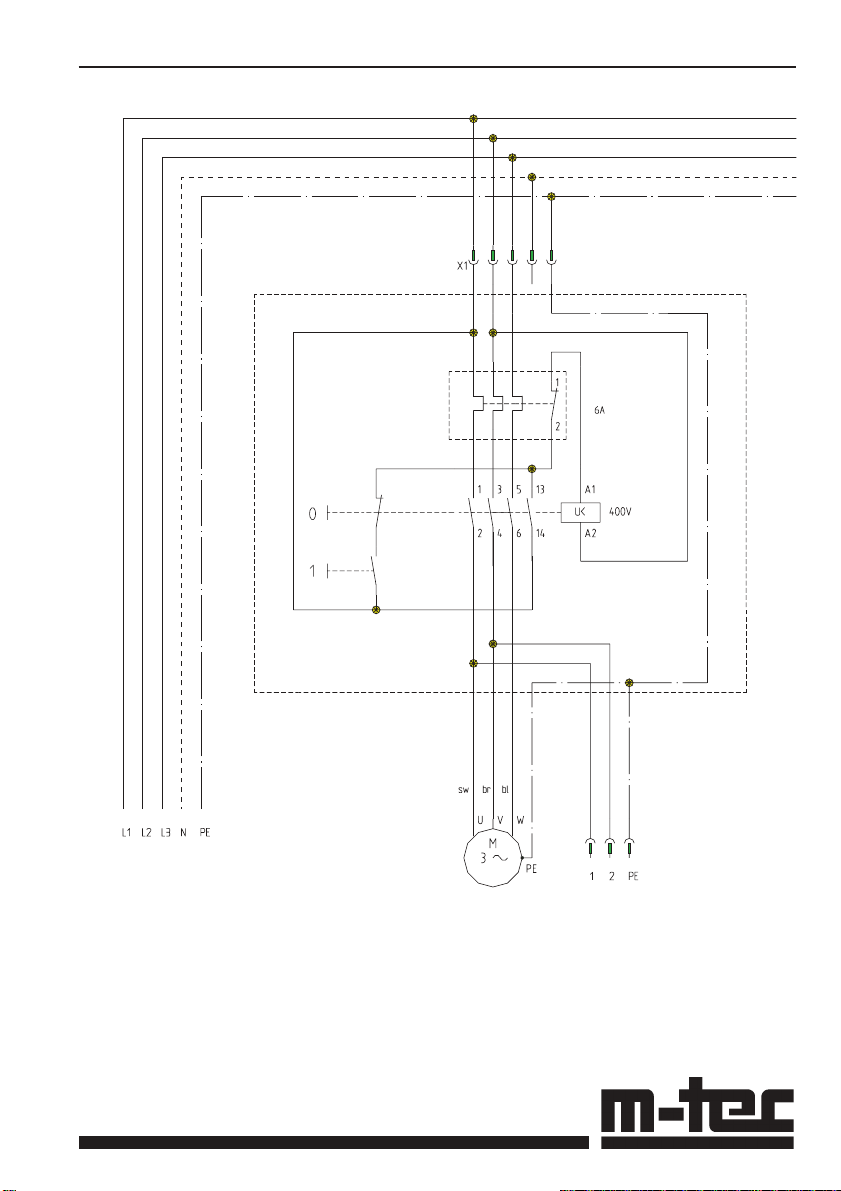
Circuit diagrams
35
Overload release
Mixer motor
400 V / 50 Hz
Solenoid valve
400 V / 50 Hz /
15 V A
Fig. 17: Circuit diagram D 20 400 V 3 ph 50 Hz
D20 230/400 V – 392570 – 01/99
Supplied by :- Markham (Sheffield) Ltd - Tel:- +44 (0)1909 730861 - www.markham-sheffield.co.uk
Page 36
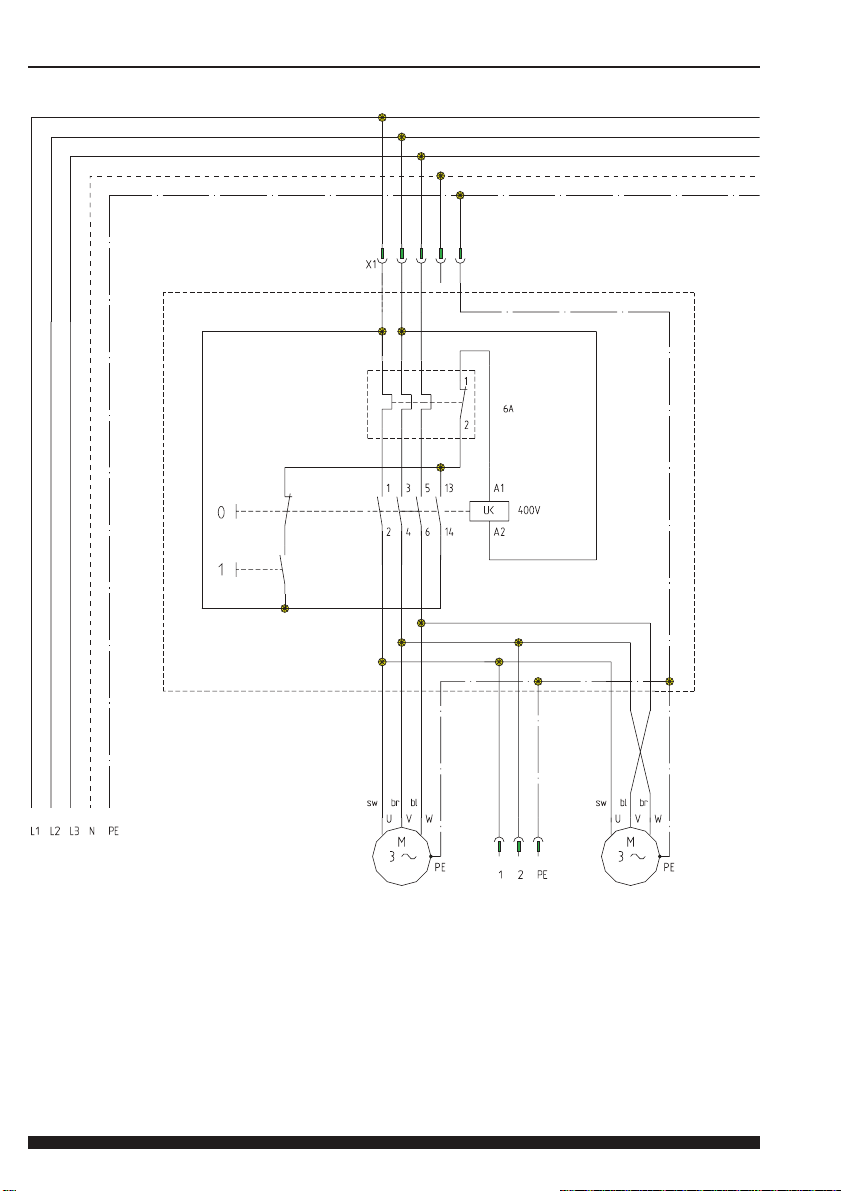
36 Continuous Mixer D20
Overload release
Mixer motor
400 V / 50 Hz
Solenoid valve
400 V / 50 Hz /
15 V A
Water pump
400 V / 50 Hz
Fig. 18: Circuit diagram D 20 with water pump 400 V 3 ph 50 Hz
Supplied by :- Markham (Sheffield) Ltd - Tel:- +44 (0)1909 730861 - www.markham-sheffield.co.uk
D20 230/400 V – 392570 – 01/99
Page 37

D20 230/400 V – 392570 – 01/99
Circuit diagrams
Supplied by :- Markham (Sheffield) Ltd - Tel:- +44 (0)1909 730861 - www.markham-sheffield.co.uk
37
Page 38

38 Continuous Mixer D20
D20 230/400 V – 392570 – 01/99
Supplied by :- Markham (Sheffield) Ltd - Tel:- +44 (0)1909 730861 - www.markham-sheffield.co.uk
Page 39

D20 230/400 V – 392570 – 01/99
Supplied by :- Markham (Sheffield) Ltd - Tel:- +44 (0)1909 730861 - www.markham-sheffield.co.uk
39
Page 40

Supplied by :- Markham (Sheffield) Ltd - Tel:- +44 (0)1909 730861 - www.markham-sheffield.co.uk
 Loading...