

Page 1
MORSØ JERNSTØBERI A/S . DK-7900 NYKØBING MORS
MORSØ JERNSTØBERI A/S . DK-7900 NYKØBING MORS
E-Mail: [email protected] · Website: www.morsoe.com
Distributed by: Morsø UK
Valley Drive · Swift Valley · Rugby, Warks CV21 1TW · England
Supplementary Installation &
Operation instructions
for UK Market
For use Morsø UK Stoves
EN 13 240 & HETAS Ltd.
www.morsoe.com
Page 2
2
Care must be taken when installing the stove such that the requirements of the Health and
Safety at Work Act are met.
Handling
Adequate facilities must be available for loading, unloading and site handling.
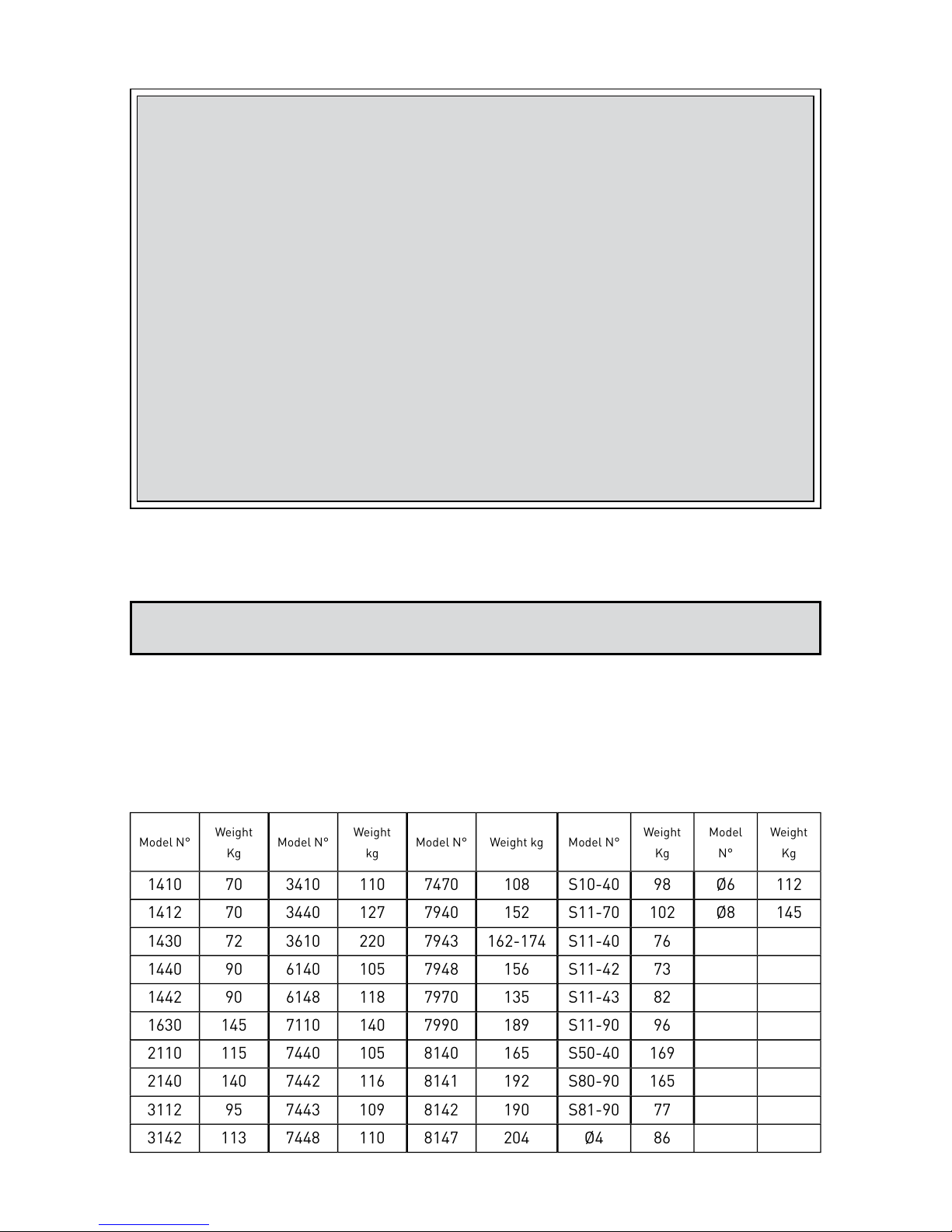
Stove weights including packaging
Health and Safety Precautions
SUPPLEMENTARY INSTALLATION INSTRUCTIONS FOR USE
WITH MORSØ UK STOVES
PLEASE READ THE INSTRUCTION MANUAL AND THESE SUPPLEMENTARY
INSTRUCTIONS CAREFULLY BEFORE INSTALLATION
In all cases the installation must comply with current Building Regulations, Local Authority Byelaws and other specifications or regulations as they affect the installation of
the stove.
It should be noted that the Building Regulations requirements may be met by adopting
the relevant recommendations given in British Standards BS 8303, BS 6461 and BS 7566
as an alternative means to achieve an equivalent level of performance to that obtained
following the guidance given in Approved Document J.
Please note that it is a legal requirement under England and Wales Building Regulations
that the installation of the stove is either carried out under Local Authority Building Control approval or is installed by a Competent Person registered with a Government approved Competent Persons Scheme. HETAS Ltd operate such a Scheme and a listing of
their Registered Competent Persons can be found on their website at www.hetas.co.uk.
Model N°
Weight
Kg
Model N°
Weight
kg
Model N° Weight kg Model N°
Weight KgModel N°Weight
Kg
1410 70 3410 110 7470 108 S10-40 98 Ø6 112
1412 70 3440 127 7940 152 S11-70 102 Ø8 145
1430 72 3610 220 7943 162-174 S11-40 76
1440 90 6140 105 7948 156 S11-42 73
1442 90 6148 118 7970 135 S11-43 82
1630 145 7110 140 7990 189 S11-90 96
2110 115 7440 105 8140 165 S50-40 169
2140 140 7442 116 8141 192 S80-90 165
3112 95 7443 109 8142 190 S81-90 77
3142 113 7448 110 8147 204 Ø4 86
Cast iron
Cast iron is a live material. There are no two ovens that are identical. This is partly due to the
tolerances of the casting process, partly because the ovens are a work of craftsmanship.
Page 3
3
Fire Cement
Some types of fire cement are caustic and should not be allowed to come into contact with
the skin. In case of contact wash immediately with plenty of water and consult manufacturers
guidelines.
Asbestos
Morsø stoves do not contain asbestos. If there is a possibility of disturbing any asbestos in
the course of installation then please seek specialist guidance and use appropriate protective
equipment.
In the UK these stoves have been approved by HETAS Ltd as an intermittent operating appliance for burning wood logs only.
It should be noted that it is an offence to burn wood logs in a stove if it is installed within a
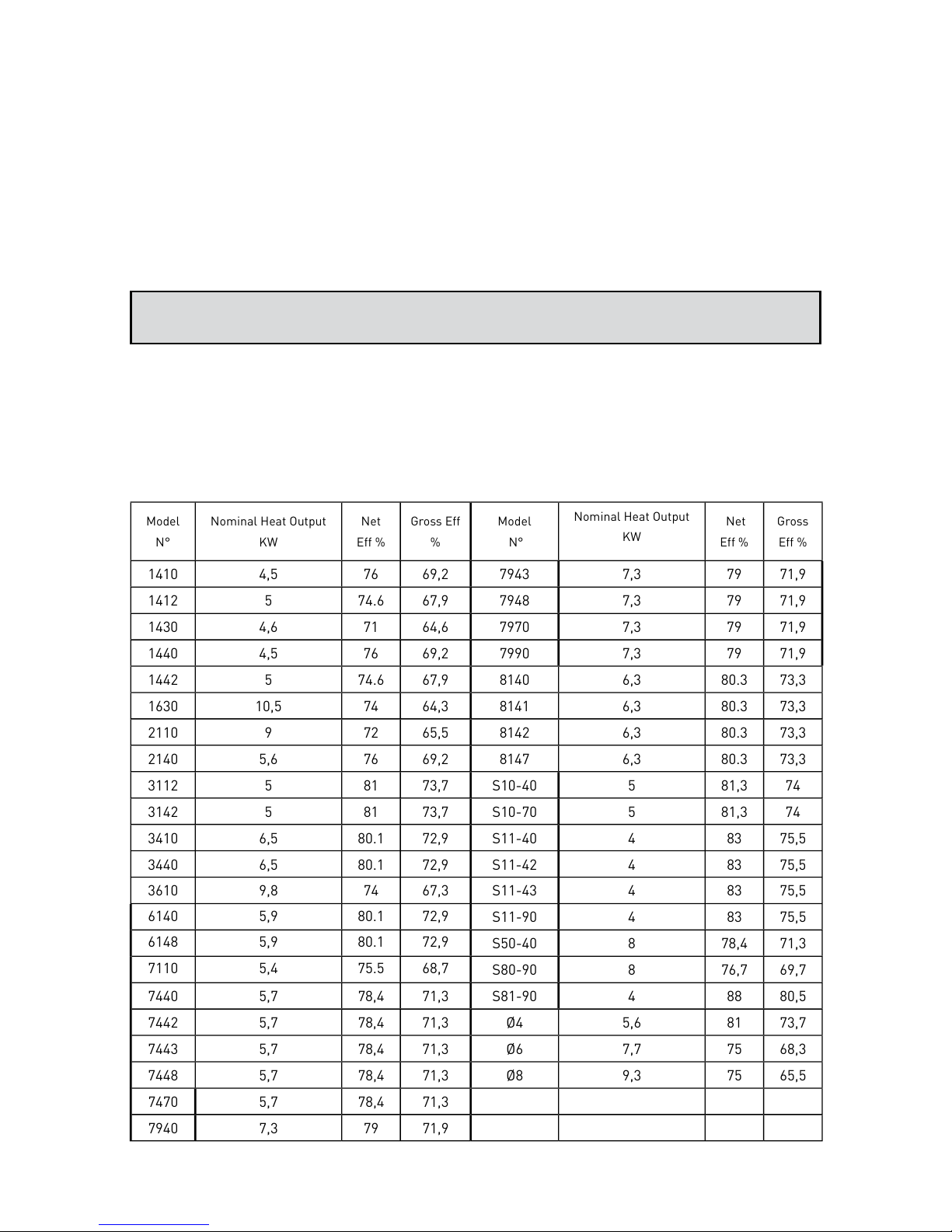
Smoke Control Area in the UK unless the stove is approved to do so. The nominal heat outputs
for the various stoves are as follows:
Stove Performance
Model N°Nominal Heat Output
KW
Net
Eff %
Gross Eff
%
Model
N°
Nominal Heat Output
KW
Net
Eff %
Gross
Eff %
1410 4,5 76 69,2 7943 7,3 79 71,9
1412 5 74.6 67,9 7948 7,3 79 71,9
1430 4,6 71 64,6 7970 7,3 79 71,9
1440 4,5 76 69,2 7990 7,3 79 71,9
1442 5 74.6 67,9 8140 6,3 80.3 73,3
1630 10,5 74 64,3 8141 6,3 80.3 73,3
2110 9 72 65,5 8142 6,3 80.3 73,3
2140 5,6 76 69,2 8147 6,3 80.3 73,3
3112 5 81 73,7 S10-40 5 81,3 74
3142 5 81 73,7 S10-70 5 81,3 74
3410 6,5 80.1 72,9 S11-40 4 83 75,5
3440 6,5 80.1 72,9 S11-42 4 83 75,5
3610 9,8 74 67,3 S11-43 4 83 75,5
6140 5,9 80.1 72,9
S11-90 4 83 75,5
6148 5,9 80.1 72,9
S50-40 8 78,4 71,3
7110 5,4 75.5 68,7
S80-90 8 76,7 69,7
7440 5,7 78,4 71,3 S81-90 4 88 80,5
7442 5,7 78,4 71,3 Ø4 5,6 81 73,7
7443 5,7 78,4 71,3 Ø6 7,7 75 68,3
7448 5,7 78,4 71,3 Ø8 9,3 75 65,5
7470 5,7 78,4 71,3
7940 7,3 79 71,9
Page 4

4
Prefactory Work and Safety Checks
There must not be an extractor fan fitted in the same room as the stove as this can cause the
stove to emit fumes into the room.
Chimney
NOTE: A chimney height of not less than 4.5 metres measured vertically from the outlet of the
stove to the top of the chimney should be satisfactory. Alternatively the calculation procedure
given in BS 5854:1980 may be used as the basis for deciding whether a particular chimney design will provide sufficient draught.
If installation is into an existing chimney then it must be sound and free from cracks or other
faults which might allow fumes into the property.
Any existing chimney must be clear of obstruction and have been swept clean immediately before installation of the stove. If the stove is fitted in place of an open fire then the chimney
should be swept one month after installation to clear any soot falls which may have occurred
due to the difference in combustion between the stove and the open fire.
If there is no existing chimney then either a prefabricated block chimney in accordance with
Building Regulations Approved Document J or a twin walled insulated stainless steel flue to
BS 4543 can be used. These chimneys must be fitted in accordance with the manufacturer’s
instructions and Building Regulations.
A single wall metal fluepipe is suitable for connecting the stove to the chimney but is not suitable for using for the complete chimney. The chimney must have a minimum diameter of 150
mm and its dimension should be not less than the size of the outlet spigot of the stove.
Any bend in the chimney or connecting fluepipe should not exceed 45°. 90° bends are not permitted.
Combustible material should not be located where the heat dissipating through the walls of
fireplaces or flues could ignite it. Therefore when installing the stove in the presence of combustible materials due account must be taken of the guidance on the separation of combustible material given in Building Regulations Approved Document J and also in the stove installation instructions.
If it is found that there is excessive draught in the chimney then a draught stabiliser should be
fitted.
The chimney can be swept through the stove if the stove is connected via the top flue outlet.
When installing via the rear flue outlet adequate provision e.g. easily accessible soot door or
doors must be provided for sweeping the chimney and connecting fluepipe. It may also be necessary to provide additional sweeping access when fluing through a register plate.
Page 5

5
Hearth
The hearth should be able to accommodate the weight of the stove and its chimney if the chimney is not independently supported. The weight of the stove is indicated in the brochure.
The stove should always be installed on a non-combustible hearth of a size and construction
that is in accordance with the provisions of the current Building Regulations Approved Document J.
The clearance distances to combustible material beneath, surrounding or upon the hearth and
walls adjacent to the hearth should comply with the guidance on the separation of combustible
material given in Building Regulations Approved Document J and also in the stove instructions.
If the stove is to be installed on a wooden floor, it must be covered with a non-combustible material at least 12mm thick, in accordance with Building Regulations Approved Document J, to a
distance of 30 cm in front of the stove and 15 cm to each side measuring from the door of the
combustion chamber.
Combustion air supply
In order for the stove to perform efficiently and safely there should be an adequate air supply
into the room in which the stove is installed to provide combustion air.
The provision of air supply to the stove must be in accordance with current Building Regulations Approved Document J. An opening window is not appropriate for this purpose.
Commissioning and handover
Ensure loose parts are fitted in accordance with the stove instruction booklet.
On completion of the installation allow a suitable period of time for any fire cement and mortar
to dry out, when a small fire may be lit and checked to ensure the smoke and fumes are taken
from the stove up the chimney and emitted safely to atmosphere. Do not run at full output for
at least 24 hours.
On completion of the installation and commissioning ensure that the operating instructions for
the stove are left with the customer. Ensure to advise the customer on the correct use of the
appliance with the fuels likely to be used on the stove and warn them to use only the recommended fuels for the stove.
Advise the user what to do should smoke or fumes be emitted from the stove. The customer
should be warned to use a fireguard to BS 6539 in the presence of children, aged and/or infirm
persons.
Page 6

6
Supplementary Operating Instructions for use
with Morsø UK stoves
PLEASE READ THE INSTRUCTION MANUAL AND THESE SUPPLEMENTARY INSTRUCTIONS CAREFULLY BEFORE USING THE STOVE.
Warning Note
Properly installed, operated and maintained this stove will not emit fumes into the dwelling.
Occasional fumes from de ashing and re fuelling may occur. However, persistent fume emission is potentially dangerous and must not be tolerated. If fume emission does persist, then
the following immediate action should be taken:
(a) Open doors and windows to ventilate room.
(b) Let the fire go out or eject and safely dispose of fuel from the appliance.
(c) Check for flue or chimney blockage and clean if required.
(d) Do not attempt to relight the fire until the cause of the fume emission has been identi
fied and corrected. If necessary seek expert advice.
The most common cause of fume emission is flueway or chimney blockage. For your own safety these must be kept clean at all times.
Important Notes
General
Before lighting the stove check with the installer that the installation work and commissioning
checks described in the installation instructions have been carried out correctly and that the
chimney has been swept clean, is sound and free from any obstructions. As part of the stoves’
commissioning and handover the installer should have shown you how to operate the stove
correctly.
Use of fireguard
When using the stove in situations where children, aged and/or infirm persons are present a
fireguard must be used to prevent accidental contact with the stove. The fireguard should be
manufactured in accordance with BS8423:2002.
Chimney cleaning
The chimney should be swept at least once a year for smokeless fuels and a minimum of
twice a year for wood and other fuels. It is important that the flue connection and chimney are
swept prior to lighting up after a prolonged shutdown period. If the stove is fitted in place of an
open fire then the chimney should be swept one month after installation to clear any soot falls
which may have occurred due to the difference in combustion between the stove and the open
fire.
In situations where it is not possible to sweep through the stove the installer will have provided alternative means, such as a soot door. After sweeping the chimney the stove flue outlet
and the flue pipe connecting the stove to the chimney must be cleaned with a flue brush.
Extractor fan
There must not be an extractor fan fitted in the same room as the stove as this can cause the
stove to emit smoke and fumes into the room.
Page 7
7
Aerosol sprays
Do not use an aerosol spray on or near the stove when it is alight.
Use of operating tool, handle and mitten.
Always use the correct door handle, operating tool and mitt provided when handling parts likely to be hot when the stove is in use.
Chimney Fires
If the chimney is thoroughly and regularly swept, chimney fires should not occur. However, if a
chimney fire does occur immediately contact the fire brigade; turn the air control setting to the
minimum if it is safe to do so. This should cause the chimney fire to go out in which case the
control should be kept at the minimum setting until the fire in the stove has gone out.
After a chimney fire the chimney should be carefully examined for any damage. Expert advice
should be sought if necessary.
Permanent air vent
The stove requires a permanent and adequate air supply in order for it to operate safely and
efficiently.
In accordance with current Building Regulations the installer may have fitted a permanent air
supply vent into the room in which the stove is installed to provide combustion air. This air
vent should not under any circumstances be shut off or sealed.
HETAS Ltd Approval
The appliances covered by this manual have obtained HETAS Ltd approval for burning wood
logs only.
Please note that HETAS Approval only covers the use of wood on the stove and approval does
not cover the use of other fuels either alone or mixed with wood, nor does it cover instructions
for the use of other fuels.
USER OPERATING INSTRUCTIONS - WOOD
For pure wood burning stoves and multi fuel stoves operating with wood, please refer to the
main installation and operating manual.
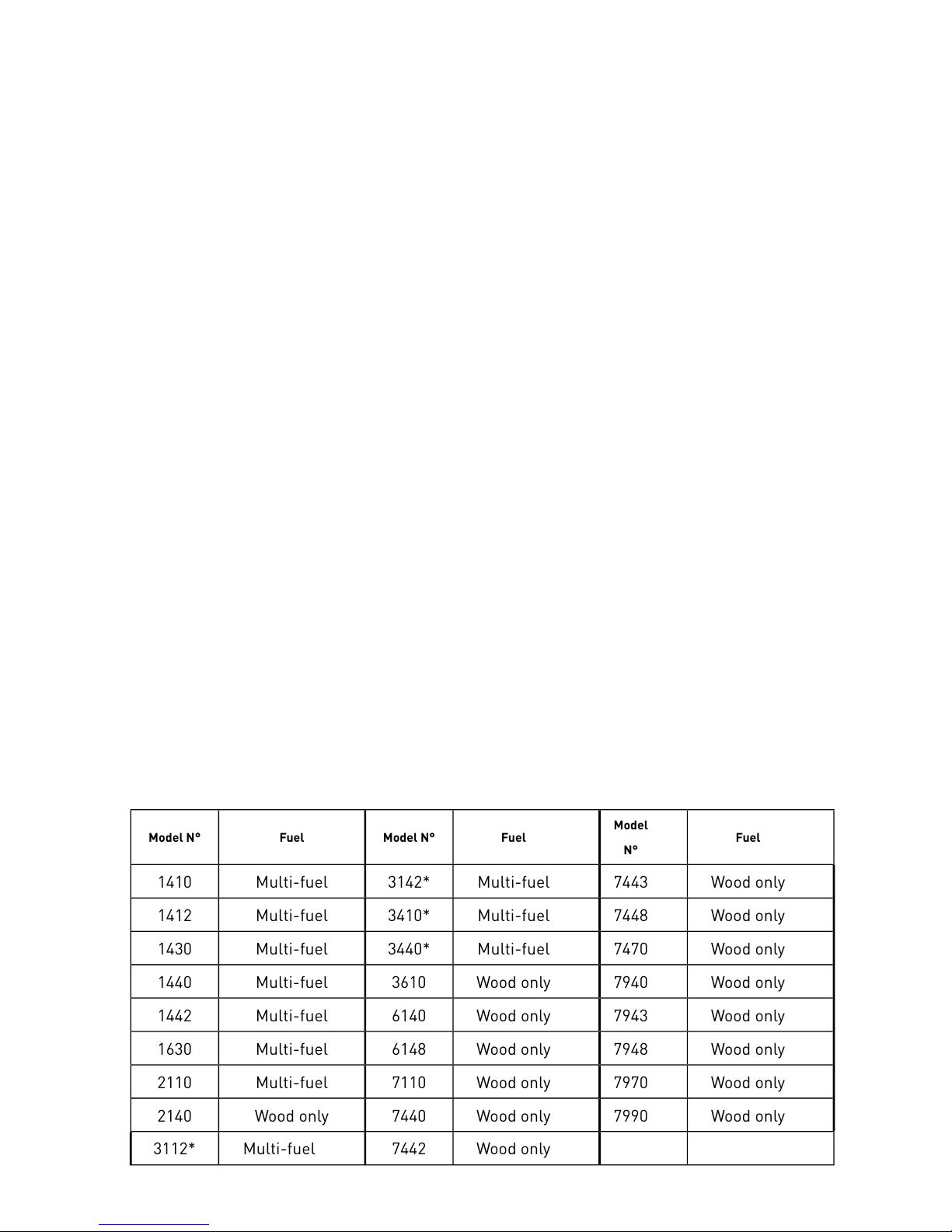
User Operating Instructions - Solid Smokeless Fuels (If appropriate*)
Model N° Fuel Model N° Fuel
Model
N°
Fuel
1410 Multi-fuel 3142* Multi-fuel 7443 Wood only
1412 Multi-fuel 3410* Multi-fuel 7448 Wood only
1430 Multi-fuel 3440* Multi-fuel 7470 Wood only
1440 Multi-fuel 3610 Wood only 7940 Wood only
1442 Multi-fuel 6140 Wood only 7943 Wood only
1630 Multi-fuel 6148 Wood only 7948 Wood only
2110 Multi-fuel 7110 Wood only 7970 Wood only
2140 Wood only 7440 Wood only 7990 Wood only
3112* Multi-fuel 7442 Wood only
Page 8
8
Recommended fuels
The following natural or manufactured smokeless fuels may be burnt on this stove:
Ancit, Taybrite
Anthracite Small Nuts, Pureheat
Coalite Maxibrite
Phurnacite, Newflame
Sunbrite Doubles, Supacite
Fireglo ovoids
Only authorised smokeless fuels may be used in smoke control areas.
PETROLEUM COKE AND BITUMINOUS HOUSE COAL ARE NOT SUITABLE FOR USE ON
THIS STOVE, ITS USE WILL INVALIDATE THE WARRANTY
At first you may find it helpful to try several fuels to find the most suitable. If you are unable to
obtain the fuel you want ask your fuel distributor to suggest an alternative.
Further details of recommended fuels can be obtained from the HETAS Ltd “Official guide to
approved solid fuel products and services” which is available on their website at www.hetas.
co.uk. Guidance can also be obtained from the Solid Fuel Association at 7 Swanwick Court, Alfreton, Derbyshire, DE55 7AS (Tel: 0800 600 000 or www.solidfuel.co.uk).
Lighting of fire
A lot of air is needed when first lighting the stove. When starting with a totally cold stove, it
may be helpful to leave the door ajar (2-3cm) during the first few minutes; the primary air
intake should be fully open. Under poor draft conditions, adding secondary air will help the
lighting process.
Place some firelighters or paper and dry kindling wood on the grate and cover with a small
amount of fuel; ignite the firelighters or paper. Allow fire to establish for a few minutes and
then close the door, continue to burn the stove with both primary and secondary air controls
open until the fuel is well alight. Load the stove with more fuel and adjust air controls to the
required level of heat output.
Before relighting the fire clean the fire bed of ash and clinker and empty the ashpan.
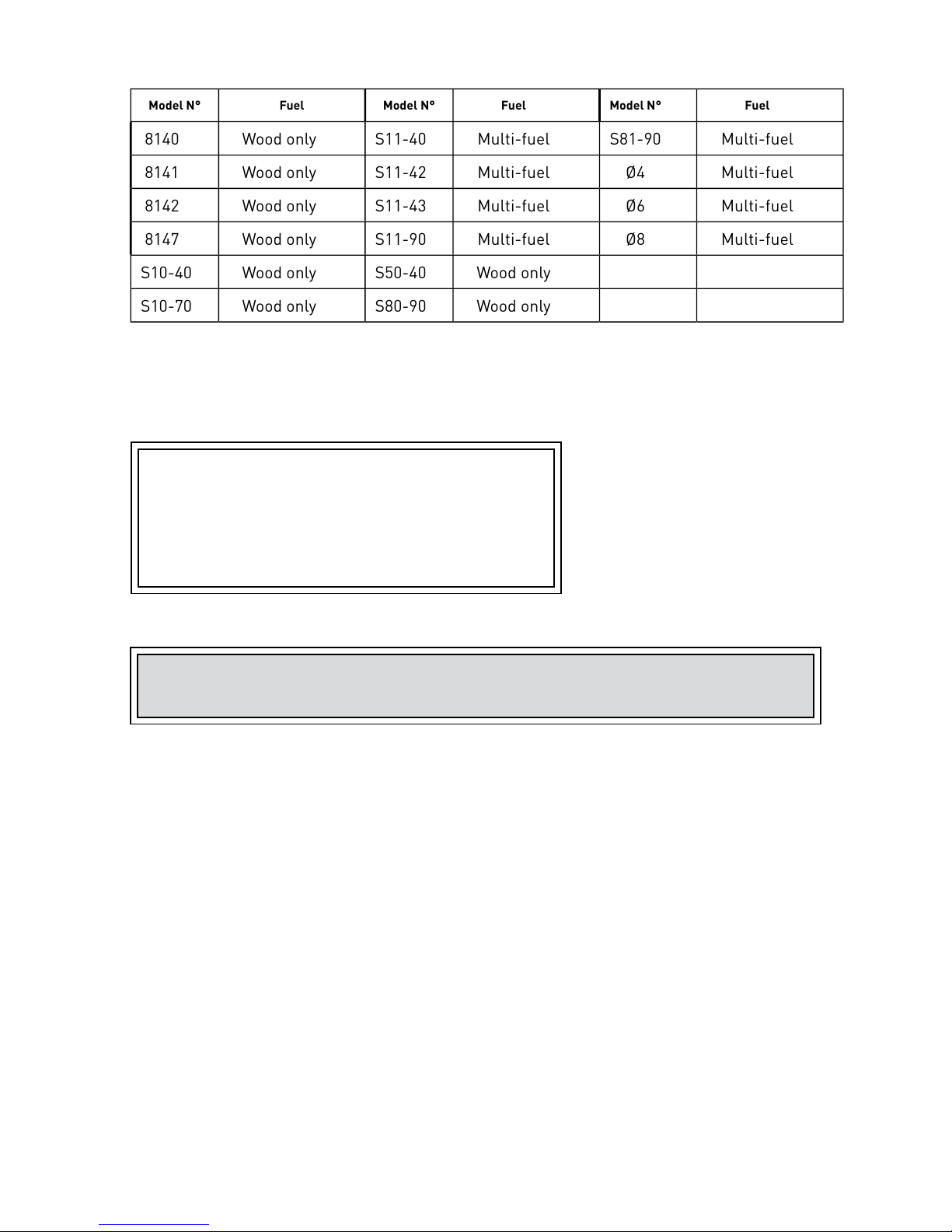
Model N° Fuel Model N° Fuel Model N° Fuel
8140 Wood only S11-40 Multi-fuel S81-90 Multi-fuel
8141 Wood only S11-42 Multi-fuel Ø4 Multi-fuel
8142 Wood only S11-43 Multi-fuel Ø6 Multi-fuel
8147 Wood only S11-90 Multi-fuel Ø8 Multi-fuel
S10-40 Wood only S50-40 Wood only
S10-70 Wood only S80-90 Wood only
Page 9

9
Controlling the burning rate
When operating the stove with solid fuels the combustion air supply should be predominantly
controlled by the primary air intake. The primary air on many of the stoves is controlled by an
air spinner on the ash door or on the bottom of the main door. In the case of the Morsø Owl
3410, 3440 and the Ø range the primary air is controlled via a lever below the ash lip (please
refer to main instructions)
Riddling and ash clearance
Riddling twice a day is usually sufficient. The fire should be riddled with all doors shut.
Never allow ash to accumulate in the ashpan such that it comes into contact with the underside of the grate as this will cause it serious damage. The ashpan should be emptied regularly
before it becomes too full. Use the tool provided to remove the ashpan.
Care should be taken to ensure that any hot ash is cool before emptying it into plastic liners or
bins.
Refuelling
Keep the firebox well filled, the fuel may be sloped up from the front fire bars toward the back
of the stove but do not allow fuel to spill over the top of the front fire bars or restrict any tertiary air inlets. Take care that fuel does not project over the front fire bars or damage to the
glass may be caused.
Empty the ashpan, if required, and then riddle the fire. If the fire is very low then it may be necessary to add a small amount of fuel and adjust the air control to maximum for a brief period
until the fire is burning well before fully re-fuelling the stove. After refuelling continue to operate the stove at full rate for a short time before reducing the air controls for overnight burning.
Reduced or overnight burning
Some experimentation may be necessary to find the air control setting most suitable for the
particular fuel used and the draw on the chimney and the level of heat output required, but
generally the air control should be turned down to the minimum setting for overnight burning.
Please note some sooty deposits or discolouration to the glass may occur when the stove is
slumbered overnight. This should clear once the fire is restored to a good operating temperature. It may also be necessary to periodically clean the glass; Morsø glass cleaner is available
from your dealer.
To revive the fire, empty the ashpan if necessary, riddle, and turn the air control setting to
maximum. When the fire is burning well load on more fuel as necessary and turn the air control setting to the desired setting.
Flueway cleaning
It is important that the baffle plate and all the stove flueways are kept clean. When burning
smokeless fuels they should be inspected and cleaned at least once a month.
More soot will be deposited on the baffle plate and in the flueways if the stove is run at low levels for long periods. If this is the case then more frequent cleaning will be necessary.
Page 10

10
Cleaning and Maintenance
Please see “Routine Stove Maintenance” contained in the main instruction manual.
Trouble shooting, tips & hints
1. Glass discolouration
Check that:
• If wood burning, the moisture content is not too high.
• If wood burning, the logs are not oversized (logs greater than 100mm diameter should be
split).
• If wood burning, the combustion air is supplied via the secondary air control.
• If burning solid fuel, an approved fuel is being used.
2. Glass cracking
Check that:
• A quality approved fuel is being used without impurities. Impurities sometimes called
“stones” can explode inside the firebox and damage the glass.
• If the glass has recently been replaced, ensure it is authorised Morsø glass. Morsø use
only 5mm thick glass, it is false economy to use inferior 3 or 4mm replacement glass.
• If the glass cracked when the stove was not being used: there are likely to be signs of
corrosion on the door frame behind the glass. When the stove is out of use for prolonged
periods it is important to remove any ashes and vent the stove. Differences in room, flue,
and stove body temperature can result in condensation inside the stove; if this moisture
comes into contact with any ashes or gaskets it may result in corrosion and acid corrosion
from the ashes. Rust behind the glass will push the glass away from the door frame plac-
ing pressure on the glass at the fixing points; the resulting crack usually runs from clip to
clip.
3. Ceramic glass replacement
Ceramic glass cannot be recycled because it has a higher melting point that ordinary glass. If
ceramic glass is mixed with ordinary glass, the raw material is spoiled, and the reclaiming process may be halted. Take care that the ovenproof glass does not end up among ordinary recycled
waste. That will be a great benefit to the environment.
Note: Should be handed in to a recycling station as ceramic glass.
4. Fire Will Not Burn
Check that:
• If wood burning, the moisture content is not too high.
• If wood burning, the logs are not oversized (logs greater than 100mm diameter should be
split).
• The correct air control is being used for the fuel being burnt, i.e. Primary air for solid fuel
and secondary air for wood burning.
• The air inlet is not obstructed in any way.
• That the chimneys and flueways are clear.
• That there is an adequate air supply into the room.
• That an extractor fan is not fitted in the same room as the fire.
Page 11

11
5. Fire Blazing Out Of Control
Check that:
• The door or doors are correctly closed.
• The door seals are in good condition.
• The main body gaskets are in good condition. With the stove running trace along the
joints of the stove with a burning incense stick; if the smoke trail is drawn into the stove at
any point it would indicate a defective seal.
Important note: All Morsø stoves use the same ceramic rope gasket for doors and main body
castings. The use of unauthorised non Morsø gaskets during routine maintenance commonly
results in:
• Pressure on the casting and fixing point which can lead to cracking.
• Inability to fit components due to insufficient compression of the gasket.
• Inability to close the door or excessive force required to close the door resulting in dam age to both the door casting and the glass.
The following kits are available from your authorised Morsø dealer:
• Sealing rope 2mtr x Ø8mm (doors & body parts) 62903100
• Sealing kit for doors and bogy parts with adhesive 62904300
• Self adhesive ladder gasket for glass 2mtr x 8mm 62903800
• Glass kit 1410 inc gasket, clips & screws 62904000
• Glass kit 1440 inc gasket, clips & screws 62904100
• Glass kit 1430 inc gasket, clips & screws 62904200
Page 12

MORSØ JERNSTØBERI A/S . DK-7900 NYKØBING MORS
E-Mail: [email protected] · Website: www.morsoe.com
Morsø Jernstøberi A/S - 10.01.2014 - 72002900
www.morsoe.com
 Loading...