

Page 1

Title :
Information Document
NO.
Date
0. GENERAL
0.1. Make
SEOYON ELECTRONICS Co.,Ltd.
0.2. Model No.
- Transmitter : Remote Keyless Entry Transmitter
SYEC3TX1611
- Receiver : Body Control Module
0.3. Name and address of manufacturer
SEOYON ELECTRONICS Co.,Ltd.
424, Sinwon-ro, Danwon-gu, Ansan-si, Gyeonggi-do, Korea
0.4. Address of assembly plant
SEOYON ELECTRONICS Co.,Ltd.
424, Sinwon-ro, Danwon-gu, Ansan-si, Gyeonggi-do, Korea
SHT/SHTS : 2/11
Page 2
Title :
Information Document
NO.
Date
2. PRODUCT SPECIFICATION
2.1 Scope of RKE, Body Control Module
2.1.1 Folding TX KEY : It has the RKE functions.
Data is transmitted with radio frequency
2.1.2 BCM(RX) : ECU is control the whole BCM funtion with RKE
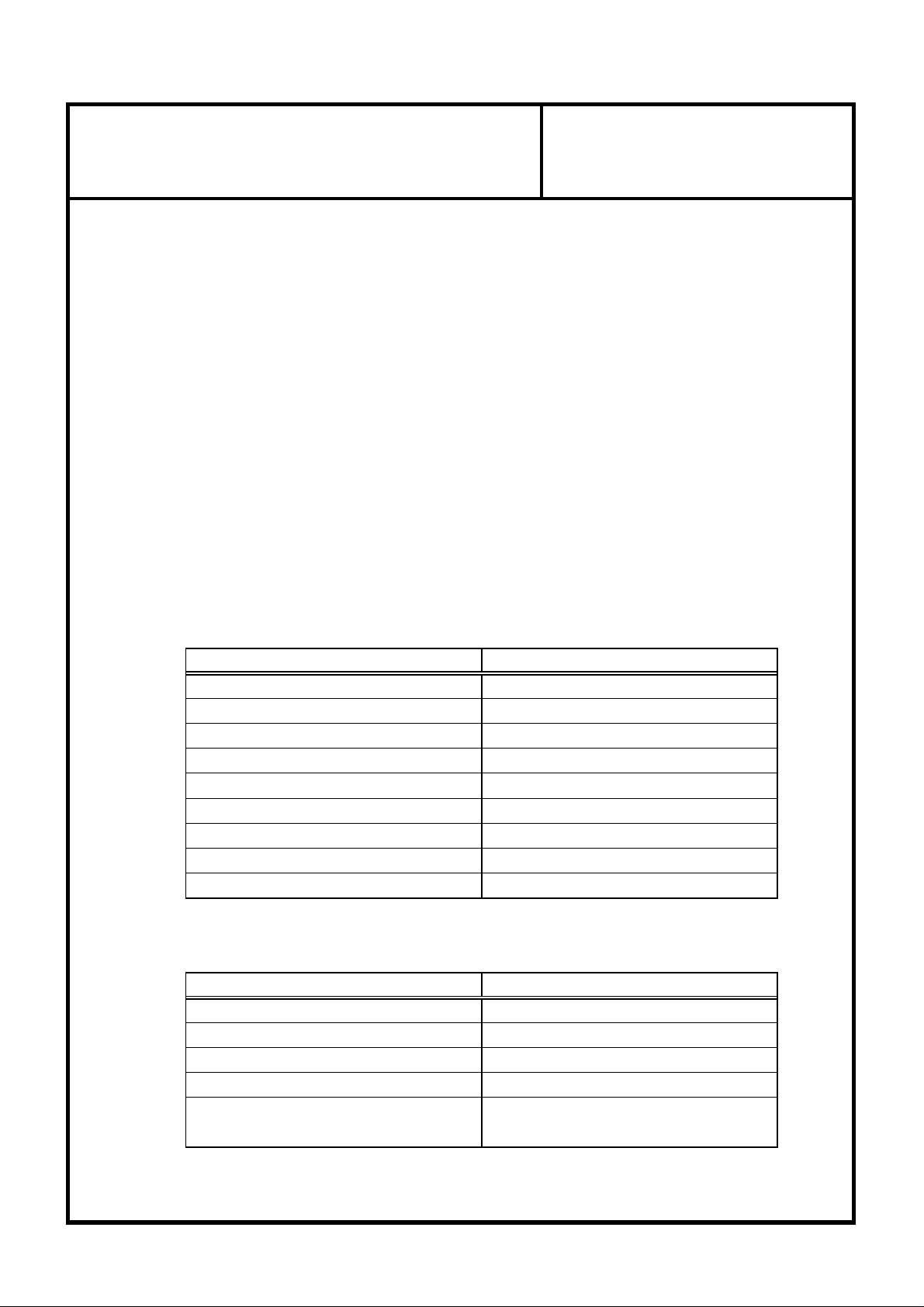
2.2 SPECIFICATIONS
2.2.1 Transmitter
2.2.2 RECEIVER
SHT/SHTS : 3/11
ITEM
SPECIFICATION
Rated supply voltage
DC 3V
Operating voltage range
DC 2.5 ~ 3.2V
Operating temperature range
- 10 ~ + 60℃ with Battery
Storage temperature range
- 40 ~ + 85℃ without Battery
Modulation
FSK
Frequency
433.92MHz
Code
Rolling Code(Hopping Algorithm)
Electric field strength
10mW (433.92MHz)
Battery life
2 Year(10Times/Day)(Lithium 3V 1EA)
Item
Specification
Rated Supply Voltage
DC 12V
Operating Voltage
DC 9 ~ 16V
Operating Temperature
- 30 ~ + 80℃
Max Humidity
95%
Standby Current
Below than 5.5mA
(in alarm setting condition)
Page 3

Title :
Information Document
NO.
Date
2.3 Operating summary
-RKE
① TRANSMITTER's button is pushed.
② TRANSMITTER sends the code by radio frequency.
③ RECEIVER gets the code and decodes it.
④ RECEIVER judges the code whether it is right code or not.
⑤ RECEIVER checks door lock or unlock, trunk
state. ⑥ RECEIVER drives the actuator.
2.3.1 LOCK & UNLOCK
① If LOCK or UNLOCK button is pushed for less than 1 sec,
then TRANSMITTER sends the LOCK or UNLOCK DATA.
② If TRUNK button is pushed for more than 1 sec,
then TRANSMITTER sends the TRUNK DATA.
③ If PANIC button is pushed for more than 1 sec,
thed TRANSMITTER sends the PANIC DATA.
2.4 Caution
SHT/SHTS : 4/11
② Replace only with the same or equivalent type recommended by the manufacturer.
③ Dispose of used batteries according to the manufacturer's instructions.
Page 4
Title :
Information D
ocument
N
O.
D
ate
3. USER MANUAL
3.1 ITEM : Body Control Module
- This system is BCM and inculdes RKE.
SHT/SHTS : 5/11
- RKE in BCM system is intended for auto door lock or unlock or TRUNK in vehicle.
- This BCM system is to be installde on motor vehicles as *OE item.
*OE : Original Equipment.
*BCM : Body Control Module
*RKE : Remote Keyless Entry.
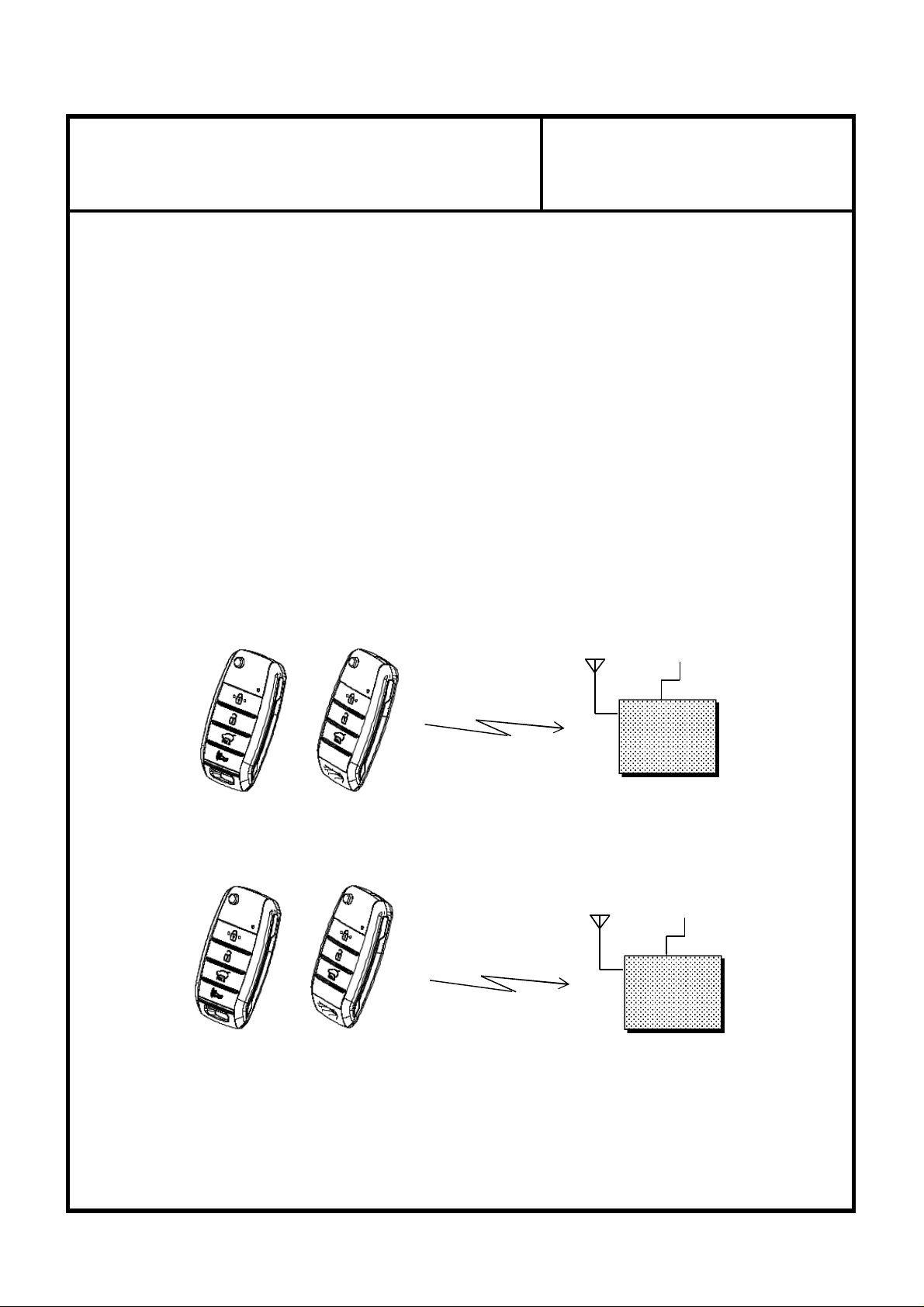
3.2 SYSTEM CONSTRUCTION
3.2.1 SYSTEM IN VEHICLE
ANTENNA
3.2.2 SYSTEM FOR TEST
Radio Frequency
(433.92MHz)
BCM
① if
press button on the transmitter, RF signal is transmitted and turns on the LED
* It shows the status of operation through the LED used.
BATTERY
ANTENNA
Radio Frequency
(433.92MHz)
BATTERY
BCM
Page 5

FCC Information
This device complies with part 15 of the FCC Results. Operation is subject to the
following two conditions :
(1) This Device may not cause harmful interface, and
(2) This device must accept any interference received, including interference that
may cause undesired operation.
Note: This equipment has been tested and found to comply with the limits for CLASS B digital
device, pursuant to Part 15 of FCC Rules. These limits are designed to provide reasonable
protection against harmful interference when the equipment is operated in a commercial
environment This equipment generates, uses and can radiate radio frequency energy and, if not
installed and used in accordance with the instructions, may cause harmful interference to radio
communications. However, there is no guarantee that interference will not occur in a particular
installation. If this equipment does cause harmful interference to radio or television reception,
which can be determined by turning the equipment off and on, the user is encouraged to try
correct the interference by one or more of the following measures:
1.1. Reorient or relocate the receiving antenna.
1.2. Increase the separation between the equipment and receiver.
1.3. Connect the equipment into an outlet on a circuit different from that to which receiver is
connected.
1.4. Consult the dealer or experienced radio/TV technician for help.
WARNING
Changes or modifications not expressly approved by the manufacturer could void the
user’s authority to operate the equipment.
“CAUTION : Exposure to Radio Frequency Radiation.
Antenna shall be mounted in such a manner to minimize the potential for human
contact during normal operation. The antenna should not be contacted during operation
to avoid the possibility of exceeding the FCC radio frequency exposure limit.
 Loading...