

Page 1
missing link
ml:mio
user manual
Page 2
delivery contents
technical data
welcome
Thank you for choosing the ml:mio.
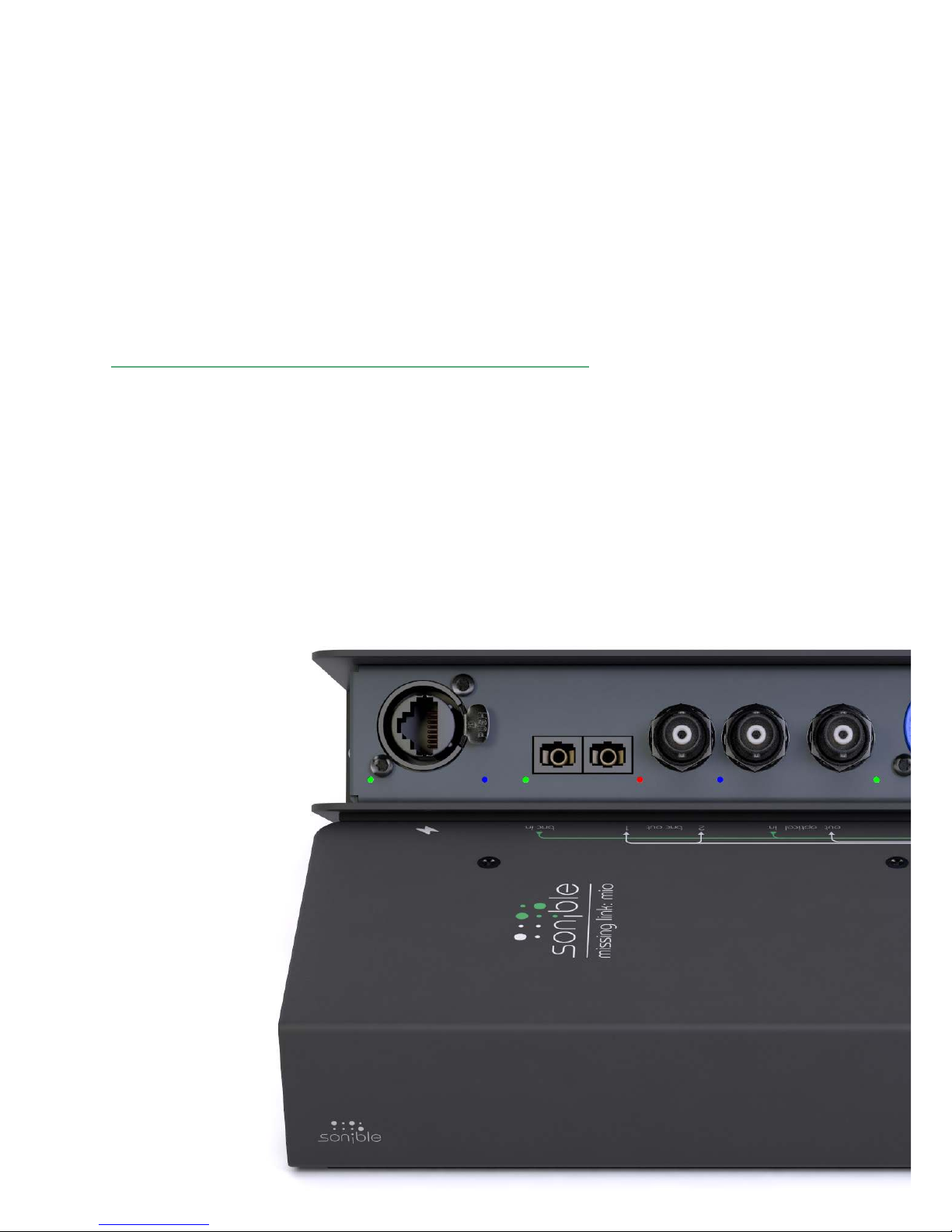
The ml:mio is a compact and robust MADI media converter, splitter and router. It allows for carefree and easy conversion between coaxial, optical SC and twisted pair MADI streams. The conversion is bit transparent and includes
control data, making the ml:mio compatible with every MADI format on the market.
1 ml:mio madi converter
1 Neutrik PowerCon to CEE 7/3 power supply
weight:
1kg
input voltage and frequency:
100 - 240 VAC
50-60 Hz
inputs:
1 twisted pair
1 optical SC (50/62.5µm)
1 coaxial BNC
outputs:
1 twisted pair
1 optical SC (50/62.5µm)
2 coaxial BNC
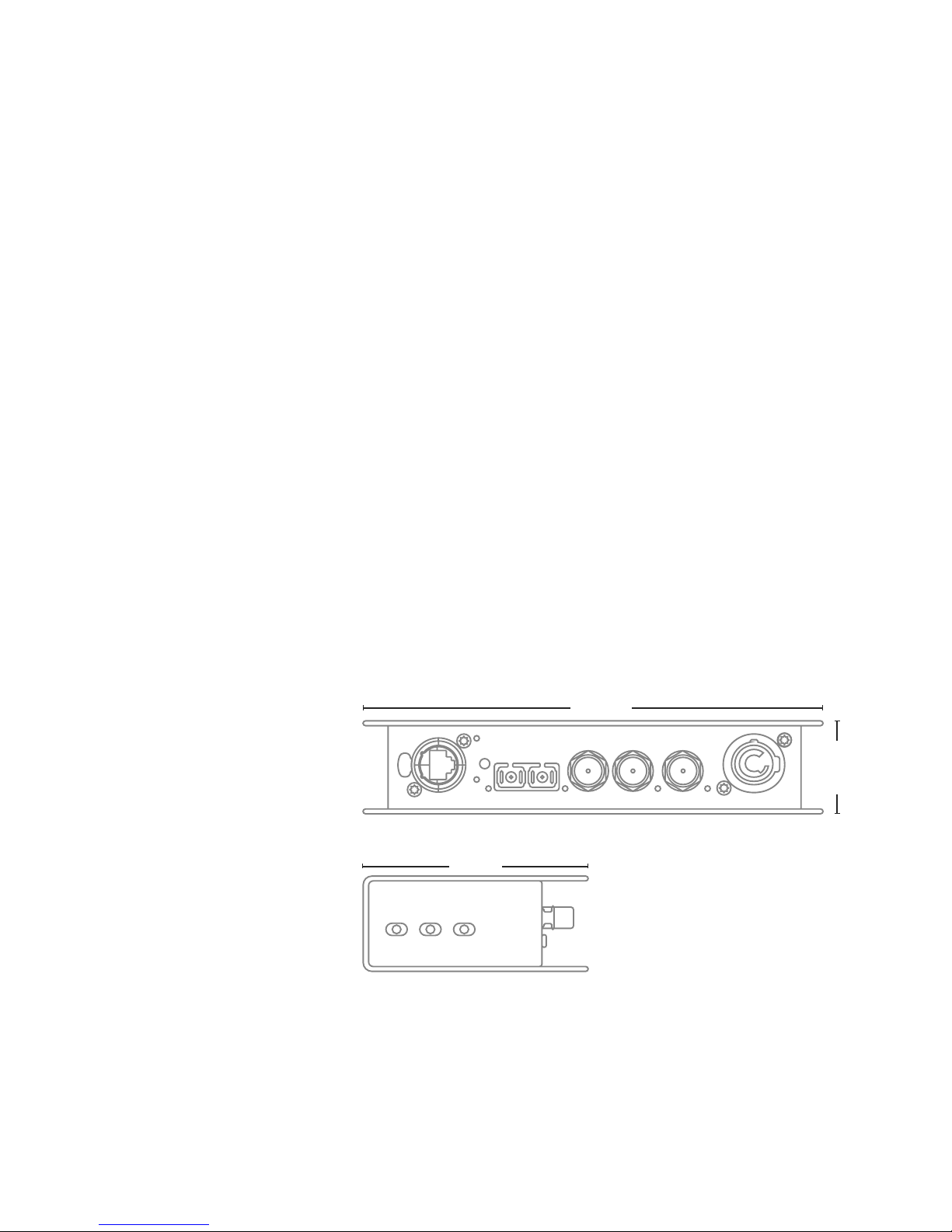
183 mm
94 mm
40 mm
Page 3
overview
1
1
2
2
3
3
4
4
5
5
6
6
7
7
8
8
9
9
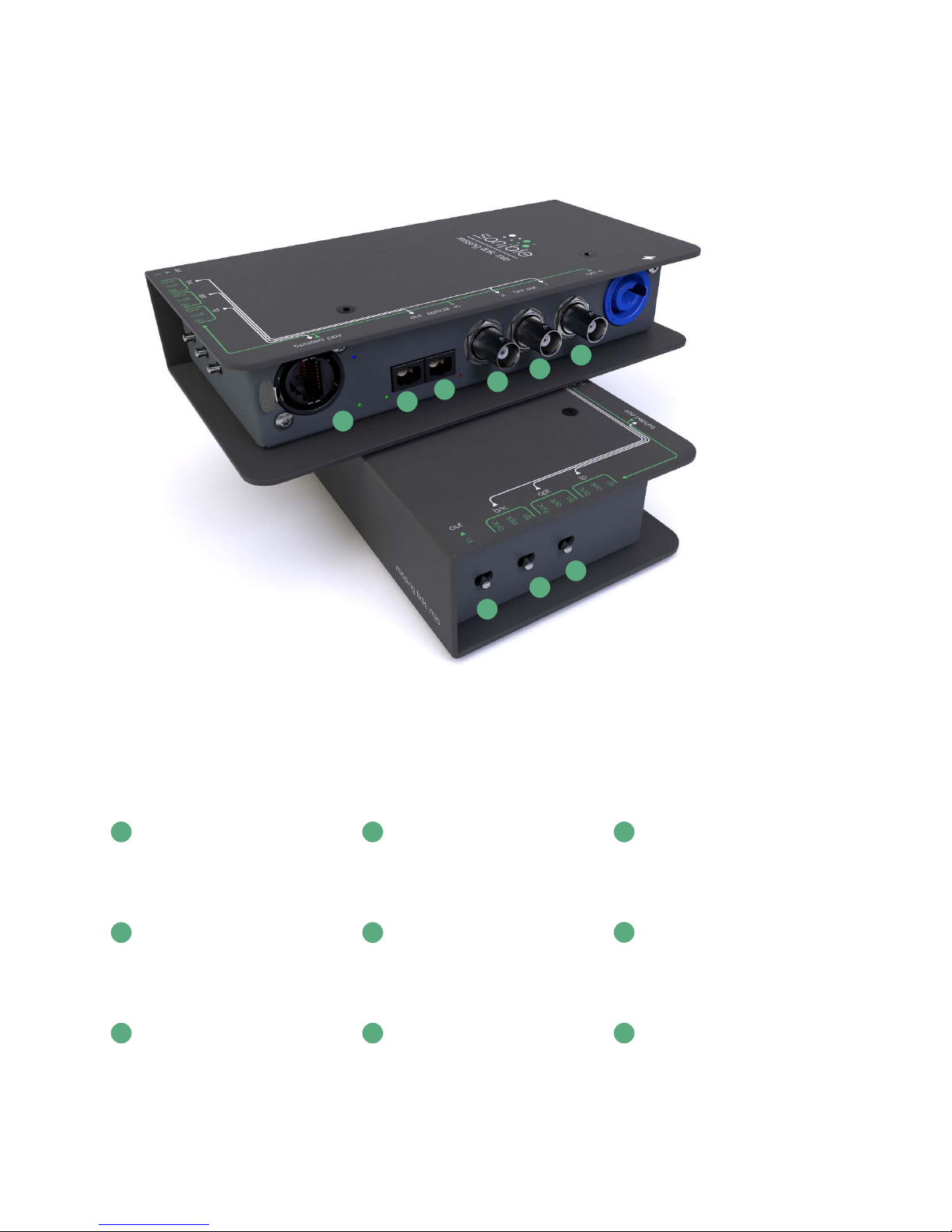
twisted pair
optical out
optical in
BNC out 1
BNC out 2
BNC in
source selector
for twisted pair out
source selector
for optical out
source selector
for BNC out
Page 4
using your ml:mio
the switches
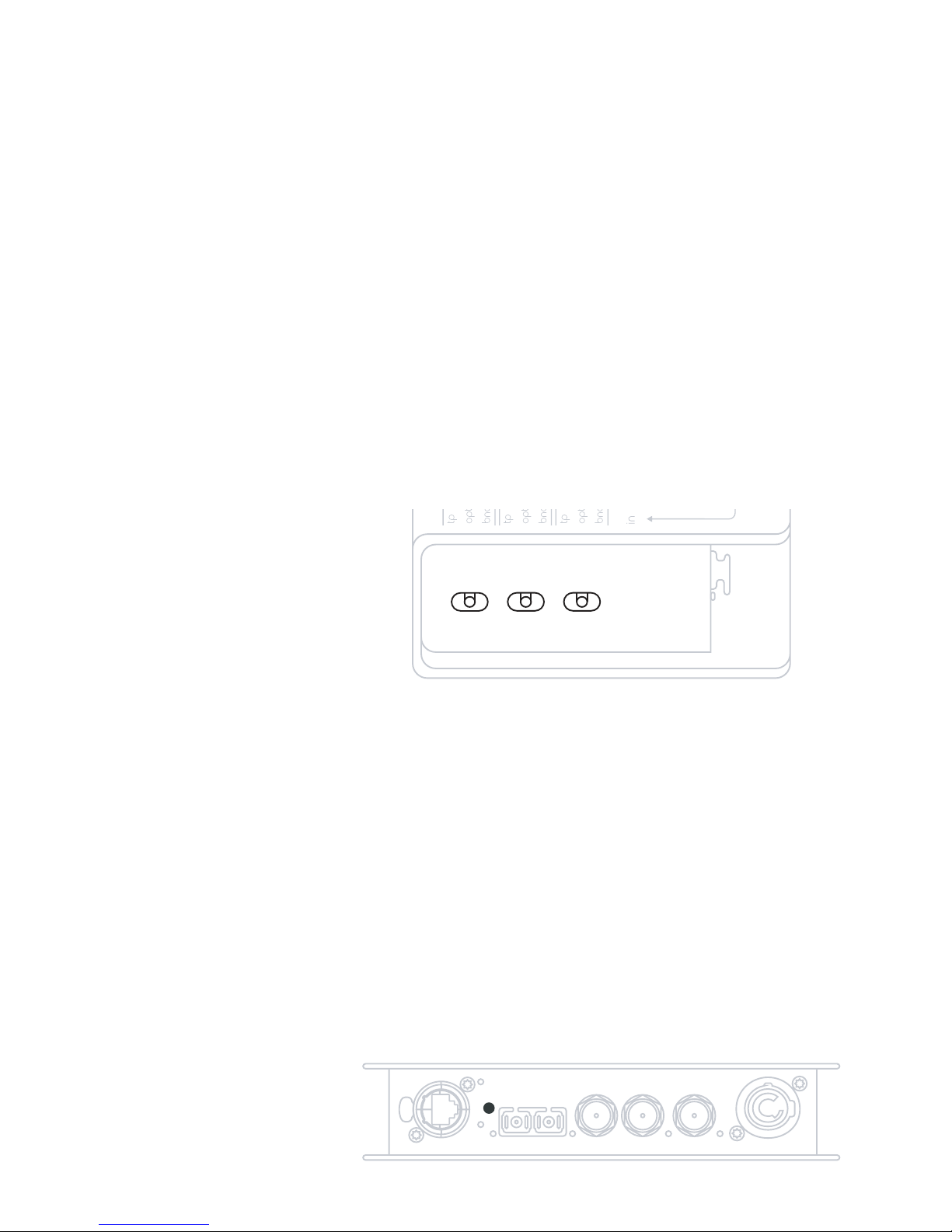
The ml:mio operates fully autonomously without any external control software. The routing is set by three built-in switches. Each input can be routed to as many outputs as required. The two BNC outputs always carry the same signal.
Select an input for a corresponding output with the ml:mio‘s three routing
switches. They are laid out in the same way the inputs are; the leftmost switch
controls the routing of the TP output, the middle switch controls the routing
of the optical output and the rightmost switch controls the routing of the BNC
output.
the RX/TX button
Using CAT cables, two MADI streams run through one cable using two of
the four twisted pairs available. As the two streams always run in different
directions there are two possible pinouts for the RX/TX pairs. The ml:mio
offers RX/TX pair swapping to adopt to the two possible configurations, that
means the sending and the receiving twisted pair may be changed with just
a simple button press.
You can activate the swapping feature by pressing the grey RX/TX button.
The blue input status LED will always inform you about the current condition
of the RJ-45 input, so in case the RJ-45 link does not behave as expected
out of the box, swapping the RX and the TX pair may give you the desired
result. Right after pressing the RX/TX button the RJ-45 output LED will light
up in white once or twice, depending on the condition of the RX/TX swapping
feature. After about a second it will return to its normal operation showing the
routing and condition of the RJ-45 output.
The ml:mio will of course remember the last RX/TX pairing in case of power
loss.
Page 5
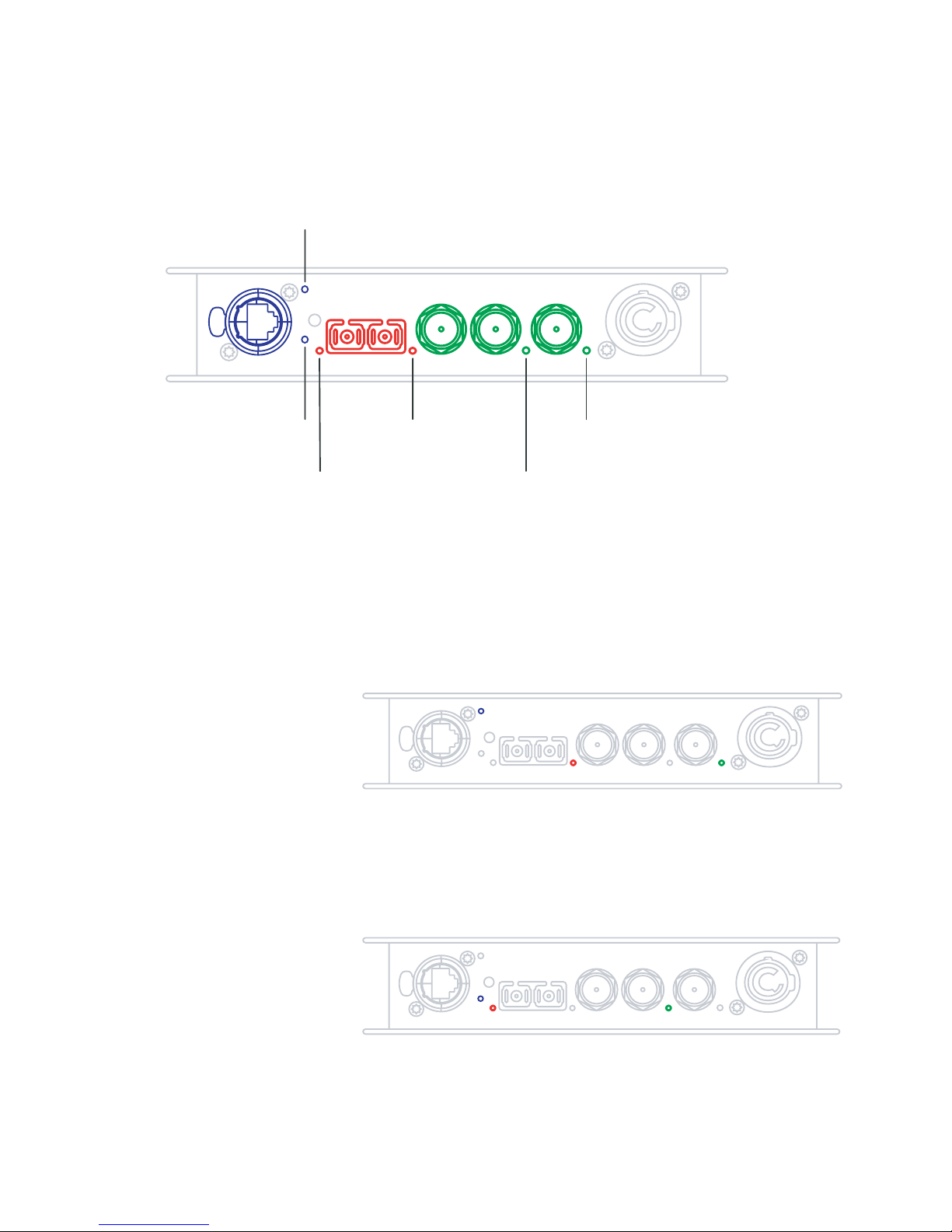
control LEDs
the routing LEDs
Depending on the routing of the corresponding output these LEDs light up in
one of three colors. Green indicates BNC output, blue TP and red SC.
the input LEDs
The input LEDs indicate the state of the input:
• If the LED is glowing constantly, a valid carrier has been detected within
the MADI stream.
• If it‘s off there‘s either no valid carrier or no cable plugged into the
corrresponding input.
• If the device detects the loss of a valid carrier, the LED will flash for a short
period of time before turning off.
input LED
TP
routing LED
TP
input LED
optical
routing LED
optical
input LED
coaxial
routing LED
coaxial
Page 6
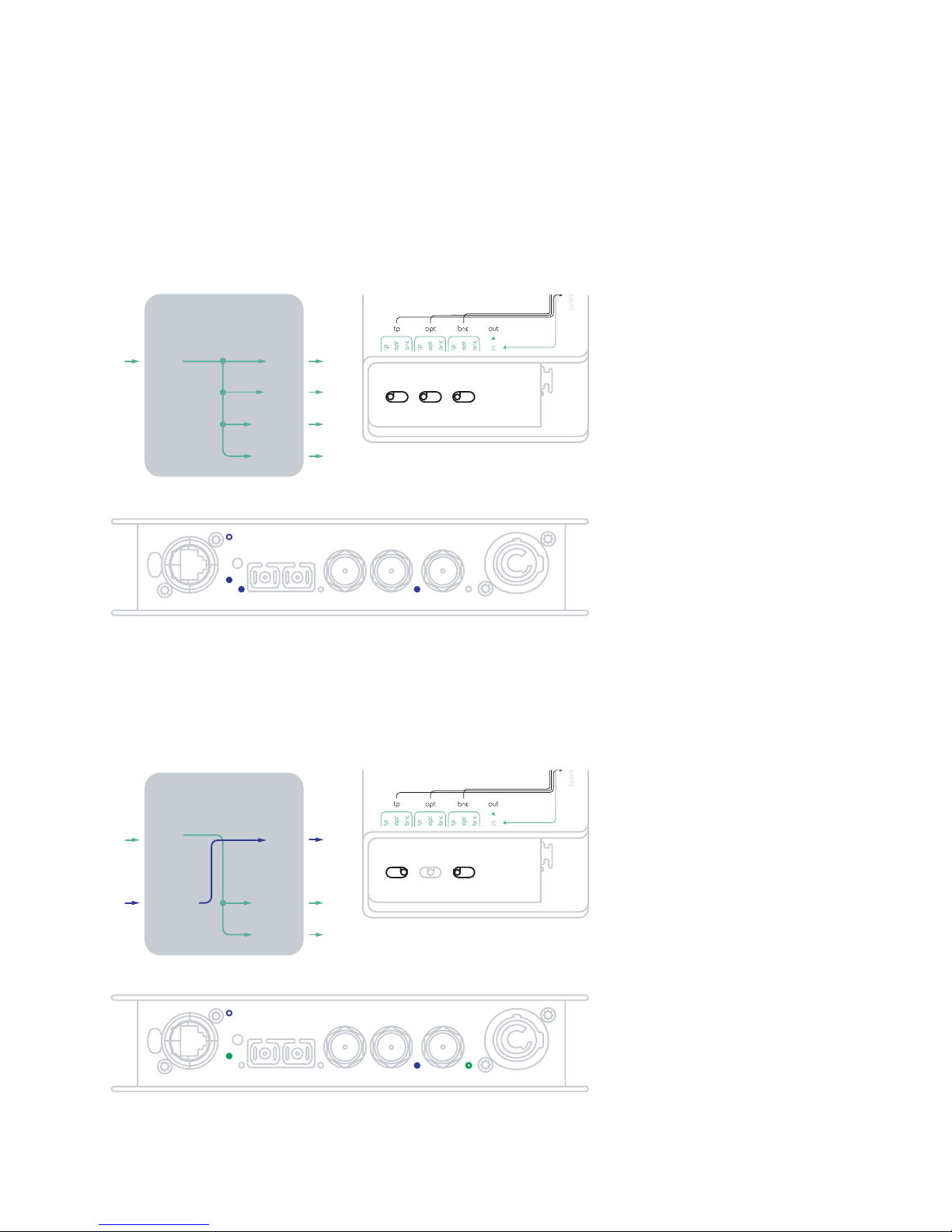
The TP signal is being routed to all
outputs.
Every routing LED shines blue, every
switch is set to TP.
The TP input LED shines blue.
TP is converted to BNC, BNC is
converted to TP .
The BNC output LED shines blue,
the TP output LED shines green.
The input LEDs of the BNC and TP
output shine green and blue respectively.
example 1: TP to all outputs
example 2: TP to BNC, BNC to TP
mio
TP
SC
BNC
TP
SC
BNC
BNC
mio
TP
SC
BNC
TP
SC
BNC
BNC
use cases
Page 7
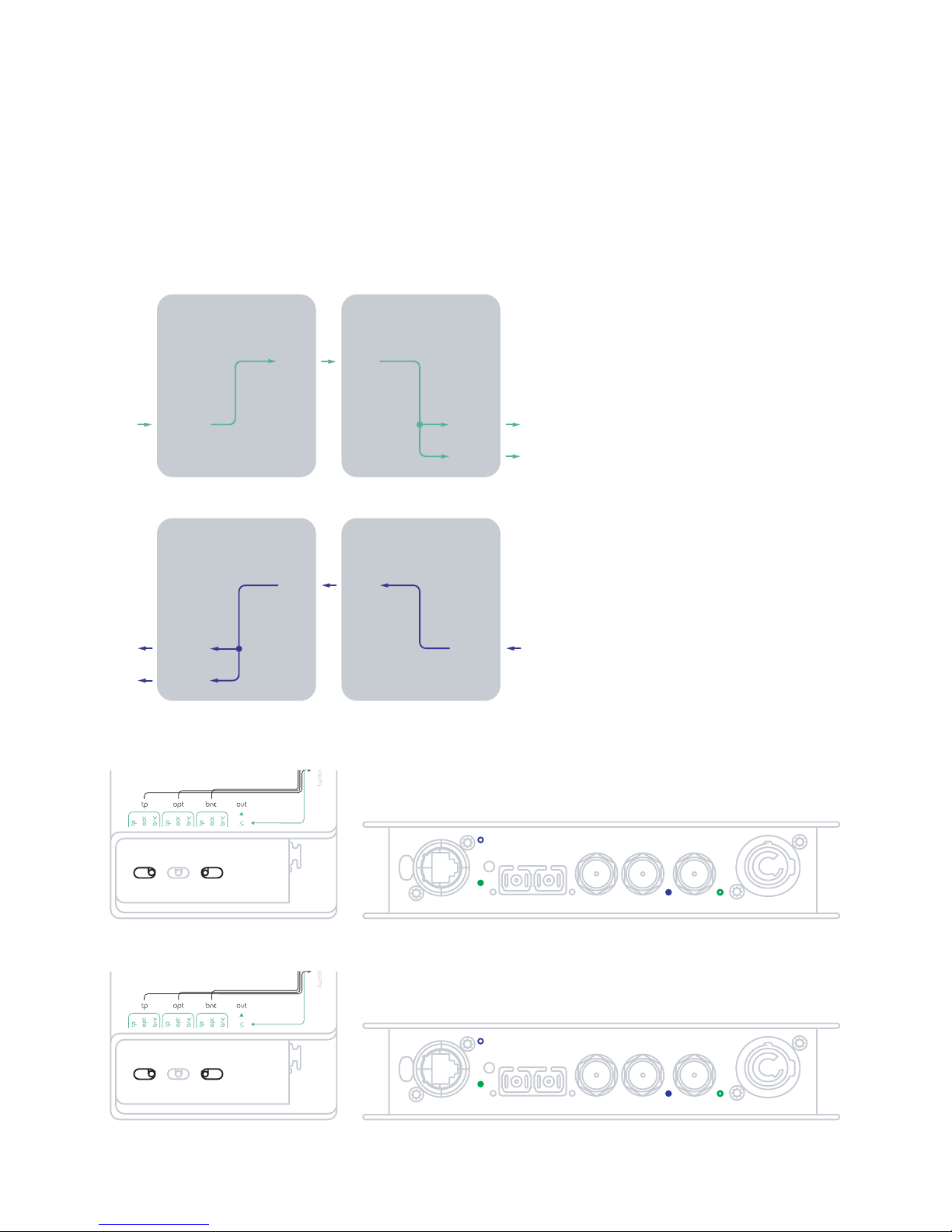
An existing CAT network can be
found at many venues. You can set
up a bidirectional BNC to BNC link
utilizing these networks with two
ml:mio.
The configuration of both converters is identical to example 2.
mio 1
mio 2
example 3: bidirectional connection with two ml:mio
mio 1
TP
SC
BNC
TP
SC
BNC
BNC
mio 2
TP
SC
BNC
TP
SC
BNC
BNC
mio 1
TP
SC
BNC
BNC
TP
SC
BNC
mio 2
TP
SC
BNC
BNC
TP
SC
BNC
Page 8
CE Declaration
of Conformity
RoHS
WEEE / Note on
Disposal
warranty
The product ml:mio by sonible was tested by an independent test laboratory
and found to comply with the limits of the European Council Directive on
the approximation of the laws of the member states relating to the following
standards.
This device has been soldered lead free and all of its internal
components comply to the european RoHS directive.
Following the European directive RL2002/96/EG (WEEE – Directive on Waste
Electrical and Electronic Equipment) this product has to be recycled at the
end of its lifetime. Never dispose this product in an inadequate manner, e.g.
general trash, but use appropriate collection stations for electronic waste.
In case where no appropriate disposal is possible, you may also return this
device in a prepaid shipment to sonible.
sonible‘s manufacturer warranty covers all substantial defects in materials
and workmanship for a period of 24 months from the date of purchase. Liabilty claims can only be accepted if a proof of purchase is presented. This
warranty is only valid for D/A/CH/B/NL/L.
In a warranty case please contact sonible through one of the outlets presented below.
Access to the individual test report will be granted on request.
EN 61000-6-3:2007/A1:2011 Radiated RF emission test
EN 61000-6-1:2007 Immunity against radiated RF disturbances
EN 61000-6-1:2007 Immunity against electrostatic discharges (ESD)
EN 2006/95/EG Low Voltage
WARNING: To reduce the risk of fire or electrical shock, do
not expose this application to rain or moisture.
AVIS: Risqué De Choc Electrique – Ne Pas Ouvrir
CAUTION: To reduce the risk of electrical shock, grounding
of the centre pin of this plug must be maintained.
sonible GmbH
Brockmanngasse 6/14
8010 Graz
Austria
+43 316 912288
[email protected]
www.sonible.com
 Loading...