

Page 1

MU-53HN / MU-55HN / MU-101
MU-53HNP / MU-101P
Headworn Microphone
User Guide
Page 2
2 CE 3 7 5 B
Disposal
Dispose of any unusable devices or batteries
responsibly and in accordance with any applicable
regulations.
Disposing of used batteries with domestic waste
2005 -08 -132005 -08 -13
is to be avoided!
Batteries / NiCad cells often contain heavy metals
such as cadmium(Cd), mercury(Hg) and lead(Pb) that
makes them unsuitable for disposal with domestic
waste. You may return spent batteries/ accumulators
free of charge to recycling centres or anywhere else
batteries/accumulators are sold.
By doing so, you contribute to the conservation of our
environment!
MI P RO Elec t r onics C o ., Ltd.
Headquarters: 814 Pei-Kang Road, Chiayi, 60096, Taiwan.
Web: www.mipro.com.tw
E-mail: [email protected]
Design and specifications are subject to change without prior notice
AS111115
Page 3

Headworn Microphone
FEATURES:
1. Rotated the earhook inward for easy storage.
2. Easy to change to different capsule modules.
3. Steel tube holder allows user to rotate capsule at one's
wish to ensure perfect fit between capsule and user's
head.
4. Capsule can be adjusted to its best position and angle
at one's wish.
5. Steel tube with microphone cable can be installed on
the steel tube holder at either side. This will satisfy all
different users.
FURNISHED ACCESSORIES:
Carrying Storage Bag ×1 (optional)
!
Capsule Windscreen ×1 (optional)
!
!
×1User Guide
1
Page 4
Headworn Microphone
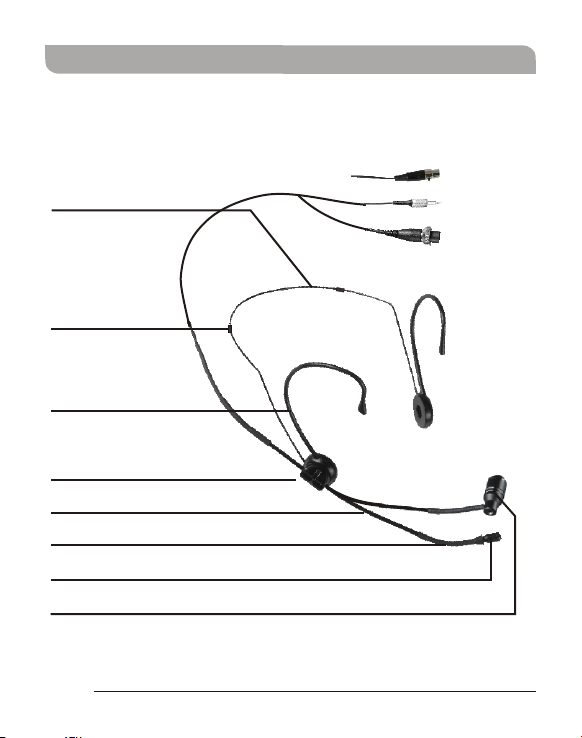
Adjustment features and connectors styles:
MU-53HN/MU-55HN
Main Frame For
Headworn Microphone
Cable Holder
Earhook
Steel Tube Holder
Steel Tube With Mic. Cable
Adjustable Steel Tube
Capsule (MU-55HN)
Capsule (MU-53HN)
2
TA4F Jack
Phone Jack
XLR Jack
Page 5
Headworn Microphone
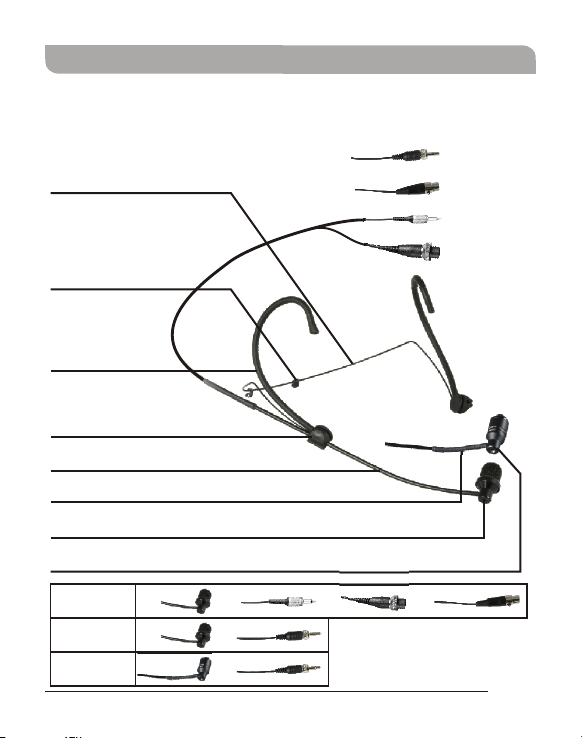
Adjustment features and connectors styles:
MU-101/MU-101P/MU-53HNP
Main Frame For
Headworn Microphone
Cable Holder
Earhook
Steel Tube Holder
Steel Tube With Mic. Cable
Adjustable Steel Tube (MU-53HNP)
Capsule (MU-101)
Capsule (MU-53HNP)
MU-101P
MU-53HNP
Phone Jack
TA4F Jack
Phone Jack
XLR Jack
MU-101
MU-101P
MU-53HNP
+
or or
+
+
3
Page 6
Headworn Microphone
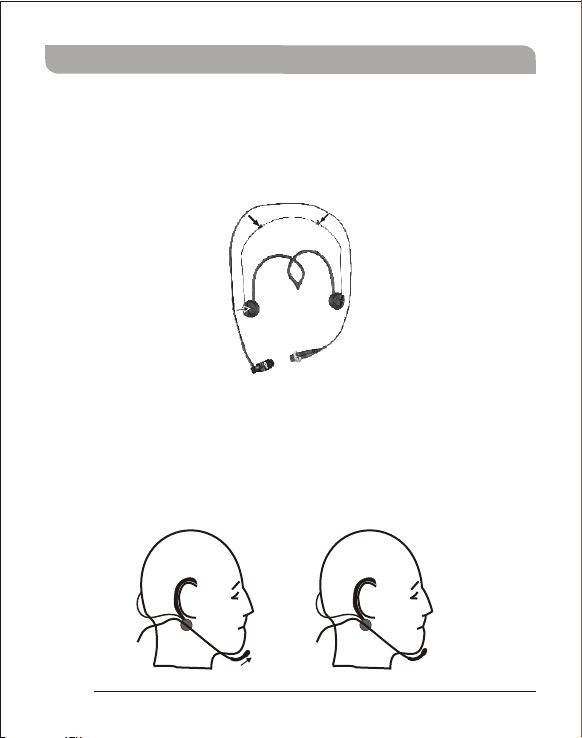
How to Assemble Your Headworn Microphone?
After installing the steel tube with microphone cable
onto steel tube holder , fix the microphone wire in cable
holder on the main frame . As shown in (Figure 1)
(Figure 1)
How to Adjust Your Headworn Microphone?
(MU-53HN/MU-55HN/MU-53HNP)
After put on the headworn microphone as shown below,
user can use adjustable steel tube to adjust the gap
between capsule and user's mouth if the gap is too large.
4
(Figure 2)
Page 7

Headworn Microphone
Specification:
MU -53HN /MU-5 3 HNP
> Transducer type: Electret condenser microphone
capsule
> Frequency Response: 50 Hz to 18KHz
> Directional Characteristic: Cardioid
> Sensitivity: -46dB ±3dB at 1KHz ( 0dB = 1V/Pa)
> Operating Voltage: 1.1 ~ 9V
> Weight: 30g
> Dimensions: 11 ×26.5mm
> Connector option: 3.5mm mono phone jack plug / Mini
XLR connector / TA4F / 3.5mm screw-lock plug
> Accessories: windscreen
MU -55HN
> Transducer type: Electret condenser microphone
capsule
> Frequency Response: 50 Hz to 20KHz
> Directional Characteristic: Omnidirectional
> Sensitivity: -49dB ±3dB at 1KHz ( 0dB = 1V/Pa)
> Operating Voltage: 1.1 ~ 9V
> Weight: 25g
> Dimensions: 5×13mm
> Connector option: 3.5mm mono phone jack plug / Mini
XLR connector / TA4F
> Accessories: windscreen
∮
∮
5
Page 8
Headworn Microphone
MU -101/ MU-10 1 P
> Transducer type: Electret condenser microphone
capsule
> Frequency Response: 50Hz to 18KHz
> Directional Characteristic: Cardioid
> Sensitivity: -49dB ±3dB at 1KHz ( 0dB = 1V/Pa)
> Operating Voltage: 1.1 ~ 9V
> Weight: 24g
> Dimensions: 11 ×26.5mm
> Connector option: 3.5mm mono phone jack plug / Mini
XLR connector / TA4F /3.5mm screw-lock plug
> Accessories: windscreen
∮
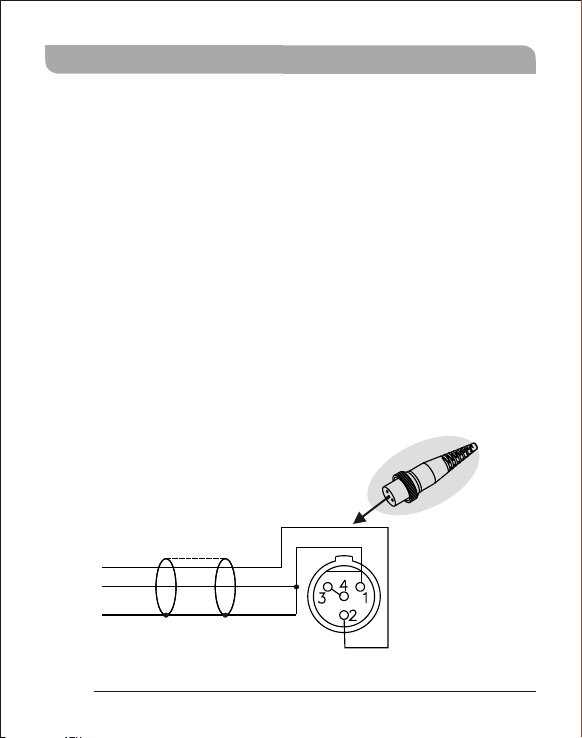
Circuit Diagram:
Red
White
Shield(GND)
1.Ground 2.Audio 3.4.Short
6
Page 9
Headworn Microphone
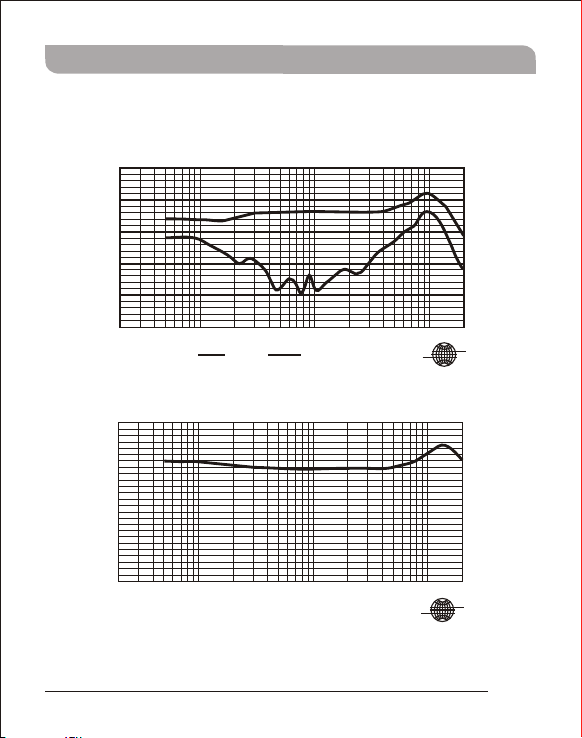
Frequency Response Diagram:
MU-53HN/MU-53HNP
A: Frequency Response, Magn dB re 1.000Pa/V
-40
-50
-60
dBV/ Pa
-70
-80
-90
-20
Mode : SSR
200
0 Deg 180 D eg
2K 20K
B
K
MU-55HN
-40
-50
-60
dBV/ Pa
-70
-80
-90
-20
A: Frequency Response, Magn dB re 1.000Pa/V
200
Mode : SSR
2K 20K
B
K
7
Page 10
Headworn Microphone
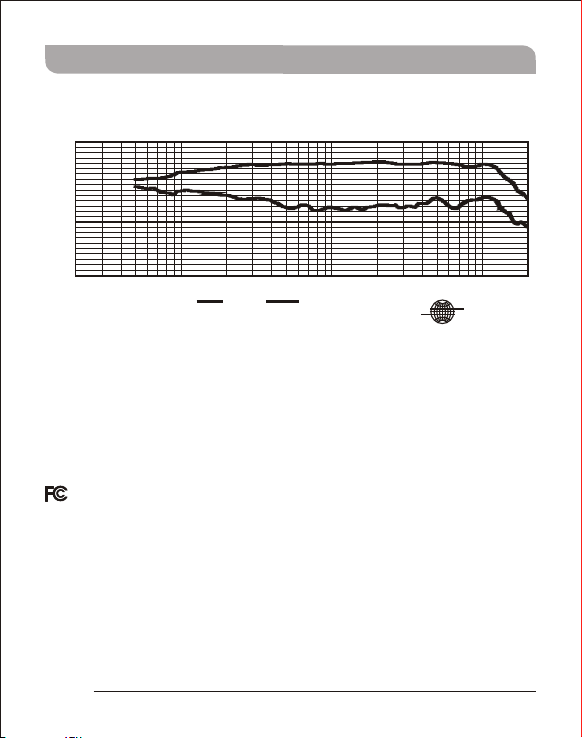
MU-101/MU-101P
A: Frequency Response, Magn dB re 1.000Pa/V
-40
-50
-60
dBV/ Pa
-70
-80
-90
-20
Mode : SSR
200
0 Deg 180 D eg
2K 20K
B
K
& IC - ID
THIS DEVICE COMPLIES WITH PART 74 OF THE FCC RULES AND RSS-123
ISSUE 2 OF CANADA. OPERATION IS SUBJECT TO THE FOLLOWING TWO
CONDITIONS:
(1) This device may not cause interference.
(2) This device must accept any interference, including interference that may
cause undesired operation of the device. This equipment complies with FCC
RF radiation exposure limits set forth for an uncontrolled environment.
8
 Loading...