

Page 1

1
University of Wisconsin Green Bay
University of Wisconsin Oshkosh
Collaborative MSW Program
GRADUATE
STUDENT HANDBOOK
ACADEMIC YEAR
2011-2012
(Revised May 2011)
Bringing innovative social work leadership
education to Northeast Wisconsin
Page 2

2
TABLE OF CONTENTS
I. INTRODUCTION ..........................................................................................................4
Intended Audience ...............................................................................................................4
Persons to Contact for Essential Program Information........................................................4
Handbook Content ...............................................................................................................5
II. COLLABORATIVE MSW PROGRAM OVERVIEW ............................................6
Program History ...................................................................................................................6
Program Mission ..................................................................................................................6
Program Goals .....................................................................................................................8
Program Competencies (Student Outcome Objectives) ......................................................8
Foundation Year Competencies (Student Outcome Objectives) .........................................9
Advanced Year Competencies (Student Outcome Objectives) .........................................10
III. PROGRAM CURRICULUM...................................................................................13
Foundation Curriculum ......................................................................................................14
Advanced Curriculum ........................................................................................................15
Applied Research Components of the Curriculum ............................................................17
Field Research Project .......................................................................................................17
Development and Implementation of the Field Research Project .....................................17
Personnel for the Field Research Project ...........................................................................19
Advanced HBSE and Elective Courses .............................................................................19
Independent Study .............................................................................................................21
Preparation for the LCSW .................................................................................................22
IV. THE COUNCIL ON SOCIAL WORK EDUCATION AND ACCREDITATION23
V. PROGRAM STRUCTURE ........................................................................................24
Program Committees ........................................................................................................24
MSW Student Organization ..............................................................................................25
Program Faculty ................................................................................................................25
VI. PROGRAM POLICIES AND PROCEDURES ......................................................27
A. Admissions: Policies, Procedures and Standards .........................................................27
Admissions Criteria ...............................................................................................27
Admissions Process ...............................................................................................28
Credit for Life Experience or Work .......................................................................29
English as a Second Language ...............................................................................29
Page 3

3
Early Withdrawal from the MSW Program ...........................................................29
Reinstatement of Students who Withdraw from the Program ...............................30
Transfer Credits .....................................................................................................30
B. Program Standards and Expectations ............................................................................31
Academic Integrity.................................................................................................31
Advising Policy and Procedures ............................................................................32
Attendance and Participation .................................................................................33
Confidentiality .......................................................................................................33
Distance Education ................................................................................................33
Grades ....................................................................................................................34
NASW Code of Ethics ...........................................................................................34
C. Student Services and Equitable Treatment ...................................................................35
Faculty-Student Grievances ...................................................................................35
Non-Discrimination ...............................................................................................35
Sexual Harassment .................................................................................................35
Social Work Certification ......................................................................................36
Students with Disabilities ......................................................................................36
D. Insufficient Performance in the Program: Criteria and Procedures .............................37
Academic Performance Concerns: Academic Integrity .........................................37
Academic Performance Concerns: Insufficient Grades .........................................37
Academic Performance Concerns: Professionalism and Personal Performance ...38
Academic Status Review Committee .....................................................................39
Grade Appeal Policy ..............................................................................................41
VII. APPENDIX ...............................................................................................................43
Student Portfolio in Preparation for Becoming a Licensed Clinical Social Worker ........43
Page 4

4
I. INTRODUCTION
Intended Audience
The intent of this handbook is to provide information about the UW-Green Bay and UWOshkosh Collaborative MSW Program for use by students, faculty and agency affiliates. The
PDF format available on the MSW Web-page will most likely reach a larger audience of persons
who have an interest in knowing more about how this particular collaborative program operates.
The PDF version of the Handbook is designed to ensure easy on-screen access to program
information. Its content is linked by hypertext to the Collaborative MSW Home Page and
subsequent pages by links which appear in blue underlined hypertext. The Collaborative MSW
Program Coordinator has primary responsibility for the maintenance of the MSW Collaborative
Program’s Web pages. Its portal page is located at:
http://www.uwgb.edu/socwork/BSWHome.htm
The Collaborative MSW Program may also be accessed from its University of Wisconsin-
Oshkosh Social Work Department link at:
http://www.uwosh.edu/socialwork/msw
Persons to Contact for Essential Program Information
Collaborative MSW Program Coordinator: Dr. Judy Martin.
Phone: 920-465-2346
Email: [email protected]
Program Assistant: Jeanne Berg
Phone: 920-465-2679
Email: [email protected]
The MSW Collaborative Program’s mail address is:
Collaborative MSW Program
University of Wisconsin Green Bay
CL 710
2420 Nicolet Drive
Green Bay, WI 54311-7001
Page 5

5
Handbook Content
This handbook includes:
a) A program overview that describes the Program’s formative development, its faculty and
those structures that facilitate student and agency participation;
b) A brief description of the Program’s curriculum themes, mission, goals, and its objectives
that have been stated as practice competencies at both foundation and advanced levels;
c) A presentation of the curriculum in its entirety, including the foundation and advanced
levels as well as the two concentrations in Advanced Direct Practice and Administration
and Management;
d) A description of the role played by the Council on Social Work Education in
accreditation;
e) A listing of policies and procedures pertaining to the program.
The appendix includes information about preparing for the Licensed Clinical Social Worker
Credential (LCSW).
Page 6

6
1
1
II. COLLABORATIVE MSW PROGRAM OVERVIEW
Program History
Formal planning for the Collaborative MSW Program was initiated in the fall, 1999 through a
series of joint meetings between the UW Green Bay and Oshkosh Social Work Faculty and their
administrators. These meetings culminated with the submission of an application one year later
to the University of Wisconsin System for joint entitlement to plan a collaborative graduate
program. The UW System granted initial approval to begin planning in Spring, 2001.
The two social work faculties from Green Bay and Oshkosh then met regularly together with
their advisory group members to plan how the new program was to be implemented, including
structural arrangement and curricular options to be derived from formal needs assessment. In
August 2001, at a large invitational gathering of administrators, community agency
representatives and faculty members, there was unanimous agreement to formally request
authorization from the UW System to implement a graduate MSW program and to apply for
Council on Social Work Education (CSWE) accreditation.
The preparation process was parallel because documents required by the UW System and by
CSWE were remarkably similar. The UW System authorization request was approved by the
UW Board of Regents on October 11, 2002. The application for candidacy was approved by the
CSWE Commission on Accreditation in July, 2003. The Program has had three successive
accreditation visits and in 2006 received initial accreditation through June 2010.
Program implementation was initiated in fall, 2003 with the enrollment of the first cohort of
students. The faculties are proud of the efforts to add a graduate social work degree program in
this region—an event anticipated for several decades has become a reality. Note that this
graduate program is independent of the respective BSW programs uniquely operated by each
University and possessing their own field education policies and practices.
Program Mission
As a result of extensive faculty planning, market research studies, and feedback from consultant
outside reviewers, the Program’s mission was developed. This mission statement embodies six
major program themes, which permeate content in the advanced concentrations in (1) advanced
direct practice and (2) administration and management. This mission reflects the unique needs
of social work practitioners and clients in the region, the broad mission of the social work
profession, and the academic standards for graduate education established by CSWE.
Development of the program’s mission was also strongly influenced by the UW System Cluster
Core Mission with respect to inter-institutional collaboration as an effective means for sharing of
resources and educational outreach. It was further influenced by CSWE support for
collaborative education.1
CSWE (1999) ―Myths and Opportunities, The Impact of Discipline-Specific Accreditation on Inter-professional
Education (46-52).
Page 7

7
The University of Wisconsin-Green Bay and the University of Wisconsin-Oshkosh have
established a Collaborative MSW Program that prepares social workers for advanced practice as
facilitators, partners and leaders in planned change activities with service users and community
service providers. The program’s goal is to educate professionals ready to assume administrative
and direct practice leadership roles within this region’s increasingly diverse and transforming
rural and metropolitan environments. The mission statement of the Collaborative MSW Program
is stated as follows:
The advanced professional Master of Social Work degree is a joint effort by the University of
Wisconsin-Green Bay and Oshkosh to prepare social workers for advanced practice as
facilitators, partners and leaders in planned change activities with service users and community
service providers in the region. The program’s goal is to educate professionals ready to assume
administrative and direct practice leadership roles within this region’s increasingly diverse and
transforming rural environments. It aims to prepare practitioners who can work to strengthen
families through programs, services, and policies supportive of family and community well
being, with special emphasis on family needs in rural and tribal settings. Concomitantly, the
program aims to promote interdisciplinary learning and coordinated inter-professional practice to
actively address social issues. Additional emphasis is placed on professional acceptance of
responsibility to participate in civic life and to provide leadership in the community and to
encourage the inclusion and representation of Native Americans and members of other cultures
and diverse groups in the region. Finally, the advanced program strives to address adult learner
expectations for ease of access and user-friendly content delivery.
Embedded in this mission statement are six program themes:
•Public Sector Practice—improving the quality of life of people and communities served by
publicly funded agencies (including private sector programs receiving public funds) and
encouraging democratic participation in community decision making in order to influence
quality of life concerns.
•Leadership Roles—assuming leadership roles in direct practice, administration and policy
development in order to strengthen communities, organizations, and families.
•Family Focus—enhancing family functioning, improving community and agencies supports for
families, and enhancing the quality of life for families within the region.
•Diversity—promoting advocacy and interventions to enhance the well being of vulnerable and
oppressed people within the region.
•Rural Emphasis—reflecting the inclusion of the unique needs and circumstances of rural
people, agencies, and communities in the region.
Page 8

8
•Interdisciplinary Cooperation—encouraging active involvement with other academic units
and professional disciplines in order to address quality of life concerns.
All course work throughout the program is built on and infused with these themes.
Program Goals
The mission and themes suggest seven goals of the Collaborative MSW Program. The Program
is designed to:
1. Prepare advanced degree social workers to assume administrative leadership and direct
practice leadership roles in public and tribal sector practice within an increasingly diverse
and transforming rural environment.
2. Promote and provide regional professional development activities that support advanced
practice learning, including commensurate use of Internet and distance education modes
of course delivery.
3. Through research, evaluation of practice and program evaluation, contribute to the
development of professional knowledge aimed toward the strengthening of family
functioning and the enhancement of community and agency supports for users of social
work services.
4. Undertake activities inside and outside the classroom that will contribute to the
development and improvement of social policy at local, regional, state, and national
levels as it pertains to families or other users of public, tribal, and other culturally
relevant social services.
5. Develop and utilize collaborative partnerships with other academic units and degree
programs in the UW System or elsewhere and with other organizational entities in the
Northeastern region.
6. Provide active leadership in the social work profession and engage in public service
activities within the Northeast region, actively encouraging democratic community
decision-making in order to favorably influence quality of life concerns.
7. Through teaching, research, evaluation, policy development and advocacy activities
inside and outside the classroom, actively confront oppression in the community,
especially as it affects individuals and families using public social services.
Program Competencies (Student Outcome Objectives)
The Collaborative MSW Program is a competency-based program and as such, the competencies
serve as educational outcomes in the preparation of master’s prepared social workers. While
competencies or student outcomes relate to the goals of the Collaborative MSW Program, there
Page 9

9
are two distinct sets of competencies – those for students in the foundation year and those for
students in the advanced year. While curriculum development efforts were undertaken with
these competencies in mind, students also embrace the competencies in their assessment of
learning needs and subsequent goal setting for the field. Individual courses in the Program are
designed to help students develop skills in each of the fourteen competency areas.
Foundation and advanced competencies (fourteen each) are written in a general way, which
allow students to tailor their concentration (either direct practice or administration and
management) and their special interests (child welfare, mental health, criminal justice,
gerontology, etc.) to their field experiences. The foundation and advanced year competencies are
listed below. These competencies reflect ―end points‖ or outcomes students are expected to
achieve by the time they graduate from the program. Foundation year competencies indicate
steps toward achievement of these outcomes, levels at which MSW students should be
performing by the time they complete the foundation curriculum.
Foundation Year Competencies (Student Outcome Objectives)
• MSW Foundation 1: Link interdisciplinary knowledge, including that developed in prior
practice, to emerging assessment, intervention and evaluation skills.
• MSW Foundation 2: Recognize and utilize social work values, understanding their
implications for generalist practice.
• MSW Foundation 3: Carry out assessment, planning and intervention activities that reflect
generalist social work practice principles and approaches.
• MSW Foundation 4: Seek out and evaluate ―best practice‖ models in generalist social work
practice.
• MSW Foundation 5: Develop and strengthen relationship and enabling skills in generalist
practice contexts.
• MSW Foundation 6: Recognize resource gaps and participate in activities designed to redress
these gaps.
• MSW Foundation 7: Create alliances and collaborations with diverse clientele.
• MSW Foundation 8: Articulate an understanding of the role of the generalist practitioner in
organizational program planning and policy development.
• MSW Foundation 9: Engage in activities designed to improve services and make them more
congruent with client needs.
• MSW Foundation 10: Function effectively in one’s role as a generalist practitioner in a
particular social service organizational setting.
Page 10

10
• MSW Foundation 11: Develop skills in program evaluation and evaluation of practice
methodologies.
• MSW Foundation 12: Recognize the impact of oppression on the lives of clients, challenge
oppressive thinking and practices. Apply strengths and empowerment perspectives in work with
diverse clientele.
• MSW Foundation 13: Understand the elements of ethical professional practice and recognize
and evaluate ethical dilemmas in practice.
• MSW Foundation 14: Use peer and supervisory support effectively in an effort to improve
one’s practice.
Advanced Year Competencies (Student Outcome Objectives)
The requisite advanced practice competencies are to be demonstrated by program graduates in
order to meet the goal of preparing advanced degree social workers. Advanced year
competencies represent the levels of achievement at which MSW students should be performing
by the time they graduate from the Program.
MSW Advanced 1: Applies an interdisciplinary orientation in the systematic change
process (e.g., intake and assessment, plan development; interventions; evaluation and
reassessment; and/or termination) with multi-level systems.
MSW Advanced 2: Utilizes the strengths perspective and a capacity-building approach in
the systematic change process with multi-level systems.
MSW Advanced 3: Competently employs interventions that reflect principles and
methodologies consistent with social work practice in community-based, family-focused
settings, particularly those that reflect practice from an empowerment and strengthsbased perspective. The MSW student appropriately applies such interventions relative to
his/her practice methodology (Administration/Management or Advanced Direct Practice).
Students apply a three-step process:
a. Student researches and assesses best-practice interventions using an empowerment
and strengths perspective framework.
b. Student integrates best-practice interventions into the community-based agency
setting using an empowerment and strengths perspective framework.
c. Student evaluates impact of best-practice interventions within the community-
based agency structure using an empowerment and strengths perspective
framework.
MSW Advanced 4: Provides leadership by conducting empirical research activities
designed to shape more effective public/tribal family intervention practices and provide
supporting data for policy changes that enhance family well-being. These activities may
include qualitative or quantitative methodologies directed at needs assessment, process or
Page 11

11
summative program evaluation activities, surveys, or analyzing existing data.
MSW Advanced 5: Demonstrates leadership in both collaborative and team building
activities.
MSW Advanced 6: Demonstrates an understanding of resource gaps and effectively
utilizes current resources, encourages resource enhancement, and/or develops new
resources.
MSW Advanced 7: Demonstrates cultural competency in the systematic change process
(e.g., intake and assessment, plan development; interventions; evaluation and
reassessment; and/or termination) with multi-level systems.
MSW Advanced 8: Articulates a vision for his/her leadership role in public/tribal
organizational program planning and policy development informed by and grounded in
organizational theory, policy analysis models, and leadership theory.
MSW Advanced 9: Articulates program and social policy change methods directed at
improving conditions for children and families that are based on social work theory and
informed by the specialized needs of rural and local communities.
MSW Advanced 10: Demonstrates knowledge of the Field Placement agency mission,
goals and objectives, and critically assesses the congruence of the mission and goals with
ethical social work principles of practice. MSW students engage in activities that support
Field Placement agency goals and ethical practice.
MSW Advanced 11: Demonstrates an ongoing commitment to improving individual
professional practice with and on behalf of client systems through systematic and
sustained evaluation of practice using multiple methods including, seeking and
effectively using feedback, continuous personal reflection and assessment, and
effectively integrating new learning to increase efficacy in needed areas.
MSW Advanced 12: Effectively uses social work roles with vulnerable and oppressed
client systems.
MSW Advanced 13: Possesses a working knowledge of the elements of ethical
professional social work practice and uses this knowledge to successfully resolve ethical
dilemmas in practice.
MSW Advanced 14: Demonstrates leadership and professionalism in practice, including
contributing to the professional growth and development of colleagues.
Page 12

12
Advanced Field Seminar Competencies:
A. Understands and responds to an array of important issues with a specific
client system using a systematic, multi-level, change process and
intervention approach (e.g. completion of the case presentation
assignment).
B. Effectively process records a client contact that demonstrates application
of theory to practice (e.g. completion of the process recording
assignment, or the Integrating Theory into Your Agency Practice
assignment).
Page 13

13
III. PROGRAM CURRICULUM
The curriculum depicted below was developed to reflect the program’s mission and goals.
It includes the Foundation curriculum for students without Advanced Standing (to be taken by
students either without the BSW, or 8 years post their BSW) and the advanced curriculum to be
taken by all students. The Advanced Curriculum offers two concentrations. The Advanced Direct
Practice concentration is designed to prepare students to provide leadership in the field in their
work with and on behalf of individuals, groups and families. The Administration and
Management concentration is design to prepare students to provide leadership in the
management of public and private social service agencies. Work with vulnerable families who
face multiple life challenges is emphasized. Specific advanced curriculum requirements and
electives are noted below.
The program currently offers both a full-time and a part-time curriculum options. The full-time
program can be completed in two calendar years for students beginning in the Foundation
Curriculum. The part-time program is completed in nine semesters for students entering in the
Foundation year and in five semesters for those entering as Advanced Standing. To meet the
needs of working students, most required courses in the program are offered on evenings and
Saturdays. Students also integrate and apply their classroom learning in a sixteen-hour-a- week
field experience (usually arranged during regular business hours). All social work courses are
offered in the Appleton area (UW Fox Valley campus), a central location for most students from
northeastern Wisconsin. Interdisciplinary electives and required courses are available on either
the UW-Oshkosh or UW-Green Bay campuses. Students are provided with specific course
registration information via e-mail. Program staff will register all students for Social Work
courses to ensure equity across classes with multiple sections and to adhere to funding
parameters.
Advanced Standing
Students who have graduated within the past 8 years with an undergraduate degree in Social
Work from a CSWE accredited Social Work program are eligible to begin the MSW with the
Advanced Curriculum, as their undergraduate degree meets the accreditation requirements for
the Foundation Curriculum. This policy is not negotiable and students who graduated with an
undergraduate degree in Social Work more than eight years ago are not eligible to have any of
the Foundation Curriculum courses waived.
Page 14

14
Class
Semester
Credits
PT
YR
1
PT
YR
2
SOC WORK 701 Ethical Foundations of Social
Work Practice
Spring
3 X
SOC WORK 702 Generalist Practice I + 703
Skills Lab
Fall
4 X
SOC WORK 704 Generalist Practice II + 705
Skills Lab 4 credits
Spring
4 X
SOC WORK 706 Social Welfare Institutions
Fall
3 X
SOC WORK 707 Human Behavior
Fall
3 X
SOC WORK 708 Social Welfare Policy
Spring
3 X
SOC WORK 709 Foundation Field I
Fall
X
SOC WORK 710 Foundation Field II
Spring
X
Total Credits
28
12
16
Foundation Curriculum
Page 15
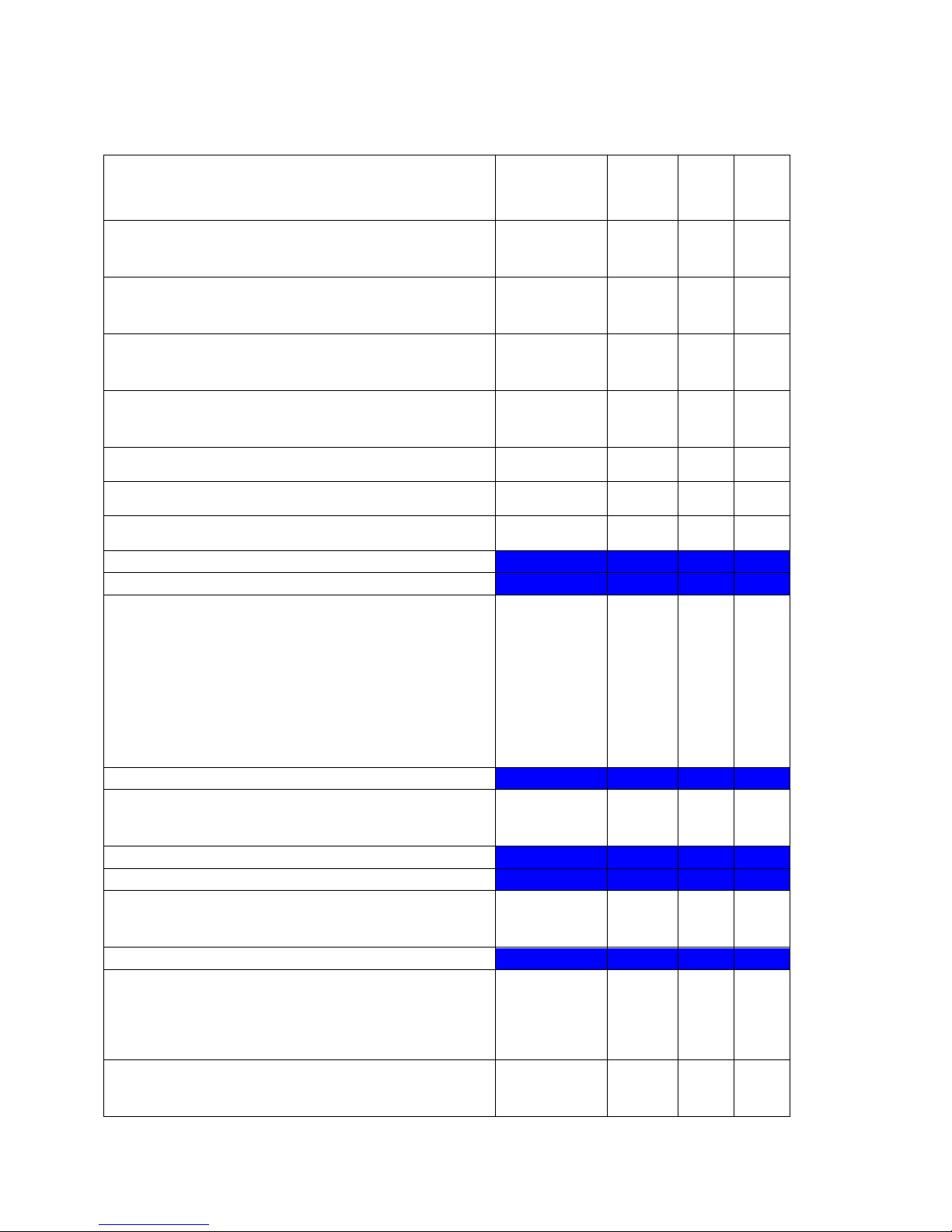
15
Required Classes
Semester
Credits
PT
YR
1
PT
YR
2
SOC WORK 720 Practice Competence in a
Diverse Community
Spring
3 X
SOC WORK 728 Advanced Social Welfare
Policy Analysis
Fall
3 X
SOC WORK 729
Field III + Integrative Seminar
Spring
4 X
SOC WORK 731 Advanced Research
Applications In Social Work Practice
Fall
3 X
SOC WORK 732 Field Research Project
Summer
1 X
SOC WORK 734 Field Research Consultation
Spring
2 X
SOC WORK 733 Field IV + Integrative Seminar
Summer
4 X
Advanced HBSE Options
Advanced Direct Practice
SOC WORK 727 Psychopathology and Strength–
based Assessment or Interdisciplinary
PSYCH 530 Adult Development and Aging
PSYCH 690 Special Topics (see MSW Coord.)
WS 550 Women, Race and Class
EDUC 552 Social and Family Influences on Early
Development and Learning
HUM DEV 544 Dying, Death & Loss
See time-
table
3 X
Administration & Management
MPA 723 Organizational Structure and Behavior
MAN 753 Organizational Theory and Behavior
See time-
table
3 X
Concentration Practice Requirements
Advanced Direct Practice
SOC WORK 721 Multi-Level Family
Intervention
Spring
3 X
Administration & Management
SOC WORK 722 Social Work Management and
Supervision in Social Services
Only offered if enrollment meets minimum
requirements
Spring
3 X
MPA 752 Public Budgeting & Finance OR
PUENAF 615 Public & Nonprofit Budgeting
See time-
table
3 X X
Advanced Curriculum
Page 16

16
Advanced Approved Electives
Semester
Credits
PT
YR
1
PR
YR
2
SOC WORK 735: Emerging Issues in Child
Welfare:
Fall
3 X
SOC WORK 795: Special Topics
Fall &
Spring
3 X
SOC WORK 571 Child and Family Welfare
See time-
table
3 X
SOC WORK 575 Treatment and Mistreatment of
Offenders
See time-
table
3 X
SOC WORK 795 (747) Mental Health Theories
Summer
3 X X
SOC WORK 798 Independent Study
TBA
3 X X
MPA 711 Politics, Policy and Public
Administration
MPA 729 Health Care Organizations and
Management
MPA 760 Administrative Law
MPA 797 Special Topics
See time-
table
3 X X
MAN 757 Leadership and Innovations (has
prerequisites)
MAN 750 Team Dynamics & Problem-Solving
MAN 776 Organizational Communication &
Conflict
See time-
table
2 X X
Total Credits: 32
Applied Research Components of the Curriculum
Field Research Project
Page 17

17
The field research project grows out of and is tied to the individual student’s particular interests
as an advanced level social work practitioner or administrator. The project can be completed in
three ways:
1. Preferably, the project is based in the student’s field agency experience; however,
this is not required;
2. Some students will be working on projects developed by faculty that reflect their
professional interests but are not necessarily tied to their individual field
placements;
3. Others will want to implement projects that are affiliated with but outside their
particular field placement setting.
The subject of the student research project must be relevant to social work practice and/or
strengthening of the social work profession. The subject must also be congruent with advance
program competencies of the Collaborative MSW Program.
The field research project must involve: pertinent literature review, research questions, clear
methodology, data analysis, and report of findings. The project must also be limited in scope so
that it is possible to develop and implement it within the confines of the advanced year
curriculum. Students may do individual projects; joint projects may also be developed by a
small number of students that are individually implemented by each student in the group. Any
additional costs of the project are borne by the student and/or agency involved in the project.
However, the Universities do provide access to data analysis tools to all students.
Development and Implementation of the Field Research Project
Students plan for and implement the field research project during all three semesters of their
advanced year in the full time program or the 2nd year of the Advanced part-time program. Field
research project work goes through three phases:
Phase 1-Fall: students enroll in SW 731 Advanced Research. In this class they:
Review knowledge of basic research methodology;
Examine additional methodologies of particular importance to field research in
social work (small sample, qualitative, etc.);
Learn to process data and interpret descriptive statistics and tables (using Excel)
Find out about ongoing research interests of faculty who are willing to serve as
research mentors;
Explore research possibilities in their planned Field placements;
Develop an initial draft of the research proposal and have it approved;
If possible, have the proposal approved by the human subjects committee of their
respective universities and participating agencies. However, this usually occurs in
Page 18

18
the Spring semester.
Phase 2-Spring: Students enroll in SW 734 to complete the following tasks and
activities:
Work independently with the course instructor or voluntary mentor to strengthen
their research plan;
Meet periodically with the instructor to finalize the proposal and then develop an
IRB proposal;
Obtain the instructor’s approval/signature on the IRB proposal before submitting
it for approval by the IRB. Research proposals must be submitted for IRB
approval during this semester if students expect to graduate at the end of the
summer session;
Students follow IRB procedures and submit IRB proposals to the Course
Instructor’s home campus.
At UW Green Bay: When IRB document is completed the student provides the
instructor with a copy of the proposal and then submits it to the IRB committee.
The student completes a GR2 form, attaches a copy of the research proposal, and
sends it to the instructor for signature; the instructor submits this to the MSW
Program Coordinator. The Program Coordinator submits these documents to the
Graduate Studies Office.
At UW Oshkosh: When the IRB is approved the student completes the ―Field
Report Project Approval Form‖ (located on the Graduate Studies website in the
forms list). The MSW student signs the form and sends it to the instructor for
signature; Attach a copy of the IRB approval letter and the proposal abstract. the
instructor submit this to the MSW Program Coordinator, who submits these
documents to the Graduate Studies Office.
RESEARCH PROJECTS CANNOT BE IMPLEMENTED (i.e., students cannot
collect data related to their Field Research project) UNTIL IRB APPROVAL IS
OBTAINED;
Phase 3-Summer: Students enroll in SW 732 to complete their Field Research projects
during the Summer semester.
Students engage in individual meetings with the instructor to develop the data
analysis plan and review final report requirements;
Students who have voluntary mentors continue to meet with them to implement
the research plan;
At UWGB: At completion of project the instructor completes GR4 form and
submits it to the MSW Program Coordinator, who will send it to the Graduate
Page 19

19
Studies Office.
Students complete the research project and present it to their respective
universities using the approved formatting. Each campus has approval forms that
must be completed prior to the end of the summer semester (see above). The
instructor, MSW Program Coordinator and the Graduate Studies Director/Dean,
must approve final project forms. Failure to complete these forms in a timely
manner may result in delayed graduation.
Personnel for Research Project
The instructor for SW 731 (Advanced Research) carries a primary organizing role for the Field
Research Projects. The SW 731 instructor must sign university documents giving students
permission to move forward with their projects. Students who experience challenges to
completing their research projects according to the standard time-line must work with their
instructor for SW 731 to develop a satisfactory alternative time-line (see MSW academic
performance polices).
Voluntary mentors are faculty members who have ongoing research interests and who wish to
work with a small number of students on a project in which they are interested. The mentors may
present their research ideas and an overview of the student role and responsibilities in the project
to potentially interested students during the fall research class. The mentors must determine the
number of students who will be accepted to work on the project and are responsible for clearly
delineating the student role. The mentors provide ongoing oversight of the student research
during the spring and summer semesters and are responsible for teaching and guiding students.
Advanced Human Behavior in the Social Environment (HBSE) and Elective Courses
Students in the Advanced Direct Practice Concentration select an Advanced HBSE option. The
following list includes courses that have been approved by the faculty. However, students can
request that other options be considered, after consultation with their advisor and the MSW
Program Coordinator. Students in the Administration/Management Concentration must take an
Organizational Theory course as their Advanced HBSE option. If the Administration
Concentration is not available to students due to low enrollment, interested students may take an
Organizational Theory class to satisfy the Advanced HBSE requirement.
Advanced HBSE Options
Students should consult with their advisor prior to selecting an Advanced HBSE option.
Advanced Direct Practice:
In Social Work:
Soc Work 727: Psychopathology and Strength- Based Assessment
At UWGB:
Page 20

20
Educ 552 Social and Family Influences on Early Development and Learning
Human Dev 544 Dying Death & Loss
At UWO:
Psych 530: Adult Development and Aging
Psych 690: Special Topics (approval of Program Coordinator required)
Women’s Studies 550: Women, Race and Class
Administration/Management:
At UWGB: Management 753: Organizational Theory and Behavior
At UWO: MP 723 Organizational Structure and Behavior
Elective Options
Students should consult with their advisor prior to selecting Elective options.
Students may select an elective from the following list of approved courses, may develop an
independent study course as an elective, or may request that another course be considered as an
elective. Students requesting courses that are not on the list must consult with their advisor and
the Program Coordinator. The Program Coordinator will approve such options when they fit
with the program’s mission and goals, when they serve the student’s learning needs, when they
are congruent with the objectives of the curriculum, and when they are graduate level in scope
and content.
Social Work:
Social Work 571: Child and Family Welfare (at UW Oshkosh)
Social Work 575 (757): Treatment and Mistreatment of Offenders
Soc Work 701: (For BSW Students Only) Ethical Issues in Contemporary Social Work
Soc Work 735: Emerging Issues in Child Welfare
Soc Work 737: Social Work & Crisis Intervention with Vulnerable Populations
Soc Work 795 (747): Mental Health Theories
Soc Work 795: Special Topics
Soc Work 798: Independent Study
Interdisciplinary Electives:
AT UWGB:
Management 750: Team Dynamics & Problem Solving
Management 757: Leadership and Innovation
Management 776: Organizational Communication & Conflict
Hum Dev 544: Dying, Death and Loss (see advisor)
Education 552: Social & Family Influences on Early Development
Page 21

21
AT UWO:
MPA 711: Politics, Policy and Public Administration
MPA 729: Health Care Organization and Management
MPA 760: Administrative Law
MPA 797-071 (Fall): Nonprofit Management
MPA 797-071 (Spring): Labor Management Relations in the Public Sector
Students may also take Advanced HBSE courses as electives.
Students should note that SW 643 (UW Oshkosh) is not an approved elective option because the
content is too close to the content offered in SW 721, Multi-level Family Interventions, which is
a required practice course for students in the Advanced Direct Practice concentration.
Independent Study
Purpose
An independent study provides a student with the opportunity to obtain specialized, in-depth
knowledge in an area of professional practice of particular concern to that student. Independent
study projects should not duplicate existing courses in which students could otherwise enroll.
Instead, the project should provide the student with an opportunity to more intensively examine a
particular social work issue or practice area with greater intensity than would otherwise be
offered in a classroom experience. The projects should reflect:
1. The student’s interest in one or more aspects of the curriculum: research, social work
practice, human behavior and the social environment, policy and program development,
or diversity.
2. The student’s interest in a specific area of practice (hospital social work, child welfare,
gerontology, etc.) or aspect of human functioning (delinquency, aging, mental health,
child abuse, etc.).
The student should plan to spend at least three hours per week per credit preparing to complete
the project. The outcome of an independent study project might be a traditional research paper,
an annotated bibliography, development of materials and a presentation for social work
colleagues, development of a brochure to be used with clients, etc.
The faculty member supervising the independent study project must be regularly available to the
student to provide ongoing oversight for the project.
Additional information about the independent study process is available in the Graduate
Bulletins at UW Oshkosh and UW Green Bay.
Each student must discuss with the faculty member supervising the independent study project,
the type of research processes involved in the project. As a result, any possible requirements that
may need to be met with the Institutional Review Board (IRB) of the university will also be
explored and completed when necessary.
Page 22

22
Procedures
1. The student should first discuss the idea for an independent study project with his/her
advisor; the advisor gives preliminary approval to the project as one that is appropriate
for credit in the Collaborative MSW Program;
2. The student should identify and consult with a faculty member who might be willing to
serve as the faculty member supervising the independent study;
3. Together, the student and faculty member develop a draft syllabus for the project.
The syllabus should include:
The purpose of the project, including the content area to be covered, e.g. research,
practice, HBSE, policy or diversity and the specific area of practice;
An overview of topics to be addressed during the project;
List the relevant MSW Competencies to be acquired in the course
A preliminary list of readings;
The bases on which the student will be graded.
4. The student also completes either the ―University of Wisconsin-Green Bay Proposal
Form for: Independent Study‖ or The ―University of Wisconsin Oshkosh Graduate
School and Research Independent Study Contract‖. The draft syllabus is attached to this
form, and these materials are sent to the Collaborative MSW Program Coordinator. Final
approval is given by the respective Graduate Studies office of the student’s home
university. A copy of these materials is kept in the student file.
Preparation for the LCSW
Students can complete their course work for becoming a Licensed Clinical Social Worker while
in the Collaborative MSW Program. The Appendix outlines course and field requirements for
students interested in pursuing licensure in the State of Wisconsin. Students are strongly
encouraged to consult with the Department of Regulations and Licensing about these
requirements.
Page 23

23
IV. THE COUNCIL ON SOCIAL WORK EDUCATION AND ACCREDITATION
The Council on Social Work Education (CSWE) is the accrediting body for both BSW and
MSW social work programs in the United States. It sets forth the educational policies and
standards that are intended to advance academic excellence and illustrate the essential
educational content and context that offers professional educational preparation of quality.
Although each program has the leeway to be creative and innovative in designing its program in
response to the unique set of circumstances at its location, the essential educational requirements
articulated by CSWE Education Policy and its eight derivative accreditation standards must be
met in a program’s design, implementation, and evaluation. CSWE outlines the need for
substantial curriculum content in the areas of: values and ethics, diversity, populations-at-risk
and social and economic justice, human behavior and the social environment, social welfare
policy and services, social work practice, research, and field education. The CSWE Educational
Policy and accreditation standards may be found at the Council on Social Work Education Web
site: http://www.cswe.org/. They are contained in the CSWE Handbook on Accreditation, a
document programs follow in their search for initial accreditation and to seek reaffirmation of
accreditation. Guided by these standards, the UW-Green Bay and UW-Oshkosh MSW
Collaborative Program paid careful attention to them for the development of its over-all program
and its curriculum content.
The Collaborative MSW Program was granted candidacy in July 2003 and was initially
accredited in June 2006 through June 2010.
Page 24

24
V. PROGRAM STRUCTURE
The Collaborative MSW Program is jointly administered by all graduate faculty of the UW
Green Bay Social Work Professional Program and the UW Oshkosh Social Work Program. It is
a single program developed and administered by this joint faculty. While half the students in the
program have Green Bay as their home campus and half have Oshkosh as a home campus, there
is a single student group, and all students take classes together at one location.
Program Committees
The Collaborative MSW Program is governed by the following committees:
Oversight Committee: This committee is charged with providing oversight for all matters
affecting the Program, including structure, curriculum, admissions, recruitment and retention,
and evaluation. This committee makes recommendations to the full faculty regarding any
changes in policy and major changes in Program practices.
Faculty Committee: This is the governing committee for the program, charged with full
oversight of all matters affecting structure, curriculum, admissions, recruitment and retention,
and evaluation. Two student representatives serve on this committee.
Admissions Committee: This committee is responsible for developing admissions materials,
recommending changes in admissions policies, developing admissions statistics, and making
admissions decisions.
Field Committee: This committee is responsible for developing field procedures, making
recommendations regarding changes in field policies, and providing consultation to the MSW
Field Coordinator
Program Evaluation and Continuous Improvement Committee: This committee is responsible for
developing the Program’s evaluation plan, insuring that it is implemented, and preparing
materials for faculty review and program revision.
Community Advisory Committee: This committee is drawn from community agency colleagues
who serve in an advisory capacity in the MSW program. Most, if not all, are familiar with the
BSW program on each campus because they have provided field placements for students in that
program and have served the programs in other advisory capacities. The MSW Community
Advisory Committee membership is reflective of the diversity -- geographic and practice -- of
the practice community in the area served by the Program. Current community members of this
committee are:
Deb Cudworth (Chair), Office of the Public Defender
Cheryl Cain, Winnebago County Human Services
Leroy Dissing, Green Lake County Human Services
Michelle Frechette, Menominee Indian School District
Page 25

25
Heather Lawrence, Outagamie County DHS
Tom Madsen, Langlade County DSS
Barbara Meyer, Innovative Counseling
Sally Olson, CAP Services, Stevens Point
Shelly Van Thiel, Adult Care Consultants
Academic Status Review Committee: This committee provides oversight for student progress in
situations where students are not performing adequately in their classes or field assignments.
MSW Student Organization
MSW students have not yet formally organized. However, MSW students have come together
periodically during the school year and for planning meetings and informal get-togethers. The
MSW students annually plan a graduation celebration to recognize the accomplishments of
graduating students. The MSW staff provide assistance for this activity, however, MSW students
provide leadership and direction for this event.
Faculty voted to include student participation in governance through representation on the MSW
Faculty Committee, which meets twice during each semester. The MSW student body annually
elects two students (One Foundation student and one Advanced student) to serve as
representatives on this committee. These students are voting members of the MSW Faculty
Committee. Please see the Program Coordinator for the current elected representatives.
Program Faculty
The Program has two administrators: the MSW Program Coordinator, who provides oversight
for all aspects of program functioning, and the Field Coordinator, who deals with all issues
regarding field placements for students.
All MSW faculty have extensive teaching experience in social work at both graduate and
undergraduate levels. They also represent a broad array of fields of interest. Faculty profiles can
be obtained on the social work department web-pages for each campus.
Key Faculty Members:
MSW Program Coordinator- Martin, Judith A., UW-GREEN BAY, Professor. Ph.D. Social
Welfare (University of Wisconsin-Madison), MSSW (University of WisconsinMilwaukee), B.S. Sociology (University of Wisconsin-Madison). Fields of interest: child
welfare service and policies, foster care and adoption, child abuse, family violence,
attachment issues in child welfare.
MSW Field Coordinator- Amy Fisher Williams, UW OSHKSOH. MSW (University of
Minnesota), B.A. Psychology. Licensed School Social Worker (State of Wisconsin).
Page 26

26
Fields of interest: school social work practice, grant procurement, program evaluation, and
vital involvement.
Child Welfare Coordinator- Mattila, Matthew, UW-GREEN BAY. MSW (Portland State
University), BASW (Pacific Lutheran University). ACSW (Academy of Certified Social
Workers) and CISW (Certified Independent Social Worker - Wisconsin). Fields of interest:
Direct social work practice with children, couples and families, with a specialization in
family and divorce mediation, forensic social work and adult education.
UW GB Chair- Jolanda Sallmann, UW-GREEN BAY, Associate Professor. Ph.D. Social
Welfare (University of Wisconsin-Madison), MSW (University of Wisconsin-Milwaukee).
CSW (Certified Social Worker-Wisconsin). Fields of Interest: violence against women
across the life course, issues of privilege and oppression, consumer empowerment and
recovery perspectives, and community organizing.
UW Oshkosh Chair- Sullivan, Quintin E., UW-OSHKOSH, Associate Professor. Ph.D.,
Social Welfare (University of Wisconsin-Madison), MSSW (University of WisconsinMadison), BA Social Welfare (University of Wisconsin-Eau Claire). Fields of interest:
administration, program evaluation, poverty, programs targeted at low-income adolescents,
which aim to prevent welfare dependence.
Page 27

27
VI. PROGRAM POLICIES AND PROCEDURES
All students are responsible for meeting the policies of their respective graduate schools. In
instances where the policy of the Collaborative MSW Program differs from that of either UW
Green Bay’s or UW Oshkosh’s graduate school, the Collaborative MSW Policy takes
precedence. The graduate policies of the UW Oshkosh School of Graduate Studies may be
found at:
http://www.uwosh.edu/grad_school/policies.htm.
The graduate policies of the UW Green Bay Graduate Programs may be found at:
http://www.uwgb.edu/catalog/grad/randr.htm.
Refer to these respective Web-pages for graduate policies of the respective institutions. As
students are asked to designate the degree granting institution they plan to attend, and since
policies may differ, it will be important for students enrolled in the MSW Program to follow the
graduate policies of their respective degree granting institutions.
To help students access appropriate policies, they are grouped under four headings:
A. Admissions: Policies, Procedures and Standards
B. Program Standards and Expectations for Performance
C. Student Services and Equitable Treatment
D. Insufficient Performance in the Program: Criteria and Procedures
A. Admission: Policies, Procedures and Standards
Admission to the MSW Collaborative Program is a competitive and complex process. MSW
application procedures and criteria are outlined below.
Admission Criteria
The Collaborative MSW Program seeks applicants who are interested in developing and
strengthening their social work skills by completing their MSW degree. The Program is
particularly interested in applicants who want to develop expertise and leadership in the areas of
direct practice or in administration/management in human service settings. The MSW Program
seeks applicants who have a commitment to serving those who are vulnerable, who face multiple
challenges in their lives, and who may be seeking services in public agency settings. Applicants
should be comfortable with developing their expertise in working from a family focused
perspective, with developing skills to work in both rural and metropolitan areas, and in working
with clients from diverse cultures and circumstances.
Page 28

28
2
To be admitted to the Collaborative MSW Program, applicants must meet the following
requirements:
1. Had a cumulative undergraduate GPA of 2.75, with 3.0 in the last two years (60 credits)
of study;
2. Have an academic background in the liberal arts and have completed a minimum of 18
credits in the social sciences from among courses in at least three of the following
disciplines: psychology, sociology, anthropology, economics, and political science (BSW
students meet this criterion);
3. Through a written statement, 3 letters of reference (including one academic reference2),
and relevant professional work/volunteer background, provide evidence of interest in and
ability to work with social work clientele and in social work settings; documentation of
breadth and depth of professional and/or volunteer experience (usually includes postbaccalaureate experience) that has prepared the applicant for advanced level practice.
Experience working in the social service arena is a primary criteria for admission;
4. Have completed course work in: human biology, statistics, research methods, and life
span development or submit plans for completing this work prior to taking the Advanced
Curriculum in the Program. At least two of these prerequisites must be completed before
entering the program;
5. For Advanced Standing, have graduated from accredited baccalaureate social work
program within the last 8 years.
These admissions criteria may be found on the Collaborative MSW Program Web-page
Applicants are also reminded that in keeping with CSWE Accreditation Standards, the MSW
Program does not grant social work course credit for life experience or previous work experience
regardless of the undergraduate degree.
Admission Process
The application process proceeds in two stages, the first consisting of a pre-admissions review of
applicants by the Collaborative MSW Faculty Admissions Committee, followed by the final
processing of applicant materials by the respective graduate program to which the applicant has
applied, i.e., Green Bay or Oshkosh. Note that the Faculty Admissions Committee
recommendation for the respective University assignment is based on student preference,
location of a student’s home, and equity considerations in the Program for a balanced enrollment.
Students forward to the appropriate University an application fee, official copies of transcripts
and any other campus-specific required admission document(s).
The pre-admissions and the University admissions processes are spelled out on the Collaborative
MSW Web-page. A PDF version of the Pre-admission application packets may be downloaded
from the Web-page. Follow the Web-page instructions for completion of the packet content and
its return by mail. Following pre-admission review of applications the Collaborative MSW
Program will forward the students’ pre-admission materials to the appropriate University for
May be waived if applicant graduated more than 8 years prior to applying to the MSW
program.
Page 29

29
3
final admission processing.
Applicants who are admitted to the Collaborative MSW Program are permitted to change from
full-time to part-time status if done so no later than September 15 of any given year. After this
date, admitted students are only allowed to withdraw or defer enrollment (for one year) from the
MSW Program. Students may change from part-time status to full-time status only after they
have completed the Foundation curriculum. Students desiring to make this change must receive
approval from their advisor and notify the Program Coordinator no later than March 1. Such
changes significantly impact the MSW Admissions process.
Credit for Life Experience or Work
As set forth in its accreditation document, the Collaborative MSW Program will not give any
academic credit for life experience or previous work experience, in whole or in part, in lieu of
any courses in either the foundation or advanced curriculum, including field practicum.3
English as a Second Language
Applicants who completed their degrees at foreign universities may be required to complete the
TOEFL. For applicants who are Registered Aliens of the U.S. who have lived in the U.S. for
more than one year or who have completed academic work in English, the TOEFL is not
required. Registered Aliens who do not meet these criteria will enter the program on probation
and give evidence of their English proficiency through satisfactory performance in their firstsemester course work.
Students who have completed graduate course work in programs other than social work can
request these courses be reviewed for possible credit towards advanced HBSE or elective
requirements. These courses cannot be considered for credit towards any required social work
courses.
Applicants who seek advanced standing and who are graduates of an accredited BSW programs
are not required to repeat foundation content. In effect, these students receive the equivalent of
28 credits towards their MSW degree in the Collaborative Program.
Early Withdrawal from the MSW Program
If a student finds that they need to withdraw from the MSW Program prior to graduation they
must follow the early withdrawal procedures associated with their home campus. Appropriate
instructions can be found on the Web-Page of the home campus Graduate Studies Office.
Students must withdraw themselves from courses and check with student accounts to ensure that
they are charged appropriately for tuition and fees. Each campus has withdrawal deadlines,
which impact tuition reimbursement options. Students must inform the MSW Program
Coordinator of their intention to withdraw early, and students are strongly encouraged to contact
See MSW Candidacy Application, page 64, 12/31/2002
Page 30

30
their instructors. If students are receiving the Title IVE Child Welfare Training Stipend they are
required to contact the CW Coordinator and complete the required procedures for return of the
stipend.
Reinstatement of Students who Withdraw from the Program
Students who are in good standing* at the time of departure and who withdraw from the
Collaborative MSW Program generally may be readmitted without going through the admissions
process if they apply for reinstatement no later than March 1st of the academic year following
their withdrawal from the Program. Students who request reinstatement after this time period
will be considered for admission with the current applicant pool. This may mean that additional
MSW admissions requirements may be in effect which they would need to adhere to. Students
who have not finished a full field placement (two semesters for 480 hours) may be required to
complete additional field hours over and above the total hours required of all students.
Readmission decisions will be made by the Academic Status Review Committee.
*Good standing does not include incomplete grades.
Transfer Credits
The MSW Program Coordinator reviews requests for students seeking to transfer credits from
another accredited social work master’s degree program. The MSW Program Coordinator will
make a determination of equivalence on a course-by-course basis based on documentation
provided.
On May 14, 2003, the Collaborative MSW faculty passed the following policies with
regard to transfer credits:
Student who have taken some foundation courses in an accredited undergraduate program
but who have not completed their BSW degrees cannot have these courses transferred in
lieu of foundation courses in the MSW Program.
Transfer credits will be considered for up to 12 credits for students who have taken
foundation social work classes at graduate Social Work programs at other institutions. The
course(s) being considered must have been completed within the last 5 years. The Program
reserves the right to ask for and review course syllabi in making a determination of the
number and types of transfer credits to be granted. The number of credits granted will be
determined by the number of contact hours and weeks scheduled for each course.
The Program has recommended waiver of the 12 credit limit in the unusual situation
where:
1. An applicant has completed an entire foundation curriculum in a graduate
program at another accredited institution and
2. A careful review of that foundation curriculum indicates that it requires
development of the same knowledge and skills as those required in the
Collaborative MSW Program.
Page 31

31
4
It is the applicant’s responsibility to make relevant material available for review. Criteria to be
used for assessing course credit transfer from another accredited MSW program include:
analogous course objectives, similarity of theoretical frameworks, comparable content, texts and
readings, similarity between assignments used to achieve objectives and comparable level of
earned credits in terms of course work. Only courses for which a grade of ―B‖ or better was
obtained are accepted for transfer.
B. Program Standards and Expectations
Academic Integrity
Students are expected to follow University and Program guidelines for careful recognition and
documentation of the work of others in their writing and oral presentations.
On October 17, 2005 the following Statement was approved by the Collaborative MSW Faculty
Building upon the established base of knowledge and properly attributing the sources of
that knowledge are fundamental bedrock principles of scholarship. Academic honesty is
a value central to all independent inquiry because all scholarship is built upon what is
currently known. The intentional or unintentional passing of other’s work as our own
erodes the trust that should be an inherent part of scholarly work, destroys the credibility
of the author, and damages the integrity of the knowledge building process. It is,
therefore, crucial that anyone engaging in scholarly work exercise great care in its
preparation and use due diligence in the proper attribution of all sources used.
Academic honesty is expected in all areas of your work. Plagiarism is a demonstration of
academic dishonesty in which students use the work of others as their own. Demonstrations
of plagiarism include the following
copying text directly from a source without giving credit to the source
copying text directly from one source while crediting it to another source
copying text directly from a source yet citing the information as a paraphrase
presenting a unique idea from an outside source as your own
Students must give credit to their source material, in accordance with APA style guidelines4.
In order to ensure that submitted work is free from plagiarism, students should:
Cite words, phrases and sentences copied directly from an outside source as a direct
quote (include quotation marks, page numbers, author, and publication date).
Cite paraphrases by giving credit to the author.
American Psychological Association. (2001). Publication manual of the American
Psychological Association (5th ed.). Washington D.C.: American Psychological Association.
Appendix C, section 6.22.
Page 32

32
As a general rule, anytime you use exact words from a source, you must cite that
information as a direct quote. Otherwise, paraphrase what the author has said and provide
a reference for it.
Never submit work in which you have failed to adequately give credit to source
materials.
Consult the APA Manual, the writing lab, or your instructor if you have concerns about
how to adequately cite source material.
Advising Policy and Procedures
Upon admission, all students are assigned a faculty advisor who is responsible for working with
them to review and update semester schedules, program plans/application for candidacy, and to
prepare other documents required as part of the student’s timely progress through the program.
The advisor also works with the student, the faculty field liaison, and the field coordinator to
help students explore appropriate placements and work through field issues. Students should
contact their advisors regularly and are responsible for obtaining their advisor’s signature on
documents, when this is required.
MSW student advisors are assigned annually, and students are notified as soon as these
assignments are made. The Field Coordinator is available throughout the Program to advise
students on field-related issues.
MSW course registration is a very complex process due to budget limitations and requirements.
Consequently, MSW Program staff will facilitate student registration for courses. Students are
strongly encouraged to discuss course choices with their advisor prior to registration. Students
are given opportunities to identify course and section preferences prior to registration. However,
due to budget limitations, section choices may be limited. Students must complete Program
Plans (UWGB) or Candidacy Applications (UW Oshkosh) prior to registration for electives.
These forms must be on file with the MSW Program or students will be referred to their advisor.
Foundation students must communicate with their advisor prior to registering for Advanced
courses. New students must submit UWGB Program plans to the MSW Program Coordinator no
later than August 31 and UW Oshkosh Candidacy Applications must be submitted to the
Program Coordinator no later than January 31. The advisor must approve these forms.
Prerequisite courses must be completed prior to beginning the Advanced curriculum. Students
who have not completed the necessary prerequisite courses and provided documentation
(transcripts) to the MSW Program Coordinator will not be registered for Advanced courses.
Students who need to complete prerequisites can view a list of options on the MSW Web-page
and/or discuss their options with their MSW advisor. Students who enroll in courses in the
summer semester prior to beginning the Advanced curriculum are allowed to provide
documentation of enrollment as authorization to enroll in Advanced courses. However, the MSW
Program Coordinator must receive documentation of satisfactory completion of the course by
September 1.
Page 33

33
Attendance and Participation
Faculty members will state their policy in the course syllabus concerning attending class and
participating in the course discussion or activities as part of the adult learning mode. This means
coming regularly and on time, reading or preparing materials for class, working effectively in a
group task, making contributions in the class which enhance the learning of others, and helping
to effect student/instructor communication. Students are responsible for notifying course
instructors when they cannot attend classes. Students are reminded that e-mail is the official
method of communication within the MSW Program and on both campuses.
Class cancelations rarely occur; however, if a class is cancelled students will be notified via the
MSW Collaborative Listserve as soon as information is available. Faculty are the sole decisionmakers regarding class cancelation due to inclement weather. However, if a specific campus is
closed where a class is due to meet, then the class is automatically cancelled. If students do not
feel safe driving during inclement weather, it is up to them to make prudent decisions regarding
class attendance. Faculty may not necessarily accept inclement weather as a valid excuse for
missing class.
Confidentiality
In regard to student records, the Family Education Rights and Privacy Act (1974) regulates
access to individual student academic records. Under this law, students have the right of access
to their files and must give written consent before any material in the student file can be released
to anyone outside the University.
In regard to class discussion, students have the right to choose whether or not to disclose
sensitive personal information in a class discussion. They also have an ethical and legal
obligation not to reveal the names of persons who are clients at agencies where they serve as
interns. They have further ethical obligation to protect the identity of an agency employee whom
they may be critical of with respect to ethical issues. Furthermore, students have an obligation to
respect confidentiality regarding in-class discussions for learning purposes by not divulging
content outside of the classroom. Where violations of ethical conduct are thought to occur, the
student is encouraged to discuss them with the faculty instructor.
The specific policies pertaining to confidentiality in field education are contained in the Field
Manual. The student is also encouraged to consult the NASW Code of Ethics concerning the
principles governing professional confidentiality.
Distance Education
The MSW program has policies and procedures for implementation of on-line and hybrid MSW
courses (a mixture of traditional in-class and on-line learning approaches). If a course is offered
in an on-line format, this information will be noted in the campus registration system and
Page 34

34
UWGB Students
UW Oshkosh
Students
Points
Grade
Points
Grade
94-100
A
94-100
A
88-93
AB
91-93
A-
83-87
B
88-90
B+
83-87
B
students will be notified of the specific requirements for the course. The MSW Program must
approve courses using this type of design prior to implementation. Typically, on-line courses
will use the Desire to Learn (D2L) course management program, which is available to all faculty
and students enrolled in the program. Students can access this through their home campus Home
Web-page once they are enrolled in a course.
Grades
Each campus has a unique grading system, which the MSW Program must adhere to.
Consequently, students from different campuses in the same MSW courses will receive different
grades. The MSW Program acknowledges that this is not ideal and may be perceived as unfair.
The grading system used in the Collaborative MSW Program is as follows:
Students must achieve a grade of B or Pass (field) in all required courses.
Grades below C are unacceptable for any graduate elective courses.
NASW Code of Ethics
The NASW Code of Ethics is viewed as policy by the MSW Program and as such, should serve
as a guide to the student with regard to their everyday conduct in the classroom and in field.
Students will be held accountable to the standards of the NASW Code of Ethics.
Page 35

35
C. Student Services and Equitable Treatment
Faculty-Student Grievances
If students have concerns/grievances with a faculty member they are encouraged to discuss their
concerns with the faculty member in order to develop a satisfactory resolution of the situation.
As noted above, the NASW Code of Ethics is part of the MSW Program policy and applies to
both students and faculty. If this approach is not satisfactory students are to raise their concerns
with the MSW Program Coordinator. The MSW Program Coordinator will refer relevant issues
to the MSW Program Chairs and/or work with faculty, as appropriate, to resolve the situation.
Non-Discrimination
The MSW Collaborative Program does not discriminate against others because of race, color,
creed, sex, sexual orientation, national origin, age, class, disability, family structure, or marital
status. All students, including participants in the field education process, are expected to conduct
themselves in a non-discriminatory manner.
The UW System Handbook states:
No student may be denied admission to, participation in or the benefits of, or be
discriminated against in any service, program, course or facility of the system or its
institutions or centers because of the student’s race, color, creed, religion, sex, national
origin, disability, ancestry, age, sexual orientation, pregnancy, marital status, or parental
status.
Students who plan to seek Wisconsin Social Work Certification are urged to consult with the
Department of Regulations and Licensing if they are concerned about elements of their
background (ethics violations and/or criminal history) that may be barriers to becoming certified
or licensed in Wisconsin. Criminal history may also limit Field placement options as well.
Sexual Harassment
The MSW Collaborative Program does not tolerate any student, faculty member or Agency Field
Educator engaging in sexually harassing behaviors. All participants in the Program are expected
to conduct themselves in a manner fully consistent with the NASW Code of Ethics, which
specifically addresses sexual harassment. Failure to do so may result in removal from the
Program and/or referral for violation of the NASW Code of Ethics.
The University System defines sexual harassment (1998) as:
Sexual harassment is a form of sex discrimination. It occurs in a variety of situations that share a
common element: the inappropriate introduction of sexual activities or comments into the work,
learning or living situation. Often, sexual harassment involves relationships of unequal power
and contains elements of coercion—as when compliance with requests for sexual favors becomes
Page 36

36
criterion for granting work, study, or grading or other benefits. However, sexual harassment may
also involve relationships among equals, as when repeated sexual advances or demeaning verbal
behavior have a harmful effect on a person’s ability to study or work in the academic setting.
Unwelcome sexual advances, requests for sexual favors, and other physical conduct and
expressive behavior of a sexual nature constitute sexual harassment when: (1) submission to such
conduct is made either explicitly or implicitly a term or condition of an individual’s employment
or education, or (2) submission to or rejection of such conduct by an individual is used as the
basis for academic or employment decisions affecting that individual, or (3) such conduct has the
purpose or effect of substantially interfering with an individual’s academic or professional
performance or creating an intimidating, hostile, or demeaning employment or educational
environment.
Social Work Certification
Upon completion of the Foundation Curriculum most students are eligible for Social Work
Certification at the basic level. Students are directed to the Department of Regulations and
Licensing Web-page for details pertaining to this certification.
Upon completion of the MSW Curriculum most students are eligible for Social Work
Certification at the Advanced level. Students are directed to the Department of Regulations and
Licensing Web-page for details pertaining to this certification. Due to the timing of program
completion many students do not receive their diplomas until October following the last summer
semester. This causes a delay in a graduate’s ability to apply for certification. Graduates who
wish to apply early for certification are to complete two forms that must be signed by the MSW
Program Coordinator. If the student is within six months of graduating they need to complete
form #2576 and submit this to the MSW Program Coordinator for signature. If students have not
received a satisfactory grade for any SW course this form will not be signed by the MSW
Program Coordinator. Following completion of all required course work, graduates can submit to
the MSW Program Coordinator for approval form #1978, which verifies that graduates have
completed the MSW program. Both of these forms will be sent directly to the DRL in
Departmental envelopes to ensure authenticity. A copy of both forms is maintained in the
student’s MSW file. Students can request a copy of the signed form for their records.
Students with Disabilities
Services are available to each student with a disability and the Collaborative MSW Program
utilizes the University policy on students with disabilities.
In general, each student with a documented disability is provided reasonable accommodations in
the classroom and field. A student with a disability must first meet with a representative from
the office that works with students who have disabilities who in turn accesses the necessary
documentation for the University, explains campus resources available to the student, and reports
to faculty (anonymously), the necessary accommodations needed for instruction.
Students in the Collaborative MSW Program have ready access to assistive technologies through
Page 37

37
Disability Services at UW Green Bay and UW Oshkosh. Disability Services on these campuses
provide a range of similar services to students with registered disabilities: assistance in obtaining
access to adaptive materials or in creating these materials for students, assistance in enhancing
access to information provided in the classroom, help with test-taking and other resources to
enhance student outputs, and assistance in seeking materials and help from other resources
outside the University. If these students need Braille, large print, books on tape, or other
assistive learning systems, Disabilities Services will make every reasonable effort to help the
students obtain them. These services are described on each University’s website:
http://www.uwgb.edu/esms/ds/programs.htm
http://www.tts.uwosh.edu/dean/disabilities/accommodatinsrecommendatin.htm
Both the UW Green Bay and UW Oshkosh campuses have developed student handbooks
detailing these supports for students as well.
At times, a student with a disability is sometimes concerned about how their specific disability
might impact their work in the field. For further exploration of this issue students should feel
free to seek out the Collaborative MSW Field Coordinator.
The UW-Green Bay Web site that describes its educational and support services is at:
http://www.uwgb.edu/esms/ds.htm. The UW-Oshkosh Web site is located at:
http://www.uwosh.edu/dean/disabilities.htm.
D. Insufficient Performance in the Program: Criteria and Procedures
Academic Performance Concerns: Academic Integrity
Students may be subject to disciplinary action if they use someone else’s work, creating the
impression that it is their own original work, if they make up false information for an academic
project, or if they forge his/her academic credentials or documents. Writing a paper and lifting
the content from a book or article without proper citation or failing to paraphrase or restate the
content in one’s own words is called plagiarism. It is subject to disciplinary action and may
result in a failing grade, a reprimand, or a demand to redo the work. Proper citation must
accompany anything other than original thought – direct quotations, paraphrased or summarized
content, etc. The University Policy on Academic Dishonesty is also applicable.
Academic Performance Concerns: Insufficient Grades
Students must achieve a grade of B or Pass (field) in all required courses. When a student’s
grade falls below this level, an automatic review process occurs. This review process occurs
with the student under the oversight of the Academic Status Review Committee appointed by the
Oversight Committee. As a result of its deliberations, the Committee informs the student of its
Page 38

38
findings. Possible outcomes include: redoing all or part of course requirements (with consent of
the instructor), reenrolling in the course, or not being retained in the program. Other alternatives
may also be considered.
Students are reminded that this policy applies to the Field Research project as well (SW 731, SW
734 and SW 732). Due to the nature of assignments in SW 731 many students receive an
Incomplete grade at the end of the course and are expected to complete the assigned work in the
following semester. If students are not progressing satisfactorily the incomplete grade
automatically turns to an F at the end of the following semester. The instructor can change this
grade, but the student will need to engage in the Academic Status Review process to determine
the next steps.
Academic Performance Concerns: Professionalism and Personal Performance
Behaviors that violate professional values and role sets addressed by the NASW Code of Ethics
and which have been fully documented by instructor(s) may be addressed through
recommendations for remedial action or a termination from the Program.
Examples of performance concerns or personal problems that interfere with performance
expectations and that may be grounds for dismissal from the Program include, but are not limited
to:
Non-achievement or less than satisfactory achievement of MSW Student Contract goals
in the field internship.
Behaviors that violate the NASW Code of Ethics in the classroom, field agency or
seminar setting (see below).
Personality characteristics that conflict with the professional values and professional role
sets of the social work professional (see below).
Disruptive behaviors constituting a threat to the safety of the student or others.
A pattern of unwillingness to participate in the learning activities of the program.
Inability to communicate effectively, orally or in written form, such that performance is
seriously handicapped.
The list below offers specific examples of behaviors that might violate the NASW Code of
Ethics or be deemed as conflicting with professional values and role sets. These examples have
been drawn from a content analysis of the professional literature underscoring the responsibility
social work educational programs have in order to ensure that graduates meet the standards set
forth by the Code of Ethics. The list is intended to be illustrative, not all-inclusive.
1. Challenges in addressing unresolved life issues which persistently interfere with
judgment and performance.
2. The decision to not seek professional help or take other steps necessary to protect clients
and others when these challenges interfere with professional judgment and performance.
Page 39

39
3. Preoccupation with self and self-centered behavior to the extent that it is inappropriate for
a professional role.
4. Challenges in one’s ability to develop professional relationships so that effective
communication to engage others through effective relational and communication skills
cannot be accomplished.
5. Challenges in placing appropriate boundaries between personal and professional
relationships with clients, agency co-workers or others who are part of the professional
practice environment.
6. Practicing beyond the scope of one’s competence.
7. Repeatedly misrepresenting competence or credentials to clients, agencies, others, etc.
8. Repeatedly violating obligations concerning use of privileged information and violation
of confidentiality.
Academic Status Review Committee
A set of procedures are outlined here for students who are performing unsatisfactorily in the
Program. The student initially meets with his or her advisor and/or the instructor to examine
options for addressing the issue. The advisor/instructor notifies the MSW Program Coordinator
about the issues being addressed, and the Program Coordinator and student subsequently meet to
clarify the student’s proposed plan for addressing the issue. This plan, along with the MSW
Program Coordinator’s assessment, is then presented to the Academic Status Review Committee.
The Academic Status Review Committee was established to provide a consistent and reliable
faculty role in guiding struggling students through the Program. The Committee provides faculty
oversight of the Program Coordinator’s work with the student. The functions and roles of
participants in this process are outlined as follows:
Committee Mandate and Function
The Committee exists as an ad hoc committee of the Program to guide decision- making and
planning in those instances where student progress is insufficient to maintain his/her progress in
the Program. This occurs whenever a student fails to meet academic or nonacademic retention
standards.
When students face difficulties with regard to classroom and field performance that can
jeopardize their continuance in the Program, the following steps are taken:
1. The student meets with his/her advisor/instructor regarding these issues and to discuss a
plan for addressing them;
2. The advisor/instructor informs the Program and Field Coordinators of concerns regarding
students; when those concerns are serious and in situations where they cannot be
Page 40

40
adequately addressed by meeting with the student, the advisor asks the Program
Coordinator to take over responsibility for this planning;
3. The Program Coordinator and student meet to develop a plan to present to the
Committee;
4. The Academic Status Review Committee makes a final determination regarding the
student plan;
5. Appeals of the Committee’ decision go to the Social Work Program Chair on the
student’s home campus;
6. Appeals of the Chair’s decision follow relevant University grievance procedures.
The Committee functions in response to recommendations brought by the
Program Coordinator and the student. The Committee makes all final decisions in response to
these recommendations. Specific functions of the committee include the following
responsibilities:
1. Meet with the Program Coordinator and student (if he/she desires) to consider the
student’s performance and potential in reviewing the student’s proposed plan for
remedying nonacademic or academic concerns;
2. Approve or modify the proposed plan that has been developed by the student with the
approval of the Program Coordinator;
3. Meet with the student to review the Committee’s findings if the student requests this;
4. In cases where the lack of academic progress or nonacademic retention concerns warrant
it, determine that a student can no longer remain in the Program. In these situations, the
Committee will provide due process, including timelines and opportunities for student
advocacy;
5. Operate in a manner that is fair and impartial with regard to student interests.
Coordination of Effort for Students Making Insufficient Progress
Specific functions of the Program Coordinator when working with the Committee include:
1. Meet with the student and the student’s advisor to review the academic or nonacademic
performance issues and to review the student’s proposed plan to remedy these concerns;
2. Work with the student to further develop or modify this plan before presenting it to the
Committee;
3. In cases where there are questions of the student’s continuance in the program,
recommend to the Committee:
a) that the student continue, or
b) that the student continue with conditions, or
c) that the student be discontinued;
Page 41

41
4. Insure that the plan outlines consequences for a student's failure to carry out the details of
the plan;
5. Provide a written copy of the proposed plan, the student’s file, and additional information
that may be needed by the Committee to facilitate its’ deliberations;
6. Insure that a written copy of the Committee’s decisions is provided to the student and is
placed in the student’s file;
7. Insure that students are fully informed about relevant due process timelines and
University grievance procedures. Appeals of Committee decisions go to the Program
Chair on the student’s home campus.
Specific responsibilities of the student when working with the Committee include:
1. Evaluate his/her progress in the program to identify barriers to success and plans for
removing these barriers;
2. Meet with the Program Coordinator to develop a performance plan to present to the
Committee;
3. (If desired) meet with the Committee to discuss its deliberations and findings.
4. Implement the approved plan.
Specific responsibilities of the faculty in contributing to the working of the
Committee include:
1. Keep Program Coordinator informed about any student who has not achieved a B in a
required course, who has not passed field, or who has incompletes that are not taken care
of within a few weeks of the semester’s end.
2. When serving as the student’s advisor, meet initially with the student to examine barriers
to successful performance and to help the student develop a plan for overcoming these
barriers.
Membership
The Program Coordinator appoints the Committee as needed from the Faculty listed on the
rotating schedule. The Committee is comprised of at least two members who represent both the
campuses. Program chairs from the student’s home campus cannot be Committee members.
The MSW Program Coordinator is an ex officio member of the Committee. The Field
Coordinator and the advisor may serve as ex officio members of the committee, particularly in
circumstances where questions of field performance are addressed.
Students who wish to appeal the decision of the Academic Status Review Committee must do so
by meeting with the Chair of the Social Work Program on their home campus and, thereafter,
follow University grievance procedures.
Grade Appeal Policies
The policies pertaining to grade appeals or other policies that apply to graduate students other
than those for which the policies of the MSW Collaborative Program take precedence are to be
Page 42

42
found in the Graduate Bulletins of the respective University campus at which the student is
enrolled. Those pages were identified at the beginning of this section.
Page 43

43
APPENDIX
University of Wisconsin Green Bay and University of Wisconsin Oshkosh
Collaborative MSW Program
STUDENT PORTFOLIO IN PREPARATION FOR BECOMING
A LICENSED CLINICAL SOCIAL WORKER
INTRODUCTION
The purpose of this document is to provide an overview of course and field requirements that can
be met within the Collaborative MSW Program in order for you to eventually become a Licensed
Clinical Social Worker. The LCSW is designed primarily for social workers who want to work
in mental health settings and who want to do therapeutic work without required supervision.
Obtaining the LCSW involves meeting a set of course requirements, field placement
requirements, and 3000 hours of supervised work that must be completed after you obtain your
MSW degree.
We recommend that you develop a personal portfolio of materials that will help you to
eventually obtain your LCSW; this document includes recommendations concerning materials
you should include to verify the course and field work you have completed.
Course and field requirements are first outlined. LCSW requirements that must be met after
graduation are also reviewed. Relevant applications and statutory references are included at the
end of this document.
I. LCSW COURSE REQUIREMENTS IN THE COLLABORATIVE MSW PROGRAM
State statutes require that 40% of non-field credits in the masters program be comprised of
―clinical courses‖ Clinical course work includes ―theory and practice courses from the following
list:
(a) Case management
(b) Psychopathology in social work
(c) Clinical assessment and treatment of specific populations and problems…
(d) Psychopharmacology
(e) Psychotherapeutic interventions
(f) Electives such as family therapy, social work with groups, sex- or gender-related issues
and topics‖
The Social Work Section of The Wisconsin Department of Regulation and Licensing has
approved the following advanced level courses, which meet the requirements of a ―clinical
course‖ in the Collaborative MSW program. The Collaborative MSW faculty have determined
that students must complete four of these classes to meet LCSW course requirements through the
Program:
Page 44

44
Soc Work 720 Pract. Comp in Diverse Community
Soc Work 721 Multi Level Family Intervention
Soc Work 727 Psychopathology and Strengths Based Practice
Soc Work 735 Emerging Issues in Child Welfare
Soc Work 737 SW and Crisis Intervention with Vulnerable Populations
Soc Work 795 Special Topics: Mental Health Theories
Soc Work 795 Special Topics: Treatment and Mistreatment of Offenders
All of these course requirements can be met in the Advanced Direct Practice curriculum. Passage
of SB 401 also allows students to return to graduate school after finishing their MSW and
complete the four required courses if this was not done while in the Collaborative MSW
Program. In the 2009-2010 academic year the MSW Program will offer SW 727 and Mental
Health Theories during the summer semester to MSW professionals who are seeking the LCSW
credential.
Documentation in Portfolio:
Keep copies of your course syllabus for each of these courses that you complete.
Clearly document how your assignments were clinical.
Clearly document Field placement activities that relate to assessment and treatment of
mental illness. Include a letter of verification from the Filed Educator.
II. LCSW FIELD REQUIREMENTS IN THE COLLABORATIVE MSW PROGRAM
Statues require that ―. . . field training must be in a primary clinical setting and must include at
least two semesters of field placement where more than 50% of the practice is to assess and treat
interpersonal and intra-psychic issues in direct contact with individuals, families or small
groups.‖
Students interested in a Field placement that meets these criteria are encouraged to discuss this
with the MSW Field Coordinator. Specific Field placements that meet these criteria are not
guaranteed and will likely require that students work above and beyond the MSW Field
competency requirements. Again, students are urged to document their Field placement
experiences that are relevant to LCSW preparation.
Recent passage of SB 401 allows students to complete this additional field requirement while
you are an MSW student OR to complete this requirement after graduation. Procedures for
choosing a third alternative – completing this requirement in a work setting – are available at the
DRL-Social Work Section Web-page.
The Collaborative MSW program will offer this option post-MSW through Continuing
Education.
Page 45

45
Documentation in Portfolio:
Maintain documentation of all hours in your field practice in which you assess and treat
interpersonal and intra-psychic issues in direct contact with individuals, families or small
groups.
Obtain from your Field Educator a letter on agency letterhead documenting your fieldwork
and the hours related to direct contact service assessing and treating interpersonal and
intra-psychic issues.
III. POST GRADUATION REQUIREMENTS
A. Work Requirements
After graduation, an MSW must engage in 3000 hours of ―clinical‖ practice including at least
1,000 hours of face to face client contact under the supervision of an LCSW who has engaged in
the equivalent of 5 years full time clinical social work, or a psychologist or psychiatrist.
Maintain documentation of all hours in your employment in which you assess and treat
interpersonal and intra-psychic issues in direct contact with individuals, families or small groups.
Obtain from your field supervisor a letter on agency letterhead documenting your employment
and the hours related to direct contact service assessing and treating interpersonal and intrapsychic issues. This will be especially important if you do not obtain all of your 3000 hours in
the same setting.
The 3000 hours may need to be extended as defined by the Social Work Section if one does not
complete a field placement while in the MSW program that fits the needed experience of
assessing and treating interpersonal and intra-psychic issues.
B. The LCSW Exam
The department will issue an approval letter to take the examination when all other requirements
have been met.
You may purchase a study guide by contacting ASWB directly at 1-800-225-6880. This guide
will cost you about $33 and will contain 50 practice questions, a guide on how to take an exam
and three pages of references including books and articles which will help you prepare for the
exam.
Self-study courses are available and workshops are available.
Page 46

46
C. APPLICATION REQUIREMENTS
The Wisconsin Department of Regulation and Licensing requires the following documents for
processing applications for a Licensed Clinical Social Worker (LCSW)
Application form #1992
Fee
Addendum (Social Security Number)
Certificate of professional education after graduation
Convictions and pending charges form
State jurisprudence exam
Transcript for master’s degree or higher degree program
Course descriptions
Information on Supervision
Supervised Clinical Field Training while in the MSW program (form #2561)
Documentation of post-graduate clinical experience sent by the person providing
supervision (form #2560).
Verification of Credential Form is out of state credential.
The current Wisconsin Department of Regulation and Licensing application.
Note the requirements for an LCSW on page 1 of the application.
Note the definitions relevant for an LCSW on page 2 of the application.
Note the national examination by Association of Social Worker Boards (ASWB) outlined on
page 3.
Note the supervision requirements on page 4.
IV. STATUTORY AUTHORITY
Wisconsin Statutes and Administrative Code relating to the practice of Marriage & Family
Therapy, Professional Counseling & Social Work.
Chapter 1. Authority and Practice
Chapter 2. Definitions for Practice of Social Work
Chapter 3. Application for Social Worker Certification or Licensure
Chapter 4. Supervised Pre-Certification and Pre-Licensure Social Work Practice
Chapter 5. Social Work Examinations
Chapter 6. Authorized Social Worker Practice
Chapter 8. Continuing Education
All Wisconsin Statutes and Administrative Codes are available on the Internet at the following
addresses:
Statutes: http://www.legis.state.wi.us/rsb/statutes.html
Rules: http:///www.legis.state.wi.us/rsb/cod/codtoc.html
Page 47

47
The following was approved on 11-1-05 by the Social Work Section of DRL:
MPSW 3.09 Application for licensure as a clinical social worker.
In addition to paying the fee under s. 440.05(1), Stats., an applicant for licensure as a clinical
social worker shall submit the completed, signed application form and:
(1) A certificate of professional education, signed and sealed by the chancellor, dean or registrar
of the school from which the applicant has graduated with a master's or doctoral degree in social
work with a concentration in clinical social work, including completion of supervised clinical
field training.
(2) Verification that the school or program which awarded the social work degree was accredited
or a pre-accreditation program of the council on social work education at the time the applicant
graduated from the program or school.
(2h) Verification that the candidate completed clinical coursework. This requirement may be
satisfied in any of the following ways:
(a) Having a clinical social work concentration in the masters or doctorate degree program as
defined in s. MPSW 2.02 (9).
―Clinical courses must comprise at least 40% of non-field placement credits in the degree
program.‖
(b) Completing, either in the masters or doctorate degree program or in postgraduate studies at a
CSWE-approved institution, at least 1 course of 2 or more credits in psychopathology and at
least 2 other courses of 2 or more credits each from among the list of other theory [Mental Health
Theories] and practice courses in s. MPSW 2.02 (9).
Case management
Psychopathology in social work
Clinical assessment and treatment of specific populations and problems
Psychopharmacology
Psychotherapeutic interventions
Family therapy
Social Work with groups
Sex/gender related issues/topics
(2r) Verification that the candidate completed supervised clinical experience. This requirement
may be satisfied in any of the following ways:
(a) Completing supervised clinical field training in the masters or doctorate program as defined
in s. MPSW 2.02 (17).
(b) Completing at least 2 semesters of supervised clinical field training in a CSWE-approved
MSW program after obtaining the masters or doctorate degree.
(c) Completing at least 1,500 hours of supervised clinical social work practice in not less than
one year, including at least 750 hours of face-to-face client contact, supervised by a person listed
in s. MPSW 4.01 (6). This experience shall be in addition to the requirement in s. (3) below and,
if obtained after August 1, 2002, will be accepted only if the applicant was certified at the time as
Page 48

48
an advanced practice social worker or an independent social worker.
(3) An affidavit that the applicant, after receiving a master's or doctoral degree and after
receiving certification as an advanced practice social worker or an independent social worker,
has completed at least 3,000 hours of clinical social work practice in no less than 2 years,
including at least 1,000 hours of face-to-face client contact and including DSM diagnosis and
treatment of individuals, under the supervision of a supervisor approved by the social worker
section. Pre-certification supervised practice shall meet the criteria under s. MPSW 4.01.
(4) Verification of successful completion of the examination approved by the section, or
verification that the applicant is a board certified diplomat (BCD) of the American board of
examiners in clinical social work.
(5) Verification of the applicant's credential in all jurisdictions in which the applicant has ever
been credentialed.
(6) All pertinent information relating to any convictions or pending charges for all crimes and
any traffic offenses which did or could result in revocation or suspension of the applicant's
driver's license.
 Loading...