

Page 1
User Guide
Centriprep
Limitations
With fixed-angle rotors, polarization control may be adversely affected at low g-forces (below 2,000×g).
Depending on sample composition and solute concentration, filtrate flow may be reduced. When using
either type of centrifuge, do not exceed the following limits because excessive g-force may result in
leakage or damage to the device.
Device Maximum Centrifugal Force
Centriprep® 3K 3,000×g
®
Centriprep® 50K 1,500×g
Centrifugal Filter Devices
Centriprep® 3K and 50K devices for research
use only; not for use in diagnostic procedures
Introduction
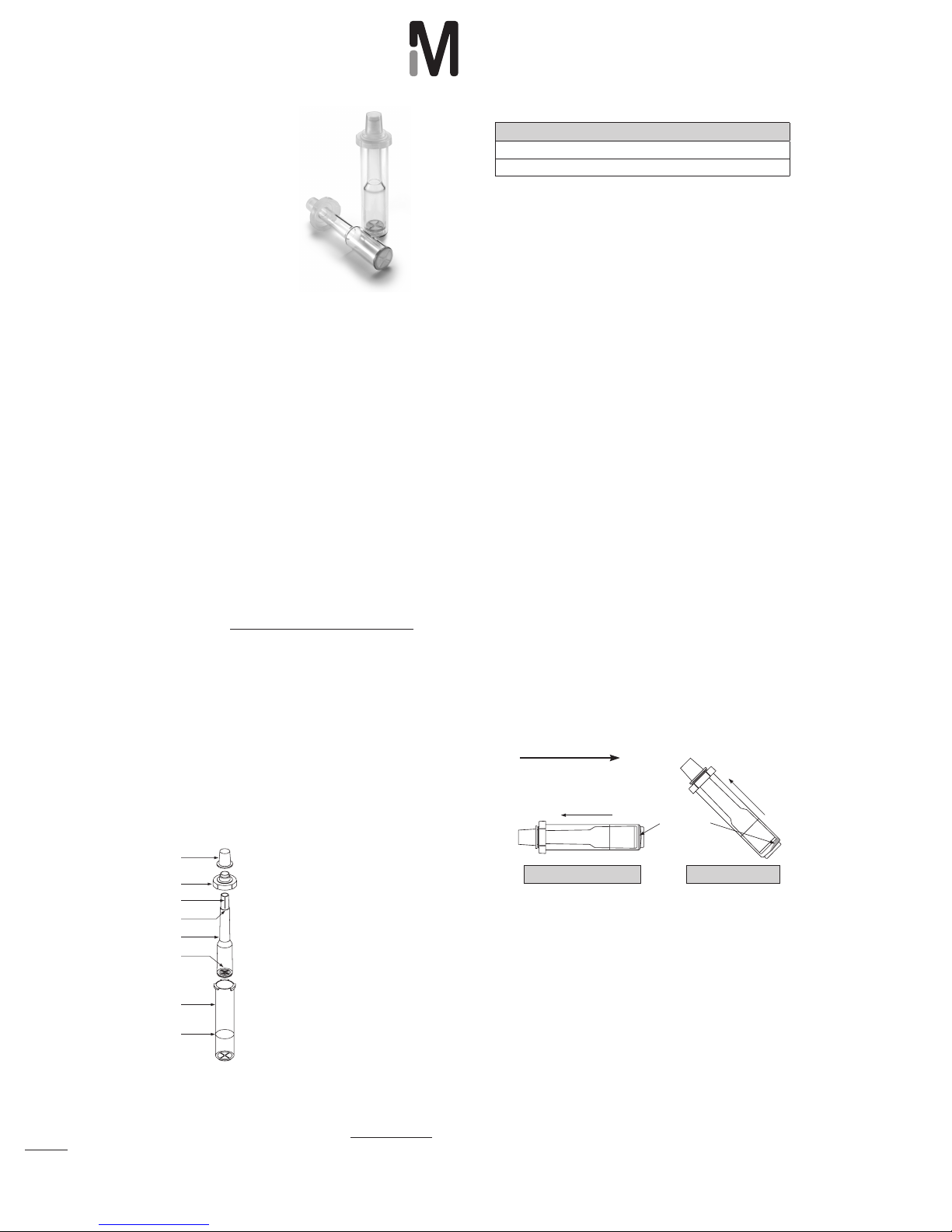
Centriprep® centrifugal filter devices are disposable ultrafiltration devices used for purifying,
concentrating, desalting, and filtering biological samples in the 2–15 mL volume range. These readyto-use ultrafiltration devices are designed for operation in most centrifuges that can accommodate
50mL centrifuge tubes. They are easy to use and offer a high flow rate. The Centriprep® device consists
of a sample container with a twist-lock cap, a filtrate collector containing a low adsorptive Ultracel®
regenerated cellulose membrane, and an air-seal cap for sample isolation.
The Centriprep® device design allows filtration and fine particle sedimentation to occur at the same time
without clogging the membrane. With a Centriprep® 50K device, a 15 mL sample can be concentrated to
0.6 mL in just 20 minutes and concentration of smaller volumes takes even less time. High concentration
factors are achieved because of the membrane’s low adsorptivity, and greater than 90% recovery of retained
macromolecular solutes is typical. A built-in deadstop provides a final concentrated sample volume of
0.5–0.6 mL.
The Centriprep® product line includes 4 different molecular weight cutoffs (MWCO):
● Centriprep® 3K device — 3,000 MWCO (yellow membrane support)
● Centriprep® 10K device — 10,000 MWCO (green membrane support)
● Centriprep® 30K device — 30,000 MWCO (colorless membrane support)
● Centriprep® 50K device — 50,000 MWCO (pink membrane support)
NOTE: Centriprep® 10K and 30K devices are the only Centriprep® devices intended for in vitro diagnostic
use. For information on these devices, go to www.millipore.com/centrifugal_ivd_userguide.
Applications
Centriprep® 3K centrifugal filter devices:
● Concentrating and desalting oligonucleotides, peptides, growth factors, and small proteins.
Centriprep® 10K, 30K, and 50K centrifugal filter devices:
● Concentrating and desalting column eluates and gradient fractions containing proteins, enzymes,
and antibodies
● Recovering biomolecules from cell culture supernatants, lysates, extracts, or other biological samples
● Purifying low-molecular-weight components (e.g., amino acids and antibiotics) from physiological
fluids, cell culture media, or fermentation broths.
Centriprep® Device Components
Air Seal Cap
Twist-Lock Cap
Vent Groove
Filtrate Collector Shoulder
Filtrate Collector
Membrane Support
Sample Container
Fill Line
Required Equipment
Centriprep® devices can be spun in a variable speed centrifuge with either a swinging-bucket or fixedangle rotor and carrier that can properly accommodate 50 mL centrifuge tubes. The centrifuge must be
capable of 500–3,000×g. For a listing of compatible centrifuges and rotors, see www.millipore.com/
rotorguide.
Device Storage and Shelf Life
For best results, store Centriprep® devices at 15–30 °C. Performance may be adversely affected if the
devices are stored at extreme temperatures (i.e., below 0 °C or above 40 °C). Shelf life is three years from
date of manufacture.
Rinsing Before Use
The membranes in Centriprep® centrifugal filter devices contain trace amounts of glycerine. If this interferes with analysis, fill the device with approximately 15 mL of buffer or deionized water and centrifuge
until the first equilibration point is reached. Decant filtrate and concentrate. Repeat as necessary until no
more interference is noted. Once wet, membranes must be kept wet to remain functional.
Membrane and Device Appearance
● Occasionally, an unused Centriprep® device may have a few drops of moisture in the filtrate collector
or sample container. This is due to condensation of moisture in the membrane and does not affect
performance.
● After centrifugation, a small amount of filtrate (approximately 0.5 mL) may remain in the area
between the membrane and the membrane support of the Centriprep® device. This is normal and does
not affect device operation or performance.
● The Ultracel® membrane used in the Centriprep® centrifugal filter devices may appear slightly wrinkled
after spinning.
Centrifugal Filter Device Reuse
Centriprep® devices are intended for single use only. Attempts to clean the device may damage the
membrane surface or the seal, possibly compromising the unit’s integrity and thereby affecting
performance.
Principle of Operation
To begin operation, the sample container’s twist-lock cap is loosened and the filtrate collector is removed.
Sample is added, then the filtrate collector is carefully reinserted back into the sample container (displacing
solution) and the cap locked, sealing the device. The assembled centrifugal filter device is centrifuged at
1,000–3,000×g, depending on the membrane MWCO used.
Immersing the filtrate collector in the sample solution creates a slight hydrostatic pressure differential
that exerts an upward buoyancy force on the membrane at the filtrate collector bottom. By itself, the
hydrostatic pressure exerted by the displaced solution is too weak to produce ultrafiltration. Centrifugation
increases this pressure, forcing low molecular weight materials and solvent through the membrane into
the filtrate collector. Solutes with molecular weights above the membrane MWCO remain in the sample
container and become increasingly concentrated as the operation continues. Ultrafiltration occurs in the
direction opposite the centrifugal force vector.
Centrifugal Force
Filtration
Filtration
Polarization
Layer
Swinging-Bucket Rotor Fixed-Angle Rotor
The pressure differential created by the raised solution level is important in centrifugal filter device
operation. During centrifugation, the sample solution meniscus falls as the filtrate meniscus rises. In the
process, the filtrate collector loses its buoyancy and sinks to the bottom of the sample container, permitting
maximum filtrate collection. Eventually, an equilibrium is reached where the menisci are at equal heights.
Filtration then stops, since the hydrostatic pressure difference is now zero.
If further concentration is required, decant the filtrate before spinning the device for a second time.
Decanting re-establishes the pressure differential between the sample meniscus and the filtrate meniscus,
allowing filtration to resume. Filtration continues until a new equilibrium point is achieved. Note that the
pressure differential is constantly changing during operation as the menisci rise and fall.
Centriprep® centrifugal filter devices are designed to maintain high flow rates by minimizing solute
build-up on the membrane during operation. Centrifugal force causes dense materials to sink away from
the membrane to the sample container bottom. Because the Centriprep® membrane “floats” above this
polarization layer, the full surface of the membrane is used at all times, and filtrate flow is unrestricted.
This is particularly beneficial when working with suspensions, which can easily clog or foul a membrane.
Page 2
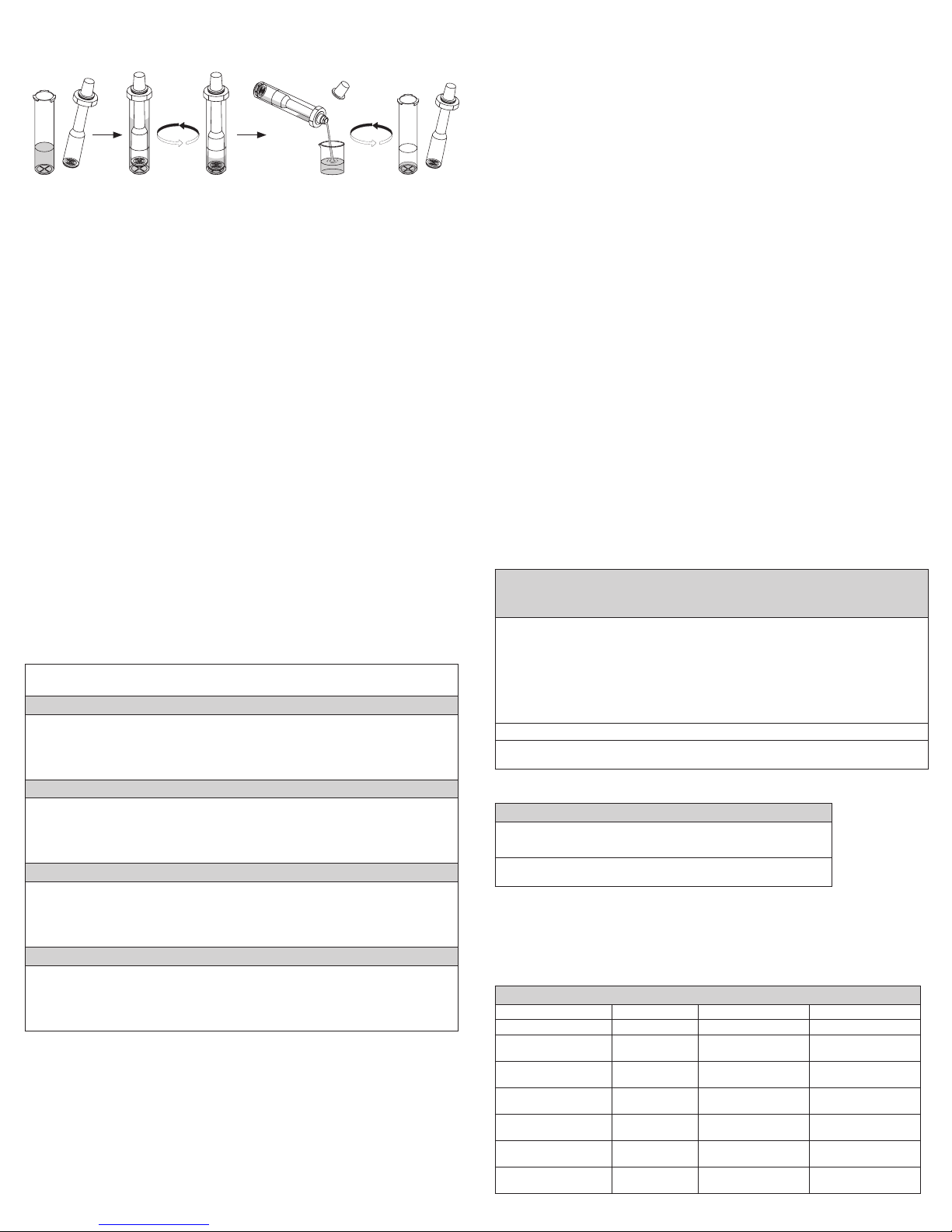
How to Use Centriprep® Centrifugal Filter Devices
Spin to
concentrate
Disassemble device and
add sample to fill line.
1. Turn the twist-lock cap on the sample container counterclockwise, then slide the filtrate collector/cap
assembly out and set it aside.
CAUTION: Take care not to touch, scratch, or damage the membrane on the bottom of the filtrate
2. Add solution to the sample container. The line on the side of the container marks the maximum fill
volume of 15 mL. Do not exceed this volume.
NOTE: For solutions with particulate material, such as cell suspensions, a starting volume over 5mL
3. Seat the twist-lock cap fully onto the shoulder of filtrate collector. If necessary, slide the cap
downward until it stops at the shoulder.
4. Carefully insert the capped filtrate collector into the sample container, gently pushing down so the
collector displaces the solution. Turn the twist-lock cap clockwise to seal the sample container. Finally,
make sure the air-seal cap is snug on the twist-lock cap.
5. Insert the assembled Centriprep® device into the centrifuge and counterbalance with a similar device.
CAUTION: Inspect swinging-bucket rotors for proper clearance before centrifuging. Any obstruction
6. Spin the Centriprep® device at the appropriate g-force until the fluid levels inside and outside the
filtrate collector equilibrate. For concentration applications, see the guidelines for achieving various
concentration volumes outlined in the following “Concentration Times for Dilute Protein Solutions”
section.
7. If further concentration is required after equilibration, remove the device from the centrifuge and take
off the air-seal cap. With the vent groove oriented upward, decant the filtrate; replace the cap and
spin the device a second time. For filtration applications, reserve the filtrate.
8. After the second spin, decant the remaining filtrate. If further concentration is desired, spin the device
again; otherwise, proceed to step 9.
9. Loosen the twist-lock cap (turn counterclockwise) and remove the filtrate collector. Withdraw the
sample using a pipette, or pour the concentrate into a suitable container.
Reassemble and
place in centrifuge.
collector during disassembly, filling, and re-assembly of the device.
will result in reduced flow rates. For best results when working with a sample having over 10%
solids, limit the initial sample volume to 5mL or less.
may result in damage to the Centriprep® device and possible loss of sample. For added
clearance, the Centriprep® device may be used in adaptors without rubber cushions.
Spin until solution
levels have equalized.
Orient vent groove up and
decant filtrate. Spin again.
Spin to
concentrate
Disassemble and
recover concentrate.
Typical Concentration Times for Dilute Protein Solutions
Starting Volume
in Device Spin Time (min) and Concentrate Volume (mL)
Centriprep® 3K
5 mL 50 1.2 10 0.8 10 0.5
10 mL 65 2.0 10 1.0 10 0.5
15 mL 95 3.1 35 1.2 10 0.6
First Spin Second Spin Third Spin
min mL min mL min mL
Centriprep® 10K First Spin Second Spin Third Spin
min mL min mL min mL
5 mL 15 1.3 10 0.6 N/A
10 mL 30 2.1 10 1.0 5 0.5
15 mL 40 3.2 10 1.2 5 0.5
Centriprep® 30K First Spin Second Spin Third Spin
min mL min mL min mL
5 mL 5 1.3 5 0.8 5 0.5
10 mL 10 2.4 5 1.2 5 0.4
15 mL 15 3.2 10 1.1 5 0.5
Centriprep® 50K First Spin Second Spin Third Spin
min mL min mL min mL
5 mL 5 1.4 5 1.0 5 0.6
10 mL 10 2.2 5 1.1 5 0.6
15 mL 10 3.4 5 1.3 5 0.6
Spin Conditions: Swinging-bucket rotor, 3,000 × g for 3K and 10K, and 1,500 for 30K and 50K, 25 °C
Protein marker used: Cytochrome c (0.25 mg/mL) for 3K, and bovine serum albumin (1 mg/mL) for 10K, 30K, and 50K.
N/A = not applicable, third spin unnecessary.
Performance
Flow rates and recovery characteristics of Centriprep® centrifugal filter devices have been tested with
several well-known solutes. These results, which are summarized in the following sections, may be used to
estimate performance with other solutes.
Performance, continued
Relative centrifugal force (RCF) is measured at the filtrate collector base and is calculated as follows:
RCF = 1.118 × 10
NOTE: RCF and RPM are not the same (i.e., 3,000×g is NOT equivalent to 3,000 RPM). Check the
Flow Rate
Filtration rate is affected by several operating parameters, including sample concentration, starting
volume, relative centrifugal force, type of rotor used, membrane MWCO, and temperature. When
concentrating dilute solutions, swinging-bucket and fixed-angle rotors yield comparable flow rates.
For solutions containing over 10% solids, a starting volume greater than 5 mL typically results in reduced
flow rates. A volume of 5 mL or less produces the fastest flow rates because this limits the amount of solids
that can pack onto and blind the membrane.
Spin times must be lengthened when working at low temperatures. At 4 °C, flow rates are approximately
1.5 times slower than at 25 °C. Viscous solutions may also require longer spin times. For example, a
1 mg/mL BSA solution in 50% glycerine would take five times longer to concentrate than the identical
protein in an aqueous buffer solution, using a Centriprep® 10K device.
Retention and Recovery
The anisotropic, hydrophilic membranes in Centriprep® centrifugal filter devices are characterized by a
molecular weight cutoff; i.e., their ability to reject molecules above a specified molecular weight.
Because it is an easy parameter to work with, molecular weight is used in rating membrane permeability
and selectivity based on results achieved with well-characterized proteins.
However, molecular weight may not be valid for all solutes. For instance, retentivity may be greater for
a globular molecule than for a linear molecule having the same nominal molecular weight. The effects
of pH and ionic strength on a molecule’s dimensions and behavior in a particular solution must also be
considered when assessing solute retentivity.
Low solute recovery in the concentrate may indicate possible adsorptive losses and/or solute passage
through the membrane. Adsorptive losses depend on solute concentration, the nature of solute
(hydrophobic or hydrophilic), temperature, time of contact with component surfaces, sample composition,
and pH.
Typical Concentrate Recovery
Solute & Starting Concentration
IgG Fr. II (1 mg/mL) 156,000 – – – 99
Bovine serum albumin (1 mg/mL) 67,000 – 97 98 93
Ovalbumin (1 mg/mL) 45,000 – 95 90 –
α-Chymotrypsinogen (1 mg/mL) 25,000 94 93 – –
Cytochrome c (0.25 mg/mL) 12,400 96 96 8 4
Vitamin B12 (0.2 mg/mL) 1,355 12 – 5 –
15 mL starting volume, 25 °C, swinging-bucket rotor
Results based on recommended spin times outlined in the “Concentration Times for Dilute Protein
Solutions” section
Typical Protein Recovery, Centriprep® 30K Device
Concentration % Concentrate Recovery ± 1 SD
100 µg/mL 98.2 ± 1.7
1,000 µg/mL 96.6 ± 0.2
15 mL starting volume, 25 °C, swinging-bucket rotor, 1,500×g
Bovine serum albumin, two 25-minute spins
Desalting
For desalting or solvent exchange, the sample is concentrated until the equilibration point is reached.
Filtrate is discarded, then the sample is reconstituted to the original volume by adding an appropriate
solvent and vortex mixing. The sample is then concentrated and reconstituted once more. This process is
repeated until the concentration of the contaminating microsolute is sufficiently reduced.
The following theoretical example illustrates the process of sample desalting:
Process Step Sample Volume Protein Concentration NaCl Concentration
Spin to concentrate 3 mL 5 mg/mL 500 mM
Reconstitute back to 15 mL
with 10 mM NaCl
Spin to concentrate/
Reconstitute back to 15 mL
with 10 mM NaCl
Spin to concentrate/
Reconstitute back to 15 mL
with 10 mM NaCl
Spin to concentrate/
-5
× radius × (RPM)
Radius = distance in centimeters, measured from the
center of rotation to the base of the filtrate collector
RPM = revolutions per minute.
centrifuge operating guide for instructions on converting g-force to RPM, or use the formula
above.
Initial sample 15 mL 1 mg/mL 500 mM
desalt #1
desalt #2
desalt #3
2
Nominal
Molecular
Weight
15 mL 1 mg/mL 108 mM
3 mL 5 mg/mL 108 mM
15 mL 1 mg/mL 29.6 mM
3 mL 5 mg/mL 29.6 mM
15 mL 1 mg/mL 13.9 mM
3 mL 5 mg/mL 13.9 mM
Centriprep® % Concentrate Recovery
3K 10K 30K 50K
Page 3
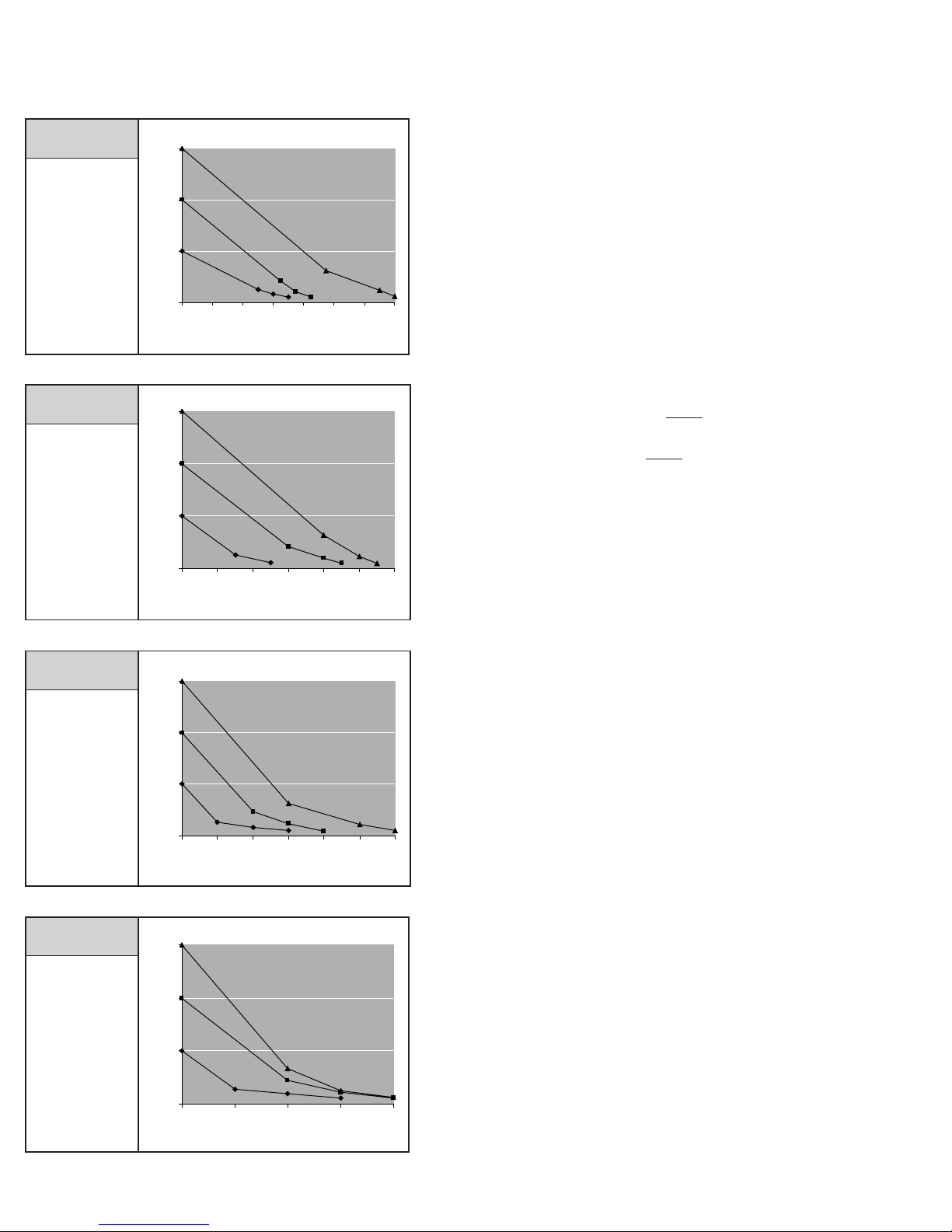
Performance Figures
Typical Filtration Profiles for Centriprep® Devices Using Common Dilute Protein Solutions
Centriprep® 3K
Device
Operating
Parameters:
● g-force: 3,000×g
● temperature: 25 °C
● swinging-bucket rotor
● solute: 0.25 mg/mL
Cytochrome c
5, 10, and 15 mL
starting volumes
Filtrate decanted
at times indicated
Centriprep® 10K
Device
Operating
Parameters:
● g-force: 3,000×g
● temperature: 25 °C
● swinging-bucket rotor
● solute: 1 mg/mL
Bovine serum albumin
5, 10, and 15 mL
starting volumes
Filtrate decanted
at times indicated
Concentrate Volume (mL)
Centrifugation Time (min)
Concentrate Volume (mL)
Centrifugation Time (min)
How to Quantify Recoveries
Calculate total recovery, percent concentrate recovery, and percent filtrate recovery using the method
below. This procedure provides a close approximation of recoveries for solutions having concentrations up
to roughly 20 mg/mL.
NOTE: Appropriate assay techniques include absorption spectrophotometry, radioimmunoassay, refractive
index, and conductivity.
Weighing Procedure
The density of most dilute proteins is nearly equal to the density of water (i.e., 1 g/mL). Using this property,
the concentrate and filtrate volumes can be quantified by weighing them and converting the units from
grams to milliliters. This technique is valid only for solutions with concentrations of approximately
20 mg/mL or less.
1. Before use, weigh the sample container and an empty test tube (15 mL capacity).
2. Fill the sample container with solution and reweigh.
3. Assemble the centrifugal filter device and spin per instructions. Decant filtrate into preweighed
test tube. If further concentration is desired, spin a second time, decanting filtrate into test tube
containing first filtrate. Reweigh the test tube plus filtrate(s).
4. Disassemble the device and reweigh the sample container plus concentrate.
5. Subtract weight of empty test tube or sample container to calculate the weights of the starting
material, filtrate, and concentrate.
6. Assay the starting material, filtrate, and concentrate to determine solute concentration.
7. Calculate recoveries using the weight/volume data and the measured concentrations as follows:
× C
W
c
f
× C
Wo × C
f
o
c
o
% concentrate recovery = 100 ×
% filtrate recovery = 100 ×
W
Wo × C
% total recovery = % concentrate recovery + % filtrate recovery
Wc = total weight of concentrate before assay
= weight of original starting material
W
o
Wf = weight of filtrate
Cc = concentrate concentration
C
= original starting material concentration
o
Cf = filtrate concentration
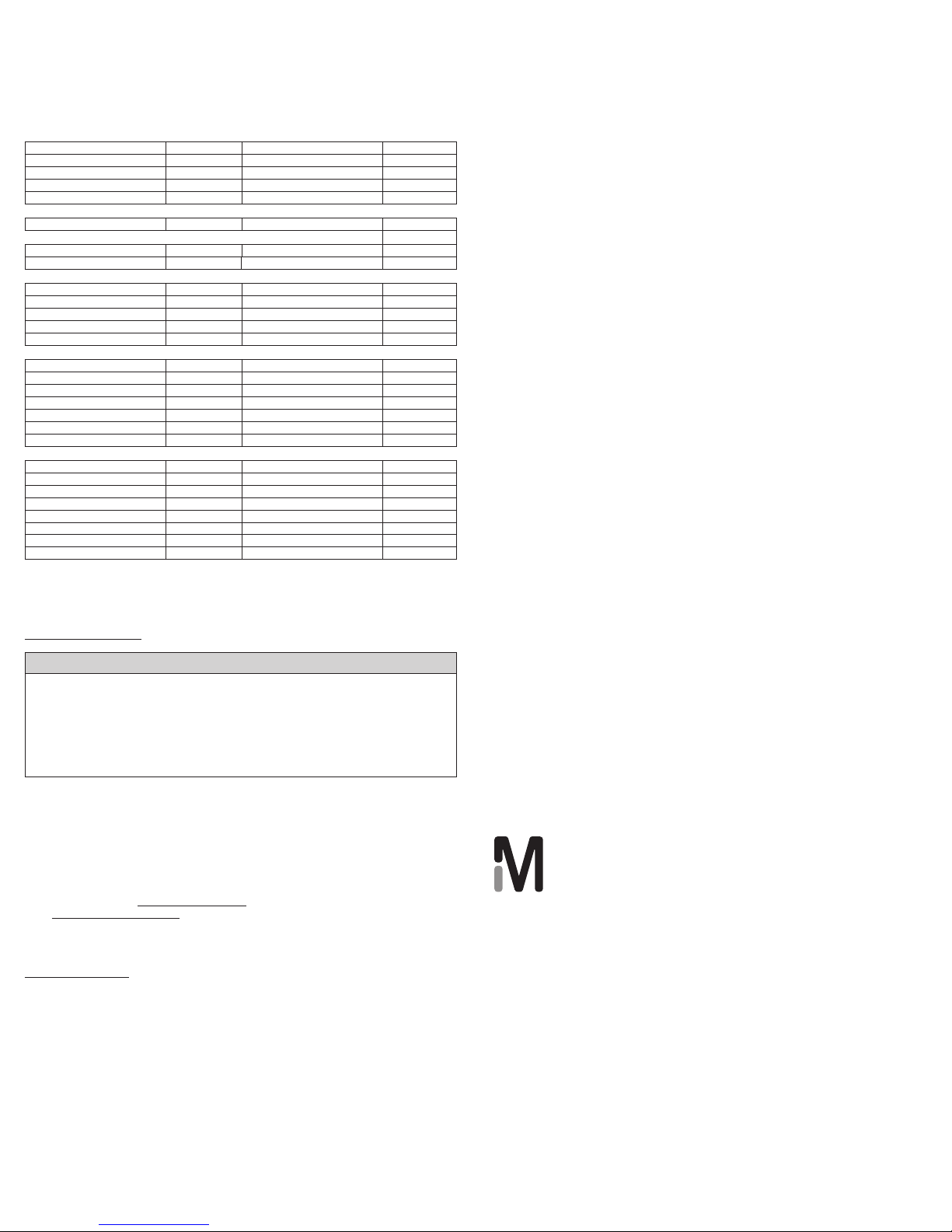
Centriprep® 30K
Device
Operating
Parameters:
● g-force: 1,500×g
● temperature: 25 °C
● swinging-bucket rotor
● solute: 1 mg/mL
Bovine serum albumin
5, 10, and 15 mL
starting volumes
Filtrate decanted
at times indicated
Centriprep® 50K
Device
Operating
Parameters:
● g-force: 1,500×g
● temperature: 25 °C
● swinging-bucket rotor
● solute: 1 mg/mL
Bovine serum albumin
5, 10, and 15 mL
starting volumes
Filtrate decanted
at times indicated
Concentrate Volume (mL)
Centrifugation Time (min)
Concentrate Volume (mL)
Centrifugation Time (min)
Specifications
Sample container capacity 15 mL
Final concentrate volume at 25 °C 0.5–0.6 mL
Filtrate collector capacity 12 mL
Maximum relative centrifugal force
Centriprep® 3K device 3,000×g
Centriprep® 50K device 1,500×g
Active membrane area 2.84 cm
Hold-up volume (membrane and support) 0.5 mL
Dimensions
Diameter of twist-lock cap 36.5 mm (cap resides outside centrifuge carrier)
Diameter of sample container 28.1 mm
Length 135 mm
Materials of Construction
Membrane Ultracel
®
Sample container Polycarbonate
Membrane support Polycarbonate
Filtrate collector Polycarbonate
Twist-lock cap Nylon
Air seal cap Polypropylene
2
regenerated cellulose
Page 4
Chemical Compatibility
Centriprep® devices are intended for use with biological fluids and aqueous solutions. Before use, check
the sample for chemical compatibility with the device. The solutions listed in the following table have been
evaluated for chemical compatibility with Centriprep® devices.
Acids Concentration Concentration
Acetic acid ≤ 80% Phosphoric acid ≤ 30%
Formic acid ≤ 50% Sulfuric acid ≤ 3%
Hydrochloric acid ≤ 1.0 N Trichloroacetic acid (TCA) ≤ 10%
Lactic acid ≤ 50% Trifluoroacetic acid (TFA) ≤ 50%
Nitric acid ≤ 10%
Alkalis
Ammonium hydroxide ≤ 5% Sodium hydroxide ≤ 0.1 N
Alcohols
n-Butanol ≤ 90% Isopropanol ≤ 70%
Ethanol ≤ 70% Methanol ≤ 60%
Detergents
Alconox® detergent ≤ 1% Sodium deoxycholate ≤ 5%
Lubrol® PX detergent ≤ 0.1% Tergazyme® detergent ≤ 1%
Nonidet™ P-40 surfactant ≤ 2% Triton® X-100 surfactant ≤ 0.002%
PyroCLEAN ™ detergent 1:10 Tween® 20 surfactant ≤ 0.1%
Sodium dodecyl sulfate (SDS) ≤ 2%
Organic solvents
Acetone not recommended Dioxane not recommended
Acetonitrile ≤ 30% Ethyl acetate not recommended
Benzene not recommended Formaldehyde ≤ 5%
Carbon tetrachloride not recommended Pyridine not recommended
Chloroform not recommended Tetrahydrofuran not recommended
Dimethyl formamide ≤ 50% Toluene not recommended
Dimethyl sulfoxide (DMSO) ≤ 5%
Miscellaneous
Ammonium sulfate Saturated Phenol ≤ 1%
Diethyl pyrocarbonate ≤ 0.2% Phosphate buffer (pH 8.2) ≤ 1 M
Dithiothreitol (DTT) ≤ 0.1 M Polyethylene glycol ≤ 10%
Glycerine ≤ 70% Sodium carbonate ≤ 20%
Guanidine HCl ≤ 6 M Sodium thiocyanate ≤ 3 M
Guanidine thiocyanate ≤ 0.5 M Tris buffer (pH 8.2) ≤ 1 M
Imidazole ≤ 100 mM Urea ≤ 8 M
Mercaptoethanol ≤ 0.1 M
Product Ordering Information
This section lists the catalogue numbers for Centriprep® Ultrafiltration Devices. See the Technical
Assistance section for contact information. You can purchase these products on-line at
www.millipore.com/products.
Description 24/pk 96/pk
For in vitro diagnostic use
Centriprep® 10K device (10,000 MWCO) 4304 4305
Centriprep® 30K device (30,000 MWCO) 4306 4307
For research use only
Centriprep® 3K device (3,000 MWCO) 4302 4303
Centriprep® 50K device (50,000 MWCO) 4310 4311
Notice
The information in this document is subject to change without notice and should not be construed as a
commitment by Merck Millipore Ltd. (“Millipore”) or an affiliate. Neither Merck Millipore Ltd. nor any of its
affiliates assumes responsibility for any errors that may appear in this document.
Technical Assistance
For more information, contact the office nearest you. Up-to-date world-wide contact information is
available on our web site at www.millipore.com/offices. You can also visit the tech service page on our web
site at www.millipore.com/techservice.
Standard Warranty
The applicable warranty for the products listed in this publication may be found at
www.millipore.com/terms (within the “Terms and Conditions of Sale” applicable to your purchase
transaction).
Made in Ireland
Merck Millipore Ltd.
Tullagreen,
Carrigtwohill,
Co. Cork, IRL
The M logo is a trademark of Merck KGaA, Darmstadt, Germany.
Millipore, Centriprep, and Ultracel are registered trademarks of Merck KGaA.
All trademarks of third parties are the property of their respective owners.
© 2013 EMD Millipore Corporation. Billerica, MA, U.S.A. All rights reserved.
PR04321, Rev. A, 09/13
 Loading...