

Page 1
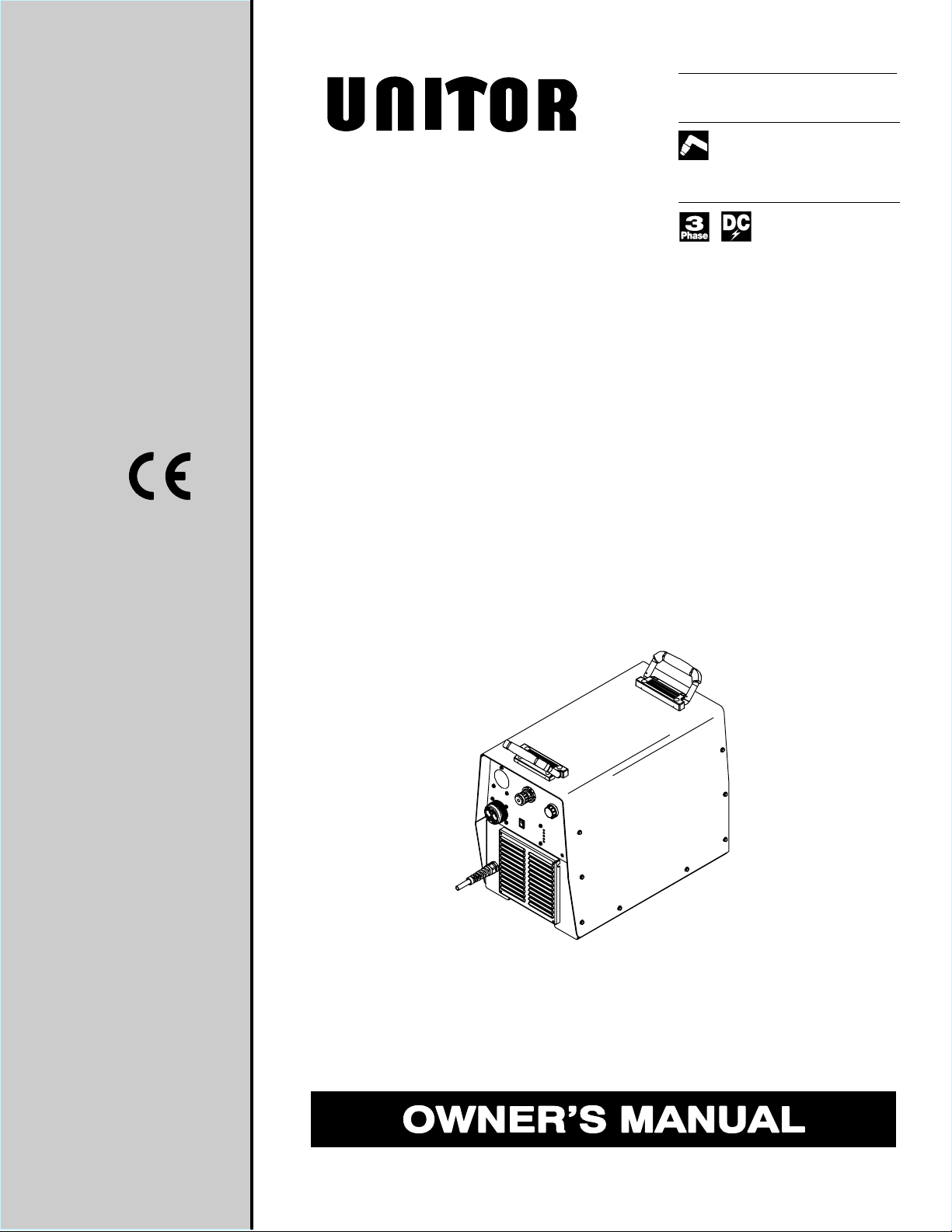
OM-202 515C
2005−12
Processes
Air Plasma Cutting
and Gouging
Description
Air Plasma Cutter
UPC 838
Page 2

Page 3

TABLE OF CONTENTS
SECTION 1 − SAFETY PRECAUTIONS - READ BEFORE USING 1 . . . . . . . . . . . . . . . . . . . . . . . . . . . . . . . . . .
1-1. Symbol Usage 1 . . . . . . . . . . . . . . . . . . . . . . . . . . . . . . . . . . . . . . . . . . . . . . . . . . . . . . . . . . . . . . . . . . . . . . . .
1-2. Plasma Arc Cutting Hazards 1 . . . . . . . . . . . . . . . . . . . . . . . . . . . . . . . . . . . . . . . . . . . . . . . . . . . . . . . . . . . .
1-3. Additional Symbols For Installation, Operation, And Maintenance 3 . . . . . . . . . . . . . . . . . . . . . . . . . . . . .
1-4. California Proposition 65 Warnings 3 . . . . . . . . . . . . . . . . . . . . . . . . . . . . . . . . . . . . . . . . . . . . . . . . . . . . . . .
1-5. Principal Safety Standards 4 . . . . . . . . . . . . . . . . . . . . . . . . . . . . . . . . . . . . . . . . . . . . . . . . . . . . . . . . . . . . .
1-6. EMF Information 4 . . . . . . . . . . . . . . . . . . . . . . . . . . . . . . . . . . . . . . . . . . . . . . . . . . . . . . . . . . . . . . . . . . . . . .
SECTION 2 − CONSIGNES DE SÉCURITÉ − LIRE AVANT UTILISATION 5 . . . . . . . . . . . . . . . . . . . . . . . . . . . .
2-1. Signification des symboles 5 . . . . . . . . . . . . . . . . . . . . . . . . . . . . . . . . . . . . . . . . . . . . . . . . . . . . . . . . . . . . .
2-2. Dangers liés au coupage à l’arc au plasma 5 . . . . . . . . . . . . . . . . . . . . . . . . . . . . . . . . . . . . . . . . . . . . . . . .
2-3. Dangers supplémentaires en relation avec l’installation, le fonctionnement
et la maintenance 7 . . . . . . . . . . . . . . . . . . . . . . . . . . . . . . . . . . . . . . . . . . . . . . . . . . . . . . . . . . . . . . . . . . . . .
2-4. Principales normes de sécurité 8 . . . . . . . . . . . . . . . . . . . . . . . . . . . . . . . . . . . . . . . . . . . . . . . . . . . . . . . . . .
2-5. Information sur les champs électromagnétiques 8 . . . . . . . . . . . . . . . . . . . . . . . . . . . . . . . . . . . . . . . . . . . .
SECTION 3 − DEFINITIONS 9 . . . . . . . . . . . . . . . . . . . . . . . . . . . . . . . . . . . . . . . . . . . . . . . . . . . . . . . . . . . . . . . . . . .
3-1. Warning Label Definitions 9 . . . . . . . . . . . . . . . . . . . . . . . . . . . . . . . . . . . . . . . . . . . . . . . . . . . . . . . . . . . . . .
3-2. Air Supply Precaution 10 . . . . . . . . . . . . . . . . . . . . . . . . . . . . . . . . . . . . . . . . . . . . . . . . . . . . . . . . . . . . . . . . . .
3-3. Manufacturer’s Rating Label For CE Products 11 . . . . . . . . . . . . . . . . . . . . . . . . . . . . . . . . . . . . . . . . . . . . .
3-4. Symbols And Definitions 11 . . . . . . . . . . . . . . . . . . . . . . . . . . . . . . . . . . . . . . . . . . . . . . . . . . . . . . . . . . . . . . .
SECTION 4 − INSTALLATION 12 . . . . . . . . . . . . . . . . . . . . . . . . . . . . . . . . . . . . . . . . . . . . . . . . . . . . . . . . . . . . . . . . . .
4-1. Specifications 12 . . . . . . . . . . . . . . . . . . . . . . . . . . . . . . . . . . . . . . . . . . . . . . . . . . . . . . . . . . . . . . . . . . . . . . . .
4-2. Duty Cycle And Overheating 12 . . . . . . . . . . . . . . . . . . . . . . . . . . . . . . . . . . . . . . . . . . . . . . . . . . . . . . . . . . . .
4-3. Cutting Speed 13 . . . . . . . . . . . . . . . . . . . . . . . . . . . . . . . . . . . . . . . . . . . . . . . . . . . . . . . . . . . . . . . . . . . . . . . .
4-4. Selecting a Location 14 . . . . . . . . . . . . . . . . . . . . . . . . . . . . . . . . . . . . . . . . . . . . . . . . . . . . . . . . . . . . . . . . . . .
4-5. Connecting Work Clamp And Gas/Air Supply 15 . . . . . . . . . . . . . . . . . . . . . . . . . . . . . . . . . . . . . . . . . . . . . .
4-6. Electrical Service Guide 15 . . . . . . . . . . . . . . . . . . . . . . . . . . . . . . . . . . . . . . . . . . . . . . . . . . . . . . . . . . . . . . . .
4-7. Connecting Input Power 16 . . . . . . . . . . . . . . . . . . . . . . . . . . . . . . . . . . . . . . . . . . . . . . . . . . . . . . . . . . . . . . . .
SECTION 5 − OPERATION 17 . . . . . . . . . . . . . . . . . . . . . . . . . . . . . . . . . . . . . . . . . . . . . . . . . . . . . . . . . . . . . . . . . . . .
5-1. Controls 17 . . . . . . . . . . . . . . . . . . . . . . . . . . . . . . . . . . . . . . . . . . . . . . . . . . . . . . . . . . . . . . . . . . . . . . . . . . . . .
5-2. Setting Gas/Air Pressure 18 . . . . . . . . . . . . . . . . . . . . . . . . . . . . . . . . . . . . . . . . . . . . . . . . . . . . . . . . . . . . . . .
5-3. Sequence Of Operation 19 . . . . . . . . . . . . . . . . . . . . . . . . . . . . . . . . . . . . . . . . . . . . . . . . . . . . . . . . . . . . . . . .
SECTION 6 − MAINTENANCE & TROUBLESHOOTING 20 . . . . . . . . . . . . . . . . . . . . . . . . . . . . . . . . . . . . . . . . . . .
6-1. Routine Maintenance 20 . . . . . . . . . . . . . . . . . . . . . . . . . . . . . . . . . . . . . . . . . . . . . . . . . . . . . . . . . . . . . . . . . .
6-2. Trouble Lights 21 . . . . . . . . . . . . . . . . . . . . . . . . . . . . . . . . . . . . . . . . . . . . . . . . . . . . . . . . . . . . . . . . . . . . . . . .
6-3. Checking Shield Cup Shutdown System 21 . . . . . . . . . . . . . . . . . . . . . . . . . . . . . . . . . . . . . . . . . . . . . . . . . .
6-4. Troubleshooting 22 . . . . . . . . . . . . . . . . . . . . . . . . . . . . . . . . . . . . . . . . . . . . . . . . . . . . . . . . . . . . . . . . . . . . . .
SECTION 7 − ELECTRICAL DIAGRAM 24 . . . . . . . . . . . . . . . . . . . . . . . . . . . . . . . . . . . . . . . . . . . . . . . . . . . . . . . . . .
SECTION 8 − PARTS LIST 26 . . . . . . . . . . . . . . . . . . . . . . . . . . . . . . . . . . . . . . . . . . . . . . . . . . . . . . . . . . . . . . . . . . . . .
Page 4

Declaration of Conformity for
European Community (CE) Products
NOTE
Manufacturer’s Name: Miller Electric Mfg. Co.
Manufacturer’s Address: 1635 W. Spencer Street
This information is provided for units with CE certification (see rating label on unit).
Appleton, WI 54914 USA
Declares that the product: UPC 838
conforms to the following Directives and Standards:
Directives
Electromagnetic Compatibility Directives: 89/336/EEC, 92/31/EEC
Low Voltage Directive: 73/23/EEC
Machinery Directives: 89/392/EEC, 91/368/EEC, 93/C 133/04, 93/68/EEC
Standards
Electromagnetic compatibility (EMC) Product standard for arc welding equipment:
EN50199: August 1995
Safety Requirements for Arc Welding Equipment part 1: EN 60974-1: 1989
Arc Welding Equipment Part 1: Welding Power Sources: IEC 974-1
(September 1998 − Draft revision)
Degrees of Protection provided by Enclosures (IP code): IEC 529: November 1989
Plasma Cutting Systems for Manual Use: EN 50192: 1995
European Contact: Mr. Danilo Fedolfi, Managing Director
ITW WELDING PRODUCTS ITALY S.r.l.
Via Privata Iseo 6/E
20098 San Giuliano
Milanese, Italy
Telephone: 39(02)98290-1
Fax: 39(02)98290-203
dec_con1_11/02
Page 5
SECTION 1 − SAFETY PRECAUTIONS - READ BEFORE USING
pom _nd_8/03
1-1. Symbol Usage
Means Warning! Watch Out! There are possible hazards
with this procedure! The possible hazards are shown in
the adjoining symbols.
Y Marks a special safety message.
. Means “Note”; not safety related.
1-2. Plasma Arc Cutting Hazards
Y The symbols shown below are used throughout this manual to
call attention to and identify possible hazards. When you see
the symbol, watch out, and follow the related instructions to
avoid the hazard. The safety information given below is only
a summary of the more complete safety information found in
the Safety Standards listed in Section 1-5. Read and follow all
Safety Standards.
Y Only qualified persons should install, operate, maintain, and
repair this unit.
Y During operation, keep everybody, especially children, away.
CUTTING can cause fire or explosion.
Hot metal and sparks blow out from the cutting arc.
The flying sparks and hot metal, hot workpiece, and
hot equipment can cause fires and burns. Check
and be sure the area is safe before doing any cutting.
D Protect yourself and others from flying sparks and hot metal.
D Do not cut where flying sparks can strike flammable material.
D Remove all flammables within 35 ft (10.7 m) of the cutting arc. If this
is not possible, tightly cover them with approved covers.
D Be alert that sparks and hot materials from cutting can easily go
through small cracks and openings to adjacent areas.
D Watch for fire, and keep a fire extinguisher nearby.
D Be aware that cutting on a ceiling, floor, bulkhead, or partition can
cause fire on the hidden side.
D Do not cut on closed containers such as tanks or drums.
D Connect work cable to the work as close to the cutting area as prac-
tical to prevent cutting current from traveling long, possibly
unknown paths and causing electric shock and fire hazards.
D Never cut containers with potentially flammable materials inside −
they must be emptied and properly cleaned first.
D Do not cut in atmospheres containing explosive dust or vapors.
D Do not cut pressurized cylinders, pipes, or vessels.
D Do not cut containers that have held combustibles.
D Wear oil-free protective garments such as leather gloves, heavy
shirt, cuffless trousers, high shoes, and a cap.
D Do not locate unit on or over combustible surfaces.
D Remove any combustibles, such as a butane lighter or matches,
from your person before doing any cutting.
This group of symbols means Warning! Watch Out! possible
ELECTRIC SHOCK, MOVING PARTS, and HOT PARTS hazards.
Consult symbols and related instructions below for necessary actions
to avoid the hazards.
D Do not touch live electrical parts.
D Wear dry, hole-free insulating gloves and body protection.
D Insulate yourself from work and ground using dry insulating mats or
covers big enough to prevent any physical contact with the work or
ground.
D Do not touch torch parts if in contact with the work or ground.
D Turn off power before checking, cleaning, or changing torch parts.
D Disconnect input power before installing or servicing this equip-
ment. Lockout/tagout input power according to OSHA CFR
1910.147 (see Safety Standards).
D Properly install and ground this equipment according to its Owner’s
Manual and national, state, and local codes.
D Check and be sure that input power cord ground wire is properly
connected to ground terminal in disconnect box or that cord plug is
connected to a properly grounded receptacle outlet − always verify
the supply ground.
D When making input connections, attach proper grounding conduc-
tor first.
D Frequently inspect input power cord for damage or bare wiring − re-
place cord immediately if damaged − bare wiring can kill.
D Turn off all equipment when not in use.
D Inspect and replace any worn or damaged torch cable leads.
D Do not wrap torch cable around your body.
D Ground the workpiece to a good electrical (earth) ground if required
by codes.
D Use only well-maintained equipment. Repair or replace damaged
parts at once.
D Wear a safety harness if working above floor level.
D Keep all panels and covers securely in place.
D Do not bypass or try to defeat the safety interlock systems.
D Use only torch(es) specified in Owner’s Manual.
D Keep away from torch tip and pilot arc when trigger is pressed.
D Clamp work cable with good metal-to-metal contact to workpiece
(not piece that will fall away) or worktable as near the cut as
practical.
D Insulate work clamp when not connected to workpiece to prevent
contact with any metal object.
ELECTRIC SHOCK can kill.
ELECTRIC SHOCK can kill.
Touching live electrical parts can cause fatal shocks
or severe burns. The torch and work circuit are
electrically live whenever the output is on. The input
power circuit and machine internal circuits are also
higher voltages than welding to start and maintain the arc (200 to 400
volts dc are common), but also uses torches designed with safety
interlock systems which turn off the machine when the shield cup is
loosened or if tip touches electrode inside the nozzle. Incorrectly
installed or improperly grounded equipment is a hazard.
live when power is on. Plasma arc cutting requires
SIGNIFICANT DC VOLTAGE exists on
internal parts of inverter power
sources AFTER the removal of input
power.
D Turn Off unit, disconnect input power, check voltage on input ca-
pacitors, and be sure it is near zero (0) volts before touching any
parts. Check capacitors according to instructions in Maintenance Section of Owner’s Manual or Technical Manual before
touching any parts.
OM-202 515 Page 1
Page 6
EXPLODING PARTS can injure.
D On inverter power sources, failed parts can ex-
plode or cause other parts to explode when
power is applied. Always wear a face shield
and long sleeves when servicing inverters.
FLYING SPARKS can cause injury.
Sparks and hot metal blow out from the cutting arc.
Chipping and grinding cause flying metal.
D Wear approved face shield or safety goggles with side shields.
D Wear proper body protection to protect skin.
D Wear flame-resistant ear plugs or ear muffs to prevent sparks from
entering ears.
ARC RAYS can burn eyes and skin.
Arc rays from the cutting process produce intense
visible and invisible (ultraviolet and infrared) rays
that can burn eyes and skin.
D Wear face protection (helmet or shield) with correct shade of filter to
protect your face and eyes when cutting or watching. ANSI Z49.1
(see Safety Standards) suggests a No. 9 shade (with No. 8 as minimum) for all cutting currents less than 300 amperes. Z49.1 adds
that lighter filter shades may be used when the arc is hidden by the
workpiece. As this is normally the case with low current cutting, the
shades suggested in Table 1 are provided for the operator’s convenience.
D Wear approved safety glasses with side shields under your helmet
or shield.
D Use protective screens or barriers to protect others from flash and
glare; warn others not to watch the arc.
D Wear protective clothing made from durable, flame-resistant
material (leather and wool) and foot protection.
Table 1. Eye Protection For Plasma Arc Cutting
Current Level In Amperes Minimum Shade Number
Below 20
20 − 40
40 − 60
60 − 80
#4
#5
#6
#8
NOISE can damage hearing.
Prolonged noise from some cutting applications can
damage hearing if levels exceed limits specified by
OSHA (see Safety Standards).
D Use approved ear plugs or ear muffs if noise level is high.
D Warn others nearby about noise hazard.
FUMES AND GASES can be hazardous.
Cutting produces fumes and gases. Breathing
these fumes and gases can be hazardous to
your health.
D Keep your head out of the fumes. Do not breathe the fumes.
D If inside, ventilate the area and/or use exhaust at the arc to remove
cutting fumes and gases.
D If ventilation is poor, use an approved air-supplied respirator.
D Read the Material Safety Data Sheets (MSDSs) and the manufac-
turer’s instruction for metals to be cut, coatings, and cleaners.
D Work in a confined space only if it is well ventilated, or while wearing
an air-supplied respirator. Fumes from cutting and oxygen depletion can alter air quality causing injury or death. Be sure the
breathing air is safe.
D Do not cut in locations near degreasing, cleaning, or spraying oper-
ations. The heat and rays of the arc can react with vapors to form
highly toxic and irritating gases.
D Do not cut on coated metals, such as galvanized, lead, or cadmium
plated steel, unless the coating is removed from the cutting area,
the area is well ventilated, and if necessary, while wearing an airsupplied respirator. The coatings and any metals containing these
elements can give off toxic fumes when cut.
D Do not cut containers with toxic or reactive materials inside or
containers that have held toxic or reactive materials − they must be
emptied and properly cleaned first.
PLASMA ARC can cause injury.
The heat from the plasma arc can cause serious
burns. The force of the arc adds greatly to the burn
hazard. The intensely hot and powerful arc can
quickly cut through gloves and tissue.
D Keep away from the torch tip.
D Do not grip material near the cutting path.
D The pilot arc can cause burns − keep away from torch tip when trig-
ger is pressed.
D Wear proper flame-retardant clothing covering all exposed body ar-
eas.
D Point torch away from your body and toward work when pressing
the torch trigger − pilot arc comes on immediately.
D Turn off power source and disconnect input power before disas-
sembling torch or changing torch parts.
D Use only torch(es) specified in the Owner’s Manual.
CYLINDERS can explode if damaged.
Gas cylinders contain gas under high pressure. If
damaged, a cylinder can explode. Since gas cylinders are normally part of metalworking processes,
be sure to treat them carefully.
D Protect compressed gas cylinders from excessive heat, mechani-
cal shocks, slag, open flame, sparks, and arcs.
D Install and secure cylinders in an upright position by chaining them
to a stationary support or equipment cylinder rack to prevent falling
or tipping.
D Keep cylinders away from any cutting or other electrical circuits.
D Never allow electrical contact between a plasma arc torch and a
cylinder.
D Never cut on a pressurized cylinder − explosion will result.
D Use only correct gas cylinders, regulators, hoses, and fittings de-
signed for the specific application; maintain them and associated
parts in good condition.
D Turn face away from valve outlet when opening cylinder valve.
D Keep protective cap in place over valve except when cylinder is in
use or connected for use.
D Read and follow instructions on compressed gas cylinders, asso-
ciated equipment, and CGA publication P-1 listed in Safety
Standards.
OM-202 515 Page 2
Page 7
1-3. Additional Symbols For Installation, Operation, And Maintenance
HOT PARTS can cause severe burns.
D Do not touch hot parts bare handed.
D Allow cooling period before working on torch.
MOVING PARTS can cause injury.
D Keep away from moving parts such as fans.
D Keep all doors, panels, covers, and guards
closed and securely in place.
FLYING METAL can injure eyes.
D Wear safety glasses with side shields or face
shield.
MAGNETIC FIELDS can affect pacemakers.
D Pacemaker wearers keep away.
D Wearers should consult their doctor before go-
ing near plasma arc cutting operations.
OVERUSE can cause OVERHEATING.
D Allow cooling period; follow rated duty cycle.
D Reduce amperage (thickness) or reduce duty
cycle before starting to cut again.
FIRE OR EXPLOSION hazard.
D Do not locate unit on, over, or near combustible
surfaces.
D Do not install unit near flammables.
D Do not overload building wiring − be sure power supply system is
properly sized, rated, and protected to handle this unit.
STATIC (ESD) can damage PC boards.
D Put on grounded wrist strap BEFORE handling
boards or parts.
D Use proper static-proof bags and boxes to
store, move, or ship PC boards.
H.F. RADIATION can cause interference.
D High frequency (H.F.) can interfere with radio
navigation, safety services, computers, and
communications equipment.
D Have only qualified persons familiar with elec-
tronic equipment perform this installation.
D The user is responsible for having a qualified electrician promptly
correct any interference problem resulting from the installation.
D If notified by the FCC about interference, stop using the equipment
at once.
D Have the installation regularly checked and maintained.
D Keep high-frequency source doors and panels tightly shut, keep
spark gaps at correct setting, and use grounding and shielding to
minimize the possibility of interference.
EXPLODING HYDROGEN hazard.
D When cutting aluminum underwater or with the
water touching the underside of the aluminum,
free hydrogen gas may collect under the workpiece.
D See your cutting engineer and water table instructions for help.
FALLING UNIT can cause injury.
D Use lifting eye to lift unit only, NOT running
gear, gas cylinders, or any other accessories.
D Use equipment of adequate capacity to lift unit.
D If using lift forks to move unit, be sure forks are long enough to ex-
tend beyond opposite side of unit.
1-4. California Proposition 65 Warnings
Y Welding or cutting equipment produces fumes or gases which
contain chemicals known to the State of California to cause
birth defects and, in some cases, cancer. (California Health &
Safety Code Section 25249.5 et seq.)
Y Battery posts, terminals and related accessories contain lead
and lead compounds, chemicals known to the State of
California to cause cancer and birth defects or other
reproductive harm. Wash hands after handling.
ARC CUTTING can cause interference.
D Electromagnetic energy can interfere with
sensitive electronic equipment such as
computers and computer-driven equipment
such as robots.
D To reduce possible interference, keep cables as short as possible,
close together, and down low, such as on the floor.
D Locate cutting operation 100 meters from any sensitive electronic
equipment.
D Be sure this cutting power source is installed and grounded
according to this manual.
D If interference still occurs, the user must take extra measures such
as moving the machine, using shielded cables, using line filters, or
shielding the work area.
For Gasoline Engines:
Y Engine exhaust contains chemicals known to the State of
California to cause cancer, birth defects, or other reproductive
harm.
For Diesel Engines:
Y Diesel engine exhaust and some of its constituents are known
to the State of California to cause cancer, birth defects, and
other reproductive harm.
OM-202 515 Page 3
Page 8

1-5. Principal Safety Standards
Safety in Welding and Cutting, ANSI Standard Z49.1, from American
Welding Society, 550 N.W. LeJeune Rd, Miami FL 33126
Safety and Health Standards, OSHA 29 CFR 1910, from Superintendent of Documents, U.S. Government Printing Office, Washington, D.C.
20402.
Recommended Practices for Plasma Arc Cutting, American Welding
Society Standard AWS C5.2, from American Welding Society, 550 N.W.
LeJeune Rd, Miami, FL 33126
Recommended Safe Practices for the Preparation for Welding and Cutting of Containers That Have Held Hazardous Substances, American
Welding Society Standard AWS F4.1, from American Welding Society,
550 N.W. LeJeune Rd, Miami, FL 33126
National Electrical Code, NFPA Standard 70, from National Fire Protection Association, Batterymarch Park, Quincy, MA 02269.
1-6. EMF Information
Considerations About Welding Or Cutting And The Effects Of Low
Frequency Electric And Magnetic Fields
Welding or cutting current, as it flows through the welding or cutting
cables, will cause electromagnetic fields. There has been and still is
some concern about such fields. However, after examining more than
500 studies spanning 17 years of research, a special blue ribbon
committee of the National Research Council concluded that: “The body
of evidence, in the committee’s judgment, has not demonstrated that
exposure to power-frequency electric and magnetic fields is a humanhealth hazard.” However, studies are still going forth and evidence
continues to be examined. Until the final conclusions of the research are
reached, you may wish to minimize your exposure to electromagnetic
fields when welding or cutting.
To reduce magnetic fields in the workplace, use the following procedures:
Safe Handling of Compressed Gases in Cylinders, CGA Pamphlet P-1,
from Compressed Gas Association, 1235 Jefferson Davis Highway,
Suite 501, Arlington, VA 22202.
Code for Safety in Welding and Cutting, CSA Standard W117.2, from
Canadian Standards Association, Standards Sales, 178 Rexdale Boulevard, Rexdale, Ontario, Canada M9W 1R3.
Safe Practices For Occupation And Educational Eye And Face Protec-
tion, ANSI Standard Z87.1, from American National Standards Institute,
1430 Broadway, New York, NY 10018.
Cutting And Welding Processes, NFPA Standard 51B, from National
Fire Protection Association, Batterymarch Park, Quincy, MA 02269.
1. Keep cables close together by twisting or taping them.
2. Arrange cables to one side and away from the operator.
3. Do not coil or drape cables around your body.
4. Keep cutting power source and cables as far away from operator
as practical.
5. Connect work clamp to workpiece as close to the cut as possible.
About Pacemakers:
Pacemaker wearers consult your doctor first. If cleared by your doctor,
then following the above procedures is recommended.
OM-202 515 Page 4
Page 9
SECTION 2 − CONSIGNES DE SÉCURITÉ − LIRE AVANT UTILISATION
pom_fre 8/03
2-1. Signification des symboles
Signifie Mise en garde ! Soyez vigilant ! Cette procédure
présente des risques de danger ! Ceux-ci sont identifiés
par des symboles adjacents aux directives.
Y Identifie un message de sécurité particulier.
. Signifie NOTA ; n’est pas relatif à la sécurité.
2-2. Dangers liés au coupage à l’arc au plasma
Ce groupe de symboles signifie Mise en garde ! Soyez vigilant ! Il y a des risques de danger reliés aux CHOCS ÉLECTRIQUES, aux PIÈCES EN MOUVEMENT et aux PIÈCES CHAUDES. Reportez-vous aux symboles et aux directives ci-dessous afin de connaître les mesures à prendre pour éviter tout danger.
Y Les symboles présentés ci-après sont utilisés tout au long du
présent manuel pour attirer votre attention et identifier les risques de danger. Lorsque vous voyez un symbole, soyez
vigilant et suivez les directives mentionnées afin d’éviter tout
danger. Les consignes de sécurité présentées ci-après ne font
que résumer l’information contenue dans les normes de sécurité énumérées à la section 2-4. Veuillez lire et respecter toutes
ces normes de sécurité.
Y L’installation, l’utilisation, l’entretien et les réparations ne doi-
vent être confiés qu’à des personnes qualifiées.
Y Au cours de l’utilisation, tenir toute personne à l’écart et plus
particulièrement les enfants.
LE COUPAGE présente un risque de
feu ou d’explosion.
Des particules de métal chaud et des étincelles
peuvent jaillir de la pièce au moment du coupage.
Les étincelles et le métal chaud, la pièce à couper
feu ou des brûlures. Avant de commencer à travailler, assurez-vous
que l’endroit est sécuritaire.
D Protégez−vous, ainsi que toute autre personne travaillant sur les
lieux, contre les étincelles et le métal chaud.
D Ne coupez pas dans un endroit où des étincelles pourraient attein-
dre des matières inflammables.
D Déplacez toute matière inflammable se trouvant à l’intérieur d’un
périmètre de 10,7 m (35 pi) de la pièce à couper. Si cela est impossible, vous devez les couvrir avec des housses approuvées et bien
ajustées.
D Assurez−vous qu’aucune étincelle ni particule de métal ne peut se
glisser dans de petites fissures ou tomber dans d’autres pièces.
D Afin d’éliminer tout risque de feu, soyez vigilant et gardez toujours
un extincteur à la portée de la main.
D Si vous coupez sur un plafond, un plancher ou une cloison, soyez
conscient que cela peut entraîner un feu de l’autre côté.
D Ne coupez pas sur un contenant fermé tel qu’un réservoir ou un bi-
don.
D Fixez le câble de masse sur la pièce à couper, le plus près possible
de la zone à couper afin de prévenir que le courant de coupage ne
prenne une trajectoire inconnue ou longue et ne cause ainsi une décharge électrique ou un feu.
D Ne coupez jamais des contenants qui peuvent contenir des matiè-
res inflammables. Vous devez en premier lieu les vider et les
nettoyer convenablement.
D Ne coupez pas dans un endroit où l’atmosphère risque de contenir
de la poussière ou des vapeurs explosives.
D Ne coupez pas de bouteilles, de tuyaux ou de contenants pressuri-
sés.
D Ne coupez pas de contenants qui ont déjà reçu des combustibles.
D Portez des vêtements de protection exempts d’huile tels que des
gants en cuir, une veste résistante, des pantalons sans revers, des
bottes et un casque.
D Ne placez pas le poste sur une surface combustible ou au−dessus
de celle−ci.
D Avant le coupage, retirez tout combustible de vos poches, par
exemple un briquet au butane ou des allumettes.
chauffée et l’équipement chaud peuvcnt causer un
UNE DÉCHARGE ÉLECTRIQUE peut
entraîner la mort.
Le fait de toucher à une pièce électrique sous
tension peut donner une décharge fatale ou entraîner des brûlures graves. Le chalumeau et le circuit
poste est sous tension. L’alimentation d’entrée et les circuits internes
de l’appareil le sont également. Le coupage au plasma d’arc exige des
tensions plus élevées que le soudage pour amorcer et maintenir l’arc
(souvent de 200 à 400 V CC), c’est pourquoi on fait appel à des
chalumeaux conçus avec un système de verrouillage sécuritaire qui
met l’appareil hors tension lorsque la capsule anti−feu est desserrée
ou si le tube touche l’électrode à l’intérieur de la buse. Un poste
incorrectement installé ou inadéquatement mis à la terre constitue un
danger.
D Ne touchez pas aux pièces électriques sous tension.
D Portez des gants isolants et des vêtements de protection secs et
sans trous.
D Isolez−vous de la pièce à couper et du sol en utilisant des housses
ou des tapis assez grands afin d’éviter tout contact physique avec
la pièce à couper ou le sol.
D Ne touchez pas aux pièces du chalumeau si vous êtes en contact
avec la pièce à couper ou le sol.
D Mettez l’appareil hors tension avant d’effectuer la vérification, le
nettoyage ou le changement d’une pièce du chalumeau.
D Coupez l’alimentation d’entrée avant d’installer l’appareil ou d’ef-
fectuer l’entretien. Verrouillez ou étiquetez la sortie d’alimentation
selon la norme OSHA 29 CFR 1910.147 (reportez−vous aux Principales normes de sécurité).
D Installez le poste correctement et mettez-le à la terre convenable-
ment selon les consignes du manuel de l’opérateur et les normes
nationales, provinciales et locales.
D Assurez−vous que le fil de terre du cordon d’alimentation est cor-
rectement relié à la borne de terre dans la boîte de coupure ou que
la fiche du cordon est branchée à une prise correctement mise à la
terre − vous devez toujours vérifier la mise à la terre.
D Avant d’effectuer les connexions d’alimentation, vous devez relier
le bon fil de terre.
D Vérifiez fréquemment le cordon d’alimentation afin de vous assurer
qu’il n’est pas altéré ou à nu, remplacez−le immédiatement s’il l’est.
Un fil à nu peut entraîner la mort.
D L’équipement doit être hors tension lorsqu’il n’est pas utilisé.
D Vérifiez et remplacez les cosses du câble du chalumeau si elles
sont usées ou altérées.
D Le câble du chalumeau ne doit pas s’enrouler autour de votre corps.
D Si les normes le stipulent, la pièce à couper doit être mise à la terre.
D Utilisez uniquement de l’équipement en bonne condition. Réparez
ou remplacez immédiatement toute pièce altérée.
D Portez un harnais de sécurité si vous devez travailler au−dessus du
sol.
D Assurez−vous que tous les panneaux et couvercles sont correcte-
ment en place.
D N’essayez pas d’aller à l’encontre des systèmes de verrrouillage
de sécurité ou de les contourner.
D Utilisez uniquement le ou les chalumeaux recommandés dans le
manuel de l’opérateur.
D N’approchez pas le tube du chalumeau et l’arc pilote lorsque la gâ-
chette est enfoncée.
D Le câble de masse doit être pincé correctement sur la pièce à cou-
per, métal contre métal (et non de telle sorte qu’il puisse se
détacher), ou sur la table de travail le plus près possible de la ligne
de coupage.
de masse sont automatiquement actifs lorsque le
OM-202 515 Page 5
Page 10
D Isoler la pince de masse quand pas mis à la pièce pour éviter le
contact avec tout objet métallique.
Il y a DU COURANT CONTINU IMPORTANT dans
les convertisseurs après la suppression de l’alimentation électrique.
D Arrêter les convertisseurs, débrancher le courant électrique, et dé-
charger les condensateurs d’alimentation selon les instructions
indiquées dans la partie entretien avant de toucher les pièces.
DÉCHARGES ÉLECTRIQUES potentiellement mortelles.
Les pièces internes des sources d’alimentation de l’inverseur ont DES
CHARGES C.C. SIGNIFICATIVES
même APRÈS coupure du courant
d’alimentation.
D Mettre l’unité hors tension, mesurer la tension des condensateurs
d’entrée et s’assurer qu’elle est pratiquement nulle avant de toucher à l’une quelconque des pièces. Mesurer cette tension conformément aux directives énoncées à la section Entretien du manuel
de l’utilisateur ou du manuel technique avant de toucher à l’une
quelconque des pièces.
Risque de blessure en cas
D’EXPLOSION DES PIÈCES.
D Mise sous tension, toute pièce défectueuse des
sources d’alimentation de l’inverseur peut exploser ou faire exploser d’autres pièces. Pour entretenir les inverseurs, toujours porter un masque
protecteur et un vêtement à manches longues.
LES ÉTINCELLES VOLANTES risquent de provoquer des blessures.
Le coupage plasma produit des étincelles et projections de
métal à très haute température. Lorsque la pièce refroidit,
du laitier peut se former.
D Portez une visière ou des lunettes de sécurité avec des écrans laté-
raux approuvées.
D Portez des vêtements de protection adéquats afin de protéger votre
peau.
D Ayez recours à des protège−tympans ou à un serre−tête ignifuges afin
d’éviter que les étincelles n’entrent dans vos oreilles.
LES RAYONS D’ARC peuvent entraîner des brûlures aux yeux et à la peau.
Tableau 1. Protection des yeux pour le coupage au plasma d’arc
Intensité de courant en ampères Filtre de teinte (minimum)
Moins de 20 no. 4
20 − 40 no. 5
40 − 60 no. 6
60 − 80 no. 8
LE BRUIT peut endommager l’ouïe.
Certaines applications de coupage produisent un bruit
constant, ce qui peut endommager l’ouïe si le niveau
sonore dépasse les limites permises par l’OSHA (reportez−vous aux Principales normes de sécurité).
D Utilisez des protège−tympans ou un serre−tête antibruit si le niveau
sonore est élevé.
D Prévenez toute personne sur les lieux du danger relié au bruit.
LES FUMÉES ET LES GAZ peuvent
être dangereux.
Le coupage produit des vapeurs et des gaz. Respirer
ces vapeurs et ces gaz peut être dangereux pour la
santé.
D Ne mettez pas votre tête au−dessus des vapeurs. Ne respirez pas ces
vapeurs.
D Si vous êtes à l’intérieur au moment du coupage, ventilez la pièce ou
ayez recours à une ventilation aspirante installée près de l’arc pour
évacuer les vapeurs et les gaz.
D Si la ventilation est médiocre, utilisez un respirateur anti−vapeurs
approuvé.
D Veuillez lire le Material Safety Data Sheets (MSDS) et les instructions
du fabricant pour obtenir plus de renseignements sur les métaux à
couper, les enrobages et les nettoyants.
D Travaillez dans un espace restreint uniquement s’il est bien ventilé ou
si vous portez un respirateur anti−vapeurs. Les vapeurs causées par
le coupage et l’épuisement de l’oxygène peuvent altérer la qualité de
l’air et entraîner des blessures ou la mort. Assurez−vous que l’air ambiant est sain pour la santé.
D Ne coupez pas dans un endroit près d’opérations de décapage, de
nettoyage ou de vaporisation. La chaleur et les rayons d’arc peuvent
réagir avec les vapeurs et former des gaz hautement toxiques et irritants.
D Ne coupez pas des métaux enrobés tels que des métaux galvanisés,
contenant du plomb ou de l’acier plaqué au cadmium, à moins que
l’enrobage ne soit ôté de la surface du métal à couper, que l’endroit où
vous travaillez ne soit bien ventilé, ou, si nécessaire, que vous ne portiez un respirateur anti−vapeurs. Les enrobages ou tous métaux qui
contiennent ces éléments peuvent créer des vapeurs toxiques s’ils
sont coupés.
D Ne coupez pas de contenants qui renferment ou ont renfermés des
matières toxiques ou réactives − vous devez en premier lieu les vider
et les nettoyer convenablement.
Les rayons d’arc provenant du procédé de coupage
(ultraviolets et infrarouges) qui peuvent entraîner des brûlures aux yeux et à la
peau.
D Lorsque vous coupez ou regardez quelqu’un couper, portez un mas-
que ou un écran facial avec le filtre approprié. La norme ANSI Z49.1
(reportez−vous aux Principales normes de sécurité) suggère d’utiliser
un filtre de teinte nd 9 (nd 8 étant le minimum) pour tout travail de coupage faisant appel à un courant de moins de 300 A. On mentionne
également dans la norme Z49.1 qu’un filtre plus faible peut être utilisé
lorsque l’arc est caché par la pièce à couper. Comme cela est habituellement le cas pour les travaux de coupage à faible courant, les
teintes énumérées au tableau 1 sont fournies à titre d’information pour
l’opérateur.
D Porter des lunettes de sécurité à coques latérales sous votre casque
ou écran facial.
D Ayez recours à des écrans protecteurs ou à des rideaux pour protéger
les autres contre les rayonnements et les éblouissements; prévenez
toute personne sur les lieux de ne pas regarder l’arc.
D Portez des vêtements confectionnés avec des matières résistantes
et ignifuges (cuir et laine) et des bottes de protection.
produisent des rayons visibles et invisibles intenses
OM-202 515 Page 6
LE PLASMA D’ARC peut entraîner
des blessures.
La chaleur dégagée par le plasma d’arc peut entraîner de
sérieuses brûlures. La force de l’arc est un facteur qui
s’ajoute au danger de brûlures. La chaleur intense et la
puissance de l’arc peuvent rapidement passer au travers
de gants et de tissus.
D N’approchez pas le tube du chalumeau.
D Ne saisissez pas la pièce à couper près de la ligne de coupage.
D L’arc pilote peut causer des brûlures − n’approchez pas le tube du cha-
lumeau lorsque vous avez appuyé sur le gâchette.
D Portez des vêtements de protection adéquats qui recouvrent tout vo-
tre corps.
D Ne pointez pas le chalumeau en direction de votre corps ni de la pièce
à couper lorsque vous appuyez sur la gâchette − l’arc pilote s’allume
automatiquement.
D Mettez l’alimentation hors tension et débranchez le cordon d’alimen-
tation avant de démonter le chalumeau ou de changer une pièce du
chalumeau.
D Utilisez uniquement le ou les chalumeaux recommandés dans le ma-
nuel de l’opérateur.
Page 11
LES BOUTEILLES peuvent exploser
si elles sont endommagées.
Les bouteilles de gaz contiennent du gaz sous haute
pression. Si une bouteille est endommagée, elle peut
exploser. Puisque les bouteilles de gaz font habituellement
partie d’un processus de travail des métaux, assurez−vous
de les manipuler correctement.
D Protégez les bouteilles de gaz comprimé contre la chaleur excessive,
les chocs mécaniques, le laitier, la flamme, les étincelles et l’arc.
D Installez et attachez les bouteilles dans la position verticale à l’aide
d’une chaîne, sur un support stationnaire ou un châssis porte−bouteille afin de prévenir qu’elles ne tombent ou ne basculent.
D Les bouteilles ne doivent pas être près de la zone de coupage ni de
tout autre circuit électrique.
D Un contact électrique ne doit jamais se produire entre un chalumeau
de plasma d’arc et une bouteille.
D Ne coupez jamais sur une bouteille pressurisée − une explosion en
résulterait.
D Utilisez uniquement des bouteilles de gaz, des détendeurs, des
boyaux et des raccords conçus pour l’application déterminée. Gardez−les, ainsi que toute autre pièce associée, en bonne condition.
D Détournez votre visage du détendeur−régulateur lorsque vous ouvrez
la soupape de la bouteille.
D Le couvercle du détendeur doit toujours être en place, sauf lorsque
vous utilisez la bouteille ou qu’elle est reliée pour usage ultérieur.
D Lisez et suivez les instructions sur les bouteilles de gaz comprimé,
l’équipement connexe et le dépliant P−1 de la CGA mentionné dans
les Principales normes de sécurité.
2-3. Dangers supplémentaires en relation avec l’installation, le fonctionnement
et la maintenance
DES PIECES CHAUDES peuvent provoquer des brûlures graves.
D Ne pas toucher des parties chaudes à mains nues.
D Laisser refroidir avant d’intervenir sur la torche.
DES ORGANES MOBILES peuvent
provoquer des blessures.
D S’abstenir de toucher des organes mobiles tels que
des ventilateurs.
D Maintenir fermés et verrouillés les portes, panneaux,
recouvrements et dispositifs de protection.
DES PARTICULES VOLANTES
peuvent blesser les yeux.
D Porter des lunettes de sécurité avec protections laté-
rales ou frontales.
LES CHAMPS MAGNÉTIQUES peuvent affecter les stimulateurs cardiaques.
D Porteurs de stimulateur cardiaque, restez à distance.
D Les porteurs sont priés de consulter leur médecin
avant d’approcher les opérations de coupage
plasma.
L’EMPLOI EXCESSIF peut
SURCHAUFFER L’ÉQUIPEMENT.
D Prévoir une période de refroidissement; respecter le
cycle opératoire nominal.
D Réduire l’ampérage (épaisseur) avant de continuer à
couper ou réduire le facteur de marche.
Danger D’EXPLOSION
D’HYDROGÈNE.
D Lors du coupage d’aluminium partiellement ou totale-
ment immergé dans l’eau, de l’hydrogène libre peut
s’accumuler sous la pièce.
D Consultez votre ingénieur de coupage et les instruc-
tions de la table de coupage.
LA CHUTE DE L’APPAREIL peut
blesser.
D Utiliser l’anneau de levage uniquement pour soulever
l’appareil, NON PAS les chariot, les bouteilles de gaz
ou tout autre accessoire.
D Utiliser un engin d’une capacité appropriée pour sou-
D En utilisant des fourches de levage pour déplacer l’unité, s’assurer
que les fourches sont suffisamment longues pour dépasser du côté
opposé de l’appareil.
lever l’appareil.
Risque D’INCENDIE OU
D’EXPLOSION.
D Ne pas placer l’appareil sur, au-dessus ou à proximité
de surfaces infllammables.
D Ne pas installer l’appareil à proximité de produits in-
flammables
D Ne pas surcharger l’installation électrique − s’assurer que
l’alimentation est correctement dimensionné et protégé avant de
mettre l’appareil en service.
LES CHARGES ÉLECTROSTATIQUES peuvent endommager les circuits imprimés.
D Etablir la connexion avec la barrette de terre avant de
manipuler des cartes ou des pièces.
D Utiliser des pochettes et des boîtes antistatiques
pour stocker, déplacer ou expédier des cartes PC.
LE RAYONNEMENT HAUTE FRÉQUENCE (H.F.) risque de provoquer
des interférences.
D Le Rayonnement haute frequence (H.F.) peut provo-
quer des interférences avec les équipements de radio−navigation et de communication, les services de
sécurité et les ordinateurs.
D Demander seulement à des personnes qualifiées familiarisées avec
des équipements électroniques de faire fonctionner l’installation.
D L’utilisateur est tenu de faire corriger rapidement par un électricien
qualifié les interférences résultant de l’installation.
D Si le FCC signale des interférences, arrêter immédiatement l’appareil.
D Effectuer régulièrement le contrôle et l’entretien de l’installation.
D Maintenir soigneusement fermés les portes et les panneaux des sour-
ces de haute fréquence, maintenir les éclateurs à une distance
correcte et utiliser une terre et et un blindage pour réduire les interférences éventuelles.
LE COUPAGE Ã L’ARC peut causer
des interférence.
D L’énergie électromagnétique peut gêner le fonction-
nement d’appareils électroniques comme des ordinateurs et des robots.
D Pour réduire la possibilité d’interférence, maintenir les câbles aussi
courts que possible, les grouper, et les poser aussi bas que possible
(ex. par terre).
D Veiller à couper à une distance de 100 mètres de tout équipement
électronique sensible.
D S’assurer que la source de coupage est correctement branchée et
mise à la terre.
D Si l’interférence persiste, l’utilisateur doit prendre des mesures sup-
plémentaires comme écarter la machine, utiliser des câbles blindés
de des filtres, ou boucler la zone de travail.
OM-202 515 Page 7
Page 12

2-4. Principales normes de sécurité
Safety in Welding and Cutting, norme ANSI Z49.1, de l’American Welding Society, 550 N.W. Lejeune Rd, Miami FL 33126
Safety and Health Sandards, OSHA 29 CFR 1910, du Superintendent
of Documents, U.S. Government Printing Office, Washington, D.C.
20402.
Recommended Safe Practice for the Preparation for Welding and Cutting of Containers That Have Held Hazardous Substances, norme AWS
F4.1, de l’American Welding Society, 550 N.W. Lejeune Rd, Miami FL
33126
National Electrical Code, NFPA Standard 70, de la National Fire Protection Association, Batterymarch Park, Quincy, MA 02269.
Safe Handling of Compressed Gases in Cylinders, CGA Pamphlet P-1,
de la Compressed Gas Association, 1235 Jefferson Davis Highway,
Suite 501, Arlington, VA 22202.
Règles de sécurité en soudage, coupage et procédés connexes, norme
CSA W117.2, de l’Association canadienne de normalisation, vente de
normes, 178 Rexdale Boulevard, Rexdale (Ontario) Canada M9W 1R3.
Safe Practices For Occupation And Educational Eye And Face Protection, norme ANSI Z87.1, de l’American National Standards Institute,
1430 Broadway, New York, NY 10018.
Cutting and Welding Processes, norme NFPA 51B, de la National Fire
Protection Association, Batterymarch Park, Quincy, MA 02269.
2-5. Information sur les champs électromagnétiques
Données sur le soudage électrique et sur les effets, pour l’organisme,
des champs magnétiques basse fréquence
Le courant de soudage ou de coupage passant dans les câbles de puissance crée des causera des champs électromagnétiques. Il y a eu et
il y a encore un certain souci à propos de tels champs. Cependant,
après avoir examiné plus de 500 études qui ont été faites pendant une
période de recherche de 17 ans, un comité spécial ruban bleu du National Research Council a conclu: “L’accumulation de preuves, suivant le
jugement du comité, n’a pas démontré que l’exposition aux champs magnétiques et champs électriques à haute fréquence représente un
risque à la santé humaine”. Toutefois, des études sont toujours en cours
et les preuves continuent à être examinées. En attendant que les
conclusions finales de la recherche soient établies, il vous serait souhaitable de réduire votre exposition aux champs électromagnétiques
pendant le soudage ou le coupage.
Afin de réduire les champs électromagnétiques dans l’environnement
de travail, respecter les consignes suivantes :
1 Garder les câbles ensembles en les torsadant ou en les
attachant avec du ruban adhésif.
2 Mettre tous les câbles du côté opposé de l’opérateur.
3 Ne pas courber pas et ne pas entourer pas les câbles autour de
vous.
4 Garder le poste de soudage et les câbles le plus loin possible de
vous.
5 Relier la pince de masse le plus près possible de la zone de
soudure.
Consignes relatives aux stimulateurs cardiaques :
Les consignes mentionnées précédemment font partie de celles destinées aux personnes ayant recours à un stimulateur cardiaque. Veuillez
consulter votre médecin pour obtenir plus de détails.
OM-202 515 Page 8
Page 13

SECTION 3 − DEFINITIONS
3-1. Warning Label Definitions
8
9
11
10
Warning! Watch Out! There are
possible hazards as shown by the
symbols.
1 Cutting sparks can cause
explosion or fire.
1.1 Keep flammables away from
cutting. Do not cut near
flammables.
1.2 Cutting sparks can cause
fires. Have a fire extinguisher
nearby, and have a
watchperson ready to use it.
1.3 Do not cut on drums or any
closed containers.
2 The plasma arc can cause
injury and burns.
2.1 Turn off power before
disassembling torch.
2.2 Do not grip material near
cutting path.
2.3 Wear complete body
protection.
3 Electric shock from torch or
wiring can kill.
3.1 Wear dry insulating gloves.
Do not wear wet or damaged
gloves.
3.2 Protect yourself from electric
shock by insulating yourself
from work and ground.
3.3 Disconnect input plug or
power before working on
machine.
4 Breathing cutting fumes can
be hazardous to your health.
4.1 Keep your head out of the
fumes.
4.2 Use forced ventilation or local
exhaust to remove the fumes.
4.3 Use ventilating fan to remove
fumes.
5 Arc rays can burn eyes and
injure skin.
5.1 Wear hat and safety glasses.
Use ear protection and button
shirt collar. Use welding
helmet with correct shade of
filter. Wear complete body
protection.
6 Become trained and read the
instructions before working on
the machine or cutting.
7 Do not remove or paint over
(cover) the label.
8 Falling equipment can cause
injury and damage to unit.
9 Always lift and support unit
using both handles. Keep
angle of lifting device less
than 60 degrees.
10 Use a proper cart to move
unit.
11 Do not use one handle to lift
or support unit.
11/00
OM-202 515 Page 9
Page 14

2
78
34
V
1
56
V
> 60 s
910
V
S-185 836
1 Warning! Watch Out! There
are possible hazards as
shown by the symbols.
2 Electric shock from wiring can
kill.
3 Disconnect input plug or
power before working on
machine.
4 Hazardous voltage remains
on input capacitors after
power is turned off. Do not
touch fully charged
capacitors.
5 Always wait 60 seconds after
power is turned off before
working on unit, OR
6 Check input capacitor voltage,
and be sure it is near 0 before
touching any parts.
7 When power is applied failed
parts can explode or cause
other parts to explode.
8 Flying pieces of parts can
cause injury. Always wear a
face shield when servicing
unit.
9 Always wear long sleeves and
button your collar when
servicing unit.
10 After taking proper
precautions as shown,
connect power to unit.
3-2. Air Supply Precaution
H2O
+=
Use Only Oil Free
Dry Compressed Air
OM-202515 Page 10
Page 15

3-3. Manufacturer’s Rating Label For CE Products
30A/92V 80A/112V
X 60%
I
2
U
2
80A
112V
3-4. Symbols And Definitions
NOTE
A
V
Amperes
Volts Increase
Protective Earth
(Ground)
On Off Percent Direct Current
Some symbols are found only on CE products.
= 380V
1
=
1
440V
Plasma Arc Cutting
(PAC)
Three Phase Constant Current Voltage Input
= 21.6AU
I
1max
I
= 19.3AU
1max
Adjust Air/Gas
Pressure
No − Do Not Do
This
I
1eff
I
1eff
= 16.7A
= 14.9A
Air Pressure
Temperature
U
S
IP
I
1eff
Rated No Load
Voltage (Average) U
0
Suitable for Some
Hazardous
Locations
Degree Of
Protection
Maximum Effective
Supply Current
Primary Voltage
1
Rated Cutting
I
2
Current X
Loose Shield Cup
Trigger Hold On Trigger Hold Off
U
Hz
Conventional Load
2
Voltage
Duty Cycle
Hertz
I
1max
Line Connection
Three Phase
Transformer
Rectifier
Rated Maximum
Supply Current
OM-202 515 Page 11
Page 16

SECTION 4 − INSTALLATION
80 A @ 112
Air Or Nitrogen
350
4-1. Specifications
Input
Model/Rated
Output
Volts @
50/60 Hz,
3 Phase
UPC 838
80 A @ 112
Volts DC, 60%
Duty Cycle
380 21.6 14.21 13.50
440 19.3 14.71 13.9
4-2. Duty Cycle And Overheating
Amperes
@ Rated
Cutting
KVA KW
Capacity
Three-Phase Input Power:
60% Duty Cycle
Rated Cutting
Capacity
7/8 in
(22 mm)
At 10 IPM
7/8 in
(22 mm)
At 10 IPM
Type of
Output
Direct
Current,
Straight
Polarity
(DCEN)
Plasma Gas
Open-Circuit
Voltage DC
Air Or Nitrogen
Only
Duty Cycle is percentage of 10 minutes that unit can cut at rated load
without overheating.
If unit overheats, thermostat(s)
opens, output stops, and cooling
fan runs. Wait fifteen minutes for
unit to cool. Reduce amperage or
duty cycle before cutting.
Y Exceeding duty cycle can
damage unit and void warranty.
Maximum
Overheating
6 Minutes Cutting 4 Minutes Resting
0
15
Minutes
OR
Reduce Duty Cycle
A
duty1 4/95
OM-202 515 Page 12
Page 17

4-3. Cutting Speed
Cutting speed is approximately 10 inches per minute at 0.88 in
(22 mm) mild steel thickness at max setting/tip saver mode.
UPC 838
The cutting speed curve shows the
recommended maximum cutting
speed capabilities of the power
source and torch for mild steel of
various thickness.
Y Exceeding recommended
cutting speeds will cause
rapid erosion of the tip and
electrode.
191 831
OM-202 515 Page 13
Page 18

4-4. Selecting a Location
Dimensions And Weight
74 lb (34.6 kg)
24 in
(610 mm)
17 in
(432 mm)
12-1/2 in
(318 mm)
Movement
1
Location
1 Lifting Handles
Use handles to lift unit.
1
2
Y Do not move or operate unit
where it could tip.
4
3
2 Hand Cart
Use cart or similar device to move
unit.
3 Rating Label
Use rating label to determine input
power needs.
4 Line Disconnect Device
Locate unit near correct input power
supply.
Y Special installation may be
required where gasoline or
volatile liquids are present −
see NEC Article 511 or CEC
Section 20.
18 in
(460 mm)
OM-202 515 Page 14
18 in
(460 mm)
loc_2 3/96 - 802 140 / Ref. 151 556
Page 19

4-5. Connecting Work Clamp And Gas/Air Supply
2
4
From Gas/Air Supply
1
1 Work Clamp
2 Workpiece
Connect work clamp to a clean,
paint-free location on workpiece, as
close to cutting area as possible.
. Use only clean, dry air with 90
to 150 psi pressure.
3 Gas/Air Inlet Opening
4 Hose
5 Teflon Tape
Obtain hose with 3/8 in (9.5 mm) or
larger diameter and 1/4 NPT righthand thread fitting. Wrap threads
5
3
with teflon tape (optional) or apply
pipe sealant, and install fitting in
opening. Route hose to gas/air
supply.
Adjust gas/air pressure according
to Section 5-2.
Tools Needed:
Rear of
Unit
Ref. 803 640-A / 802 803-A
4-6. Electrical Service Guide
UPC 838
Input Voltage
Input Amperes At Rated Cutting Capacity
Max Recommended Standard Fuse Rating In Amperes
Circuit Breaker 1, Time-Delay
Normal Operating
Min Input/Grounding Conductor Size In mm
Max Recommended Input Conductor Length In Meters
Reference: 1999 National Electrical Code (NEC)
1 Choose a circuit breaker with time-current curves comparable to a Time Delay Fuse.
2 “Time-Delay” fuses are UL class “RK5” .
3 “Normal Operating” (general purpose − no intentional delay) fuses are UL class “K5” (up to and including 60 amp), and UL class “H”
( 65 amp and above).
2
3
2
380 440
21.6 19.3
30 30
35 35
4610
50 100 150
5/8, 1-1/8 in
OM-202 515 Page 15
Page 20

4-7. Connecting Input Power
Check input voltage available at
site.
1 Input And Grounding
Conductors
2 Line Disconnect Device
See Section 4-6.
Y Always connect green wire
to supply grounding termi-
3
2
L1
L2
L3
nal, never to a line terminal.
Connect black, brown, and
blue wires (L1, L2, L3) to line
terminals.
Green/Yellow
Y Always connect grounding
conductor first.
= GND/PE
1
1
Tools Needed:
3/8 in
3/8 in
OM-202 515 Page 16
input_2 3/96 - Ref. 144 221 / Ref. 070 399-C / 802 140
Page 21

5-1. Controls
SECTION 5 − OPERATION
50
1
2
40
60
3
70
80
5
8
6
7
4
1 Gas/Air Pressure Gauge
2 Gas/Air Pressure Adjustment Knob
3 Output Control
Use control to set cutting output.
Gas/air automatically flows at the set
pressure.
Use Gas/Air Set area of control range for set-
ting gas/air pressure (see Section 5-2).
4 Trouble Lights (see Section 6-2)
9
Rear of
Unit
Power light comes On when Power switch is
placed in On position.
5 Power Light
6 Ready Light
Ready light comes On when unit is On to indi-
cate that all safety shutdown systems are
okay. If Ready light does not come On, check
trouble lights.
7 Trigger Hold Switch
To cut without holding torch trigger, set trigger
hold switch so upper end is pressed In. Press
10
the torch trigger, begin cutting, and release
the trigger. To stop cutting, press and release
trigger.
When set in down position, trigger must be
held closed while cutting.
8 Torch Quick-Disconnect Connector
9 Power Switch
10 Door for Consumables Storage
Ref. 202 359 / Ref. 802 803-A
OM-202 515 Page 17
Page 22

5-2. Setting Gas/Air Pressure
3
1
Rear of
Unit
Setting Gas/Air Pressure
Place Output Control in
Gas/Air Set Position
Power Switch On
Set Controls Turn On Gas/Air Supply Adjust Pressure
1 Output Control 2 Power Switch
Requires
90−150 PSI Supply
Place controls as indicated. Only gas/air
circuit is activated when the Power switch is
turned On with Output Control in Gas/Air Set
position.
Set UPC 838 To 80 PSI
On Unit
2
Ref. 802 140 / Ref. 802 803-A
Select Desired Amperage
To Begin Cutting
3 Gas/Air Pressure Adjustment Knob
Pull knob and turn to adjust pressure.
Push knob in to lock setting.
Select desired cutting output with Output
Control.
OM-202 515 Page 18
Page 23

5-3. Sequence Of Operation
Install &
Connect
Equipment
EXAMPLE Of Cutting Operation
Place drag shield on edge of metal,
or allow correct standoff distance −
approximately 1/8 in (3 mm).
Begin
Cutting
Put On Personal
Safety
Equipment
Do not clean torch by hitting it against a
hard surface. Hitting hard surfaces can
damage torch parts and stop proper operation.
Check Torch Tip,
Electrode, And
Retaining Cup
The pilot arc starts immediately when
trigger is pressed.
Press trigger. Pilot arc starts.
Check Gas/Air
Pressure
Inspect shield cup, tip, and electrode for
wear before cutting or whenever cutting
speed has been significantly reduced (see
torch Owner’s Manual). Do not operate
torch without a tip or electrode in place.
Set
Controls
After cutting arc starts, slowly
start moving torch across metal.
Turn On
Power Source
Adjust torch speed so
sparks go thru metal and
out bottom of cut.
Pause briefly at end of
cut before releasing trigger.
Postflow continues for approx. 20 to
30 seconds after releasing trigger;
cutting arc can be instantly
restarted during postflow by
pressing trigger.
Ref. 801 400-A
OM-202 515 Page 19
Page 24

SECTION 6 − MAINTENANCE & TROUBLESHOOTING
6-1. Routine Maintenance
Check Torch
Tip, Electrode,
And Shield Cup
Replace
Unreadable
Labels
Replace
Cracked
Parts
Y Disconnect power
Each Use
Every Week
Check Shield
Cup Shutdown
System
3 Months
before maintaining.
. Maintain more often
during severe conditions.
Check Gas/Air
Pressure
Service Air
Filter/Regulator
Assembly Filter
Tape Torn Outer
Covering Or
Replace Cable
Check
Gas/Air Hose
OR
Check Torch
Body
6 Months
Blow Out Or
Vacuum Inside
OM-202 515 Page 20
Page 25

6-2. Trouble Lights
Difficulty establishing pilot arc may indicate
consumables need to be cleaned or replaced.
1
2
3
1 Pressure Light
Lights if gas/air pressure is below
50 PSI (345 kPa).
Turn power Off, and check for prop-
er gas/air pressure (see Section
5-2).
2 Cup Light
Lights if shield cup is loose.
Turn power Off, and check shield
cup connection (see torch Owner’s
Manual). Power must be reset
whenever the cup shutdown is
activated.
Check shield cup shutdown system
once a week (see Section 6-3).
3 Temperature Light
Lights if power source overheats
(see Section 4-2).
6-3. Checking Shield Cup Shutdown System
. Power must be reset whenever the cup shutdown
system is activated. Always turn Off power when
changing or checking consumables.
1
1 Torch Shield Cup
Turn Power On and loosen shield
cup. If shutdown system works
properly, Ready light goes off and
Cup light comes on. If not, immediately turn Off power and have Factory Authorized Service Agent
check safety control board PC1 operation.
If system works properly, retighten
cup and reset power.
Ref. 801 300-A
OM-202 515 Page 21
Page 26

6-4. Troubleshooting
Trouble Remedy
No pilot arc; difficulty in establishing an
arc.
No cutting output; Power light off;
Trouble lights off; Ready light off; fan motor FM does not run.
Pilot arc working; no cutting output; Power light on; Ready light on; Trouble lights
off; fan motor running.
No gas/air flow; Power light on; Ready
light on; Trouble lights off; fan motor
running.
Pressure Trouble light On; Ready light
off.
Clean or replace worn consumables as necessary (see torch Owner’s Manual).
Check for damaged torch or torch cable (see torch Owner’s Manual).
Place Power switch in On position.
Place line disconnect device in On position (see Section 4-7).
Check line fuse(s) and replace if needed or reset circuit breakers (see Section 4-7).
Be sure work clamp is connected.
Clean or replace worn consumables as necessary (see torch Owner’s Manual).
Have Factory Authorized Service Agent check for proper torch connections. Check operation of gas
valve GS1, and check gas/air system for leaks.
Check for correct gas/air pressure adjustment (see Section 5-2).
Check for sufficient gas/air supply pressure (see Section 4-5).
Check for dirty air filter/regulator and clean, if needed (see manufacturer’s instructions).
Check air lines for leaks.
Have Factory Authorized Service Agent check pressure switch and control board.
Cup Trouble light On; Ready light off. Check torch shield cup (see Section 6-3). Reset power switch.
Have Factory Authorized Service Agent check for proper torch connections.
Temperature Trouble light On; Ready
light off.
Trouble lights not working. Have Factory Authorized Service Agent check unit.
Power light flashing, Trouble lights off. Reset power switch.
Inverter heat sink or output heat sink overheating. Allow fan to run; the Trouble light goes out when the
unit has cooled.
Have Factory Authorized Service Agent check control board.
OM-202 515 Page 22
Page 27

Notes
OM-202 515 Page 23
Page 28

SECTION 7 − ELECTRICAL DIAGRAM
OM-202 515 Page 24
Figure 6-1. Circuit Diagram For Power Source
Page 29

202 521
OM-202 515 Page 25
Page 30

. Hardware is common and
not available unless listed.
27
26
25
24
SECTION 8 − PARTS LIST
*Service Note: Item 29 is supplied as a
two-circuit card assembly. Separate and
discard breakaway portion of circuit card
assembly located in lower right-hand corner,
and replace with circuit card 670 349, Item 66.
28
35
29
30
66
31
32
34
33
21
23
22
20
39
13
38
37
36
40
41
42
43
64
19
44
10
45
46
47
16
18
3
14
17
13
4
8
15
9
10
11
12
5
7
6
48
63
62
61
60
49
50
51
52
53
54
55
OM-202 515 Page 26
65
2
1
59
58
57
28
56
802 804-B
Figure 7-1. Complete Assembly
Page 31

Item
No.
Dia.
Mkgs.
Unitor
Part No.
Description
Quantity
Figure 7-1. Complete Assembly
1 671 222 WRAPPER, 206 278 1. . . . . . . . . . . . . . . . . . . . . . . . . . . . . . . . . . . . . . . . . . . . . . . . . . . . . . . . . . . . . . . . .
2 671 073 HANDLE, molded, 126 416 2. . . . . . . . . . . . . . . . . . . . . . . . . . . . . . . . . . . . . . . . . . . . . . . . . . . . . . . . . . . .
3 671 065 CLAMP, molded, 126 415 2. . . . . . . . . . . . . . . . . . . . . . . . . . . . . . . . . . . . . . . . . . . . . . . . . . . . . . . . . . . . .
4 LABEL, warning precautionary plasma cutting, 199 065 1. . . . . . . . . . . . . . . . . . . . . . . . . . . . . . . . . . . . . . . . . . .
5 BUS BAR, output rectifier, 187 783 2. . . . . . . . . . . . . . . . . . . . . . . . . . . . . . . . . . . . . . . . . . . . . . . . . . . . . . . . . . . . .
6 RS1 671 297 SWITCH, reed, 190 602 1. . . . . . . . . . . . . . . . . . . . . . . . . . . . . . . . . . . . . . . . . . . . . . . . . . . . . . . . .
7 INSULATOR, screw, 181 853 4. . . . . . . . . . . . . . . . . . . . . . . . . . . . . . . . . . . . . . . . . . . . . . . . . . . . . . . . . . . . . . . . . .
8 WINDTUNNEL, lh, 193 969 1. . . . . . . . . . . . . . . . . . . . . . . . . . . . . . . . . . . . . . . . . . . . . . . . . . . . . . . . . . . . . . . . . . . .
9 LABEL, warning, 185 836 1. . . . . . . . . . . . . . . . . . . . . . . . . . . . . . . . . . . . . . . . . . . . . . . . . . . . . . . . . . . . . . . . . . . . .
10 THERMISTOR, NTC, 173 632 2. . . . . . . . . . . . . . . . . . . . . . . . . . . . . . . . . . . . . . . . . . . . . . . . . . . . . . . . . . . . . . . . .
11 C9,R2,C10. . . . .
C5,R1,C6 RESISTOR, capacitor, 189 352 2. . . . . . . . . . . . . . . . . . . . . . . . . . . . . . . . . . . . . . . . . . . . . . . . . . . . . . . . .
12 SR3,SR4 671 347 KIT, diode ultra fast (includes 2 diodes), 198 148 1. . . . . . . . . . . . . . . . . . . . . . . . . . . . . . .
13 STAND-OFF, insulator, 025 248 4. . . . . . . . . . . . . . . . . . . . . . . . . . . . . . . . . . . . . . . . . . . . . . . . . . . . . . . . . . . . . . . .
14 BRACKET, mtg filter board, 194 375 1. . . . . . . . . . . . . . . . . . . . . . . . . . . . . . . . . . . . . . . . . . . . . . . . . . . . . . . . . . . .
15 BRACKET, mtg contactor, 175 136 1. . . . . . . . . . . . . . . . . . . . . . . . . . . . . . . . . . . . . . . . . . . . . . . . . . . . . . . . . . . . .
16 BRACKET, mtg valve, 188 142 1. . . . . . . . . . . . . . . . . . . . . . . . . . . . . . . . . . . . . . . . . . . . . . . . . . . . . . . . . . . . . . . . .
17 PC6 670 794 CIRCUIT CARD ASSY, input filter, 185 697 1. . . . . . . . . . . . . . . . . . . . . . . . . . . . . . . . . . . . . . . .
18 GS1 671 271 VALVE, solenoid w/fittings, 190 586 1. . . . . . . . . . . . . . . . . . . . . . . . . . . . . . . . . . . . . . . . . . . . . . .
19 PC1 671 305 CIRCUIT CARD ASSY, control, 206 140 1. . . . . . . . . . . . . . . . . . . . . . . . . . . . . . . . . . . . . . . . . . .
20 C3,C4 671 081 CAPACITOR, elctlt, 174 980 2. . . . . . . . . . . . . . . . . . . . . . . . . . . . . . . . . . . . . . . . . . . . . . . . . . . .
21 671 289 FILTER, air w/fittings, 190 590 1. . . . . . . . . . . . . . . . . . . . . . . . . . . . . . . . . . . . . . . . . . . . . . . . . . . . . . . . .
22 BRACKET, mtg filter, 187 784 1. . . . . . . . . . . . . . . . . . . . . . . . . . . . . . . . . . . . . . . . . . . . . . . . . . . . . . . . . . . . . . . . . .
23 S1 671 057 SWITCH, tgl 3pst 60A, 045 835 1. . . . . . . . . . . . . . . . . . . . . . . . . . . . . . . . . . . . . . . . . . . . . . . . . . . .
24 671 214 PANEL, rear, 187 781 1. . . . . . . . . . . . . . . . . . . . . . . . . . . . . . . . . . . . . . . . . . . . . . . . . . . . . . . . . . . . . . . . .
25 636 985 NAMEPLATE, rear CE polycarb, 205 850 1. . . . . . . . . . . . . . . . . . . . . . . . . . . . . . . . . . . . . . . . . . . . . . . .
26 657 155 BUSHING, strain relief, 213 099 1. . . . . . . . . . . . . . . . . . . . . . . . . . . . . . . . . . . . . . . . . . . . . . . . . . . . . . . .
27 657 163 CABLE, power, 210 346 1. . . . . . . . . . . . . . . . . . . . . . . . . . . . . . . . . . . . . . . . . . . . . . . . . . . . . . . . . . . . . . .
28 670 836 BOX, louver, 175 138 1. . . . . . . . . . . . . . . . . . . . . . . . . . . . . . . . . . . . . . . . . . . . . . . . . . . . . . . . . . . . . . . . .
29 PC2 671 255 CIRCUIT CARD ASSY, interconnect, 190 427. . . . . . . . . . . . . . . . . . . .
(see Service Note on Figure 7-1) 1. . . . . . . . . . . . . . . . . . . . . . . . . . . . .
30 CHOKE, common mode, 182 108 1. . . . . . . . . . . . . . . . . . . . . . . . . . . . . . . . . . . . . . . . . . . . . . . . . . . . . . . . . . . . . .
31 CIRCUIT CARD ASSY, snubber, 193 653 2. . . . . . . . . . . . . . . . . . . . . . . . . . . . . . . . . . . . . . . . . . . . . . . . . . . . . . .
32 Z1 671 321 STABILIZER, output, 194 602 1. . . . . . . . . . . . . . . . . . . . . . . . . . . . . . . . . . . . . . . . . . . . . . . . . . . . . .
33 L1 671 339 INDUCTOR, input, 194 606 1. . . . . . . . . . . . . . . . . . . . . . . . . . . . . . . . . . . . . . . . . . . . . . . . . . . . . . . .
34 W3 671 180 CONTACTOR, 200 677 1. . . . . . . . . . . . . . . . . . . . . . . . . . . . . . . . . . . . . . . . . . . . . . . . . . . . . . . . . . .
35 T2 XFMR, control, 201 308 1. . . . . . . . . . . . . . . . . . . . . . . . . . . . . . . . . . . . . . . . . . . . . . . . . . . . . . . . . . . . . . . . . . .
36 WINDTUNNEL, rh, 202 514 1. . . . . . . . . . . . . . . . . . . . . . . . . . . . . . . . . . . . . . . . . . . . . . . . . . . . . . . . . . . . . . . . . . .
37 BUSHING, snap-in nyl, 177 547 1. . . . . . . . . . . . . . . . . . . . . . . . . . . . . . . . . . . . . . . . . . . . . . . . . . . . . . . . . . . . . . . .
38 CT1 XMFR, current, 175 199 1. . . . . . . . . . . . . . . . . . . . . . . . . . . . . . . . . . . . . . . . . . . . . . . . . . . . . . . . . . . . . . . . . .
39 C1 CAPACITOR, polyp, 188 446 1. . . . . . . . . . . . . . . . . . . . . . . . . . . . . . . . . . . . . . . . . . . . . . . . . . . . . . . . . . . . . .
40 BRACKET, DI/DT, 175 140 1. . . . . . . . . . . . . . . . . . . . . . . . . . . . . . . . . . . . . . . . . . . . . . . . . . . . . . . . . . . . . . . . . . . .
41 L3,L4 COIL, DI/DT, 175 482 2. . . . . . . . . . . . . . . . . . . . . . . . . . . . . . . . . . . . . . . . . . . . . . . . . . . . . . . . . . . . . . . . . . .
42 CORE, ferrite, 109 056 2. . . . . . . . . . . . . . . . . . . . . . . . . . . . . . . . . . . . . . . . . . . . . . . . . . . . . . . . . . . . . . . . . . . . . . . .
43 PM1,PM2 670 901 KIT, transistor IGBT module (includes 2 IGBT’s), 180 110 1. . . . . . . . . . . . . . . . . . . . . . . .
44 SR1 670 893 KIT, diode power module, 179 629 1. . . . . . . . . . . . . . . . . . . . . . . . . . . . . . . . . . . . . . . . . . . . . . . .
45 HEAT SINK, power module, 173 631 1. . . . . . . . . . . . . . . . . . . . . . . . . . . . . . . . . . . . . . . . . . . . . . . . . . . . . . . . . . . .
46 T1 671 313 XFMR, hf, 193 434 1. . . . . . . . . . . . . . . . . . . . . . . . . . . . . . . . . . . . . . . . . . . . . . . . . . . . . . . . . . . . . . .
47 HEAT SINK, rectifier, 189 354 1. . . . . . . . . . . . . . . . . . . . . . . . . . . . . . . . . . . . . . . . . . . . . . . . . . . . . . . . . . . . . . . . . .
48 INSULATOR, rectifier, 175 255 1. . . . . . . . . . . . . . . . . . . . . . . . . . . . . . . . . . . . . . . . . . . . . . . . . . . . . . . . . . . . . . . . .
49 670 919 BASE, 175 132 1. . . . . . . . . . . . . . . . . . . . . . . . . . . . . . . . . . . . . . . . . . . . . . . . . . . . . . . . . . . . . . . . . . . . . .
50 FOOT, mtg unit, 173 693 4. . . . . . . . . . . . . . . . . . . . . . . . . . . . . . . . . . . . . . . . . . . . . . . . . . . . . . . . . . . . . . . . . . . . . .
51 SCREW, mtg foot, 176 736 4. . . . . . . . . . . . . . . . . . . . . . . . . . . . . . . . . . . . . . . . . . . . . . . . . . . . . . . . . . . . . . . . . . . .
52 FM 670 935 MOTOR, fan, 175 084 1. . . . . . . . . . . . . . . . . . . . . . . . . . . . . . . . . . . . . . . . . . . . . . . . . . . . . . . . . . . .
53 PC3 671 230 CIRCUIT CARD ASSY, display, 189 387 1. . . . . . . . . . . . . . . . . . . . . . . . . . . . . . . . . . . . . . . . . .
54 R3 671 248 POTENTIOMETER, w/leads, 189 484 1. . . . . . . . . . . . . . . . . . . . . . . . . . . . . . . . . . . . . . . . . . . . . .
55 671 206 PANEL, front, 187 780 1. . . . . . . . . . . . . . . . . . . . . . . . . . . . . . . . . . . . . . . . . . . . . . . . . . . . . . . . . . . . . . . .
OM-202 515 Page 27
Page 32

Item
No.
Dia.
Mkgs.
Unitor
Part No.
Description
Quantity
Figure 7-1. Complete Assembly (continued)
56 671 354 WORK CLAMP/CABLE ASSY, 6M No.8. . . . . . . . . . . . . . . . . . . . . . . . . .
w/clamp, strain relief & terminal, 216 447 1. . . . . . . . . . . . . . . . . . . . . .
57 S2 SWITCH, rocker, 120 376 1. . . . . . . . . . . . . . . . . . . . . . . . . . . . . . . . . . . . . . . . . . . . . . . . . . . . . . . . . . . . . . . . .
58 KNOB, lg, 940 024-101 1. . . . . . . . . . . . . . . . . . . . . . . . . . . . . . . . . . . . . . . . . . . . . . . . . . . . . . . . . . . . . . . . . . . . . . .
59 637 009 NAMEPLATE, front polycarb Unitor CE, 205 849 1. . . . . . . . . . . . . . . . . . . . . . . . . . . . . . . . . . . . . . . . .
60 671 263 GAUGE, pressure air w/ftg, 190 585 1. . . . . . . . . . . . . . . . . . . . . . . . . . . . . . . . . . . . . . . . . . . . . . . . . . . .
61 671 123 DISCONNECT, quick, 178 263 1. . . . . . . . . . . . . . . . . . . . . . . . . . . . . . . . . . . . . . . . . . . . . . . . . . . . . . . . .
62 FLANGE, receptacle, 201 817 1. . . . . . . . . . . . . . . . . . . . . . . . . . . . . . . . . . . . . . . . . . . . . . . . . . . . . . . . . . . . . . . . .
63 671 248 REGULATOR, switch w/ftg, 190 029 1. . . . . . . . . . . . . . . . . . . . . . . . . . . . . . . . . . . . . . . . . . . . . . . . . . . .
64 636 969 CONSUMABLE STORAGE BOX, w/door & latch, 204 326 1. . . . . . . . . . . . . . . . . . . . . . . . . . . . . . . . .
65 636 977 LATCH, slide flush style series 40, 089 899 1. . . . . . . . . . . . . . . . . . . . . . . . . . . . . . . . . . . . . . . . . . . . . .
66 671 925 KIT, rectifier protection 198 095 1. . . . . . . . . . . . . . . . . . . . . . . . . . . . . . . . . . . . . . . . . . . . . . . . . . . . . . . .
671 198 TORCH, replacement ICE-80C 7.6m (25ft), 176 830 1. . . . . . . . . . . . . . . . . . . . . . . . . . . . . . . . . . . . . . . . .
671 131 TORCH, replacement ICE-80C 15.2m (50ft), 176 832 1. . . . . . . . . . . . . . . . . . . . . . . . . . . . . . . . . . . . . . . .
To maintain the factory original performance of your equipment, use only Manufacturer’s Suggested
Replacement Parts. Model and serial number required when ordering parts from your local distributor.
Item
Unitor
No. Description
Part No.
1 671 115 Handle (1)
2 671 172 Boot (1)
3 671 149 #6 x 5/8 Philips Screw,
4 671 107 Trigger and Switch
671 099 spring (1)
5 671 388 Switch, cup sensor (1)
6 671 396 Main Body (1)
7 671 404 O-Ring,
pan head (5)
Replacement Kit (1)
silicon .864 x .070 (1)
1
4
Unitor
Item
No. Description
Part No.
8 671 412 Torch Lead, 25ft (1)
8 671 420 Torch Lead, 50ft (1)
9 671 438 Plug Assy,
671 446 O-Ring, quick disconnect (1)
10 671 453 Tubing, 5/8 in ID (4in) (1)
11 671 461 Heatshrink 1/2 in ID (2.5in) (1)
9
2
10
4
quick disconnect (1)
8
See Figure 7-3 for
additional consumable parts.
6
OM-202 515 Page 28
11
7
5
3
1
Figure 7-2. Torch, ICE-80C
Page 33

Drag Shield
670 331
Deflector
670 364
Shield
380
670
Retaining Cup
670 323
Retaining Cup
670 323
Retaining Cup
670 323
Tip
670 315
Tip
670 356
Tip
670 372
Electrode
670 307
Electrode
670 349
Electrode
670 307
Swirl Ring
670 299
Standard
Cutting
Extended
Cutting
Gouging
O−Ring
670 281
Apply silicone
grease (639 591)
installing.
before
1/8” (3mm)
stand−off
recommended
Electrode Wrench
671 479
ICE−80C
CONSUMABLES
(UNITOR)
Figure 7-3. Consumable Parts For ICE-80C
CAUTION
FAILURE TO RE−
PLACE WORN TIP
OR ELECTRODE
WILL RUIN TORCH
AND VOID
WARRANTY .
Turn off power before
•
checking torch parts.
•
Check before each
use and hourly
during operation.
206 301−A
206 301
OM-202 515 Page 29
Page 34

Notes
Page 35

Notes
Page 36

Owner’s Record
Please complete and retain with your personal records.
Model Name Serial/Style Number
Purchase Date (Date which equipment was delivered to original customer.)
Distributor
Address
City
State Zip
Resources Available
Always provide Model Name and Serial/Style Number.
Contact your Distributor for: Welding Supplies and Consumables
Options and Accessories
Personal Safety Equipment
Service and Repair
Replacement Parts
Owner’s Manuals
Circuit Diagrams
Contact the Delivering Carrier to:
File a claim for loss or damage during
shipment.
For assistance in filing or settling claims, contact
your distributor and/or equipment manufacturer’s
Transportation Department.
PRINTED IN USA 1/03
 Loading...