

Page 1
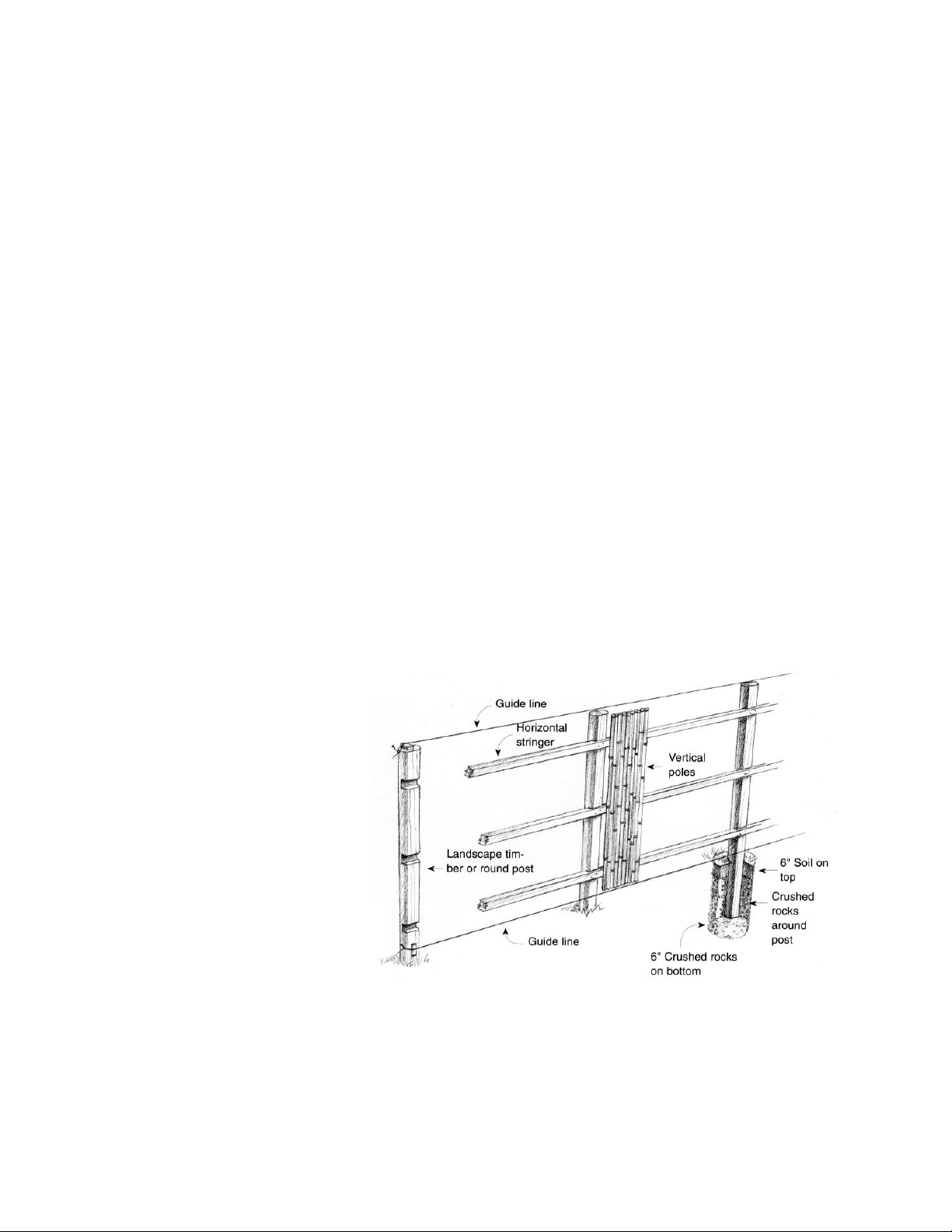
It is necessary to have a rigid structure to support most rolled fences like the bamboo
rolled fence, reed fence, willow rolled fence or the heather fence when used as a
fence. If it is being applied to an existing wooden fence which provides a flat vertical
plane surface, the rolled fence can be held to the existing fence with galvanized wire
or staples applied with a staple gun. Galvanized or stainless staples are
recommended. If the existing fence is a chain link fence and the fabric of the fence is
on the side to receive the reed, the material can be wired through the vertical fence
materials to the chain link with galvanized wire. The wiring should be done about every
4 or 5 inches at top bottom and middle. We recommend and prefer using galvanized
wire to tie the rolled fences whenever possible. IMPORTANT NOTE: When tying
or stapling, all the rolled fences with wire line should be tied or stapled on the
existing wire that are weaving them. This will blend the galvanized wire and staples
to the existing wire and firmly hold the fences' structure.
If there is no structure, it will be necessary to install posts to support the roof
fences. When the existing structure does not have at least a top and bottom rail in a
vertical plain, it will be necessary to add some construction to get that supporting
structure. If the rolled fences are to be applied to a chain link fence on the side with the
rails and posts, it will be necessary to add a lower rail (unless there is one there
already). This can be another chain link steel rail or merely a 2"x2" cedar wood drilled
and wired between posts. You must have some structure at the top of the rolled fences
and the bottom in a plane to press the fence against. If the existing fence is 4' high and
the fences are to go up to 6', then you need to construct a frame up to the 6' height. See
the drawing below showing a typical cedar wood fence support frame. You can add the
split bamboo faces to give the fences a great finished look.
Once the backing is in place
the rolled verticals can be
applied. Roll it out on scrap
boards that are about an inchthick laying on the
ground. This ensures that the
fence is straight and leveled
and that it will be supported
just above the ground while it is
being secured. The rolled
verticals can be wired
temporarily with galvanized
wire in several places for
convenience. Some fences like
the reed fence and the dwarf
pines can be trimmed as needed both vertically and horizontally. Use sharp pruning
shears. Bamboo pole fences can be cut to your custom length by using a pair of wire
cutters. Just cut the wire at the length you desire and twig the wire to seal the end of the
cut. Trimming the height can be done with a miter saw. First you need a miter saw with
a saw blade with a minimum of 60 teeth, the type that is used to cut aluminum or
Page 2

trimming boards. Make sure you run the saw until maximum speed before you do the
actual cutting to minimize splitting of the bamboo.
To attach the rolled fences to the posts and stringers, secure the fencing to the end post
with 10-inch pieces of galvanized wire, and straighten and align to your satisfaction.
Then use the 8 inch lengths to attach the fencing to the stringers, and the 10 inch
lengths to attach the fencing to the posts, a second person is required as the person on
the other side will adjust the fencing, bend the wire, and pass it through to the other
person. That person will use the pliers to pull and twist the ends together. When you
reach the end of one roll, wire another roll to it. When you reach the end post, wrap the
rolled fence around it and secure with wire.
You can also use round whole bamboo poles as the stringers instead of cedar stringers,
but make sure you pre-drill the holes before you secure them to the posts.
We recommend whenever possible to use the cedar wood posts, stringers or whatever
wood materials you may use besides bamboos, reeds or other verticals used in the
rolled fences.
Adjusting the size of rolled fencing rolls
You can simply adjust the width of a rolled fence roll by cutting the galvanized steel
wires at the desired width with pincers.
To adjust the height of a rolled fencing screen you can easily cut the stems at the
desired height with pruning shears.
Installing rolled natural material fence rolls
We recommend installing the rolled fencing rolls at least 2 inches from the
ground to avoid direct contact with wet soil and to maximize its durability. Rest
the fencing roll on a wooden plank while installing the fence for example.
1. You can easily attach a rolled fencing roll against an existing wall or
fence with staples. Secure the staples every 8 inches or so in horizontal
direction and repeat this toward the top, middle and bottom of the fence
for maximum stability.
2. Installing a fence roll against chain link fences or mesh panels is
achieved by using galvanized wire ties or tie wraps. Wrap double loop
galvanized wire ties around the steel wire that runs through the willow
fencing roll and secure them to the metal fence.
General properties of bamboo, willow, fern, reed and heather fencing.
Page 3

The willow, bamboo, fern, reed and heather fence roll are natural product, therefore
the dimensions and color of the canes / fence can slightly vary. This also applies to its
density / see-through.
The average durability of willow fencing (outdoor use) is 5-8 years.
 Loading...