

Page 1
Oxygen
Molecular oxygen; Oxygen molecule; Pure oxygen; O2; UN 1072; Dioxygen; Oxygen
USP, Aviator’s Breathing Oxygen (ABO)
Gas.
SAFETY DATA SHEET
GHS product identifier
Other means of
identification
Product type
Section 1. Identification
:
:
:
Chemical name
:
oxygen
Supplier's details
:
Oxygen
Product use
:
Synthetic/Analytical chemistry.
Synonym
:
Molecular oxygen; Oxygen molecule; Pure oxygen; O2; UN 1072; Dioxygen; Oxygen
USP, Aviator’s Breathing Oxygen (ABO)
SDS #
:
001043
Airgas USA, LLC and its affiliates
259 North Radnor-Chester Road
Suite 100
Radnor, PA 19087-5283
1-610-687-5253
1-866-734-3438
:
24-hour telephone
Section 2. Hazards identification
OXIDIZING GASES - Category 1
GASES UNDER PRESSURE - Compressed gas
Classification of the
substance or mixture
:
Signal word
:
Danger
Hazard statements
:
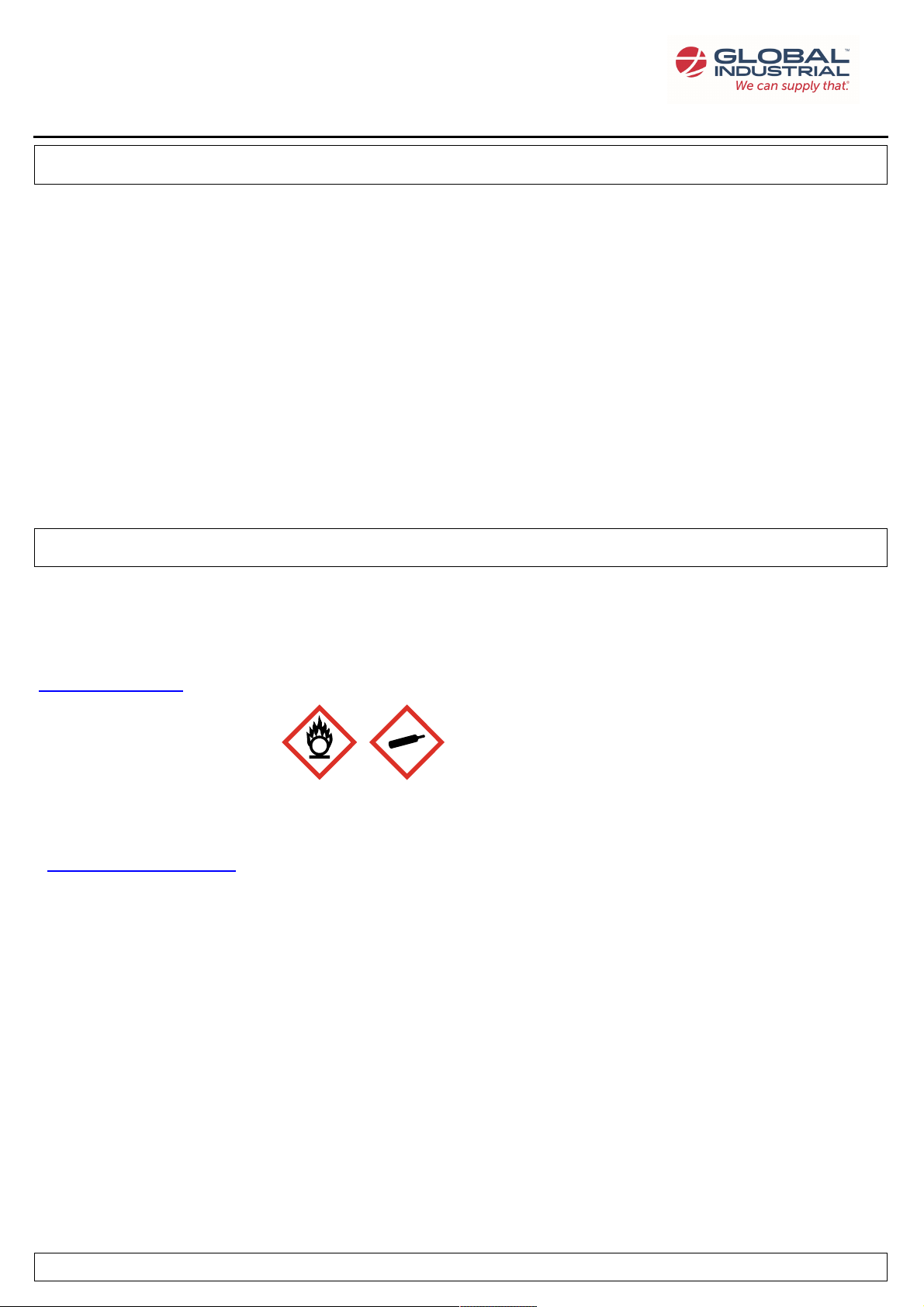
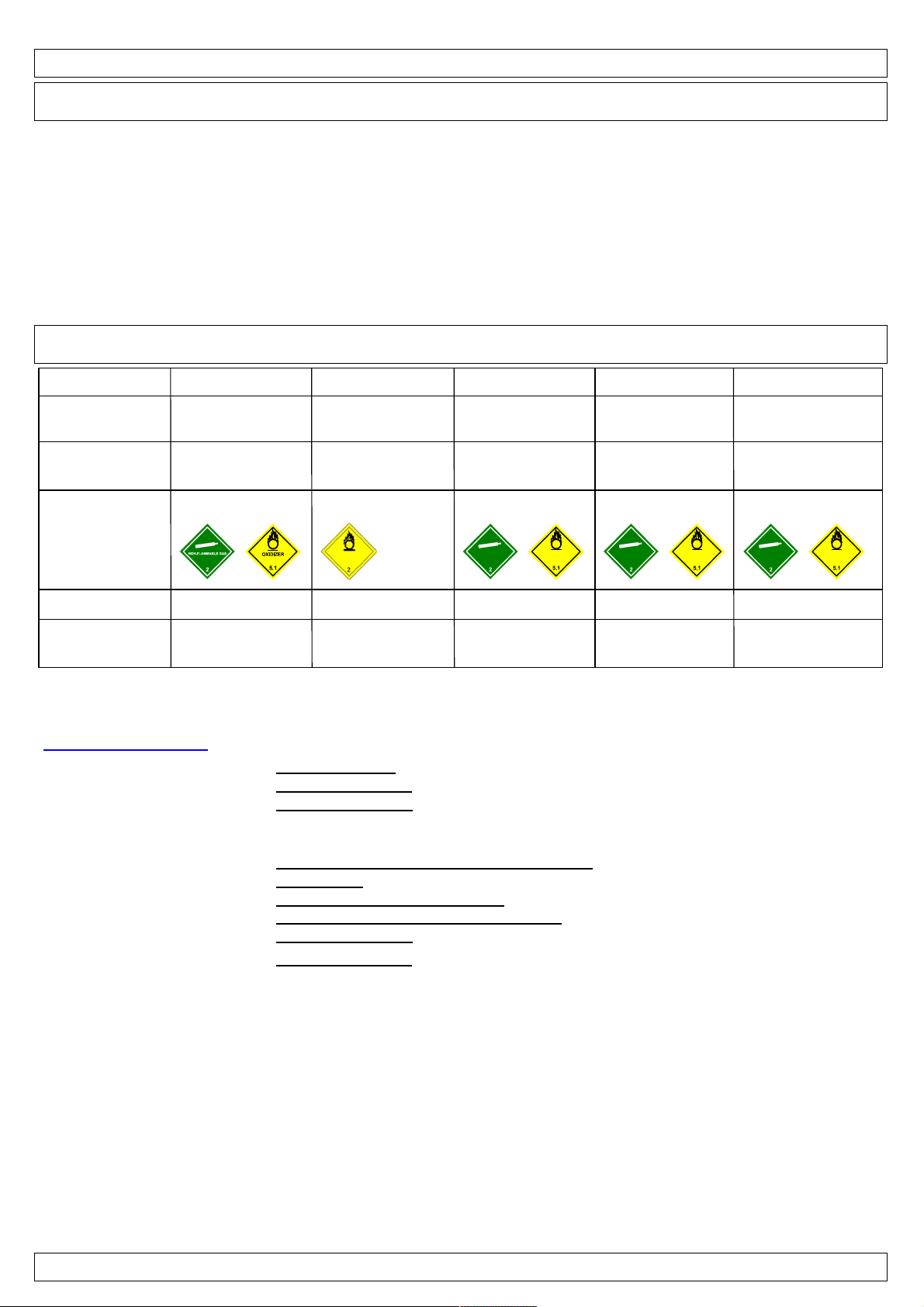
May cause or intensify fire; oxidizer.
Contains gas under pressure; may explode if heated.
Hazard pictograms
:
Precautionary statements
Prevention
:
Keep away from clothing, incompatible materials and combustible materials. Keep
reduction valves, valves and fittings free from oil and grease.
Response
:
In case of fire: Stop leak if safe to do so.
Storage
:
Protect from sunlight. Store in a well-ventilated place.
Disposal
:
Not applicable.
GHS label elements
General
:
Read and follow all Safety Data Sheets (SDS’S) before use. Read label before use.
Keep out of reach of children. If medical advice is needed, have product container or
label at hand. Close valve after each use and when empty. Use equipment rated for
cylinder pressure. Do not open valve until connected to equipment prepared for use.
Use a back flow preventative device in the piping. Use only equipment of compatible
materials of construction. Open valve slowly. Use only with equipment cleaned for
Oxygen service.
Hazards not otherwise
classified
:
None known.
OSHA/HCS status
:
This material is considered hazardous by the OSHA Hazard Communication Standard
(29 CFR 1910.1200).
Date of issue/Date of revision
:
2/3/2018
Date of previous issue
:
1/27/2017
Version
:
0.03
1/11
Page 2
Oxygen
Section 3. Composition/information on ingredients
oxygen
100
7782-44-7
Ingredient name
CAS number
%
There are no additional ingredients present which, within the current knowledge of the supplier and in the
concentrations applicable, are classified as hazardous to health or the environment and hence require reporting
in this section.
Chemical name
:
oxygen
Other means of
identification
:
Molecular oxygen; Oxygen molecule; Pure oxygen; O2; UN 1072; Dioxygen; Oxygen
USP, Aviator’s Breathing Oxygen (ABO)
CAS number
:
7782-44-7
Substance/mixture
CAS number/other identifiers
:
Occupational exposure limits, if available, are listed in Section 8.
Substance
Any concentration shown as a range is to protect confidentiality or is due to batch variation.
Product code
:
001043
As this product is a gas, refer to the inhalation section.
Immediately flush eyes with plenty of water, occasionally lifting the upper and lower
eyelids. Check for and remove any contact lenses. Continue to rinse for at least 10
minutes. Get medical attention.
Flush contaminated skin with plenty of water. Remove contaminated clothing and
shoes. Get medical attention if symptoms occur. Wash clothing before reuse. Clean
shoes thoroughly before reuse.
Remove victim to fresh air and keep at rest in a position comfortable for breathing. If
not breathing, if breathing is irregular or if respiratory arrest occurs, provide artificial
respiration or oxygen by trained personnel. It may be dangerous to the person providing
aid to give mouth-to-mouth resuscitation. Get medical attention if adverse health effects
persist or are severe. If unconscious, place in recovery position and get medical
attention immediately. Maintain an open airway. Loosen tight clothing such as a collar,
tie, belt or waistband.
Section 4. First aid measures
Eye contact
Skin contact
Inhalation
Ingestion
:
:::
Notes to physician
:
Treat symptomatically. Contact poison treatment specialist immediately if large
quantities have been ingested or inhaled.
Description of necessary first aid measures
Specific treatments
:
No specific treatment.
Most important symptoms/effects, acute and delayed
Inhalation
:
No known significant effects or critical hazards.
As this product is a gas, refer to the inhalation section.
:
Ingestion
Skin contact
:
Contact with rapidly expanding gas may cause burns or frostbite.
Contact with rapidly expanding gas may cause burns or frostbite.
:
Eye contact
Over-exposure signs/symptoms
Skin contact
Ingestion
Inhalation
No specific data.
No specific data.
No specific data.
:::
Eye contact
:
No specific data.
Potential acute health effects
Indication of immediate medical attention and special treatment needed, if necessary
Frostbite
:
Try to warm up the frozen tissues and seek medical attention.
Date of issue/Date of revision
:
2/3/2018
Date of previous issue
:
1/27/2017
Version
:
0.03
2/11
Page 3
Oxygen
Section 4. First aid measures
Protection of first-aiders
:
No action shall be taken involving any personal risk or without suitable training. It may
be dangerous to the person providing aid to give mouth-to-mouth resuscitation.
See toxicological information (Section 11)
Section 5. Fire-fighting measures
Promptly isolate the scene by removing all persons from the vicinity of the incident if
there is a fire. No action shall be taken involving any personal risk or without suitable
training. Contact supplier immediately for specialist advice. Move containers from fire
area if this can be done without risk. Use water spray to keep fire-exposed containers
cool. If involved in fire, shut off flow immediately if it can be done without risk.
Hazardous thermal
decomposition products
Specific hazards arising
from the chemical
No specific data.
Contains gas under pressure. Oxidizing material. This material increases the risk of
fire and may aid combustion. Contact with combustible material may cause fire. In a
fire or if heated, a pressure increase will occur and the container may burst or explode.
Fire-fighters should wear appropriate protective equipment and self-contained breathing
apparatus (SCBA) with a full face-piece operated in positive pressure mode.
Special protective
equipment for fire-fighters
Use an extinguishing agent suitable for the surrounding fire.
Extinguishing media
:
:
:
None known.
Suitable extinguishing
media
:
Unsuitable extinguishing
media
:
Special protective actions
for fire-fighters
:
Section 6. Accidental release measures
Environmental precautions
Personal precautions, protective equipment and emergency procedures
Immediately contact emergency personnel. Stop leak if without risk. Use spark-proof
tools and explosion-proof equipment. Note: see Section 1 for emergency contact
information and Section 13 for waste disposal.
:
:
No action shall be taken involving any personal risk or without suitable training.
Evacuate surrounding areas. Keep unnecessary and unprotected personnel from
entering. Shut off all ignition sources. No flares, smoking or flames in hazard area.
Avoid breathing gas. Provide adequate ventilation. Wear appropriate respirator when
ventilation is inadequate. Put on appropriate personal protective equipment.
Ensure emergency procedures to deal with accidental gas releases are in place to avoid
contamination of the environment. Inform the relevant authorities if the product has
caused environmental pollution (sewers, waterways, soil or air).
Large spill
:
Immediately contact emergency personnel. Stop leak if without risk. Use spark-proof
tools and explosion-proof equipment.
Small spill
:
Methods and materials for containment and cleaning up
For non-emergency
personnel
For emergency responders
:
If specialized clothing is required to deal with the spillage, take note of any information in
Section 8 on suitable and unsuitable materials. See also the information in "For nonemergency personnel".
Section 7. Handling and storage
Precautions for safe handling
Date of issue/Date of revision
:
2/3/2018
Date of previous issue
:
1/27/2017
Version
:
0.03
3/11
Page 4
Oxygen
Section 7. Handling and storage
Advice on general
occupational hygiene
Conditions for safe storage,
including any
incompatibilities
Eating, drinking and smoking should be prohibited in areas where this material is
handled, stored and processed. Workers should wash hands and face before eating,
drinking and smoking. Remove contaminated clothing and protective equipment before
entering eating areas. See also Section 8 for additional information on hygiene
measures.
Store in accordance with local regulations. Store in a segregated and approved area.
Store away from direct sunlight in a dry, cool and well-ventilated area, away from
incompatible materials (see Section 10). Cylinders should be stored upright, with valve
protection cap in place, and firmly secured to prevent falling or being knocked over.
Cylinder temperatures should not exceed 52 °C (125 °F). Separate from reducing
agents and combustible materials. Store away from grease and oil. Keep container
tightly closed and sealed until ready for use. See Section 10 for incompatible materials
before handling or use.
:
:
Protective measures
Put on appropriate personal protective equipment (see Section 8). Contains gas under
pressure. Avoid breathing gas. Do not puncture or incinerate container. Use
equipment rated for cylinder pressure. Close valve after each use and when empty.
Protect cylinders from physical damage; do not drag, roll, slide, or drop. Use a suitable
hand truck for cylinder movement.
Avoid contact with eyes, skin and clothing. Empty containers retain product residue
and can be hazardous. Keep away from clothing, incompatible materials and
combustible materials. Keep reduction valves free from grease and oil.
:
oxygen
None.
Section 8. Exposure controls/personal protection
Ingredient name
Exposure limits
Hand protection
Chemical-resistant, impervious gloves complying with an approved standard should be
worn at all times when handling chemical products if a risk assessment indicates this is
necessary. Considering the parameters specified by the glove manufacturer, check
during use that the gloves are still retaining their protective properties. It should be
noted that the time to breakthrough for any glove material may be different for different
glove manufacturers. In the case of mixtures, consisting of several substances, the
protection time of the gloves cannot be accurately estimated.
Safety eyewear complying with an approved standard should be used when a risk
assessment indicates this is necessary to avoid exposure to liquid splashes, mists,
gases or dusts. If contact is possible, the following protection should be worn, unless
the assessment indicates a higher degree of protection: safety glasses with sideshields.
Eye/face protection
:
:
Environmental exposure
controls
:
Emissions from ventilation or work process equipment should be checked to ensure
they comply with the requirements of environmental protection legislation. In some
cases, fume scrubbers, filters or engineering modifications to the process equipment
will be necessary to reduce emissions to acceptable levels.
Appropriate engineering
controls
:
Good general ventilation should be sufficient to control worker exposure to airborne
contaminants.
Wash hands, forearms and face thoroughly after handling chemical products, before
eating, smoking and using the lavatory and at the end of the working period.
Appropriate techniques should be used to remove potentially contaminated clothing.
Wash contaminated clothing before reusing. Ensure that eyewash stations and safety
showers are close to the workstation location.
Hygiene measures
:
Control parameters
Individual protection measures
Occupational exposure limits
Skin protection
Date of issue/Date of revision
:
2/3/2018
Date of previous issue
:
1/27/2017
Version
:
0.03
4/11
Page 5

Oxygen
Section 8. Exposure controls/personal protection
Based on the hazard and potential for exposure, select a respirator that meets the
appropriate standard or certification. Respirators must be used according to a
respiratory protection program to ensure proper fitting, training, and other important
aspects of use. Respirator selection must be based on known or anticipated exposure
levels, the hazards of the product and the safe working limits of the selected respirator.
Respiratory protection
:
Body protection
Personal protective equipment for the body should be selected based on the task being
performed and the risks involved and should be approved by a specialist before
handling this product.
:
Other skin protection
:
Appropriate footwear and any additional skin protection measures should be selected
based on the task being performed and the risks involved and should be approved by a
specialist before handling this product.
Section 9. Physical and chemical properties
Physical state
Melting point
Relative density
Solubility
Gas. [Compressed gas.]
-218.4°C (-361.1°F)
Not applicable.
Not available.
Odorless.
Odor
pH
Colorless. Blue.
Color
Evaporation rate
Not available.
Auto-ignition temperature
Flash point
Not available.
[Product does not sustain combustion.]
0.65
Not available.
Viscosity
Not applicable.
Not available.
Odor threshold
Partition coefficient: noctanol/water
:::
:
:::
:
:
:
:
:
:
Appearance
Boiling point
:
-183°C (-297.4°F)
Flammability (solid, gas)
:
Extremely flammable in the presence of the following materials or conditions: reducing
materials, combustible materials and organic materials.
Lower and upper explosive
(flammable) limits
:
Not available.
Decomposition temperature
:
Not available.
Solubility in water
:
Not available.
:
32 g/mole
Molecular weight
Flow time (ISO 2431)
:
Not available.
Vapor pressure
Vapor density
1.1 (Air = 1)
Not available.
:
:
Specific Volume (ft 3/lb)
:
12.0482
Gas Density (lb/ft 3)
:
0.083
Critical temperature
:
-118.15°C (-180.7°F)
Section 10. Stability and reactivity
The product is stable.
Chemical stability
:
Possibility of hazardous
reactions
:
Hazardous reactions or instability may occur under certain conditions of storage or use.
Conditions may include the following:
contact with combustible materials
Reactions may include the following:
risk of causing fire
Reactivity
:
No specific test data related to reactivity available for this product or its ingredients.
Date of issue/Date of revision
:
2/3/2018
Date of previous issue
:
1/27/2017
Version
:
0.03
5/11
Page 6

Oxygen
Section 10. Stability and reactivity
Hazardous decomposition
products
Conditions to avoid
No specific data.
Under normal conditions of storage and use, hazardous decomposition products should
not be produced.
Highly reactive or incompatible with the following materials:
combustible materials
reducing materials
grease
oil
:
:
Incompatible materials
:
Under normal conditions of storage and use, hazardous polymerization will not occur.
Hazardous polymerization
:
Section 11. Toxicological information
Acute toxicity
Not available.
Carcinogenicity
Not available.
Mutagenicity
Not available.
Teratogenicity
Not available.
Reproductive toxicity
Not available.
Irritation/Corrosion
Not available.
Sensitization
Not available.
Information on the likely
routes of exposure
Inhalation
:
No known significant effects or critical hazards.
As this product is a gas, refer to the inhalation section.
:
Ingestion
Skin contact
:
Contact with rapidly expanding gas may cause burns or frostbite.
Contact with rapidly expanding gas may cause burns or frostbite.
:
Eye contact
Symptoms related to the physical, chemical and toxicological characteristics
Specific target organ toxicity (single exposure)
Specific target organ toxicity (repeated exposure)
Not available.
Not available.
Aspiration hazard
Not available.
Information on toxicological effects
:
Not available.
Potential acute health effects
Date of issue/Date of revision
:
2/3/2018
Date of previous issue
:
1/27/2017
Version
:
0.03
6/11
Page 7

Oxygen
Section 11. Toxicological information
Not available.
No known significant effects or critical hazards.
General
:
No known significant effects or critical hazards.
Carcinogenicity
:
No known significant effects or critical hazards.
Mutagenicity
:
No known significant effects or critical hazards.
Teratogenicity
:
Developmental effects
:
No known significant effects or critical hazards.
Fertility effects
:
No known significant effects or critical hazards.
Skin contact
Ingestion
Inhalation
No specific data.
No specific data.
No specific data.
:
::Eye contact
:
No specific data.
Potential chronic health effects
Delayed and immediate effects and also chronic effects from short and long term exposure
Numerical measures of toxicity
Not available.
Acute toxicity estimates
Potential immediate
effects
:
Not available.
Short term exposure
Potential delayed effects
:
Not available.
Potential immediate
effects
:
Not available.
Long term exposure
Potential delayed effects
:
Not available.
Section 12. Ecological information
LogP
ow
BCF
Potential
Bioaccumulative potential
Other adverse effects
:
No known significant effects or critical hazards.
Product/ingredient name
oxygen
0.65-low
Toxicity
Not available.
Persistence and degradability
Soil/water partition
coefficient (KOC)
:
Not available.
Mobility in soil
Not available.
Date of issue/Date of revision
:
2/3/2018
Date of previous issue
:
1/27/2017
Version
:
0.03
7/11
Page 8
Oxygen
Section 13. Disposal considerations
The generation of waste should be avoided or minimized wherever possible. Disposal
of this product, solutions and any by-products should at all times comply with the
requirements of environmental protection and waste disposal legislation and any
regional local authority requirements. Dispose of surplus and non-recyclable products
via a licensed waste disposal contractor. Waste should not be disposed of untreated to
the sewer unless fully compliant with the requirements of all authorities with jurisdiction.
Empty Airgas-owned pressure vessels should be returned to Airgas. Waste packaging
should be recycled. Incineration or landfill should only be considered when recycling is
not feasible. This material and its container must be disposed of in a safe way. Empty
containers or liners may retain some product residues. Do not puncture or incinerate
container.
:
Disposal methods
Section 14. Transport information
OXYGEN,
COMPRESSED
2.2 (5.1)
-
OXYGEN,
COMPRESSED
2.2 (5.1)
-
OXYGEN,
COMPRESSED
UN1072
2.2 (5.1)
-
UN1072
UN1072
Limited quantity
Yes.
Quantity limitation
Passenger aircraft/rail: 75 kg. Cargo aircraft: 150 kg.
Special provisions
A52
Quantity limitation
Passenger and Cargo Aircraft: 75 kg. Cargo Aircraft Only: 150 kg.
DOT
IMDG
IATA
UN number
UN proper
shipping name
Transport
hazard class(es)
Packing group
Additional information
Environmental
hazards
Special precautions for user
Transport in bulk according
to Annex II of MARPOL and
the IBC Code
No.
No.
No.
Transport within user’s premises:
always transport in closed containers that are
upright and secure. Ensure that persons transporting the product know what to do in the
event of an accident or spillage.
:
Not available.
:
TDG
UN1072
OXYGEN,
COMPRESSED
2.2
-
No.
Product classified as per the following sections of the Transportation of Dangerous
Goods Regulations: 2.13-2.17 (Class 2), 2.23-2.25 (Class 5).
Explosive Limit and Limited Quantity Index
0.125
ERAP Index
3000
Passenger Carrying Ship Index
50
Passenger Carrying Road or Rail Index
75
Special provisions
42
Mexico
UN1072
OXYGEN,
COMPRESSED
2.2 (5.1)
-
No.
DOT Classification
TDG Classification
IATA
:
:
:
“Refer to CFR 49 (or authority having jurisdiction) to determine the information required for shipment of the
product.”
Date of issue/Date of revision
:
2/3/2018
Date of previous issue
:
1/27/2017
Version
:
0.03
8/11
Page 9

Oxygen
Section 15. Regulatory information
U.S. Federal regulations
This material is listed.
Massachusetts
:
:
Clean Air Act Section 112
(b) Hazardous Air
Pollutants (HAPs)
:
Not listed
Clean Air Act Section 602
Class I Substances
:
Not listed
Clean Air Act Section 602
Class II Substances
:
Not listed
DEA List I Chemicals
(Precursor Chemicals)
:
Not listed
DEA List II Chemicals
(Essential Chemicals)
:
Not listed
New York
:
This material is not listed.
New Jersey
:
This material is listed.
Pennsylvania
:
This material is listed.
State regulations
TSCA 8(a) CDR Exempt/Partial exemption
: This material is listed or exempted.
SARA 302/304
SARA 304 RQ
:
Not applicable.
No products were found.
Composition/information on ingredients
International regulations
Chemical Weapon Convention List Schedules I, II & III Chemicals
Montreal Protocol (Annexes A, B, C, E)
Not listed.
Stockholm Convention on Persistent Organic Pollutants
Not listed.
Rotterdam Convention on Prior Informed Consent (PIC)
Not listed.
Not listed.
UNECE Aarhus Protocol on POPs and Heavy Metals
Not listed.
Inventory list
Australia
:
This material is listed or exempted.
Canada
:
This material is listed or exempted.
China
:
This material is listed or exempted.
Europe
:
This material is listed or exempted.
Japan
:
Japan inventory (ENCS)
: Not determined.
Japan inventory (ISHL)
: Not determined.
Republic of Korea
:
This material is listed or exempted.
Malaysia
:
Not determined.
New Zealand
:
This material is listed or exempted.
Philippines
:
This material is listed or exempted.
SARA 311/312
Classification
:
Refer to Section 2: Hazards Identification of this SDS for classification of substance.
Date of issue/Date of revision
:
2/3/2018
Date of previous issue
:
1/27/2017
Version
:
0.03
9/11
Page 10
Oxygen
Section 15. Regulatory information
Taiwan
:
This material is listed or exempted.
Turkey
:
Not determined.
United States
:
This material is listed or exempted.
Thailand
:
Not determined.
Viet Nam
:
Not determined.
Section 16. Other information
2/3/2018
History
Date of printing
Date of issue/Date of
revision
Version
Date of previous issue
:
:::
Key to abbreviations
:
ATE = Acute Toxicity Estimate
BCF = Bioconcentration Factor
GHS = Globally Harmonized System of Classification and Labelling of Chemicals
IATA = International Air Transport Association
IBC = Intermediate Bulk Container
IMDG = International Maritime Dangerous Goods
LogPow = logarithm of the octanol/water partition coefficient
MARPOL = International Convention for the Prevention of Pollution From Ships, 1973
2/3/2018
1/27/2017
0.03
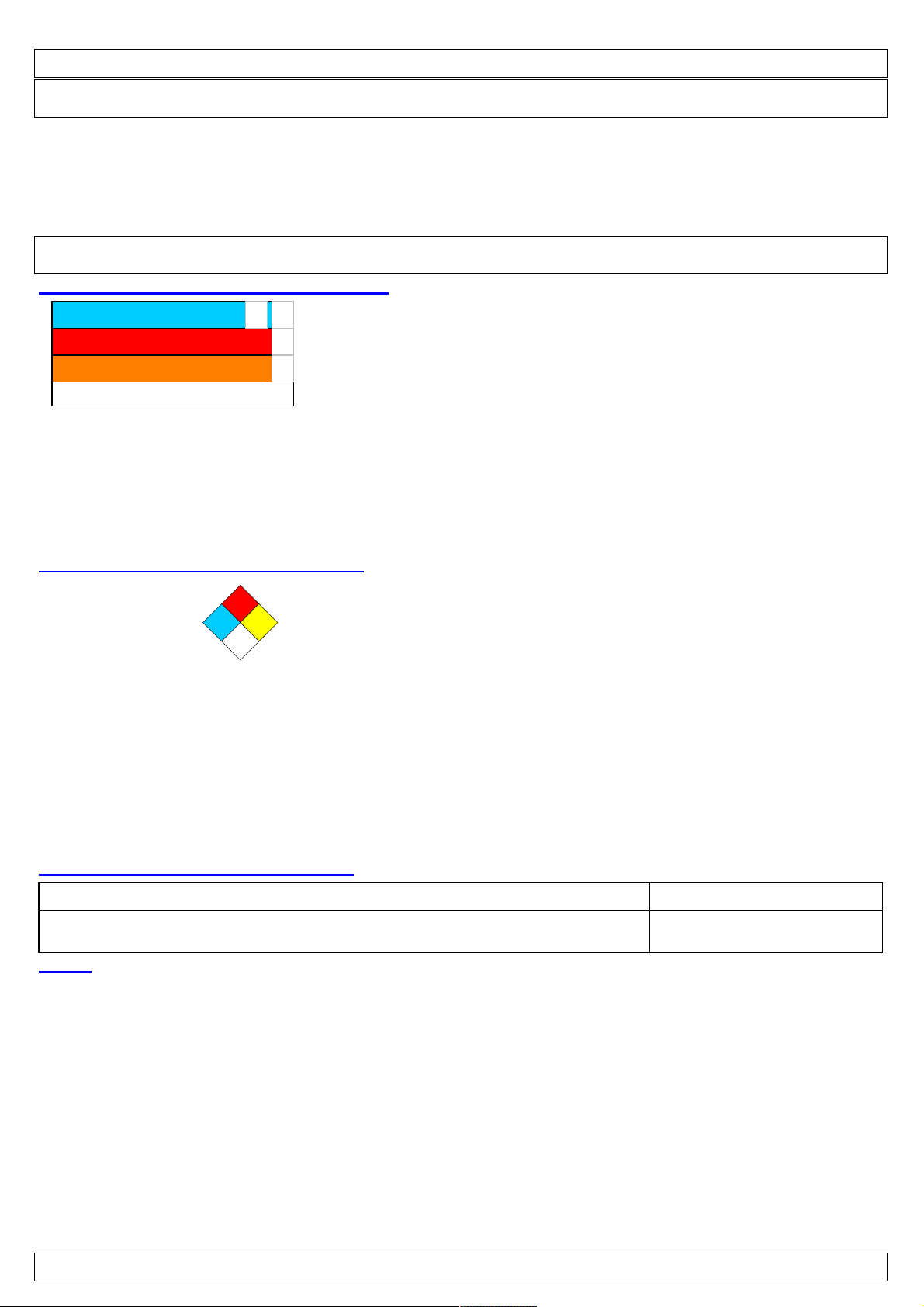
Hazardous Material Information System (U.S.A.)
0
0
3
000
/
National Fire Protection Association (U.S.A.)
Health
Special
Instability/Reactivity
Flammability
Health
Flammability
Physical hazards
Caution: HMIS® ratings are based on a 0-4 rating scale, with 0 representing minimal hazards or risks, and 4
representing significant hazards or risks. Although HMIS® ratings and the associated label are not required on
SDSs or products leaving a facility under 29 CFR 1910.1200, the preparer may choose to provide them. HMIS®
ratings are to be used with a fully implemented HMIS® program. HMIS® is a registered trademark and service
mark of the American Coatings Association, Inc.
The customer is responsible for determining the PPE code for this material. For more information on HMIS®
Personal Protective Equipment (PPE) codes, consult the HMIS® Implementation Manual.
Reprinted with permission from NFPA 704-2001, Identification of the Hazards of Materials for Emergency
Response Copyright ©1997, National Fire Protection Association, Quincy, MA 02269. This reprinted material is
not the complete and official position of the National Fire Protection Association, on the referenced subject
which is represented only by the standard in its entirety.
Copyright ©2001, National Fire Protection Association, Quincy, MA 02269. This warning system is intended to
be interpreted and applied only by properly trained individuals to identify fire, health and reactivity hazards of
chemicals. The user is referred to certain limited number of chemicals with recommended classifications in
NFPA 49 and NFPA 325, which would be used as a guideline only. Whether the chemicals are classified by NFPA
or not, anyone using the 704 systems to classify chemicals does so at their own risk.
Procedure used to derive the classification
Classification
Justification
OXIDIZING GASES - Category 1
Expert judgment
GASES UNDER PRESSURE - Compressed gas
According to package
OX
Date of issue/Date of revision
:
2/3/2018
Date of previous issue
:
1/27/2017
Version
:
0.03
10/11
Page 11

Oxygen
Section 16. Other information
To the best of our knowledge, the information contained herein is accurate. However, neither the above-named
supplier, nor any of its subsidiaries, assumes any liability whatsoever for the accuracy or completeness of the
information contained herein.
Final determination of suitability of any material is the sole responsibility of the user. All materials may present
unknown hazards and should be used with caution. Although certain hazards are described herein, we cannot
guarantee that these are the only hazards that exist.
Notice to reader
Indicates information that has changed from previously issued version.
References
:
Not available.
as modified by the Protocol of 1978. ("Marpol" = marine pollution)
UN = United Nations
Date of issue/Date of revision
:
2/3/2018
Date of previous issue
:
1/27/2017
Version
:
0.03
11/11
 Loading...