

Page 1
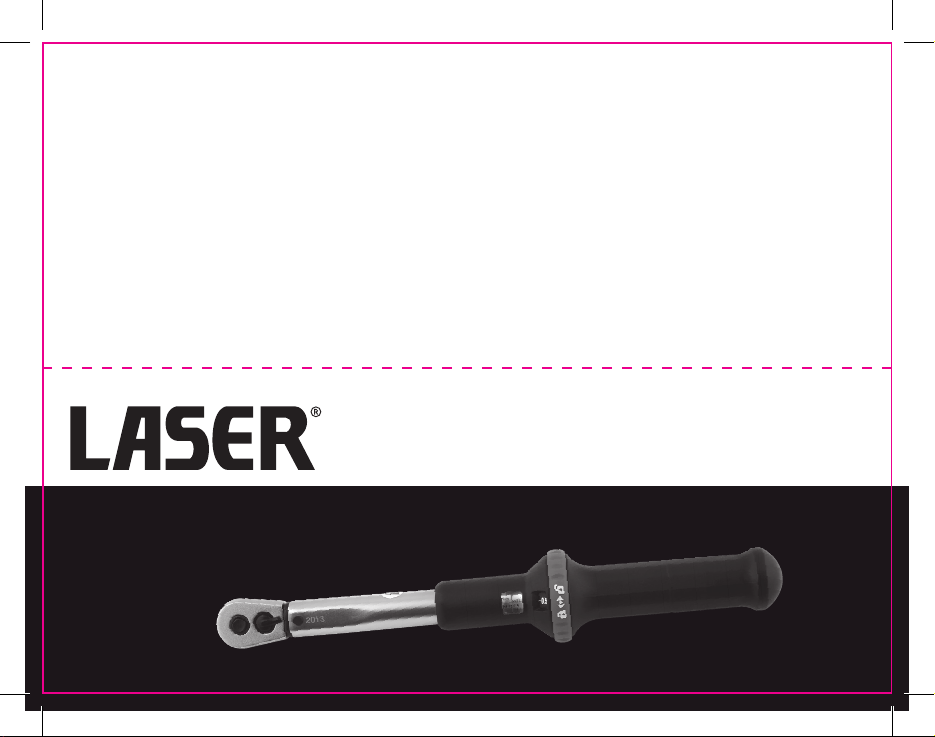
Torque Wrench 1/2"D
20-200Nm (Dual gauge Ft lbs)
Accuracy + or - 4%
• Your torque wrench is a precision tool. Do not abuse, drop or throw the wrench.
is correct.
150Nm and you now want to set it to 50Nm you should return to less than 50Nm then adjust up to 50Nm. This ensures the setting
• When setting your wrench always wind up to the setting not down to. For example if the wrench has previously been used set at
automotive workshop would be every two years.
• Have your torque wrench regularly calibrated. The frequency of this requirement varies but a good guide in an average size
• Never use torque wrenches to undo fixings.
• If you want to tighten a bolt to higher than the wrench can go then use a alternative torque wrench with the correct capacity.
• Never overload a torque wrench.
wrench inaccurate. Always adjust to the lowest torque setting (but not below) before storage.
• Never store a torque wrench with a load setting still applied as this will over time damage the internal load mechanism and make the
or order of tightening,
a time in turn until you reach the specified torque. Refer to the manufacturer’s documentation to ascertain if there is a specific pattern
• If there are several nuts or bolts holding an assembly together such as a cylinder head for example, tighten each nut or bolt a little at
example whether the fixing is to be applied dry or lubricated.
• Study any additional information that may indicate any special conditions under which the torque settings were established, for
• Always follow the vehicle manufacturer’s specifications when making torque settings.
Top Ten Tips:
5867
www.lasertools.co.uk
Page 2

What is Torque?
Torque is a force that causes or tends to cause rotation. Used in reference to a nut or bolt or similar fastening, it indicates the resistance
the nut or bolt has to turning. For example, pushing or pulling the handle of a wrench connected to a nut or bolt produces a torque (turning force) that loosens or tightens the nut or bolt. Torque is based on the law of leverage.
Force multiplied by distance equals torque. It is commonly measured in foot-pounds (Ft-lb), Newton Meters (Nm) or kilogram-meters
(Km). For example, if 1lb force is applied at a distance of 1 ft from the nut or bolt, the torque developed is 1 foot-pound. Similarly, a 2kg
force applied at 1.5m from the nut would develop a torque of 2 x 1.5 = 3 kilogram-metres.
If a nut or bolt is not tightened sufficiently it will eventually work loose and may even drop off resulting in damage or a dangerous situation. On the other hand, if the nut or bolt is tightened too much, the nut or bolt may either strip its thread, snap, or stretch the stud being
fastened.
A torque wrench is specifically designed to avoid both of these situations.
When you apply a specified amount or torque to a nut or bolt, it produces the correct amount of tension in the bolt necessary to hold the
parts together without the danger of distorting the bolt, nut or the parts they are holding together.
Warning:
Read these instructions carefully before you use the torque wrench. If you do not use the tool correctly, as described in these instructions, you may damage either the tool or the component on which you are working. You may also injure yourself.
Your torque wrench is a precision measuring instrument, designed to measure or limit the amount of torque being applied to a nut, bolt
or other component. It contains a rugged and dependable torque limiting mechanism using a design that minimised friction and is sealed
against dirt and liquids to avoid damage to the precision made parts. To ensure the accuracy of this precision instrument is maintained,
we recommend the calibration is checked regularly.
The torque wrench would be issued with certificate stating the calibration at the date of manufacture. Due to storage conditions and
lifestyle this may change over time so checking the calibration is always recommended. Not all torque wrenches can be re-calibrated
The calibration certificate supplied is generated when the wrench was tested for accuracy by the manufacturer. It has no valid “to date”,
that is down to the regulations the workshops work to (i.e. in some ISO cases can be every six months). Tool Connection cannot recalibrate a torque wrench.
 Loading...