

Page 1

JS Aviation, Inc d/b/a
Eagle Aircraft
OPERATIONS
MANUAL
and
SAFETY
PROCEDURES
Eagle Aircraft Date:
Operation Manual and Safety Procedures
04/25/2012
Page 1 of 56
FAA Approved
_
Page 2

Eagle Aircraft
Operations Manual and Safety Procedures
FAA Approved
Date:
Eagle Aircraft
Operation Manual and Safety Procedures
04/25/2012
Page 2 of 56
_
Table of Contents
List of Effective Pages
Chapter 1 .......................... Company Overview and Financial Practices
Chapter 2 .................................................. Aircraft Dispatch Procedures
Chapter 3 ................... Pilot Qualifications and Currency Requirements
Chapter 4 ................................................................... Aircraft Operations
Chapter 5 .............................................................................Pilot Training
Chapter 6 ....................................................Flight Instructor Procedures
Chapter 7 ......................................................... Maintenance Procedures
Attachments
1. .................................................................... Pilot Rental Requirements
2 ............................................... Pilot Checkout Requirements w/ Tables
3 ........................................................ Emergency Response Procedures
4……………………………………...Authorized Student Solo Destinations
5…………………………………………Flight Maneuvers and Descriptions
6…………………….……………………………………………………….Forms
Page 3

Eagle Aircraft
Operations Manual and Safety Procedures
FAA Approved
Date:
Eagle Aircraft
Operation Manual and Safety Procedures
04/25/2012
Page 3 of 56
_
Page
1
Status
Initial
Date
4/25/12
2
Initial
4/25/12
3
Initial
4/25/12
4
Initial
4/25/12
5
Initial
4/25/12
6
Initial
4/25/12
7
Initial
4/25/12
8
Initial
4/25/12
9
Initial
4/25/12
10
Initial
4/25/12
11
Initial
4/25/12
12
Initial
4/25/12
13
Initial
4/25/12
14
Initial
4/25/12
15
Initial
4/25/12
16
Initial
4/25/12
17
Initial
4/25/12
18
Initial
4/25/12
19
Initial
4/25/12
20
Rev 1
06/20/12
21
Initial
4/25/12
22
Initial
4/25/12
23
Initial
4/25/12
24
Initial
4/25/12
25
Initial
4/25/12
26
Initial
4/25/12
27
Initial
4/25/12
28
Initial
4/25/12
29
Initial
4/25/12
30
Initial
4/25/12
31
Initial
4/25/12
32
Initial
4/25/12
33
Initial
4/25/12
34
Initial
4/25/12
35
Initial
4/25/12
36
Initial
4/25/12
37
Initial
4/25/12
38
Initial
4/25/12
EFFECTIVE PAGES
This listing contains all current pages, with effective dates, of this Operations Manual. It should
be used after posting changes to insure the manual is complete and up-to-date.
Page 4

Eagle Aircraft
Operations Manual and Safety Procedures
FAA Approved
Date:
Eagle Aircraft
Operation Manual and Safety Procedures
04/25/2012
Page 4 of 56
_
Page
39
Status
Initial
Date
4/25/12
40
Initial
4/25/12
41
Initial
4/25/12
42
Initial
4/25/12
43
Initial
4/25/12
44
Initial
4/25/12
45
Initial
4/25/12
46
Initial
4/25/12
47
Initial
4/25/12
48
Initial
4/25/12
49
Initial
4/25/12
50
Initial
4/25/12
51
Initial
4/25/12
52
Initial
4/25/12
53
Initial
4/25/12
EFFECTIVE PAGES (cont.)
Page 5
Eagle Aircraft
Operations Manual and Safety Procedures
FAA Approved
Date:
Eagle Aircraft
Operation Manual and Safety Procedures
04/25/2012
Page 5 of 56
_
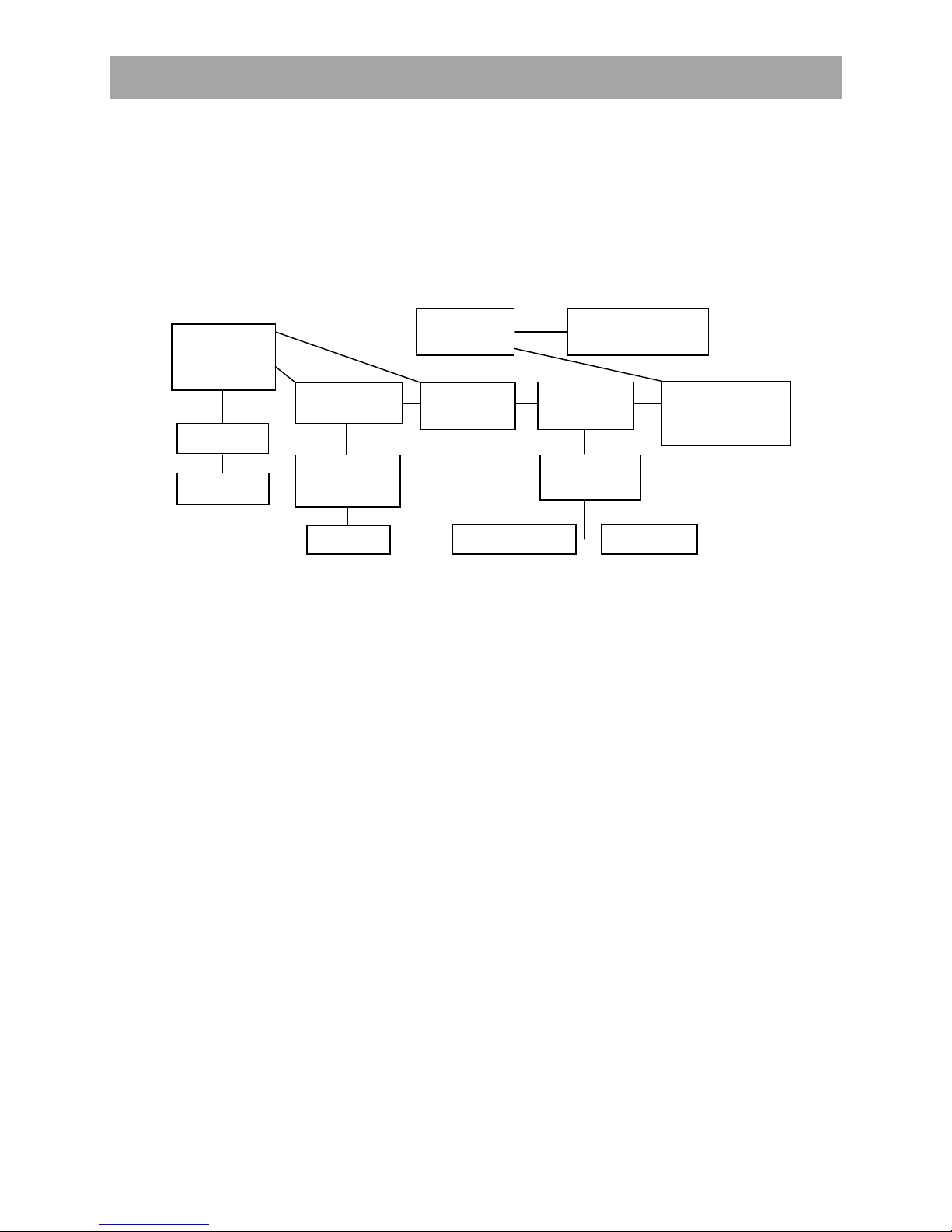
Office Mgr.
Monica Guse
President
Joy Slegers
Director of
Maintenance
John Hoffa
Chief CFI
Dir. Mrktg.
Student Advocate
Holly Starkey
Acct. Mgr.
Joy Slegers
Ops. Mgr.
John Slegers
Safety Director
Adam Springmeyer
Mechanic
Assist. Chief
Zach DeGraff
Aircraft
Office Personnel
Line Crew
All CFI’s
Company Overview and Operating Practices
1.1 Mission Statement
1.1 Eagle Aircraft was established in 1980 with the mission to provide high quality flight
training and unsurpassed customer service in helping customers achieve their flying and
personal air transportation goals.
1.2 Eagle Aircraft Staff
1.3 Duties and Responsibilities
1.3.1 President
1. Oversees that all flight operations are conducted safely and in compliance with all Federal
Aviation Regulations, operations specifications and company policies.
2. Has authority to act for the certificate holder, including the signing of FAA correspondence
and operations specifications.
3. Communicates with the FAA Flight Standards District Office and the National
Transportation Safety Board.
4. Oversees scheduled aircraft availability, including scheduling the aircraft for required
inspections.
5. Oversees the coordination of the Director of Maintenance & Director of Operations in
regards to the timely correction of mechanical irregularities and discrepancies.
6. Hires and fires all personnel.
7. Oversees the Director of Operations in formulating operations policies, coordinates those
policies and coordinates operations and training.
8. Oversees that all aircraft are properly equipped for applicable operations.
9. Oversees that all inspections, repairs and component changes are accomplished in
accordance with manufacturers or FAA approved procedures.
10. Oversees and ensures the compliance of maintenance procedures, airworthiness directives,
service bulletins, service letters and applicable Federal Aviation Regulations.
Page 6

Eagle Aircraft
Operations Manual and Safety Procedures
FAA Approved
Date:
Eagle Aircraft
Operation Manual and Safety Procedures
04/25/2012
Page 6 of 56
_
11. Oversees the Director of Operations in regards to the current airworthiness status of the
aircraft and the forecast down times to facilitate maintenance scheduling and ensure timely
deferral or correction of aircraft discrepancies.
The President is not limited to the aforementioned responsibilities. As situations arise it will be
the President's duty to coordinate new and assign additional responsibilities to the Director of
Operations, Director of Maintenance, Director of Safety, and the Chief Flight Instructor.
The President will have decision-making responsibility. If he/she chooses to delegate
responsibilities then it must be supervised through to the conclusion by the President.
1.3.2 Director of Operations (D.O.)
1.
Reports to the President.
2.
Supervises the Chief Flight Instructor and other employees as directed by the President.
3.
Ensures that all flight operations are conducted safely and in compliance with all Federal
Aviation Regulations, Operations Manual(s) and Company policies.
4.
Has authority to act for the Certificate holder, including the signing of FAA
correspondence and operations specifications.
5.
Communicates with the FAA Flight Standards District Office and the National
Transportation Safety Board.
6.
D.O. or designee devises revisions to this manual as needed, submits the proposed
revisions to the FSDO, receives confirmation from the FSDO that the revisions are
acceptable and then distributes those revisions to all manual holders.
7.
The D.O. is responsible for solutions to operational problems caused by cancellations,
delays, diversions and mechanical interruptions.
8.
D.O. or designee schedules aircraft availability, including scheduling the aircraft for
required inspections.
9.
D.O. or designee coordinates with the Director of Maintenance the timely correction of
mechanical irregularities and discrepancies.
10.
D.O. or designee hires and fires flight personnel.
The Director of Operations will be responsible for making all aviation operations decisions. If
he/she chooses to delegate responsibilities then it must be supervised through to the conclusion
by D.O.
Page 7

Eagle Aircraft
Operations Manual and Safety Procedures
FAA Approved
Date:
Eagle Aircraft
Operation Manual and Safety Procedures
04/25/2012
Page 7 of 56
_
1.3.3 Chief Flight Instructor
1.
Reports to the Director of Operations.
2.
Chief Flight Instructor under the guidance of the D.O. may assist in hiring and firing
flight personnel.
3.
Supervises flight crew personnel.
4.
Conducts or supervises all training activities of flight crew personnel.
5.
Advises the Director of Operations regarding the training of flight crew personnel.
6.
Assists the Director of Operations in formulating operations policies, coordinates those
policies, and coordinates operations and training.
7.
Ensures that all aircraft are properly equipped for applicable operations.
8.
Disseminates information to all crewmembers pertaining to routes, airports, NOTAMS,
NAVAIDS, company policies, and regulations.
9.
Maintains proficiency as Pilot-in-Command.
10.
Prepares and maintains proficiency records, pilot files, flight schedules, reports, and
correspondence pertaining to flight operations activities.
11.
Submits all reports regarding flight personnel to the Director of Operations.
12.
Keeps the aircraft copies of this Operations Manual current.
13.
Ensures that all flight crew personnel are certified and supervised according to the
requirements specified in the Federal Aviation Regulations.
14.
Direct all flight training and checkout activities according to 14 CFR Parts 61, 91, and
141, and this manual
15.
Make applicant/instructor assignments.
16.
Develop standardized flight check procedures.
17.
Appoint assistants according to 14 CFR Part 141, as needed for each course of
instruction.
18.
Stop any pilot from flying when, in the Chief Flight Instructor's judgment, flight safety
may be compromised
The Assistant Chief Flight Instructor and the Chief Flight Instructor will work as a team in
maintaining the highest of standards with crew training, crew management, and crew paperwork.
The Director of Operations, the Asst. Chief Flight Instructor, and the Chief Flight Instructor will
work as a team in keeping Eagle Aircraft operation to the standards set forth in the Operational
Manual, Flight Training Manual, and any other documented form of communication with the
FAA. The aforementioned positions will maintain an open line of communication through
briefings, conferences, or other forms of communication.
The Chief Flight Instructor will have decision making responsibility. If he/she chooses to
delegate responsibilities then it must be supervised through to the conclusion by the Chief Flight
Instructor.
Page 8

Eagle Aircraft
Operations Manual and Safety Procedures
FAA Approved
Date:
Eagle Aircraft
Operation Manual and Safety Procedures
04/25/2012
Page 8 of 56
_
1.3.4 Director of Maintenance (DOM)
1.
Reports to the Director of Operations.
2.
Is responsible for all maintenance and inspection personnel.
3.
Maintains the company aircraft in an airworthy condition.
4.
Ensures all inspections, repairs and component changes are accomplished in accordance
with manufacturers and/or FAA approved procedures.
5.
Maintains compliance with maintenance procedures, airworthiness directives, service
bulletins, service letters and applicable Federal Aviation Regulations.
6.
Makes sure all maintenance technicians are trained and current on the types of aircraft for
which they are approved.
7.
Makes sure that all maintenance technicians are certified and supervised according to the
requirements specified in the Federal Aviation Regulations.
8.
Coordinates with maintenance contracting agencies when maintenance activities are
being performed on company aircraft.
9.
Provides the Director of Operations with the current airworthiness status of the aircraft
and the forecast down times to facilitate maintenance scheduling and insure timely
deferral or correction of aircraft discrepancies.
10.
Maintains a close liaison with manufacturer's representatives; parts supply houses, repair
facilities and the FAA.
11.
Makes available to maintenance personnel the necessary overhaul manuals, service
bulletins, service letters, airworthiness directives, applicable sections of this manual and
any other required technical data.
12.
Maintains all necessary work records and logbooks, including certification in the aircraft
permanent maintenance records, that the aircraft is approved for return to service.
13.
Maintains the weight and balance records for all aircraft.
14.
Completes the required MRR and MIS forms and forwards to the FAA.
The Director of Maintenance will have maintenance decision making responsibility. He/she may
choose to delegate the responsibilities but they must be supervised through to the conclusion.
The Director of Maintenance will have decision making responsibility. If he/she chooses to
delegate responsibilities then it must be supervised through to the conclusion by the Director of
Maintenance.
Page 9

Eagle Aircraft
Operations Manual and Safety Procedures
FAA Approved
Date:
Eagle Aircraft
Operation Manual and Safety Procedures
04/25/2012
Page 9 of 56
_
1.3.5 Safety Director
The Safety Director is tasked with the overall responsibility for development and implementation
of the Eagle Aircraft Safety Program. The Safety Director reports directly to the President on all
safety issues and shall also serve all levels of the department as an advisor on safety matters.
Specific responsibilities include:
1.
Develop and implement safety programs for Eagle Aircraft personnel to ensure a safe and
healthful work environment.
2.
Advise management of recognized hazards and unsafe/unhealthful working conditions.
3.
Periodically assess Safety Program effectiveness and compliance.
4.
Update Safety Program as necessary to maintain regulatory compliance.
5.
Perform annual facility safety audits.
6.
Perform hazard assessments for the purpose of recommending engineering controls,
administrative controls, and personal protective equipment.
7.
Evaluate available training resources. Advise management concerning training
requirements, methods, and sources.
8.
Assist management as necessary in the event of a governmental safety and/or health
inspection.
9.
Disseminate safety-related information.
10.
Process Hazard and Incident Reports for the purpose of identifying and eliminating or
mitigating workplace hazards.
11.
Maintain Hazardous Substance Exposure Reports.
12.
Other duties as determined by the President.
1.4 Flight Safety
1.4.1 Flight safety is everyone’s responsibility. Staff and customers are encouraged to
immediately bring any safety related issues, or any potential safety issues to the
manager’s attention.
1.5 Flight Instructor Status
1.5.1 For the purposes of this manual, all certified flight instructors, whether full-time
employees, part-time employees, or independent contractors, are required to comply
with the procedures in this manual. This is necessary because of the higher degree of
standardization and supervision required to conduct flight operations without undue risk
to the customers, staff, and general public. It does not imply any status used by the
IRS for defining employee status.
Page 10

Eagle Aircraft
Operations Manual and Safety Procedures
FAA Approved
Date:
Eagle Aircraft
Operation Manual and Safety Procedures
04/25/2012
Page 10 of 56
_
1.6 Payment Policy
1.6.1 Payment for Services is due at the time the service is rendered.
1.6.2 Customers may pre-pay accounts. Unused balances can remain on account for future
training/rental or may be refunded in accordance with Eagle Aircraft’s refund policy.
1.6.3 Customers will be informed of the loan programs available, from various lenders, for
their flight training. Loans from these programs will be administered according to the
loan agreement.
1.7 Insurance Coverage
1.7.1 Eagle Aircraft maintains liability insurance in the amount of $1,000,000 per occurrence,
limited to $100,000 per passenger and hull coverage with a deductible up to $5000.
Eagle Aircraft holds all PIC’s, including Eagle contracted CFI’s, responsible for
this insurance deductible and requires them to carry renter’s insurance to cover
deductible amounts.
1.7.2 Proof of renter’s insurance must be on file with Eagle Aircraft prior to PIC operations by
the renter. Student pilots must have proof of renter’s insurance on file by the time they
solo.
1.7.3 Insurance covers Eagle Aircraft and does not preclude the insurance company from
subrogating claims against the Pilot in Command.
1.8 Appearance
1.8.1 Staff members will actively ensure the facility, aircraft, and ramp areas are kept clean.
All outdated charts and regulations will only be used in class room exercises for
examples. Dispose of all outdated charts and regulations that will not be used in a
class room setting.
1.9 Admissions
1.9.1 Students will be admitted based on availability of aircraft and instructor time. Eagle
Aircraft management will do it’s best to prescreen applicants to prevent students from
beginning their training if he/she may not be a good candidate for flight training. FAA
medical exams are required prior to solo for primary students, but Eagle Aircraft
recommends students to obtain their medical prior to training, especially if the candidate
has previous medical history, which could cause worry.
1.9.2 Eagle Aircraft is an equal opportunity training center. Admissions for applicants with
disabilities will be reviewed on a case-by-case basis. The applicant must be able to
read, speak, understand and write the English language and pass the FAA medical
exam. Any special equipment or personnel needed to train the student will be at the
cost of the student.
Page 11

Eagle Aircraft
Operations Manual and Safety Procedures
FAA Approved
Date:
Eagle Aircraft
Operation Manual and Safety Procedures
04/25/2012
Page 11 of 56
_
1.10 Terms and Definitions
The term “company” used in this manual refers to JS Aviation Inc. d/b/a Eagle
Aircraft – hereafter referred to as “Eagle Aircraft” or “company”
The term PIC refers to the Pilot In Command of the aircraft
The term “Student” refers to someone who does not hold a Private, Commercial, or
Airline Transport Pilot (ATP) certificate appropriate to the category flown
The term IPC refers to an Instrument Proficiency Check as defined by 14 CFR
61.57 (d) and FAA–S-8081-4
The term “Stabilized Approach” means the aircraft is properly configured, an
appropriate airspeed and rate of descent are established and only minor heading,
pitch, and power inputs are required to maintain the flight path.
The term “FAR” stands for Federal Aviation Regulation.
The term “CFR” stands for Code of Federal Regulations.
The term “VFR” stands for Visual Flight Rules.
The term “IFR” stands for Instrument Flight Rules
The term “NTSB” stands for National Transportation Safety Board.
Aircraft Dispatch Procedures
2.1 Dispatch Procedures
Aircraft will not be dispatched unless the dispatching authority has personally verified the
procedures established in this manual have been accomplished, including verifying
aircraft airworthiness per FAR 91.7.
2.1.1 In accordance with FAR 141.75, all aircraft used for flight training and solo flights will
have onboard: (a) a pre-takeoff and pre-landing checklist and (b) the operator’s
handbook for the aircraft, if one is furnished by the manufacturer, or copies of the
handbook if furnished to each student using the aircraft.
2.2 Dispatch Authorization
2.2.1 The following staff members are authorized to dispatch aircraft:
a. Company instructor pilots are authorized to self-dispatch aircraft and to dispatch
aircraft for the flights of their assigned private pilot students.
b. All flights where a student pilot is flying solo will be dispatched by their flight
instructor or a flight instructor on-duty who is present at the airport and is familiar
with the student’s capabilities.
c. Dispatcher can dispatch rental flights, or Private Pilot certificates or higher.
Page 12

Eagle Aircraft
Operations Manual and Safety Procedures
FAA Approved
Date:
Eagle Aircraft
Operation Manual and Safety Procedures
04/25/2012
Page 12 of 56
_
2.3 Dispatcher Actions
2.3.1 The individual dispatching an aircraft will ensure the PIC:
Has received, read and agrees to abide by the pertinent sections of this manual
and the Current Notices board.
Has verified via the maintenance status sheet, that the airplane has had the
required scheduled inspections and maintenance, and is in condition for safe flight
according to CFR 91.7 (subpart A)
Has presented valid government picture identification on file.
Meets the currency requirements of Paragraph 3.2
Has a valid FAA Pilot Certificate on file.
Has a valid FAA Medical Certificate on file.
Has completed and signed the Dispatch Form.
Has completed a Rental Agreement.
Has an account in good standing.
2.3.2 Aircraft will not be dispatched to student pilots unless authorized by their assigned
instructors or the flight instructor on duty.
2.4 Unprogrammed Landings
2.4.1 A student flying locally or cross-country shall land ONLY at the airports specified for
that flight. Approval for use of any other airport must be obtained from your instructor
or the chief or assistant chief instructor.
2.4.2 In the event a pilot must land at an airport other than the one previously planned for
that flight, whether due to unplanned adverse weather, or a mechanical malfunction,
the pilot must report his/her location and condition to Eagle Aircraft immediately upon
landing. The flight may not depart from that location without prior approval from the
chief or assistant chief flight instructor, or if due to mechanical malfunction, approval
from an appropriately rated mechanic or repairman approved by Eagle Aircraft Director
of Maintenance. No work is to be done on aircraft without prior approval from Eagle
Aircraft.
2.4.3 If flight from that airport is not permissible or must be delayed, it is the pilots
responsibility to ensure that the aircraft is properly secure and/or protected from
adverse weather conditions (tie down, hangaring, etc.)
2.4.4 If an off airport landing is performed as a result of catastrophic engine failure, etc. the
contact procedures shall be:
Pilot shall communicate his/her location and condition at the earliest possible time by
contacting Eagle Aircraft on common frequency 122.725 or by phone once safely on
the ground.
Emergency response, if needed, will be dispatched by Eagle Aircraft Operations or
by pilot if he/she was unable to contact Eagle Aircraft Operations by air.
Page 13

Eagle Aircraft
Operations Manual and Safety Procedures
FAA Approved
Date:
Eagle Aircraft
Operation Manual and Safety Procedures
04/25/2012
Page 13 of 56
_
The FAA and NTSB will be notified in accordance with NTSB 830.5 and will provide
information as required in NTSB 830.6.
See Emergency Response Procedures, Attachment 3, for further information.
2.4.5 All pilots who encounter adverse weather or mechanical problems can contact Eagle
Aircraft Operations at 219-464-0132 or on frequency 122.725. If no answer call John
Slegers (D.O.) at 219-670-3278 or call your flight instructor.
2.4.6 Eagle Aircraft Operations will monitor pilot expected return time noted on dispatch
sheet. If student does not return within 30 minutes of scheduled time, Eagle Aircraft
Operations will begin to track their whereabouts.
On all solo x-countries, student will be required to file a flight plan and will have
been required to call a flight service station to receive a weather briefing. Their
intended flight plan will be known and documented through these means, as well
as listed on the student dispatch form.
Flight Service Station will have begun gathering information about a pilot’s
whereabouts when student is 30 minutes late to any of their intended locations.
Eagle Aircraft will contact the flight service station to offer assistance in tracking the
student and gather any information that has been collected.
As confirmed with Terre Haute Flight Service Station, their protocol is to gather
information from the queue on the filed flight plan, contact approach control and
centers along path as well as airports, then contact law enforcement to try and
locate the student’s whereabouts, and continue stepping up search until located.
Additionally, if student was local or in the practice area and not on a flight plan or if
the efforts toward locating a student on a cross country have failed, Eagle Aircraft
may my determine to contact Civil Air Patrol and local law enforcement for
assistance, and/or launch a search team by flight or ground until person is located.
Pilot Qualification and Currency Requirements
3.1 Qualifications
3.1.1 Before acting as PIC, customers must complete the:
Customer Data Form
Rental Agreement
Hold Harmless Agreement
Appropriate aircraft pilot checkout(s)
Appropriate written test(s)
3.1.2 Refer to Attachment 1 for a list of initial pilot requirements.
3.1.3 Pilots must complete a Make and Model checkout in each aircraft they desire to fly as
PIC.
3.1.4 Pilots must complete a Night Checkout if they desire to fly as PIC at night.
Page 14

Eagle Aircraft
Operations Manual and Safety Procedures
FAA Approved
Date:
Eagle Aircraft
Operation Manual and Safety Procedures
04/25/2012
Page 14 of 56
_
3.1.5 Pilots who are instrument rated, must complete an IPC to act as PIC of company
aircraft, unless the pilot waives IPC privileges in writing.
3.2 Pilot Currency
3.2.1 Pilots must have completed a flight review (14 CFR 61.56), in the most complex aircraft
they are authorized to fly, within the preceding 12 calendar months to act as PIC of
company aircraft.
3.2.2 Pilots with an instrument rating must have completed an IPC within the previous six
months, to act as PIC on an instrument flight plan.
3.2.3 To act as PIC, pilots shall have accomplished three takeoffs and landings within the
preceding 90 days in each make and model aircraft they wish to fly.
3.2.4 Pilots who have not made 3 takeoffs and landings in a particular make and model
aircraft within the preceding 6 months must accomplish a recurrency check for that
make and model aircraft.
3.2.5 Pilots shall fly with, and receive a logbook endorsement from a company instructor to
regain any currency.
Aircraft Operations
4.1 Preflight Actions
4.1.1 Pilots shall file a flight plan for all flights beyond 50 nautical miles.
4.1.2 The PIC shall ensure appropriate survival and safety equipment for the intended
operation area is onboard the aircraft.
4.1.3 The PIC shall ensure an FAA approved personal flotation device for each occupant is
onboard the aircraft and readily accessible if the aircraft is operated over water, beyond
gliding distance from land.
4.1.4 Pilots shall not begin a flight unless there is sufficient fuel to complete the flight to the
point of intended landing, fly from that airport to an alternate (if an alternate is
required), and then fly after that for at least 1 hour at normal cruise consumption.
4.1.5.1 Pilots will terminate the flight and land at the nearest appropriate airport if, at any time,
during the flight it appears the aircraft will not have at least a 1 hour fuel reserve.
4.1.5.2 Unless weight and balance, or performance limitations dictate otherwise, pilots will
take-off with full fuel for any flight outside the local area.
4.1.6 Pilots shall ensure adequate tie-down equipment is onboard if landing at an airport
without tie-down equipment.
Page 15

Eagle Aircraft
Operations Manual and Safety Procedures
FAA Approved
Date:
Eagle Aircraft
Operation Manual and Safety Procedures
04/25/2012
Page 15 of 56
_
4.1.7 Each passenger shall occupy a seat with an individual seat belt; children under 4 years
old or less than 40 pounds shall occupy a Department of Transportation approved
infant/child seat restrained by an individual seat belt.
4.1.8 Pilots will compute takeoff distances for each flight, check actual aircraft performance
against computed data, and abort the takeoff if aircraft performance is inadequate.
4.1.9 Pilots will calculate weight and balance data for each flight.
4.1.10 Pilots will ensure loose items are secured prior to flight.
4.2 Ground Operations
4.2.1 Pilots will not taxi, takeoff, or land on surfaces with standing water, snow, or ice.
4.2.3 Fire extinguishers shall be readily accessible during engine start and aircraft refueling.
4.2.4 Pilots are personally responsible for escorting passengers on the ramp and to brief all
passengers on the hazards of ramp operations.
4.2.5 Pilots will use the designated tow bar to move aircraft; use caution not to exceed the
designated turn limit of the nose wheel, nor to push on the tail to move the nose of the
aircraft.
4.2.6 Pilots must park aircraft only in designated ramp area.
4.2.7 Smoking is prohibited in, or within 50 feet of aircraft.
4.2.8 Aircraft will be tied down (if tie downs are available), both main wheels chocked, flight
control lock installed (if available), and all doors locked.
4.2.9 Passengers will not board or deplane when any of the aircraft engines are operating.
4.2.10 Pilots shall treat all propellers as if the engine may start, pilots shall ensure:
All passengers remain well clear of propeller arc.
Mixture is in the cutoff position.
Magnetos are off and the keys are either in the pilot’s pocket, or visible on the
dashboard.
4.3 Engine Starting and Taxiing
4.3.1 Aircraft Taxi and Ground Operations will be conducted according to the guidance in the
Pilot’s Operating Handbook (Aircraft Flight Manual) and the Aeronautical Informational
Manual.
4.3.2 Before starting engines pilots will turn on the rotating beacon, thoroughly clear the
immediate area, and ensure nearby personnel are aware of the impending engine
start.
Page 16

Eagle Aircraft
Operations Manual and Safety Procedures
FAA Approved
Date:
Eagle Aircraft
Operation Manual and Safety Procedures
04/25/2012
Page 16 of 56
_
4.3.2.1 Pilots must use caution to prevent damage as a result of propeller blast.
4.3.3 Pilots must be thoroughly familiar with engine fire procedures during start. Pilots
should:
Use caution not to over prime
In case of engine fire during start, follow manufacturer’s guidance; however, do not
endanger yourself or your passengers.
Do not try and fight the fire if you have exited the aircraft.
4.3.4 Pilots will obtain taxi clearance at controlled airports, or self announce taxi intentions at
uncontrolled airports before leaving the parking spot.
4.3.5 Pilots shall not taxi within 10 feet of an obstacle unless designated taxi lines, suitable
for the make and model aircraft being operated, are used.
4.3.6 Pilots shall not exceed 5 MPH taxi speed in congested areas.
4.3.6 Pilots shall not taxi when ground visibility is less than 1 SM.
4.4 Weather Minimums
4.4.1 Day VFR minimums are 1,500 foot ceiling and 3 miles visibility for the airport pattern
area. 2,500’ ceiling and 5 miles visibility are required for all other flights.
4.4.2 Night VFR minimums are 2,500 foot ceiling and 5 miles visibility.
4.4.3 Weather minimums for IFR takeoff shall be no lower than the lowest compatible circling
minimums, both ceiling and visibility, at the departure airport or takeoff minimums listed
in the Terminal Flight Information Publication for the airport, whichever are greater.
4.4.4 Pilots shall comply with maximum crosswind component posted in the aircraft checklist.
4.4.5 Pilots shall not takeoff when the tailwind component exceeds 10 Knots.
4.4.6 Flight will not be initiated if surface winds are forecast to be greater than 25 knots, and
flights will be terminated as soon as practicable if surface winds exceed 25 knots.
4.4.7 Special VFR not permitted under any circumstances.
Page 17

Eagle Aircraft
Operations Manual and Safety Procedures
FAA Approved
Date:
Eagle Aircraft
Operation Manual and Safety Procedures
04/25/2012
Page 17 of 56
_
4.5 Night Flight
4.5.1 The following shall not be performed at night:
Aerobatics
Unusual attitudes, stalls, approach to stalls, or slow flight, except as required by an
14 CFR 141 approved syllabus of instruction, with an instructor that is qualified to
act as PIC under instrument conditions in the aircraft used for the flight
Operations at airports without runway lighting
Visual or non-precision approaches to runways outside the local training area
without visual glide path guidance
Simulated emergency training, to include forced landings, except to lighted runways
Flight outside the local area unless the flight is operated under IFR, or the flight is
required to be conducted under VFR by an approved syllabus of instruction and the
instructor is qualified to act as PIC under instrument conditions in the aircraft used
for the flight
Local VFR night flight, unless the pilot has logged at least 50 hours as PIC and
maintains visual contact with an airport approved for night operations or holds a
current instrument rating
Simulated night instrument practice in the local area unless a second pilot, with
night currency in the aircraft being flown is onboard as a safety observer and has
access to the flight controls
Land and Hold Short Operations (LAHSO)
Student solo operations
4.6 Operations at Uncontrolled Airports
4.6.1 Pilots shall:
Avoid extended holding delays across the hold line or in takeoff position
Not perform straight-in VFR approaches to uncontrolled airports (Note: This does
not apply to practice instrument approaches being flown when the safety pilot is
able to simultaneously monitor approach control and the Common Traffic Advisory
Frequency (CTAF) and make appropriate position calls on the CTAF
Self-announce pattern position on crosswind, downwind, base, and final leg using
the phraseology recommended in the Aeronautical Information Manual
Only land at airports listed in the Eagle Aircraft attachment 7.
Not takeoff or land on runways less than 2,000 feet long, or the sum of the
computed aircraft takeoff and landing roll, whichever is greater
Not takeoff or land on runways less than 50 feet wide
Overfly (500' Above Ground Level (AGL)/Precautionary Low Approach minimum)
an uncontrolled airfield with unknown runway surface or approach conditions before
landing. (Note: Not applicable to actual instrument approaches.)
Page 18

Eagle Aircraft
Operations Manual and Safety Procedures
FAA Approved
Date:
Eagle Aircraft
Operation Manual and Safety Procedures
04/25/2012
Page 18 of 56
_
4.7 Minimum Altitudes
4.7.1 Pilot shall:
Not fly below 1000 feet AGL (2000 feet in designated mountainous terrain) unless
required by specific regulation, airspace restriction, for takeoff or landing, or when
accomplishing requirements directed by an approved syllabus of instruction
Not perform simulated forced landings without an instructor
Not descend below 500 feet AGL unless the aircraft is established on a stabilized
approach
Not descend below 500 feet AGL during practice simulated forced landings without
an instructor in a rural area only
Ensure proper engine operation at least every 500’ when performing simulated
engine failures in single engine aircraft
Not conduct aerobatic maneuvers, unless specifically authorized with CFI onboard.
Ensure stalls, turns over 45 degrees of bank, slow flight, or unusual attitudes are
completed no lower than 1,500 feet AGL in single engine aircraft
See section 5 for more details regarding flight maneuvers
4.8 Other Restrictions
4.8.1 Pilots shall not:
Conduct formation flights
Use company aircraft for towing aircraft or banners
Use company aircraft for parachuting or sky diving
Use company aircraft for commercial purposes
Takeoff with snow or frost on the aircraft
Land on runways with snow or ice
Conduct simulated emergency procedures unless a company instructor is on-board
the aircraft
Fly outside the United States-unless prior approval is given by the company
Carry any hazardous cargo
Attempt to takeoff if they have made an off-airport landing
Attempt to takeoff if they have made a precautionary landing for a suspected
aircraft malfunction
Conduct contact approaches
Hand prop any aircraft
Perform intentional in-flight engine shutdowns
4.8.2 The PIC shall occupy the left front seat in side-by-side aircraft or the front seat in
tandem aircraft, except when:
Prohibited by the flight manual
Weight and balance considerations dictate otherwise
Page 19

Eagle Aircraft
Operations Manual and Safety Procedures
FAA Approved
Date:
Eagle Aircraft
Operation Manual and Safety Procedures
04/25/2012
Page 19 of 56
_
1.
All Cessna 172 –
20 Gallons
2.
Cessna Skycatcher 162 –
12 Gallons
3.
Piper Arrow PA28R-201 –
30 Gallons *
4.
Piper Seminole PA44-180 –
50 gallons
A pilot is enrolled in an instructor pilot training program and has been endorsed by
a flight instructor for solo flight in either seat, and is flying under visual flight rules in
the local training area
The pilot is a flight instructor flying under visual flight rules in the local training area
The pilot is a flight instructor conducting flight instruction or receiving/administering
flight checks
4.9 Refueling
4.9.1 Pilots shall:
Never taxi toward a parked fuel truck in the event the aircraft loses braking ability
Turn off all aircraft power prior to refueling
Ensure cell phones are not used during refueling
Ground the aircraft prior to fuel servicing operations by bonding the aircraft to the
refueling equipment with an approved cable before making any fueling connection
to the aircraft
Maintain the ground until fueling connections have been removed
Verify ground wires have been removed before start
Not refuel if thunderstorms are present in the vicinity of the airport
Not smoke on ramp area or near aircraft, while refueling
Verify fuel truck is labeled with product ordered
Verify fuel caps are re-secured properly
Must sump tanks after refueling
Receive training on self-serve pumps if not familiar with their use
Student pilots will receive training on self-serve pumps before being authorized to
do their own self-fueling, or they must have full-service from the FBO.
4.9.2 Minimum Fuel for Takeoff
*Note – Must switch tanks every 30 min and maximum fuel imbalance of 5 gallons
5.1 Training Prerequisites
5.1.1 Customers enrolled in any course are strongly encouraged to obtain a valid Third Class
medical certificate prior to the first flight lesson. A valid Third Class medical certificate
must be on file prior to soloing.
Pilot Training
Page 20

Eagle Aircraft
Operations Manual and Safety Procedures
FAA Approved
Date:
Eagle Aircraft
Operation Manual and Safety Procedures
04/25/2012
Page 20 of 56
_
5.2 Student Pilots
5.2.1 Solo Student Pilots shall not:
Fly when the crosswind component exceeds 10 knots
When the surface wind exceeds 20 knots
Fly in the traffic pattern when weather is less than 2000’ Ceiling and 3 Miles
Visibility
Fly in the local training area when weather is less than 3000’ Ceiling and 5 Miles
visibility
Fly Cross Country when the weather is less than 5000’ Ceilings and 5 miles
visibility
Perform Touch and Go operations, will instead perform full stop and taxi back to
beginning of the runway using parallel taxiways for take-off.
Fly more than 10 hours solo or exceed 30 days without a dual proficiency flight.
This flight will include all items listed in 14 CFR 61.87 (d) and (e)
Fly solo between the hours beginning 1 hour before Sunset and ending 1 hour
before Sunrise
Conduct simulated forced landings
5.2.2 The Chief Flight Instructor shall develop standard training cross-country routes. Only
the Chief Flight Instructor may authorize the use of other routes. See attachment #4
5.2.3 All dual portions of supervised solo flights shall include three student landings and one
go-around at the airfield where the student will solo. Instructors shall ensure adequate
student proficiency and be present at the airport during the solo portion of the flight.
Prior to a student pilot's first unsupervised solo flight, the student pilot must have
completed a satisfactory flight check with the Chief or Assistant Chief Flight Instructor.
5.2.4 On the first solo cross country flight, students shall fly to airfields where they have
previously demonstrated satisfactory traffic patterns to an instructor. Students may
then fly the remainder of the solo cross-country requirements to other airports
approved by the Chief Flight Instructor.
5.3 Written Tests
5.3.1 Written testing and quizzing will be accomplished in accordance with each approved
syllabus. Additional testing and quizzing can be added as the Chief Instructor deems
necessary.
5.3.2 All written exams will be documented and kept in student files.
5.3.3 The minimum passing score on any test is 80 percent. An instructor will correct the
test to 100 percent and review all deficient areas with the customer prior to flight.
Customers receiving less than 80% on a written test may be referred to the Chief Fight
Instructor.
Page 21

Eagle Aircraft
Operations Manual and Safety Procedures
FAA Approved
Date:
Eagle Aircraft
Operation Manual and Safety Procedures
04/25/2012
Page 21 of 56
_
5.3.4 Questions should provide the customer a self-paced study of all pertinent aspects of
the subject material and flow sequentially from the source documents.
5.3.5 Students will be administered aircraft open book quizzes over pertinent aspects of the
aircraft systems, procedures, and operating limits. Computing takeoff data, including
weight and balance, takeoff, climb, cruise, and landing data shall also be evaluated.
5.4
Runway Incursion Avoidance
5.4.1 All training courses will emphasize Runway Incursion Avoidance. As a minimum all
aspects of Advisory Circular 91-73 shall be covered with each customer.
5.5
Student Pilot Practice Area
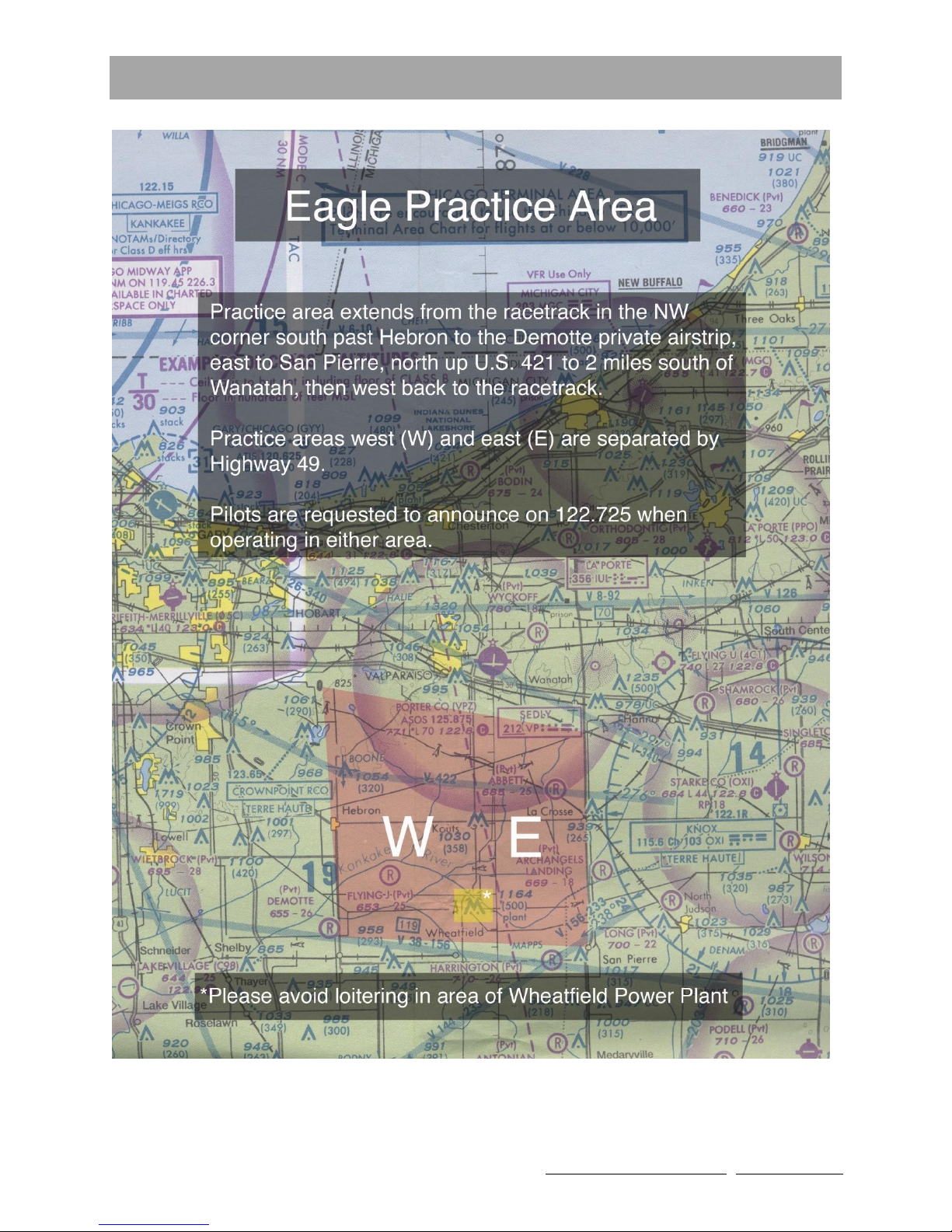
5.5.1 Practice area extends from the racetrack in the NW corner south past Hebron to the
Demotte private airstrip, east to San Pierre, north up US 421 to 2miles south of
Wanatah, then west back to the racetrack.
Practice areas west (W) and east (E) are separated by Highway 49.
Pilots are requested to announce on 122.725 when operating in either area.
Please avoid loitering in area of Wheatfield Power Plant.
See map on following page.
Page 22
Eagle Aircraft
Operations Manual and Safety Procedures
FAA Approved
Date:
Eagle Aircraft
Operation Manual and Safety Procedures
04/25/2012
Page 22 of 56
_
Page 23

Eagle Aircraft
Operations Manual and Safety Procedures
FAA Approved
Date:
Eagle Aircraft
Operation Manual and Safety Procedures
04/25/2012
Page 23 of 56
_
6.1 Flight Instructors Responsibilities:
Stop any pilot from flying when, in the instructor's judgment, flight safety may be
compromised.
Act as PIC of the aircraft while conducting flight instruction.
Maintain a valid FAA Second Class Medical Certificate
Assist the Chief Flight Instructor, as required, in developing training and checkout
procedures.
Conduct training and checkouts according to this manual and applicable FARs.
6.1.1 Instructors will complete a checkout with the Chief Flight Instructor for every course of
instruction, and for each make and model aircraft in which they will instruct.
6.1.3 Instructors must complete an annual evaluation with the Chief Flight Instructor,
Assistant Chief Flight Instructor, a Designated Pilot examiner, or FAA Operations
Inspector for every course of training in which they instruct. The Chief Flight instructor
will determine what maneuvers will be performed and what aircraft will be use for this
flight.
6.2 Instructor Pilot Conduct
6.2.1 The viability of Eagle Aircraft is directly dependent on the service flight instructors
provide our customers, and the safety of customers is directly dependent on the quality
of instruction performed.
6.3 Pilot Checkout Procedures
6.3.1 Our customers come to us with widely differing flight experience; however, there is no
guarantee they have ever been properly trained to fly general aviation aircraft. Your job
is to conduct a thorough checkout each and every time you fly with one of our
customers. The existence of this company is dependent on our safety record, which is a
direct reflection of how well we conduct our training and checkout programs. Flight
training is a complex business that is continuously evolving and our procedures and
training programs need to evolve with them. We highly encourage your personal inputs
to make these programs better. Please bring any suggestions to the Chief Pilot.
6.3.2 All initial aircraft checkouts and annual checkouts will be conducted according to
Attachment 2. Instructors will complete all necessary items for and endorse the pilot
for a Flight Review according to 14 CFR Part 61.53. Subsequent aircraft make and
model checkouts will be conducted according to Attachment 2; however, the Flight
Instructor need not complete the additional items necessary for the Flight Review IAW
14 CFR 61.51.
Page 24

Eagle Aircraft
Operations Manual and Safety Procedures
FAA Approved
Date:
Eagle Aircraft
Operation Manual and Safety Procedures
04/25/2012
Page 24 of 56
_
6.3.3 All initial instrument checkouts will be performed according to Attachment 2 and CFR
14, 61.51. Instructors will complete an endorsement for an Instrument Proficiency
Check. Subsequent make and model checkouts for pilots with instrument ratings need
not include an Instrument Proficiency Check; however the flight instructor must ensure
the customer has demonstrated the ability to use all installed equipment under IFR
conditions.
6.3.4 Instructors will ensure checkouts are conducted according to this manual and pilots are
able to complete the maneuvers to the standards established in the appropriate FAA
Practical Test Standards for a Private/Instrument Airplane. The intent of the checkout
is to ensure the pilot is capable of meeting the standards, it is not designed as a flight
test. In-flight instruction can be given as necessary; however, the flight instructor must
be confident the pilot is capable of performing each maneuver without intervention or
instruction.. If a pilot cannot perform a maneuver to the required standard you will refer
them to the Chief/.Assistant Chief Flight Instructor to develop an appropriate course of
training. Be sure to emphasize to the customer that this retraining is for their safety
and that all pilots need periodic refresher training to maintain their skills.
Maintenance Procedures
7.1 Maintenance Performed
7.1.1 Maintenance will be performed in accordance with FAR part 43 and part 91, by persons
authorized and certificated by part 65. All maintenance will be performed by an
appropriately rated mechanic or repairman approved by Eagle Aircraft DOM.
7.2 100 Hour and Progressive Inspections
7.2.1 100 Hour Inspections or Progressive Inspections prescribed by 14 CFR 91.409 are
required for all aircraft. Aircraft being maintained on a 100hr Inspection program is
Arrow N76SA, Seminole N30101, Skyhawk N21662, Skyhawk N219LM, and
Skycatcher N52030. Aircraft being maintained on a Progressive Maintenance
Inspection program are Skyhawks N5204N and N1449C.
7.3 Time Between Overhaul (TBO).
7.3.1 Aircraft components will be overhauled at the manufacturer's recommended TBO or on
condition.
7.3.2 Actions directed by Airworthiness Directives (ADs) will be performed
Page 25

Eagle Aircraft
Operations Manual and Safety Procedures
FAA Approved
Date:
Eagle Aircraft
Operation Manual and Safety Procedures
04/25/2012
Page 25 of 56
_
7.4 Grounding and Discrepancy Notification
7.4.1 Any pilot shall ground an aircraft if, in the pilot's opinion, the aircraft is not airworthy.
Pilots shall verbally notify Eagle Aircraft Operations and document the grounding on the
aircraft discrepancy log, and the aircraft shall not be operated until released by an
appropriately rated mechanic or repairman approved by Eagle Aircraft. All discrepancy
records will be kept for 60 days after the repair has been corrected OR indefinitely until
the repair has been made, then 60 days.
7.4.2 Airworthy Checklist: Open aircraft dispatch book to compare current Tach times with
maintenance due times listed and verify AROW – Airworthiness Certificate, registration,
operating Manual (complete POH) including Weight & Balance.
-Pitot Static Check with the past 24 months
-ELT inspection within the past 12 months
-VOR check & Fire Extinguisher check within the past 30 days
-Airworthiness Directives (AD’s) complied with
-Transponder Inspection within the past 24 months
-GPS - All aircraft being used for IFR training and equipped with a GPS will have the
GPS database kept updated and current.
7.4.3 If a student pilot or renter locates a discrepancy or unairworthy item, they will:
-report the finding to an Eagle Aircraft CFI
-CFI will review the perceived discrepancy with the student to determine the validity of
the finding. If the discrepancy is found to be valid, student, CFI, renter, and/or
Dispatcher will contact one of the following to determine next course of action: John
Slegers, John Hoffa, Dante Pergher, Marty Preston, and/or Steve Prochaska.
-Aircraft will be grounded until the mechanic or repairman endorses the discrepancy
sheet returning the aircraft to service.
-Phone number to Michiana Aircraft Maintenance – 574-287-4687 (phone answered
24/7)
7.5 Maintenance Records
7.5.1 Logbooks entries shall contain reference to the manufacturers service manual, or other
technical data acceptable to the FAA Administrator, used to complete all maintenance
performed and the part number(s), and serial number(s) if applicable, of all parts
installed during the maintenance process.
7.5.2 All date entries in use shall be made using a two number day, 2 number month, and 4
number year format (ex. 15/03/2003).
Page 26

Eagle Aircraft
Operations Manual and Safety Procedures
FAA Approved
Date:
Eagle Aircraft
Operation Manual and Safety Procedures
04/25/2012
Page 26 of 56
_
7.6 Functional Check Flight (FCF).
7.6.1 FCFs are required for aircraft being returned to service after having undergone
alterations or repairs, which, in the opinion of an appropriately rated mechanic or
repairman could:
Alter the flight characteristics of the aircraft.
Affect the navigation systems of the aircraft.
Adversely affect the operability of aircraft systems and cannot be adequately
ground tested.
7.6.2 Eagle Aircraft Managers will designate the most qualified instructor pilots to perform
FCFs of aircraft being returned to service following maintenance or Eagle Aircraft will
be notified of and will approve other pilots suggested by an appropriately rated
mechanic or repairman.
7.7 Deferred Maintenance
7.7.1 In accordance with FAR 91.405c, all inoperative instruments or equipment, permitted to
be inoperative by 91.213 (d)(2 & 3) will be researched and repaired, or deactivated,
placarded inoperative and inspected at the next required inspection by an appropriately
rated and qualified mechanic or repairman approved by Eagle Aircraft, with the
appropriate entries made to the aircraft records. (Deactivated equipment cannot effect
other equipment)
7.8 Corrosion Control
7.8.1 Aircraft shall be treated for corrosion according to AC 43-4, Corrosion Control For
Aircraft. As a minimum, all flight control/trim surfaces, brackets, and mounting
hardware shall be free of corrosion.
Page 27

Eagle Aircraft
Operations Manual and Safety Procedures
FAA Approved
Date:
Eagle Aircraft
Operation Manual and Safety Procedures
04/25/2012
Page 27 of 56
_
Attachment 1
Pilot Rental Requirements
Single Engine Fixed Gear Aircraft
1,3,4
3,4
200 Horsepower or Less:
Airman's certificate (ASEL): Student, Private, Commercial, or ATP
201 - 236 Horsepower:
Airman's certificate (ASEL): Private, Commercial, or ATP
Pilot Time: 75 hours, or 50 hours in make and model
PIC time in aircraft with 201 - 236 horsepower: 5 hours, or 5 hours as PIC in make
and model, or completion of an approved training program of not less than 5 hours,
and have a high performance endorsement.
237 Horsepower or Greater:
Airman's certificate (ASEL): Private, Commercial, or ATP
Pilot Time: 100 hours
PIC time in aircraft with 237 horsepower or greater: 10 hours, or 5 hours PIC in make
1,3,4
and model, or completion of an approved training program of not less than 5 hours,
and have a high performance endorsement.
Single Engine Retractable Gear
200 Horsepower or Less:
Airman's certificate (ASEL): Private, Commercial, or ATP
Pilot Time: 125 hours
PIC time in complex aircraft: 10 hours, or 5 hours PIC in make and model, or
completion of an approved training program of not less than 5 hours, and must have
complex endorsement.
Greater than 200 Horsepower:
Airman's certificate (ASEL): Private, Commercial, or ATP
Pilot Time: 125 hours
PIC time in complex & high performance aircraft: 25 hours and 5 hours PIC in make
and model, or completion of an approved training program of not less than 10 hours,
and have a high performance and complex endorsements.
Notes
1. According to Part 61.31 (e)(1) & (f)(1), prior to operating either a high performance or
complex aircraft as PIC, all renters will require a checkout including flight and ground
instruction and will be required to have a one-time endorsement authorizing the pilot to
operate either type of aircraft. If the pilot already has the endorsement for the type of
aircraft they desire to rent, only a checkout will be required.
1,3,4
1,3,4
2
Page 28

Eagle Aircraft
Operations Manual and Safety Procedures
FAA Approved
Date:
Eagle Aircraft
Operation Manual and Safety Procedures
04/25/2012
Page 28 of 56
_
2. Pilots may proficiency advance with the approval of the Chief Flight Instructor; however,
under no circumstances will the flight phase be less than 5 hours.
3. All Pilots renting Eagle Aircraft airplanes must have a current FAA Medical Certificate.
4. All renters will require a checkout on each type of aircraft to be rented.
Page 29

Eagle Aircraft
Operations Manual and Safety Procedures
FAA Approved
Date:
Eagle Aircraft
Operation Manual and Safety Procedures
04/25/2012
Page 29 of 56
_
Attachment 2
Pilot Checkouts
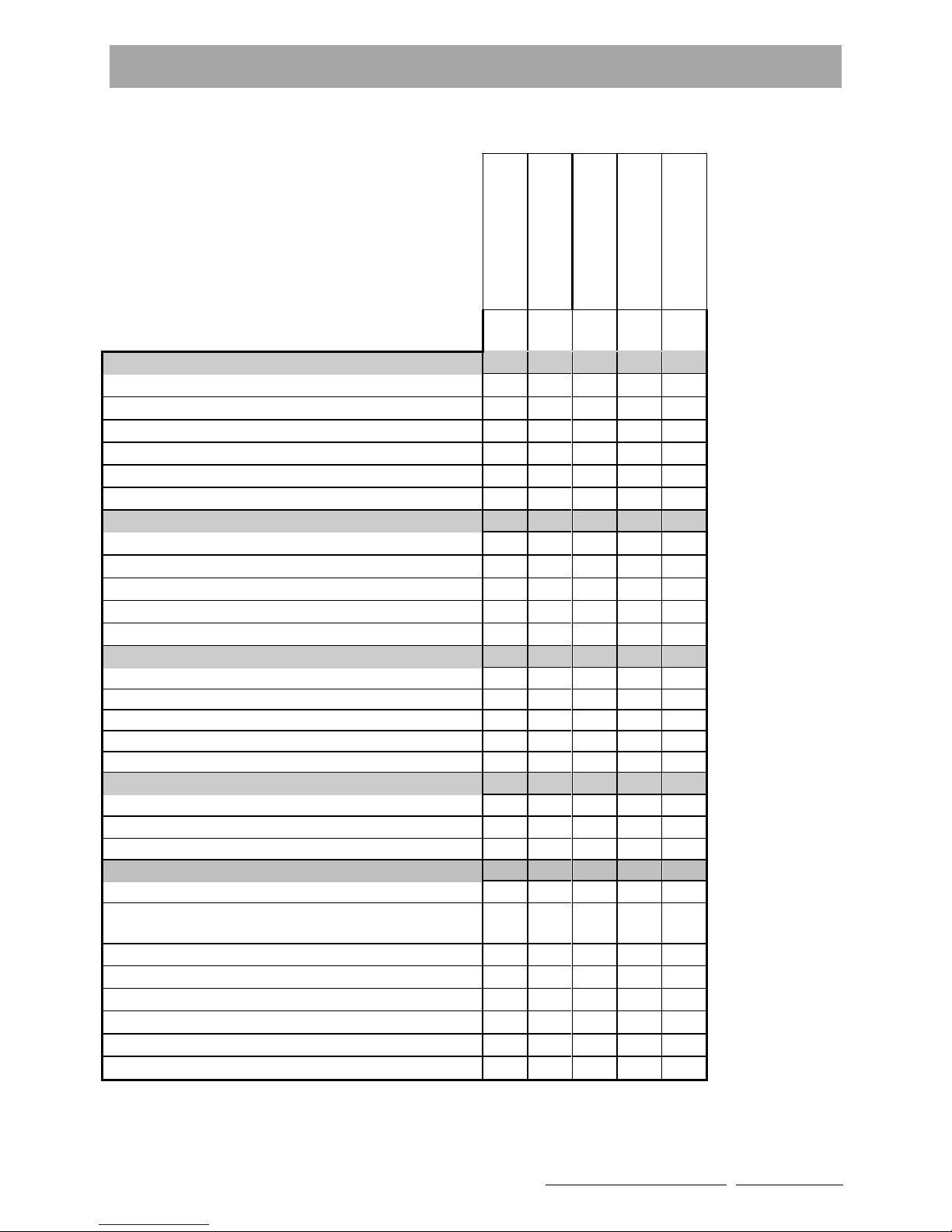
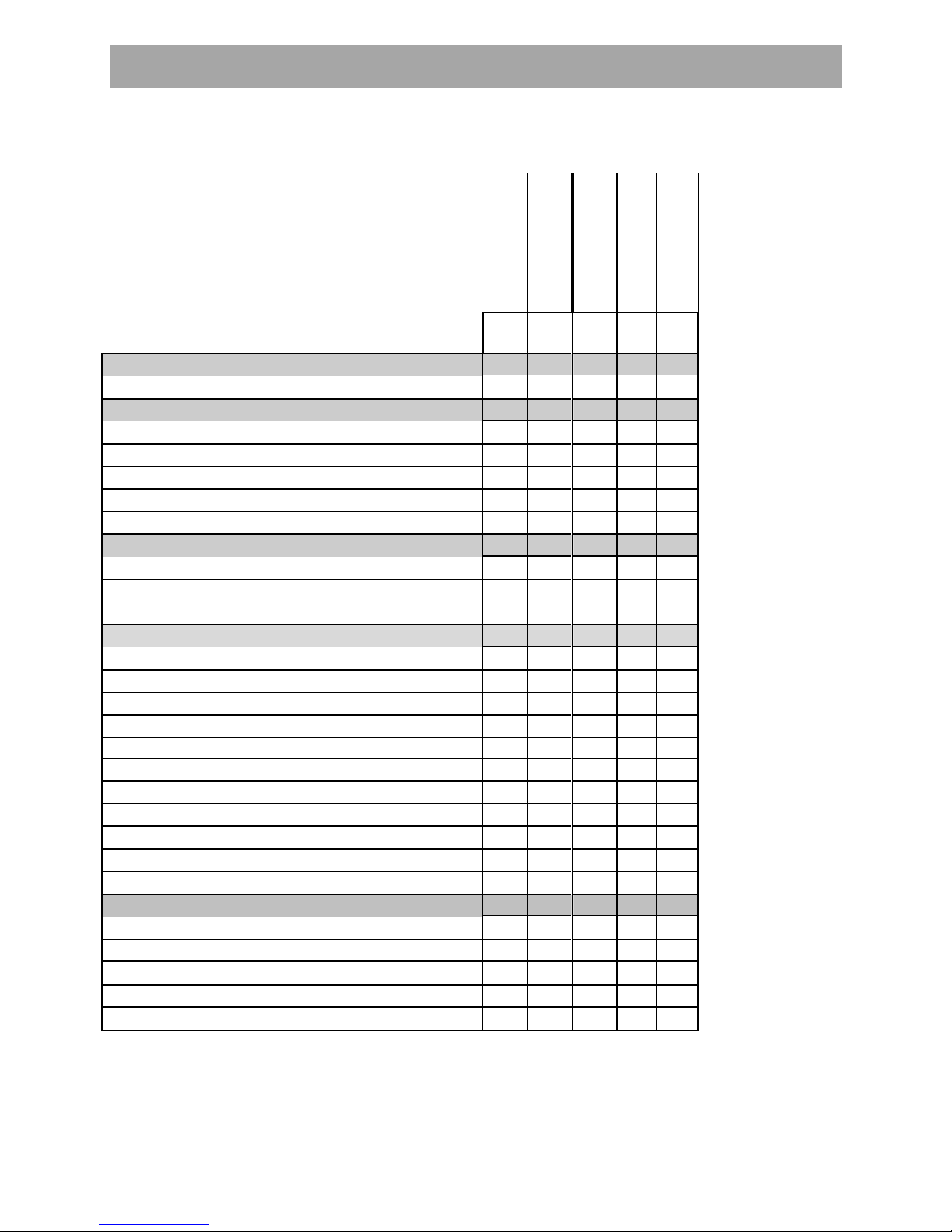
1. The minimum requirements for a Flight Review, aircraft make and model, instrument, night,
and recurrency checkouts are shown in Table 2.1. All tasks indicated with an “X” must be
evaluated by the instructor conducting the checkout; however, additional tasks may be
accomplished and evaluated at the instructor’s discretion.
2. Pilots must complete the maneuvers to the standard prescribed in the current FAA Practical
Test Standards for a Private Pilot. Those pilots with an instrument rating must complete an
instrument proficiency check irrespective of whether they intend to fly IFR.
3. Refer to Table 2.3 for the appropriate action when the customer fails to demonstrate the
required proficiency on a checkout.
4. With the exception of the instrument checkout, at least three landings and a go-around must
be accomplished to complete any checkout.
5. “Recurrency Checks”, as defined in Table 2.1, are required when pilots have not made 3
takeoffs and landings in a particular make and model aircraft in the previous 6 calendar
months.
6. Visual Scanning and Collision Avoidance will be emphasized on every checkout.
Instructors will thoroughly cover the following items:
Runway Incursion, to include AC 91-73
Visual Scanning Techniques
Use of radio for clearing
Aircraft Blind Areas
Traffic Conflicts at Uncontrolled Airports
7. Pilots desiring to fly Technically Advanced Aircraft must complete an approved FITS
Transition Training Program for the specific Make and Model aircraft.
Page 30
Eagle Aircraft
Operations Manual and Safety Procedures
FAA Approved
Date:
Eagle Aircraft
Operation Manual and Safety Procedures
04/25/2012
Page 30 of 56
_
Flight Review
Make & Model
Instrument
Night
Recurrrency
SE L SE L SE
L
I. GENERAL KNOWLEDGE
National Airspace System
X
Company Restrictions
X X
X Aeromedical Factors
X X
X
Local Procedures
X X
X
Spin Awareness
X
X
Wake Turb. and Wind Shear Avoid.
X
II. PRE-FLIGHT PREPARATION
Certificates and Documents
X
Weather Information
X X X
Cross-Country Flight Planning
X X
Performance and Limitations
X
X
X
Minimum Equipment List
X X X
X
III. PRE-FLIGHT PROCEDURES
Preflight Inspection
X X X X X
Cockpit Management
X X X X X
Engine Starting
X X X X X
Taxiing
X X X X X
Before Takeoff Check
X X X X X
IV. AIRPORT OPERATIONS
Radio Comm. & ATC Light Signals
X X X X X
Traffic Patterns
X
X X
X
Airport/Runway Markings/Lighting
X X X X X
V. TAKEOFF, LAND., GO-AROUND
Normal & Crosswind Takeoff/Climb
X X X X X
Normal & Crosswind Approach/Landing
(Includes No-Flap)
X X X
X
1
X
Short-Field Takeoff/Climb
X
X
X
Short-Field Approach/Landing
X
X
X
Soft-Field Takeoff/Climb
X
X
X
2
Soft-Field Approach/Landing
X
X
X
2
Forward Slip To A Landing
X
X
Go-Around
X
X X
X
Table 2.1: Checkout Requirements
Page 31

Eagle Aircraft
Operations Manual and Safety Procedures
FAA Approved
Date:
Eagle Aircraft
Operation Manual and Safety Procedures
04/25/2012
Page 31 of 56
_
Landing From a Circling Approach
X
Page 32
Eagle Aircraft
Operations Manual and Safety Procedures
FAA Approved
Date:
Eagle Aircraft
Operation Manual and Safety Procedures
04/25/2012
Page 32 of 56
_
Flight Review
Make & Model
Instrument
Night
Recurrency
SE L SE L SE
L
VI. PERFORMANCE MANEUVERS
Steep Turns
X X X
VII. NAVIGATION
Pilotage and Dead Reckoning
X
X
Navigation Systems/Radar Services
X X X
X
Diversion
X X
X
Lost Procedures
X
X
Enroute Weather
X X
VIII. SLOW FLIGHT AND STALLS
Slow Flight
X
X
X
Power-Off Stalls
X
X
X
Power-On Stalls
X X X X
IX. INSTRUMENT PROCEDURES
Straight and Level Flight
X
X
X
3
X
Constant Airspeed Climbs/Descents
X
X
X
3
X
Timed Turns to Magnetic Headings
X
3
Recovery from Unusual Attitudes
X
X
X
3
X
5
Radio Comm, Nav Systems
X X X X X
Holding
X
VOR Instrument Approach Procedure
X
4
NDB Instrument Approach Procedure
X
4
ILS Instrument Approach Procedure
X
4
Missed Approach Procedure
X
4
Circling Approach Procedure
X
X. EMERGENCY OPERATIONS
Loss of Communications
X X
X
Emergency Descent
X X X X X
Emergency Approach and Landing
X
X
X
Systems and Equip. Malfunctions
X X X X X
Emergency Equip and Survival Gear
X
X X
X
Table 2.1: Continued
Page 33
Eagle Aircraft
Operations Manual and Safety Procedures
FAA Approved
Date:
Eagle Aircraft
Operation Manual and Safety Procedures
04/25/2012
Page 33 of 56
_
Flight Review
Make & Model
Instrument
Night
Recurrency
SE L SE L SE
L
XI. NIGHT OPERATIONS
Night Preparation
X
Night Flight
X
XII. POSTFLIGHT PROCEDURES
After Landing
X X X X X
Parking and Securing
X X X X X
XIII. GENERAL
Visual Scanning/Collision Avoidance
X X X X X
Operation of Systems
X X X X X
Table 2.1: Continued
Note 1: At least one approach must be flown without the use of the
landing light
Note 2: Required only for single engine land recurrency
Note 3: This task must be accomplished both full and partial panel
(Primary Attitude and Heading Indicators simulated inoperative).
Note 4: At least one approach and missed approach must be flown
partial panel.
Note 5: For the purpose of the night checkout, Unusual Attitudes shall be
limited to + 5 degrees of pitch and/or + 15 degrees of bank.
Note 6: If the aircraft is equipped with an autopilot, the pilot must demonstrate an instrument
approach using the autopilot.
Page 34

Eagle Aircraft
Operations Manual and Safety Procedures
FAA Approved
Date:
Eagle Aircraft
Operation Manual and Safety Procedures
04/25/2012
Page 34 of 56
_
PIC Status
Test Required
When
1. Customer- PIC
a. Aircraft Make &
Model
b. Instrument
c. Recurrency
a. Prior to acting as PIC in that aircraft
make & model.
b. Prior to exercising instrument
privileges as PIC, and due by the end of
the 12th calendar month thereafter.
c. If a pilot has gone non-current in an
aircraft make & model, the closed book
portion of the aircraft written test must
be reaccomplished prior to the
recurrency checkout flight.
Table 2.2: Written Testing Requirements
Page 35

Eagle Aircraft
Operations Manual and Safety Procedures
FAA Approved
Date:
Eagle Aircraft
Operation Manual and Safety Procedures
04/25/2012
Page 35 of 56
_
If
and the check is
then
1. The customer
satisfactorily
completes all
required
maneuvers
any type of check
the check is complete.
Complete and sign the Pilot Activity Log
2. The customer
does not complete
all required
maneuvers
a. Initial Flight Review
b. Flight Review
c. Aircraft Make &
Model
d. Initial IPC
a. the checkout is incomplete and
customer cannot act as PIC of any
company aircraft.
b. the check is incomplete; however, the
customer may continue to exercise PIC
privileges in any aircraft they are current
and qualified until the end of the 12th
calendar month after initial flight review.
c. the check is incomplete and customer
may not act as PIC in that make/model
aircraft.
d. the check is incomplete and the
customer may not exercise instrument
privileges.
e. IPC
f. Night
e. the check is incomplete; however, the
customer may continue to exercise
instrument privileges in any company
aircraft in which they are current and
qualified until the end of the 6th calendar
month after the previous instrument
check.
f. the check is incomplete and the
customer may not act as PIC at night.
Table 2.3:
Required Actions for Complete, Incomplete, or Lack of Performance Checkouts
Page 36

Eagle Aircraft
Operations Manual and Safety Procedures
FAA Approved
Date:
Eagle Aircraft
Operation Manual and Safety Procedures
04/25/2012
Page 36 of 56
_
3. The customer
does not perform
all areas to the
required standards
a. Flight Review
b. Aircraft Make &
Model
a. the check is complete (Not Qualified)
and the customer cannot act as PIC of
any Company aircraft. (Note 1 applies)
b. the check is complete (Not Qualified)
and the customer cannot act as PIC of
that make/model aircraft. (Note 1 applies)
(Note 1 applies)
c. Initial/Subsequent
IPC
d. Night
c. the check is complete (Not Qualified),
the customer may not exercise instrument
privileges. . (Notes 1 and 2 apply)
d. the checkout is complete (Not
Qualified) and the customer may not act
as PIC in Company aircraft at night.
(Notes 1 and 2 apply)
Table 2.3 Continued
Note 1: If safety of flight or judgment factors, versus lack of proficiency, are the reason for the
disqualification, the customer may not act as PIC in any Company aircraft.
Note 2: Customer must satisfactorily complete a course of training prescribed by the Chief
Flight Instructor and subsequently complete another checkout. The second checkout may not
be given by the individual who conducted the first checkout or prescribed training.
Page 37

Eagle Aircraft
Operations Manual and Safety Procedures
FAA Approved
Date:
Eagle Aircraft
Operation Manual and Safety Procedures
04/25/2012
Page 37 of 56
_
Owner
John Slegers
@ 219-670-3278 cell
Chief Instructor
Dante Pergher
@ 219-730-1381 cell
Eagle Aircraft
Operations
@ 219-464-0132 office
Mechanic
John Hoffa
@ 575-220-7936 Cell
Attachment 3
Emergency Response Procedures
Immediate Actions
1) In the event of suspected accident, incident, or overdue aircraft, complete as much of the
Accident / Incident Report as possible.
2) Notify the following people as soon as possible
Eagle Aircraft will determine if Insurance company is to be notified
3) Do not make any statements speculating as to the cause of the incident to anyone.
4) If you received inquiries, take the name and phone number of the person making the inquiry
and tell them someone from the company will contact them as soon as they can.
5) Notification to the nearest NTSB and FAA will be made in accordance with NTSB 830.5
which states that the operator of any civil aircraft, or any public aircraft not operated by the
Armed Forces or any intelligence agency of the US, or any foreign aircraft shall immediately,
and by the most expeditious means available, notify the nearest NTSB field office when:
(a) An aircraft accident or any of the following listed incidents occur: (only items applicable
to Eagle Aircraft Operations are listed, see NTSB 830.5 for full rule)
Flight control system malfunction or failure; Inability of any required flight crewmember
to perform normal flight duties as a result of injury or illness; In-flight fire, Aircraft collide
in flight; Damage to property other than the aircraft estimated to exceed $25,000 for repair
(including material and labor) or fair market value in the event of total loss, whichever is
less.
(b) An aircraft is overdue and is believed to have been involved in an accident.
Information included in the notification will be in accordance with NTSB 830.6 and will
include type, nationality, and registration marks of aircraft; Name of owner and operator of
the aircraft; Name of the PIC; Date and time of the accident; Last point of departure and
point of intended landing of the aircraft; Position of the aircraft with reference to some easily
defined geographical point; Number of passengers aboard, killed, and seriously injured;
Nature of the accident, the weather and extent of damage to the aircraft, so far as known; and
Description of any explosives, radioactive materials, or other dangerous articles carried.
Page 38

Eagle Aircraft
Operations Manual and Safety Procedures
FAA Approved
Date:
Eagle Aircraft
Operation Manual and Safety Procedures
04/25/2012
Page 38 of 56
_
1.
KVPZ-KLAF (Lafayette, IN) --
63 NM
2.
KVPZ-KFWA (Fort Wayne, IN) --
87 NM
3.
KVPZ-KBMI (Bloomington, IL) --
104 NM
4.
KVPZ-KSBN (South Bend, IN) --
35 NM
5.
KVPZ-KMIE (Muncie, IN) --
103 NM
6.
KVPZ-KAZO (Battle Creek, MI) --
80 NM
7.
KVPZ-KCMI (Champaign, IL) --
102 NM
8.
KVPZ-KGUS (Grissom ARB) --
62 NM
9.
KVPZ-KGYY (Gary, IN) --
21 NM
1.
KVPZ-KOXI (Stark Co, IN)
17 NM
2.
KVPZ-KPPO (LaPort, IN)
14 NM
3.
KVPZ-KFKR (Frankfort, IN)
74 NM
4.
KVPZ-KPNT (Pontiac, IL)
79 NM
5.
KVPZ-KRWN (Winimac, IN)
28 NM
6.
KVPZ-KASW (Warsaw, IN)
55 NM
Attachment 4
Solo student destinations
Destination (Towered Airports) Distance
Destination (Untowered Airports) Distance
Page 39

Eagle Aircraft
Operations Manual and Safety Procedures
FAA Approved
Date:
Eagle Aircraft
Operation Manual and Safety Procedures
04/25/2012
Page 39 of 56
_
Attachment 5
Flight Maneuvers and Descriptions
Details regarding ALL flight maneuvers:
1. Low altitude flight maneuvers (e.g. S-turns, turns around a point, etc.) will be
conducted no less than 1,000’ AGL.
2. High altitude flight maneuvers (e.g. slow flight, stalls, etc.) will be conducted no less
than 3,500’ MSL in the Valparaiso area. If using the Piper Seminole in multi-engine
training, this altitude will be no less than 4,500’ MSL.
3. Regardless of the maneuver being conducted, an emergency exit must be stated and
established before conducting any flight maneuver and clearing turns must be
performed.
4. During high altitude flight maneuvers, all recoveries will be above 1,500’ AGL.
5. Students should be encouraged to talk their way through each maneuver.
Flight Maneuvers – Clearing Turns
1. Can be conducted at any altitude above a safe altitude.
2. Should be at least 2 – 90 degree turns (preferably first turn to the left, then to the
right) OR 180 degrees of turn (preferably turn to the left)
3. Must be actively looking for traffic at all times.
4. On high wing aircraft, clear the area to the left before the left turn by raising the left
wing before starting the turn.
5. On low wing aircraft, clear the area to the left before the left turn by lowering the left
wing before starting the turn.
Low altitude maneuvers – Turns around a point
1. Ensure area is clear of aircraft and obstructions and a clear area designated for
emergencies is declared.
2. Must be at pattern altitude – VPZ – 1,800’ MSL
3. Reference point(s) should be verbally pointed out by both the student and instructor.
4. Must enter downwind and maximum bank angle of 30 degrees.
5. Can be broken off at any time by either student or instructor, or when traffic or other
event comes into the flight during the maneuver.
6. Can be performed in both directions (Left and Right turns).
Page 40

Eagle Aircraft
Operations Manual and Safety Procedures
FAA Approved
Date:
Eagle Aircraft
Operation Manual and Safety Procedures
04/25/2012
Page 40 of 56
_
S-Turns
1. Ensure area is clear of aircraft and obstructions and a clear area designated for
emergencies is declared.
2. Must be at pattern altitude – VPZ – 1,800’ MSL
3. Reference point(s) should be verbally pointed out by both the student and instructor.
4. Must enter downwind and maximum bank angle of 30 degrees.
5. Can be broken off at any time by either student or instructor, or when traffic or other
event comes into the flight during the maneuver.
6. Can be performed in both directions (Left and Right turns).
Rectangular Course
1. Ensure area is clear of aircraft and obstructions and a clear area designated for
emergencies is declared.
2. Must be at pattern altitude – VPZ – 1,800’ MSL
3. Reference point(s) should be verbally pointed out by both the student and instructor.
4. Must enter downwind and maximum bank angle of 30 degrees.
5. Can be broken off at any time by either student or instructor, or when traffic or other
event comes into the flight during the maneuver.
6. Can be performed in both directions (Left and Right turns).
Emergency Procedures (simulated) – Confined area landing
1. Refer to the Cessna Instructor Guide for guidance on how to conduct this situation.
2. Prior to instructor simulating this scenario, instructor shall provide an area where the
student has to make a choice of where to land the aircraft with a reasonable amount of
time and altitude.
3. Instructor will put hand on throttle and announce “Simulated Engine Failure”.
4. While the student is establishing best glide speed and starting their immediate
memory items, the student should be looking for a suitable landing area that is free
from obstructions and people.
5. Student should refer to the emergency checklist if time permits.
6. Instructor will monitor the progress of the flight and will discontinue the flight before
reaching 500’ AGL in a rural area only. No actual off airport landings are
permitted.
7. As the aircraft is descending, the instructor will occasionally clear the engine by
revving up the engine periodically to ensure the engine stays running.
8. If flaps are used, they will not be retracted until power is applied first.
9. Once student is proficient at off airport landings, instructor should bring the student
back to the airport to practice simulated power off landings within the traffic pattern.
10. When performing this at an airport, the student should aim for a landing on the 1,000’
markers. Once flaps are applied, they cannot be retracted until go-around power is
applied first.
Page 41

Eagle Aircraft
Operations Manual and Safety Procedures
FAA Approved
Date:
Eagle Aircraft
Operation Manual and Safety Procedures
04/25/2012
Page 41 of 56
_
High altitude maneuvers – Slow flight
1. Ensure area is clear of aircraft and obstructions.
2. With single engine aircraft – minimum altitude – 3,500’ MSL
3. With multi engine aircraft – minimum altitude – 4,500’ MSL
4. These can be performed in both the clean and dirty configurations.
5. Maneuvering during the slow flight should be conducted as clearing turns.
Power off stalls
1. Ensure area is clear of aircraft and obstructions.
2. With single engine aircraft – minimum altitude – 3,500’ MSL
3. With multi engine aircraft – minimum altitude – 4,500’ MSL
4. This should be conducted in the landing configuration to simulate an approach to
landing stall.
5. No steeper than 20 degrees of bank will be used if doing a turn.
6. Minimum loss of altitude once recovery is initiated.
Power on stalls
1. Ensure area is clear of aircraft and obstructions.
2. With single engine aircraft – minimum altitude – 3,500’ MSL
3. With multi engine aircraft – minimum altitude – 4,500’ MSL
4. This should be conducted in the take-off configuration to simulate a departure stall.
5. No steeper than 20 degrees of bank will be used if doing a turn.
6. Minimum loss of altitude once recovery is initiated.
Steep turns
1. Ensure area is clear of aircraft and obstructions.
2. With single engine aircraft – minimum altitude – 3,500’ MSL
3. With multi engine aircraft – minimum altitude – 4,500’ MSL
4. Maximum bank of 45 degrees for Private Pilot skill and 50 degrees for Commercial
Pilot skill.
5. Maneuver can be broken off at any time by either pilot.
Page 42

Eagle Aircraft
Operations Manual and Safety Procedures
FAA Approved
Date:
Eagle Aircraft
Operation Manual and Safety Procedures
04/25/2012
Page 42 of 56
_
Attachment 6 – Forms
All Eagle Aircraft forms are going to be found in this Section. Instructions for each form will be
found on the first page before the form. All forms found in here are samples and the master copy
of each form can be found in the ‘Forms’ binder at Eagle Aircraft in the office.
Aircraft Maintenance Discrepancy Form
Instructions:
1. Upon discovery of a discrepancy, the pilot or student will notify an Eagle Aircraft
instructor of the discrepancy.
2. The pilot, with instructor approval, will then fill out the discrepancy report and notify one
of the following – John Slegers, John Hoffa, Dante Pergher, Marty Preston, and/or Steve
Prochaska. One of these officials will sign and verify the discrepancy in the verification
area and declare its status.
3. If the aircraft is to have the item deferred, a maintenance official will sign and date the
deferred block and the form will be carried with the aircraft till the item has been
repaired.
4. Once the item has been repaired, the form will continue to be carried in the aircraft book
for 60 days. After 60 days, the form may be removed from the aircraft book.
Page 43

Eagle Aircraft
Operations Manual and Safety Procedures
FAA Approved
Date:
Eagle Aircraft
Operation Manual and Safety Procedures
04/25/2012
Page 43 of 56
_
Page 44

Eagle Aircraft
Operations Manual and Safety Procedures
FAA Approved
Date:
Eagle Aircraft
Operation Manual and Safety Procedures
04/25/2012
Page 44 of 56
_
Aviation Safety Report – Company use only
This report is to be filled out in the event an accident/incident/safety issue comes up. All reports
are confidential and will be treated seriously. There will be no punitive action taken at any time
unless the event was in violation of company policy or illegal by law. Anyone using this form
should describe the event in as great of detail as they can provide. Video, pictures, or other
media that can be included with the report to assist in the investigation of the report should be
given directly to the Director of Safety.
Tips on filling out the form
1. Be as descriptive as possible – any vague or unclear details will likely slow down the
investigation.
2. Fill out the report as soon as it is safe to do so.
3. Fill out the report as soon as possible after the event.
4. If more space is needed, attach an extra sheet of paper to the report.
5. An optional report to submit would be the NASA form which can be found here:
http://asrs.arc.nasa.gov/report/mail.html. This form can be either printed or submitted
electronically.
6. If there are any questions on how to fill out the form, see the Director of Safety.
Page 45

Eagle Aircraft
Operations Manual and Safety Procedures
FAA Approved
Date:
Eagle Aircraft
Operation Manual and Safety Procedures
04/25/2012
Page 45 of 56
_
Page 46
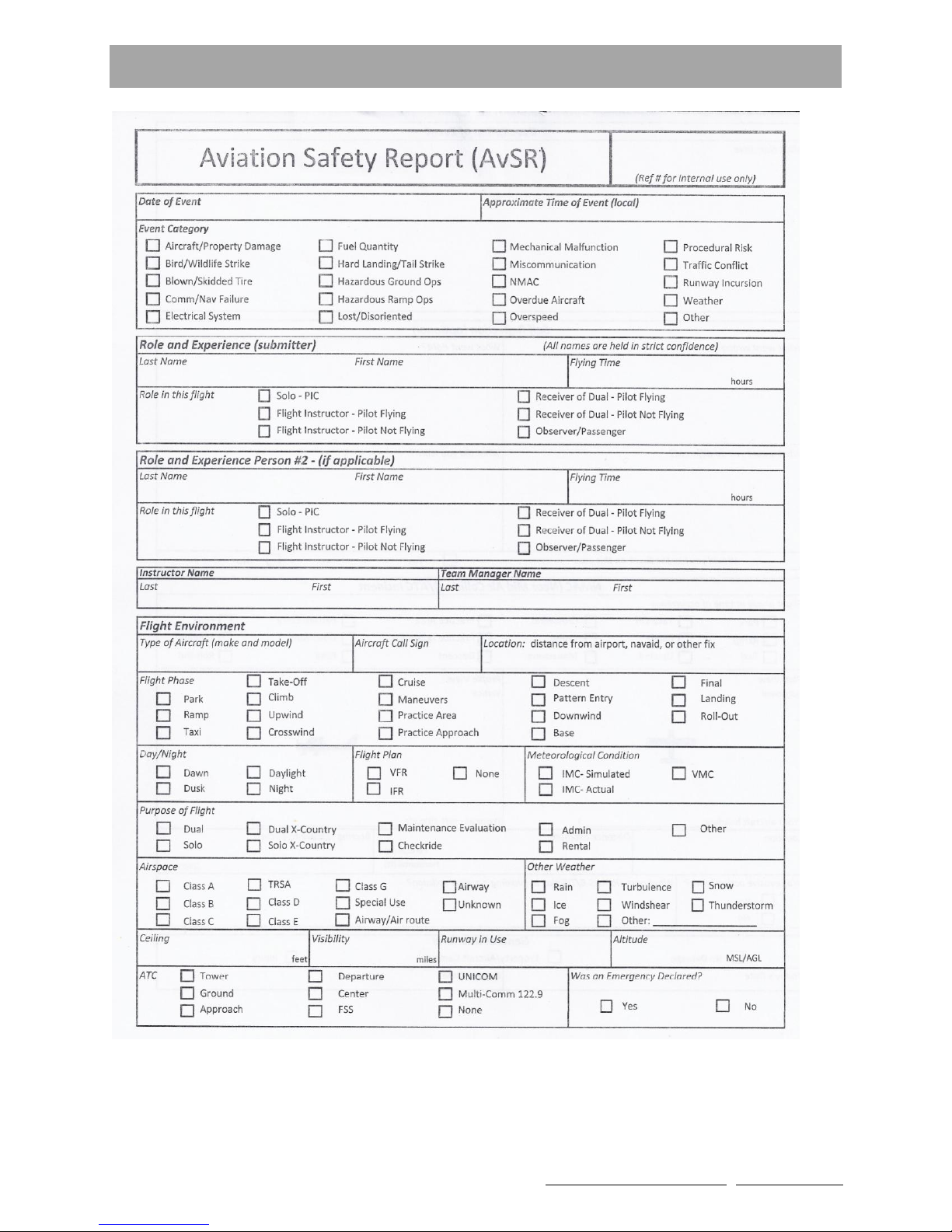
Eagle Aircraft
Operations Manual and Safety Procedures
FAA Approved
Date:
Eagle Aircraft
Operation Manual and Safety Procedures
04/25/2012
Page 46 of 56
_
Page 47
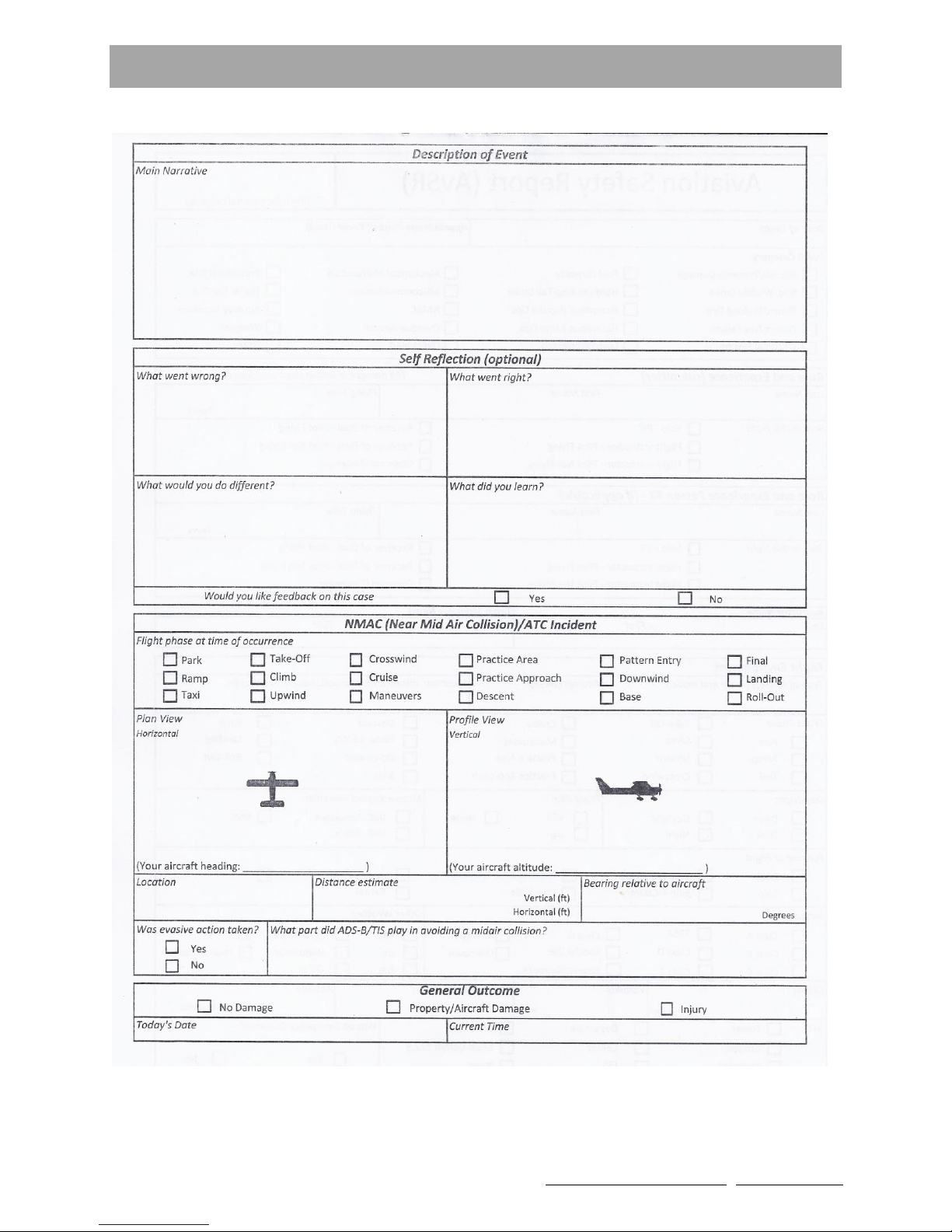
Eagle Aircraft
Operations Manual and Safety Procedures
FAA Approved
Date:
Eagle Aircraft
Operation Manual and Safety Procedures
04/25/2012
Page 47 of 56
_
Dispatch form
Page 48

Eagle Aircraft
Operations Manual and Safety Procedures
FAA Approved
Date:
Eagle Aircraft
Operation Manual and Safety Procedures
04/25/2012
Page 48 of 56
_
This form is used for dispatching aircraft from the flight school. This form will first have the top
part filled out by the dispatcher with their signature and date. The renter/student will then take
the form with them to the aircraft during the preflight inspection. As the renter/student does their
preflight, they will take note of the current tachometer reading and any discrepancy(s) found. If
any discrepancy(s) are found, the renter/student will note them on the form. The renter will then
take the form to an Eagle Aircraft instructor for evaluation and further notification to
maintenance.
Page 49
Eagle Aircraft
Operations Manual and Safety Procedures
FAA Approved
Date:
Eagle Aircraft
Operation Manual and Safety Procedures
04/25/2012
Page 49 of 56
_
Eagle Aircraft
Dispatch Form
Student’s/Renter’s Name
Date/Time
Aircraft Make/Model
N Number
Dispatcher Actions Maintenance Verifications
Valid Pilot Certificate Current
Current tach:
Current Medical Certificate (CFI Endorsed)
Identity Verified
Next Inspection type:
Qualified In Aircraft
Meets Currency Requirements Due at tach:
Completed Rental Agreement
Covenant Not To Sue
GPS Update Due:
GPS, VOR, Fire Ext. log up to date
Fuel Card Received:
(PIC initials)
Dispatcher’s Signature
Date
Renter’s Actions
I have checked the weather for the intended flight and it is forecast to remain
above the minimums prescribed by Eagle Aircraft Operations Manual.
I have preflighted the aircraft and found it airworthy and have determined that it
has enough fuel on board to complete the intended flight, with a minimum of one
hour reserve fuel. NOTE any damages:
-Failure to note damage could result in your liability for
the damage.
I have read, understand, and agree to comply with the guidance in the Federal
Aviation Regulations, Aeronautical Information Manual, and Eagle Aircraft
Operations Manual.
My destination is and I estimate my return time to
be AM/PM. If for any reason I will not return at this time, I will contact Eagle
Aircraft by telephone or radio frequency PRIOR to my expected return time
Page 50

Eagle Aircraft
Operations Manual and Safety Procedures
FAA Approved
Date:
Eagle Aircraft
Operation Manual and Safety Procedures
04/25/2012
Page 50 of 56
_
I have made 3 takeoffs and landings within the preceding 90 days in the make &
model aircraft I am renting today.
Current tach : GPS Update Due:
Next Inspection Type: Due at tach:
PIC Signature
Date
Page 51

Eagle Aircraft
Operations Manual and Safety Procedures
FAA Approved
Date:
Eagle Aircraft
Operation Manual and Safety Procedures
04/25/2012
Page 51 of 56
_
VOR/Fire Ext. Check
This form is to be filled out every 30 days for VOR check and Fire Extinguisher check. For the
VOR check, instructors and/or pilots should be following standard procedures for performing
this check and making the proper notations in the form.
For the Fire Extinguisher check, instructors and/or pilots should note the condition of the guage,
the date, and their signature on the form.
If there is a discrepancy on any part (VOR or Fire extinguisher), a report to maintenance should
be made as soon as possible to get the part repaired as soon as possible.
Page 52

Eagle Aircraft
Operations Manual and Safety Procedures
FAA Approved
Date:
Eagle Aircraft
Operation Manual and Safety Procedures
04/25/2012
Page 52 of 56
_
Page 53
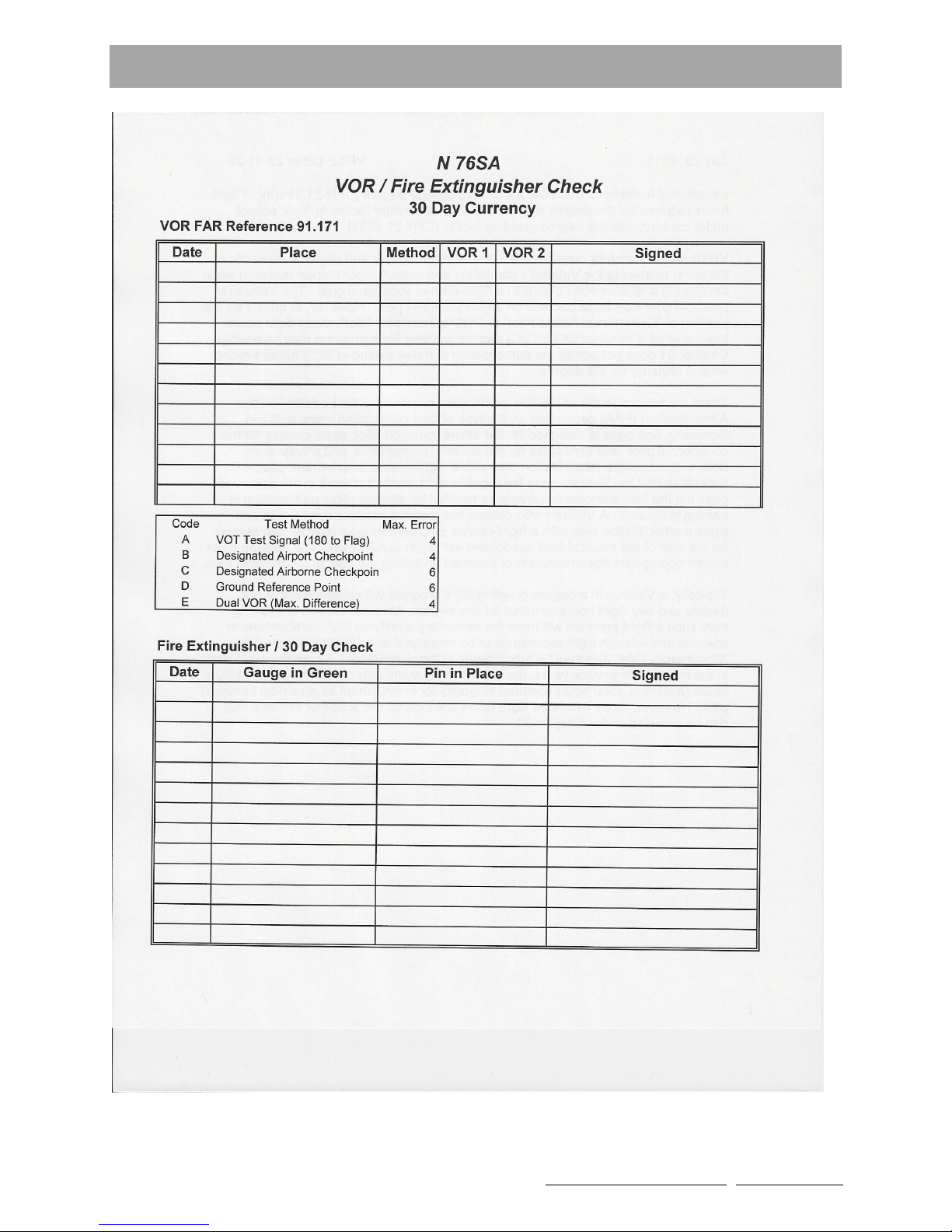
Eagle Aircraft
Operations Manual and Safety Procedures
Eagle Aircraft
Operation Manual and Safety Procedures
04/25/2012
Page 53 of 56
Date:
_
FAA Approved
Page 54

Eagle Aircraft
Operations Manual and Safety Procedures
FAA Approved
Date:
Eagle Aircraft
Operation Manual and Safety Procedures
04/25/2012
Page 54 of 56
_
First Flight Navlog
These are to be used for flight planning purposes with students or anyone who wishes to plan
their flights. The purpose of this form is to organize a flight in an orderly fashion and to prevent
pilots from getting lost along their route of flight. Students, pilots, and instructors should be
filling this form out as completely as possible. This form can be located on the internet at:
www.firstflight.com
When flight planning a flight, use one form per leg of the flight. When student are conducting
their cross country flights, they should be using three (3) forms as they will be going to, at
minimum, three (3) different airports.
Page 55
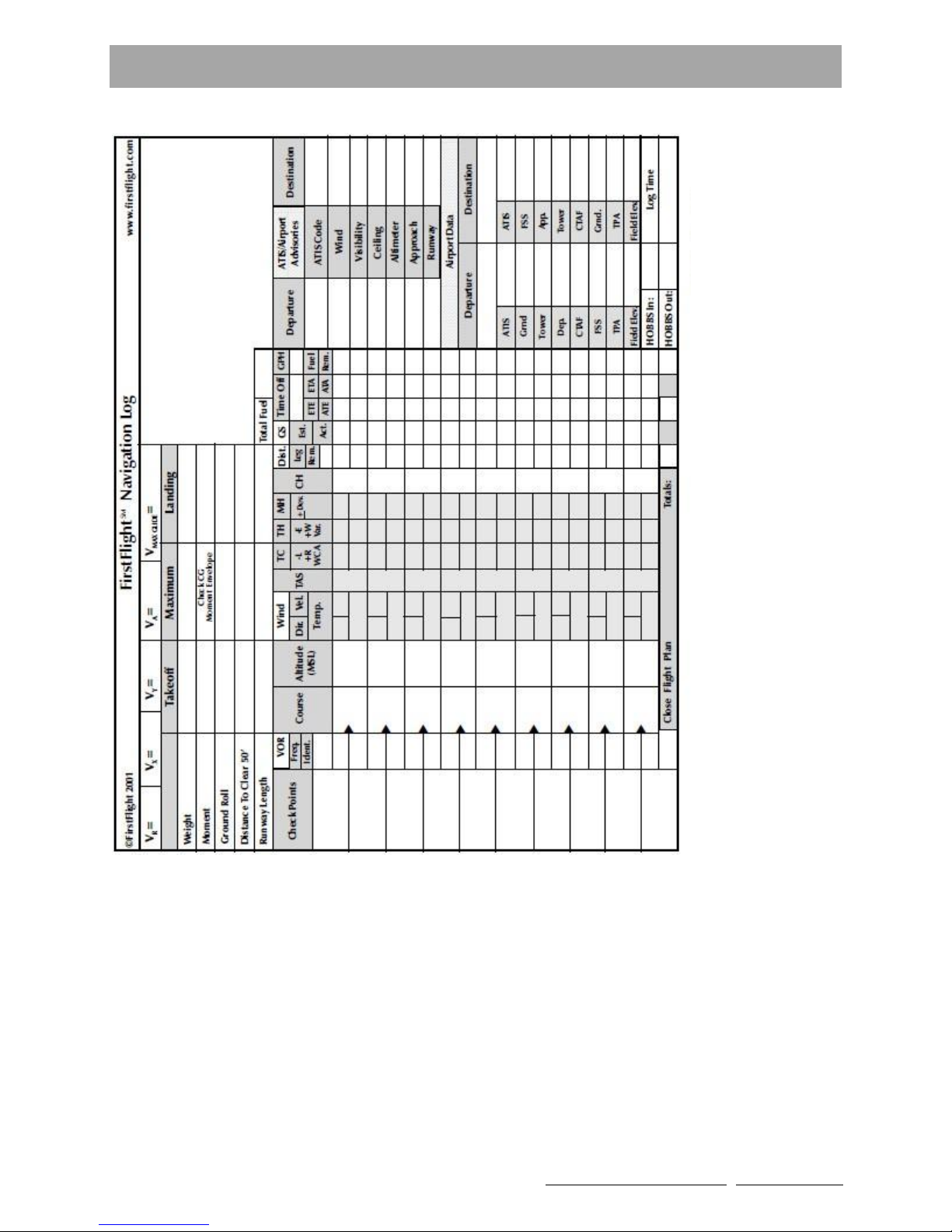
Eagle Aircraft
Operations Manual and Safety Procedures
FAA Approved
Date:
Eagle Aircraft
Operation Manual and Safety Procedures
04/25/2012
Page 55 of 56
_
Page 56
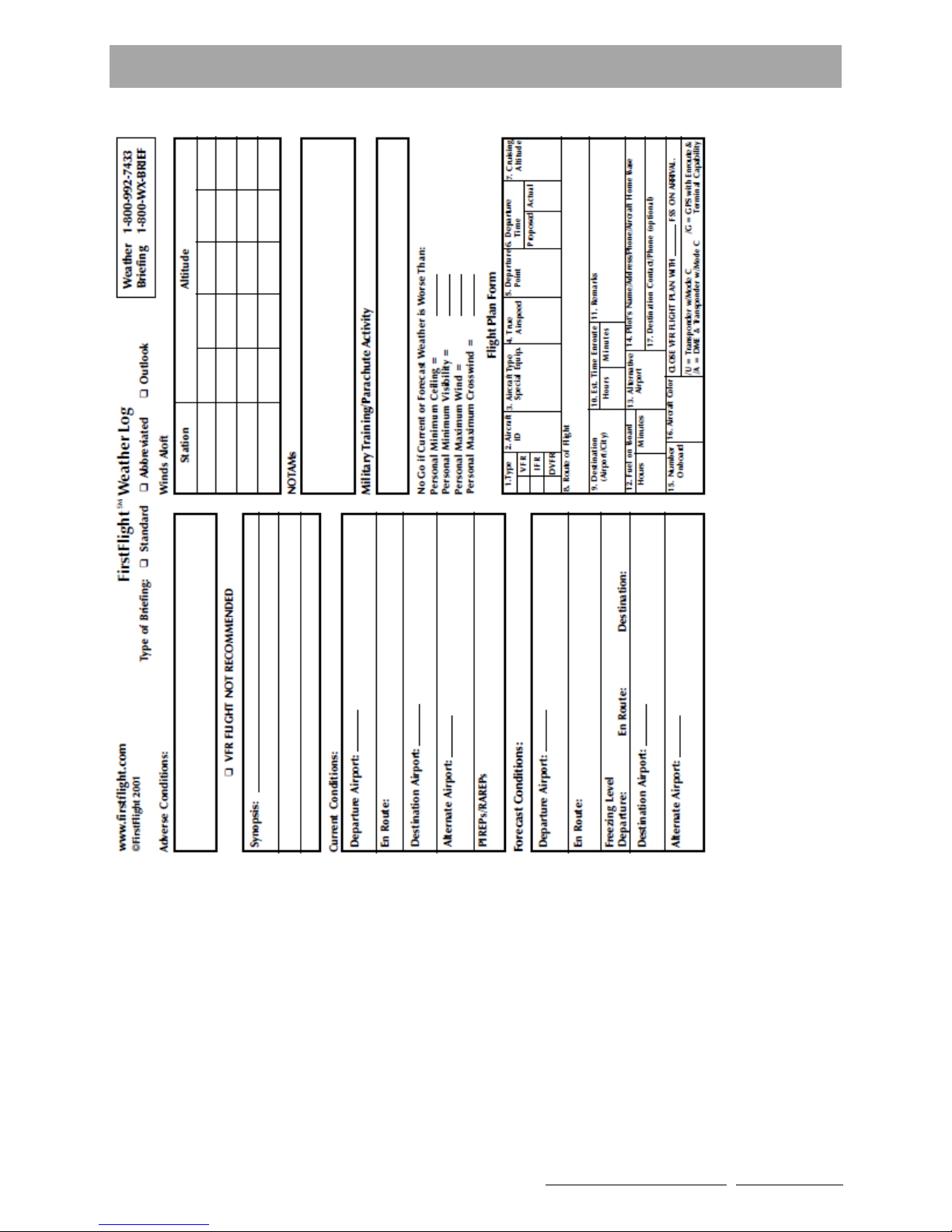
Eagle Aircraft
Operations Manual and Safety Procedures
FAA Approved
Date:
Eagle Aircraft
Operation Manual and Safety Procedures
04/25/2012
Page 56 of 56
_
 Loading...