

Page 1
2192, 2193, 2194
Two-Way Coaxial, Optimized
Aperture Bi-Radial
®
Horn Family
Key Features:
c
Two-way coaxial horn family
providing a high SPL, wide
response point source.
c
Controlled horizontal and vertical
pattern in 90°x50°, 60°x50°, and
40°x30° formats.
c
Uniform on and off-axis frequency
response from 300 Hz to 16 kHz.
c
Optimized ApertureTMhorn design
provides very low distortion at
high sound pressure levels.
c
2390-Series mid-frequency horn
and 2490H large format
compression driver with
76mm (3 in) exit.
c
High-frequency horn and 2451H
large format compression driver
with 38mm (1.5 in) exit.
c
Weather-resistant version available.
The coupling of JBL’s patented
Bi-Radial®, mid-frequency and
high-frequency horns into a colinear
loudspeaker has produced a
convenient package for supplying
high sound pressure levels over a six
octave bandwidth from a point
source.
Constant horizontal and vertical
coverage patterns over the bandwidth
of 300 Hz to 16 kHz allow precise
control of sound energy. Greater
intelligibility is more easily achieved
while reducing problems with lobing,
comb filtering and system
gain-before-feedback issues.
Both the high-frequency and
mid-frequency horns use Optimized
Aperture technology that results in
improved driver-to-horn coupling and
lower distortion levels.
Components:
The JBL Coaxial Bi-Radial horns are the result of the finest horn and
compression driver technology. The coaxial horn family offers the system
designer the best possible solution for covering the bandwidth from 300 Hz
to 20 kHz at maximum continuous sound pressure levels with the highest
practical efficiency.
Both the mid-frequency and high-frequency horns were developed using
advanced computer modeling, including JBL’s proprietary horn design
software, finite element analysis and boundary element analysis. The
application of this advanced technology helped create the Optimized
Aperture horns used in this design and greatly reduces throat distortion,
while effectively extending usable high frequency response.
The compression drivers utilized in the coaxial horn family are the 2490H
at mid-frequencies and the 2451H at high-frequencies. Both drivers utilize a
three-dimensional diamond pattern surround, and a pure titanium
diaphragm for stiffness and freedom from break-up modes.
The 2192, 2193 and 2194 horns are designed to be bi-amplified using the
JBL DSC280 controller, which provides crossover, signal alignment, EQ, and
limiting functions to obtain optimum performance with the coaxials.
Also available are the 2192-WR, 2193-WR and 2194-WR coaxials with the
weather-resistance option. The weather-resistant version includes a rugged
3 layer rain-resistant grille and a sealed chamber for the mid-frequency
driver. Non-corrosive, stainless steel suspension points are also included.
Professional Series
PRELIMINARY
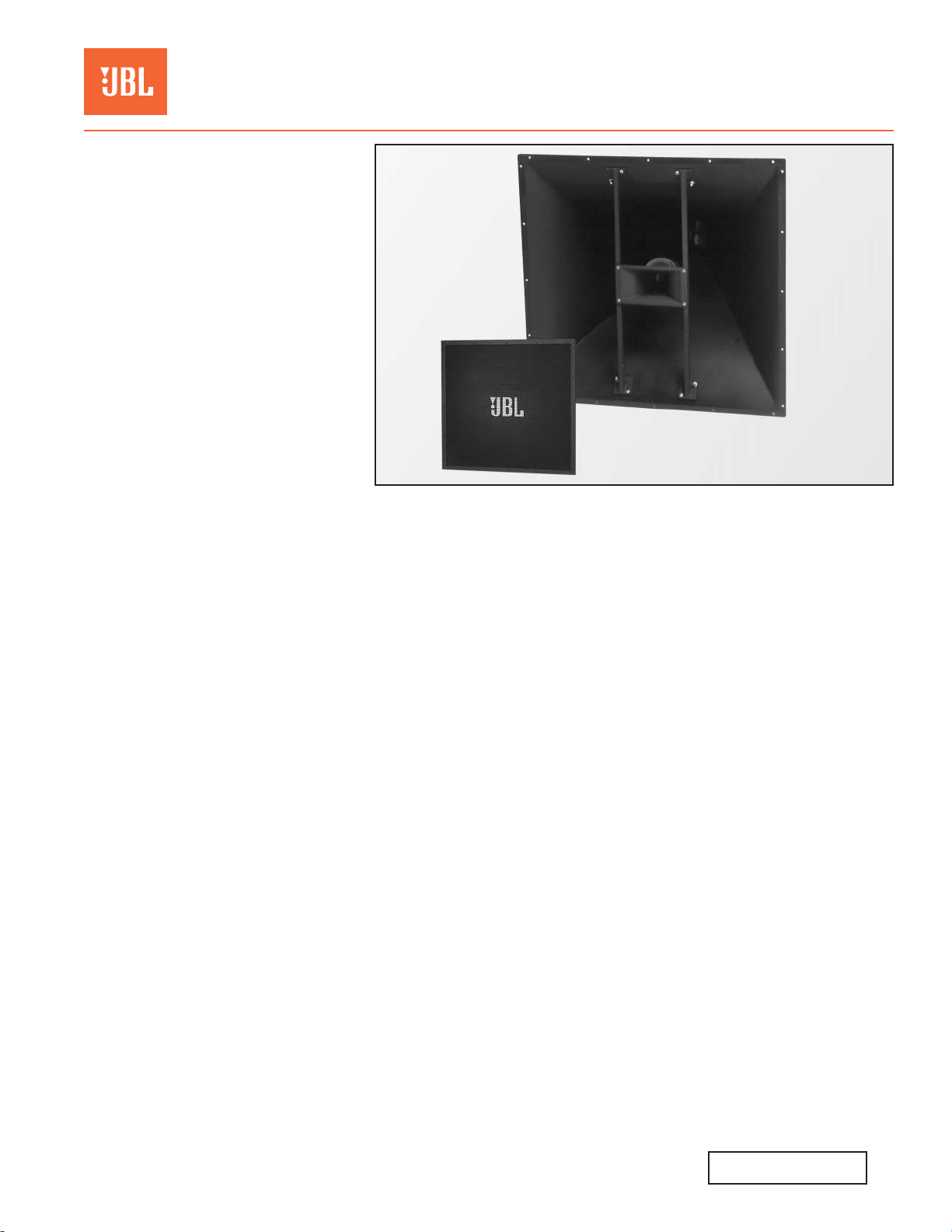
2192,90° x 50° typical of coaxial horn family.Weather-resistant shown in inset
Page 2
c 2192, 2193, 2194 Two-Way Coaxial, Optimized Aperture Bi-Radial®Horn Family
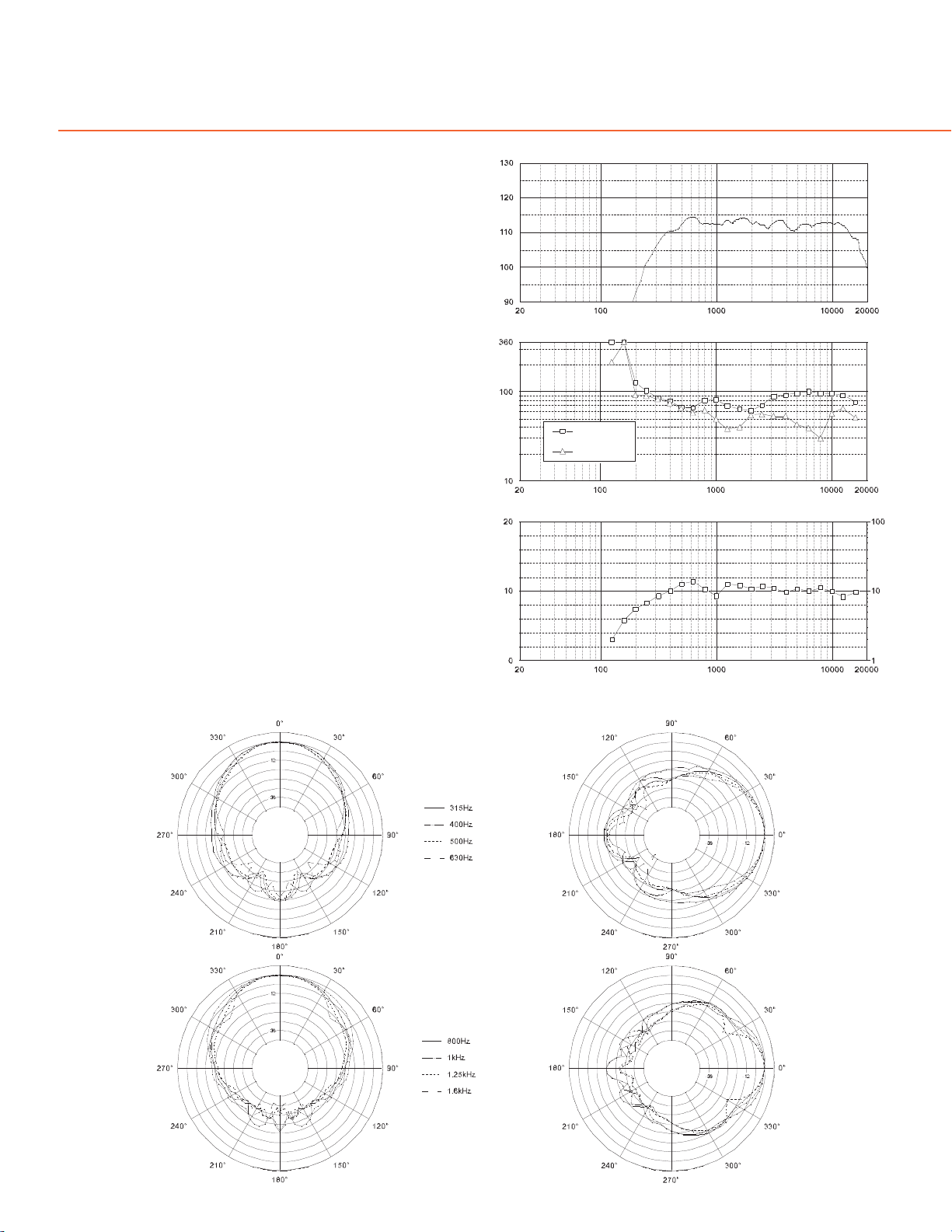
JBL 2192 Coaxial Horn
Frequency Response – Cut-only mid-frequency
equalization, typical of usage. Base sensitivity
(maximum drive at any mid frequency) is 1W (2.83V).
Measured at farfield distance, on axis, scaled to
1W @ 1m.
Horizontal 1/3 Octave Polars Ver tical 1/3 Octave Polars
Frequency (Hz)
SPL, 1W/1m (dB)
Frequency (Hz)
-6 dB Beamwidth (degrees)
Horizontal
Vertical
Beamwidth vs.Frequency
Frequency (Hz)
Directivity Index (DI), dB
Directivity Factor (Q)
Directivity vs.Frequency
Page 3
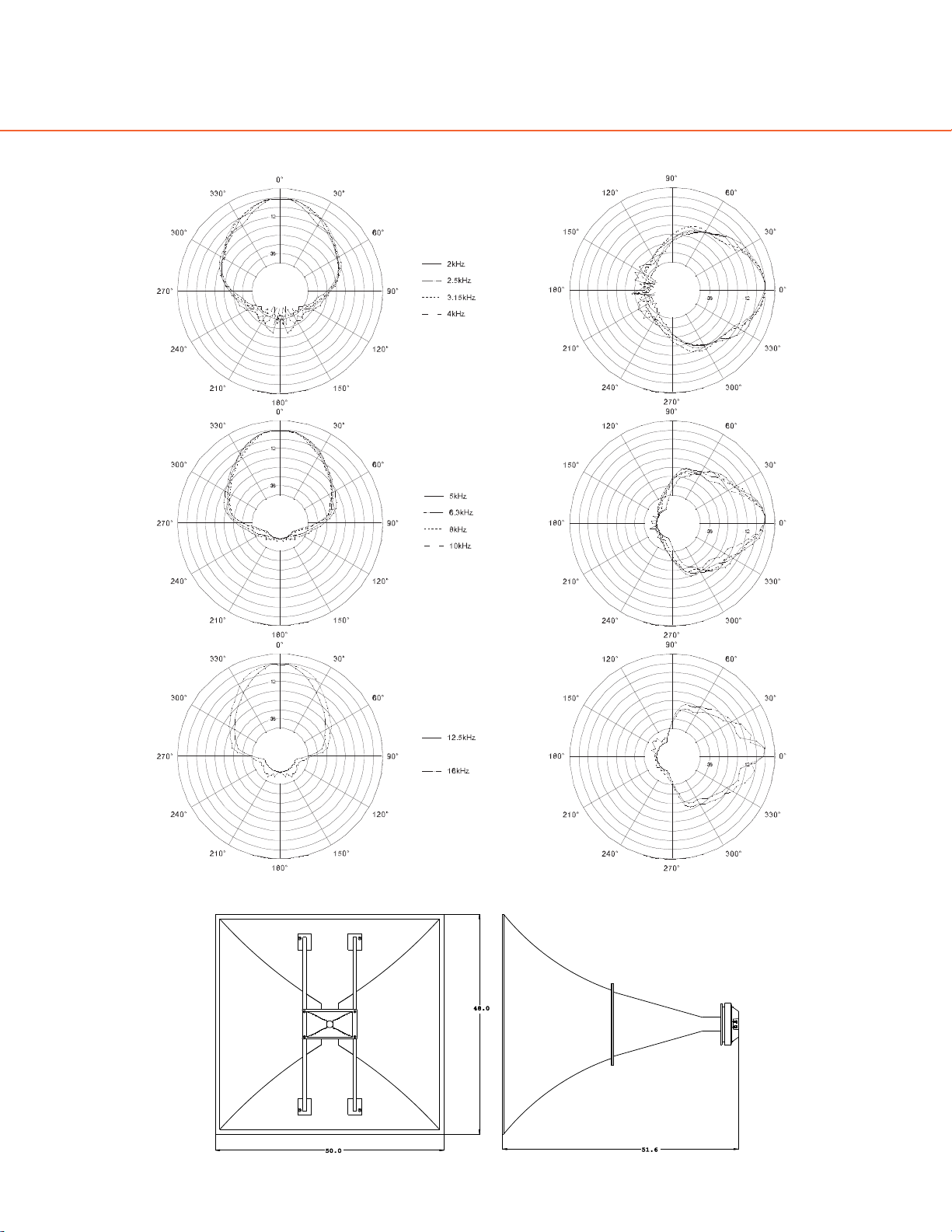
Horizontal 1/3 Octave Polars Ver tical 1/3 Octave Polars
Page 4

c 2192, 2193, 2194 Two-Way Coaxial, Optimized Aperture Bi-Radial®Horn Family
JBL 2194 Coaxial Horn
Frequency Response – Cut-only mid-frequency
equalization, typical of usage. Base sensitivity
(maximum drive at any mid frequency) is 1W (2.83V).
Measured at farfield distance, on axis, scaled to
1W @ 1m.
Horizontal 1/3 Octave Polars Ver tical 1/3 Octave Polars
Frequency (Hz)
SPL, 1W/1m (dB)
Frequency (Hz)
-6 dB Beamwidth (degrees)
Horizontal
Vertical
Beamwidth vs.Frequency
Frequency (Hz)
Directivity Index (DI), dB
Directivity Factor (Q)
Directivity vs.Frequency
Page 5

Horizontal 1/3 Octave Polars Ver tical 1/3 Octave Polars
Page 6

c 2192, 2193, 2194 Two-Way Coaxial, Optimized Aperture Bi-Radial®Horn Family
JBL 2193 Coaxial Horn
Frequency Response – Cut-only mid-frequency
equalization, typical of usage. Base sensitivity
(maximum drive at any mid frequency) is 1W (2.83V).
Measured at farfield distance, on axis, scaled to
1W @ 1m.
Horizontal 1/3 Octave Polars Ver tical 1/3 Octave Polars
Frequency (Hz)
SPL, 1W/1m (dB)
Frequency (Hz)
-6 dB Beamwidth (degrees)
Horizontal
Vertical
Beamwidth vs.Frequency
Frequency (Hz)
Directivity Index (DI), dB
Directivity Factor (Q)
Directivity vs.Frequency
Page 7

Horizontal 1/3 Octave Polars Ver tical 1/3 Octave Polars
Page 8

JBL Professional
8500 Balboa Boulevard, P.O. Box 2200
Northridge, California 91329 U.S.A.
A Harman International Company
SS 219X
CRP 10M
4/97
c 2192, 2193, 2194 Two-Way Coaxial, Optimized Aperture Bi-Radial®Horn Family
Product Specifications:
Horn Model: 2192 2193 2194
Frequency Response1: 260 Hz - 17 kHz
Horizontal Coverage Angle (-6 dB): 90° (+8°, -28°) 60° (+20°, -10°) 40° (+30°, -5°)
300 Hz to 16 kHz
Vertical Coverage Angle (-6 dB): 50° (+30°, -20°) 50° (+30°, -12°) 30° (+40°, -10°)
300 Hz to 16 kHz:
Directivity Factor (Q): 10 (+4, -2) 20 (+12, -10) 26 (+10, -18)
300 Hz to 16 kHz:
Directivity Index (DI): 10 dB (+2, -1) 13 dB (+2, -3) 14 dB (+1, -5)
300 Hz to 16 kHz:
Axial Pressure Sensitivity2: 112 dB MF/111 dB HF 115 dB MF/111 dB HF 116 dB MF/111 dB HF
Recommended MF Crossover: 300 Hz @ 18 dB/octave minimum
Recommended HF Crossover: 2kHz @ 24dB/octave
Recommended HF Signal Delay: 2.00 ms 2.34 ms 3.00 ms
Power Rating:
Mid-Frequency: 100 W AES, 300 Hz to 3 kHz, 200W recommended amplifier power @ 8V
High-Frequency: 75 W AES, 1 kHz to 10 kHz, 200W recommended amplifier power @ 8V
Transducers:
Mid-Frequency: 2490H 100 mm (4 in) diaphragm and voice coil dia., 76 mm (3 in) throat dia.
High-Frequency: 2451H (J avail) 100 mm (4 in) diaphragm and voice coil dia., 38 mm (1.5 in) throat dia.
Physical:
Mouth Height: 1120 mm (44 in) 1070 mm (42 in) 1220 mm (48 in)
Mouth Width: 1120 mm (44 in) 1120 mm (44 in) 1270 mm (50 in)
Length with Driver: 855 mm (33.6 in) 1005 mm (39.6 in) 1315 mm (51.6 in)
Length of each Section3: 385 mm (15 in) 460 mm (18 in) 610 mm (24 in)
Net Weight: 36 kg (78 lbs) 50 kg (109 lbs) 54 kg (118 lbs)
Construction: Fiberglass reinforced plastic
Accessories: Included: 2 pcs forged shoulder eye bolts for horn-front suspension points.
Optional: 2510 suspension plate, provides pick-point at driver.
2
Useable frequency response is defined as 10dB below rated sensitivity.
2
Measured on axis in the far field with 1 watt (2.83 V RMS, 8 ohms) input and referenced to 1 meter distance using the inverse square law. Listed sound pressure represents an
average through each driver’s operating band.
3
To facilitate shipping and handling this horn is made, and shipped in two halves.
JBL continually engages in research related to product improvement. New materials, production methods, and design refinements are introduced into existing products without notice
as a routine expression of that philosophy. For this reason, any current JBL product may differ in some respect from its published description, but will always equal or exceed the
original design specifications unless otherwise stated.
 Loading...