

Page 1
1
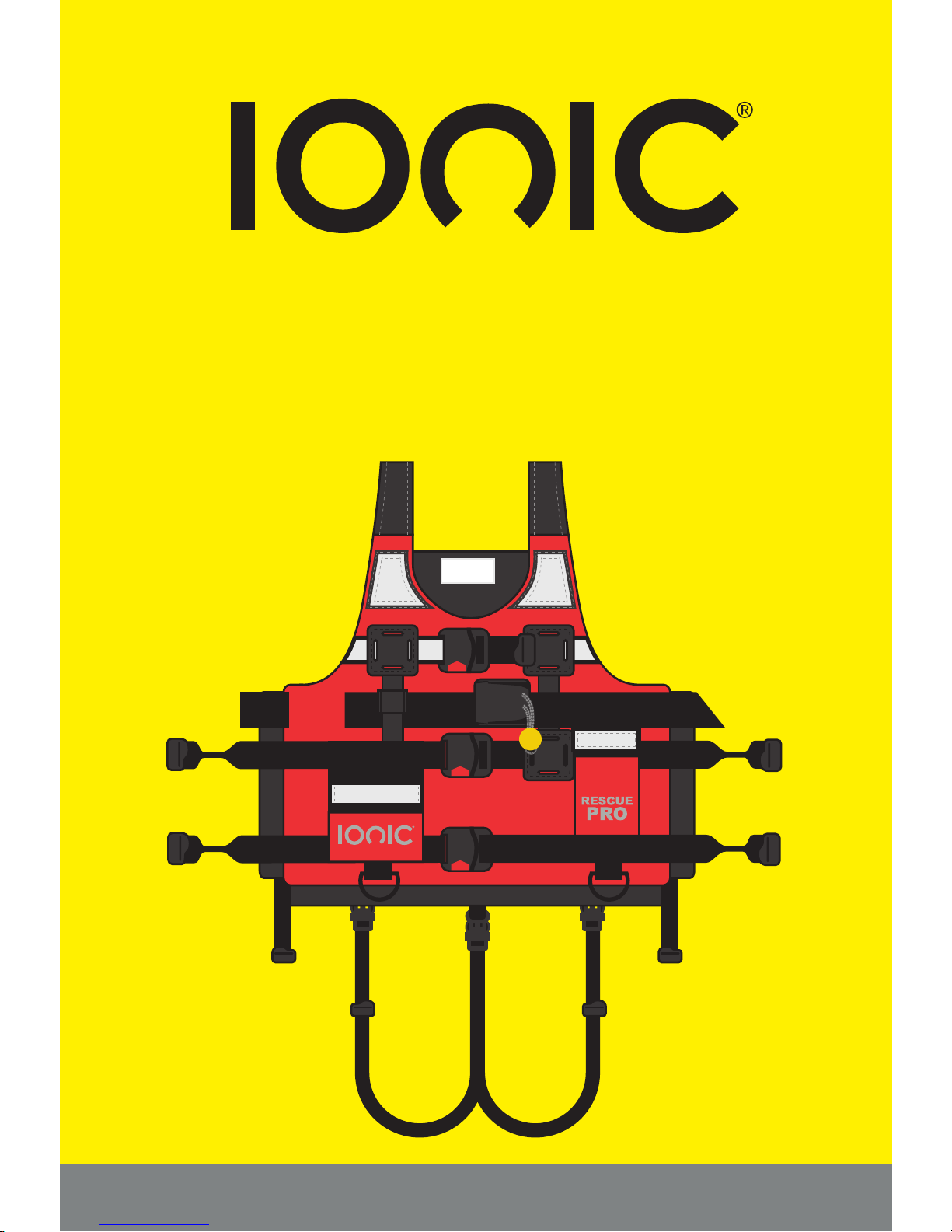
Rescue Pro PFD
User Manual
IONIC is a Safequip registered product brand
Innovation by Design
Serial No:
Page 2
2
Donning and User Instructions
RESCUE PRO
Personal Flotation Device
Certified to EN ISO 12402-5 (2006) EN ISO 12402-6(2006)
WARNING
Personal Flotation Devices like the Rescue Pro
fitted with a chest rescue belt should only be
used by personnel who have received the appropriate
training by a qualified instructor.
Before use, ensure your PFD is the correct size. Do not
use if the PFD is either too large or too small. Please
adjust your PFD correctly as per the instructions provided
in this user manual.
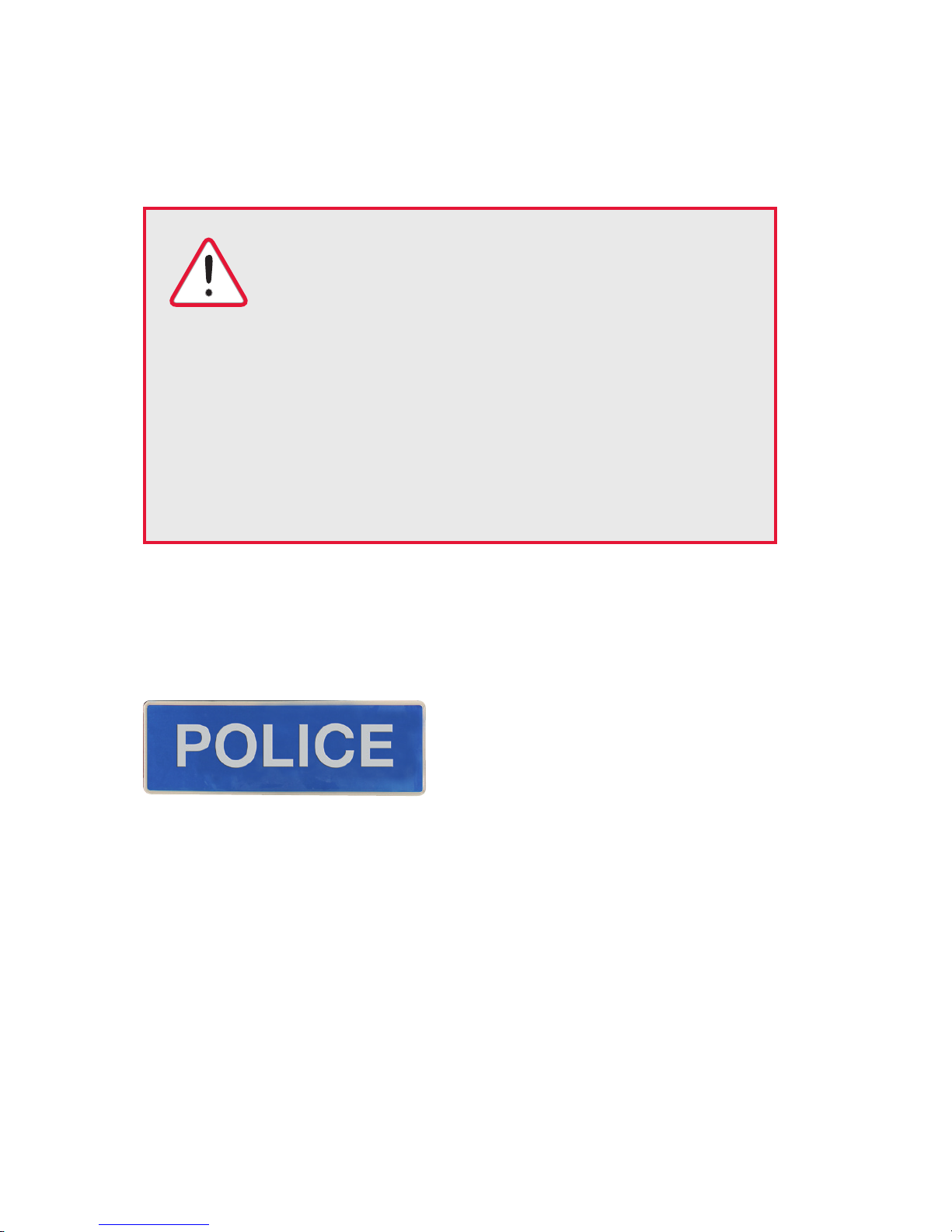
Waterproof ID badges can be supplied upon request, please
see example below -
Part Numbers
SAF30012 Rescue Pro PFD
(including crotch straps & mesh stowage bag)
SAF33053 Spare crotch strap set
SAF44009 Spare PFD mesh stowage bag
SAF61011 Elasticated cowtail without karabiner
(not supplied with PFD)
SAF33052 Reflective ID badge for the PFD as illustrated
(not supplied with the PFD)
FOR EXAMPLE ONLY
Page 3
3
Donning and User Instructions
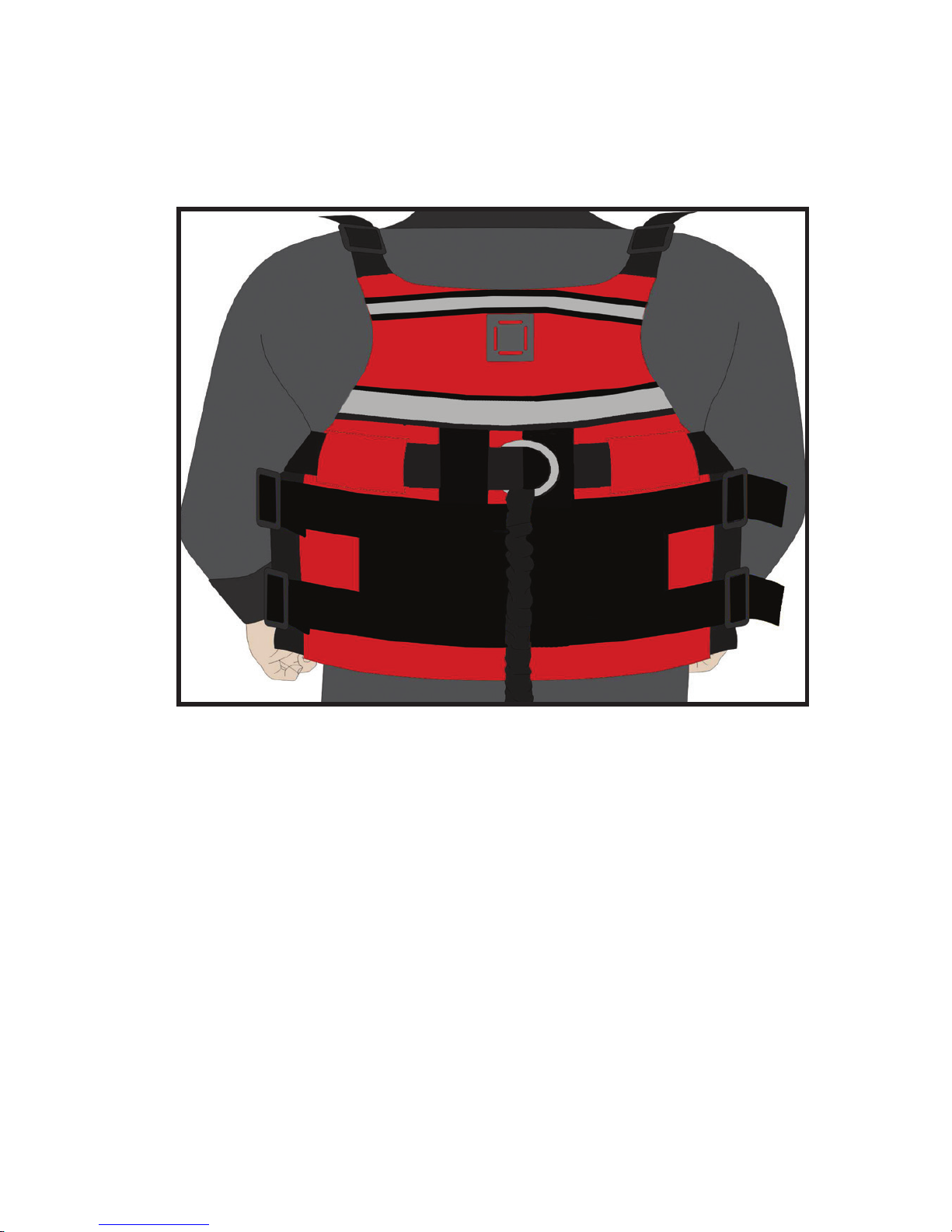
Pre-fitting the Cowtail
1. Open the fix lock buckle and un-thread the
webbing belt through x4 webbing loops on the
PFD (Personal Flotation Device).
2. To ensure the cowtail is fitted correctly the
webbing belt must be threaded through the fixed
ring or karabiner on the cowtail so that it sits
between the two vertical webbing loops.
(see illustration fig 1)
3. Then thread the webbing belt back through x4
webbing loops on the PFD. Make sure that the
webbing release belt is not twisted, which could
effect it’s easy release when used.
Fig 1
Page 4
4
Donning and User Instructions
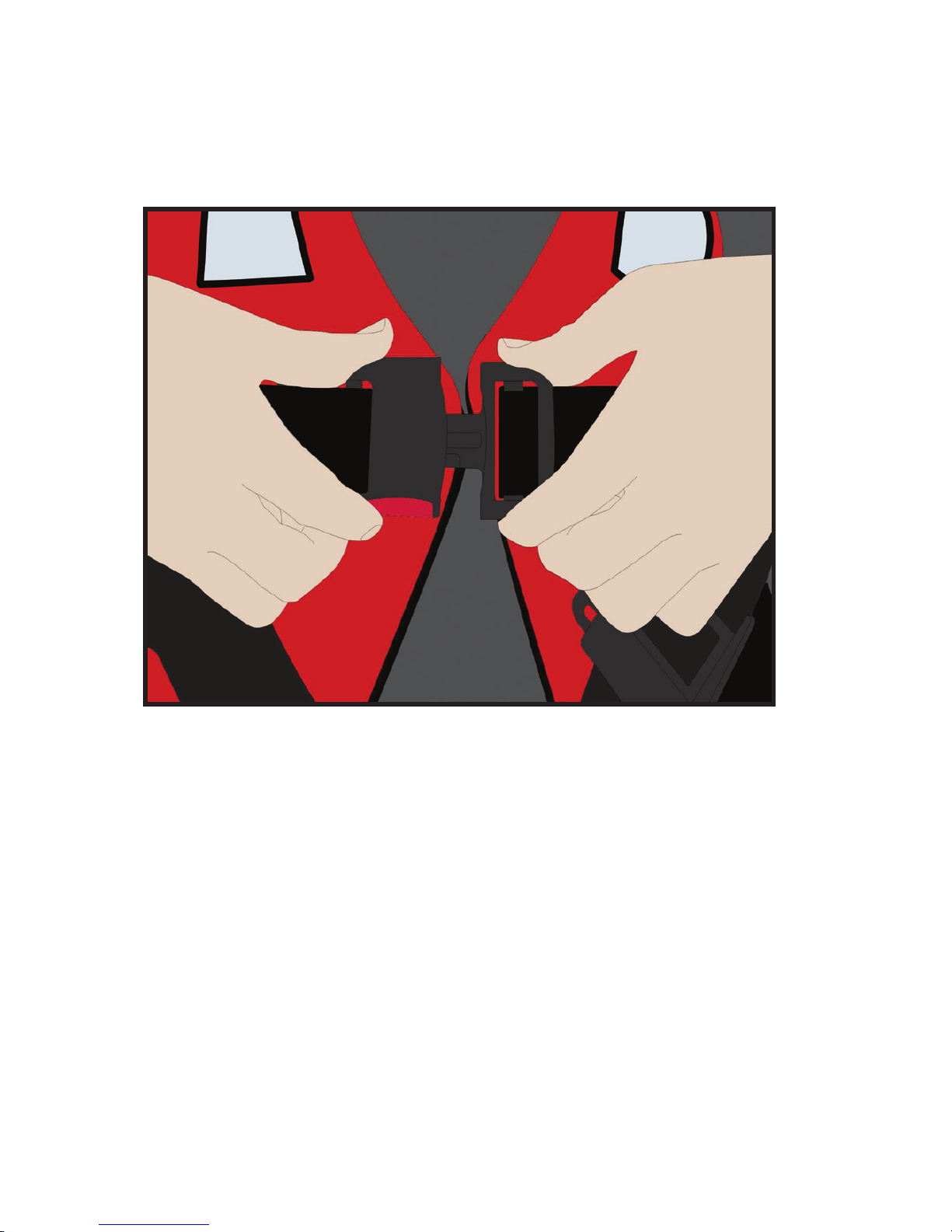
Fig 2
Donning the PFD
Before donning make sure that the shoulder and side
compression straps are fully extended.
Don the PFD and starting from the bottom clip the
three SR buckles together.
(see illustration in fig 2)
Page 5
5
Fig 3
Donning and User Instructions
Adjusting the PFD
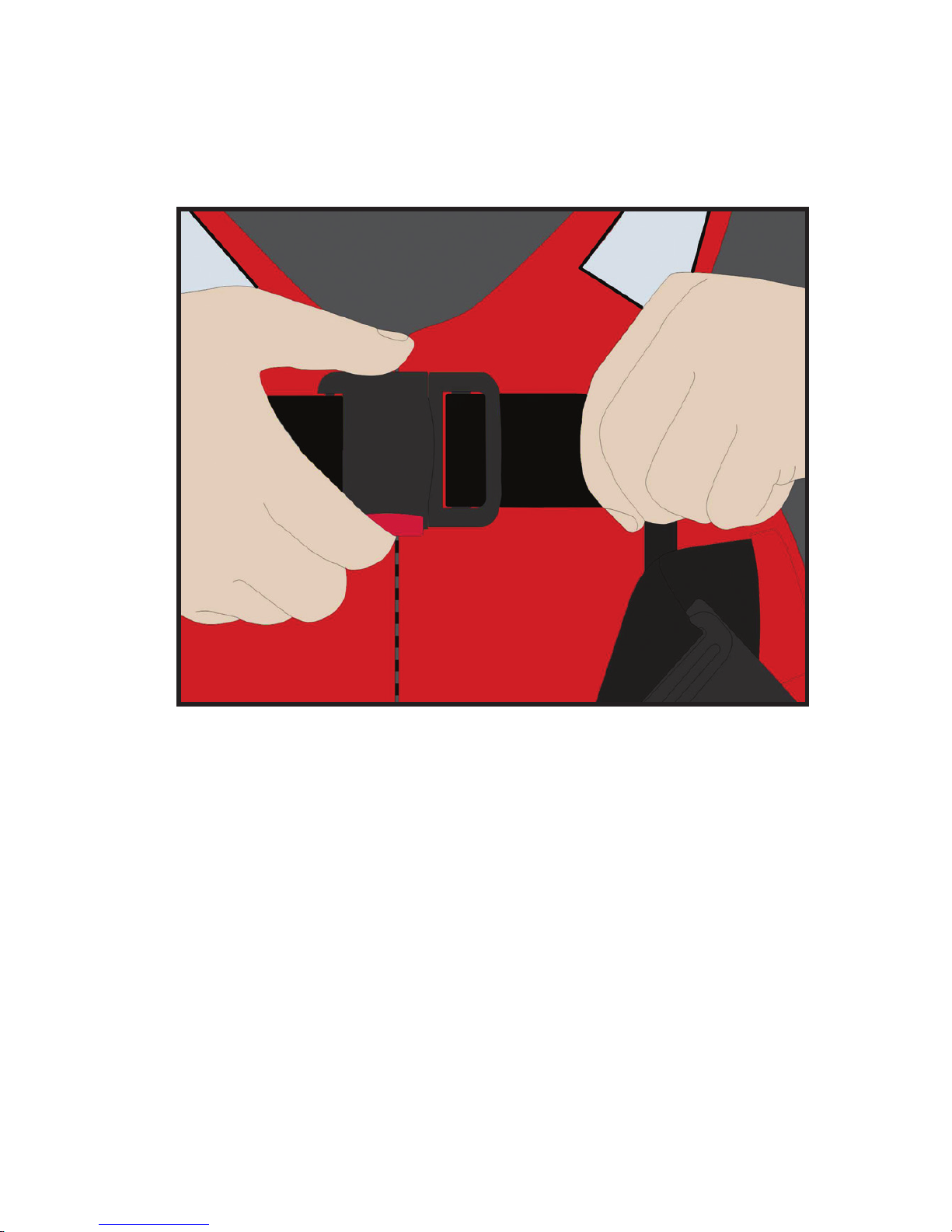
Tighten the top black webbing strap by holding the
buckle with one hand and pulling the black webbing
strap to the left with the other hand.
(see illustration in fig 3)
Page 6
6
Donning and User Instructions
Adjusting the PFD
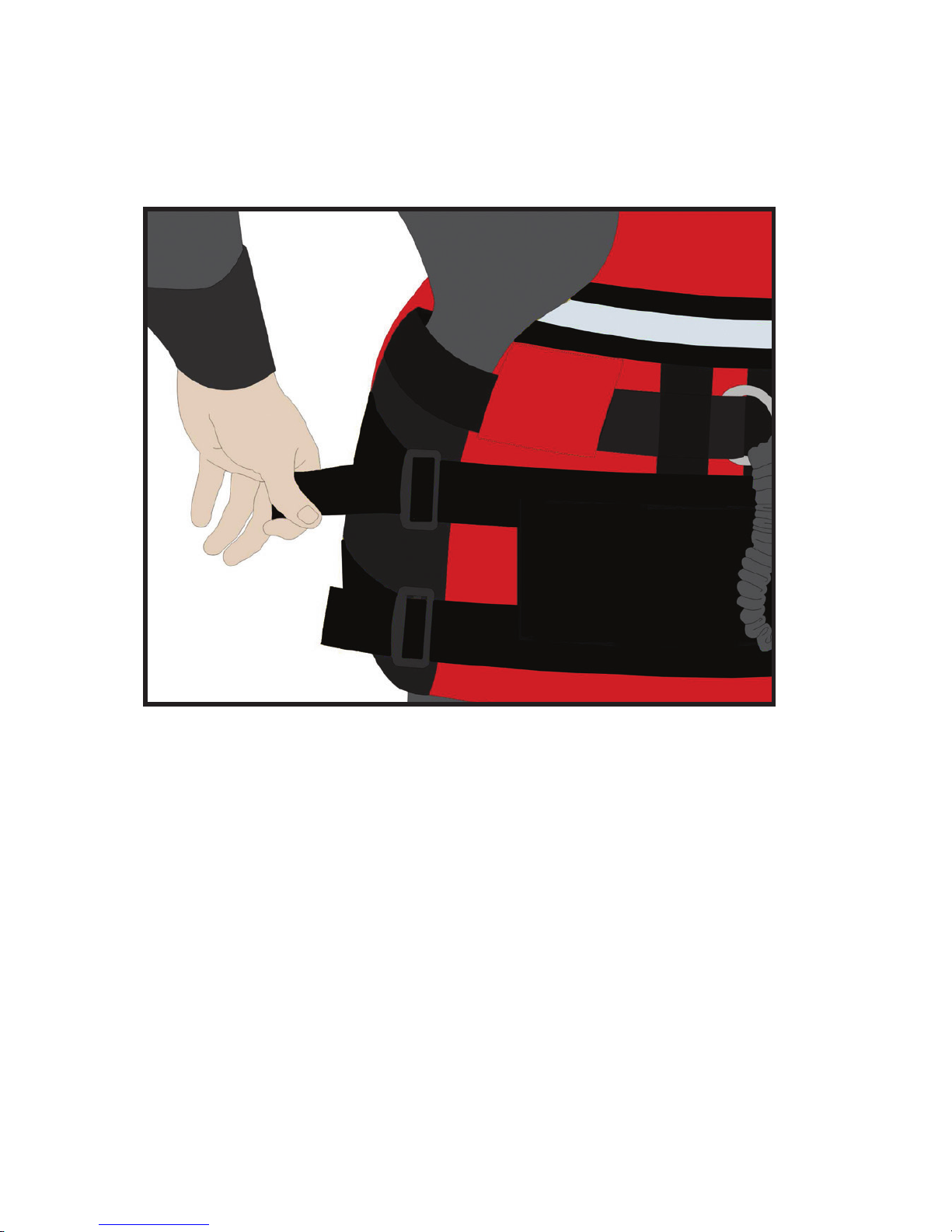
To ensure the PFD is fitted correctly, tighten the side
compression straps.
Starting with the bottom two straps, hold them both
and pull forward simultaneously to tighten. Repeat
process for the next two side straps.
(see illustration in fig 4)
Fig 4
Page 7
7
Donning and User Instructions
Adjusting the PFD
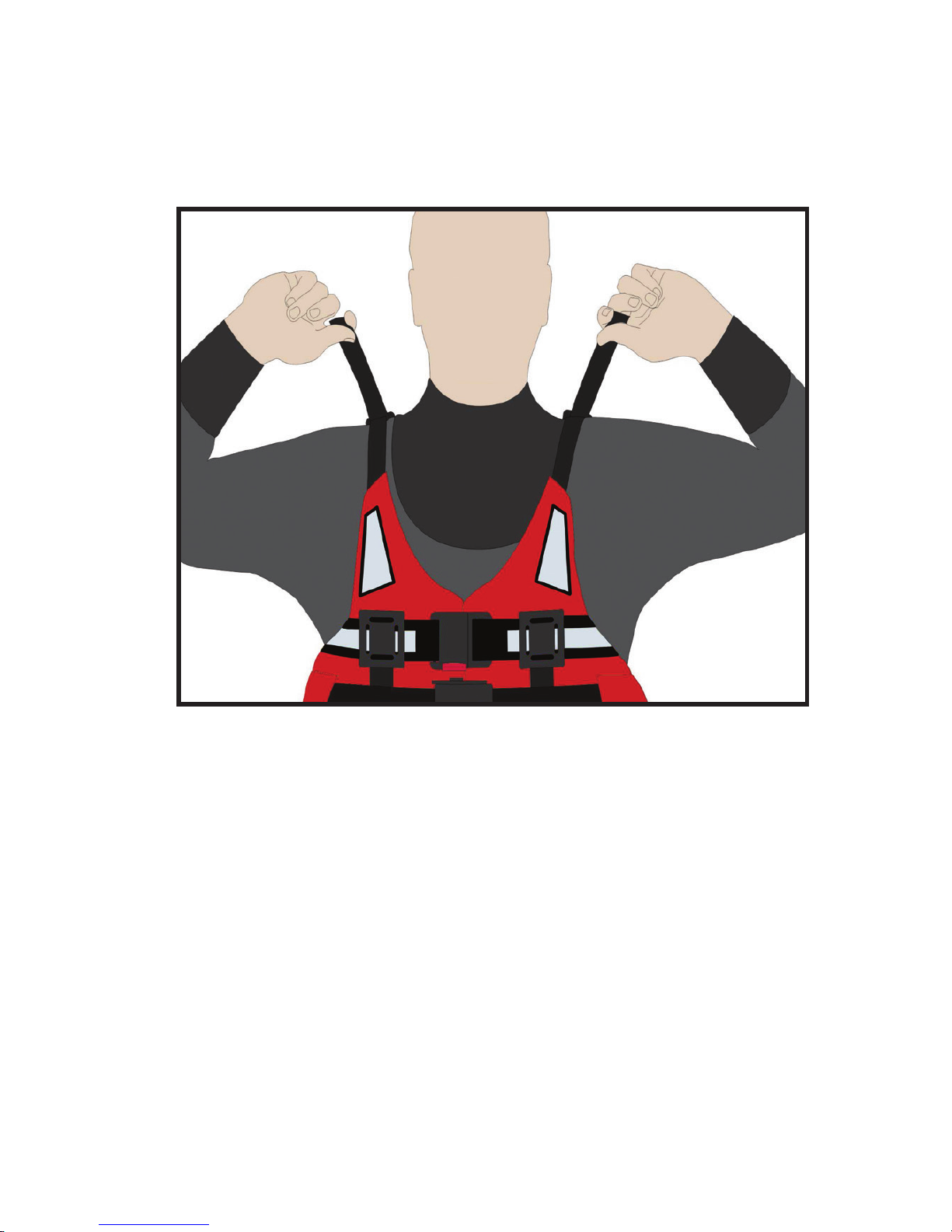
Finally take the two shoulder straps and pull forward
simultaneously to ensure the correct adjustment.
The personal flotation device should fit snug around
the body.(see illustration in fig 5)
At this point clip the leg straps into the two front
buckles located in the waistband and adjust for comfort.
USER NOTICE: We recommend the use of the leg straps on the
PFD, however the Rescue Pro can be used with the leg straps
removed based upon your own/organisation operating procedures.
Please ensure that the PFD is adjusted so it fits snug around
the body to avoid the PFD riding up the body, which can cause
problems in use.
Fig 5
Page 8
8
Donning and User Instructions
Adjusting the quick release belt
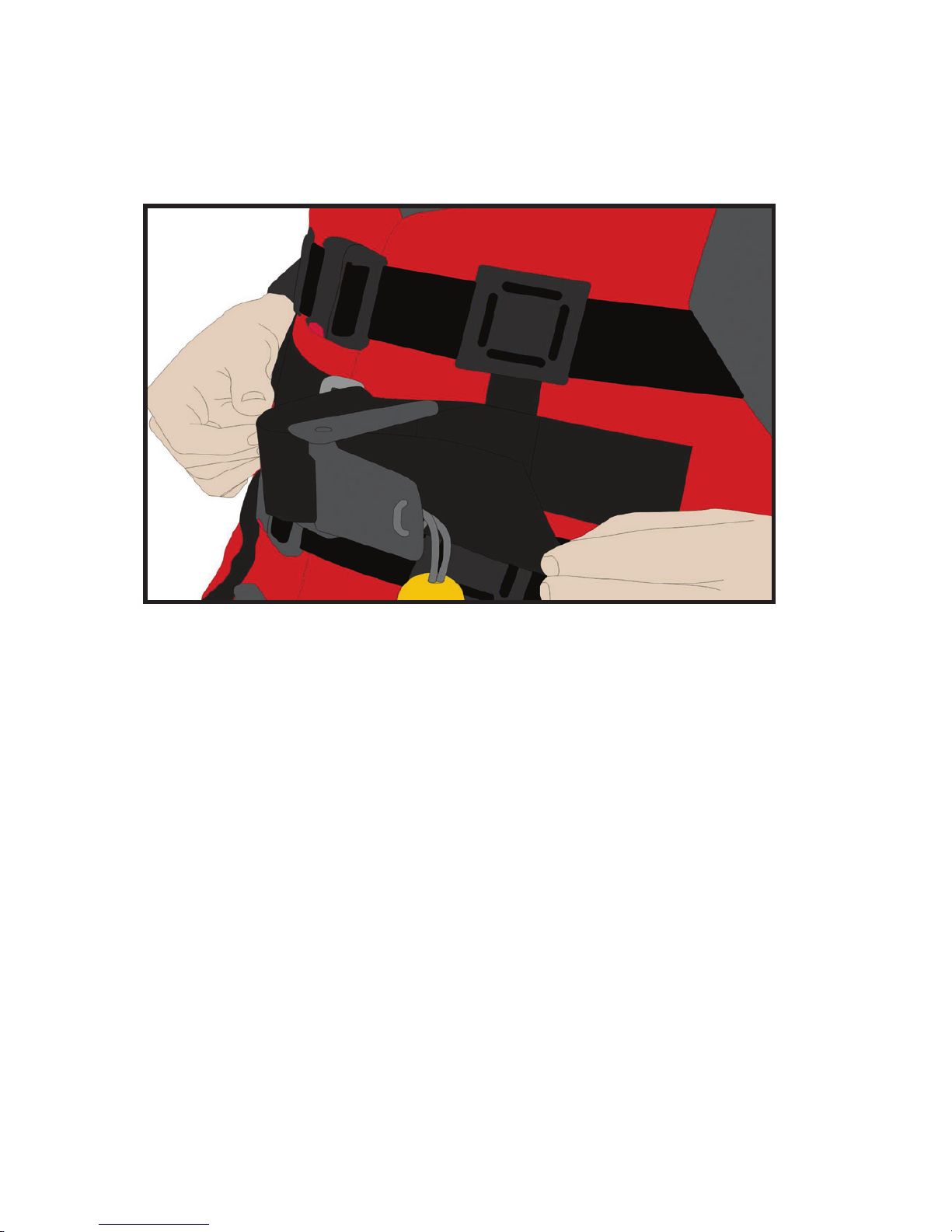
Open the plastic 50mm cam buckle using the toggle and thread the
50mm harness webbing belt through the plastic cam buckle. Ensure
that the webbing sits correctly in the buckle back plate, making sure
no part of the webbing is twisted which could cause the webbing to
jam in operation. Then close the buckle so that the webbing is held
tight by the buckle mechanism.
It our recommendation that the webbing tail end should not be cut/
trimmed unless it is your own specific PFD as this could cause
problems for others using the same PFD. However if the webbing
tail end is judged to be excessively long, then we would recommend
that you review the sizing of your PFD, as it is possible you might be
wearing the incorrect size. IMPORTANT: When trimming/
shortening the harness webbing tail end with either a hot knife or
similar, then you must make sure you cut/trim the webbing cleanly
without leaving any molten residue or lip which could affect its
release through the Cam Buckle. Some brands of PFD’s are fitted
with an extra-long chest harnesses which will generally increase the
need to trim the harness webbing.
Fig 6
Page 9
9
Donning and User Instructions
The user is responsible for ensuring there is sufficient free harness
webbing when the PFD is fully adjusted and correctly sized. This is
to enable the user to open the quick release buckle in the event of
an emergency, as an alternative to the toggle release.
We recommend that this option is included in your standard
operating procedures as a training requisite.
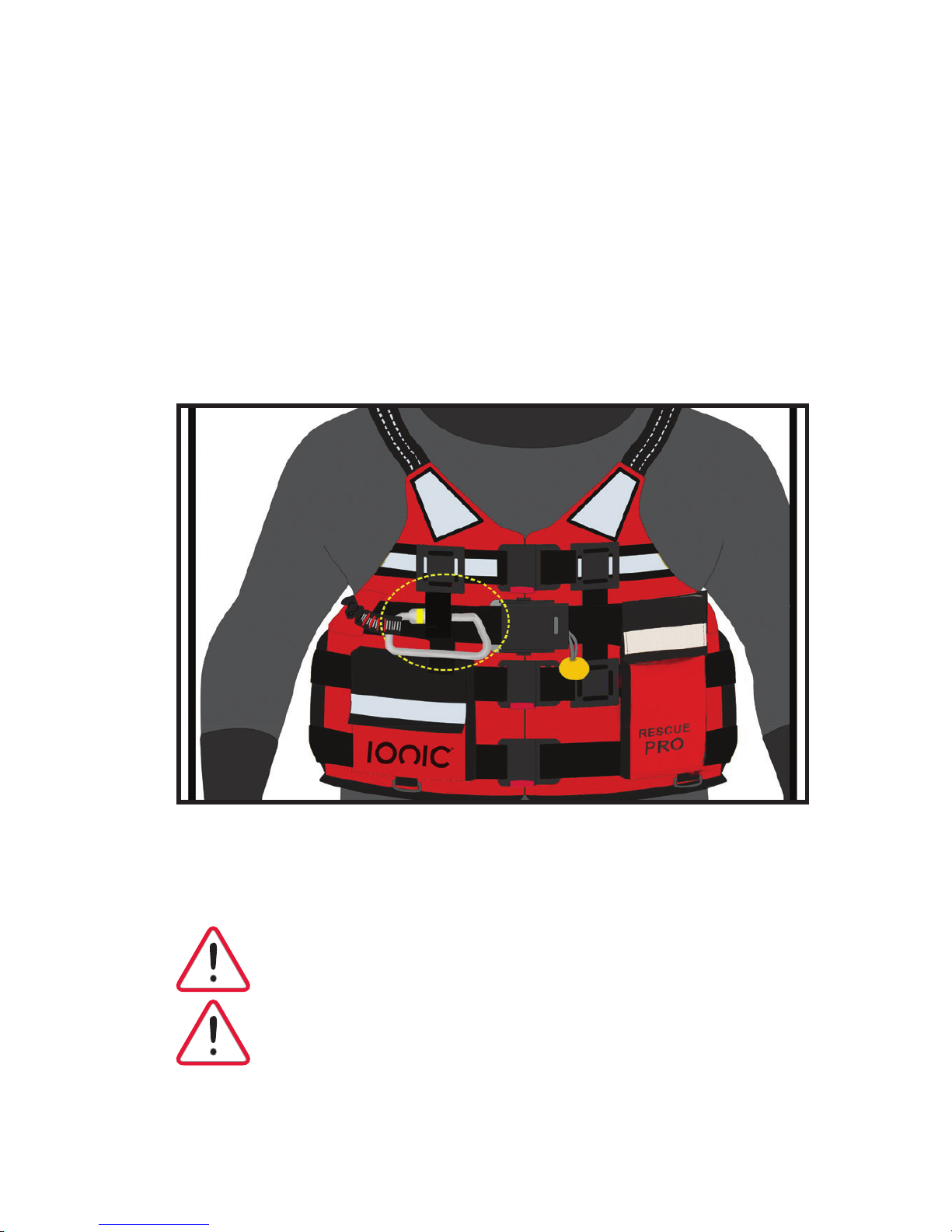
Cowtail
When the cowtail is not in use ensure you clip the karabiner
into the quick release mechanism located on the front of the
PFD as illustrated. (see illustration in fig 7)
Do not attach your cowtail and karabiner to any
webbing that is permanently fixed to the PFD.
Please Note – If you are using a karabiner to attach
to the back of the PFD rather than a fixed ring,
please ensure that you use a screwgate type
karabiner to avoid accidental hook up which could affect
your positioning and stability in fast moving water.
Fig 7
Page 10
10
Donning and User Instructions
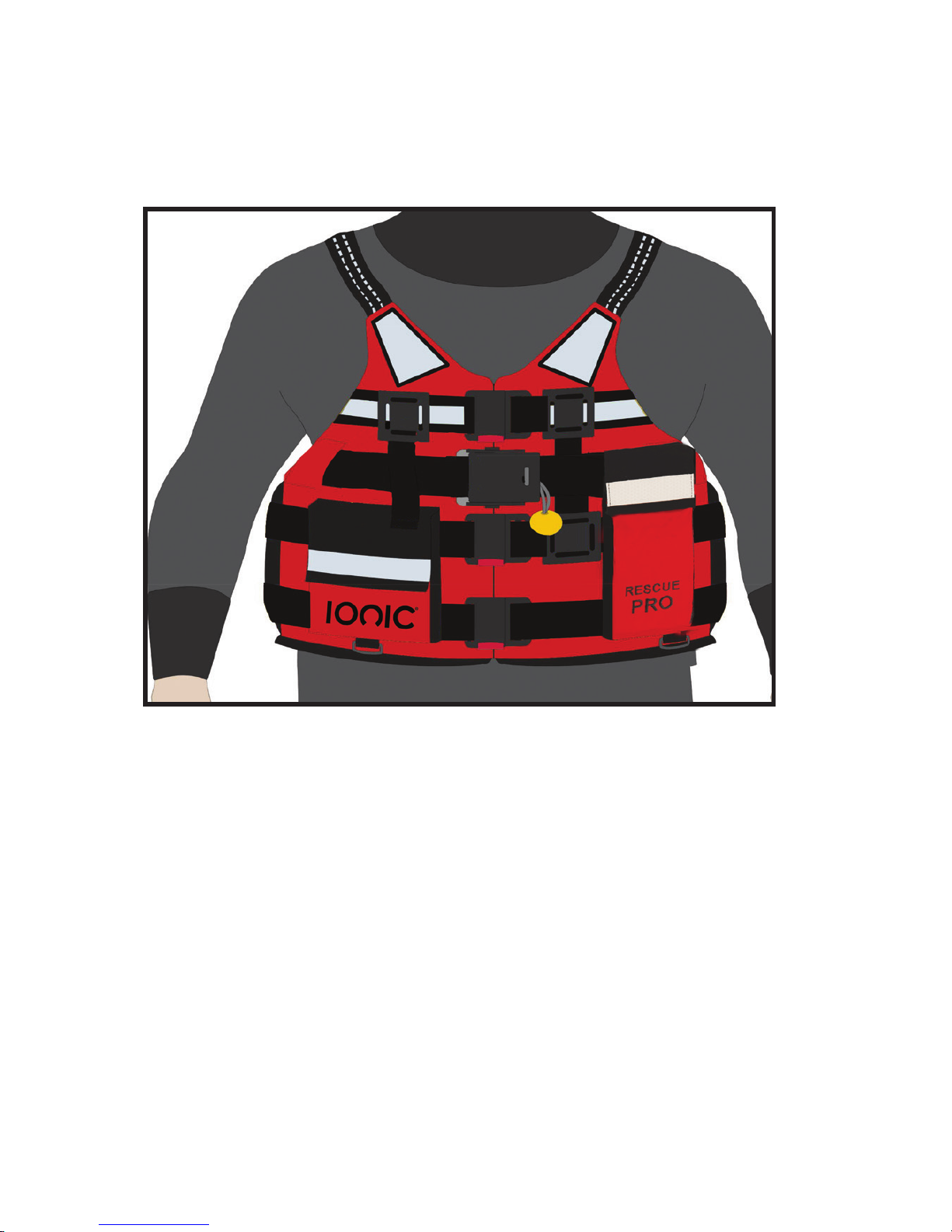
Removing your PFD
To remove the PFD reverse the procedures previously
listed. To release the SR buckles, squeeze the red
button.
If the PFD is for personal use leave all the adjustable
straps as they are.
Fig 8
Page 11

11
Donning and User Instructions
Care and Maintenance
Safequip Ltd.
Service Centre
9a Marquis Court, Prudhoe,
Northumberland, NE42 6PJ
Tel: +44 (0) 1259 727835
Email: [email protected]
1. It is recommended that you regularly inspect your
personal flotation device including the buckles, stitching,
webbing and the outer fabric cover for any signs of
excessive wear or damage.
2. A full annual inspection is recommended as part of
any standard operational procedure. If any significant
damage if found, the PFD should be returned to the
Safequip Service Centre for further inspection to the
address shown below.
3. Following use the PFD should be rinsed with fresh water
to remove any dirt or salt residue, which could potentially
cause premature wear. If the PFD has been exposed
to contamination, please contact Safequip for details of
what products are recommended to de-sanitise the PFD.
4. Hang to dry and store away from direct sunlight or
radiant heat source in a suitable kit bag or locker.
5. For PFD testing and servicing, please contact
[email protected] for further information.
Product Lifespan
We recommend a maximum lifespan of 10 years from date of
issue. For further information, contact: [email protected]
Page 12

12
Safequip Ltd.
Head Office
Unit 4, Block 3, Dumyat Business Park
Tullibody, Scotland FK10 2PB
www.safequip.co.uk
© Safequip Ltd (2016) All rights reserved
 Loading...