

Page 1
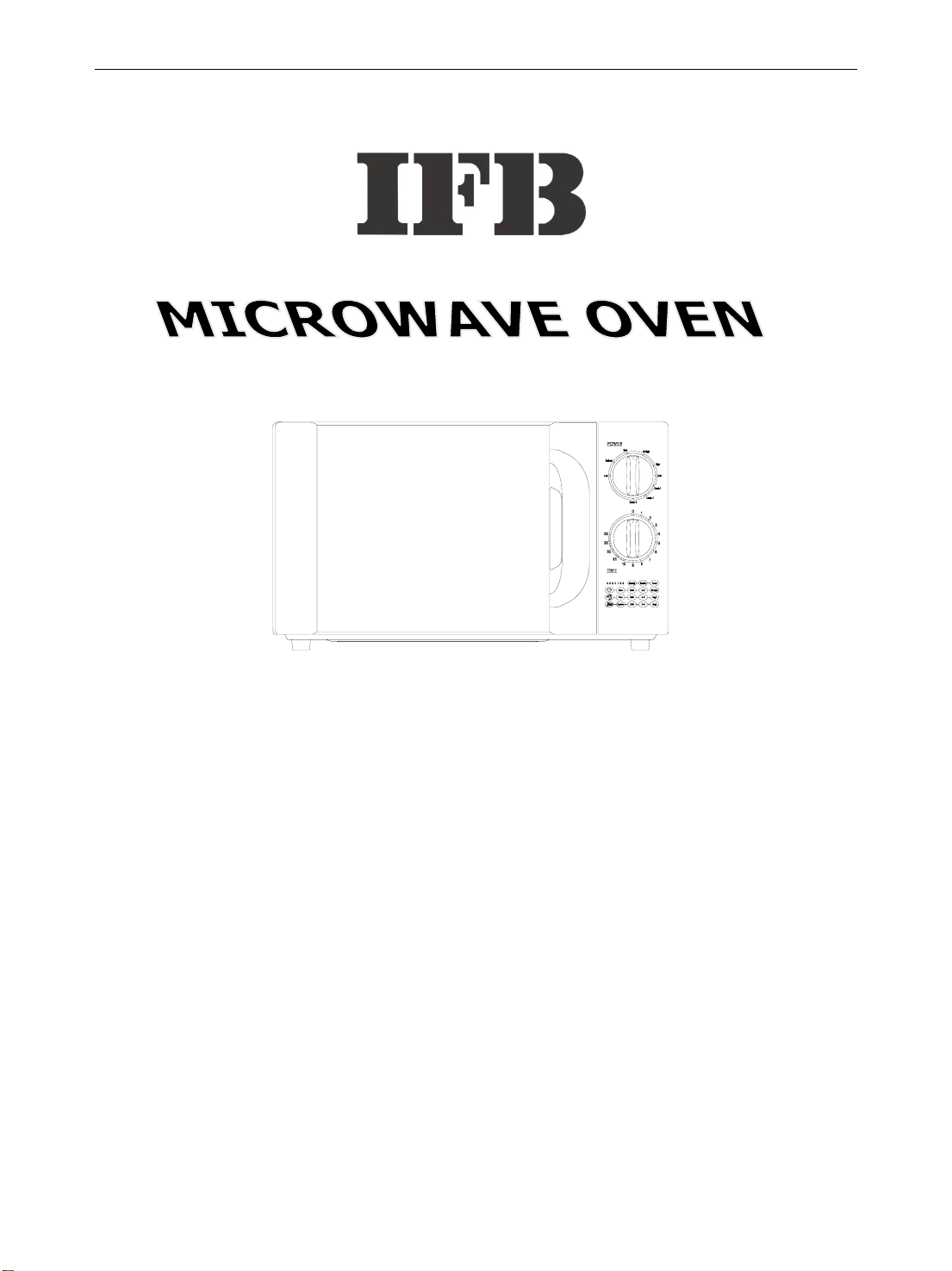
Model: 17PG1S
Owner's Manual
Please read these instructions carefully before installing and operating the oven.
Record in the space below the SERIAL NO. found on the nameplate on your oven
and retain this information for future reference.
SERIAL NO.
Page 2

PRECAUTIONS TO AVOID POSSIBLE EXPOSURE
TO EXCESSIVE MICROWAVE ENERGY
1.
Do not attempt to operate this oven with the door open since open door operation can
result in harmful exposure to microwave energy. It is important not to defeat or tamper with the
safety interlocks.
2.
Do not place any object between the oven front face and the door or allow soil or cleaner
residue to accumulate on sealing surfaces.
3.
Do not operate the oven if it is damaged. It is particularly important that the oven door
close properly and that there is no damage to the
a.
Door (bent),
b.
Hinges and latches (broken or loosened),
c.
Door seals and sealing surfaces.
4.
The oven should not be adjusted or repaired by anyone except properly qualified service
personnel.
CONTENT
PRECAUTIONS TO AVOID POSSIBLE EXPOSURE TO EXCESSIVE MICROWAVE ENERGY1
IMPORTANT SAFETY INSTRUCTIONS.......................................................................................2
SPECIFICATIONS.........................................................................................................................3
INSTALLATION..............................................................................................................................3
RADIO INTERFERENCE ..............................................................................................................3
MICROWAVE COOKING PRINCIPLES........................................................................................4
GROUNDING INSTRUCTIONS ....................................................................................................4
BEFORE YOU CALL FOR SERVICE............................................................................................4
UTENSILS GUIDE.........................................................................................................................5
PART NAMES ................................................................................................................................5
CONTROL PANEL.........................................................................................................................6
Power/Action Selector ...................................................................................................................6
Timer Knob ....................................................................................................................................6
Microwave Cooking .......................................................................................................................6
Grill ................................................................................................................................................6
Combination Cooking ....................................................................................................................7
OPERATION..................................................................................................................................7
CLEANING AND CARE.................................................................................................................8
1
Page 3

IMPORTANT SAFETY INSTRUCTIONS
When using electrical appliance basic safety
precautions should be followed, including the
following:
WARNING: To reduce the risk of burns, electric
shock, fire, injury to persons or exposure to
excessive microwave energy:
1. Read all instructions before using the
appliance.
2. Use this appliance only for its intended use
as described in this manual. Do not use
corrosive chemicals or vapors in this
appliance. This type of oven is specifically
designed to heat, cook or dry food. It is not
designed for industrial or laboratory use.
3. Do not operate the oven when empty.
4. Do not operate this appliance if it has a
damaged cord or plug, if it is not working
properly or if it has been damaged or
dropped. If the supply cord is damaged, it
must be replaced by the manufacturer or its
service agent or a similarly qualified person
in order to avoid a hazard
5. WARNING: Only allow children to use the
oven without supervision when adequate
instructions have been given so that the child
is able to use the oven in a safe way and
understands the hazards of improper use.
6. Warning: When the appliance is operated in
the combination mode, children should only
use the oven under adult supervision due to
the temperatures generated.
7. To reduce the risk of fire in the oven cavity:
When heating food in plastic or paper
container, check the oven frequently to the
possibility of ignition.
Remove wire twist-ties from paper or plastic
bags before placing bag in oven.
If smoke is observed, switch off or unplug the
appliance and keep the door closed in order
to stifle any flames.
Do not use the cavity for storage purposes.
Do not leave paper products, cooking
utensils or food in the cavity when not in use.
8. WARNING: Liquid or other food must not be
heated in sealed containers since they are
liable to explode.
9. Microwave heating of beverage can result in
delayed eruptive boiling, therefore care has
to be taken when handle the container.
10. Do not fry food in the oven. Hot oil can
damage oven parts and utensils and even
result in skin burns.
11. Eggs in their shell and whole hard-boiled
eggs should not be heated in microwave
ovens since they may explode even after
microwave heating has ended.
12. Pierce foods with heavy skins such as
potatoes, whole squashes, apples and
chestnuts before cooking.
13. The contents of feeding bottles and baby jars
should be stirred or shaken and the
temperature should be checked before
serving in order to avoid burns.
14. Cooking utensils may become hot because
of heat transferred from the heated food.
Potholders may be needed to handle the
utensil.
15. Utensils should be checked to ensure that
they are suitable for use in microwave oven.
16. WARNING: It is hazardous for anyone other
than a trained person to carry out any
service or repair operation which involves
the removal of any cover which gives
protection against exposure to microwave
energy.
17. This product is a Group 2 Class B ISM
equipment. The definition of Group 2 which
contains all ISM (Industrial, Scientific and
Medical) equipment in which radio-frequency
energy is intentionally generated and/or
used in the form of electromagnetic radiation
for the treatment of material, and spark
erosion equipment. For Class B equipment
is equipment suitable for use in domestic
establishments and in establishments
directly connected to a low voltage power
supply network which supplies buildings
used for domestic purpose.
2
Page 4

SPECIFICATIONS
Power Consumption:
Rated microwave power output: 700W
Operation Frequency: 2450MHz
Outside Dimensions: 262mm(H)×452mm(W)×330mm(D)
Oven Cavity Dimensions: 210mm(H)×315mm(W)×279mm(D)
Oven Capacity: 17 Liters
Cooking Uniformity: Turntable System {Φ245mm}
Net Weight: Approx.11.3 kg
230V~50Hz, 1200W(Microwave)
230V 900W(Grill)
*All data subject to change, and verification by the user with data available on the nameplate of the
oven. Complaint of error suffers oblivion.
INSTALLATION
1. Make sure that all the packing materials are
removed from the inside of the door.
2. WARNING: Check the oven for any damage,
such as misaligned or bent door, damaged
door seals and sealing surface, broken or
loose door hinges and latches and dents
inside the cavity or on the door. If there is
any damage, do not operate the oven and
contact qualified service personnel.
3. This microwave oven must be placed on a
flat, stable surface to hold its weight and the
heaviest food likely to be cooked in the oven.
4. Do not place the oven where heat, moisture,
or high humidity are generated, or near
combustible materials.
5. For correct operation, the oven must have
sufficient airflow. Allow 20cm of space above
the oven, 10cm at back and 5cm at both
sides. Do not cover or block any openings on
the appliance. Do not remove feet.
6. Do not operate the oven without glass tray,
roller support, and shaft in their proper
positions.
7. Make sure that the power supply cord is
undamaged and does not run under the
oven or over any hot or sharp surface.
8. The socket must be readily accessible so
that it can be easily unplugged in an
emergency.
9. Do not use the oven outdoors.
RADIO INTERFERENCE
Operation of the microwave oven can cause
interference to your radio, TV, or similar
equipment.
When there is interference, it may be reduced or
eliminated by taking the following measures:
1. Clean door and sealing surface of the oven.
2. Reorient the receiving antenna of radio or
television.
3. Relocate the microwave oven with respect to
the receiver.
4. Move the microwave oven away from the
receiver.
5. Plug the microwave oven into a different
outlet so that microwave oven and receiver
are on different branch circuits.
3
Page 5

MICROWAVE COOKING PRINCIPLES
1. Arrange food carefully. Place thickest areas
towards outside of dish.
2. Watch cooking time. Cook for the shortest
amount of time indicated and add more as
needed. Food severely overcooked can
smoke or ignite.
3. Cover foods while cooking. Covers prevent
spattering and help foods to cook evenly.
GROUNDING INSTRUCTIONS
This appliance must be grounded. This oven is
equipped with a cord having a grounding wire with
a grounding plug. It must be plugged into a wall
receptacle that is properly installed and grounded.
In the event of an electrical short circuit,
grounding reduces risk of electric shock by
providing an escape wire for the electric current. It
is recommended that a separate circuit serving
only the oven be provided. Using a high voltage is
dangerous and may result in a fire or other
accident causing oven damage.
WARNING Improper use of the grounding plug
can result in a risk of electric shock.
Note:
4. Turn foods over once during microwave
cooking to speed cooking of such foods as
chicken and hamburgers. Large items like
roasts must be turned over at least once.
5. Rearrange foods such as meatballs halfway
through cooking both from top to bottom and
from the center of the dish to the outside.
1. If you have any questions about the
grounding or electrical instructions, consult a
qualified electrician or service person.
2. Neither the manufacturer nor the dealer can
accept any liability for damage to the oven or
personal injury resulting from failure to
observe the electrical connection
procedures.
The wires in this cable main are colored in
accordance with the following code:
Green and Yellow = EARTH
Blue = NEUTRAL
Brown = LIVE
BEFORE YOU CALL FOR SERVICE
If the oven fails to operate:
1. Check to ensure that the oven is plugged in
securely. If it is not, remove the plug from the
outlet, wait 10 seconds, and plug it in again
securely.
2. Check for a blown circuit fuse or a tripped
main circuit breaker. If these seem to be
operating properly, test the outlet with
IF NONE OF THE ABOVE RECTIFIES THE SITUATION, THEN CONTACT A QUALIFIED TECHNICIAN.
DO NOT TRY TO ADJUST OR REPAIR THE OVEN YOURSELF.
another appliance.
3. Check to ensure that the control panel is
programmed correctly and the timer is set.
4. Check to ensure that the door is securely
closed engaging the door safety lock system.
Otherwise, the microwave energy will not
flow into the oven.
4
Page 6

UTENSILS GUIDE
1. The ideal material for a microwave utensil is
transparent to microwave, it allows energy to
pass through the container and heat the food.
2. Microwave cannot penetrate metal, so metal
utensils or dishes with metallic trim should not
be used.
3. Do not use recycled paper products when
microwave cooking, as they may contain
small metal fragments which may cause
The list below is a general guide to help you select the correct utensils.
COOKWARE MICROWAVE GRILL COMBINATION
Heat–Resistant Glass Yes Yes Yes
Non Heat–Resistant Glass No No No
Heat–Resistant Ceramics Yes Yes Yes
Microwave–Safe Plastic Dish Yes No No
Kitchen Paper Yes No No
Metal Tray No Yes No
Metal Rack No Yes No
Aluminum Foil & Foil Containers No Yes No
sparks and/or fires.
4. Round /oval dishes rather than square/oblong
ones are recommend, as food in corners
tends to overcook.
5. Narrow strips of aluminum foil may be used
to prevent overcooking of exposed areas.
But be careful don’t use too much and keep
a distance of 1 inch (2.54cm) between foil
and cavity.
PART NAMES
1.
Door Safety Lock System
2.
Oven Window
3.
Turntable Roller
4.
Control Panel
5.
Wave Guide
6.
Glass Tray
7.
Grill heater
8.
Metal rack
5
Page 7

CONTROL PANEL
The control panel consists of two function operators.
One is a timer knob, and another a power knob.
POWER/ACTION SELECTOR
You use this operator knob to choose a cooking power
level. It is the first step to start a cooking session.
TIMER KNOB
Offers visual timing settings at easy turn of your thumb
to select a desired cooking time up to 30 minutes per
cooking session.
MICROWAVE COOKING
For pure microwave cooking, there are five power
levels from which to choose one as best fit to do the job
at hand.
Power level increases with the knob turning clockwise.
The power levels can be classified as the following:
Power output Description
1 18% of total Low
2 36 Defrost
3 58 Medium
4 81 M. High
5 100 High
GRILL
With the knob turning clockwise passing the highest
microwave power level, the oven come to the grill
cooking function which is particularly useful for thin
slices of meat, steaks, chops, kebabs, sausages or
pieces of chicken. It is also suitable for cooking hot
sandwiches and au grain dishes.
6
Page 8

COMBINATION COOKING
By its name, this cooking operation combines microwave power with that of grill cooking. The operation
is categorized into three levels with different combination power settings as you can see from the
following table. These are particularly suitable for certain foods and culinary operations. As well as for
keeping the much desired crispness of certain foods.
The following table shows 3 different power settings for combination programs.
Program Microwave Power level Grill Power Suitable for
1 Medium-low (30%) High (70%) Fish, potatoes, au grain
2 Medium (49%) Medium (51%) Pudding, omelets, baked potatoes
3 Medium-high (67%) Low (33%) Poultry
OPERATION
To set a cooking program
1. Place food in oven and close the door.
2. Turn Power/Action Selector to select a power level or cooking function.
3. Use Timer knob to set a cooking time
NOTE:
As soon as the timer is turned, oven starts cooking.
When selecting time for less than 2 minutes, turn timer past 2 minutes and then return to the correct
time.
CAUTION: ALWAYS RETURN TIMER BACK TO ZERO POSITION if food is removed from oven before
the set cooking time is complete or when oven is not in use. To stop oven during cooking process, push
the door release button or open the door by the handle.
7
Page 9

CLEANING AND CARE
1. Turn off the oven and remove the power
plug from the wall socket before cleaning.
2. Keep the inside of the oven clean. When
food splatters or spilled liquids adhere to
oven walls, wipe with a damp cloth. Mild
detergent may be used if the oven gets
very dirty. Avoid the use of spray and other
harsh cleaners as they may stain, streak
or dull the door surface.
3. The outside surfaces should be cleaned
with a damp cloth. To prevent damage to
the operating parts inside the oven, water
should not be allowed to seep into the
ventilation openings.
4. Wipe the door and window on both sides,
the door seals and adjacent parts
frequently with a damp cloth to remove
any spills or spatters. Do not use abrasive
cleaner.
5. Do not allow the control panel to become
wet. Clean with a soft, damp cloth. When
cleaning the control panel, leave oven
door open to prevent oven from
accidentally turning on.
6. If steam accumulates inside or around the
outside of the oven door, wipe with a soft
cloth. This may occur when the microwave
oven is operated under high humidity
condition. And it is normal.
Simply wipe the bottom surface of the
oven with mild detergent. The roller ring
may be washed in mild sudsy water or
dishwasher. When removing the roller ring
from cavity floor for cleaning, be sure to
replace in the proper position.
9. Remove odors from your oven by
combining a cup of water with the juice
and skin of one lemon in a deep
microwaveable bowl, microwave for 5
minutes. Wipe thoroughly and dry with a
soft cloth.
10. When it becomes necessary to replace the
oven light, please consult a dealer to have
it replaced.
11. The oven should be cleaned regularly and
any food deposits removed. Failure to
maintain the oven in a clean condition
could lead to deterioration of the surface
that could adversely affect the life of the
appliance and possibly result in a
hazardous.
12. Please do not dispose this appliance into
the domestic rubbish bin; it should be
disposed to the particular disposal center
provided by the municipalities.
7. It is occasionally necessary to remove the
glass tray for cleaning. Wash the tray in
warm sudsy water or in a dishwasher.
8. The roller ring and oven floor should be
cleaned regularly to avoid excessive noise.
8
 Loading...