

Page 1
BENZINETRILPLAAT
57372
Gebruiksaanwijzing
Instruction manual
Page 2
HYUNDAI
Nederlands 7
English 13
• Verklaring van overeenstemming • Declaration of conformity 19
2 3
1
2
3
10
6
5
4
7
8
9
A
Page 3
HYUNDAI
4 5
13
12
11
21
20
18
17
b
a
a
b
C D
15
14
17 18
1418
16
a
b
15
D
23
c
d
e
0.7-0.8 mm
E F
22
B
Page 4
HYUNDAI
6 7
NEDERLANDS
TRILPLAAT
57372
WAARSCHUWING
Lees alle veiligheidsvoorschriften en alle instructies.
Het niet in acht nemen van de voorschriften en instructies
kan brand en/of ernstig letsel tot gevolg hebben. Bewaar
alle voorschriften en instructies voor toekomstig
gebruik.
VEILIGHEIDSVOORSCHRIFTEN
Volg bij gebruik van de machine altijd onderstaande veiligheidsvoorschriften nauwkeurig op.
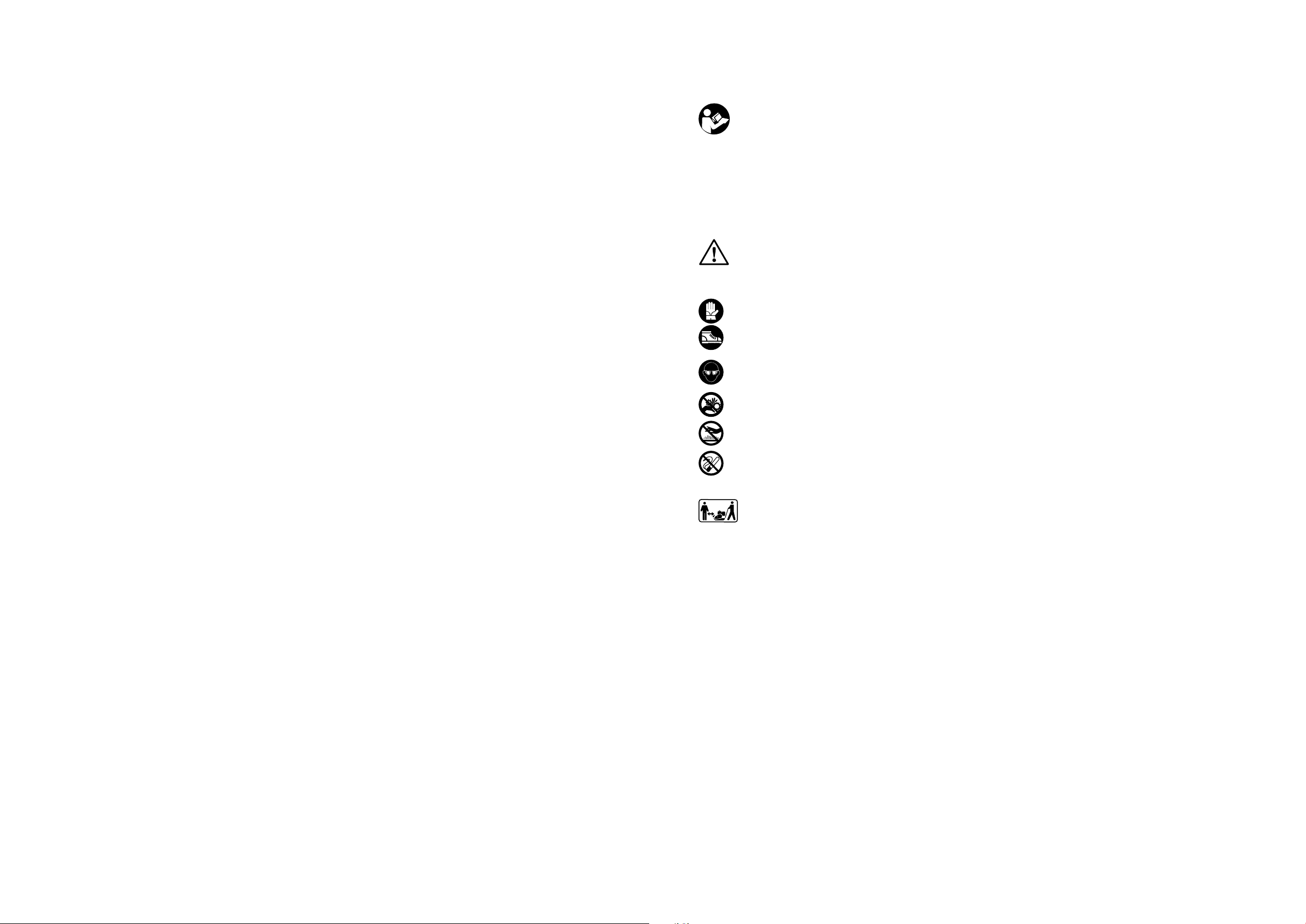
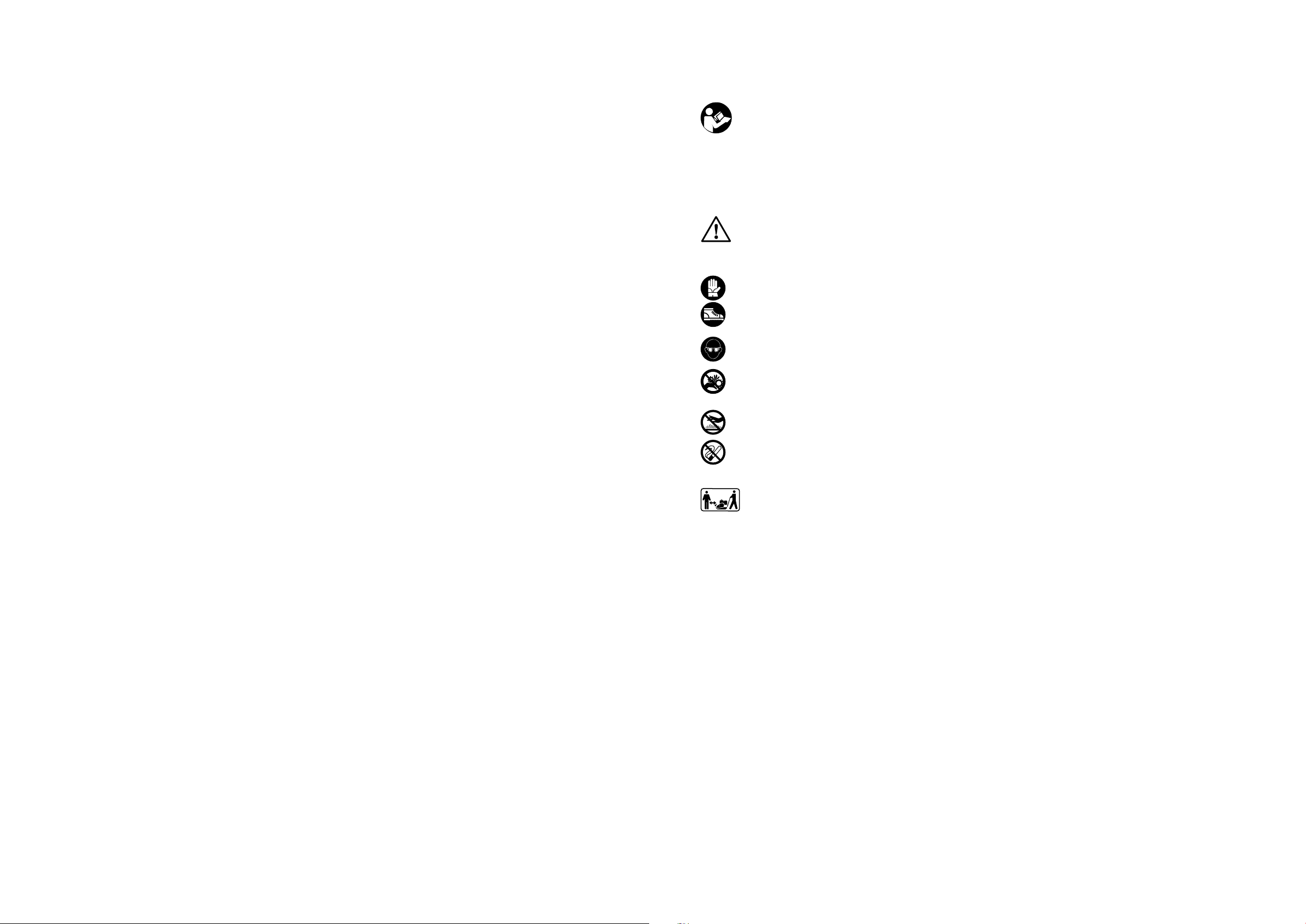
In deze handleiding worden de volgende pictogrammen gebruikt:
Gevaar voor lichamelijk letsel of materiële schade.
Op de machine vindt u de volgende pictogrammen:
Draag handschoenen.
Draag veiligheidsschoenen.
Draag een veiligheidsbril.
Houd uw handen uit de buurt van alle bewegende delen.
Raak geen hete delen aan. Gevaar voor ernstige
brandwonden.
Rook niet in de buurt van de machine. Gebruik de
machine niet in een omgeving waar vonken, vlammen of
open vuur voor kunnen komen.
Houd omstanders uit de buurt van de machine.
Begrijp uw machine
Lees en begrijp de gebruiksaanwijzing en etiketten die op de
machine zijn aangebracht. Leer de toepassingen en de beperkingen
evenals het specifieke potentieel gevaar..
Raak vertrouwd met de bedieningselementen en de goede
werking. Weet hoe de machine moet worden gestopt en de
bedieningselementen moeten worden uitgeschakeld.
Zorg ervoor dat u alle instructies en veiligheidsmaatregelen leest en
begrijpt. Gebruik de machine niet tot u begrijpt hoe u de machine
moet gebruiken, de motor onderhouden en ongelukken kunt
voorkomen.
Werkgebied
Start of laat de motor nooit draaien in een afgesloten ruimte. De
uitlaatgassen zijn gevaarlijk en bevatten koolstofmonoxide, een
geurloos en dodelijk gas. Gebruik deze machine alleen in een goed
geventileerde buitenruimte. Gebruik de machine nooit zonder goed
zicht of licht.
Persoonlijke veiligheid
Gebruik de machine niet als u onder invloed bent van medicijnen,
alcohol of drugs waardoor uw vermogen om de machine correct te
gebruiken kan worden beïnvloed.
Draag geschikte kleding. Draag een zware lange broek, laarzen en
handschoenen. Draag geen losse kleding, korte broeken, sieraden
van welke aard dan ook. Bedekt lang haar. Houd haar, kleding en
handschoenen uit de buurt van bewegende delen. Losse kleding,
sieraden of lang haar kan de bewegende delen terecht komen.
Controleer de machine voor elk gebruik. Houd de veiligheidsvoorziening op zijn plaats en in goede staat. Zorg ervoor dat alle
moeren, bouten, enz. worden stevig zijn vastgedraaid.
Gebruik de machine nooit wanneer deze gerepareerd moet worden
of in een slechte staat is. Vervang beschadigde, ontbrekende of
defecte onderdelen voor gebruik. Controleer op brandstoflekkage.
Houd de machine in veilige conditie.
Gebruik de machine niet als de schakelaar van de motor de
machine niet in- of uitschakelt. Elke machine met benzinemotor
die niet met de motorschakelaar kan worden in- of uitgeschakeld
worden gevaarlijk en moet worden vervangen.
Maak er een gewoonte van om te controleren of al het
afstelgereedschap uit de machine is verwijderd voordat de motor
wordt gestart. Een sleutel die nog aan een ronddraaiend deel van de
machine is bevestigd kan ernstig letsel veroorzaken..
Blijf alert, kijk wat u doet en gebruikt uw gezond verstand bij het
bedienen van de machine.
Reil niet te ver. Gebruik de machine niet op blote voeten of tijdens
het dragen van sandalen of ander lichtgewichte schoenen. Draag
veiligheidsschoenen die uw voeten beschermen en grip geven op
gladde oppervlakken. Zorg voor een stabiele werkhouding. Dit zorgt
voor betere controle over de machine in onverwachte situaties.
Voorkom onbedoeld starten. Zorg ervoor dat de motor is
uitgeschakeld voordat de machine wordt vervoerd of onderhoud
wordt uitgevoerd. Transport of uitvoeren van onderhoud op een
ingeschakelde machine kan ongelukken veroorzaken.
Brandstofveiligheid
Brandstof is licht ontvlambaar en de dampen kunnen explosies
veroorzaken. Neem voorzorgsmaatregelen om de kans op ernstig
persoonlijk letsel te voorkomen.
Gebruik bij het bijvullen of aftappen van de brandstoftank een
goedgekeurde brandstofopslagcontainer. Vul de brandstoftank nooit
binnenshuis maar in een schone, goed geventileerde buitenruimte.
Rook niet, of laat vonken, open vuur of andere bronnen van
ontsteking in de buurt van het gebied terwijl u brandstof toevoegt of
de machine gebruikt.
Houd geaarde geleidende objecten, zoals gereedschap, weg van
onder spanning staande elektrische delen en verbindingen om
vonken te voorkomen. Vonken kunnen dampen laten ontbranden.
Stop de motor altijd en laat hem afkoelen voordat de brandstoftank
wordt gevuld. Verwijder nooit de dop van de brandstoftank of voeg
brandstof toe terwijl de motor draait of wanneer de motor heet is.
Gebruik de machine niet met lekken in het brandstofsysteem.
Maak de tankdop langzaam los om druk in de tank te laten
ontsnappen.
Vul de brandstoftank nooit boven de limietmarkering.
Verwijder gemorste brandstof van de brandstoftank en de dop.
Gebruik het apparaat nooit zonder dat de tankdop stevig op zijn
plaats zit.
Voorkom het ontstaan van een ontstekingsbron voor gemorste
brandstof. Als er brandstof wordt gemorst, probeer de motor dan niet
te starten maar verplaats de machine weg van het gebied. Wacht met
het starten van de motor totdat brandstofdampen zijn verdwenen.
Bewaar brandstof in speciaal voor dit doel ontworpen en
goedgekeurde containers.
Page 5

HYUNDAI
Bewaar brandstof op een koele, goed geventileerde plaats, veilig
weg van vonken, open vuur of andere ontstekingsbronnen.
Bewaar brandstof of een machine met brandstof in de tank nooit in
een gebouw waar dampen met vonken in contact kunnen komen
zoals open vuur of een boiler, oven, wasdroger. Laat de motor
afkoelen voordat u hem opbergt.
Gebruik en onderhoud van de machine
Til de machine nooit op met draaiende motor.
Forceer de machine niet. Gebruik de juiste machine voor uw
toepassing. De juiste machine zal het werk beter en veiliger doen.
Wijzig de instellingen van de motorregelaar niet.
Laat de motor niet onnodig op hoge snelheid draaien.
Houd handen of voeten uit de buurt van draaiende delen.
Vermijd contact met hete brandstof, olie, uitlaatgassen en hete
oppervlakken. Raak de motor of uitlaatdemper niet aan. Deze
onderdelen worden extreem heet tijdens gebruik en blijven nog
enige tijd warm nadat de motor is uitgeschakeld. Laat de motor
volledig afkoelen voordat u onderhoud of aanpassingen doorvoert.
Schakel de motor onmiddellijk uit, als de machine ongewoon lawaai
of trillingen vertoont. Koppel de bougiekabel los en zoek de oorzaak.
Ongebruikelijk geluid of trilling is in het algemeen waarschuwing
voor problemen.
Gebruik alleen door de fabrikant goedgekeurde hulpstukken en
accessoires. Gebruik van onjuiste hulpstukken kunnen persoonlijk
letsel veroorzaken.
Onderhoud de machine. Controleer de werking van bewegende
delen, onderdelen op breuk en andere omstandigheden die van
invloed kunnen zijn op de werking van de machine.
Laat de machine repareren als deze beschadigd is. Veel ongelukken
worden veroorzaakt door slecht onderhouden apparatuur.
Houd de motor en uitlaatdemper vrij van gras, bladeren, overmatig
vet of koolstof om de kans op brand te voorkomen.
Dompel of spuit het apparaat nooit met water of andere vloeistoffen.
Houd de handgrepen droog, schoon en vrij van vuil. Reinig na elk
gebruik.
Houd u aan de wetgeving voor verwijdering van gas, olie, etc. om
het milieu te beschermen.
Berg de niet-actieve machine op buiten het bereik van kinderen
en sta niet toe dat personen die onbekend zijn met de machine of
deze instructies om deze te bedienen. Gebruik van de machine door
onervaren gebruikers is gevaarlijk.
Service
Schakel de motor uit en wacht tot alle bewegende delen tot
stilstand zijn gekomen voordat reiniging, reparatie, inspectie wordt
uitgevoerd. Zet de de motorschakelaar altijd in de stand “OFF”.
Koppel de bougiekabel los en houd deze uit de buurt van de bougie
om onbedoeld starten te voorkomen.
Laat uw machine onderhouden door een gekwalificeerde
servicedienst die alleen originele onderdelen gebruikt. Dit zal ervoor
zorgen dat de veiligheid van de machine kan worden gehandhaafd.
Specieke veiligheidsregels
Houd handen, vingers en voeten weg van de basisplaat om letsel te
voorkomen Pak het handvat stevig met beide handen vast. Gebruik
de machine altijd van achteren, ga nooit naast of voor de machine
staan wanneer de motor draait.
Plaats nooit gereedschap of een ander voorwerp onder de plaat.
Als de machine een vreemd voorwerp raakt, stop de motor, koppel
de bougie los, inspecteer de machine voor schade en herstel de
schade voordat u de machine herstart en gebruikt.
Overbelast de machinecapaciteit niet. Gebruik het apparaat nooit
met hoge transportsnelheden op harde of gladde oppervlakken.
Wees uiterst voorzichtig wanneer u opritten, voetpaden of wegen
oversteekt. Blijf waakzaam voor onverwacht gevaar of verkeer.
Laat de machine met draaiende motor nooit zonder toezicht.
Stop de motor altijd bij oponthoud of het verplaatsen naar een
andere locatie.
Blijf uit de buurt van de slootkanten en vermijd situaties waarbij de
machine kan omvallen.
Werk altijd zeer voorzichtig op hellingen.
Parkeer het apparaat altijd op een stevige en vlakke ondergrond.
Vermijd langdurige blootstelling aan trillingen. Neem regelmatig
pauzes en gun uw handen rust. Verlaag snelheid en kracht waarin
je de repetitieve beweging doet. Probeer elke dag te vullen met
afwisselende werkzaamheden.
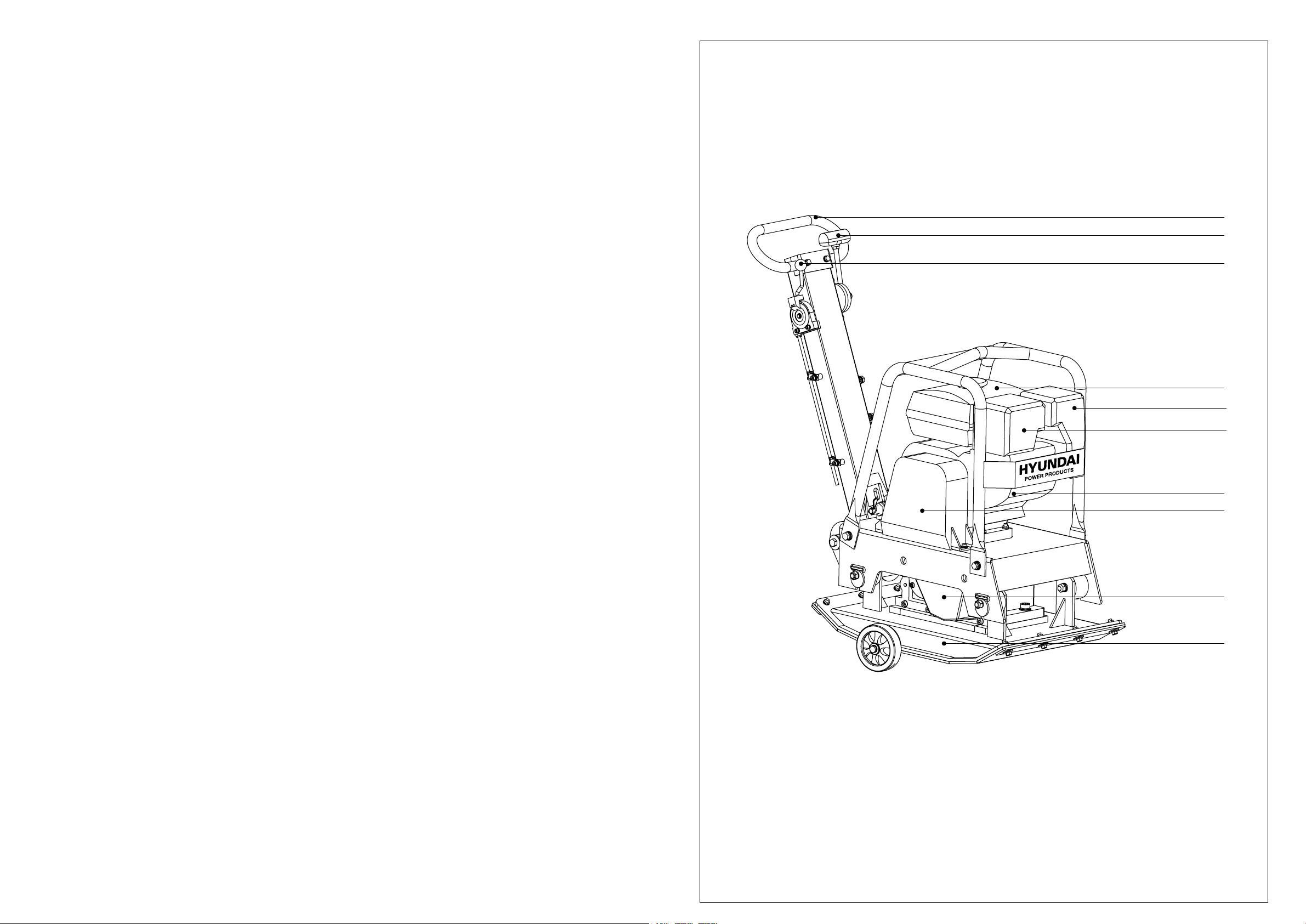
BESCHRIJVING (fig. A)
Uw trilplaat is ontworpen voor aantrillen van straatwerk (kleinere
oppervlakken) en verdichten van diverse grondsoorten en
materialen.
1. Handgreep
2. Richtingshendel
3. Gashendel
4. Geluiddemper
5. Luchtfilter
6. Benzinetank
7. Motor
8. Riembeschermer
9. Trilmechanisme
10. Bodemplaat
11. Olieafvoerslang
Inhoud verpakking
De verpakking bevat de volgende onderdelen:
Trilplaat met motor
Handgreep
Wielset
Gebruiksaanwijzing
Garantie en service
De bestratingset
Met de rubberen mat kunnen (beton)straatstenen, stenen en
bakstenen stil en zachtjes worden ingetrild.
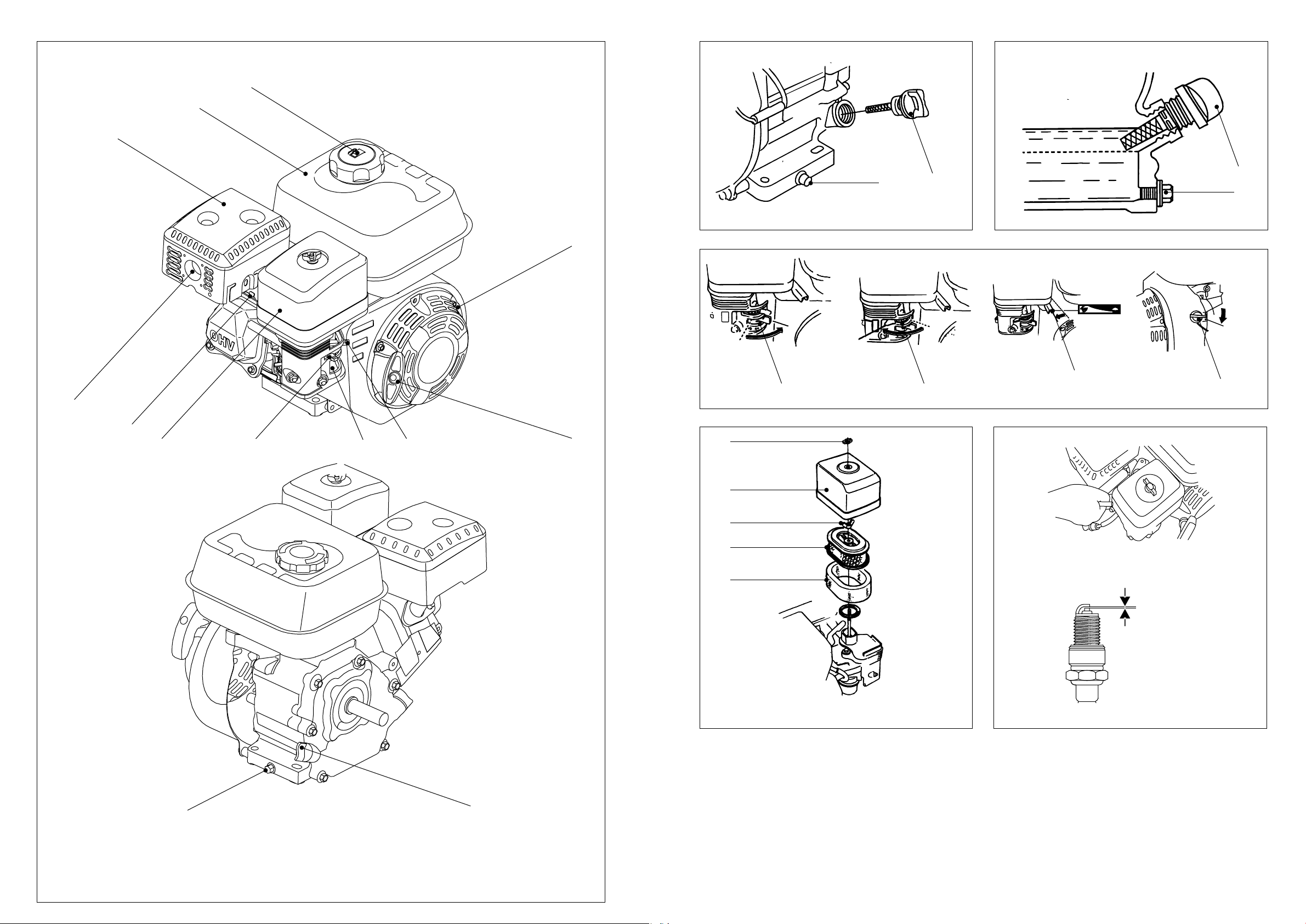
De motor (g. B)
12. Geluiddemper
13. Brandstoftank
14. Tankdop
15. Gashendel
16. Motorschakelaar
17. Startkoord
18. Brandstofkraan
19. Chokehendel
20. Luchtfilter
8 9
21. Bougiekap
22. Uitlaat
23. Peilstok
24. Aftappunt
Vullen van het carter met motorolie (g. C)
De machine wordt geleverd zonder motorolie! Voor het in
gebruik nemen van deze machine moet het oliereservoir
met motorolie worden gevuld. Als u geen motorolie bijvult
kan dit tot onherstelbare schade aan de motor leiden.
Gebruik 4-taktmotorolie. SAE 10W-30 is geschikt voor algemeen
gebruik bij alle temperaturen.
• Verwijder de peilstok (20) van het vulpunt.
• Vul het carter met de voorgeschreven hoeveelheid olie.
• Breng de peilstok weer aan.
Vervang de motorolie na de eerste 20 gebruiksuren.
Het trilmechanisme vullen met olie (g. D)
Gebruik 4-taktmotorolie. SAE 10W-30 is geschikt voor algemeen
gebruik bij alle temperaturen.
• Verwijder de peilstok van het vulpunt (a).
• Vul het trilmechanisme met olie.
• Plaats de peilstuk weer in het trilmechanisme.
Vervang de olie na 200 gebruiksuren.
Olie-alarmsysteem
Het olie-alarmsysteem is ontworpen om beschadiging van de motor
door een te laag oliepeil te voorkomen. De motor wordt automatisch
uitgeschakeld zodra het oliepeil te laag wordt. Controleer het
oliepeil als de motor stopt en niet opnieuw start.
Brandstofkraan
Zet brandstofkraan op “ON” staan voordat de motor wordt gestart.
Zet de brandstofkraan op “OFF” als de motor wordt uitgeschakeld
om te voorkomen dat de carburateur verzadigd raakt en om de kans
op brandstoflekkage te verkleinen.
Gashendel
De gashendel regelt het motortoerental.
Motorschakelaar
De motorschakelaar zet de motor aan of uit.
Chokehendel
De chokehendel opent en sluit de choke. In de “OPEN”-stand zorgt
het juiste brandstofmengsel voor bediening van de motor na het
starten en voor opnieuw opstarten met een warme motor.
Trekstart
Door aan het starterkoord te trekken, wordt de de motor gestart.
VOOR HET EERSTE GEBRUIK
Vullen met brandstof
Gebruik altijd brandstof die voldoet aan de volgende specificaties:
ongelode benzine, octaangehalte minimaal 86.
Vul nooit brandstof bij terwijl de machine draait. Laat de
machine na gebruik minimaal 15 minuten afkoelen
alvorens brandstof bij te vullen.
Rook niet in de buurt van de machine of in de buurt van de
brandstof. Vul nooit brandstof bij in de buurt van vonken,
vlammen of open vuur.
NEDERLANDS
• Verwijder de tankdop (14).
• Giet de brandstof voorzichtig in de vulopening. Vul de tank niet
verder dan tot de bovenkant van het brandstoffilter.
• Breng de tankdop weer aan.
De motor starten (g. D)
1. Zet de brandstofkraan (17) in de stand “ON”.
2. Zet, bij een koude start, de chockehendel (18) op “OFF”. Zet de
chokehendel op “ON” om een warme motor te starten..
3. Schuif de gashendel (14) 1/3 tot 1/2 in de richting van de hoge
snelheid.
4. Zet de motorschakelaar (15) op “ON”.
5. Trek voorzichtig aan de starterkoord (tot u weerstand voelt,
6. Trek dan stevig aan het koord tot de motor start.
7. Laat het starterkoord langzaam terug gaan.
8. Schuif, bij een koude start, de chokehendel langzaam terug
terwijl de motor opwarmt.
Gebruik de machine niet op beton of op extreem harde,
droge, verdichte oppervlakken. Dit kan zowel de
bodemplaat als de motor beschadigen.
GEBRUIK
Schuif, zodra de motor is opgewarmd, de gashendel naar hoge
snelheid. De plaat begint te trillen. Zet de richtingshendel (2) in voorof achteruit. De machine beweegt zich in de ingestelde richting.
Schuif de gashendel niet langzaam naar hoge snelheid.
Als het motortoerental zeer langzaam toeneemt, kan de
koppeling slippen.
Leid de machine, maar laat de machine het werk doen.
Op vlakke oppervlakken beweegt de trilplaat zich snel vooruit. Op
oneffen oppervlakken of hellingen de trilplaat lichtjes voorwaarts
duwen.
Bij gebruik op heet asfalt moet water worden gesproeid
om te voorkomen dat de bodemplaat aan het hete
asfaltoppervlak blijft plakken.
Bij gebruik van de plaat op straatstenen moet de rubberen
mat worden gebruikt om afsplinteren of breken van de
stenen te voorkomen.
Vochtige grond is noodzakelijk voor een goed resultaat. Te vochtige
grond voorkomt een goede verdichting. Laat extreem natte grond
eerst drogen.
Als de grond zo droog is dat er stofwolken ontstaan tijdens het
bedienen van de machine moet water worden gesproeid om de
verdichting te verbeteren.
Uitschakelen van de motor (g. B+D)
Om de motor in geval van nood te stoppen, draait u de
motor-schakelaar (15) naar de “OFF”-stand. Onder normale
omstandigheden, gebruikt u de volgende procedure.om de motor te
stoppen:
1. Zet de gashendel (14) in de stand “SLOW’.
2. Laat de motor een of twee minuten stationair draaien.
3. Zet de motorschakelaar (15) in de “OFF”-stand.
4. Draai de brandstofkraan (17) naar de “OFF”-positie.
Verplaats de chokehendel (18) niet naar “CLOSE” om de
motor te stoppen. Terugslag of motorschade kan
optreden.
Page 6

HYUNDAI
10 11
NEDERLANDS
ONDERHOUD
Regelmatig onderhoud verlengt de levensduur van de machine.
Preventief onderhoud
1. Laat de motor volledig afkoelen.
2. Zet de gashendel van de motor op “SLOW” en verwijder de
ontstekingskabel van de bougie.
3. Bestudeer de algemene toestand van de machine. Controleer
het apparaat op losse schroeven, kromme of geblokkeerde
bewegende delen, schade en andere problemen die een goede
werking van de machine kunnen beïnvloeden.
4. Verwijder vuil van de trilplaat met een zachte borstel, een
stofzuiger of perslucht. Smeer alle bewegende delen met een
goede kwaliteit lichtgewicht machineolie.
5. Reinig de onderkant van de voetplaat zo snel mogelijk na
gebruik. De machine werkt niet goed als het oppervlak niet glad
en schoon is.
6. Sluit de bougiekabel opnieuw aan.
Gebruik nooit een hogedrukreiniger om de trilplaat te
reinigen.
Reinigen van het luchtlter (g. E)
Reinig het luchtfilter na elke 50 gebruiksuren.
1. Verwijder de platte moer (a) en het filterdeksel (b).
2. Draai de vleugelmoer (c) los en neem het filter uit de houder.
3. Controleer het filter. Vervang een beschadigd filter.
4. Klop het papieren deel van het filter (d) uit. Gebruik geen borstel
om het filter te reinigen.
5. Reinig het foam deel van het filter (e) in heet water met
afwasmiddel. Knijp het filter uit. Niet wringen! Laat het filter
drogen.
6. Drenk het droge filter in motorolie en knijp het filter uit.
7. Schuif beide filters in elkaar en plaats terug in de filterhouder.
8. Draai de vleugelmoer vast en plaats het filterdeksel. Bevestig
het deksel met de platte moer.
Controleren van de bougie (g. H)
1. Verwijder het bougiedeksel.
2. Neem de bougiekabel van de bougie.
3. Verwijder de bougie.
4. Reinig de elektrode met behulp van een staalborstel.
5. Controleer de contactafstand (correcte waarde 0,7 - 0,8 mm) en
stel deze indien nodig bij.
6. Breng de bougie en het bougiedeksel weer aan.
Vervangen van de motorolie (g. C)
1. Verwijder de aftapplug (b).
2. Laat de olie uit het reservoir lopen.
3. Vul het reservoir met schone olie.
4. Breng de aftapplug weer aan.
V-riem(en) controleren
Voor een optimale krachtoverbrenging van de motor naar de
excenteras, moet de V-riem(en) in goede staat verkeren en onder
op de juiste spanning werken.
1. Laat de motor volledig afkoelen.
2. Verwijder de riembescherming om toegang te krijgen tot de
V-riem(en).
3. Controleer de staat van de V-riem(en). Als een V-riem is
gebarsten of gerafeld moet deze worden vervangen.
4. Controleer de spanning van de V-riem door ze in het midden in
te drukken. De normale afbuiging aan elke kant moet 9 mm tot
13 mm bij een matige druk van duim of vinger.
Op nieuwe machines of na installatie van een nieuwe
riem, moet de riemspanning na de eerste 20 uur worden
gecontroleerd. Controleer en pas de riem daarna om de
50 uur aan.
Vervangen van de olie in het trilplaatmechanisme (g. D)
Vervang de olie na 200 gebruiksuren.
• Verwijder de olieaftapplug (b).
• Vul het trilmechanisme met olie.
• Plaats de aftapplug weer in het trilmechanisme.
OPSLAG
Indien de machine voor een maand of langer buiten gebruik
wordt gesteld dient u het brandstofreservoir te legen en de olie te
verversen. Dit voorkomt problemen bij het opnieuw opstarten.
• Verwijder vuil en stenen van de bodemplaat.
• Leeg de brandstoftank.
• Ververs de olie.
• Reinig het luchtfilter.
• Dek de machine af en plaats hem in een schone en droge
omgeving.
TRANSPORT
Laat de machine volledig afkoelen alvorens deze
transporteren.
Steek de as van de wielen in de opening aan beide zijden van de
trilplaat om de machine eenvoudig te kunnen verplaatsen.
Houd de machine altijd rechtop om lekkage van brandstof te
voorkomen.
STORINGEN
Probleem Oorzaak Oplossing
Motor start niet 1. Bougiekabel niet aangesloten op bougie.
2. Geen brandstof meer.
3. Gashendel niet in juiste stand.
4. Choke niet in “ON”-stand.
5. Slechte bougie.
Motor sputtert 1. Bougie kabel zit los.
2. Choke staat nog open.
3. Verouderde brandstof.
4. Water of vuil in de brandstofleiding.
5. Vuil luchtfilter.
Machine raakt oververhit 1. Laag motoroliepeil.
2. Vuil luchtfilter.
3. Geblokkeerde luchttoevoer.
De motor stopt niet wanneer gashendel op
1. Vuil in de leidingen. 1. Verwijder het vuil.
“SLOW” wordt gezet of motortoerental neemt
niet toe als de gashendel op “FAST” wordt
gezet.
Machine springt of slingert naar voren. 1. Te hoge snelheid op harde ondergrond. 1. Verlaag de snelheid.
TECHNISCHE GEGEVENS 57372
Afmetingen trilplaat mm 710 x 450
Centrifugale kracht N 30,5
Snelheid min-1 4.000
GARANTIE
Voor de garantiebepalingen wordt verwezen naar de bijgevoegde
garantievoorwaarden.
MILIEU
Verdichtingsdiepte cm 50
Verplaatsingssnelheid cm/sec 25
Verwerking
Motor cc 270
Inhoud brandstoftank l 6
Inhoud carter l 0,95
Uw product, accessoires en verpakking moet worden
gesorteerd voor milieuvriendelijke verwerking.
Brandstof loodvrij Euro 95 (E10)
Olie SAE 10W-30
Startsysteem trekstarter
Bougietype F7RTC
LpA (geluidsdruk)* dB(A) 86,51
L
(geluidsvermogen)** dB(A) 106,51
WA
Gewicht kg 158
Uitsluitend voor EG-landen
Werp elektrisch gereedschap niet bij het huisvuil. Volgens de
Europese Richtlijn 2002/96/EG voor Afgedankte Elektrische en
Elektronische Apparatuur en de implementatie ervan in nationaal
recht moet niet langer te gebruiken elektrisch gereedschap
gescheiden worden verzameld en op een milieuvriendelijke wijze
worden verwerkt.
* Niveau van de geluidsdruk op de werkplek.
** De gemeten waarde is minder dan de gegarandeerde waarde:
LWA108 dB(A).
Wijzigingen voorbehouden; specificaties kunnen zonder opgave van
redenen worden gewijzigd.
1. Sluit de kabel aan op de bougie.
2. Vul de brandstoftank.
3. Zet gashendel in start-stand.
4. Zet gashendel in “CLOSE”-stand bij een
koude start.
5. Vervang de bougie.
1. Sluit de kabel aan op de bougie.
2. Zet chokehendel op “OFF”.
3. Vervang brandstof.
4. Reinig de brandstofleiding en vervang
brandstof.
5. Reinig of vervang luchtfilter.
1. Vul de olietank.
2. Reinig of vervang luchtfilter.
3. Reinig ventilator behuizing.
Page 7
HYUNDAI
12 13
ENGLISH
PLATE COMPACTOR
57372
WARNING
Read all safety warnings and all instructions. Failure to
follow the warnings and instructions may result in fire and/
or serious injury. Save all warnings and instructions for
future reference.
SAFETY INSTRUCTIONS
When using the machine, always observe the safety warnings.
The following symbols are used throughout this manual:
Denotes risk of personal injury or damage to the machine.
You will find the following symbols on the machine:
Wear gloves.
Wear safety shoes.
Wear eye protection.
Keep hands away from rotating parts.
Do not touch parts which are hot from operation. Serious
burns may result.
Never operate the machine when it is in need of repair or is in poor
mechanical condition. Replace damaged, missing or failed parts
before using it. Check for fuel leaks. Keep the machine in safe
working condition.
Do not use the machine if the engine’s switch does not turn it on or
off. Any gasoline powered machine that can not be controlled with
the engine switch is dangerous and must be replaced.
Form a habit of checking to see that keys and adjusting wrenches
are removed from machine area before starting it. A wrench or a key
that is left attached to a rotating part of the machine may result in
personal injury.
Stay alert, watch what you are doing and use common sense when
operating the machine.
Do not overreach. Do not operate the machine while barefoot
or when wearing sandals or similar lightweight footwear. Wear
protective footwear that will protect your feet and improve your
footing on slippery surfaces. Keep proper footing and balance at
all times. This enables better control of the machine in unexpected
situations.
Avoid accidental starting. Be sure the engine’s switch is off before
transporting the machine or performing any maintenance or service
on the unit. Transporting or performing maintenance or service on a
machine with its switch on invites accidents.
Fuel safety
Fuel is highly flammable, and its vapors can explode if ignited. Take
precautions when using to reduce the chance of serious personal
injury.
Do not smoke or have open flames. Do not use the
machine in surroundings where sparks, flames or open fire
can be present. Do not smoke near the machine.
Keep bystanders off and away.
Understand your machine
Read and understand the operator’s manual and labels affixed to the
machine. Learn its application and limitations as well as the specific
potential hazards peculiar to it.
Be thoroughly familiar with the controls and their proper operation.
Know how to stop the machine and disengage the controls quickly.
Make sure to read and understand all the instructions and safety.
Do not attempt to operate the machine until you fully understand
how to properly operate and maintain the engine and how to avoid
accidental injuries and/or property damage.
Work area
Never start or run the engine inside a closed area. The exhaust
fumes are dangerous, containing carbon monoxide, an odorless and
deadly gas. Operate this unit only in a well ventilated outdoor area.
Never operate the machine without good visibility or light.
Personal safety
Do not operate the machine while under the influence of drugs,
alcohol, or any medication that could affect your ability to use it
properly.
Dress properly. Wear heavy long pants, boots and gloves. Do not
wear loose clothing, short pants, jewelry of any kind. Secure long
hair so it is above shoulder level. Keep your hair, clothing and gloves
away from moving parts. Loose clothes, jewelry or long hair can be
caught in moving parts.
Check your machine before starting it. Keep guards in place and in
working order. Make sure all nuts, bolts, etc. are securely tightened.
When refilling or draining the fuel tank, use an approved fuel storage
container while in a clean, well-ventilated outdoor area. Do not
smoke, or allow sparks, open flames or other sources of ignition
near the area while adding fuel or operating the unit. Never fill fuel
tank indoors.
Keep grounded conductive objects, such as tools, away from
exposed, live electrical parts and connections to avoid sparking or
arcing. These events could ignite fumes or vapors.
Always stop the engine and allow it to cool before filling the fuel
tank. Never remove the cap of the fuel tank or add fuel while the
engine is running or when the engine is hot. Do not operate the
machine with known leaks in the fuel system.
Loose the fuel tank cap slowly to relieve any pressure in the tank.
Never overfill fuel tank (there should be no fuel above the upper limit
mark).
Replace all fuel tank and container caps securely and wipe up spilled
fuel. Never operate the unit without the fuel cap securely in place.
Avoid creating a source of ignition for spilled fuel. If fuel is spilled, do
not attempt to start the engine but move the machine away from the
area of spillage and avoid creating any source of ignition until fuel
vapors have dissipated.
Store fuel in containers specifically designed and approved for this
purpose.
Store fuel in a cool, well-ventilated area, safely away from sparks,
open flames or other sources of ignition.
Never store fuel or machine with fuel in the tank inside a building
where fumes may reach an spark, open flame, or any other source
of ignition, such as a water heater, furnace, clothes dryer and the
like. Allow the engine to cool before storing in any enclosure.
Page 8

HYUNDAI
Machine use and care
Never pick up or carry a machine while the engine is running.
Do not force the machine. Use the correct machine for your
application. The correct machine will do the job better and safer at
the rate for which it was designed.
Do not change the engine governor settings or over-speed the
engine. The governor controls the maximum safe operating speed of
the engine.
Do not run the engine at a high speed when you are not pounding.
Do not put hands or feet near rotating parts.
Avoid contact with hot fuel, oil, exhaust fumes and hot surfaces. Do
not touch the engine or muffler. These parts get extremely hot from
operation. They remain hot for a short time after you turn off the
unit. Allow the engine to cool before doing maintenance or making
adjustments.
If the machine should start to make an unusual noise or vibration,
immediately shut off the engine, disconnect the spark plug wire, and
check for the cause. Unusual noise or vibration is generally warning
of trouble.
Use only attachments and accessories approved by the
manufacturer. Failure to do so can result in personal injury.
Maintain the machine. Check for misalignment or binding of moving
parts, breakage of parts and any other condition that may affect the
machine’s operation. If damaged, have the machine repaired before
use. Many accidents are caused by poorly maintained equipment.
Keep the engine and muffler free of grass, leaves, excessive grease
or carbon build up to reduce the chance of a fire hazard.
Never douse or squirt the unit with water or any other liquid. Keep
handles dry, clean and free from debris. Clean after each use.
Observe proper disposal laws and regulations for gas, oil, etc. to
protect the environment.
Store idle machine out of the reach of children and do not allow
persons unfamiliar with the machine or these instructions to operate
it. Machine is dangerous in the hands of untrained users.
Service
Before cleaning, repair, inspecting, or adjusting, shut off the engine
and make certain all moving parts have stopped. Always make
sure the engine’s switch is in its “OFF” position. Disconnect the
spark plug wire, and keep the wire away from the plug to prevent
accidental starting.
Have your machine serviced by a qualified repair personnel using
only identical replacement parts. This will ensure that the safety of
the machine maintained.
Specic safety rules
To avoid injury, keep hands, fingers and feet away from the base
plate. Grip the handle of the plate compactor firmly with both hands.
Always operate the machine from behind, never pass or stand in
front of the machine when the engine is running.
Never place tools or any other item under the plate compactor.
If the unit strikes a foreign object, stop the engine, disconnect the
spark plug, thoroughly inspect the machine for any damage, and
repair the damage before restarting and operating the machine.
Do not overload the machine capacity by compacting too deep in a
single pass or at too fast a rate.
Never operate the unit at high transport speeds on hard or slippery
surfaces.
Exercise extreme caution when operating on or crossing gravel
drives, walks, or roads. Stay alert for hidden hazards or traffic. Do
not carry passengers.
Never leave the operating position and leave the plate compactor
unattended when the engine is running.
Always stop the engine when compacting is delayed or when
walking from one location to another.
Stay away from the edged of ditches and avoid actions that may
cause the plate compactor to topple over.
Always ascend slopes carefully, in a direct path and in reverse to
present the plate compactor from toppling over onto the operator.
Always park the unit on a firm and level surface and shut the tool off.
To reduce exposure to vibration, limit the hours of operation
and take periodic breaks to minimize repetition and rest your
hand. Reduce the speed and force in which you do the repetitive
movement. Try to fill each day with jobs where operating hand-held
power equipment is not required.
DESCRIPTION (fig. A)
Your compactor is designed for paving of street work (smaller
surfaces) and compacting various soil types and materials.
1. Handle
2. Direction lever
3. Throttle lever
4. Muffler
5. Air cleaner
6. Fuel tank
7. Engine
8. Belt guard
9. Vibrator
10. Base plate
Package contents
The package contains the following parts:
Plate compactor chassis with engine
Wheels kit
Instruction manual
Guarantee and service
Paving pad kit
The rubber paving pad allows to compact concrete paving slabs,
stones, bricks and blocks silently and gently.
The engine (g. B)
11. Muffler
12. Fuel tank
13. Fuel tank cap
14. Throttle lever
15. Engine switch
16. Recoil starter
17. Fuel valve lever
18. Choke lever
19. Air filter
20. Spark plug cap
21. Exhaust port
22. Oil dipstick
23. Drain plug
14 15
Filling the crankcase with engine oil (g. C)
The machine is delivered without engine oil! Before use
the oil reservoir must be filled with engine oil. If you do not
fill with engine oil, this can cause irreparable damage to
the engine.
Use 4-stroke motor oil. SAE 10W-30 is recommended for general,
all-temperature use.
• Remove the dipstick from the filling point (a).
• Fill the crankcase with the prescribed amount of oil.
• Replace the dipstick.
Replace the engine oil after the first 20 operating hours.
Fill the vibration mechanism with oil (g. D)
Use 4-stroke engine oil. SAE 10W-30 is suitable for general use at
all temperatures. Other viscosities can be used when the average
ambient temperature is within the specified ranges.
• Remove the dipstick from the filling point (a).
• Fill the vibration mechanism with oil.
• Relace the dipstick.
Replace the oil after 200 operation hours.
Oil alarm system
The oil alarm system is designed to prevent damage to the engine
due to low oil levels. The engine is automatically shut down as soon
as the oil level becomes too low. Check the oil level when the engine
stops and does not restart.
Fuel valve control
The fuel valve lever must be in the ON position for the engine to run.
When the engine is not in use, leave the fuel valve lever in the OFF
position to prevent carburetor flooding and to reduce the possibility
of fuel leakage.
Throttle lever
The throttle lever controls engine speed.
Engine switch
The engine switch enables and disables the ignition system.
Choke lever
The choke lever opens and closes the choke valve in the carburetor.
The open position provides the correct fuel mixture for operation
after starting, and for restarting a warm engine.
Recoil starter grip
Pulling the starter grip operates the recoil starter to crank the engine.
BEFORE FIRST USE
Fill with fuel
Always use fuel that meets the following specifications: unleaded
petrol, octane rating of 86 or higher.
Never fill fuel while the machine is running. Allow the
machine to cool for at least 15 minutes after use before
refilling with fuel.
Do not smoke near the machine or near the fuel. Never fill
fuel near sparks, flames or open flames.
• Remove the fuel tank cap (14).
• Carefully pour the fuel into the filling opening. Do not fill the tank
beyond the top of the fuel filter.
• Reinstall the fuel tank cap
ENGLISH
Starting the engine (g. D)
1. Move the fuel valve lever (17) to the “ON” position.
2. To start a cold engine, move the choke (18) to the “CLOSE”
position. To restart a warm engine, leave the choke lever in the
“OPEN” position.
3. Move the throttle lever (14) away from the “SLOW” position.
4. Turn the engine switch (15) to the ON position.
5. Pull the starter cord lightly until you feel resistance.
6. Pull the start cord forcefully. Repeat this until the motor is
starting.
7. Slowly return de start cord.
8. With a cold start, slowly slide the choke lever back while the
engine is warming up.
Do not operate the machine on concrete or on extremely
hard, dry, compacted surfaces. This could damage both
the plate and the engine.
USE
After engine warms up, move the throttle lever to high speed. The
plate starts to vibrate. Move the directional lever (2) forwards or
backwards. The machine moves in the set direction.
Do not move the throttle lever slowly to high speed. If the
engine speed increases very slowly, the clutch may slip.
Guide the machine, but let the machine do the work.
The vibrating plate moves fast on flat surfaces. On uneven surfaces
or slopes, push the vibration plate slightly forward.
When using a compactor on hot asphalt, water must be
sprayed to prevent the bottom plate from adhering to the
hot asphalt surface.
When using the compactor on paving stones, attach the
urethane pad to the bottom of the plate to prevent chipping
or grinding surface of the stones.
Damp soil is necessary for a good result. Too moist soil prevents
good compaction. Allow extreme wet soil to dry first.
If soil is so dry as to create dust clouds while operating plate,
some moisture should be added to the ground material to improve
compacting. This will also reduce service to the air filter.
Stopping the engine (g. B+D)
To stop the engine in an emergency, simply turn the engine switch
(15) to the “OFF” position. Under normal conditions, use the
following procedure:
1. Move the throttle lever (14) to the “SLOW” position.
2. Let engine idle for one or two minutes.
3. Turn the engine switch (15) to the “OFF” position.
4. Turn the fuel valve lever (17) to the “OFF” position.
Do not move choke control (18) to “CLOSE” to stop
engine. Backfire or engine damage may occur.
MAINTENANCE
Maintaining your compactor will insure long life to the machine.
Preventive maintenance
1. Turn off engine. Engine must be cool.
2. Keep the engine’s throttle lever in its “SLOW” position, and
remove spark plug wire from spark plug.
3. Inspect the general condition of the plate compactor. Check for
loose screws, misalignment or binding of moving parts, cracked
or broken parts, and any other condition that may affect its safe
operation.
4. Remove all debris from the plate compactor with a soft brush,
vacuum, or compressed air. Then use a premium quality
lightweight machine oil to lubricate all moving parts.
Page 9

HYUNDAI
5. Clean the bottom of the compactor base as soon as it begins to
pick up soil being compacted. The unit can not do a good job if
the bottom surface is not smooth and clean.
6. Replace spark plug wire.
Never use a pressure washer to clean your plate
compactor.
Cleaning the air lter (g. E)
Clean the air filter every 50 operating hours.
1. Loosen the flat nut (a) and the filter cover (b).
2. Loosen the wing nut (c) and remove the filter from the holder.
3. Check the filter. Replace a damaged filter.
4. Knock the paper filter element (d) several times. Do not use a
brush to clean the filter.
5. Clean the foam part of the filter (e) in hot water with detergent.
Squeeze out the filter. Don’t wring! Allow the filter to dry.
6. Soak the dry filter in engine oil and squeeze out the filter.
7. Slide both filters together and place back in the filter holder.
8. Tighten the wing nut and place the filter cover. Attach the cover
with the flat nut.
Checking the spark plug (h. H)
1. Remove the spark plug cap.
2. Remove the spark plug wire from the spark plug.
3. Remove the spark plug.
4. Clean the electrode with a steel wire brush.
5. Check the contact separation (correct value 0.7 – 0.8 mm) and
adjust if needed.
6. Place back the spark plug and the spark plug cap.
Changing the engine oil (g. C)
1. Remove the drain plug (b).
2. Allow the oil to drain from the reservoir.
3. Fill the reservoir with clean oil.
4. Place back the drain plug.
Checking V-belt(s)
To ensure optimum power transmission from the engine to the
eccentric shaft, the V-belt(s) must be in good condition and operate
under proper tension.
1. Turn off engine. Engine must be cool.
2. Remove the belt guard to access the V-belt(s).
3. Check the condition of the V-belt(s). If any V-belt is cracked,
frayed, or glazed, it should be replaced as soon as convenient.
4. Check the V-belt tension by squeezing them in the center. The
normal deflection on each side should be 9 mm to 13 mm with
moderate pressure from your thumb or finger.
On new machines or after installing a new belt, check belt
tension after first 20 hours of operation. Check and adjust
belt every 50 hours thereafter.
Changing the vibrator (g. D)
Change the oil after 200 operating hours.
• Remove the oil drain plug (b).
• Fill the vibration mechanism with oil.
• Put the drain plug back into the vibrator
STORAGE
If the machine will not be used for a period of longer than 30 days,
empty the fuel container and change the oil. This prevents problems
with restarting
• Remove dirt and stones from the bottom plate.
• Empty the fuel tank.
• Change the oil.
• Clean the air filter.
• Cover the machine and place it in a clean and dry environment.
TRANSPORT
Let the machine cool down completely before transporting it.
Insert the axle of the wheels into the opening on both sides of the
vibrating plate for easy moving of the machine.
Always keep the machine upright to prevent leakage of fuel.
16 17
TECHNICAL DATA 57372
Plate size mm 710 x 450
Centrifugal force kracht N 30.5
Speed min-1 4,000
Compacting depth cm 50
Compacting speed cm/sec 25
Engine cc 270
Tank capacity l 6
Lubricating oil capacity l 0,95
Fuel type unleaded Euro 95 (E10)
Oil SAE 10W-30
Starting system recoil starterr
Bougietype F7RTC
LpA (sound pressure)* dB(A) 86.51
LWA (sound power) ** dB(A) 106.51
Weight kg 158
* Level of sound pressure in the workplace.
** The measured value is less than the guaranteed value LWA108 dB(A).
ENGLISH
GUARANTEE
Refer to the enclosed guarantee conditions for the terms and
conditions of guarantee.
ENVIRONMENT
Disposal
Your product, accessories and packaging should be sorted
for environmental-friendly recycling.
Only for EC countries
Do not dispose of power tools into domestic waste. According to the
European Guideline 2002/96/EC for Waste Electrical and Electronic
Equipment and its implementation into national right, power tools
that are no longer usable must be collected separately and disposed
of in an environmentally friendly way.
Subject to change; specifications can be changed without further
notice.
TROUBLE SHOOTING
Problem Cause Remedy
Motor fails to start 1. Spark plug wire disconnected.
2. Out of fuel or stale fuel.
3. Throttle lever not in correct starting
position.
4. Choke not in ON Position.
5. Fouled spark plug.
Egine runs erratically 1. Spark plug wire loose.
2. Unit running on CHOKE.
3. Blocked fuel line or stale fuel.
4. Water or dirt in fuel system.
5. Dirty air cleaner.
Engine overheats 1. Engine oil level low.
2. Dirty air cleaner.
3. Air flow restricted.
Engine will not stop when throttle lever is
positioned at stop, or engine speed does
not increase properly when throttle lever is
adjusted
Compactor is difficult to control when
pounding (machine jumps or lurches forward)
1. Debris interfering with throttle linkage. 1. Clean dirt and debris.
1.Too high engine speed on hard ground. 1. Set the throttle lever at lower speed.
1. Attach spark plug wire securely tospark
plug.
2. Fill with clean, fresh gasoline.
3. Move throttle lever to start position.
4. Throttle must be positioned at chokefor a
cold start.
5. Clean, adjust gap, or replace.
1. Connect and tighten spark plug wire.
2. Move choke lever to OFF.
3. Clean fuel line. Fill tank with clean, fresh
gasoline.
4. Drain fuel tank. Refill with fresh fuel.
5. Clean or replace air cleaner.
1. Fill crankcase with proper oil.
2. Clean air cleaner.
3. Remove blower housing and clean.
Page 10

HYUNDAI
18 19
VERKLARING VAN OVEREENSTEMMING
DECLARATION OF CONFORMITY
ART. NR. 57372H
TYPE NR. CNP30-2
HYUNDAI Benzine trilplaat
HYUNDAI Gasoline plate compactor
• Dvize bv verklaart onder uitsluitend eigen verantwoordelijkheid dat dit product in overeenstemming is met de volgende normen of standaardisatiedocumenten
• Dvize bv declares under its sole responsibility that this product is in conformity with the following standards or standardization documents
EN500-1:2006+A1, EN500-4:2011 EN500-4:2006+A1 EN500-4:1998,
• according to the provisions of the directives
De technische documentatie is onder beheer van:
Bevakare av den tekniska dokumentationen:
EN ISO3744:1995
• volgens de bepalingen van de richtlijnen
2006/42/EC Annex 1
Keuringsinstantie, Testing authority,
TÜV Rheinland.
Keeper of the technical documentation:
Beholder af den tekniske dokumentation:
A.N.P van Oort
Directeur
01-6-2020
Witte Vlinderweg 51,1521 PS Wormerveer, Nederland
[email protected], www.hyundaitools-nl.com
Dvize bv
Page 11

Dvize bv
Witte Vlinderweg 51
1521 PS Wormerveer
Nederland
[email protected]
www.hyundaitools-nl.com
Imported/Distributed by Dvize bv, The Netherlands Licensed by Hyundai Corporation, Korea
 Loading...