

Page 1
T
a
k
i
n
g
c
o
n
t
r
o
l
Reprinted from HydrocarbonENGINEERING February2008 www.hydrocarbonengineering.com
Page 2

ven though Repsol YPF’s La Plata refinery in Argentina
is the country’s largest with an annual output of
200 000 bpd, the facility is challenged to meet
growing customer demand. It, along with sister
refineries in Lujan de Cuyo and Plaza Huincul, are at
near maximum production capacity, responding to one of the
fastest growing economies in the Americas. Economic growth
for Argentina is over 8%, and is expected to stay that way for the
foreseeable future.
Repsol YPF plans to capitalise on this growth by investing
nearly US$ 7 billion in Argentine operations through 2009 for
exploration and production activities, as well as logistics and
marketing. A portion of that funding will be going to the La Plata
refinery located 60 km from Buenos Aires, on the banks of the
Rio de la Plata. The operation is massive, with some 35 process
units occupying an area of 750 acres.
Located within the La Plata refinery complex is a critical
operation. It is the Departamento de Operaciones de Lubricantes
Juan Carlos Bondarenko,
ABB, Argentina,
discusses the
improvements made at
Argentina’s largest
refinery through
advanced
technology.
involved sophisticated process control. That was the route that
the company followed.
y Especialidades or DOLE plant, which
produces lubricants and specialties such
as asphalt, paraffins and derivatives. The
La Plata refinery also produces fuel oil,
diesel oil and gasoline. The lubricants
blending operation faced a multiple
marketing challenge regarding a product
portfolio extension, reduction of batch
sizes, and heavier customer restraints.
Additionally, it has a reputation for
continuous improvement as its operations
manager pursues methods to increase its
output.
The situation called for a creative
solution that was both timely and
cost effective. The best alternative
Application of advanced process
control
Repsol YPF decided to replace the existing control system with
a plant-wide control system from ABB, its Industrial IT System
800xA Extended Automation. This scalable, extended automation
system for process and production control, safety and production
monitoring is designed to extend the reach of traditional
automation systems beyond control of the process to achieve
production gains necessary to meet business targets.
Some of the key decision factors were the system’s object
technology, which can include aspects such as documentation,
production orders, raw material and laboratory analysis. It
operates with standards such as Microsoft technologies. There is
also enterprise connectivity to existing systems such as SAP, and
the fact that ABB provides a local presence and support for its
products and systems.
The system is unique as this scope is accessible from a
single user interface that is configured to present information and
provides interaction in a context appropriate to all user disciplines.
Extended automation objects created within the engineering
environment provide the foundation for the efficient development,
www.hydrocarbonengineering.com Reprinted from February2008 HydrocarbonENGINEERING
Page 3
deployment, and continuous improvement of production
and safety applications with predictability. The system
provides evolution through enhancement capabilities to
help ensure that future advances in system technologies
enhance rather than comprise the system investment.
System 800xA’s operating environment allows users
to incorporate products, applications, and services from
ABB. Built on an industrial IT aspect object technology
platform; ABB’s automation portfolio provides a seamless
link between process, safety, and business management
requirements.
It also offers a complete safety instrument system
(SIS) solution complying with IEC 61508 and IEC 61511
standards, and is certified by TUV. It includes the entire
safety loop, consisting of SIL rated field instruments,
controllers, and I/O modules, as well as value positioners
and actuators.
System 800xA controllers and I/O options
make them suitable for safety and critical process
applications. SIL and non SIL applications are secured
by certified firewalls, with advanced diagnostics and
built in checks that prevent inadvertent degradation of
safety applications. By utilising similar hardware and
software, ABB reduces the user’s costs in training,
engineering and maintenance. Similarly, as an integrally
common solution, the operator interfaces and asset
management software (AMS) functions are fully
integrated and the same.
Using System 800xA, from reception of raw materials,
through blending and filling to truck loading, all DOLE
plant transactions are controlled according to planned
orders and quality requirements through this advanced
manufacturing system.
‘We chose ABB as a strategic partner in our technological
development because ABB is one of the first companies
in the world in technology,’ said Ms. Monica Vasquez,
Operations Manager of Lubricants and Specialties for Repsol
YPF. ‘We know that they look to innovate and create; we
know they are always one step ahead of the rest. We think
of the provider as a partner who looks at the market with us
and that looks to generate new business opportunities, like
us, convinced that if businesses are businesses to us, they
will be businesses for them, too, because that’s what being
partners is all about, having mutual benefits.’
'For instance, during the start up period the plant
worked with the old system during normal working hours
and with the new one during night hours in order to test
and calibrate the system, all done on the same I/Os
modules and controllers.'
'This was possible due to the integration of a unique
teamwork between Repsol YPF and ABB.'
With the 800xA system, real time monitoring enables
the lubricants blending plant to respond quickly to market
demands, produce products with less manpower than
before, and less inventory cost. The system’s scheduling
function optimises company assets and reduces cross
contamination.
The system’s historian capabilities allow continuous
improvement of the process through advanced analysis
tools. The 800xA system encompasses a set of ABB
industrial IT software tools used to configure the system’s
ability to deliver the required process operations. In
this way, the system is tailored or customised for each
application. For the lubricants blending operation,
the first stage of installation included software from
different IndustrialIT suites for process control and batch
management, as well as operations, maintenance and
management information.
The system is equipped with ABB AC800M controllers
with about 1400 S800 remote I/O points, process portal
and process panel displays, as well as batch application
and connectivity for recipes, inventory, and handles
production orders from ERP-SAP through an information
management system.
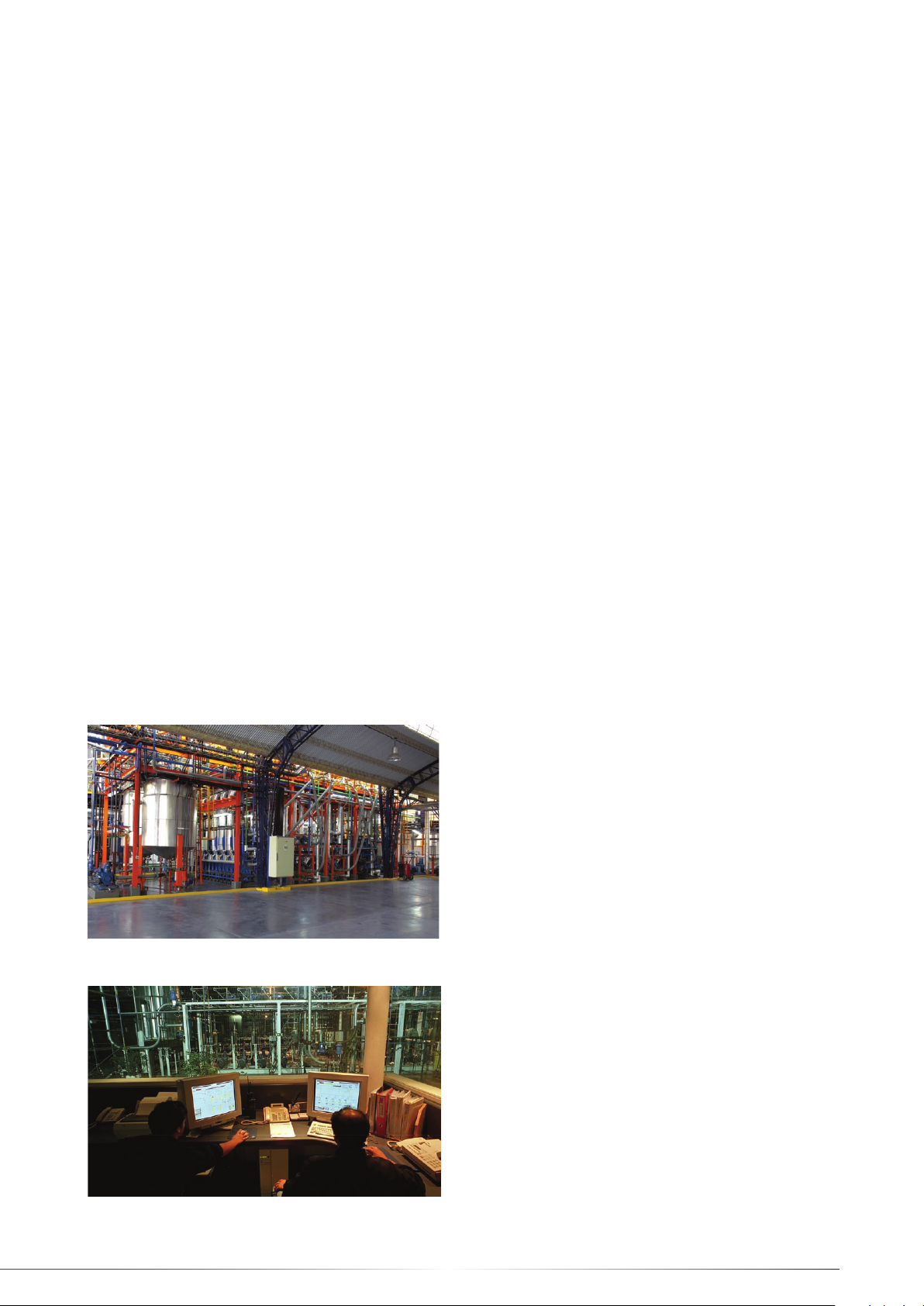
Figure 1. Overview of lube oil plant.
Figure 2. The 800xA lube oil control room.
20% increase in plant
productivity
The goal was to increase the plant’s flexibility and the
principal indicator is to increase the plant’s productivity by
20%. This is not only ‘making more lubricants,’ the goal is to
improve productivity through the improvement of efficiency
and efficacy of production, the more the better.
Repsol YPF is aiming for flexibility in a plant that makes
120 different products with 10 changeovers /production unit
/d. So, to do that, the objective is to increase productivity,
reducing production costs in a highly complex environment.
The improvement is based on reducing the Reblend Index
from 15 - 5% (efficiency); reducing costs of scrap generated
during cleaning lines after a product change by 15% or
20%, which is comparable to 120 m
Repsol YPF is achieving, and in some cases, exceeding
these efficiency improvements because the capabilities of
the ABB control system strengthen the process technology
changes.
The control system provides Repsol YPF with many
benefits including:
Reducing time to decision and action.
l
Engineering for maximum performance.
l
Investment enhancement through evolution.
l
3
/yr (efficiency).
Reprinted from HydrocarbonENGINEERING February2008 www.hydrocarbonengineering.com
Page 4
Integrated information for improved visibility.
l
Capacity to implement tailor made process
l
solutions.
Local knowledge and support.
l
ABB maintains operations throughout Latin
America, and in particular Argentina, that can
provide support services for the control system,
and other equipment at the refinery.
Daniel Reale, production manager of
lubricants and paraffins for Repsol YPE noted,
'the 800xA is a system of utmost reliability. Today
we have defined one recipe for each ‘process,’ so
that once you define how you are going to do it,
the system will take all the steps necessary.'
'Once we are satisfied with the result, the ABB
control system allows me to do it in the same way
always. I believe it’s the correct platform needed
to grow and it’s the platform that lets you add lots
of technology for optimising.'
'This is vital to our vision of always being
competitive and to always be the best option for our
clients,' Reale emphasised. 'Frankly, ABB offered what
we were looking for, from pumping knowledge into the
system and being able to capture vital information for
analysing to making decisions that improve the process
day to day.'
In addition to System 800xA, ABB has provided
the refinery with information management and batch
management systems. A high level of running efficiency is
critical for the La Plata complex so that it meets the needs
of clients, as it reduces operating costs.
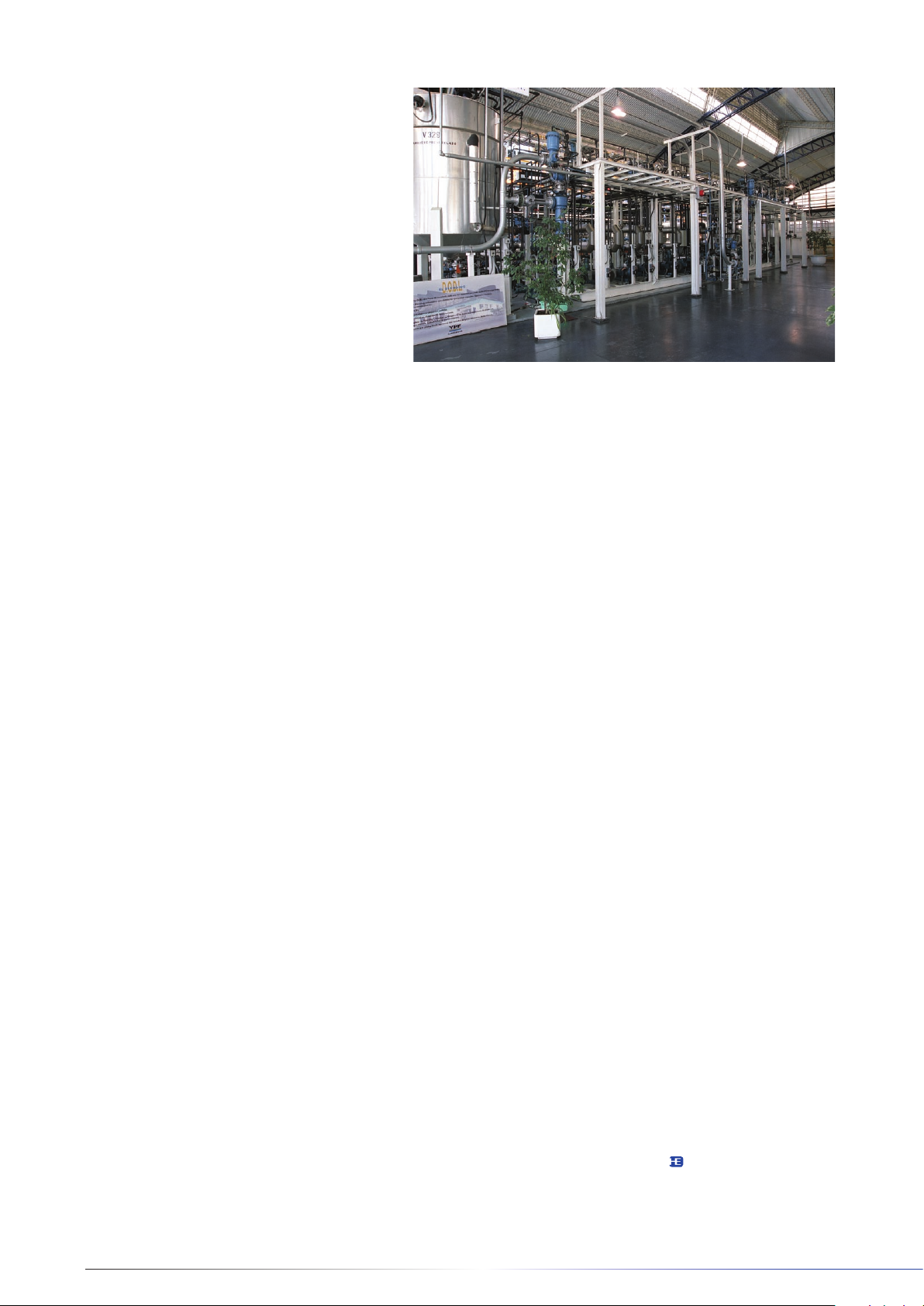
Figure 3. Another view of Repsol YPF lube oil plant.
Replacing a steam turbine
with electric drives system
Another example of applying state of the art technology
at the facility is addressing the refinery’s large number of
drive applications powered by steam turbines. ABB has
addressed this with ACS 1000 medium voltage drives
for speed and torque control of 315 - 5000 kW motors.
Steam turbines were the best technology at the time of
installation to obtain the speed and power required for
different applications.
However, steam turbines proved to have a number of
disadvantages, including the cost of steam being higher
than that of electric power, and turbines having higher
maintenance costs than electric drives. Additionally, steam
turbines have higher operating costs due to large amounts
of coolant water circulating through surface condensers.
With this in mind, the refinery decided to study the
feasibility of replacing steam turbines with variable speed
electric drive systems. The technology that has become
available in recent years made variable speed electric
drive systems a competitive alternative for applications in
the medium power range even with speeds greater than
3000 rpm, the maximum speed of an electric motor driven
at a frequency of 50 Hz.
A fluid catalytic cracking unit with three blowers was
selected for conversion. The blowers were driven by 2970
kW steam turbines at
4100 rpm. One of the blowers was replaced with an
electric drive system consisting of an ABB KTMP 4400
double secondary transformer, an ACS 1000 converter,
and a AMB 560 L2L motor.
A synchronous electric motor and frequency converter
assemblies have proven to be a viable alternative for
driving process units in which the necessary adjustments
can be obtained with variable speed. An ACS 1000
controls the motor torque throughout the speed range.
Since there is a smooth output waveform, a torque
analysis is not necessary in most applications.
EII improvement of over 10%
After the change, the energy intensity index (EII) of
the FCC unit improved by 10.5% within one year of
replacing the steam turbine with an electric drive,
explained Marcelo Ruiz, Manager of FCC units at the
refinery. It was also noted that after a shutdown, the
drive system returned to operating conditions much
faster than the steam drive blowers, several minutes
versus two hours.
Having blowers supplied by different kinds of energy,
steam and electricity, gives operational flexibility. With this
feature, unobstructed air lines can be kept during a failure
in one of the energy systems, minimising time to be back
in operation.
Savings regarding energy, cooling, water maintenance
and flow variations projected for the first year covered
33% of the project cost.
Investment in the future
Repsol YPF maintains a huge presence in Argentina as the
country’s largest company. Headquartered in Spain, it is
an international oil and gas company with operations in 25
different countries. Its oil production and refinery capacity
surpasses 1.2 million bpd. Its network of operations
includes more than 6600 points of sale in Europe and
Latin America, selling gasoline under the brands Campsa,
Petronor and Repsol.
Repsol YPF launched a plan in 2005 to invest over
US$ 25 billion in its worldwide operations through 2009,
of which US$ 8 billion involves projects in Argentina, Brazil
and Bolivia. Under the plan, Argentine operations would
receive close to $7 billion over the four year period. This is
more than US$ 700 million originally planned, and nearly
one third increase over a previous plan covering 2000 2004, indicating the importance of the Argentine market in
the Repsol YPF organisation.
www.hydrocarbonengineering.com Reprinted from February2008 HydrocarbonENGINEERING
 Loading...