

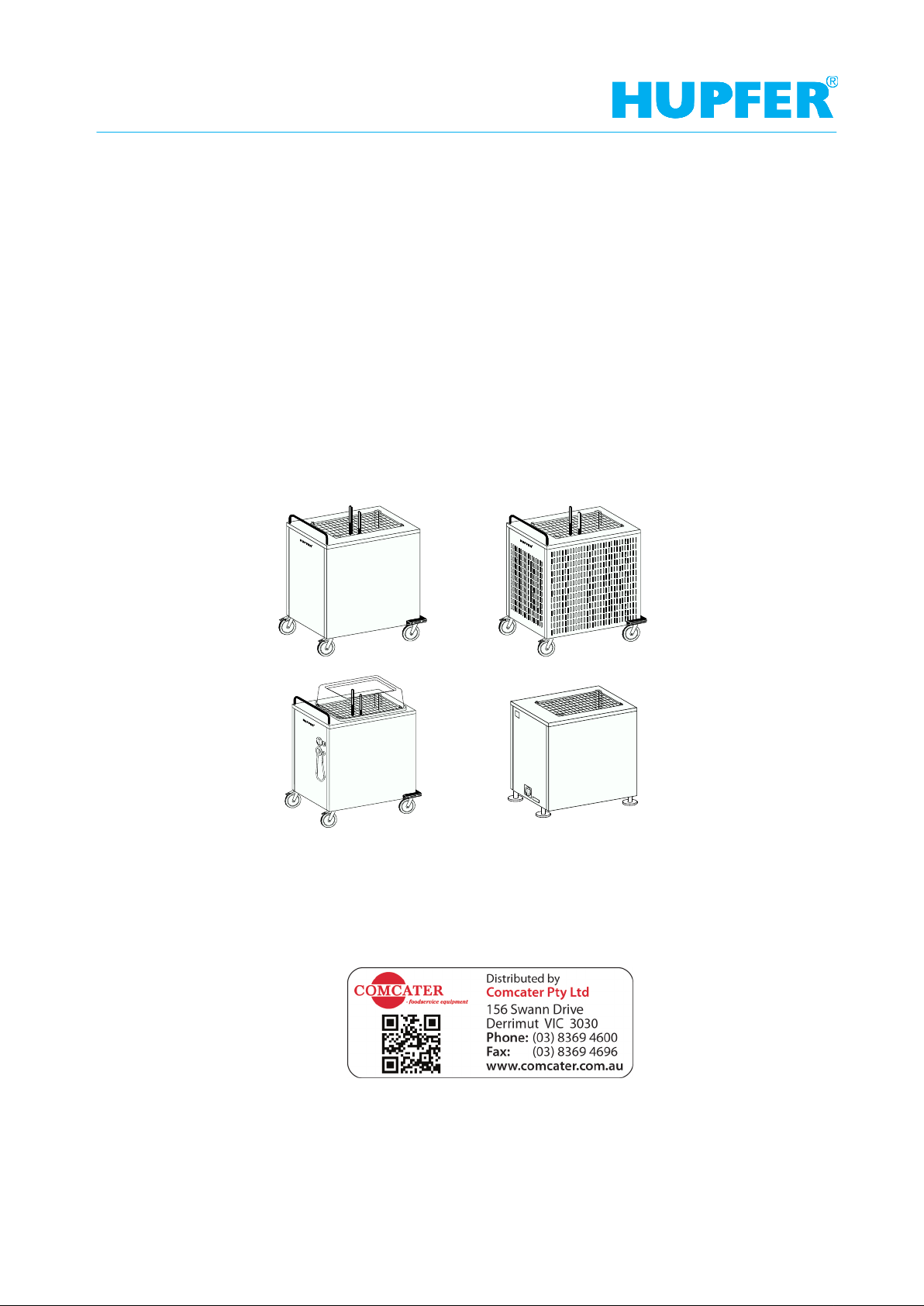
Hupfer UST/57-28, UST/57-28K, USTH/57-28, USTUH/57-28, EUSTH/57-28 Operating Instructions Manual
Page 1
Op
erating Instructions
Un
US
T/57-28 | UST/57-28K | USTH/57-28 | USTUH/57-28 | EUSTH/57-28
433
iversal Crockery Dispenser
0005_A0
Page 2

Chapter 1 Introduction
Page 2 Appliance Information
1 Introduction
1.1 Appliance Information
Appliance designation Universal Crockery Dispenser
Appliance type/ -s UST/57-28 | UST/57-28K | USTH/57-28 | USTUH/57-28 |
EUSTH/57-28
Manufacturer HUPFER® Metallwerke GmbH & Co KG
Dieselstraße 20
48653 Coesfeld
PO 1463
D-48634 Coesfeld
+49 2541 805-0
+49 2541 805-111
www.hupfer.de
Universal Crockery Dispenser
UST/57-28 | UST/57-28K | USTH/57-28 | USTUH/57-28 | EUSTH/57-28
Read these operating instructions carefully before the first operation of the appliance.
Ensure that sources of danger and possible faulty operations have been pointed out to the operating staff.
Subject to modifications
The products covered by these operating instructions have been developed taking into consideration the requirements of the market and the latest technology. HUPFER® reserves the right to modify the products and
appertaining technical documentation in so far as the modifications are in the name of technological progress. The data and weights as well as the description of performance and functions assured in the order
confirmation as binding are always decisive.
Manual edition
4330005_A0
Universal Crockery Dispenser
UST/57-28 | UST/57-28K | USTH/57-28 | USTUH/57-28 | EUSTH/57-28 4330005_A0
Page 3

Introduction Chapter 1
Table of Contents Page 3
1.2 Table of Contents
1 Introduction 2
1.1 Appliance Information 2
1.2 Table of Contents 3
1.3 List of Abbreviations 5
1.4 Definitions of Terms 6
1.5 Orientation Guide 7
1.6 Notes on Use of Manual 8
1.6.1 Notes on the manual structure 8
1.6.2 Notes and their illustrations used in the chapters 8
2 Safety Instructions 9
2.1 Introduction 9
2.2 Warning Symbols Used 9
2.3 Safety Instructions for Appliance Safety 9
2.3.1 Safety instructions for all appliances 9
2.3.2 Additional safety instructions for heated appliances 10
2.4 Safety Instructions for Cleaning and Care 11
2.5 Safety Instructions for Troubleshooting 11
2.6 Notes on Specific Hazards 11
3 Technical Data and Description 12
3.1 Appliance Description 12
3.1.1 Optional special accessories 13
3.2 Appliance Data 14
3.3 Rating Plate 16
3.4 Intended Use 16
3.5 Improper Use 16
4 Transport, Assembly, Putting into Operation and Decommissioning 17
4.1 Transport 17
4.2 Assembly (EUSTH/57-28 only) 17
4.3 Putting into Operation 19
4.4 Storage and Recycling 19
5 Operation 20
5.1 Arrangement and Function of the Operating Elements 20
5.2 Adjustment of Stacking Platform 20
5.2.1 Spring adjustment 20
5.2.2 Adjustment of guide rails 22
5.2.3 Examples of crockery stack arrangements 22
5.2.4 Calculating the universal crockery dispenser capacity 23
5.3 Operation 24
5.3.1 Switching on the appliance 24
5.3.2 Loading the appliance 25
Universal Crockery Dispenser
4330005_A0 UST/57-28 | UST/57-28K | USTH/57-28 | USTUH/57-28 | EUSTH/57-28
Page 4

Chapter 1 Introduction
Page 4 Table of Contents
5.3.3 Moving the appliance 26
5.4 Measures at the End of Operation 26
6 Fault Detection and Troubleshooting 28
6.1 Security Measures 28
6.2 Notes on Troubleshooting 28
6.3 Fault and Action Table 28
7 Cleaning and Care 29
7.1 Security Measures 29
7.2 Hygiene Measures 29
7.3 Cleaning and Care 29
7.4 Special Care Instructions 30
8 Spare Parts and Accessories 31
8.1 Introduction 31
8.2 Spare Parts and Accessories List 31
9 Declaration of Conformity 34
Universal Crockery Dispenser
UST/57-28 | UST/57-28K | USTH/57-28 | USTUH/57-28 | EUSTH/57-28 4330005_A0
Page 5

Introduction Chapter 1
List of Abbreviations Page 5
1.3 List of Abbreviations
Abbreviation Definition
CE Communauté Européenee
European Community
DIN Deutsches Institut für Normung
German Institute for Standardisation, technical regulations and technical specifications
EC European Community
European Union
EN European Standard
Harmonised standard for the EU market
E/V Spare and wearing part
IP International Protection. The abbreviation IP and a further two-digit index specify the
LED Light Emitting Diode
UVV Accident Prevention Regulations
protection class of a housing.
The first digit: Protection against ingress of solid foreign objects The second digit: Protection against ingress of
water
0 No protection against contact, no protec-
tion against ingress of solid foreign
objects
1 Protection against contact with any large
surface of the body such as the hand,
protection against ingress of foreign
objects > 1.97'' (50 mm)
2 Protection against contact with the
fingers, protection against ingress of
foreign objects
>0.47'' (12 mm)
3 Protection against contact with tools,
thick wires or similar objects of >0.1'' (2.5
mm), protection against foreign objects
>0.1'' (2.5 mm)
4 Protection against contact with tools,
thick wires or similar objects of >0.04'' (1
mm), protection against foreign objects
>0.04'' (1 mm)
5 Protection against contact, protection
against dust deposits inside
6 Complete protection against contact,
protection against ingress of dust
7 Protection against ingress of water
8 Protection against pressurised water
0 No protection against ingress of water
1 Protection against vertically falling water
drops
2 Protection against dripping water (at any
angle up to 15° from the vertical)
3 Protection against water drips at any
angle up to 60° from the vertical
4 Protection against water splashing from
any direction
5 Protection against water jets (projected
by a nozzle) at any angle
6 Protection against temporary flooding
during temporary immersion
during continuous immersion
Light diode
Directives on health and safety at work issued by the professional association of the
Federal Republic of Germany
Universal Crockery Dispenser
4330005_A0 UST/57-28 | UST/57-28K | USTH/57-28 | USTUH/57-28 | EUSTH/57-28
Page 6

Chapter 1 Introduction
Page 6 Definitions of Terms
1.4 Definitions of Terms
Term Definition
Authorised specialist An authorised specialist is a specialist that has been trained by the manufacturer, an
Cover A bell-shaped cover for keeping food warm on plates and dishes.
Cook&Chill-Kitchens "Cook and Chill": Kitchens where warm food after being cooked is chilled as quickly as
Cook&Serve-Kitchens "Cook and Serve": Kitchens where warm food is served immediately after being
Element formation Also: contact corrosion. Occurs when different noble metals are in close contact with
Specialist A specialist is a person who can evaluate work assigned and can individually recog-
Lift A movement, for example a vertical movement of the stacking platform from bottom to
Control Compare with certain conditions and/or characteristics such as damages, leaks, filling
Convection Physical properties or mass transfer (e.g. heat or cold) through currents in gases and
Corrosion The chemical reaction of a metallic material with its surroundings, e.g. rust.
Machine safety The term of machine safety means all the measures used to avert injury to persons.
Passive layer A non-metallic protective layer on a metallic material that prevents or slows down
Check Compare with certain values such as weight, torque, content, temperature.
Qualified person,
qualified staff
Schuko® The abbreviation of the German term "Protective contact" that indicates a system of
Instructed persons An instructed person is a person who has been instructed on the possible risks result-
authorised service dealer or a company assigned by the manufacturer.
possible.
cooked or kept warm until it is consumed.
each other. This happens when a corrosive medium is between both metals, as for
example water or even air humidity.
nise any possible dangers due to the professional training, specialist knowledge and
experience as well as knowledge of the respective guidelines.
top.
levels, heat.
liquids.
The basis for this are national as well as EC-wide valid directives and laws for protecting users of technical devices and systems.
material corrosion.
Qualified personnel are persons who due to their professional training, experience and
instruction as well as their knowledge of the respective standards, guidelines, accident
prevention regulations and operating conditions have been authorised by a person
responsible for system safety to carry out required activities and can recognise and
prevent any possible danger (definition of specialists according to IEC 364).
domestic plugs and sockets equipped with protective earthed contacts used in most of
Europe.
ing from improper behaviour when carrying out the assigned task as well as on the
necessary protective equipment and protective measures and trained for this task if
necessary.
Universal Crockery Dispenser
UST/57-28 | UST/57-28K | USTH/57-28 | USTUH/57-28 | EUSTH/57-28 4330005_A0
Page 7

Introduction Chapter 1
Orientation Guide Page 7
1.5 Orientation Guide
The front
"The front" means the side where the push bar is fitted. Members of the operating staff stay at this side to
move the universal crockery dispenser.
The side of the EUSTH/57-28 named as "the front" means the side, at which the staff operates the built-in
appliance.
The rear
The side named "the rear" means the opposite side of the front side (the front).
The right
The side named "the right" means the side at the right hand side of the front side (the front).
The left
The side named "the left" means the side at the left hand side of the front side (the front).
Universal Crockery Dispenser
4330005_A0 UST/57-28 | UST/57-28K | USTH/57-28 | USTUH/57-28 | EUSTH/57-28
Page 8
Chapter 1 Introduction
Page 8 Notes on Use of Manual
1.6 Notes on Use of Manual
1.6.1 Notes on the manual structure
This manual is structured in functional and task orientated chapters.
1.6.2 Notes and their illustrations used in the chapters
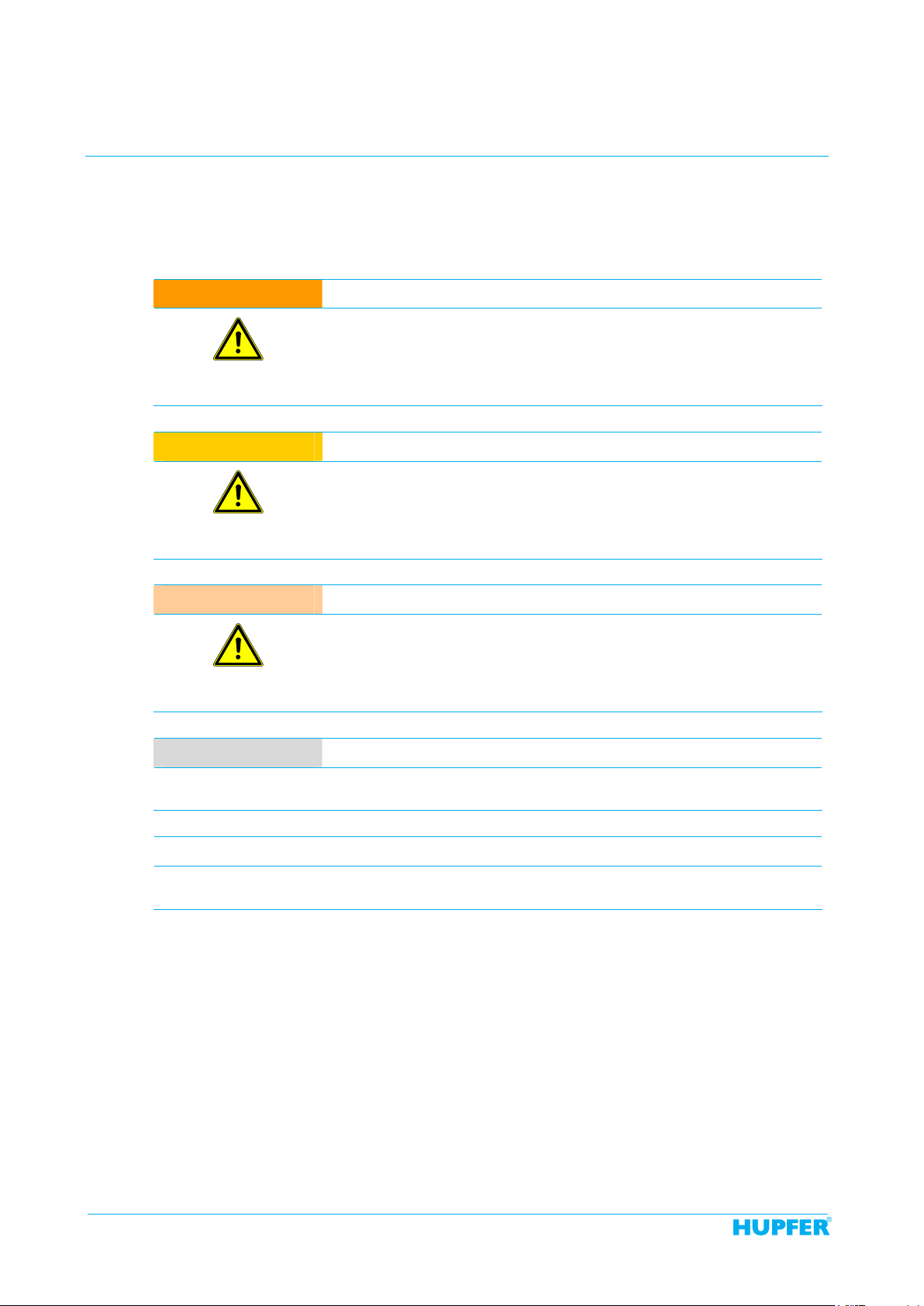
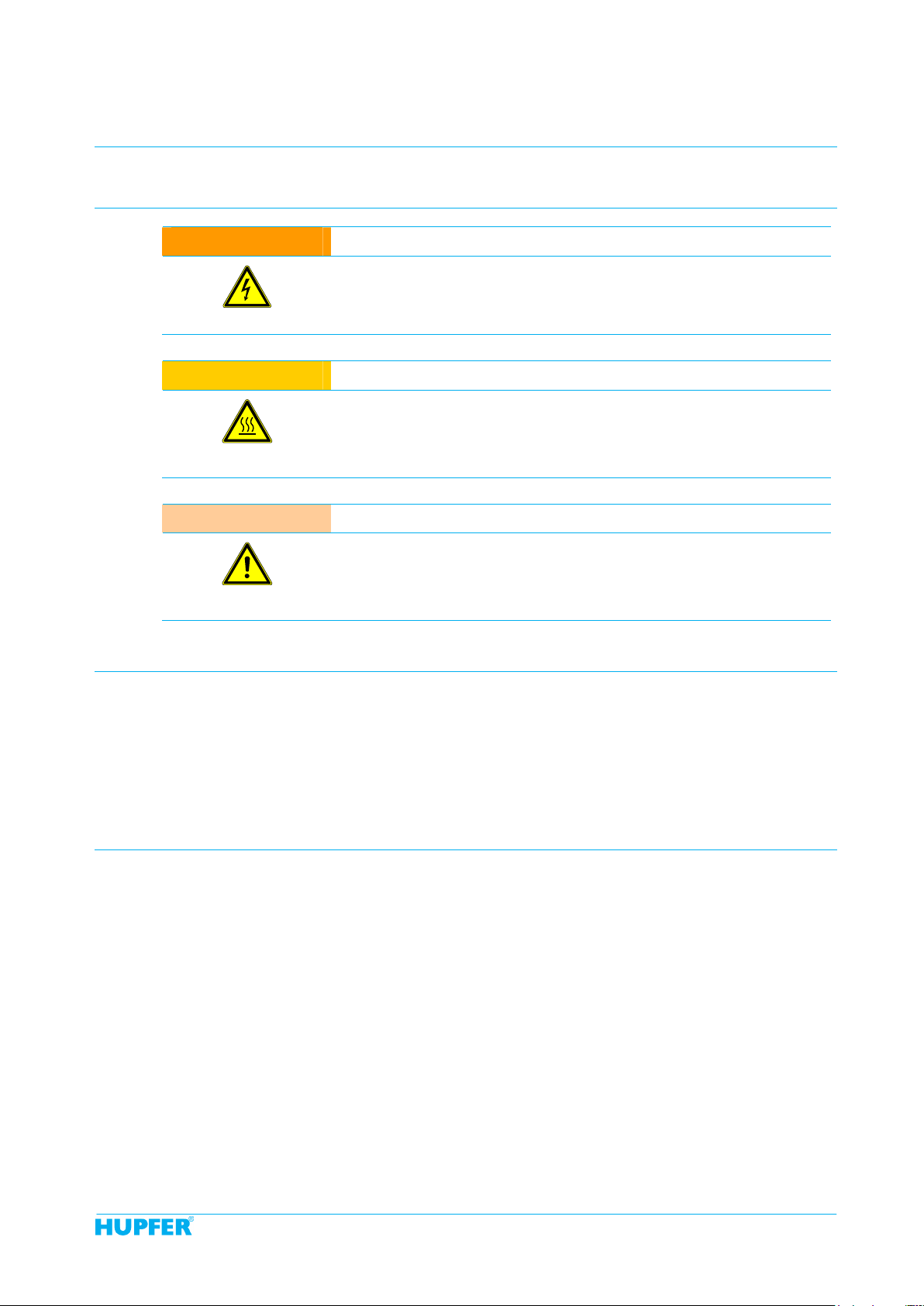
DANGER Brief description of danger
There is an imminent danger to life and limb of the user and / or third parties
when the instructions are not followed precisely or the circumstances de-
WARNING Brief description of danger
scribed are not taken into account.
The type of danger is indicated by a symbol and explained in the accompany-
ing text in more detail. In this example the general sign of danger is used.
There is an indirect danger to life and limb of the user and / or third parties
when the instructions are not followed precisely or the circumstances described are not taken into account.
The type of danger is indicated by a symbol and explained in the accompanying text in more detail. In this example the general sign of danger is used.
ATTENTION Brief description of danger
There is a potential risk of injury or damage to property when the instructions
are not followed precisely or the circumstances described are not taken into
account.
The type of danger is indicated by a general sign and explained in the accompanying text in more detail. In this example the general sign of danger is used.
NOTE Brief description of additional information
Attention is pointed to special conditions or additional important information on
the respective subject.
INFO Short title
Contains additional information on work assisting features or recommendations on the respective subject.
Universal Crockery Dispenser
UST/57-28 | UST/57-28K | USTH/57-28 | USTUH/57-28 | EUSTH/57-28 4330005_A0
Page 9
Safety Instructions Chapter 2
Introduction Page 9
2 Safety Instructions
2.1 Introduction
The chapter on safety instructions describes the risks associated with the appliance in terms of product liability (according to the EU Machinery Directive).
2.2 Warning Symbols Used
Symbols are used in these operating instructions to point out the dangers that can occur while operating or
cleaning the appliance. In both cases, the symbol provides information on the type and circumstances of
danger.
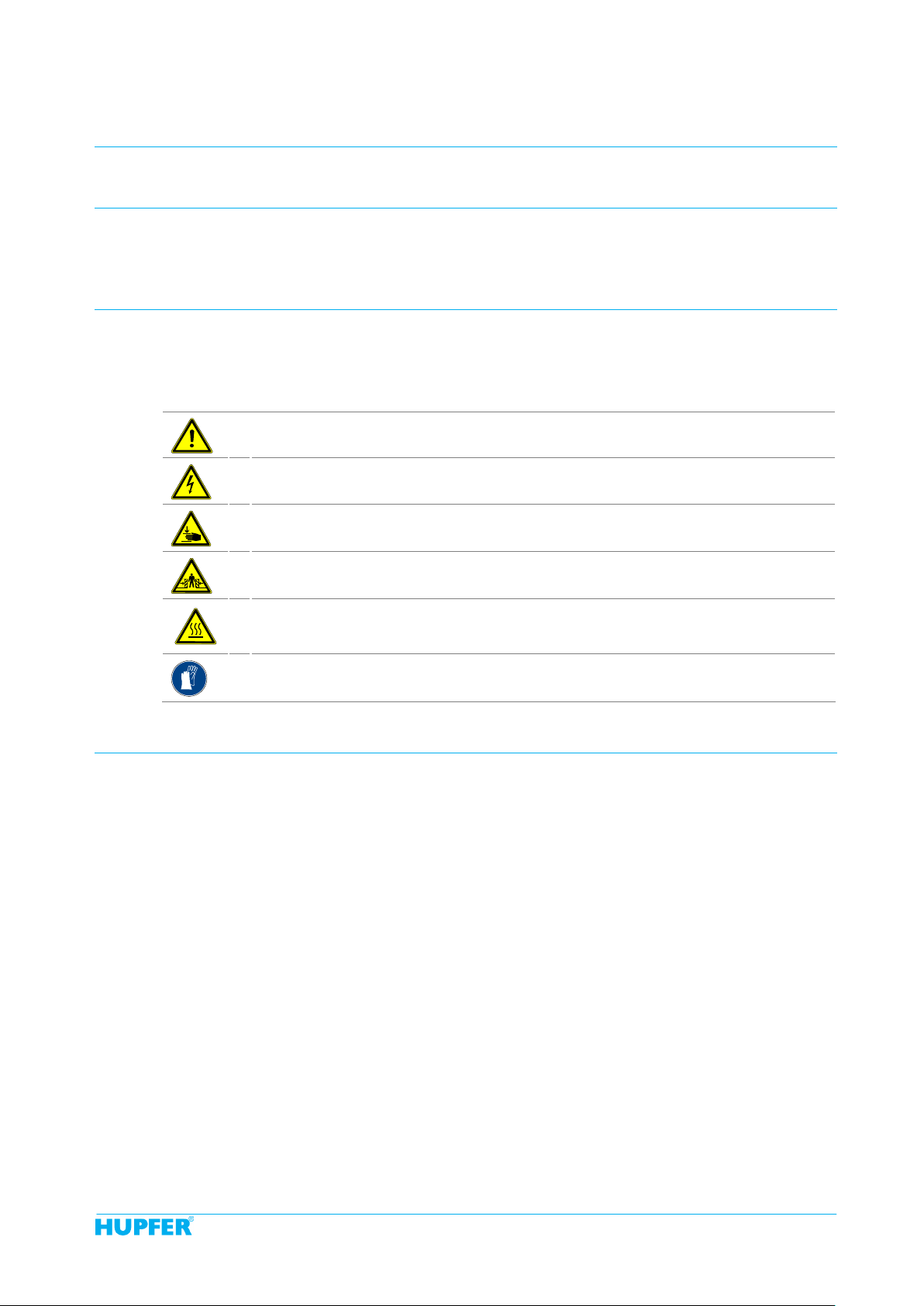
The following symbols can be used:
General hazardous area
Hazardous electrical voltage
Risk of hand injuries
Risk of crushing
Risk of hot surfaces
Wear hand protection
2.3 Safety Instructions for Appliance Safety
Safe operation of the appliance depends on appropriate and thorough use. Negligent handling of the appliance can lead to danger to life and limb of the user and / or third parties as well as hazards to the appliance
itself and the other operator's property.
2.3.1 Safety instructions for all appliances
The following points are to be observed to ensure the appliance safety:
The appliance may only be operated when it is in perfect condition with regards to technical stan-
dards.
All the operating and actuating elements must be in a perfect and functionally reliable condition with
regards to technical standards.
Modifications or retrofits of the equipment are only permitted in consultation with the manufacturer
and on receipt of his written agreement.
In no case may people sit or stand on the appliance. Transport of persons is not permitted.
Before loading, the crockery dispensing height must be adjusted to the kind of crockery used.
To avoid injuries to the hands, care should always be taken to ensure that the crockery dispensing
height does not fall below the upper rim of the housing.
Never push the stacking platform down manually into the compartment (e.g. for cleaning). There is a
risk of injury, if the stacking compartment is released.
The appliance is provided exclusively for manual transport. Mechanical transport is not permitted.
Risk of injury and damage.
Universal Crockery Dispenser
4330005_A0 UST/57-28 | UST/57-28K | USTH/57-28 | USTUH/57-28 | EUSTH/57-28
Page 10

Chapter 2 Safety Instructions
Page 10 Safety Instructions for Appliance Safety
Release both total brakes before commencing transporting. Moving the appliance with the total
brakes locked can damage the chassis.
Transport should only be undertaken over level floors. Moving the appliance over very uneven floors
can damage the chassis.
Transport over inclined planes or steps is not permitted.
When approaching walls and moving round obstacles always pay attention to persons in the way.
Risk of injury.
When transporting the appliance, always hold both handles with your hands. Never let go of the ap-
pliance while moving it.
When transporting the appliance, do not move it faster than a walking pace. Heavily laden universal
crockery dispensers are difficult to brake and steer. If necessary, ask for assistance when transporting the appliance.
If the universal crockery dispenser tips over due to outside influences or inattention, never catch it
manually. Risk of injury.
Do not stop the appliance on sloping floors.
After stopping, the appliance should be secured against rolling away by means of both total brakes
being applied.
In the case of off-site transport in a vehicle such as a lorry, the appliances should be secured prop-
erly. The total brakes are not sufficient as a transport securing method.
2.3.2 Additional safety instructions for heated appliances
Only insert the stacking platform with the basket opening facing downwards.
Heated universal crockery dispensers are intended for dispensing heated crockery. Their use for
cooking food and keeping it warm or for room heating is not permitted.
The crockery temperatures can exceed the permitted maximum temperatures of 149°F (65°C) for
touchable appliance surfaces. Always wear protective gloves when dispensing hot crockery. Risk of
burning.
The use of heated models in customer-service areas (for example, at self-service counters) is only
permitted by trained staff even when the temperature setting has been reduced. It is always necessary to ensure that the crockery on the top which is about to be taken out is at a non-critical temperature of less than 131°F (55°C) and that the temperature setting on the appliance can't be altered.
Moreover, make sure that even if the crockery is to be taken out of the dispenser at the set temperature very quickly (e.g. at busy meal times) it can always be done safely.
During operation of the appliance, never reach into it and touch the heating element with the fingers.
Risk of burning.
Plastic crockery, top and bottom parts of plastic insulated sets and plastic-coated items for keeping
food warm should not be stored nor warmed up in heated universal crockery dispensers. Owing to the
high temperatures of the heating elements, the plastics can melt and catch fire.
If the cover made of stainless steel is used, its outer edges can heat up to over 149°F (65°C). There-
fore, only touch the cover with protective gloves to avoid skin irritations.
The base plate and used air from the base outlets can become very hot. The appliance should not be
operated on fibre-based floor coverings (e.g. carpets, mats).
The positions of the guide rails must be adjusted to the size of the crockery items before loading.
Before transporting, switch off the appliance, pull out the mains plug and insert it into the holder pro-
vided.
Forceful straining of the connecting cable can lead to damage to the internal line. Risk of fire.
Never pull the mains plug out of the socket by the connecting cable. The standard models of
HUPFER
plug this plug only sticks insignificantly out of the socket and so cannot be damaged by being hit at
the side. If the appliance is moved without pulling out the mains plug beforehand, the socket can be
severely damaged or even pulled out from the wall as a result of leverage arising from overstretching
of the connecting cable.
®
appliances are equipped with a Schuko® angle plug. In contrast to a straight Schuko®
Universal Crockery Dispenser
UST/57-28 | UST/57-28K | USTH/57-28 | USTUH/57-28 | EUSTH/57-28 4330005_A0
Page 11

Safety Instructions Chapter 2
Safety Instructions for Cleaning and Care Page 11
Never move the appliance by pulling by the connecting cable.
If the mains plug has come into contact with water it must be dried before inserting it into the socket.
Danger to life.
Damaged mains plugs or connecting cables are to be replaced by authorised personnel before the
appliance is reused.
Do not use any extension cables in wet and damp areas.
Only insert mains plugs into suitable sockets. If the mains plug does not fit, the connecting cable of
the appliance is to be retrofitted by authorised specialist staff.
The use of socket adapters is not permitted. Risk of fire.
Do not clean the appliance with steam-jet or high-pressure washers. The appliance must be taken out
of operation and switched off at the mains beforehand in any area where steam-jet or high-pressure
washers are to be used.
2.4 Safety Instructions for Cleaning and Care
The following points shall be observed when carrying out any cleaning and maintenance operations:
For reasons of hygiene the cleaning instructions shall be strictly observed.
Take the appliance out of operation before starting the cleaning process. Pull out the mains plug and
insert it into the holder located on the appliance.
For cleaning, the appliance must be out of operation and cooled down sufficiently.
Do not clean the appliance with steam-jet or high-pressure washers. The appliance must be taken out
of operation and switched off at the mains beforehand in any area where steam-jet or high-pressure
washers are to be used.
Even appliances without an electrical connection should not be cleaned with running water or pres-
surised water.
2.5 Safety Instructions for Troubleshooting
The following points shall be observed when carrying out any maintenance and troubleshooting operations:
All troubleshooting work should only be carried out by authorised specialists.
When carrying out troubleshooting work, it must be ensured that the appliance is switched off. When
operating on the electrical installation, the appliance is to be switched off at the mains and secured
against reactivation.
The local applicable Accident Prevention Regulations must be observed.
Defective components should only be replaced with original parts.
2.6 Notes on Specific Hazards
Electrical energy
All work on the electrical installations should only be carried out by a certified electrician or by author-
ised specialists under supervision and monitoring of a certified electrician according to the certain
electro-technical regulations.
The appliances that inspection, maintenance and troubleshooting work is performed on must be
switched voltage free on and secured against reactivation, when the voltage is not required for this
kind of work. This must only be carried out by a certified electrician.
Universal Crockery Dispenser
4330005_A0 UST/57-28 | UST/57-28K | USTH/57-28 | USTUH/57-28 | EUSTH/57-28
Page 12
Chapter 3 Technical Data and Description
Page 12 Appliance Description
3 Technical Data and Description
3.1 Appliance Description
Universal crockery dispensers are intended for transport and storage of clean crockery ready for use. Since
these appliances can hold up crockery in a variety of ways and their internal compartment is panelled, they
are not only suitable for large plates and food platters but also for very small round and rectangular crockery
items.
Depending on the respective type of appliance, the crockery can be cooled down or heated up.
The compact design of the appliances and a bow-shaped handle fitted on them enable them particularly to
be installed in niches of food serving counters. Protruding push bars can neither obstruct nor injure the operating staff. Universal crockery dispensers can also be used together with food distribution belts and unheated models can also be used at self-service counters.
An adjustable, spring-loaded stacking platform holds up crockery. A continuously increasing weight of the
loaded crockery pushes down the stacking platform. When dispensing the crockery, the stacking platform
moves up so that the next crockery item is always at hand resting at the required dispensing height.
When using universal crockery dispensers, there can be inserted guide rails into the platform stacker that
ensure a safe positioning of various crockery items.
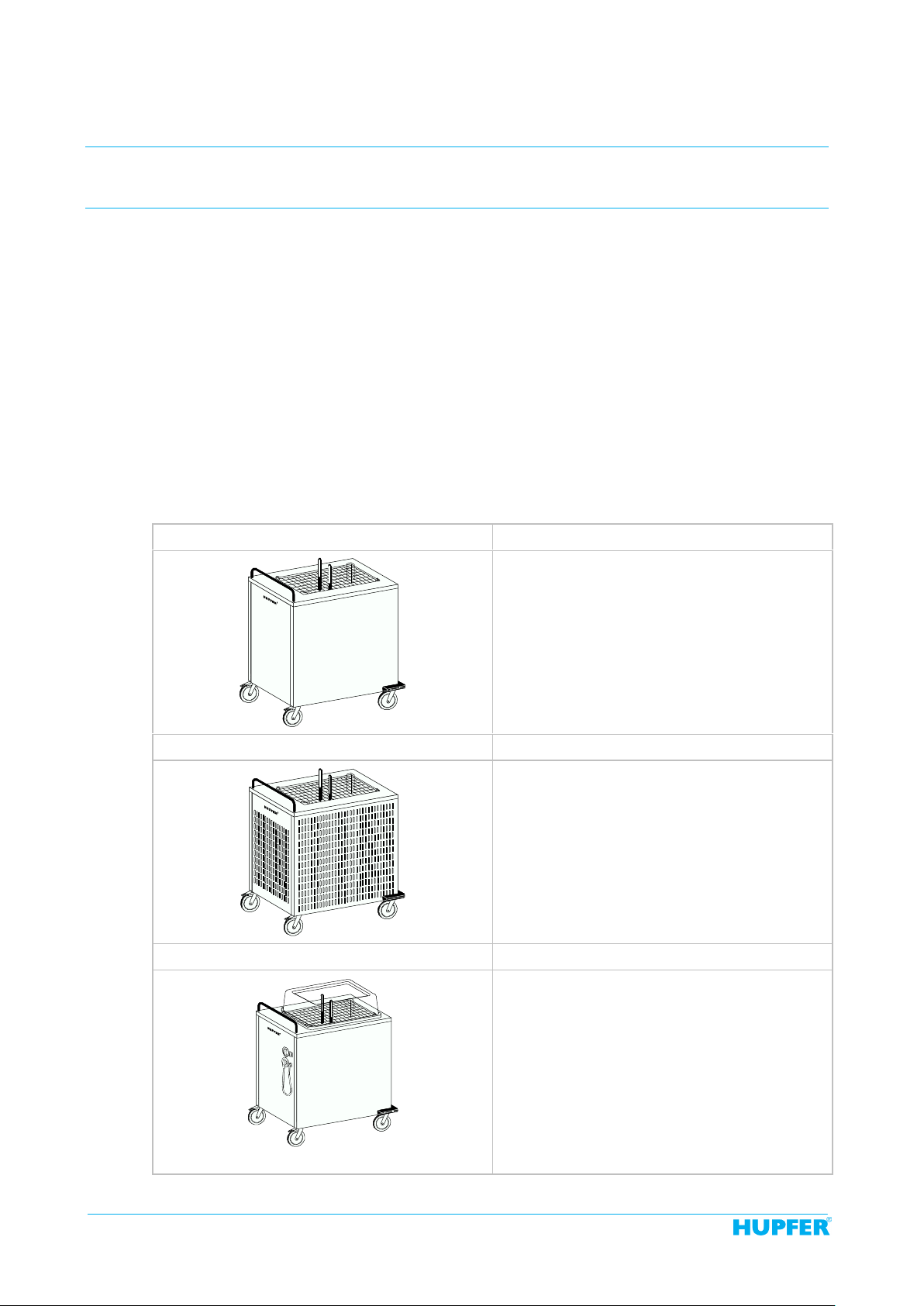
UST/57-28
UST/57-28K
USTH/57-28 and USTUH/57-28
The universal crockery dispenser UST/57-28 is unheated
and without a cooling device.
It has enclosed side and front walls and stores crockery
items ready for portioning cold dishes.
The universal crockery dispenser UST/57-28K is unheated, however, particularly suitable to be used in cold
stores. It is intended for storing cooled crockery ready for
portioning cold food components.
When used in the cold store, the cooling slots arranged on
the side and front walls of the appliance housing ensure a
rapid exchange of air and cause the cold air to be distributed uniformly inside.
The universal crockery dispenser UST/57-28K can also be
used as an unheated appliance.
The heated models USTH/57-28 (with stainless steel
tubular heating element) and USTUH/57-28 (fan-assisted
heating) are used mainly to stack, heat and store crockery
items ready for portioning warm components.
The models USTH/57-28 and USTUH/57-28 can also be
used as unheated appliances.
Universal Crockery Dispenser
UST/57-28 | UST/57-28K | USTH/57-28 | USTUH/57-28 | EUSTH/57-28 4330005_A0
Page 13
Technical Data and Description Chapter 3
Appliance Description Page 13
EUSTH/57-28
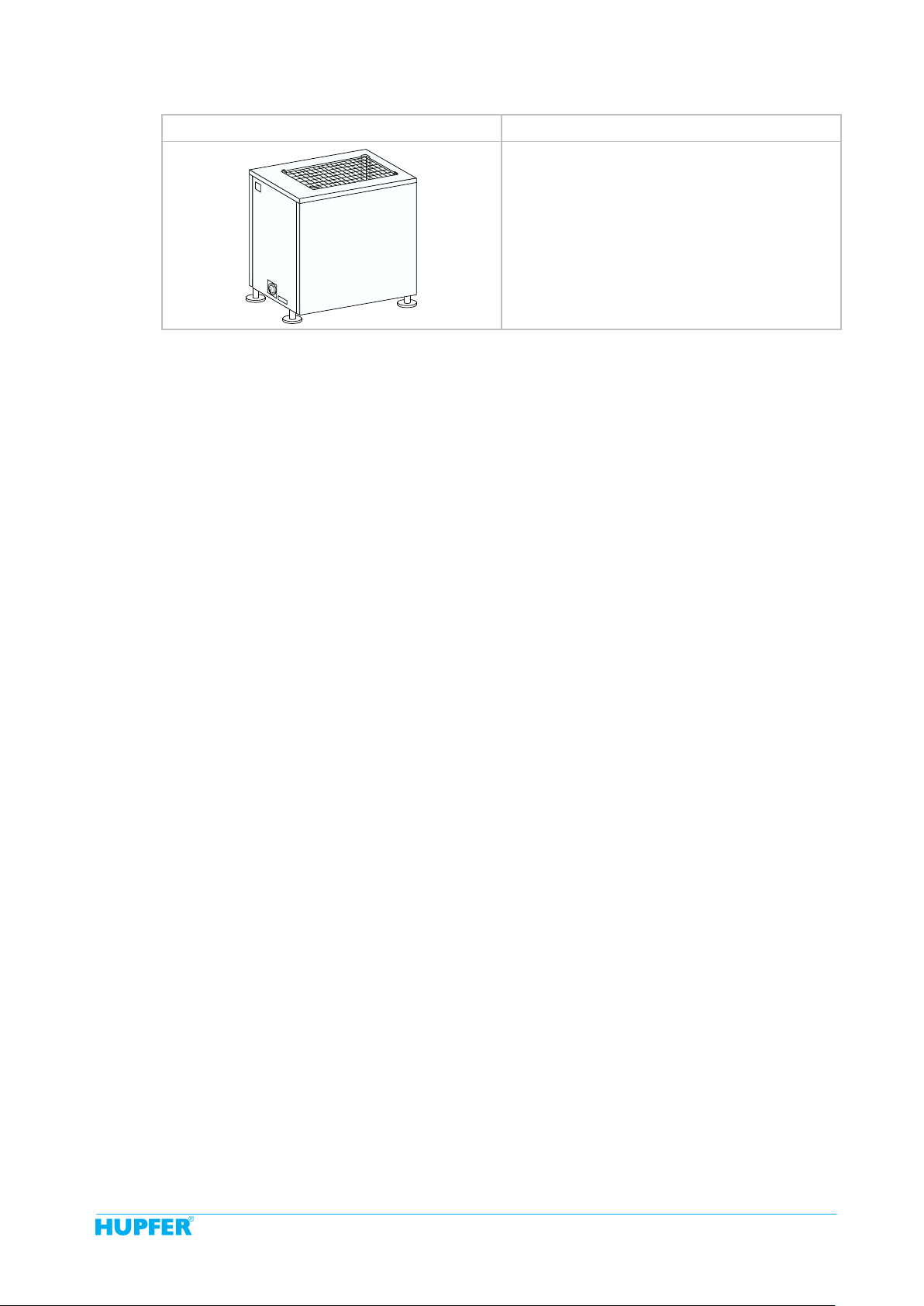
The universal crockery dispenser EUSTH/57-28 is intended for installation into worktops.
The appliance has a stainless steel tubular heating element and is used to stack, heat and store crockery items
ready for portioning hot food.
It is can also be used as an unheated appliance.
3.1.1 Optional special accessories
The following parts can be applied as optional accessories for universal crockery dispensers.
Transparent cover made of polycarbonate for universal crockery dispenser 57-28 **
Guide rail made of stainless steel, Ø 0.8’’ (20 mm), rounded at the top and closed, with a ring fitting
1’’ (25 mm)
Stainless steel cover for universal crockery dispenser 57-28. When using these covers, only short
guide rails can be applied.
Guide rail made of stainless steel, Ø 0.8’’ (20 mm), rounded at the top and closed, with a ring fitting
1’’ (25 mm), short design for universal crockery dispenser 57-28 with stainless steel cover
Rail holder made of stainless steel mounted on the front side to hold additional guide rails or ones
which are not required.
Peripheral bumper strip made of impact-resistant plastic
Casters made of plastic, Ø = 5’’ (125 mm) with and without total brakes, plate attachment
Additional base and adjustable springs for increasing the load-bearing capacity of the stacking plat-
form
**Standard for USTH and USTUH
The part numbers of the special accessories can be found in the spare parts catalogue and order lists available online.
Universal Crockery Dispenser
4330005_A0 UST/57-28 | UST/57-28K | USTH/57-28 | USTUH/57-28 | EUSTH/57-28
Page 14
Chapter 3 Technical Data and Description
Page 14 Appliance Data
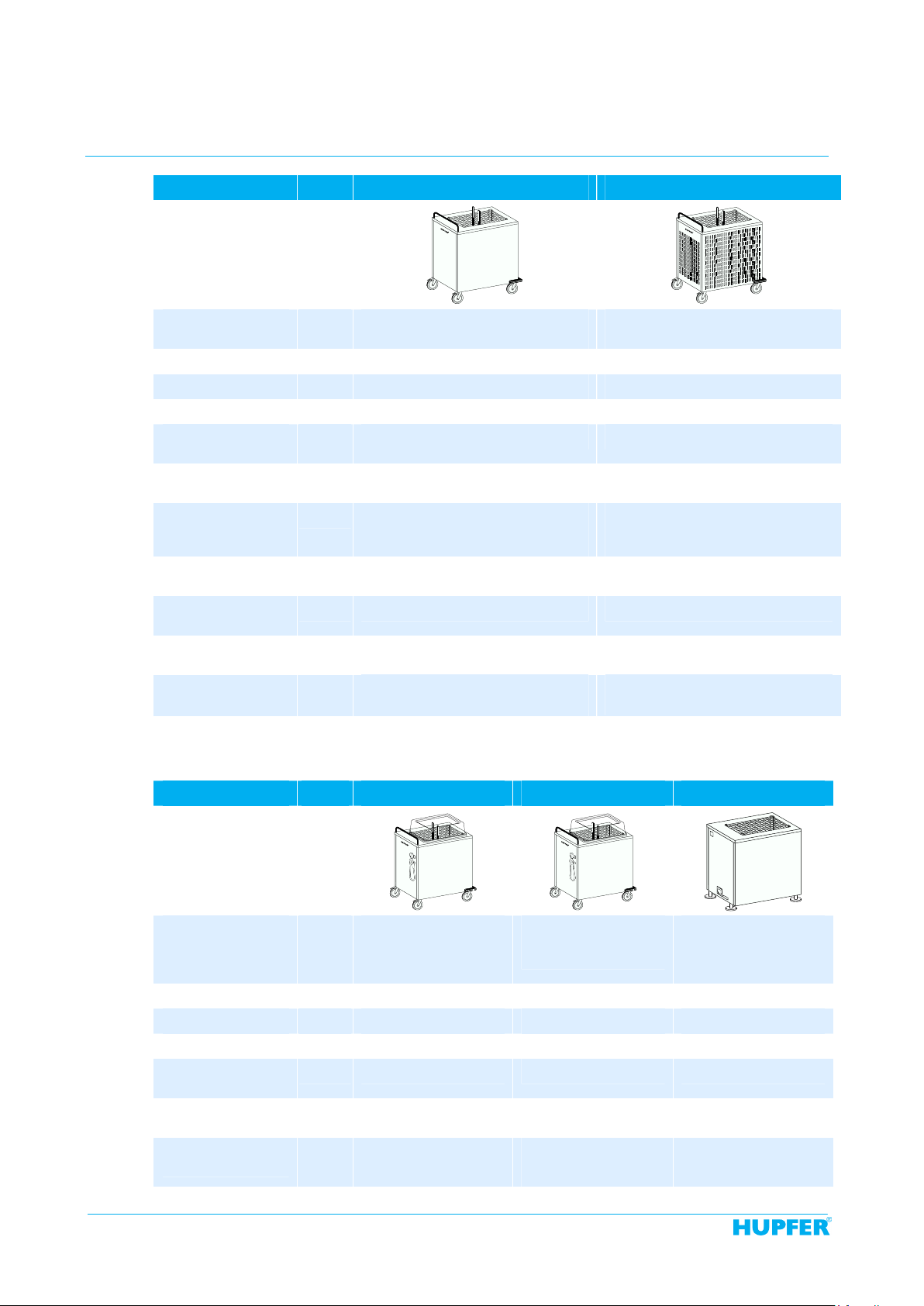
3.2 Appliance Data
Dim. UST/57-28 UST/57-28K
View of the appliance
Universal crockery dispenser, unheated
Own weight lbs (kg) 121 (55) 121 (55)
Payload lbs (kg) 342 (155) 342 (155)
Permitted total weight lbs (kg) 463 (210) 463 (210)
Operating and ambient
conditions
Chassis in (mm) 4 swivel casters, 2 with total brakes, Ø 5’’
Compartment inner
panelling
Stacking platform in (mm) Stainless steel grids, plastic-coated
Stack height without
cover
Stack height with
cover
Crockery size in (cm)
Number of crockery
stacks
˚F (˚C) -4 to 122 (-20 to +50) -4 to 122 (-20 to +50)
made of stainless steel, left and right
in (mm) 22’’ (565) 22’’ (565)
in (mm) 26.5’’ (675) 26.5’’ (675)
up to 21, depending on crockery size up to 21, depending on crockery size
and without cooling device
(125)
sides provided with vertical plasticcoated rods
22.5x11’’ (570x280)
between 3 and 11’’ (8 and 28) or edge
length
Universal crockery dispenser, unheated
and with cooling device
4 swivel casters, 2 with total brakes, Ø 5’’
(125)
made of stainless steel, left and right
sides provided with vertical plasticcoated rods
Stainless steel grids, plastic-coated
22.5x11’’ (570x280)
between 3 and 11’’ (8 and 28) or edge
length
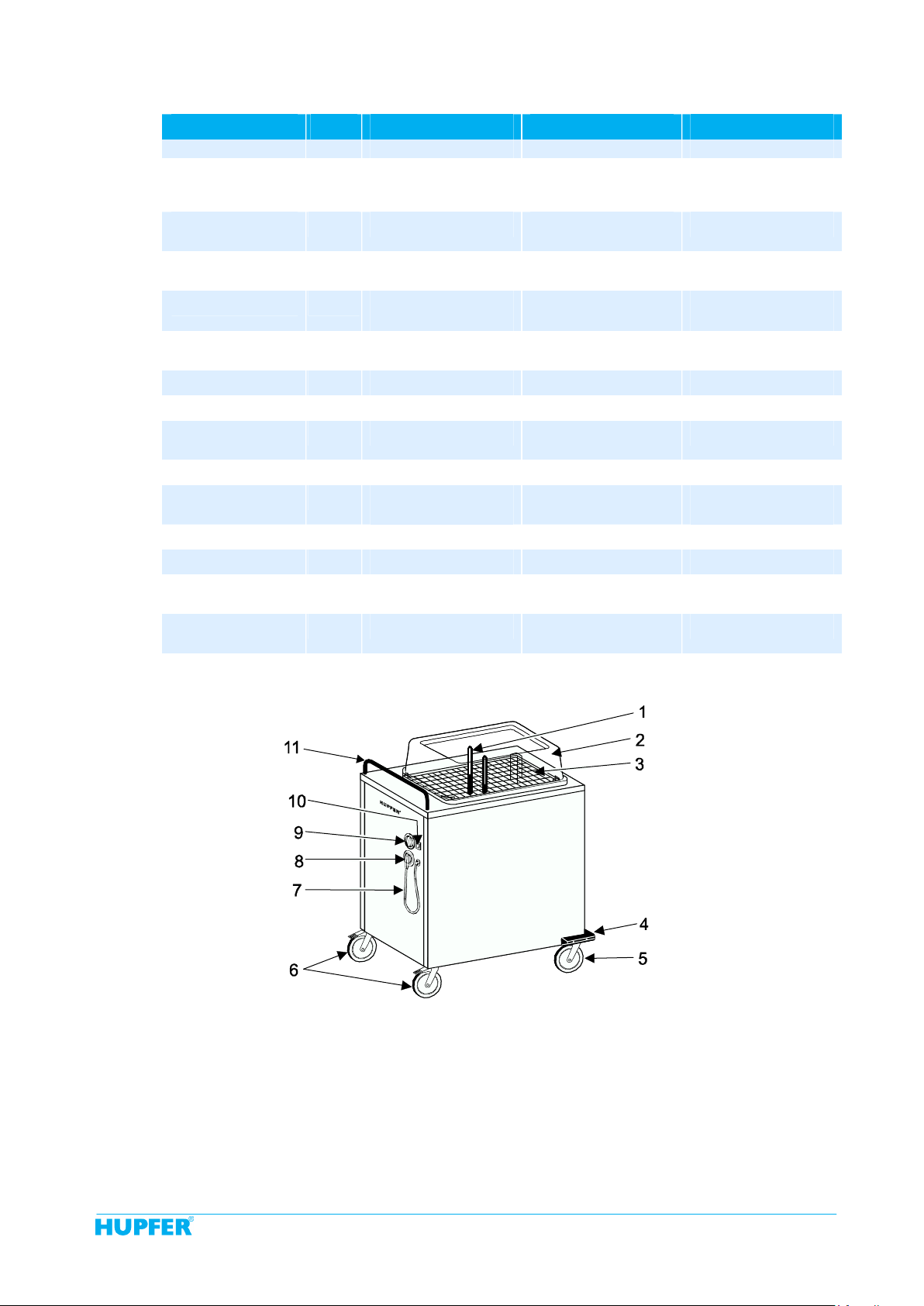
Dim. USTH/57-28 USTUH/57-28 EUSTH/57-28
View of the appliance
Universal crockery dis-
Own weight lbs (kg) 123.5 (56) 125.5 (57) 143 (65)
Payload lbs (kg) 340 (154) 337 (153) 320 (145)
Permitted total weight lbs (kg) 463 (210) 463 (210) 463 (210)
Operating and ambient
conditions
Chassis in (mm) 4 swivel casters, 2 with
Compartment inner
panelling
Universal Crockery Dispenser
UST/57-28 | UST/57-28K | USTH/57-28 | USTUH/57-28 | EUSTH/57-28 4330005_A0
˚F (˚C) -4 to 122 (-20 to +50) -4 to 122 (-20 to +50) -4 to 122 (-20 to +50)
made of stainless steel,
penser with stainless
steel tubular heating
element
total brakes, Ø 5’’ (125)
left and right sides provided with vertical plastic-
Universal crockery dispenser with fan-assisted
heating
4 swivel casters, 2 with
total brakes, Ø 5’’ (125)
made of stainless steel,
left and right sides provided with vertical plastic-
Built-in universal crockery
dispenser with stainless
steel tubular heating
element
4 swivel casters, 2 with
total brakes, Ø 5’’ (125)
made of stainless steel,
left and right sides provided with vertical plastic-
Page 15
Technical Data and Description Chapter 3
Appliance Data Page 15
Dim. USTH/57-28 USTUH/57-28 EUSTH/57-28
coated rods coated rods coated rods
Stacking platform in (mm) Stainless steel grids,
Stack height without
cover
Stack height with
cover
Crockery size cm (in) between 3 and 11’’ (8 and
Number of crockery
stacks
Electrical connection 230 V 1N AC 50 Hz 230 V 1N AC 50 Hz 230 V 1N AC 50 Hz
Power requirement kW 1.0 1.5 1.0
Length of the connect-
ing cable (spiral cable)
Protection class IPX5 IPX5 IPX5
Heating Stainless steel tubular
Heat insulation ceramic mat ceramic mat ceramic mat
Thermostat setting ˚F (˚C) 86 to 239 (30 to 115) 86 to 239 (30 to 115) 86 to 239 (30 to 115)
Maximum crockery
temperature
Temperature regula-
tion
in (mm) 22’’ (565) 22’’ (565) 22’’ (565)
in (mm) 26.5’’ (675) 26.5’’ (675) 26.5’’ (675)
up to 21, depending on
ft (m) 5.9 (1.80) 5.9 (1.80) 5.9 (1.80)
˚F (˚C) 185 (85) 212 (100) 185 (85)
continuous continuous continuous
plastic-coated 22.5x11’’
(570x280)
28) or edge length
crockery size
heating element
Stainless steel grids,
plastic-coated 22.5x11’’
(570x280)
between 3 and 11’’ (8 and
28) or edge length
up to 21, depending on
crockery size
Fan-assisted heating Stainless steel tubular
Stainless steel grids,
plastic-coated 22.5x11’’
(570x280)
between 3 and 11’’ (8 and
28) or edge length
up to 21, depending on
crockery size
heating element
The corresponding test marks can be found on our home page at www.hupfer.de.
Figure 1 View of the appliance USTH/57-28 and USTUH/57-28
1 Stainless steel guide rails 7 Connecting cable with mains plug*
2 Plastic cover 57-28* 8 Plug park (dummy socket)*
3 Stacking platform 9 Thermostat for setting the temperature*
4 Corner bumpers 10 On / Off switch*
5 Casters without total brakes 11 Push bar
6 Casters with total brakes
* USTH/57-28 and USTUH/57-28 only
Universal Crockery Dispenser
4330005_A0 UST/57-28 | UST/57-28K | USTH/57-28 | USTUH/57-28 | EUSTH/57-28
Page 16
Chapter 3 Technical Data and Description
Page 16 Rating Plate
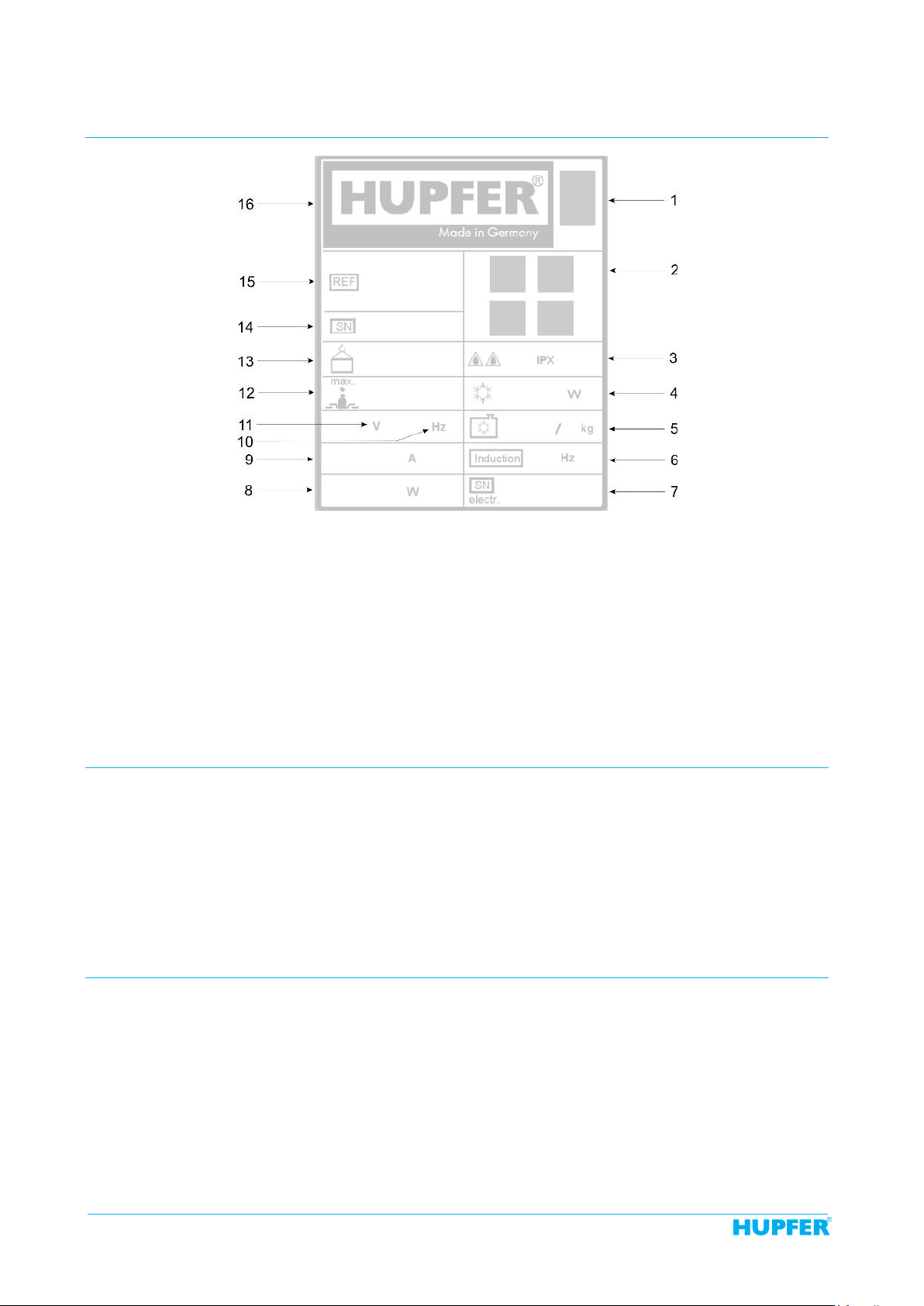
3.3 Rating Plate
Figure 2 Rating plate
1 Disposal of old appliances 9 Nominal current
2 Test mark 10 Frequency
3 Protection class 11 Nominal voltage
4 Chilling capacity 12 Payload
5 Coolant 13 Own weight
6 Induction frequency 14 Serial number/Order number
7 Current serial number 15 Item and brief description
8 Power 16 Manufacturer
3.4 Intended Use
Universal crockery dispensers are used exclusively for transport and storage of clean crockery ready for use.
Depending on the model, the loaded crockery can be cooled or warmed when dispensing.
The appliances are intended for transporting round or square china items or crockery items made of toughened glass. Transport of other loads is not permitted.
The intended use means the predetermined procedures, compliance with the indicated specifications and
use of the delivered or additionally available original accessories.
Any other use of the appliance is considered as unintended use.
3.5 Improper Use
The following is considered as improper use of the universal crockery dispenser:
It is not permitted to load the universal crockery dispenser with other loads as given.
In no case may people sit or stand on the appliance.
Transport of persons is not permitted.
Moreover, it is not permitted to use the universal crockery dispensers for cooking food or keeping it
warm and for room heating.
No liability is assumed and no warranty claims can be submitted for damages caused by improper
use.
Universal Crockery Dispenser
UST/57-28 | UST/57-28K | USTH/57-28 | USTUH/57-28 | EUSTH/57-28 4330005_A0
Page 17
Transport, Assembly, Putting into Operation and Decommissioning Chapter 4
Transport Page 17
4 Transport, Assembly, Putting into Operation and Decommis-
sioning
4.1 Transport
ATTENTION Appliance damages caused by improper transport
In the case of off-site transport in a vehicle such as a lorry, the appliances
should be secured properly. The total brakes are not sufficient as a transport
4.2 Assembly (EUSTH/57-28 only)
securing method.
If the appliances are not secured properly, there is a risk of damage to prop-
erty and persons caused by squashing.
During transport, secure all the individually standing appliances using corre-
sponding transport securing devices.
DANGER Hazardous electrical voltage
The electrical voltage may be considerably dangerous to limb and life of persons and lead to injuries.
ATTENTION Risk of hot surfaces
NOTE Appliance location
All work on the electrical i nstallations should only be carried out by a certified
electrician or by authorised specialists under supervision and monitoring of a
certified electrician according to the certain electro-technical regulations.
The internal surfaces and base plates of the heated appliances can become
hot after the operation. The heated appliances should not come into contact
with light inflammable materials.
Fit thermally insulating plates onto the appliance. Ensure that there is enough
space between the housing and cladding required for air circulation.
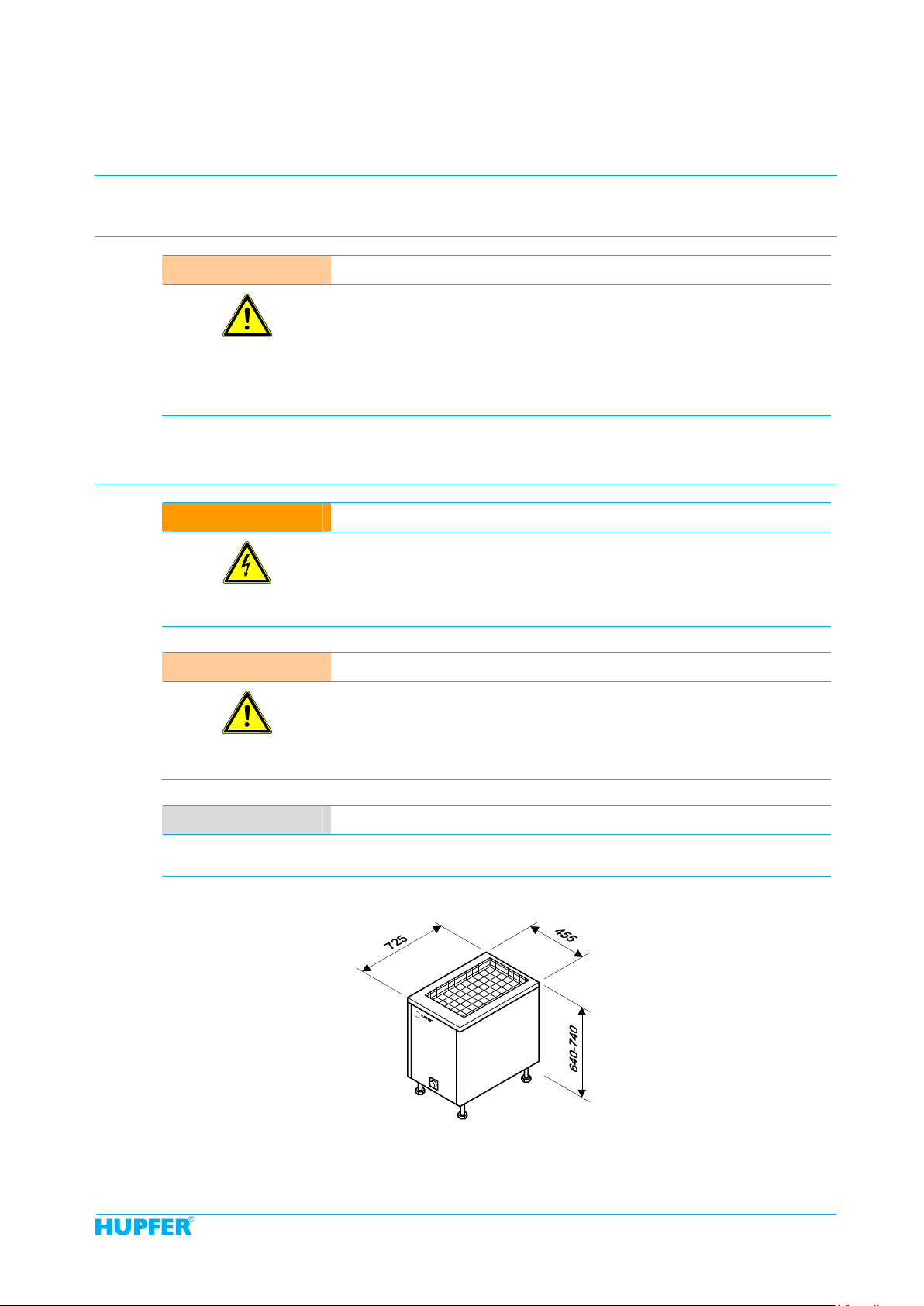
The EUSTH/57-28 is a built-in appliance and may only be put into operation
after being retrofitted or built in (e.g. in a cabinet).
Figure 3 EUSTH/57-28 with dimensions given in inches (mm)
Universal Crockery Dispenser
4330005_A0 UST/57-28 | UST/57-28K | USTH/57-28 | USTUH/57-28 | EUSTH/57-28
Page 18
Chapter 4 Transport, Assembly, Putting into Operation and Decommissioning
Page 18 Assembly (EUSTH/57-28 only)
There is a connecting cable set with a wiring diagram attached to the built-in appliance. The set consists of
an on-site connecting cable with a Schuko® plug and a connecting cable with an appliance plug. The connecting cables are wired up with the on/off switch with an integrated indicator light.
4 threaded covers for the screw feet of EUSTH/57-28 are also attached.
Step 1 - Preparation
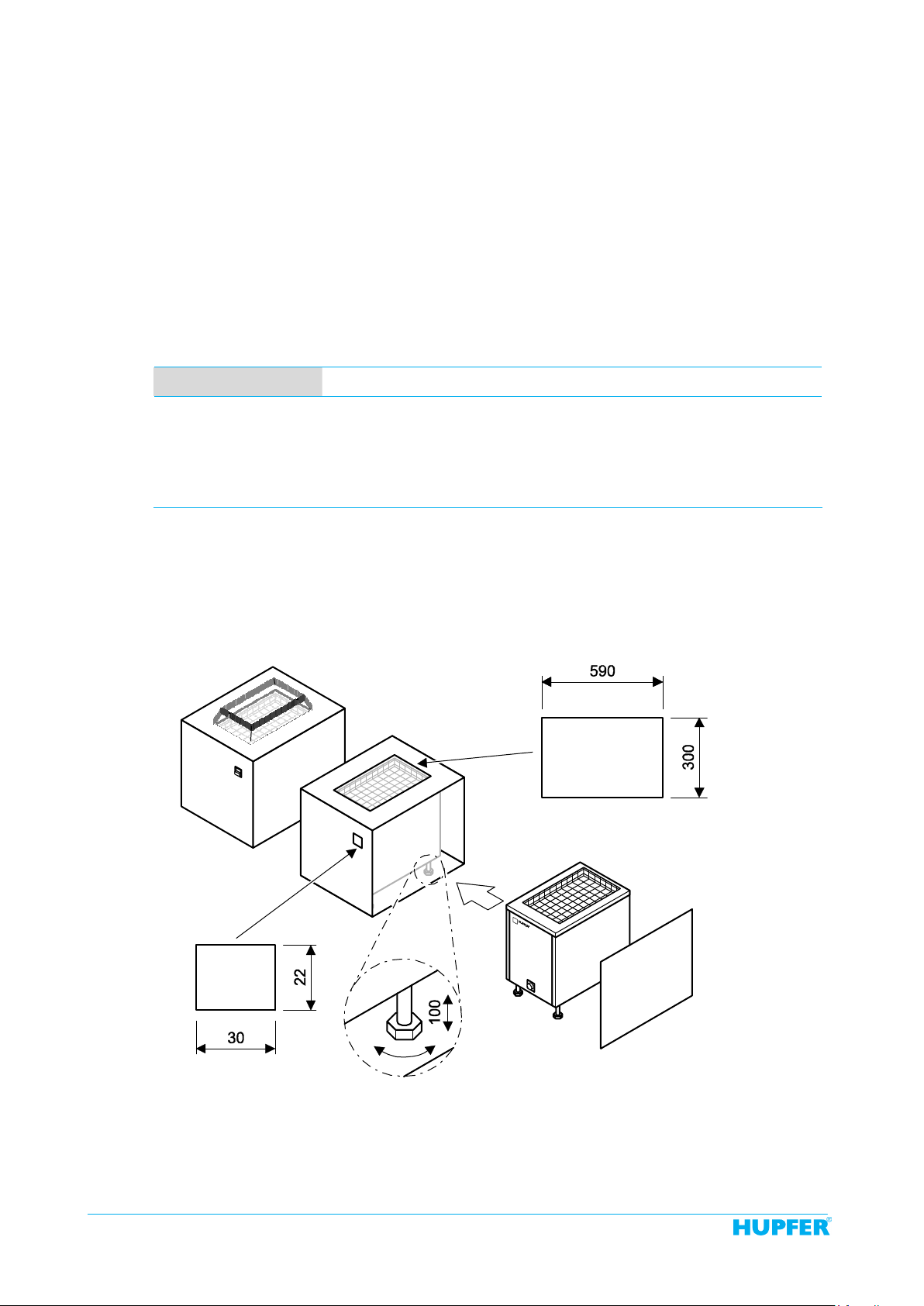
Prepare cut-outs in the worktop and the front cladding corresponding to the indicated dimensions.
The cut-out dimensions for a worktop and a switch are given in mm as shown in the drawing.
Remove the protective plastic film from the metal plates of EUSTH/57-28.
Step 2 - Assembly
NOTE Presetting the operating temperature
In contrast to the mobile appliances with the switch and controller arranged
next to each other, the switch of the built-in appliance can be placed anywhere on the front side.
Under these circumstances, the controller is no longer accessible for operating after the installation. Ensure that the desired temperature is set on the
thermostat before the installation.
Adjust the height-adjustable screw feet so that the appliance can be positioned under the worktop.
Position the appliance exactly under the cut-out in the counter and adjust the screw feet.
Fasten the stacking compartment in the worktop cut-out using 4 angled guides.
Figure 4 Assembly instructions EUSTH/57-28
Universal Crockery Dispenser
UST/57-28 | UST/57-28K | USTH/57-28 | USTUH/57-28 | EUSTH/57-28 4330005_A0
Page 19

Transport, Assembly, Putting into Operation and Decommissioning Chapter 4
Putting into Operation Page 19
Step 3 - Connecting
Connect the appliance according to the wiring diagram.
Put 4 threaded covers on to the threaded rods of the screw feet in the interior of the EUSTH/57-28.
Put thermally insulating plates around the appliance.
The appliance is ready to be put into operation.
4.3 Putting into Operation
Before the first use of the appliance, remove the protective plastic film from the metal plates.
INFO Disposal of packing material
Before putting the appliance into operation, it is necessary to check whether the appliance functions properly.
The following functions are to be checked separately:
In all appliances (except EUSTH/57-28): Function of the total brakes.
In the heated appliances: Function of the operating elements and heating.
Before the appliance is put into operation it must be clean and dry.
The packing consists of recyclable materials and can be disposed of appropriately. Thereby, the different materials are to be separated and disposed in
an environmentally compatible manner. In any case, the local bodies responsible for disposal are to be involved for this purpose.
4.4 Storage and Recycling
Temporary storage must take place in a dry and frost-free environment. The universal crockery dispenser
must be kept covered with a suitable covering material to be protected against dust ingress.
The universal crockery dispenser kept in the storage location must be checked for damages and corrosion
every 6 months.
NOTE Condensed water formation
Before the appliance is taken back into operation it must be clean and dry.
If the universal crockery dispenser is required to be recycled, all the heating devices (if available) must be
removed safely and completely, the recyclable materials must be separated properly and disposed in an environmentally compatible manner according to the Waste Disposal Regulations.
In any case, the local bodies responsible for disposal are to be involved for this purpose.
Ensure that there is sufficient ventilation and no large temperature fluctuations
in the storage location to avoid condensed water formation.
Universal Crockery Dispenser
4330005_A0 UST/57-28 | UST/57-28K | USTH/57-28 | USTUH/57-28 | EUSTH/57-28
Page 20
Chapter 5 Operation
Page 20 Arrangement and Function of the Operating Elements
5 Operation
5.1 Arrangement and Function of the Operating Elements
The operating elements are fitted on the front of the housing of the heated universal crockery dispenser.
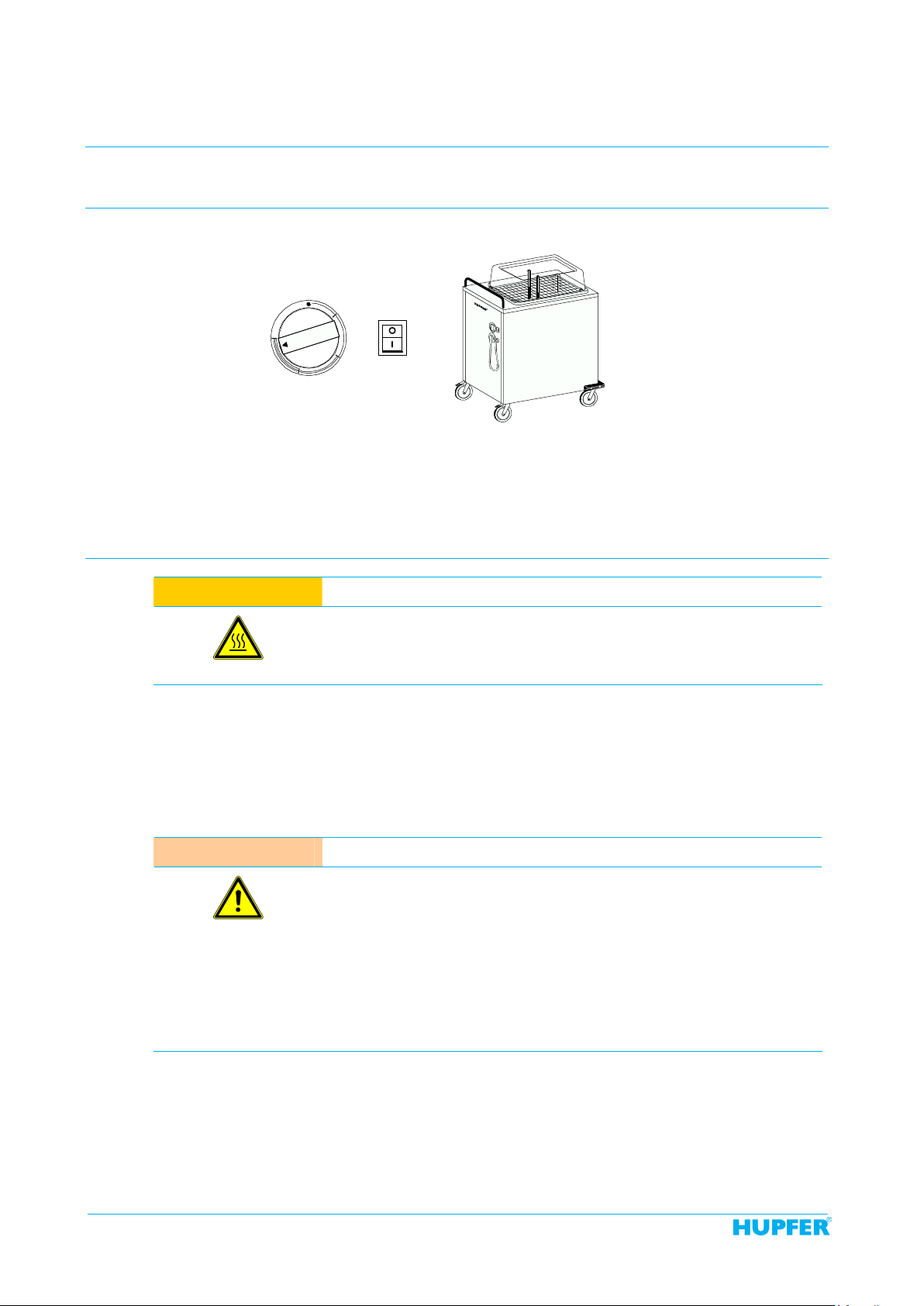
Figure 5 Operating elements of USTH/57-28 and USTUH/57-28
The desired temperature can be set on the thermostat. A continuous adjustment is possible within the 4
power ranges. The On / Off switch of the appliance is arranged next to it. An indicator light integrated into the
switch shows, whether the appliance is ready to be operated.
5.2 Adjustment of Stacking Platform
WARNING Risk of hot surfaces
The internal surfaces of the heated appliances and the base plates can become hot during operation and only cool down slowly in the air.
The adjustments of the stacking platform should only be carried out on the appliances, which are switched
off, disconnected from the power supply and cooled down (room temperature).
Basically, the appliance must be adjusted if at least one of the following crockery parameters alters: diameter
or edge length, height, stack height and weight.
5.2.1 Spring adjustment
ATTENTION Damage to persons and property due to improper adjustment
Before loading the appliance, the dispensing height must be adjusted to the kind of crockery used. The dispensing height is adjusted by hooking or unhooking tension springs.
The dispensing height must be adjusted so that over the entire lift the uppermost item of crockery is constantly moved upwards to a uniform dispensing height between 0.6 and 1’’ (1,5 and 2,5 cm) above the upper
edge of the housing.
To adjust the stacking platform, allow the appliance to cool down sufficiently
with the cover removed.
When the dispensing height is exceeded, there is a risk of accident or injury
due to tipping of the crockery stack and breakage of dishes. If the level falls
below the dispensing height, injuries to the fingers due to squashing c an occur when removing dishes.
Be careful when taking the stacking platform out and putting it back in. If it is
handled incorrectly, there is a risk of crushing your fingers.
Adjust appropriately the dispensing height by hooking or unhooking the
springs.
When adjusting springs on sharp edges, pay particular attention to the ends of
the tension springs. Act carefully.
Universal Crockery Dispenser
UST/57-28 | UST/57-28K | USTH/57-28 | USTUH/57-28 | EUSTH/57-28 4330005_A0
Page 21
Operation Chapter 5
Adjustment of Stacking Platform Page 21
Step 1 - Checking the spring adjustment
Load a stack of 15 to 20 items on to the stacking platform to test the dispensing height.
Wait for a reaction.
If the dispensing height of the crockery stack is about 0.8’’ (2 cm) above the upper edge of the appliance, the
spring system is adjusted correctly.
If the stack drops down only a little or not at all, the dispensing height must be altered by adjusting the
springs.
Step 2 - Altering the spring adjustment
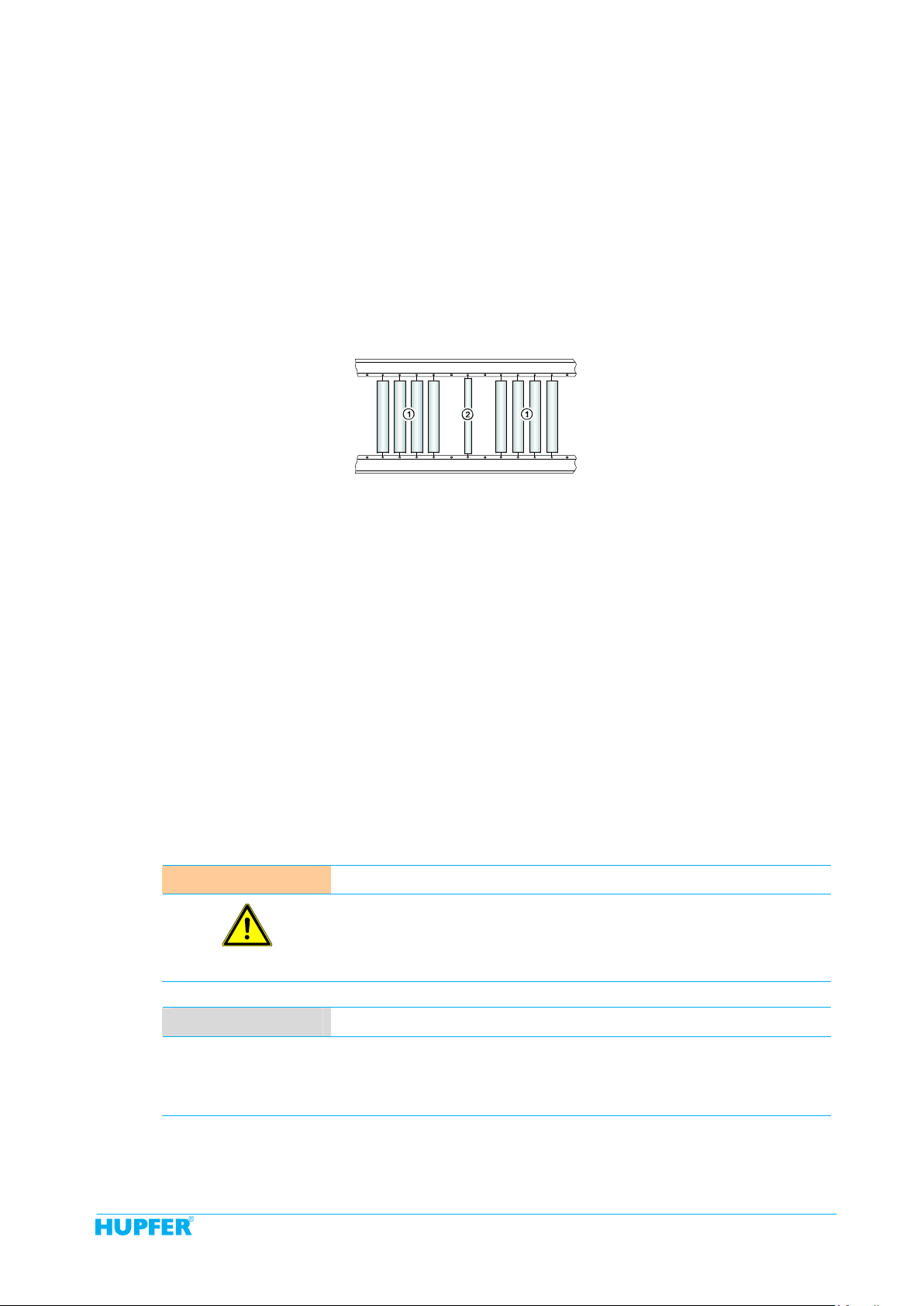
The dispensing height is adjusted by hooking or unhooking tension springs on two attachment bars. The
springs are arranged in groups of 9, where 8 are base springs with higher tension (1) and 1 is an adjustable
spring (2) with lower tension.
Figure 6 Attachment bar with tension springs
If the dispensing height is too high, adjustable springs must be unhooked.
If the dispensing height is too low, adjustable springs must be added.
Procedure:
Take out the inserted crockery items (if available).
Take out the inserted guide rails (if available).
Lift the stacking platform uniformly and place it down on the appliance. Finally, grip the stacking plat-
form with both hands and put it down in a suitable place.
Hook or unhook adjustable springs uniformly in all groups of springs.
Preferably unhook the adjustable springs. Always leave the base springs inserted, if possible. Always
unhook the springs on the lower attachment bar.
Finally, insert the stacking platform back with the basket opening facing downwards. If the stacking
platform is inserted correctly, the guide rollers must face the interior of the appliance, as otherwise the
crockery can become dirty.
Both steps must be repeated as often as possible, until the dispensing height is in the range from 0.6 to 1’’
(1,5 to 2,5 cm). So long as the same kind of crockery is always used, the dispensing height only needs to be
set once.
ATTENTION Risk of fire
If the stacking platform is inserted with the basket opening facing upwards,
this will cause in heated appliances thermally-induced damages to the plastic-
NOTE Arrangement of the springs
Universal Crockery Dispenser
4330005_A0 UST/57-28 | UST/57-28K | USTH/57-28 | USTUH/57-28 | EUSTH/57-28
coated rods and the risk of fire.
Only insert the stacking platform with the basket opening facing downwards.
A symmetrical arrangement of springs between the attachment b ars is necessary for guiding the stacking platform uniformly and without friction.
A slightly asymmetrical arrangement of springs within an attachment bar does
not pose any problem.
Page 22
Chapter 5 Operation
Page 22 Adjustment of Stacking Platform
NOTE Maximum load-bearing capacity
5.2.2 Adjustment of guide rails
ATTENTION Risk of injuries and damages to property due to improperly adjusted
The stacking platform is moved by means of rolling bearings arranged in the compartment corners and lifts
up and down completely independently of the guide rails.
The positions of the guide rails must be adjusted to the crockery size before loading.
The stacking platforms are set to a maximum load-bearing capacity of 220 lbs
(100 kg), which is entirely sufficient for most common kinds of crockery. In
rare cases (e.g. when using plates made of toughened glass and certain food
or set platters) the existing springs are insufficient and additional springs must
be inserted.
guide rails
If the guide rails are set too far apart from each other, the crockery stack can
become wedged under the upper plate due to the possible high tilt angles,
and can injure the operating staff when released. When transporting the appliance, a swaying crockery stack creates also an imbalance and affects
negatively the way the universal crockery dispenser moves.
If the guide rails are set too close, crockery i tems can become jammed and
can injure people when released suddenly.
Do not move the appliance, if the guide rails have been adjusted improperly.
Adjust appropriately the guide rails.
Remove the cover and put it down.
Remove all guide rails from the insertion points and put them down in a clean, dry place, clean them
carefully if necessary before putting them back into the appliance.
Place crockery items on to the stacking platform to proceed with adjustment.
Insert guide rails into the slots provided.
The guide rails with the ring fitting must be inserted downwards so that the smallest possible distance
exists between the crockery stacks and the rails. Make sure there is a uniform distance to the compartment inner panelling.
The guide rails can be omitted if the crockery stacks support each other.
NOTE Use of short guide rails
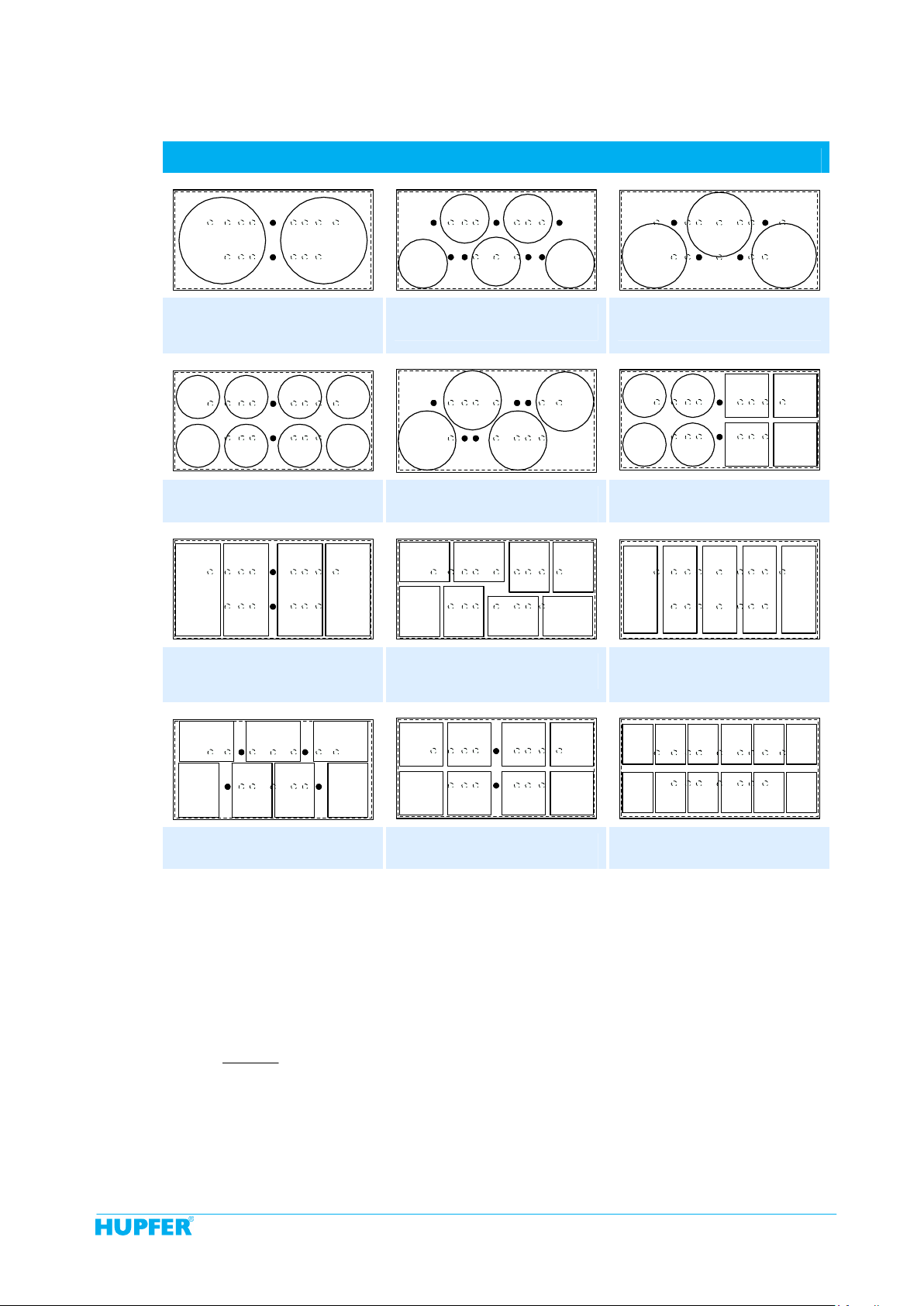
5.2.3 Examples of crockery stack arrangements
The following figures illustrate the insertion points for the guide rails.
The insertion points that are not used or hidden by crockery are shown in the figures in white. The insertion
points with guide rails inserted are shown in black.
Universal Crockery Dispenser
UST/57-28 | UST/57-28K | USTH/57-28 | USTUH/57-28 | EUSTH/57-28 4330005_A0
When using these stainless steel covers, only short guide rails can be applied.
Page 23
Operation Chapter 5
Adjustment of Stacking Platform Page 23
Examples of crockery arrangements in the universal crockery dispenser
Plates and food platters
Soup and side dish bowls
5 cm)
Stew, soup and side dish bowls
19 cm) and 18 cm)
Soup and side dish bowls
14 cm, 13 cm, 12 cm
Soup and stew bowls
17 cm
Side dish bowls
14 cm,12 x 12 cm
Set platters
26 x 13 cm
Side dish bowls
15 x 12 cm
Set platters
x 4 (25 x 10 cm), x 4 (24 x 10
cm)
Platters
16 x 12 cm
Side dish bowls
12 x 12 cm
Side dish bowls
12 x 9 cm
5.2.4 Calculating the universal crockery dispenser capacity
The total capacity of a universal crockery dispenser depends on the kind of crockery loaded and the number
of crockery stacks.
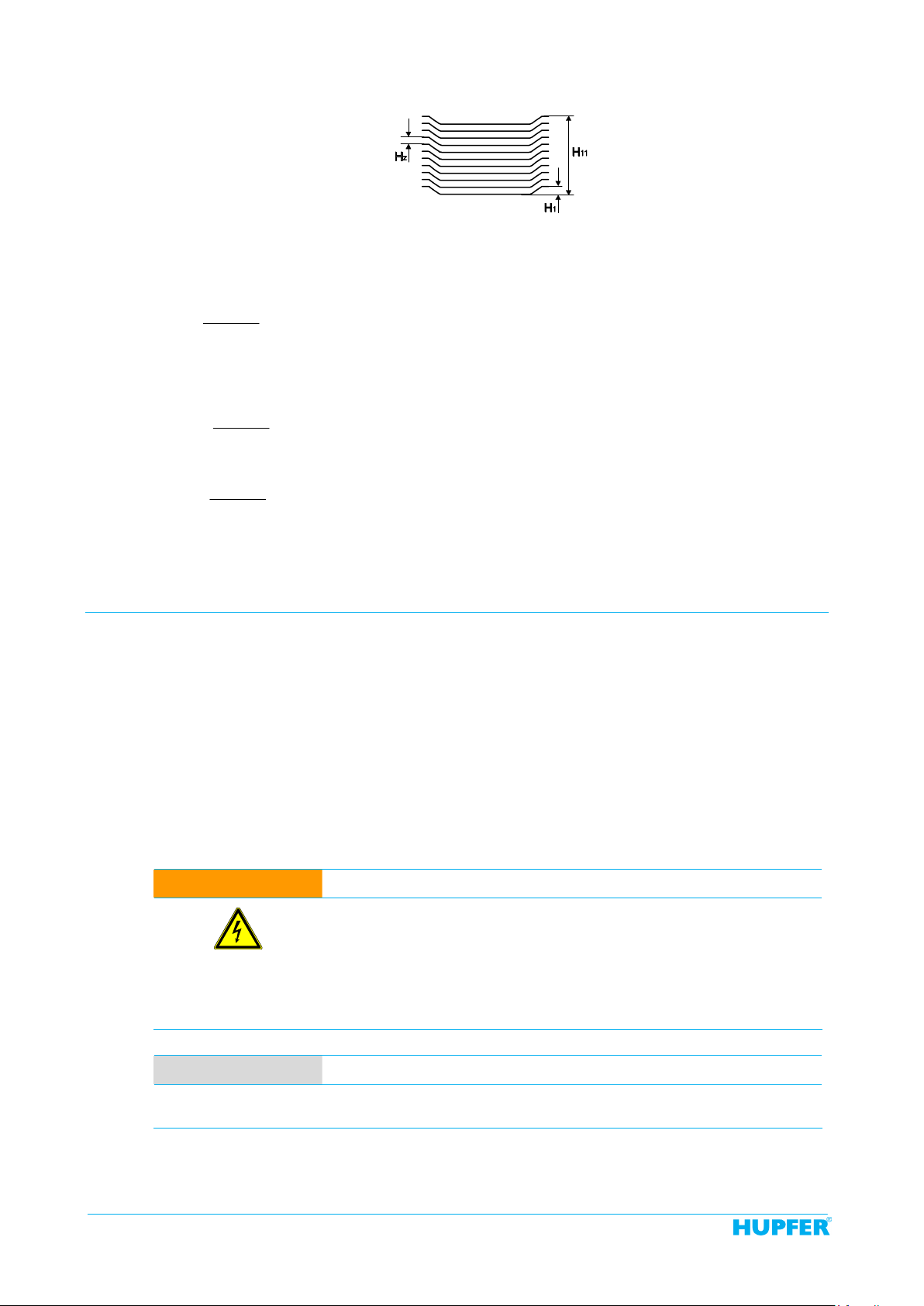
All the leading manufacturers give the necessary data for calculating the intermediate stack height in the following manner:
HZ =
(Hn - H1)
n-1
HZ:
Intermediate stack height
H1:
Height of the first crockery item
Hn:
Height of n crockery items
n:
Number of crockery items
Universal Crockery Dispenser
4330005_A0 UST/57-28 | UST/57-28K | USTH/57-28 | USTUH/57-28 | EUSTH/57-28
Page 24
Chapter 5 Operation
Page 24 Operation
Figure 7 Intermediate stack height Hz of 11 crockery items
The capacity per crockery stack can be calculated together with the stack height HS of the universal crockery
dispenser:
(HS - H1)
K = +1
HZ
K:
Items per crockery stack
HS:
Stack height of the universal crockery dispenser
Example:
HZ = = 0.44’’ (11,2 mm)
K = +1 = 49 items
(5.5 – 1.1)
10
(22.2 – 1.1)
0.44
H1
= 1.1’’ (28 mm): Height of the first crockery item
H11
= 5.5’’ (140 mm): Height of 11 crockery items
t
= 11: Number of crockery items
HS
= 22.2’’ (565 mm): Stack height
In this manner, 49 items can be stacked in one position.
5.3 Operation
Before the appliance is put into operation it must be clean and dry.
Before work starts, it is always necessary to check whether the universal crockery dispenser to be operated
is correctly set for the crockery to be used.
The correct dispensing height must be ensured, so that the staff cannot suffer injury or become
trapped and no breakage of crockery can occur.
Before operating unheated appliances make sure that the crockery items are suitable and the stacks
support each other.
The vertical guide of the crockery items must be checked, in order to prevent any risk of injury to the
operating staff if the crockery guides are set too far apart or too close together.
5.3.1 Switching on the appliance
DANGER Hazardous electrical voltage
The electrical voltage may be considerably dangerous to limb and life of persons and lead to injuries.
Only use the plug connection provided for this. The appliance should not be
operated with a damaged connecting line or other visible damages.
All work on the electrical in stallations should only be carried out by a certified
electrician or by authorised specialists under supervision and monitoring of a
certified electrician according to the certain electro-technical regulations.
NOTE Heated appliances
Some parts of this section relate exclusively to the heated appliances and do
not apply to the unheated models.
Universal Crockery Dispenser
UST/57-28 | UST/57-28K | USTH/57-28 | USTUH/57-28 | EUSTH/57-28 4330005_A0
Page 25
Operation Chapter 5
Operation Page 25
Cover the stacking compartment with the cover to avoid heat loss.
Insert the mains plug into a suitable socket.
Switch on the appliance with the On / Off switch. The indicator integrated in the switch will light up to
show that the appliance is ready for operation.
Set the desired temperature using the thermostat. A continuous adjustment is possible within the 4
power ranges.
NOTE Crockery temperature
5.3.2 Loading the appliance
NOTE Loading
Loading crockery
Depending upon the number and arrangement of crockery stacks, the required temperature of the crockery with the cover put on and an initial crockery temperature of at least 59°F (15 °C) will be reached after 3 to 5 hours.
Before the items are inserted, the guide rails and the stack height must be set
correctly.
Insert the plates individually or in small safely manageable stacks.
Fill the stacks alternately and uniformly.
Place the first items on the centre of the stacking platform and move it down slowly.
Put the further items precisely onto the items already placed on the appliance.
In appliances without covers the maximum filling level is achieved when the tops of the crockery
stacks are positioned approximately 0.8’’ (2 cm) above the upper edge of the appliance.
NOTE Filling level
Unloading crockery
WARNING Risk of burning
A higher filling level is possible in the appliances used with the covers. Depending on the inherent stability of the items, they can be stacked up to the
lower rim of the cover. However, in the heated models the crockery items
resting above the upper rim of the appliance cannot be heated to the required
temperature.
In the heated appliances the crockery temperatures can exceed the permitted
maximum temperatures of 149°F (65°C) for touchable appliance surfaces.
Never reach into the appliance or touch the heating element with the fingers
during the operation.
Always wear protective gloves when dispensing hot crockery.
Remove the cover and put it down.
Remove the items evenly from each stack to avoid tilting of the stacking platform.
Put the cover back on.
Universal Crockery Dispenser
4330005_A0 UST/57-28 | UST/57-28K | USTH/57-28 | USTUH/57-28 | EUSTH/57-28
Page 26

Chapter 5 Operation
Page 26 Measures at the End of Operation
NOTE Use of the cover
NOTE Appliances with cooling slots
5.3.3 Moving the appliance
The cover ensures effective protection against ingress of dust and condensed
water even during relatively long periods of temporary storage. Using the
cover in the heated appliances lowers the heat loss upwards and reduces the
heating time of the inserted crockery or delays the cooling of pre warmed
crockery. Even a gap between the cover and the top plate of the appliance can
lead to marked energy losses caused by heat loss, a reduction in the maximum crockery temperature and thus to a longer heating time.
The appliances are intended to provide cooled crockery. For this purpose, the
loaded appliances must remain in cold stores for several hours. The duration
of cooling depends on the initial crockery temperature, the temperature of the
cold store and the desired crockery temperature. The appliances must always
be free-standing in the room so that optimum air circulation is ensured by free
convection within and around the appliances.
USTH/57-28 or USTUH/57-28:
Turn off the thermostat.
Switch off the appliance with the On / Off switch.
Pull out the mains plug and insert it into the plug park provided.
Release both total brakes.
Grip the appliance by the push bars and move it to the destination.
At the destination, apply both total brakes in order to secure the appliance against movement.
Insert the mains plug into a suitable earthed socket.
Switch on the appliance with the On / Off switch.
Set the desired temperature using the thermostat.
UST/57-28 or UST/57-28K:
Release both total brakes.
Grip the appliance by the push bars and move it to the destination.
At the destination, apply both total brakes in order to secure the appliance against movement.
5.4 Measures at the End of Operation
WARNING Risk of hot surfaces
The internal surfaces of the appliance and the base plates can become hot
during operation and only cool down slowly in the air.
USTH/57-28 or USTUH/57-28:
For cleaning, allow the appliance to cool down sufficiently with the cover removed and wear suitable protective gloves.
At the destination, apply both total brakes in order to secure the appliance against movement.
Turn off the thermostat.
Switch off the appliance with the On / Off switch.
Universal Crockery Dispenser
UST/57-28 | UST/57-28K | USTH/57-28 | USTUH/57-28 | EUSTH/57-28 4330005_A0
Page 27

Operation Chapter 5
Measures at the End of Operation Page 27
Pull out the mains plug and insert it into the plug park provided.
UST/57-28 or UST/57-28K:
At the destination, apply both total brakes in order to secure the appliance against movement.
Universal Crockery Dispenser
4330005_A0 UST/57-28 | UST/57-28K | USTH/57-28 | USTUH/57-28 | EUSTH/57-28
Page 28

Chapter 6 Fault Detection and Troubleshooting
Page 28 Security Measures
6 Fault Detection and Troubleshooting
6.1 Security Measures
DANGER Hazardous electrical voltage
The electrical voltage may be considerably dangerous to limb and life of persons and lead to injuries.
6.2 Notes on Troubleshooting
Please check first whether there is an operating fault. You can eliminate some faults on your own.
Service work should only be carried out by authorised specialist staff.
Defective components should only be replaced with original parts.
In the event of after-sales service and when ordering spare parts specify the data given in the rating plate.
Inspection and maintenance intervals depend on the use of the appliance. Consult your dealer's after-sales
service department.
Regular inspection and maintenance of the appliance prevent disruptions to operation and ensure safety.
Before looking for faults, switch off the appliance at the mains. Pull out the
mains plug and insert it into the plug park provided.
6.3 Fault and Action Table
Fault Possible cause Action
Appliance does not become warm;
F
indicator light does not come on.
a
u
l
t
G
e
r
Appliance becomes warm; indicator
light does not come on.
Defective building fuses. Check fuse and repair, if necessary.
Defective On / Off switch. Switch off the appliance at the mains
Defective connecting cable or mains
plug
Defective indicator light. Take the appliance out of operation
Defective circuit. Take the appliance out of operation
and have it checked and repaired by
authorised specialist staff, if necessary.
Switch off the appliance at the mains
and have it checked and repaired by
authorised specialist staff, if necessary.
and have it checked and repaired by
authorised specialist staff, if necessary.
and have it checked and repaired by
authorised specialist staff, if necessary.
Universal Crockery Dispenser
UST/57-28 | UST/57-28K | USTH/57-28 | USTUH/57-28 | EUSTH/57-28 4330005_A0
Page 29
Cleaning and Care Chapter 7
Security Measures Page 29
7 Cleaning and Care
7.1 Security Measures
DANGER Hazardous electrical voltage
The electrical voltage may be considerably dangerous to limb and life of persons and lead to fatal injuries.
WARNING Risk of hot surfaces
Before cleaning, switch off the appliance at the mains. Pull out the mains plug
and insert it into the plug park provided.
The internal surfaces of the appliance and the base plates can become hot
during operation and only cool down slowly in the air.
For cleaning, allow the appliance to cool down sufficiently with the cover removed and wear suitable protective gloves.
ATTENTION Do not clean with running water
7.2 Hygiene Measures
The correct behaviour of the operating staff is decisive for optimal hygiene.
All persons must be informed about the locally valid hygiene regulations, observe them and comply with
them.
Stick a waterproof plaster to cover wounds on the hands and arms.
Never sneeze or cough on clean crockery.
7.3 Cleaning and Care
The appliance must be cleaned dry daily or wiped with a damp cloth. Dry well the appliance after carrying out
wet cleaning, in order to prevent the development of mould, uncontrolled growth of germs and bacteria and,
consequently, contamination of the crockery.
The base outlet located under the stacking compartment is installed to remove broken crockery or other objects, which have accidentally fallen down into the appliance.
The plastic covers can be cleaned manually with a damp cloth. In the case of solid impurities, appliances can
also be cleaned in a commercial dishwasher. Washing and rinsing agents suitable for polycarbonate should
be used.
Clean the stainless steel covers manually with a damp cloth. Afterwards, let them dry well.
The appliance should not be cleaned with running water, steam-jet or highpressure washers. The appliance must be taken out of operation and
switched off at the mains beforehand in any area where steam-jet or highpressure washers are to be used.
Universal Crockery Dispenser
4330005_A0 UST/57-28 | UST/57-28K | USTH/57-28 | USTUH/57-28 | EUSTH/57-28
Page 30

Chapter 7 Cleaning and Care
Page 30 Special Care Instructions
7.4 Special Care Instructions
The resistance to corrosion of stainless steels is based on a passive layer which is formed on the surface
when oxygen is admitted. The oxygen in the air is sufficient for the formation of the passive layer, so that
faults or damage to the passive layer can be remedied again automatically by mechanical action.
The passive layer develops or reforms more quickly when the steel comes into contact with flowing water
containing oxygen. The passive layer can be chemically damaged or disrupted by agents having a reducing
(oxygen-consuming) action when the steel comes into contact with them in concentrated form or at high
temperatures.
Such aggressive substances are for example:
substances containing salt and sulphur
chlorides (salts)
seasoning concentrates (e.g. mustard, vinegar essence, seasoning cubes, saline solutions)
Further damages can occur due to:
extraneous rust (e.g. from other components, tools or rust film)
iron particles (e.g. grinding dust)
contact with non-ferrous metals (element formation)
lack of oxygen (e.g. no admission of air, low-oxygen water).
General working principles for the handling of appliances made of "refined stainless steel":
Always keep the surface of appliances made from stainless steel clean and accessible to the air.
Use cleaning agents suitable for stainless steel. No bleaching and chloride-containing cleaning
agents should be used.
Remove layers of lime scale, grease, starch and egg-white daily by cleaning. Corrosion can occur
underneath these layers due to lack of air admission.
After each cleaning operation remove all cleaning agent residues by rinsing thoroughly with copious
fresh water. Afterwards, the surface should be thoroughly dried.
Do not bring parts made from stainless steel into contact with concentrated acids, seasonings, salts
etc. for longer than is absolutely necessary. Acid fumes which generate during cleaning of tiles also
promote the corrosion of "refined stainless steel".
Avoid damaging the surface of the stainless steel, particularly by metals other than stainless steel.
Residues of extraneous metals produce extremely small amounts of chemical elements which can
cause corrosion. In any case, contact with iron and steel should be avoided because that leads to extraneous rust. If stainless steel comes into contact with iron (steel wool, steel particles from pipes, water containing iron), this can be a trigger for corrosion. Therefore, for mechanical cleaning use exclusively refined steel wool or brushes with natural, plastics or refined steel bristles. Steel wool or
brushes with unalloyed steel lead to extraneous rust due to abrasion.
Universal Crockery Dispenser
UST/57-28 | UST/57-28K | USTH/57-28 | USTUH/57-28 | EUSTH/57-28 4330005_A0
Page 31

Spare Parts and Accessories Chapter 8
Introduction Page 31
8 Spare Parts and Accessories
8.1 Introduction
Service work should only be carried out by authorised specialist staff.
Defective components should only be replaced with original parts.
In the event of after-sales service and when ordering spare parts specify always the data and corresponding
part number given in the rating plate.
8.2 Spare Parts and Accessories List
UST/57-28 and UST/57-28K
Spare part, part number
U
0191124358 Guide tube
S
014118001 Guide basket 580/290/148 compl. Vestosint silver-grey USTH/57-
T
H
/
014001030 Guide roller
5
7
014040164 Tension spring Stainless steel 5g 2
-
2
014040101 Tension spring Stainless steel 10g 16
8
014002110-01 Corner bumper 179/179/30 black 2
a
014046041 Push bar (bow-shaped handle) Aluminium, black 1
n
d
014000402 Swivel caster Polymer P3/125 m.F. Spec. H2606703 2
014000401 Swivel caster Polymer P3/125. Spec. H2606703 2
U
S
098500208000 Hex nut M8 galv. DIN 985 self-locking 12
T
UH/57-28
Item designation Type Q-ty
complete 20x1,0 mm, length 818mm
28
Steel galvanised/ chrome plated 24 with plastic
running surface
2
1
8
Spare part, part number Item designation Type Q-ty
4002180 Cable gland
4001092 Cable gland
4001090 Pc. nut PA black, M25x1,5 1
014002170-01 Pc. nut
Thermostat holder
Thermostat toggle switch
O-ring
0191148605 Pc. nut
O-ring
Dummy socket
014001300 Rocker switch 2pol 250V ULbSpez. H2671340 1
014040011-01 Thermostat 30-115°C 15 Kl.870 UL Spez. H2755612 Sl. 800
014001081 Curly cable H05BQ-F 3G1/1800 Winkel Spez. H2876325 black 1
014001202 Safety temperature limiter 105°C 10 Spez. H2748194 1
014002170-01 Pc. nut
Thermostat holder
Thermostat toggle switch
O-ring
Universal Crockery Dispenser
4330005_A0 UST/57-28 | UST/57-28K | USTH/57-28 | USTUH/57-28 | EUSTH/57-28
POM, M20 6-12 black
M20x1,5, 6-12, PA6, IP68 black
PA black, M63x1,5
ABS 53,8
EDM/EPDM black 63x2
PA black, M63x1,5
EDM/EPDM black 63x2
75x42,5, ABS black
F 4x124
PA black, M63x1,5
ABS 53,8
EDM/EPDM black 63x2
1
1
1
1
1
1
Page 32

Chapter 8 Spare Parts and Accessories
Page 32 Spare Parts and Accessories List
Spare part, part number Item designation Type Q-ty
014001122 Heating element (USTH only)
Heating element (USTUH only)
014001013 Hot air fan (USTUH only) 240V 50Hz
0191124358 Guide tube
014118001 Guide basket 580/290/148 compl. Vestosint silver-grey USTH/57-
014001030 Guide roller
014040164 Tension spring Stainless steel 5g 2
014040101 Tension spring Stainless steel 10g 16
014002110-01 Corner bumper Plastic 179/179/30 black 2
014046041 Push bar (bow-shaped handle) Aluminium, black 1
014000402 Swivel caster Polymer P3/125 m.F. Spec. H2606703 2
014000401 Swivel caster Polymer P3/125. Spec. H2606703 2
098500208000 Hex nut M8 galv. DIN 985 self-locking 12
014122075 Cover PC 603/313/120/4 transp. 1
4328001-01 Cable set (USTH only) USTH 110° 1
4328004-01 Cable set (USTUH only) TEUH-2/ VC 1
4306 8,0 / 1234 230V 1000W UL Spez.
H2855587
4306 6,0 / 1313 230V 1500W UL Spez.
H2855588
complete 20x1,0mm, length: 818mm
28
Steel galvanised/ chrome plated 24 with plastic
running surface
EUSTH/57-28
Spare part, part number
014128901 Connecting cable set complete 1
014001300 Rocker switch 2pol 250V ULbSpez. H2671340 1
4001505 Connecting cable with Schuko® plug 1
4001506 Connecting cable with appliance socket 1
014001300 Rocker switch 2pol 250V ULbSpez. H2671340 1
014040011-01 Thermostat 30-115°C 15 Kl.870 UL Spez. H2755612 Sl. 800
014510022 Socket pin 2p PE 10A UL 1
014001122 Heating element
014040280 Toggle PA6 GK30 1
0191124358 Guide tube
014118001 Guide basket 580/290/148 compl. Vestosint silver-grey USTH/57-
014001030 Guide roller
014040164 Tension spring Stainless steel 5g 2
014040101 Tension spring Stainless steel 10g 16
014122075 Cover PC 603/313/120/4 transp. 1
4328001-01 Cable set USTH 110° 1
Item designation Type Q-ty
F 4x124
4306 8,0 / 1234 230V 1000W UL Spez.
H2855587
complete 20x1,0 mm, length 818mm
28
Steel galvanised/ chrome plated 24 with plastic
running surface
1
1
2
1
8
1
1
2
1
8
Universal Crockery Dispenser
UST/57-28 | UST/57-28K | USTH/57-28 | USTUH/57-28 | EUSTH/57-28 4330005_A0
Page 33

Spare Parts and Accessories Chapter 8
Spare Parts and Accessories List Page 33
The following plug types can be used with universal crockery dispensers:
2-pole Schuko® angle plug (standard)
3-pole British mains plug in accordance with BS 1363 A for Great Britain and Hong Kong
3-pole Swiss mains plug of type 12 - 10 A
Universal Crockery Dispenser
4330005_A0 UST/57-28 | UST/57-28K | USTH/57-28 | USTUH/57-28 | EUSTH/57-28
Page 34
Chapter 9 Declaration of Conformity
Page 34 Spare Parts and Accessories List
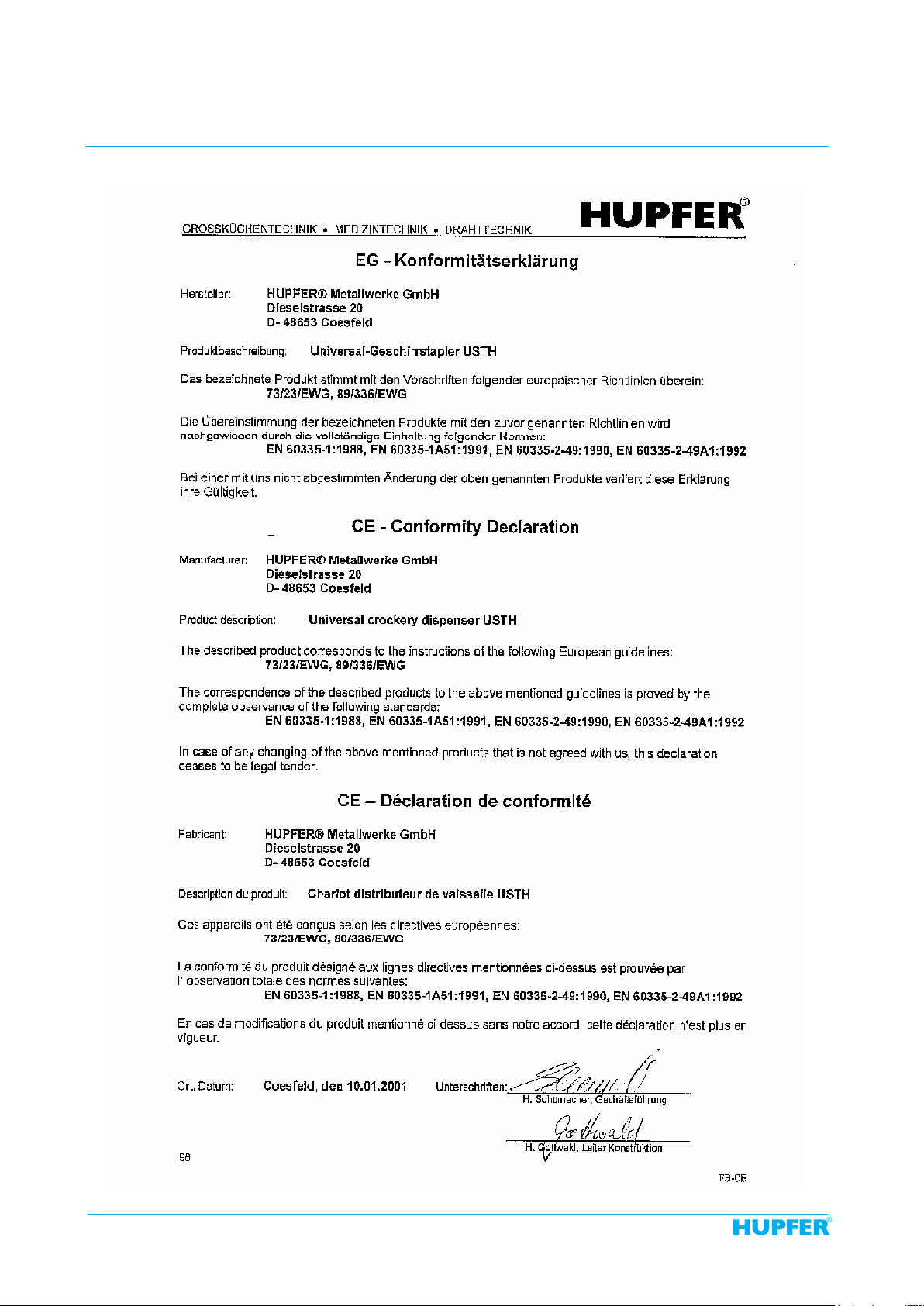
9 Declaration of Conformity
Universal Crockery Dispenser
UST/57-28 | UST/57-28K | USTH/57-28 | USTUH/57-28 | EUSTH/57-28 4330005_A0
 Loading...