

Page 1

HOTHOUSE
INSERT
STOVE
Please fix label with serial number and stove
type here before putting manual into stove
Installation and Operating
Instructions
Please hand these instructions to the stove user when the installation is complete. Leave the stove ready for
operation and instruct the user in the correct use of the appliance and operation of controls.
Important: – This product must be installed by a suitably qualified installer.
Hothouse Inspired Products Ltd
Imperial Point
Express Trading Estate
Stonehill road
Farnworth
Bolton BL4 9TN
PLEASE READ ALL THESE INSTRUCTIONS CAREFULLY!
For safety reasons it is essential that your stove is correctly installed and operated. Hothouse cannot
accept responsibility for any fault or consequential problems arising through incorrect installation or
operation.
Page 2

1 HD01 09/11
TABLE OF CONTENTS
Section Page No
1. List of Components 2
2. Component Identification and Installation 2
3. Installation Instructions 3
Warnings and important safety information 3
4 Installation Information 4
Chimney 4
Ventilation 4
Flue Draught 4
Connection to Chimney 5
Material Clearances 5
Hearths 5
Commissioning & Handover 5
5. Technical Data 6
6. Operating Instructions 6
Air controls 6
Cleaning 7
Fuels 7
Notes on Wood Burning 7
Lighting the stove 7
Re-fuelling 8
Shutting down 8
Maintenance 8
Seasonal Use 8
7. Safety Notes for your Guidance 8
8. Stove Dimensions 9
9. Frequently Asked Questions 10
10. Spare Parts List & Codes 11
Page 3
2 HD01 09/11
1. List of Components
2. Component Identification and Installation
Your Hothouse Stove comes packed in a cardboard box. Carefully remove any straps and remove all
cardboard and any plastic packaging, open the door and remove all the contents. See List of
Components section and check contents carefully.
Remove the coal catcher by lifting it up and rotating it until it can be removed through the open door
of the stove
Now lift up the grate and remove it from the stove.
Also remove the ashpan and its contents from the stove.
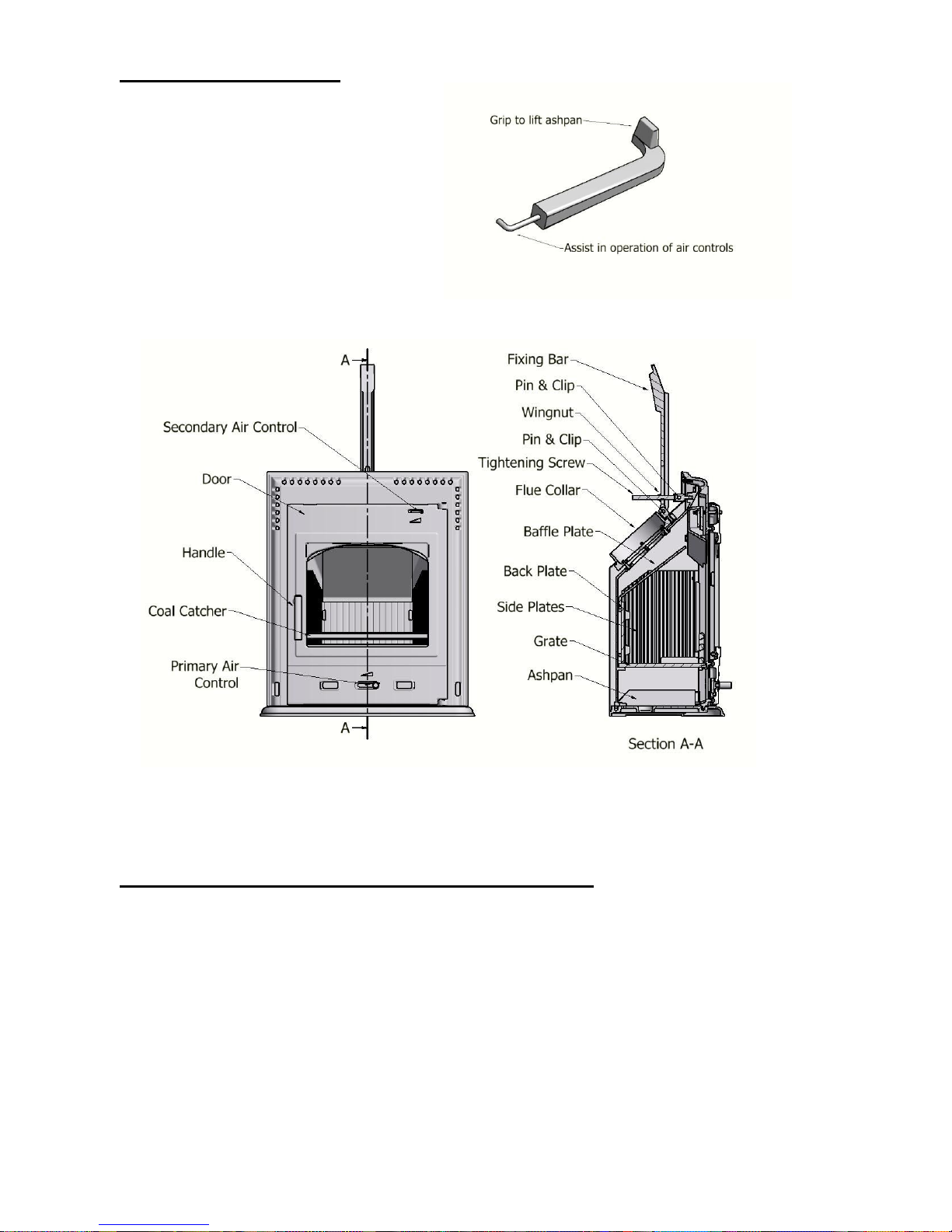
Secure the fixing bar and the tightening screw to the stove as shown in fig. 2. Do not put on the
wingnut until the stove is in place.
Fig 2 – Hothouse Stove Assembly and controls
Description of Parts Qty
Hothouse Stove Assembly 1
Tool 1
Ash Pan 1
Fixing bar 1
Bag containing fixings 1
Stove Operating Glove 1
Touch up paint 1
Spare rope 1
Warranty Card 1
Fig 1 – Stove Tool
Page 4

3 HD01 09/11
Place the insert stove into position and mark the intended position of the fixing screw in the fireplace
through the hole in the base of the appliance. Remove the stove , drill a hole and insert the rawl plug
supplied. Re-position the stove and screw into place.
Create a seal with the fascia of the fireplace. Place hand through the stove flue collar and tighten the
wingnut onto the tightening bar. The fixing bar creates pressure when it contacts the chimney/lintel.
The stove should be tightly sealed to the fireplace fascia.
Insulate the space between the fireback and the stove – the back, top and sides of the box is well
insulated with 6:1 vermiculite/cement mix or any other good non-combustible insulating material.
Connect the flue liner/adaptor to the stove spigot and seal from the inside.
It is essential that a fireback is present where the hothouse insert stove is to be fitted.
3 Installation Instructions
WARNINGS AND IMPORTANT SAFETY INFORMATION
READ THESE INSTRUCTIONS CAREFULLY BEFORE INSTALLATION!
These instructions cover the basic principles to ensure satisfactory installation of the stove, although detail may need slight
modification to suit particular local site conditions. In all cases the installation must comply with current local regulations
including Building Regulations, Local Authority Byelaws and other specifications or regulations including Ireland, UK or
EU standards referred to as they affect the installation of the stove. Approved Document J is particularly important for
England and Wales and can be downloaded for no cost at:
http://www.planningportal.gov.uk/england/professionals/en/4000000000503.html Also of importance are Approved
documents L1 A and B conservation of fuel and power. The Domestic Heating Compliance Guide will also be found useful.
Important Chimney Warning
This stove must not be installed into a chimney that serves any other heating appliance.
Extractor Fan Warning
There must not be an extractor fan fitted in the same room as the stove as this can cause the stove to emit
fumes into the room.
Cleaning and Chimney Sweeping
The appliance, flue & chimney must be cleaned and checked internally and externally regularly in use
and especially after a period on disuse (e.g. after summer). Lift down the baffle at least weekly to check
for build up of soot or debris on the top from the flue pipe. Remove the baffle and check the flue spigot and
connector is fully clear at regular intervals. The chimney and flue connector must be swept at least annually,
more often when used with sooty fuels or damp wood. Any loose, broken or leaking joints or flue ways
MUST be repaired immediately.
Fuels
Only use recommended fuels. The appliance can be damaged by burning petroleum coke, liquid fuels or
general rubbish and this will invalidate your warranty and risk your personal safety. The appliance must
not be used as a rubbish incinerator.
Maintenance
Annual checking and servicing of the appliance and flue by a competent engineer is recommended.
Page 5

4 HD01 09/11
Ventilation
Adequate ventilation is ESSENTIAL for the safe and efficient operation of any solid fuel or wood burning
appliance. Ventilation MUST be provided where required by the stove output or flue under-performance.
Keep all ventilation clear and free of blockage.
Health And Safety Precautions
Handling
Adequate facilities must be available for unloading and site handling. Hothouse Cassette Stoves are very
heavily built so always ask for assistance when lifting and siting the stoves.
Fire Cement
Some types of fire cement are caustic and should not be allowed to come into contact with the skin. In case
of skin contact, wash immediately with plenty of water.
Asbestos
This stove contains no asbestos. If there is a possibility of disturbing any asbestos in the course of
installation then please seek specialist guidance and use appropriate protective equipment.
Metal Parts
When installing or servicing this stove, proper care should be taken to avoid the possibility of personal
injury.
4.0 Installation Information
Chimney
The chimney height and the position of the chimney terminal should conform to Building Regulations.
Minimum chimney height is 4.5m. Check that the chimney is in good condition, dry, free from cracks and
obstructions. The diameter of the flue should not be less than 150mm and not more than 200mm. If any of
these requirements are not met, the chimney should be lined by a suitable method. The chimney must be
swept before connection to the stove.
Where the chimney is believed to have previously served an open fire installation, it is possible that the
higher flue gas temperature from the stove may loosen deposits that were previously firmly adhered, with
the consequent risk of flue blockage. It is therefore recommended that the chimney be swept a second time
within a month of regular use after installation.
If you have any doubts about the suitability of your chimney, consult your local dealer/stockist or chimney
specialist. If there is no existing chimney then either a solid fuel compatible prefabricated block chimney or
a twin-walled insulated stainless steel flue to BS 4543 can be used. These chimneys must be fitted in
accordance with the manufacturer‟s instructions and Building Regulations.
Ventilation
No purpose provided ventilation is required for stoves rated under 5KW. For each KW above 5KW, 550 sq
mm of fixed ventilation is required – i.e. a stove rated at 8KW would require 3 x 550 sq mm = 1650 sq mm
of fixed ventilation. If more than one appliance is installed in the same room, the ventilation requirements
for each appliance must be added together.
Flue Draught
A flue draught of minimum 1.2mm to a maximum 2.5mm water gauge (12 to 25 Pascals) is required for
satisfactory appliance performance. The flue draught should be checked under fire at high output and, if it
exceeds the recommended maximum, a draught stabiliser must be fitted so that the rate of burning can be
controlled to prevent over-firing.
Page 6

5 HD01 09/11
Connection to the Chimney
This appliance is not suitable for use in a shared flue. This appliance requires a direct flue connection to the
spigot. It is essential that all connections between the stove and chimney-flue are sealed and made airtight
with sealing rope, clamping rings and/or fire cement or heat resisting cement where required.
Both the chimney and flue pipe must be accessible for cleaning and if ANY parts of the chimney cannot be
reached through the stove (with baffle removed), a soot door must be fitted in a suitable position to enable
this to be done.
In adverse weather conditions, downdrafts may occur causing smoke or fumes to spill into the room. If this
occurs the appliance should be shut down as much as possible by closing the air controls and the room
should be ventilated to clear the fumes. If the problem persists seek the advice of a chimney sweep.
Material Clearances
Safety Distances from Combustible Surfaces:
Model Side Shelf
Hothouse Insert 275mm 275mm
In addition it is strongly recommended that any furniture or other combustible materials are kept at least
900mm clear from the front of the stove.
Distances from NON-combustible materials:
To conform with building regulations the fireplace recess walls should be at least 200mm thick or each rear
leaf at least 100mm thick in the case of a cavity wall at the rear. If these dimensions are not met further
protection for any combustible materials must be provided. The walls of the fireplace recess and the hearth
must be made of non-combustible material.
Hearths:
Hothouse stoves require a 125mm thick non-combustible constructional hearth beneath them to protect the
building, this can include any solid non-combustible floor. A non-combustible superimposed hearth forming
an apron of at least 225mm at the front of the stove and 150mm on either side must also be provided. The
superimposed hearth must not be less than 12mm thick and must have a clearly defined edge (change of
level) to discourage placing of any combustible materials on or partially over it.
The appliance shall be installed on a floor with adequate load-bearing capacity. If the existing construction
does not meet this requirement, suitable measures (e.g. load distributing plate) should be provided to achieve
it.
Commissioning and Handover
Upon completion of the installation, allow a suitable period of time for any fire cement and mortar to dry
out. A small fire may then be lit and checked to ensure the smoke and fumes are taken from the stove up the
chimney and emitted safely to atmosphere.
Advise the customer not to run the stove at full output for at 3 – 4 days. Explain that the stoves can provide
much more or less than their rated heat outputs depending upon how they are burnt and fuels and fuel loads
used.
On completion of the installation and commissioning, ensure that the operating instructions and operating
tools (including glove) for the stove are left with the customer. You must be sure to advise the customer on
the correct use of the appliance with the fuels likely to be used on the stove and warn them to use only the
recommended fuels for the stove.
Page 7

6 HD01 09/11
Advise the user on what to do should smoke or fumes be emitted into the room from the stove – see Safety
Notes section. The user should be warned that they MUST use a suitable fireguard in the presence of
children, aged and/or infirm persons.
5.0 Technical Data
Technical Specifications
Wood
Coal
Nominal Heat Output
kW
4.0
3.9
Efficiency
%
80.9
75.3
CO Emission (@13% O2)
%
0.67
0.56
Flue Gas Temp (avg. at nominal output)
°C
*216
*162
Flue Gas Mass Flow
g/s
3.5
3.8
Refuel Period
hr
1.0
1.0
Flue Outlet Size
mm
147
147
Product Weight (Packed)
kg
87
87
Maximum Log Length
mm
240
N/A
*Average reading at nominal output
6.0 Operating Instructions
This appliance is not designed for open operation and therefore should not be operated with the doors open.
This stove is designed to burn cleanly with high efficiency. If used correctly this stove will burn with the
very useful feature of clean glass. However, for this product to work properly it must be used correctly.
It is essential that the stove has an adequate air supply for combustion and ventilation. The primary and
secondary air inlets must be kept clear from obstruction.
Warning! This appliance will be very hot when in operation and due care should be taken when operating
the controls. A leather glove is provided to assist safe operation.
Do not use an aerosol spray on or near the stove when it is alight.
Air Controls
Primary Air
Primary air is controlled via the sliding air control at the bottom of the door. This provides a conventional air
under draught to the bed of the fire. The primary air is used when lighting the stoves or when the fuel bed
goes very low. The primary air inlet will usually be closed when burning wood and open when burning coal
type fuel.
Secondary Air (Air Wash)
Hothouse stoves are provided with a powerful “air wash” system. This secondary air supply to the stove is
controlled via a sliding air control located on the top right of the stove. If you want clean glass, always leave
this control open some way whilst burning unless the stove is being shut right down for a long period.
Page 8

7 HD01 09/11
Moving the sliding control towards the wide side of the arrow increases the burn rate whilst moving it
towards the narrow side reduces it.
Multifuel Grate
This stove is fitted with a grate with a strong set of cast iron bars with suitable air slots and will burn most
fuels. When burning coal type fuels it is important to stoke the fire well where required to de-ash regularly,
to ensure that the primary airflow is not impeded, as a build-up of ash when burning coal can damage the
cast iron grate. A build up of ash when burning wood will not usually harm the grate and indeed wood burns
better on a bed of wood ash building up. Excessive wood ash build up is not to be recommended however as
this would decrease the size of the firebox and consequently decrease the amount of fuel that can be put in
the stove.
Ashpan
It is essential that you empty the steel ash pan every day. Use the thick end of tool to hook onto and lift the
ash pan out of the stove. DO NOT allow ash to build up underneath the bed as this may cause damage
to the grate.
Cleaning
Glass: Despite the advanced air wash system provided, the glass will still need cleaning from time to time
depending on the fuel quality and burning rates used. Never clean glass when the stove is hot. Always use
stove glass cleaner or ceramic hob cleaner, which is available from your stove retailer. As an alternative, use
a wet cloth with some of the wood ash if burning wood but be very careful to use very clean ash so as not to
scratch the glass.
Outer body: The outer body simply needs to be dusted from time to time. DO NOT use any kind of
furniture polish or cleaning agent other than your stove suppliers recommended paint.
Inner firebox: Brush the inside of the firebox clean from time to time to check the integrity of the plates
and liners etc. It is not normally necessary to re-paint inside the firebox due to the high temperatures that
mean that the paint does not have much effect before being burnt off. Steel and cast iron liners are resilient
firebox materials and will give reliable service without major cleaning or work on the firebox.
Baffle: It is essential to check the top of the baffle for build-up of soot and ash regularly when in use and
after a long period of no use. From time to time remove the baffle if necessary to ensure that the flue way
entrance is clear. Take note of the baffle orientation when removing and ensure it is refitted the same way.
Fuels
The appliance is fitted with a versatile multifuel grate and has been tested using wood and coal.
Notes on Wood burning
Notes on Wood burning
With a full load of wood, the stove will need to be refuelled approximately every 1.5 hours. Wood can be
stacked higher in the stove than solid mineral fuel but care must be taken that logs do not touch the baffle.
Wood burns most efficiently with the primary air controls closed and the secondary control partially open.
Moving the secondary control will control the burn rate of the stove.
Note – primary and secondary air is needed to light the stove, see section entitled
„Lighting the Stove‟.
Wood burns best on a bed of ash and it is therefore only necessary to remove surplus ash from the stove
occasionally.
Burn only dry, well-seasoned wood, which should have been cut, split and stacked for at least 12 months,
with free air movement around the sides of the stack to enable it to dry out. Burning wet or unseasoned
wood will create tar deposits in the stove and chimney and will not produce a satisfactory heat output. Do
not use liquid fuels in this appliance.
Lighting the Stove
We recommend that you have two or three small fires before you operate your stove to its maximum heat
output. This is to allow the paint to cure in steadily and to give a long service life of the paint finish. During
Page 9

8 HD01 09/11
this curing in process you may notice an unpleasant smell whilst the finishes finally cure. It is non-toxic, but
for your comfort we would suggest that during this period you leave all doors and windows open.
First, open the primary and secondary air wash control fully. Load the firebox with plenty of starting fuel,
i.e. paper, dry sticks and/or firelighters. Light the fire at the base leaving the primary and secondary air
control fully open. Leave the door slightly ajar for 10 minutes to enhance initial starting and reduce smoke
emission – DO NOT leave the stove unattended if the door is left ajar. Allow the fuel to reach a steady glow
and build the fire up gradually by adding a few small sticks or well split logs at a time. Once you have a
good fire bed established across the grate, further fuel can be added step by step as required. Don‟t be
tempted to overload the fire bed with fuel all at once or close down the air controls too much until the fire is
well established for some time. Once the ignition period is well under way close the primary air and
gradually reduce the secondary air wash control opening to establish the burning intensity you require.
Re-fuelling
Refuelling
It is best to refuel little and often, rather than in large pieces. When possible refuel the stove before the bed
has gone too low. Open the secondary air control fully and add the fuel. Allow the fuel to burn for a few
minutes until the fire is well established before closing the secondary air once again. This refuelling
procedure will ensure that smoke emission is kept to a minimum.
Shutting Down
The stove will normally shut down by itself as the fuel is consumed. In order to shut down the stove for
other reasons, close the primary air controls (if open), then close the secondary air control. If the controls are
left in this position, the fire will eventually burn out. If you want to revive the fire open the secondary air
controls fully.
Warning! - The stove will remain very hot for a considerable time after the fire has died down or been
extinguished.
Warning!- Petroleum coke fuels or household waste must not be burnt on this appliance.
Maintenance
Inspect the inside of the firebox and above the baffle plate every week during use. See chimney cleaning
section in section 3.1 Warnings and Important Information. Inspect the inside of the stove and the flue
ways and ensure they are 100% clear after a period of disuse (e.g summer). Only use manufacturers
recommended replacement parts on the appliance
Seasonal Use
Remove the baffle and inspect the inside of the stove and the flue ways and ensure they are 100% clear after
a period of disuse, for example if the stove is not used during the warmer periods of the year. Also set the air
controls to 50% to keep the appliance ventilated and stop the build-up of any moisture inside.
7.0 Safety Notes for your guidance
FIRES CAN BE DANGEROUS – Always use a fireguard in the presence of children, the elderly or the
infirm.
DO NOT perform modifications to the appliance as this could seriously compromise safety in
operation.
DO NOT OVERFIRE – it is possible to fire the stove beyond its design capacity, this could damage the
stove, so watch for signs of over firing – if any part of the stove starts to glow red, the fire is in an over fire
situation and the controls should be adjusted accordingly. Never leave the stove unattended for long periods
Page 10
9 HD01 09/11
without first adjusting the controls to a reduced and safe setting – careful air supply control should be
exercised at all times.
WARNING – FUME EMISSION
Properly installed and operated, this appliance will not emit fumes. Occasional fumes from de-ashing and
refuelling may occur which is not normally of serious concern. However, persistent fume emission is
potentially dangerous and must not be tolerated.
If fume emission does persist, then the following immediate action should be taken: -
1. Open doors and windows to ventilate room
2. Let the fire out, or remove and safely dispose of fuel from the appliance.
3. Check for flue chimney blockage and clean if required.
4. Do not attempt to re-light the fire until the cause has been identified and corrected.
If necessary, seek professional advice from chimney or stove specialists.
Important! – Do not fit an extractor fan in the same room as this appliance.
IN THE EVENT OF A CHIMNEY FIRE
Raise the alarm to let others in the house know.
Call the Fire Brigade
Reduce the appliance-burning rate by closing all air controls fully.
Move furniture and rugs away from the fireplace and remove any nearby ornaments.
Place a fireguard or spark guard in front of the stove.
Feel the chimneybreast for sign of excessive heat.
If the wall is becoming hot, move the furniture away. Ensure that the Fire Brigade can gain access to your
roof space in order to check this area for signs of fire spread.
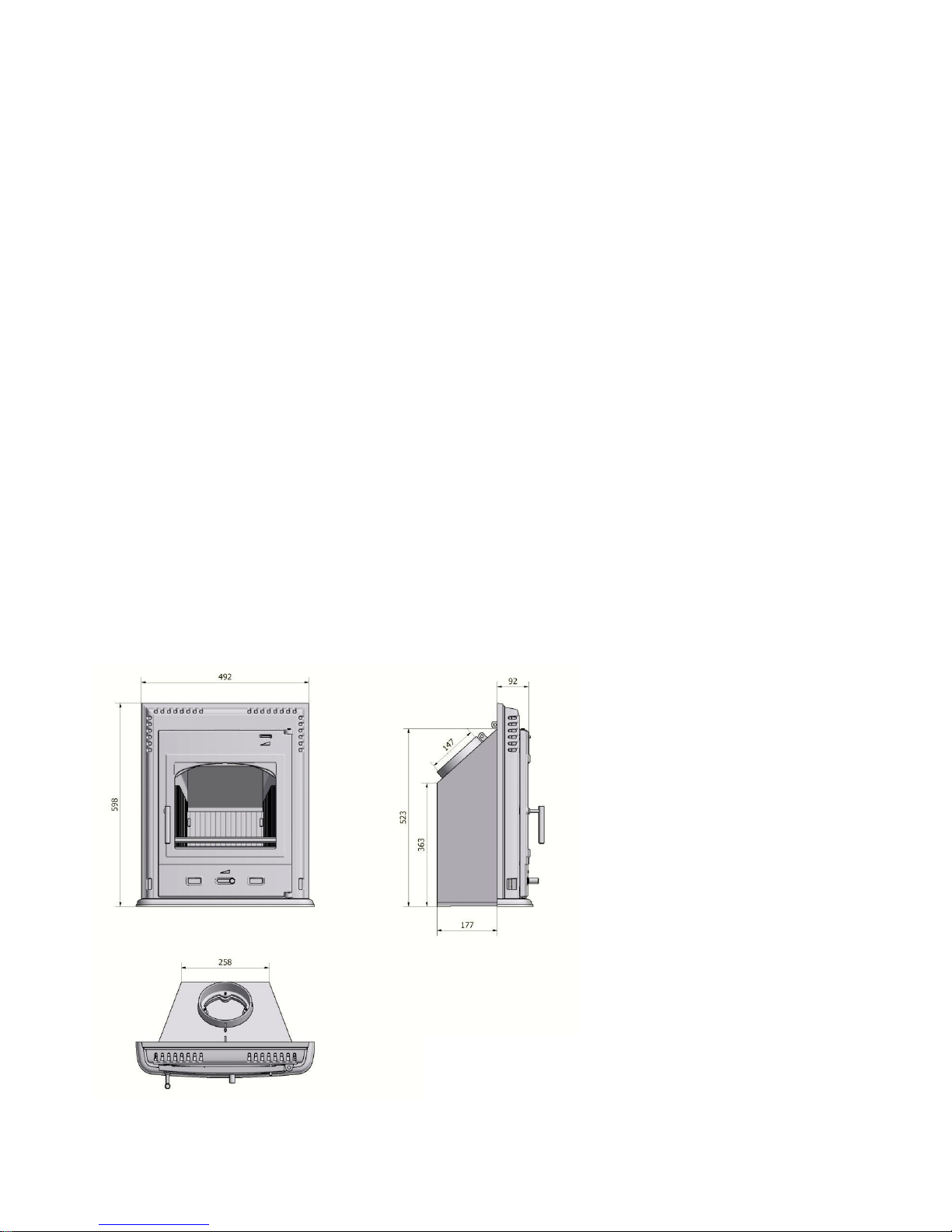
8.0 Stove Dimensions
Fig. 3 – Hothouse Insert Stove
All dimensions in mm unless otherwise stated.
Dimensions are approximate and are subject to change without
prior notice.
Page 11

10 HD01 09/11
9.0 Frequently Asked Questions
1 Do stoves require a chimney? All of our multi fuel and wood burning stoves require a suitable chimney or
professionally installed flue system.
2 How do I clean the chimney? You will require a chimney sweep to clean the chimney. It is essential to
provide a dedicated chimney cleaning access door when installing the flue of the stove in some situations. In
other situations the chimney can be swept through the firebox.
3 Who should install my stove? Hothouse Stoves want you to enjoy the maximum performance from your
appliance. To ensure this, it is essential that they are installed correctly. We strongly recommend that your
stove is installed by a suitably qualified installer e.g HETAS.
4 How do I regulate the heat output? Each stove has various air controls, which will allow you to easily
regulate the heat output and refuelling rate.
5 What warranty do I get? Hothouse Stoves will replace, free of charge, any working part that fails (under
normal operating conditions) within 12 months of purchase. Consumables such as glass, firebox lining
boards or stove rope and adhesives are not guaranteed. A call out charge will apply if our engineer attends
any stove problem that is not related to product failure.
6 Where can I get spare parts? Your local Hothouse Stove retailer will be pleased to supply spare parts and
to provide any other information you require.
7 Can the doors be left open while burning? For safety and heat efficiency the doors should remain closed.
8 Why is the stove smoking when lit? A flue with back draught problems is almost certainly the cause of a
smoking stove. Also check adequate ventilation is present. A qualified fitter should complete both a smoke
pressure and flow test prior to fitting the stove to ascertain the integrity of the flue.
9 Why should I “Run in” my stove? To begin, light a series of small fires over a period of a few days to
allow the paint finish to cure. The stove is finished with a highly heat resistant paint. The finish can be
renovated with stove paint available from your local stove retailer. If the stove is not “run in” correctly, this
may cause the paint to discolour and flake.
10 What is Over Firing? Your stove should never be used in a manner to cause over firing. Over firing can
be caused by over loading the stove with fuel, and with primary controls open. If any part of stove glows
"red" your stove is over firing and your draught control should be adjusted to restrict airflow to stove. Over
firing can cause permanent damage to the appliance, which is not covered by warranty.
Page 12
11 HD01 09/11
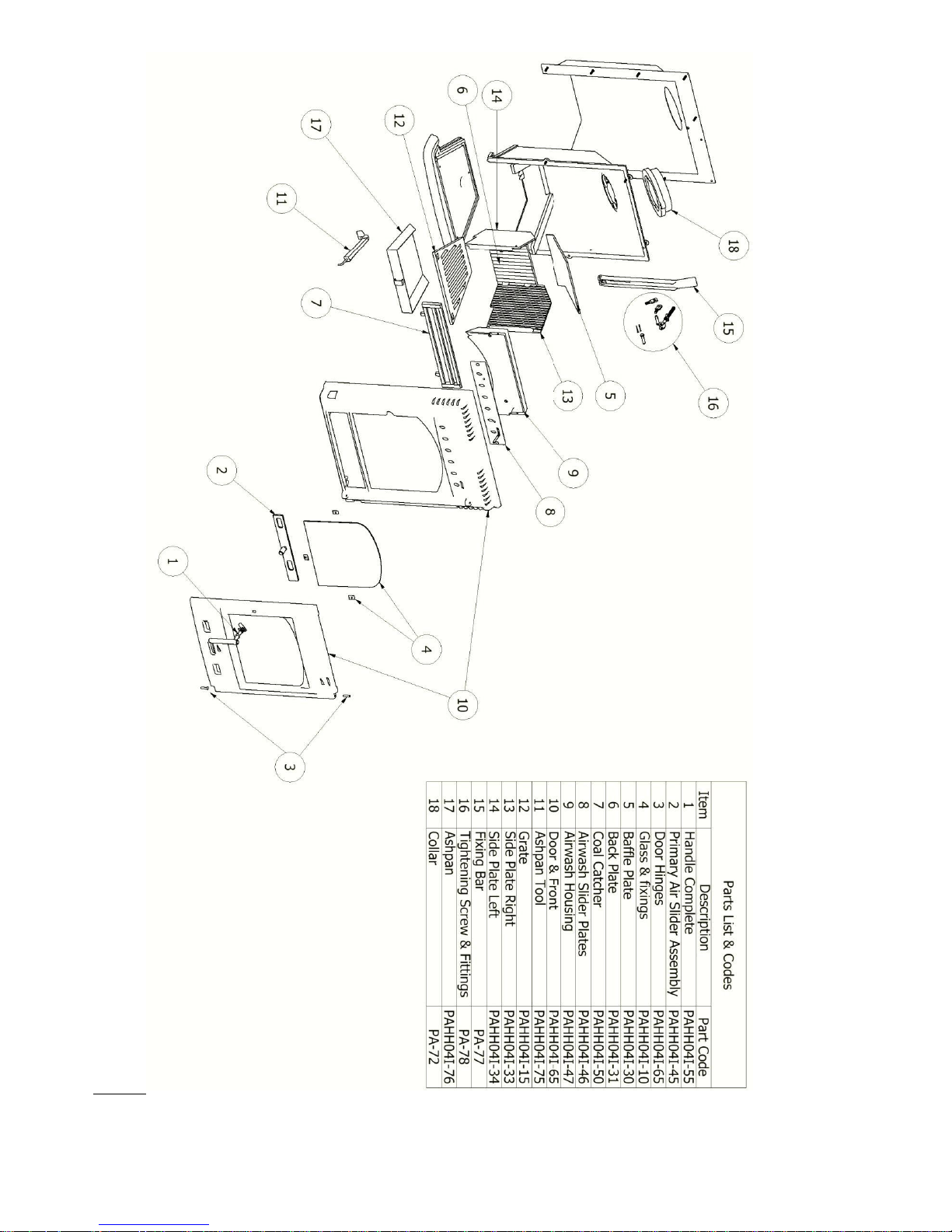
10.0 Hothouse Insert Spare Parts List & Codes
 Loading...