

Page 1
1
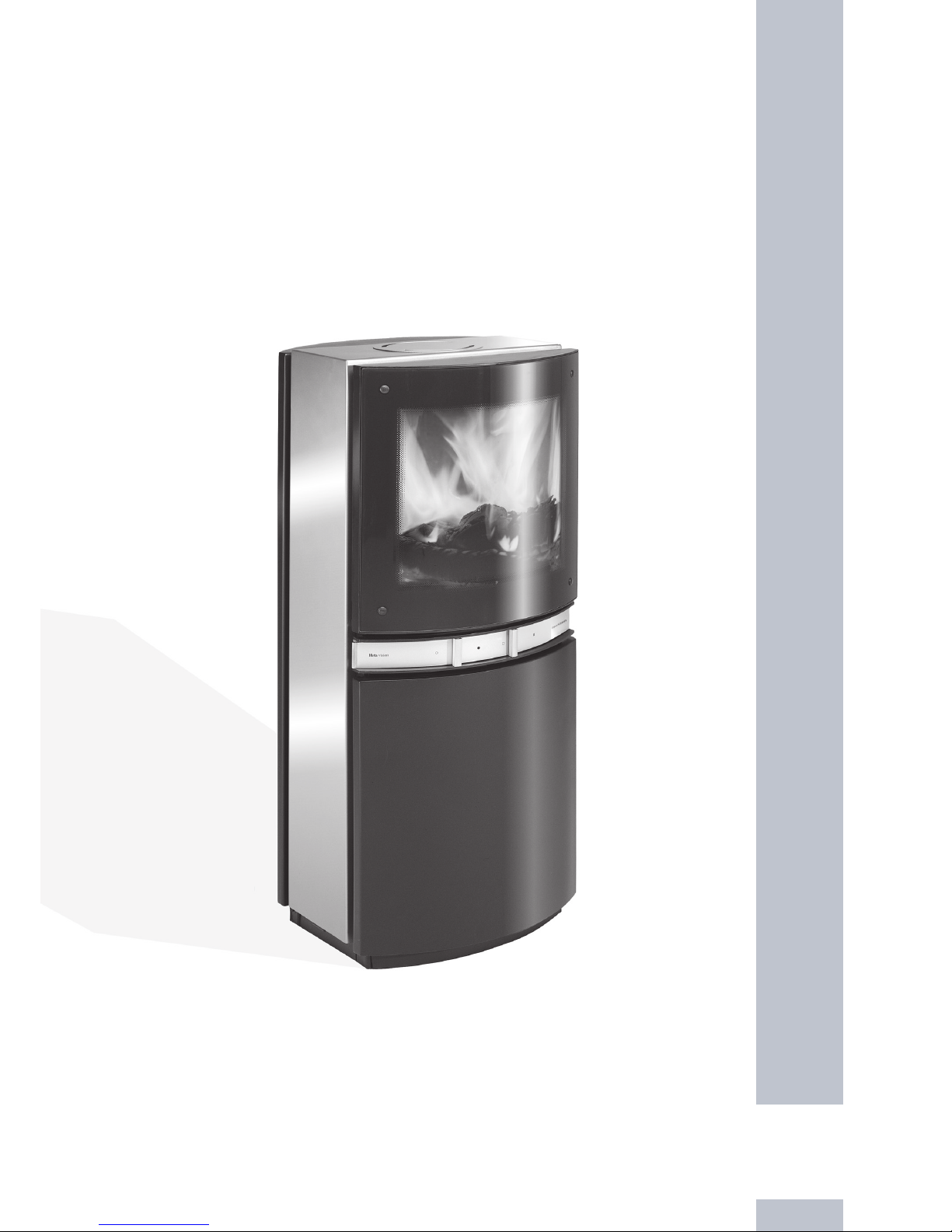
Heta vision
Design by JACOB JENSEN
Operating instructions
vision I
Page 2
2
Operating instructions Heta vision I, II and III
INSTALLATION INSTRUCTIONS
Safety clearances
Stoves must always be installed in line with
national and, if applicable, local regulations.
It is important to abide by local regulations
regarding setting up chimneys and connection to same. Therefore, always consult your
local chimney sweep before installation, as
you are personally responsible for ensuring
that the applicable regulations have been
met.
Distance regulations
A difference applies to installation next to
flammable and non-flammable walls. If the
wall is made of non-flammable material
the stove can, in principle, be placed flush
against it. However, we recommend leaving
a gap of at least 5 cm to facilitate cleaning
behind the stove. The minimum distances to
flammable material are stated on the boiler
plate and are listed in the table on page 5.
Warning
A stove gets hot. (In excess of 90
degrees). Take care to ensure that
children and elderly or infirm people
cannot come into contact with it.
Combustible materials should not be stored
in the compartment below the ashpan.
IMPORTANT
1. Make sure there is adequate provision to
sweep the chimney.
2. Make sure there is adequate ventilation to
the room.
3. Please note that any extraction fans operating in the same room as the wood-
burning stove can reduce the chimney
draft – which may have an adverse effect
on stove combustion properties.
In addition, this may cause smoke to be
emitted from the stove when the firing
door is opened.
4. It must not be possible to cover any air
vents.
The floor
It is essential to ensure that the floor surface
can actually bear the weight of the stove and
a top-mounted steel chimney, if applicable.
The stove must stand on a nonflammable
surface such as a steel floor plate or a brick
or tile floor. The size of the nonflammable
surface used to cover the floor area must
match national and local regulations.
The wall-mounted Vision III underlying surface is subject to the same regulations.
In addition, the Vision III must be mounted at
least 7 cm above floor level
Congratulations on your new stove. We are sure that
you will be happy with your investment, especially if
you follow the advice and instructions we have put
together in these operating instructions.
The Heta Vision series has been approved according
to the EN 13240 / NS 3058.
Approval means that consumers can be sure, that the
stove meets a range of specifications and requirements intended to ensure that the materials used are
of good quality, that the stove does not adversely affect the environment, and hat it is economical to use.
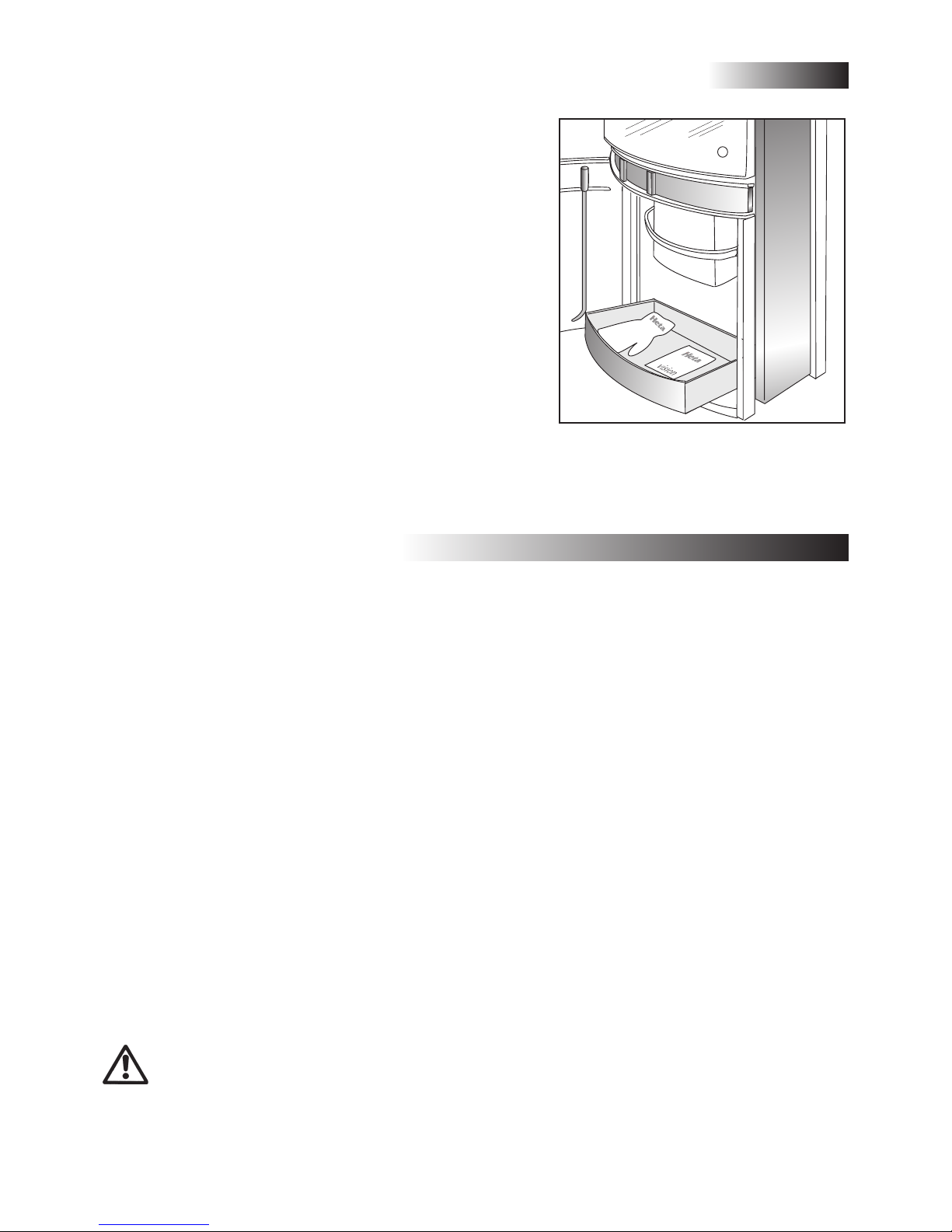
With your new stove you should have received the
following:
a. Operating instructions
b. Guarantee slip
c. A stove glove
d. Decorative cover
e. Fireplace set (3 things - not Vision II and III)
Page 3

3
The chimney connection
The chimney opening must follow national
and local regulations. However, the area of
the opening should never be less than 175
cm2, which corresponds to a diameter of 150
mm. If a damper is fitted in the flue gas pipe,
there must always be at least 20 cm2 of free
passage, even when the damper is in its
“closed” position. If local regulations permit,
two contained fireplaces can be connected to
the same chimney. However, you must abide
by local regulations regarding the distance
between the two connections.
Wood-burning stoves must never be connected to chimneys that are also linked to a
gasfired heater. An efficient stove makes high
demand on chimney properties – so always
have your local chimney sweep evaluate your
chimney.
Connection to a brick chimney
Brick a thimble into the chimney and seat the
flue gas pipe in this. The thimble and flue gas
pipe must not penetrate the chimney opening
itself, but must be flush with the inside of
the chimney duct. Joins between brickwork,
the thimble and flue gas pipe must be sealed
with fireproof material and/or beading.
Connection to a steel chimney
When fitting a connection from a top-output
stove directly to a steel chimney, we recommend fitting the chimney tube inside the flue
gas spigot so that any soot and condensation
drops into the stove itself rather than collecting on the exterior surface of the stove.
Changing smoke outlet from top-mounted to
rear-mounted (see fig. 5-12 on page 7). For
connections to chimneys that are run through
ceilings, all national and local regulations regarding distance to flammable material must
be followed. It is important that the chimney
is fitted with roof support so that the top
panel of the stove is not required to bear
the entire weight of the chimney (excessive
weight may damage the stove).
Draft conditions
Poor draft may result in smoke being emitted
from the stove when the door is opened. The
minimum chimney draft to ensure satisfactory
combustion in stoves of this kind is 11 PA.
However, there will still be a risk of smoke emission if the firing door is opened during powerful firing. The flue gas temperature at nominal
output is 257°C when expelled to an exterior
temperature of 20°C. The
flue gas mass flow is
5,4 g/sec. The chimney
draft is generated by the
difference between the high temperature of
the chimney and the low temperature of the
fresh air. The length and insulation of the chimney, wind and weather conditions also have an
effect on the ability of the chimney to generate appropriate under-pressure. If the stove
has not been used in a while, check that the
chimney and stove are not blocked with soot,
bird nests, etc., before using it.
Reduced draft can occur when:
- The difference in temperature is too small – due
to insufficient chimney insulation, for example.
- The outdoor temperature is too high – in
summer, for example.
- No wind is blowing.
- The chimney is too low and sheltered.
- The chimney contains false air.
- The chimney and flue gas pipe are blocked.
- The house is too airtight (i.e. when
there is
an insufficient supply of fresh air).
- Poor smoke extraction (poor draft
conditions) due to a cold chimney or bad
weather conditions can be compensated for
by increasing the airflow into the stove.
Good draft occurs when:
- The difference in temperature between
the chimney and outdoor air is high.
- The weather is fine.
- The wind is blowing strongly.
- The chimney is of the correct height: at
least 4.00 m above the stove and free of
the roof ridge.
INSTRUCTIONS FOR USE
First firing
The stove has been treated with a heat-resistant coating which hardens at a temperature
of approximately 250 ºC.
This hardening process causes the production
of smoke and malodorous fumes, so the room
must be very well ventilated. During the first
firing, which should be carried out using approximatly 1,5 kg. of wood, the stoking door
must be left slightly open and must not be
Page 4
4
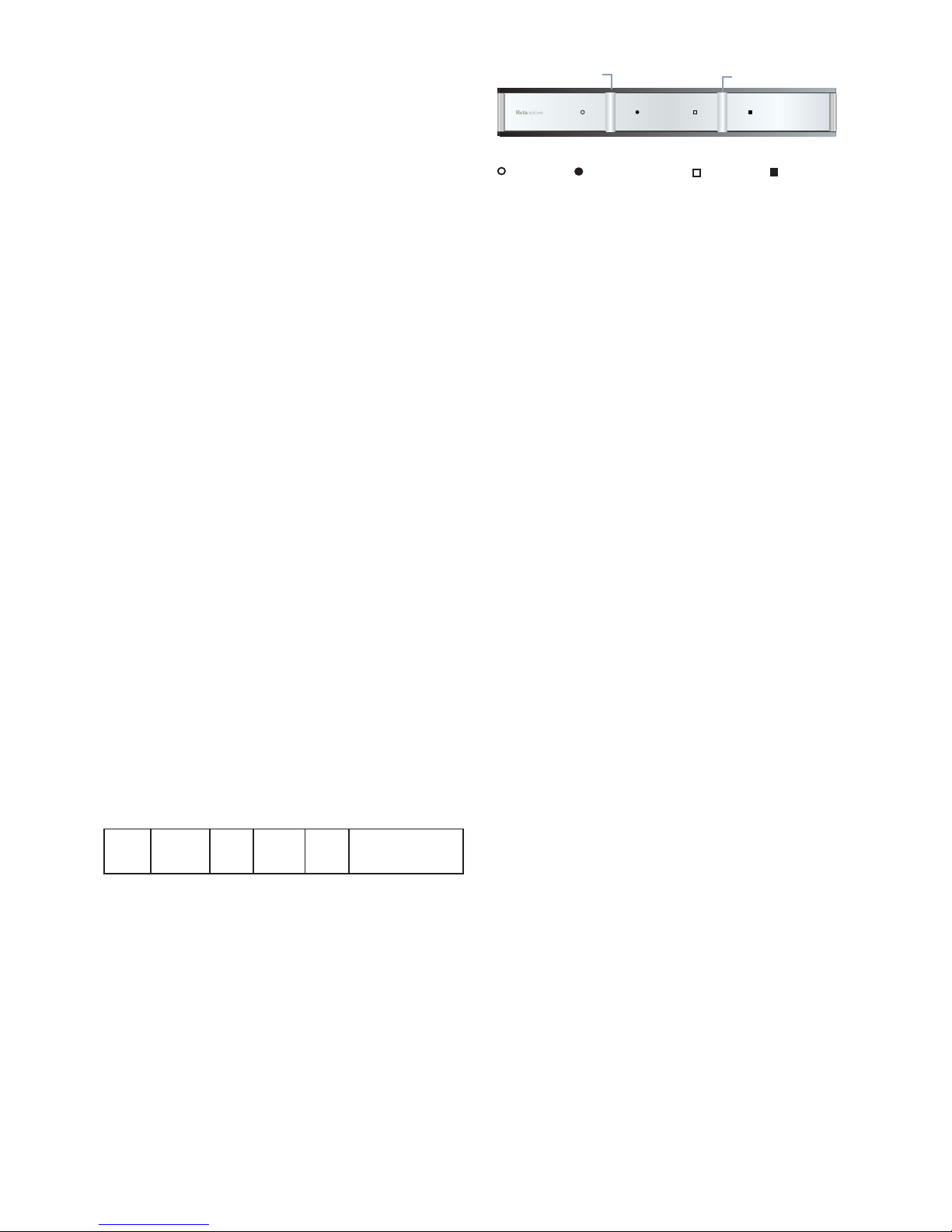
to increase the air-flow, and turn it to the left
to decrease it. The handle on the right is used
to control the secondary air-flow. Turn this
handle to the right to increase the air-flow,
and turn it to the left to decrease it.
The heated secondary air washes down over
the glass panel and ignites the flue gases.
This increases the efficiency of the stove.
Lighting
To ignite the fuel, use fire lighters, small paraffin ignition bags or small pieces of wood
placed on the bottom grate. Place larger pieces of wood on top of this kindling material,
at right angles to the firing, doors. Completely open the secondary air supply and leave
the firing door ajar – i.e. approx. 1 cm open.
Once the fire has taken a good hold of the
fuel and the chimney has heated up (after
about 10 min) close the firing door. We recommend that you burn the entire first firing
with the secondary air supply fully open to
make sure that the chimney is thoroughly
heated.
Refiring
You should normally refire the stove while
there is still a good layer of embers. Distribute
the embers across the bottom grate, place
pieces of fuel (max. 1,6 kg) on the embers
in a single layer perpendicular to the firing
opening. Close the firing. The wood will then
ignite very quickly – i.e. in 30 seconds or 1
minute. When the wood is burning with a
steady flame, then adjust the secondary airflow to the level required. For nominal operation (5 kW), the secondary air supply should
be 100% open. When firing, take care not to
place the pieces of fuel too closely together,
as this will result in poor combustion and
insufficient exploitation of the fuel.
Reduced burning
The stove is well-suited to intermittent use.
If you wish to operate the stove with reduced out-put, simply insert smaller volumes of
wood at each firing, and apply a lower airflow. However, remember that the secondary
combustion air supply must never be shut off
Design by JACOB JENSEN
Primary air Sekundary air
Closed Open Closed Open
closed until the stove is cold. This is to prevent the sealing rope sticking to the stove.
Fuel
Your new stove is EN approved for firing
with
wood fuel. You must therefore only
burn clean,
dry wood in your stove. Never
use your stove
to burn drifwood, as this may contain a lot
of salt which can damage both the stove and
the
chimney. Similarly, you must not fire your
stove with refuse, painted wood, pressureimpregnated wood or chipboard, as these
materials can emit poisonous fumes and smoke. Correct firing using well seasoned wood
provides optimal heat output and maximum
economy. At the same time, correct firing
prevents environmen-tal damage in the form
of smoke and emmissions and also reduces
the risk of chimney fires. If the wood is wet
and inadequately seasoned, a large proportion of the energy in the fuel will be used to
vaporise the water, and this will all disappear
up the chimney. Thus it is important to use
dry, well seasoned wood, i.e. wood with a
moisture content of no more than 18%. This
is achieved by storing the wood for 1–2 years
before use. Pieces of firewood with a diameter of more than 10 cm should be split before
storing. The pieces of firewood should be of
an appropriate length (approx. 25–30 cm) so
that they can lie flat on the bed of embers.
If you store your wood outdoors, it is best to
cover it.
Examples of fuel values of
different woods
Fuel type / number of cubic metres per 1,000 litres
of oil
Oak
7,0
Beech
7,0
Ash
7,2
Birch
8,0
Elm
8,9
Common
spruce
10,4
Chimney fires
In the event of a chimney fire – which often
results from incorrect operation or protracted
firing with moist wood – close the door and
shut off the secondary/start-up air supply to
smother the fire. Call the fire department.
Lighting and combustion
Use the operating handles on the control
panel under the glass door to allow the flow
of primary and secondary air to the stove.
The handle on the left is used to control the
primary air-flow. Turn this handle to the right
Page 5
5
completely during firing. It is important to
keep a good bed of embers. Gentle heat is
released when the fire settles - i.e. when the
wood no longer generates flames and has
been converted to glowing embers.
Optimal firing
To achieve optimal firing and the highest possible effect, it is important to make sure that
the air supply is used correctly. As a general
rule, the secondary air is to be used to control
the fire to ignite the flue gases. This produces a high effect and keeps the glass panel
completely clear of soot as the secondary
air “washes” down over it. Please note that
the stove will, naturally, produce soot if the
secondary air intakes are closed completely.
This will prevent oxygen from being drawn
into the stove, and the viewing window and
other parts will become covered with soot.
If this situation is combined with firing with
wet wood, the build-up of soot can become
so thick and sticky that the sealing rope can,
for example, become detached when the door
is opened the next day.
Risk of explosion
After you add new fuel, it is very im portant that you do not leave the
stove unattended until the wood is
burning constantly. This will normally
occur within 30 to 60 seconds.
A risk of explosion can possibly arise if too
much wood is placed in the stove. This may
result in the production of large volumes of
gas, and this gas can explode if the intake of
primary and secondary air is insufficient.
It is an advantage always to leave some ash lying in the bottom of the combstion chamber.
Take care when emptying the ash pan,
as cinders can continue to burn in the
ash for long periods of time.
The wood-burning stove is designed to operate with the door and ashpan closed.
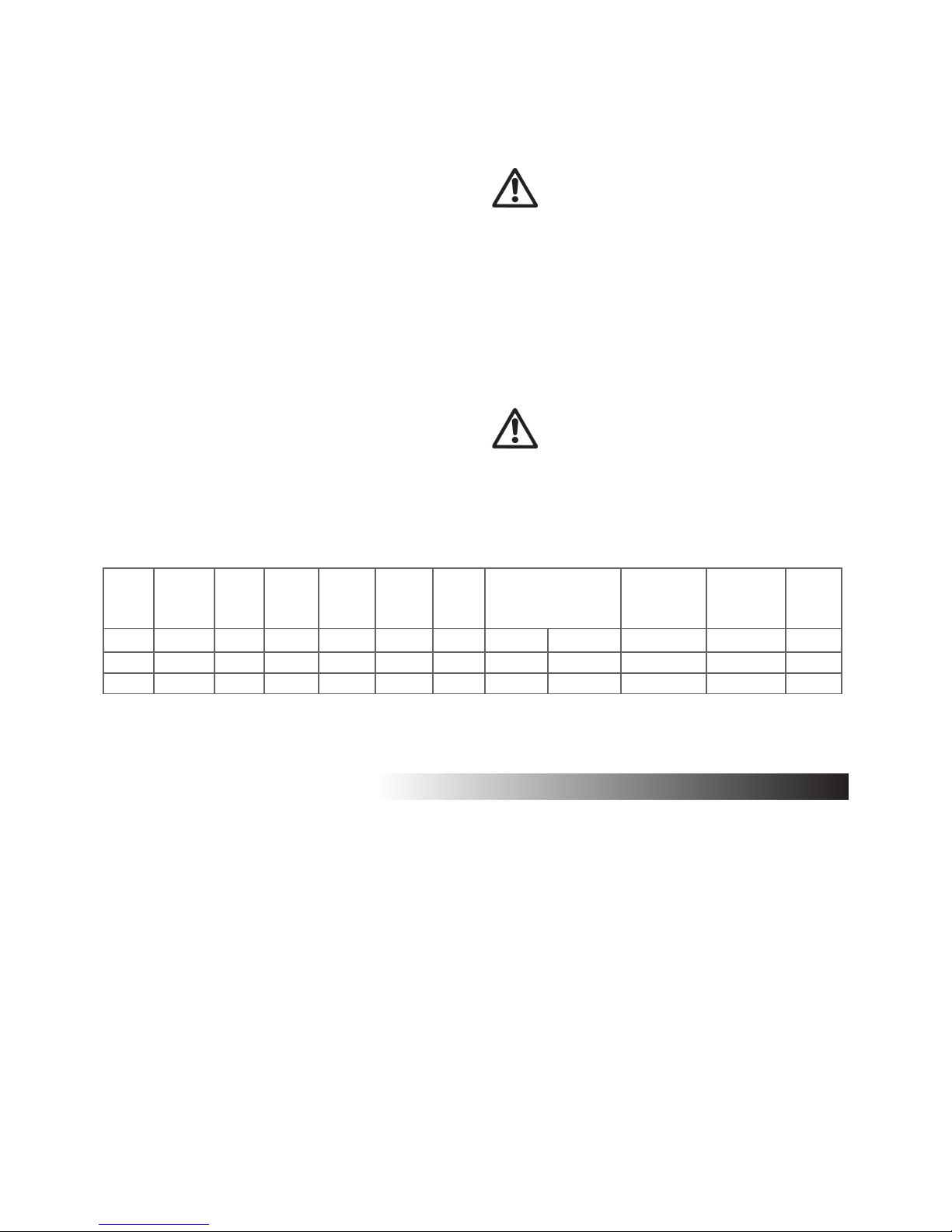
Stove data table in accordance with EN 13240 testing.
OPERATIONAL PROBLEMS
The chimney must be swept at least once a
year, we recommend the use of a NACS (national association of chimney sweeps) registered chimney sweep. In the event of smoke or
malodorous fumes being produced, you must
first check to see whether the chimney is
blocked. The chimney must, of course, always
provide the minimum draught necessary to
ensure that it is possible to regulate the fire.
Please note, however, that chimney draft is
dependent on the weather conditions. In
high winds, the draft can become so powerful that it may be necessary to fit a damper in
the flue gas pipe to regulate the draft. When
Stovetype
Heta
vision
Nominal
fluegas
temperature c°
Smoke
stub
mm
Fuel
volume
kg
Draught
min
mbar
Nominal
output
tested
kW
Heat
output
kW
Distance to flammable
materials in mm
behind at the
the stove sides
Distance to
furnitures
from the
stove in mm
The minimum height
above floor
level in mm
Stove
weight
kg
I 325 Ø150 1,5 0,11 6 6 200 400 850 125
II 325 Ø150 1,5 0,11 6 6 200 400 850 116
III 325 Ø150 1,5 0,11 6 6 200 400 850 70 120
The nominal output is the output to which the stove has been tested.
The test was carried out with secondary air at full flow and the primary air supply fully closed.
cleaning the chimney, soot and other deposits
may come to fall on the smoke plate. In cases
where the wood burns too quickly, this may
be due to excessive chimney draught. You
should also check to make sure that the door
seal and ashpan seal is intact and correctly
fitting.
If the stove it generating too little heat, this
may be because you are firing with wet wood.
In this case, much of the heating energy is
used to dry the wood, resulting in poor heating economics and an increased risk of soot
deposits in the chimney.
Page 6
6
Warning
Any unauthorised modification of the
stove and any use of non-original
spares will void the guarantee.
3
4
2
1
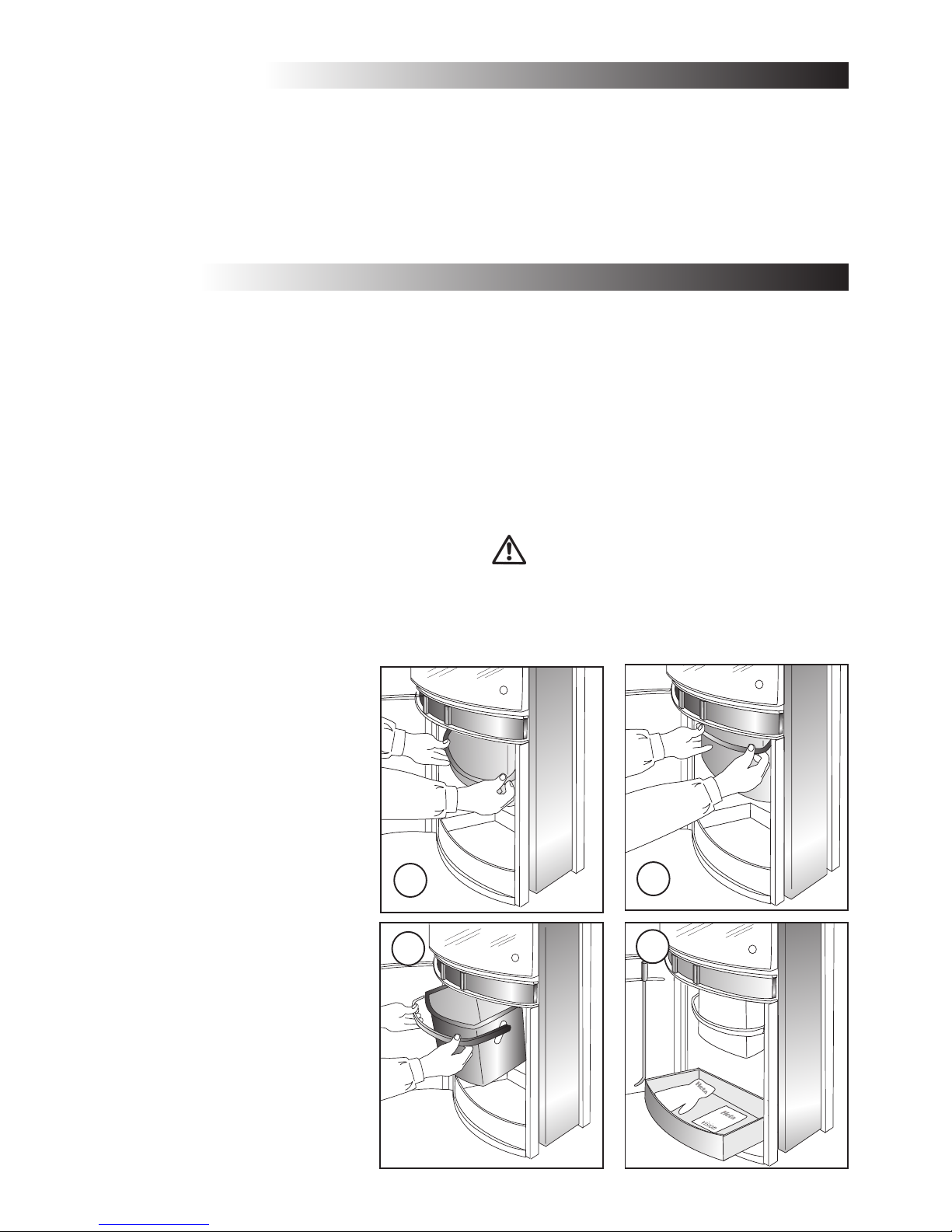
Emptying the ash pan
Fig. 1 - 4
GUARANTEE
The Vision stoves are subjected to stringent
quality control procedures both throughout
the production process and immediately before delivery to the dealer.
Therefore, the stoves are guaranteed against
defects in manufacturing
FOR FIVE YEARS.
This guarantee does not cover:
• Wearing parts/fragile parts such as:
The fire-proof bricks in the combustion
chamber. The smoke baffle.
The glass. The sealing rope. The rotary
grate and the grate frame
• Damage resulting from incorrect use
MAINTENANCE
The surface of the stove has been trea-ted
with heat-resistant paint. The stove should be
cleaned with a damp cloth. Any damage to
the surface in the form of chips or scratches
can be repaired using touch-up paint, which
is available in spray cans.
Cleaning the glass
Incorrect firing, for example using wet wood,
can result in the viewing window becoming
covered in soot. This soot can be easily and
effectively removed by using proprietary
stove glass cleaner.
• Transport costs in connection with repairs
carried out under guarantee
•
Installation/disassembly in connection with
repairs carried out under guarantee
Should you have cause to make a complaint,
please quote our invoice no.
Page 7
7
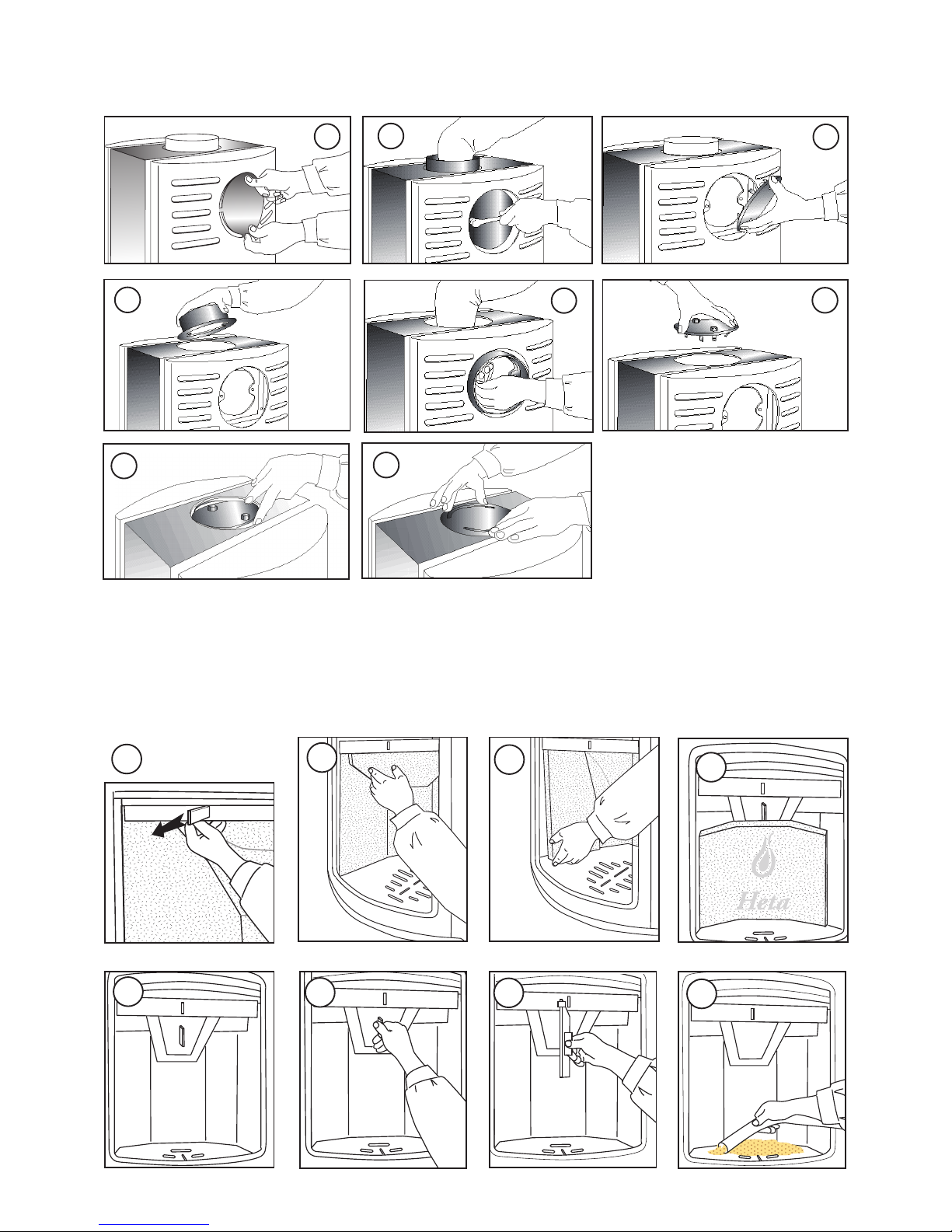
Cleaning after sweeping the chimney and replacing the stones.
Fig. 13 - 20
Changing to back smoke outlet Fig. 5 - 12
5
6
8
10
12
11
7
9
17
18
16
19
13
14
20
15
Page 8
8
GB 0037-1056 2009-05
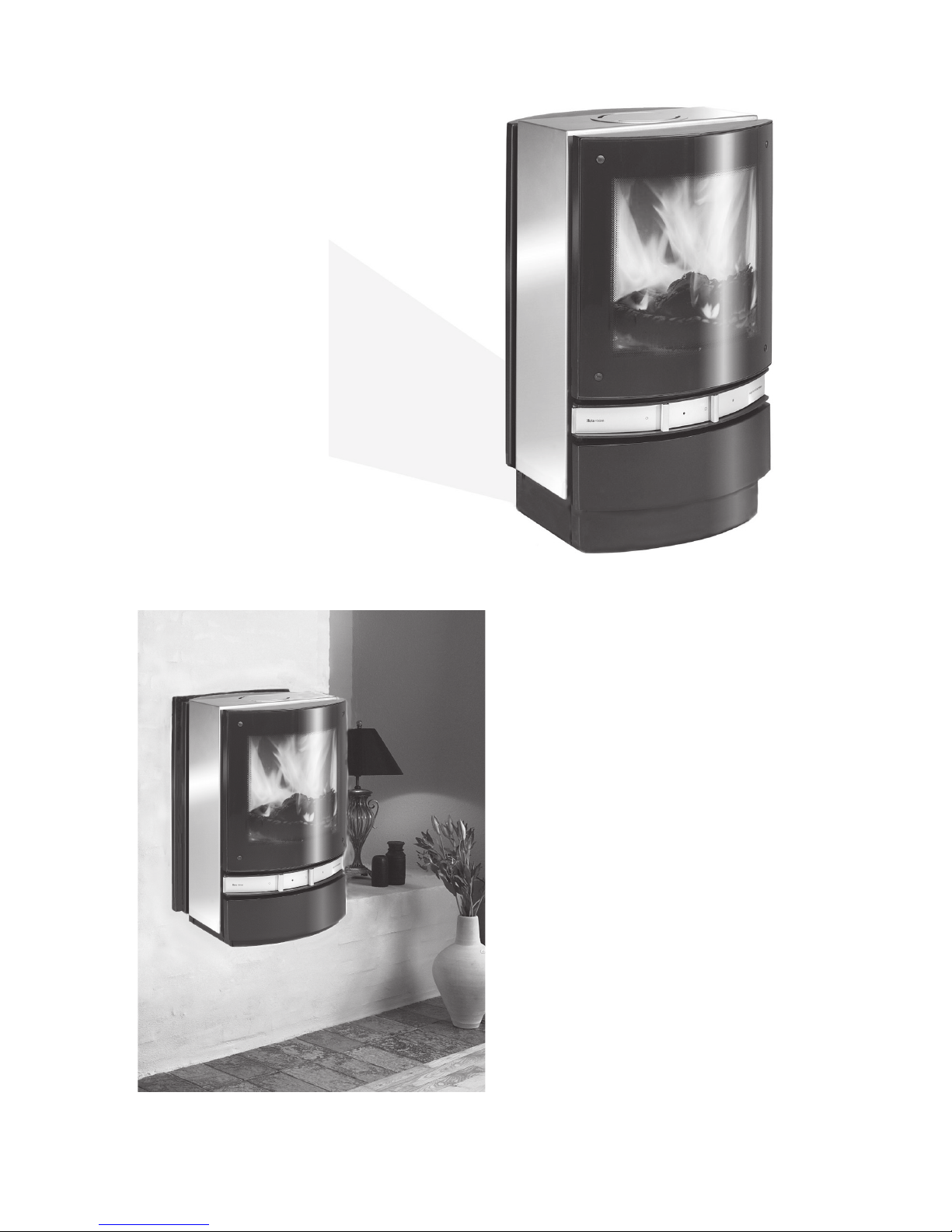
vision II
vision III
 Loading...