

Page 1
MAN192
Model 32025 User’s Manual
Model 32025
Grooved Pegboard
User’s Manual
www.lafayetteinstrument.com
© 2014-2015 by Lafayette Instrument Company, Inc. All Rights Reserved-Rel. 1.30.15
.
eval@lafayetteinstrument.com
Page 2

Lafayette Instrument Grooved Pegboard Test
Table of Contents
Purpose 2
Administration Instructions 2
Administration Time 2
Scoring 2
Demographic Eect 3
Normative Data 3
Reliability 6
Validity 6
References 8
Ordering Information 12
Purpose
The Grooved Pegboard task measures eye-hand coordination and motor speed.
Administration Instructions
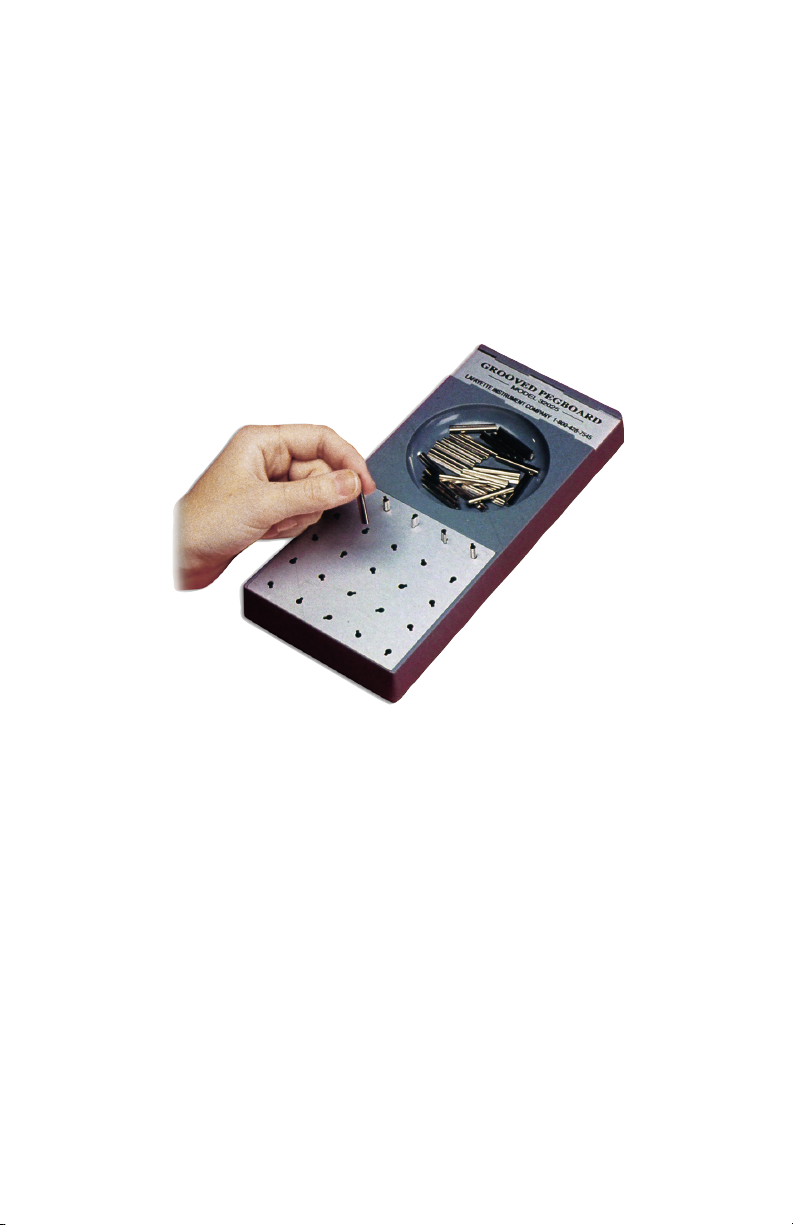
The apparatus is placed with the peg tray oriented above the pegboard. The person is instructed
to insert the pegs, matching the groove of the peg with the groove of the hole, lling the rows in a
given direction as quickly as possible, without skipping any slots. Using the right hand, the patient
is asked to work from left to right, and with the left hand, in the opposite direction. The dominant
hand is tested rst. The patient is warned that only one peg should be picked up at a time and that
only one hand is to be used. If a peg is dropped, the examiner does not retrieve it; rather, one of
the pegs correctly placed (usually, the rst or second peg) is taken out and used again.
The examiner demonstrates one row before allowing the patient to begin. A practice trial is
not given, and a trial may be discontinued after 5 min. In the HRNES (Russell and Starkey, 1993)
version, the person continues until all pegs have been placed or until a time limit of 3 min has
been reached. ln both versions, the examiner begins timing after cueing the individual to begin.
Administration Time
The time required is 5 minutes.
Scoring
The score is computed for each hand separately and is the time required to place the pegs. Some
researchers also record the number of pegs not placed and the number of pegs dropped; these
errors may be considered clinically and are rarely seen in neurologically normal individuals (Heaton
et al., 2004).
2
Page 3

Model 32025 User’s Manual
Demographic Eect
When each hand is considered separately, several trends emerge.
Age
Age has a strong impact on test scores, with performance improving (faster times) in childhood
(RosseIli et al., 2001; Solan, 1987) and declining with advancing age (e.g., Bornstein, 1985; Concha
et al., 1995; Mitrushina et al., 2005; Ru & Parker, 1993; Selnes et al., 1991). According to Heaton et
al. (2004), about 30 degrees to 31 degrees of the variance in test scores is accounted for by age.
Gender
Some have found signicant gender dierences in performance, with women outperforming
men (Bornstein, 1985; Ru & Parker, 1993; Schmidt et al., 2000), perhaps reecting dierences
in nger size (Peters et al., 1990). However, others have noted that gender has little eect on test
scores (Concha et al., 1995; Heaton et al., 2004; Mitrushina et al., 2005), accounting for less than
1% of the variance in test scores (Heaton et al., 2004). No gender eect has been found in children
(Rosselli et al., 2001).
Hand Preference
Performance is faster with the dominant/preferred hand (Bryden et al., 1998; Heaton et al., 2004).
Handedness (right, left) does not aect test scores (Ru & Parker, 1993).
Education/IQ
Some have reported that better educated individuals perform faster (Ru St Parker, 1993).
However, others have found that education has little or only a small eect (Bernstein, 1985;
Concha et al., 1995; Mitrushina et al., 2005; Selnes et al.,1991), accounting for about 3% to 6% of
the variance test scores (Heaton et al., 2004).
Ethnicity
The impact of ethnicity has not been reported.
Intermanual Dierences
Neither age, education, nor hand preference
is related to intermanual dierences scores
on the Grooved Pegboard (Bornstein, 1986c;
Ru & Parker, 1993; Thompson et al., 1987);
however, intermanual dierences tend to
be larger for females than for males (Rosselli
et al., 2001; Thompson et al., 1987; but see
Bornstein, 1986c).
Normative Data
Adults
Heaton et al. (2004) have developed normative
data based on a large sample of Caucasians
and African Americans (see Table 14-15), They
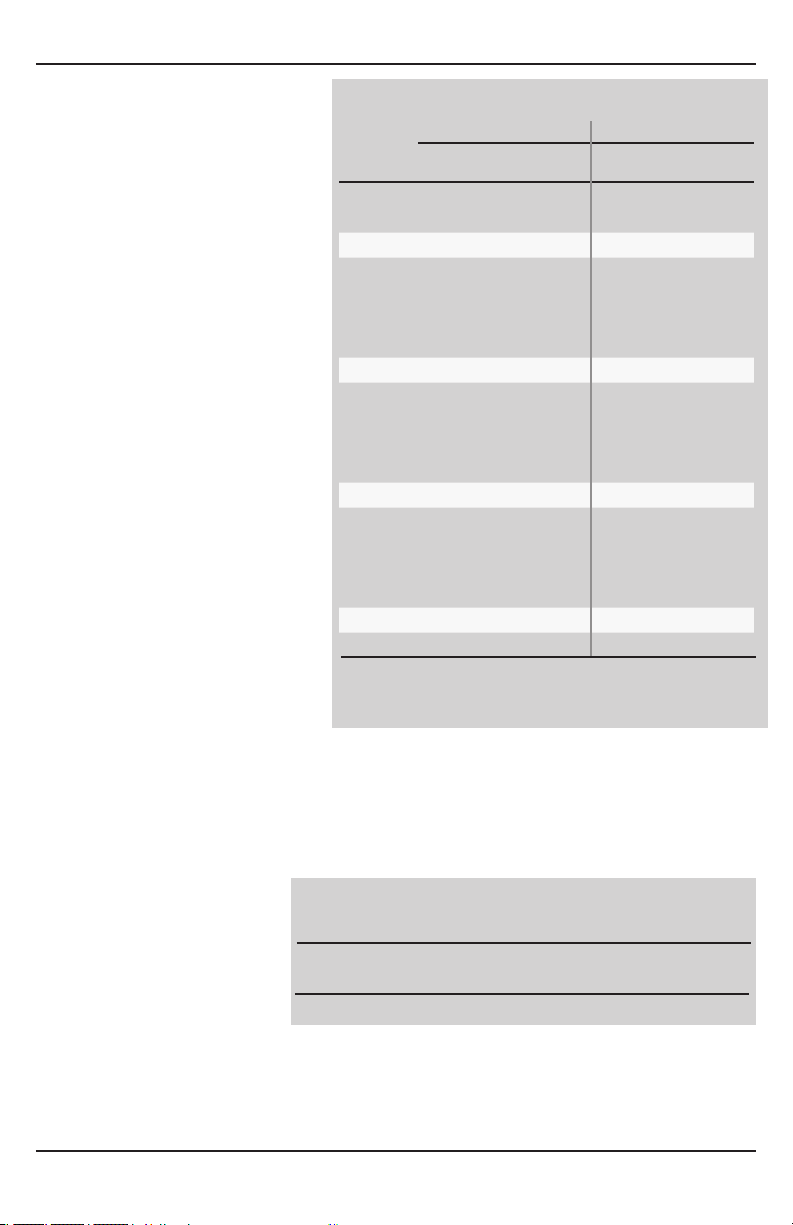
Table 14-15: Characteristics of the Grooved Pegboard Normative
Sample provided by Heaton et al. (2004)
Number 1482
Age (years) 20-85
Geographic location Various States in the United States and
Sample Type Individuals recruited as part of
Education (years) 0-20
Gender (%)
Male 60.1
Female 39.9
Race/Ethnicity
Caucasian 839
African American 643
Screening No reported history of learning
a
Age groups: 20-34, 35-39, 40-44, 45-49, 50-54, 55-59, 60-64, 65-69,
70-74, 75-79, and 80-89 years
b
Education groups: 7-8, 9-11, 12, 13-15, 16-17, and 18-20 years
a
Manitoba, Canada
multicenter studies
b
disability, neurological disorder, serious
psychiatric disorder, or alcohol or drug
abuse
3
Page 4
Lafayette Instrument Grooved Pegboard Test
provide norms separately for these
two ethnicity groups, organized by
age, gender and education.
The data set covers a wide range
in terms of age (20-85 years) and
education (0-20 years), and exclusion
criteria are specied. T scores lower
than 40 are classed as impaired.
According to Heaton et al. (2004).
Unfortunately, the method for
determining hand preference was
not described. Mitrushina et al.
(2005) provide meta-norms, based
on six studies and representing 2382
participants, aged 20 to 64 years.
They noted that the integrity or the
results is undermined by the lack
of consistency in reporting of hand
preference. Table 14-16 provides
data (Ru and Parker, 1993) based
on a sample of 357 individuals aged
16 to 70 years, ranging in education
from 7 to 22 years. Participants
were screened to exclude those
with a positive history of psychiatric
hospitalization, chronic polydrug
abuse, or neurological disorders. Hand
preference was evaluated using a
lateral dominance examination. The
data agree reasonably well with those
provided by Mitrushina et al. (2005).
Table 14-16 Mean Performance of Adults for Grooved Pegboard, by Education,
Age, and Gender
Less than or Equal To Grade 12 Greater than Grade 12
Age Group
(Years) N M SD N M SD
Females, Preferred hand
16-39 30 62.8 8.9 60 57.8 6.2
40-54 14 63.1 4.4 30 63.3 7.4
55-70 15 78.6 11.7 29 75.3 11.3
Females, Nonpreferred hand
16-39 29 66.8 10.7 60 65.2 10.3
40-54 15 69.6 6.5 30 70.8 8.9
55-70 13 84.3 15.3 29 82.0 12.5
Males, Preferred hand
16-39 29 67.8 9.2 60 64.7 10.9
40-54 15 71.9 15.1 30 70.4 10.9
55-70 15 83.7 10.2 30 74.1 13.0
Males, Nonpreferred hand
16-39 29 74.5 10.9 59 67.8 10.8
40-54 15 79.1 14.9 30 73.7 9.9
55-70 15 91.0 12.7 28 83.5 13.4
Note: Based on a sample of 357 healthy participants
Source: From Ru & Parker 1993 © Perceptual and Motor Skills 1993. Reprinted with
Permission.
Children/Adolescents
Older normative data sets are available for children (Knights, 1970; Knights & Moule, 1968;
Trites, 1977). However, use of these norms is not recommended, because they are quite dated
and cell sizes are quite small.
Recently, Rosselli et al. (2001)
used the 25-hole pegboard
and provided data (see Table
14-17) on a sample of 290
Spanish-speaking children
(141 boys, 149 girls), aged 6 to
Table 14-17 Grooved Pegboard (Time in Seconds) Normative Data for SpanishSpeaking Boys and Girls Aged 6-11 Years (25-Hole Pegboard), by Age
6-7 years (n=83) 8-9 years (n=121) 10-11 years (n=86)
Preferred Hand 92.46 (17.80) 81.96 (13.79) 69.47 (10.47)
Nonpreferred Hand 104.00 (21.44) 93.58 (17.67) 76.41 (12.22)
Source: Adapted from Rosselli et al., 2001.
11 years, in Bogota, Colombia.
None of the subjects was mentally retarded. Based on the Waterloo Handedness
questionnaire, 268 children were right-handed, and 22 were left-handed. Rosselli et al. (2001)
noted that the older the group, the smaller the dierence in performance between hands.
4
Page 5

Model 32025 User’s Manual
The performance
of older children
was similar to that
of adults aged
40 to 59 years
(e.g., Bernstein,
1985; Ru &
Parker, 1993),
suggesting that
additional gains
Table 14-18 Mean Performance (Seconds) on Grooved Pegboard in Adolescents
Males Females
Age (Years) N Right Hand Left Hand N R ight Hand Left Hand
12 38 64.61 (10.8) 70.03 (10.85) 56 66.05 (8.64) 71.61 (9.37)
13 39 61.82 (6.74) 67.33 (10.85) 57 62.93 (6.27) 70.60 (9.57)
14 46 64.00 (10.54) 70.09 (10.88) 70 62.43 (9.12) 67.30 (10.06)
15 29 62.21 (7.04) 63.34 (8.95) 23 64.78 (9.52) 67.48 (10.72)
Note: Based on a sample of 358 healthy adolescents in a large Western Canadian city.
Source: C. Paniak, H. Miller & D. Murphy (personal communication, April 10, 2004).
are made during
adelescence. In line with this proposal, are the ndings by Paniak (personal communication, April
10, 2004) for a sample of 358 adolescents living in a large western Canadian city (see Table 14-18).
The exclusion criteria for this sample included failure of one or more grades, enrollment in an
English as a Second Language program, a history of hospitalization for brain injury or behavioral
problems, or participation in a self-contained special education program. The sample was largely
right-handed and had a WISC-III Vocabulary scaled score of about 10 (SD=3).
Table 14-19 Grooved Pegboard Test-Retest Eects in 121 Normal Individuals Assessed After Intervals of 2 to 16 Months
Time 1 Time 2 T2-T1 T1,T2
(1) (2) (3) (4)
Measure Mean SD Mean SD M SD r
Dominant 69.66 19.27 68.68 21.04 -.98 10.03 .86
Nondominant 75.80 21.56 73.70 19.69 -2.09 11.11 .86
Note: Based on a sample of 121 normal individuals (mean age=43.6, SD=19.6; mean education=12.0, SD=3.3) after retest
intervals of about 2-16 months (mean=5.4, SD=2.5) One rst subtracts the mean T2-T1 change (column 3) from the dierence
between the two testings for the individual and then compares it to 1.64 times the standard deviation of the dierence
(column 4). The 1.64 comes from the normal distribution and is exceeded in the positive or negative direction on 10% of the
time if indeed there is no real change in clinical condition.
Source: Adapted from Kikmen et al., 1999.
Table 14-20 Grooved Pegboard Test-Retest Eects in 605 Healthy Males Assessed After Intervals of 2 to 24 Months
Time 1 Time 2 T2-T1 T1,T2
(1) (2) (3) (4)
Measure Mean SD Mean SD M SD r
Dominant 64.2 8.94 61.7 8.16 -2.50 7.01 .67
Nondominant 69.1 10.39 66.5 9.55 -2.61 7.37 .73
Note: Based on a sample of 605 healthy males, mostly Caucasian (mean age=39.5, SD=8.5; mean education=16.4, SD=2.3)
after retest intervals of about 2-24 months (mean=218 days, SD=95).
Source: Adapted from Levine et al., 2004.
5
Page 6

Lafayette Instrument Grooved Pegboard Test
Reliability
Test-Retest Reliability ond Practice Eects
With retest intervals of about 4 to 24 months, reliability coecients are marginal/high (.67 to
.86) in normal individuals (aged 15 years and older; Dikmen et al., 1999; Levine et al.,2004; Ru
& Parker, 1993). No information is available for children. When repeated trials are given within a
session, performance improves particularly after the rst trial (Schmidt et al., 2000). With two or
more sessions (e.g., assessments 1 and 2 occurring within 1 week of each other, assessments 3
and 4 about 3 and 6 months later), performance improves steadily (McCarey et al., 1993; but see
Bornstein et al.,1987).
Detecting Change
When individuals are retested after intervals of about 2 to 24 months, practice eects
are evident (Dikrnen et al., 1999; Levine et al., 2004; Ru & Parker, 1993). Dikmen et
al. (1999) examined a sample of 121 normal adults (age M=43.6,SD=19.6; education
M=12.0, SD=3.3) after retest intervals of about 2 to 16 months (M=5.4, SD=2.5).
Table 14-19 provides information to assess change, taking practice eects into
account (RCI-PE). Using values in Table 14-19, one rst subtracts the mean T2 — T1 change
(column 3) from the dierence between the two testings for the individual and then compares
the result with 1.64 times the standard deviation of the dierence (column 4). The 1.64 comes
from the normal distribution and is exceeded in the positive or negative direction only 10% of
the time if indeed there is no real change in clinical condition. Drawing from a database of 605
well-educated men (education M=16.4, SD=2.3), mostly Caucasian males (age M=39.5, SD=8.7),
Levine and colleagues (2004) used both RCI-PE and simple linear regression approaches to derive
estimates of change. The retest interval ranged from 4 to 24 months (M=218 days, SD=95). The
length of retest interval did not contribute signicantly to the regression equation. Table 1420 shows the means, standard deviations of the change scores, and test-retest correlations for
use in RCI equations. Table 14-21 shows the regression formulas used to estimate time 2 scores.
The residual standard deviations for the regression formulas are also shown and can be used to
establish the normal range for retest scores.
For example, a 90% condence interval can
be created around the scores by multiplying
the residual standard deviation by 1.645,
which allows for 5% of people to fall outside
of both the upper and lower extremes.
Individuals whose scores exceed the
extremes are considered to have signicant
changes.
Table 14-21 Regression Equasions for Estimating Restest Scores
Measure Regression Equasion Regression SD
Dominant 22.57 + (.609 x Time 1 score) 6.08
Nondominant 20.15 + (.671 x Time 1 score) 6.53
Note: Based on a sample of 605 healthy males, mostly Caucasian (mean
age=39.5, SD=8.5; mean education=16.4, SD=2.3) after retest intervals of
about 2-24 months (mean=218 days, SD=95).
Source: Adapted from Levine et al., 2004.
Validity
Relationships With Other Measures
Pegboard time (dominant hand) shows a modest relation with tapping speed (—.35; Schear &
Sato, 1989), and factor analytic ndings indicate that the two tasks load dierently (Baser & Ru,
1987). Examination of relations among manual performance tasks in healthy individuals suggests
that nger tapping and pegboard tasks are more closely related to one another than to grip
strength (Corey et al., 2001).
6
Page 7

Model 32025 User’s Manual
In addition to requiring motor execution, the pegboard task also requires adequate vision. Schear
and Sato (1989) found a moderately strong correlation (—.62) between nearvisual acuity and
dominant-hand pegboard time.
Moderate/high associations have also been reported with measures of attention (e.g., reaction
time r= .31; TMT-Br=.46; Schear & Sato, 1989; Strenge et al. 2002), perceptual speed (Digit Symbol
r= —.60; Schear & Sato, 1989) and nonverbal reasoning (Block Design r= -34; Object Assembly r=
—.45; Schear & Sato, 1989; see also Haaland & Delaney, 1981).
There is little relation between pegboard scores (preferred hand) and grades in academic
subjects (Rosselli et al., 2001), although Solan (1987) noted a moderate relation (r=~.41) with
WRAT arithmetic.
Clinical Findings
There is evidence that pegboard-placing speed is reduced in a number of conditions, including
stroke (Haaland & Delaney,1981), tumor (Haaland & Delaney, 1981), autism (Hardan et al.,2003),
nonverbal learning disabilities (Harnadek & Rourke,1994), Williams syndrome (MacDonald & Roy,
1988), bipolar disorder (Wilder-Willis et al., 2001), end-stage heart disease (Putzke et al., 2000),
toxic exposure (Bleecker et al., 1997; Mathiesen et al., 1999), substance abuse (withdrawn cocaine
users; Smelson et al., 1999), and HIV-1 infection (Carey et al.,2004; Hestad et al., 1993). Various
drug treatments (carbamazepine, phenytoin) also impair performance (Meadoret al., 1991).
The test is also a sensitive, but not totally accurate, indicator of lateralized disturbances (Bornstein,
1986a; Haaland & Delaney, 1981).
Left cerebral lesions tend to attenuate the more typical pattern of manual asymmetry; right
lesions move the discrepancies in the opposite direction. However, ipsilateral impairment is
also seen—perhaps a reection of the signicant sequencing, visual-spatial, and monitoring
requirements of the tasks (Haaland & Delaney, 1981). Lewis & Kupke (1992) also suggested that
diculty adapting to a novel task, especially with the nonpreferred hand, may aect performance.
Typically, performances of the preferred and nonpreferred hands are compared on motor tasks
to determine whether there is consistent evidence of poor performance with one hand relative
to the other. In general, performance with the preferred hand is superior (by about 10%) to that
with the nonpreferred hand (Mitrushina et al., 2005; Thompson et al.,1987). However, there is
considerable variability in the normal population, and the preferred hand is not necessarily the
faster one (Bornstein, 1986c; Corey et al., 2001), especially when left-handed people are considered
(Corey et al., 2001; Thompson et al., 1987). Patterns indicating equal or better performance with
the nonpreferred hand occur with considerable regularity in the normal population (about 25%),
and neurological involvement should not be inferred from an isolated lack of concordance. Fairly
large discrepancies between the hands on the Grooved Pegboard Test alone also cannot be used
to suggest unilateral impairment, because discrepancies of large magnitude are not uncommon
(about 20%) in the normal population (Bornstein, 1986a, 1986c; Thompson et al., 1987). In addition,
intermanual discrepancies (even of large magnitude) are not perfect predictors of the side of lesion
(Bornstein, 1986a). Greater condence in the clinical judgment of impaired motor function with one
or the other hand can be gained from consideration of the consistency of intermanual discrepancies
across several motor tasks, because truly consistent, deviant performances are quite rare in
the normal population (Bornstein, 1986a, 1986b; Thompson et al., 1987).
7
Page 8

Lafayette Instrument Grooved Pegboard Test
It is important to note that there may be reasons other than neurological impairment for an
individual to perform poorly on this task.
Decits in tactile acuity at the ngertips can also translate into signicant diculties in tasks,
such as the Grooved Pegboard, that require ne manipulations (Tremblay et al., 2002),
Depression has also been associated with lower performance (Hinkin et al., 1992) as are some
medications (e.g., Meador et al., 1991).
Ecological/Predictive Validity
Weak/modest associations have been noted between pegboard scores and daily
functioning (complex activities of daily living) in patients with multiple sclerosis
(Kessler et al.,1992) and after head injury (Farmer & Eakman, 1995). In those with HIV
infection, poor performance may represent an early sign of a dementing process:
Defective performance on the Grooved Pegboard was linked with an increased risk of
becoming demented over a 30-month foliow-up period (Stern et al., 2001).
Malingering
Individuals simulating head injury tend to suppress their performance on the Grooved Pegboard
(Johnson & Lesniak-Karpiak, 1997; Rapport et al., 1998; but see Wong et al., 1998), although
warning participants of the possibility of detection (Johnson & Lesniak-Karpiak, 1997) or coaching
them on how to avoid detection (Rapport et al., 1998) may improve test scores.
Greienstein and colleagues (1996) examined the average performance of the dominant and
nondominant hands on tests of motor functioning and reported that compensation-seeking
patients with postconcussion syndrome (PCS) demonstrated a nonphysiological profile on grip
strength, finger tapping, and Grooved Pegboard (grip strength < finger tapping < grooved pegs).
However Rapport et al. (1998) found that the presence of nonphysiological configurations (grip
strength < finger tapping < grooved pegs) showed poor predictive accuracy among simulators
and controls.
References
Baser, C. N., & Ru, R. M. (1987). Construct validity of the San Diego Neuropsychological Test Battery. Archives
of Clinical Neuropsychology, 2, 13-32.
Bleecker, M. L., Lindgren, K. N., & Ford, D. P. (1997). Dierential contribution of current and cumulative indices
of lead dose to neuropsychological performance by age. Neurology, 48, 639-645.
Bornstein, R. A. (1985). Normative data on selected neuropsychological measures from a nonclinical sample.
Journal of Clinical Psychology, 41, 651-658.
Bornstein, R. A. (l986a). Consistency of intermanual discrepancies in normal and unilateral brain lesion
patients. Journal of Consulting and Clinical Psychology, 54, 719-723.
Bornstein, R. A. (1986b). Classification rates obtained with “standard” cut-o scores on selected
neuropsychological measures. Journal of Clinical and Experimental Neuropsychology, 8, 413-420.
Bornstein, R. A. (1986c). Normative data on intermanual dierences on three tests of motor performance.
Journal of Clinical and Experimental Neuropsychology, 8, 12-20.
Bornstein, R. A., Baker, G. B., & Douglas, A. B. (1987). Short-term test-retest reliability of the Halstead-Reitan
8
Page 9

Model 32025 User’s Manual
Battery in a normal sample. The Journal of Nervous and Mental Disease, 175, 229-232.
Bryden, P. J., Roy, E. A., & Bryden, M. P. (1998). Between task comparisons: Movement complexity aects the
magnitude of manual
asymmetries. Brain and Cognition, 37, 47-50.
Carey, C. L., Woods, S. P., Rippeth, I. D., Gonzalez, R., Moore, D. ]., Marcotte, T. D., Grant, 1., 1-leaton, R. K., & the
HNRC Group. (2004). Initial validation of a screening battery for the detection of HIV-associated cognitive
impairment. The Clinical Neuropsychologist, 18, 234-248.
Concha, M., Selnes, O. A., McArthur, I. C., Nance-Sproson, T., Updike, M. L., Royall W., Solomon, L., & Vlahov,
D. (1995). Normative data for a brief neuropsychologic test battery in a cohort of injecting drug users.
International journal of the Addictions, 30, 823-841.
Corey, D. M., Hurley, M. M., & Foundas, A. L. (2001). Right and left handedness defined. Neuropsychiatry,
Neuropsychology, and Behavioral Neurology, 14, 144-152.
Dikmen. S. 5., Heaton, R. K., Grant, l., & Temkin, N. R. (1999). Test-retest reliability and practice eects of
expanded Halstead-Reitan neuropsychological test battery. Journal of the International Neuropsychological
Society, 5, 346-356.
Farmer, I. E., & Eakman, A. M. (1995). The relationship between neuropsychological functioning and
instrumental activities of dailyliving following acquired brain injury. Applied Neuropsychology, 2, 107-115.
Greienstein, M. F., Baker, W. J., & Gola, T. (1996). Motor dysfunction profiles in traumatic brain injury and
postconcussion syndrome. Journal of the International Neuropsychological Society, 2, 477-485.
Haaland, K. Y., & Delaney, H. D. (1981). Motor deficits after left orright hemisphere damage due to stroke or
tumor. Neuropsychologia, 19, 17-27.
Hamby, S. L., Bardi, C. A., & Wilkins, I. W. ( 1997). Neuropsychological assessment of relatively intact
individuals: Psychometric lessons from an HlV+ sample. Archives of Clinical Neuropsychology, 12, 545-556.
Hardan, A. Y., Kilpatrick, M., Keshavan, M. S., & Minshew, N. I.(2003). Motor performance and anatomic
magnetic resonance imaging (MRI) of the basal ganglia in autism. Journal of Child Neurology, 18, 317-324.
Harnadek, M. C., & Rourke, B. P. (1994). Principal identifying features of nonverbal learning disabilities in
children. Journal of Learning Disabilities, 27, 144-154.
Heaton, R. K., Miller, S. W., Taylor, M. ]., 81 Grant, l. (2004). Revised comprehensive norms for an expanded
Halstead-Reitan Battery: Demographically adjusted neuropsychological norms for African American and
Caucasian adults. Lutz, FL: PAR.
Hestad, K., McArthur, I. H., Dal Pan, G. J., Selnes, O. A., et al., (1993). Regional brain atrophy in HIV-1 infection:
Association with specific neuropsychological test performance. Acta Neurological Scandinavica, 88, 112-118.
Hinkin, C. H., van Gorp, W. G., Satz, P., Weisman, I. D., Thommes, 1., & Buckingham, S. (1992). Depressed mood
and its relationship to neuropsychological test performance in HIV-1 seropositive individuals. Journal of
Clinical and Experimental Neuropsychology, 14, 289-297.
Johnson, I. L., & Lesniak-Karpiak, K. (1997). The eect of warning on malingering on memory and motor tasks
in college samples. Archives of Clinical Neuropsychology, 12, 231-238.
Kessler, H. R., Cohen, R. A., Lauer, K., & Kausch, D. F. (1992). The relationship between disability and memory
dysfunction in multiple sclerosis. International Journal of Neuroscience, 62, 17-34.
Knights, R. M. (1970). Srnoothed normative data on tests for evaluation of brain damage in children.
Unpublished manuscript. Carleton University, Ottawa, Ontario.
Knights, R. M., & Moule, A. D. (1968). Normative data on the Motor Steadiness Battery for children. Perceptual
and Motor Skills, 26, 643-650.
Levine, A. 1., Miller, E. N., Becker, I. T., Selnes, O. A., & Cohen, B. A. (2004). Normative data for determining
9
Page 10

Lafayette Instrument Grooved Pegboard Test
significance of test-retest dierences on eight common neuropsychological instruments. The Clinical
Neuropsychologist, 18, 373-384.
Lewis, R., & Kupke, T. (1992). lnterrnanual dierences on skilled and unskilled motor tasks in nonlateralized
brain dysfunction. The Clinical Neuropsychologist, 6, 374-382.
MacDonald, G. W., & Roy, R. D. (1988). Williams Syndrome: A neuropsychological profile. Journal of Clinical and
Experimental Neuropsychology, 10, 125-131.
Matthews, C. G., & Klove, K. (1964). Instruction manual for the Adul Neuropsychology Test Battery. Madison,
Wisc.: University of Wisconsin Medical School.
Mathiesen, T., Ellingsen, D. G., & Kjuus, H. ( 1999). Neuropsychological eects associated with exposure to
mercury vapor among former chloralkali workers. Scandinavian Iournal of Work, Environment and Health, 25,
342-250.
McCarey, R. J., Ortega, A., & Haase, R. F. (1993). Eects of repeated neuropsychological assessments. Archives
of Clinical Neuropsychology, 8, 519-524.
Meador, K. J., Loring, D. W., Allen, M. E., Zamini, E. Y., et al. (1991). Comparative cognitive eects of
carbamazepine and phenytoin in healthy adults. Neurology, 41, 1537-1540.
Mitrushina, M. N., Boone, K. B., Razani, J. & d’Elia, L. F. (2005). Handbook of normative data for
neuropsychological assessment (2nd ed.). New York: Oxford University Press.
Peters, M., Servos, P., & Day, R. (1990). Marked sex dierence between right-handers and left-handers
disappear when finger size is used as a covariate. Journal of Applied Psychology, 75, 87-90.
Putzke, J. D., Williams, M. A., Daniel, F. J., Foley, B. A., Kirklin, 1. K., & Boll, T. 1. (2000). Neuropsychological
functioning among heart transplant candidates: A case control study. Journal of Clinical and Experimental
Neuropsychology, 22, 95-103.
Rapport, L. J., Farchione, T. J., Coleman, R. D., & Axelrod, B. N.(1998). Eects of coaching on malingered motor
function profiles. Journal of Clinical and Experimental Neuropsychology, 20, 89-97.
Rosselli, M., Ardila, A., Bateman, J. R., & Guzman, M. (2001). Neuropsychological test scores, academic
performance, and developmental disorders in Spanish-speaking children. Developmental Neuropsychology,
20, 355-373.
Ru, R. M., & Parker, S. B. (1993). Gender- and age-specific changes in motor speed and eye hand
coordination in adults: Normative values for the Finger Tapping and Grooved Pegboard tests. Perceptual and
Motor Skills, 76, 1219-1230.
Russell, E. W., & Starkey, R. J. (1993). Halstead Russell Neuropsychological Evaluation System (HRNES). Los
Angeles: Western Psychological Services.
Schear, J. M., & Sato, S. D. (1989). Eects of visual acuity and visual motor speed and dexterity on cognitive
test performance. Archives of Clinical Neuropsychology 4, 25-32.
Schmidt, S. L., Oliveira, R. M., Rocha, F. R., & Abreu-Villaca, Y. (2000). Influences of handedness and gender on
the Grooved Pegboard Test. Brain and Cognition, 44, 445-454.
Selnes, O. A., Jacobson, L., Machado, A. M., Becker, J. T., Wesch, J., Miller, E. N., Visscher, B., McArthur, 1. C. (1991
). Normative data for a brief neuropsychological screening battery. Perceptual and Motor Skills, 71, 539-550.
Smelson, D. A., Roy, A., Santana, S., & Engelhart, C. (1999). Neuropsychological deficits in withdrawn cocainedependent males. American Journal of Drug and Alcohol Abuse, 25, 377-381.
Solan, A. (1987). Perceptual norms in grades 4 and 5: A preliminary report. Journal of the American
10
Page 11

Model 32025 User’s Manual
Optometric Association, 58, 979-982.
Stern, Y., McDerrnott, M. P., Albert, S., Palumbo, D., Selnes, O. A., McArthur, 1., Sacktor, N., Schifitto, G.,
Kieburtz, K., Epstein, L., Marder, K. S., & Dana Consortium on the Therapy of HIV-Dementia and Related
Cognitive Disorders. (2001). Factors associated with incident human immunodeficiency virus-dementia.
Archives of Neurology, 58, 473-479.
Strenge, H., Niedenberger, U., & Seelhorst, U. (2002). Correlation between tests of attention and performance
on Grooved and Purdue Pegboards in normal subjects. Perceptual and Motor Skills, 95, 507-5 14.
Thompson, L. L., Heaton, K. R., Matthews, C. G., & Grant, I. (1987). Comparison of preferred and nonpreferred
hand performance on four neuropsychological motor tasks. The Clinical Neuropsychologist, 1, 324-334.
Tremblay, P., Wong, K., Sanderson, R., & Cote, L. (2002). Tactile spatial acuity in elderly persons: Assessment
with grating domes and relationship with manual dexterity. Somatosensory and Motor Research, 20, 127-132.
Trites, R. (1977). Neuropsychological test manual. Ottawa, Ontario: Royal Ottawa Hospital (available from
Lafayette Instrument Company).
Wilder-Willis, K. E., Sax, K., Rosenberg, H. L., Fleck, D. E., Shear, P. K., & Strakowski, S. M. (2001). Persistent
attentional dysfunction in remitted bipolar disorder. Bipolar Disorders, 3, 58-62.
Wong, I. L., Lerrner-Poppen, L., & Durham, I. (1998). Does warning reduce obvious malingering on memory
and motor tasks in college samples? International Journal of Rehabilitation and Health, 4, 153-165.
Information used by permission of Oxford University Press, Inc.
A Compendium of Neuropsychological Tests: Administration, Norms and Commentary by Otfried
Spreen and Esther Strauss (1998)
11
Page 12

Terms and Conditions
LIC Worldwide Headquarters
Toll-Free: (800) 428-7545 (USA only)
Phone: (765) 423-1505
Fax: (765) 423-4111
Email: [email protected]
[email protected] (Outside the USA)
Mailing Address:
Lafayette Instrument Company
PO Box 5729
Lafayette, IN 47903, USA
Lafayette Instrument Europe:
Phone: +44 1509 817700
Fax: +44 1509 817701
Email: [email protected]
Phone, Fax, Email or Mail-in Orders
All orders need to be accompanied by a hard copy of your purchase order. All
orders must include the following information:
• Quantity
• Part Number
• Description
• Your purchase order number or method of pre-payment
• Your tax status (include tax-exempt numbers)
• Shipping address for this order
• Billing address for the invoice we’ll mail when this order is shipped
• Signature and ty ped name of person authorized to order t hese
products
• Your telephone number
• Your email address
• Your FAX number
Domestic Terms
There is a $50 minimu m order. Open accounts can be extended to m ost
recognized businesses. Net amount due 30 days from the date of shipment
unless otherwise specied by us. Enclose payment with the order; charge with
VISA, MasterCard, American Express, or pay COD. We must have a hard copy
of your purchase order by mail, E-mail or fax. Students, individuals and private
companies may call for a credit application.
International Payment Information
There is a $50 minimum order. Payment must be made in advance by: draft
drawn on a major US bank; wire transfers to our account; charge with VISA,
Master Card, American Expr ess, or c onfirmed irrev ocable letter of credit .
Proforma invoices will be provided upon request.
Exports
If ordering instrumentation for use outside the USA, please specify the country
of ultimate d estination, as well as the power requiremen ts (110V/6 0Hz or
220V/50Hz). Some model numbers for 220V/50Hz will have a “*C” sux.
Quotations
Quotations are supplied upon request. Written quotations will include the price
of goods, cost of shipping and handling, if requested, and estimated delivery
time frame. Quotations are good for 30 days, unless otherwise noted. Following
that time, prices are subject to change and will be re-quoted at your request.
Cancellations
Orders for custom products, custom assemblies or instruments built to customer
specications will be subject to a cancellation penalty of 100%. Payment for up
to 100% of the invoice value of custom products may be required in advance.
Cancellation for a standard Lafayette Instrument manufactured product once
the product has been shipped will normally be assessed a charge of 25% of the
invoice value, plus shipping charges. Resell items, like custom products, will be
subject to a cancellation penalty of 100%.
Exchanges and Refunds
Please see the cancellation penalty as described above. No item may be returned
without prior authorization of Lafayette Instrument Company and a Return
Goods Authorization (RGA#) number which must be axed to the shipping
label of the returned goods. The merchandise should be packed well, insured
for the full value and returned along with a cover letter explaining the reason for
return. Unopened merchandise may be returned prepaid within thirty (30) days
after receipt of the item and in the original shipping carton. Collect shipments
will not be accepted. Product must be returned in saleable condition, and credit
is subject to inspection of the merchandise.
Repairs
Instrumentation may not be returned without rst receiving a Return Goods
Authorization Number (RGA). Wh en returnin g instrume ntation for service,
Lafayette Instrument Grooved Pegboard Test
PO Box 5729 Lafayette, IN 47903
please call Lafayette Instrument to receive a RGA number. Your RGA number
will be good for 30 days. Address the shipment to:
Lafayette Instrument Company
3700 Sagamore Parkway North
Lafayette, IN 47904, USA.
Shipments cannot be received at th e PO Box. The items s hould be packed
well, insured for full value, and returned along with a cover letter explaining
the malfunc tion. An estimate of repair will be given prior to completi on
ONLY if requested in your enclosed cover letter. We must have a h ard copy
of your purchase order by mail or fax, or repair work cannot commence for
non-warranty repairs.
Damaged Goods
Damaged instrumentation should not be returned to Lafayette Instrument
prior to a thorough inspection. If a shipment arrives damaged, note damage on
delivery bill and have the driver sign it to acknowledge the damage. Contact the
delivery service, and they will le an insurance claim. If damage is not detected at
the time of delivery, contact the carrier/shipper and request an inspection within
10 days of the original delivery. Please call the Lafayette Instrument Customer
Service Department for repair or replacement of the damaged merchandise.
Limited Warranty
Lafayette Instrume nt Company warrant s equip ment man ufactured by the
company to be free of defects in material and workmanship for a period of one
year from the date of shipment, except as provided hereinafter. The original
manufacturer’s warranty will be honored by Lafayette Instrument for items not
manufactured by Lafayette Instrument Company, i.e. resell items. This assumes
normal usage under commonly accepted operating parameters and excludes
consumable products.
Warranty period for repairs or used instrumentation purchased from Lafayette
Inst rument is 90 days. Lafaye tte Instru ment Compa ny a grees eithe r to
repair or replace, at its sole option and free of part charges to the customer,
instrumentation which, under proper and normal conditions of use, proves to
be defective within the warranty period. Warranty for any parts of such repaired
or replaced instrumentation shall be covered under the same limited warranty
and shall have a warranty period of 90 days from the date of shipment or the
remainder of the original warranty period whichever is greater. This warranty
and remedy are given expressly and in lieu of all other warranties, expressed or
implied, of merchantability or tness for a particular purpose and constitutes
the only warranty made by Lafayette Instrument Company.
Lafayette Instrument Company neither assumes nor author izes any person to
assume for it any other liability in connection with the sale, installation, service or
use of its instrumentation. Lafayette Instrument Company shall have no liability
whatsoever for special, consequential, or punitive damages of any kind from any
cause arising out of the sale, installation, service or use of its instrumentation.
All products manufactured by Lafayette Instrument Company are tested and
inspec ted pr ior to shipm ent. U pon p rompt notification by the Customer,
Lafayette Instrument Company will correct any defect in warranted equipment
of its manufacture either, at its option, by return of the item to the factory, or
shipment of a repaired or replacement part. Lafayette Instrument Company
will not be obliged, however, to replace or repair any piece of equipment,
which has been abused, improperly installed, altered, damaged, or repaired by
others. Defects in equipment do not include decomposition, wear, or damage by
chemical action or corrosion, or damage incurred during shipment.
Limited Obligations Covered by this Warranty
1. In the case of instrumen ts no t of Lafaye tte I nstrument Comp any
manufacture, the original manufacturer’s warranty applies.
2. Shipping charges under warranty are covered only in one direction. The
customer is responsible for shipping charges to the factory if return of
the part is required.
3. This warranty does not cover damage to components due to improper
installation by the customer.
4. Consumable and or expendable items, including but not limited to
electrodes, lights, b atteries, fuses, O-rings, gaskets, and tubing, are
excluded from warranty.
7. Failure by the customer to perform normal and reasonable maintenance
on instruments will void warranty claims.
8. If the original invoice for the instrument is issued to a company that
is not the company of the end user, and not an authorized Lafayette
Instrument Company distributor, then all requests for warranty must
be processed through the company that sold the product to the end
user, and not directly to Lafayette Instrument Company.
Export License
The U.S. Department of Commerce requires an export license for any polygraph
system shipment with an ULTIMATE destination other than: Australia, Japan,
New Zealand or any NATO Member Countries. It is against U.S. law to ship a
Polygraph system to any other country without an export license. If the ultimate
destination is not one of the above listed countries, contact us for the required
.
license application forms.
Ph: 765-423-1505
.
Fax: 765-423-4111
 Loading...