

Page 1
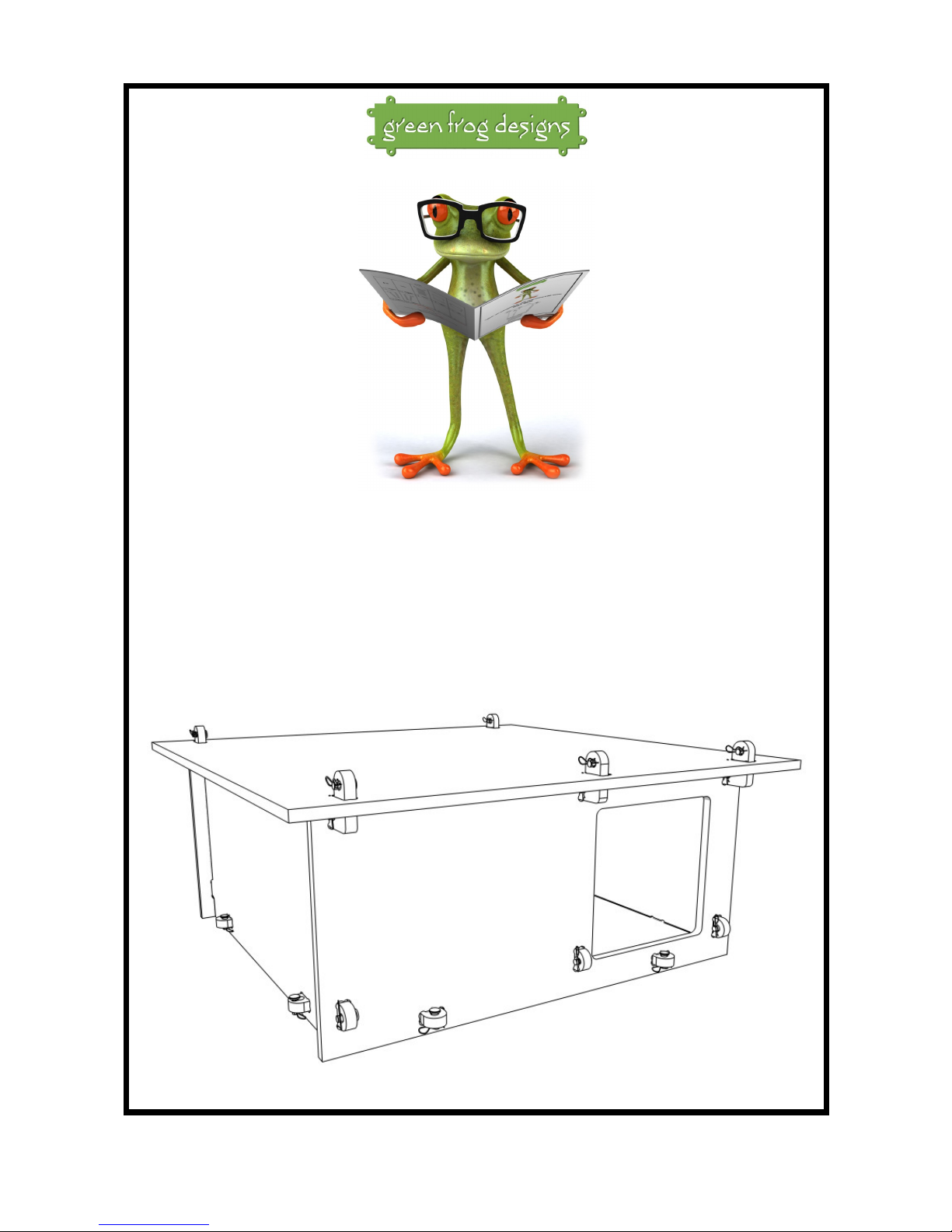
HOW TO ASSEMBLE, USE AND CARE FOR YOUR
Hedgehog House
Printed on recycled paper © green frog designs limited 2010 Page 1 of 5
Page 2
RECYCLED & RECYCLABLE
Products from green frog designs are made, wherever possible,
from materials that are recycled. Where this is not practical, we
always try to use materials that are suitable for recycling.
Our plastic is made from recycled waste plastic, predominantly
plastic wrapping and carrier bags. By choosing our products,
rather than those made from virgin plastic, you are helping to
restrict the amount of new plastic being made. We recycle all
our waste plastic and, of course, our products themselves can
be recycled (if they ever wear out!!).
The recycled plastic we use is incredibly tough, but is as easily
worked as wood. There is no need for preservative treatment
with insecticides or fungicides, and structures won’t splinter or
crack, so they retain their structural integrity well. The plastic is
resistant to UV light, so it retains its colour well, and is pretty
much impervious to atmospheric pollutants and seasonal climatic actions such as freeze–thaw.
It insulates quite well, and is also resistant to chewing. These properties mean that it retains its
appearance, colour and functionality for much longer than timber.
The sheets of recycled plastic have a very uniform thickness, and so are ideally suited to our hightechnology manufacturing process, which uses computer-controlled machines to cut shapes to
accuracies better than 0.1mm.
We also use some metal components to fix parts together. The metals used are either stainless
steel or other rust-resistant alloy, so they have a very long lifetime. They are also suitable for
recycling.
Our packaging and literature is all made from recycled materials wherever possible. For example,
assembly instructions are printed on recycled paper, and we use recycled plastic bubble-wrap in
our packaging. Even our business cards are made from 80% recycled card.
In other words: Fun, functional products that don't cost the Earth!
HOW TO FIT A CLEVIS PIN (IF USED)
HOW TO FIT A LINCH PIN (IF USED)
You only need to move the ring slightly away from the bar. They are designed to spring closed, so watch your fingers!
Printed on recycled paper © green frog designs limited 2010 Page 2 of 5
Page 3
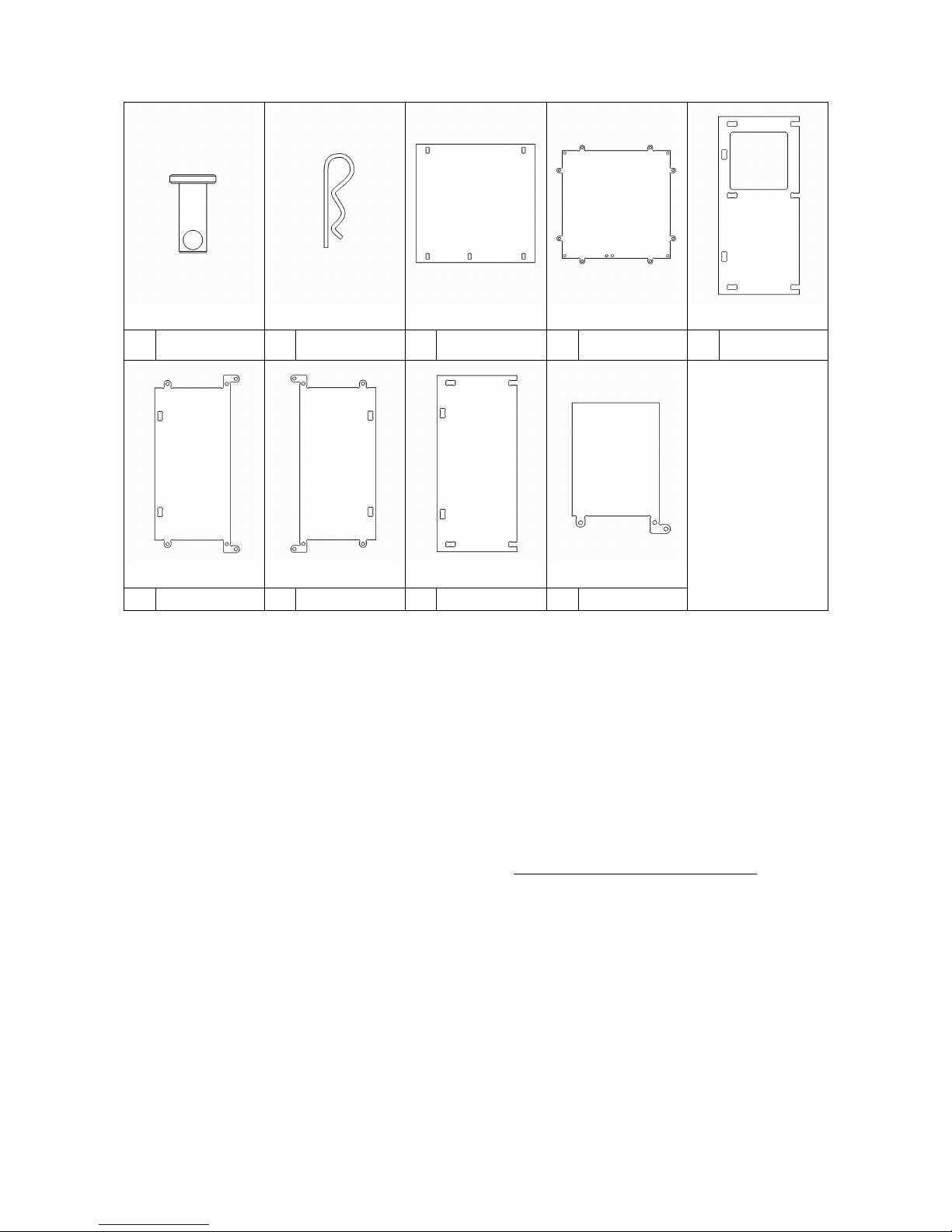
PARTS (Not to scale)
23x
Medium Clevis Pin
23x
R-Clip
1x
Roof
1x
Floor
1x
Front Wall
1x
Left Wall
1x
Right Wall
1x
Rear Wall
1x
Centre Wall
DIMENSIONS
Dimensions: 50(w) x 23(h) x 50(d) cm
TOOLS REQUIRED
Sharp knife (e.g. Stanley Knife) or Sand Paper
PRE-ASSEMBLY CHECKS
Prior to assembly, check that you have all the required parts. Please be aware that, being a recycled material, some minor
surface blemishes or defects may have occurred during manufacture. These will not affect the functionality of your product.
Trim any excess plastic using sand paper or a sharp knife. (NOTE: Be careful to cut away from yourself.)
If any parts are missing, please email [email protected]
Please state the part number, quantity missing, your phone number and your full postal address.
SPARE PARTS
Spare parts are available to order online via our website: www.greenfrogdesigns.co.uk
Printed on recycled paper © green frog designs limited 2010 Page 3 of 5
Page 4
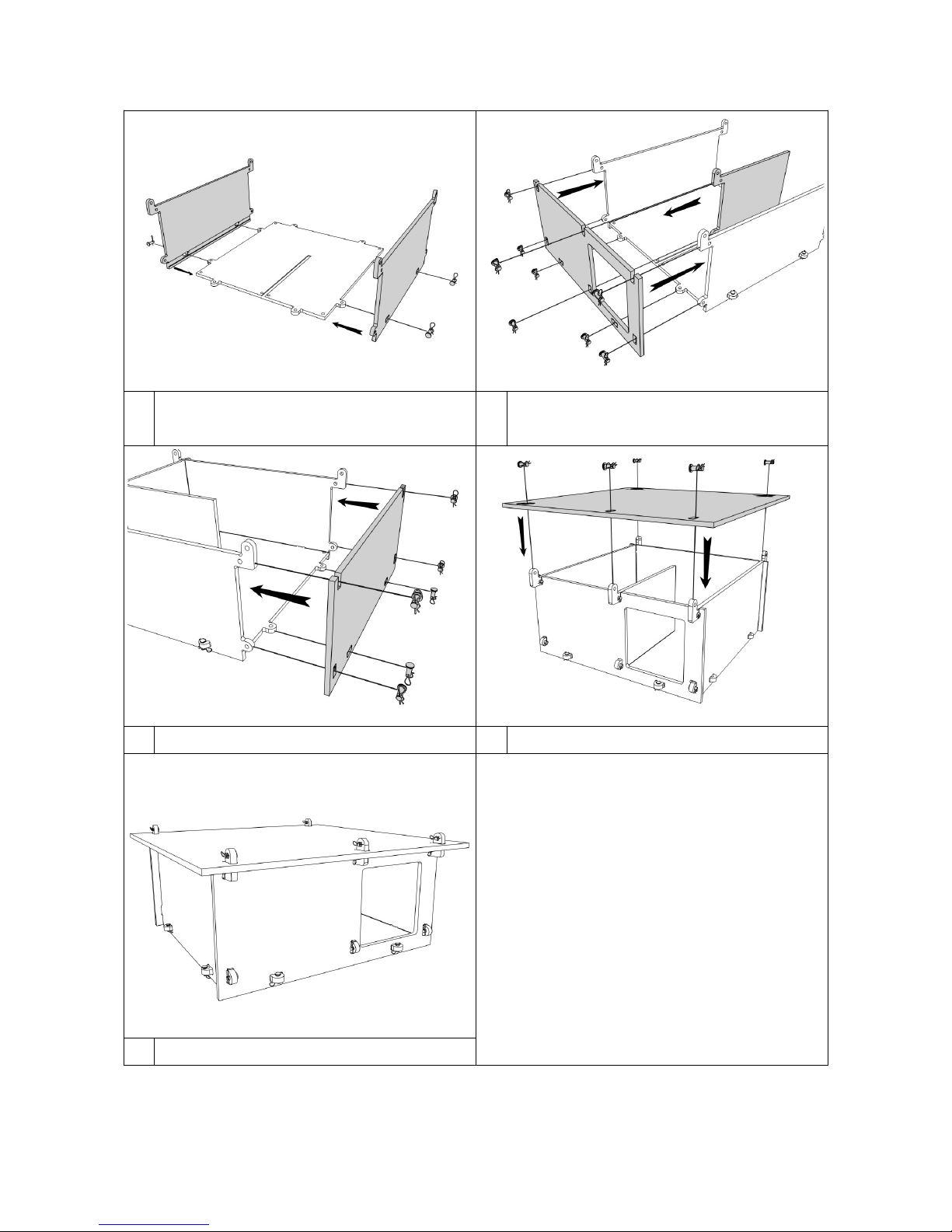
HOW TO ASSEMBLE
1
Attach the Left Wall and the Right Wall to the Floor using
Clevis Pins and R-Clips. Ensure the double drain holes are
to the front, and the pattern is innermost.
2
Attach the Front Wall using Clevis Pins, then attach the
Centre Wall to the Front wall.
3
Attach the Rear Wall using Clevis Pins and R-Clips.
4
Attach the Roof using Clevis Pins and R-Clips.
5
Finished!
Printed on recycled paper © green frog designs limited 2010 Page 4 of 5
Page 5

INFORMATION
This house will provide a warm, dry, safe place for hedgehogs to hibernate in your garden. It has
a central divider to provide an entrance corridor and separate sleeping area.
Hedgehogs can often be found nesting in gardens under piles of logs or old sheds, or in compost
heaps. But you can provide a hedgehog with a safer place to hibernate, and encourage it to
become resident in your garden. If the house is found suitable, a female may have her babies in it
during the spring.
In the autumn, hedgehogs will begin to collect leaves, grass, bracken, straw and other materials
to line the house, so you can encourage this process by putting some straw or dry leaves in the
hedgehog house and putting it where it will not be disturbed – under a hedge is ideal. The
entrance should face South for added protection from the elements.
The house should then be covered with soil, twigs and leaves to make a protective and
camouflaged dome. The entrance must be kept clear and you should never disturb the hedgehog
at any time the nest box is in use, and particularly during the winter when the hedgehogs are
hibernating.
The house should be cleaned in the spring when no longer inhabited - if you put one small twig
across the entrance, and after three or four days this is moved, you will be able to tell if the
house is still in use. The reason you wait three or four days is because sometimes the female
hedgehog doesn't leave the nest for several days after she has given birth.
Printed on recycled paper © green frog designs limited 2010 Page 5 of 5
 Loading...