

Page 1
Date Printed: 12/4/2017 Product: TV-4
SODIUM HYPOCHLORITE
2.5-10
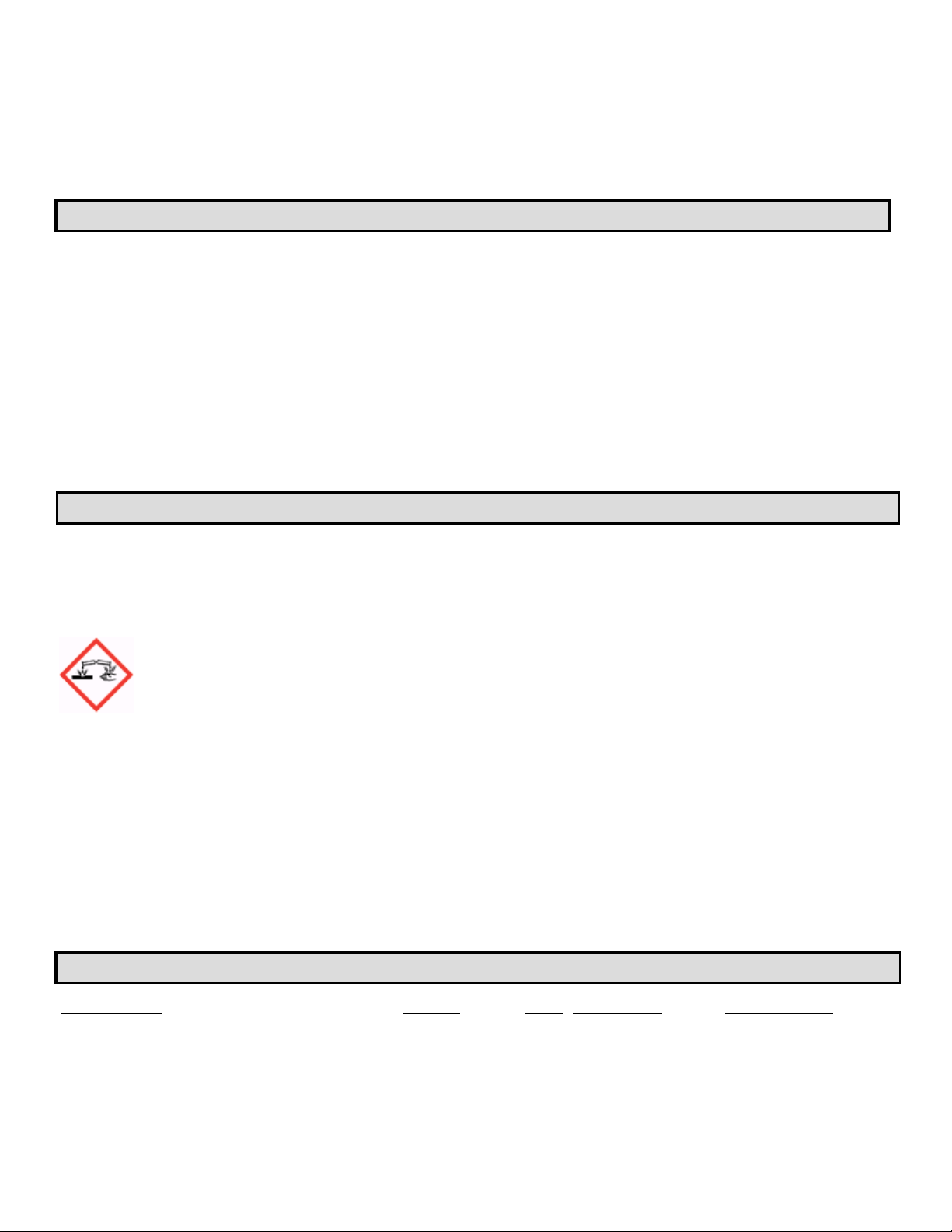
GHS05
H314
SODIUM HYDROXIDE
0.1-1.0
GHS05-GHS07
H290-312-314
Safety Data Sheet
1. Identification
Product Information:
Product Name:
Recommended Use:
Application Method:
Supplied by:
Emergency Telephone:
TV-4
House & Siding Wash
Exterior House Cleaner
Refer to Product Label
GPM
201 Jandus Road
Cary, IL 60013
Telephone: (847) 639-5383
(866)257-3981
2. Hazards Identification
EMERGENCY OVERVIEW: Corrosive Liquid.
GHS Classification
Eye Dam. 1
Symbol(s) of Product
Signal Word
Danger
Possible Hazards
4% of the mixture consists of ingredients of unknown acute toxicity
GHS HAZARD STATEMENTS
Serious Eye Damage, category 1 H318 Causes serious eye damage.
GHS LABEL PRECAUTIONARY STATEMENTS
P280 Wear protective gloves/protective clothing/eye protection/face protection.
P305+P351+P338 IF IN EYES: Rinse cautiously with water for several minutes. Remove contact lenses, if
present and easy to do. Continue rinsing.
P310 Immediately call a POISON CENTER or doctor/physician.
3. Composition/Information on Ingredients
Chemical Name CAS-No. Wt. % GHS Symbols GHS Statements
7681-52-9
1310-73-2
The text for GHS Hazard Statements shown above (if any) is given in the "Other information" Section.
Page 1 / 6
Page 2
Date Printed: 12/4/2017 Product: TV-4
4. First-aid Measures
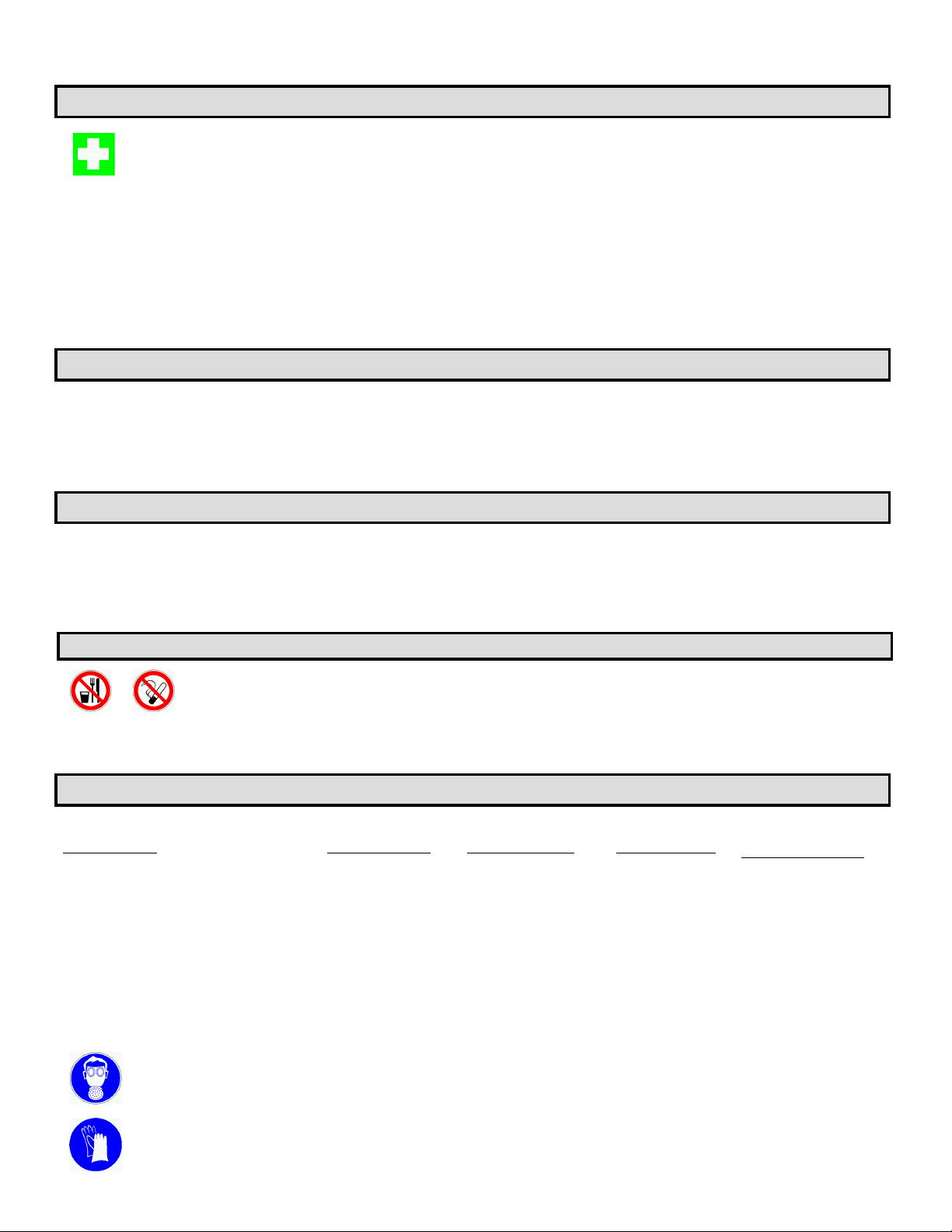
FIRST AID - INHALATION: Remove person to fresh air. If signs/symptoms continue, get medical attention.
FIRST AID - SKIN CONTACT: REMOVE CONTAMINATED CLOTHING. WASH SKIN WITH SOAP AND WATER. IF IRRITATION
PERSISTS OR IF CONTACT HAS BEEN PROLONGED OBTAIN MEDICAL ATTENTION. FLUSH WITH WATER.
FIRST AID - EYE CONTACT: FLUSH WITH LARGE AMOUNTS OF WATER IMMEDIATELY AND REPEATEDLY AND SEEK
PROMPT MEDICAL ATTENTION.
FIRST AID - INGESTION: Due to possible aspiration into the lungs, DO NOT induce vomiting if ingested. Have the victim drink 8 to
10 ounces (240 - 300 ml) of water to dilute the material in the stomach. If vomiting occurs naturally, have the victim lean forward to
reduce the risk of aspiration. Consult a physician immediately.
5. Fire-fighting Measures
UNUSUAL FIRE AND EXPLOSION HAZARDS: Container may rupture on heating.
SPECIAL FIREFIGHTING PROCEDURES: Use a self-contained breathing apparatus with full facepiece operated in pressure-
demand or other positive pressure mode. USE WATER SPRAY TO KEEP FIRE EXPOSED CONTAINERS COOL.
EXTINGUISHING MEDIA: Carbon Dioxide, Dry Chemical, Foam, Water Fog
6. Accidental Release Measures
ENVIRONMENTAL PRECAUTIONS: No Information
STEPS TO BE TAKEN IN CASE MATERIAL IS RELEASED OR SPILLED: ISOLATE HAZARD AREA AND KEEP UNNECESSARY
PEOPLE AWAY. DO NOT ALLOW THE LIQUID TO ENTER INTO ANY SEWERS, ONTO THE GROUND OR INTO ANY BODY OF
WATER. FOR LARGE SPILLS, USE A DIKE AND PUMP INTO APPROPRIATE CONTAINERS. SMALL SPILLS, DILUTE WITH
WATER AND RECOVER OR USE NON-COMBUSTIBLE ABSORBENT MATERIAL AND SHOVEL INTO WASTE CONTAINERS.
7. Handling and Storage
HANDLING: KEEP FROM FREEZING.
STORAGE: Store in a cool dry area. KEEP OUT OF REACH OF CHILDREN.
8. Exposure Controls/Personal Protection
Ingredients with Occupational Exposure Limits
Chemical Name ACGIH TLV-TWA ACGIH-TLV STEL OSHA PEL-TWA
SODIUM HYPOCHLORITE N.E. 2 mg/m3 N.E. N.E.
SODIUM HYDROXIDE 2 mg/m3 N.E. 2 mg/m3 N.E.
Further Advice: MEL = Maximum Exposure Limit OES = Occupational Exposure Standard SUP = Supplier's Recommendation
Sk = Skin Sensitizer N.E. = Not Established
OSHA PEL-CEILING
Personal Protection
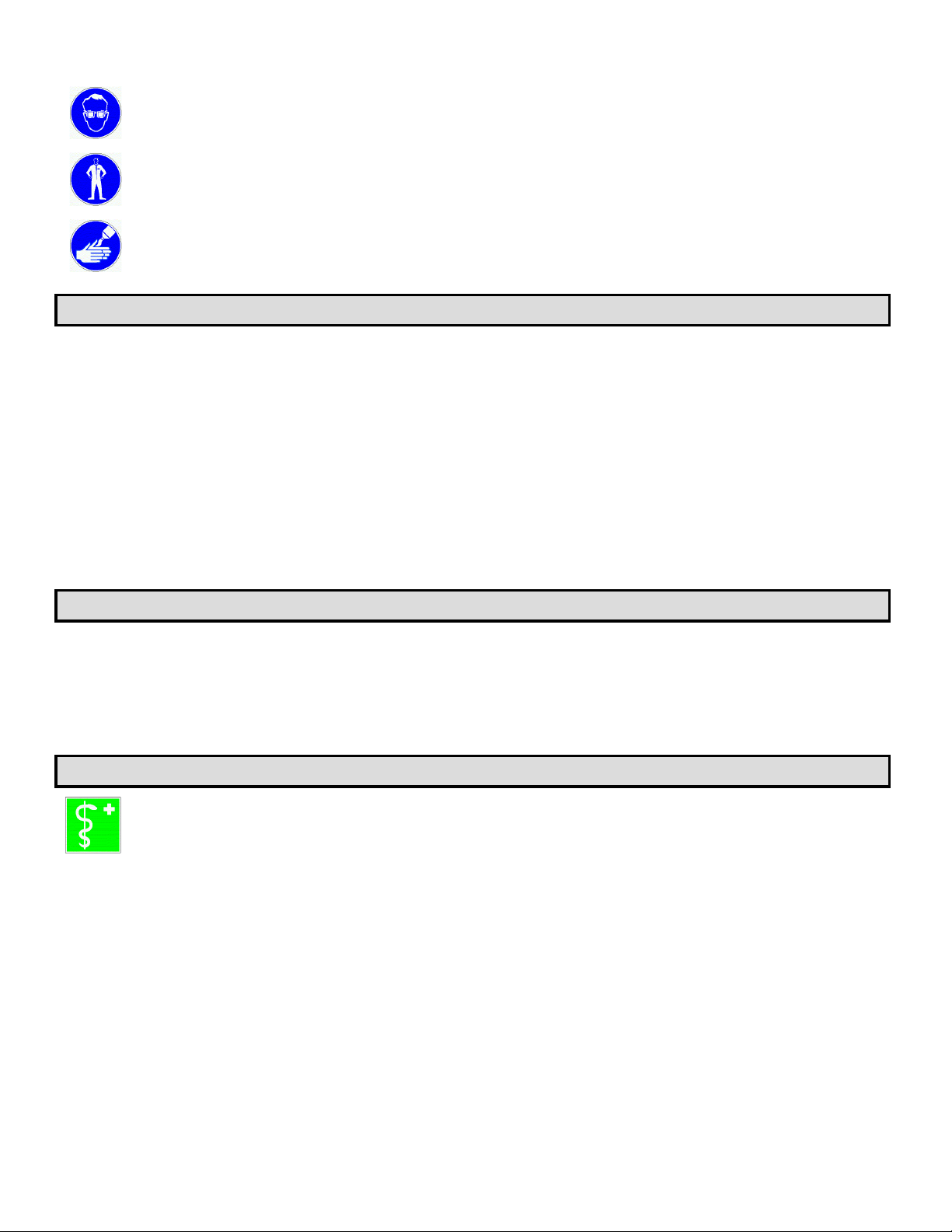
RESPIRATORY PROTECTION: Respirator use is not expected to be necessary under normal conditions of handling.
In emergency situations, use of a NIOSH-approved respirator may be required.
SKIN PROTECTION: PVC or other plastic material glovesNitrile rubberNatural Rubber
Page 2 / 6
Page 3
Date Printed: 12/4/2017 Product: TV-4
EYE PROTECTION: Safety goggles
OTHER PROTECTIVE EQUIPMENT: EYE WASH AND SAFETY SHOWERS SHOULD BE READILY AVAILABLE.
HYGIENIC PRACTICES: Wash hands before eating, drinking, or smoking.
9. Physical and Chemical Properties
Straw Colored Liquid Liquid
Fresh Scent Odor
Density, g/cm3:
Solubility in Water:
Decomposition temperature, °C
Boiling Range, °C:
Combustibility:
(See "Other information" Section for abbreviation legend)
0.000
No Information
No Information
No Information
98 - 104
Does not Support Combustion
Slower than Ether No Information
Lighter than Air No Information
Physical State:Appearance:
Odor Threshold:Odor:
pH:
Viscosity:Freeze Point, °C:
Partition Coefficient, n-octanol/
water:
Explosive Limits, %:
Flash Point, °C:
Auto-Ignition Temperature, °CEvaporation Rate:
Vapor Pressure, mmHg:Vapor Density:
No Information
12.0 - 13.0
No Information
No Information
N/A
Not Applicable
10. Stability and Reactivity
STABILITY: Possible incompatibility with alkali sensitive materials. THIS MATERIAL IS STABLE UNDER NORMAL STORAGE AND
HANDLING CONDITIONS.
CONDITIONS TO AVOID: KEEP FROM FREEZING.
INCOMPATIBILITY: ACIDS.
HAZARDOUS DECOMPOSITION PRODUCTS: MAY GENERATE TOXIC OR IRRITATING COMBUSTION PRODUCTS.
11. Toxicological Information
Practical Experiences
EFFECT OF OVEREXPOSURE - INHALATION: Harmful if inhaled. Can damage nasal and respiratory passages.
EFFECT OF OVEREXPOSURE - SKIN CONTACT: Prolonged and repeated skin contact may cause moderate to severe skin
irritation and possibly burns.
EFFECT OF OVEREXPOSURE - EYE CONTACT: Direct eye contact may cause severe irritation or burns. If not immediately
removed, may cause permanent eye damage.
EFFECT OF OVEREXPOSURE - INGESTION: May be harmful or fatal if swallowed. Can result in damage to throat, esophagus and
stomach.
EFFECT OF OVEREXPOSURE - CHRONIC HAZARDS: No Information
CARCINOGENICITY: No Information
PRIMARY ROUTE(S) OF ENTRY: Eye Contact, Ingestion, Inhalation, Skin Contact
Page 3 / 6
Page 4
Date Printed: 12/4/2017 Product: TV-4
Acute Toxicity Values
The acute effects of this product have not been tested. Data on individual components are tabulated below
CAS-No. Chemical Name Oral LD50 Dermal LD50 Vapor LC50
7681-52-9 SODIUM HYPOCHLORITE 3000 N.I. N.I.
1310-73-2 SODIUM HYDROXIDE 5,000 mg/kg 1,350 mg/kg N.I.
N.I. = No Information
12. Ecological Information
ECOLOGICAL INFORMATION: No Information
13. Disposal Information
Product
DISPOSAL METHOD: No Information
STEPS TO BE TAKEN IN CASE MATERIAL IS RELEASED OR SPILLED: ISOLATE HAZARD AREA AND KEEP UNNECESSARY
PEOPLE AWAY. DO NOT ALLOW THE LIQUID TO ENTER INTO ANY SEWERS, ONTO THE GROUND OR INTO ANY BODY OF
WATER. FOR LARGE SPILLS, USE A DIKE AND PUMP INTO APPROPRIATE CONTAINERS. SMALL SPILLS, DILUTE WITH
WATER AND RECOVER OR USE NON-COMBUSTIBLE ABSORBENT MATERIAL AND SHOVEL INTO WASTE CONTAINERS.
14. Transport Information
SPECIAL TRANSPORT PRECAUTIONS: No special transport precautions are necessary.
DOT Proper Shipping Name:
DOT Technical Name: sodium hypochlorite
DOT Hazard Class: 3266
Corrosive liquid, basic, inorganic,
n.o.s.
8 DOT UN/NA Number:
Packing Group:
Hazard SubClass:
Resp. Guide Page: No Information
II
No Information
15. Regulatory Information
U.S. Federal Regulations:
CERCLA - SARA Hazard Category
This product has been reviewed according to the EPA ‘Hazard Categories’ promulgated under Sections 311 and 312 of the
Superfund Amendment and Reauthorization Act of 1986 (SARA Title III) and is considered, under applicable definitions, to
meet the following categories:
Serious eye damage or eye irritation
SARA SECTION 313:
This product contains the following substances subject to the reporting requirements of Section 313 of Title III of the
Superfund Amendment and Reauthorization Act of 1986 and 40 CFR part 372:
No Sara 313 components exist in this product.
TOXIC SUBSTANCES CONTROL ACT:
This product contains the following chemical substances subject to the reporting requirements of TSCA 12(B) if exported from
the United States:
No TSCA components exist in this product.
Page 4 / 6
Page 5
Date Printed: 12/4/2017 Product: TV-4
U.S. State Regulations:
NEW JERSEY RIGHT-TO-KNOW:
The following materials are non-hazardous, but are among the top five components in this product.
Chemical Name CAS-No.
WATER 7732-18-5
PENNSYLVANIA RIGHT-TO-KNOW
The following non-hazardous ingredients are present in the product at greater than 3%.
Chemical Name
WATER 7732-18-5
CALIFORNIA PROPOSITION 65 CARCINOGENS
Warning: The following ingredients present in the product are known to the state of California to cause Cancer:
No Proposition 65 Carcinogens exist in this product.
CALIFORNIA PROPOSITION 65 REPRODUCTIVE TOXINS
CAS-No.
Warning: The following ingredients present in the product are known to the state of California to cause birth defects, or other
reproductive hazards.
No Proposition 65 Reproductive Toxins exist in this product.
International Regulations: As follows -
CANADIAN WHMIS:
This MSDS has been prepared in compliance with Controlled Product Regulations except for the use of the 16 headings.
WHMIS Class
No Information
16. Other Information
Revision Date:
Reason for revision: No Information
Datasheet produced by: Regulatory Department
12/4/2017
HMIS Ratings:
Health: 3 Flammability: 0 Reactivity: 2 Personal Protection: N.I.
Text for GHS Hazard Statements shown in Section 3 describing each ingredient:
H290 May be corrosive to metals.
H312 Harmful in contact with skin.
H314 Causes severe skin burns and eye damage.
Icons for GHS Pictograms shown in Section 3 describing each ingredient:
Supersedes Date:
New MSDS
GHS05
Page 5 / 6
Page 6

Date Printed: 12/4/2017 Product: TV-4
GHS07
Legend: N.A. - Not Applicable, N.E. - Not Established, N.D. - Not Determined
The information on this sheet corresponds to our present knowledge. It is not a specification and it does not guarantee specific
properties. The information is intended to provide general guidance as to health and safety based upon our knowledge of the
handling, storage, and use of the product. It is not applicable to unusual or non-standard uses of the product where instructions and
recommendations are not followed.
Page 6 / 6
 Loading...