

Page 1
BCR-ABL say
GXMTB/RIF-10GXMTB/RIF-10
301-0191 Rev. C, May 2012
In Vitro Diagnostic Medical Device
Xpert MTB/RIF
R
Page 2

Copyright © Cepheid. Cepheid®, the Cepheid logo, GeneXpert®, and Xpert® are trademarks of Cepheid.
This product is licensed under US Patent No. 5,851,767 and corresponding claims of any non-US counterpart(s) thereof.
This product is sold under license from the Public Health Research Institute and may be used under PHRI patent rights only for human in vitro
diagnostics.
NO OTHER RIGHTS ARE CONVEYED EXPRESSLY, BY IMPLICATION OR BY ESTOPPEL TO ANY OTHER PATENTS. FURTHERMORE, NO RIGHTS FOR RESALE
ARE CONFERRED WITH THE PURCHASE OF THIS PRODUCT.
Page 3

English
In Vitro Diagnostic Medical Device
PROPRIETARY NAME
Xpert® MTB/RIF Assay
COMMON OR USUAL NAME
Xpert MTB/RIF Assay
A. INTENDED USE
The Xpert MTB/RIF Assay for use with the Cepheid GeneXpert® system is a semi-quantitative,
nested real-time PCR in-vitro diagnostic test for the detection of:
• Mycobacterium tuberculosis complex DNA in sputum samples or concentrated sediments prepared
from induced or expectorated sputa that are either acid-fast bacilli (AFB) smear positive or
negative
• Rifampin-resistance associated mutations of the rpoB gene in samples from patients at risk for
rifampin resistance
The Xpert MTB/RIF Assay is intended for use with specimens from untreated patients for whom
there is clinical suspicion of tuberculosis (TB). Use of the Xpert MTB/RIF Assay for the detection of
M. tuberculosis (MTB) or determination of rifampin susceptibility has not been validated for patients
who are receiving treatment for tuberculosis.
B. SUMMARY AND EXPLANATION
Globally, about 2 billion people are infected with MTB.1 Every year almost 9 million people develop
active disease, and 2 million people die of the illness. Active MTB, which is predominantly
pulmonary in nature, is a highly infectious airborne disease. Given the infectious nature of MTB, fast
and accurate diagnosis is an important element of MTB treatment and control.
Treatment involves prolonged administration of multiple drugs and is usually highly effective.
However, MTB strains can become resistant to one or more of the drugs, which makes cure difficult
to achieve. Four common first-line drugs used in anti-tuberculosis therapy are:
• Isoniazid (INH)
• Rifampin (RIF or Rifampicin)
• Ethambutol (EMB)
• Pyrazinimide (PZA)
RIF resistance rarely occurs in isolation and usually indicates resistance to a number of other anti-TB
2
drugs.
reported frequency of greater than 95% in such isolates.
disease caused by a bacterial strain that is resistant to at least INH and RIF. Resistance to RIF or
other first-line drugs usually indicates the need for full susceptibility testing, including testing against
second-line agents.
RIF resistance is most commonly seen in multi-drug resistant (MDR-TB) strains and has a
3, 4, 5
MDR-TB is defined as a tuberculous
301-0191 Rev. C, May 2012 1
Page 4

English
Molecular detection of MTB and rpoB gene mutations associated with RIF resistance speeds the
diagnosis of both drug-susceptible and MDR-TB. With the Xpert MTB/RIF Assay, this can be
accomplished in fresh sputum samples and in prepared sediments in less than 2.5 hours. The rapid
detection of MTB and RIF resistance allows the physician to make critical patient management
decisions regarding therapy during the same medical encounter.
C. PRINCIPLE OF THE PROCEDURE
The GeneXpert Dx system integrates and automates sample processing, nucleic acid amplification,
and detection of the target sequences in simple or complex samples using real-time PCR and reverse
transcriptase PCR. The system consists of an instrument, personal computer, barcode scanner, and
preloaded software for running tests on collected samples and viewing the results. The system
requires the use of single-use disposable GeneXpert cartridges that hold the PCR reagents and host
the PCR process. Because the cartridges are self-contained, cross-contamination between samples is
eliminated. For a full description of the system, see the GeneXpert Dx System Operator Manual or
GeneXpert Infinity System Operator Manual.
Xpert MTB/RIF includes reagents for the detection of MTB and RIF resistance and a Sample
Processing Control (SPC) to control for adequate processing of the target bacteria and to monitor
the presence of inhibitors in the PCR reaction. The Probe Check Control (PCC) verifies reagent
rehydration, PCR tube filling in the cartridge, probe integrity, and dye stability.
The primers in the Xpert MTB/RIF Assay amplify a portion of the rpoB gene containing the 81 base
pair “core” region. The probes are able to differentiate between the conserved wild-type sequence and
mutations in the core region that are associated with RIF resistance.
D. REAGENTS AND INSTRUMENTS
D.1 MATERIAL PROVIDED
The Xpert MTB/RIF kit (GXMTB/RIF-10) contains sufficient reagents to process 10
patient or quality-control specimens.
The kit contains the following items:
•CD
• Assay definition file (ADF)
• Instructions to import ADF into GX software
•Package Insert
• Xpert MTB/RIF cartridges with integrated reaction tubes 10
• Bead 1 (freeze-dried) 2 per cartridge
-Primers
-Probes
-KCl
-MgCl
2
- HEPES, pH 8.0
- Bovine serum albumin (BSA)
2
301-0191 Rev. C, May 2012
Page 5

D. Reagents and Instruments
• Bead 2 (freeze-dried) 2 per cartridge
-Probe
- Polymerase
-KCl
-MgCl
2
-dNTPs
- HEPES, pH 7.2
-BSA
• Bead 3 (freeze-dried)1 per cartridge
- Approximately 6000 non-infectious sample preparation
control spores
• Reagent 1 (tris buffer, EDTA, and surfactants) 4 mL per cartridge
• Reagent 2 (tris buffer, EDTA, and surfactants) 4 mL per cartridge
• Sample Reagent (SR) – sodium hydroxide and isopropanol 10 x 8 mL bottles
• Disposable transfer pipettes 12
Note: The Sample Reagent (SR) solution is clear, ranging from colorless to golden yellow.
Note: Safety Data Sheets (SDS) are available at www.cepheid.com/tests-and-reagents/literature/msds or
www.cepheidinternational.com/tests-and-reagents/literature/msds.
Note: The bovine serum albumin (BSA) in the beads within this product was produced exclusively from bovine
plasma sourced in the United States. The manufacturing of the BSA is also performed in the United
States. No ruminant protein or other animal protein was fed to the animals; the animals passed ante- and
post-mortem testing. During processing, there was no commingling of the material with other animal
materials.
Note: The transfer pipettes have a single mark representing the minimum volume of sample necessary to transfer
to the GX cartridge. Use only for this purpose. All other pipettes must be provided by the laboratory.
D.2 STORAGE AND HANDLING
• Store the Xpert MTB/RIF cartridges and reagents at 2 to 28 °C.
• Do not use reagents or cartridges that have passed the expiration date.
• Do not open a cartridge lid until you are ready to perform testing.
• Process the cartridge within 4 hours after adding the sample to the cartridge.
• The cartridges are stable up to 2 weeks at 2 to 48°C after opening the pouch.
301-0191 Rev. C, May 2012 3
Page 6

English
E. MATERIALS REQUIRED BUT NOT PROVIDED
• GeneXpert Dx system equipped with GX4.0 software or higher (catalog number varies by
configuration): GeneXpert instrument, computer, barcode reader, and operator manual
• Printer (See GeneXpert Dx System Operator Manual or GeneXpert Infinity Operator Manual for
compatibility guidelines)
• Leak-proof, sterile, screw-capped specimen collection containers
• Disposable gloves and eye protection
• Labels or permanent marking pen
• Transfer pipettes for sample processing
F. WARNINGS AND PRECAUTIONS
• Treat all biological specimens, including used cartridges, as if capable of transmitting infectious
agents. Because it is often impossible to know which might be infectious, all biological specimens
should be treated with standard precautions. Guidelines for specimen handling are available from
the U.S. Centers for Disease Control and Prevention
Institute (formerly National Committee for Clinical Laboratory Standards)
6
and the Clinical and Laboratory Standards
7
.
• Wear protective disposable gloves, laboratory coats and eye protection when handling specimens
and reagents. Wash hands thoroughly after handling specimens and test reagents.
• Follow your institution’s safety procedures for working with chemicals and handling biological
samples.
• The performance of Xpert MTB/RIF Assay for the detection of MTB complex has not been
demonstrated from non-respiratory specimens, such as blood, CSF, stool or urine. The
performance of the Xpert MTB/RIF Assay has not been evaluated with specimens processed by
methods other than those described in this package insert.
• When processing more than one sample at a time, open only one cartridge, add the Sample
Reagent-treated sample (or decontaminated, liquefied sample), and close the cartridge before
adding Sample Reagent-treated sample to the next cartridge.
• Do not open the Xpert MTB/RIF cartridge lid except when adding the treated sample.
• Do not use a cartridge that has been dropped or shaken after you have added the treated sample.
• Do not use a cartridge if it appears wet or if the lid seal appears to have been broken.
• Do not use a cartridge that has a damaged reaction tube.
• Each Xpert MTB/RIF cartridge is used to process one test. Do not reuse processed cartridges.
• Check your regional/country hazardous and medical waste disposal requirements. If regulations
(or lack thereof) do not provide clear direction on proper disposal, biological specimens, including
used cartridges, should be treated as capable of transmitting infectious agents. Dispose used
cartridges as hazardous health-care waste in durable waste containers per WHO [World Health
Organization} medical waste handling and disposal guidelines.
• Sample Reagent contains sodium hydroxide (pH > 12.5) and isopropanol. Harmful if swallowed
(H302), causes severe skin burns and eye damage (H314). Highly flammable liquid and vapor
(H225).
4
301-0191 Rev. C, May 2012
Page 7
G. SPECIMEN COLLECTION AND TRANSPORT
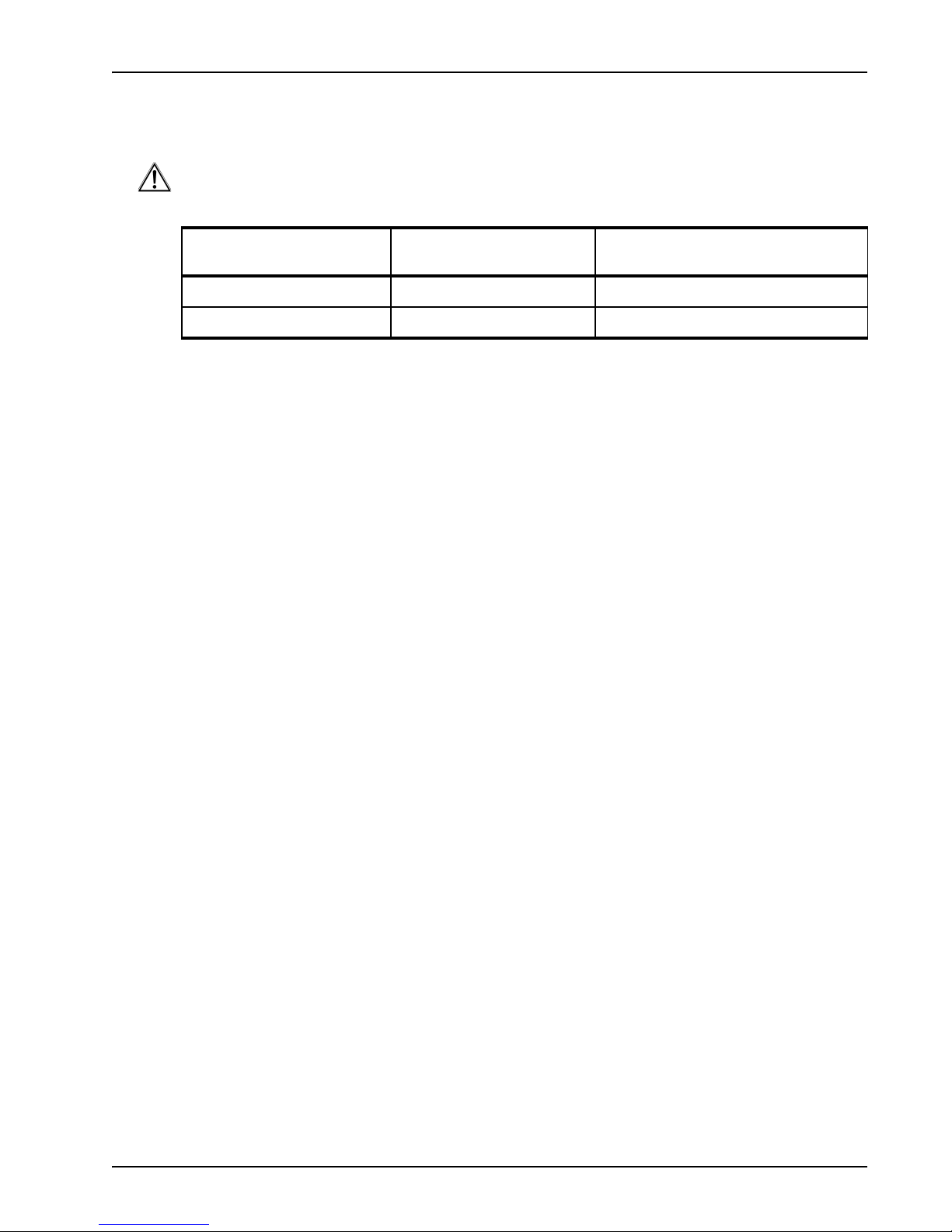
You can process resuspended sediment or fresh sputum with this assay. See Table 1 to determine
adequate specimen volume.
Tab le 1 . Required Specimen Volume
Specimen Type Minimum Volume for One Test
G. Specimen Collection and Transport
Minimum Total Volume for Test and
Retest
Sputum sediment
Fresh sputum
Note: To obtain an adequate fresh sputum specimen, follow the instructions in this section. The patient should
be seated or standing.
G.1 STORAGE AND TRANSPORT
Store and transport specimens at 2 to 8 °C prior to processing whenever possible. However, if
necessary the specimens can be stored at a maximum of 35 °C for 3 days and at 2 to 8 °C for
4 to 10 days.
G.2 SPECIMEN COLLECTION PROCEDURE
1.
Have the patient rinse his or her mouth twice with water.
2.
Open the lid on the sputum collection container.
3.
Have the patient inhale deeply, cough vigorously, and expectorate the material into the
container. Avoid spills or soiling the outside of the container.
4.
Secure the lid on the collection device, and then send the container to the processing area.
H. ASSAY PROCEDURE(S)
0.5 mL 1 mL
1 mL 2 mL
H.1 SPUTUM SEDIMENTS PROCEDURE
Note: Reject specimens with obvious food particles or other solid particulates.
Vol um e R eq ui r em en ts : Sputum sediments prepared according to the method of Kent and
Kubica
RIF Assay. After resuspension, keep at least 0.5 mL of the resuspended sediment for the Xpert
MTB/RIF Assay.
1.
Note: Write on the sides of the cartridge or affix an ID label. Do not put the label on the lid of the cartridge or
2.
Note: Store re-suspended sediments at 2 to 8 °C if they are not immediately processed. Do not store for more
3.
301-0191 Rev. C, May 2012 5
8
and re-suspended in 67mM Phosphate/H2O buffer) can be tested using Xpert MTB/
Label each Xpert MTB/RIF cartridge with the sample ID.
cover the existing 2D barcode on the cartridge.
Transfer at least 0.5 mL of the total resuspended pellet to a conical, screw-capped tube for
the Xpert MTB/RIF using a transfer pipette. Alternatively, the entire sample can be
processed in the original tube.
than 12 hours.
Transfer 1.5 mL of Xpert MTB/RIF Sample Reagent (SR) to 0.5 mL of resuspended
sediment using a transfer pipette.
Page 8
English
Example 1
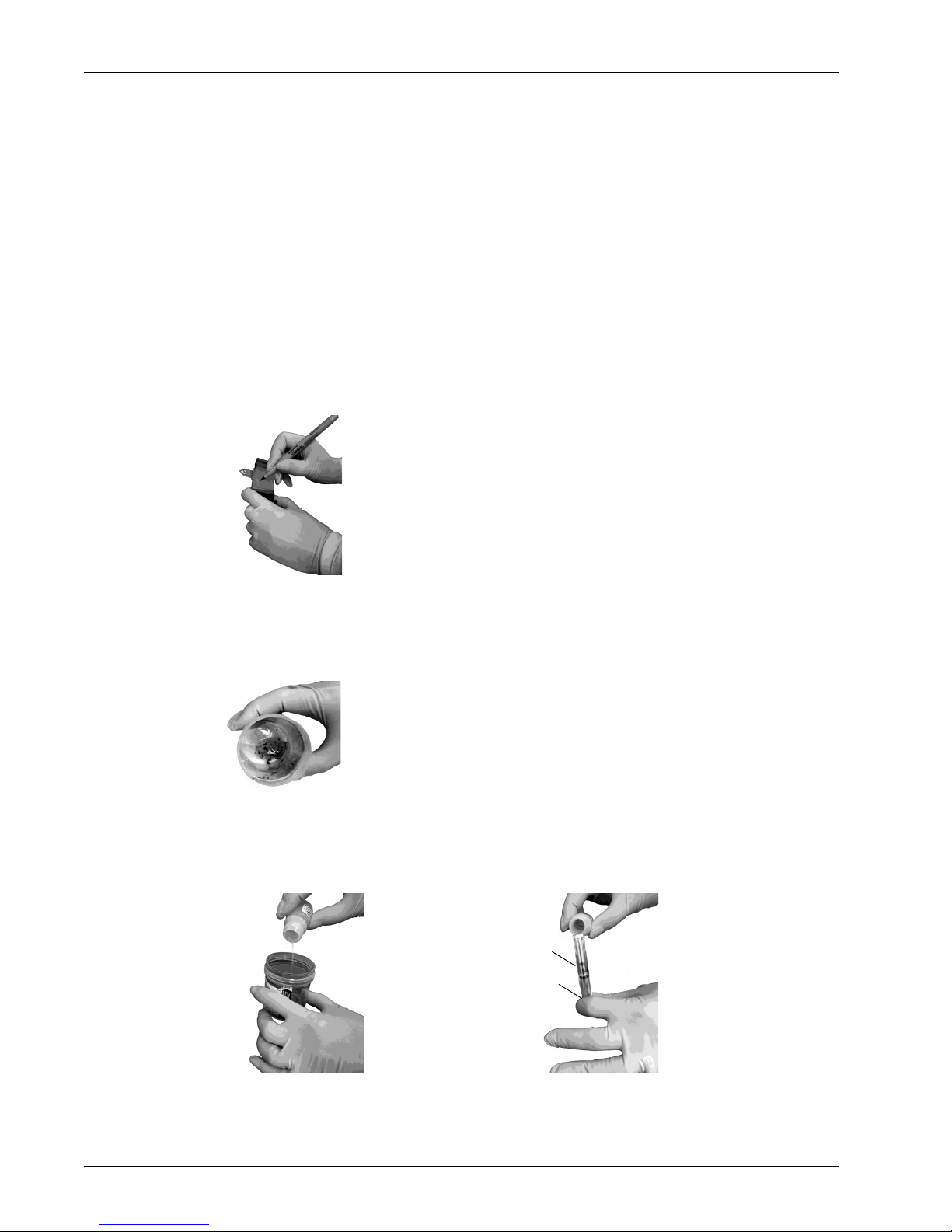
8 mL SR:4 mL sputum
Example 2
2 mL SR:1 mL sputum
Note: Discard the leftover SR
and the bottle in a chemical
waste container.
3 mL line
1 mL sputum
4.
Shake vigorously 10 to 20 times or vortex for at least 10 seconds.
Note: One back-and-forth movement is a single shake.
5.
Incubate for 10 minutes at room temperature, and then shake the specimen vigorously 10
to 20 times or vortex for at least 10 seconds.
6.
Incubate the sample at room temperature for an additional 5 minutes.
H.2 EXPECTORATED SPUTUM SAMPLE PROCEDURE
Note: Reject specimens with obvious food particles or other solid particulates.
1.
Label each Xpert MTB/RIF cartridge with the sample ID.
Note: Write on the sides of the cartridge or affix an ID label. Do not put the label on the lid of the cartridge or
cover the existing 2D barcode on the cartridge.
Figure 1. Writing on the cartridge with a permanent marking pen
2.
In a leak-proof sputum collection container:
A.
Carefully open the lid of the sputum collection container.
Figure 2. Opening the sample container
B.
Pour approximately 2 times the volume of the SR to the sputum (2:1 dilution,
SR:sputum).
Figure 3. Examples of 2:1 dilutions
6
301-0191 Rev. C, May 2012
Page 9
C.
Replace and secure the lid.
D.
Shake vigorously 10 to 20 times or vortex for at least 10 seconds.
Note: One back-and-forth movement is a single shake.
3.
Incubate the sample for 10 minutes at room temperature, and then shake the specimen
vigorously 10 to 20 times or vortex for at least 10 seconds.
4.
Incubate the sample at room temperature for an additional 5 minutes.
H.3 PREPARING THE CARTRIDGE
Note: Start the test within 4 hours of adding the sample to the cartridge.
1.
Open the cartridge lid, and then open the sample container.
2.
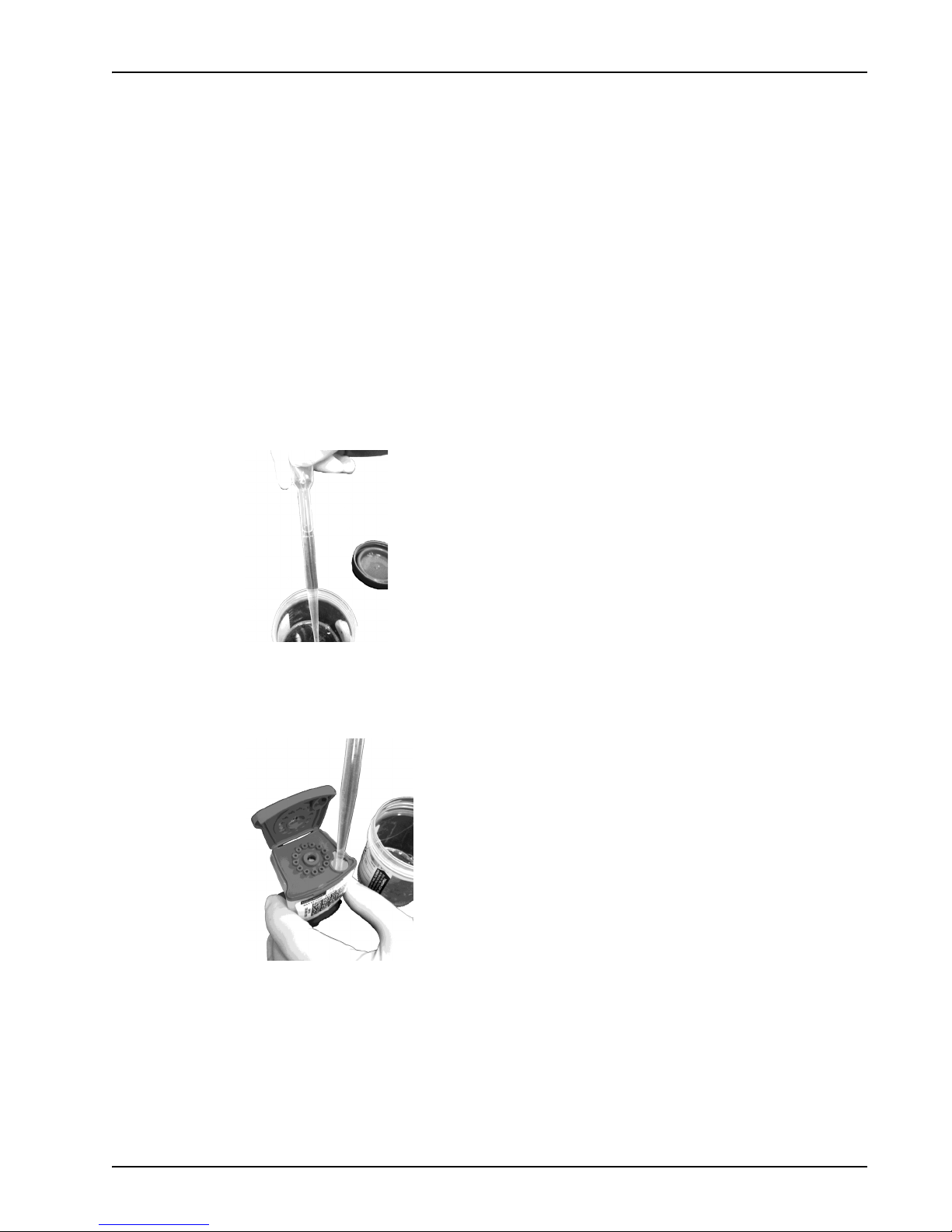
Using the provided transfer pipette, aspirate the liquefied sample to the line on the pipette.
Do not process the sample further if there is insufficient volume. See Figure 4.
H. Assay Procedure(s)
Figure 4. Aspirating to the line on the pipette
3.
Transfer the sample into the sample chamber of the Xpert MTB/RIF cartridge. Dispense
the sample slowly to minimize the risk of aerosol formation. See Figure 5.
Figure 5. Dispensing decontaminated liquefied sample into the sample chamber of the cartridge
4.
Close the cartridge lid firmly.
Important: Be sure to load the cartridge into the GeneXpert Dx instrument and start the
test within 5 hours of preparing the cartridge.
301-0191 Rev. C, May 2012 7
Page 10

English
H.4 STARTING THE TEST
Important: Before you start the test, make sure that the system is running GX 4.0 software
This section lists the basic steps for running the test. For detailed instructions, see the
GeneXpert Dx System Operator Manual or the GeneXpert Infinity System Operator Manual,
depending on the model that is being used.
Note: The steps you follow can be different if the system administrator changed the default workflow of the
1.
Turn on the GeneXpert instrument:
• If using the GeneXpert Dx instrument, first turn on the GX Dx instrument, and then
or
• If using the GeneXpert Infinity instrument, power up the instrument. On the
or higher and that the Xpert MTB/RIF assay definition file is imported into the
software.
system.
turn on the computer. The GeneXpert software will launch automatically.
Windows® desktop, double-click the Software shortcut icon.
2.
Log on to the GeneXpert Dx System software using your user name and password.
3.
In the GeneXpert Dx System window, click Create Test. The Scan Sample ID dialog box
appears.
4.
In the Sample ID box, scan or type the sample ID. Make sure you type the correct sample
ID (sample ID is associated with the test results and is shown in the View Results window
and all the reports). The Scan Cartridge Barcode dialog box appears.
5.
Scan the barcode on the Xpert MTB/RIF cartridge. The Create Test window appears.
Using the barcode information, the software automatically fills the boxes for the following
fields: Select Assay, Reagent Lot ID, Cartridge SN, and Expiration Date.
6.
Click Start Test. Enter your password if requested.
7.
Open the instrument module door with the blinking green light and load the cartridge.
8.
Close the door. The test starts and the green light stops blinking. When the test is finished,
the light turns off.
9.
Wait until the system releases the door lock at the end of the run, then open the module
door and remove the cartridge.
8
301-0191 Rev. C, May 2012
Page 11
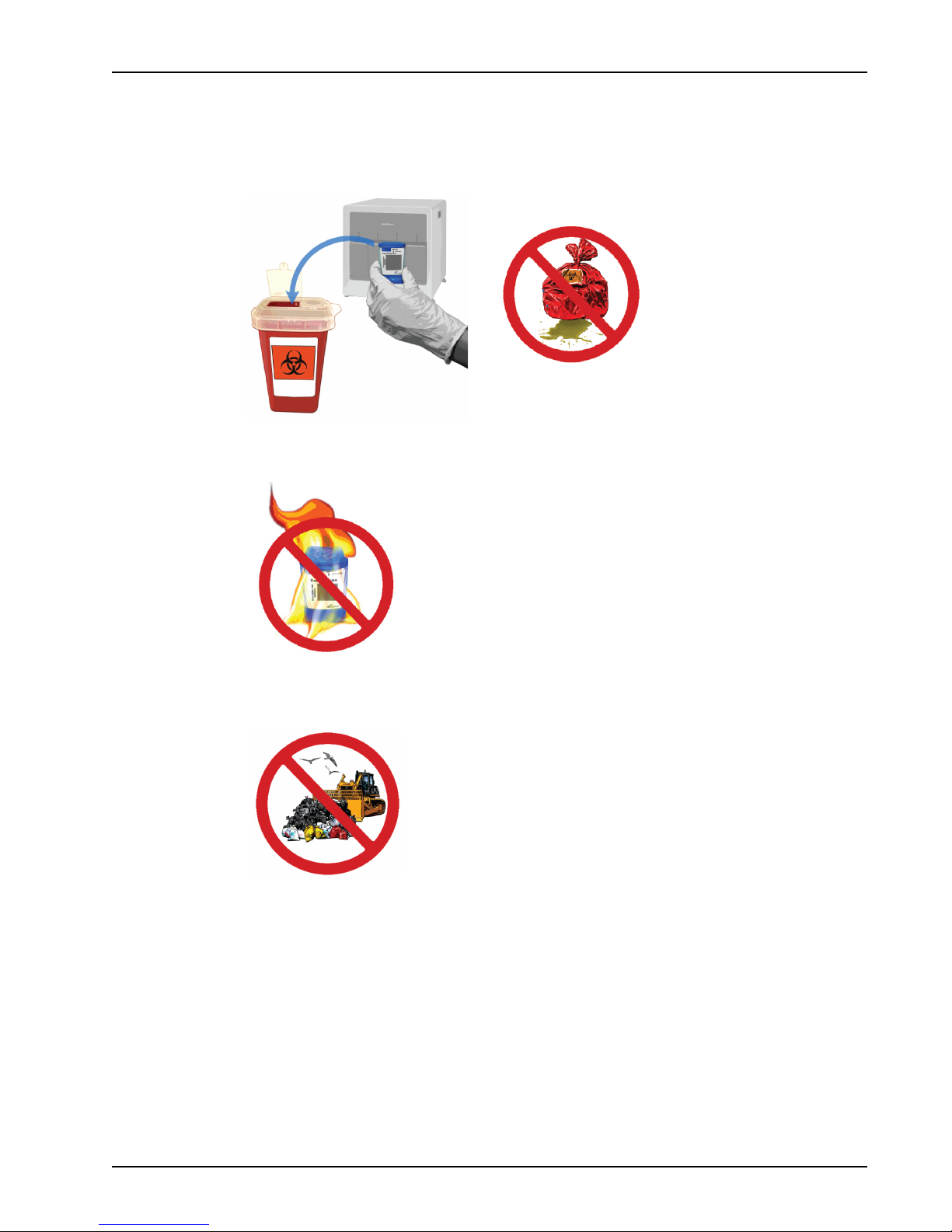
H.5 DISCARDING USED CARTRIDGES
1.
Discard used cartridges in a hard-sided biohazard container according to your institution’s
standard practices.
2.
Do not burn used cartridges.
H. Assay Procedure(s)
3.
Do not discard used cartridges in a landfill or dump.
H.6 VIEWING AND PRINTING RESULTS
For detailed instructions on how to view and print the results, see the Cepheid GeneXpert Dx
System Operator Manual or the GeneXpert Infinity System Operator Manual, depending on the
model that is being used.
301-0191 Rev. C, May 2012 9
Page 12
English
I. QUALITY CONTROL
Each test includes a Sample Processing Control (SPC) and Probe Check Control (PCC).
SPC: Ensures the sample was correctly processed. The SPC contains noninfectious spores in the
form of a dry spore cake that is included in each cartridge to verify adequate processing of MTB. The
SPC verifies that lysis of MTB has occurred if the organisms are present and verifies that specimen
processing is adequate. Additionally, this control detects specimen-associated inhibition of the realtime PCR assay.
The SPC should be positive in a negative sample and can be negative or positive in a positive sample.
The SPC passes if it meets the validated acceptance criteria. The test result will be “Invalid” if the
SPC is not detected in a negative test.
PCC: Before the start of the PCR reaction, the GeneXpert Dx System measures the fluorescence
signal from the probes to monitor bead rehydration, reaction-tube filling, probe integrity and dye
stability. PCC passes if it meets the assigned acceptance criteria.
J. INTERPRETATION OF RESULTS
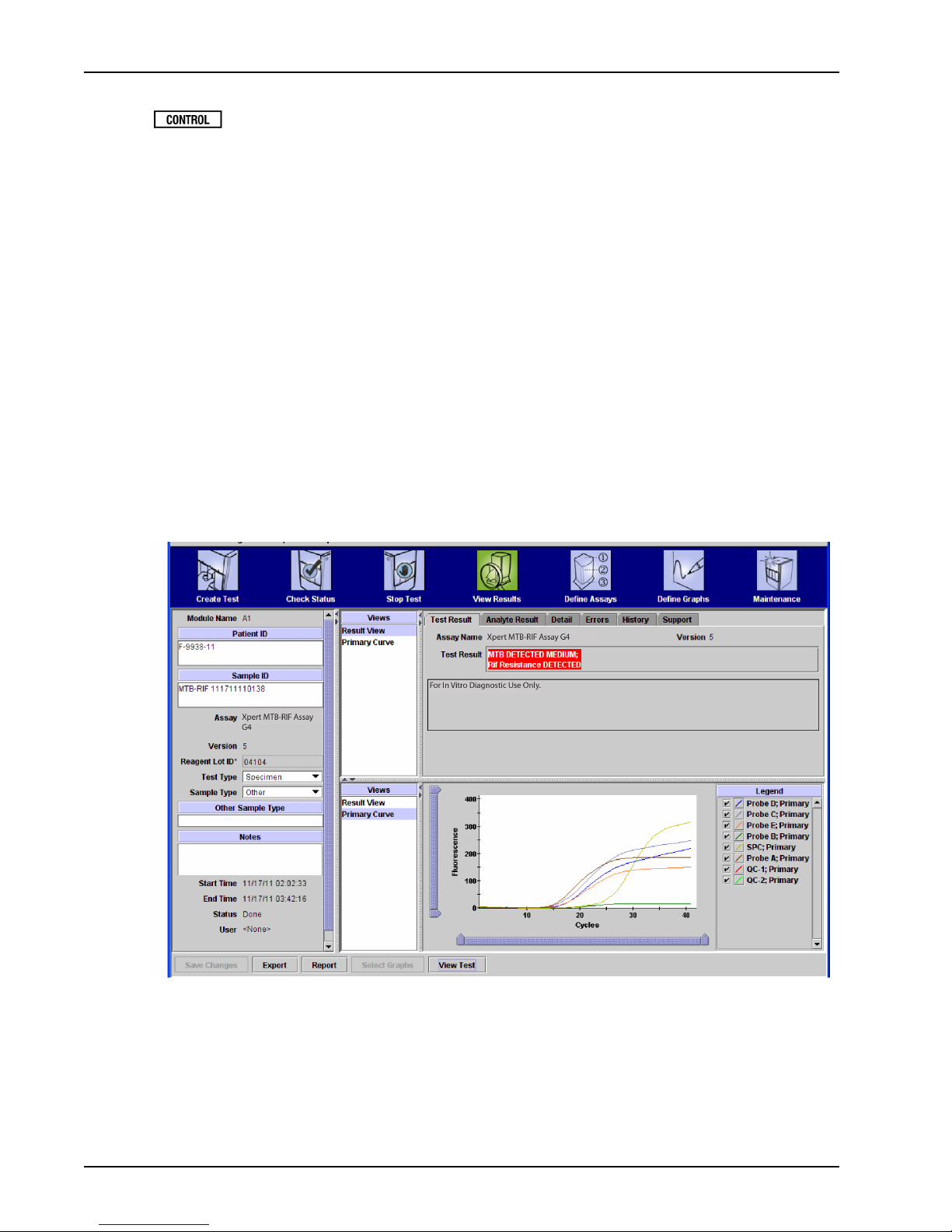
The GeneXpert Instrument system generates the results from measured fluorescent signals and
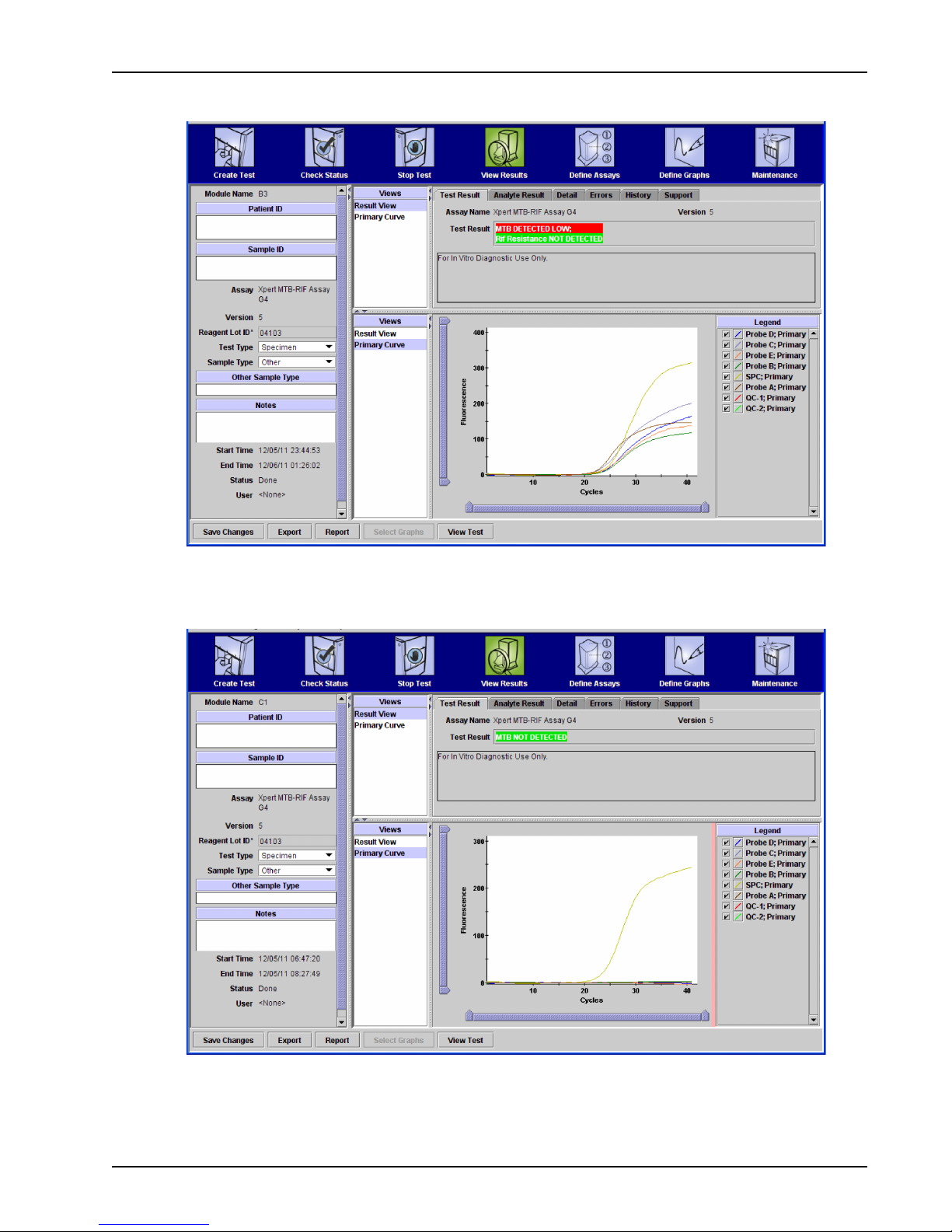
embedded calculation algorithms. The results can be seen in the View Results window. See Figures
6, 7, and 8 for specific examples, and see Table 2 for a list of all possible results.
Figure 6. MTB DETECTED MEDIUM; Rif Resistance DETECTED (Privileged User View)
10
301-0191 Rev. C, May 2012
Page 13
J. Interpretation of Results
Figure 7. MTB DETECTED LOW; Rif Resistance NOT DETECTED (Privileged User View)
Figure 8. MTB NOT DETECTED (Privileged User View)
301-0191 Rev. C, May 2012 11
Page 14

English
Tab le 2 . Xpert MTB/RIF Assay Results and Interpretations
Result Interpretation
MTB DETECTED;
Rif Resistance DETECTED
MTB DETECTED;
Rif Resistance NOT DETECTED
MTB DETECTED;
Rif Resistance INDETERMINATE
MTB Not Detected
INVALID
ERROR
NO RESULT
The MTB target is present within the sample:
• A mutation in the rpoB gene has been detected that falls within the valid delta Ct
setting.
• SPC: NA (not applicable). An SPC signal is not required because MTB
amplification can compete with this control.
• Probe Check: PASS. All probe check results pass.
The MTB target is present within the sample:
• No mutation in the rpoB gene has been detected.
• SPC: NA (not applicable). An SPC signal is not required because MTB
amplification can compete with this control.
• Probe Check: PASS. All probe check results pass.
The MTB target is present within the sample:
• RIF resistance could not be determined due to insufficient signal detection.
• SPC: NA (not applicable). An SPC signal is not required because MTB
amplification can compete with this control.
• Probe Check: PASS. All probe check results pass.
The MTB target is not detected within the sample:
• SPC: PASS. The SPC met the acceptance criteria.
• Probe Check: PASS. All probe check results pass.
The presence or absence of MTB cannot be determined. The SPC does not meet the
acceptance criteria, the sample was not properly processed, or PCR was inhibited. Repeat
the test. See the Retest Procedure section of this document.
• MTB INVALID: The presence or absence of MTB DNA cannot be determined.
• SPC: FAIL. The MTB target result is negative, and the SPC Ct is not within valid
range.
• Probe Check: PASS. All probe check results pass.
The presence or absence of MTB cannot be determined. Repeat the test. See the Retest
Procedure section of this document.
• MTB: NO RESULT
• SPC: NO RESULT
• Probe Check: FAIL. All or one of the probe check results failed.
Note: If the probe check passed, the error is caused by a system component failure.
The presence or absence of MTB cannot be determined. Repeat the test. See the Retest
Procedure section of this document. A NO RESULT indicates that insufficient data was
collected. For example, the operator stopped a test that was in progress.
• MTB: NO RESULT
• SPC: NO RESULT
• Probe Check: NA (not applicable)
J.1 REASONS TO REPEAT THE ASSAY
Repeat the test using a new cartridge if one of the following test results occurs:
• An INVALID result indicates that the SPC failed. The sample was not properly processed,
or PCR was inhibited.
• An ERROR result indicates that the PCC failed, and the assay was aborted possibly due to
the reaction tube being filled improperly, a reagent probe integrity problem was detected,
the maximum pressure limits were exceeded or a GeneXpert module failed.
• A NO RESULT indicates that insufficient data were collected. For example, the operator
stopped a test that was in progress.
12
301-0191 Rev. C, May 2012
Page 15

J.2 RETEST PROCEDURE
If you have leftover fresh sputum or reconstituted sediment, always use new SR to
decontaminate and liquefy the sputum before running the assay. See “Assay Procedure(s)” or
“Expectorated Sputum Sample Procedure” on page 6.
If you have sufficient leftover SR-treated sample and are within 5 hours of the initial addition
of SR to the sample, you can use the leftover sample to prepare and process a new cartridge.
When retesting, always use a new cartridge. See “Preparing the Cartridge” on page 7.
K. LIMITATIONS
The performance of the Xpert MTB/RIF was validated using the procedures provided in this
package insert. Modifications to these procedures may alter the performance of the test. Results from
the Xpert MTB/RIF should be interpreted in conjunction with other laboratory and clinical data
available to the clinician.
Because the detection of MTB is dependent on the number of organisms present in the sample,
reliable results are dependent on proper specimen collection, handling, and storage. Erroneous test
results might occur from improper specimen collection, failure to follow the recommended sample
collection procedure, handling or storage, technical error, sample mix-up, or an insufficient
concentration of starting material. Careful compliance to the instructions in this insert is necessary to
avoid erroneous results.
K. Limitations
A positive test result does not necessarily indicate the presence of viable organisms. It is however,
presumptive for the presence of MTB and RIF resistance.
Test results might be affected by antecedent or concurrent antibiotic therapy. Therefore, therapeutic
success or failure cannot be assessed using this test because DNA might persist following
antimicrobial therapy.
Mutations or polymorphisms in primer or probe binding regions may affect detection of new or
unknown MDR-MTB or RIF-resistant strains resulting in a false negative result.
L. PERFORMANCE CHARACTERISTICS
This section lists the performance characteristics and limitations of the Xpert MTB/RIF Assay.
L.1 PERFORMANCE TESTING - CLINICAL
Performance characteristics of the Xpert MTB/RIF Assay for TB and rifampin detection were
evaluated at five institutions in Asia, Europe, Africa and South America.
The study was performed according to the Foundation for Innovative New Diagnostics
(FIND) protocol Xpert MTB Evaluation Study: Evaluation of the FIND/Cepheid Xpert MTB
assay for the detection of pulmonary TB in sputum of symptomatic adults.
Subjects included individuals with symptoms of pulmonary TB and at risk of multi-drug
resistance. For eligible subjects, three sputum samples were obtained for testing with the Xpert
MTB/RIF Assay and reference testing.
The Xpert MTB/RIF Assay performance was compared to:
12
• ZN smear microscopy
• Liquid (Becton Dickinson BACTEC™ 960 MGIT™) and solid (Löwenstein-Jenson)
culture
301-0191 Rev. C, May 2012 13
Page 16

English
• Drug susceptibility testing (DST) on L-J proportion or on MGIT covering at least four
first-line drugs.
• Standard NAAT tests (Gen-Probe Amplified Mycobacterium TB Direct Test and Roche
AMPLICOR® MTB Test) when performed
Samples included sputum specimens collected for routine testing from patients suspected of
tuberculosis infection and at risk for multi-drug resistant TB.
L.2 OVERALL RESULTS
A total of 1448 sputum specimens were tested for MTB and RIF resistance by the Xpert
MTB/RIF Assay, and smear microscopy and bacterial culture. Specimens at three of the
participating sites were also assessed using either the AMPLICOR MTB Test (UCT, South
Africa & India) or the Amplified Mycobacterium TB Direct Test (Azerbaijan). Of the 1448
participants, 563 had smear and culture positive TB (S+C+), 170 had smear negative, culture
positive TB (S-C+), and TB was excluded in 618. The remaining 97 patients were treated for
TB based on clinical symptoms and improved under TB treatment, but were not tested by
smear microscopy or culture; these patients are not included in the data analyses presented in
the tables.
L.3 MTB DETECTION RESULTS
Overall, when considering a composite of the results from three sputum samples per patient,
the Xpert MTB/RIF Assay demonstrated a sensitivity among culture positive specimens of
97.3% (713/733). In S+C+ patients, the Xpert MTB/RIF Assay sensitivity was 99.5% (560/
563); in S-C+ patients the sensitivity was 90.0% (153/170). The Xpert MTB/RIF Assay
specificity in non-TB patients was 97.9% (605/618). See Table 3.
Tab le 3 . Xpert MTB/RIF Assay Performance on Sputum Specimens
Site Sensitivity S+C+ Sensitivity S-C+ Specificity
Peru 100%
(199/199)
[98.1%-100%]
Azerbaijan 100%
(76/76)
[95.2%-100%]
South Africa-1 99.0%
(95/96)
[94.3%-99.8%]
South Africa-2 100%
(30/30)
[88.6%-100%]
India 98.8%
(160/162)
[95.6%-99.7%]
Overall 99.5%
(560/563)
[98.4%-99.8%]
a
Represents results of 3 Xpert tests, 3 smears, and 4 cultures.
b
S=smear; C=culture
83.3%
(10/12)
[55.2%-95.3%]
92.3%
(60/65)
[83.2%-96.7%]
90.4%
(47/52)
[79.4%-95.8%]
86.7%
(13/15)
[62.1%-96.3%]
88.5%
(23/26)
[71.0%-96.0%]
90.0%
(153/170)
[84.6%-93.7%]
a,b
100%
(102/102)
[96.4%-100%]
95.8%
(69/72)
[88.5%-98.6%]
98.4%
(186/189)
[95.4%-99.5%]
97.3%
(213/219)
[94.2%-98.7%]
97.2%
(35/36)
[85.8%-99.5%]
97.9%
(605/618)
[96.4%-98.8%]
14
301-0191 Rev. C, May 2012
Page 17

When considering only a single direct sputum sample, the Xpert MTB/RIF Assay sensitivity
was 97.8% (545/557) in S+C+ patients and 73.1% (122/167) in S-C+ patients. The specificity
was 99.0% (605/611) in non-TB patients.
L.4 RIF RESISTANCE
Overall, when considering a composite of the results from three sputum samples per patient,
the Xpert MTB/RIF Assay demonstrated sensitivity for RIF resistance detection among
phenotypic RIF resistant patients of 96.1% (195/203). The Xpert MTB/RIF Assay specificity
in phenotypic RIF sensitive patients was 98.6% (502/509). See Table 4.
Tab le 4 . Xpert MTB/RIF Assay Performance on Sputum Specimens
Site Sensitivity in RIF Resistant Cases Specificity in RIF Sensitive Cases
Peru 100%
Azerbaijan 95.5%
South Africa-1 93.8%
South Africa-2 100%
India 96.0%
Overall 96.1%
(16/16)
[80.6%-100%]
(42/44)
[84.9%-98.7%]
(15/16)
[71.7%-98.9%]
(3/3)
[43.8%-100%]
(119/124)
[90.9%-98.3%]
(195/203)
[92.4%-98.0%]
L. Performance Characteristics
98.4%
(190/193)
[95.5%-99.5%]
98.9%
(90/91)
[94.0%-99.8%]
100%
(126/126)
[97.0%-100%]
100%
(38/38)
[90.8%-100%]
95.1%
(58/61)
[86.5%-98.3%]
98.6%
(502/509)
[97.2%-99.3%]
a
Represents results of 3 Xpert tests, 3 smears, and 4 cultures.
When considering only a single direct sputum sample, the Xpert MTB/RIF Assay sensitivity
for RIF resistance detection was 97.2% (141/145) in RIF-resistant patients. The specificity in
RIF sensitive cases was 98.3% (412/419). See Table 5.
Tab le 5 . Xpert MTB/RIF Assay Performance on Sputum Specimens
Specificity in RIF Sensitive
Site Sensitivity in RIF Resistant Cases
Peru 100%
(16/16)
[80.6%-100%]
Azerbaijan 97.4%
(38/39)
[86.8%-99.5%]
South Africa-1 90.9%
(10/11)
[62.3%-98.4%]
Cases
98.4%
(180/183)
[95.3%-99.4%]
98.7%
(74/75)
[92.8%-99.8%]
98.1%
(102/104)
[93.3%-99.5%]
301-0191 Rev. C, May 2012 15
Page 18

English
Tab le 5 . Xpert MTB/RIF Assay Performance on Sputum Specimens (Continued)
Specificity in RIF Sensitive
Site Sensitivity in RIF Resistant Cases
South Africa-2 100%
(1/1)
[20.7%-100%]
India 97.4%
(76/78)
[91.1%-99.3%]
Overall 97.2%
(141/145)
[93.1%-98.9%]
a
Represents results of 1 direct Xpert test, 3 smears, and 4 cultures.
Cases
100%
(23/23)
[85.7%-100%]
97.1%
(33/34)
[85.1%-99.5%]
98.3%
(412/419)
[96.6%-99.2%]
The Xpert MTB/RIF Assay results on specimens from those sites where a NAAT test was
also performed are shown in Table . The NAAT test result is shown for comparison.
Tab le 6 . Comparison of Xpert MTB/RIF Assay and Alternative NAAT Performance on Sputum Speciments
Statistic Test
Sensitivity
Xpert(3) 100%
S+C+
a
Azerbaijan South Africa-1 India Overall
(76/76)
[95.2%-100%]
Xpert(1) 97.3%
(73/75)
[90.8%-99.3%]
NAAT 100%
(76/76)
[95.2%-100%]
Sensitivity
S-C+
Xpert(3) 92.3%
(60/65)
[83.2%-96.7%]
Xpert(1) 68.8%
(44/64)
[56.6%-78.8%]
NAAT 66.2%
(43/65)
[54.0%-76.5%]
Specificity Xpert(3) 95.8%
(69/72)
[88.5%-98.6%]
Xpert(1) 97.2%
(69/71)
[90.3%-99.2%]
NAAT 95.8%
(69/72)
[88.5%-98.6%]
99.0%
(95/96)
[94.3%-99.8%]
96.8%
(92/95)
[91.1%-98.9%]
93.7%
(89/95)
[86.9%-97.1%]
90.4%
(47/52)
[79.4%-95.8%]
86.3%
(44/51)
[74.3%-93.2%]
45.7%
(16/35)
[30.5%-61.8%]
98.4%
(186/189)
[95.4%-99.5%]
99.5%
(185/186)
[97.0%-99.9%]
100%
(187/187)
[98.0%-100%]
98.8%
(160/162)
[95.6%-99.7%]
98.8%
(159/161)
[95.6%-99.7%]
94.2%
(147/156)
[89.4%-96.9%]
88.5%
(23/26)
[71.0%-96.0%]
69.2%
(18/26)
[50.0%-83.5%]
72.0%
(18/25)
[52.4%-85.7%]
97.2%
(35/36)
[85.8%-99.5%]
100%
(35/35)
[90.1%-100%]
100%
(36/36)
[90.4%-100%]
99.1%
(331/334)
[97.4%-99.8%]
97.9%
(324/331)
[95.7%-99.2%]
95.4%
(312/327)
[92.3%-97.4%]
90.9%
(130/143)
[85.0%-95.1%]
75.2%
(106/141)
[67.2%-82.1%]
61.6%
(77/125)
[52.5%-70.2%]
97.6%
(290/297)
[95.2%-99.1%]
99.0%
(289/292)
[97.0%-99.8%]
99.0%
(292/295)
[97.1%-99.8%]
a
Xpert(3) = results of 3 Xpert tests, 3 smears, and 4 cultures; Xpert(1) = results of 1 direct
Xpert test, 3 smears, and 4 cultures; NAAT = ProbeTec (Azerbaijan), and AMPLICOR
(South Africa and India); NAAT “borderline” treated as negative.
16
301-0191 Rev. C, May 2012
Page 19

Of the Xpert MTB/RIF Assays runs performed in conjunction with this study, 96.5% (4327/
4484) were successful on the first attempt. The remaining 157 gave indeterminate results on
the first attempt. One hundred eight of the 157 specimens yielded valid results with retest.
The overall assay success rate was 98.9% (4435/4484).
L.5 INTERFERING SUBSTANCES
A study was performed to assess the potential inhibitory effects of substances that may be
present in sputum processed with the Xpert MTB/RIF assay. These include, but are not
limited to: blood, pus, mammalian cells and hemoglobin. These substances were tested at 5%
final sample concentration (blood, pus, mammalian cells) or 0.2% (hemoglobin) to determine
an effect, if any, on the performance of the Xpert MTB/RIF. Each substance was added to a
sample containing approximately 5 times the limit of detection (LoD) of target BCG cells and
was tested in duplicate.
No inhibitory effect was observed for any of the above potentially interfering substances.
L.6 ANALYTICAL SENSITIVITY
Additional studies were performed to determine the 95% confidence interval for the analytical
limit of detection (LoD) of this assay. The limit of detection is defined as the lowest number of
colony forming units (CFU) per sample that can be reproducibly distinguished from negative
samples with 95% confidence. The analytical LoD was determined by testing 20 replicates of
different concentrations of M. tuberculosis cells spiked into negative clinical sputum samples.
Under the conditions of the study, results indicate that the LoD point estimate for M.
tuberculosis is 131 CFU/mL with a 95% confidence interval ranging from 106.2 CFU to 176.4
CFU. The estimate and confidence levels were determined using logistic regression with data
(number of positives per number of tests at each level) taken at different concentrations.
L. Performance Characteristics
The confidence intervals were determined using the maximum likelihood estimates on the
logistic model parameters using the large sample variance-covariance matrix.
L.7 ANALYTICAL SPECIFICITY (EXCLUSIVITY)
Cultures of 18 nontuberculosis mycobacteria, NTM (formerly MOTT), strains were tested
with the Xpert MTB/RIF assay. Two or more replicates of each isolate were spiked into
negative sputum samples and tested at a concentration of 10
Tab le 7 . NTM strains tested for specificity
NTM Strains Tested (10
1
2
3
4
5
6
7
8
9
Under the conditions of the study, all of the NTM isolates were reported MTB negative.
Additionally, in order to determine if high concentrations of NTM would interfere with the
detection of low levels of TB, the strains listed in Table 7 were mixed with the TB strain
H37Rv in sputum to a final concentration of 10
M. avium, SmT Mc2, 2500 10 M. genevenses, #51233
M. avium, SmD Mc2, 2501 11 M. xenopi, #2278
M. intracellulare, #35790 12 M. szulgai, Cap E9-1997
M. intracellulare, #35771 13 M. celatum, #51131
M. kansasii, #12478 14 M. marinum, Cap E10
M. scrofulaceum, Cap E5-1985 15 M. simiae, #25275
M. malmoense, #29571 16 M. asiaticum, E1-1985
M. fortuitum, #35754 17 M. thermoresistable, e22-1985
M. chelonae, #35749 18 M. flavescens, PoH 193D
6
CFU/mL. See Table 7.
6
CFU/mL)
6
CFU/mL NTM and 200 CFU/mL H37Rv.
301-0191 Rev. C, May 2012 17
Page 20

English
NTM strains tested for ability to interfere with TB detection included:
• M. avium, SmT Mc2, 2500
• M. avium, SmD Mc2, 2501
• M. intracellulare, #35790
• M. intracellulare, #35771
• M. kansasii, #12478
• M. malmoense, #29571
Five of the six strains did not interfere in the detection of 200 CFU/mL of M. tuberculosis;
thus, the signals were the same as H37Rv alone. The sixth, M. malmoense, produced a weak
6
interference at 10
interference in the detection of M. tuberculosis even with 10
CFU/mL but none at 105 CFU/mL or lower. Therefore, there is no
5
CFU/mL of NTM.
Non-mycobacterial organisms (n = 59) that represent a wide-range of pathogens, common
contaminants and microflora commonly present in sputum or the mouth were tested at a
concentration of 10
6
copies of DNA per final reaction volume. All organisms were correctly
identified as MTB-negative by the Xpert MTB/RIF assay. Positive and negative controls were
included in the study. The specificity was 100%.
L.8 SPECIES/STRAINS TESTED FOR SPECIFICITY
Table 8 shows species and strains tested for specificity.
Tab le 8 . Species/Strains tested for specificity
Acinetobacter baumanii Haemophilus influenzae Salmonella typhi
Acinetobacter calcoaceticus Haemophilus parahemolyticus Serratia marcescens
Actinomyces meyeri Haemophilus parainfluenzae Shigella boydii
Bacillus cereus Klebsiella pneumoniae Shigella flexneri
Bacillus subtilis Legionella pneumophila Staphylococcus aureus
Bordetella parapertussis Leuconostoc mesenteroides Staphylococcus capitis
Campylobacter jejuni Listeria grayi Staphylococcus epidermidis
Candida albicans Moraxella catarrhalis Staphylococcus haemolyticus
Citrobacter freundii Morganella morganii Staphylococcus hominis
Corynebacterium pseudodiptheriticum Mycoplasma pneumoniae Stenotrophomonas maltophilia
Corynebacterium xerosis Neisseria gonorrhoeae Streptococcus equi
Cryptococcus neoformans Neisseria lactamica Streptococcus pyogenes
Enterobacter aerogenes Neisseria meningitidis Streptococcus agalactiae
Enterobacter cloacae Neisseria mucosa Streptococcus constellatus
Enterococcus avium Peptostreptococcus anaerobius Streptococcus mitis
Enterococcus faecalis Porphyromonas gingivalis Streptococcus mutans
Enterococcus faecium Prevotella melaninogenica Streptococcus pneumoniae
Escherichia coli (Strain type 2) Propionibacterium acnes Streptococcus uberis
Escherichia coli O157H7 (Strain type 1) Proteus mirabilis Veillonella parvula
Fusobacterium nucleatum Pseudomonas aeruginosa
18
301-0191 Rev. C, May 2012
Page 21
L.9 ANALYTICAL INCLUSIVITY
DNA samples from a total of 79 MTB strains were tested on the GX using an Xpert MTB/
RIF protocol modified for DNA testing. The final reaction components and PCR cycling
conditions were unchanged from the protocol designed for patient sample testing. Seventy of
the strains were from the WHO/TDR collection and 9 from the laboratory collection at the
University of Medicine and Dentistry of New Jersey (UMDNJ). Collectively these strains
represent isolates from 31 countries and contained 37 RIF-resistant isolates comprised of 13
unique rpoB core region mutations. These include every unique rpoB mutation found in the
TDR database. The negative reactions used water as the sample.
The final reaction mixture contained 90 genomic copies of the isolates in 100 μL total volume.
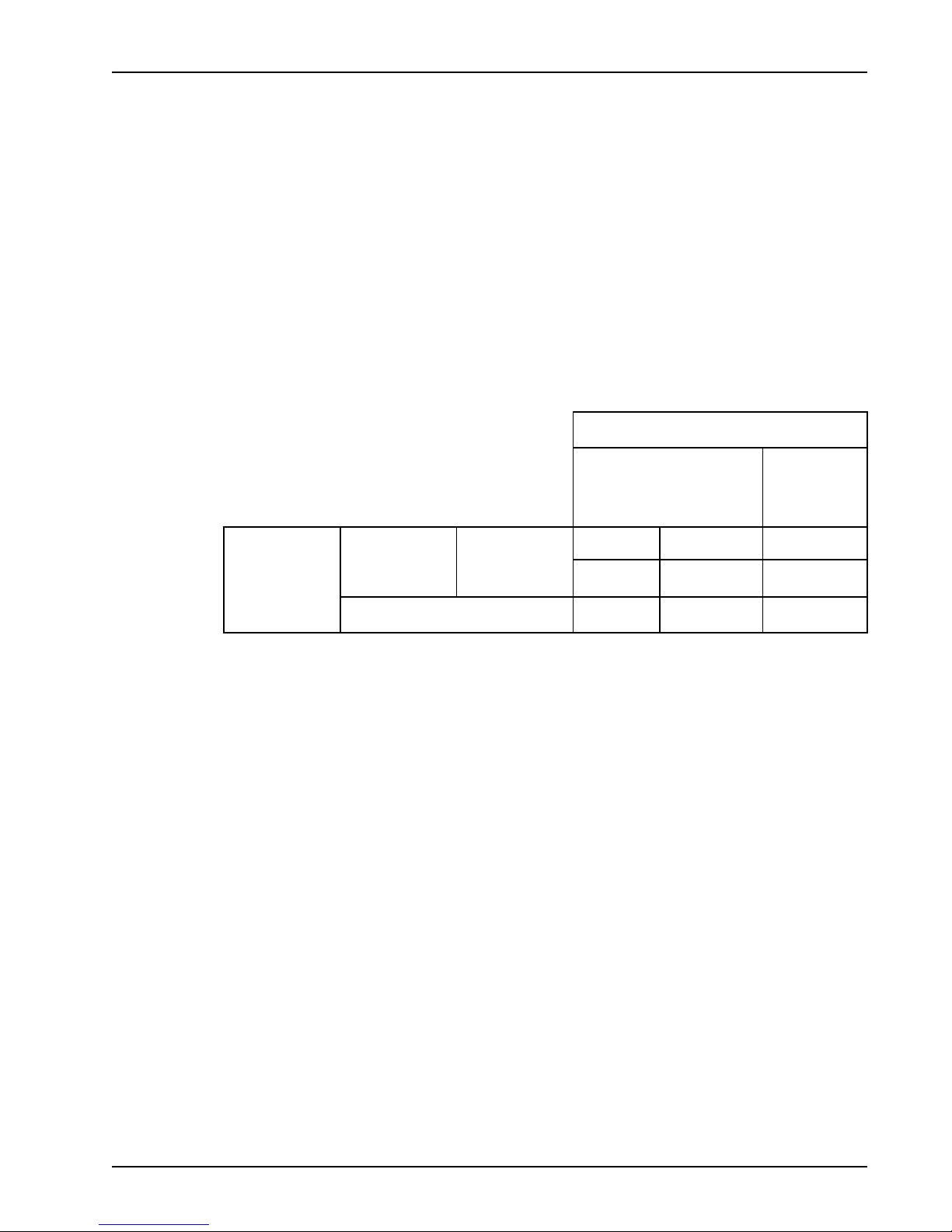
Table 9 shows that the Xpert MTB/RIF correctly detected all MTB strains and correctly
identified the RIF-resistant isolates.
Tab le 9 . Detection of MTB strains and RIF-resistant isolates
L. Performance Characteristics
GeneXpert Result
MTB Positive
RIF detected
37 0
042
00
Reference
RIF Resistance
MTB +
RIF Sensitive
MTB
L.10 ANALYTICAL INACTIVATION OF MYCOBACTERIA IN SPUTUM SAMPLES
The disinfection capability of the Xpert MTB/RIF sample reagent was determined using a
standardized quantitative tuberculocidal culture method. Samples of sputum were spiked with
a high concentration of viable M. bovis, mixed with sample reagent at a ratio of 2:1, and
incubated for 15 minutes. Following incubation the sample reagent/sputum mixture was
neutralized by dilution and filtration and then cultured. The viability of the M. bovis
organisms from the treated sputum was reduced by at least 6 logs relative to the un-treated
control.
Each laboratory must determine the effectiveness of the sample reagent disinfection properties
using their own standardized methods and must adhere to recommended biosafety regulations.
RIF not
detected
MTB Negative
0
0
52
301-0191 Rev. C, May 2012 19
Page 22

English
M. REFERENCES
1.
WHO report 20081. http://www.who.int/tb/publications/global_report/2008
2.
Anti-tuberculosis resistance in the world: fourth global report. WHO/HTM/TB/
2008.394
3.
Morris SL, Bai G, Suffys P, Portillo-Gomez L, Fairchok M, Rouse D. Molecular
mechanisms of multidrug resistance in clinical lisolates of Mycobacterium tuberculosis. J Infect
Dis 1995; 171:954-60.
4.
Ashok Rattan, Awdhesh Kalia, and Nishat Ahmad. Multidrug-Resistant Mycobacterium
tuberculosis: Molecular Perspectives, Emerging Infectious Diseases, Vol.4 No.2, http://
www.cdc.gov/ncidod/EID/vol4no2/rattan.htm
5.
Francis J. Curry National Tuberculosis Center and California Department of Public
Health, 2008: Drug-Resistant Tuberculosis, A Survival Guide for Clinicians, Second Edition.
6.
Centers for Disease Control and Prevention. Biosafety in microbiological and biomedical
laboratories. Richmond JY and McKinney RW (eds) (1993). HHS Publication number
(CDC) 93-8395.
7.
Clinical and Laboratory Standards Institute (formerly National Committee for Clinical
Laboratory Standards). Protection of laboratory workers from occupationally acquired
infections; Approved Guideline. Document M29 (refer to latest edition).
8.
Kent PT, Kubica GP 1985. Public Health Mycobacteriology—A Guide for Level III
Laboratory, Centers of Disease Control, Atlanta, Publication no. PB 86-216546.
9.
Laboratory Services in Tuberculosis Control: Part II, Microscopy WHO/TB/98.258;
p1-61.
10.
Laboratory Services in Tuberculosis control: Part III Culture. WHO/TB/98.258. p 1- 74.
11.
NCCLS, Susceptibility testing of Mycobacteria, Nocardia, and other Aerobic
Actinomycetes: Approved Standard. NCCLS document M24-A (ISBN 1- 56238-500-3).
NCCLS, 940 West Valley Road, Suite 1400, Wayne, Pennsylvania 19087 – 1898, USA.
2003.
12.
Boehme CC, Nabeta P, Hillemann D, Nicol MP, et al. Rapid Molecular Detection of
Tuberculosis and Rifampin Resistance. N Engl J Med 2010;363:1005-15.
20
301-0191 Rev. C, May 2012
Page 23

N. ASSISTANCE
Before contacting Cepheid Technical Support, collect the following information:
•Product name
•Lot number
• Serial number of the instrument
• Error messages (if any)
• Software version and, if applicable, Computer Service Tag number
Region Telephone Email
N. Assistance
North America +1.888.838.3222
Telephone support is available Monday through Friday from
5AM to 5 PM
Sales Support: Option 1
Technical Support: Option 2
Service Support: Option 3
European Union +33 5 6382 5319
Telephone support is available Monday through Friday from
8AM to 6 PM (GMT+1).
Sales Support: +33 5 6382 5314
Sales support is available Monday to Friday from 9 AM to 6 PM
(GMT+1).
Service Support (calibrations only): +33 5 6382 5352
Support is available Monday to Friday from 9 AM to 6 PM
(GMT+1).
Our corporate headquarter is located in North America.
Cepheid
904 Caribbean Drive
Sunnyvale, CA 94089-1189
USA
Telephone: +1.408.541.4191
Fax: +1.408.541.4192
www.cepheid.com
For technical support outside of North America you can contact Cepheid Europe for assistance.
Cepheid Europe
Vira Solelh
81470 Maurens-Scopont
France
Telephone: +33.563.82.53.00
Fax: +33.563.82.53.01
www.cepheidinternational.com/
301-0191 Rev. C, May 2012 21
Page 24
English
Contact information for other Cepheid offices is available on our website at
http://www.cepheid.com/company/contact-us/
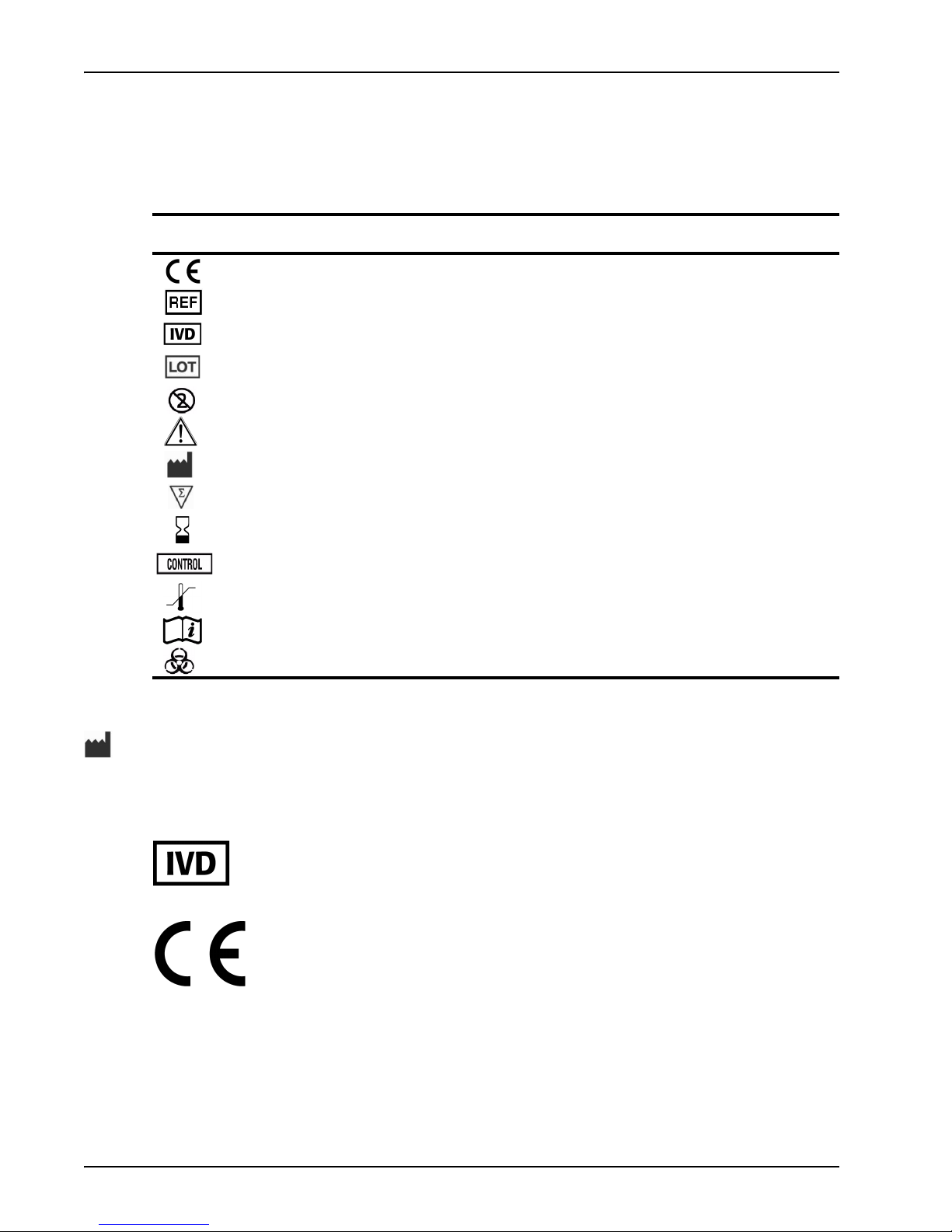
TABLE OF SYMBOLS
Symbol
Meaning
European conformity
Catalog number
In vitro diagnostic medical device
Batch code
Do not reuse
Caution, consult accompanying documents
Manufacturer
Contains sufficient for <n> tests
Use by YYYY-MM-DD or YYY-MM
Control
Temperature limitation
Consult instructions for use
Biological risks
CEPHEID AB
Röntgenvägen 5
SE-171 54 Solna
Sweden
22
301-0191 Rev. C, May 2012
 Loading...