

Page 1
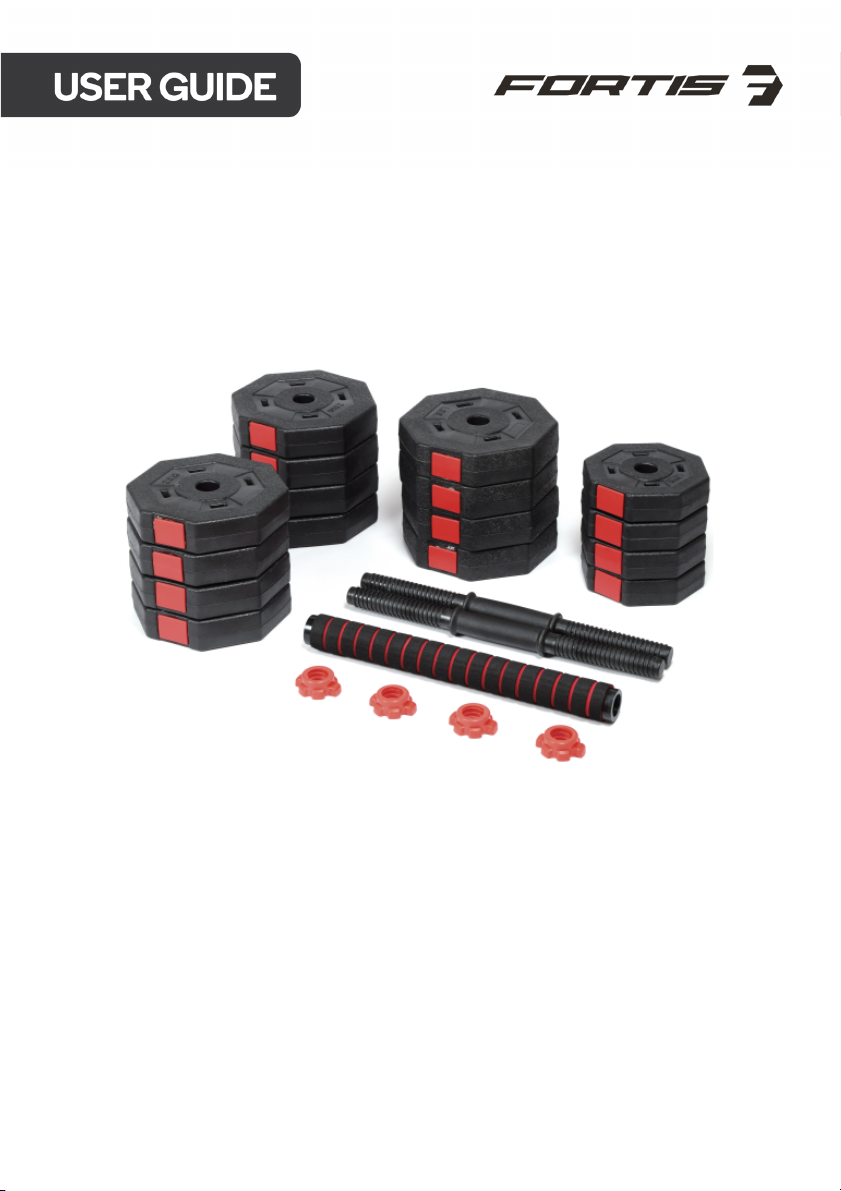
ADJUSTABLE DUMBBELL
& BARBELL SET
(40KG)
FSADDBBS40A
Page 2

Page 3

• The use of dumbbells or barbells can be dangerous. Read all safety instructions before
first use. Retain this user guide for future reference.
• This equipment is not a toy. To avoid injury keep away from children.
• When not in use, store your equipment safely to ensure that they cannot fall.
• Before beginning any type of exercise program, it is recommended that you first consult
with your physician.
• Don't use this equipment if:
o You ever feel pain in your chest when you do physical activity.
o You lose your balance due to dizziness, or ever lose consciousness.
o You currently have a problem with bone, joint, tendon, ligament or muscle
tears that could be made worse by a change in your physical activity.
• It is essential to warm-up prior to any exercise routine, this will help prepare your body
for the rigors ahead by increasing the blood flow, which in turn increases the muscle
core temperature. A warm muscle is more supple and less likely to get hurt.
• Your warm-up routine should include very light sets of the exercises you will be doing
with a weight of 40% to 50% of what you can perform.
• Proper execution of exercise technique is essential for your safety and progress.
• Ensure you perform each resistance exercise at a speed that allows for complete
control (both concentrically and eccentrically) throughout the movement of the drill.
• When performing a supine bench press, the bar should travel in a slight arch. Or you
will place your shoulders in a stressful position and decrease your ability to control the
weight.
• Always lift with your legs, not your back.
• If you are just starting to lift weights, consult with a professional trainer to help ensure
that you are lifting weights properly and that you are following the correct motions.
• It is a natural tendency to hold your breath during the execution of moderate to heavy
lifts. It results in an increase of blood pressure and carbon dioxide. This in turn may
cause dizziness or fainting. Generally, you should exhale as you work against resistance
& inhale as you release.
• If you experience any pain or discomfort while exercising, lessen the weights and/or
your repetitions. If the pain persists, cease exercise immediately. If the pain remains
after resting, see a doctor.
Page 4
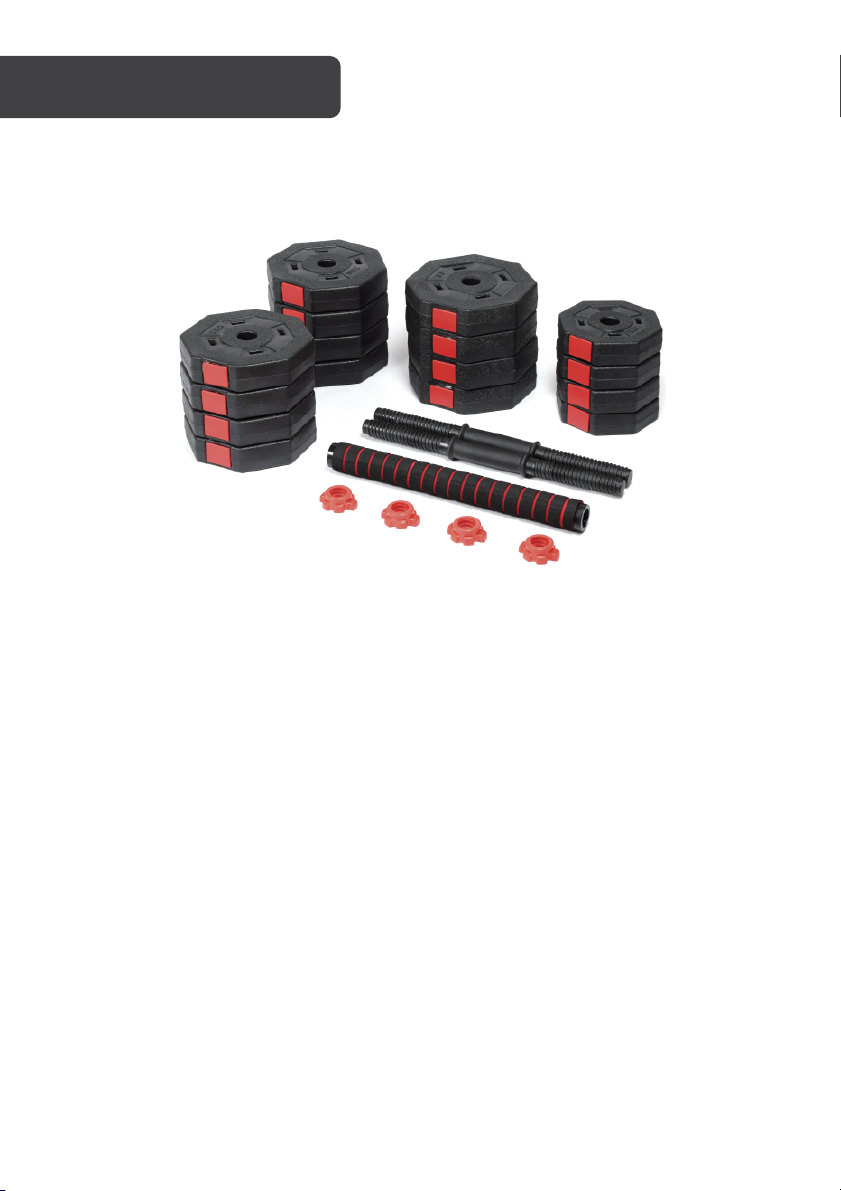
A
3kg Plates (x8)
B
2kg Plates (x4)
C
1.5kg Plates (x4)
D
Dumbbell Bars (x2)
E
Connecting Rod
F
Collars (x4)
A
B
C
D E F
A
Page 5
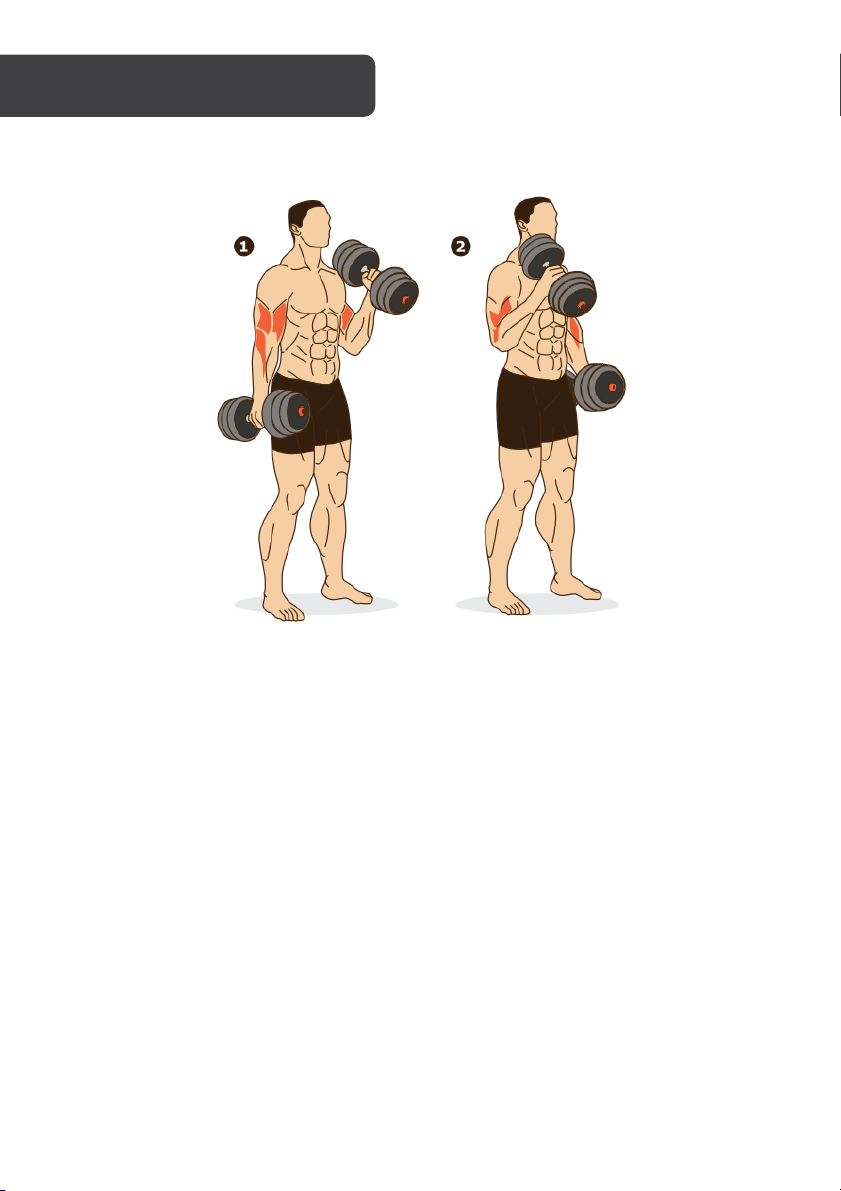
Biceps - Dumbbell Hammer Curls:
With a dumbbell in each hand, stand with your arms hanging at your sides with palms
facing each other. Keep your elbows locked into your sides. Your upper body and elbows
should remain in the same place during the whole lift. Keep your palms facing each other,
curl the weight in your right hand up in a semi-circle toward your right shoulder. Squeeze the
biceps hard at the top of the lift and then slowly lower. Do not turn your wrists during this lift!
You can also do one arm at a time and/or alternate.
Page 6
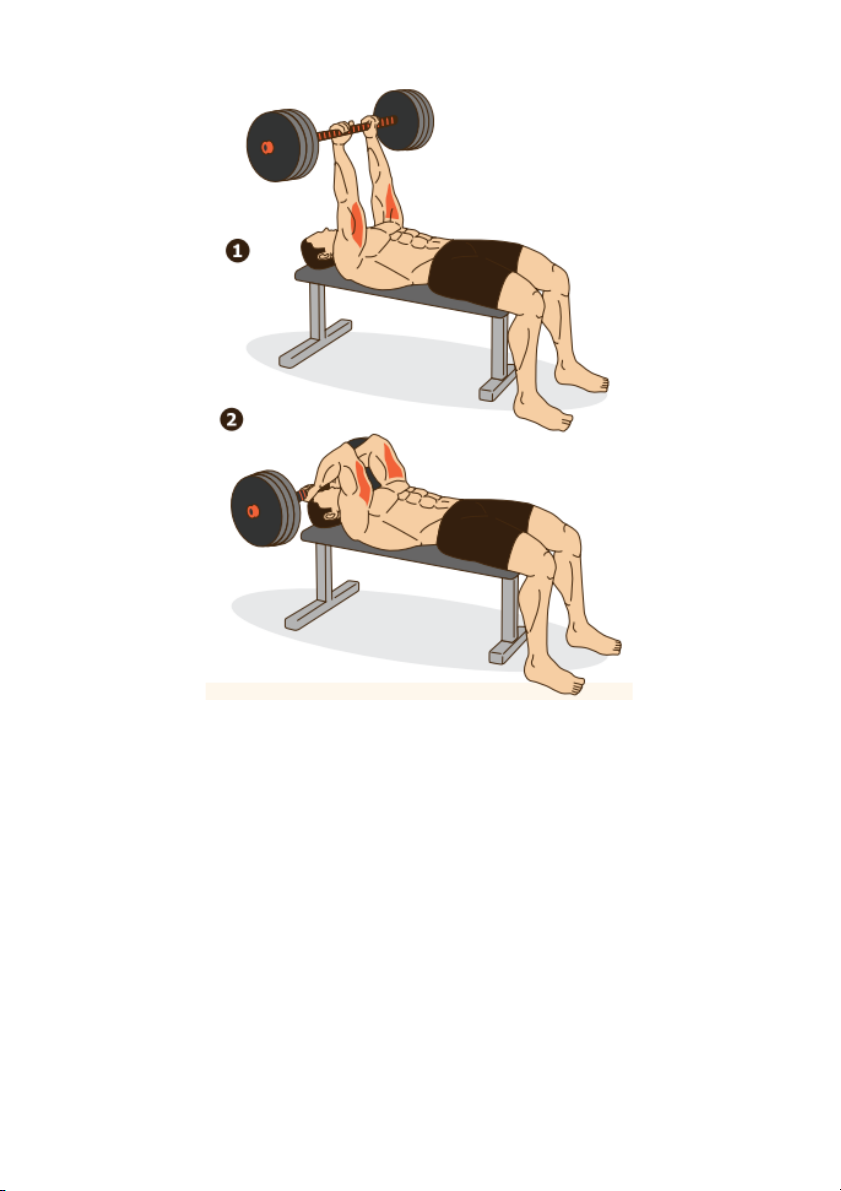
Triceps - Lying Triceps Push:
Sit on a flat bench holding a bar with an overhand grip. Lie back so that the top of your
head is even with the end of the weight bench. As you are lying back, extend your arms over
your head so that the bar is directly over your eyes. Keep your elbows tight and your upper
arms stationary throughout the exercise. The biggest key to this exercise is keeping your
upper arms in a fixed position. Slowly lower the bar until it almost touches your forehead.
Press the bar back up in a slow, sweeping arc-like motion. At the finish, lock your elbows
completely.
Page 7
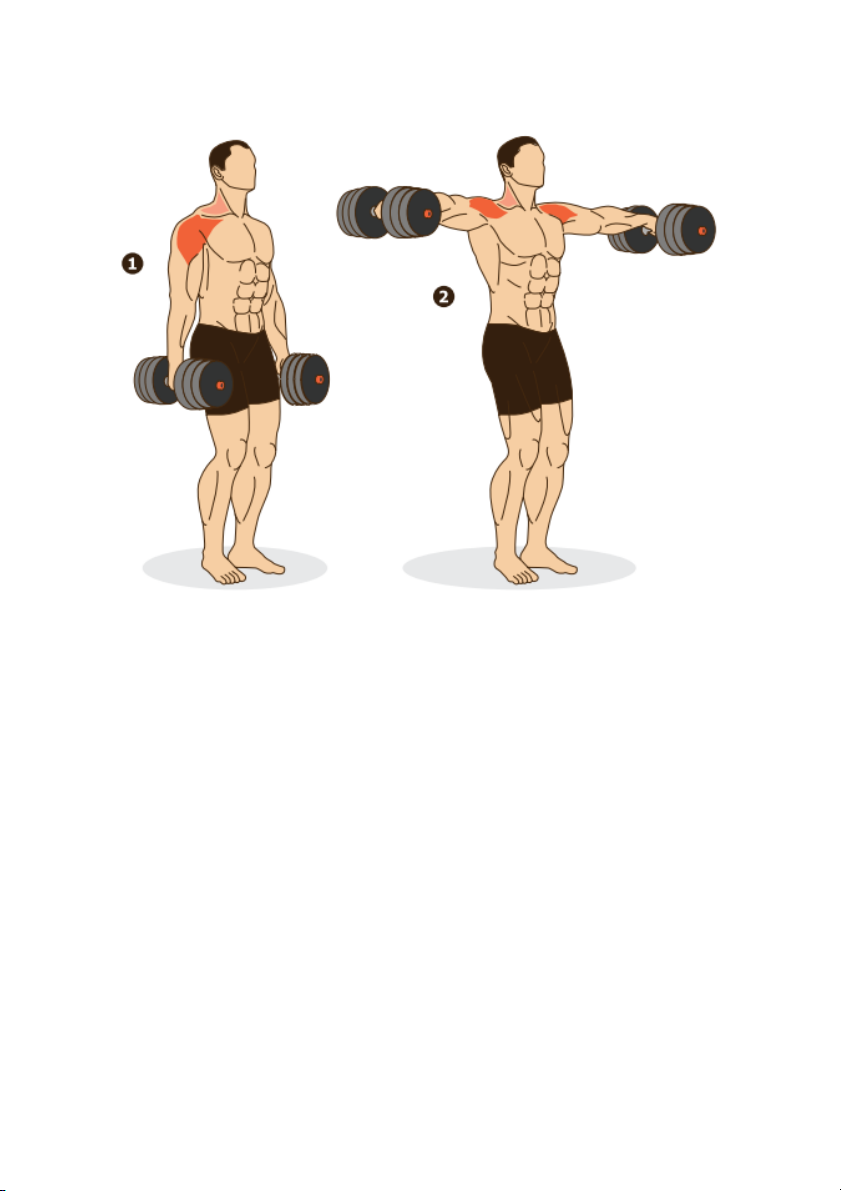
Shoulders - Lateral Dumbbell Raise:
Stand upright with your feet shoulder width apart and your arms at your side. Hold a
dumbbell in each hand with your palms turned toward your body. Keep your arms straight
and lift the weights out and up to the sides until they are slightly higher than shoulder level.
Then slowly lower them back down to your side again. Keep your palms turned downward
as you lift the dumbbells so that your shoulders rather than your biceps do the work. Make
sure you are lifting the dumbbells up rather than swinging them up. Don't lean forward
while doing this either or you risk injuring your back.
Page 8
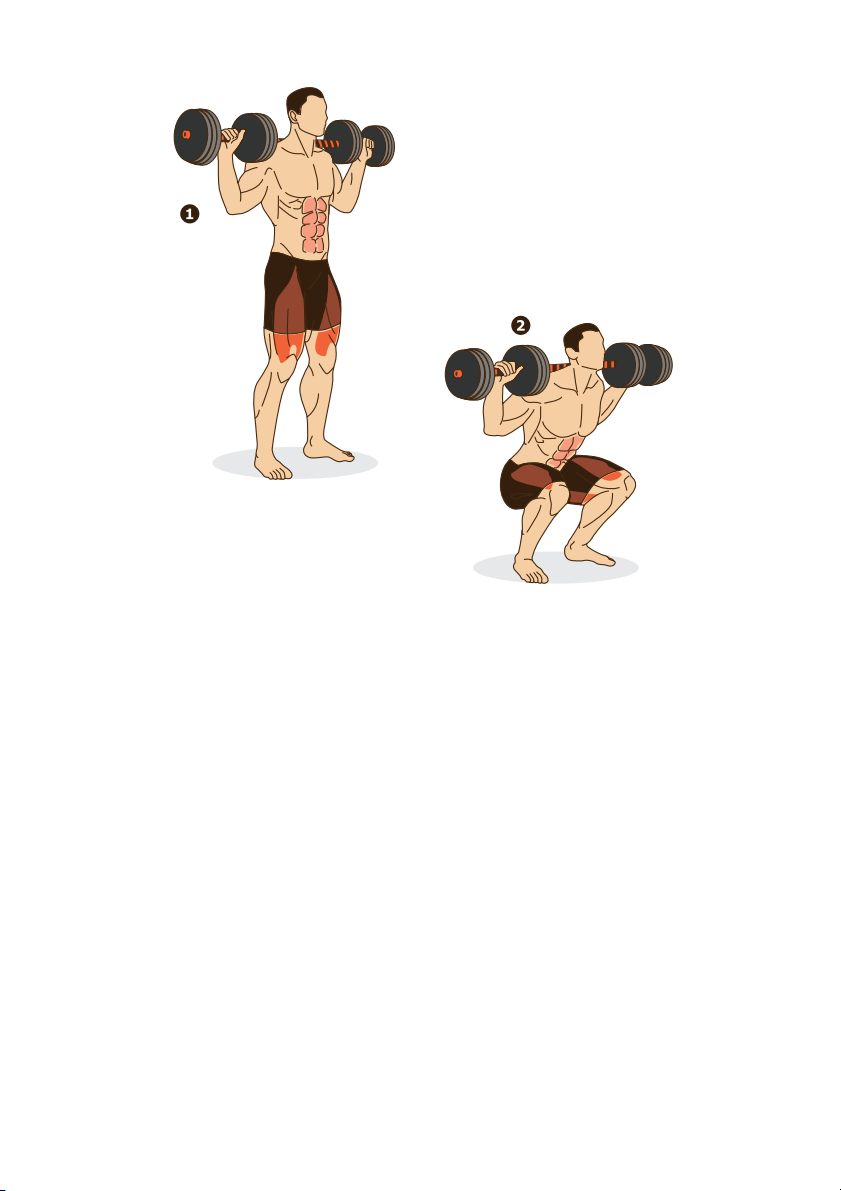
Legs - Barbell Back Squat:
Rest a barbell on the upper portion of your back, not your neck. Firmly grip the bar with your
hands almost twice your shoulder width apart. Position your feet about shoulder width apart
and your toes pointing just a little outward. Keep your back as straight as possible and your
chin up, bend your knees and slowly lower your hips straight down until your thighs are
parallel to the floor. Once you reach the bottom position, press the weight up back to the
starting position. Don't lean over or curve your back forward. A belt can be used to reduce
the chance of lower back injury.
Page 9
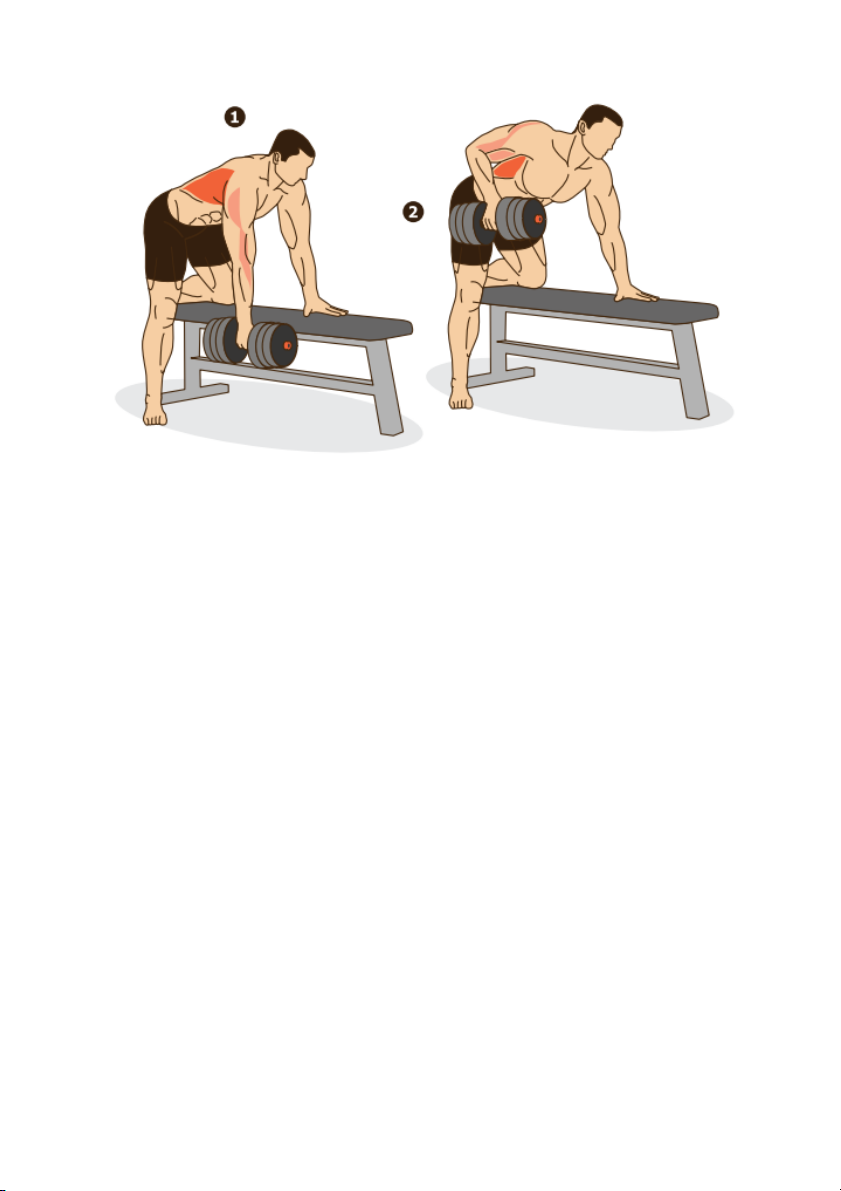
Back – Bent Over Row:
Start with your right foot flat on the floor, your left knee resting on a flat bench and your left
arm on the bench. Your back should be flat and almost parallel with the floor. Reach down
and pick up a dumbbell with your right hand. Look straight ahead to keep your back
straight. Tighten your abs to keep your body from turning to the side as you lift the
dumbbell. Concentrate on pulling your elbow back as far as it can go. The dumbbell should
end up parallel with your torso. After you've rowed the dumbbell up as far as you can, slowly
lower it back to the starting position. Switch arms after one set.
Page 10
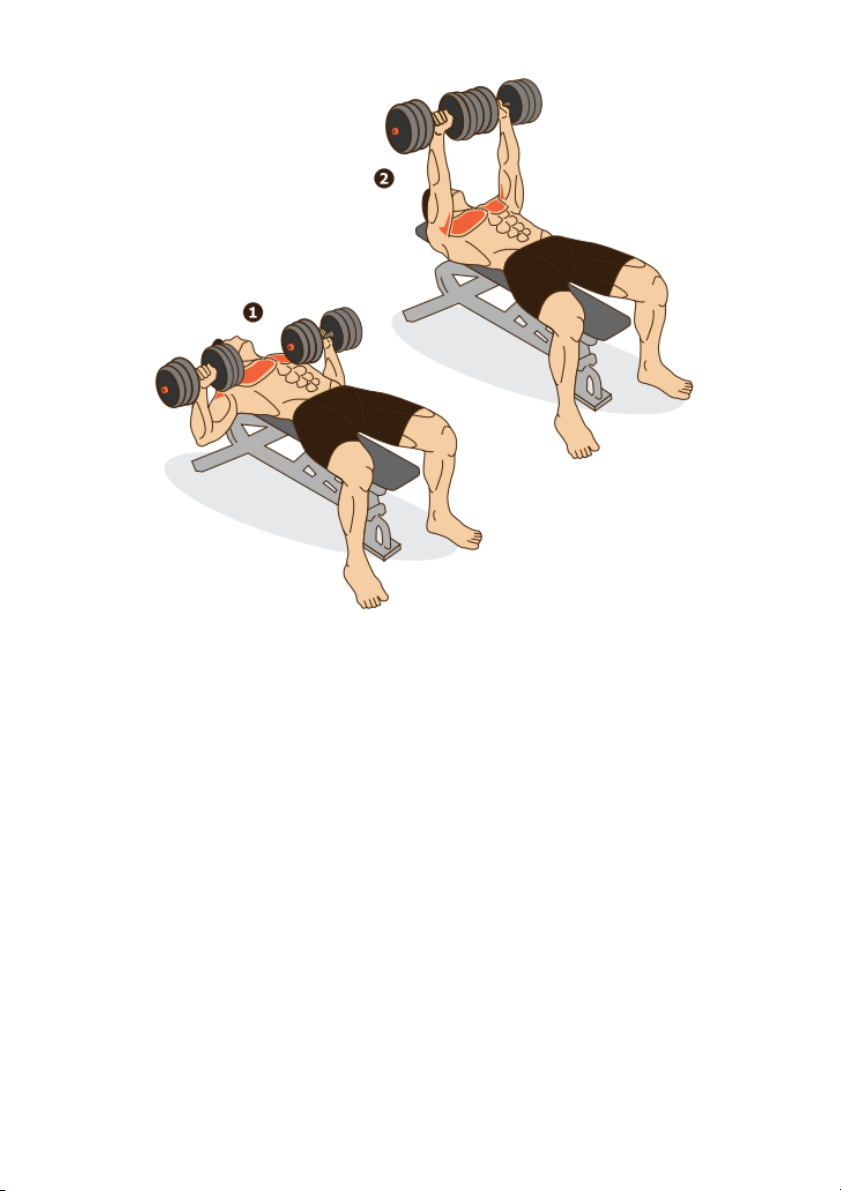
Chest - Dumbbell Bench Press
Sit on the edge of a flat bench with the dumbbells resting on your knees. In one smooth
motion, roll onto your back and bring the dumbbells up to a position slightly outside and
above your shoulders. Your palms should be facing forwards. Bend your elbows at a 90°
angle with your upper arms parallel to the ground. Press the weights up over your chest in a
triangular motion until they meet above the centre line of your body. As you lift, concentrate
on keeping the weights balanced and under control. Follow the same path downward.
Page 11

Page 12

Need more information?
We hope that this user guide has given you
the assistance needed for a simple set-up.
For th e mo st up -to-date guide for your product,
as well as any additional assistance you may require,
head online to help.kogan.com
 Loading...