

Page 1
2023 FORD F-150 LIGHTNING
Owner's Manual
Page 2

Page 3
The information contained in this publication was correct at the time of going to print. In the interest of
continuous development, we reserve the right to change specifications, design or equipment at any time
without notice or obligation. No part of this publication may be reproduced, transmitted, stored in a
retrieval system or translated into any language in any form by any means without our written permission.
Errors and omissions excepted.
© Ford Motor Company 2022
All rights reserved.
Part Number: -202206-20220624194609
California Proposition 65
WARNING: Operating, servicing and maintaining a passenger vehicle or off-highway motor vehicle
can expose you to chemicals including phthalates and lead, which are known to the State of California
to cause cancer and birth defects or other reproductive harm. To minimize exposure, wear gloves or
wash your hands frequently when servicing your vehicle. For more information go to
www.P65Warnings.ca.gov/passenger-vehicle.
WARNING: Battery posts, terminals and
related accessories contain lead and lead
compounds, chemicals known to the State of
California to cause cancer and reproductive harm.
Wash your hands after handling.
Page 4

Page 5

Contacting Us
Contacting Us ..................................................19
Introduction
About This Publication .................................21
Using This Publication .................................22
Symbols Glossary
Symbols Used on Your Vehicle ................23
Data Privacy
Data Privacy ....................................................26
Service Data .....................................................27
Event Data ........................................................27
Settings Data ..................................................28
Connected Vehicle Data .............................28
Mobile Device Data .......................................29
Emergency Call System Data ...................29
Visual Search
Steering Wheel ..............................................30
Instrument Panel - Vehicles With: 12 Inch
Screen .............................................................31
Instrument Panel - Vehicles With: 15 Inch
Screen ............................................................32
Vehicle Interior ................................................33
Front Exterior ..................................................34
Rear Exterior ....................................................35
Child Safety
Child Safety Precautions ............................36
Child Restraint Anchor Points ...................37
Child Restraints ..............................................38
Installing Child Restraints ..........................39
Booster Seats .................................................46
Child Safety Locks ........................................48
Seatbelts
Seatbelt Precautions ...................................49
Fastening and Unfastening the Seatbelts
..........................................................................50
Sensitive Locking Mode ...............................51
Automatic Locking Mode ............................51
Adjusting the Seatbelts During
Pregnancy ....................................................52
Adjusting the Seatbelt Height ..................52
Adjusting the Seatbelt Length .................52
Seatbelt Reminder ........................................53
Checking the Seatbelts ..............................54
Seatbelt Extensions .....................................55
Personal Safety System™
What Is the Personal Safety System
..........................................................................56
How Does the Personal Safety System
Work ...............................................................56
Personal Safety System Components
..........................................................................56
Airbags
How Do the Front Airbags Work ..............57
How Do the Side Airbags Work ................57
How Do the Knee Airbags Work ..............58
How Does the Safety Canopy™ Work
..........................................................................58
Airbag Precautions .......................................59
Properly Adjusting the Driver and Front
Passenger Seats .......................................60
Children and Airbags ...................................60
Front Passenger Sensing System ............61
Crash Sensors and Airbag Indicator ......64
Disposing of Airbags ....................................65
Pedestrian Alert System
What Is the Pedestrian Alert System
..........................................................................66
911 Assist
What Is 911 Assist ..........................................67
How Does 911 Assist Work .........................67
1
2023 F-150 Lightning (TFD) Electric, Canada/United States of America, enUSA, Edition date: 202206, DOM
Table of Contents
Page 6

Emergency Call Requirements .................67
Emergency Call Limitations ......................68
Keys and Remote Controls
Remote Control Limitations .....................69
Using the Remote Control .........................69
Removing the Key Blade ............................70
Sounding the Panic Alarm .........................70
Locating Your Vehicle ..................................70
Changing the Remote Control Battery
...........................................................................70
Replacing a Lost Key or Remote Control
............................................................................71
Programming the Remote Control .........72
Keys and Remote Controls –
Troubleshooting .........................................73
Phone as a Key
What Is Phone as a Key ...............................74
Phone as a Key Limitations .......................74
Programming Your Phone ..........................74
Using the Valet Mode ...................................75
Using the Backup Start Passcode ..........75
Phone as a Key – Troubleshooting .........76
MyKey™
What Is MyKey ................................................78
MyKey Settings ...............................................78
Creating a MyKey ...........................................79
Programming a MyKey ................................79
Clearing All MyKeys .....................................80
Checking MyKey System Status .............80
Using MyKey With Remote Start
Systems .......................................................80
MyKey – Troubleshooting ..........................80
Doors and Locks
Operating the Doors From Outside Your
Vehicle ...........................................................82
Operating the Doors From Inside Your
Vehicle ...........................................................82
Autounlock ......................................................83
Autolock ...........................................................83
Mislock ..............................................................83
Doors and Locks Audible Warnings .......84
Doors and Locks – Troubleshooting
..........................................................................84
Keyless Entry
What Is Keyless Entry ..................................86
Keyless Entry Limitations ..........................86
Keyless Entry Settings ................................86
Using Keyless Entry ......................................86
Keyless Entry Keypad
What Is the Keyless Entry Keypad ..........88
Keyless Entry Keypad Limitations ..........88
Locating the Keyless Entry Keypad ........88
Keyless Entry Keypad Master Access
Code ..............................................................88
Keyless Entry Keypad Personal Access
Codes ............................................................88
Using the Keyless Entry Keypad ..............89
Keyless Entry Keypad – Troubleshooting
..........................................................................89
Easy Entry and Exit
How Does Easy Entry and Exit Work
..........................................................................90
Switching Easy Entry and Exit On and
Off ..................................................................90
Tailgate - Vehicles With:
Manual Tailgate
Tailgate Precautions .....................................91
Opening the Tailgate ....................................91
Removing and Installing the Tailgate
...........................................................................91
Tailgate Step ...................................................92
Tailgate Work Surface .................................93
2
2023 F-150 Lightning (TFD) Electric, Canada/United States of America, enUSA, Edition date: 202206, DOM
Table of Contents
Page 7

Tailgate - Vehicles With:
Power Tailgate
Tailgate Precautions ....................................94
Opening the Tailgate ...................................94
Closing the Tailgate .....................................94
Removing and Installing the Tailgate
..........................................................................95
Tailgate Step ...................................................96
Tailgate Work Surface .................................97
Tailgate – Troubleshooting .......................98
Security
Passive Anti-Theft System .....................100
Anti-Theft Alarm System ........................100
Anti-Theft Alarm System Settings ........101
Security – Troubleshooting .....................102
Power Running Boards
Power Running Board Precautions ......104
Power Running Board Settings ..............104
Power Running Board Kick Switch .......105
Power Running Boards –
Troubleshooting ......................................105
Steering Wheel
Adjusting the Steering Wheel - Vehicles
With: Manual Adjustable Steering
Column .......................................................106
Adjusting the Steering Wheel - Vehicles
With: Power Adjustable Steering
Column .......................................................106
Resetting the Stopping Position -
Vehicles With: Power Adjustable
Steering Column ......................................107
Horn ..................................................................107
Switching the Heated Steering Wheel
On and Off - Vehicles With: 12 Inch
Screen ..........................................................107
Switching the Heated Steering Wheel
On and Off - Vehicles With: 15 Inch
Screen ..........................................................107
Adjustable Pedals
Adjusting the Pedals ..................................108
Wipers and Washers
Wipers .............................................................109
Autowipers ....................................................109
Checking the Wiper Blades ......................110
Replacing the Front Wiper Blades .........110
Washers .............................................................111
Wipers and Washers – Troubleshooting
..........................................................................112
Exterior Lighting
Exterior Lighting Control ............................113
Headlamps ......................................................113
Headlamps – Troubleshooting ................113
Autolamps .......................................................114
Exterior Lamps ..............................................114
Exterior Zone Lighting .................................116
Automatic High Beam Control ................118
Automatic High Beam Control –
Troubleshooting ........................................121
Glare Free Lighting .......................................121
Glare Free Lighting – Troubleshooting
.........................................................................124
Adaptive Front Lighting .............................124
Interior Lighting
Switching All of the Interior Lamps On
and Off ........................................................126
Switching the Front Interior Lamps On
and Off ........................................................126
Switching the Rear Interior Lamps On
and Off ........................................................126
Interior Lamp Function ..............................126
Adjusting the Instrument Panel Lighting
Brightness ...................................................127
Ambient Lighting ..........................................127
Cargo Lamps ..................................................127
Interior Lighting – Troubleshooting .......127
3
2023 F-150 Lightning (TFD) Electric, Canada/United States of America, enUSA, Edition date: 202206, DOM
Table of Contents
Page 8

Windows
Opening and Closing the Windows ......128
Global Opening ............................................128
Window Bounce-Back ...............................129
Locking the Rear Window Controls ......129
Opening and Closing the Sliding
Windows .....................................................129
Interior Mirror
Interior Mirror Precautions .......................130
Auto-Dimming Interior Mirror .................130
Exterior Mirrors
Adjusting the Exterior Mirrors ...................131
Folding the Exterior Mirrors - Vehicles
With: Manual Folding Mirrors ...............131
Folding the Exterior Mirrors - Vehicles
With: Power Folding Mirrors .................131
Auto-Dimming Exterior Mirror .................132
Moonroof
Opening and Closing the Sunshade ......133
Opening and Closing the Moonroof ......133
Venting the Moonroof ................................134
Moonroof Bounce-Back ............................134
Instrument Cluster
Instrument Cluster Overview ..................135
Power Gauge .................................................136
Speedometer ................................................136
Vehicle Range Display ...............................136
High Voltage Battery Gauge ....................136
High Voltage Battery Temperature
Gauge ...........................................................137
Electric Motor Temperature Gauge .......137
What Are the Instrument Cluster
Warning Lamps ........................................137
Instrument Cluster Warning Lamps ......137
What Are the Instrument Cluster
Indicators ....................................................139
Instrument Cluster Indicators .................139
Instrument Cluster Display
Using the Instrument Cluster Display
Controls ......................................................140
Instrument Cluster Display Main Menu
........................................................................140
Customizing the Instrument Cluster
Display ..........................................................141
Brake Coach - Hybrid Electric Vehicle
(HEV), Vehicles With: 12 Inch Screen
..........................................................................141
Brake Coach - Vehicles With: 15 Inch
Screen ...........................................................141
Trip Summary ................................................141
Vehicle Charging Status .............................141
Personalized Settings -
Vehicles With: 12 Inch Screen
Changing the Language ............................142
Changing the Measurement Unit ..........142
Changing the Temperature Unit ............142
Changing the Tire Pressure Unit ............142
Personalized Settings -
Vehicles With: 15 Inch
Screen
Changing the Language ............................143
Changing the Measurement Unit ..........143
Changing the Temperature Unit ............143
Changing the Tire Pressure Unit ............143
Trip Computer
Accessing the Trip Computer ..................144
Resetting the Trip Computer ...................144
Trip Data - Vehicles With: 12 Inch Screen
.........................................................................144
Trip Data - Vehicles With: 15 Inch Screen
.........................................................................144
Remote Start
What Is Remote Start ................................146
4
2023 F-150 Lightning (TFD) Electric, Canada/United States of America, enUSA, Edition date: 202206, DOM
Table of Contents
Page 9

Remote Start Precautions .......................146
Remote Start Limitations ........................146
Enabling Remote Start .............................146
Remotely Starting and Stopping the
Vehicle .........................................................146
Extending the Remote Start Duration
.........................................................................147
Remote Start Settings ...............................147
Climate Control - Vehicles
With: 12 Inch Screen
Identifying the Climate Control Unit .....148
Switching Climate Control On and Off
.........................................................................148
Switching Recirculated Air On and Off
.........................................................................148
Switching Air Conditioning On and Off
.........................................................................148
Switching Defrost On and Off ................148
Switching Maximum Defrost On and Off
.........................................................................148
Switching Maximum Cooling On and Off
.........................................................................149
Switching the Heated Rear Window On
and Off ........................................................149
Setting the Blower Motor Speed ...........149
Switching the Heated Mirrors On and Off
.........................................................................149
Setting the Temperature ..........................149
Directing the Flow of Air ...........................150
Auto Mode .....................................................150
Driver Focused Mode ..................................151
Climate Control Hints .................................151
Climate Control - Vehicles
With: 15 Inch Screen
Identifying the Climate Control Unit .....153
Switching Climate Control On and Off
.........................................................................153
Switching Recirculated Air On and Off
.........................................................................153
Switching Air Conditioning On and Off
.........................................................................153
Switching Defrost On and Off ................153
Switching Maximum Defrost On and Off
.........................................................................153
Switching Maximum Cooling On and Off
.........................................................................154
Switching the Electric Heater On and Off
.........................................................................154
Switching the Heated Rear Window On
and Off ........................................................154
Setting the Blower Motor Speed ...........154
Switching the Heated Mirrors On and Off
.........................................................................155
Setting the Temperature ..........................155
Directing the Flow of Air ............................155
Auto Mode ......................................................155
Driver Focused Mode ..................................157
Climate Control Hints .................................157
Interior Air Quality
What Is the Cabin Air Filter ......................159
Replacing the Cabin Air Filter .................159
Front Seats
Front Seat Precautions .............................160
Sitting in the Correct Position ................160
Manual Seats .................................................161
Power Seats ..................................................163
Massage Seats .............................................166
Heated Seats .................................................167
Ventilated Seats ..........................................168
Rear Seats
Manual Seats ................................................170
Heated Seats ..................................................171
Rear Occupant Alert System
What is the Rear Occupant Alert System
.........................................................................173
5
2023 F-150 Lightning (TFD) Electric, Canada/United States of America, enUSA, Edition date: 202206, DOM
Table of Contents
Page 10

How Does the Rear Occupant Alert
System Work .............................................173
Rear Occupant Alert System Precautions
.........................................................................173
Rear Occupant Alert System Limitations
.........................................................................173
Switching Rear Occupant Alert System
On and Off - Vehicles With: 12 Inch
Screen ..........................................................173
Switching Rear Occupant Alert System
On and Off - Vehicles With: 15 Inch
Screen ..........................................................174
Rear Occupant Alert System Indicators
.........................................................................174
Rear Occupant Alert System Audible
Warnings .....................................................174
Memory Function
What Is the Memory Function .................175
Memory Function Precautions ................175
Locating the Memory Function Buttons
.........................................................................175
Saving a Preset Position ............................175
Recalling a Preset Position .......................175
Garage Door Opener
Garage Door Opener Introduction .........176
Garage Door Opener Precautions and
Frequencies ...............................................176
Programming the Garage Door Opener
..........................................................................177
Garage Door Opener Additional
Assistance ..................................................179
USB Ports
Locating the USB Ports ............................180
Playing Media Using the USB Port -
Vehicles With: 12 Inch Screen .............180
Playing Media Using the USB Port -
Vehicles With: 15 Inch Screen ..............181
Charging a Device .........................................181
Power Outlet
What Is the Power Outlet .........................182
Power Outlet Precautions ........................182
Locating the Power Outlets .....................182
Onboard Generator
What Is the Onboard Generator ............183
Onboard Generator Precautions ...........183
Locating the Outlets ...................................183
Onboard Generator Indicators ...............184
Switching the Outlets On and Off -
Vehicles With: 12 Inch Screen .............185
Switching the Outlets On and Off -
Vehicles With: 15 Inch Screen .............185
Setting the High Voltage Battery Reserve
Limit .............................................................186
Resetting Ground Fault Detection ........186
Resetting the Circuit Breaker - Vehicles
With: 9.6kW ..............................................186
Onboard Generator – Troubleshooting
.........................................................................187
Center Console Work Surface
Using the Center Console Work Surface
........................................................................189
Center Console Work Surface –
Troubleshooting ......................................189
Wireless Accessory Charger
What Is the Wireless Accessory Charger
........................................................................190
Wireless Accessory Charger Precautions
........................................................................190
Locating the Wireless Accessory Charger
........................................................................190
Charging a Wireless Device .....................190
Storage
Cup Holders ....................................................191
Glove Compartment ...................................191
Glasses Holder ..............................................192
6
2023 F-150 Lightning (TFD) Electric, Canada/United States of America, enUSA, Edition date: 202206, DOM
Table of Contents
Page 11

Starting and Powering Off
Starting and Powering Off Precautions
.........................................................................193
Starting the Vehicle ....................................193
Powering Off .................................................193
Restarting the Vehicle After Powering
Off .................................................................193
Vehicle Power Down Timer .....................194
Accessing the Passive Key Backup
Position .......................................................194
Starting and Powering Off –
Troubleshooting .......................................195
High Voltage Battery
What Is the High Voltage Battery ..........196
High Voltage Battery Precautions .........196
Preserving Your High Voltage Battery
........................................................................196
Recycling and Disposing of the High
Voltage Battery .........................................197
High Voltage Battery – Troubleshooting
.........................................................................197
Charging Your Vehicle
What is AC Charging ..................................198
What is DC Charging ..................................198
Charging Your Vehicle Precautions ......198
Charging Equipment ..................................198
Locating the Charge Port ........................206
Charge Port Indicators .............................206
AC Charging ..................................................207
DC Charging ...................................................210
Setting the Charging Schedule and
Preferences ................................................213
Using FordPass and Charging .................218
Charging Your Vehicle Hints ....................218
Charging Your Vehicle – Troubleshooting
.........................................................................219
Intelligent Backup Power
What Is Intelligent Backup Power .........221
How Does Intelligent Backup Power
Work ..............................................................221
Intelligent Backup Power Requirements
.........................................................................221
Pairing a Charge Station - Vehicles With:
12 Inch Screen ............................................221
Pairing a Charge Station - Vehicles With:
15 Inch Screen ..........................................222
Intelligent Backup Power Settings -
Vehicles With: 12 Inch Screen .............222
Intelligent Backup Power Settings -
Vehicles With: 15 Inch Screen .............222
Transferring Power - Vehicles With: 12
Inch Screen ................................................223
Transferring Power - Vehicles With: 15
Inch Screen ................................................223
Intelligent Backup Power –
Troubleshooting ......................................224
Electric Motor
Electric Motor Precautions ......................226
Selector Positions .......................................226
Shifting Your Vehicle Into Gear ..............227
Temporary Neutral Mode .........................227
Automatic Return to Park (P) ................228
Stowing the Selector Lever .....................228
Four-Wheel Drive
How Does Four-Wheel Drive Work ......230
Four-Wheel Drive Precautions ..............230
Four-Wheel Drive Limitations ...............230
Four-Wheel Drive – Troubleshooting
........................................................................230
Electronic Locking Differential
What Is the Electronic Locking
Differential .................................................232
How Does the Electronic Locking
Differential Work .....................................232
Electronic Locking Differential
Precautions ...............................................232
7
2023 F-150 Lightning (TFD) Electric, Canada/United States of America, enUSA, Edition date: 202206, DOM
Table of Contents
Page 12

Switching the Electronic Locking
Differential On and Off - 4x4 .............233
Electronic Locking Differential Indicators
........................................................................233
Electronic Locking Differential –
Troubleshooting ......................................234
Brakes
Brake Precautions ......................................235
Anti-Lock Braking System .......................235
Brake Over Accelerator .............................235
Locating the Brake Fluid Reservoir .......235
Checking the Brake Fluid .........................235
Brake Fluid Specification .........................236
Brakes – Troubleshooting .......................236
Electric Parking Brake
What Is the Electric Parking Brake .......238
Applying the Electric Parking Brake ......238
Applying the Electric Parking Brake in an
Emergency ................................................238
Manually Releasing the Electric Parking
Brake ...........................................................238
Automatically Releasing the Electric
Parking Brake ...........................................239
Electric Parking Brake Audible Warning
........................................................................239
Releasing the Electric Parking Brake if
the Vehicle Battery Has Run Out of
Charge ........................................................239
Electric Parking Brake – Troubleshooting
........................................................................239
Reverse Braking Assist
What Is Reverse Braking Assist ..............241
How Does Reverse Braking Assist Work
.........................................................................241
Reverse Braking Assist Precautions ......241
Switching Reverse Braking Assist On and
Off - Vehicles With: 12 Inch Screen
........................................................................242
Switching Reverse Braking Assist On and
Off - Vehicles With: 15 Inch Screen
........................................................................242
Overriding Reverse Braking Assist ........242
Reverse Braking Assist Indicators .........242
Reverse Braking Assist –
Troubleshooting ......................................243
Cross Traffic Braking
What Is Cross Traffic Braking .................245
How Does Cross Traffic Braking Work
........................................................................245
Cross Traffic Braking Precautions ........245
Switching Cross Traffic Braking On and
Off ................................................................246
Overriding Cross Traffic Braking ...........246
Cross Traffic Braking Indicators ............246
Cross Traffic Braking – Troubleshooting
........................................................................246
Hill Start Assist
What Is Hill Start Assist ...........................248
How Does Hill Start Assist Work ..........248
Hill Start Assist Precautions ..................248
Hill Start Assist – Troubleshooting ......248
Auto Hold
How Does Auto Hold Work .....................249
Switching Auto Hold On and Off -
Vehicles With: 15 Inch Screen ............249
Switching Auto Hold On and Off -
Vehicles With: 12 Inch Screen ............249
Using Auto Hold ..........................................249
Auto Hold Indicators .................................250
Traction Control
What Is Traction Control ...........................251
How Does Traction Control Work ..........251
Switching Traction Control On and Off
.........................................................................251
Traction Control Indicator .........................251
Traction Control – Troubleshooting .....252
8
2023 F-150 Lightning (TFD) Electric, Canada/United States of America, enUSA, Edition date: 202206, DOM
Table of Contents
Page 13

Stability Control
How Does Stability Control Work .........253
Switching Stability Control On and Off
........................................................................254
Steering
Electric Power Steering ............................255
Steering – Troubleshooting ....................255
Parking Aids
Parking Aid Precautions ...........................257
Switching Parking Aid On and Off -
Vehicles With: 12 Inch Screen .............257
Switching Parking Aid On and Off -
Vehicles With: 15 Inch Screen ............258
Rear Parking Aid ..........................................258
Front Parking Aid ........................................259
Side Parking Aid ..........................................260
Parking Aid Indicators - Vehicles With:
12 Inch Screen ...........................................261
Parking Aid Indicators - Vehicles With:
15 Inch Screen ...........................................261
Parking Aids – Troubleshooting ............262
Rear View Camera
What Is the Rear View Camera - Vehicles
With: 12 Inch Screen ..............................263
What Is the Rear View Camera - Vehicles
With: 15 Inch Screen ..............................263
Rear View Camera Precautions ............263
Locating the Rear View Camera ...........263
Rear View Camera Guide Lines .............264
Rear View Camera Settings ...................264
360 Degree Camera
What Is the 360 Degree Camera .........266
How Does the 360 Degree Camera Work
........................................................................266
360 Degree Camera Precautions ........266
Locating the 360 Degree Cameras ......266
360 Degree Camera Guide Lines ..........267
360 Degree Camera Settings ................268
Active Park Assist
What Is Active Park Assist .......................270
How Does Active Park Assist Work ......270
Active Park Assist Precautions ..............270
Switching Active Park Assist On and Off
........................................................................270
Entering a Parking Space ..........................271
Exiting a Parking Space .............................271
Active Park Assist – Troubleshooting
.........................................................................272
Remote Parking
Remote Park Adjust ...................................274
Remote Park Adjust – Troubleshooting
........................................................................276
Cruise Control
What Is Cruise Control ..............................279
Switching Cruise Control On and Off
........................................................................279
Setting the Cruise Control Speed .........279
Canceling the Set Speed ........................280
Resuming the Set Speed ........................280
Cruise Control Indicators .........................280
Adaptive Cruise Control
How Does Adaptive Cruise Control With
Stop and Go Work ...................................281
Adaptive Cruise Control Precautions
.........................................................................281
Adaptive Cruise Control Limitations
........................................................................282
Switching Adaptive Cruise Control On
and Off .......................................................283
Adaptive Cruise Control Automatic
Cancellation .............................................284
Setting the Adaptive Cruise Control
Speed .........................................................284
Setting the Adaptive Cruise Control Gap
........................................................................285
9
2023 F-150 Lightning (TFD) Electric, Canada/United States of America, enUSA, Edition date: 202206, DOM
Table of Contents
Page 14

Canceling the Set Speed .........................286
Resuming the Set Speed .........................286
Overriding the Set Speed .........................287
Adaptive Cruise Control Indicators ......287
Switching From Adaptive Cruise Control
to Cruise Control - Vehicles With: 12
Inch Screen ...............................................288
Switching From Adaptive Cruise Control
to Cruise Control - Vehicles With: 15
Inch Screen ...............................................288
Lane Centering ............................................288
Intelligent Adaptive Cruise Control .......291
Adaptive Cruise Control –
Troubleshooting ......................................293
BlueCruise
What Is BlueCruise .....................................297
How Does BlueCruise Work ....................297
BlueCruise Precautions ............................297
BlueCruise Requirements .......................298
BlueCruise Limitations .............................298
BlueCruise Settings - Vehicles With: 12
Inch Screen ...............................................299
BlueCruise Settings - Vehicles With: 15
Inch Screen ...............................................299
Switching BlueCruise On and Off ........299
BlueCruise Alerts ........................................300
BlueCruise Automatic Cancellation ....300
BlueCruise Indicators .................................301
BlueCruise – Troubleshooting ................301
Drive Mode Control
What Is Drive Mode Control ...................303
How Does Drive Mode Control Work
........................................................................303
Selecting a Drive Mode ............................303
Drive Modes ..................................................303
Drive Mode Control – Troubleshooting
.......................................................................304
One Pedal Drive
What is One Pedal Drive ..........................305
One Pedal Drive Precautions .................305
One Pedal Drive Limitations ..................305
Switching One Pedal Drive On and Off -
Vehicles With: 12 Inch Screen ............305
Switching One Pedal Drive On and Off -
Vehicles With: 15 Inch Screen ............305
One Pedal Drive Indicators .....................306
Lane Keeping System
What Is the Lane Keeping System .......307
How Does the Lane Keeping System
Work ............................................................307
Lane Keeping System Precautions ......307
Lane Keeping System Limitations .......307
Switching the Lane Keeping System On
and Off .......................................................308
Switching the Lane Keeping System
Mode - Vehicles With: 12 Inch Screen
.......................................................................308
Switching the Lane Keeping System
Mode - Vehicles With: 15 Inch Screen
.......................................................................309
Alert Mode ....................................................309
Aid Mode .......................................................309
Alert and Aid Mode .....................................310
Lane Keeping System Indicators ...........310
Lane Keeping System – Troubleshooting
..........................................................................311
Blind Spot Information
System
What Is Blind Spot Information System
.........................................................................314
How Does Blind Spot Information
System Work .............................................314
Blind Spot Information System
Precautions ................................................314
Blind Spot Information System
Limitations .................................................314
Blind Spot Information System
Requirements ...........................................314
10
2023 F-150 Lightning (TFD) Electric, Canada/United States of America, enUSA, Edition date: 202206, DOM
Table of Contents
Page 15

Switching Blind Spot Information
System On and Off - Vehicles With: 12
Inch Screen ................................................315
Switching Blind Spot Information
System On and Off - Vehicles With: 15
Inch Screen ................................................315
Locating the Blind Spot Information
System Sensors .......................................315
Blind Spot Information System With
Trailer Coverage .......................................316
Blind Spot Information System
Indicators ....................................................317
Blind Spot Information System –
Troubleshooting .......................................318
Exit Warning
What is Exit Warning ..................................319
How Does Exit Warning Work .................319
Exit Warning Precautions .........................319
Exit Warning Limitations ...........................319
Exit Warning Indicators ............................320
Switching Exit Warning On and Off ......320
Locating the Exit Warning Sensors .......321
Exit Warning - Troubleshooting ..............321
Cross Traffic Alert
What Is Cross Traffic Alert .......................323
How Does Cross Traffic Alert Work ......323
Cross Traffic Alert Precautions ..............323
Cross Traffic Alert Limitations ...............323
Switching Cross Traffic Alert On and Off
- Vehicles With: 12 Inch Screen ..........324
Switching Cross Traffic Alert On and Off
- Vehicles With: 15 Inch Screen .........324
Cross Traffic Alert Indicators ..................324
Cross Traffic Alert – Troubleshooting
........................................................................325
Pre-Collision Assist
What Is Pre-Collision Assist ...................326
How Does Pre-Collision Assist Work
........................................................................326
Pre-Collision Assist Precautions ..........326
Pre-Collision Assist Limitations .............327
Switching Pre-Collision Assist On and
Off - Vehicles With: 12 Inch Screen
........................................................................328
Switching Pre-Collision Assist On and
Off - Vehicles With: 15 Inch Screen
........................................................................328
Locating the Pre-Collision Assist Sensors
........................................................................329
Distance Indication ....................................330
Distance Alert ................................................331
Automatic Emergency Braking ..............332
Evasive Steering Assist .............................332
Pre-Collision Assist – Troubleshooting
........................................................................333
Driver Alert
What Is Driver Alert ....................................336
How Does Driver Alert Work ...................336
Driver Alert Precautions ...........................336
Driver Alert Limitations .............................336
Switching Driver Alert On and Off -
Vehicles With: 12 Inch Screen .............337
Switching Driver Alert On and Off -
Vehicles With: 15 Inch Screen .............337
Driver Alert – Troubleshooting ...............337
Speed Sign Recognition
What Is Speed Sign Recognition ..........338
How Does Speed Sign Recognition Work
........................................................................338
Speed Sign Recognition Precautions
........................................................................338
Speed Sign Recognition Limitations
........................................................................338
Speed Sign Recognition Indicators ......339
Setting the Speed Sign Recognition
Speed Warning - Vehicles With: 12 Inch
Screen .........................................................339
Setting the Speed Sign Recognition
Speed Warning - Vehicles With: 15 Inch
Screen .........................................................339
11
2023 F-150 Lightning (TFD) Electric, Canada/United States of America, enUSA, Edition date: 202206, DOM
Table of Contents
Page 16

Setting the Speed Sign Recognition
Speed Tolerance - Vehicles With: 12
Inch Screen ...............................................339
Setting the Speed Sign Recognition
Speed Tolerance - Vehicles With: 15
Inch Screen ...............................................339
Speed Sign Recognition –
Troubleshooting .....................................340
Load Carrying
Load Carrying Precautions ......................342
Locating the Safety Compliance
Certification Labels ...............................343
What Is the Gross Axle Weight Rating
........................................................................343
What Is the Gross Vehicle Weight Rating
........................................................................343
What Is the Gross Combined Weight
Rating ..........................................................343
Calculating Payload ..................................344
Calculating the Load Limit ......................344
Luggage Compartment
Luggage Compartment Precautions
........................................................................347
Opening the Frunk ......................................347
Closing the Frunk ........................................349
Using the Frunk Emergency Release
.........................................................................351
Installing and Removing the Luggage
Compartment Cover ..............................351
Adjusting the Luggage Compartment
Load Floor .................................................353
Luggage Compartment Anchor Points
........................................................................354
Luggage Compartment –
Troubleshooting ......................................354
Pickup Bed
Pickup Bed Precautions ...........................356
Pickup Bed Anchor Points ......................356
Tailgate Anchor Points .............................358
Pickup Bed Ramps ....................................358
Connecting a Trailer
Connecting a Trailer Precautions ..........361
Hitches .............................................................361
Connecting a Trailer - Vehicles With: 12
Inch Screen ................................................361
Connecting a Trailer - Vehicles With: 15.5
Inch Center Display Screen/15 Inch
Screen .........................................................363
Trailer Lighting Check ...............................365
Connecting a Trailer – Troubleshooting
.......................................................................366
Towing a Trailer
Towing a Trailer Precautions ..................367
Trailer Brake Precautions .........................367
Towing a Trailer Limitations ...................368
Loading Your Trailer ...................................368
Trailer Towing Hints ...................................368
Launching or Retrieving a Boat or
Personal Watercraft ..............................369
Towing Weights and Dimensions .........369
Towing a Trailer – Troubleshooting .......371
Integrated Trailer Brake
Controller
What Is the Integrated Trailer Brake
Controller ...................................................373
Integrated Trailer Brake Controller
Precautions ...............................................373
Using the Integrated Trailer Brake
Controller ...................................................373
Adjusting the Integrated Trailer Brake
Controller Mode .......................................375
Integrated Trailer Brake Controller –
Troubleshooting ......................................376
Trailer Sway Control
How Does Trailer Sway Control Work
........................................................................378
Trailer Sway Control Precautions .........378
12
2023 F-150 Lightning (TFD) Electric, Canada/United States of America, enUSA, Edition date: 202206, DOM
Table of Contents
Page 17

Switching Trailer Sway Control On and
Off - Vehicles With: 12 Inch Screen
........................................................................378
Switching Trailer Sway Control On and
Off - Vehicles With: 15 Inch Screen
........................................................................378
Trailer Hitching Assistance
What Is Trailer Hitching Assistance ......379
How Does Trailer Hitching Assistance
Work ............................................................379
Trailer Hitching Assistance Precautions
........................................................................379
Trailer Hitching Assistance Limitations
.......................................................................380
Switching Trailer Hitching Assistance On
and Off .......................................................380
Using Trailer Hitching Assistance ........380
Trailer Hitching Assistance Indicators
.........................................................................381
Smart Hitch
What Is Smart Hitch ..................................383
How Does Smart Hitch Work .................383
Smart Hitch Limitations ...........................383
Using Smart Hitch - Vehicles With: 12
Inch Screen ...............................................383
Using Smart Hitch - Vehicles With: 15
Inch Screen ...............................................384
Onboard Scales
What Is Onboard Scales ..........................386
How Does Onboard Scales Work .........386
Onboard Scales Limitations ..................386
Using Onboard Scales - Vehicles With:
12 Inch Screen ..........................................386
Using Onboard Scales - Vehicles With:
15 Inch Screen ..........................................387
Trailer Backup Assistance
What is Trailer Backup Assistance ......389
How Does Trailer Backup Assistance
Work ............................................................389
Trailer Backup Assistance Precautions
.......................................................................389
Setting Up the Trailer Backup Assistance
for a Conventional Trailer ....................389
Switching Trailer Backup Assistance On
and Off .......................................................393
Using the Trailer Backup Assistance
Controller ..................................................394
Using the Trailer Backup Assistance
Views - Vehicles With: 12 Inch Screen
........................................................................394
Using the Trailer Backup Assistance
Views - Vehicles With: 15.5 Inch Center
Display Screen/15 Inch Screen .........396
Trailer Backup Assistance –
Troubleshooting .....................................398
Trailer Reverse Guidance
What Is Trailer Reverse Guidance ........405
How Does Trailer Reverse Guidance
Work ............................................................405
Trailer Reverse Guidance Precautions
.......................................................................405
Setting Up Trailer Reverse Guidance for
a Conventional Trailer ..........................405
Switching Trailer Reverse Guidance On
and Off .......................................................408
Using Trailer Reverse Guidance Views
.......................................................................409
Trailer Reverse Guidance –
Troubleshooting ........................................411
Driving Hints
Off-Road Driving ..........................................417
Cold Weather Precautions .......................419
Driving on Snow and Ice ...........................419
Breaking-In ....................................................419
Electric Vehicle ............................................420
Floor Mats .......................................................421
Crash and Breakdown
Information
Roadside Assistance .................................422
13
2023 F-150 Lightning (TFD) Electric, Canada/United States of America, enUSA, Edition date: 202206, DOM
Table of Contents
Page 18

High Voltage Battery Vehicle Precautions
........................................................................423
Switching the Hazard Flashers On and
Off ................................................................424
Jump Starting the Vehicle .......................424
Post-Crash Alert System .........................425
Post Impact Braking ..................................426
Automatic Crash Shutoff ........................426
Recovery Towing .........................................426
Transporting the Vehicle ..........................427
Towing Your Vehicle
Recreationally Towing Your Vehicle
........................................................................429
Emergency Towing - Vehicles With: 12
Inch Center Display Screen ................429
Emergency Towing - Vehicles With: 15.5
Inch Center Display Screen ................429
Towing Your Vehicle – Troubleshooting
.......................................................................430
Fuses
Fuse Precautions .........................................431
Under Hood Fuse Box ................................431
Body Control Module Fuse Box ............436
Identifying Fuse Types ..............................439
Fuses – Troubleshooting .........................439
Maintenance
Maintenance Precautions ......................440
Opening and Closing the Hood ............440
Under Hood Overview ..............................440
Checking the Coolant ................................441
12V Battery ....................................................443
12V Battery – Troubleshooting ..............443
Adjusting the Headlamps .......................444
Exterior Bulbs ...............................................445
Interior Bulbs ................................................445
Vehicle Care
Cleaning Products .....................................446
Cleaning the Exterior ................................446
Cleaning the Interior ..................................448
Repairing Minor Paint Damage ..............451
Waxing Your Vehicle ...................................451
Storing Your Vehicle
Preparing Your Vehicle for Storage ......452
Removing Your Vehicle From Storage
........................................................................453
Wheel and Tire Information
Locating the Tire label ..............................454
Department of Transportation Uniform
Tire Quality Grades ................................454
Information on the Tire Sidewall ..........455
Glossary of Tire Terminology .................460
Tire Replacement Requirements ..........461
Using Snow Chains ....................................463
Tire Care
Checking the Tire Pressures ...................465
Inflating the Tires .......................................465
Inspecting the Tire for Wear ..................466
Inspecting the Tire for Damage ............466
Inspecting the Wheel Valve Stems ......467
Tire Rotation .................................................467
Tire Pressure Monitoring
System
What Is the Tire Pressure Monitoring
System .......................................................469
Tire Pressure Monitoring System
Overview ...................................................469
Tire Pressure Monitoring System
Precautions ..............................................470
Tire Pressure Monitoring System
Limitations ................................................470
Viewing the Tire Pressures .......................471
Tire Pressure Monitoring System –
Troubleshooting .......................................471
14
2023 F-150 Lightning (TFD) Electric, Canada/United States of America, enUSA, Edition date: 202206, DOM
Table of Contents
Page 19

Changing a Road Wheel
Changing a Flat Tire ...................................473
Wheel Nuts ..................................................480
Capacities and Specifications
Motorcraft Parts ..........................................481
Cooling System Capacity and
Specification .............................................481
Air Conditioning System Capacity and
Specification ............................................482
Washer Fluid Specification .....................483
Brake Fluid Specification .........................483
Vehicle Identification
Vehicle Identification Number ..............485
Connected Vehicle
What Is a Connected Vehicle ................486
Connected Vehicle Requirements .......486
Connected Vehicle Limitations .............486
Connecting the Vehicle to a Mobile
Network .....................................................486
Connecting the Vehicle to a Wi-Fi
Network - Vehicles With: 12 Inch
Screen .........................................................487
Connecting the Vehicle to a Wi-Fi
Network - Vehicles With: 15 Inch
Screen .........................................................487
Connected Vehicle – Troubleshooting
........................................................................487
Vehicle Wi-Fi Hotspot -
Vehicles With: 12 Inch Screen
Creating a Vehicle Wi-Fi Hotspot ........489
Changing the Vehicle Wi-Fi Hotspot
Name or Password ................................489
Vehicle Wi-Fi Hotspot – Troubleshooting
.......................................................................490
Vehicle Wi-Fi Hotspot -
Vehicles With: 15 Inch
Screen
Creating a Vehicle Wi-Fi Hotspot ..........491
Changing the Vehicle Wi-Fi Hotspot
Name or Password .................................491
Vehicle Wi-Fi Hotspot – Troubleshooting
........................................................................492
Audio System - Vehicles With:
12 Inch Screen
Audio System Precautions .....................493
Identifying the Audio Unit .......................493
Switching the Audio Unit On and Off
........................................................................493
Selecting the Audio Source ....................493
Playing or Pausing the Audio Source
........................................................................493
Adjusting the Volume ...............................494
Switching Shuffle Mode On and Off
.......................................................................494
Switching Repeat Mode On and Off
.......................................................................494
Setting a Memory Preset ........................494
Muting the Audio ........................................494
Adjusting the Sound Settings ...............494
Setting the Clock and Date ....................495
FM Radio ........................................................495
Digital Radio .................................................496
Satellite Radio .............................................497
Audio System – Troubleshooting ........500
Audio System - Vehicles With:
15 Inch Screen
Audio System Precautions .....................504
Switching the Audio Unit On and Off
.......................................................................504
Selecting the Audio Source ....................504
Playing or Pausing the Audio Source
.......................................................................504
Adjusting the Volume ...............................504
15
2023 F-150 Lightning (TFD) Electric, Canada/United States of America, enUSA, Edition date: 202206, DOM
Table of Contents
Page 20

Switching Shuffle Mode On and Off
.......................................................................504
Switching Repeat Mode On and Off
.......................................................................504
Setting a Memory Preset ........................504
Muting the Audio ........................................505
Adjusting the Sound Settings ................505
Setting the Clock and Date ....................505
FM Radio .......................................................506
Digital Radio ................................................506
Satellite Radio .............................................507
Audio System – Troubleshooting .........510
Center Display Overview -
Vehicles With: 12 Inch Screen
Center Display Precautions .....................514
Center Display Limitations .......................514
Status Bar .......................................................514
Feature Bar .....................................................515
Information On Demand Screen ...........515
Rebooting the Center Display .................516
Center Display Overview -
Vehicles With: 15 Inch
Screen
Center Display Precautions ......................517
Center Display Limitations .......................517
Status Bar .......................................................517
Accessing Feature Drawers .....................518
Rebooting the Center Display .................518
Voice Interaction
Ford Assistant ...............................................519
Alexa Built-In
What is Alexa Built-In ................................522
Alexa Built-In Requirements ...................522
Signing Into Your Account - Vehicles
With: 12 Inch Screen ...............................522
Signing Into Your Account - Vehicles
With: 15 Inch Screen ..............................522
Using Alexa Built-In ....................................522
Alexa Built-In Settings - Vehicles With:
12 Inch Screen ..........................................523
Alexa Built-In Settings - Vehicles With:
15 Inch Screen ..........................................523
Phone - Vehicles With: 12 Inch
Screen
Phone Precautions .....................................525
Connecting Your Phone ...........................525
Phone Menu ..................................................525
Making and Receiving a Phone Call ......527
Sending and Receiving a Text Message
........................................................................528
Switching Text Message Notification On
and Off .......................................................529
Phone - Vehicles With: 15 Inch
Screen
Phone Precautions ....................................530
Connecting Your Phone ...........................530
Phone Menu .................................................530
Making and Receiving a Phone Call ......531
Sending and Receiving a Text Message
........................................................................532
Switching Text Message Notification On
and Off .......................................................533
Bluetooth® - Vehicles With: 12
Inch Screen
Connecting a Bluetooth® Device .........534
Playing Media Using Bluetooth® .........534
Bluetooth® - Vehicles With: 15
Inch Screen
Connecting a Bluetooth® Device .........535
Playing Media Using Bluetooth® .........535
16
2023 F-150 Lightning (TFD) Electric, Canada/United States of America, enUSA, Edition date: 202206, DOM
Table of Contents
Page 21

Apps - Vehicles With: 12 Inch
Screen
App Precautions .........................................536
App Requirements .....................................536
Accessing Apps ...........................................536
Enabling Apps on an iOS Device ..........536
Enabling Apps on an Android Device
........................................................................536
Switching Apple CarPlay On and Off
........................................................................537
Switching Android Auto On and Off .....537
Apps - Vehicles With: 15 Inch
Screen
App Precautions .........................................538
App Requirements .....................................538
Accessing Apps ...........................................538
Enabling Apps on an iOS Device ..........538
Enabling Apps on an Android Device
........................................................................538
Switching Apple CarPlay On and Off
........................................................................539
Switching Android Auto On and Off ....539
Personal Profiles - Vehicles
With: 12 Inch Screen
How Do Personal Profiles Work ...........540
Enabling or Disabling Personal Profiles
.......................................................................540
Creating a Personal Profile .....................540
Linking or Unlinking a Personal Profile
.......................................................................540
Selecting a Personal Profile ....................541
Deleting a Personal Profile ......................541
Personal Profiles - Vehicles
With: 15 Inch Screen
How Do Personal Profiles Work ............542
Enabling or Disabling Personal Profiles
........................................................................542
Creating a Personal Profile .....................542
Linking or Unlinking a Personal Profile
........................................................................542
Personal Profile Settings .........................543
Selecting a Personal Profile ...................543
Deleting a Personal Profile .....................544
Navigation - Vehicles With: 12
Inch Screen
Connected Navigation ..............................545
Accessing Navigation ................................545
Navigation Map Updates .........................545
Adjusting the Map ......................................545
Live Traffic .....................................................545
Setting a Destination ................................545
Waypoints ......................................................547
Route Guidance ...........................................547
Trailer Towing Navigation ........................548
Navigation - Vehicles With: 15
Inch Screen
Connected Navigation ..............................549
Accessing Navigation ...............................549
Navigation Map Updates ........................549
Adjusting the Map ......................................549
Live Traffic .....................................................549
Setting a Destination ................................549
Waypoints ......................................................551
Route Guidance ............................................551
Trailer Towing Navigation ........................552
Driver Identification
How Does Driver Identification Work
........................................................................553
Signing In as a Driver .................................553
Driver Identification – Troubleshooting
........................................................................553
Vehicle Software Updates
Vehicle Software Updates ......................554
17
2023 F-150 Lightning (TFD) Electric, Canada/United States of America, enUSA, Edition date: 202206, DOM
Table of Contents
Page 22

Software Update Settings - Vehicles
With: 12 Inch Screen ..............................554
Software Update Settings - Vehicles
With: 15 Inch Screen ..............................555
Software Update Indicators ...................556
Vehicle System Reset
Performing a System Reset - Vehicles
With: 12 Inch Screen ...............................557
Performing a System Reset - Vehicles
With: 15 Inch Screen ..............................557
Accessories
Accessories ...................................................558
Ford Protect
What Is Ford Protect .................................559
Scheduled Maintenance
General Maintenance Information .......561
Normal Scheduled Maintenance .........563
Customer Information
Rollover Warning ........................................565
The Better Business Bureau Auto Line
Program .....................................................565
The Mediation and Arbitration Program
.......................................................................566
Ordering a Canadian French Owner's
Manual .......................................................566
Reporting Safety Defects in the United
States ..........................................................567
Reporting Safety Defects in Canada
........................................................................567
Radio Frequency Certification Labels
.......................................................................568
Perchlorate ...................................................602
Replacement Parts Recommendation
.......................................................................602
Mobile Communications Equipment
.......................................................................603
End User License Agreement ................603
Warranty Information ...............................628
Appendices
Electromagnetic Compatibility .............630
18
2023 F-150 Lightning (TFD) Electric, Canada/United States of America, enUSA, Edition date: 202206, DOM
Table of Contents
Page 23

If you require assistance or clarification on
policies or procedures, please contact the
customer relationship center.
United States
Ford Motor Company
Customer Relationship Center
PO Box 6248
Dearborn, MI 48126
1-800-392-3673 (FORD)
TDD for the hearing impaired:
7-1-1 (where offered by your telephone
service provider)
www.ford.com/help/contact/
Ford Credit - US Only
Ford Credit offers a full range of financing
and lease plans to help you acquire your
vehicle. If you have financed or leased your
vehicle through Ford Credit, thank you for
your business.
For assistance call 1-800-727-7000, or for
more information about Ford Credit and
access to an account manager, visit
www.ford.com/finance.
Canada
Customer Relationship Centre
Ford Motor Company of Canada Limited
P.O. Box 2000
Oakville, Ontario L6J 5E4
1-800-565-3673 (FORD)
TDD for the hearing impaired:
7-1-1 (where offered by your telephone
service provider)
www.ford.ca
Australia
Ford Motor Company of Australia Pty Ltd.
Customer Relationship Centre
Private Mail Bag 5
Campbellfield, Victoria, 3061
Telephone: (13 FORD) 13 3673
E-mail: [email protected]
New Zealand
Ford Motor Company
Attention: Customer Relationship Centre
Private Bag 76912
Manukau City 2241
Telephone: 0800 367 369 (FORDNZ)
E-mail: [email protected]
China - Imported Vehicle
Customer Relationship Center
Telephone: 400-690-1886
Website: https://www.ford.com.cn/
China - Chang’An Ford
Customer Relationship Center
Telephone: 800-810-8168
Mobile: 400-887-7766
Website: https://www.ford.com.cn/
Asia Pacific Direct Markets
(APDM)
E-mail: [email protected]
Caribbean, Central America and
Israel
Ford Motor Company
Ford Export Operations
Attention: Owner Relations
1555 Fairlane Drive
Fairlane Business Park #3
Allen Park, MI 48101
Fax: (313) 390-0804
Telephone: (313) 594-4857
E-mail: [email protected]
U.S. Virgin Islands and Puerto Rico
Ford Motor Company
Ford Export Operations
Attention: Owner Relations
1555 Fairlane Drive
Fairlane Business Park #3
Allen Park, MI 48101
Telephone: (800) 841-3673
E-mail: [email protected]
19
2023 F-150 Lightning (TFD) Electric, Canada/United States of America, enUSA, Edition date: 202206, DOM
Contacting Us
Page 24

Argentina
Telephone: 0800-888-3673
Brazil
www.ford.com.br
North Africa
E-mail: [email protected]
South Africa
Telephone: 0860011022
Email: [email protected]
Sub-Saharan Africa
E-mail: [email protected]
Puerto Rico
Ford International Business Development,
Inc.
P.O. Box 11957
Caparra Heights Station
San Juan, PR 00922-1957
1-800-392-3673 (FORD)
Fax: (313) 390-0804
E-mail: [email protected]
www.ford.com.pr
Middle East
Ford Middle East Customer Relationship
Center
P.O. Box 21740
Dubai, United Arab Emirates
Telephone: 80004441066
Toll-free number for the Kingdom of Saudi
Arabia: 8008443673
Mobily and Zain cell phone users in Saudi
Arabia: 800850078
Kuwait: 22280384
Local telephone number for Kuwait: +965
1 898900
Fax: +971 4 3327266
E-mail: [email protected]
www.me.ford.com
South Korea
Customer Relationship Center
Telephone: +82-02-1600-6003
E-mail: [email protected]
Emergency Dispatch Service call:
080-300-3673
Philippines
Telephone: 02-88669408
Email: [email protected]
Taiwan
Telephone: 0800-032100
705 Zhonghua Rd., Sec. 1
Zhongli District, Taoyuan, Taiwan, 32068
Thailand
Telephone: 1383
E-mail: [email protected]
Vietnam
Telephone: 1800588888
E-mail: [email protected]
20
2023 F-150 Lightning (TFD) Electric, Canada/United States of America, enUSA, Edition date: 202206, DOM
Contacting Us
Page 25
ABOUT THIS PUBLICATION
WARNING: Driving while distracted
can result in loss of vehicle control, crash
and injury. We strongly recommend that
you use extreme caution when using any
device that may take your focus off the
road. Your primary responsibility is the
safe operation of your vehicle. We
recommend against the use of any
hand-held device while driving and
encourage the use of voice-operated
systems when possible. Make sure you
are aware of all applicable local laws
that may affect the use of electronic
devices while driving.
WARNING: You risk death, fire, or
serious injury to yourself and others if you
do not follow the instruction highlighted
by the warning symbol.
Thank you for choosing Ford. We
recommend that you take some time to
get to know your vehicle in order to benefit
from greater safety and pleasure from
driving it. Use this publication to familiarize
yourself with the basics and then read the
digital version, that is available in your
vehicle. You can also view the
comprehensive manual through the
FordPass app and through the local Ford
website.
Note: To download the FordPass app, visit
your device's app store.
Note: To find the local Ford website, visit
https://corporate.ford.com/operations/
locations/global-links.html.
Note: Use and operate your vehicle in line
with all applicable laws and regulations.
Note: Pass on all printed owner’s
information when selling this vehicle.
Our digital resources include a
comprehensive digital Owner’s Manual
dynamically created according to the
features on your vehicle by using the
vehicle identification number. See
Locating the Vehicle Identification
Number (page 485). The digital Owner’ s
Manual includes visual and full text search
functions so that you can quickly locate
the information you are looking for. It also
includes links to a number of how-to
videos created to help you understand
some of the advanced technologies on
your vehicle.
Features and Options
This publication describes product features
and options available throughout the range
of available models, sometimes even
before they are generally available. It could
describe options that are not available on
the vehicle you have purchased.
Illustrations
Some of the illustrations in this publication
could show features as used in different
models, so they could appear different to
you on your vehicle.
Location of Components
This manual may qualify the location of a
component as left-hand side or right-hand
side. The side is determined when facing
forward in the seat.
21
2023 F-150 Lightning (TFD) Electric, Canada/United States of America, enUSA, Edition date: 202206, DOM
Introduction
Page 26
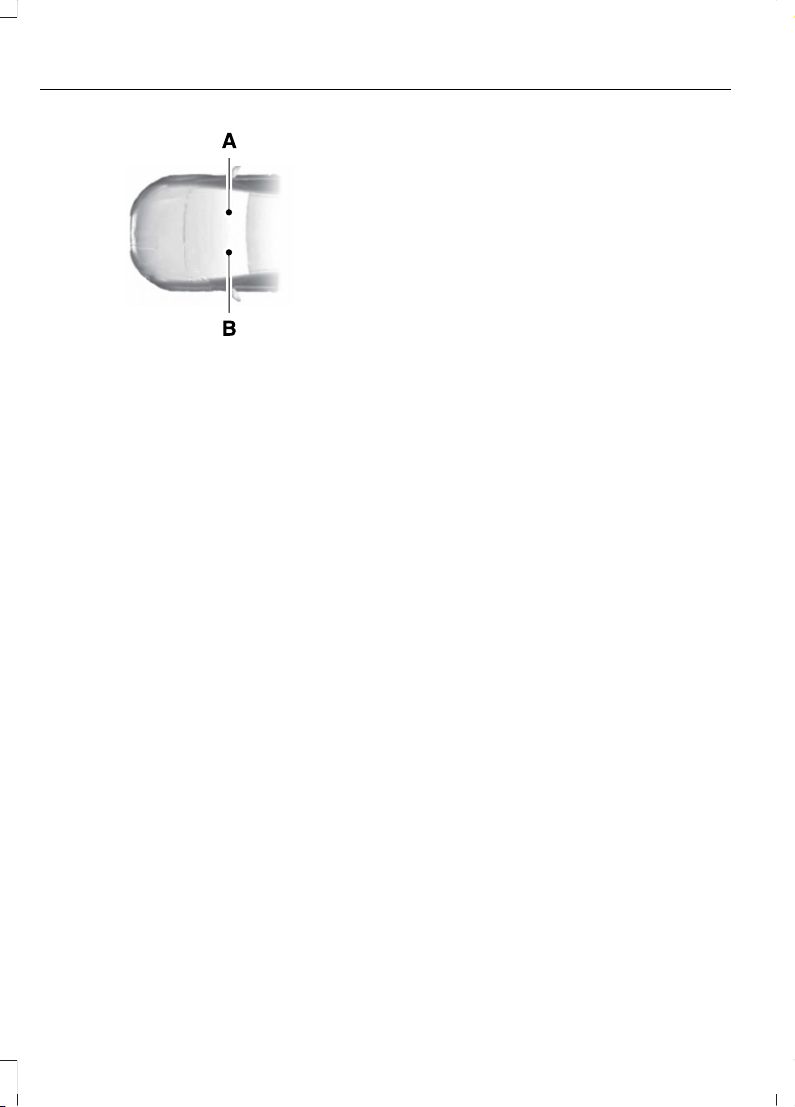
E154903
Right-hand side.A
Left-hand side.B
USING THIS PUBLICATION
To quickly locate information about your
vehicle, use the word search within the
Owner's Manual application.
22
2023 F-150 Lightning (TFD) Electric, Canada/United States of America, enUSA, Edition date: 202206, DOM
Introduction
Page 27
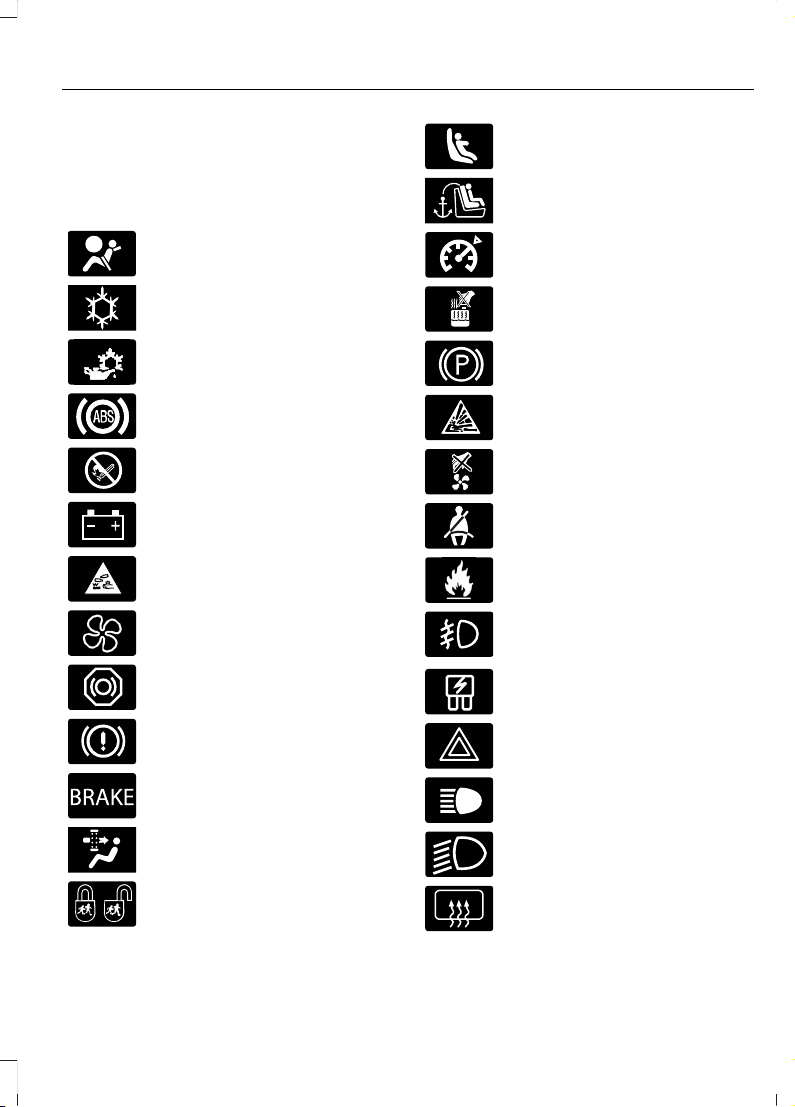
SYMBOLS USED ON YOUR
VEHICLE
These are some of the symbols you may
see on your vehicle.
Airbag
E162384
Air conditioning system
E231157
Air conditioning system lubricant
type
E67020
Anti-lock braking system
E139220
Avoid smoking, flames or sparks
E67021
Battery
E139227
Battery acid
Blower motor
E139209
Brake fluid - non petroleum
based
E67024
Brake system
E270480
Brake system
E139223
Cabin air filter
Child safety door lock or unlock
E139211
Child seat lower anchor
E141128
Child seat tether anchor
E332905
Cruise control
E139219
Do not open when hot
E139212
Electric Parking brake
E139221
Explosive gas
E139228
Fan warning
Fasten seatbelt
E231160
Flammable
Front fog lamps
E139214
Fuse compartment
E75790
Hazard flashers
E67019
Headlamp high beams
E270968
Headlamps on
Heated rear window
23
2023 F-150 Lightning (TFD) Electric, Canada/United States of America, enUSA, Edition date: 202206, DOM
Symbols Glossary
Page 28
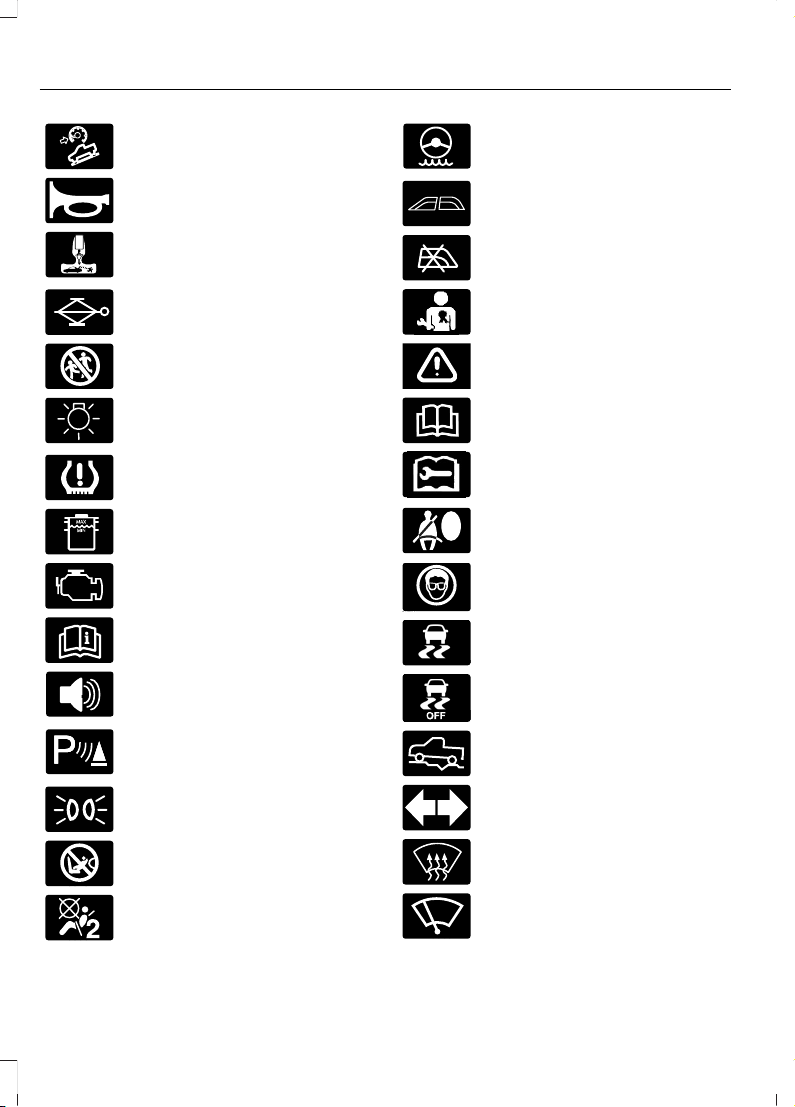
Hill descent control
E270945
Horn control
Interior luggage compartment
release
E139231
Jack
Keep out of reach of children
Lighting control
E139232
Low tire pressure warning
E139229
Maintain correct fluid level
E67028
Malfunction Indicator Lamp
(MIL)
E72343
Note operating instructions
Panic alarm
E139213
Parking aid
E71341
Parking lamps
Passenger airbag activated
Passenger airbag deactivated
Power steering fluid
E139216
Power windows front/rear
E139225
Power window lockout
E231159
Requires registered technician
E65963
Safety alert
E72021
See Owner's Manual
E231158
See Service Manual
Side airbag
Shield the eyes
E138639
Stability control
E130458
Stability control off
E332910
Trail control
E67018
Turn Signal
E73953
Windshield defrosting system
Windshield wiping system
24
2023 F-150 Lightning (TFD) Electric, Canada/United States of America, enUSA, Edition date: 202206, DOM
Symbols Glossary
Page 29

E270967
Windshield wash and wipe
25
2023 F-150 Lightning (TFD) Electric, Canada/United States of America, enUSA, Edition date: 202206, DOM
Symbols Glossary
Page 30

WARNING: Do not connect
wireless plug-in devices to the data link
connector. Unauthorized third parties
could gain access to vehicle data and
impair the performance of safety related
systems. Only allow repair facilities that
follow our service and repair instructions
to connect their equipment to the data
link connector.
We respect your privacy and are
committed to protecting it. The
information contained in this publication
was correct at the time of release, but as
technology rapidly changes, we
recommend that you visit the local Ford
website for the latest information.
Your vehicle has electronic control units
that have data recording functionality and
the ability to permanently or temporarily
store data. This data could include
information on the condition and status of
your vehicle, vehicle maintenance
requirements, events and malfunctions.
The types of data that can be recorded are
described in this section. Some of the data
recorded is stored in event logs or error
logs.
Note: Error logs are reset following a service
or repair.
Note: We may provide information in
response to requests from law enforcement,
other government authorities and third
parties acting with lawful authority or
through a legal process. Such information
could be used by them in legal proceedings.
Data recorded includes, for example:
• Operating states of system
components, for example battery
charge level and tire pressure.
• Vehicle and component status, for
example wheel speed, deceleration,
lateral acceleration and seatbelt
status.
• Events or errors in essential systems,
for example headlamps and brakes.
• System responses to driving situations,
for example airbag deployment and
stability control.
• Environmental conditions, for example
temperature.
Some of this data, when used in
combination with other information, for
example an accident report, damage to a
vehicle or eyewitness statements, could
be associated with a specific person.
Services That We Provide
If you use our services, we collect and use
data, for example account information,
vehicle location and driving characteristics,
that could identify you. We transmit this
data through a dedicated, protected
connection. We only collect and use data
to enable your use of our services to which
you have subscribed, with your consent or
where permitted by law. For additional
information, see the terms and conditions
of the services to which you have
subscribed.
For additional information about our
privacy policy, refer to the local Ford
website.
Services That Third Parties
Provide
We recommend that you review the terms
and conditions and data privacy
information for any services equipped with
your vehicle or to which you subscribe. We
take no responsibility for services that third
parties provide.
Where equipped, SiriusXM with 360L could
use the modem. To disable, turn off the
SiriusXM with 360L or Vehicle Connectivity
setting. See Enabling and Disabling the
Modem (page 486).
26
2023 F-150 Lightning (TFD) Electric, Canada/United States of America, enUSA, Edition date: 202206, DOM
Data Privacy
Page 31

SERVICE DATA
Service data recorders in your vehicle are
capable of collecting and storing
diagnostic information about your vehicle.
This potentially includes information about
the performance or status of various
systems and modules in the vehicle, such
as the high voltage battery, throttle, and
steering or brake systems. In order to
properly diagnose and service your vehicle,
Ford Motor Company (Ford of Canada in
Canada), and service and repair facilities
may access or share among them vehicle
diagnostic information received through a
direct connection to your vehicle when
diagnosing or servicing your vehicle.
Additionally, Ford Motor Company (Ford
of Canada, in Canada) may, where
permitted by law, use vehicle diagnostic
information for vehicle improvement or
with other information we may have about
you, for example, your contact information,
to offer you products or services that may
interest you. Data may be provided to our
service providers such as part suppliers
that may help diagnose malfunctions, and
who are similarly obligated to protect data.
We retain this data only as long as
necessary to perform these functions or to
comply with law. We may provide
information where required in response to
official requests to law enforcement or
other government authorities or third
parties acting with lawful authority or court
order, and such information may be used
in legal proceedings. For U.S. only (if
equipped), if you choose to use connected
apps and services, you consent that certain
diagnostic information may also be
accessed electronically by Ford Motor
Company and Ford authorized service
facilities, and that the diagnostic
information may be used to provide
services to you, personalizing your
experience, troubleshoot, and to improve
products and services and offer you
products and services that may interest
you, where permitted by law. For Canada
only, for more information, please review
the Ford of Canada privacy policy at
www.ford.ca, including our U.S. data
storage and use of service providers in
other jurisdictions who may be subject to
legal requirements in Canada, the United
States and other countries applicable to
them, for example, lawful requirements to
disclose personal information to
governmental authorities in those
countries.
EVENT DATA
This vehicle is equipped with an event data
recorder. The main purpose of an event
data recorder is to record, in certain crash
or near crash-like situations, such as an
airbag deployment or hitting a road
obstacle; this data will assist in
understanding how a vehicle’s systems
performed. The event data recorder is
designed to record data related to vehicle
dynamics and safety systems for a short
period of time, typically 30 seconds or less.
The event data recorder in this vehicle is
designed to record such data as:
• How various systems in your vehicle
were operating.
• Whether or not the driver and
passenger seatbelts were
buckled/fastened.
• How far (if at all) the driver was
depressing the accelerator and/or the
brake pedal.
• How fast the vehicle was traveling.
• Where the driver was positioning the
steering wheel.
This data can help provide a better
understanding of the circumstances in
which crashes and injuries occur.
27
2023 F-150 Lightning (TFD) Electric, Canada/United States of America, enUSA, Edition date: 202206, DOM
Data Privacy
Page 32

Note: Event data recorder data is recorded
by your vehicle only if a non-trivial crash
situation occurs; no data is recorded by the
event data recorder under normal driving
conditions and no personal data or
information (for example name, gender,
age, and crash location) is recorded.
However, parties, such as law enforcement,
could combine the event data recorder data
with the type of personally identifying data
routinely acquired during a crash
investigation.
To read data recorded by an event data
recorder, special equipment is required,
and access to the vehicle or the event data
recorder is needed. In addition to the
vehicle manufacturer, other parties, such
as law enforcement, that have such special
equipment, can read the information if they
have access to the vehicle or the event
data recorder.
BlueCruise Data (If Equipped)
If BlueCruise is active in certain crash or
near crash-like situations, such as an
airbag deployment or hitting a road
obstacle, the system may record driver
attentiveness, based on the direction of
eyes and duration, and photographs of the
driver seat area.
Note: No data is recorded under normal
driving conditions.
SETTINGS DATA
Your vehicle has electronic control units
that have the ability to store data based
on your personalized settings. The data is
stored locally in the vehicle or on devices
that you connect to it, for example, a USB
drive or digital music player. You can delete
some of this data and also choose whether
to share it through the services to which
you subscribe. See Enabling and
Disabling the Modem (page 486).
Comfort and Convenience Data
Data recorded includes, for example:
• Seat and steering wheel position.
• Climate control settings.
• Radio presets.
Entertainment Data
Data recorded includes, for example:
• Music, videos or album art.
• Contacts and corresponding address
book entries.
• Navigation destinations.
CONNECTED VEHICLE DATA
The modem has a SIM. The
modem was enabled when your
vehicle was built and periodically
sends messages to stay connected to the
cell phone network, receive automatic
software updates and send vehicle-related
information to us, for example diagnostic
information. These messages could
include information that identifies your
vehicle, the SIM and the electronic serial
number of the modem. Cell phone network
service providers could have access to
additional information, for example cell
phone network tower identification. For
additional information about our privacy
policy, visit www.FordConnected.com or
refer to your local Ford website.
Note: The modem continues to send this
information unless you disable the modem
or stop the modem from sharing vehicle
data by changing the modem settings. See
Connected Vehicle (page 486).
Note: The service can be unavailable or
interrupted for a number of reasons, for
example environmental or topographical
conditions and data plan coverage.
Note: To find out if your vehicle has a
modem, visit www.FordConnected.com.
28
2023 F-150 Lightning (TFD) Electric, Canada/United States of America, enUSA, Edition date: 202206, DOM
Data Privacy
Page 33

MOBILE DEVICE DATA
If you connect a mobile device to your
vehicle, you can display data from your
device on the touchscreen for example,
music and album art. You can share your
vehicle data with mobile apps on your
device through the system. See App
Requirements (page 536).
The mobile apps function operates by your
connected device sending data to us in the
United States. The data is encrypted and
includes, for example, the vehicle
identification number of your vehicle, the
SYNC module serial number, odometer,
enabled apps, usage statistics and
debugging information. We retain it only
as long as necessary to provide the service,
to troubleshoot, for continuous
improvement and to offer you products
and services that may be of interest to you
according to your preferences and where
allowed by law.
If you connect a cell phone to the system,
the system creates a profile that links to
that cell phone. The cell phone profile
enables more mobile features and efficient
operation. The profile contains, for
example data from your phonebook, read
and unread text messages and call history,
including history of calls when your cell
phone was not connected to the system.
If you connect a media device, the system
creates and retains a media device index
of supported media content. The system
also records a short diagnostic log of
approximately 10 minutes of all recent
system activity.
The cell phone profile, media device index
and diagnostic log remain in your vehicle
unless you delete them and are generally
accessible only in your vehicle when you
connect your cell phone or media device.
If you no longer plan to use the system or
your vehicle, we recommend you use the
master reset function to erase the stored
information. See Performing a System
Reset (page 557).
System data cannot be accessed without
special equipment and access to your
vehicle's module.
For additional information about our
privacy policy, refer to the local Ford
website.
Note: To find out if your vehicle has
connectivity technology, visit
www.FordConnected.com.
EMERGENCY CALL SYSTEM
DATA
When the emergency call system is active,
it may disclose to emergency services that
your vehicle has been in a crash involving
the deployment of an airbag or activation
of the battery shut-off. Certain versions or
updates to the emergency call system may
also be capable of electronically or verbally
disclosing to emergency services operators
your vehicle location or other details about
your vehicle or crash to assist emergency
services operators to provide the most
appropriate emergency services. If you do
not want to disclose this information, do
not activate the emergency call system.
Note: You cannot deactivate emergency
call systems that are required by law.
29
2023 F-150 Lightning (TFD) Electric, Canada/United States of America, enUSA, Edition date: 202206, DOM
Data Privacy
Page 34
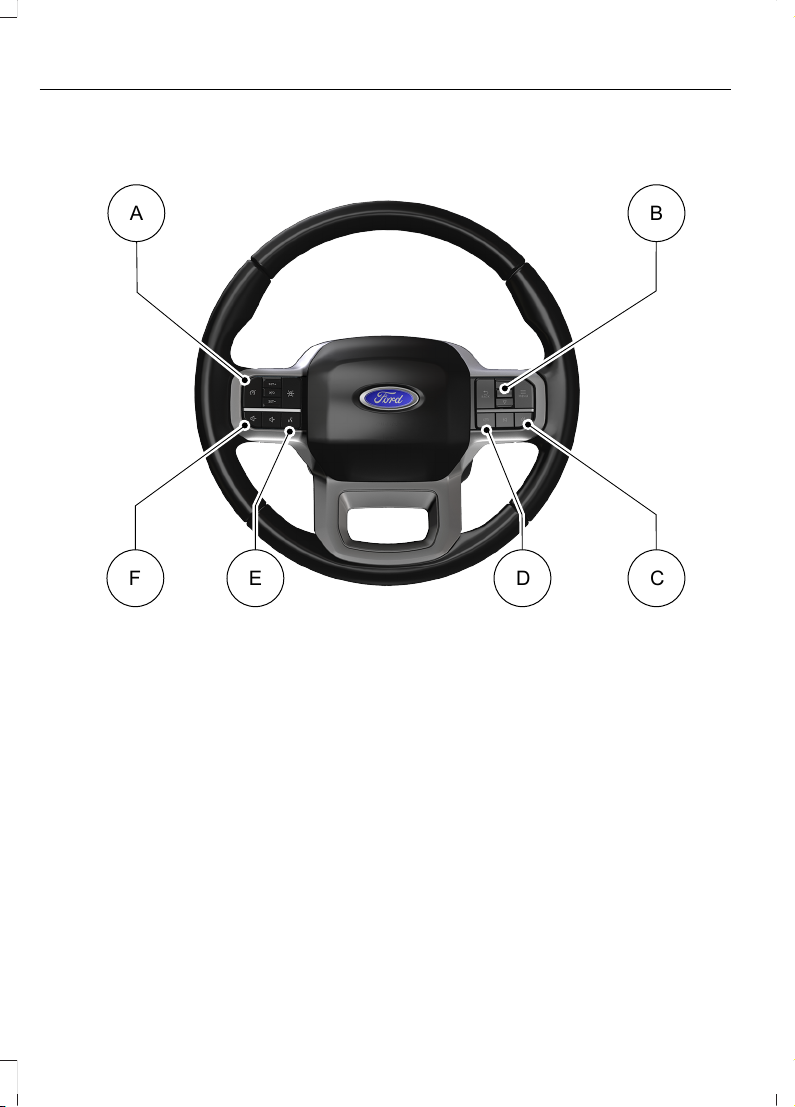
STEERING WHEEL
A B
F E CD
E359276
See Switching Cruise Control On and Off (page 279). See Switching
Adaptive Cruise Control On and Off (page 283).
A
See Using the Instrument Cluster Display Controls (page 140).B
See Selecting an FM Radio Station (page 495). See Selecting an FM Radio
Station (page 506).
C
See Making and Receiving a Phone Call (page 527). See Making and
Receiving a Phone Call (page 531).
D
See Using Ford Assistant (page 519). See Using Ford Assistant (page 519).E
See Adjusting the Volume (page 494). See Adjusting the Volume (page
504).
F
30
2023 F-150 Lightning (TFD) Electric, Canada/United States of America, enUSA, Edition date: 202206, DOM
Visual Search
Page 35
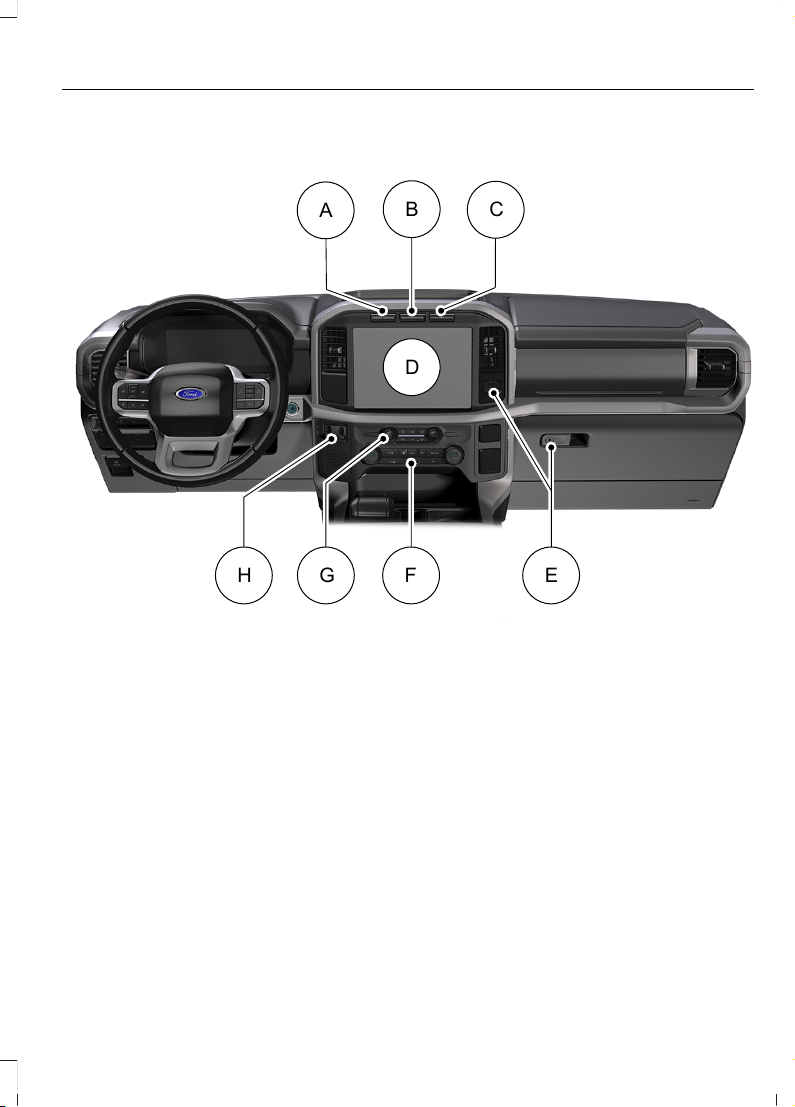
INSTRUMENT PANEL - VEHICLES WITH: 12 INCH SCREEN
E359111
A
B
C
D
GH F E
See Switching the 360 Degree Camera On and Off (page 268).A
See Switching the Hazard Flashers On and Off (page 424).B
See Switching Traction Control On and Off (page 251).C
See Feature Bar (page 515).D
See Opening the Glove Compartment (page 191).E
See Identifying the Climate Control Unit (page 148).F
See Switching the Audio Unit On and Off (page 493).G
See Using the Integrated Trailer Brake Controller (page 373).H
31
2023 F-150 Lightning (TFD) Electric, Canada/United States of America, enUSA, Edition date: 202206, DOM
Visual Search
Page 36
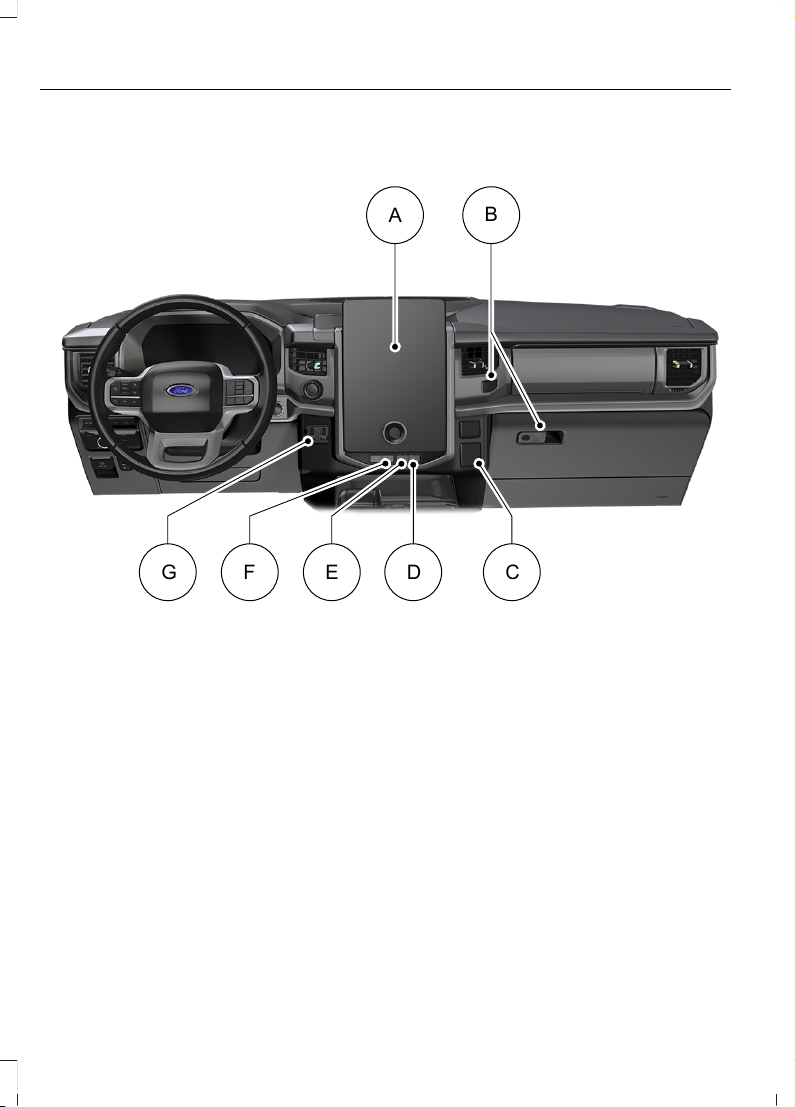
INSTRUMENT PANEL - VEHICLES WITH: 15 INCH SCREEN
B
A
DE CFG
E359110
See Status Bar (page 517).A
See Opening the Glove Compartment (page 191).B
See Locating the Power Outlets (page 182).C
See Switching Traction Control On and Off (page 251).D
See What is the Rear Parking Aid (page 258).E
See Switching the Hazard Flashers On and Off (page 424).F
See Using the Integrated Trailer Brake Controller (page 373).G
32
2023 F-150 Lightning (TFD) Electric, Canada/United States of America, enUSA, Edition date: 202206, DOM
Visual Search
Page 37
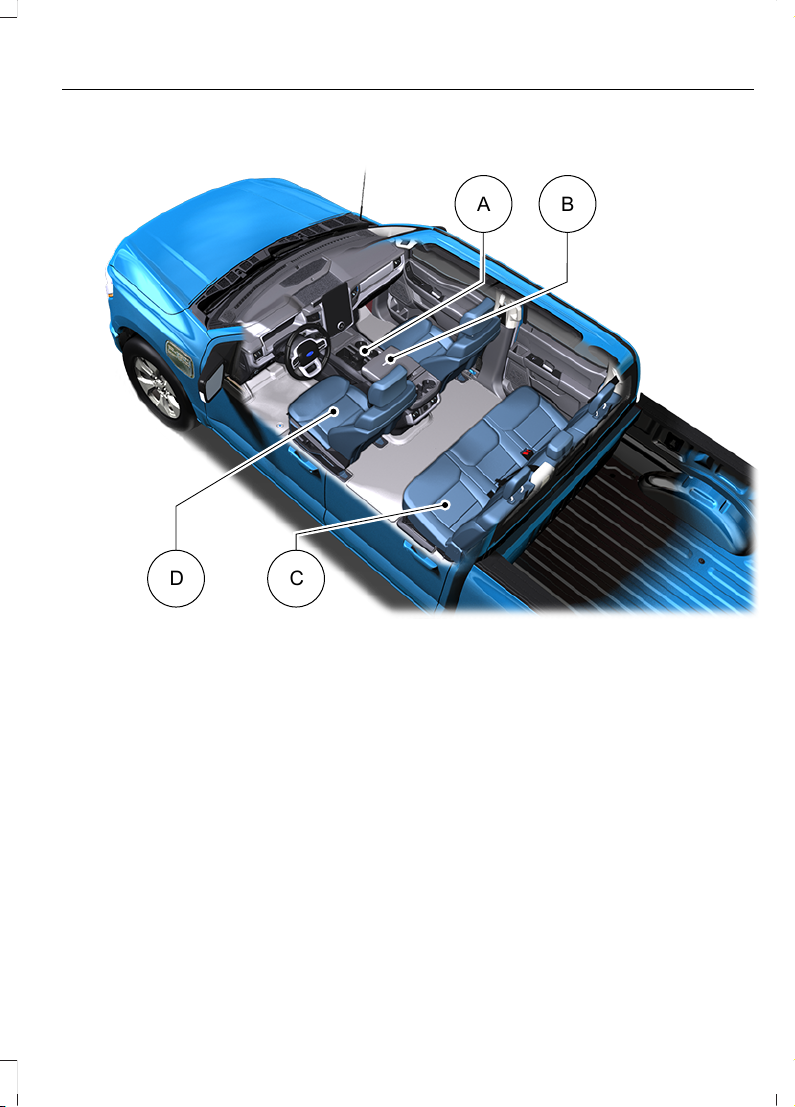
VEHICLE INTERIOR
CD
A B
E359109
See Shifting Your Vehicle Into Gear (page 227).A
See Using the Center Console Work Surface (page 189).B
See Folding the Seats (page 170).C
See Sitting in the Correct Position (page 160).D
33
2023 F-150 Lightning (TFD) Electric, Canada/United States of America, enUSA, Edition date: 202206, DOM
Visual Search
Page 38
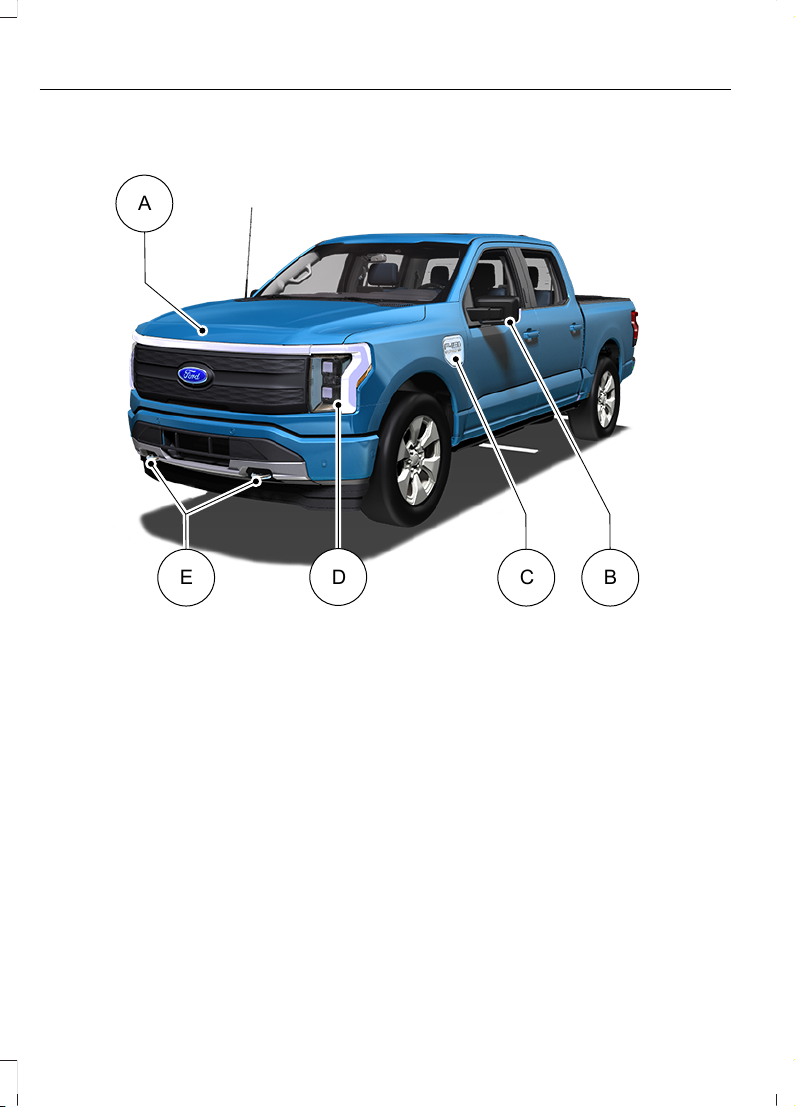
FRONT EXTERIOR
A
BCE
D
E359108
See Opening the Frunk from Inside Your Vehicle (page 347).A
See Folding the Exterior Mirrors (page 131). See Folding the Exterior Mirrors
(page 131).
B
See Locating the Charge Port (page 206).C
See Exterior Lighting Control (page 113).D
See Accessing the Front Towing Point (page 426).E
34
2023 F-150 Lightning (TFD) Electric, Canada/United States of America, enUSA, Edition date: 202206, DOM
Visual Search
Page 39
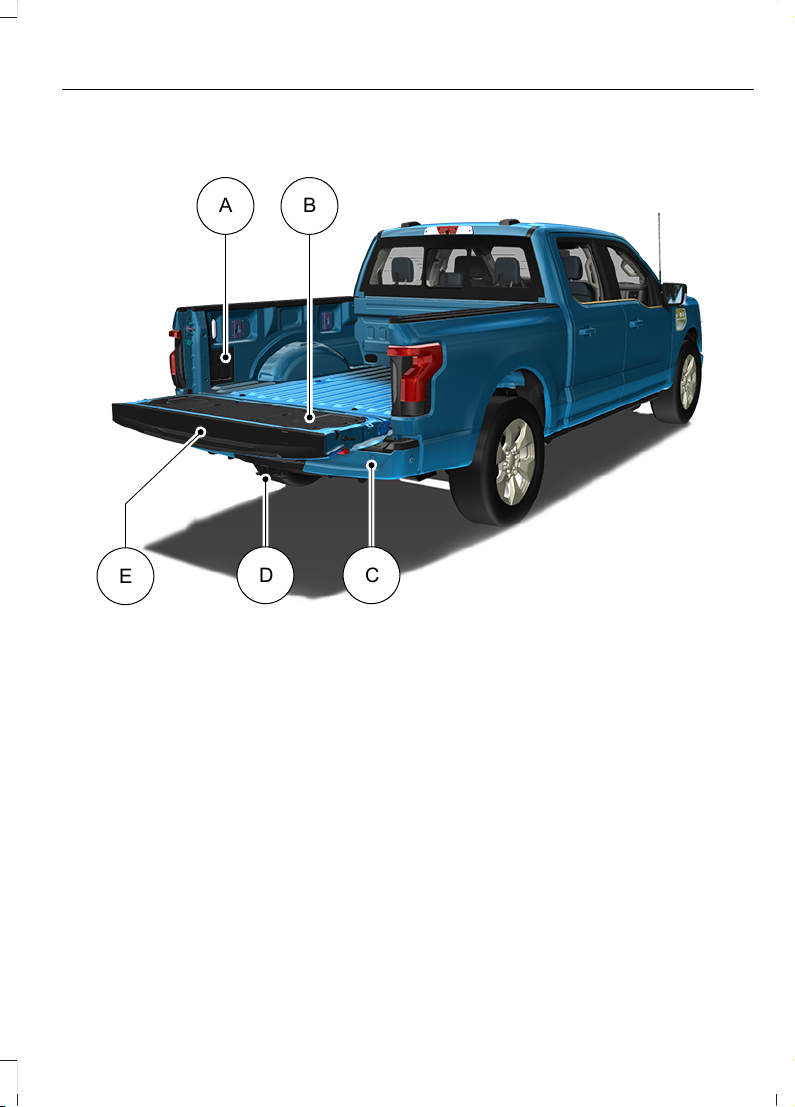
REAR EXTERIOR
A B
D C
E
E359107
See Locating the Outlets (page 183).A
See Removing and Installing the Tailgate (page 91). See Removing and
Installing the Tailgate (page 95).
B
See Locating the Rear Parking Aid Sensors (page 258).C
See Connecting a Trailer (page 361).D
See Opening the Tailgate From Outside Your Vehicle (page 91). See
Opening the Tailgate From Inside Your Vehicle (page 94).
E
35
2023 F-150 Lightning (TFD) Electric, Canada/United States of America, enUSA, Edition date: 202206, DOM
Visual Search
Page 40
CHILD SAFETY PRECAUTIONS
WARNING: Always make sure your
child is secured properly in a device that
is appropriate for their height, age and
weight. Child safety restraints must be
bought separately from your vehicle.
Failure to follow these instructions and
guidelines may result in an increased risk
of serious injury or death to your child.
WARNING: All children are shaped
differently. The National Highway Traffic
Safety Administration and other safety
organizations, base their
recommendations for child restraints on
probable child height, age and weight
thresholds, or on the minimum
requirements of the law. We recommend
that you check with a NHTSA Certified
Child Passenger Safety Technician
(CPST) to make sure that you properly
install the child restraint in your vehicle
and that you consult your pediatrician to
make sure you have a child restraint
appropriate for your child. To locate a
child restraint fitting station and CPST,
contact NHTSA toll free at
1-888-327-4236 or go to
www.nhtsa.dot.gov. In Canada, contact
Transport Canada toll free at
1-800-333-0371 or go to www.tc.gc.ca
to find a Child Car Seat Clinic in your
area. Failure to properly restrain children
in child restraints made especially for
their height, age and weight, may result
in an increased risk of serious injury or
death to your child.
WARNING: On hot days, the
temperature inside the vehicle can rise
very quickly. Exposure of people or
animals to these high temperatures for
even a short time can cause death or
serious heat related injuries, including
brain damage. Small children are
particularly at risk.
WARNING: Do not place a
rearward facing child restraint in front of
an active airbag. Failure to follow this
instruction could result in personal injury
or death.
WARNING: Properly secure
children 12 years old and under in a rear
seating position whenever possible. If
you are unable to properly secure all
children in a rear seating position,
properly secure the largest child on the
front seat. If you must use a forward
facing child restraint on the front seat,
move the seat as far back as possible.
Failure to follow these instructions could
result in personal injury or death.
WARNING: Always carefully follow
the instructions and warnings provided
by the manufacturer of any child
restraint to determine if the restraint
device is appropriate for your child's size,
height, weight, or age. Follow the child
restraint manufacturer's instructions and
warnings provided for installation and
use in conjunction with the instructions
and warnings provided by your vehicle
manufacturer. A safety seat that is
improperly installed or utilized, is
inappropriate for your child's height, age,
or weight or does not properly fit the
child may increase the risk of serious
injury or death.
36
2023 F-150 Lightning (TFD) Electric, Canada/United States of America, enUSA, Edition date: 202206, DOM
Child Safety
Page 41
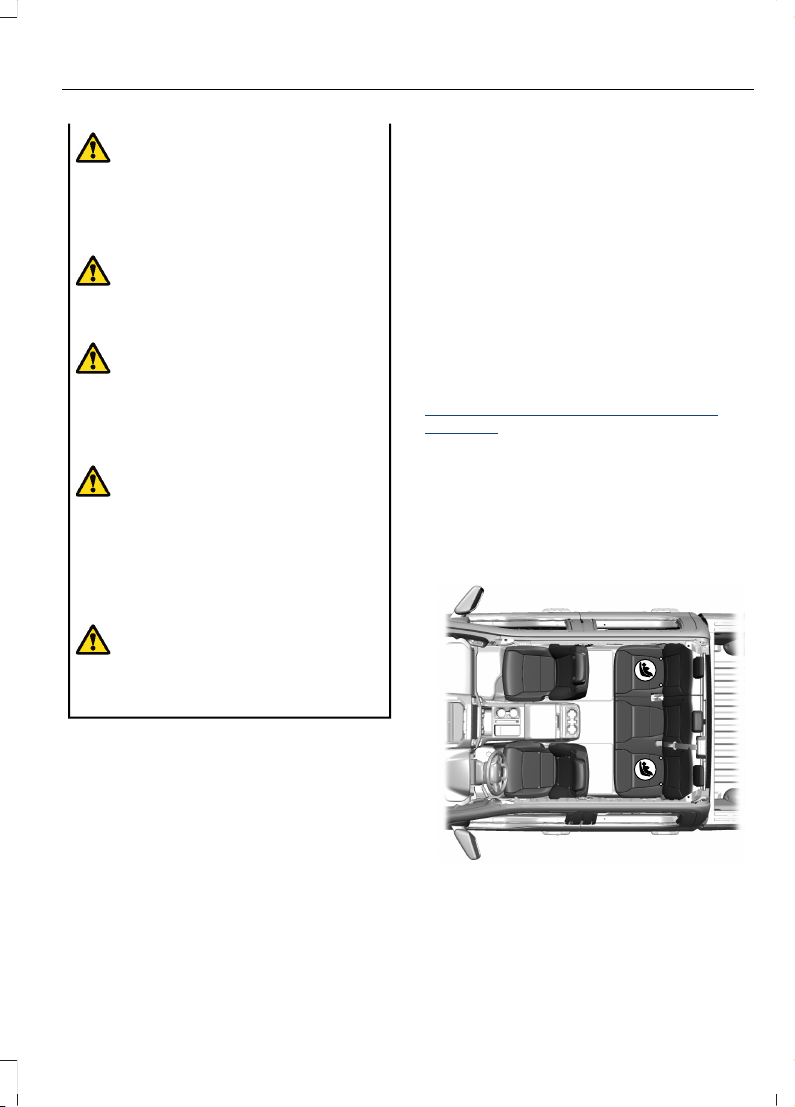
WARNING: Do not allow a
passenger to hold a child on their lap
when your vehicle is moving. Failure to
follow this instruction could result in
personal injury or death in the event of a
sudden stop or crash.
WARNING: Do not use pillows,
books or towels to boost your child's
height. Failure to follow this instruction
could result in personal injury or death.
WARNING: Properly secure child
restraints or booster seats when they are
not in use. They could become projectiles
in a sudden stop or crash. Failure to
follow this instruction could result in
personal injury or death.
WARNING: Do not put the shoulder
section of the seatbelt or allow the child
to put the shoulder section of the
seatbelt under their arm or behind their
back. Failure to follow this instruction
could reduce the effectiveness of the
seatbelt and increase the risk of injury or
death in a crash.
WARNING: Do not leave children
or pets unattended in your vehicle.
Failure to follow this instruction could
result in personal injury or death.
When installing a child restraint with
seatbelts:
• Place the vehicle seat in the upright
position before you install the child
restraint.
• Use the correct seatbelt buckle for that
seating position.
• Insert the belt tongue into the buckle.
Make sure the tongue is securely
fastened in the buckle.
• Keep the buckle release button
pointing up and away from the child
restraint, with the tongue between the
child restraint and the release button,
to prevent accidental unbuckling.
• Put the seatbelt in the automatic
locking mode.
CHILD RESTRAINT ANCHOR
POINTS
WHAT ARE THE CHILD RESTRAINT
ANCHOR POINTS
LATCH (Lower Anchors and Tethers for
CHildren)
Anchor points allow you to quickly and
safely install a child restraint.
LOCATING THE CHILD RESTRAINT
LOWER ANCHOR POINTS
Crew Cab
E308373
37
2023 F-150 Lightning (TFD) Electric, Canada/United States of America, enUSA, Edition date: 202206, DOM
Child Safety
Page 42
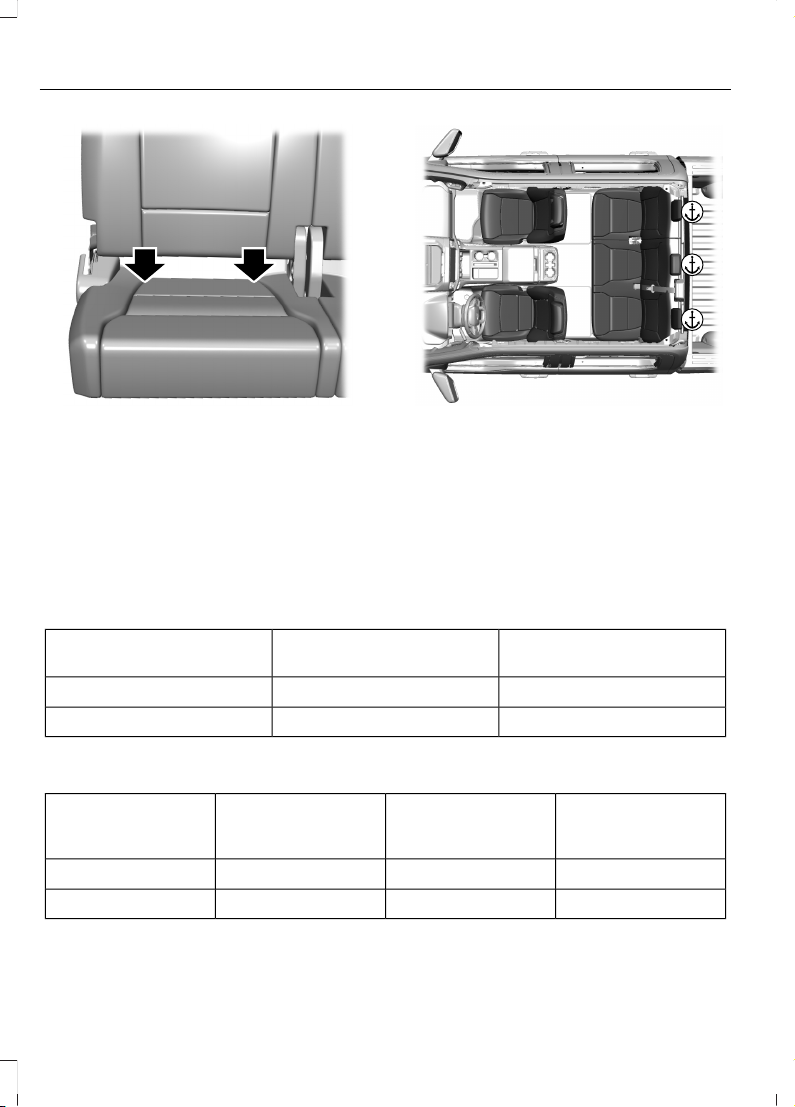
E312604
The lower child restraint anchors are at the
rear section of the rear seat between the
cushion and seat backrest.
LOCATING THE CHILD RESTRAINT
TOP TETHER ANCHOR POINTS
Crew Cab
E308390
CHILD RESTRAINTS
CHILD RESTRAINT POSITION
INFORMATION
Install the child restraint tightly against the
vehicle seat. It may be necessary to lift or
remove the head restraint.
Rear Facing Child Restraints
Seatbelt Only
LATCH (Lower Anchors
Only)
Combined Weight of Child
and Child Restraint
XXUp to 65 lb (29 kg)
XOver 65 lb (29 kg)
Forward Facing Child Restraints
Seatbelt and LATCH
(Lower Anchors and
Top Tether Anchor)
Seatbelt and Top
Tether Anchor
LATCH (Lower
Anchors and Top
Tether Anchor)
Combined Weight of
Child and Child
Restraint
XXXUp to 65 lb (29 kg)
XXOver 65 lb (29 kg)
38
2023 F-150 Lightning (TFD) Electric, Canada/United States of America, enUSA, Edition date: 202206, DOM
Child Safety
Page 43

CHILD RESTRAINTS RECOMMENDATION
Recommended Restraint TypeChild Size, Height, Weight, or Age
Use a child restraint (sometimes
called an infant carrier, convertible
seat, or toddler seat).
Children weighing 40 lb (18 kg) or less (generally
age four or younger).
Use a belt-positioning booster
seat.
Children who have outgrown or no longer properly
fit in a child restraint (generally children who are
less than 57 in (1.45 m) tall, are greater than age
four and less than age 12, and between 40 lb (18 kg)
and 80 lb (36 kg) and upward to 100 lb (45 kg) if
recommended by your child restraint manufacturer).
Use a vehicle seatbelt having the
lap belt snug and low across the
hips, shoulder belt centered across
the shoulder and chest, and seat
backrest upright.
Children who have outgrown or no longer properly
fit in a belt-positioning booster seat (generally chil-
dren who are at least 57 in (1.45 m) tall or greater
than 80 lb (36 kg) or 100 lb (45 kg) if recommended
by child restraint manufacturer).
You are required by law to properly use
child restraints for infants and toddlers in
the United States, Canada and Mexico.
Many states and provinces require that
small children use approved booster seats
until they reach age eight, a height of 57 in
(1.45 m) tall, or 80 lb (36 kg). Check your
local and state or provincial laws for
specific requirements about the safety of
children in your vehicle.
When possible, properly restrain children
12 years of age and under in a rear seating
position of your vehicle. Accident statistics
suggest that children are safer when
properly restrained in the rear seating
positions than in a front seating position.
When installing a rear facing child restraint,
adjust the vehicle seats to avoid
interference between the child restraint
and the vehicle seat in front of the child
restraint.
INSTALLING CHILD
RESTRAINTS
USING SEATBELTS
WARNING: Depending on where
you secure a child restraint, and
depending on the child restraint design,
you may block access to certain seatbelt
buckle assemblies and LATCH lower
anchors, rendering those features
potentially unusable. To avoid risk of
injury, make sure occupants only use
seating positions where they are able to
be properly restrained.
Note: The following does not apply to the
front center position of Crew Cab vehicles.
Note: Although the child restraint
illustrated is a forward facing child restraint,
the steps are the same for installing a rear
facing child restraint.
39
2023 F-150 Lightning (TFD) Electric, Canada/United States of America, enUSA, Edition date: 202206, DOM
Child Safety
Page 44
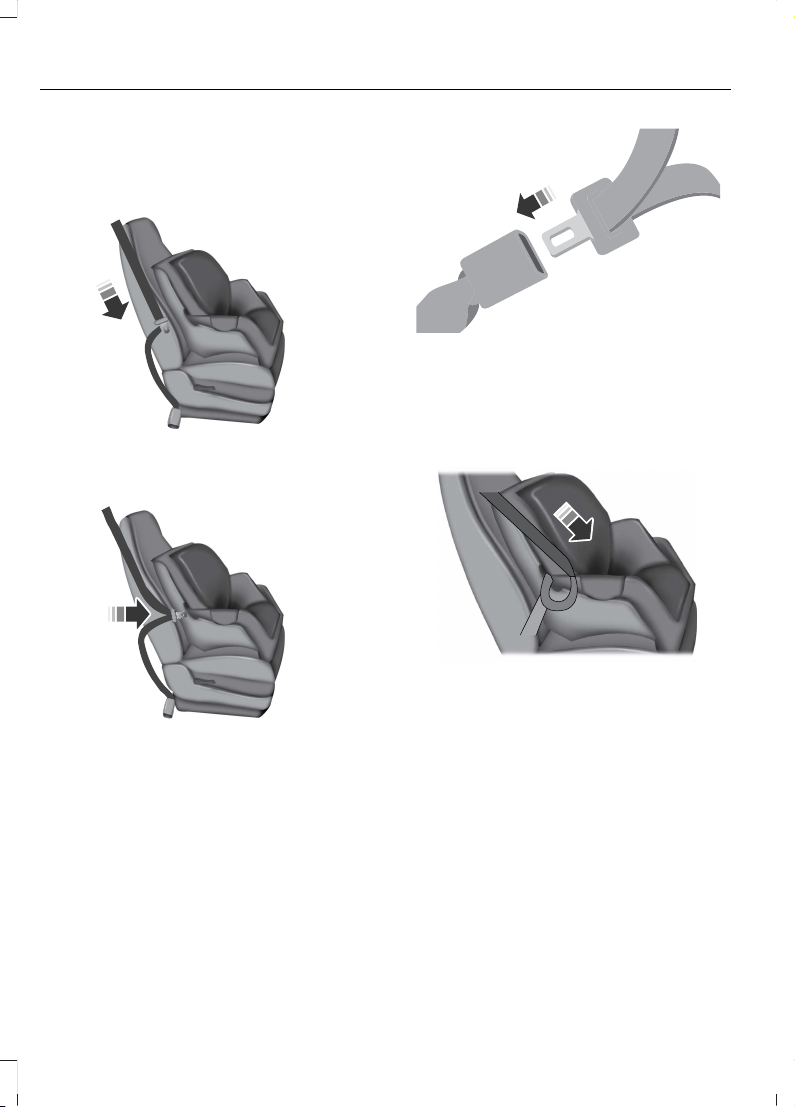
Perform the following steps when
installing a child restraint with seatbelts.
1. Position the child restraint in a seat
with a seatbelt.
E142529
2. Pull down on the shoulder belt and
then grasp the shoulder belt and lap
belt together.
E142530
3. While holding the shoulder and lap belt
portions together, route the tongue
through the child restraint according
to the child restraint manufacturer's
instructions. Make sure you did not
twist the belt webbing.
E142531
4. Insert the belt tongue into the proper
buckle for that seating position until
the latch engages. Make sure the
tongue is latched securely by pulling
on it.
E142875
5. To put the retractor in the automatic
locking mode, grasp the shoulder
portion of the belt and pull downward
until you pull all of the seatbelt out.
Note: The automatic locking mode is
available on the front passenger and rear
seats. This vehicle does not require the use
of a locking clip.
6. Allow the belt to retract to remove
slack. The seatbelt clicks as it retracts
to indicate it is in the automatic locking
mode.
40
2023 F-150 Lightning (TFD) Electric, Canada/United States of America, enUSA, Edition date: 202206, DOM
Child Safety
Page 45
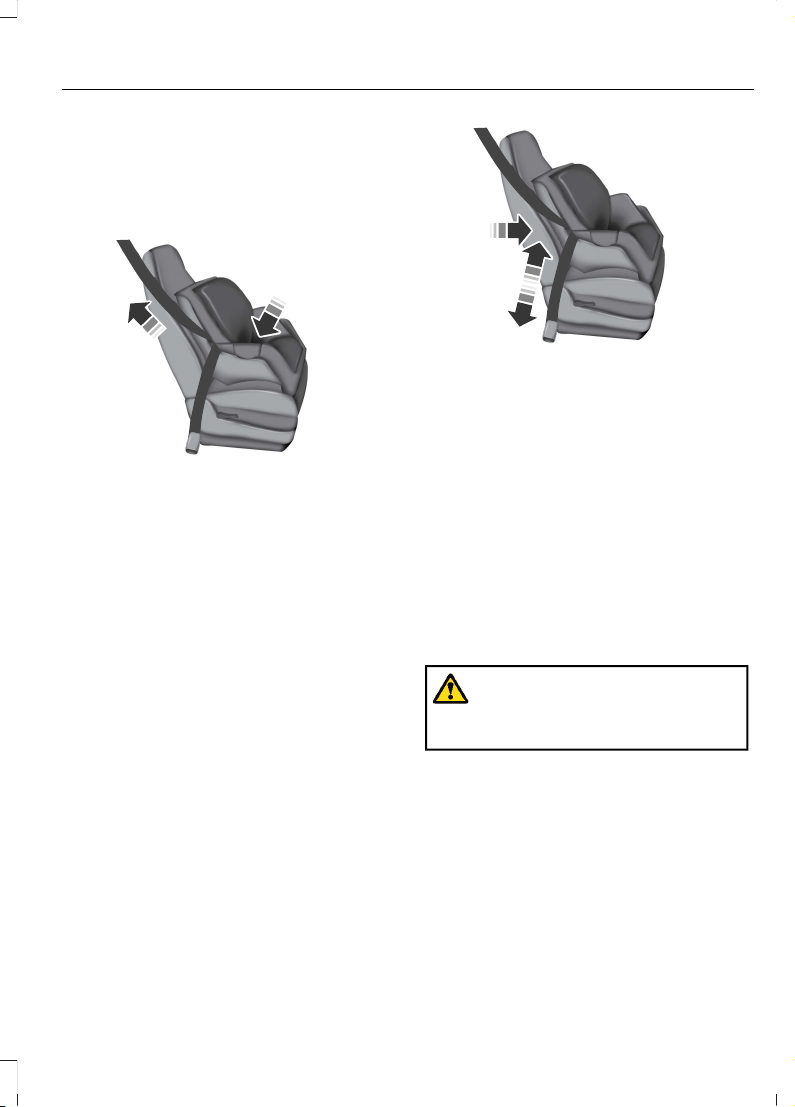
7. Pull the seatbelt out of the retractor to
make sure the retractor is in the
automatic locking mode. You should
not be able to pull more belt out. If the
retractor is not locked, unbuckle the
belt and repeat Steps 5 and 6.
E142533
8. Remove remaining slack from the belt.
Force the seat down with extra weight,
for example, by pressing down or
kneeling on the child restraint while
pulling up on the shoulder belt in order
to force slack from the belt. This is
necessary to remove the remaining
slack that exists once you add the extra
weight of the child to the child restraint.
It also helps to achieve the proper
snugness of the child restraint to your
vehicle. Sometimes, a slight lean
toward the buckle helps to remove
remaining slack from the belt.
9. If the child restraint has a tether strap,
attach it.
E142534
10. Before placing the child in the seat,
forcibly move the seat forward and
back to make sure the seat is securely
held in place.
To check this, grab the seat at the belt path
and attempt to move it side to side and
forward and back. There should be no
more than 1 in (2.5 cm) of movement.
We recommend checking with a NHTSA
Certified Child Passenger Safety
Technician to make certain the child
restraint is properly installed. In Canada,
check with Transport Canada for referral
to a Child Car Seat Clinic.
Using Seatbelts
WARNING: Always use both the
lap and shoulder portion of the seatbelt
in the center seating position.
Note: The following applies to the front
center position of Crew Cab vehicles.
The seatbelt webbing below the tongue is
the lap portion of the seatbelt. The
webbing above the tongue is the shoulder
belt portion of the seatbelt.
1. Position the child restraint in the front
center seat.
41
2023 F-150 Lightning (TFD) Electric, Canada/United States of America, enUSA, Edition date: 202206, DOM
Child Safety
Page 46
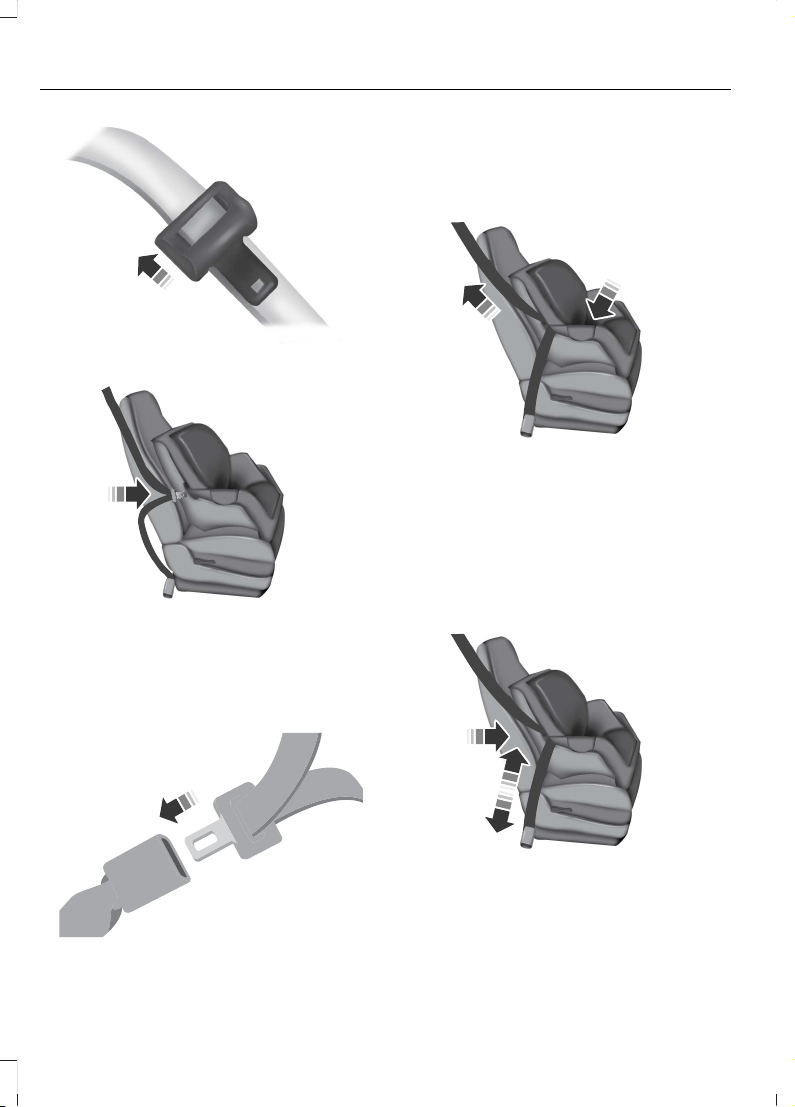
E162708
2. Slide the tongue up the webbing.
E142530
3. While holding both shoulder and lap
portions next to the tongue, route the
tongue and webbing through the child
restraint according to the child restraint
manufacturer's instructions. Make sure
you did not twist the belt webbing.
E142531
4. Insert the belt tongue into the proper
buckle for that seating position until
the latch engages. Make sure the
tongue is latched securely by pulling
on it.
E142533
5. When pushing down with your knee on
the child restraint, pull up on the
shoulder belt portion to tighten the lap
belt portion of the seatbelt.
6. Allow the seatbelt to retract and
remove any slack in the belt to securely
tighten the child restraint in the vehicle.
7. If the child restraint has a tether strap,
attach it.
E142534
42
2023 F-150 Lightning (TFD) Electric, Canada/United States of America, enUSA, Edition date: 202206, DOM
Child Safety
Page 47
8. Before placing the child in the seat,
forcibly move the seat forward and
back to make sure the seat is securely
held in place. To check this, grab the
seat at the belt path and attempt to
move it side to side and forward and
back. There should be no more than
1 in (2.5 cm) of movement.
9. Check from time to time to be sure that
there is no slack in the lap and shoulder
belt. The shoulder belt must be snug
to keep the lap belt tight during a crash.
We recommend checking with a NHTSA
Certified Child Passenger Safety
Technician to make certain the child
restraint is properly installed. In Canada,
check with Transport Canada for referral
to a Child Car Seat Clinic.
USING LOWER ANCHORS AND
TETHERS FOR CHILDREN
WARNING: Do not attach two child
safety restraints to the same anchor. In
a crash, one anchor may not be strong
enough to hold two child safety restraint
attachments and may break, causing
serious injury or death.
WARNING: Depending on where
you secure a child restraint, and
depending on the child restraint design,
you may block access to certain seatbelt
buckle assemblies and LATCH lower
anchors, rendering those features
potentially unusable. To avoid risk of
injury, make sure occupants only use
seating positions where they are able to
be properly restrained.
The Lower Anchors and Tethers for
Children (LATCH) system has three vehicle
anchor points:
• Two lower anchors where the vehicle
seat backrest and seat cushion meet,
called the seat bight.
• One top tether anchor behind that
seating position.
LATCH compatible child restraints have
two rigid or webbing mounted
attachments. These attachments connect
to the two lower anchors at the LATCH
equipped seating positions in your vehicle.
This type of attachment method
eliminates the need to use seatbelts to
attach the child restraint.
However, you can still use the seatbelt to
attach the child restraint if the lower
anchors are not used. For forward-facing
child restraints, you must also attach the
top tether strap to the proper top tether
anchor if a top tether strap has been
provided with your child restraint.
Follow the instructions later in this chapter
on attaching child restraints with tether
straps.
INSTALLING A CHILD RESTRAINT
IN A CENTER SEAT
WARNING: The standardized
spacing for LATCH lower anchors is 11 in
(280 mm) center to center. Do not use
LATCH lower anchors for the center
seating position unless the child restraint
manufacturer's instructions permit and
specify using anchors spaced at least as
far apart as those in this vehicle.
The lower anchors at the center of the
second row rear seat are spaced 25.7 in
(652 mm) apart. The standardized spacing
for LATCH lower anchors is 11 in (280 mm)
center to center.
43
2023 F-150 Lightning (TFD) Electric, Canada/United States of America, enUSA, Edition date: 202206, DOM
Child Safety
Page 48
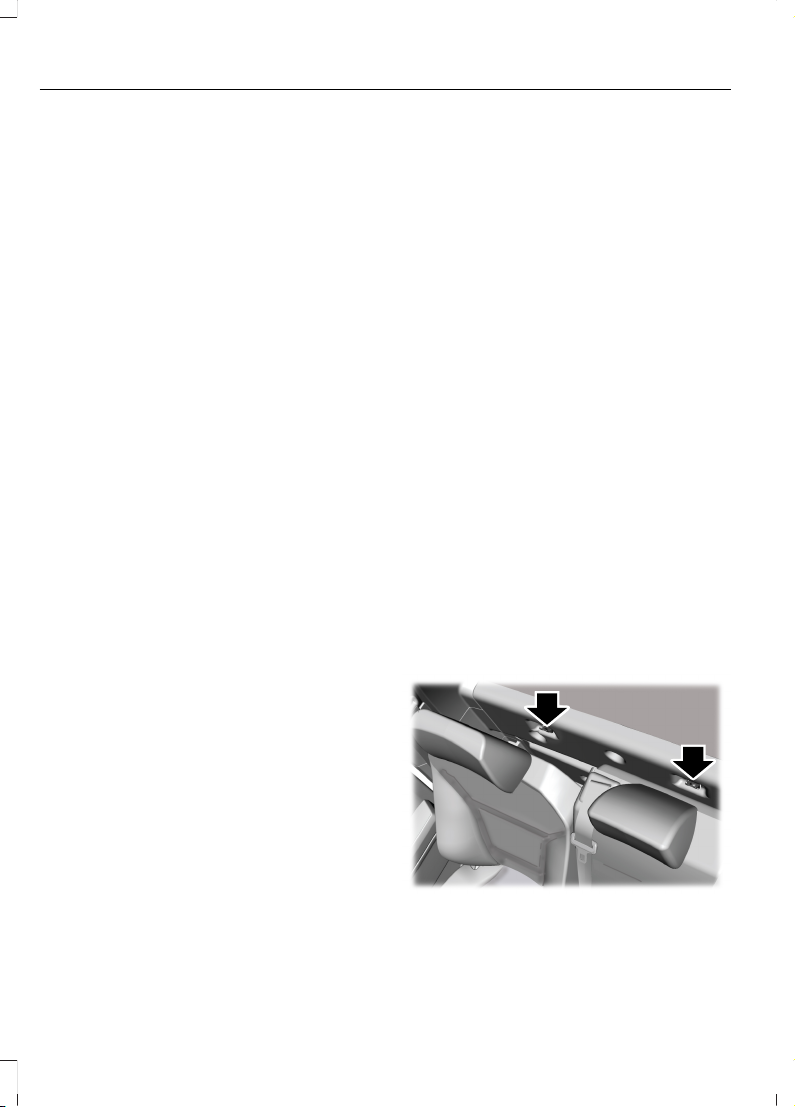
You cannot install a child restraint with
rigid LATCH attachments at the center
seating position. You can only use LATCH
compatible child restraints with
attachments on belt webbing at this
seating position provided that the child
restraint manufacturer's instructions
permit use with the anchor spacing stated.
Do not attach a child restraint to any lower
anchor if another child restraint is attached
to that anchor.
Each time you use the child restraint, check
that the seat is properly attached to the
lower anchors and tether anchor, if
applicable. Tug the child restraint from side
to side and forward and back where it is
secured to the vehicle. The seat should
move less than 1 in (2.5 cm).
If you did not properly anchor the child
restraint, the risk of a child being injured in
a crash greatly increases.
COMBINING THE SEATBELT AND
LOWER ANCHORS FOR
ATTACHING CHILD RESTRAINTS
When used in combination, you may attach
either the seatbelt or the LATCH lower
anchors first, provided a proper installation
is achieved. Attach the tether strap
afterward, if it is included with the child
restraint.
USING TETHER STRAPS
Many forward-facing child restraints
include a tether strap which extends from
the back of the child restraint and hooks
to an anchoring point called the top tether
anchor. Tether straps are available as an
accessory for many older child restraints.
Contact the manufacturer of your child
restraint for information about ordering a
tether strap, or to obtain a longer tether
strap if the tether strap on your child
restraint does not reach the appropriate
top tether anchor in the vehicle.
Attach the tether strap only to the
appropriate tether anchor. The tether strap
may not work properly if attached
somewhere other than the correct tether
anchor.
If you install a child restraint with rigid
LATCH attachments, do not tighten the
tether strap enough to lift the child
restraint off the vehicle seat cushion when
the child is seated in it. Keep the tether
strap just snug without lifting the front of
the child restraint. Keeping the child
restraint just touching the vehicle seat
gives the best protection in a severe crash.
Once you have installed the child restraint
using either the seatbelt, the lower anchors
of the LATCH system, or both, you can
attach the top tether strap.
ATTACHING THE FRONT SEAT
TETHER STRAP
Regular Cab
E175295
1. Route the child restraint tether strap
over the back of the seat and under the
head restraint.
44
2023 F-150 Lightning (TFD) Electric, Canada/United States of America, enUSA, Edition date: 202206, DOM
Child Safety
Page 49
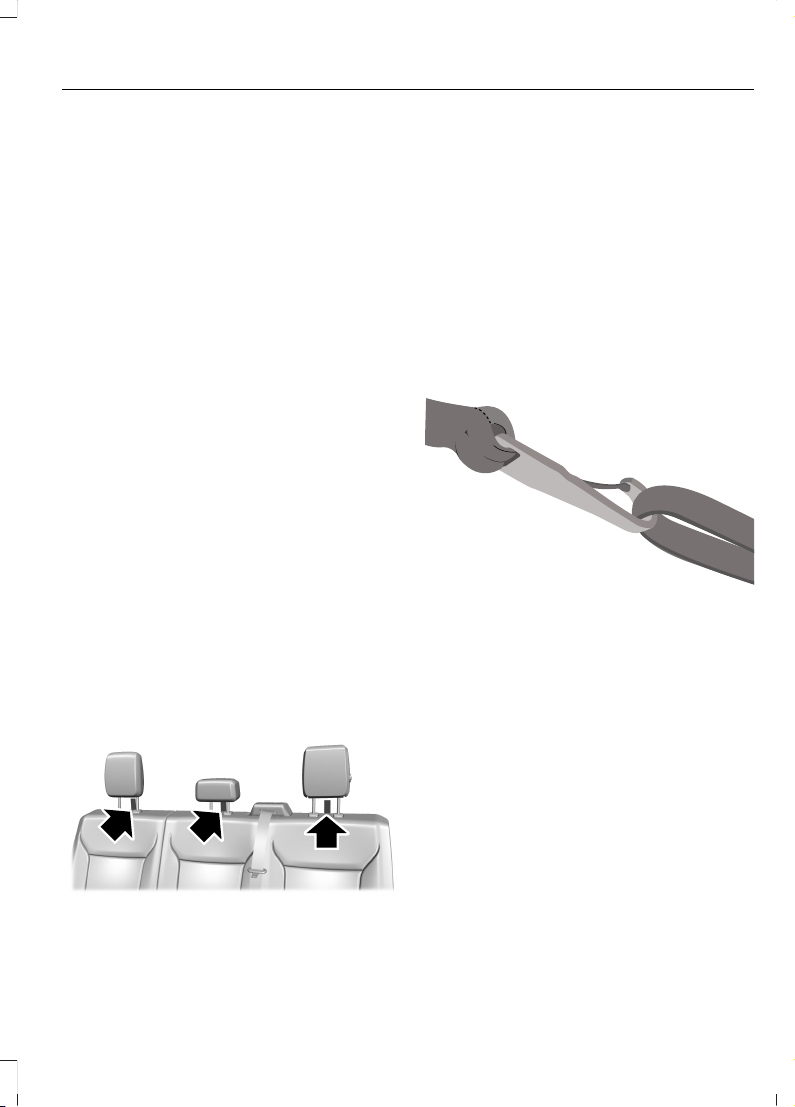
Note: For vehicles with adjustable head
restraints, route the tether strap under the
head restraint and between the head
restraint posts. Otherwise, route the tether
strap over the top of the seat backrest.
2. Locate the correct anchor for the
selected seating position. You may
need to pull the seat backrest forward
to access the tether anchors. Make sure
the seat is locked in the upright position
before installing the child restraint.
3. Clip the tether strap to the anchor.
4. Tighten the child restraint tether strap
according to the manufacturer's
instructions.
If you incorrectly clip the tether strap, the
child restraint may not be retained properly
in the event of a crash.
If you did not properly anchor the child
restraint, the risk of a child being injured in
a crash greatly increases.
If your child restraint system has a tether
strap, and the child restraint manufacturer
recommends its use, we also recommend
its use.
ATTACHING THE REAR SEAT
TETHER STRAP
Crew Cab
E309318
There are three loops of webbing above
the back of the rear seat. Use these loops
as routing loops and anchor loops for up
to three child restraint tether straps.
For example, you can use the center loop
as a routing loop for a child restraint in the
center rear seat and as an anchoring loop
for child restraints installed in the
outermost rear seats.
Many tether straps cannot be tightened if
the tether strap is hooked to the loop
directly behind the child restraint.
To provide a tight tether strap:
E309384
1. Route the vehicle tether loop between
the head restraint posts, then route the
child restraint tether strap through the
loop, forward of the head restraint.
2. Hook the strap to the vehicle tether
anchor loop in the adjacent seating
position. If using the driver side, pass
the strap behind the shoulder belt for
the center seat. Put the tether strap
through the routing loop. The head
restraint support post holds the child
restraint tightly, but the head restraint
post is not strong enough to hold the
child restraint during a crash.
3. Tighten the tether strap according to
the child restraint manufacturer's
instructions.
45
2023 F-150 Lightning (TFD) Electric, Canada/United States of America, enUSA, Edition date: 202206, DOM
Child Safety
Page 50
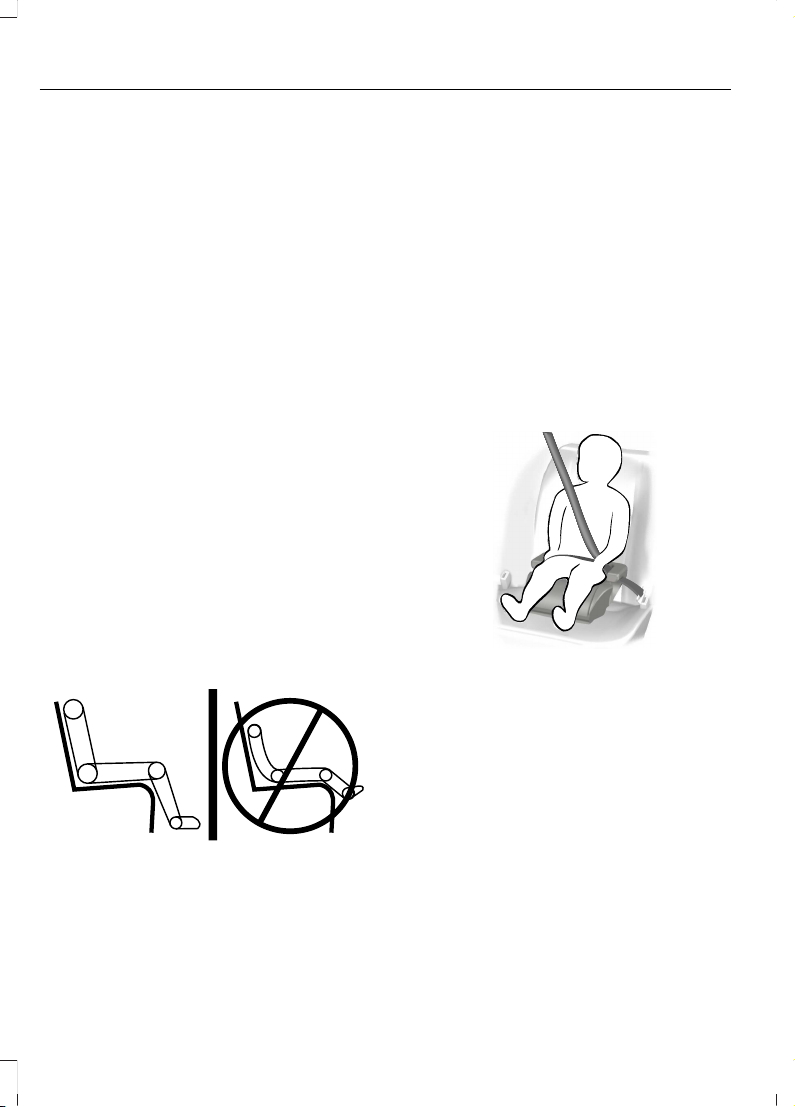
If you did not properly anchor the child
restraint, the risk of a child being injured in
a crash greatly increases.
If your child restraint system has a tether
strap, and the child restraint manufacturer
recommends its use, we also recommend
its use.
BOOSTER SEATS
Use a belt-positioning booster seat for
children who have outgrown or no longer
properly fit in a child restraint and meet
the following criteria.
• Generally children who are less than
57 in (1.45 m) tall.
• Are greater than age four (4) and less
than age twelve (12).
• Are between 40 lb (18 kg) and 80 lb
(36 kg) and upward to 100 lb (45 kg).
Many state and provincial laws require that
children use approved booster seats until
they reach age eight, a height of 57 in
(1.45 m) tall, or 80 lb (36 kg).
Booster seats should be used until you can
answer yes to all of these questions when
seated without a booster seat:
E142595
• Can the child sit all the way back
against their vehicle seat backrest with
knees bent comfortably at the edge of
the seat cushion?
• Can the child sit without slouching?
• Does the lap belt rest low across the
hips?
• Is the shoulder belt centered on the
shoulder and chest?
• Can the child stay seated like this for
the whole trip?
Always use booster seats in conjunction
with your vehicle lap and shoulder belt.
Types of Booster Seats
E68924
• Backless booster seats
If your backless booster seat has a
removable shield, remove the shield.
If a vehicle seating position has a low seat
backrest or no head restraint, a backless
booster seat may place your child's head,
as measured at the tops of the ears, above
the top of the seat. In this case, move the
backless booster to another seating
position with a higher seat backrest or
head restraint and lap and shoulder belts,
or consider using a high-back booster seat.
46
2023 F-150 Lightning (TFD) Electric, Canada/United States of America, enUSA, Edition date: 202206, DOM
Child Safety
Page 51
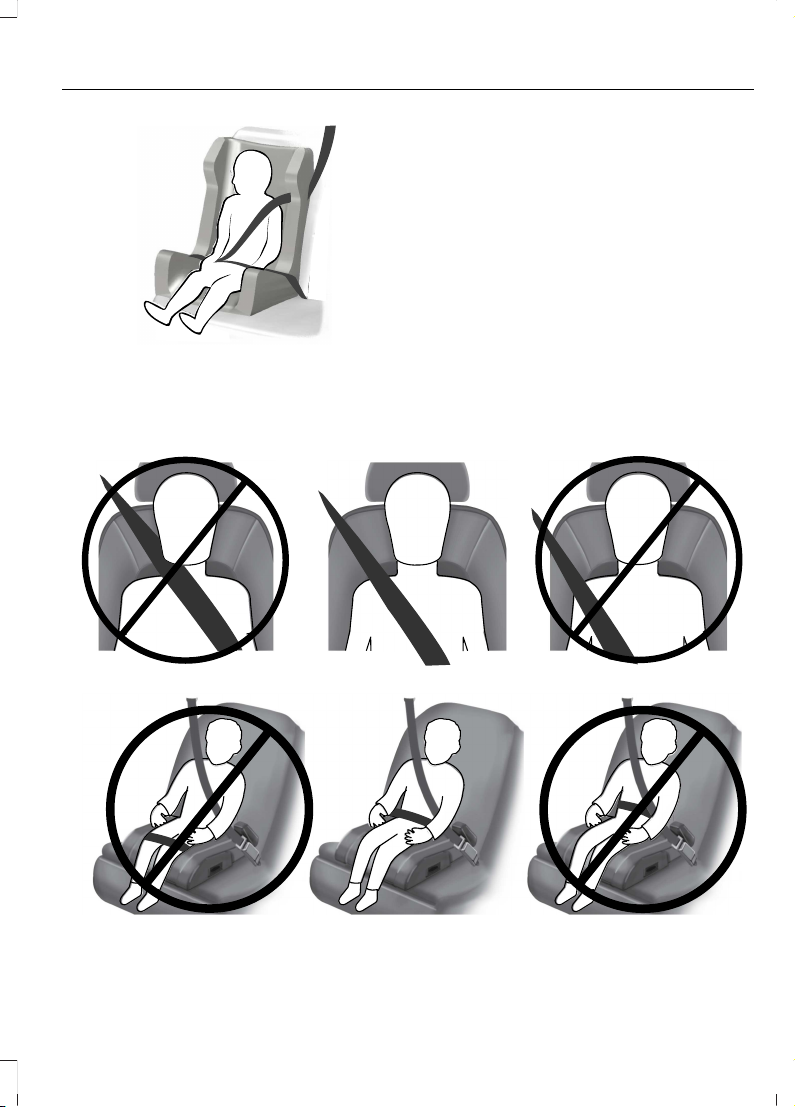
E70710
• High-back booster seats
If, with a backless booster seat, you cannot
find a seating position that adequately
supports your child's head, a high-back
booster seat would be a better choice.
Children and booster seats vary in size and
shape. Choose a booster that keeps the
lap belt low and snug across the hips,
never up across the stomach, and lets you
adjust the shoulder belt to cross the chest
and rest snugly near the center of the
shoulder.
The following drawings compare the ideal
fit to a shoulder belt uncomfortably close
to the neck and a shoulder belt that could
slip off the shoulder. The drawings also
show how the lap belt should be low and
snug across the child's hips.
E142596
E142597
47
2023 F-150 Lightning (TFD) Electric, Canada/United States of America, enUSA, Edition date: 202206, DOM
Child Safety
Page 52
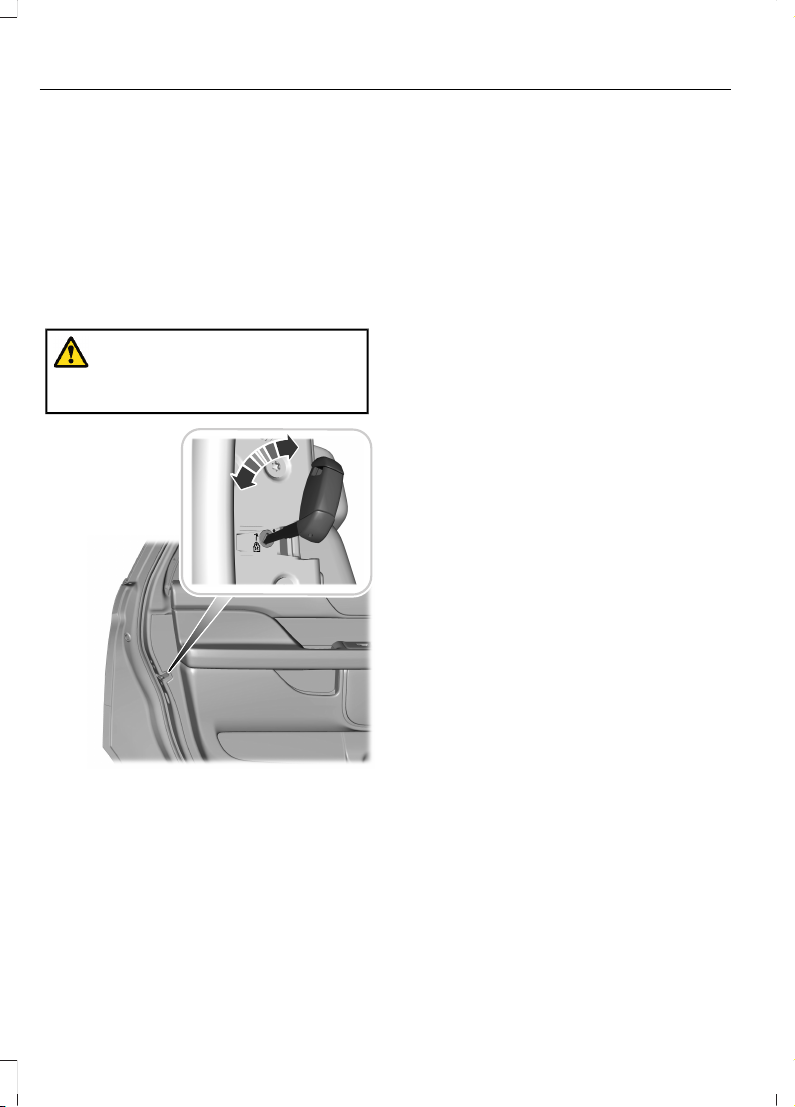
If the booster seat slides on the vehicle
seat upon which it is being used, placing a
rubberized mesh sold as shelf or carpet
liner under the booster seat may improve
this condition. Do not use any item thicker
than this under the booster seat. Check
with the booster seat manufacturer's
instructions.
CHILD SAFETY LOCKS
WARNING: You cannot open the
rear doors from inside if you have put the
child safety locks on.
E249891
A child safety lock is on the rear edge of
each rear door and must be set separately
for each door.
Left-Hand Side
Turn it clockwise to switch the child lock
on and counterclockwise to switch it off.
Right-Hand Side
Turn it counterclockwise to switch the child
lock on and clockwise to switch it off.
48
2023 F-150 Lightning (TFD) Electric, Canada/United States of America, enUSA, Edition date: 202206, DOM
Child Safety
Page 53
SEATBELT PRECAUTIONS
WARNING: Always drive and ride
with your seatback upright and the lap
belt snug and low across the hips.
WARNING: Children must always
be properly restrained.
WARNING: Do not allow a
passenger to hold a child on their lap
when your vehicle is moving. Failure to
follow this instruction could result in
personal injury or death in the event of a
sudden stop or crash.
WARNING: All occupants of your
vehicle, including the driver, should
always properly wear their seatbelts,
even when an airbag supplemental
restraint system is provided. Failure to
properly wear your seatbelt could
seriously increase the risk of injury or
death.
WARNING: It is extremely
dangerous to ride in a cargo area, inside
or outside of a vehicle. In a crash, people
riding in these areas are more likely to be
seriously injured or killed. Do not allow
people to ride in any area of your vehicle
that is not equipped with seats and
seatbelts. Make sure everyone in your
vehicle is in a seat and properly using a
seatbelt. Failure to follow this warning
could result in serious personal injury or
death.
WARNING: In a rollover crash, an
unbelted person is significantly more
likely to die than a person wearing a
seatbelt.
WARNING: Each seating position
in your vehicle has a specific seatbelt
assembly made up of one buckle and
one tongue designed to be used as a pair.
Use the shoulder belt on the outside
shoulder only. Never wear the shoulder
belt under the arm. Never use a single
seatbelt for more than one person.
WARNING: Even with advanced
restraints systems, properly restrain
children 12 and under in a rear seating
position. Failure to follow this could
seriously increase the risk of injury or
death.
WARNING: Seatbelts and seats
may be hot in a vehicle that is in the
sunshine. The hot seatbelts or seats may
burn a small child. Check seat covers and
buckles before you place a child
anywhere near them.
WARNING: If your vehicle is
involved in a crash, have the seatbelts
and associated components inspected
as soon as possible. Failure to follow this
instruction could result in personal injury
or death.
All seating positions in this vehicle have
seatbelts. All occupants of the vehicle
should properly wear their seatbelts, even
when an airbag supplemental restraint
system is provided.
The seatbelt system consists of:
• Lap and shoulder seatbelts.
• A shoulder seatbelt with automatic
locking mode, except driver seatbelt.
• Height adjusters at the front outermost
seating positions.
• Seatbelt pretensioners at the front
outermost and rear outermost seating
positions.
49
2023 F-150 Lightning (TFD) Electric, Canada/United States of America, enUSA, Edition date: 202206, DOM
Seatbelts
Page 54
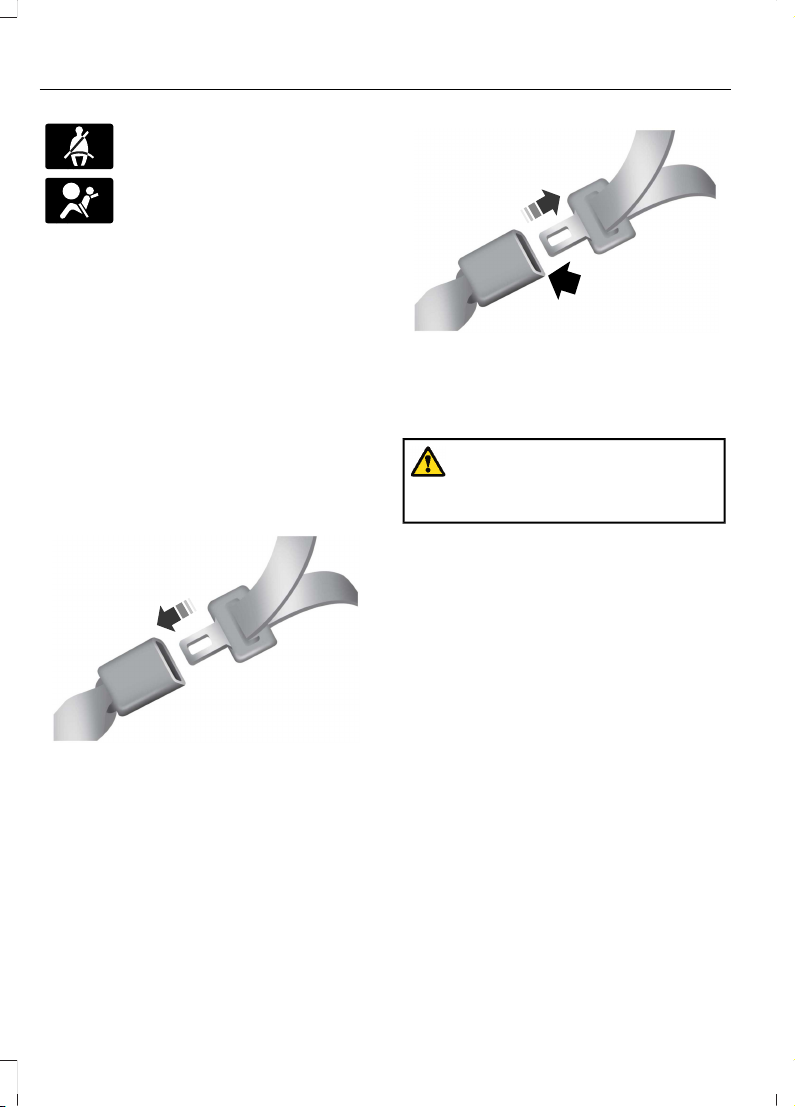
A seatbelt warning light and
chime.
Crash sensors and monitoring
system with readiness indicator.
The seatbelt pretensioners are designed
to tighten the seatbelts when activated. In
frontal and near-frontal crashes, the
seatbelt pretensioners may be activated
alone or, if the crash is of sufficient severity,
together with the front airbags. In side
crashes and rollovers, the pretensioners
will be activated when the Safety Canopy
is activated.
FASTENING AND
UNFASTENING THE
SEATBELTS
This applies to all seating positions.
E142587
1. Insert the seatbelt tongue into the
buckle until you hear a snap and feel it
latch.
E142588
2. Press the button to release the
seatbelt.
Fastening the Cinch Tongue
WARNING: Always drive and ride
with your seatback upright and the lap
belt snug and low across the hips.
1. Pull the seatbelt from the retractor so
the shoulder belt portion of the
seatbelt crosses your shoulder and
chest.
2. Make sure the belt is not twisted. If the
belt is twisted, remove the twist.
3. Insert the belt tongue into the proper
buckle for your seating position until
you hear a snap and feel it latch.
4. Pull on the tongue to make sure it is
securely fastened to the buckle.
While you are fastened in the seatbelt, the
seatbelt with a cinch tongue adjusts to
your movement. However, if you brake
hard, turn hard, or if your vehicle receives
an impact of 5 mph (8 km/h) or more, the
seatbelt locks to help reduce your forward
movement.
50
2023 F-150 Lightning (TFD) Electric, Canada/United States of America, enUSA, Edition date: 202206, DOM
Seatbelts
Page 55
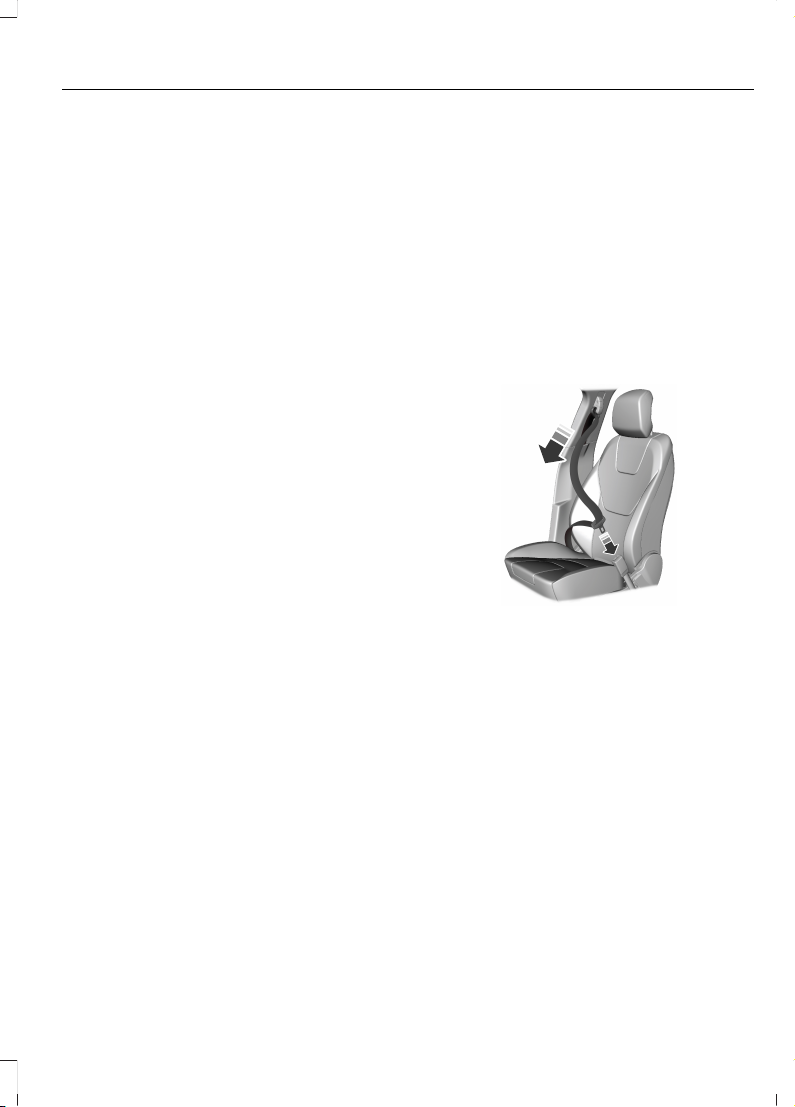
SENSITIVE LOCKING MODE
WHAT IS SENSITIVE LOCKING
MODE
Sensitive locking mode is a seatbelt
retractor feature that allows shoulder belt
length adjustment according to your
movements and locking in response to
vehicle movement.
HOW DOES SENSITIVE LOCKING
MODE WORK
If the driver suddenly brakes, turns a corner
sharply, or the vehicle receives an impact
of about 5 mph (8 km/h) or more, the
seatbelts lock to help reduce forward
movement of the driver and passengers.
In addition, the seatbelt retractor locks if
you pull the seatbelt webbing out too
quickly. If the retractor locks, slowly lower
the height adjuster to allow the seatbelt
to retract.
If the retractor does not unlock, pull the
seatbelt out slowly then feed a small
length of webbing back toward the stowed
position.
For rear seatbelts, recline the rear seat
backrest or push the seat backrest cushion
away from the seatbelt. Feed a small
length of webbing back toward the stowed
position.
AUTOMATIC LOCKING MODE
WHAT IS AUTOMATIC LOCKING
MODE
This feature keeps the seatbelts
pre-locked. The belt still retracts to remove
any slack in the shoulder belt.
WHEN TO USE AUTOMATIC
LOCKING MODE
Use this mode any time you install a child
restraint in any seating position. Properly
restrain children 12 years old and under in
the rear seat whenever possible. See Child
Safety (page 36).
Note: Automatic locking mode is not
available on the driver seatbelt.
ENGAGING AUTOMATIC LOCKING
MODE
E142591
1. Fasten the combination lap and
shoulder belt.
2. Grasp the shoulder portion and pull
downward until you pull the entire belt
out.
3. Allow the belt to retract. As the belt
retracts, you will hear a clicking sound.
This indicates the seatbelt is now in the
automatic locking mode.
DISENGAGING AUTOMATIC
LOCKING MODE
Unbuckle the combination lap and
shoulder belt and allow it to retract
completely to disengage the automatic
locking mode and activate the vehicle
sensitive locking mode.
51
2023 F-150 Lightning (TFD) Electric, Canada/United States of America, enUSA, Edition date: 202206, DOM
Seatbelts
Page 56
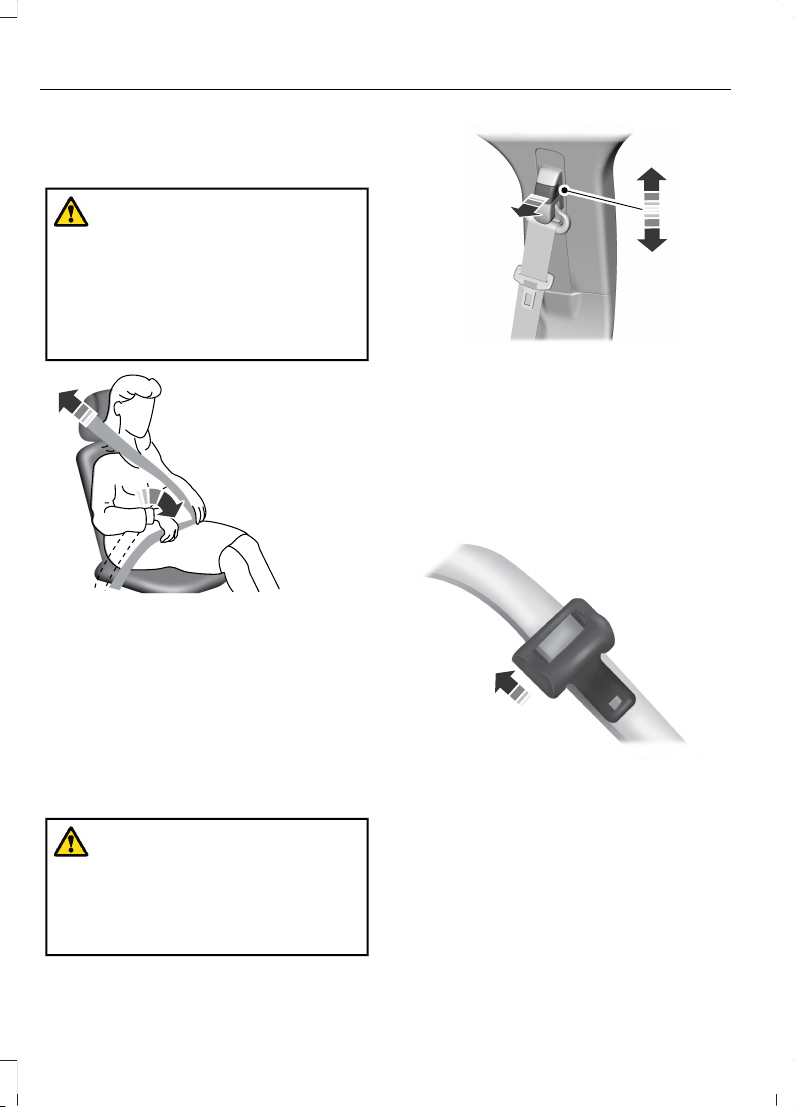
ADJUSTING THE SEATBELTS
DURING PREGNANCY
WARNING: Always ride and drive
with your seatback upright and properly
fasten your seatbelt. Fit the lap portion
of the seatbelt snugly and low across
the hips. Position the shoulder portion of
the seatbelt across your chest. Pregnant
women must follow this practice. See
the following figure.
E142590
Pregnant women should always wear their
seatbelt. Position the lap belt portion of a
combination lap and shoulder belt low
across the hips below the belly and worn
as tight as comfort allows. Position the
shoulder belt to cross the middle of the
shoulder and the center of the chest.
ADJUSTING THE SEATBELT
HEIGHT
WARNING: Position the seatbelt
height adjuster so that the seatbelt rests
across the middle of your shoulder.
Failure to adjust the seatbelt correctly
could reduce its effectiveness and
increase the risk of injury in a crash.
E145664
1. Pull the button and slide the height
adjuster up or down.
2. Release the button and pull down on
the height adjuster to make sure it is
locked in place.
ADJUSTING THE SEATBELT
LENGTH
E162708
1. Pull some seatbelt webbing out of the
shoulder belt retractor.
2. While holding the webbing below the
tongue, grasp the metal tip of the
tongue so that it is parallel to the
webbing and slide the tongue up.
3. Provide enough lap belt length so that
the tongue can reach the buckle.
52
2023 F-150 Lightning (TFD) Electric, Canada/United States of America, enUSA, Edition date: 202206, DOM
Seatbelts
Page 57

SEATBELT REMINDER
HOW DOES THE SEATBELT
REMINDER WORK
This feature supplements the seatbelt
warning function by providing additional
reminders that intermittently sound a tone
and illuminate the seatbelt warning lamp
when you are in the driver seat or you have
a front seat passenger and a seatbelt is
unbuckled.
The system uses information from the
front passenger sensing system to
determine if a front seat passenger is
present and therefore potentially in need
of a warning. To avoid the system
switching on the Belt-Minder feature for
objects you place on the front passenger
seat, only the front seat passengers receive
warnings as determined by the front
passenger sensing system.
If the Belt-Minder warnings expire
(warnings for about five minutes) for one
passenger (driver or front passenger), the
other passenger can still cause the
Belt-Minder feature to switch on.
ThenIf
The Belt-Minder feature will not activate.You and the front seat passenger buckle
your seatbelts before you switch the ignition on or less than 1–2 minutes elapse after
you switch the ignition on...
The Belt-Minder feature activates, the
seatbelt warning lamp illuminates and an
indicator tone sounds for 6 seconds every
25 seconds, repeating for about 5 minutes
or until you and the front seat passenger
buckle your seatbelts.
You or the front seat passenger do not
buckle your seatbelts before your vehicle
reaches at least 6.0 mph (9.7 km/h) and
1–2 minutes elapse after you switch the
ignition on...
The Belt-Minder feature activates, the
seatbelt warning lamp illuminates and an
indicator tone sounds for 6 seconds every
25 seconds, repeating for about 5 minutes
or until you and the front seat passenger
buckle your seatbelts.
The seatbelt for the driver or front
passenger is unbuckled for about 1 minute
while the vehicle is traveling at least
6.0 mph (9.7 km/h) and more than 1–2
minutes elapse after you switch the ignition
on...
53
2023 F-150 Lightning (TFD) Electric, Canada/United States of America, enUSA, Edition date: 202206, DOM
Seatbelts
Page 58
SEATBELT REMINDER
INDICATORS
A warning lamp illuminates if the ignition
is on, a front seat is occupied and the
seatbelt has not been fastened.
The warning lamp illuminates
until you fasten your seatbelt.
SEATBELT REMINDER AUDIBLE
WARNINGS
A warning tone sounds and the warning
lamp illuminates if you are not wearing
your seatbelt when your vehicle exceeds
a relatively low speed.
The warning tone sounds for a short period
of time or until you fasten your seatbelt.
SWITCHING THE SEATBELT
REMINDER ON AND OFF
WARNING: While the system
allows you to deactivate it, this system
is designed to improve your chances of
being safely belted and surviving an
accident. We recommend you leave the
system activated for yourself and others
who may use the vehicle.
Note: The driver and front passenger
warnings switch off independently. When
you perform this procedure for one seating
position, do not buckle the other position as
this cancels the process.
Note: If you are using MyKey, you cannot
disable the seatbelt reminder. Also, if the
seatbelt reminder has been previously
disabled, it will be re-enabled during the use
of MyKey. See MyKey™ (page 78).
Read Steps 1 - 4 before proceeding with
the programming procedure.
Make sure that:
• The parking brake is set.
• The transmission is in park (P).
• The ignition is off.
• The driver and front passenger
seatbelts are unfastened.
1. Switch the ignition on. Do not start the
engine.
2. Wait about one minute until the
seatbelt warning light switches off.
After Step 2, wait an additional five
seconds before proceeding with Step
3. Once you start Step 3, you must
complete the procedure within 30
seconds.
3. For the seating position you are
switching off, buckle then unbuckle the
seatbelt three times at a moderate
speed, ending in the unbuckled state.
After Step 3, the seatbelt warning light
switches on.
4. When the seatbelt warning light is on,
buckle then unbuckle the seatbelt.
After Step 4, the seatbelt warning light
flashes for confirmation.
This switches the feature off for that
seating position if it is currently on.
This switches the feature on for that
seating position if it is currently off.
CHECKING THE SEATBELTS
Check the seatbelts and child restraints
periodically to make sure they work
properly and are not damaged. Make sure
there are no nicks, tears or cuts. Replace if
necessary.
Check the following seatbelt assemblies
after a crash.
• Retractors.
• Buckles.
• Front seatbelt buckle assemblies.
54
2023 F-150 Lightning (TFD) Electric, Canada/United States of America, enUSA, Edition date: 202206, DOM
Seatbelts
Page 59
• Shoulder belt height adjusters.
• Shoulder belt guide on seat backrest.
• Child restraint LATCH and tether
anchors.
• Attaching hardware.
Read the child restraint manufacturer's
instructions for additional inspection and
maintenance information specific to the
child restraint.
We recommend that all seatbelt
assemblies in use in vehicles involved in a
crash be replaced. However, if the crash
was minor and an authorized dealer finds
that the belts do not show damage and
continue to operate properly, they do not
need to be replaced. Seatbelt assemblies
not in use during a crash should also be
checked and replaced if either damage or
improper operation is noted.
Properly care for seatbelts. See Cleaning
Seatbelts (page 450).
SEATBELT EXTENSIONS
WARNING: Persons who fit into
the vehicle's seatbelt should not use an
extension. Unnecessary use could result
in serious personal injury in the event of
a crash.
WARNING: Only use extensions
provided free of charge by our dealers.
The dealer will provide an extension
designed specifically for this vehicle,
model year and seating position. The use
of an extension intended for another
vehicle, model year or seating position
may not offer you the full protection of
your vehicle's seatbelt restraint system.
WARNING: Never use seatbelt
extensions to install child restraints.
WARNING: Do not use extensions
to change the way the seatbelt fits
across the torso, over the lap or to make
the seatbelt buckle easier to reach.
If, because of body size or driving position,
it is not possible to properly fasten the
seatbelt over your lap and shoulder, an
extension that is compatible with the
seatbelts is available free of charge from
our dealers. Only use our seatbelt
extensions made by the original equipment
seatbelt manufacturer with our seatbelts.
Ask your authorized dealer if your extension
is compatible with your vehicle restraint
system.
55
2023 F-150 Lightning (TFD) Electric, Canada/United States of America, enUSA, Edition date: 202206, DOM
Seatbelts
Page 60

WHAT IS THE PERSONAL
SAFETY SYSTEM
Personal Safety System
An advanced safety system that protects
occupants in frontal crashes.
HOW DOES THE PERSONAL
SAFETY SYSTEM WORK
This system provides an improved level of
frontal crash protection to front seat
occupants and is designed to reduce the
risk of airbag-related injuries. The system
analyzes occupant conditions and crash
severity before activating the appropriate
safety devices. During a crash, the
restraints control module may deploy the
seatbelt pretensioners, and one or both
stages of the dual-stage airbags based on
crash severity and occupant conditions.
PERSONAL SAFETY SYSTEM
COMPONENTS
• Driver and passenger dual-stage airbag
supplemental restraints.
• Front seat outermost seatbelts with
pretensioners, energy management
retractors and seatbelt usage sensors.
• Front passenger sensing system.
• Passenger airbag off and on indicators.
• Front crash severity sensors.
• Restraints control module with impact
and safing sensors.
• Restraint system warning light and
tone.
• The electrical wiring for the airbags,
crash sensors, seatbelt pretensioners,
front seatbelt usage sensors, front
passenger sensing system and
indicator lights.
56
2023 F-150 Lightning (TFD) Electric, Canada/United States of America, enUSA, Edition date: 202206, DOM
Personal Safety System™
Page 61
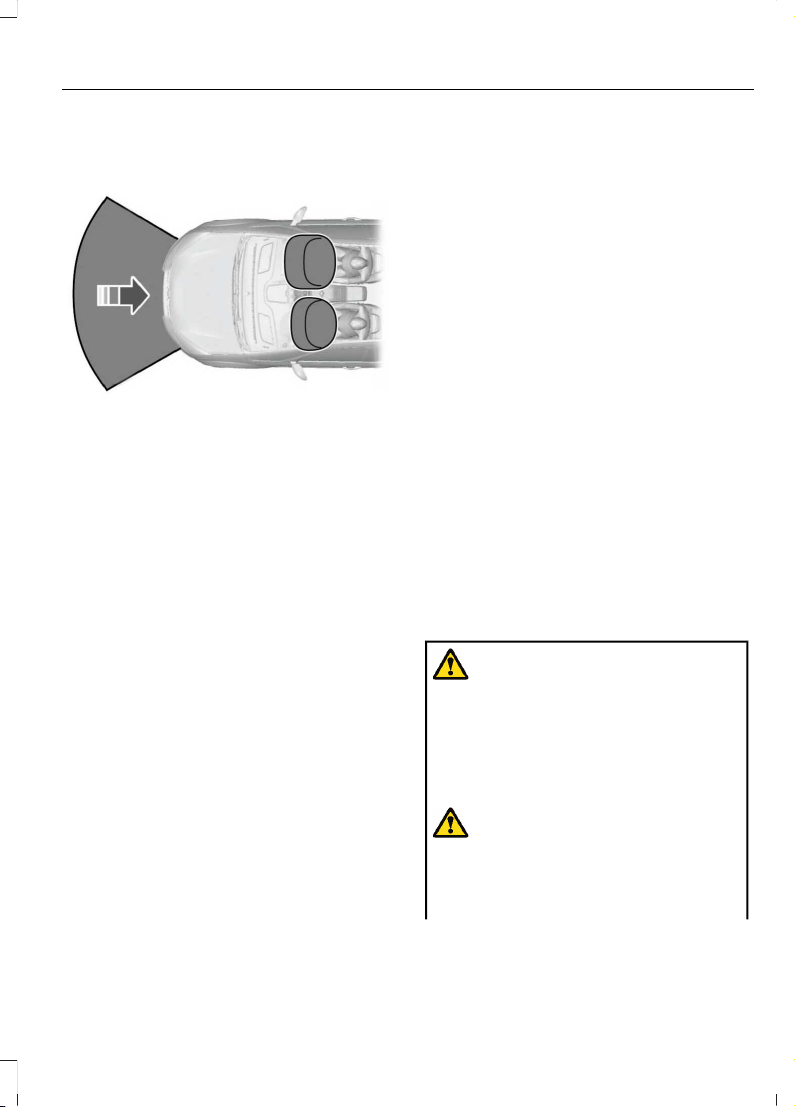
HOW DO THE FRONT AIRBAGS
WORK
E151127
The driver and front passenger airbags
deploy during significant frontal and near
frontal crashes.
The driver and passenger front airbag
system consists of:
• Driver and passenger airbag modules.
• Front passenger sensing system.
• Crash sensors and monitoring system
with readiness indicator. See Crash
Sensors and Airbag Indicator (page
64).
The airbags are a supplemental restraint
system and are designed to work with the
seatbelts to help protect the driver and
right front passenger from certain upper
body injuries. Airbags do not inflate slowly;
there is a risk of injury from a deploying
airbag.
Note: You will hear a loud bang and see a
cloud of harmless powdery residue if an
airbag deploys. This is normal.
The airbags inflate and deflate rapidly
upon activation. After airbag deployment,
it is normal to notice a smoke-like, powdery
residue or smell the burnt propellant. This
may consist of cornstarch, talcum powder
(to lubricate the bag) or sodium
compounds (for example, baking soda)
that result from the combustion process
that inflates the airbag. Small amounts of
sodium hydroxide may be present which
may irritate the skin and eyes, but none of
the residue is toxic.
Contact with a deploying airbag may cause
abrasions or swelling. Temporary hearing
loss is also a possibility as a result of the
noise associated with a deploying airbag.
Because airbags must inflate rapidly and
with considerable force, there is the risk of
death or serious injuries such as fractures,
facial and eye injuries or internal injuries,
particularly to occupants who are not
properly restrained or are otherwise out of
position at the time of airbag deployment.
Thus, it is extremely important that
occupants be properly restrained as far
away from the airbag module as possible
while maintaining vehicle control.
Routine maintenance of the airbags is not
required.
HOW DO THE SIDE AIRBAGS
WORK
WARNING: Do not place objects
or mount equipment on or near the
airbag cover, on the side of the front or
rear seatbacks, or in areas that may
come into contact with a deploying
airbag. Failure to follow these
instructions may increase the risk of
personal injury in the event of a crash.
WARNING: Accessory seat covers
not released by Ford Motor Company
could prevent the deployment of the
airbags and increase the risk of injuries
in a crash.
57
2023 F-150 Lightning (TFD) Electric, Canada/United States of America, enUSA, Edition date: 202206, DOM
Airbags
Page 62
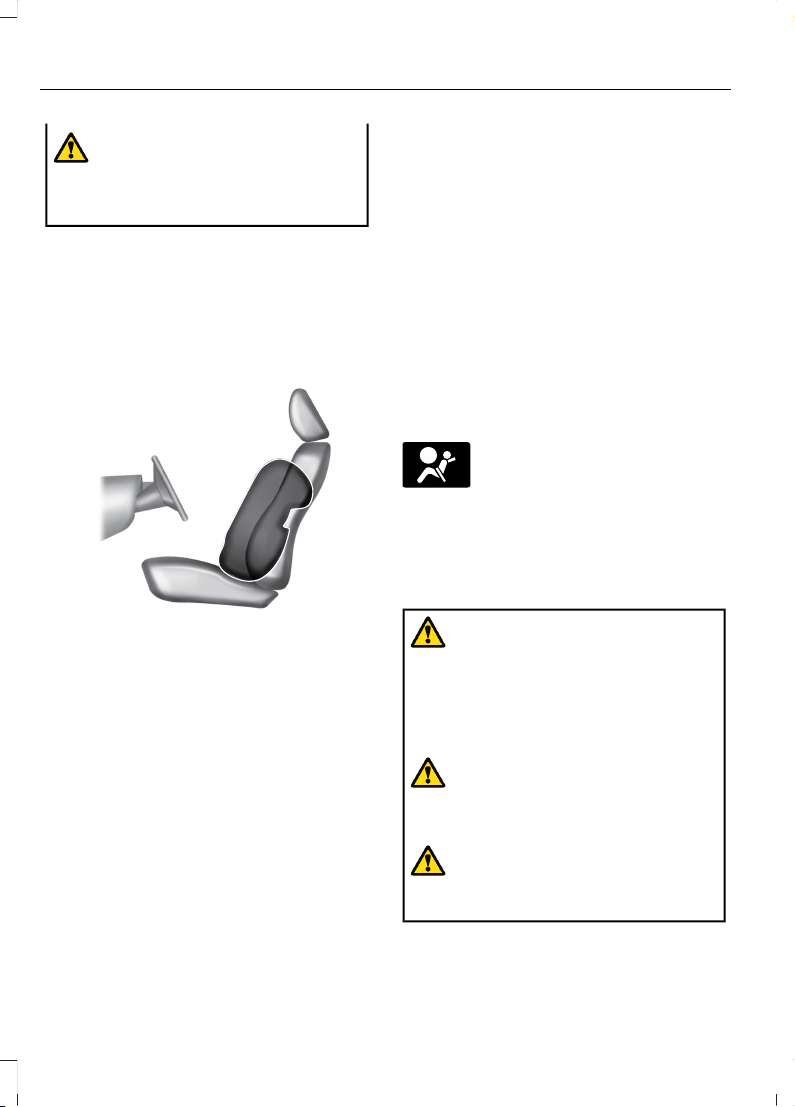
WARNING: Do not lean your head
on the door. The side airbag could injure
you as it deploys from the side of the
seatback.
The side airbags are on the outermost side
of the seat backrests of the front seats. In
certain sideways crashes or rollovers, the
airbags will be inflated. The airbag was
designed to inflate between the door panel
and occupant to further enhance the
protection provided to occupants in side
impact crashes.
E152533
The system consists of the following:
• A label or embossed side panel
indicating that side airbags are fitted
to your vehicle.
• Side airbags inside the driver and front
passenger seat backrests.
• Crash sensors and monitoring system
with readiness indicator. See Crash
Sensors and Airbag Indicator (page
64).
HOW DO THE KNEE AIRBAGS
WORK
Driver and passenger knee airbags are
under or within the instrument panel.
During a crash, the restraints control
module may activate the driver and
passenger knee airbags (individually or
both) based on crash severity and
respective occupant conditions. Under
certain crash and occupant conditions, the
driver and passenger knee airbags may
deploy (individually or both) but the
corresponding front airbag may not
activate. It is important to be properly
seated and restrained to reduce the risk of
death or serious injury.
Make sure the knee airbags are
operating properly. See Crash
Sensors and Airbag Indicator
(page 64).
HOW DOES THE SAFETY
CANOPY™ WORK
WARNING: Do not place objects
or mount equipment on or near the
headliner at the siderail that may come
into contact with a deploying curtain
airbag. Failure to follow these
instructions may increase the risk of
personal injury in the event of a crash.
WARNING: Do not lean your head
on the door. The curtain airbag could
injure you as it deploys from the
headliner.
WARNING: To reduce risk of injury,
do not obstruct or place objects in the
deployment path of the airbag.
58
2023 F-150 Lightning (TFD) Electric, Canada/United States of America, enUSA, Edition date: 202206, DOM
Airbags
Page 63
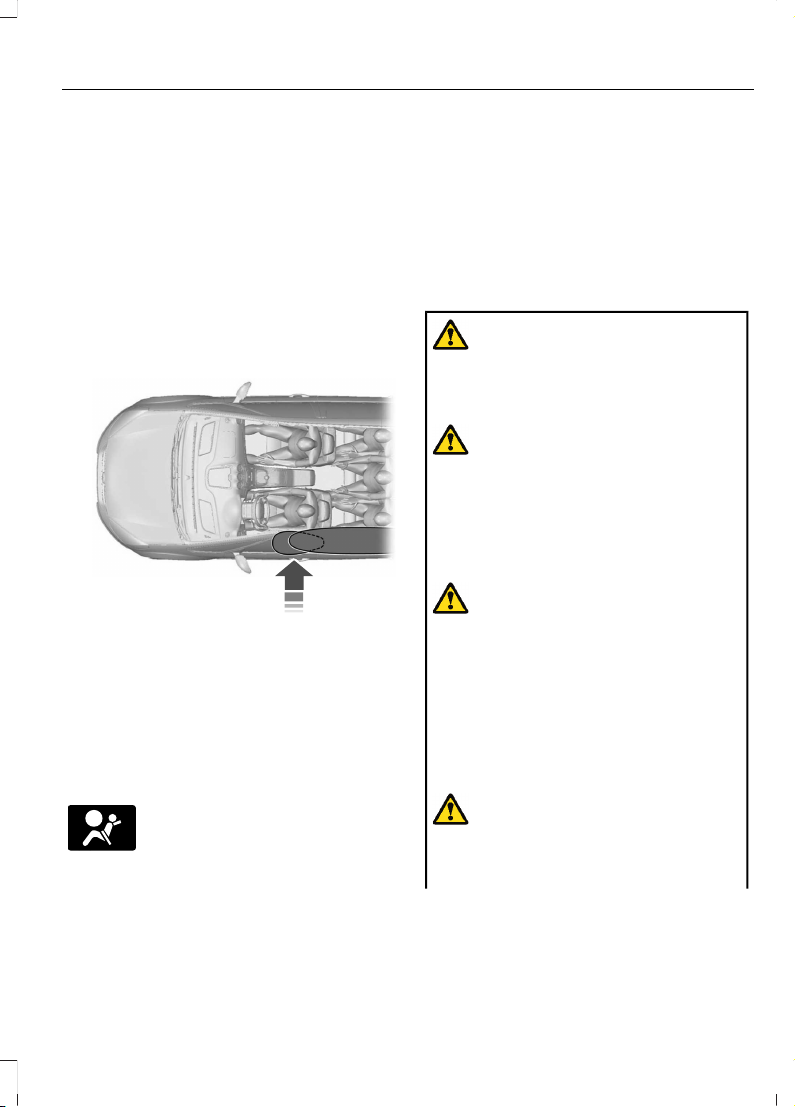
The Safety Canopy deploys during
significant side crashes or when a certain
likelihood of a rollover event is detected
by the rollover sensor. The Safety Canopy
is mounted to the roof side-rail sheet
metal, behind the headliner, above each
row of seats. In certain sideways crashes
or rollover events, the Safety Canopy will
be activated, regardless of which seats are
occupied. The Safety Canopy inflates
between the side window area and
occupants to further enhance protection
provided in side impact crashes and
rollover events.
E75004
The system consists of the following:
• Safety Canopy curtain airbags above
the trim panels over the front and rear
side windows identified by a label or
wording on the headliner or roof-pillar
trim.
• A flexible headliner which opens above
the side doors to allow air curtain
deployment
· Crash sensors and monitoring
system with a readiness
indicator. See Crash Sensors
and Airbag Indicator (page 64).
Properly restrain children 12 years old and
under in the rear seats. The Safety Canopy
will not interfere with children restrained
using a properly installed child or booster
seat because it is designed to inflate
downward from the headliner above the
doors along the side window opening.
AIRBAG PRECAUTIONS
WARNING: Airbags do not inflate
slowly or gently, and the risk of injury
from a deploying airbag is the greatest
close to the trim covering the airbag
module.
WARNING: All occupants of your
vehicle, including the driver, should
always properly wear their seatbelts,
even when an airbag supplemental
restraint system is provided. Failure to
properly wear your seatbelt could
seriously increase the risk of injury or
death.
WARNING: Properly secure
children 12 years old and under in a rear
seating position whenever possible. If
you are unable to properly secure all
children in a rear seating position,
properly secure the largest child on the
front seat. If you must use a forward
facing child restraint on the front seat,
move the seat as far back as possible.
Failure to follow these instructions could
result in personal injury or death.
WARNING: Do not place your arms
on the airbag cover or through the
steering wheel. Failure to follow this
instruction could result in personal injury.
59
2023 F-150 Lightning (TFD) Electric, Canada/United States of America, enUSA, Edition date: 202206, DOM
Airbags
Page 64
WARNING: Keep the areas in front
of the airbags free from obstruction. Do
not affix anything to or over the airbag
covers. Objects could become projectiles
during airbag deployment. Failure to
follow this instruction could result in
personal injury or death.
WARNING: To reduce risk of injury,
do not obstruct or place objects in the
deployment path of the airbag.
WARNING: Do not place a
rearward facing child restraint in front of
an active airbag. Failure to follow this
instruction could result in personal injury
or death.
WARNING: Do not attempt to
service, repair, or modify the
supplementary restraint system or
associated components. Failure to
follow this instruction could result in
personal injury or death.
WARNING: Several airbag system
components get hot after inflation. To
reduce the risk of injury, do not touch
them after inflation.
WARNING: If a supplementary
restraint system component has
deployed, it will not function again. Have
the system and associated components
inspected as soon as possible. Failure to
follow this instruction could result in
personal injury or death.
PROPERLY ADJUSTING THE
DRIVER AND FRONT
PASSENGER SEATS
WARNING: National Highway
Traffic Safety Administration (NHTSA)
recommends a minimum distance of at
least 10 in (25 cm) between an
occupant's chest and the driver airbag
module.
To properly position yourself away from
the airbag:
• Move your seat to the rear as far as you
can while still reaching the pedals
comfortably.
• Recline the seat slightly one or two
degrees from the upright position.
After all occupants have adjusted their
seats and put on seatbelts, it is very
important that they continue to sit
properly. Properly seated occupants sit
upright, lean against the seat backrest, and
center themselves on the seat cushion,
with their feet comfortably extended on
the floor. Sitting improperly can increase
the chance of injury in a crash event. For
example, if an occupant slouches, lies
down, turns sideways, sits forward, leans
forward or sideways, or puts one or both
feet up, the chance of injury during a crash
greatly increases.
CHILDREN AND AIRBAGS
WARNING: Do not place a
rearward facing child restraint in front of
an active airbag. Failure to follow this
instruction could result in personal injury
or death.
60
2023 F-150 Lightning (TFD) Electric, Canada/United States of America, enUSA, Edition date: 202206, DOM
Airbags
Page 65
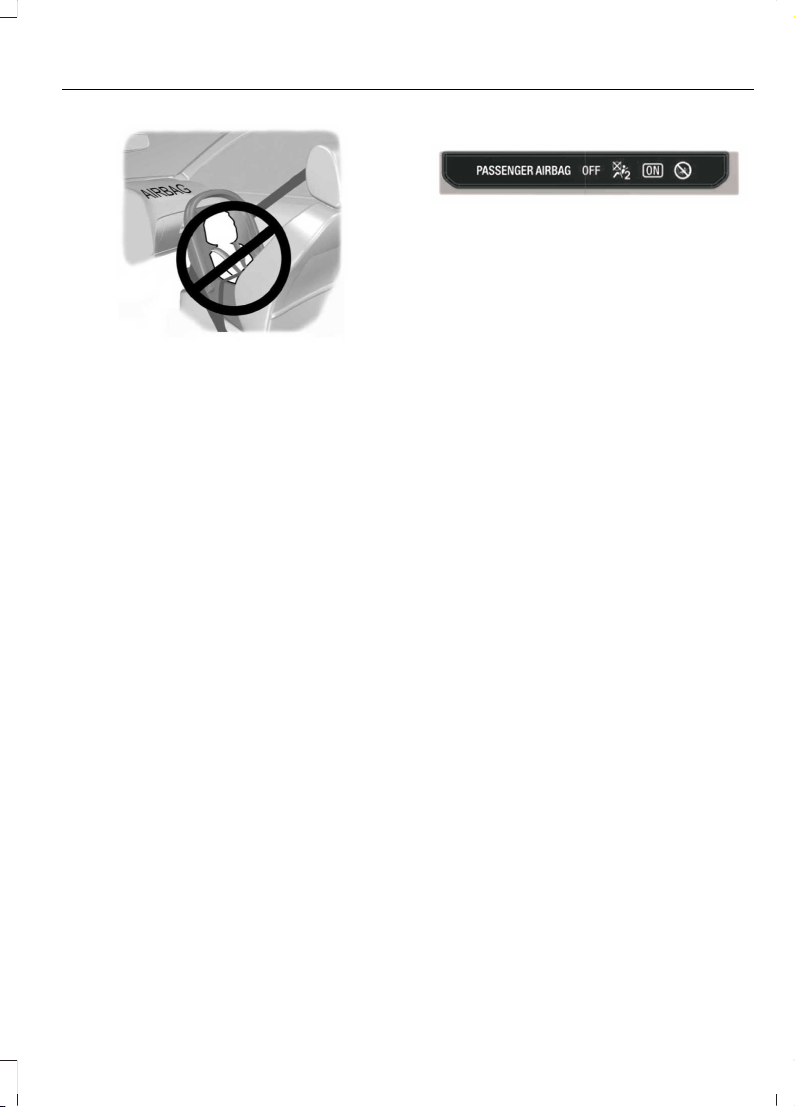
E142846
Children must always be properly
restrained. Accident statistics suggest that
children are safer when properly restrained
in the rear seating positions than in the
front seating position. Failure to follow
these instructions may increase the risk of
injury in a crash.
FRONT PASSENGER SENSING
SYSTEM
WHAT IS THE FRONT PASSENGER
SENSING SYSTEM
This system detects a properly seated
occupant and determines if the front
passenger airbag should be enabled.
HOW DOES THE FRONT
PASSENGER SENSING SYSTEM
WORK
The system uses a passenger airbag status
indicator which illuminates indicating that
the front passenger frontal airbag is either
enabled or disabled.
Note: When you first switch the ignition on,
the passenger airbag status indicator off
and on lamps illuminate for a short period
to confirm they are functional.
E181984
The indicator lamps are in the overhead
console.
The front passenger sensing system is
designed to disable the front passenger
frontal airbag under these conditions:
• The front passenger seat is
unoccupied.
• The system determines an infant is
present in a child restraint.
• A passenger takes their weight off of
the seat for a period of time.
• If there is a problem with the airbag
system or the passenger sensing
system.
Even with this technology, parents are
strongly encouraged to always properly
restrain children in the rear seat.
• When the front passenger sensing
system disables the front passenger
frontal airbag, the passenger airbag
status indicator illuminates the off
lamp.
• If you have installed the child restraint
and the passenger airbag status
indicator illuminates the on lamp,
switch your vehicle off, remove the
child restraint from your vehicle and
reinstall the restraint following the
child restraint manufacturer's
instructions.
The front passenger sensing system works
with sensors that are part of the front
passenger seat and seatbelt. The sensors
are designed to detect the presence of a
properly seated occupant and determine
if the front passenger frontal airbag should
be enabled.
61
2023 F-150 Lightning (TFD) Electric, Canada/United States of America, enUSA, Edition date: 202206, DOM
Airbags
Page 66

• When the front passenger sensing
system enables the front passenger
frontal airbag, the passenger airbag
status indicator illuminates the on
lamp.
If a person of adult size is sitting in the front
passenger seat, but the passenger airbag
status indicator off lamp is illuminated, it
is possible that the person is not sitting
properly in the seat. If this happens:
• Switch your vehicle off and ask the
person to place the seat backrest in an
upright position.
• Have the person sit upright in the seat,
centered on the seat cushion, with the
person's legs comfortably extended.
• Restart your vehicle and have the
person remain in this position for about
two minutes. This allows the system
to detect that person and enable the
passenger frontal airbag.
• If the indicator off lamp remains
illuminated even after this, you should
advise the person to ride in the rear
seat.
After all occupants have adjusted their
seats and put on seatbelts, it is very
important that they continue to sit upright,
leaning against the seat backrest, and
centered on the seat cushion, with their
feet comfortably extended on the floor.
Sitting improperly can increase the chance
of injury in a crash event. For example, if
an occupant slouches, lies down, turns
sideways, sits forward, leans forward or
sideways, or puts one or both feet up, the
chance of injury during a crash greatly
increases.
If you think that the state of the passenger
airbag status indicator lamp is incorrect,
check for the following:
• Objects lodged underneath the seat.
• Objects between the seat cushion and
the center console.
• Objects hanging off the seat backrest.
• Objects stowed in the seat backrest
map pocket.
• Objects placed on the occupant's lap.
• Cargo interference with the seat
• Other passengers pushing or pulling on
the seat.
• Rear passenger feet and knees resting
or pushing on the seat.
The listed conditions could cause the
weight of a properly seated occupant to
be incorrectly interpreted by the front
passenger sensing system. The person in
the front passenger seat could appear
heavier or lighter due to the conditions
listed.
Make sure the front passenger
sensing system is operating
properly. See Crash Sensors
and Airbag Indicator (page 64).
If the airbag readiness light is on, do the
following:
• Pull your vehicle over.
• Switch your vehicle off.
• Check for any objects lodged
underneath the front passenger seat
or cargo interfering with the seat.
• Remove the obstruction if found.
• Restart your vehicle.
• Wait at least two minutes and verify
that the airbag readiness light in the
instrument cluster is no longer
illuminated.
• If the airbag readiness light in the
instrument cluster remains illuminated,
there may be a problem due to the
front passenger sensing system.
Do not attempt to repair or service the
system. Take your vehicle in for service
immediately.
62
2023 F-150 Lightning (TFD) Electric, Canada/United States of America, enUSA, Edition date: 202206, DOM
Airbags
Page 67
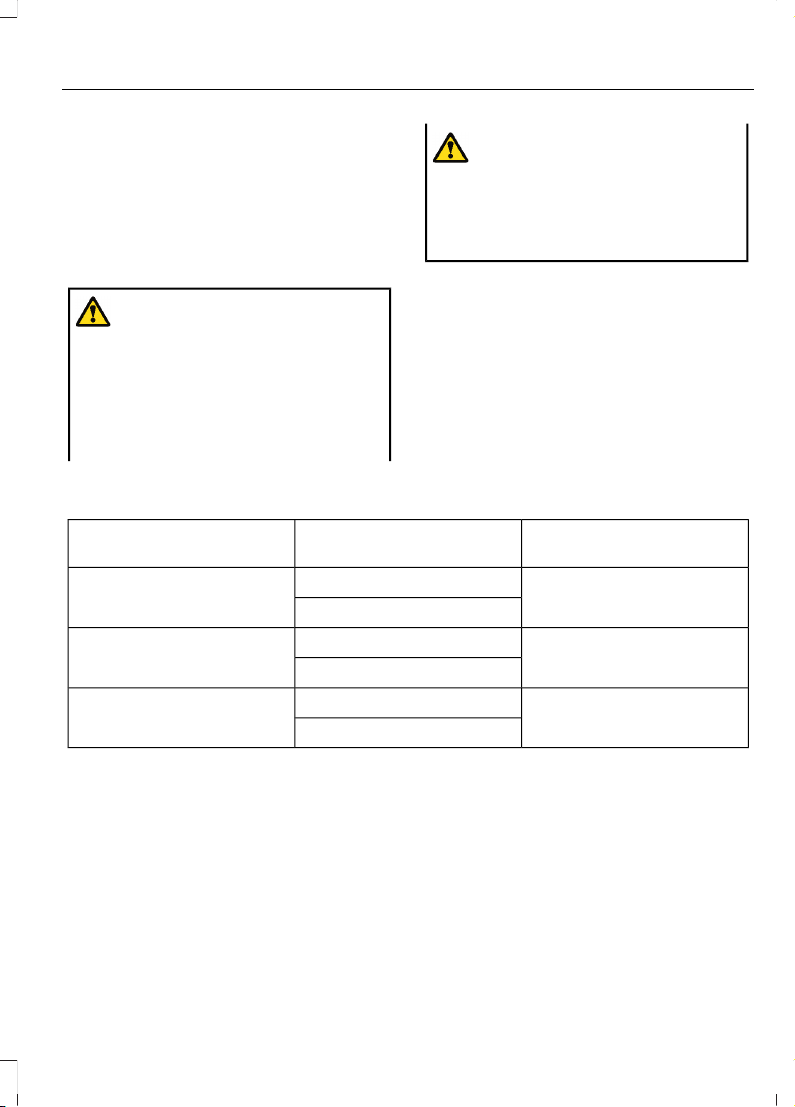
If it is necessary to modify an advanced
front airbag system to accommodate a
person with disabilities, contact your
Customer Relationship Center. See
Contacting Us (page 19).
FRONT PASSENGER SENSING
SYSTEM PRECAUTIONS
WARNING: Sitting improperly, out
of position or with the seatback reclined
too far can take weight off the seat
cushion and affect the decision of the
passenger sensing system, resulting in
serious injury or death in the event of a
crash. Always sit upright against your
seat back, with your feet on the floor.
WARNING: Any alteration or
modification to the front passenger seat
may affect the performance of the front
passenger sensing system. This could
seriously increase the risk of injury or
death.
FRONT PASSENGER SENSING SYSTEM INDICATORS
Passenger AirbagPassenger Airbag Status
Indicator
Occupant
DisabledOFF: IlluminatedEmpty
ON: Not Illuminated
DisabledOFF: IlluminatedChild
ON: Not Illuminated
EnabledOFF: Not IlluminatedAdult
ON: Illuminated
63
2023 F-150 Lightning (TFD) Electric, Canada/United States of America, enUSA, Edition date: 202206, DOM
Airbags
Page 68
CRASH SENSORS AND
AIRBAG INDICATOR
WARNING: Modifying or adding
equipment to the front of your vehicle
could affect the performance of the
airbag system, increasing the risk of
injury. This includes the hood, bumper
system, frame, front body structure, tow
hooks, hood pins, push bar and
snowplows.
Your vehicle has a collection of crash and
occupant sensors. These sensors provide
information to the restraints control
module which activates the following:
• Front seatbelt pretensioners.
• Driver airbag.
• Passenger airbag.
• Knee airbag(s).
• Seat mounted side airbags.
• Safety Canopy.
Based on the type of crash, the restraints
control module deploys the appropriate
safety devices.
The restraints control module also
monitors the readiness of the above safety
devices plus the crash and occupant
sensors. The readiness of the safety
system is indicated by a warning indicator
light in the instrument cluster or by a
backup tone if the warning light is not
working. Routine maintenance of the
airbag is not required.
A difficulty with the system is indicated by
one or more of the following:
The readiness light will not
illuminate immediately after you
switch the ignition on.
• The readiness light either flashes or
stays on.
• You hear a series of five tones. The
tone pattern repeats periodically until
the problem, the light or both are
repaired.
If any of these things happen, even
intermittently, have the supplemental
restraint system serviced immediately.
Unless serviced, the system may not
function properly in the event of a crash.
The fact that the seatbelt pretensioners
or front airbags did not activate for both
front seat occupants in a crash does not
mean that something is wrong with the
system. Rather, it means the restraints
control module determined the accident
conditions (crash severity, seatbelt usage)
were not appropriate to activate these
safety devices.
• The front airbags activate only in
frontal and near-frontal crashes. Front
airbags may activate in rollovers, side
impacts or rear impacts if the crash
causes sufficient frontal deceleration.
• The seatbelt pretensioners activate in
frontal, near-frontal and side crashes,
and in rollovers.
• The knee airbag(s) deploy based on
crash severity and occupant conditions.
• The side airbags inflate in certain side
impact crashes or rollover events. Side
airbags may activate in other types of
crashes if the vehicle experiences
sufficient sideways motion or
deformation.
• The Safety Canopy inflates in certain
side impact crashes or rollover events.
The Safety Canopy may activate in
other types of crashes if the vehicle
experiences sufficient sideways motion
or deformation, or a certain likelihood
of rollover.
64
2023 F-150 Lightning (TFD) Electric, Canada/United States of America, enUSA, Edition date: 202206, DOM
Airbags
Page 69

DISPOSING OF AIRBAGS
Contact your authorized dealer as soon as
possible. Airbags must be disposed of by
qualified personnel.
65
2023 F-150 Lightning (TFD) Electric, Canada/United States of America, enUSA, Edition date: 202206, DOM
Airbags
Page 70

WHAT IS THE PEDESTRIAN
ALERT SYSTEM
Due to the quiet operation of hybrid and
electric vehicles at low speeds, the system
creates a subtle sound to alert pedestrians.
The system is on when your vehicle is
running and not in park (P). Some sound
may be audible in the passenger
compartment.
66
2023 F-150 Lightning (TFD) Electric, Canada/United States of America, enUSA, Edition date: 202206, DOM
Pedestrian Alert System
Page 71
WHAT IS 911 ASSIST
911 Assist is a SYNC system feature that
can call for help.
For more information, visit
www.owner.ford.com.
HOW DOES 911 ASSIST WORK
If a crash deploys an airbag, excluding knee
airbags and rear inflatable seatbelts, or
activates the battery shut-off, your vehicle
may be able to contact emergency services
by dialing 911 through a paired and
connected Bluetooth®-enabled phone.
Not all crashes will deploy an airbag or
activate the battery shut-off. If a
connected cell phone sustains damage or
loses its connection to SYNC during a
crash, SYNC will search for and try to
connect to a previously paired cell phone.
SYNC will then attempt to call the
emergency services.
Before making the call:
• SYNC provides about 10 seconds to
cancel the call. If you fail to cancel the
call, SYNC attempts to dial 911.
• SYNC says the following, or a similar
message: "SYNC will attempt to call
911, to cancel the call, press Cancel on
your screen or press and hold the
phone button on your steering wheel."
If you do not cancel the call and SYNC
makes a successful call a pre-recorded
message plays for the 911 operator. The
occupants in your vehicle are able to talk
with the operator. Be prepared to provide
your name, phone number and location
immediately because not all 911 systems
are capable of receiving this information
electronically.
During an emergency call the system
transmits vehicle data to the emergency
service.
EMERGENCY CALL
REQUIREMENTS
WARNING: Do not wait for 911
Assist to make an emergency call if you
can do it yourself. Dial emergency
services immediately to avoid delayed
response time which could increase the
risk of serious injury or death after a
crash. If you do not hear 911 Assist within
five seconds of the crash, the system or
phone may be damaged or
non-functional.
WARNING: Always place your
phone in a secure location in your vehicle
so it does not become a projectile or get
damaged in a crash. Failure to do so may
cause serious injury to someone or
damage the phone which could prevent
911 Assist from working properly.
WARNING: Unless the 911 Assist
setting is set on before a crash, the
system will not dial for help which could
delay response time, potentially
increasing the risk of serious injury or
death after a crash.
• SYNC is powered and working properly
at the time of the incident and
throughout feature activation and use.
• The 911 Assist feature must be set on
before the incident.
• You must pair and connect a
Bluetooth® enabled and compatible
cell phone to SYNC.
• A connected Bluetooth® enabled
phone must have the ability to make
and maintain an outgoing call at the
time of the incident.
67
2023 F-150 Lightning (TFD) Electric, Canada/United States of America, enUSA, Edition date: 202206, DOM
911 Assist
Page 72

• A connected Bluetooth® enabled
phone must have adequate network
coverage, battery power and signal
strength.
• The vehicle must have battery power
and be located in the U.S., Canada or
in a territory in which 911 is the
emergency number.
Note: If any user sets 911 Assist to on or off,
that setting applies for all paired phones. If
911 Assist is off and the phone connected
to SYNC, an icon displays on the status bar.
Note: Every phone operates differently.
While SYNC 911 Assist works with most
cellular phones, some may have trouble
using this feature.
EMERGENCY CALL
LIMITATIONS
The SYNC 911 Assist feature only operates
in the U.S., Canada or in a territory in which
911 is the emergency number. The following
are limitations of this feature:
• Your cellular phone or 911 Assist
hardware sustains damage in a crash.
• The vehicle's battery or the SYNC
system has no power.
• The phone(s) thrown from your vehicle
are the ones paired and connected to
the system.
68
2023 F-150 Lightning (TFD) Electric, Canada/United States of America, enUSA, Edition date: 202206, DOM
911 Assist
Page 73
REMOTE CONTROL
LIMITATIONS
WARNING: Changes or
modifications not expressively approved
by the party responsible for compliance
could void the user's authority to operate
the equipment. The term "IC:" before the
radio certification number only signifies
that Industry Canada technical
specifications were met.
This device complies with Part 15 of the
FCC Rules and with Industry Canada
license-exempt RSS standard(s).
Operation is subject to the following two
conditions: (1) This device may not cause
harmful interference, and (2) This device
must accept any interference received,
including interference that may cause
undesired operation.
Make sure a valid remote control is within
3 ft (1 m) from the front door handles and
rear of vehicle.
The system may not function if:
• The remote control remains stationary
for about a minute.
• The vehicle battery has no charge.
• The remote control battery has no
charge.
• There is interference causing issues
with the remote control frequencies.
• The remote control is too close to
metal objects or electronic devices, for
example keys or a cell phone.
USING THE REMOTE CONTROL
Use your remote control to access various
vehicle systems.
Note: The buttons on your remote may vary
depending on the vehicle region or options.
Unlock
E138629
Press the button to unlock all
doors. See Unlocking and
Locking the Doors Using the
Remote Control (page 82).
Lock
E138623
Press the button to lock all
doors. See Unlocking and
Locking the Doors Using the
Remote Control (page 82).
Frunk
E375902
Press the button twice to open
the frunk. See Opening the
Frunk Using the Remote
Control (page 348).
Tailgate (If Equipped)
E191530
Press the button twice to open
the tailgate. See Opening the
Tailgate Using the Remote
Control (page 94).
Panic Alarm
E138624
Press the button to sound the
panic alarm. See Sounding the
Panic Alarm (page 70).
69
2023 F-150 Lightning (TFD) Electric, Canada/United States of America, enUSA, Edition date: 202206, DOM
Keys and Remote Controls
Page 74
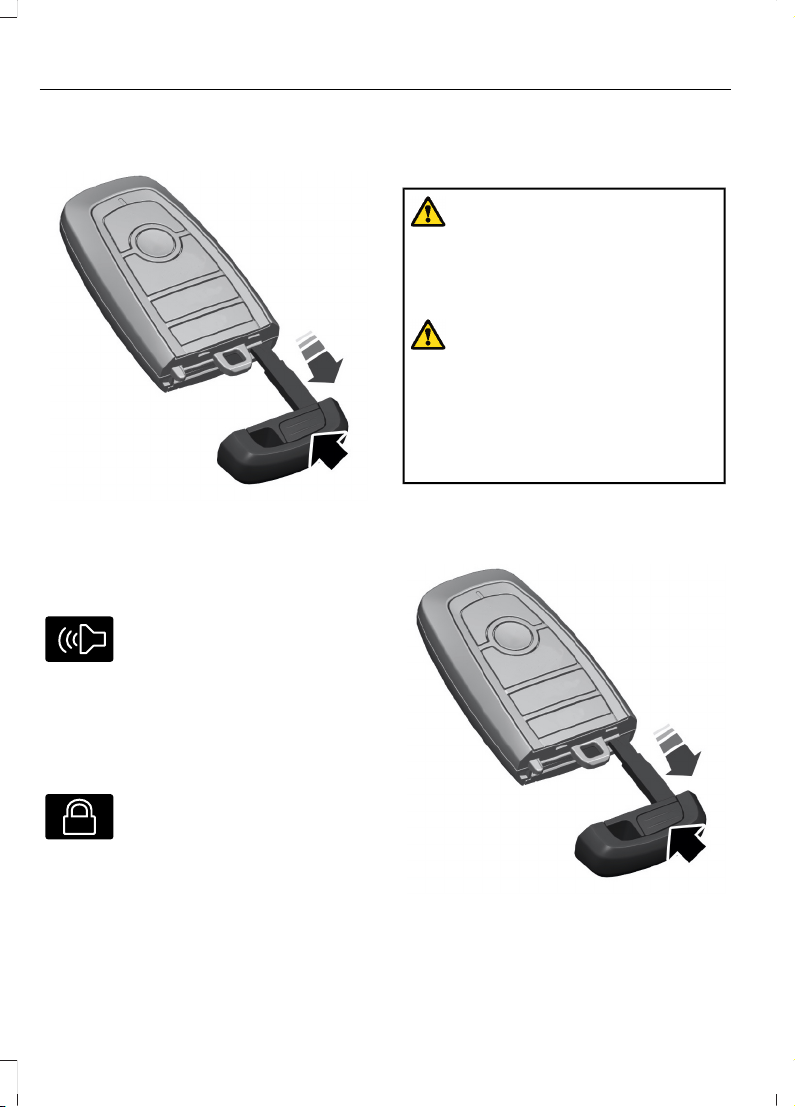
REMOVING THE KEY BLADE
E322866
Push the release button on your passive
key and pull the key blade out.
SOUNDING THE PANIC ALARM
E138624
Press the button to sound the
panic alarm. Press the button
again, or switch the ignition on
to turn it off.
Note: The panic alarm only operates when
the ignition is off.
LOCATING YOUR VEHICLE
E138623
Press the lock button twice
within three seconds. The turn
signal lamps flash.
Note: We recommend you use this method
to locate your vehicle.
CHANGING THE REMOTE
CONTROL BATTERY
WARNING: Keep batteries away
from children to prevent ingestion.
Failure to follow this instruction could
result in personal injury or death. If
ingested, immediately seek medical
attention.
WARNING: If the battery
compartment does not securely close,
stop using the remote control and
replace it as soon as possible. In the
meantime, keep the remote control away
from children. Failure to follow this
instruction could result in personal injury
or death.
The remote control uses one coin-type
3-volt lithium battery CR2450 or
equivalent.
E322866
1. Push the release button and pull the
key blade out.
70
2023 F-150 Lightning (TFD) Electric, Canada/United States of America, enUSA, Edition date: 202206, DOM
Keys and Remote Controls
Page 75
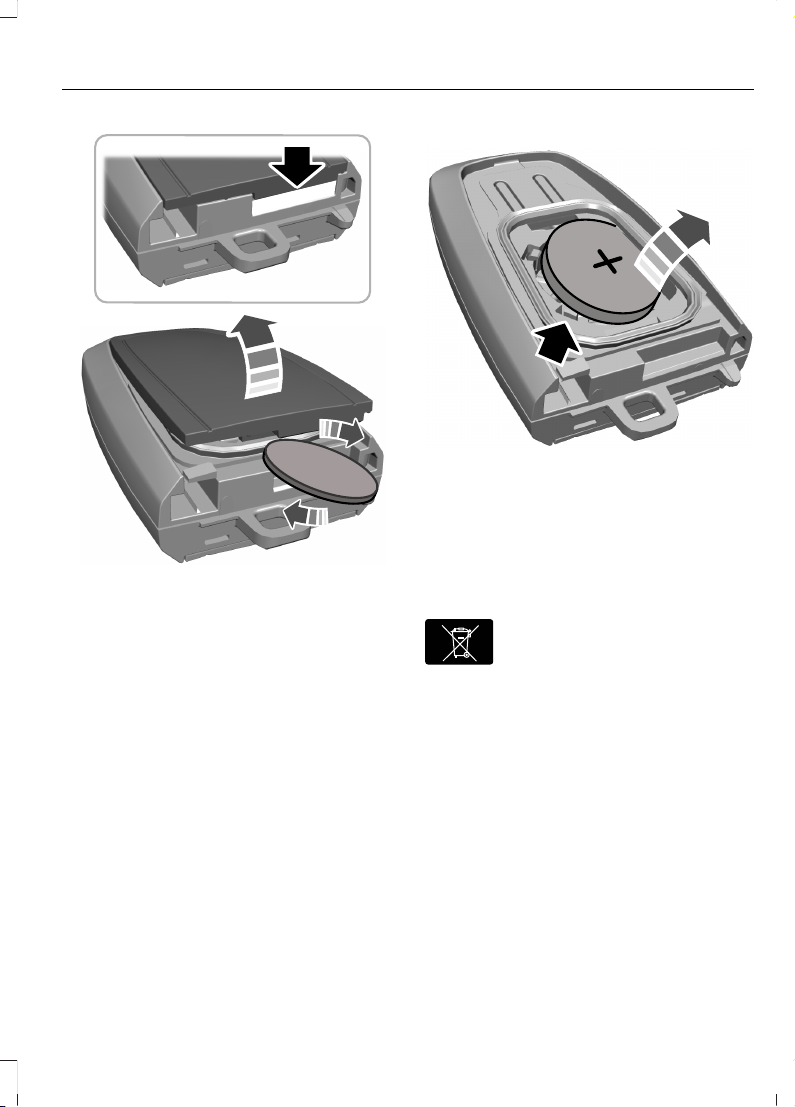
E303824
2. Twist a thin coin under the tab hidden
behind the key blade head to remove
the battery cover.
E218402
3. Insert a screwdriver, and carefully
remove the battery.
4. Install a new battery with the + facing
upward.
5. Reinstall the battery housing cover
onto the transmitter and install the key
blade.
E107998
Dispose of old batteries in an
environmentally friendly way.
Seek advice from your local
authority about recycling old batteries.
Note: Do not wipe off any grease on the
battery terminals or on the back surface of
the circuit board.
Note: Replacing the battery does not erase
the programmed key from your vehicle. The
remote control should operate normally.
REPLACING A LOST KEY OR
REMOTE CONTROL
You can purchase replacement keys or
remote controls from an authorized dealer.
Authorized dealers can program remote
controls for your vehicle.
71
2023 F-150 Lightning (TFD) Electric, Canada/United States of America, enUSA, Edition date: 202206, DOM
Keys and Remote Controls
Page 76
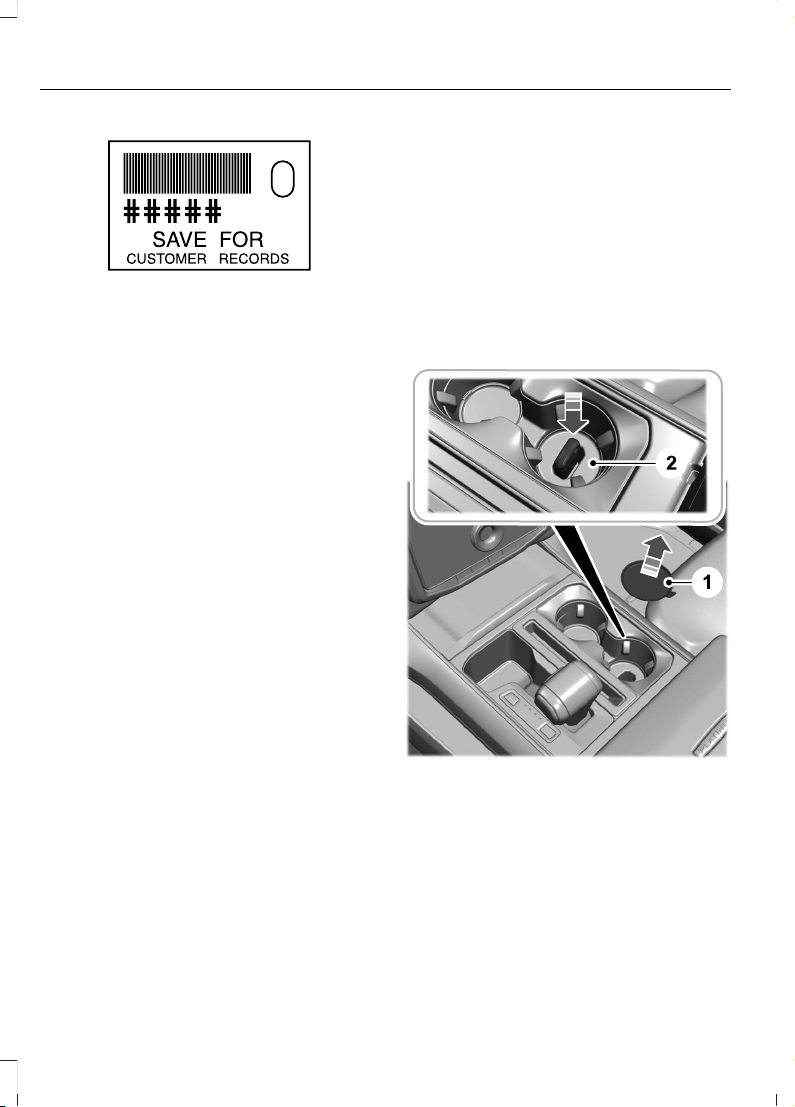
E151795
Note: Your vehicle keys came with a
security label that provides important key
cut information. Keep the label in a safe
place for future reference.
PROGRAMMING THE REMOTE
CONTROL
General Information
You must have two previously
programmed remote controls inside your
vehicle and the new unprogrammed
remote controls readily accessible. Contact
an authorized dealer to have the spare
remote control programmed if two
previously programmed remotes are not
available. Make sure that your vehicle is
off before beginning this procedure. Make
sure that you close all the doors before
beginning and that they remain closed
throughout the procedure. Perform all
steps within 30 seconds of starting the
sequence. Stop and wait for at least one
minute before starting again if you perform
any steps out of sequence.
Read and understand the entire procedure
before you begin.
Note: You can program a maximum of four
remote controls to your vehicle.
Note: If your programmed remote controls
are lost or stolen and you do not have an
extra coded remote, you need to have your
vehicle towed to an authorized dealer. Store
an extra programmed remote away from
your vehicle in a safe place to help prevent
any inconvenience. Contact an authorized
dealer to purchase additional spare or
replacement remotes.
Steps for Programming Your Spare
Remote Control
Programming Backup Location
E373474
1. Access the backup slot.
2. Place the first programmed remote in
the backup slot with your foot off the
brake pedal, press and release the push
button ignition switch.
3. Wait five seconds and then press and
release the push button ignition switch
again.
4. Remove the remote control.
72
2023 F-150 Lightning (TFD) Electric, Canada/United States of America, enUSA, Edition date: 202206, DOM
Keys and Remote Controls
Page 77

5. Within 10 seconds, place a second
programmed remote control in the
backup slot. Press and release the
push button ignition switch.
6. Wait five seconds and then press and
release the push button ignition switch
again. Keep the ignition on for at least
three seconds, but no more than 10
seconds.
7. Remove the remote control.
8. Place the unprogrammed remote
control in the backup slot and press
and release the push button ignition
switch.
Programming is now complete. With your
foot on the brake pedal, press the push
button ignition switch to verify the remote
control functions operate and your vehicle
starts with the new remote control.
If programming was not successful, wait
10 seconds and repeat Steps 1 through 8.
If you are still unsuccessful, take your
vehicle to an authorized dealer.
KEYS AND REMOTE CONTROLS – TROUBLESHOOTING
KEYS AND REMOTE CONTROLS – INFORMATION MESSAGES
ActionMessage
Replace remote control battery.Key Battery Low Replace
Soon
73
2023 F-150 Lightning (TFD) Electric, Canada/United States of America, enUSA, Edition date: 202206, DOM
Keys and Remote Controls
Page 78

WHAT IS PHONE AS A KEY
Phone as a Key allows you to use your
phone in place of a passive key.
You can use your phone for the following
functions:
• Remote locking and unlocking.
• Passive entry and exit.
• Passive start and drive the vehicle.
• Remote start.
• Memory function recall.
PHONE AS A KEY
LIMITATIONS
Limitations can vary based on the make
and model of your phone, phone location
and physical obstructions.
The following items could impact Phone
as a Key performance or prevent
functionality in some cases:
• The typical operating range for Phone
as a Key is 131 ft (40 m).
• Your Bluetooth® connection is not
enabled, is disrupted, or out of range.
• Your Phone as a Key is not active or
enabled on at least one phone.
• Your vehicle battery has depleted.
• Your phone battery has depleted.
• Interference from other devices using
radio frequencies or physical
obstructions.
• Your phone is too close to metal
objects or other electronic devices.
Note: Do not leave a duplicate coded key
in the vehicle. Always take your keys and
phone and lock all doors when leaving the
vehicle.
PROGRAMMING YOUR PHONE
To program your smartphone as phone as
a key:
1. Visit your device's app store to
download the FordPass app.
2. Create a new account or sign-in to an
existing account on the FordPass app.
3. Add the vehicle identification number
to your account and follow the
prompts in the FordPass app to
complete the Sync Connect
Authorization process.
4. After the authorization is complete, you
can set up phone as a key following the
prompts in the FordPass app.
5. After phone as a key is set up, you can
set up the backup start passcode by
following the prompts on your
touchscreen.
Note: Keep your new backup start
passcode with you in case of an emergency.
Resetting Phone as a Key
1. Access the vehicle drawer on the
touchscreen.
2. Press SETTINGS.
3. Press General.
4. Press Reset.
5. Press the app connect reset option.
6. Press Reset All.
7. Confirm you would like to continue with
erasing all phone as a key settings, keys
and backup start passcodes.
8. Press Continue.
9. Confirm you are aware you are
de-authorizing all authorized users and
FordPass Connect settings.
10. Press Continue.
74
2023 F-150 Lightning (TFD) Electric, Canada/United States of America, enUSA, Edition date: 202206, DOM
Phone as a Key (If Equipped)
Page 79

USING THE VALET MODE
Classic Valet Mode
Enabling Valet Mode
Make sure the remote control is in your
vehicle.
1. Access the vehicle drawer on the
touchscreen.
2. Press CONTROLS.
3. Press Valet Mode.
4. Enter a four digit code to lock the
touchscreen.
5. Re-enter the same four digit code to
complete enabling valet mode.
Disabling Valet Mode
1. Press Exit Valet Mode.
2. Enter your four digit code to disable
valet mode and unlock your
touchscreen.
Enhanced Valet Mode
Enabling Valet Mode
Have your backup start passcode
completely set up before using valet mode.
See Programming Your Phone (page
74).
Note: If your vehicle detects a remote
control, the system defaults to classic valet
mode.
1. Access the vehicle drawer on the
touchscreen.
2. Press CONTROLS.
3. Press Valet Mode.
Note: If the system detects a valid phone
as a key, a valet passcode displays in both
the touchscreen and mobile app.
Note: If the system does not detect a valid
phone as a key, it prompts you to enter your
backup start passcode on the touchscreen.
Once validated, a valet passcode displays
on the touchscreen.
4. Provide the valet the first five digits of
the valet passcode to enter on the
keyless entry keypad to unlock your
vehicle.
5. Provide the valet the eight-digit valet
passcode to enter on the touchscreen
to start and drive your vehicle.
Disabling Valet Mode
1. Press Exit Valet Mode.
Note: If the system detects an authorized
phone as a key, valet mode disables.
Note: If the system does not detect a valid
phone as a key, it prompts you to enter your
backup start passcode. Once validated,
valet mode disables.
USING THE BACKUP START
PASSCODE
Make sure you have phone as a key active
on at least one phone to use a previously
created backup start passcode. See
Programming Your Phone (page 74).
1. Press the brake pedal and the push
button start. If the system does not
detect a valid phone as a key or remote
control, a message appears on the
touchscreen and prompts you for your
backup start passcode.
Note: The touchscreen times out after 30
seconds with no interaction.
Note: If the backup start passcode screen
does not appear, press the brake pedal and
push button start again.
2. Use the touchscreen to enter your
backup start passcode.
75
2023 F-150 Lightning (TFD) Electric, Canada/United States of America, enUSA, Edition date: 202206, DOM
Phone as a Key (If Equipped)
Page 80

3. After entering your passcode, press
return within 30 seconds.
4. Once the system validates the backup
start passcode, a message alerts you
to start your vehicle.
5. Press the brake pedal and the push
button start within 20 seconds to start
the vehicle.
6. If your vehicle does not start, repeat
steps 1-5.
System Lockout
The system locks after five combined
incorrect attempts of the following:
• Entering a backup start passcode.
• Resetting a current passcode.
• Entering a valet mode passcode.
Note: The system remains locked for five
minutes. After five minutes the system
allows codes to be entered again.
PHONE AS A KEY –
TROUBLESHOOTING
PHONE AS A KEY – FREQUENTLY
ASKED QUESTIONS
How can I tell if my vehicle has
phone as a key?
• The touchscreen shows the phone as
a key reset option.
• A control button appears on the home
screen of the FordPass app if you have
registered your vehicle through the
FordPass app.
What happens if I cannot unlock
the vehicle with phone as a key?
• Attempt to move your phone closer to
the vehicle.
• Check that the FordPass app is still
running and that the phone as a key
control screen shows connected. If the
phone is connected, attempt to press
the remote unlock button in the
FordPass app. If the phone is not
connected or the remote unlock button
does not work in the FordPass app,
attempt to force close and restart the
app.
Why do I get a No Key Detected
message in the instrument cluster
display when I am using phone as
a key and my phone is in the car?
• Your phone’s Bluetooth connection has
been disrupted or is not connected. Try
reconnecting your phone's Bluetooth
connection.
• Move the phone closer to the center of
the vehicle near the cup holder or
center console.
• Verify your phone as a key is still active,
enabled and has not been revoked.
What do I do if my phone is lost,
damaged or the battery has
depleted?
• Use the backup start passcode that
you created. See Using the Backup
Start Passcode (page 75).
How many phones can I use for
phone as a key?
• You can program and activate up to
four phones with phone as a key to your
vehicle.
76
2023 F-150 Lightning (TFD) Electric, Canada/United States of America, enUSA, Edition date: 202206, DOM
Phone as a Key (If Equipped)
Page 81

How does a valet drive my car if I
only use my phone as a key?
• Have the valet use the temporary valet
passcode that you created. See Using
the Valet Mode (page 75).
I uninstalled my FordPass app and
reinstalled it. Why am I not able to
get a new phone as a key?
• Remove the phone as a key that was
previously associated with your phone.
• Reset phone as a key from your vehicle,
and then request a new phone as a key.
See Connecting Your Phone (page
525).
Why can I not remotely start the
vehicle with my phone as a key?
• Using the FordPass app, verify your
phone as a key setup is complete and
enabled via Bluetooth connection on
at least one phone. If Bluetooth has
connected but phone as a key setup is
not complete, complete the setup of
your phone as a key as prompted from
the FordPass app. See Connecting
Your Phone (page 525).
77
2023 F-150 Lightning (TFD) Electric, Canada/United States of America, enUSA, Edition date: 202206, DOM
Phone as a Key (If Equipped)
Page 82
WHAT IS MYKEY
MyKey allows you to program keys with
restricted driving modes to promote good
driving habits.
You can program the restrictions to all keys
except one. Any keys that you did not
program are administrator keys or admin
keys.
Note: Every MyKey receives the same
restrictions and settings. You cannot
program them individually.
MYKEY SETTINGS
NON-CONFIGURABLE MYKEY
SETTINGS
Seatbelt Reminder or BeltMinder™
MyKey mutes the audio system until the
front seat passengers buckle the front seat
belts.
Note: If your vehicle includes an AM/FM
radio or a very basic audio system, the radio
may not mute.
Satellite Radio (If Equipped)
Some satellite radio channels have
restricted access to adult radio content.
Driving and Parking Aids
You cannot configure settings for parking
aids, blind spot information system, and
cross traffic alert. These systems turn on
when the vehicle turns on, and you cannot
switch them off with a MyKey.
You cannot configure settings for
pre-collision assist and lane keeping. These
systems turn on when the vehicle turns on.
A new destination in the navigation system
can only be set using voice commands
when using a MyKey, and with your vehicle
moving.
Note: MyKey drivers may be able to switch
the lane keeping assist off, but this feature
turns back on automatically with every new
key cycle.
CONFIGURABLE MYKEY
SETTINGS
You can configure the following settings
after creating a MyKey. See Creating a
MyKey (page 79).
Speed Limit
WARNING: Do not set MyKey
maximum speed limit to a limit that will
prevent the driver from maintaining a
safe speed considering posted speed
limits and prevailing road conditions. The
driver is always responsible to drive in
accordance with local laws and
prevailing conditions. Failure to do so
could result in accident or injury.
You can set a speed limit for your vehicle.
Warning messages appear on the
touchscreen and a tone sounds if your
vehicle reaches the set speed. You cannot
override the set speed when using a MyKey.
Speed Minder
You can set a speed reminder for your
vehicle. Warning messages appear on the
touchscreen and a tone sounds if your
vehicle exceeds the set speed.
78
2023 F-150 Lightning (TFD) Electric, Canada/United States of America, enUSA, Edition date: 202206, DOM
MyKey™
Page 83
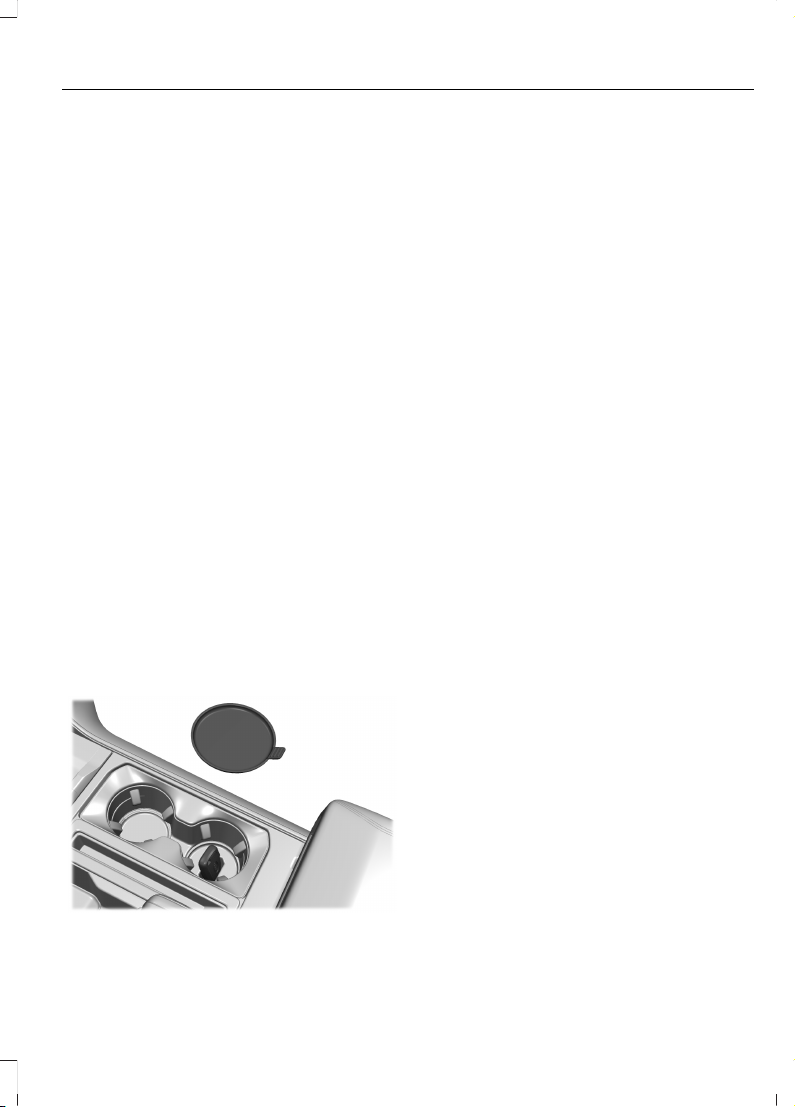
Audio System Volume Limit
The audio system maximum volume
reduces. A message appears on the
touchscreen if you attempt to exceed the
volume limit. Automatic volume control
turns off.
911 Assist
If you set 911 assist to always on, you
cannot switch it off with a MyKey.
Do Not Disturb
If you set do not disturb to always on, you
cannot switch it off with a MyKey.
Note: If a phone is connected using Apple
CarPlay or Android Auto while driving with
a MyKey, the driver can receive phone calls
and text messages even if the do not disturb
restriction is on. And if the vehicle comes
with satellite radio, there is no restriction on
the adult content.
Traction and Stability Control
If you set traction control or stability
control to always on, you cannot switch it
off with a MyKey.
CREATING A MYKEY
E312216
Note: Use these instructions to create a
MyKey for a passive key or a mobile device.
1. Remove the mat from the center
console cup holder.
2. Remove the key blade from the remote
control.
3. Place the passive key in the backup slot
with the buttons facing toward the rear
of the vehicle.
4. Switch the vehicle on using the key you
want to create as MyKey.
5. Press Settings on the touchscreen.
6. Press Vehicle Settings.
7. Press MyKey.
8. Press Create MyKey or Create MyKey
Mobile Device.
9. Press Yes.
10. Switch the ignition off.
Note: You successfully created a MyKey.
We recommend that you label this key so
you can distinguish it from the admin keys.
Note: You can use both a passive key and
a mobile device as a MyKey. You must have
a second passive key and create it as a
MyKey.
Note: The programmed restrictions apply
when you switch the vehicle off, open and
close the driver door and restart your vehicle
with the passive key or mobile device.
PROGRAMMING A MYKEY
You can program any remote control to
become a restricted MyKey, but you must
leave one unmodified as an admin key.
1. Switch the vehicle on using an admin
key.
2. Press Settings on the touchscreen.
3. Press Vehicle Settings.
4. Press MyKey.
5. Select and configure the settings.
79
2023 F-150 Lightning (TFD) Electric, Canada/United States of America, enUSA, Edition date: 202206, DOM
MyKey™
Page 84

CLEARING ALL MYKEYS
When you clear all MyKeys, you remove all
restrictions and return all MyKeys to their
original admin key status.
1. Switch the vehicle on using an admin
key.
2. Press Settings on the touchscreen.
3. Press Vehicle Settings.
4. Press MyKey.
5. Press Clear All MyKeys.
6. Press Yes.
CHECKING MYKEY SYSTEM
STATUS
You can find information about the
distance traveled using a MyKey, and the
number of admin keys and MyKeys created
for your vehicle.
1. Switch the vehicle on.
2. Press Settings on the touchscreen.
3. Press Vehicle Settings.
4. Press MyKey.
5. Press MyKey Information.
USING MYKEY WITH REMOTE
START SYSTEMS (IF EQUIPPED)
MyKey is not compatible with unapproved,
aftermarket remote start systems. If you
choose to install a remote start system,
see an authorized dealer for an approved
remote start system.
MYKEY – TROUBLESHOOTING
MYKEY – INFORMATION MESSAGES
DescriptionMessage
Displays when trying to create a MyKey and the admin key is
not placed in the backup position. See Creating a MyKey
(page 79).
Place Key in Backup
Location
Displays when trying to create a MyKey with a key already
designated as a MyKey.
Key is Already a MyKey
Displays to confirm that the key is restricted after you switch
the ignition off.
This Key restricted at
Next Key Cycle. Label
Key as MyKey
80
2023 F-150 Lightning (TFD) Electric, Canada/United States of America, enUSA, Edition date: 202206, DOM
MyKey™
Page 85

MYKEY – FREQUENTLY ASKED
QUESTIONS
What is an admin key?
An admin key is a key that you have
not created as a MyKey. See Creating
a MyKey (page 79).
Why am I not able to create a MyKey?
You have not placed the admin key in
the backup position. See Creating a
MyKey (page 79). The key used to
switch the ignition on is not an admin
key. The key used to switch the ignition
on is the only admin key. There has to
be at least one admin key. You did not
switch the ignition off after creating
the last MyKey.
Why am I not able to program a MyKey?
The admin key is not inside your
vehicle. The key used to switch the
ignition on is not an admin key. You
have not created any MyKeys. See
Creating a MyKey (page 79).
Why am I not able to clear the MyKeys?
The admin key is not inside your
vehicle. The key used to switch the
ignition on is not an admin key. You
have not created any MyKeys. See
Creating a MyKey (page 79).
Why is the MyKey distance not
accumulating?
The key used to start the engine is an
admin key. An admin key and a MyKey
are inside your vehicle. You have not
created any MyKeys. See Creating a
MyKey (page 79). You have cleared
the MyKeys. See Clearing All
MyKeys (page 80).
Why am I not able to start the engine
with a MyKey?
An admin key and a MyKey are inside
your vehicle. The system recognizes
only the admin key when both are
present.
81
2023 F-150 Lightning (TFD) Electric, Canada/United States of America, enUSA, Edition date: 202206, DOM
MyKey™
Page 86
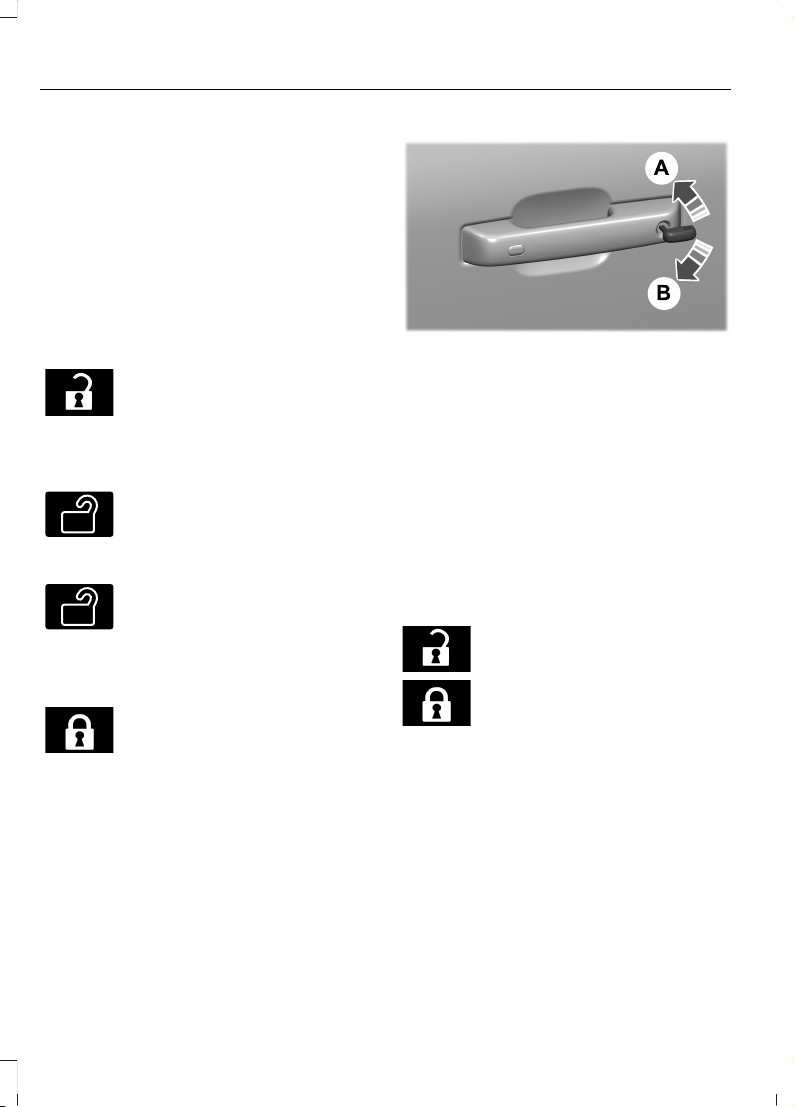
OPERATING THE DOORS
FROM OUTSIDE YOUR
VEHICLE
UNLOCKING AND LOCKING THE
DOORS USING THE REMOTE
CONTROL
You can only use the remote control when
your vehicle is stationary.
Unlocking the Doors
E267112
Press the button to unlock all
doors. One long flash of the turn
signal lamps confirms that your
vehicle has unlocked.
One-Stage Unlocking
E138629
Press the button to unlock all
doors.
Two-Stage Unlocking (If Equipped)
E138629
Press the button to unlock the
driver's door. Press the button
again within three seconds to
unlock all doors.
Locking the Doors
E267111
Press the button to lock all
doors. One short flash of the
turn signal lamps confirms your
vehicle is locked.
Note: For more information on operating
the doors from outside your vehicle See
Keyless Entry Keypad (page 88).
UNLOCKING AND LOCKING THE
DOORS USING THE KEY BLADE
If there is a power door lock fault you can
use the key blade to lock and unlock the
doors.
E333745
Lock.A
Unlock.B
OPERATING THE DOORS
FROM INSIDE YOUR VEHICLE
UNLOCKING AND LOCKING THE
DOORS USING THE CENTRAL
LOCKING
The power door lock control is on the front
doors.
E267112
Press the button to unlock all
doors.
E267111
Press the button to lock all
doors.
Note: The central locking only operates if
the front doors are fully closed.
OPENING THE DOORS FROM
INSIDE YOUR VEHICLE
Pull the interior door handle twice to
unlock and open a rear door. The first pull
unlocks the door and the second pull
opens the door.
82
2023 F-150 Lightning (TFD) Electric, Canada/United States of America, enUSA, Edition date: 202206, DOM
Doors and Locks
Page 87

AUTOUNLOCK (IF EQUIPPED)
WHAT IS AUTOUNLOCK
Autounlock is an unlocking feature that
unlocks the vehicle doors when your
vehicle comes to a stop.
AUTOUNLOCK REQUIREMENTS
Autounlock unlocks all the doors after all
of the following occur.
1. All the doors are closed and your
vehicle is moving at a speed greater
than 12 mph (20 km/h).
2. Your vehicle comes to a stop.
3. You open the driver door within 10
minutes of switching the ignition off or
to the accessory position.
Note: If you open the driver door after 10
minutes, Autounlock does not unlock all
other doors.
SWITCHING AUTOUNLOCK ON
AND OFF - VEHICLES WITH: 12
INCH SCREEN
1. Press Settings on the touchscreen.
2. Press Vehicle Settings.
3. Switch Autounlock on or off.
SWITCHING AUTOUNLOCK ON
AND OFF - VEHICLES WITH: 15
INCH SCREEN
1. Access the vehicle drawer on the
touchscreen.
2. Press SETTINGS.
3. Press Vehicle.
4. Press Locks.
5. Switch Autounlock on or off.
AUTOLOCK (IF EQUIPPED)
WHAT IS AUTOLOCK
Autolock is a locking feature that locks
your vehicle doors when you start driving.
AUTOLOCK REQUIREMENTS
Autolock locks all the doors when all of the
following occur:
• All doors are closed.
• The ignition is on.
• Your vehicle reaches a speed greater
than 12 mph (20 km/h).
MISLOCK (IF EQUIPPED)
WHAT IS MISLOCK
Mislock is a locking feature that warns you
if your vehicle has not locked.
MISLOCK LIMITATIONS
When you press the lock button once, the
turn signals do not flash if:
• Any door or the tailgate is open.
• The hood is open.
If you switch mislock off, the horn does not
sound if you press the lock button on the
remote control when a door is open.
SWITCHING MISLOCK ON AND
OFF - VEHICLES WITH: 12 INCH
SCREEN
1. Press Settings on the touchscreen.
2. Press Vehicle Settings.
3. Switch Mislock Chirp on or off.
83
2023 F-150 Lightning (TFD) Electric, Canada/United States of America, enUSA, Edition date: 202206, DOM
Doors and Locks
Page 88
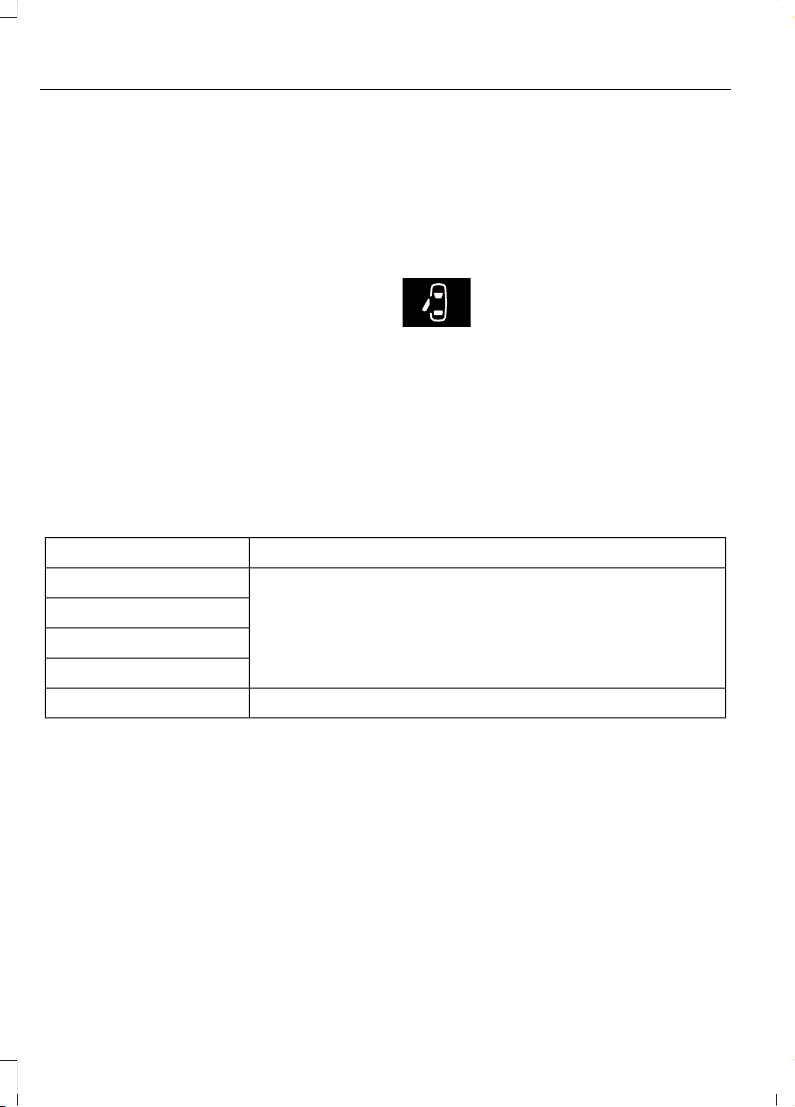
SWITCHING MISLOCK ON AND
OFF - VEHICLES WITH: 15 INCH
SCREEN
1. Access the vehicle drawer on the
touchscreen.
2. Press SETTINGS.
3. Press Vehicle.
4. Press Locks.
5. Switch Mislock on or off.
DOORS AND LOCKS AUDIBLE
WARNINGS
Door Ajar Audible Warning
Sounds when a door is not fully closed and
your vehicle is moving.
DOORS AND LOCKS –
TROUBLESHOOTING
DOORS AND LOCKS – WARNING
LAMPS
Door Ajar Warning Lamp
E249859
Illuminates when you switch the
ignition on and remains on if any
door or the hood is open.
DOORS AND LOCKS – INFORMATION MESSAGES
ActionMessage
Displays if a door is open. Fully close the door.Driver Door Ajar
Passenger Door Ajar
Rear Left Door Ajar
Rear Right Door Ajar
Displays if the frunk is open. Fully close the frunk.Frunk ajar
84
2023 F-150 Lightning (TFD) Electric, Canada/United States of America, enUSA, Edition date: 202206, DOM
Doors and Locks
Page 89

DOORS AND LOCKS –
FREQUENTLY ASKED QUESTIONS
Can accessories such as steps or
handles be used with the latch
assembly?
Do not use the door latch assembly to
attach any accessory, such as handles
or steps, as this can cause damage to
your vehicle.
85
2023 F-150 Lightning (TFD) Electric, Canada/United States of America, enUSA, Edition date: 202206, DOM
Doors and Locks
Page 90
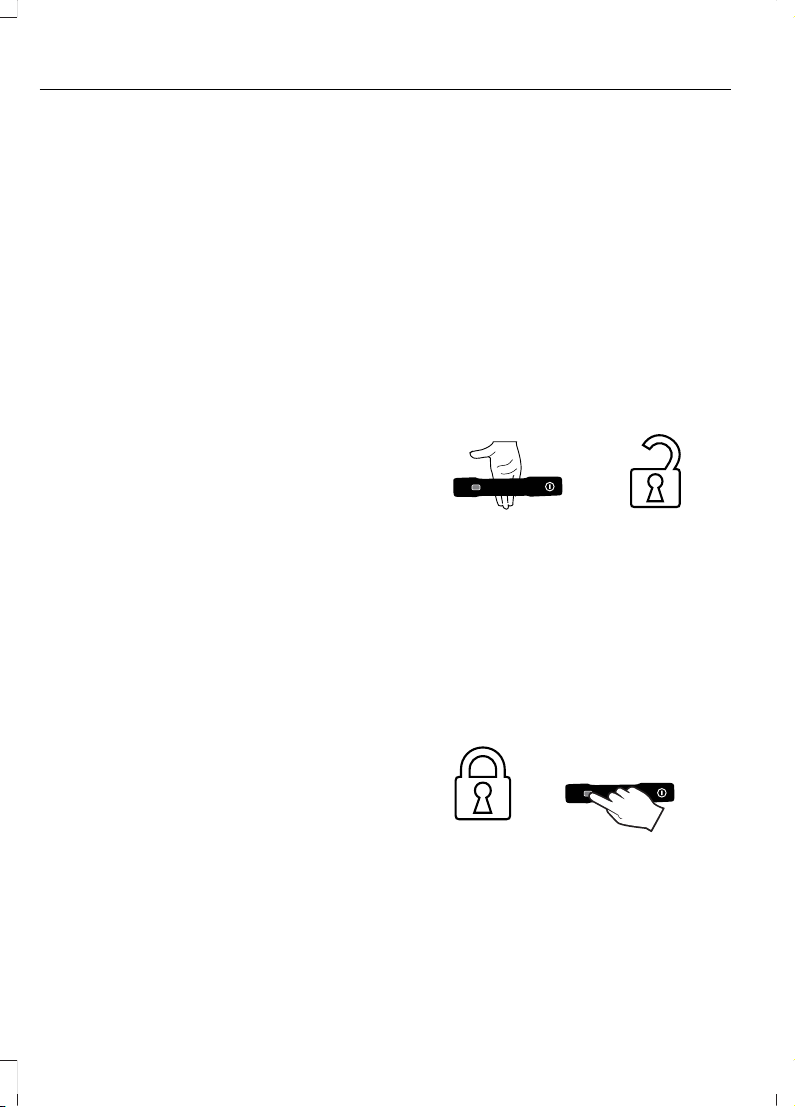
WHAT IS KEYLESS ENTRY
The system allows you to lock and unlock
your vehicle without taking the passive key
out of your pocket or purse.
KEYLESS ENTRY LIMITATIONS
Make sure your remote control is within 3 ft
(1 m) from the front door handles and the
tailgate.
The system could not function if:
• The remote control remains stationary
for about a minute.
• The vehicle battery has no charge.
• The remote control battery has no
charge.
• There is interference causing issues
with the remote control frequencies.
• The remote control is too close to
metal objects or electronic devices, for
example keys or a cell phone.
KEYLESS ENTRY SETTINGS
Switching Keyless Entry On and
Off
1. Switch the ignition on using an original
key that has not been created as a
MyKey.
2. Press Settings on the touchscreen.
3. Press Vehicle Settings.
4. Press Locks.
Reprogramming the Unlocking
Function
You can enable two-stage unlocking
function allowing you to unlock only the
driver door when you touch the unlock
sensor.
Press and hold both the lock and unlock
buttons on the remote control for four
seconds to disable or enable two-stage
unlocking.
If you program the unlocking function so
that only the driver door unlocks, you can
unlock all of the other doors from inside
your vehicle using the power door lock
control. You can unlock individual doors
by pulling the interior door handles on
those doors.
USING KEYLESS ENTRY
Unlocking the Doors
E333747
With your passive key within 3 ft (1 m) of
your vehicle, touch the unlock sensor on
the back of the door handle for a brief
period and then pull on the door handle to
unlock, being careful not to touch the lock
sensor at the same time or pull on the door
handle too quickly. The intelligent access
system requires a brief delay to
authenticate your passive key.
Locking the Doors
E333746
86
2023 F-150 Lightning (TFD) Electric, Canada/United States of America, enUSA, Edition date: 202206, DOM
Keyless Entry (If Equipped)
Page 91

With your passive key within 3 ft (1 m) of
your vehicle, touch the outer door handle
lock sensor for approximately one second
to lock, being careful not to touch the
unlock sensor on the back of the door
handle at the same time. After locking, you
can immediately pull on the door handle
to confirm locking occurred without
inadvertently unlocking.
87
2023 F-150 Lightning (TFD) Electric, Canada/United States of America, enUSA, Edition date: 202206, DOM
Keyless Entry (If Equipped)
Page 92
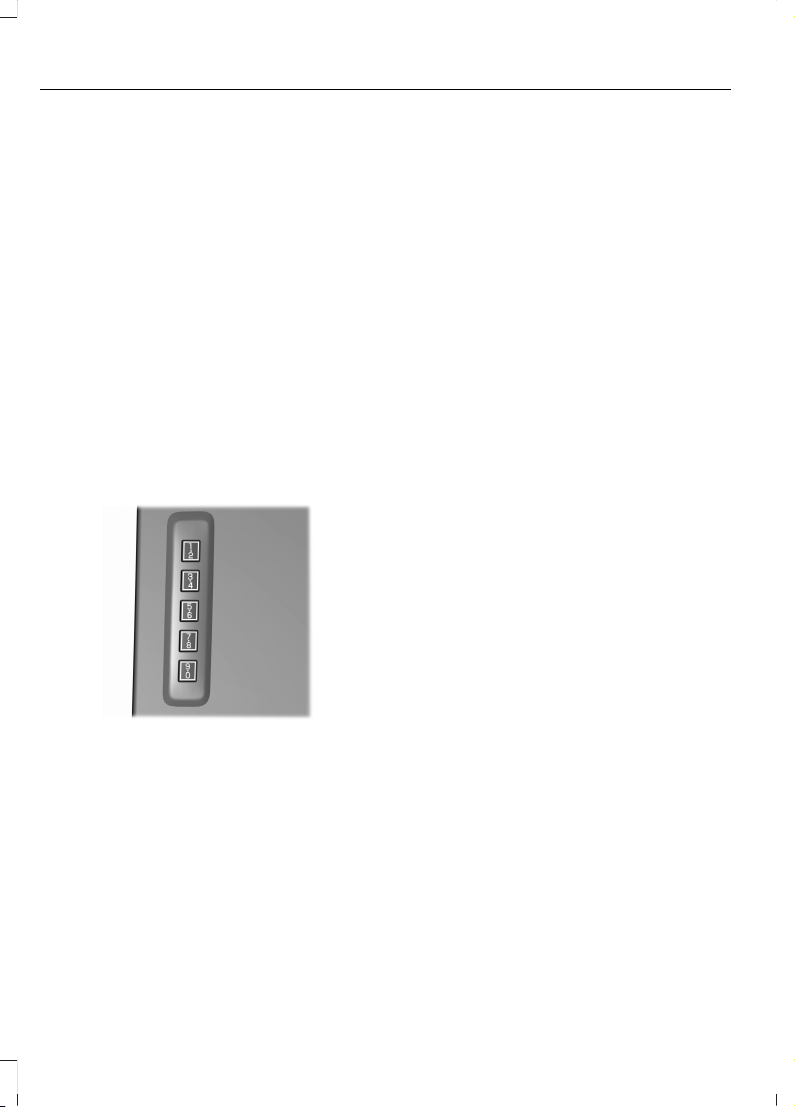
WHAT IS THE KEYLESS ENTRY
KEYPAD
The keyless entry keypad allows you to
lock and unlock your vehicle using the
keypad on the window trim.
KEYLESS ENTRY KEYPAD
LIMITATIONS
The system may not function if:
• The vehicle battery has no charge.
LOCATING THE KEYLESS
ENTRY KEYPAD
The keypad is near the driver window and
illuminates when you touch it.
KEYLESS ENTRY KEYPAD
MASTER ACCESS CODE
What Is the Master Access Code
The master access code is a factory-set
five-digit entry code. You can operate the
keypad with the master access code at
any time. The master access code is on the
owner’s wallet card in the glove box and
is available from an authorized dealer.
KEYLESS ENTRY KEYPAD
PERSONAL ACCESS CODES
Programming a Personal Entry
Code
1. Enter the five-digit master code.
2. Press 1·2 on the keypad within five
seconds.
3. Enter your personal five-digit code.
You must do this within five seconds
of completing Step 2.
4. Press 1·2 on the keypad to save
personal code 1.
The doors lock then unlock to confirm that
programming was successful.
To program additional personal entry
codes, repeat Steps 1 through 3, then for
Step 4:
• Press 3·4 to save personal code 2.
• Press 5·6 to save personal code 3.
• Press 7·8 to save personal code 4.
• Press 9·0 to save personal code 5.
If your vehicle comes with SYNC, you can
also program the system with a personal
entry code.
Hints:
• Do not set a code that uses five of the
same number.
• Do not use five numbers in sequential
order.
• The five-digit master code works even
if you have set your own personal code.
Erasing a Personal Code
1. Enter the five-digit master code.
2. Press and release 1·2 on the keypad
within five seconds.
3. Press and hold 1·2 for two seconds.
You must do this within five seconds
of completing Step 2.
88
2023 F-150 Lightning (TFD) Electric, Canada/United States of America, enUSA, Edition date: 202206, DOM
Keyless Entry Keypad (If Equipped)
Page 93
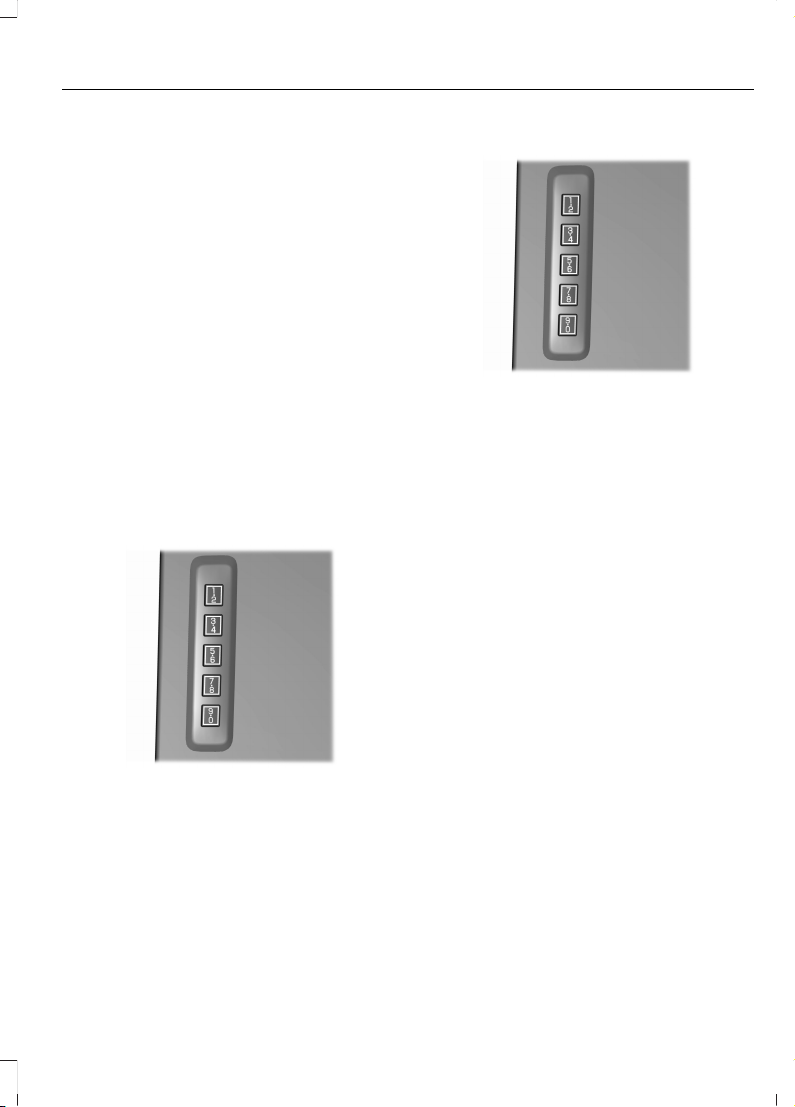
All personal codes erase and only the
five-digit master code works.
Anti-Scan Feature
The keypad goes into an anti-scan mode
if you enter the wrong code seven times.
This mode turns off the keypad for one
minute and the keypad lamp flashes.
The anti-scan feature turns off after:
• One minute of keypad inactivity.
• You press the unlock button on the
remote control.
• You switch the ignition on.
• You unlock your vehicle using keyless
entry.
USING THE KEYLESS ENTRY
KEYPAD
Unlocking the Doors
Enter the factory-set five-digit code or your
personal code. You must press each
number within five seconds of each other.
• Press 3-4 within five seconds to unlock
all doors.
To Release the Frunk
Enter the factory-set five-digit code or your
personal code, then press 7-8 within five
seconds.
Locking the Doors
Press and hold 7·8 and 9·0 at the same
time with the driver door closed.
Note: You do not need to enter the code
first.
KEYLESS ENTRY KEYPAD –
TROUBLESHOOTING
KEYLESS ENTRY KEYPAD –
FREQUENTLY ASKED QUESTIONS
Why does the keypad not accept the
access code?
If you enter the access code too fast
on the keypad, the unlock function
may not work. Slowly re-enter the
access code.
Why does the keypad not function?
The keypad goes into an anti-scan
mode if you enter a wrong code seven
times. The anti-scan mode disables
the keypad for one minute and the red
light flashes.
89
2023 F-150 Lightning (TFD) Electric, Canada/United States of America, enUSA, Edition date: 202206, DOM
Keyless Entry Keypad (If Equipped)
Page 94

HOW DOES EASY ENTRY AND
EXIT WORK
Easy entry and exit moves the driver seat
rearward up to 2 in (5 cm) and the steering
column up when you switch the ignition
off. The driver seat and steering column
return to their previous positions when you
switch the ignition on.
Note: Depending on your vehicle, the
column may move up and in.
SWITCHING EASY ENTRY AND
EXIT ON AND OFF
1. Press Settings on the touchscreen.
2. Press Vehicle.
3. Select Easy Entry/Exit.
If you press any adjustment or memory
button when in easy exit mode, the system
cancels the operation.
90
2023 F-150 Lightning (TFD) Electric, Canada/United States of America, enUSA, Edition date: 202206, DOM
Easy Entry and Exit (If Equipped)
Page 95
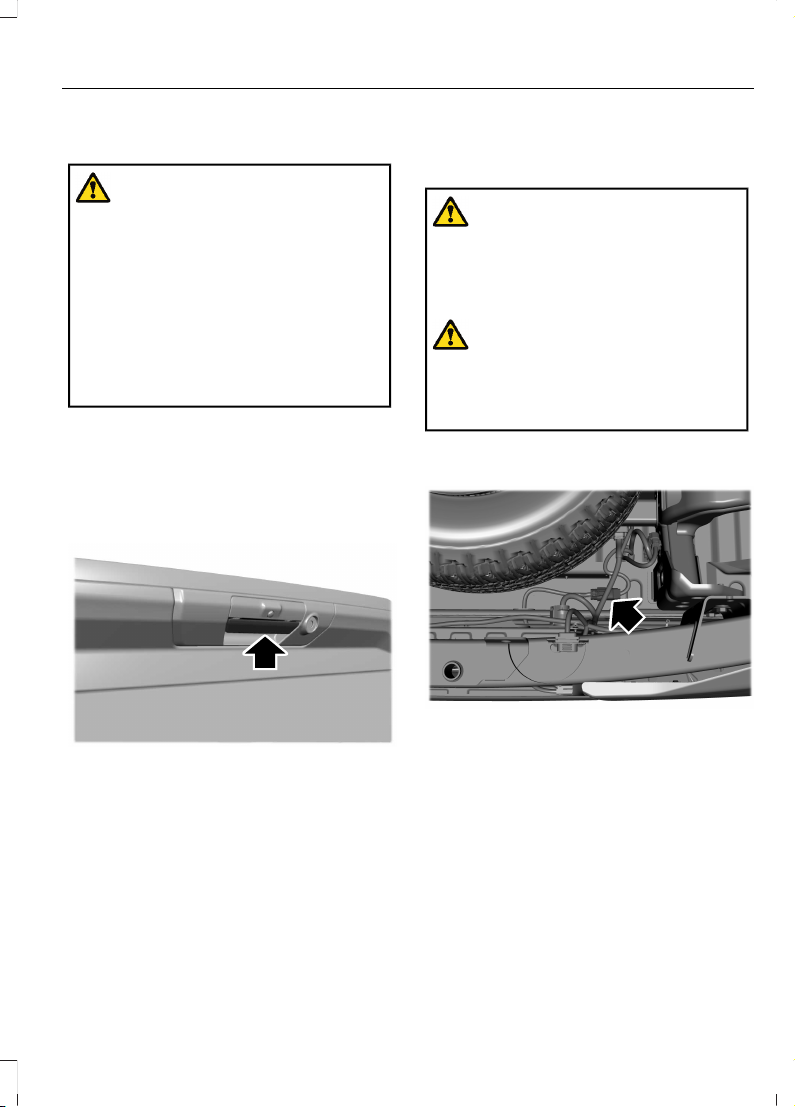
TAILGATE PRECAUTIONS
WARNING: It is extremely
dangerous to ride in a cargo area, inside
or outside of a vehicle. In a crash, people
riding in these areas are more likely to be
seriously injured or killed. Do not allow
people to ride in any area of your vehicle
that is not equipped with seats and
seatbelts. Make sure everyone in your
vehicle is in a seat and properly using a
seatbelt. Failure to follow this warning
could result in serious personal injury or
death.
OPENING THE TAILGATE
OPENING THE TAILGATE FROM
OUTSIDE YOUR VEHICLE
E333071
Pull up on the handle to release the
tailgate.
Note: You may need to unlock the tailgate
first.
REMOVING AND INSTALLING
THE TAILGATE
WARNING: Always properly secure
cargo to prevent shifting cargo or cargo
falling from the vehicle. Failure to do so
could result in compromised vehicle
stability and serious personal injury to
vehicle occupants or others.
WARNING: The tailgate is heavy.
Removal of the tailgate requires two
adults. Failure to follow this instruction
could result in personal injury or property
damage.
Note: Skip to Step 4 if your vehicle does
not have power door locks.
E189556
1. Unlatch the tailgate.
2. Disconnect the power door locks in-line
connector. It is under the pickup box
on the right-hand side of the vehicle
near the spare tire.
3. Install a protective cap on the in-line
connector portion that remains under
the pickup box.
Note: A protective cap should be in the
glove compartment.
91
2023 F-150 Lightning (TFD) Electric, Canada/United States of America, enUSA, Edition date: 202206, DOM
Tailgate - Vehicles With: Manual Tailgate
Page 96
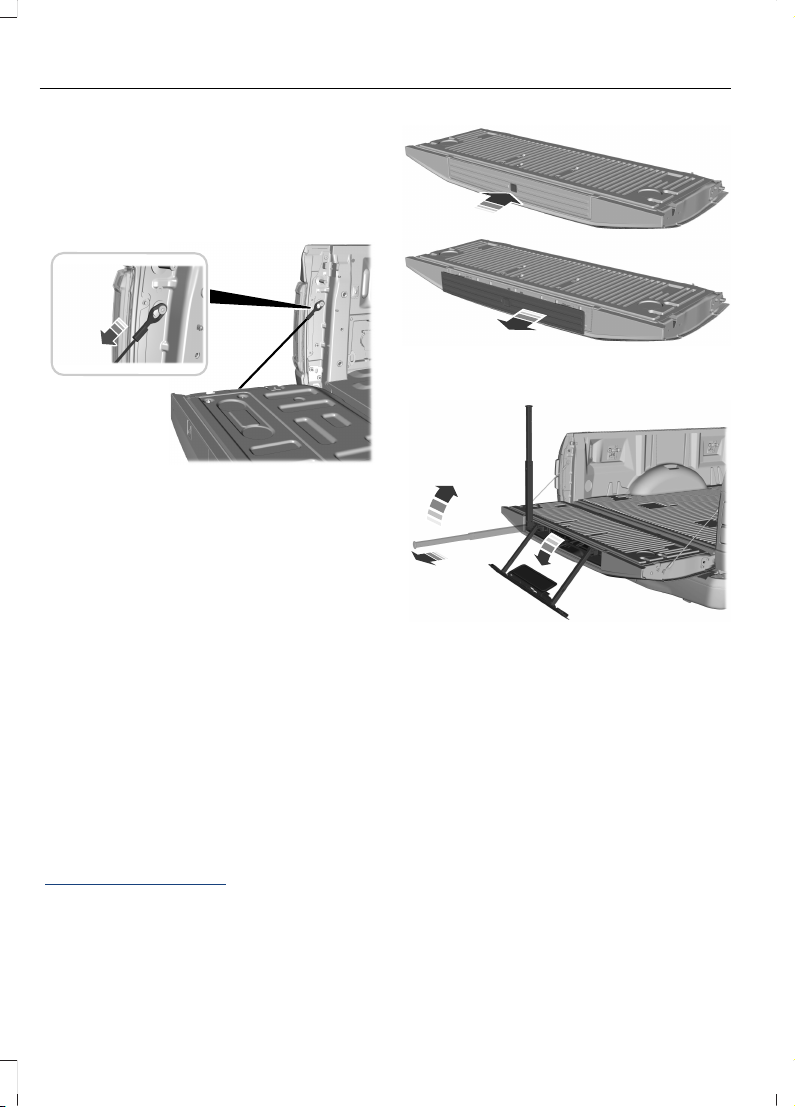
4. Partially lower the tailgate. Carefully
feed the tailgate harness up through
the gap between the pickup box and
the bumper and place it out of the way
under the pickup box.
5. Lower the tailgate.
E311529
6. Use a screwdriver to gently pry the
spring clip on each connector past the
head of the support screw. Disconnect
the cable.
7. Disconnect the other cable.
8. Lift the tailgate to 45 degrees from the
horizontal position.
9. Lift the right-hand side off its hinge.
10. Lift the tailgate to 80 degrees from
the horizontal position.
11. Remove the tailgate from the
left-hand side hinge by sliding it to
the right.
12. Install the tailgate in reverse order.
TAILGATE STEP (IF EQUIPPED)
ACCESSING THE TAILGATE STEP
Integrated Tailgate Step
1. Lower the tailgate.
2. Push the button in the center of the
step molding. The step pops out
slightly.
E187718
3. Pull the step out fully. Lower the step
to its lowest position.
E189557
4. Pull the yellow handle stop backward
out of the tailgate until it fully extends.
5. To lock the handle in place, rotate the
handle up from the horizontal to the
vertical position until you hear a click.
Note: Do not tow with the step or grab
handle.
Replace the slip resistance tape or grab
handle molding if it appears as worn or
damaged.
To reduce the risk of falling:
• Only operate the step when your
vehicle is on a level surface.
• Only operate the step in areas with
sufficient lighting.
92
2023 F-150 Lightning (TFD) Electric, Canada/United States of America, enUSA, Edition date: 202206, DOM
Tailgate - Vehicles With: Manual Tailgate
Page 97
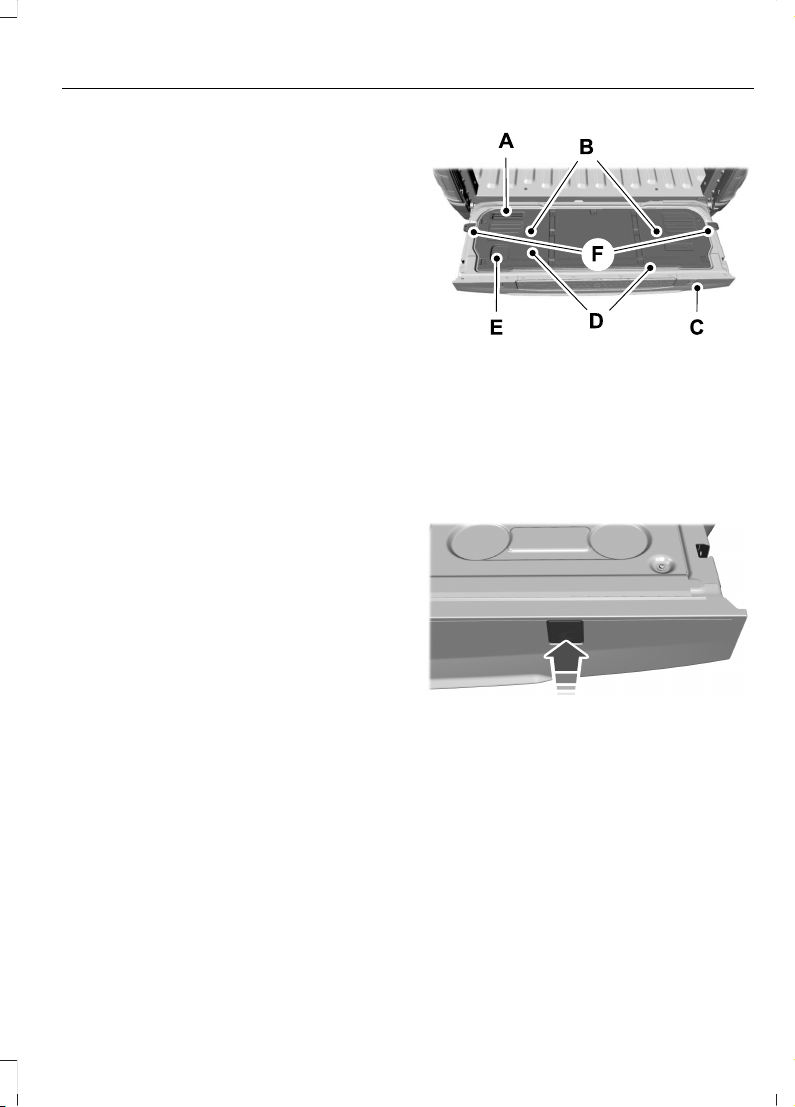
• Make sure you use the grab handle
when climbing on the step.
• Do not use the step with bare feet.
• Make sure the step is clean before use.
• Keep the step load below the total
maximum load of 350 lb (159 kg).
STOWING THE TAILGATE STEP
1. Press the yellow button on the handle
to lower and then press the yellow
lever at the bottom of the handle to
unlock. Rotate the handle down from
the vertical to the horizontal position
and push it into the tailgate.
2. Rotate the step up until it is horizontal,
then push it back into the tailgate until
the step is secure.
Note: Make sure to close and fully latch the
step before moving your vehicle. Do not
drive with the step or grab handle open.
Note: The power tailgate cannot close if
the step is open. A warning message
appears and a tone sounds. After stowing
the step the power close function is
restored.
TAILGATE WORK SURFACE (IF
EQUIPPED)
The tailgate work surface is a durable and
functional surface on the inside portion of
your tailgate you can use to perform
various tasks.
To use the tailgate work surface, fold down
the tailgate.
E308677
Tablet stand.A
Tool inset.B
Clamp pocket.C
Standard and metric ruler.D
Cup holder.E
Tailgate anchors.F
E336605
The tailgate work surface contains clamp
pockets that allows you to secure work
material.
Note: Damage could occur to the tailgate
if you overload the vertical clamp arm in any
direction.
Note: When you finish using the tailgate
work surface, make sure you remove all of
your belongings, then close the tailgate.
93
2023 F-150 Lightning (TFD) Electric, Canada/United States of America, enUSA, Edition date: 202206, DOM
Tailgate - Vehicles With: Manual Tailgate
Page 98
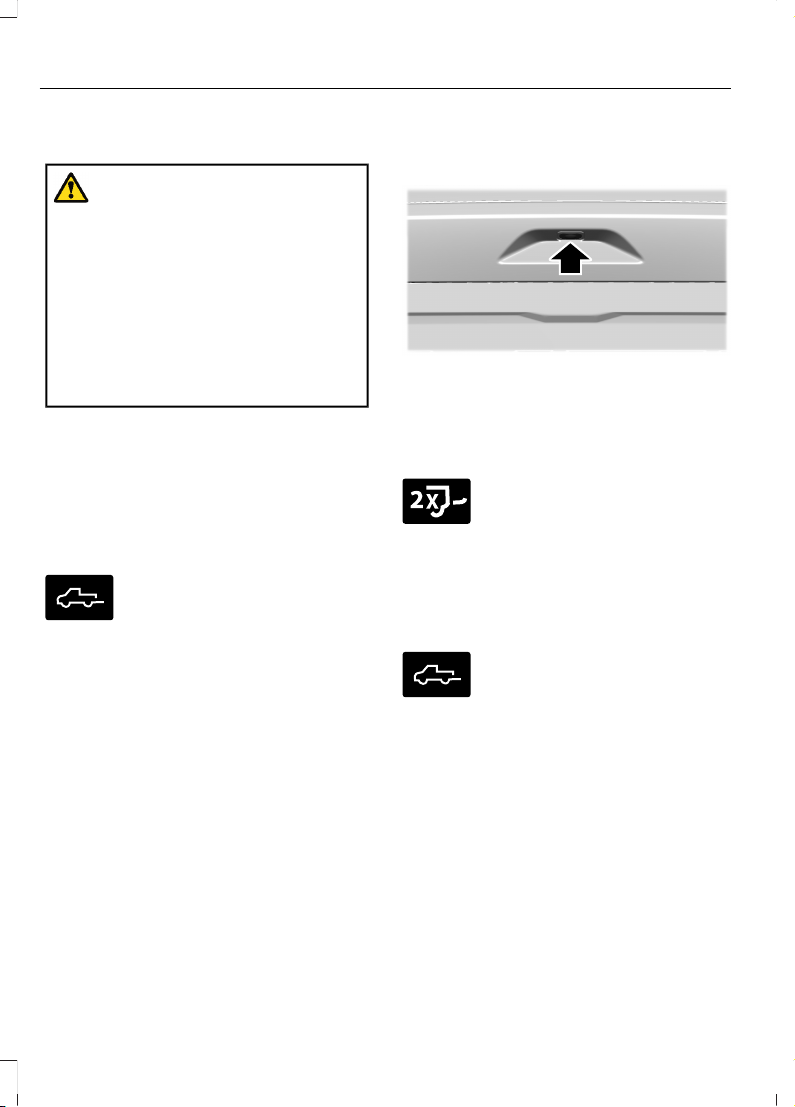
TAILGATE PRECAUTIONS
WARNING: It is extremely
dangerous to ride in a cargo area, inside
or outside of a vehicle. In a crash, people
riding in these areas are more likely to be
seriously injured or killed. Do not allow
people to ride in any area of your vehicle
that is not equipped with seats and
seatbelts. Make sure everyone in your
vehicle is in a seat and properly using a
seatbelt. Failure to follow this warning
could result in serious personal injury or
death.
OPENING THE TAILGATE
OPENING THE TAILGATE FROM
INSIDE YOUR VEHICLE
The vehicle must be in park (P) to operate
the power tailgate.
E308661
Press the button on the
instrument panel.
Note: A tone sounds while the tailgate
opens.
Note: The tailgate stops and reverses if it
detects an obstruction when opening.
Note: An alert sounds if the electronic
tailgate is in manual mode.
Note: A pop-up message appears on the
touchscreen if the tailgate is in manual
mode asking if you want to change back to
power mode.
OPENING THE TAILGATE FROM
OUTSIDE YOUR VEHICLE
1. Unlock the vehicle with the remote
control, power door unlock control or
your phone as a key device.
Note: If an authorized device is within 3 ft
(1 m) of the tailgate, the tailgate unlocks
when you press the tailgate release button.
E359757
2. Press the button on the middle of the
tailgate.
OPENING THE TAILGATE USING
THE REMOTE CONTROL
E191530
Press the remote control button
twice within three seconds.
CLOSING THE TAILGATE
CLOSING THE TAILGATE FROM
INSIDE YOUR VEHICLE
E308661
Press the button on the
instrument panel.
Note: The tailgate does not close with the
tailgate step ajar. A Step Ajar message
displays on instrument panel.
CLOSING THE TAILGATE FROM
OUTSIDE YOUR VEHICLE
You can close the power tailgate by:
• Pressing the tailgate button on your
remote control twice within three
seconds.
• Pressing the button on the tailgate
once.
94
2023 F-150 Lightning (TFD) Electric, Canada/United States of America, enUSA, Edition date: 202206, DOM
Tailgate - Vehicles With: Power Tailgate
Page 99
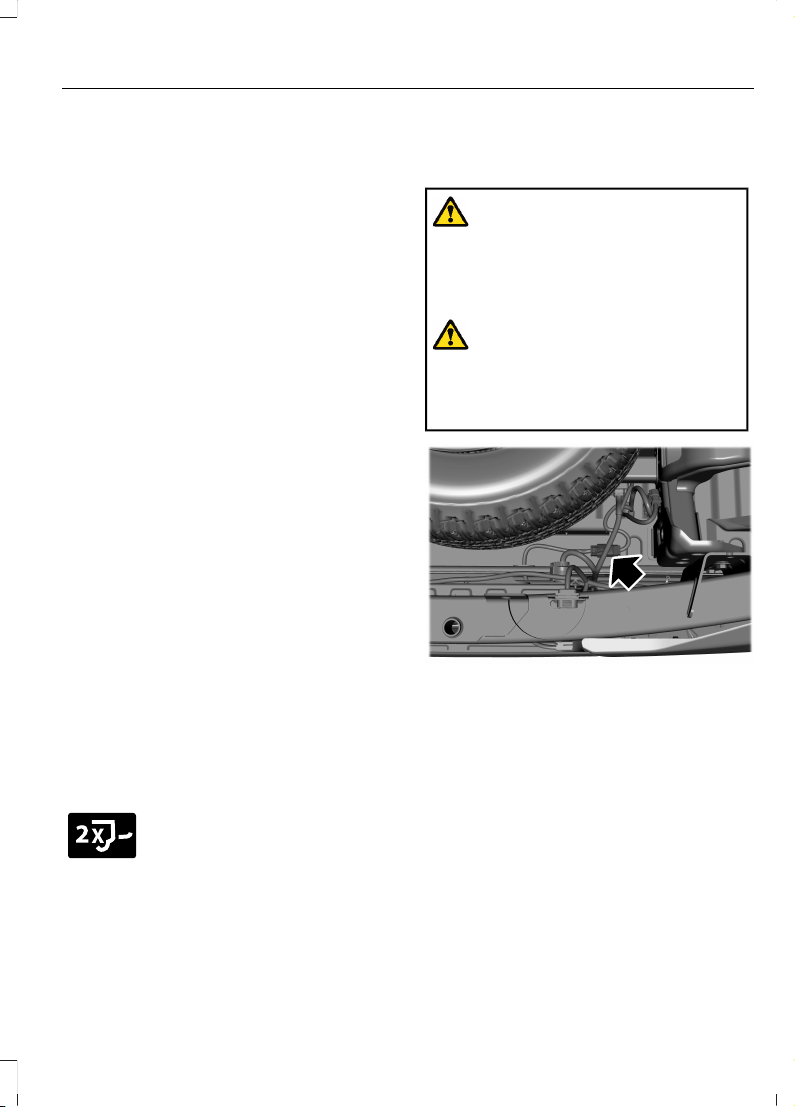
Note: A tone sounds while the tailgate
closes.
Note: The tailgate stops and reverses if it
detects an obstruction when closing.
Lift-to-Close
To close the tailgate automatically using
lift-to-close, lift the tailgate approximately
4 in (10 cm) and hold it for a few seconds.
Note: If the tailgate position is more than
halfway open, it may not close
automatically.
Manual Close
You can close the tailgate manually when
you lift the tailgate in a continuous motion.
If you stop the tailgate motion, the
lift-to-close feature engages and power
closes the tailgate.
Putting the Tailgate in Manual Mode
You can put the tailgate in manual mode
through the vehicle settings in your
touchscreen.
Note: In manual mode, the tailgate only
opens by the tailgate release button on the
tailgate and messaging is reduced.
Note: A pop-up message appears on the
touchscreen if you press the tailgate button
on the instrument panel when the tailgate
is in Manual mode.
CLOSING THE TAILGATE USING
THE REMOTE CONTROL
E191530
Press the remote control button
twice within three seconds.
REMOVING AND INSTALLING
THE TAILGATE
WARNING: Always properly secure
cargo to prevent shifting cargo or cargo
falling from the vehicle. Failure to do so
could result in compromised vehicle
stability and serious personal injury to
vehicle occupants or others.
WARNING: The tailgate is heavy.
Removal of the tailgate requires two
adults. Failure to follow this instruction
could result in personal injury or property
damage.
E189556
1. Put the tailgate into manual mode by
accessing the vehicle settings using the
touchscreen.
2. Open the tailgate.
3. Disconnect the power door locks in-line
connector located under the pickup
box on the right-hand side of the
vehicle near the spare tire.
4. Install the protective cap on the in-line
connector portion that remains under
the pickup box.
Note: The protective cap is in the glove
compartment.
95
2023 F-150 Lightning (TFD) Electric, Canada/United States of America, enUSA, Edition date: 202206, DOM
Tailgate - Vehicles With: Power Tailgate
Page 100
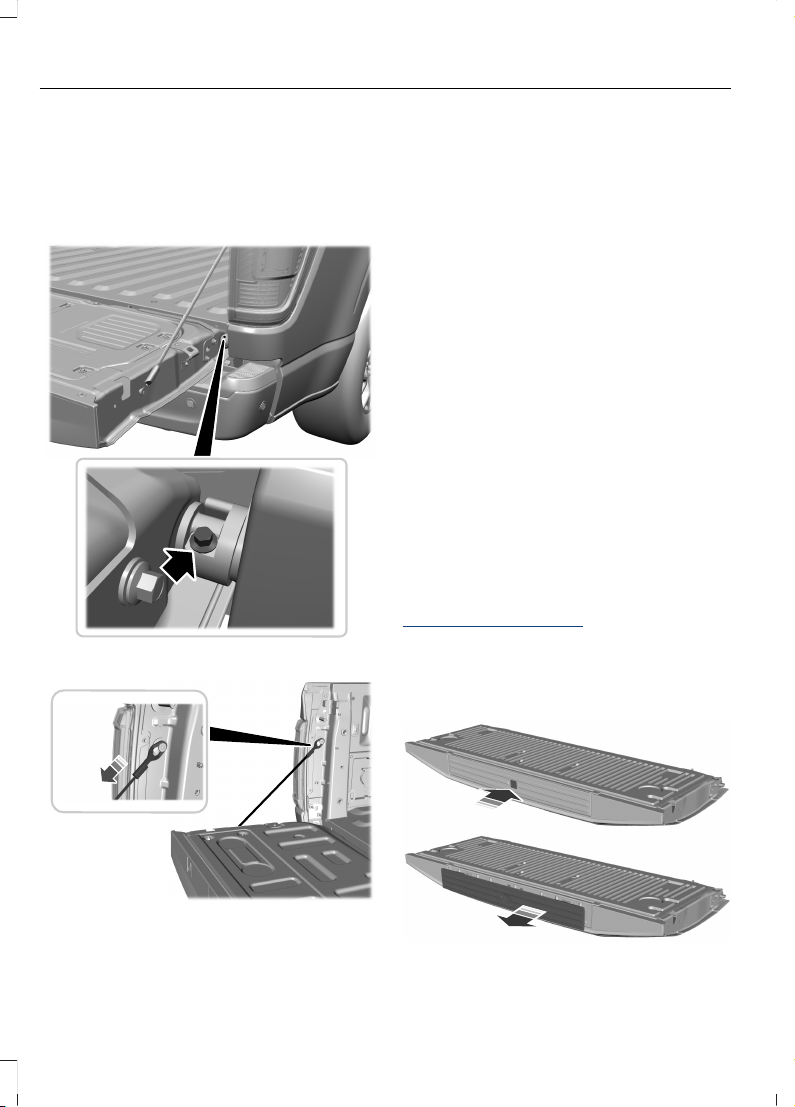
5. Partially raise the tailgate. Carefully
feed the tailgate harness up through
the gap between the pickup box and
the bumper and place it out of the way
under the pickup box.
6. Fully lower the tailgate.
E310339
7. Remove the retaining screw.
E311529
8. Use a screwdriver to gently pry the
spring clip on each connector past the
head of the support screw. Disconnect
the cable.
9. Disconnect the other cable.
10. Lift the tailgate to 45 degrees from
the horizontal position.
11. Lift the right-hand side off its hinge.
12. Lift the tailgate to 80 degrees from
the horizontal position.
13. Remove the tailgate from the
left-hand side hinge by sliding it to
the right.
14. Install the tailgate in reverse order.
Note: After reinstalling the tailgate it is
important to reinstall the retaining screw to
the recommended torque, 7 lb.ft (10 Nm).
Failure to install the retaining screw can
cause the tailgate to detach.
TAILGATE STEP (IF EQUIPPED)
ACCESSING THE TAILGATE STEP
Integrated Tailgate Step
1. Lower the tailgate.
2. Push the button in the center of the
step molding. The step pops out
slightly.
E187718
96
2023 F-150 Lightning (TFD) Electric, Canada/United States of America, enUSA, Edition date: 202206, DOM
Tailgate - Vehicles With: Power Tailgate
 Loading...