

Page 1
1 2 3 4 5 6
RECOMMENDED PLACEMENT FOR
HEARING IM PAIRED STROBE LIGHT
According to NFPA 72, at a minimu m a strobe should be
installed within 16 fee t (4.9 meters) of the pillow.
For wall mounting: The s trobe should be betwe en 80
to 96 inches (203 to 244 cm) abov e the floor.
For ceiling mounting: Ideally the strobe should be located
near the center of the ro om. See diagram.
This strobe l ight must be int erconnecte d with smoke,
heat and/or carbon monoxide alarms either within or
nearby the sleeping rooms to provide protection.
STROBE LIGHT OU TPUT FOR WALL & CEILING MOUNT ING
The intensity of the s trobe light graduall y lessens as the angle
increases. In othe r words, the light is brig htest directly in front
of the strobe light and i s progressively les s bright to either side.
As required by Under writers Labora tories, Inc. (UL), the foll owing
illustrations show h ow the strobe light is disp ersed. Use them to
help you choose where to locate units for the hearing impaired.
90 90
Angle
(In Degrees)
Percent
Light Intensity
0
5-25
30-45
50
55
60
65
70
75
80
85
90
100
90
75
55
45
40
35
35
30
30
25
25
45 45
0
90
90
45
45
0
WALL
LIGHT
LIGHT
CEILING
FIGURE 1: Light Output
for Ceiling Mount
FIGURE 2: Light Output
for Wall Mount
PHOTOSENSI TIVE EPILEPSY AND STR OBE FLASH RATES
Individuals who are susceptible to photosensitive epilepsy
might have an inc reased proba bility for sei zures with mult iple
strobe lights flashing asynchronously. The frequency or speed
of flashing li ght that is most l ikely to cause sei zures varies fr om
person to person. Generally, flashing lights most likely to trigger
seizures are b etween the fre quency of 5 to 30 fl ashes per seco nd
(Hertz). Th is strobe light f lashes at abou t 1 flash per seco nd.
Under the Ame ricans with Di sabilities A ct, most workpl aces
and places ser ving the publ ic, including t heaters, res taurants,
and recreation areas, are required to have fire alarms, which
flash as well as r ing so that peop le who cannot hea r or
cannot hear we ll will know that t here is an emerg ency.
This strobe LE D syncs with oth er family unit s.
WEEKLY TESTING
To test this strobe light you mu st activate the test butt on of each
interconnected, s moke, CO or heat alarm. Th is will send a signal to the
strobe light and cau se the unit to begin flash ing. Depending on what t ype
of alarms you have conne cted, the strobe light w ill flash different p atterns.
Smoke/Heat Alarms: Constant approximately 1 flash per second.
CO Alarms: Intermittent approxi mately 1 flash per seco nd for
four flashes, then 5 s econds off. Pattern i s repeated.
These differen t patterns are to help a hea ring impaired pers on better
distinguish the dan ger present. The fla sh patterns approxi mate the audible
alarm emitted by ei ther a smoke or heat alarm o r a carbon monoxide ala rm.
Note that a heat alarm wi ll emit the same horn pat tern as a smoke alarm.
Make sure all member s of your family underst and the different fl ash patterns.
Do not look direc tly at or touch t he lens while th e strobe light
is flashing. D oing so can hur t your eyes or burn you r fingers. If
the strobe light doe s not flash during testi ng and the alarm does not
sound, check the fus e or circuit breaker sup plying power to the alarm
circuit. If the alar m sounds and the strobe li ght does not flash, refe r to
the installation in structions in this ma nual to insure strobe lig ht is wired
properly. If the strobe l ight still does not work it s hould be replaced.
When testin g the interconn ected alarm, d o not stand too
close to the uni t when the alarm i s sounding. It i s loud to wake
you in an emerge ncy. Exposure to t he horn at close r ange
may harm your he aring. All interconnected alarms connected
to this strobe light mus t be tested individual ly to ensure proper
connections. It is i mportant to test all in terconnected alar ms every
week to make sure they are wo rking properly. Using th e test button
is the recommende d way to test the alarms and st robe light.
HOW TO INSTALL THIS STROB E LIGHT
This Strobe Light is d esigned to be mounted on a ny standard wiring jun ction box to a 4-inch (10 cm) diagon al size, on either the cei ling
or wall (if allowed by loc al codes). Read “Recom mended Placement fo r Hearing Impaired Li ghts” before you begin in stallation.
Tools you will need : • Standard Fla thead screwdr iver • wire strip pers
THE PARTS OF THIS S TROBE LIGHT
The Mounting Bracket:
To remove the mounting bracke t from the Strobe
Light base, hold the Strobe Light base firmly and
twist the mounting bracket counterclockwise. The
mounting bracket installs onto the junction box.
It has a variety of scre w slots to fit most boxes.
The Power Conne ctor:
The power connecto r plugs into a
power input block on th e Strobe Light.
It supplies the unit wi th AC power.
• The black wire is “hot.”
• The white wire is neutr al.
• The orange wire is us ed for interconnect.
If you need to rem ove the power conne ctor, turn
POWER OFF first . Insert a flat scre wdriver blade
between the power co nnector and the secur ity tab
inside the power inpu t block. Gently pry ba ck the
tab and pull the conne ctor free.
4
3
5
7
8
6
The Parts of Th is Unit
1. Mounting Bracket
2. Mounting Slots
3. Hot (Black) AC Wire
4. Neutral (White) AC Wire
5. Interconnect
(Orange) Wire
6. Quick-Connect
Power Connector
7. Turn this way to
remove from bracket
(Counterclockwise)
8. Turn this way to attach
to bracket (Clockwise
Make sure the Al arm is not recei ving excessivel y noisy power. Examp les of noisy power c ould be
major applia nces on the same c ircuit, power f rom a generato r or solar power, ligh t dimmer on the sa me circuit
or mounted nea r fluorescent l ighting. Exc essively noisy p ower may cause da mage to your Alar m.
FOLLOW THESE INSTALLATION ST EPS
The basic install ation of this strobe light i s similar whether you
want to install one stro be light or multiple str obe lights.
This device is n ot a smoke, heat or CO al arm. It must
be interconnected with operating alarms to provide
protection . It will not work wi thout AC power.
Things to consider when planning the installation
of a hearing impaired strobe light:
• Location of strobe li ght is important an d must comply with
NFPA 72 requirements. Th is device is intended o awake n a
hearing impaire d person and must be pos itioned properly fo r it
to be effective. See I nstallation Diagra m and “Recommende d
Locations for Hearing Impaired Strobe Lights” for details.
• Types of other alarms to be in terconnected with th is strobe light. This
device can be interco nnected with smoke, he at, carbon monoxide
alarms or a combina tion of all three. A smoke ala rm is usually placed
within the sleeping a rea. Follow recomme ndations in each device’s
installation man ual. The interconnec t wire of all alarms must b e
properly connected for the strobe light to be operational. The strobe
light may be position ed anywhere within th e interconnected cir cuit.
ELECTRICAL SHO CK HAZARD. Turn of f
power before starting installation!
1. Remove the mounting bracket from the base. Install
the mounting bracket to the junction box.
2. Using wire nuts, connect the power connector to the household wiring
as follows:
Strip off about 1/2” (12mm) of the pl astic coating on
the orange wire on the p ower connector.
• Connect the white wir e on the power connector
to the neutral wire in the j unction box.
• Connect the black wire on the power connector
to the hot wire in the junct ion box.
• Connect the orang e wire on the power connec tor to the
interconnect wir e in the junction box. Repe at for each unit
you are interconnec ting. Never connect th e hot or neutral
wires in the junction b ox to the orange intercon nect wire.
3. Plug the power connector into the back of the Strobe Light.
4. Line up the alignment t ab on the base with the alig nment tab
on the mounting bracket. Turn the Strobe Light clockwise
(right) until you hear the unit snap into place.
5. Check all connections.
Improper wi ring of the p ower connec tor or the wir ing leadi ng to the power c onnector
will cause da mage to the St robe Light a nd may lead to a n on-funct ioning uni t.
• If you are insta lling mult iple Strob e Lights, re peat steps 1-5 f or each Stro be
Light in the ser ies. When yo u are finish ed, restore p ower to the jun ction box.
ELECTRICAL SHO CK HAZARD! Do no t restore power un til all devices
are completely installed. Restoring power before installation is
complete may r esult in seriou s electrical s hock, injur y or death.
6. Make sure the Strobe Lig ht is receiving AC power. Unde r normal
operation, the gre en power indicator light w ill shine continuousl y. If
the power indicator li ght does not light, TURN O FF POWER TO THE
JUNCTION BOX and rech eck all connections . If all connections ar e
correct and the powe r indicator still does n ot light when you restore th e
power, the unit should be rep laced immediately.
7. To test this strobe li ght you must activate th e test button of each
interconnected, s moke, CO or heat alarm . This will send a signa l to the strobe
light and cause the un it to begin flashing. D epending on what t ype of alarms
you have connected, the strobe light will flash different patterns.
Smoke/Heat Alarms: Constant approximately 1 flash per second.
CO Alarms: Intermi ttent approximate ly 1 flash per secon d for four flashes, t hen
5 seconds off. Patte rn is repeated.
These differen t patterns are to help h earing impaired p erson better
distinguish the danger present. The flash patterns approximate the audible
alarm emitted by ei ther a smoke/heat al arm or carbon mon oxide alarm.
Do not look direc tly at or touc h the lens whil e the strobe l ight is flash ing.
If any Strobe Light doe s not flash, TURN OFF POWE R and
recheck connections. If any Strobe Light still does not flash when
you test it after resto ring power, replace it imme diately.
This Strobe Light ca n be interconnected w ith all current model h ardwired
First Alert
®
and BRK Electronics® branded Smoke Ala rms, Carbon
Monoxide Alarms, Combination Smoke/CO Alarms, Heat Alarms
and relays. Call Firs t Alert Consumer Af fairs at 1-800-3 23-9005.
Interconnected u nits with a single family r esidence only, otherw ise
all households wil l experience unwanted a larms when you test
any unit in the series . Interconnected uni ts will only work if they
wired to compatible u nits and all requireme nts are met.
Interconnected units must meet ALL of the following requirements:
• A maximum of 18 units of tota l may be interconnecte d
(Maximum of 12 Smoke Ala rms).
• The same fuse or circ uit breaker must power al l interconnected Al arms.
• The total length of wir e interconnecting th e units should be
less than 1000 feet (3 05 meters). This type of w ire is commonly
available at Hardwar e and Electrical Supp ly stores.
• All wiring must conf orm to all local electr ical codes and NFPA 70
(National Electr ical Code), Refer to NFPA 72, NFPA 101, and/or your
local building cod e for further conne ction requirements .
5
}
A
}
B
8
7
6
3
1
1
2
2
3
4 4
5
A. 120VAC 60 Hz source
B. To additional un its; Maximum = 18
total (Maximum 12 Smoke A larms)
1. Strobe Light 2. Ceiling or Wall 3. Power Connector
4. Wire Nut 5. Junction Box 6. Neutral Wire (Wht)
7. Interconnect
Wire (Orange)
8. Hot Wire (Blk)
REGULAR MAINTENA NCE
This unit has been de signed to be as maintena nce-free as possib le, but
there are a few simple thi ngs you must do to keep it work ing properly.
• Test it at least once a week .
• Clean the Strobe Lig ht at least once a month; ge ntly vacuum off
any dust using your household vacuum’s soft brush attachment,
and test the Strobe Li ght after cleaning. Ne ver use water,
cleaners or solve nts since they may damage t he unit.
• If the strobe l ight lens is loos e or broken, the en tire unit
should be replaced immediately. Never remove the Strobe
Light lens for a ny reason. Doing s o can permanen tly
damage the un it and will void you r warranty.
• Do not paint over t he unit. Paint m ay clog the openi ngs
and prevent th e unit from oper ating proper ty.
IF THIS STROBE LIG HT ACTIVATES
RESPONDI NG TO AN ALARM
During an alarm, de pending on what type of a larms you have
connected, the strobe light will flash different patterns.
Smoke/Heat Alarms: Constant approximately 1 flash per second.
CO Alarms: Intermittent approximately 1 flash per second for four
flashes, th en 5 seconds off. P attern is repe ated.
End of Life: 5 Gre en LED flashes on ce per minute
These diffe rent pattern s are to help a hear ing impaired
person bett er distingui sh the danger pr esent. The fla sh
patterns approximate the audible alarm emitted by either
a smoke/heat al arm or carbon mo noxide alarm.
The appropr iate smoke, CO or hea t alarm will als o be sounding
their repea ting horn patt erns: Smoke or Hea t Alarm you will
hear 3 beeps, p ause, 3 beeps, pa use. Carbon Mon oxide danger
you will hear 4 fa st beeps, pause , 4 fast beeps, pa use.
IF AN INTERCON NECTED CO ALARM SOUN DS
“ALARM - MOVE TO FRES H AIR”
If you hear an int erconnected C O alarm horn and t he CO red
light is flash ing, move everyo ne to a source of fre sh air.
DO NOT remove the b atteries.
Actuation of a n interconn ected CO Alar m indicates t he presence
of carbon monox ide (CO) which c an kill you. In o ther words,
when your CO Ala rm sounds, you m ust not ignor e it!
IF AN INTERCONN ECTED CO ALARM SI GNAL SOUNDS:
1. Operate the Test/Sil ence button.
2. Call your emergency s ervices, fire dep artment or 911.
Write down the number of yo ur local emergency se rvice
here: _____________________________________
3. Immediately move to fre sh air – outdoors or by an op en door or window.
Do a head count to check t hat all persons are ac counted for. Do not
re-enter the prem ises, or move away from the ope n door or window
until the emergenc y services respon der has arrived, the pre mises have
been aired out, and y our CO Alarm remains in i ts normal condition .
4. After following step s 1-3, if your CO Alarm react ivates within a 24-hour
period, repeat ste ps 1-3 and call a qualified a ppliance technici an to
investigate for sources of CO from fuel-burning equipment and appliances,
and inspect for pro per operation of this e quipment. If problem s are
identified durin g this inspection have th e equipment servic ed immediately.
Note any combustion e quipment not inspec ted by the technician, and
consult the manufacturers’ instructions, or contact the manufacturers
directly, for more infor mation about CO safet y and this equipment. M ake
sure that motor vehicl es are not, and have not, bee n operating in an
attached garag e or adjacent to the resid ence. Write down the numbe r of
qualified appliance technician here:
______________________________________________________
NOTE: A qualifie d appliance technici an is defined as a “per son,
firm, corporati on, or company that eithe r in person or through a
representative is e ngaged in and respon sible for the installa tion, testing,
servicing, or replacement of heating, ventilation, air conditioning
(HVAC) equipment, combustion appliances and equipment, and/
or gas fireplaces o r other decorative com bustion equipment .”
IF AN INTERCON NECTED SMOKE ALAR M SOUNDS
RESPONDING TO AN ALARM
\
• If an intercon nected unit al arms and you are no t testing the
unit, it is war ning you of a potent ially danger ous situatio n
that requir es your immedia te attention . NEVER ignore a ny
alarm. Ignor ing the alarm ma y result in injur y or death.
• Never remove th e batteries fro m a battery ope rated Smoke/CO
Alarm to stop an u nwanted alarm (c aused by cookin g smoke, etc.).
Removing bat teries disab les the alarm so it c annot sense sm oke,
and removes you r protection. I nstead open a wi ndow or fan the
smoke away from th e unit. The ala rm will resent au tomaticall y.
• If the unit ala rms get everyon e out of the immed iately.
WHAT TO DO IN CASE OF FIRE
• Don’t panic; stay clam. Fo llow your family escap e plan.
• Get out of the house as qu ickly as possible. Do n’t
stop to get dressed or c ollect anything.
• Feel doors with the ba ck of your hand before ope ning them. If a
door is cool, open it sl owly. Don’t open a hot door. Keep doo rs
and windows closed, u nless you must escap e through them.
• Cover your nose and mou th with a cloth (preferab ly
damp). Take short, shallow b reaths.
• Meet at your planned meeting place outside your home, and
do a head count to make sure e verybody got out safe ly.
• Call the Fire Depar tment as soon as possi ble from
outside; Give your add ress, then your name.
• Never go back inside a bu rning building for any re ason.
• Contact your Fire De partment for ideas o n making your home safer.
IF YOU SUSPECT A PROB LEM
If the strobe l ight lens is loos e or broken, the en tire unit shou ld be
replaced imm ediately. Neve r remove the stro be light lens for a ny reason.
Doing so can per manently dam age the unit and w ill void your warr anty.
Always disch arge the branc h circuit befor e servicing a n
AC or AC/DC Alarm. Fi rst, turn of f the AC power at the
circuit brea ker or fuse box. Nex t, remove the ba ttery from
Alarms with b attery back-u p. Finally, pres s and hold the test
button for 5-10 se conds to disabl e the branch cir cuit.
Do not try fixi ng the alarm you rself – this wil l void your warran ty!
If the device is still not o perating properly, and i t is still under warrant y,
please see “How to Obt ain Warranty Serv ice” in the Limited Warran ty.
SPECIAL COMPLIANCE CONSIDERATIONS
Strobe Lights along with residential smoke and carbon monoxide alarms
alone are not su itable sub stitute for co mplete fire d etection sy stems in
places housing many people – like apartment buildings, condominiums,
hotels, motels, dormitories, hospitals, long-term health care facilities,
nursing hom es, day care fac ilities, or g roup homes of a ny kind – even if
they were once s ingle famil y homes. They ar e not a suitabl e substitu te
for complete fire detection systems in warehouses, industrial facilities,
commercial buildings, and special-purpose non-residential buildings
which require special fire detection and alarm systems, typically in only
the sleepin g areas. Depe nding on the bu ilding code s in your area, t hese
devices may be u sed to provide a dditional p rotection i n these facil ities.
FCC Compliance
This equipment ha s been tested and found to c omply with the limits for a
Class B digital devi ce, pursuant to Part 15 of the FC C rules. These limits a re
designed to provide reasonable protection against harmful interference in
a residential inst allation. This equip ment generates, use s and can radiate
radio frequency en ergy and, if not instal led and used in accord ance with
the instructions, may cause harmful interference to radio communications.
However, there is no guaran tee that the interfere nce will not occur
in a particular ins tallation. If this equi pment does cause har mful
interference to ra dio or television rece ption, which can be deter mined
by turning the equipm ent off and on, the user is e ncouraged to try to
correct the inter ference by one or more of th e following measures:
• Reorient or relocate the receiving antenna.
• Increase the sepa ration between the eq uipment and receiver.
• Connect the equip ment into an outlet on a circ uit
different from th at of the receiver.
• Consult the dealer o r an experienced rad io or TV technician fo r help.
Changes or modifi cations to the product, n ot expressly
approved by First Ale rt/ BRK Brands, In c., could void
the user’s authorit y to operate the equipmen t.
This device compli es with Part 15 of the FCC Rules. O peration is
subject to the followi ng two conditions: (1) this devi ce may not cause
harmful interfe rence, and (2) this device m ust accept any interf erence
received, includi ng interference tha t may cause undesired o peration.
LIMITATIONS OF STROBES
Strobe and al arms may not wake n all individ uals. Practice the escape plan
at least twice a year, mak ing sure that everyone i s involved – from kids to
grandparents. A llow children to master fi re escape planning a nd practice
before holding a fire d rill at night when they are s leeping. If children o r others
do not readily awaken to aud ible or visual signal s, or if there are infants
or family members w ith mobility limitat ions, make sure that some one is
assigned to assis t them in fire drills and in t he event of an emergency. It is
recommended tha t you hold a fire drill while f amily members are sle eping
in order to determine t heir response while sl eeping and to determin e
whether they may need a ssistance in the even t of an emergency.
The Strobe ca nnot work with out AC power. The strob e will not
operate if AC power is cut of f for any reason (open fu se or
circuit breaker, failu re along a power line or at a powe r station,
electrical fire t hat burns the electri cal wires, etc.).
The Strobe wi ll not operate u nless smoke, h eat or CO reache s
the corresponding alarm. Refer to the user’s manuals su pplied
with the interconne cted smoke, heat or CO ala rms.
Strobes may no t be seen. Heari ng impaired individu als may not
see the visual notif ication if obstructi ons such as doors, wall s, or
bright lights block the strobe light. The use of alcohol or drugs
may also impair ones a bility to respond to the vi sual signal.
Strobes are n ot foolproof. L ike any electronic devic e, strobes are
made of components t hat can wear out or fall at a ny time. You
must test the unit week ly to ensure your continu ed protection.
Strobes are not a subs titute for propert y or life insurance.
Hearing defi cits may not be a pparent. If i n doubt, consult your doc tor.
Strobes have a l imited life. T he unit should be replac ed immediately if it is n ot
operating prope rly. Replace the strobe 10 year s from date of installati on.
LIMITED WARRANTY
BRK Brands, Inc., (“B RK”) the maker of First A lert® brand and BRK® brand
products, warra nts that for a period of ten ye ars from the date of purch ase,
this product will be f ree from defects in mate rial and workmanshi p. BRK,
at its option, will repa ir or replace this prod uct or any component of th e
product found to be def ective during the warr anty period. Repla cement
will be made with a new or re manufactured prod uct or component. If the
product is no longe r available, replacem ent may be made with a simila r
product of equal or g reater value. This is your e xclusive warranty.
This warranty is va lid for the original reta il purchaser from the d ate of initial
retail purchase an d is not transferable . Keep the original sale s receipt.
Proof of purchase is re quired to obtain warra nty performanc e. BRK dealers,
service center s, or retail stores sell ing BRK products do not h ave the right to
alter, modify or any way cha nge the terms and condi tions of this warranty.
This warranty doe s not cover normal wear of p arts or damage resu lting from
any of the following: negl igent use or misuse of th e product, use on impro per
voltage or current , use contrary to the ope rating instructio ns, disassembly,
repair or alterati on by anyone other than BRK or a n authorized servi ce
center. Further, the warra nty does not cover Acts of G od, such as fire, flood,
hurricanes and to rnadoes or any batter ies that are included w ith this unit.
BRK shall not be liabl e for any incidental or co nsequential damag es caused
by the breach of any expre ss or implied warrant y. Except to the extent
prohibited by appli cable law, any implied warr anty of merchantabi lity or fitness
for a particular pu rpose is limited in dura tion to the duration of the a bove
warranty. Some state s, provinces or juris dictions do not allow the excl usion
or limitation of inci dental or conseque ntial damages or limit ations on how
long an implied warr anty lasts, so the above l imitations or exclusio n may
not apply to you. This war ranty gives you speci fic legal rights, and yo u may
also have other rights t hat vary from state to st ate or province to province .
How to Obtain War ranty Serv ice
Service: If s ervice is require d, do not return the produc t to your retailer.
In order to obtain warr anty service, co ntact the Consumer Af fairs
Division at 1-800 -323-9005. To assist u s in serving you, pleas e have
the model number and date of purchase available when calling.
For Warranty Service return to: BRK Brands,
Inc., 1301 Joe Battle, El Paso, T X 79936
Visit www.firstalert.com or www.brkelectronics.com for more information.
BRK
®
is a registered trad emark of BRK Brands, In c.
First Alert
®
is a registered trad emark of the First Ale rt Trust.
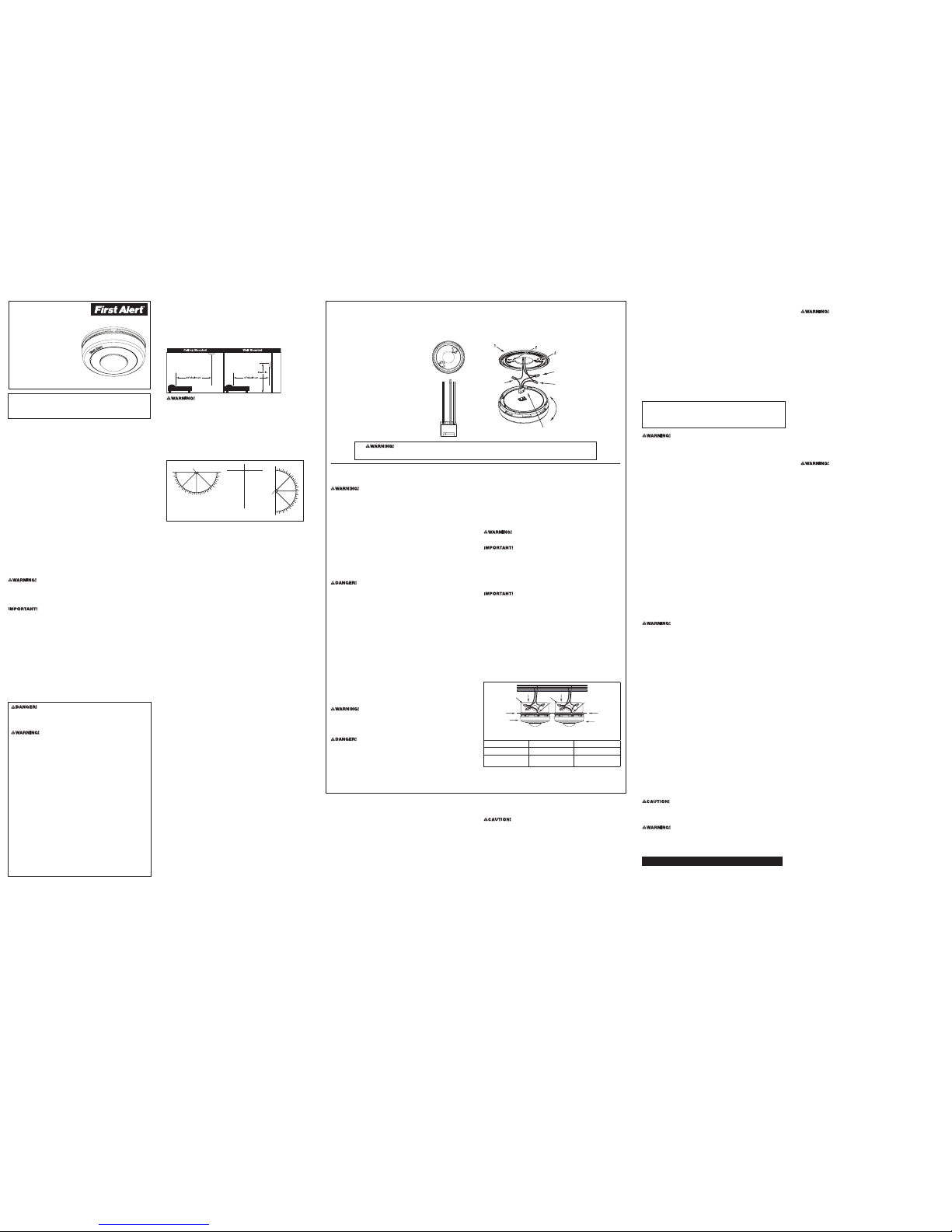
USER’S MANUAL
AC POWERED LED ST ROBE LIGHT
FOR THE HEARI NG IMPAIRED
M08-0218-159019
J1
08/17
Printed in Mexico
CONFORMS TO
UL STD 1971
Model SLED177
Input: 120V AC ~, 60 Hz
Electrical Rating:
0.8A Alarm
Strobe:
177 candela minimum
IMPORTANT! PLEAS E READ CAREFULLY AND SAVE .
This user’s manual contains important information about your Strobe
Light’s operation. If y ou are installing this St robe Light for use by othe rs,
you must leave this manu al—or a copy of it—with the end user.
© 2017 BRK Brands, Inc. All righ ts reserved. Dist ributed by BRK Brands, I nc. •
BRK Brands, Inc. is a su bsidiary of Newell Br ands Inc. (NYSE:NWL) • First Alert®
is registered trad emark of The First Ale rt Trust
•
3901 Liberty Street, Aurora,
IL 60504-8122 • Consumer Affai rs: (800) 323-900 5 www.firstaler t.com • www.
brkelectronic.com
INTRODUCTION
Thank you for choosi ng First Alert® for your hearing impaired strobe
light needs. You have purchased a state of the art Strobe Light designed
to provide hearing im paired individuals w ith a visual warning of a fir e
or a carbon monoxide d anger when used with s moke, heat or carbon
monoxide alarms. Pl ease take the time to read thi s manual and make
this Strobe Light an i ntegral part of your fa mily’s safety plan.
Key Features of the SLED177 St robe Light:
Smart Strobe: S eparate flash patte rns to distinguish bet ween
smoke/heat or CO dan ger. Can be interconnecte d with First Alert
®
and BRK® smoke, CO, smoke/CO combo a nd heat alarms.
177 Candela LED Light: Powe rful 177 candela LED strob e light provides
effective visual w arning to awaken hearing i mpaired residents .
Strobe Signal Synchronization: LED syncs with other family u nits.
1Hz Flash Rate: 60 flash es per minute meets ADA , ANSI 117.1, NFPA
72, and UL 1971 requirements for v isual signaling devi ces.
Smart Intercon nect: One interconne ct wire
carries smoke and CO alarm signals.
Meets ADA Requirements: Meets the requirements
of the Americans wi th Disabilities Act ( ADA).
Alarm Indication: Automatically identifies which unit initiated alarm.
Low Profile Design : Mounts easily on ceili ng or wall.
This device is n ot a smoke, heat or ca rbon monoxide
alarm. It must be interconnected with operating alarms to
provide prot ection. It will n ot work without AC p ower.
BEFORE YOU INSTALL THI S STROBE LIGHT
Read “Recommended Placement for Hearing Impaired Strobe Lights”.
This Strobe Light is i ntended to be interconn ected with functioni ng smoke,
heat or carbon monox ide alarms. It has no me ans of detection on its own.
It will not operate with out AC power. Its operation is sp ecifically desig ned
to wake hearing impair ed persons as speci fied by NFPA 72, Underwriter s
Laboratories (U L 1971), Americans with Disabili ties Act (ADA) and ANSI 117.1.
This Strobe Light ca n ONLY give an early warning of pot entially
dangerous fire or C O Incident if it is instal led, maintained and
located where hea ring impaired reside nts can see it, as desc ribed
in this manual. This un it will not sense smoke, ca rbon monoxide,
gas, heat, or flame. I t cannot prevent or extin guish fires.
Check Your Local Building Codes
This Strobe Light is d esigned to be used in a ty pical residential s inglefamily or multi-family dwellings and institutional applications including
sleeping areas of h ospitals, hotels, mot els, nursing homes, l ong term
health care facili ties, day care faciliti es, dormitories or oth er similar
dwellings. See “Special Compliance Considerations” for details.
ELECTRICAL SHO CK HAZARD. Turn of f the power to the ar ea where
you will insta ll this Strobe L ight at the circ uit breaker or fus e box
before begin ning install ation. Failur e to turn off the p ower before
installation may result in serious electrical shock, injury or death.
• Installation of this Strobe Light must conform to the electrical
codes in your ar ea; Articles 2 10, 760 of NFPA 70 (NEC), NFPA 72 ,
NFPA 101; SBC (SBCCI); UB C (ICBO); NBC (BOCA); O TFDC (CABO),
and any other lo cal or buildin g codes that may ap ply. Wiring and
installation must be performed by a licensed electrician. Failure to
follow these g uidelines may r esult in injur y or propert y damage.
• This Strobe L ight must be power ed by a 24-hour, 120VAC
60Hz circui t. Be sure the ci rcuit cannot be t urned off
by a switch, dimm er, or ground faul t circuit inter rupter.
Failure to conn ect this Stro be Light to a 24-ho ur circuit
may prevent it from providing constant protection.
• It is possible a n electrical f ire could occu r on the circuit
powering thi s Strobe Light . If this happen ed, power to the
unit could be cu t off and it may fai l to activate. So me safety
experts recommend wiring warning devices like this unit on
separate circuits from other appliances, since these circuits
are not as likely t o be overloaded. O ther safety ex perts
recommend wiring these units on the same circuits as
appliance s so it is more readi ly apparent if t he circuit fai ls.
• Never disconn ect the power fro m an AC powered unit t o stop
an unwanted al arm. Doing so wil l disable the un it and remove
your protect ion. In the case o f a true unwanted a larm open a
window or fan th e smoke away from th e interconnec ted units.
The interconnected alarm will reset automatically when it
returns to normal operation. Never remove the batteries from
a battery op erated unit to st op an unwanted al arm (caused by
cooking smoke , etc.). Instead op en a window or fan t he smoke
away from the un it. The alarm wi ll reset automa tically.
Printed in Mexico
M08-0218-159019
J1
08/17
Page 2
1 2 3 4 5 6
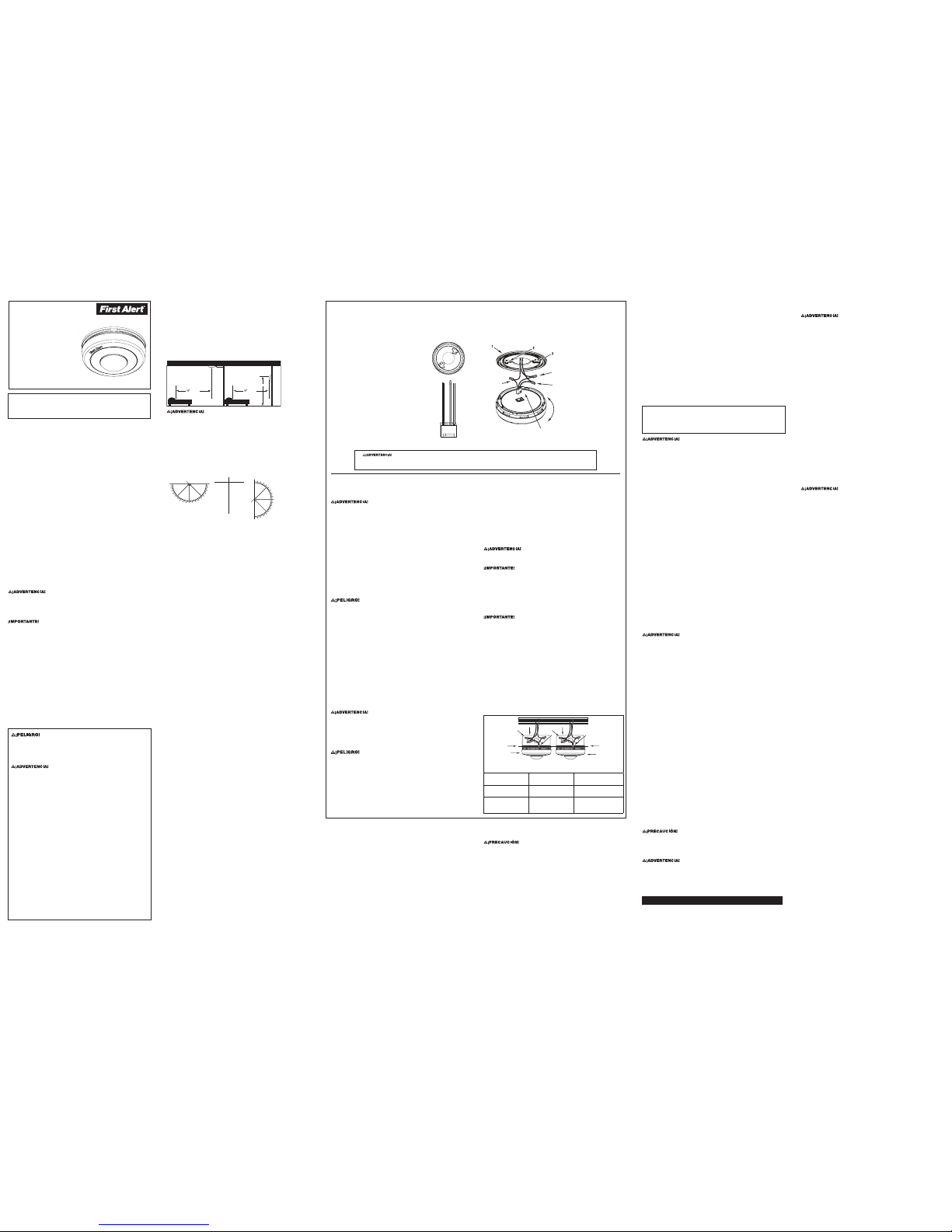
MANUAL DE US UARIO
LUZ ESTROBOSCÓPICA ALIMENTADA CON CA
PARA PERSONAS CON PROBLEMAS DE AUDICIÓN
M08-0218-159019
J1
08/17
Impreso en México
CUMPLE CON
LA NORMA
UL 1971
Modelo SLED177
Entrada: CA ~d e 120 voltios y 60 Hz
Clasificación Eléctrica:
0.8A Alarma
Luz estroboscópica:
Mínimo de 177 candelas
¡IMPORTANTE! LEA CUIDADOSAMENTE Y GUARDE ESTAS INSTRUCCIONES.
Este manual de usua rio contiene inform ación importan te sobre
la operación de su Lu z Estroboscópica . Si va a instalar esta L uz
Estroboscópic a para el uso por otros , usted debe dejar est e
manual — o una copia de l mismo, con el usuari o final.
© 2017 BRK Brands, Inc. Todos los der echos reservad os. Distribuido p or
BRK Brands, Inc. • BRK Brands, Inc. Es un a subsidiaria de New ell Brands Inc.
(NYSE:NWL). First Alert
®
es marca registra da de First Alert Trus t • 3901 Liberty Street,
Aurora, IL 60504 -8122 • Asuntos del Consum idor: (800) 323-9 005
www.firstaler t.com
•
www.brkelectronics.com
INTRODUCCIÓN
Gracias por elegi r a First Alert® para sus necesidades de luces
estroboscópicas para personas con problemas de audición. Ha adquirido una
luz estroboscópica de última generación diseñada para brindar a las personas
con problemas de audición una advertencia visual de incendio o peligro de
monóxido de carbon o. Tómese su tiempo para leer e ste manual y hacer de
la Luz Estroboscóp ica parte integral d el plan de seguridad de s u familia.
Característica s Principales de la Luz Es troboscópica SLE D177:
Destello Inteligente: Patrones de de stello diferentes pa ra distinguir el
peligro de humo, calo r o el de CO. Puede intercone ctarse con las alar mas
de humo, CO, combinadas de humo/CO y de calor First Alert
®
y BRK®.
Luz LED de 177 Candelas: Po tente luz LED estrobosc ópica
de 177 candelas proporciona una advertencia visual efectiva
para alertar a lo s residentes con prob lemas de audición.
Sincronización de la Señal Estroboscópica: La LED
se sincroniza con ot ras unidades familia res.
Rango de Parpadeo de 1 H z (Hercio): 60 destellos por minuto
cumplen con los req uerimientos de la ADA, A NSI 117.1, NFPA
72, y UL 1971 para dispositivos de se ñalización visual.
Interconexión Inteligente: Un cable de Interconexión
lleva ambas señales de alarma de humo y de CO.
Cumple los requis itos de ADA: Cumple los requisitos de la Ley de
Americanos con D iscapacidades (A DA, por sus siglas en Ing lés).
Indicación de Ala rma: Identifica automáticamente qué unidad inició la alarma.
Diseño de Bajo Per fil: Se monta fácilme nte en el techo o en la pared.
Este disposi tivo no es una ala rma de humo, calor o m onóxido
de carbono. Debe interconectarse con alarmas funcionales para
proporcionar protección. No funciona sin energía de CA.
ANTES DE QUE INS TALE ESTA LUZ ESTROBOSCÓPICA
Lea “Ubicaci ones Recomend adas para la Col ocación de Luce s
Estroboscópicas para personas con problemas de audición”.
Esta luz estrobos cópica está diseña da para interconec tarse con alarma s de
humo, calor o monóxido de carbono en funcionamiento. No tiene medios de
detección propios. No funciona sin energía de CA. Su funcionamiento está
diseñado especialmente para alertar a las personas con problemas de audición
según lo especif ican las normas NFPA 72 y Unde rwriters Labo ratories (UL
1971), la Ley de Americanos con Di scapacidades (ADA ) y la norma ANSI 117.1.
Esta luz estroboscópica ÚNICAMENTE puede dar una advertencia temprana
de un incendio o un inci dente de CO potencialm ente peligrosos si se i nstala,
mantiene y coloca donde los residentes con problemas de audición puedan
verla, según se expl ica en este manual. Est a unidad no detecta hum o, monóxido
de carbono, gas, cal or o llama. No puede pr evenir ni extinguir inc endios.
Consulte sus C ódigos de Cons trucción Lo cales
Esta Luz Estroboscópica está diseñada para ser usada en viviendas
residenciales típicas para una o varias familias y aplicaciones en instituciones,
que incluyen áreas de dormitorios de hospitales, hoteles, moteles, asilos
de ancianos, establecimientos de cuidados de salud a largo plazo,
guarderías infantiles, dormitorios, colectivos u otras viviendas similares.
Vea los detalles en “Consideraciones Especiales de Cumplimiento”.
PELIGRO DE DESCA RGAS ELÉCTRICA S. Antes de com enzar a
instalar la u nidad, desc onecte la ene rgía en el cort acircuito s o caja
de fusibles d el área donde s e va a efectuar la i nstalació n. No apagar
la energía antes de instalar puede producir descargas eléctricas
que podrían ocasionar graves lesiones, incluso la muerte.
• La instalación de esta unidad debe ser según las normas de electricidad
de su localida d; Artícul os 210, 760 del NFPA 70 (N EC), NFPA 72, NFPA
101; SBC (SBCCI); UBC ( ICBO); NBC (BOCA ); OTFDC (CABO) y cua lquier
otra norma de c onstrucci ón local que cor responda . El cableado y l a
instalación debe llevarlas a cabo un electricista autorizado. El no seguir
estas normas puede causar lesiones personales o daños a la propiedad.
• Esta Luz Estroboscópica debe ser alimentada por un circuito de
CA de 60 Hz y 120 volti os las 24 horas de l día. Asegúr ese de que
el circuito no s e pueda apaga r con un interr uptor, regula dor o
un interrup tor de circuit o de falla a tier ra. No conect ar esta Luz
Estroboscópica a un circuito qu e esté activa do las 24 horas d el
día puede evitar que proporcione protección constante.
• Es posible que se pueda producir un incendio eléctrico en el circuito
que alimenta esta Luz Estroboscópica. Si esto sucediera puede
interrump irse la energ ía a la unidad y és ta puede no act ivarse. Alg unos
expertos recomiendan cablear los dispositivos de advertencia, tales
como esta alar ma, en un circ uito distin to al de los demá s dispositi vos, ya
que es poco prob able que dic ho circuito se s obrecargu e. Otros expe rtos
recomiendan cablear las unidades en los mismos circuitos que los
demás dispos itivos para q ue sea más fáci l detectar la f alla del circ uito.
• Nunca desconecte la energía de una unidad alimentada por
CA para silenc iar una alarm ar no deseada . Hacerlo des activará
la unidad y su hog ar quedará s in protecció n. En caso de un a
verdadera al arma indese ada, abra la ve ntana o venti le el humo
para alejarlo de las unidades interconectadas. La alarma
interconectada se reinicia automáticamente cuando vuelva a la
operación normal. Nunca desconecte las baterías de una unidad
de baterías pa ra silencia r una alarma no d eseada (hum o de la
cocina, etc.) . En vez, abra un a ventana o vent ile para alej ar el
humo de la unidad. La alarma se reiniciará automáticamente.
UBICACIONES RECOMENDADAS
PARA LA COLOCACIÓN DE LU CES
ESTROBOSCÓPI CAS PARA PERSONAS
CON PROBLEMAS DE AUDICIÓN
Según la norma NFPA 72, una luz e stroboscópica se d ebe instalar, como
mínimo, dentro de los 16 pie s (4.9 metros) de distancia d e la almohada.
Para montaje en la par ed: La luz estroboscó pica debe estar
entre 80 y 96 pulgada s (203 y 244 cm) del piso.
Para montaje en el tec ho: Idealmente, la luz est roboscópica debe
ubicarse cerca d el centro de la habitac ión. Ver el diagrama.
Para Montaje en la Pared Para montaje en el Techo
80 - 96”
máximomáximo
Para brindar protección, esta luz estroboscópica se debe
interconectar con alarmas de humo, calor y/o monóxido de
carbono ya sea d entro o cerca d e los dormitori os.
SALIDA DE LUZ ESTR OBOSCÓPICA PARA
MONTAJE EN PARED Y TEC HO
La intensidad de la lu z estroboscópica di sminuye a medida que aume nta
el ángulo. En otras pal abras, la luz es más bril lante directamente
delante de la luz estro boscópica y es progr esivamente menos bri llante
a ambos lados. Las siguientes ilustraciones muestran cómo se
dispersa la luz est roboscópica. Úse las para ayudarle a ele gir dónde
ubicar las unidades para aquellos con discapacidad auditiva.
90
90
Angle
(In Degrees)
Percent
Light Intensity
0
5-25
30-45
50
55
60
65
70
75
80
85
90
100
90
75
55
45
40
35
35
30
30
25
25
45 45
0
90
90
45
45
0
WALL
LIGHT
LIGHT
CEILING
Figura 1 – Salida de luz
para montaje en techo
Figura 2 – Salida de luz
para montaje en pared
Ángulo
(en grados)
Porcentaje de
intensidad de luz
TECHO
PARED
LUZ
LUZ
EPILEPSIA FO TOSENSIBLE Y LAS TASAS
DE DESTELLOS ESTROBOSCÓPICAS
Las personas que son susceptibles a la epilepsia fotosensible
podrían tener una mayor probabilidad de convulsionar con múltiples
luces parpadeando de forma asincrónica. La frecuencia o velocidad
de los destell os de luz más proba bles de causar c onvulsiones
varía de perso na a persona. En g eneral, los de stellos de luz co n
más probabilidades de desencadenar convulsiones son entre
la frecuenci a de 5 a 30 destello s por segundo (H ertz). Esta lu z
estroboscópica parpadea aproximadamente 1 destello por segundo.
Según le Ley de Am ericanos con D iscapacidad es, se requier e que la
mayoría de los lu gares de traba jo y de servicio a l público, tal es como
teatros, res taurantes, y á reas de recrea ción, cuenten c on alarmas de
incendio qu e destellen ade más de sonar, de mod o que las persona s
sordas o con problemas de audición sepan que hay una emergencia.
Este LED estroboscópico se sincroniza con otras unidades familiares.
PRUEBA SEMANAL
Para probar esta luz e stroboscópica, d ebe activar el botón de
prueba de cada alar ma interconectada , de humo, CO o calor. De
esta forma, se envía u na señal a la luz estrobo scópica que hace que
la unidad comience a d estellar. Según el tipo de a larmas que tenga
conectadas, la luz estroboscópica destella con diferentes patrones.
Alarmas de Humo/Calor: Constante, aproximadamente 1 destello por segundo.
Alarmas de CO: Intermitente, aproximadamente 1 destello por segundo
durante 4 destellos y l uego 5 segundos apaga da. El patrón se repite.
Estos diferentes pa trones son para ayudar a q ue las personas con p roblemas
de audición disting an mejor el peligro pre sente. Los patrones de d estello se
aproximan a la alarm a audible emitida por un a alarma de humo o calor o u na
alarma de monóxido d e carbono. Tenga en cuenta qu e una alarma de calor
emite el mismo patrón d e bocina que una de humo. As egúrese de que todos
los miembros de su familia entiendan los diferentes patrones de destello.
No mire direc tamente ni toqu e el lente cuand o la luz estrobos cópica
está destel lando. Si lo hace, p odrían dañar se sus ojos o quema rse los
dedos. Si la luz no destella dura nte la prueba y la alarma n o suena, verifique
el fusible o corta circuitos que suminis tra la energía al circu ito de la alarma. Si
la alarma suena y la lu z estroboscópica no d estella, consulte la s instrucciones
de instalación de e ste manual para asegu rarse de que la luz esté ca bleada
correctamente. Si aun así la luz no funciona, debe reemplazarse.
Cuando pruebe la alarma interconectada, no se pare demasiado cerca
de la unidad cu ando esté sonan do la alarma. Es l o suficientem ente
fuerte para despertarlo en caso de emergencia. La exposición
a la bocina a cor ta distancia p odría dañar su a udición. Todas las
alarmas interconectadas a esta luz estroboscópica deben probarse
individualmente p ara asegurarse de qu e las conexiones sean c orrectas. Es
importante probar todas las alarmas interconectadas cada semana para
asegurarse de qu e funcionan correc tamente. Usar el botón de p rueba es
la manera recomendada de probar las alarmas y la luz estroboscópica.
CÓMO INSTALAR ESTA LUZ EST ROBOSCÓPICA
Esta unidad está di señada para ser mont ada en cualquier caj a de conexiones está ndar de hasta 4 pulgad as (10 cm) de tamaño, en el techo o l a pared (si lo permiten l os
códigos locales). Lea “Ubicaciones Recomendadas para la Colocación de Luces Estroboscópicas para Personas con Problemas de Audición” antes de iniciar la instalación.
Herramientas que necesitará: • Destornillador de Cabeza Plana Estándar • Peladores de Alambre
LAS PARTES DE ESTA LUZ ES TROBOSCÓPICA
El soporte de montaje:
Para quitar el sopo rte de montaje de la ba se de
esta Luz Estrobos cópica, sujete fir memente la
Base de la Luz Estrob oscópica y gire el sop orte
de montaje en el sent ido contrarreloj . El soporte
de montaje se instala sobre la caja de conexiones.
Cuenta con divers as ranuras para tor nillos,
para adaptarse a l a mayoría de las cajas.
El Conector de E nergía:
El conector de ener gía se enchufa en el blo que
de entrada de energía en la Luz Estroboscópica.
Le proporciona a la unidad energía de CA.
• El alambre negro es e l “caliente”.
• El alambre blanco e s el neutral.
• El alambre anaranjado se utiliza para la interconexión.
Si debe retir ar el conector d e energía, pr imero
CORTE LA ENERG ÍA. Introduzca la p unta del
destornillador plano entre el conector de energía
y la lengüeta de seguridad dentro del bloque de
entrada de energía. Haga palanca suavemente
para levantar la len güeta y retire el cone ctor.
4
3
5
7
8
6
Las Partes de E sta Unidad
1. El Soporte de Mont aje
2. Ranuras de Montaje
3. Alambre CA Caliente ( Negro)
4. Alambre CA Neutral ( Blanco)
5. Alambre de Interconexión
(Anaranjado)
6. Conector de Energía
de Conexión Rápida
7. Gire en esta d irección
para quitar del soporte
(en sentido contrarreloj)
8. Gire en esta direcc ión
para sujetar al soporte
(en el sentido del rel oj)
Asegúrese de q ue la alarma no r eciba energ ía con exceso de r uido. Ejempl os de energía co n ruido podrí an ser
electrodom ésticos gra ndes en el mis mo circuito, en ergía proven iente de un gen erador o ener gía solar, un ate nuador de luz e n el mismo
circuito o el mo ntaje cerca d e luces fluor escentes. La e nergía con exc eso de ruido pu ede produci r daños en su ala rma.
SIGA ESTOS PASOS DE I NSTALACIÓN
La instalación bá sica de esta luz estr oboscópica es sim ilar ya sea
si se desea instala r una o varias luces es troboscópicas .
Este disposi tivo no es una ala rma de humo, cal or o CO. Debe
interconectarse con alarmas funcionales para proporcionar
protección . No funciona si n energía de CA.
Elementos a consid erar al planear la in stalación de una luz
estroboscópica para personas con problemas de audición.
• La ubicación de la lu z estroboscópica e s importante y debe c umplir
los requisitos de la n orma NFPA 72. Este dispositi vo está previsto
para alertar a un a persona con proble mas de audición y debe
estar ubicado co rrectamente para q ue sea eficaz. Vea el Dia grama
de instalación y “Ubicaciones recomendadas para las luces
estroboscópicas para personas con problemas de audición.”
• Tipos de alarmas a in terconectar con e sta luz estrobosc ópica. Este
dispositivo se pue de interconectar c on alarmas de humo, c alor, monóxido
de carbono o una comb inación de los tres ti pos. Normalmente s e coloca
una alarma de humo dentro del dormitorio. Siga las recomendaciones
del manual de instalación de cada dispositivo. El cable de Interconexión
de todas las alarma s debe estar conec tado correctam ente para que
la luz estroboscó pica funcione. La lu z estroboscópic a puede estar
posicionada en cualquier lugar dentro del circuito interconectado.
PELIGRO DE DESCA RGAS ELÉCTRICA S. Antes de com enzar
a instalar la unidad, desconecte la energía.
1. Quite el soporte d e montaje de la base e ins tale en la caja de conex iones.
2. Una el conector de energía al cableado del hogar mediante las tuercas para
alambre, de la siguiente manera:
Pele aproximadame nte 1/2” (12 mm) de revestimiento pl ástico
del alambre anaranjado del conector de energía.
• Conecte el alambr e blanco en el conec tor de energía
al alambre neutro en la caja de conexiones.
• Conecte el alambr e negro en el conecto r de energía al
alambre de caliente en la caja de conexiones.
• Conecte el alambre anaranjado en el conector de energía al alambre
de interconexión en la caja de conexiones. Repita para cada unidad
que esté intercone ctada. Nunca cone cte el cable calien te o neutro
de la caja de conexiones al alambre de interconexión anaranjado.
3. Enchufe el conecto r de energía en la par te posterior del luz e stroboscópica .
4. Alinee la lengüeta de alineación en la base con la del soporte de
montaje. Gire la luz e stroboscópica e n el sentido del reloj (a l a
derecha) hasta qu e escuche la unidad e ncajar en su lugar.
5. Revise todas las conexiones eléctricas.
Un cableado in correcto del c onector de en ergía o de los
cables que van h acía el conect or de energía oc asionará
daño a la alarm a y pueda hacer qu e no funcione.
• Si está instalando varias Luces Estroboscópicas, repita los pasos
1 a 5 para cada Luz Es troboscóp ica en la serie. Cu ando termin e,
restablezca la energía eléctrica a la caja de conexiones.
PELIGRO DE DESCA RGA ELÉCTRICA . No conecte la e nergía hast a
haber instalado completamente todas las unidades. Si se conecta la
energía antes de terminar la instalación, se pueden producir descargas
eléctricas que podrían ocasionar graves lesiones o incluso la muerte.
6. Asegúrese de que la u nidad esté recibiend o energía CA. En
condiciones de funcionamiento normal, la luz indicadora de energía
destellará en form a continua. Si no se enci ende el indicador
de energía, DESCON ECTE LA ENERGÍA y vuelva a r evisar
todas las conexione s. Si no se enciende al vol ver a conectar
la energía, la unidad se debe reemplazar inmediatamente.
7. Para probar e sta luz estrobos cópica, debe acti var el botón de prueba d e cada
alarma intercone ctada, de humo, CO o ca lor. De esta forma, se env ía una
señal a la luz estroboscópica que hace que la unidad comience a destellar.
Según el tipo de alarmas que tenga conectadas la luz estroboscópica destella
con diferentes patrones.
Alarmas de Humo/Calor: Constante, aproximadamente 1 destello por segundo.
Alarmas de CO: Intermitente, aproximadamente 1 destello por segundo
durante cuatro dest ellos y luego 5 segun dos apagada. El patr ón es repetitivo.
Estos diferentes pa trones son para ayud ar a las personas c on problemas de
audición a distingu ir mejor el peligro p resente. Los patron es de destello se
aproximan a la alarm a audible emitida po r una alarma de humo o ca lor o una
alarma de monóxido de carbono.
No mire directamente ni toque el lente cuando la
luz estroboscópica está destellando.
Si alguna Luz Estroboscópica no destella, DESCONECTE LA ENERGÍA
ELÉCTRICA y revise nuevamente las conexiones. Si alguna luz
estroboscópica sigue sin destellar cuando la pruebe después de
restablecer la energía eléctrica, reemplácela inmediatamente.
Esta Luz Estrobosc ópica se puede inter conectar con todo s los modelos
actuales de cableados de alarmas de humo, monóxido de carbono,
combinados de humo/CO y de calor y relés de la marca First Alert
®
y BRK
Electronics®. Llame a Atención del A liente de First Aler t al 1-800-323-9 005.
Instale las unidades únicamente en el interior de una residencia
unifamiliar, de lo contrario, al probar una de las unidades de la
serie, sonarán alarmas no deseadas en todos los demás hogares.
Las unidades interconectadas sólo funcionan si se cablean a
unidades compatibles y se cumplen todos los requisitos.
Las unidades interconectadas deben cumplir
CADA UNO de los sigu ientes req uisitos:
• Se pueden intercon ectar un total máx imo de 18
unidades. (Máximo de 12 alarmas de humo).
• Todas las Alarmas deb en recibir energía me diante
el mismo fusible o cortocircuita.
• El largo total de cable q ue se utiliza para inte rconectar las uni dades
debe medir menos de 100 0 pies (305 m). Este tipo de a lambre está
comúnmente dispo nible en Ferreterías y T iendas de Suminist ros Eléctricos.
• Todo cableado debe cumplir con todas las normas de electricidad de
su localidad y NFPA 70 (NEC). Co nsulte el NFPA 72, NFPA 101 y/o las
normas locales para mayor información sobre los requisitos de conexión.
5
}
A
}
B
8
7
6
3
1
1
2
2
3
4 4
5
A. Fuente de 120 VCA 60 Hz
B. Para unidades adicionales: Máx. = 18
en total (Máx. 12 alarmas de humo)
1. Luz
Estroboscópica
2. Techo o Pared 3. Conector de Energía
4. Tuerc a par a
alambres
5. Caja de empalmes
6. Alambre de CA
neutro (blanco)
7. Alambre de
Interconexión
(anaranjado)
8. Alambre de CA
caliente (negro)
MANTENIMIENTO REGU LAR
Esta unidad está diseñada para requerir la menor cantidad de
mantenimiento pos ible, sin embargo, se deb en seguir ciertos
procedimientos para que continúe funcionando adecuadamente:
• Pruebe la unidad por l o menos una vez a la semana .
• Limpie la Luz Estrob oscópica una vez por me s como mínimo, aspire
con cuidado el polvo u sando el accesorio d e cepillo suave de su
aspiradora domé stica y pruebe la luz des pués de limpiarla. N unca
utilice agua, limpiadores o solventes, ya que podrían dañar la unidad.
• Si el lente de la l uz estroboscó pica está suel to o quebrado, la
unidad entera se debe reemplazar inmediatamente. Por ningún
motivo retir e el lente de la luz es troboscópi ca. Si lo hace, se
dañará permanentemente la unidad y se anulará la garantía.
• No pinte la unid ad. La pintura p uede obstru ir los orificio s
a impedir que la unidad funcione correctamente.
SI SE ACTIVA ESTA LUZ ESTROBO SCÓPICA
RESPONDE R A UNA ALARMA
Durante una alarm a, según el tipo de alarm as que tenga conectad as,
la luz estroboscópica destella con diferentes patrones.
Alarmas de Humo/Calor: Constante, aproximadamente 1
destello por segundo.
Alarmas de CO: Intermitente, aproximadamente 1 destello por segundo
durante cua tro destell os y luego 5 segun dos apagada . El patrón es re petitivo.
Fin de Vida: 5 LED v erdes destell os una vez por minu to.
Estos difere ntes patrones s on para ayudar a q ue las persona s con
problemas d e audición dist ingan mejor el p eligro presen te. Los
patrones de d estello se aprox iman a la audibl e emitida por un a
alarma de hum o o calor o una alarm a de monóxido de ca rbono.
También sonará l a alarma de humo, C O o calor corres pondiente de
acuerdo a sus r espectivos pa trones de bocin a:
Alarma de Hum o/Calor: oirá 3 pit idos, pausa, 3 p itidos, paus a.
Peligro de mon óxido de carbon o: oirá 4 pitidos
rápidos, pausa, 4 pitidos rápidos, pausa.
SI SUENA UNA A LARMA DE CO INTERCON ECTADA
“ALARMA: TRAS LÁDESE A UN LUGA R CON AIRE FRESCO”
Si oye la bocina d e una alarma de CO in terconecta da y la luz roja de
CO destella, t raslade a toda s las personas a u na fuente de aire p uro.
¡NO retire las baterías!
La activació n de una alarma d e CO intercon ectada indi ca la
presencia d e monóxido de ca rbono (CO) que p uede matarl o. En
otras palab ras, nunca ig nore la alarm a de CO cuando se a ctive.
SI LA SEÑAL DE UN A ALARMA DE CO INT ERCONECTADA SUENA:
1. Active el botón Prueb a/Silencio (Test /Silence).
2. Llame a sus servic ios de emergencia, a l departamento de
bomberos o el 911. Anote aquí el núme ro de su servicio loc al de
emergencia: _____________________________________
3. Inmediatamente vaya a u n lugar con aire fresc o - ya sea al aire
libre o junto a una puer ta o ventana abiert a. Cuente las persona s
presentes para ver ificar que no falte nadi e. No vuelvan a entrar al
edificio ni se aleje n de la puerta o ventan a abierta hasta que l legue
el personal del se rvicio de emergen cia, el lugar afectad o esté
ventilado y su alarma d e CO permanezca en su co ndición normal.
4. Después de seguir l os pasos del 1 al 3, si su alar ma de CO se reactiva
dentro de las siguie ntes 24 horas, repita los p asos del 1 al 3 y llame a un
técnico califica do en electrodomés ticos para que busque f uentes de CO
provenientes de disp ositivos y equipo de com bustión y que inspecc ione
la operación corr ecta de este equipo. Si se e ncuentran proble mas durante
esta inspección , haga que el equipo sea re parado inmediatam ente.
Anote cualquier eq uipo de combustión que n o haya sido revisado por el
técnico y consulte la s instrucciones de l fabricante, o llame al f abricante
directamente, pa ra mas información ac erca de la seguridad co n el CO de
este equipo. Asegú rese que los vehículos mo torizados no estén y no hay an
estado en operación en la cochera adjunta o cercana a la residencia. Anote
aquí el número de un téc nico calificado:
____________________________________________________________
NOTA: Un técnico de aparato s domésticos califi cado se define como “un a
persona, empre sa, corporación o c ompañía que, ya sea en per sona o
mediante un repres entante, trabaja en y es r esponsable de la inst alación,
prueba, servicio o reemplazo de equipo de calefacción, ventilación y aire
acondicionado (CVAA), aparatos y equipo doméstico de combustión,
y/o chimeneas de gas u otro e quipo decorativo de co mbustión.
SI SUENA UNA A LARMA DE HUMO INTER CONECTADA
CÓMO RESPONDER A UNA ALARMA
• Si se activa una u nidad interc onectada y ust ed no está proba ndo
la unidad, le está advirtiendo una situación potencialmente
peligrosa que requiere su atención inmediata. NUNCA ignore
la alarma. Ignorar la alarma en una situación de emergencia
podría dar com o resultado le siones graves o l a muerte.
• Nunca retir e las baterías de u na Alarma de Hum o/CO para
silenciar u na alarma no dese ada (causada po r el humo de
la cocina, etc .). Quitar las ba terías desact iva la unidad de
modo que no pued e detectar hum o y elimina su pro tección.
En vez, abra un a ventana o venti le para alejar el h umo de
la unidad. La alarma se reiniciará automáticamente.
• Si la unidad suena la alarma haga que todos salgan inmediatamente.
QUÉ HACER EN CASO DE I NCENDIO
• Conserve la calm a. Siga el plan de escap e familiar.
• Abandone la casa lo m ás rápido posible. No s e
detenga a vestirse ni a s acar nada.
• Revise las puert as con el dorso de su mano a ntes de abrirlas.
Si la puerta está f ría, ábrala lentam ente. No abra una puer ta
caliente. Manteng a las puertas y las vent anas cerradas a
menos que tenga que es capar a través de ellas.
• Cubra su nariz y boca c on un paño (preferibl emente
mojado). Respire en fo rma corta y poco prof unda.
• Reúnase con los mie mbros de su familia en el l ugar fuera del hogar q ue han
acordado, y haga un con teo para asegurar se de que todos salieron a s alvo.
• Llame a los bombero s desde afuera lo más pr onto
posible y deles su dir ección y luego su nomb re.
• Nunca vuelva a ingre sar a un inmueble que se es té incendiando.
• Comuníquese con el d epartamento de Bo mberos para obtener ma yor
información sobr e cómo hacer de la casa un l ugar más seguro.
SI SOSPECHA QU E EXISTE UN PROBLEMA
Se el lente de la lu z estroboscó pica está suel to o quebrado, la u nidad
entera se debe reemplazar inmediatamente. Por ningún motivo retire el
lente de la luz es troboscópi ca. Si lo hace pued e dañar perma nentemente
la unidad y se an ulará la garan tía.
Siempre des conecte el circ uito de derivac ión antes de repa rar
una alarma al imentada por CA o CA /CD. Primero apa gue la
energía de CA en e l cortacircu ito o la caja de fusi bles. Luego
retire la bat ería de las alarm as con respald o de batería.
Finalmente , mantenga puls ado el botón de pru eba durante 5
a 10 segundos par a descargar el c ircuito de deri vación.
¡No intente re parar la unid ad por sí mismo, ya q ue ello anular á la garantía !
Si la unidad aún no está funcionando correctamente, y todavía está bajo garantía,
por favor vea “Cómo Obte ner Servicio de Ga rantía” en Garantía Li mitada.
CONSIDERACIONES ESPECIALES
DE CUMPLIMIENTO
Las Luces Estroboscópicas, junto con las alarmas de humo y monóxido
de carbono re sidencial es no son, por s í solas, un sus tituto ade cuado para
sistemas completos de detección de incendios en lugares que albergan a
muchas personas, como edificios de apartamentos, condominios, hoteles,
moteles, residencias de grupos, hospitales, clínicas, asilos de ancianos,
guarderías infantiles u hogares en que residen varias familias, incluso si
una vez fueron h ogares para u na sola fami lia. No reem plazan los si stemas
completos de detección de incendios en bodegas, instalaciones industriales,
edificios comerciales y edificios no residenciales para propósitos especiales
que requieren sistemas de alarma y de detección de incendios especiales,
típicamente, sólo en las áreas de dormitorios. Es posible que estas unidades
se puedan usar para proporcionar protección adicional en este tipo de
instalaciones según las normas de construcción de su localidad.
CUMPLIMIENTO C ON LA FCC
Este equipo ha sido pr obado y cumple con los lí mites para un disposi tivo
digital de Clase B, de a cuerdo con la Parte 15 de la s normas de la
FCC. Estos límites están diseñados para proporcionar una protección
razonable contra interferencias dañinas en una instalación residencial.
Este equipo genera , utiliza y puede emit ir energía de radio fre cuencia y,
si no se instala y utiliz a conforme a las instr ucciones, podrí a provocar
interferencias perjudiciales para las comunicaciones por radio.
Sin embargo, no existe g arantía de que no se vayan a p roducir interfer encias
en alguna instalación en particular. Si este equipo causa interferencias
dañinas a la recepción de radio o televisión, lo que puede determinarse
apagando y encend iendo el equipo, se rec omienda al usuari o intentar
corregir la interferencia mediante una o más de las siguientes medidas:
• Cambiar la orientación o ubicación de la antena receptora.
• Aumentar la dista ncia entre el disposi tivo y el receptor.
• Conectar el dispo sitivo a una toma de ener gía de un
circuito distinto al qu e esté conectado el r eceptor.
• Consultar con el di stribuidor o un técni co de radio o
TV con experiencia para obtener ayuda.
Cambios o modifica ciones al produ cto, no aprobados exp resamente por Fi rst Alert/
BRK Brands, Inc., pod rían anular el pe rmiso del usuari o para operar el e quipo.
Este dispositivo cum ple con la Parte 15 de las R eglas de la FCC. Su uso e stá sujeto
a las dos condicione s siguientes: (1) este dis positivo no podrá c ausar interfe rencias
dañinas, y (2) este disp ositivo debe acep tar cualquier in terferencia re cibida,
incluyendo las interferencias que puedan causar un funcionamiento no deseado.
LIMITACIONES DE LAS LUC ES ESTROBOSCÓPICAS
Las luces estroboscópicas y las alarmas pueden no despertar a todas las
personas. Practique el plan de esc ape dos veces por año, a segurándose de
que todos estén involuc rados - desde los niñ os hasta los abuel os. Permita que
los niños dominen el p lan de escape y que lo p ractiquen antes de e ncontrarse
con un incendio cua ndo estén durmiend o. Si los niños u otros no se d espiertan
fácilmente al sonar l a alarma de humo, o si hay n iños o miembros de la fa milia con
limitaciones de movilidad, asegúrese de que alguien esté asignado para ayudarles
en un simulacro de inc endio y en caso de una e mergencia. Se rec omienda tener
un simulacro de incendio mientras los miembros de la familia están durmiendo
para determinar su r espuesta al soni do de la alarma de humo m ientras duermen
y para determinar si p ueden necesit ar ayuda en caso de una e mergencia.
La luz estrob oscópica no p uede funci onar sin ener gía de CA. La lu z
estroboscó pica no se enc enderá si se co rta la energía de CA por c ualquier razón
(fusible fundido o c ortacircuito abi erto, falla en el tendi do eléctrico o en la ce ntral
generad ora de e nergía, un incendio eléct rico que queme los al ambres, etc.).
La luz estrob oscópica no f unciona a men os que el humo, e l calor o el CO
lleguen hasta la alarma correspondiente. Consulte los manuales de usuario
provistos con las ala rmas de humo, calor o CO i nterconectadas .
Las luces estroboscópicas pueden no ser vistas. Las personas
con problemas de au dición pueden no ver e l aviso visual si hay
obstrucciones , tales como puert as, paredes o luces b rillantes, que
bloquean la luz estr oboscópica. El co nsumo de alcohol o dro gas puede
también disminuir la capacidad de respuesta a la señal visual.
Las luces estroboscópicas no son infalibles. Como todos los
aparatos electró nicos, en su fabric ación se han usado com puestos que
pueden desgast arse o fallar en cual quier momento. Las un idades se
deben probar semanalmente para asegurar una protección adecuada.
No son un sustituto de lo s seguros de propie dad o de vida.
Los déficits en la audición pueden no ser evidentes.
Si tiene dudas, cons ulte con un médico.
Las luces est roboscópi cas tienen v ida útil lim itada. Si la unidad no
funciona correctamente, se debe reemplazar de inmediato. Reemplace
la luz estroboscópica a los 10 años de la fecha de instalación.
GARANTÍA LIMITADA
BRK Brands, Inc. (“B RK”), el fabrica nte de los productos d e las marcas Firs t
Alert® y BRK®, garantiza que dura nte un período de die z años desde la fech a
de compra, este pro ducto estará lib re de defectos en mate rial y mano de obra .
BRK, a su opción, rep arará o reempla zará este produ cto o cualquier com ponente
del producto que se en cuentre defectu oso durante el per íodo de garantía . El
reemplazo se hará c on un equipo o comp onente nuevo o remanu facturado.
Si el producto ya no est á disponible, el re emplazo puede h acerse con un
producto similar de i gual o mayor valor. Esta e s su garantía exclusi va.
Esta garantía es válida para el comprador original desde la fecha de compra inicial
y no es transferible. Guarde el recibo original. Para obtener cumplimiento de la
garantía se requie re comprobante de c ompra. Los distr ibuidores BRK , centros de
servicio o tiend as que venden produ ctos BRK no tienen d erecho de altera r, modificar
o cambiar en modo alguno los términos y las condiciones de esta garantía.
Esta garantía no cub re el desgaste nor mal de partes o dañ os resultantes d e
cualquiera de los si guientes: uso neg ligente o incorre cto del producto, u so en
voltaje o corriente inadecuados, uso contrario a las instrucciones de operación,
desmontaje, repa ración o alterac ión por persona s que no sean BRK o un ce ntro de
servicio autori zado. Además, la ga rantía no cubre ac tos de Dios, como inc endios,
inundaciones, huracanes y tornados o las baterías que se incluyen con esta unidad.
BRK no será respons able por daños in cidentales o con secuentes caus ados por
el incumplimiento d e cualquier gara ntía expresa o implí cita. Excepto en l a medida
en que lo prohíba la ley a plicable, cualq uier garantía imp lícita de comerc iabilidad o
idoneidad para un fin determinado tiene una duración limitada a la duración de la
garantía anterior. Algunos estados, provincias o jurisdicciones no permiten la exclusión
o limitación de daños incidentales o consecuentes o limitaciones sobre cuánto tiempo
dura una garantía im plícita, por lo que l as limitacione s o exclusiones ante riores pueden
no aplicarle a usted . Esta garantía le oto rga derechos le gales específ icos y también
puede tener otros de rechos que varía n de un estado a otro o de un a provincia a otra.
Cómo Obtener e l Servicio d e Garantía
Servicio: Si se requiere ser vicio, no devuelva el p roducto a su distribu idor.
Para obtener serv icio de garantía, c omuníquese con la D ivisión de
Asuntos del Consum idor al 1-800-323 -9005. Para ayud arnos a servirl e,
por favor tenga el núme ro de modelo y fecha de co mpra al llamar.
Para Servicio de Garantía, devuelva a: BRK Brands,
Inc., 1301 Joe Battle, El Paso, T X 79936
Visite www.firstalert.com o www.brkelectronics.com para más información.
Impreso en México
M08-0218-159019
J1
08/17
 Loading...