

Page 1

CHIEFTAIN HEAVY DUTY
ELECTRIC APPLIANCES
USERS INSTRUCTIONS
SECTION 1 - GENERAL DESCRIPTION
SECTION 2 - CONTROLS and OPERATION
SECTION 3 –COOKING HINTS
SECTION 4 - CLEANING and MAINTENANCE
This appliance has been CE-marked on the basis of compliance with the Low Voltage and
EMC Directives for the voltages stated on the data plate.
This appliance has been UKCA/CE marked based on compliance with the relevant Electrical and
Electromagnetic Compatibility (EMC) Regulations/Directives for the voltages stated on the data plate.
IMPORTANT
This appliance must only be installed by a competent person in compliance with the regulations in
force at the time.
PREVENTATIVE MAINTENANCE CONTRACT
To obtain maximum performance from this unit regular servicing of the appliance should be undertaken to ensure
correct operation, it is functioning as intended, and safe to use. We recommend servicing in accordance with SFG20
Maintenance Schedules and as a minimum, after 2,500 hours of use, or annually, whichever comes first and that a
maintenance contract be arranged with an appointed service contact. Visits may then be made at agreed intervals to
carry out adjustments and repairs.
UK regulations are listed on the front of the Installation and Service Manual.
WARNING - THIS APPLIANCE MUST BE EARTHED!
Upon receipt of this manual, the installer should instruct a responsible person (or persons) as to the
correct operation and maintenance of the unit.
This equipment is designed FOR PROFESSIONAL USE ONLY and be operated by QUALIFIED persons.
It is the responsibility of the supervisor or equivalent to ensure that the user wears SUITABLE
PROTECTIVE CLOTHING. Attention should also be drawn to the fact that some parts of the appliance
will, by necessity, become VERY HOT and could cause burns if touched accidentally.
WEEE Directive Registration No. WEE/DC0059TT/PRO
At end of unit life, dispose of appliance and any replacement parts in a safe manner, via a
licenced waste handler.
Units are designed to be dismantled easily and recycling of all material is encouraged
whenever practicable.
Falcon Foodservice Equipment
HEAD OFFICE AND WORKS
Wallace View, Hillfoots Road,
Stirling. FK9 5PY. Scotland.
Phone: 01786 455200
T100525 REF 5
Page 2

SECTION 1 - GENERAL DESCRIPTION
This manual covers the operation of the following units. These are Chieftain Heavy duty appliances.
E1006 Range with Three Solid Hotplates
E1016 General Purpose Oven (Single Tier)
E1016/2 General Purpose Oven (Double Tier)
E1026 Boiling Table with Three Solid Hotplates
The hob is constructed of cast iron. The hotplates are controlled by six position rotary switches.
The oven has a cubic capacity of 136 litres (gross)/ 108 litres (nett) with a drop down door. Two
non-tilt shelves are included which will accommodate two 1/1 size gastronorm containers per shelf.
All appliances are mounted on adjustable feet with shrouds.
SECTION 2 - CONTROLS and OPERATION
Hotplate
The hotplate arrangement consists of three rectangular hotplates, each controlled by a six-heat
switch. This controls variable temperatures from 1 (the lowest) progressively increasing to 6 (the
highest). The neons at the top of the control panel indicate which hotplate is ON.
The requisite setting for simmering pots of various sizes will quickly be found by experience. For
efficient operation of the hotplates it is essential that there should be intimate contact between the
hotplate and the utensil. Ground base pans should be used and the plate surface should be clean
and in good condition.
Spillage should not be allowed to accumulate around the edges of the hotplates. It will burn on and
become difficult to remove.
There is a pull out spillage tray beneath the hotplates and this is readily withdrawn for emptying and
cleaning when the unit is cool.
Important
To ensure long life of the hotplates and to conserve electricity, DO NOT LEAVE
THE HOTPLATES SWITCHED ON WHEN NOT IN USE, particularly at high
settings.
If for any reason it is considered necessary to maintain a hotplate hot when not being used, turn the
control to a low setting, say 2 or 3.
Oven
The oven is controlled by means of a thermostat, located at the top of the RH control panel. There
are two neons, RED indicates that the mains electricity to the unit is ON and AMBER illuminates
when the thermostat is switched on and the oven is heating up.
When the oven is at the selected temperature the AMBER light will go out.
Page 3

The oven temperature is automatically controlled by the thermostat so that after a dish has been
cooked satisfactorily it may be repeated with confidence. The cooking chart gives basic
temperatures and times required. For best performances the following instructions should be
carried out -
Shelves
Two oven shelves are supplied. There are four shelf positions in the oven. If both shelves are being
used at once, these should be positioned with at least one shelf space left between them (i.e. top
and second bottom or second top and bottom). Always push the shelves right to the back of the
oven.
Tray Size
The full area of each shelf may be used for cooking. Smaller trays or dishes can be placed centrally
on the shelves. Gastronorm trays 650mm x 530mm can be fitted between the runners without the
need to use the shelves.
Pre-heat Time
Allow at least one hour from having lit the oven cold before commencing loading. Put the food in
quickly and close the doors firmly.
DO NOT leave the oven doors open for prolonged periods while the oven is switched ON.
Getting the best use out of this type of unit is largely a matter of experience, coupled with the needs
of the particular task in hand. It is not possible to provide detailed instructions for cooking any
particular dish but obviously the temperature of the plate must be regulated for different needs.
SECTION 3 - COOKING HINTS
Notes
1. High temperature (quick) roasting
These times reflect average requirements. The quality and shape of meat and personal tastes will
affect the time required.
2. Low temperature (slow) roasting
These items require longer cooking times but reduce weight loss and achieves more even cooking.
This method is preferable for tougher joints and old poultry.
MEAT TYPE
QUICK ROASTING
SLOW ROASTING
BEEF (on the bone)
15 mins per 0.5kg
20 mins per 0.5kg
BEEF (no bones)
20 mins per 0.5kg
30 mins per 0.5kg
MUTTON/LAMB
20 mins per 0.5kg
30 mins per 0.5kg
VEAL/PORK
25 mins per 0.5kg
35 mins per 0.5kg
For joints up to 2.7kg in weight add a further 20 minutes to these times
CHICKEN, TURKEY, DUCK
15 mins per 0.5kg = 15
20 mins per 0.5 kg + 15
Page 4
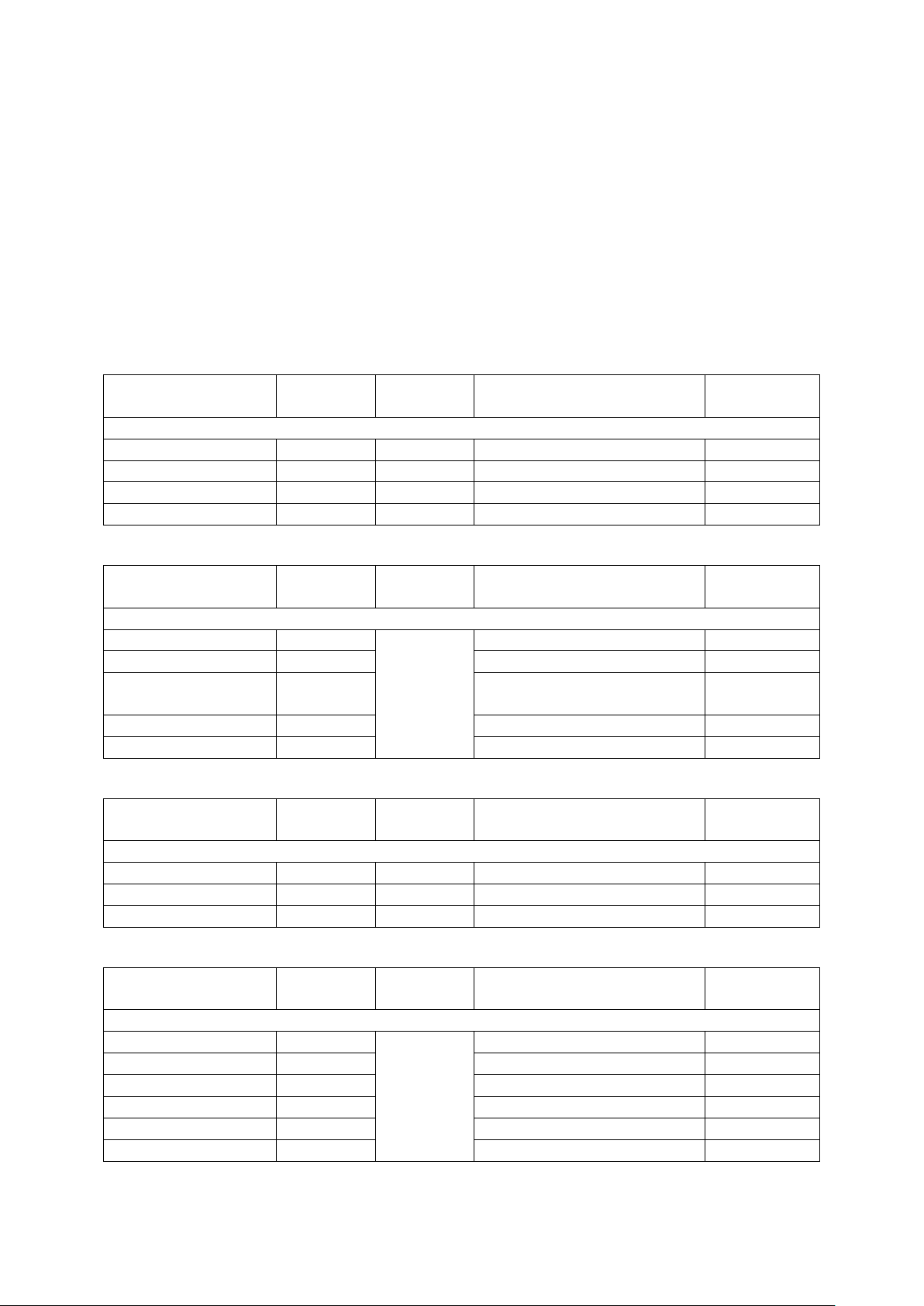
3. Small Cakes, Scones etc.
When preparing two trays, the upper tray will be cooked first. It should then be removed from the
oven and the lower tray raised to the upper position.
4. Yorkshire Puddings etc. in baking tins
When cooking on two shelves the upper and lower tins should be interchanged about half-way
through the cooking process.
5. Fruit cakes in large tins
The cooking time will vary considerably accordingly to the weight of the cake, richness and depth of
mixture. When cooking on two shelves the tins should be interchanged as in Note 4 above.
FOOD
Thermostat
Setting
Shelf
Position
TIME
NOTES
MEAT
Meat Roast (Quick)
230
3 & 4
According to weight
1 & 2
Poultry (slow)
180
3 & 4
According to weight
1 & 2
Braising
165
3 & 4
30 mins per 0.5kg + 30 mins
Casseroles
135
3 & 4
1.5 – 3 hours
FOOD
Thermostat
Setting
Shelf
Position
TIME
NOTES
PASTRY
Fruity Pies
230
3 for single
tray 2&4
for two
trays
35 - 45 mins
3
Plate Tarts
230
30- 40 mins
3
Puff & Rough Puff
Tarts
245
15 – 25 mins
3
Sausage Rolls
245
20 – 25 mins
3
Scones
260
10 – 15 mins
3
FOOD
Thermostat
Setting
Shelf
Position
TIME
NOTES
PUDDINGS
Custards
165 40 – 60mins
Milk
150 45 – 90mins
Yorkshires
245 33 – 40 mins
4
FOOD
Thermostat
Setting
Shelf
Position
TIME
NOTES
CAKES
Slab Cake (Rich)
165
3 for single
tray 2&4
for two
trays
3 hours
5
Slab Sponges
205
25 – 35 mins
Queen Cakes
205
15 – 25 mins
3
Sponge Sandwich
205
20 – 25 mins
X Cake (Very Rich)
165
2 – 2.5 hours
Bread Rolls
245
15 – 25 mins
Page 5

SERVICE INFORMATION
This unit carries an extensive mainland UK warranty. The warranty is in addition to and does
not change your statutory or legal rights.
The warranty policy can be found on our website which details the conditions of the warranty
and the exclusions.
https://www.falconfoodservice.com/info-centre/policy
Service calls to equipment under warranty will be carried out in accordance with the
conditions of sale.
Warranty calls can be made between 8:30 am and 5:00 pm weekdays only.
To ensure your warranty enquiry is handled as efficiently as possible, ensure you have the
following appliance information prior to calling us:
1. Model number – found on data plate
2. Serial number – found on data plate
3. Brief description of the issue
To contact Falcon for a warranty issue dial (UK only) 01786 455 200 and select Warranty
Issues from the menu.
 Loading...