

Page 1
Ouzledale Foundry Co. Limited, Long Ing, Barnoldswick, Lancashire BB18 6BN
Tel: 01282 813235 Fax: 01282 816876 Email: [email protected] Website: http://www.esse.com
THE ORIGINAL CAST IRON COOKER
Cooker Model:
Serial Number:
Colour:
INFORMATION FOR USE WHEN ORDERING SPARES:
GUARANTEE
CONDITIONS OF GUARANTEE
Your
esse cooker is guaranteed against defects arising from faulty manufacture for three years, subject to the following
express conditions:
• This cooker must be commissioned by your esse Dealer (or an authorised HETAS engineer) upon installation.
The details must be recorded on the Commissioning card and registered with esse by returning the completed card.
The guarantee period commences upon delivery of the cooker (subject to receipt of the correctly completed card).
• The cooker has been used for normal domestic purposes only, and in accordance with the manufacturer’s instructions.
• The cooker is serviced annually by the esse Dealer or authorised HETAS engineer, and the Service record completed.
The cooker must not be serviced, maintained, repaired, taken apart, or tampered with by any person not authorised by us.
• Any cooker or defective part replaced shall become the Company’s property.
EXCLUSIONS
This guarantee does not cover:
• Parts deemed to be replaceable in the normal usage of the cooker. These parts are listed herewith: oven boiler
thermostat, gas valve, piezo ignition lead, pilot assembly, and timer/programmer.
• Enamel damage; the vitreous coating on your cooker is in effect an extremely thin layer of glass and as such displays
all the characteristics of glass. It can easily be damaged by impact, or by spillage of cold liquids onto a hot surface.
Such damage cannot be covered under this guarantee. (See also intermittent use of your cooker, below).
• Boilers; guaranteed against weld failure. Appropriate precautions must be taken to prevent internal corrosion.
This guarantee is personal to the original purchaser and is non-transferable.
INTERMITTANT USE OF YOUR COOKER
In the event of intermittent use and prolonged shutdown, it should be noted that in some circumstances enamel may
become displaced due to ingress of damp. Whilst this is rare, it is most likely to occur in situations where the unused
cooker remains in an unheated property. There is a layer (known as the groundcoat) between the vitreous enamel surface
and the cast iron. Groundcoat is porous and if exposed (e.g. after a chip in the vitreous enamel coat), may allow damp to
penetrate behind the vitreous enamel and spread through the groundcoat. Surface oxidisation of the cast iron may
thereafter occur, causing the vitreous enamel to fall off. Such damage will not be covered by your warranty.
We recommend that a light coating of petroleum jelly be applied to any damaged areas when the cooker is not in use to
help keep out the damp, in addition to following the instructions in your Operating manual.
CUSTOMER CARE
In the event you should require spare parts, please order through your esse Dealer.
Should you have cause for dissatisfaction with your cooker, you should contact your esse dealer who will, in most
instances, be able to offer you immediate assistance. You will be required to give the following details:
• Your name, address and postcode.
• Your telephone/contact details.
• Clear and concise details of the fault.
• Model and serial number of the cooker (found on the inside panel of the control oven door).
• Purchase date (Please note that a valid purchase receipt or guarantee documentation is required for in-guarantee service calls).
We will then check that we have an accurately completed warranty card, if not then any work carried out will be charged.
We will assess the nature of the complaint and either send replacement parts for your dealer to fit, send an engineer to
inspect & report, or send an engineer to remedy. If the fault is not actually due to faulty workmanship but some other cause
such as misuse or failure to install correctly, a charge will be made to cover the cost of the visit and any new parts required,
even during the warranty period. Home visits are made between 08.30 – 17.00hrs Monday to Friday, and are arranged for
either a morning or afternoon appointment.
ESSE Woodfired Cooker
OPERATING INSTRUCTIONS
MODELS: WN, WD, W25
02/07
THIS APPLIANCE MUST BE COMMISSIONED BY A CORGI REGISTERED ENGINEER
THE WARRANTY CARD MUST BE RETURNED TO ENSURE GUARANTEE VALIDITY
Page 2
● Properly installed, operated and maintained, this appliance will not emit fumes into the dwelling.
However occasional fumes from de-ashing and re-fuelling may occur. Persistent fume emission is
potentially dangerous and must not be tolerated. If fume emission does persist, open doors and
windows to ventilate the room. Let the fire burn out or eject and safely dispose of fuel from the
appliance. Once the fire is cold, check the flue and chimney for blockages and clean if required. Do
not attempt to re-light the fire until the cause of the fume emission has been identified and corrected.
Seek expert advice if necessary.
● An adequate air supply for combustion and ventilation is essential. Air openings provided for this
purpose must not be restricted.
● Should it be likely that children, age or infirm people approach the fire, then a fireguard should be used.
● Avoid the use of aerosol spray in the vicinity of the cooker when it is in operation.
2
We are pleased that you have chosen an ESSE cooking stove. We would ask you to read the following
instructions very carefully. Correctly installed and operated, your ESSE cooking stove will give
satisfactory service for many years. We feel certain that you will enjoy the warmth and comfort of your
ESSE cooking stove and, perhaps more importantly, you will more than enjoy the superb quality of the
cooking.
Model WN has no boiler, Model WD has a boiler for domestic hot water only. Model W25 has a boiler
for hot water and central heating.
Your cooker is a combination appliance providing hot plate, fast and slow ovens and where applicable,
hot water service.
The firebox behind the left-hand firedoor contains the woodburning box and the primary air-slider. The
air-slider is used in conjunction with the firebox door for initial light up and subsequent burning rate
control. The firebox door has a 2-stage catch. The first setting boosts primary air for hotter
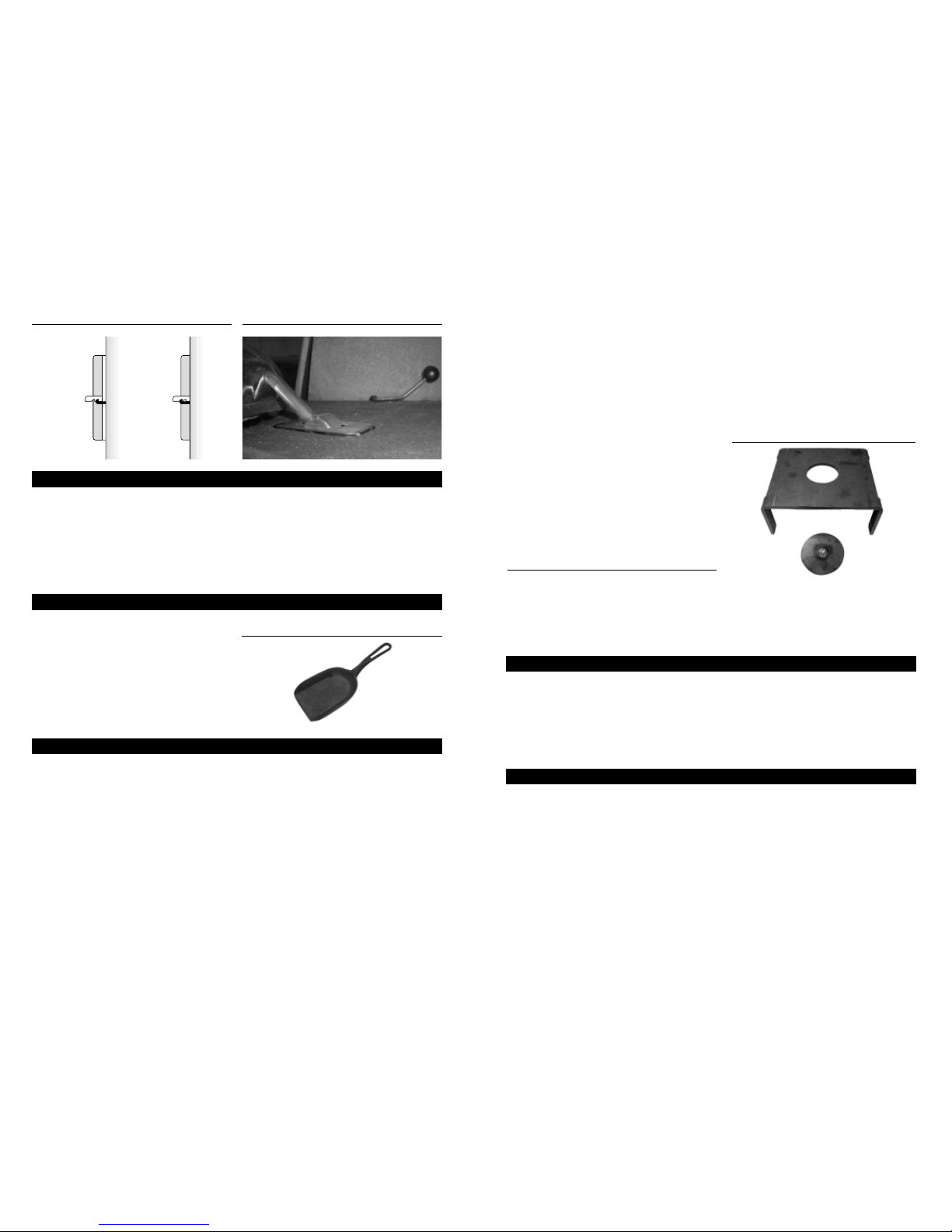
temperatures and the second closes the door completely (see Fig.2).
The firebox linings i.e. brick and steel base are to remain permanently fixed in position.
There are two hinged stainless steel lift up covers to conserve heat losses from the hotplate when it is
not in use.
A flue damper is fitted in the bottom of the fluebox and is in the open position when the lever is pointing
to the rear of the cooker. This is used on initial light up and also gives a cooler oven temperature when
open (See Fig.3).
The cooker has two ovens, the upper oven is fitted with a thermometer for general use and a lower oven
suitable for slow cooking and warming.
Safety Notes Page 2
Your Cooker Page 3
Before Using Your Cooker Page 4
Tools & Accessories Page 4
Lighting and Controlling the Fire – De-ashing Page 4
Boiler Models Page 5
Operating the Oven and Hob Page 5
Types of Fuel- Wood & Peat Page 6
The Hotplate Page 6
Flueway Cleaning & Cleaning your Cooker Page 7
Door Hinge Adjustment Page 7
INTRODUCTION
CONTENTS
YOUR COOKER
SAFETY NOTES
3
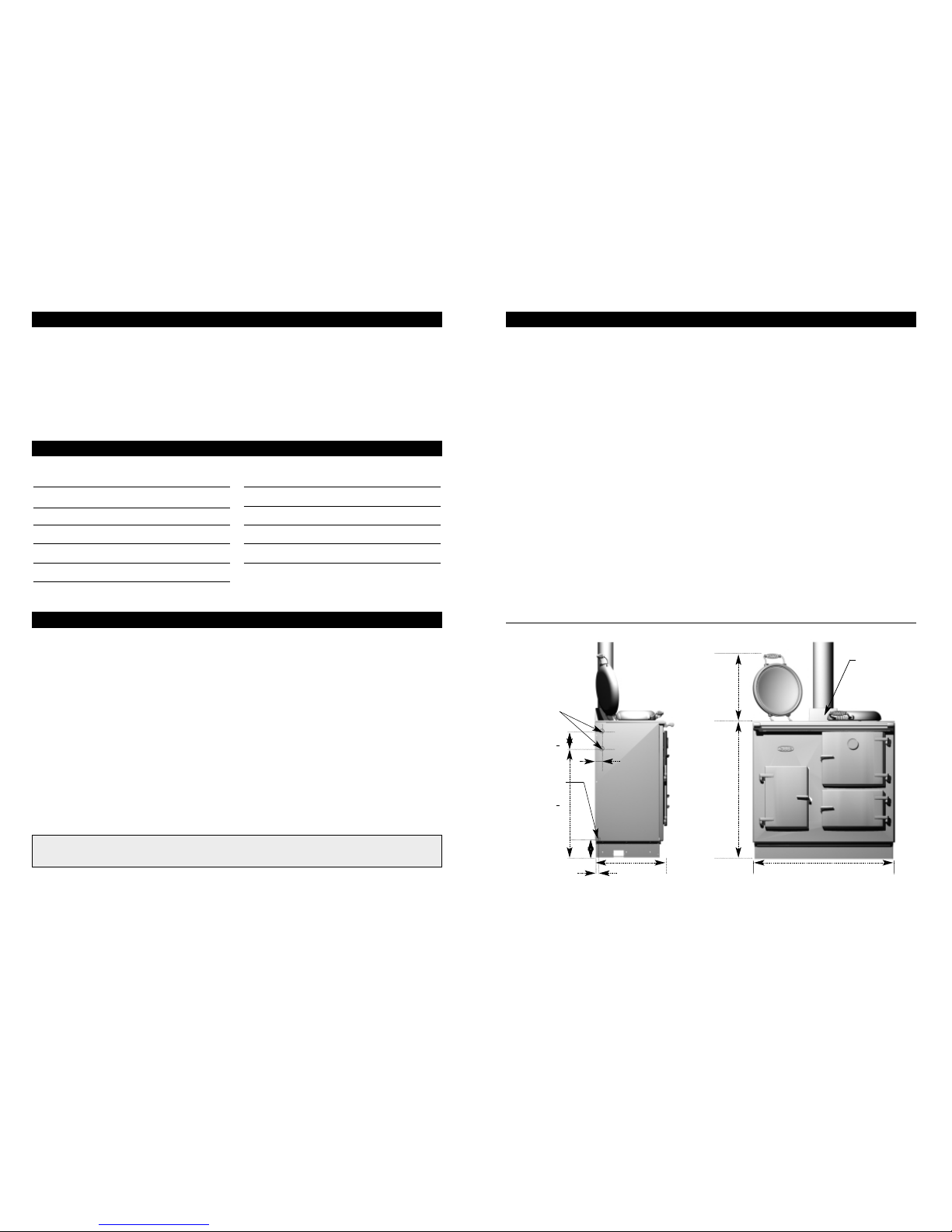
RP 1 TAPPING
(WD & W-25 MODELS ONLY)
40mm
(1.5”)
145mm
(6”)
25mm
(1”)
600mm
(23.5”)
OIL INLET CUT OUT
SIZES ARE APPROXIMATE ONLY. VARIATIONS MAY OCCUR IN MANUFACTURE.
416mm
(16.5”)
900mm
(35.5”)
905mm
(35.5”)
Flue cleaning door
covering flue
draught test point
Fig.1 - Your Cooker
Warning: Never hang tea towels or material above the fire door when the door is open on the first catch
setting, or when re-fuelling or de-ashing.
185mm
(7” ”)
645mm
(28” ”)
5
16
3
8
Page 3
54
Check that the plastic protection coating has been removed from each hotplate cover, and from the
inside of the doors. This should have been done during installation but if the plastic has been left
on it will melt on firing the cooker and cause damage to the linings.
The hotplate surface should be wiped with a dishcloth or similar, which has been soaked with hot
water and a detergent liquid. Finally dry off the hotplate with an absorbent material.
BEFORE USING YOUR COOKER
The following items are supplied with your
ESSE cooker: Hotplate Lifting Tools – for lifting
off the hotplate, Oven Accessories – Roasting
tin, two wire shelves and baking tray. (All
shelves fit in either oven), Ash – Shovel, Flue –
Rake, Glove, Wire-brush.
TOOLS AND ACCESSORIES
In order to achieve overnight burning a layer of ash needs to be built up in the firebox, when this is done
fill the firebox to capacity and close the slider, damper and firedoor. Avoid opening the firedoor until next
required. The flue door is fitted with a screw control. This may be fully or partially opened, to break the
flue, pull on the fire and thus aid extended burning times. Its effect is dependant upon prevailing flue
conditions, which may vary according to wind and weather. If there is any sign of smoke leakage from
this control, ensure it is closed.
If the draught strength in the chimney is too much, overnight burning may not be possible without fitting
a stabiliser.
To boost the hotplate temperature or oven, open the
firedoor to the first setting for 10 to 15 minutes.
To boost hotplate and not oven open the damper in the
flue. An adjustable door is fitted to the front of the flue
box. Open this door using the screw in the front to slow
down the burning rate of the range, for example when a
cool oven is required. DO NOT use a poker when
tending the fire, this could damage the brick linings.
DE-ASHING
Only remove small amounts of ash from the firebox.
When de-ashing, leave 30mm to 40 mm depth of ash in the bottom of the firebox for the best
performance. Always use the glove to open and close the door. Never hang tea towels or material above
the fire door when the door is open on the first catch setting, or when re-fuelling or de-ashing.
Fig.5 - Baffles for W25
POSITION 2
Door locked
and closed
when in use
POSITION 1
Door locked and
ajar for air inlet
only to be used
when lighting
Fig.2 - Two stage door catch Fig 3 - Flue damper open
Fig.4 - Ash Shovel
BOILER MODELS
The WD and W25 domestic and central heating models require more output in order to heat up the water
and therefore will use more wood and need more control adjustment than the non-boiler model. The WF25
has an adjustable/removable baffle. The baffle has a removable centre plug for less hot water and
higher oven temperature, in summer the baffle can be removed completely to give domestic water
and a heated towel rail. (See fig.5).
OPERATING THE OVEN AND HOB
The temperature of the hotplate is graduated from left to right. The left side is hotter and so is used
for boiling and the right side is for simmering. The hotplate should never be removed whilst there is
a live fire in the firebox.
The oven doors and firedoors are opened by lifting the handles manually (note they will become hot
during use, so please use a glove hand).
The oven and hob are heated directly by the fire. Once the fire is established the flue box damper
should be closed (pulled forward). This position will force the heat from the fire to circulate around the
flue ways, thus heating up the hob and the oven.
In order to light the fire check that flue damper is in the open position, open the primary air slide
(inside the fire-box door) and light paper, kindling and small logs and close the firedoor to the first
catch position (see fig.2). Leave the fire for 20 minutes to become established then re-fuel. Close
the firedoor fully or partially and use the primary air slider to control the burning rate and oven
temperature. Try not to re-open the firedoor after refuelling for at least 20 minutes, as it is likely to
smoke back out of the door. By closing the flue damper the oven will become hotter.
The cooker must not be run with the fire-door open permanently. When you need to refuel the fire,
open the door slowly, to avoid smoke and flames entering the room.
Secondary air enters over the top of the fire through built-in air vents in the combustion box and
works continuously by design.
LIGHTING AND CONTROLLING THE FIRE
Page 4

76
WOOD
For best results use well seasoned hardwood such as Oak, Ash or Beech. Allow wood to dry out
under cover in well-ventilated conditions for at least twelve months. Wood is ready for burning when
radial cracks appear in the end o the logs. Burning wood that is not seasoned will result in tar being
deposited in the cooker and flueways.
This build-up of tar is a hazard and if it ignites may cause a chimney fire. In the event of a chimney fire, close
the air controls on the appliance and call the fire brigade for assistance. Resinous softwoods burn well and
give a high output for short periods but is not as efficient and do not last as long as hardwood.
PEAT
Peat is a fuel conveniently available in some areas and should be burned in the same manner as wood.
The hotplate is surface ground and intended for use with machined base utensils. As heat passes
from the hotplate to the utensil almost directly by conduction, good contact is essential and a
thin-bottomed utensil will result in poor heating performance, especially if the bottom is uneven.
It is important to use pots and pans that have a ground base and are flat-bottomed on the hotplate.
Cookware made of stainless steel, cast iron, aluminium, glass and earthenware is suitable for your esse.
The hottest part of the hotplate is the left-hand end while the area over the oven is cooler. Quick
boils on the former and then transfer for simmering on the latter.
For deep fat frying, bring to temperature on the ‘right’ side. Introduce cold food and the return to
temperature on the ‘hotter’ side.
Cooking directly on the hotplate is another facility – griddle scones, burgers, sausages, steaks and
even Welsh Rarebit can be cooked directly on the surface.
TYPES OF FUEL
THE HOTPLATE
In order to clean the flueway of the cooker, first remove the hotplate screws and lift it clear of the
cooker using the two hotplate lifting handles. Also remove the flue strip plate located between the
two oven doors and the fluebox door. Use the flue rake to gather the soot and ash towards the front
of the ovens then remove using a flex-nozzle vacuum cleaner. (Do not use the cooker when any of
the access points are removed).
FLUEWAY CLEANING
Important: The fire must be out and the cooker cold.
Important: This appliance is not suitable for use with solid mineral fuels. e.g. Coal, Coke, Anthracite, etc.
Meringues can be dried on a baking tray sitting on the hob overnight.
Additionally, by using a barbecue griller you can produce your own toasted sandwiches on the top oven.
The hotplate can be rubbed down with a proprietary cleaning pad if necessary, but normally should
need no attention unless spillage is allowed to harden on its surface.
Always keep hotplate covers down except when using the hotplate.
The hob lids can be left down when the hob is not in use to keep the hotplates warm. In order to reduce
oven temperature the flue damper should be in the open position. This will allow heat to escape directly
up the chimney.
The temperature gauge on the oven door only provides an indication of the oven temperature, but since
it is in the door itself, the thermometer will react if the door is opened and the thermometer reading may
fall considerably. When the door is closed the thermometer will react to show the oven temperature but
the reaction will be slightly delayed as opposed to instantaneous.
The ovens are fitted with anti-pull out stops to prevent shelves from being pulled out accidentally. To
remove the shelf pull forward until it stops, lift the front end, pull out of oven. Use reverse procedure to
refit the oven shelves.
 Loading...