

Page 1
eQuinox
TM
Model 4000 Oxygen Concentrator
eQuinox
eQuinox
eQuinox
eQuinox
eQuinox
eQuinox
TM
Modèle 4000 Concentrateur d’oxygène
TM
Modell 4000 Sauerstoffkonzentrator
TM
Modelo 4000 Concentrador de oxígeno
TM
Modello 4000 Concentratore di ossigeno
TM
Modelo 4000 Concentrador de oxigénio
TM
Model 4000 Zuurstofconcentrator
User Manual
Manuel d’utilisation
Bedienungsanleitung
Manual del usuario
Manuale dell’utente
Manual do Utilizador
Gebruikershandleiding
Page 2
User Controls & System Status Indicators
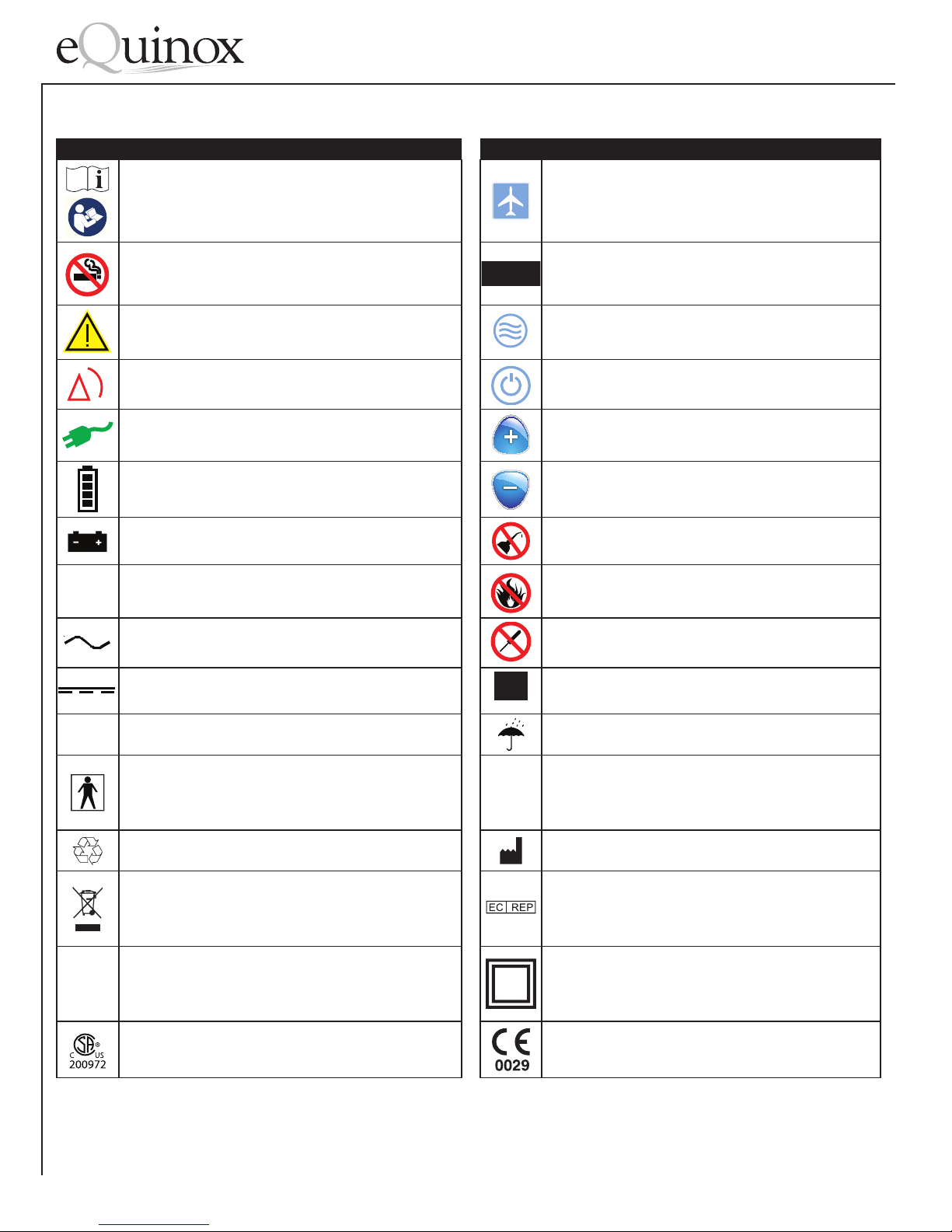
Symbol Definition Symbol Definition
A
Read user manual before operation. See user manual
for instructions.
No Smoking Icon: Do not smoke near unit. Flow Setting Indicator
Warnings / ALERT (Yellow) Indicator Pulse Mode Operation
ALARM (Red) Indicator Device operating normally; power button
External Power Indicator Increase Flow Setting
Battery Pack (battery) Status Gauge Decrease Flow Setting
Battery Pack Symbol Use no oil or grease.
Amperes No open or naked ames.
FAA Approved Symbol: The U.S. Federal Aviation
Administration (FAA) has approved this device for
use on-board commercial aircraft.
0
2
IP22
Alternating Current No serviceable parts inside. Do not open cover.
IEC Icon for DC Power (Input) Warm Surface.
Oxygen Output Do not get wet.
Drip Proof Equipment-IPX1: The eQuinox Battery
Type BF Applied Part (degree of protection against
electric shock)
Recycle Symbol Name and address of manufacturer
This symbol is to remind the equipment owners
to return it to a recycling facility at the end of its
life, per Waste Electrical and Electronic Equipment
(WEEE) Directive.
Drip and solid ingress proof: The eQuinox provides
protection against the harmful effects of the ingress
of liquids and solid foreign objects in accordance
with IEC 60529 at the rating of IP22.
Certied for both the U.S. and Canadian markets, to
the applicable U.S. and Canadian standards.
IPX1
Pack (Battery) and AC Power Supply provide
protection against the harmful effects of the ingress
of liquids. (IPX1, per IEC 60529)
Authorized representative in the European
Community
Class II equipment
This device complies with the requirements of
Directive 93/42/EEC concerning medical devices. It
therefore bears the CE marking as shown.
2 — 4805-C1 C (English)
Page 3

Contents
User Controls & System Status Indicators ..............................................................................................2
Quick Start Guide ......................................................................................................................................4
Indications for Use ....................................................................................................................................7
Contraindications for Use ......................................................................................................................... 7
Safety Guidelines ......................................................................................................................................7
Recommended Operating Environments ................................................................................................9
Operating Instructions ............................................................................................................................ 10
Voice Module Operation .........................................................................................................................13
First Time eQuinox Operation ................................................................................................................14
User Troubleshooting Table ................................................................................................................... 16
Cleaning, Care & Routine Maintenance .................................................................................................19
EMC Tables ...............................................................................................................................................21
General Airline Travel Information ........................................................................................................25
Battery Pack & Airline Travel ..................................................................................................................25
eQuinox (Model 4000) User Manual — 3
Page 4
Quick Start Guide
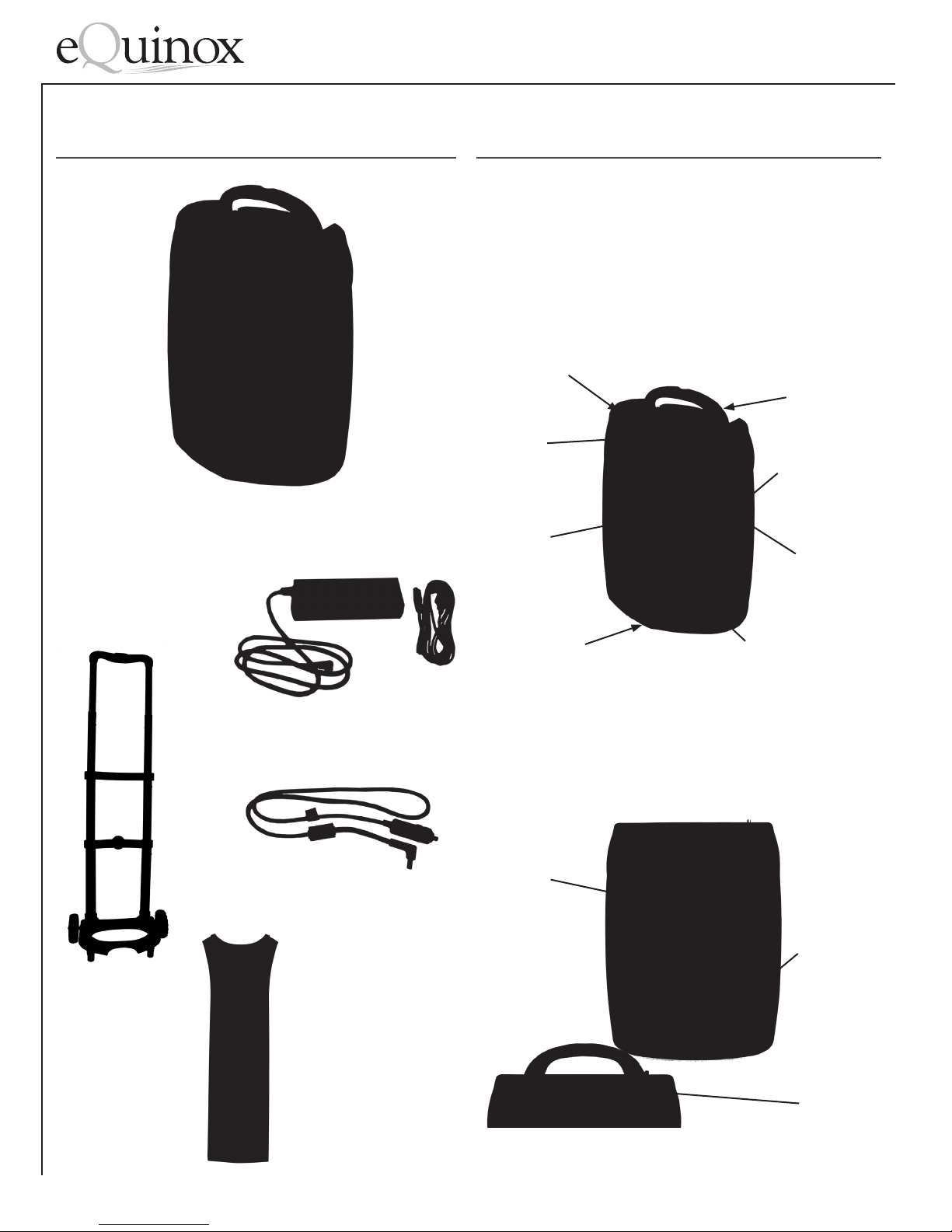
Unpack Your eQuinox
1
AC Power Supply
Getting to Know Your eQuinox
2
Review all Warnings, Cautions and additional device
information in the rest of this manual.
Become familiar with the key features of the eQuinox and the
User Control Panel.
Oxygen
Outlet Port
Control
Panel
FAA
Approval
Icon
FRONT
Handle
External Power
Receptacle
Battery
Pack Latch
eQuinox Cart
12VDC Cable
Rating Label &
Serial Number
Location
Service
Cabinet
Battery
Pack
BACK
Exhaust
Vent
Battery Pack
(battery)
4 — 4805-C1 C (English)
Air inlet
Filter
Page 5
The eQuinox User Control Panel
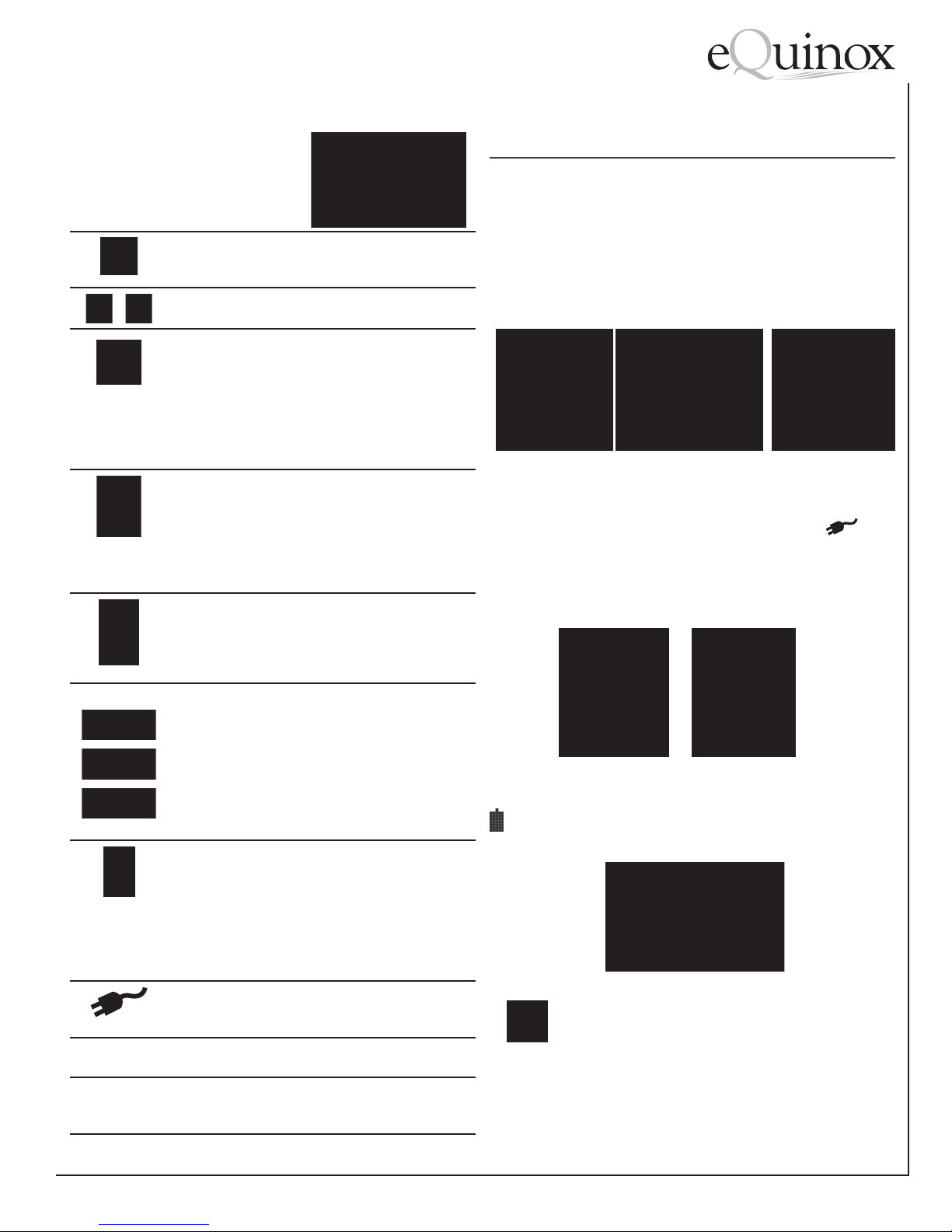
displays important operating
information.
Powering on the eQuinox
3
ON/OFF Button (Green) Indicator: This button powers
the device ON or OFF. The Green Indicator is lit up when
the device is ON and functioning properly.
Increase or Decrease Flow Setting Buttons: Use these
Buzzer: An audible alarm alerts you to the operating condition of the
device, either a warning or failure, and confirms a valid key press.
Voice Module: If activated, a voice indicator will alert you of the operating condition of the device, changes in power source, and warning
conditions or failures.
buttons to set the flow to your prescribed setting.
Delivery Mode Button and Indicator: The button switch-
es between Continuous Flow and Pulse Dose Mode. The
Pulse Dose Mode activates autoSAT Technology. This
allows a significant increase in the operating time while
powered by the battery pack (battery). When the Pulse
Dose Mode is activated, the green Pulse Dose Mode
Indicator lights up. A pulse of oxygen is delivered and
the green indicator blinks with each inspiratory effort.
ALERT (Yellow) Indicator—When lit up, this indicates a
low priority awareness condition or Caution. Continue
to use your system. Refer to the Troubleshooting Table
for the correct action, or contact your Home Care
Provider. A flashing yellow indicates a medium priority
alert. A prompt response is necessary. (Typically low
oxygen or low battery.)
ALARM (Red) Indicator —Indicates a high priority alarm
condition. An immediate response is necessary. Refer
to the Troubleshooting Table and contact your home
care provider. (Typically loss of power, low oxygen, or
malfunction.)
Information Display.
• C or P – “C” indicates Continuous Flow mode and
“P” indicates Pulse Dose mode.
• Time on battery – The display will cycle every 20
seconds when running on battery power to indicate the
estimated time left on the battery
• Setting (continuous ow or pulse dose) – each time
you power the device ON, the last mode and/or setting
has been saved and will be used at start-up.
Battery Pack (battery) Status Gauge: This indicator
displays the charge remaining in the battery. Each of
the five horizontal gray bars represents approximately
20% of the total battery charge. When the battery is
charging, the charge indicator bars will blink in a waterfall-type fashion. If the battery is not installed, or if it
is incorrectly installed, the Battery Pack (battery) Status
Gauge will not light up or will flash on and off.
External Power Indicator: When the eQuinox is properly
plugged in and is using the AC or 12VDC Cable, this
indicator will light up on the User Control Panel.
To connect to AC power source: Insert the AC Power Supply
cord securely into the External Power Receptacle on the right
side of the device. Plug the AC power cord into the power
supply and into an AC outlet.
Step 1 Step 2 Step 3
When the eQuinox is plugged in properly, a green indicator
on the AC Power Supply will light up. The External Power
Indicator on the user control panel will also light up.
Install the Battery: Slide the battery into the empty compartment
until it locks into position. It will be ush with the front of the
device.
When the battery is properly installed and the eQuinox is either
ON or plugged into AC power, the Battery Pack Status Gauge
will appear.
ON/OFF Button (Green) Indicator
Press and hold the “ON/OFF” button for two (2) seconds to
power ON your eQuinox. A brief audible and visual power on
self-test will occur. Check that all the indicators are lit up and
the buzzer sounds for three (3) seconds. Press and hold the “ON/
OFF” button for two (2) seconds to power OFF your eQuinox.
eQuinox (Model 4000) User Manual — 5
Page 6
Select Flow Delivery Mode
Begin Using the eQuinox
4
Flow Mode Button and Indicator
Press the Flow Mode button to select your desired ow mode.
Pressing this button repeatedly will switch you back and forth
between continuous ow and pulse dose modes. In Continuous
Flow Mode, the oxygen is provided at a constant ow rate
between 0.5 and 3.0 LPM, indicated by the letter C. In Pulse
Dose Mode, oxygen is supplied in a bolus at the beginning of
each inhalation. Pulse mode settings 1–9 provide bolus sizes
ranging from 16mL to 192mL and are designated by the letter
P on the display. Pulse dose can be adjusted for sensitivity and
breath bolus delivery. Flow settings in both modes should be
prescribed for you by your physician.
Adjust Flow Setting to Prescribed Level
5
Increase or Decrease Flow Setting Button
6
Air Inlet Filter
Air inlet
Filter
Your unit is equipped with an Air Inlet Filter (extra lter
provided). Check daily and clean once a week. Instructions for
cleaning are on page 19.
Connect the oxygen supply tubing to the oxygen outlet and
connect the oxygen cannula per the instructions provided with
the cannula, or according to the instructions from your home care
provider.
Breathe normally through the nasal cannula.
When operating on battery power, using the Pulse Dose Mode
will result in longer duration-of-use.
Using the + or - buttons, adjust the setting to the prescription
supplied by your physician.
Continuous Flow Mode Display
Pulse Dose Mode Display
WARNING: IT IS VERY IMPORTANT TO SELECT ONLY THE
PRESCRIBED LEVEL OF OXYGEN. DO NOT CHANGE THE
FLOW SELECTION UNLESS YOU HAVE BEEN DIRECTED TO
DO SO BY A LICENSED CLINICIAN. THE PORTABLE OXYGEN CONCENTRATOR MAY BE USED DURING SLEEP UNDER THE RECOMMENDATION OF A QUALIFIED CLINICIAN.
eQuinox Cart Operation
7
Line up the eQuinox with the shaped oor of the cart so that it
sits at and upright. Line up the large threaded screw to the insert
at the back of the eQuinox. Then hand-tighten the knob on the
cart until the cart is tightly secured to the device. Depress the
push-button on the telescoping cart handle and pull upward to
adjust the height of the handle.
6 — 4805-C1 C (English)
Page 7
Important!
Safety Guidelines
Safety Instructions are defined as follows:
WARNING: IMPORTANT SAFETY INFORMATION FOR HAZARDS THAT MIGHT CAUSE SERIOUS INJURY.
CAUTION: Important information for preventing damage
to the eQuinox.
Note: Information needing special attention.
Indications for Use
The eQuinox is intended for the administration of supplemental
oxygen. The device is not intended for life support, nor does it
provide any patient monitoring capabilities.
WARNING: IT IS VERY IMPORTANT TO SELECT ONLY THE
PRESCRIBED LEVEL OF OXYGEN. DO NOT CHANGE THE
FLOW SELECTION UNLESS YOU HAVE BEEN DIRECTED TO
DO SO BY A LICENSED CLINICIAN. THE PORTABLE OXYGEN CONCENTRATOR MAY BE USED DURING SLEEP UNDER THE RECOMMENDATION OF A QUALIFIED CLINICIAN.
WARNING: FEDERAL (USA) LAW RESTRICTS THIS DEVICE TO SALE OR
RENTAL BY ORDER OF A PHYSICIAN OR OTHER LICENSED HEALTH
CARE PROVIDER.
WARNING: THIS UNIT IS NOT TO BE USED FOR LIFE SUPPORT.
GERIATRIC, PEDIATRIC, OR ANY OTHER PATIENT UNABLE TO COMMUNICATE DISCOMFORT WHILE USING THIS DEVICE MAY REQUIRE
ADDITIONAL MONITORING. PATIENTS WITH HEARING AND/OR
SIGHT IMPAIRMENT(S) MAY NEED ASSISTANCE WITH MONITORING
ALARMS.
Contraindications for Use
WARNING: IN CERTAIN CIRCUMSTANCES, THE USE OF
NON-PRESCRIBED OXYGEN CAN BE HAZARDOUS. THIS
DEVICE SHOULD ONLY BE USED WHEN PRESCRIBED BY A
PHYSICIAN.
WARNING: NOT FOR USE IN THE PRESENCE OF FLAMMABLE ANESTHETICS.
WARNING: AS WITH ANY ELECTRICALLY POWERED DEVICE, THE
USER MAY EXPERIENCE PERIODS OF NON-OPERATION AS A RESULT
OF ELECTRICAL POWER INTERRUPTION, OR THE NEED TO HAVE THE
EQUINOX SERVICED BY A QUALIFIED TECHNICIAN. THE EQUINOX
IS NOT APPROPRIATE FOR ANY PATIENT WHO WOULD EXPERIENCE
ADVERSE HEALTH CONSEQUENCES AS THE RESULT OF SUCH TEMPORARY INTERRUPTION.
WARNING: NO MODIFICATION OF THIS EQUIPMENT IS
PERMITTED
WARNING: THE MANUFACTURER RECOMMENDS AN ALTERNATE SOURCE OF SUPPLEMENTAL OXYGEN IN THE EVENT
OF A POWER OUTAGE, ALARM CONDITION, OR MECHANICAL FAILURE. CONSULT YOUR PHYSICIAN OR EQUIPMENT
PROVIDER FOR THE TYPE OF RESERVE SYSTEM REQUIRED.
WARNING: THIS DEVICE SUPPLIES HIGH-CONCENTRATION OXYGEN
THAT PROMOTES RAPID BURNING. DO NOT ALLOW SMOKING OR
OPEN FLAMES WITHIN THE SAME ROOM OF (1) THIS DEVICE, OR (2)
ANY OXYGEN-CARRYING ACCESSORY. FAILURE TO OBSERVE THIS
WARNING CAN RESULT IN SEVERE FIRE, PROPERTY DAMAGE, AND/
OR CAUSE PHYSICAL INJURY OR DEATH.
WARNING: DO NOT OPERATE UNIT IN A RESTRICTED OR CONFINED
SPACE (I.E., A SMALL CASE OR HANDBAG) WHERE VENTILATION
CAN BE LIMITED. THIS CAN CAUSE THE OXYGEN CONCENTRATOR TO
OVERHEAT AND IMPAIR PERFORMANCE.
WARNING: THE CONCENTRATOR SHOULD BE LOCATED AS TO AVOID
SMOKE, POLLUTANTS OR FUMES.
WARNING: THE USE OF SOME OXYGEN ADMINISTRATING ACCESSORIES NOT SPECIFIED FOR THIS OXYGEN CONCENTRATOR MAY
IMPAIR ITS PERFORMANCE. RECOMMENDED ACCESSORIES ARE
REFERENCED WITHIN THIS MANUAL.
WARNING: IF THE OXYGEN CONCENTRATOR HAS BEEN DROPPED,
DAMAGED OR EXPOSED TO WATER, PLEASE CONTACT YOUR HOME
CARE PROVIDER FOR INSPECTION OR POSSIBLE REPAIR OF THE
DEVICE. DO NOT USE THE OXYGEN CONCENTRATOR IF IT HAS A
DAMAGED POWER CORD OR PLUG.
WARNING: PROPERLY SECURE, BELT OR OTHERWISE RESTRAIN THE
OXYGEN CONCENTRATOR WHEN IN A VEHICLE DURING TRANSPORT
TO PREVENT DAMAGE OR INJURY.
WARNING: DO NOT ALLOW EITHER THE AIR INTAKE OR THE AIR
OUTLET VENTS TO BECOME BLOCKED. DO NOT DROP OR INSERT ANY
OBJECTS INTO ANY OPENINGS ON THE DEVICE. THIS CAN CAUSE
THE OXYGEN CONCENTRATOR TO OVERHEAT AND IMPAIR PERFORMANCE.
WARNING: DO NOT OVERFILL THE OPTIONAL HUMIDIFIER. FILL THE
OPTIONAL HUMIDIFIER WITH WATER ONLY TO THE LEVEL SHOWN BY
THE MANUFACTURER OF THE HUMIDIFIER.
WARNING: DO NOT OPERATE THE EQUINOX AND AMBULATE WHILE
A HUMIDIFIER IS ATTACHED. REMOVE THE HUMIDIFIER BOTTLE BEFORE WALKING. DO NOT LAY THE EQUINOX DOWN WHILE ATTACHED
TO A HUMIDIFIER BOTTLE.
WARNING: THE US DEPARTMENT OF TRANSPORTATION (DOT) AND
UNITED NATIONS (UN) REGULATIONS REQUIRE THE REMOVAL OF
THE BATTERY FROM THE DEVICE FOR ALL INTERNATIONAL AIRLINE
TRAVEL WHEN THE OXYGEN CONCENTRATOR IS CHECKED AS LUGGAGE. WHEN SHIPPING THE OXYGEN CONCENTRATOR, THE BATTERY
MUST ALSO BE REMOVED FROM THE DEVICE AND PACKAGED
PROPERLY.
WARNING: DO NOT OPERATE THIS EQUIPMENT WITHOUT FIRST
READING AND UNDERSTANDING THIS MANUAL. IF YOU ARE UNABLE
TO UNDERSTAND THE WARNINGS AND INSTRUCTIONS, CONTACT
YOUR EQUIPMENT PROVIDER BEFORE ATTEMPTING TO USE THIS
EQUIPMENT; OTHERWISE, INJURY OR DAMAGE MAY RESULT.
eQuinox (Model 4000) User Manual — 7
Page 8
WARNING: IF YOU FEEL DISCOMFORT OR ARE EXPERIENCING A MEDICAL EMERGENCY, SEEK MEDICAL ASSISTANCE
IMMEDIATELY.
WARNING: OPERATING THE OXYGEN CONCENTRATOR OUTSIDE OF
THE OPERATIONAL TEMPERATURE SPECIFICATIONS CAN LIMIT THE
CONCENTRATOR’S ABILITY TO MEET OXYGEN CONCENTRATION
SPECIFICATION. REFER TO THE SPECIFICATION SECTION OF THIS
MANUAL FOR TEMPERATURE LIMITS.
WARNING: USE NO OIL, GREASE, OR PETROLEUM-BASED OR OTHER
FLAMMABLE PRODUCTS WITH THE OXYGEN-CARRYING ACCESSORIES OR THE OXYGEN CONCENTRATOR. ONLY WATER BASED, OXYGEN COMPATIBLE LOTIONS OR SALVES SHOULD BE USED. OXYGEN
ACCELERATES THE COMBUSTION OF FLAMMABLE SUBSTANCES.
WARNING: THE INCORRECT USE OF THE BATTERY CAN CAUSE THE
BATTERY TO GET HOT, IGNITE, AND MAY CAUSE SERIOUS INJURY. BE
SURE NOT TO PIERCE, STRIKE, STEP ON, DROP THE BATTERY, OR OTHERWISE SUBJECT THE BATTERY TO STRONG IMPACTS OR SHOCKS.
THE USE OF A DAMAGED BATTERY MAY CAUSE PERSONAL INJURY.
WARNING: THE OXYGEN CONCENTRATOR SHOULD NOT BE USED
ADJACENT TO OR STACKED WITH OTHER EQUIPMENT. IF ADJACENT
OR STACKED USE IS UNAVOIDABLE, THE DEVICE SHOULD BE OBSERVED TO VERIFY NORMAL OPERATION.
CAUTION: In the event of an alarm or you observe the
Oxygen Concentrator is not working properly; consult
the Troubleshooting section in this manual. If you cannot
resolve the problem, consult your Equipment Provider.
CAUTION: To prevent a void warranty, follow all manufacturers’
instructions.
WARNING: SMOKING WHILE USING OXYGEN IS THE
NUMBER ONE CAUSE OF FIRE INJURIES AND RELATED
DEATHS. YOU MUST FOLLOW THESE SAFETY WARNINGS:
WARNING: DO NOT ALLOW SMOKING, CANDLES, OR OPEN FLAMES
IN THE SAME ROOM WITH THE DEVICE OR THE OXYGEN-CARRYING
ACCESSORIES.
WARNING: SMOKING WHILE WEARING AN OXYGEN CANNULA MAY
CAUSE FACIAL BURNS AND POSSIBLY DEATH.
WARNING: IF YOU SMOKE, THESE 3 STEPS MAY SAVE YOUR LIFE:
TURN OFF THE OXYGEN CONCENTRATOR, TAKE OFF THE CANNULA,
AND LEAVE THE ROOM WHERE THIS DEVICE IS LOCATED.
WARNING: “NO SMOKING – OXYGEN IN USE” SIGNS MUST BE
PROMINENTLY DISPLAYED IN THE HOME, OR WHERE OXYGEN IS IN
USE. PATIENTS AND THEIR CAREGIVERS MUST BE INFORMED ABOUT
THE DANGERS OF SMOKING IN THE PRESENCE OF, OR WHILE USING,
MEDICAL OXYGEN.
WARNING: DO NOT USE YOUR OXYGEN CONCENTRATOR IN THE
PRESENCE OF FLAMMABLE GASES. THIS CAN RESULT IN RAPID
BURNING CAUSING PROPERTY DAMAGE, BODILY INJURIES OR
DEATH.
WARNING: REMOVING THE CANNULA AND PUTTING IT ON CLOTHING, BEDDING, SOFAS, OR OTHER CUSHION MATERIAL WILL CAUSE
A FLASH FIRE WHEN EXPOSED TO A CIGARETTE, HEAT SOURCE, OR
FLAME.
WARNING: DO NOT LEAVE A NASAL CANNULA ON OR UNDER
CLOTHING, BED COVERINGS OR CHAIR CUSHIONS. IF THE UNIT IS
TURNED ON BUT NOT IN USE, THE OXYGEN WILL MAKE THE MATERIAL FLAMMABLE. SET THE OXYGEN CONCENTRATOR TO THE 0
(OFF) POSITION WHEN THE OXYGEN CONCENTRATOR IS NOT IN USE.
WARNING: DO NOT ATTEMPT ANY MAINTENANCE OTHER
THAN THE POSSIBLE SOLUTIONS LISTED WITHIN THIS
MANUAL. DO NOT REMOVE COVERS, ONLY YOUR EQUIPMENT PROVIDER OR A QUALIFIED SERVICE TECHNICIAN SHOULD
REMOVE THE COVERS OR SERVICE THIS DEVICE.
WARNING: ONLY ACCESSORIES RECOMMENDED BY THE MANUFACTURER. USE OF ANY OTHER MAY BE HAZARDOUS, CAUSE SERIOUS
DAMAGE TO YOUR OXYGEN CONCENTRATOR AND WILL VOID THE
WARRANTY .
WARNING: THE MANUFACTURER RECOMMENDS AN ALTERNATE SOURCE OF SUPPLEMENTAL OXYGEN IN THE EVENT
OF A POWER OUTAGE, ALARM CONDITION, OR MECHANICAL FAILURE. CONSULT YOUR PHYSICIAN OR EQUIPMENT
PROVIDER FOR THE TYPE OF RESERVE SYSTEM REQUIRED.
WARNING: DO NOT ALLOW EITHER THE AIR INTAKE OR THE AIR
OUTLET VENTS TO BECOME BLOCKED. DO NOT DROP OR INSERT
ANY OBJECTS INTO ANY OPENINGS ON THE DEVICE. THIS CAN
CAUSE THE OXYGEN CONCENTRATOR TO OVERHEAT AND IMPAIR
PERFORMANCE.
CAUTION: Always disconnect AC power supply from the
wall before disconnection the AC power supply from the
oxygen concentrator.
CAUTION: Always place oxygen supply tubing and power cords in a
manner that prevents a trip hazard.
CAUTION: When using the Oxygen Concentrator in an automobile,
boat, or on other DC sources with the 12VDC Cable, make sure that
the vehicle is started and running before connecting the Oxygen
Concentrator. If the external power light on the eQuinox does not
illuminate and requires resetting, disconnect the 12VDC Cable from
the DC outlet, restart your vehicle, and then reconnect your 12VDC
Cable into the DC outlet. Failure to follow these instructions can
result in not supplying power to the Oxygen Concentrator.
CAUTION: When the automobile in which you are using the Oxygen
Concentrator unit is turned off, disconnect and remove the device
from the automobile. Do not store the Oxygen Concentrator in a
very hot or cold automobile or in other similar, high-or low-temperature environments.
Note: Portable and mobile RF communications equipment can effect
medical electrical equipment.
8 — 4805-C1 C (English)
Page 9
Recommended Operating Environments
For correct use of the device refer to the following chart. The
chart provides important information about the recommended
operating environments, or operating conditions.
Specifications
Operating
Temperature
Operating
Humidity
Transport/
Storage
Temperature
Electrical Use no extension cords. Use no electrical outlets con-
Altitude 0 – 13,123 feet (0 - 4,000 meters)
Placement DO NOT block the air inlet (top back cover) or the exhaust
Environment Must be smoke, pollutant, and fume free.
Operating
Time
Note: If the Oxygen Concentrator has been stored for an extended period
of time outside its normal operating temperature range, the unit should
be allowed to return to normal operating temperature before being
turned on. (Refer to the Specifications section in this manual.)
32º F to 104º F (0º C to 40º C)
10% - 95% at an 82.4° F (28° C) dew point
-13°F to 158°F (-25°C to 70°C)
Humidity: Up to 95% Non-Condensing
-4°F to 122°F (-20°C to 50°C) for battery packs
trolled by a switch.
vent (back bottom right). Place device a minimum of 3
inches (7.5 cm) away from walls, draperies, furniture, etc.
24-hours a day when connected to an external AC or DC
power source.
Proper Placement of the eQuinox
Pick a location for the device that avoids the intake of smoke,
fumes and pollutants. Correct positioning of the device should
allow intake of air through the air inlet lter at the top rear of
the cabinet. It should also allow exhaust air to freely leave the
exhaust vent at the bottom right of the device.
Place the device so that the alarms can be heard.
Position the oxygen supply tubing in such a way that it does not
kink or occlude.
WARNING: DO NOT USE YOUR OXYGEN CONCENTRATOR
IN THE PRESENCE OF FLAMMABLE GASES. THIS CAN
RESULT IN RAPID BURNING CAUSING PROPERTY DAMAGE,
BODILY INJURIES OR DEATH. USE NO OIL, GREASE, OR PETROLEUM-BASED OR OTHER FLAMMABLE PRODUCTS WITH THE OXYGEN-CARRYING ACCESSORIES OR THE OXYGEN CONCENTRATOR.
ONLY WATER BASED, OXYGEN COMPATIBLE LOTIONS OR SALVES
SHOULD BE USED. OXYGEN ACCELERATES THE COMBUSTION OF
FLAMMABLE SUBSTANCES.
WARNING: THIS DEVICE SUPPLIES HIGH-CONCENTRATION OXYGEN
THAT PROMOTES RAPID BURNING. DO NOT ALLOW SMOKING OR
OPEN FLAMES WITHIN THE SAME ROOM OF (1) THIS DEVICE, OR (2)
ANY OXYGEN-CARRYING ACCESSORY. FAILURE TO OBSERVE THIS
WARNING CAN RESULT IN SEVERE FIRE, PROPERTY DAMAGE, AND/
OR CAUSE PHYSICAL INJURY OR DEATH.
Note: When the automobile in which you are using the Oxygen Concentrator unit is turned off, disconnect and remove the device from the
automobile. Do not store the Oxygen Concentrator in a very hot or cold
automobile or in other similar, high-or low-temperature environments.
DO NOT leave the Oxygen Concentrator or the Power Supply plugged
into the vehicle if the ignition is in the off position. Doing so may drain
the vehicle’s battery.
CAUTION: Do not operate unit in a restricted or confined
space (i.e., a small case or handbag) where ventilation
can be limited. This can cause the Oxygen Concentrator
to overheat and impair performance. Do not allow either the air
intake or the air outlet vents to become blocked. This can cause the
Oxygen Concentrator to overheat and impair performance.
eQuinox (Model 4000) User Manual — 9
Page 10
Operating Instructions
Before Operating
This user manual is your reference to help you use and maintain
the device. If you have any questions or concerns please call
your home care provider.
Important! DO NOT try to use the eQuinox without rst reading
the Safety Guidelines section of this manual. Please follow all
of the operating instructions. Please observe all Warnings on the
device and in the User Manual. In order to decrease the risk of
re, personal injury and serious damage to the eQuinox, please
follow all of the safety precautions.
WARNING: CLEAN THE CABINET, CONTROL PANEL, AND
POWER CORD ONLY WITH A MILD HOUSEHOLD CLEANER
APPLIED WITH A DAMP (NOT WET) CLOTH OR SPONGE,
AND THEN WIPE ALL SURFACES DRY. DO NOT ALLOW ANY LIQUID TO
GET INSIDE THE DEVICE. PAY SPECIAL ATTENTION TO THE OXYGEN
OUTLET FOR THE CANNULA CONNECTION TO MAKE SURE IT REMAINS FREE OF DUST, WATER, AND PARTICLES.
CAUTION: Do not allow either the air intake or the air outlet vents to become blocked. This can cause the Oxygen
Concentrator to overheat and impair performance. Do not
operate the Oxygen Concentrator without the air intake filter in
place. If a second filter is provided, insert the “replacement” filter
before you clean the dirty filter. Clean the dirty filter in a warm
soap and water solution then dry thoroughly prior to use.
General Charging Information
The eQuinox runs on external AC power, DC power, or a
rechargeable battery. The system includes a “smart battery
charger.” This recharges the battery whenever the eQuinox is
connected to an outside power source. The system monitors and
controls the power source and the battery charger.
The eQuinox charges the battery when using AC or DC power
when the battery temperature is within safe charging temperature.
When external power is removed, the device automatically
switches over to the battery, as long as the battery is installed and
charged. When connected to an AC or DC outlet again, the device
runs on the external power source and recharges the battery.
Line up the power plug with the recessed external connector to
correctly plug in the AC Supply or 12VDC cable. The recessed
power connector is on the right side of the device when facing the
Control Panel. Push the power plug into the recessed connector.
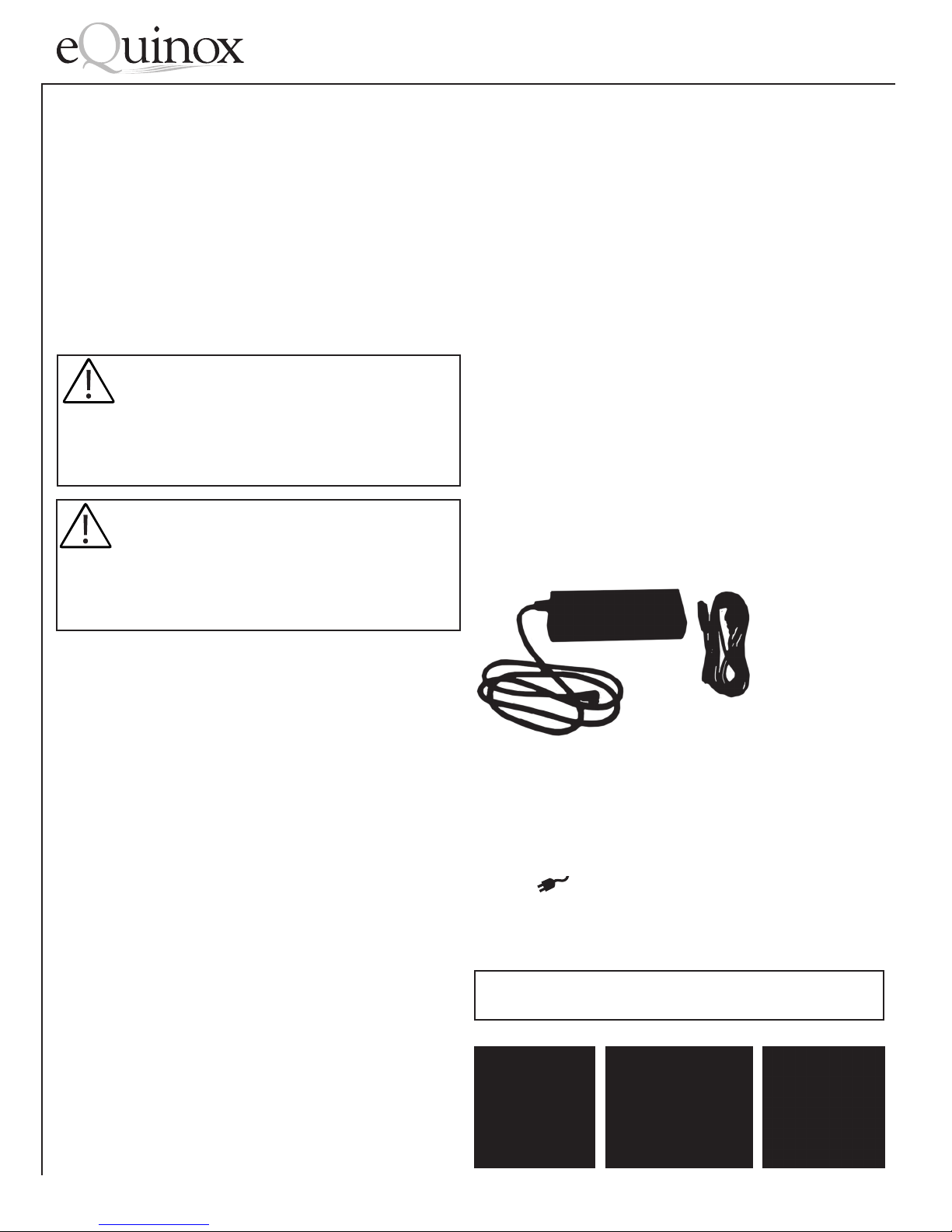
AC POWER SUPPLY
Powering on your eQuinox
The device can be operated from three (3) different power
sources:
• AC Power Supply
• 12VDC Cable
• Rechargeable Battery Pack (Battery)
AC Power Supply
The eQuinox includes a universal AC Power Supply for use at
home or wherever standard AC power is available. To connect to
an AC power source, plug the AC Power Supply cord securely
into the recessed external connector. Also make sure that the cord
from the AC Power Supply is plugged into an AC outlet. When
the eQuinox is plugged in correctly, a green indicator on the AC
Power Supply and the External Power Indicator will light up. The
indicator
on the user control panel will also light up. The
CAIRE AC Power Supply PN 4836 is the main power source for
the eQuinox portable oxygen concentrator. It is a very important
part of the overall system.
Note: Use only electrical voltage specified on the specification label
affixed to the device.
Step 1 Step 2 Step 3
10 — 4805-C1 C (English)
Page 11
WARNING: DO NOT TOUCH THE BATTERY CONTACTS AND
THE PATIENT AT THE SAME TIME WHEN ENERGIZING THE
UNIT WITH THE EXTERNAL POWER SUPPLY (AC POWER
SUPPLY) AND WITH NO BATTERY PACK INSTALLED.
CAUTION: Use only accessories recommended by the
manufacturer. Use of any other may be hazardous, cause
serious damage to your oxygen concentrator and will
void the warranty.
CAUTION: Do not use extension cords with this unit or connect too
many plugs into the same electrical outlet. The use of extension
cords could adversely affect the performance of the device. Too
many plugs into one outlet can result in an overload to the electrical panel causing the breaker/fuse to activate or fire if the breaker
or fuse fails to operate.
CAUTION: Use of cables and adapters other than those specified,
with the exception of cables and adapters sold by the manufacturer
of the medical electrical equipment as replacement parts for internal components, may result in increased emissions of decreased
immunity of the Oxygen Concentrator.
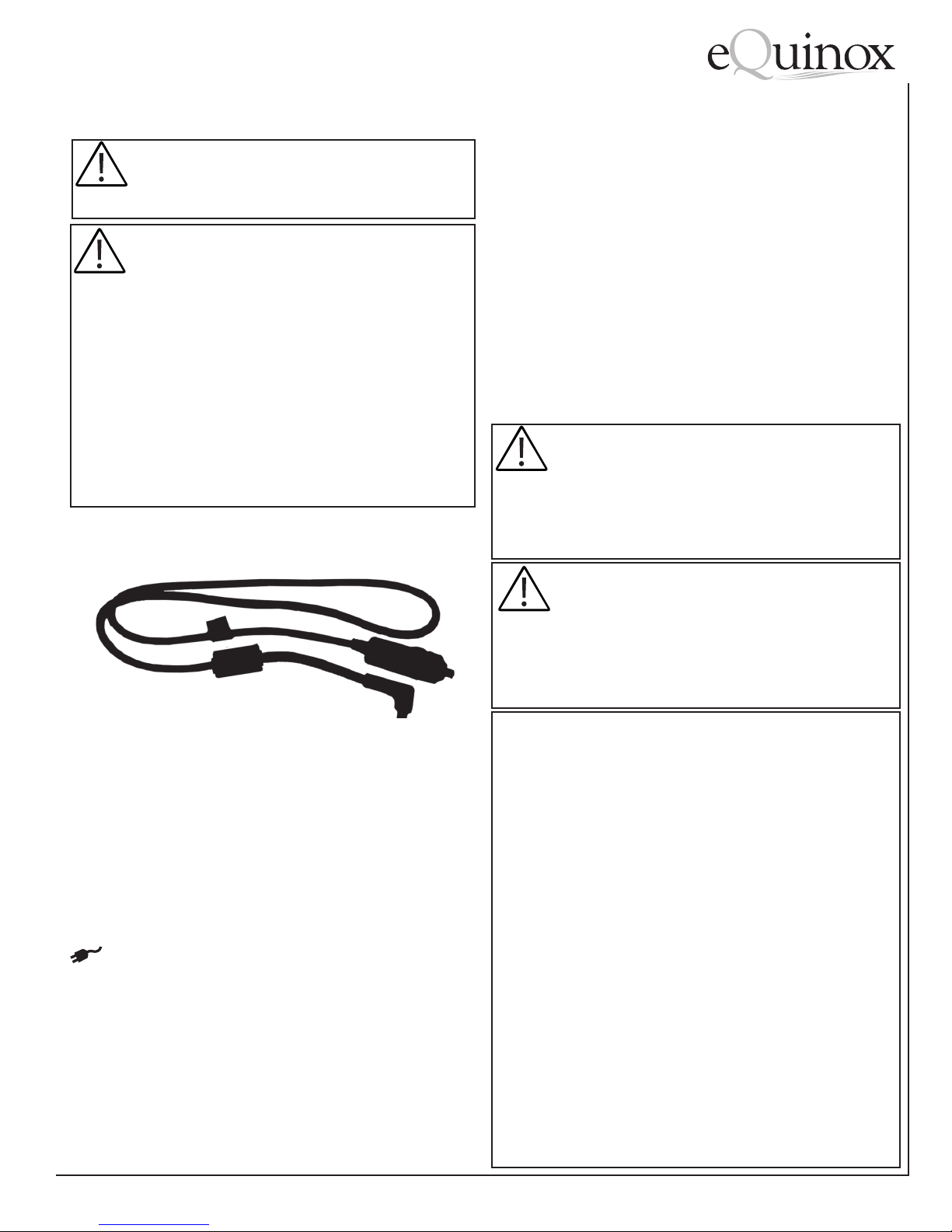
12VDC Cable
12VDC Cable
eQuinox DC Supply Connection
When the eQuinox is connected to the DC supply in a vehicle, the
following applies:
• The eQuinox will run at all continuous flow settings 0.5–
3.0LPM and all pulse settings 1–9 while being operated with
the DC Supply in a car.
• The battery will only charge if there is sufficient power
remaining after the device is running at the prescribed flow
rate. The eQuinox will dedicate the power supplied to run
the unit first. Any power left over will be used as a trickle
charge to re-charge the battery. If the eQuinox battery is being
charged, the battery symbol will waterfall. If the eQuinox
battery is not charging, the battery symbol will be displayed
solid.
WARNING: DO NOT ALLOW EITHER THE AIR INTAKE OR THE
AIR OUTLET VENTS TO BECOME BLOCKED. THIS CAN CAUSE
THE OXYGEN CONCENTRATOR TO OVERHEAT AND IMPAIR
PERFORMANCE.
WARNING: IF THE VEHICLE’S DC POWER SOURCE DROPS BELOW 11.5
VOLTS, THE EQUINOX WILL REVERT TO THE BATTERY OPERATION (IF
THE BATTERY IS PRESENT AND CHARGED).
CAUTION: When the automobile in which you are using
the Oxygen Concentrator unit is turned off, disconnect
and remove the device from the automobile. Do not store
the Oxygen Concentrator in a very hot or cold automobile or in
other similar, high-or low-temperature environments. DO NOT leave
the Oxygen Concentrator or the Power Supply plugged into the
vehicle if the ignition is in the OFF position. Doing so may drain the
vehicle’s battery.
A 12VDC Cable allows the system to operate from DC outlets,
such as those found in motor vehicles.
1. Start your vehicle.
2. Insert the 12 Volt DC cord into the recessed power
receptacle on the side of the device.
3. Insert the 12VDC Cable plug into the DC power outlet in
your motor vehicle.
When the device is properly connected and receiving power
from the DC power source, the green External Power Indicator
on the control panel will illuminate.
Note: While operating the device from a 12VDC Cable, the Battery may
not charge.
Note: When operating the eQuinox from a 12VDC Cable, it is recommended that the Pulse Dose Mode be used if prescribed to use a pulse dose
device.
Note: To ensure that the device is utilizing the DC power, check that the
External Power Indicator is illuminated. If a beep is heard, this could indicate a loss of external power. Check if the green External Power Indicator
LED is on or off. If the battery is removed on DC power, it will ensure no
loss of charge while the unit is running. If the indicator is not illuminated,
the battery is powering the device.
Note: Actual performance of the eQuinox may vary depending upon usage
conditions of the motor vehicle. Some vehicles may not be able to support
full functionality on DC power. In the event the vehicle cannot provide
enough power to operate at the current setting, the eQuinox will first
stop charging the battery and continue to run at the prescribed flow rate.
If the vehicle still cannot provide enough power, the eQuinox will then
lower the flow rate if the flow rate is 2.0LPM or greater. If the flow rate is
less than 2.0LPM, the eQuinox will shut down.
If low flow rates are experienced, remove all other electronic devices
connected to the power circuit (GPS, cell phone charger, etc.). If sufficient
power is restored, flow rates are not automatically increased back to the
original setting; user will need to manually adjust. If the eQuinox is still
not operating at the prescribed flow rate, attempt to remove the battery
pack.
eQuinox (Model 4000) User Manual — 11
Page 12
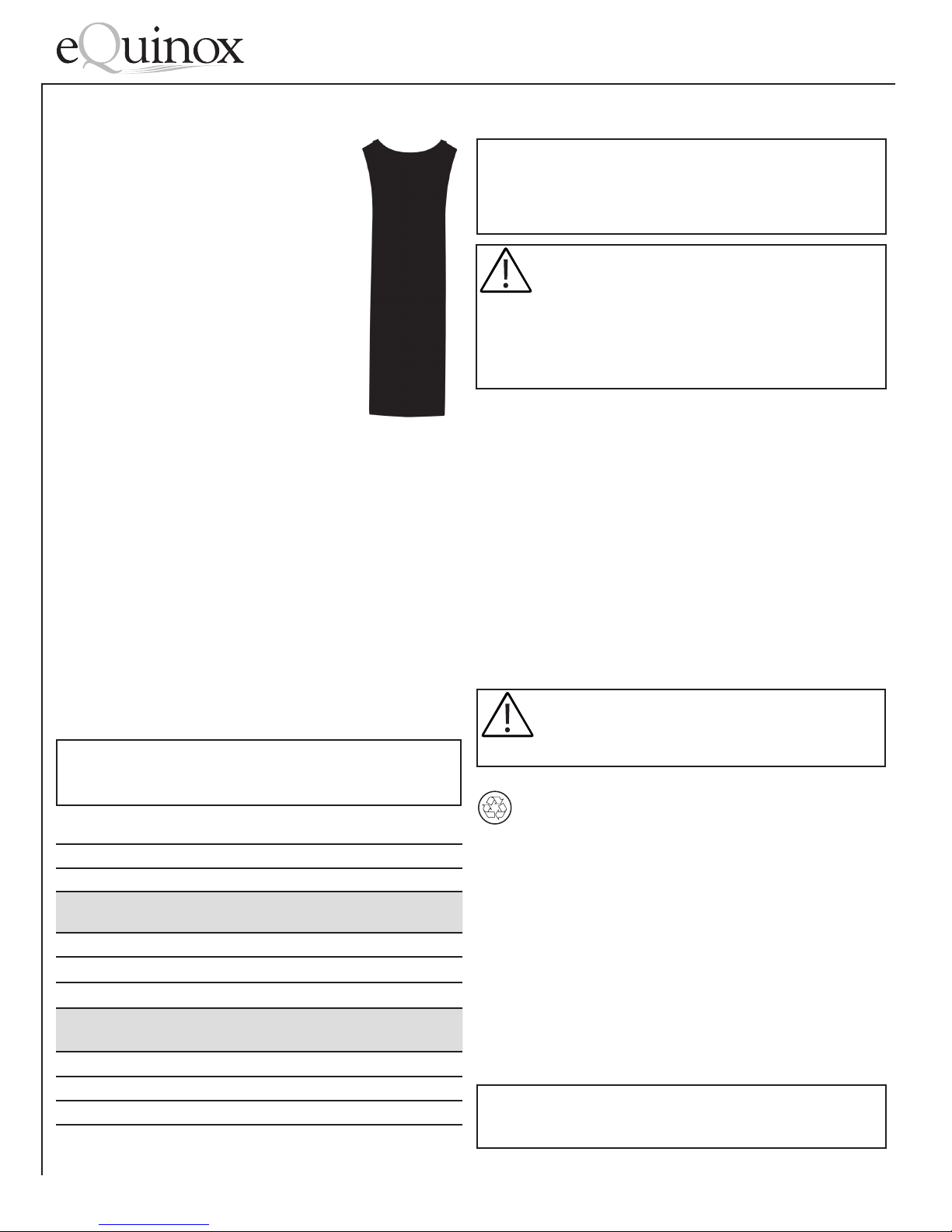
Rechargeable Battery Pack (Battery)
The eQuinox can be run by the rechargeable
Battery Pack (Battery), which is supplied with
the device.
Installing the Battery: Line up the Battery so it
will slide into the empty Power Compartment.
Push the Battery into the empty Power
Compartment until it locks (clicks) into
position. It will be ush with the front of the
device. When the Battery is properly installed
and the eQuinox is ON, the Battery Status
Gauge will show on the Control Panel. (If you
DO NOT have a Battery installed, the Battery
Pack Status Gauge will not light up.) The unit
will still run on external power.
Rechargeable Battery
Pack (Battery)
To remove the Battery, push the release
button on the top of the battery pack. While holding DOWN the
release button, pull the Battery away from the eQuinox.
Battery Operating Times: The battery operating time is shown
on the Control Panel, in both symbol and alpha-numeric formats.
When running on battery power, the battery status gauge will be
shown at all times. The display screen will cycle to display the
hours/minutes of battery life left. A number of factors, such as
ow setting, Pulse or Continuous Flow Mode, and breath rate
will affect the operating time. The table Typical New Battery
Pack Operating Times provides operating time estimates for
the eQuinox using a new, fully charged Battery based on ow
settings and indicated operating conditions.
Note: The eQuinox comes with a 12-cell battery when shipped from the
factory. The 24-cell battery is an optional accessory for longer battery
durations.
Note: Operating the Oxygen Concentrator outside of its normal operating
temperature range can affect performance and decrease battery run time
and/or increase battery charge time. (Refer to the Specifications section in
this manual.) You will achieve longer operating time on the Battery if you
operate your eQuinox in the Pulse Mode (Physician approved mode).
WARNING: FOR OXYGEN CONCENTRATORS EQUIPPED WITH
BATTERIES: STORE IN A COOL AND DRY LOCATION TO HELP
ENSURE THE LONGEVITY OF YOUR BATTERY. STORING YOUR
OXYGEN CONCENTRATOR FOR EXTENDED PERIODS OF TIME AT HIGH
TEMPERATURES OR WITH A FULLY CHARGED OR COMPLETELY DISCHARGED BATTERY CAN DEGRADE ITS OVERALL BATTERY LIFE. DO
NOT ATTEMPT TO OPEN THE BATTERY; THERE ARE NO SERVICEABLE
PARTS INSIDE THE BATTERY. KEEP BATTERIES AWAY FROM CHILDREN.
Initial Battery Charging
The new Battery that comes with your eQuinox is not fully
charged when it is shipped from the factory. Before using your
eQuinox for the rst time, you must rst fully charge the Battery.
Plug in the AC Power Supply and correctly install the Battery.
Allow the Battery to completely charge. The Battery is fully
charged when the Battery Pack Status Gauge on the Control
Panel no longer cascades and remains solid.
The eQuinox can be used while the Battery recharges. It may
take up to 4 hours to charge, depending on the ow setting. The
Battery will also charge when the eQuinox is plugged into AC
power and turned off.
CAUTION: Only use the Manufacturer’s provided batteries. For proper battery disposal, contact your Equipment
Provider or your local government agency for disposal
requirements.
Typical New Battery Pack Operating Times
Operating Type Battery Type
12-cell 24-cell
Continuous
Mode
1 LPM 2.16 hrs (2 hr, 9 min) 4.84 hrs (4 hrs, 50 min)
2 LPM 1.2 hours (1 hour, 12 2.75 hrs (2 hrs, 45 min)
3 LPM 0.8 hrs (48 min) 1.83 hrs (1 hr, 49 min)
Pulse Mode
(12 BPM)
16 mL (1.0) 2.62 hrs (2 hrs, 37 min) 5.94 hrs (5 hrs, 56 min)
48 mL (3.0) 2.38 hrs (2 hrs, 22 min) 5.39 hrs (5 hrs, 23 min)
96 mL (6.0) 1.70 hrs (1 hr, 41 min) 3.85 hrs (3 hrs, 51 min)
12 — 4805-C1 C (English)
* Batteries are recyclable. *
In the event of an AC or DC power interruption, the eQuinox will
beep and automatically switch to Battery operation, as long as a
charged Battery is installed. When external power is returned, the
Battery will automatically start charging again. If the Battery is
missing or is fully discharged when the AC power is interrupted,
the eQuinox will shut down and alarm. The Battery is fully
discharged when the Battery Pack Status Gauge on the control
panel appears empty. The device will display a yellow light and
sound a low battery alarm. This will continue until the device
completely shuts down with a red light and constant alarm. The
audible alert may continue for up to 5 minutes until the device
shuts down or external power is restored.
Note: Press and hold the eQuinox ON/OFF button for a minimum of 5
seconds, to silence the Loss of Power alarm. Connecting the eQuinox to
an external AC power supply for 2 minutes will also eliminate this alarm.
Page 13

Typical Battery Recharge Time
Enable/Disable the Voice Module
It will normally take between 2 and 5 hours to recharge a fully
drained Battery back to 80% capacity, depending on the ow
setting being used. When the battery is fully charged, the battery
gauge will stop cascading. The battery can be charged in the unit
when the eQuinox is turned off and plugged in.
If the Battery becomes too warm during discharging, recharging
will not begin until the Battery sufciently cools. Removing the
Battery may speed up the cooling process.
The Battery can recharge from both AC and DC power sources.
The Battery will also charge from the optional Desktop Charger.
Voice Module Operation
1. To enable/disable the voice module function, power on the
unit by pressing the ON/Standby Key.
2. After the unit has powered on, press the No Smoking Icon
and Hidden Key once.
3. Within 1–2 seconds, the SPKR = ON or SPKR = OFF menu
item will be present.
4. Press the Increase or Decrease Flow Rate Key to toggle the
selection to ON (enable voice module) or OFF (disable voice
module).
5. Within 3–5 seconds, the option selected will become active.
Note: This will only disable the voice module function once. When the
device is turned off and device is reset, the voice module function will
automatically be enabled.
Increase/Decrease the Volume of Vocal Notifications
1. To increase or decrease the volume of vocal notifications,
press the No Smoking Icon & Hidden Key twice.
2. The Volume = # - (Volume Setting Menu) will be present.
3. Press the Increase or Decrease Flow Rate Key to increase or
decrease the volume level from 1 to 10.
Voice Module Operational Instructions
The eQuinox can provide verbal notications or alarms and
operating status. These verbal notications supplement the
information on the light emitting diode (LED) display. The
following information provides instructions on how to turn the
voice module function on and off, adjust loudness, and change
language.
ON/Standby
Key
No
Smoking
Icon &
Hidden Key
Flow Mode
Key
ON/Standby
Indicator
(Green LED)
Flow Mode
Indicator
(Green LED)
Alert Indicator
(Yellow LED)
Alarm Indicator
(Red LED)
Increase Flow
Rate Key
External
Power
Present
Indicator
(Green LED)
Decrease Flow
Rate Key
LCD
Display
4. After selecting the desired loudness, the option will become
active/set within 3–5 seconds.
Changing Voice Module Language
1. To change the voice module language, press the No
Smoking Icon & Hidden Key five times to access the language
options.
2. The current activated language will be indicated on the
display. For example, if the voice module is speaking English
when accessing the language options menu, “English” will be
the text that appears on the display.
3. Press the Increase or Decrease Flow Rate Key to scroll
through the languages available.
4. Once the desired language is displayed, it will automatically
be set within 3–5 seconds.
eQuinox (Model 4000) User Manual — 13
Page 14
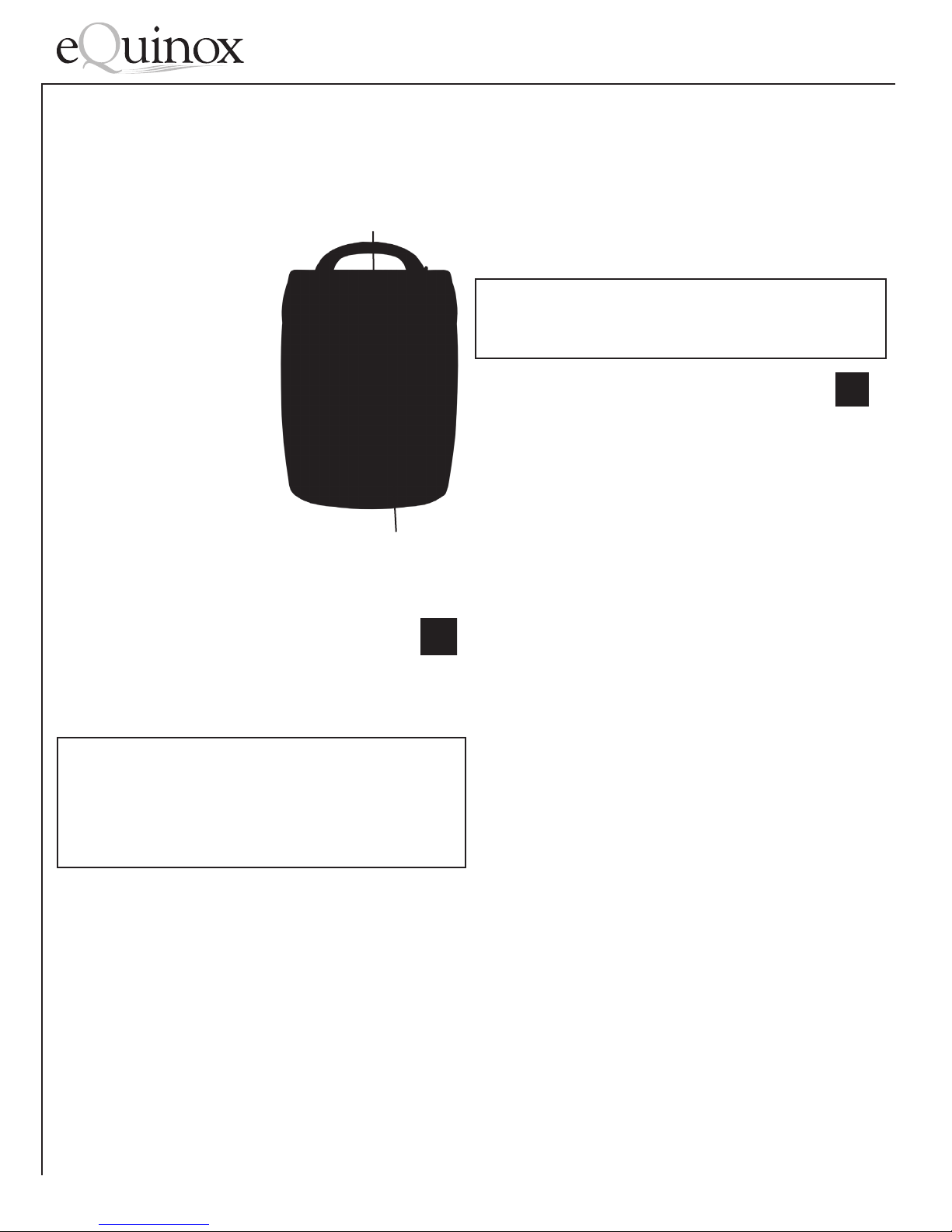
First Time eQuinox Operation
Step 1: Positioning Your eQuinox for Use
Place the eQuinox in a well-ventilated, well lit area. Be sure the
air inlet and exhaust vents in the back are not blocked.
Position the eQuinox so that all
audible and visual indicators or
alarms can be easily seen and
heard.
Be sure the air inlet lter is in
place before operating your
eQuinox. If the air inlet lter is
missing, contact your home care
provider. If the air inlet lter is
dirty, wash with warm soapy
water. Then rinse it with clear
water and allow it to dry before
placing the air inlet lter back in
the device. If necessary, replace it
with a new, clean air inlet lter.
Plug the device into an AC Power
outlet, a DC Power source, or be sure there is a fully charged
Battery installed.
Air inlet Filter
Exhaust Vent
Step 2: Power ON the Device and Allow it to
Warm-Up
Press and hold the “ON/OFF” Button for two (2) seconds to
power ON your eQuinox. A brief visual power-on self-test will
occur.
Note: If there are three beeps when the device is first connected to power
or powered on, this indicates a low battery condition for the 9-volt battery
inside the cabinet of the eQuinox. Please contact your home care provider
and request that the 9-volt battery be replaced. If three beeps continue
intermittently after the unit has been power on and running for several
minutes, this is not a low 9V battery condition. Contact your healthcare
provider for service.
The eQuinox has an oxygen concentration status indicator
(OCSI) built in to the device. The OCSI continually monitors
the oxygen output of the device. It uses a green light (normal),
yellow light (alert), red light (alarm) and an audible alarm.
These indicators will all illuminate during the power-on
self-test at start-up. After rst powering ON the device,
please allow up to ve (5) minutes for the device to reach its
performance specications. When only the green indicator
light is illuminated, the device has reached its performance
specications.
Step 3: Connect the Oxygen Supply Tubing or Nasal
Cannula to the Oxygen Outlet
Replace the cannula and oxygen supply tubing regularly, as
recommended by your home care provider. Ask your home care
provider for cannula and supply tubing cleaning and replacement
information.
Note: Ensure the cannula is fully inserted and secure. This ensures that the
Oxygen Concentrator can properly detect inspiration for oxygen delivery.
During inhalation, you should hear or feel oxygen flow to the prongs of
the nasal cannula.
Step 4: Select the Flow Mode
Press the Flow Mode button to choose the mode. Pressing this
button more than once will switch you back and forth between
Pulse Dose Mode and Continuous Flow Mode. The correct mode
and setting should be prescribed for you by your physician.
Continuous Flow Mode Operation:
When running in the Continuous Flow Mode, a constant supply
of oxygen will ow through your tubing and nasal cannula. The
oxygen is measured in measured in liters per minute (LPM). You
may use a humidier when in Continuous Flow mode only. DO
NOT tilt, transport, or lay the eQuinox down while a humidier
bottle is attached.
Pulse Dose Mode Operation:
When running in Pulse Mode, a bolus of oxygen, measured in
milliliters (mL), is delivered upon inhalation. DO NOT use a
humidier in the Pulse Dose Mode.
When operating in pulse dose mode, the eQuinox supplies a
continuous ow of oxygen every 15 seconds if a breath is not
detected. The device will stop continuous ow and repeatedly
check for an inspiratory effort every 15 seconds. Once an
inspiration is detected, the device will deliver a measured bolus
again. To leave Pulse Dose Mode and start Continuous Flow
Mode, push the ow mode button.
Have your physician prescribe you the correct pulse dose to make
sure you receive the proper oxygen saturation. Take into account
your needs at rest, when you exercise, and when you travel at
high elevation. Contact your care provider for prescription and
boarding forms.
14 — 4805-C1 C (English)
Page 15
Pulse Dose Mode and autoSat Features
Your eQuinox has a feature called autoSAT®. It delivers a
consistent-sized bolus of oxygen up to 40 breaths per minute
(see Max Breath Rate table below). As your breath rate
increases, such as when you walk, the autoSAT feature servocontrols the device, delivering the set bolus size. autoSAT
Technology is proprietary to CAIRE and is used during Pulse
Mode only.
Max Breath Rate
Pulse Dose Setting
1 16 40
2 32 40
3 48 40
4 64 40
5 80 37
6 96 31
7 128 23
8 160 18
Bolus Volume (+/- 15%)
9 192 15
Bolus Size
(± 15%) mL
Max Breath Rate
Step 5: Adjust the Flow Setting to the Prescribed
Level
Using the Flow Setting Buttons, adjust the ow setting to the
prescribed setting supplied by your physician.
WARNING: IT IS VERY IMPORTANT TO SELECT ONLY THE
PRESCRIBED LEVEL OF OXYGEN. DO NOT CHANGE THE
FLOW SELECTION UNLESS YOU HAVE BEEN DIRECTED TO
DO SO BY A LICENSED CLINICIAN.
Step 6: Begin Using Your eQuinox
Breathe normally through the nasal cannula.
Note: You will achieve longer operating time on the Battery if you operate your eQuinox in the Pulse Mode (Physician approved mode).
Step 7: eQuinox Cart Operation
The eQuinox Cart is designed for use on walking-type surfaces.
Line up the eQuinox with the oor of the cart so it sits upright
and level.
Note: Bolus volume decreases as breath rate exceeds published maximum breath rate
Note: The pulse dose setting 1–9 is not equal to LPM.
WARNING: PULSE DOSE MODE SETTINGS MUST BE DETERMINED FOR EACH PATIENT INDIVIDUALLY FOR THEIR
NEEDS AT REST, DURING EXERCISE AND WHEN TRAVELING.
WARNING: THE EQUINOX MAY NOT BE ABLE TO DETECT ALL INSPIRATORY EFFORTS IN PULSE MODE. IF THE EQUINOX DOES NOT
RESPOND TO YOUR INSPIRATION EFFORTS, ASK YOUR HOME CARE
PROVIDER TO CHECK THE SENSITIVITY SETTING.
Note: To Equipment Provider: The following oxygen administration accessories are recommended for use with the Oxygen Concentrator:
• Nasal Cannula with 7 feet (2.1 m) of tubing: PN 5408-SEQ
• For any additional recommended accessories, please see the Accesso-
ries Catalog (PN ML-LOX0010) available on www.CAIREmedical.com.
• CAIRE offers the OxySafe™ as an optional accessory. This is intended
to be used in conjunction with the eQuinox concentrator. For customers
in regions requiring compliance to EN ISO 8359:1996-Ammendment
1:2012, this accessory will meet this need.
The OxySafe™ is a thermal fuse to stop the ow of gas in the event
that the downstream cannula or oxygen tubing is ignited and burns
to the OxySafe. It is placed in-line with the nasal cannula or oxygen
tubing between the patient and the oxygen outlet of the Equniox.
For proper use of the OxySafe, always refer to the manufacturer’s
instructions (included with each OxySafe kit).
CAIRE offers an OxySafe™ kits that includes a cannula headpiece,
OxySafe™, and 7’ tubing: PN 20628667
Line up the large threaded screw to the insert at the back of
the eQuinox. Then hand-tighten the knob on the cart until the
eQuinox Cart is tightly secured to the device.
Push down the push-button on the eQuinox Cart handle to adjust
the height of the handle.
Note: DO NOT operate the eQuinox and ambulate while a humidifier is
attached. Remove the humidifier bottle before walking. DO NOT lay the
eQuinox down while attached to a humidifier bottle.
Step 8: Power Off the Device
Press and hold the “ON/OFF” Button for two (2) seconds to
power OFF your eQuinox.
Store the eQuinox in a cool and dry location for a period no
longer than 1 month. The eQuinox must run for at least 2 hours
per month to ensure proper function of the unit.
eQuinox (Model 4000) User Manual — 15
Page 16
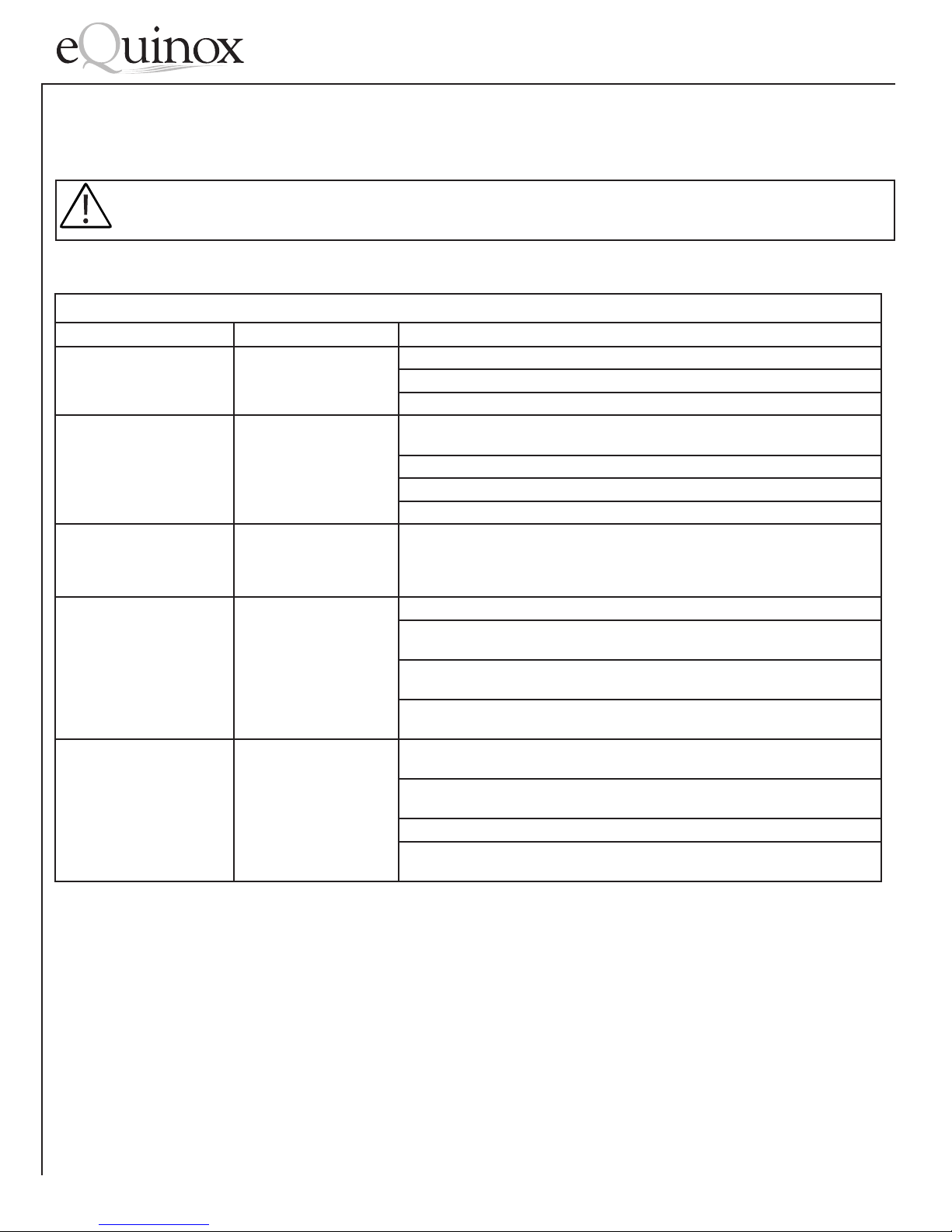
User Troubleshooting Table
Do Not Ignore Alarms
WARNING: THE MANUFACTURER RECOMMENDS AN ALTERNATE SOURCE OF SUPPLEMENTAL OXYGEN IN THE EVENT OF A POWER OUTAGE, ALARM CONDITION, OR MECHANICAL FAILURE. CONSULT YOUR PHYSICIAN OR EQUIPMENT PROVIDER FOR THE TYPE OF RESERVE
SYSTEM REQUIRED.
Yellow Light
Symptom Possible Cause Your Action
The yellow light is on solid. The
alarm is giving 1 beep every 30
seconds.
The yellow light is flashing. The
battery icon is flashing. The
alarm is giving 1 beeps every 2
minutes.
The yellow light is flashing. The
battery icon is flashing. The
alarm is giving 2 beeps every
30 seconds.
The yellow light is flashing. The
alarm is giving 1 beep every 2
minutes.
The yellow light is flashing.
There is no audible alarm.
The eQuinox has detected a
problem with the connection to the battery pack.
The eQuinox battery pack
is warm.
The eQuinox battery pack
voltage is low.
The eQuinox has detected a
flow restriction causing low
or blocked flow.
The eQuinox has detected
low oxygen levels.
1) Remove battery pack and re-install to ensure that it is secure in the concentrator.
2) If possible, install a separate battery pack in the eQuinox.
3) If this problem persists, contact healthcare provider.
1) Re-attach the eQuinox to external power or install a fully-charged battery pack in the
eQuinox. Allow warm battery pack to cool outside the concentrator for 30 minutes.
2) Re-charge the battery pack using AC power
3) Replace the battery pack if another is available.
4) If the condition persists, contact your healthcare provider.
1) Plug eQuinox into AC power supply and recharge or replace battery pack with fully
charged battery pack.
1) Clean and replace cabinet inlet filter
2) Ensure that the cannula is not kinked or blocked. If used with a humidifier bottle,
ensure that it is filled properly and not creating a blockage.
3) Ensure that the eQuinox has proper ventilation. It needs to be at least 3 inches from
any surface to ensure the vents aren’t blocked.
4) If the problem persists, switch to an alternate source of oxygen and contact healthcare provider for assistance.
1) Ensure the air intake filter is not clogged or restricted. Clean and replace the filter if
necessary.
2) Ensure the eQuinox is in a well ventilated area. Make sure there are at least 3 inches
between the back of the eQuinox and any obstructions (furniture, curtain, etc.)
3) If operating in the car, be sure the back of the eQuinox is facing outward in the seat.
4) If the condition persists, switch to an alternate source of oxygen and contact your
healthcare provider immediately.
16 — 4805-C1 C (English)
Page 17
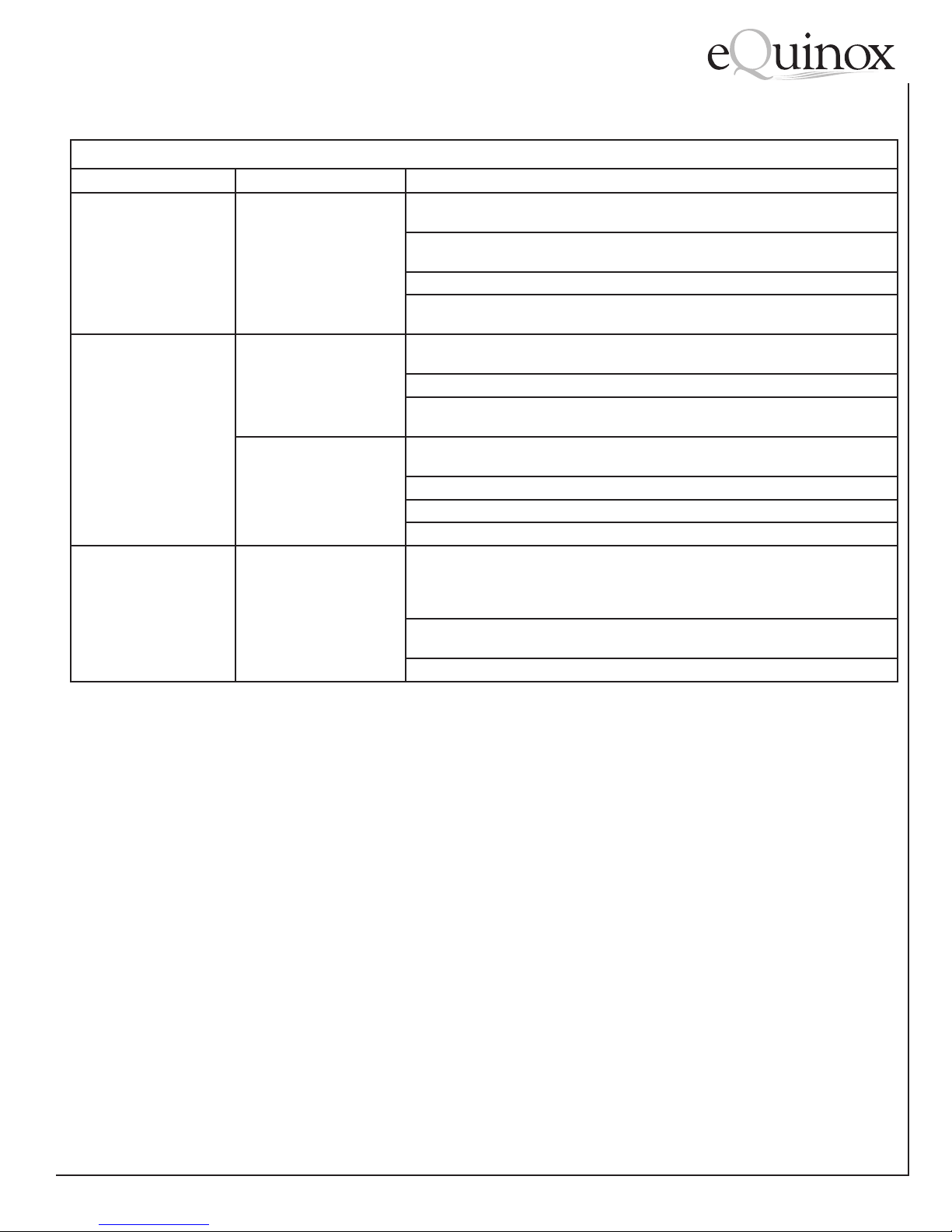
Red Light
Symptom Possible Cause Your Action
1) Ensure the air intake filter is not clogged or restricted. Clean and replace the filter if
necessary.
The red light is flashing.
The alarm is giving 3 beeps
every 2 minutes.
The red light is flashing. The
alarm is giving a constant
beep. The LCD displays
********. The eQuinox is
not delivery oxygen and will
not power on.
The red light is solid. The
display screen says “FAIL”.
The eQuinox is not producing delivering oxygen and
will not power on.
The eQuinox has detected
low oxygen levels
The eQuinox has lost power
temporarily while running on
external power.
The eQuinox has lost power
due to a depleted battery
pack (battery pack) charge or
an overheated battery pack.
The eQuinox has experienced
a system malfunction.
2) Ensure the eQuinox is in a well ventilated area. Make sure there are at least 3 inches
between the back of the eQuinox and any obstructions (furniture, curtain, etc.)
3) If operating in the car, be sure the back of the eQuinox is facing outward in the seat.
4) If the condition persists, switch to an alternate source of oxygen and contact your
healthcare provider immediately.
1) Inspect the external (AC or DC) power supply and ensure that its connections are
secure at the eQuinox, the transformer, and the external power outlet.
2) If possible, attempt to use another electrical (AC or DC) outlet to power the eQuinox.
3) If the condition persists, switch to an alternate source of oxygen and contact your
healthcare provider immediately.
1) Re-attach the eQuinox to external power or install a fully-charged battery pack in the
eQuinox. Allow warm battery pack to cool outside the concentrator for 30 minutes.
2) Re-charge the battery pack using AC power
3) Replace the battery pack if another is available.
4) If the condition persists, contact your healthcare provider.
1) Remove the battery pack and disconnect the AC or DC power supply from the eQuinox.
The red light should disappear and the FAIL message will disappear from the screen when
the power sources are removed. Wait approximately 20 seconds, reconnect power sources, and attempt to power on the eQuinox again.
2) If the eQuinox does power on, monitor it to determine if the FAIL message occurs
again. If the FAIL message occurs again, contact your healthcare provider immediately.
3) If the eQuinox does not power back on, contact your healthcare provided immediately.
eQuinox (Model 4000) User Manual — 17
Page 18

Other Alarm Conditions
Symptom Possible Cause Your Action
1) Pulse mode may not work correctly if the user has any condition that causes blocked/restricted nasal
passages. (Illness, deviated septum, etc.)
2) Ensure cannula is no longer than 7 feet in length.
3) Ensure that there are no kinks or blockage in cannula tubing.
4) If a humidifier bottle is connected, remove the humidifier bottle and connect cannula directly to outlet
port. Pulse mode will not work with a humidifier bottle installed.
5) If the condition persists, contact your healthcare provider.
1) Verify that the outlet is providing power. Do not connect the power supply to a dimmer circuit or a
power strip.
2) Check that cable connections on power supplies are secure to the wall/vehicle and concentrator. If
using the AC power supply, check the cable connection on the power supply transformer as well.
3) Ensure that the power verification lights are on.
- There will be a green light on the power supply box.
- There will be a green light on the eQuinox concentrator control panel in the shape of a power cord.
4) If power verification LEDs are not lit, remove all connections of the power supply for 20 seconds and
reconnect.
5) If the condition persists, contact your healthcare provider.
1) Connect to AC power to recharge the battery. Verify that the battery charges for 2-5 hours and the
battery icon is full and not flashing before use.
2) Refer to the actions for “Battery Pack is Not Charging” Symptom below.
1) Ensure that you are using the flow rate prescribed by your physician and that pulse or continuous flow
is being used as required.
1) Attempt to drain the battery pack completely. Do this by running the eQuinox on battery power until
the machine shuts off completely. Then remove the battery and allow it to cool for approximately 30
minutes. After this time, re-insert the battery in the eQuinox and recharge it using AC power.
2) If the battery still does not last as long as it should after following step 1, contact your healthcare
provider.
1) Verify that the outlet is providing power. Do not connect the power supply to a dimmer circuit or a
power strip.
2) Check that cable connections on power supplies are secure to the wall/vehicle and concentrator. If
using the AC power supply, check the cable connection on the power supply transformer as well.
3) Ensure that the power verification lights are on.
- There will be a green light on the power supply box.
- There will be a green light on the eQuinox concentrator control panel in the shape of a power cord.
4) If power verification LEDs are not lit, remove all connections of the power supply for 20 seconds and
reconnect.
5) If the condition persists, contact your healthcare provider.
1) Remove battery pack and re-install to ensure that it is secure in the concentrator.
2) Inspect the eQuinox for a solid yellow light when the battery is installed or a flashing battery icon
when attempting to charge. If either of these symptoms is present, continue to step 3
3) If possible, install a separate battery pack in the eQuinox. If the replacement battery works properly,
then the original battery needs to be replaced.
4) If this problem persists contact healthcare provider.
1) Contact your healthcare provider.
While in pulse mode,
the pulse mode LED
flashes quickly for 15
seconds.
Battery pack is draining while plugged in to
AC/DC power supply
The Battery pack
(battery) charge is not
lasting as long as it
should.
The Battery Pack (battery) is not charging.
The eQuinox beeps 3
times when it is first
powered on.
18 — 4805-C1 C (English)
The eQuinox is
unable to detect
the user’s breathing
effort. See page
15 for pulse mode
information.
The eQuinox is not
receiving power
from the attached
power supply.
The battery pack
was not fully
charged
The eQuinox was
not operating at the
anticipated flow
rate.
The battery pack is
not preforming to
specifications.
The eQuinox is not
receiving external
AC power to charge
the battery.
The eQuinox is not
properly communicating the battery
pack to charge it.
The internal battery
that powers the
alarms is low
Page 19
Cleaning, Care & Routine Maintenance
Routine Maintenance
Only a service technician trained and qualied by CAIRE should
work on the internal parts of the eQuinox.
Preventative Maintenance (PM) should be done every year.
Talk to your provider to arrange a PM schedule. Your home
care provider or qualied technician will inspect the following
parts only when needed: alarms, internal 9-volt battery, battery,
internal lters and other internal parts.
Note: If three beeps sound after the power ON self-test, this indicates the
9v battery is low in power. Contact your home care provider if you hear
three beeps.
User Care and Cleaning of the Device
Cannula Replacement
Replace your supply tubing and cannula as often as your
home care provider recommends. Your physician or home
care provider will provide you with cleaning, disinfection and
replacement information.
Note: Always follow the cannula manufacturer’s instructions for proper
use. Replace the disposable cannula as recommended by the cannula
manufacturer or your Equipment Provider. Additional supplies are available from your Equipment Provider.
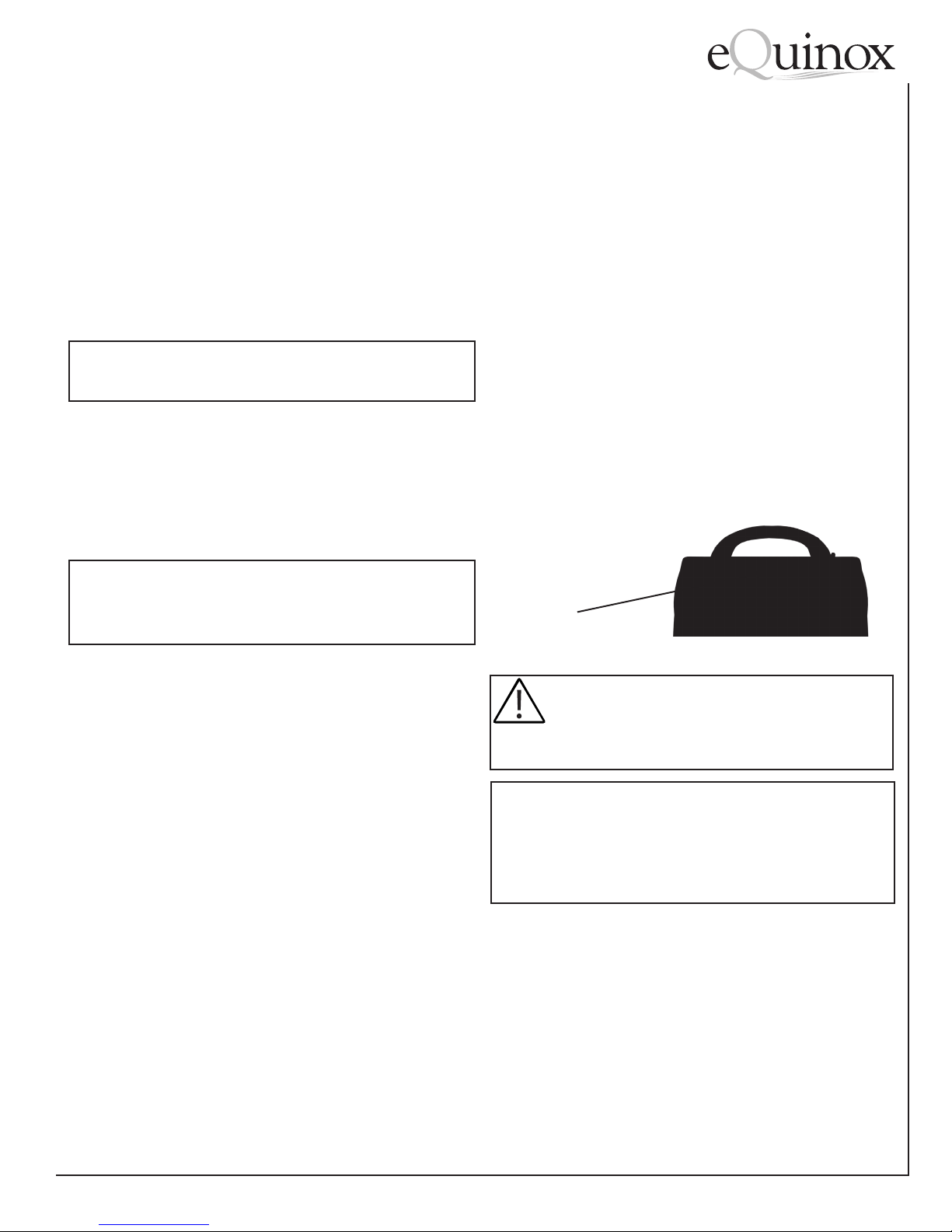
Air Inlet Filter
Ambient air is drawn into the device through the air inlet located
on the top rear of the device. Cleaning the air inlet lter is the
most important maintenance activity you will perform as a user.
Cleaning the air inlet lter will keep your eQuinox performing
properly. Check this air inlet lter daily and clean it at least once
a week using the following procedure:
1. Remove the air inlet filter
2. Wash the filter in warm tap water using a mild soap
detergent solution
3. Rinse the filter thoroughly with clear tap water and squeeze
out the excess water
4. Allow the filter to air dry
5. Reinsert the filter in the cabinet
Cleaning tip: Keep a clean second lter as a replacement for use
when one lter is drying.
Air inlet
Filter
CAUTION: Do not operate the Oxygen Concentrator
without the air intake filter in place. If a second filter is
provided, insert the “replacement” filter before you clean
the dirty filter. Clean the dirty filter in a warm soap and water
solution then dry thoroughly prior to use.
Note: The Manufacturer does not recommend the sterilization of this
equipment.
Note: Do not operate the Oxygen Concentrator without the air intake
lter in place. If a second lter is provided, insert the “replacement” lter
before you clean the dirty filter. Clean the dirty filter in a warm soap and
water solution then dry thoroughly prior to use.
The air inlet lter should be replaced annually. If the eQuinox is
used in a dusty environment, the lter may need to be replaced
more frequently. You should not operate the eQuinox without an
air inlet lter installed for more than 5 minutes.
eQuinox (Model 4000) User Manual — 19
Page 20
AC Power Supply, 12VDC Cable, Power Cord and Outer Case:
Turn OFF the eQuinox and disconnect from AC or DC power
before you clean or disinfect. DO NOT spray right onto the outer
case. Use a damp (not wet) cloth or sponge. Spray the cloth or
sponge with a mild cleaning solution to clean the cabinet and
power supply. To disinfect the eQuinox, use Lysol® Brand II
disinfectant (or equivalent). Follow the directions of the cleaner
manufacturer.
WARNING: ELECTRICAL SHOCK HAZARD. TURN OFF THE
UNIT AND DISCONNECT THE POWER CORD FROM THE
ELECTRICAL OUTLET BEFORE YOU CLEAN THE UNIT TO PREVENT ACCIDENTAL ELECTRICAL SHOCK AND BURN HAZARD. ONLY
YOUR EQUIPMENT PROVIDER OR A QUALIFIED SERVICE TECHNICIAN
SHOULD REMOVE THE COVERS OR SERVICE THE UNIT. DO NOT USE
LIQUID DIRECTLY ON THE UNIT. A LIST OF UNDESIRABLE CHEMICAL
AGENTS INCLUDES BUT IS NOT LIMITED TO THE FOLLOWING: ALCOHOL AND ALCOHOL-BASED PRODUCTS, CONCENTRATED CHLORINE-BASED PRODUCTS (ETHYLENE CHLORIDE), AND OIL- BASED
PRODUCTS (PINE-SOL®, LESTOIL®). THESE ARE NOT TO BE USED
TO CLEAN THE PLASTIC HOUSING ON OXYGEN CONCENTRATOR, AS
THEY CAN DAMAGE THE UNIT’S PLASTIC.
WARNING: ELECTRICAL SHOCK HAZARD. DISCONNECT THE POWER
CORD FROM THE ELECTRICAL OUTLET BEFORE YOU CLEAN THE UNIT
TO PREVENT ACCIDENTAL ELECTRICAL SHOCK AND BURN HAZARD.
ONLY YOUR EQUIPMENT PROVIDER OR A QUALIFIED SERVICE TECHNICIAN SHOULD REMOVE THE COVERS OR SERVICE THE UNIT.
WARNING: CARE SHOULD BE TAKEN TO PREVENT THE OXYGEN CONCENTRATOR AND THE BATTERY FROM GETTING WET OR ALLOWING
FLUIDS TO ENTER THE UNIT. THIS CAN CAUSE A MALFUNCTION OR
SHUT DOWN, AND CAUSE AN INCREASED RISK FOR ELECTRICAL
SHOCK OR BURNS.
WARNING: CLEAN THE CABINET, CONTROL PANEL, AND POWER
CORD ONLY WITH A MILD HOUSEHOLD CLEANER APPLIED WITH A
DAMP (NOT WET) CLOTH OR SPONGE, AND THEN WIPE ALL SURFACES DRY. DO NOT ALLOW ANY LIQUID TO GET INSIDE THE DEVICE. PAY
SPECIAL ATTENTION TO THE OXYGEN OUTLET FOR THE CANNULA
CONNECTION TO MAKE SURE IT REMAINS FREE OF DUST, WATER,
AND PARTICLES.
WARNING: DO NOT USE LIQUID DIRECTLY ON THE UNIT.
A LIST OF UNDESIRABLE CHEMICAL AGENTS INCLUDES
BUT IS NOT LIMITED TO THE FOLLOWING: ALCOHOL AND
ALCOHOL-BASED PRODUCTS, CONCENTRATED CHLORINE-BASED
PRODUCTS (ETHYLENE CHLORIDE), AND OIL- BASED PRODUCTS
(PINE-SOL®, LESTOIL®). THESE ARE NOT TO BE USED TO CLEAN
THE PLASTIC HOUSING ON OXYGEN CONCENTRATOR, AS THEY CAN
DAMAGE THE UNIT’S PLASTIC.
Optional Humidifier
If used, clean your humidier every day to decrease the
possibility of contamination. Follow the cleaning directions from
the home care provider or the manufacturer of the humidier.
Replace the humidier every month, or as directed by the
manufacturer or your home care provider. (Do not overll the
humidier.)
CAUTION: DO NOT operate the eQuinox and ambulate
while a humidifier is attached. Remove the humidifier bottle before walking. DO NOT lay the eQuinox down while
attached to a humidifier bottle.
eQuinox Cart
Before cleaning the eQuinox Cart, remove it from the eQuinox.
Use a damp (not wet) cloth or sponge and mild cleaning solution
to clean the cart.
Battery Pack (Battery)
The Battery in the eQuinox needs special care to make sure
it has a longer life and the highest level of performance. The
CAIRE Battery is the only Battery recommended for use with
the eQuinox.
Use a damp (not wet) cloth or sponge to clean the Battery. First
spray the cloth or sponge with a mild detergent, then clean the
Battery case and the latch.
CAIRE recommends replacing the battery pack after 2 years.
Battery Disposal
Your Battery is rechargeable and can be recycled. Always return
it to your home care provider for proper disposal. You can also
contact your local city or town ofces for directions on proper
disposal of the Battery.
eQuinox Oxygen System Disposal
Local environmental laws may not allow disposal of electrical
and/or electronic equipment such as the eQuinox or AC Power
Supply. Contact the local city or town ofces for instructions on
the correct way to dispose of electrical or electronic equipment.
You may also contact CAIRE Inc. for disposal information.
20 — 4805-C1 C (English)
Page 21

EMC Tables
Guidance and Manufacturer’s Declaration —Electromagnetic Emissions
The eQuinox is intended for use in the electromagnetic environment specified below. The customer or the user of the eQuinox should
assure that it is used in such an environment.
Emissions Test Compliance Electromagnetic Environment - Guidance
RF emissions
CISPR 11
RF emissions
CISPR 11
Harmonic emissions
IEC 61000-3-2
Voltage fluctuations/
flicker emissions
IEC 61000-3-3
Group 1
Class B
Class A
Complies
The eQuinox uses RF energy only for its internal function. Therefore, its RF
emissions are very low and are not likely to cause any interference in nearby
electronic equipment.
The eQuinox is suitable for use in all establishments, including domestic establishments and those directly connected to the public low-voltage power supply
network that supplies buildings used for domestic purposes.
eQuinox (Model 4000) User Manual — 21
Page 22

Guidance and Manufacturer’s Declaration—Electromagnetic Immunity
The eQuinox is intended for use in the electromagnetic environment specified below. The customer or the user of the eQuinox should
assure that it is used in such an environment.
Immunity test IEC 60601 test level Compliance level Electromagnetic environment – guidance
Electromagnetic envi-
ronment – guidance
IEC 61000-4-2
Electrical fast transient/burst
IEC 61000-4-4
Surge
IEC 61000-4-5
±6 kV contact
±8 kV air
±2 kV for power supply lines
±1 kV for input/output lines
±1 kV line(s) to line(s)
±2 kV line(s) to earth
<5 % UT
(>95 % dip in UT )
for 0,5 cycle
±6 kV contact
±8 kV air
±2 kV for power supply lines
N/A
±1 kV line(s) to line(s)
<5 % UT
(>95 % dip in UT )
for 0,5 cycle
Floors should be wood, concrete or ceramic tile.
If floors are covered with synthetic material, the
relative humidity should be at least 30 %.
Mains power quality should be that of a typical
commercial or hospital environment.
Mains power quality should be that of a typical
commercial or hospital environment.
Voltage dips, short
interruptions and
40 % UT
(60 % dip in UT )
for 5 cycles
40 % UT
(60 % dip in UT )
for 5 cycles
voltage variations on
power supply input
lines IEC 61000-4-11
70 % UT
(30 % dip in UT )
for 25 cycles
<5 % UT
(>95 % dip in UT )
for 5 sec
70 % UT
(30 % dip in UT )
for 25 cycles
<5 % UT
(>95 % dip in UT )
for 5 sec
Power frequency
(50/60 Hz) magnetic
3 A / m 3 A / m
field IEC 61000-4-8
NOTE UT is the A.C. mains voltage prior to application of the test level.
Mains power quality should be that of a typical
commercial or hospital environment. If the user of
the eQuinox requires continued operation during
power mains interruptions, it is recommended
that the eQuinox be powered from an uninterruptible power supply or a battery.
Power frequency magnetic fields should be at levels characteristic of a typical location in a typical
commercial or hospital environment.
22 — 4805-C1 C (English)
Page 23
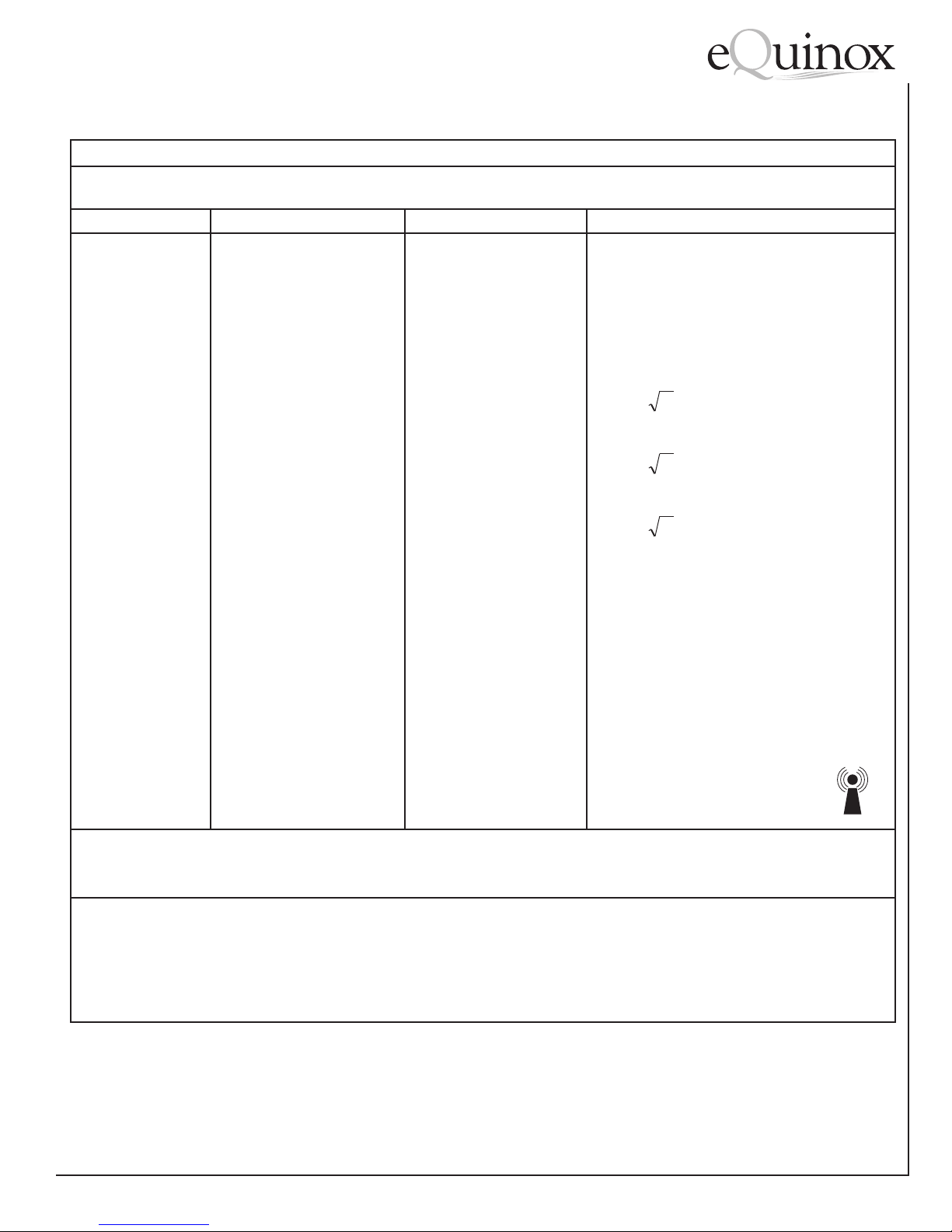
Guidance and Manufacturer’s Declaration–Electromagnetic Immunity
Pd 2.1
Pd 2.1
Pd 2.1
The eQuinox is intended for use in the electromagnetic environment specified below. The customer or the user of the eQuinox should
assure that it is used in such an environment.
Immunity test IEC 60601 test level Compliance level Electromagnetic environment – guidance
Conducted RF
IEC 61000-4-6
3 Vrms
150 kHz to 80 MHz
3 Vrms
Portable and mobile RF communications equipment should be used no closer to any part of the
eQuinox, including cables, than the recommended
separation distance calculated from the equation
applicable to the frequency of the transmitter.
Radiated RF
IEC 61000-4-3
3 V/m
80 MHz to 2,5 GHz
3 V/m
Recommended separation distance
= 80 MHz to 800 MHz
= 800 MHz to 2,5 GHz
where P is the maximum output power rating
of the transmitter in watts (W) according to the
transmitter manufacturer and d is the recommended separation distance in metres (m).
Field strengths from fixed RF transmitters, as
determined by an electromagnetic site survey,a
should be less than the compliance level in each
frequency range. b
Interference may occur in the vicinity of equipment marked with the following symbol:
NOTE 1 At 80 MHz and 800 MHz, the higher frequency range applies.
NOTE 2 These guidelines may not apply in all situations. Electromagnetic propagation is affected by absorption and reflection from struc-
tures, objects and people.
a
Field strengths from fixed transmitters, such as base stations for radio (cellular/cordless) telephones and land mobile radios,
amateur radio, AM and FM radio broadcast and TV broadcast cannot be predicted theoretically with accuracy. To assess the electromagnetic environment due to fixed RF transmitters, an electromagnetic site survey should be considered. If the measured field strength in the
location in which the eQuinox is used exceeds the applicable RF compliance level above, the eQuinox should be observed to verify normal
operation. If abnormal performance is observed, additional measures may be necessary, such as re-orienting or relocating the eQuinox.
b
Over the frequency range 150 kHz to 80 MHz, field strengths should be less than 3 V/m.
eQuinox (Model 4000) User Manual — 23
Page 24

Recommended separation distances
Pd 2.1
Pd 2.1
Pd 2.1
between portable and mobile RF communications equipment and the eQuinox
The eQuinox is intended for use in an electromagnetic environment in which radiated RF disturbances are controlled. The customer or
the user of the eQuinox can help prevent electromagnetic interference by maintaining a minimum distance between portable and mobile
RF communications equipment (transmitters) and the eQuinox as recommended below, according to the maximum output power of the
communications equipment.
Rated maximum output
power of transmitter
150 kHz to 80 MHz
W
0,01 0.12 0.12 0.23
0,1 0.38 0.38 0.73
1 1.2 1.2 2.3
10 3.8 3.8 7.3
100 12 12 23
For transmitters rated at a maximum output power not listed above, the recommended separation distance d in metres (m) can be estimated using the equation applicable to the frequency of the transmitter, where P is the maximum output power rating of the transmitter
in watts (W) according to the transmitter manufacturer.
NOTE 1 At 80 MHz and 800 MHz, the separation distance for the higher frequency range applies.
NOTE 2 These guidelines may not apply in all situations. Electromagnetic propagation is affected by absorption and reflection from struc-
tures, objects and people.
Separation distance according to frequency of transmitter
m
80 MHz to 800 MHz
800 MHz to 2,5 GHz
24 — 4805-C1 C (English)
Page 25
General Airline Travel Information
During taxi, take-off, and landing, the eQuinox must be turned
off and stowed under the seat or in another approved stowage
location so as to not block the aisle way or the entry way into the
row if the eQuinox will not be used.
Battery Pack & Airline Travel
Please allow for ground time (preflight check
in, security check in, etc.) and layovers.
During taxi, take-off, and landing, the user must be in a seat
location that does not restrict any other passenger’s access to, or
use of, any required emergency or regular exit, or the aisle(s) in
the passenger compartment of the aircraft if the eQuinox is used.
User’s are not permitted to be seated in an exit row if using the
eQuinox.
If the eQuinox is used when decompression of the cabin occurs
and the oxygen cabin oxygen system deploys, then the user is to
discontinue use of the eQuinox and use the aircraft supplemental
oxygen. The eQuinox unit is to be turned off after securing the
aircraft supplemental oxygen.
Prior to travel, the user needs to inspect the eQuinox to ensure it
is in good operational condition.
CAUTION: The US Department of Transportation (DOT) and
United Nations (UN) Regulations require the removal of
the battery from the device for all international airline
travel when the oxygen concentrator is checked as luggage. When
shipping the oxygen concentrator, the battery must also be removed
from the device and packaged properly.
Most airlines require that you have an adequate number of
fully charged batteries to power the device for at least 150% of
the expected maximum trip duration (ight times, all ground
time; before and after ight, and during connections and for
unexpected delays).
It is suggested to always carry
an extra battery with you on trips.
Each airline has their own requirements
for traveling with oxygen.
Contact your airline at least 48 hours prior to departure to inform
them you will be traveling with the eQuinox.
eQuinox (Model 4000) User Manual — 25
Page 26
CAIRE Inc.
®
2200 Airport Industrial Drive, Ste. 500
Ball Ground, GA 30107 USA
1-800-482-2473
Worldwide: www.CAIREmedical.com
Medical Product Services GmbH
Borngasse 20
35619 Braunfels, Germany
Worldwide: www.CAIREmedical.com
CAIRE Inc. reserves the right to discontinue its products, or change the prices, materials, equipment, quality, descriptions, specifications and/or processes to its products at any time without prior notice and with no further obligation or
consequence. All rights not expressly stated herein are reserved by us, as applicable.
26 — 4805-C1 C (English)
As of the date of this publication, eQuinox, SeQual and autoSAT and their related
logos (as applicable) are trademarks registered by CAIRE Inc.
Lysol® is a registered trademark of Reckitt Benckiser, UK.
OxySafe® is a registered trademark of Applied Home Healthcare Equipment.
Pine-Sol® and Lestoil® are registered trademarks of The Clorox Company.
Page 27
Manuel d'utilisation
eQuinox
TM
Modèle 4000
eQuinox (Model 4000) User Manual — 27
Page 28
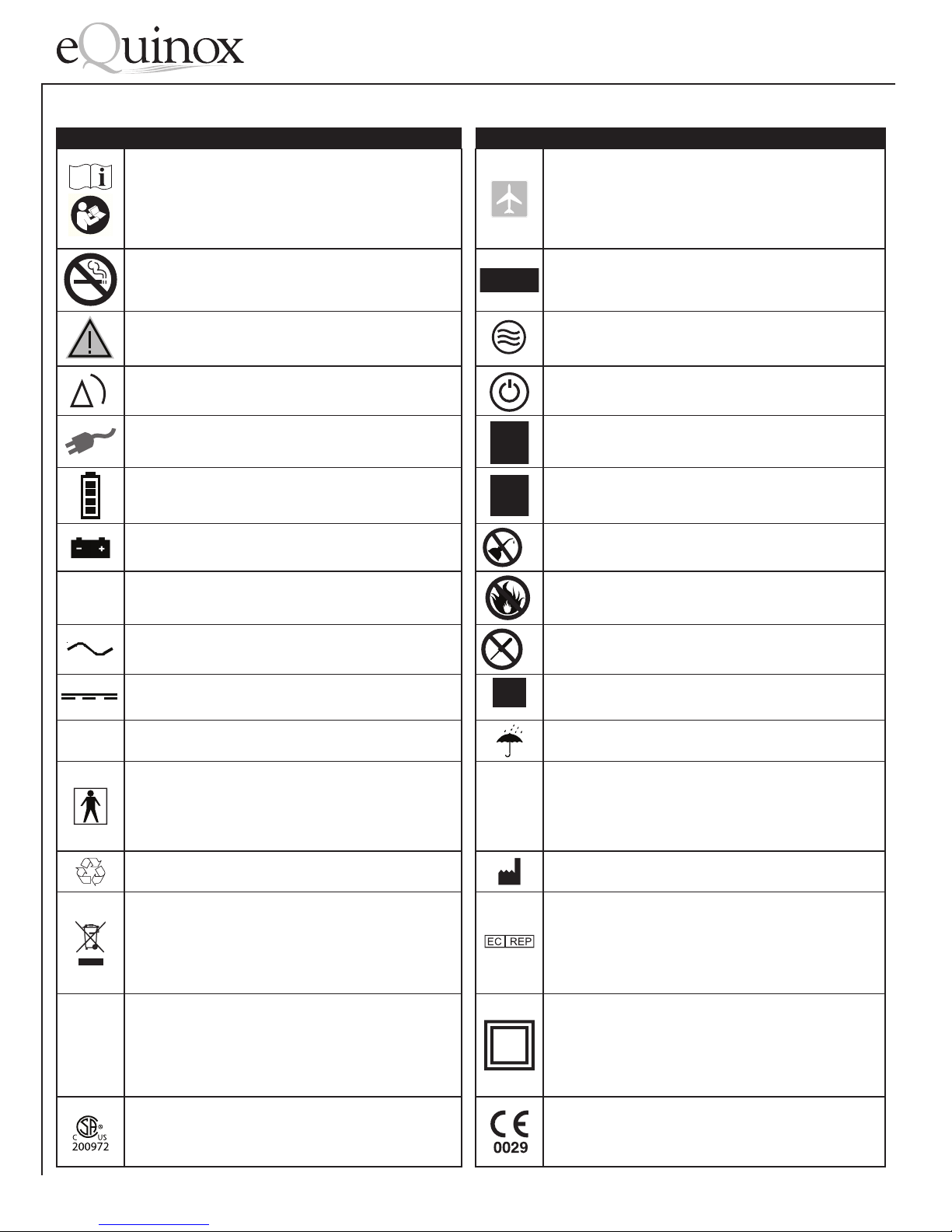
Commandes d'utilisation et indicateurs d'état du système
Symbole Définition Symbole Définition
Symbole d'homologation par la FAA : l’ Administration
Lire le manuel d'utilisation avant emploi. Se reporter
au manuel d'utilisation pour consulter les instructions.
fédérale de l'aviation (FAA, Federal Aviation
Administration) des États-Unis a homologué l'utilisation
de cet appareil à bord des avions commerciaux.
A
Icone d'interdiction de fumer : ne pas fumer à
proximité de l'unité.
Indicateur d'avertissement/ALERTE (jaune) Fonctionnement en mode intermittent
Indicateur d'ALARME (rouge)
Indicateur d'alimentation externe Augmenter le débit
Indicateur d'état de la batterie Diminuer le débit
Symbole de batterie Ne pas utiliser de graisse ou d'huile.
Ampères Maintenir à l'écart des ammes nues.
Courant alternatif
Icône CEI pour Alimentation CC (entrée) Surface chaude.
Indicateur de débit
Fonctionnement normal de l'appareil ; bouton de mise
sous tension
Ne contient aucune pièce nécessitant un entretien. Ne
pas ouvrir le capot.
0
IP22
28 — 4805-C1 C (French)
Sortie d'oxygène Ne pas exposer à l'eau.
2
Appareil de Type BF (degré de protection contre
les chocs électriques)
Symbole de recyclage Nom et adresse du fabricant
Ce symbole a pour objet d'inciter le propriétaire de
l'équipement à le retourner à un centre de recyclage à
la n de son cycle de vie, conformément à la directive
relative aux déchets d'équipements électriques et
électroniques (DEEE).
Protection contre la pénétration de gouttes d'eau et
de solides : le système eQuinox offre une protection
contre les effets dangereux de la pénétration de liquides
et d'objets étrangers solides conformément au code
IP22 déni par la directive CEI 60529.
Certié pour les marchés des États-Unis et du Canada,
conformément aux normes des États-Unis et du Canada
en vigueur.
IPX1
Équipement protégé contre les gouttes d'eau - IPX1 :
la batterie eQuinox et l'alimentation CA offrent une
protection contre les effets dangereux de la pénétration
de liquides. (IPX1, conformément à la directive
CEI 60529)
Représentant agréé au sein de l'Union européenne
Équipement de Classe II
Cet appareil est conforme aux exigences de la
Directive 93/42/CEE relative aux dispositifs
médicaux. Il porte par conséquent le marquage
CE illustré ci-contre.
Page 29

Contenu
Commandes d'utilisation et indicateurs d'état du système....................................................................... 28
Guide de démarrage rapide ..........................................................................................................................30
Indications d'utilisation ................................................................................................................................. 33
Contre-indications d'utilisation .................................................................................................................... 33
Consignes de sécurité .................................................................................................................................... 33
Conditions de fonctionnement recommandées .......................................................................................... 35
Instructions d'utilisation ................................................................................................................................ 36
Utilisation du module vocal........................................................................................................................... 39
Première utilisation du système eQuinox .................................................................................................... 40
Tableau de dépannage .................................................................................................................................. 42
Nettoyage, entretien et maintenance régulière ......................................................................................... 45
Tableaux de compatibilité électromagnétique ........................................................................................... 47
Informations générales concernant les voyages en avion ......................................................................... 51
Directives sur l'utilisation de batteries durant les voyages en avion .......................................................51
eQuinox (Model 4000) User Manual — 29
Page 30
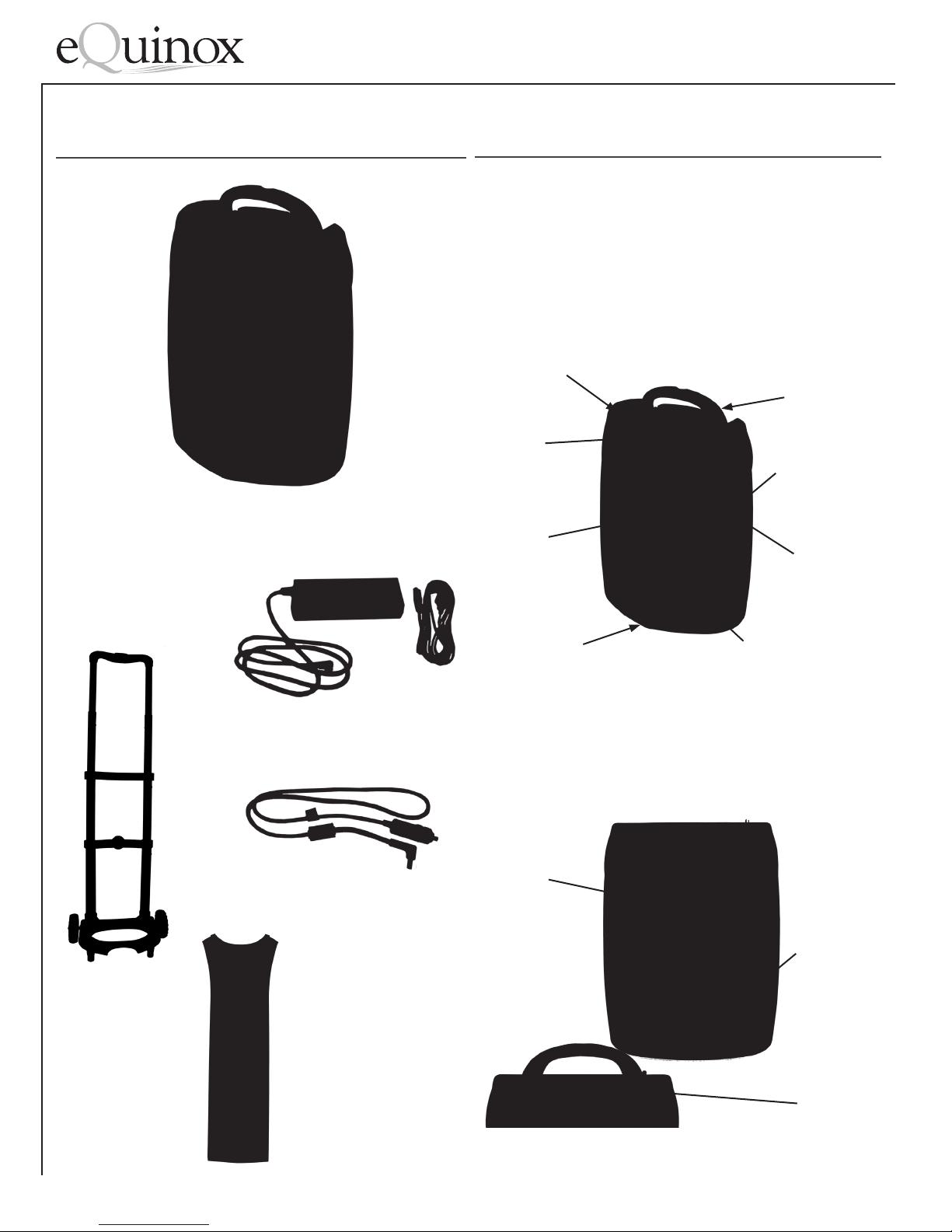
Guide de démarrage rapide
Déballage de votre système eQuinox
1
Alimentation CA
Familiarisation avec votre système eQuinox
2
Veillez à lire la totalité des avertissements, mises en garde et
informations additionnelles sur l'appareil dans le reste de ce manuel.
Familiarisez-vous avec les principales caractéristiques du système
eQuinox et le panneau de commande.
Port de sortie
d'oxygène
Panneau
de commande
Icône d'ho
mologation FAA
-
AVANT
Poignée
Prise d'alimentation externe
Loquet de
la batterie
Chariot eQuinox
Câble 12 V CC
Emplacement
de l'étiquette
de spécifications
nominales et du
o de série
numér
Compartiment
d'entretien
Batterie
ARRIÈRE
Orifice
d'évacuation
Batterie
30 — 4805-C1 C (French)
Filtre d'ad-
mission d'air
Page 31
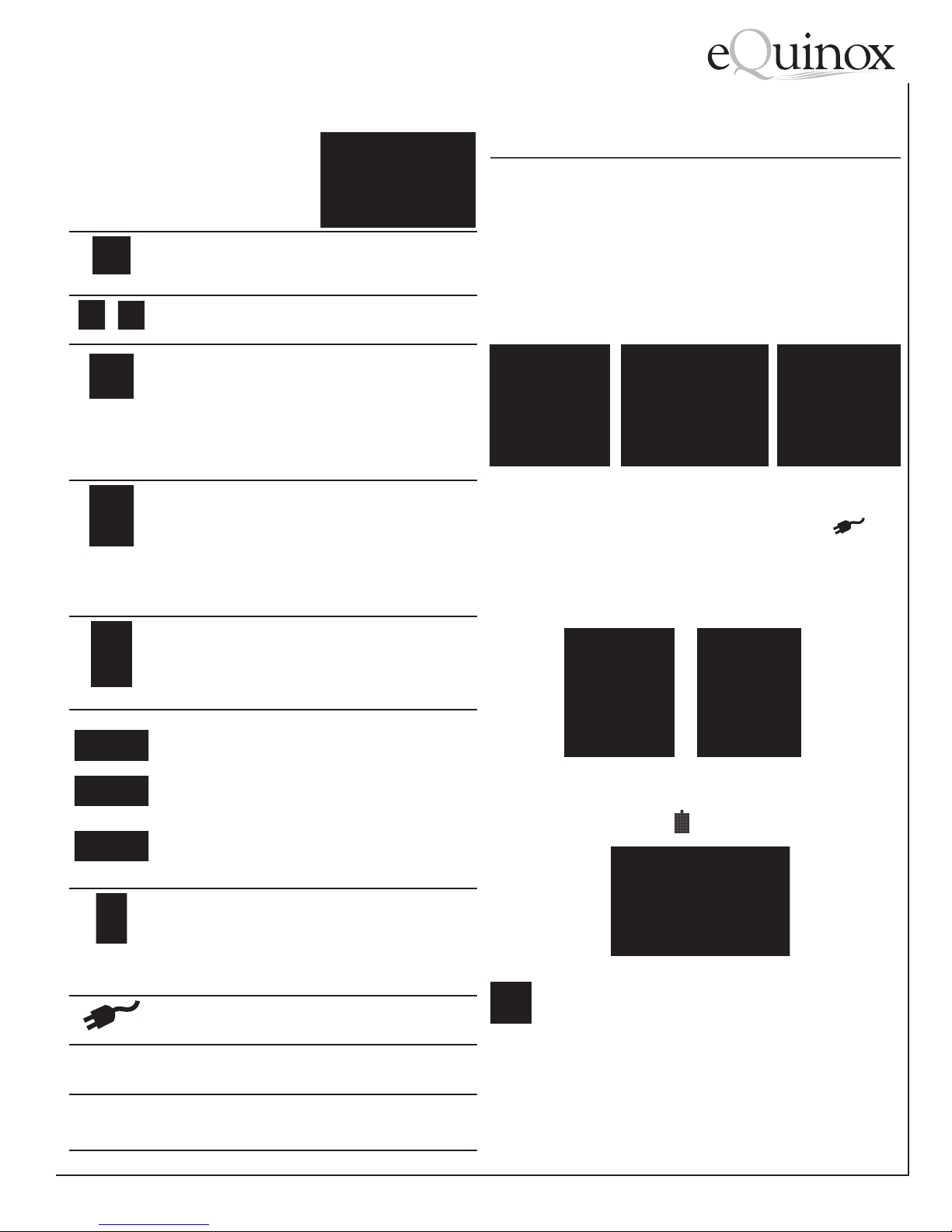
Le panneau de commande du système
eQuinox afche des informations
importantes sur le fonctionnement
de l'appareil.
Mise en marche du système eQuinox
3
Touche et indicateur MARCHE/ARRÊT (vert) : cette touche permet de mettre l'appareil en marche ou de l'arrêter.
L'indicateur vert s'allume lorsque l'appareil est en marche et
fonctionne correctement.
Touches d'augmentation ou de diminution du réglage de
débit :
Alarme sonore :
ment de l'appareil, soit en cas d'avertissement ou de défaillance, soit pour
confirmer que l'utilisateur a appuyé sur une touche valide.
Module vocal :
conditions de fonctionnement de l'appareil, des changements de source d'alimentation et des conditions d'avertissement ou de défaillance.
utilisez ces touches pour définir le réglage de débit qui
vous a été prescrit.
Touche et indicateur de mode d'administration : cette touche
permet de passer du mode d'administration à débit constant au
mode d'administration intermittente, et inversement. Le mode
d'administration intermittente active la technologie autoSAT.
Celle-ci allonge de façon significative la durée de fonctionnement de l'appareil lorsqu'il est alimenté par la batterie. Lorsque
ce mode est activé, l'indicateur vert de mode d'administration
intermittente s'allume. Une dose d'oxygène est délivrée et l'indicateur vert clignote à chaque effort respiratoire.
Indicateur d'ALERTE (jaune) : cet indicateur s'allume pour
indiquer une condition à signaler ou une mise en garde de
faible priorité. Vous pouvez continuer à utiliser votre système.
Reportez-vous au Tableau de dépannage pour connaître la
bonne marche à suivre, ou contacter votre organisme de soins
de santé à domicile. Lorsque l'indicateur jaune clignote, il
indique une alerte de priorité moyenne. Une réponse rapide est
nécessaire (il s'agit généralement d'un faible niveau d'oxygène
ou de chargement de la batterie).
Indicateur d'ALARME (rouge) : indique une condition d'alarme
de haute priorité. Une réponse immédiate est nécessaire.
Reportez-vous au Tableau de dépannage et contactez votre
organisme de soins de santé à domicile (il s'agit généralement
d'une panne électrique, d'un faible niveau d'oxygène ou d'un
dysfonctionnement).
Écran d'information
• C ou P – La lettre « C » indique le mode d'administration à
débit constant, la lettre « P » indique le mode d'administra-
tion intermittente.
• Durée restante sur la batterie – Lorsque le système
fonctionne sur l'alimentation par batterie, l'écran s'actualise
toutes les 20 secondes pour indiquer la durée restante estimée
de la batterie.
• Réglage (administration à débit constant ou administration
intermittente) - Chaque fois que vous mettez l'appareil sous
tension, le dernier mode et/ou niveau de réglage utilisé qui a
été enregistré est automatiquement appliqué au démarrage.
Indicateur d'état de la batterie : cet indicateur affiche le niveau
d'autonomie restante de la batterie. Chacune des cinq barres
horizontales grises représente environ 20 % de l'autonomie totale de la batterie. Lorsque la batterie est en cours de charge, les
barres d'indication de charge clignotent en cascade. Si la batterie
n'est pas installée ou est installée incorrectement, l'indicateur
d'état de la batterie reste éteint ou clignote.
Indicateur d'alimentation externe : lorsque le système eQuinox
est correctement connecté et utilise l'alimentation CA ou le câble
12 V CC, cet indicateur s'affiche sur le panneau de commande.
une alarme sonore vous informe des conditions de fonctionne-
si ce module est activé, un indicateur vocal vous informe des
Pour connecter la source d'alimentation CA : insérez le cordon
d'alimentation CA dans la prise d'alimentation externe encastrée
située sur le côté droit de l'appareil. Connectez le cordon
d'alimentation CA à la source d'alimentation et à une prise secteur
CA.
Étape 1 Étape 2 Étape 3
Lorsque le système eQuinox est correctement connecté, un voyant
vert s'allume sur l'alimentation CA. L'indicateur d'alimentation
externe s'allume également sur le panneau de commande.
Installation de la batterie : faites glisser la batterie dans le compartiment
vide jusqu'à ce qu'elle se verrouille en position appropriée. Elle doit
alors être parfaitement alignée sur l'avant de l'appareil.
Lorsque la batterie est correctement installée et que le système
eQuinox est en MARCHE ou est connecté à une alimentation CA,
l'indicateur d'état de la batterie
s'afche.
Touche et indicateur MARCHE/ARRÊT (vert)
Appuyez sur la touche « MARCHE/ARRÊT » et maintenez-la
enfoncée durant deux (2) secondes pour mettre en MARCHE votre
système eQuinox. Un bref autotest sonore et visuel s'effectue au
démarrage. Vériez que tous les indicateurs sont allumés et que
l'alarme sonore retentit durant trois (3) secondes. Appuyez sur la
touche « MARCHE/ARRÊT » et maintenez-la enfoncée durant
deux (2) secondes pour ARRÊTER votre système eQuinox.
eQuinox (Model 4000) User Manual — 31
Page 32
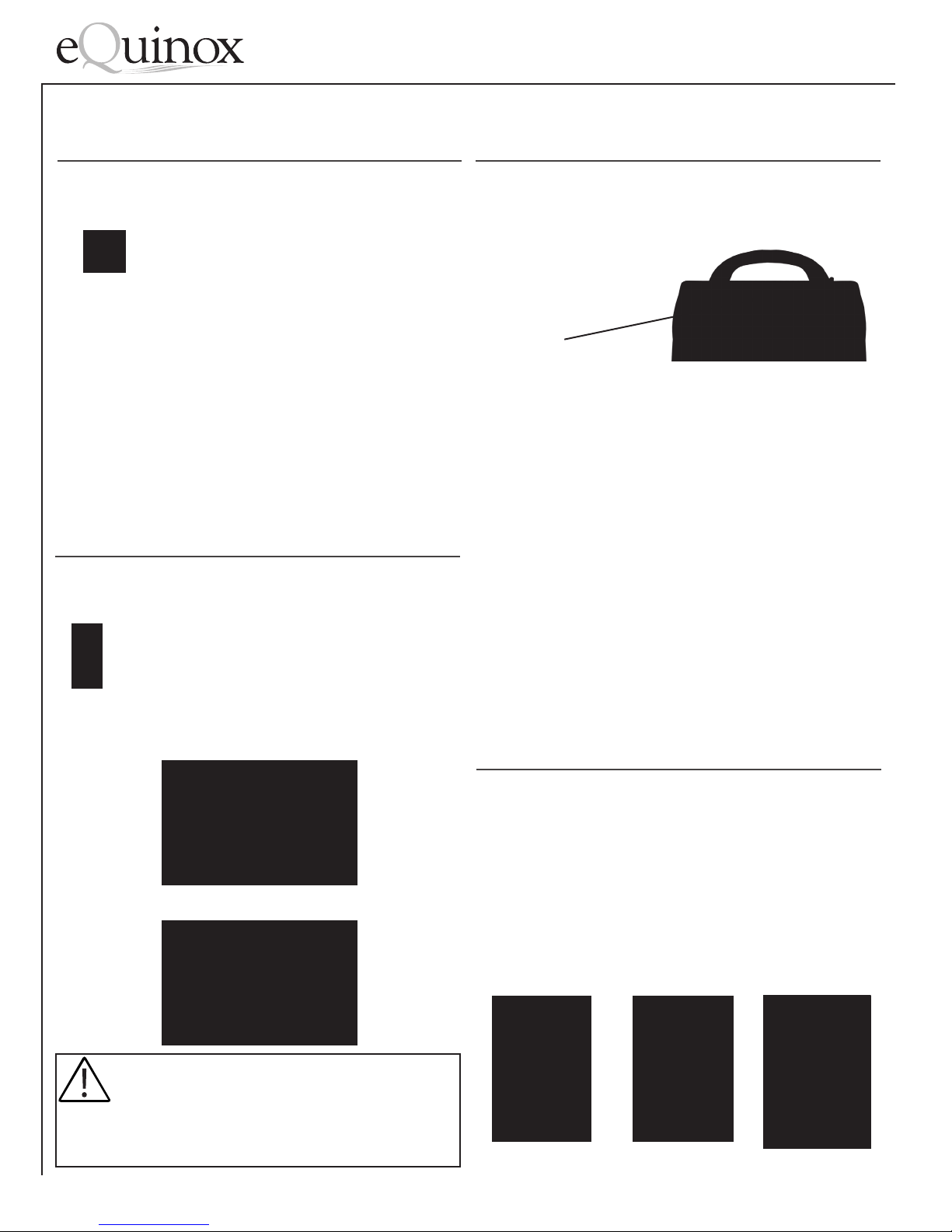
Sélection du mode d'administration
Utilisation du système eQuinox
4
Touche et indicateur de mode d'administration
Appuyez sur la touche de sélection du mode d'administration pour
sélectionner le mode souhaité. Appuyez sur cette touche de façon
répétée pour sélectionner alternativement le mode d'administration
intermittente et le mode d'administration à débit constant. En mode
d'administration à débit constant, la lettre « C » s'afche à l'écran et
l'oxygène est délivré à un débit continu compris entre 0,5 et 3 l/min.
En mode d'administration intermittente, la lettre « P » s'afche à l'écran
et l'oxygène est délivré dans un bolus au début de chaque inspiration.
Les niveaux de réglage 1 à 9 du mode d'administration intermittente
délivrent un volume de bolus de 16 à 192 ml. L'administration
intermittente peut être ajustée en fonction de la sensibilité et de la
fréquence respiratoire de délivrance du bolus. Les réglages de débit
appliqués dans ces deux modes doivent vous être prescrits par votre
médecin.
Réglage du niveau de débit prescrit
5
Touches d'augmentation ou de diminution du
réglage de débit
6
Filtre d'admission d'air
Filtre d'ad-
mission d'air
Votre unité est équipée d'un ltre d'admission d'air (ltre
supplémentaire fourni). Contrôlez-le quotidiennement et nettoyez-le
au moins une fois par semaine. Pour consulter les instructions de
nettoyage, reportez-vous à la page 19.
Connectez le tube d'alimentation en oxygène à la sortie d'oxygène
et connectez la canule à oxygène conformément aux instructions
fournies avec celle-ci ou selon les instructions de votre organisme
de soins de santé à domicile.
Respirez normalement au travers de la canule nasale.
Lorsque le système fonctionne sur l'alimentation par batterie, le
mode d'administration intermittente offre une durée d'utilisation
supérieure.
À l'aide des touches + ou -, dénissez le réglage de débit qui vous a
été prescrit par votre médecin.
Affichage en mode d'administration à débit constant
Affichage en mode d'administration intermittente
AVERTISSEMENT : IL EST TRÈS IMPORTANT DE SÉLECTIONNER LE DÉBIT D'OXYGÈNE QUI VOUS A ÉTÉ PRESCRIT. NE
MODIFIEZ PAS LE RÉGLAGE DE DÉBIT SANS Y AVOIR ÉTÉ
INVITÉ PAR UN MÉDECIN. LE CONCENTRATEUR D'OXYGÈNE PEUT
ÊTRE UTILISÉ PENDANT LE SOMMEIL DU PATIENT SOUS LA RECOMMANDATION D'UN CLINICIEN QUALIFIÉ.
Utilisation du chariot eQuinox
7
Alignez le système eQuinox sur le socle du chariot de façon à ce
qu'il repose à plat sur celui-ci et en position verticale. Alignez la
grande vis letée sur l'orice d'insertion situé à l'arrière de l'appareil
eQuinox. Serrez ensuite à la main la molette du chariot jusqu'à
ce que celui-ci soit correctement xé à l'appareil. Appuyez sur le
bouton-poussoir situé sur la poignée télescopique du chariot et tirez
celle-ci vers le haut an de régler sa hauteur.
32 — 4805-C1 C (French)
Page 33
Important !
Consignes de sécurité
Les instructions de sécurité se définissent comme
indiqué ci-dessous :
AVERTISSEMENT : INFORMATIONS IMPORTANTES DE
SÉCURITÉ RELATIVES AUX DANGERS POUVANT CAUSER
DES BLESSURES GRAVES.
MISE EN GARDE : informations importantes pour éviter
tout endommagement du système eQuinox.
Remarque : informations exigeant une attention particulière.
Indications d'utilisation
Le système eQuinox est conçu pour l’administration d’oxygène
d’appoint. L’appareil ne doit pas être utilisé à des ns de
réanimation, et n’offre aucune capacité de surveillance du patient.
AVERTISSEMENT : IL EST TRÈS IMPORTANT DE SÉLECTIONNER LE DÉBIT D'OXYGÈNE QUI VOUS A ÉTÉ PRESCRIT. NE
MODIFIEZ PAS LE RÉGLAGE DE DÉBIT SANS Y AVOIR ÉTÉ
INVITÉ PAR UN MÉDECIN. LE CONCENTRATEUR D'OXYGÈNE PEUT
ÊTRE UTILISÉ PENDANT LE SOMMEIL DU PATIENT SOUS LA RECOMMANDATION D'UN CLINICIEN QUALIFIÉ.
AVERTISSEMENT : CONFORMÉMENT À LA LOI FÉDÉRALE DES ÉTATSUNIS, LA VENTE ET LA LOCATION DE CET APPAREIL DOIVENT SE
FAIRE SUR ORDONNANCE D'UN MÉDECIN OU D'UN PRESTATAIRE DE
SOINS MUNI D'UNE LICENCE.
AVERTISSEMENT : CET APPAREIL NE DOIT PAS ÊTRE UTILISÉ À DES
FINS DE RÉANIMATION. IL PEUT ÊTRE NÉCESSAIRE DE SURVEILLER LES PATIENTS DES SERVICES GÉRIATRIQUES, PÉDIATRIQUES
OU TOUT AUTRE TYPE DE PATIENT N'ÉTANT PAS EN MESURE DE
COMMUNIQUER UN MALAISE OU DE VOIR OU ENTENDRE LES
ALARMES PENDANT L'UTILISATION DE CET APPAREIL. LES PATIENTS
SOUFFRANT DE DÉFICIENCE AUDITIVE OU VISUELLE PEUVENT AVOIR
BESOIN D'UNE ASSISTANCE POUR SURVEILLER LES ALARMES.
Contre-indications d'utilisation
AVERTISSEMENT : DANS CERTAINS CAS, L'UTILISATION
D'OXYGÈNE SANS AVIS MÉDICAL PEUT S'AVÉRER DAN-
GEREUSE. CET APPAREIL DOIT ÊTRE UTILISÉ UNIQUEMENT
SUR PRESCRIPTION D'UN MÉDECIN.
AVERTISSEMENT : VEILLEZ À NE PAS L'UTILISER EN PRÉSENCE
D'ANESTHÉSIQUES INFLAMMABLES.
AVERTISSEMENT : COMME AVEC TOUT APPAREIL ÉLECTRIQUE,
L'UTILISATEUR PEUT ÊTRE CONFRONTÉ À DES PÉRIODES DE
NON-FONCTIONNEMENT DÛ À DES PANNES D'ALIMENTATION
ÉLECTRIQUE OU À LA NÉCESSITÉ DE FAIRE ENTRETENIR LE SYSTÈME
EQUINOX PAR UN TECHNICIEN QUALIFIÉ. LE SYSTÈME EQUINOX
N'EST PAS ADAPTÉ AUX PATIENTS POUR LESQUELS UNE TELLE
INTERRUPTION TEMPORAIRE POURRAIT AVOIR DES CONSÉQUENCES
NÉFASTES SUR LA SANTÉ.
AVERTISSEMENT : AUCUNE MODIFICATION DE CET ÉQUIPEMENT N'EST AUTORISÉE.
AVERTISSEMENT : LE FABRICANT RECOMMANDE DE DISPOS-
ER D'UNE AUTRE SOURCE D'ALIMENTATION EN OXYGÈNE
EN CAS DE COUPURE DE COURANT, DE DÉCLENCHEMENT
D'ALARME DE L'APPAREIL OU DE PANNE MÉCANIQUE. CON-
SULTEZ VOTRE MÉDECIN OU VOTRE FOURNISSEUR AGRÉÉ AU SUJET DU
TYPE DE SYSTÈME DE RÉSERVE À UTILISER.
AVERTISSEMENT : CET APPAREIL DISPENSE UN OXYGÈNE EXTRÊMEMENT PUR, SUSCEPTIBLE DE S'ENFLAMMER TRÈS VITE. NE FUMEZ
PAS À PROXIMITÉ ET ÉVITEZ TOUTE FLAMME NUE DANS LA MÊME
PIÈCE QUE (1) CET APPAREIL, OU QUE (2) TOUT AUTRE ACCESSOIRE
DE TRANSPORT D'OXYGÈNE. LE NON-RESPECT DE CET AVERTISSEMENT PEUT AVOIR POUR CONSÉQUENCES UN INCENDIE, DES DÉGÂTS
MATÉRIELS ET/OU DES BLESSURES GRAVES VOIRE MORTELLES.
AVERTISSEMENT : N'UTILISEZ PAS CET APPAREIL DANS UN ESPACE
FERMÉ OU CONFINÉ (PAR EXEMPLE DANS UNE PETITE VALISE OU UN
SAC) OFFRANT UNE VENTILATION POTENTIELLEMENT INSUFFISANTE.
CECI POURRAIT PROVOQUER UNE SURCHAUFFE DU CONCENTRATEUR
D'OXYGÈNE ET UNE DÉGRADATION DE SES PERFORMANCES.
AVERTISSEMENT : LE CONCENTRATEUR D'OXYGÈNE DOIT ÊTRE PLACÉ
À L'ÉCART DE TOUTE SOURCE DE FUMÉE, DE POLLUTION OU DE
VAPEURS.
AVERTISSEMENT : LE RECOURS À DES ACCESSOIRES D'ADMINISTRATION D'OXYGÈNE NON PRÉVUS POUR UNE UTILISATION AVEC
CE CONCENTRATEUR D'OXYGÈNE EST SUSCEPTIBLE DE NUIRE AUX
PERFORMANCES DE L'APPAREIL. LES RÉFÉRENCES DES ACCESSOIRES
RECOMMANDÉS SONT INDIQUÉES DANS CE MANUEL.
AVERTISSEMENT : EN CAS DE CHUTE, D'ENDOMMAGEMENT OU
D'EXPOSITION DU CONCENTRATEUR D'OXYGÈNE À DE L'EAU, CONTACTEZ VOTRE ORGANISME DE SOINS DE SANTÉ À DOMICILE AFIN
DE PROCÉDER À L'INSPECTION OU AUX RÉPARATIONS POSSIBLES DE
L'APPAREIL. VEILLEZ À NE PAS UTILISER LE CONCENTRATEUR D'OXYGÈNE SI SA FICHE OU SON CORDON D'ALIMENTATION ÉLECTRIQUE
SONT ENDOMMAGÉS.
AVERTISSEMENT : VEILLEZ À ATTACHER CORRECTEMENT LE CONCENTRATEUR D'OXYGÈNE À L'AIDE D'UNE CEINTURE OU PAR TOUT AUTRE
MOYEN APPROPRIÉ PENDANT LE TRANSPORT DANS UN VÉHICULE
AFIN D'ÉVITER TOUTE BLESSURE OU DÉTÉRIORATION.
AVERTISSEMENT : NE LAISSEZ PAS LES ORIFICES D'ADMISSION
ET D'ÉVACUATION DE L'AIR S'OBSTRUER. VEILLEZ À NE PAS FAIRE
TOMBER OU INSÉRER DES OBJETS DANS LES OUVERTURES DE L'APPAREIL. CECI POURRAIT PROVOQUER UNE SURCHAUFFE DU CONCENTRATEUR D'OXYGÈNE ET UNE DÉGRADATION DE SES PERFORMANCES.
AVERTISSEMENT : VEILLEZ À NE PAS REMPLIR DE FAÇON EXCESSIVE
L'HUMIDIFICATEUR OPTIONNEL. REMPLISSEZ-LE AVEC DE L'EAU
UNIQUEMENT, JUSQU'AU NIVEAU INDIQUÉ PAR LE FABRICANT DE
L'HUMIDIFICATEUR.
AVERTISSEMENT : VEILLEZ À NE PAS VOUS DÉPLACER AVEC LE
SYSTÈME EQUINOX LORSQU'UN HUMIDIFICATEUR EST CONNECTÉ.
RETIREZ LE FLACON DE L'HUMIDIFICATEUR AVANT DE VOUS DÉPLACER. VEILLEZ À NE PAS COUCHER LE SYSTÈME EQUINOX LORSQU'IL EST
CONNECTÉ À UN FLACON D'HUMIDIFICATEUR.
AVERTISSEMENT : LES RÉGLEMENTATIONS DU DÉPARTEMENT DES
TRANSPORTS DES ÉTATS-UNIS ET DES NATIONS UNIES (ONU) EXIGENT
QUE LA BATTERIE SOIT RETIRÉE DE L'APPAREIL SUR TOUS LES VOLS
INTERNATIONAUX SI CELUI-CI EST ENREGISTRÉ EN TANT QUE BAGAGE.
LORS DE L'EXPÉDITION DU CONCENTRATEUR D'OXYGÈNE, IL EST
ÉGALEMENT IMPÉRATIF DE RETIRER LA BATTERIE DE L'APPAREIL ET
DE L'EMBALLER CORRECTEMENT.
AVERTISSEMENT : LISEZ ET ASSUREZ-VOUS D'AVOIR COMPRIS LES
INFORMATIONS DE CE MANUEL AVANT D'UTILISER CET APPAREIL. SI
VOUS NE COMPRENEZ PAS LES AVERTISSEMENTS ET LES INSTRUCTIONS, CONTACTEZ VOTRE FOURNISSEUR AGRÉÉ AVANT D'ESSAYER
eQuinox (Model 4000) User Manual — 33
Page 34
D'UTILISER L'APPAREIL AFIN D'ÉVITER TOUT RISQUE DE
BLESSURE OU DE DÉGÂTS MATÉRIELS.
AVERTISSEMENT : SI VOUS VOUS SENTEZ MAL À L'AISE OU
EN CAS D'URGENCE MÉDICALE, SOLLICITEZ IMMÉDIATEMENT UNE
ASSISTANCE MÉDICALE.
AVERTISSEMENT : L'UTILISATION DU CONCENTRATEUR D'OXYGÈNE
À UNE TEMPÉRATURE NON CONFORME AUX CARACTÉRISTIQUES
TECHNIQUES PEUT LIMITER SA CAPACITÉ À DÉLIVRER LA CONCENTRATION EN OXYGÈNE SPÉCIFIÉE. REPORTEZ-VOUS À LA SECTION
CARACTÉRISTIQUES TECHNIQUES DE CE MANUEL POUR CONSULTER
LES LIMITES DE TEMPÉRATURE.
AVERTISSEMENT : VEILLEZ À NE PAS UTILISER D'HUILE, DE GRAISSE,
DE PRODUITS À BASE DE PÉTROLE OU D'AUTRES SUBSTANCES
INFLAMMABLES AVEC LES ACCESSOIRES DE TRANSPORT D'OXYGÈNE
OU AVEC LE CONCENTRATEUR D'OXYGÈNE. SEULES DES LOTIONS ET
DES CRÈMES À BASE D'EAU ET COMPATIBLES AVEC LA PRÉSENCE
D'OXYGÈNE DOIVENT ÊTRE UTILISÉES. L'OXYGÈNE ACCÉLÈRE LA
COMBUSTION DES SUBSTANCES INFLAMMABLES.
AVERTISSEMENT : EN CAS D'UTILISATION INCORRECTE DE LA BATTERIE, CELLE-CI PEUT SURCHAUFFER, PRENDRE FEU ET PROVOQUER
DES BLESSURES GRAVES. VEILLEZ À NE JAMAIS PERCER, COGNER
OU FAIRE TOMBER LA BATTERIE, MARCHER DESSUS OU L'EXPOSER
À DES IMPACTS OU DES CHOCS VIOLENTS. L'UTILISATION D'UNE
BATTERIE ENDOMMAGÉE PEUT PROVOQUER DES BLESSURES.
AVERTISSEMENT : LE CONCENTRATEUR D'OXYGÈNE NE DOIT PAS
ÊTRE UTILISÉ LORSQU'IL EST ACCOLÉ À OU EMPILÉ AVEC D'AUTRES
ÉQUIPEMENTS. SI UN TEL POSITIONNEMENT NE PEUT PAS ÊTRE
ÉVITÉ, IL CONVIENT DE SURVEILLER L'APPAREIL POUR S'ASSURER
QU'IL FONCTIONNE CORRECTEMENT.
MISE EN GARDE : si une alarme se déclenche ou si vous
constatez que le concentrateur d'oxygène ne fonctionne
pas correctement, reportez-vous au Tableau de dépannage figurant dans ce manuel. Si vous ne parvenez pas à
résoudre le problème, consultez votre fournisseur agréé.
MISE EN GARDE : suivez toutes les instructions du fabricant afin
d'éviter l'annulation de la garantie.
AVERTISSEMENT : NE TENTEZ PAS DE RÉALISER DES
OPÉRATIONS DE MAINTENANCE AUTRES QUE LES SOLU-
TIONS DE DÉPANNAGE DÉTAILLÉES DANS CE MANUEL.
NE RETIREZ PAS LES CAPOTS. SEUL LE FOURNISSEUR DE
L'APPAREIL OU UN TECHNICIEN QUALIFIÉ EST HABILITÉ À RETIRER
LES CAPOTS OU RÉPARER L'APPAREIL.
AVERTISSEMENT : UTILISEZ EXCLUSIVEMENT LES ACCESSOIRES
RECOMMANDÉS PAR LE FABRICANT. L'UTILISATION D'AUTRES
ACCESSOIRES POURRAIT S'AVÉRER DANGEREUSE ET ENDOMMAGER GRAVEMENT VOTRE CONCENTRATEUR D'OXYGÈNE, ET PROVOQUERAIT L'ANNULATION DE LA GARANTIE.
AVERTISSEMENT : LE FABRICANT RECOMMANDE DE
DISPOSER D'UNE AUTRE SOURCE D'ALIMENTATION EN
OXYGÈNE EN CAS DE COUPURE DE COURANT, DE DÉ-
CLENCHEMENT D'ALARME DE L'APPAREIL OU DE PANNE
MÉCANIQUE. CONSULTEZ VOTRE MÉDECIN OU VOTRE FOURNISSEUR
AGRÉÉ AU SUJET DU TYPE DE SYSTÈME DE RÉSERVE À UTILISER.
AVERTISSEMENT : NE LAISSEZ PAS LES ORIFICES D'ADMISSION
ET D'ÉVACUATION DE L'AIR S'OBSTRUER. VEILLEZ À NE PAS FAIRE
TOMBER OU INSÉRER DES OBJETS DANS LES OUVERTURES DE
L'APPAREIL. CECI POURRAIT PROVOQUER UNE SURCHAUFFE DU
CONCENTRATEUR D'OXYGÈNE ET UNE DÉGRADATION DE SES PERFORMANCES.
AVERTISSEMENT : FUMER EN UTILISANT DE L'OXYGÈNE
CONSTITUE LA PREMIÈRE CAUSE DE BLESSURES ET DE
DÉCÈS LIÉS AUX INCENDIES. VOUS DEVEZ IMPÉRATIVEMENT RESPECTER LES AVERTISSEMENTS DE SÉCURITÉ
SUIVANTS :
AVERTISSEMENT : NE LAISSEZ PERSONNE FUMER ET N'UTILISEZ PAS
DE BOUGIES OU DE FLAMMES NUES DANS LA MÊME PIÈCE QUE
L'APPAREIL OU QUE LES ACCESSOIRES DE TRANSPORT D'OXYGÈNE.
AVERTISSEMENT : FUMER LORS DU PORT D'UNE CANULE À OXYGÈNE
PEUT PROVOQUER DES BRÛLURES AU VISAGE OU MÊME LA MORT.
AVERTISSEMENT : SI VOUS FUMEZ, CES 3 GESTES PEUVENT VOUS
SAUVER LA VIE : ARRÊTEZ LE CONCENTRATEUR D'OXYGÈNE, RETIREZ
LA CANULE ET QUITTEZ LA PIÈCE DANS LAQUELLE SE TROUVE L'APPAREIL.
AVERTISSEMENT : DES INDICATIONS « INTERDICTION DE FUMER
- UTILISATION D'OXYGÈNE » DOIVENT ÊTRE AFFICHÉES DE FAÇON
BIEN VISIBLE À VOTRE DOMICILE OU DANS TOUT LIEU OU DE L'OXYGÈNE EST UTILISÉ. LES PATIENTS ET LE PERSONNEL SOIGNANT
DOIVENT ÊTRE INFORMÉS DES DANGERS LIÉS AU FAIT DE FUMER EN
PRÉSENCE OU PENDANT L'UTILISATION D'OXYGÈNE MÉDICAL.
AVERTISSEMENT : N'UTILISEZ PAS VOTRE CONCENTRATEUR D'OXYGÈNE EN PRÉSENCE DE GAZ INFLAMMABLES, AFIN D'ÉVITER TOUT
RISQUE D'EMBRASEMENT RAPIDE SUSCEPTIBLE D'ENTRAÎNER DES
DÉGÂTS MATÉRIELS, DES BLESSURES OU LA MORT.
AVERTISSEMENT : LE FAIT DE RETIRER LA CANULE ET DE LA PLACER
SUR UN VÊTEMENT, UN DRAP, UN SOFA OU TOUTE AUTRE MATIÈRE
TEXTILE PEUT PROVOQUER UN EMBRASEMENT INSTANTANÉ EN CAS
D'EXPOSITION À UNE CIGARETTE, À UNE SOURCE DE CHALEUR OU À
UNE FLAMME.
AVERTISSEMENT : NE LAISSEZ JAMAIS UNE CANULE NASALE SUR OU
SOUS UN VÊTEMENT, UN DRAP OU UN COUSSIN. SI L'APPAREIL EST
ALLUMÉ SANS ÊTRE UTILISÉ, CES MATIÈRES RISQUENT DE S'ENFLAMMER AU CONTACT DE L'OXYGÈNE. ARRÊTEZ LE CONCENTRATEUR D'OXYGÈNE LORSQU'IL N'EST PAS UTILISÉ.
MISE EN GARDE : déconnectez toujours l'alimentation CA
de la prise secteur murale avant de déconnecter l'alimentation CA du concentrateur d'oxygène.
MISE EN GARDE : disposez toujours le tube d'alimentation en oxygène et les cordons d'alimentation de façon à prévenir tout risque
de chute.
MISE EN GARDE : lorsque le concentrateur d'oxygène est utilisé
dans une voiture, sur un bateau ou sur d'autres sources d'alimentation CC avec le câble 12 V CC, assurez-vous que le véhicule est
en marche avant de connecter l'appareil. Si l'indicateur d'alimentation externe du système eQuinox ne s'affiche pas et nécessite une
réinitialisation, déconnectez le câble 12 V CC de la prise d'alimentation CC, redémarrez le véhicule, puis reconnectez votre câble
12 V CC dans la prise CC. Si ces instructions ne sont pas respectées,
le concentrateur d'oxygène risque de ne pas être alimenté.
MISE EN GARDE : lorsque le moteur du véhicule dans lequel vous
utilisez le concentrateur d'oxygène est arrêté, déconnectez l'appareil et retirez-le du véhicule. Ne stockez pas le concentrateur d'oxygène dans un véhicule dont l'habitacle peut devenir très chaud ou
très froid, ou dans tout environnement similaire pouvant présenter
des températures particulièrement faibles ou élevées.
Remarque : les équipements portables et mobiles de communication par radiofréquences peuvent affecter le fonctionnement des équipements médicaux
électriques.
34 — 4805-C1 C (French)
Page 35
Conditions de fonctionnement recommandées
Pour une utilisation correcte de l'appareil, reportez-vous au tableau
suivant. Ce tableau fournit des informations importantes sur les
conditions de fonctionnement recommandées.
Caractéristiques techniques
Température de
fonctionnement
Humidité 10 à 95 % à un point de rosée de 28 °C (82,4 °F)
Température de
transport/stock-
age
Caractéristiques
électriques
Altitude 0 à 4 000 mètres (0 à 13 123 pieds)
Emplacement VEILLEZ À NE PAS obstruer l'orifice d'admission d'air (en
Environnement Ne doit être exposé à aucun polluant, aucune fumée et
Durée de
fonctionnement
Remarque : si le concentrateur d'oxygène a été stocké de façon prolongée
à une température non conforme à sa plage de températures normales de
fonctionnement, il est impératif de laisser l'appareil reprendre une température normale avant de le mettre en marche. (Reportez-vous à la section
Caractéristiques techniques de ce manuel.)
0 ºC à 40 ºC (32 ºF à 104 ºF)
-25 °C à 70 °C (-13 °F à 158 °F)
Humidité : Jusqu'à 95 % sans condensation
-20 °C à 50 °C (-4 °F à 122 °F) pour les batteries
N'utilisez pas de rallonges ni de prises secteur con-
trôlées par un interrupteur.
haut du capot arrière) ou l'orifice d'évacuation (en bas
à droite du capot arrière). Placez l'appareil à au moins
7,5 cm (3 pouces) des murs, des rideaux, des meubles, etc.
aucune vapeur.
24 heures par jour lorsque l'appareil est connecté à une
source d'alimentation CA ou CC externe.
Positionnement approprié du système eQuinox
Choisissez un emplacement évitant à l'appareil d'aspirer des fumées,
des vapeurs et des polluants. Un positionnement correct de l'appareil
doit permettre l'admission d'air au travers du ltre d'admission d'air
situé en haut du capot arrière du boîtier. Il doit également permettre
à l'air de s'évacuer librement par l'orice d'évacuation situé en bas à
droite de l'appareil.
Placez l'appareil de façon à pouvoir entendre les alarmes.
Positionnez le tube d'alimentation en oxygène de façon à ce qu'il ne
forme pas de coudes ou de plis.
AVERTISSEMENT : N'UTILISEZ PAS VOTRE CONCENTRATEUR
D'OXYGÈNE EN PRÉSENCE DE GAZ INFLAMMABLES, AFIN
D'ÉVITER TOUT RISQUE D'EMBRASEMENT RAPIDE SUSCEPTIBLE D'ENTRAÎNER DES DÉGÂTS MATÉRIELS, DES BLESSURES
OU LA MORT. VEILLEZ À NE PAS UTILISER D'HUILE, DE GRAISSE, DE
PRODUITS À BASE DE PÉTROLE OU D'AUTRES SUBSTANCES INFLAMMABLES AVEC LES ACCESSOIRES DE TRANSPORT D'OXYGÈNE OU
AVEC LE CONCENTRATEUR D'OXYGÈNE. SEULES DES LOTIONS ET
DES CRÈMES À BASE D'EAU ET COMPATIBLES AVEC LA PRÉSENCE
D'OXYGÈNE DOIVENT ÊTRE UTILISÉES. L'OXYGÈNE ACCÉLÈRE LA
COMBUSTION DES SUBSTANCES INFLAMMABLES.
AVERTISSEMENT : CET APPAREIL DISPENSE UN OXYGÈNE EXTRÊMEMENT PUR, SUSCEPTIBLE DE S'ENFLAMMER TRÈS VITE. NE FUMEZ
PAS À PROXIMITÉ ET ÉVITEZ TOUTE FLAMME NUE DANS LA MÊME
PIÈCE QUE (1) CET APPAREIL, OU QUE (2) TOUT AUTRE ACCESSOIRE
DE TRANSPORT D'OXYGÈNE. LE NON-RESPECT DE CET AVERTISSEMENT PEUT AVOIR POUR CONSÉQUENCES UN INCENDIE, DES
DÉGÂTS MATÉRIELS ET/OU DES BLESSURES GRAVES VOIRE MORTELLES.
Remarque : lorsque le moteur du véhicule dans lequel vous utilisez le
concentrateur d'oxygène est arrêté, déconnectez l'appareil et retirez-le du
véhicule. Ne stockez pas le concentrateur d'oxygène dans un véhicule dont
l'habitacle peut devenir très chaud ou très froid, ou dans tout environnement
similaire pouvant présenter des températures particulièrement faibles ou
élevées. VEILLEZ À NE PAS laisser le concentrateur d'oxygène ou l'alimentation
connecté dans le véhicule si le moteur est arrêté, afin de ne pas décharger la
batterie du véhicule.
MISE EN GARDE : n’utilisez pas cet appareil dans un
espace fermé ou confiné (par exemple dans une petite
valise ou un sac) offrant une ventilation potentiellement
insuffisante. Ceci pourrait provoquer une surchauffe du
concentrateur d'oxygène et une dégradation de ses performances. Ne laissez pas les orifices d'admission et d'évacuation de l'air
s'obstruer. Ceci pourrait provoquer une surchauffe du concentrateur
d'oxygène et une dégradation de ses performances.
eQuinox (Model 4000) User Manual — 35
Page 36
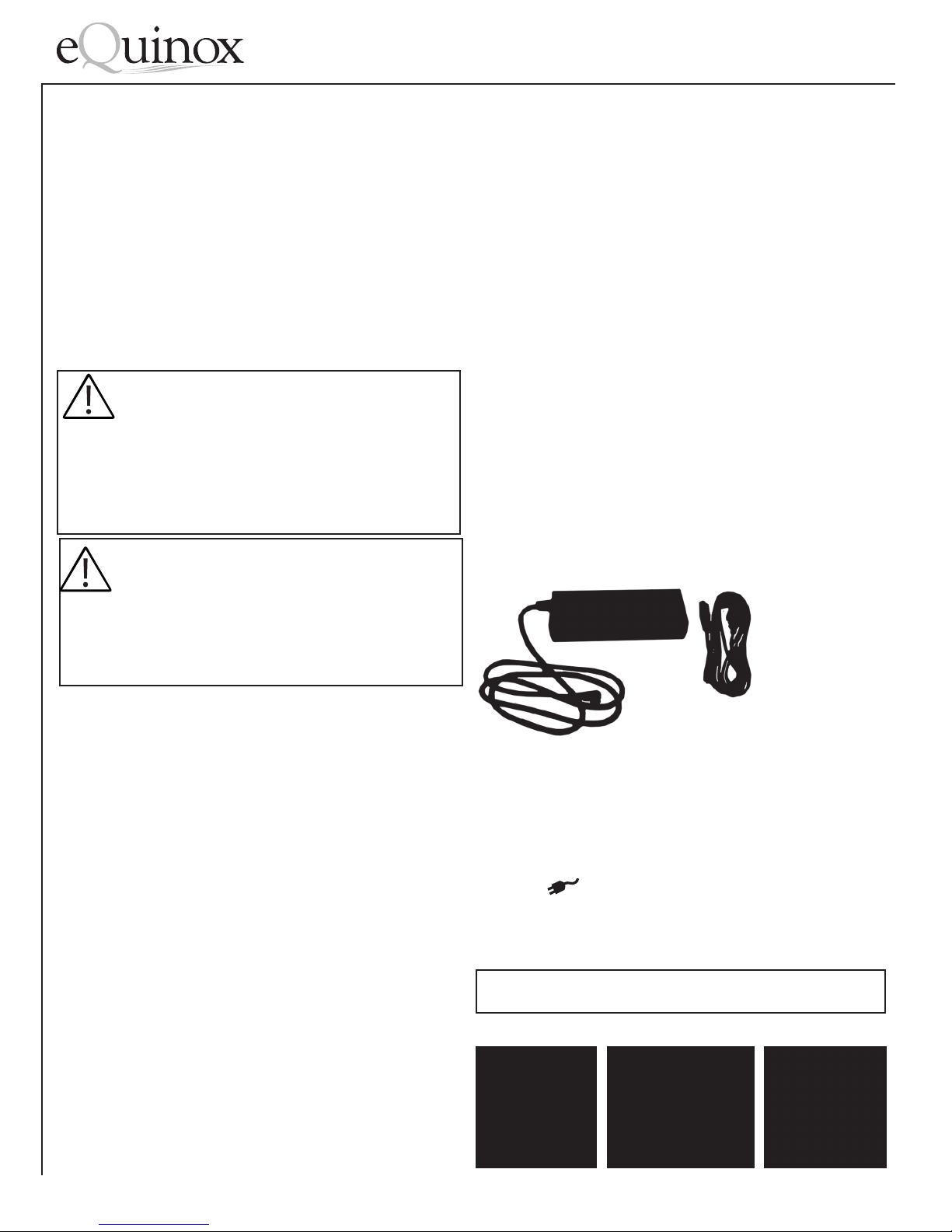
Instructions d'utilisation
Avant utilisation
Ce manuel d'utilisation vous sert de référence pour vous aider
à utiliser et à entretenir l'appareil. Pour toute question ou
préoccupation, veuillez contacter votre organisme de soins de santé
à domicile.
Important ! N'utilisez PAS le système eQuinox avant d'avoir lu la
section « Consignes de sécurité » de ce manuel. Veillez à respecter
toutes les instructions d'utilisation ainsi que les avertissements
apposés sur l'appareil ou gurant dans ce manuel. An de réduire
les risques d'incendie, de blessures et d'endommagement du système
eQuinox, veillez à respecter toutes les précautions de sécurité.
AVERTISSEMENT : NETTOYEZ LE BOÎTIER, LE PANNEAU DE
COMMANDE ET LE CORDON D'ALIMENTATION UNIQUE-
MENT À L'AIDE D'UN DÉTERGENT DOUX APPLIQUÉ AU
MOYEN D'UN CHIFFON OU D'UNE ÉPONGE LÉGÈREMENT HUMIDE,
PUIS ESSUYEZ TOUTES LES SURFACES POUR LES SÉCHER. ÉVITEZ
TOUTE PÉNÉTRATION DE LIQUIDE À L'INTÉRIEUR DE L'APPAREIL.
INSPECTEZ TOUT PARTICULIÈREMENT LA SORTIE D'OXYGÈNE AU
NIVEAU DU RACCORDEMENT DE LA CANULE AFIN DE VÉRIFIER L'ABSENCE DE POUSSIÈRES, D'EAU OU AUTRES PARTICULES.
MISE EN GARDE : ne laissez pas les orifices d'admission et
d'évacuation de l'air s'obstruer. Ceci pourrait provoquer
une surchauffe du concentrateur d'oxygène et une dégra-
dation de ses performances. N'utilisez pas le concentrateur d'oxygène lorsque le filtre d'admission d'air n'est pas en place.
Si un second filtre est fourni, mettez-le en place avant de nettoyer
le filtre sale. Nettoyez le filtre encrassé à l'eau savonneuse tiède,
puis laissez sécher totalement avant de l'utiliser.
Informations générales sur le chargement
Le système eQuinox peut fonctionner sur une alimentation CA
externe, une alimentation CC ou une batterie rechargeable. L'appareil
intègre un chargeur de batterie intelligent qui recharge la batterie
dès que le système eQuinox est connecté à une source d'alimentation
externe. Le système surveille et contrôle la source d'alimentation et
le chargeur de batterie.
Le système eQuinox charge la batterie lorsque l'alimentation CA ou
CC est utilisée et que la température de la batterie est comprise dans
la plage de températures correctes de charge. Lorsque l'alimentation
externe est déconnectée, l'appareil bascule automatiquement
sur l'alimentation par batterie, si celle-ci est installée et chargée.
Lorsqu'il est de nouveau connecté à une prise d'alimentation CA ou
CC, l'appareil fonctionne sur cette source d'alimentation externe et
recharge la batterie.
Alignez la che du cordon d'alimentation sur le connecteur
d'alimentation externe encastré de l'appareil pour connecter
correctement l'alimentation CA ou le câble 12 V CC. Le connecteur
d'alimentation externe encastré est situé sur le côté droit de l'appareil
lorsque vous vous trouvez face au panneau de commande. Poussez la
che du cordon d'alimentation dans le connecteur encastré.
ALIMENTATION CA
Alimentation CA
Mise sous tension du système eQuinox
Il est possible d'utiliser l'appareil depuis trois (3) sources
d'alimentation différentes :
• Alimentation CA
• Câble 12 V CC
• Batterie rechargeable
Le système eQuinox est fourni avec une alimentation CA universelle
pouvant être utilisée à votre domicile ou partout où une alimentation
CA standard est disponible. Pour connecter l'appareil à une source
d'alimentation CA, branchez le cordon d'alimentation CA dans le
connecteur externe encastré. Assurez-vous également que le cordon
de l'alimentation CA est branché à une prise secteur CA. Lorsque le
système eQuinox est correctement connecté, un voyant vert s'allume
sur l'alimentation CA et l'indicateur d'alimentation externe s'afche.
L'indicateur
s'afche également sur le panneau de commande.
Le dispositif d'alimentation électrique CA CAIRE référence 4836
constitue la source d'alimentation principale du concentrateur d'oxygène
portable eQuinox. Il s'agit d'un élément très important du système.
Remarque : utilisez l'appareil uniquement à la tension électrique indiquée sur
l'étiquette des caractéristiques techniques apposée sur l'appareil.
Étape 1 Étape 2 Étape 3
36 — 4805-C1 C (French)
Page 37
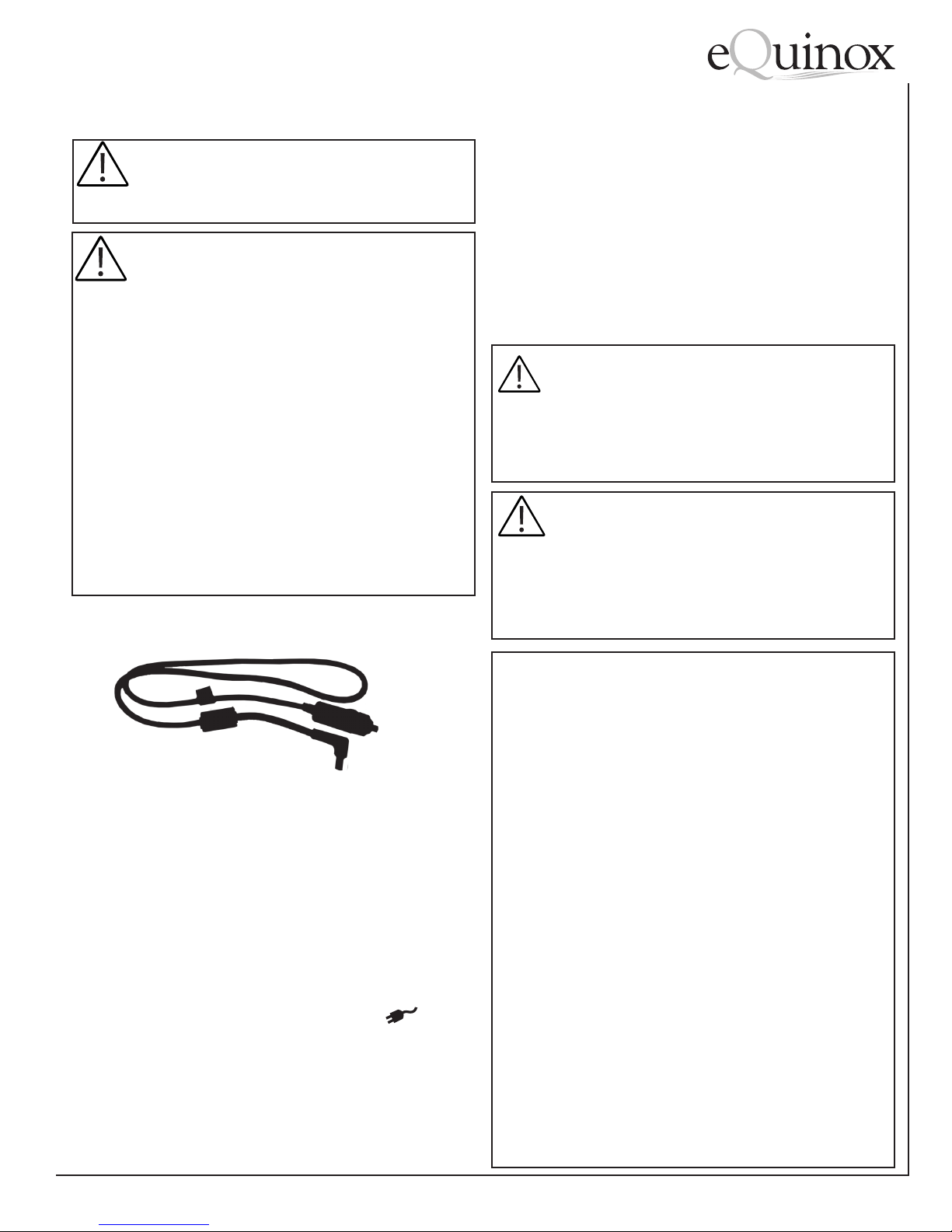
AVERTISSEMENT : NE TOUCHEZ PAS SIMULTANÉMENT LES
CONTACTS DE LA BATTERIE ET LE PATIENT LORSQUE L'APPAREIL EST ALIMENTÉ PAR L'ALIMENTATION EXTERNE (ALIMENTATION CA) ET QUE LA BATTERIE N'EST PAS INSTALLÉE.
MISE EN GARDE : utilisez exclusivement les accessoires
recommandés par le fabricant. L'utilisation d'autres
accessoires pourrait s'avérer dangereuse et endommager
gravement votre concentrateur d'oxygène, et provoquer-
ait l'annulation de la garantie.
MISE EN GARDE : n’utilisez pas de rallonge électrique avec cet
appareil et veillez à ne pas connecter un trop grand nombre
d'appareils à la même prise secteur. L'utilisation d'une rallonge
risque d'affecter les performances de l'appareil. De plus, si vous
effectuez trop de branchements sur une même prise, vous risquez
de provoquer une surcharge du tableau électrique et de déclencher
le disjoncteur ou de provoquer un incendie si celui-ci ne fonctionne
pas.
MISE EN GARDE : l’utilisation de câbles et d'adaptateurs autres
que ceux spécifiés, à l'exception des câbles et adaptateurs commercialisés par le fabricant de l'équipement électrique médical
pour le remplacement de composants internes, risque d'entraîner
une augmentation des émissions électromagnétiques ou une
diminution de l'immunité électromagnétique du concentrateur
d'oxygène.
Câble 12 V CC
Câble 12 V CC
Un câble 12 V CC permet au système de fonctionner depuis une
prise d'alimentation CC, telle que celles disponibles dans les
véhicules motorisés.
1. Démarrez votre véhicule.
2. Insérez le câble 12 V CC dans la prise d'alimentation
encastrée située sur le côté de l'appareil.
3. Insérez la fiche du câble 12 V CC dans la prise
d'alimentation CC de votre véhicule.
Lorsque l'appareil est correctement connecté et est alimenté par
une source CC, l'indicateur d'alimentation externe
s'afche
sur le panneau de commande.
Connexion du système eQuinox à une alimentation CC
Lorsque le système eQuinox est connecté à l'alimentation CC
d'un véhicule, les remarques suivantes s'appliquent :
• le système eQuinox fonctionne à tous les réglages
d'administration à débit constant (de 0,5 à 3 l/min) et à tous
les réglages d'administration intermittente 1 à 9 lorsqu'il est
connecté à l'alimentation CC d'un véhicule.
• la batterie se charge uniquement si l'alimentation restante
est suffisante lorsque l'appareil fonctionne au débit prescrit.
L'alimentation électrique délivrée est consacrée en priorité au
fonctionnement du système eQuinox. Si l'alimentation restante
est suffisante, celle-ci est utilisée comme charge de maintien
pour recharger la batterie. Si la batterie du système eQuinox
est en cours de charge, l'indicateur d'état de la batterie clignote
en cascade. Si la batterie du système eQuinox n'est pas en
cours de charge, l'indicateur d'état de la batterie s'affiche en
continu.
AVERTISSEMENT : NE LAISSEZ PAS LES ORIFICES D'ADMISSION ET D'ÉVACUATION DE L'AIR S'OBSTRUER. CECI POURRAIT PROVOQUER UNE SURCHAUFFE DU CONCENTRATEUR
D'OXYGÈNE ET UNE DÉGRADATION DE SES PERFORMANCES.
AVERTISSEMENT : SI L'ALIMENTATION CC DU VÉHICULE ATTEINT UNE
VALEUR INFÉRIEURE À 11,5 VOLTS, LE SYSTÈME EQUINOX BASCULE
SUR L'ALIMENTATION PAR LA BATTERIE (SI CELLE-CI EST INSTALLÉE
ET CHARGÉE).
MISE EN GARDE : lorsque le moteur du véhicule dans
lequel vous utilisez le concentrateur d'oxygène est arrêté,
déconnectez l'appareil et retirez-le du véhicule. Ne stockez
pas le concentrateur d'oxygène dans un véhicule dont l'habitacle
peut devenir très chaud ou très froid, ou dans tout environnement
similaire pouvant présenter des températures particulièrement
faibles ou élevées. VEILLEZ À NE PAS laisser le concentrateur d'oxygène ou l'alimentation connecté dans le véhicule si le moteur est
arrêté, afin de ne pas décharger la batterie du véhicule.
Remarque : lorsque l'appareil est alimenté depuis le câble 12 V CC,
il est possible que la batterie ne se charge pas.
Remarque : lorsque le système eQuinox est alimenté depuis le câble
12 V CC, il est recommandé d'utiliser le mode d'administration intermittente si un tel type d'administration vous a été prescrit.
Remarque : pour vous assurer que l'appareil utilise l'alimentation
CC, vérifiez que l'indicateur d'alimentation externe est affiché.
Lorsque vous entendez un bip, celui-ci peut indiquer une coupure
d'alimentation externe. Vérifiez si le voyant vert d'alimentation
externe est allumé ou éteint. Retirer la batterie lorsque l'appareil
fonctionne sur une alimentation CC permet de s'assurer que celle-ci
ne subit aucune perte de charge. Si l'indicateur n'est pas allumé,
l'appareil est alimenté par la batterie.
Remarque : les performances réelles du système eQuinox peuvent varier selon les conditions d'utilisation du véhicule motorisé.
Certains véhicules ne permettent pas l'utilisation de la totalité des
fonctionnalités lorsque l'appareil fonctionne sur une alimentation CC. Si l'alimentation délivrée par le véhicule n'est pas suffisante pour utiliser l'appareil au réglage défini, le système eQuinox
cesse de charger la batterie et continue de fonctionner au débit
d'administration prescrit. Si l'alimentation délivrée par le véhicule
n'est toujours pas suffisante, le système eQuinox réduit le débit
d'administration si celui-ci est égal ou supérieur à 2 l/min. Si le débit
d'administration est inférieur à 2 l/min., le système eQuinox s'arrête.
En cas de faible débit d'administration, débranchez tous les autres
appareils connectés au circuit d'alimentation (GPS, chargeur de
téléphone portable, etc.). En cas de restauration d'une alimentation
suffisante, le débit d'administration n'est pas automatiquement
augmenté et rétabli sur le réglage d'origine. L'utilisateur doit alors le
régler manuellement. Si le système eQuinox ne fonctionne toujours
pas au débit d'administration prescrit, essayez de retirer la batterie.
eQuinox (Model 4000) User Manual — 37
Page 38
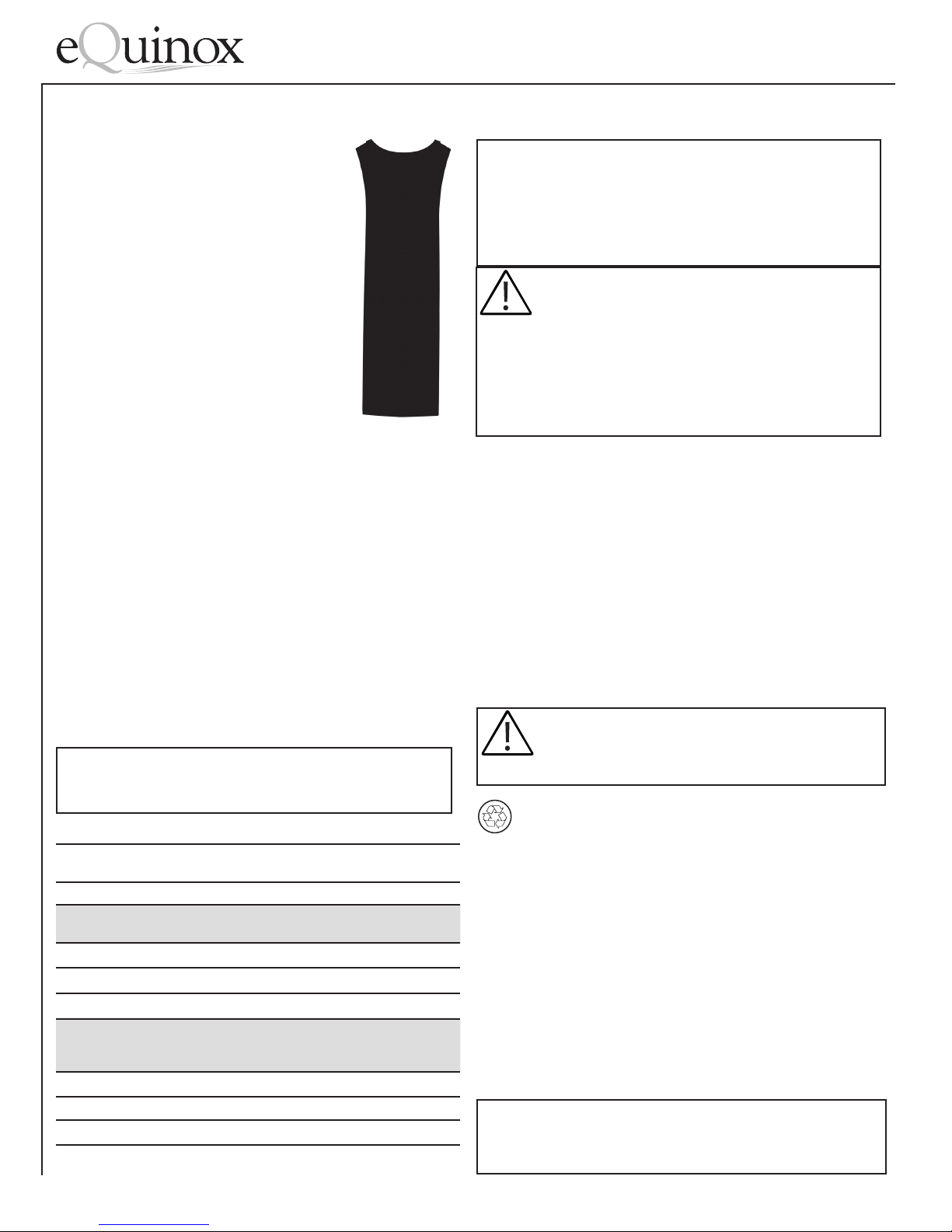
Batterie rechargeable
Le système eQuinox peut fonctionner à partir de
la batterie rechargeable fournie avec l'appareil.
Installation de la batterie : alignez la batterie
sur le compartiment vide de façon à pouvoir
la glisser à l'intérieur. Poussez la batterie dans
le compartiment vide jusqu'à ce qu'elle se
verrouille en position appropriée. Elle doit alors
être parfaitement alignée sur l'avant de l'appareil.
Lorsque la batterie est correctement installée
et que le système eQuinox est en MARCHE,
l'indicateur d'état de la batterie s'afche sur le
panneau de commande (si AUCUNE batterie
n'est installée, l'indicateur d'état de la batterie
ne s'afche pas). L'appareil peut continuer de
fonctionner depuis une alimentation externe.
Batterie rechargeable
Pour retirer la batterie, appuyez sur le bouton
de déverrouillage situé dans la partie supérieure de celle-ci. Tout
en maintenant le bouton de déverrouillage ABAISSÉ, tirez sur la
batterie pour l'extraire du système eQuinox.
Autonomie de la batterie : l’autonomie de la batterie est indiquée
sur le panneau de commande, sous la forme d'un symbole et
de caractères alphanumériques. Lorsque le système fonctionne
sur la batterie, l'indicateur d'état de la batterie s'afche en
permanence. L'écran d'afchage indique le nombre d'heures/
minutes d'autonomie restante de la batterie. Des facteurs variés,
tels que le réglage de débit, l'utilisation du mode d'administration
intermittente ou à débit constant et la fréquence respiratoire
inuent sur la durée d'autonomie de la batterie. Le tableau
Durées d'autonomie moyennes d'une batterie neuve indique les
durées estimées d'autonomie de la batterie du système eQuinox
en fonction des réglages de débit et des conditions d'utilisation
indiquées, avec une batterie neuve et totalement chargée.
Remarque : le système eQuinox est fourni avec une batterie à 12 cellules.
Pour une autonomie supérieure, une batterie à 24 cellules est disponible en
tant qu'accessoire optionnel.
Remarque :
conforme à sa plage de températures normales de fonctionnement peut
nuire aux performances du système et diminuer l'autonomie de la batterie
et/ou augmenter son délai de chargement. (Reportez-vous à la section Caractéristiques techniques de ce manuel.) Vous bénéficierez d'une plus longue
autonomie de la batterie si vous utilisez votre système eQuinox en mode
d'administration intermittente (mode approuvé par un médecin).
TEUR D'OXYGÈNE PENDANT DE LONGUES PÉRIODES À DE HAUTES
TEMPÉRATURES, AVEC UNE BATTERIE TOTALEMENT CHARGÉE OU
ENTIÈREMENT ÉPUISÉE, PEUT ÉCOURTER LA DURÉE DE VIE DE
CELLE-CI. NE TENTEZ PAS D'OUVRIR LA BATTERIE. ELLE NE CONTIENT AUCUNE PIÈCE À ENTRETENIR OU À REMPLACER. VEILLEZ À
TENIR LA BATTERIE HORS DE PORTÉE DES ENFANTS.
l’utilisation du concentrateur d'oxygène à une température non
AVERTISSEMENT : POUR LES CONCENTRATEURS D'OXYGÈNE ÉQUIPÉS D'UNE BATTERIE : AFIN DE PRÉSERVER
LA LONGÉVITÉ DE VOTRE BATTERIE, STOCKEZ-LA DANS
UN LIEU FRAIS ET SEC. LE STOCKAGE DU CONCENTRA-
Chargement initial de la batterie
À la livraison, la batterie neuve fournie avec votre système eQuinox
n'est pas totalement chargée. Avant d'utiliser votre système eQuinox
pour la première fois, vous devez charger totalement la batterie.
Connectez l'alimentation CA et installez correctement la batterie.
Attendez que la batterie se charge totalement. La batterie est
totalement chargée lorsque l'indicateur d'état de la batterie afché
sur le panneau de commande ne clignote plus en cascade et reste
afché en continu.
Il est possible d'utiliser le système eQuinox pendant la charge de la
batterie. La charge de la batterie peut prendre jusqu'à 4 heures, selon
le réglage de débit déni. Celle-ci se charge également lorsque le
système eQuinox est connecté à une alimentation CA et est arrêté.
MISE EN GARDE : utilisez uniquement les batteries
fournies par le fabricant. Contactez le fournisseur de
l'équipement ou votre mairie pour connaître les obliga-
tions en matière de recyclage des batteries.
Durées d'autonomie moyennes d'une batterie neuve
Type d'utilisa-
tion
12 cellules 24 cellules
Administration à
débit constant
1 l/min. 2 h 09 min 4 h 50 min
2 l/min. 1 h 12 min 2 h 45 min
3 l/min. 48 min 1 h 49 min
Administration
intermittente
(12 B/min.)
16 ml (1.0) 2 h 37 min 5 h 56 min
48 ml (3.0) 2 h 22 min 5 h 23 min
96 ml (6.0) 1 h 41 min 3 h 51 min
38 — 4805-C1 C (French)
Type de batterie
* Les batteries sont recyclables. *
En cas de coupure de l'alimentation CA ou CC, le système eQuinox
émet un bip et bascule automatiquement sur l'alimentation par
batterie, à la condition que la batterie soit installée et chargée.
Lorsque l'alimentation externe est rétablie, la batterie recommence
automatiquement à se charger. Si la batterie n'est pas installée
ou est totalement déchargée lors d'une coupure de l'alimentation
CA, le système eQuinox s'arrête et émet une alarme. La batterie
est totalement déchargée lorsque l'indicateur d'état de la batterie
afché sur le panneau de commande apparaît vide. Le voyant jaune
de l'appareil s'allume et une alarme de batterie faible est émise.
Le voyant jaune et l'alarme restent actifs jusqu'à ce que l'appareil
s'arrête totalement, avec le voyant rouge allumé et une alarme
continue. L'alerte sonore peut être émise durant 5 minutes, jusqu'à
ce que l'appareil s'arrête ou que l'alimentation externe soit restaurée.
Remarque : pour arrêter l'alarme de perte d'alimentation, appuyez sur la touche
MARCHE/ARRÊT du système eQuinox et maintenez-la enfoncée durant 5 secondes au minimum. Cette alarme s'arrête également lorsque vous connectez le
système eQuinox à une source d'alimentation CA externe durant 2 minutes.
Page 39

Temps moyen de rechargement de la batterie
Activer/Désactiver le module vocal
Selon le réglage de débit, un délai de 2 à 5 heures est normalement
nécessaire pour atteindre une capacité de 80 % à partir d'une batterie
totalement déchargée. Lorsque la batterie est totalement chargée,
l'indicateur d'état de la batterie cesse de clignoter en cascade. Il est
possible de charger la batterie dans l'appareil lorsque celui-ci est
arrêté et branché.
Si la batterie devient trop chaude durant son déchargement,
le rechargement ne commencera qu'une fois qu'elle se sera
sufsamment refroidie. Il est possible d'accélérer ce processus de
refroidissement en retirant la batterie de l'appareil.
Il est possible de recharger la batterie à partir d'une source
d'alimentation CA ou CC. Elle peut aussi être rechargée au moyen
du chargeur de bureau optionnel.
Utilisation du module vocal
Instructions d'utilisation du module vocal
Le système eQuinox peut émettre des notications vocales relatives
aux alarmes et aux conditions de fonctionnement. Ces notications
vocales complètent les informations afchées par le biais des
voyants DEL. Les sections suivantes fournissent des instructions
pour activer et désactiver le module vocal, régler le volume et
changer la langue des notications.
1. Pour activer/désactiver le module vocal, mettez l'appareil
en marche en appuyant sur la touche Marche/Veille.
2. Lorsque l'appareil est en marche, appuyez une fois sur
l'icône Interdiction de fumer et sur la touche masquée.
3. Dans un délai de 1 à 2 secondes, l'élément de menu SPKR
= ON (Haut-parleur activé) ou SPKR = OFF (Haut-parleur
désactivé) s'affiche.
4. Appuyez sur la touche d'augmentation ou de diminution
du réglage de débit pour passer de l'indication ON (activer le
module vocal) à l'indication OFF (désactiver le module vocal)
et inversement.
5. L'option sélectionnée est activée dans un délai de 3 à
5 secondes.
Remarque : cette opération ne désactive la fonction de module vocale qu'une
seule fois. Lorsque l'appareil est remis en marche et réinitialisé, la fonction de
module vocale est automatiquement réactivée.
Augmenter/diminuer le volume des notifications vocales
1. Pour augmenter ou diminuer le volume des notifications
vocales, appuyez deux fois sur l'icône Interdiction de fumer et
la touche masquée.
2. L'indication Volume = # - (menu de réglage du volume)
apparaît.
3. Appuyez sur la touche d'augmentation ou de diminution du
réglage de débit pour augmenter ou diminuer le réglage du
volume de 1 à 10.
Touche
Marche/
Veille
Icône Interdic-
tion de fumer
et touche
masquée
Touche de sélec-
tion du mode
d'administration
Voyant
Marche/Veille
(DEL verte)
Indicateur de
mode d'admin-
istration (DEL
verte)
Voyant d'alerte
(DEL jaune)
Voyant d'alarme
(DEL rouge)
Touche d'augmen-
tation du réglage de
Touche de
Écran
diminution du
réglage de débit
LCD
débit
Voyant
d'alimentation
externe (DEL
verte)
4. Une fois le volume souhaité sélectionné, celui-ci devient
actif dans un délai de 3 à 5 secondes.
Changement de la langue du module vocal
1. Pour changer la langue du module vocal, appuyez cinq fois
sur l'icône Interdiction de fumer et la touche masquée pour
accéder aux options de langue.
2. La langue actuellement activée est indiquée à l'écran.
Si, par exemple, la langue du module vocal est l'anglais,
l'indication « English » (anglais) s'affiche à l'écran.
3. Appuyez sur la touche d'augmentation ou de diminution du
réglage de débit pour faire défiler les langues disponibles.
4. Lorsque la langue souhaitée est affichée, elle est
automatiquement activée dans un délai de 3 à 5 secondes.
eQuinox (Model 4000) User Manual — 39
Page 40
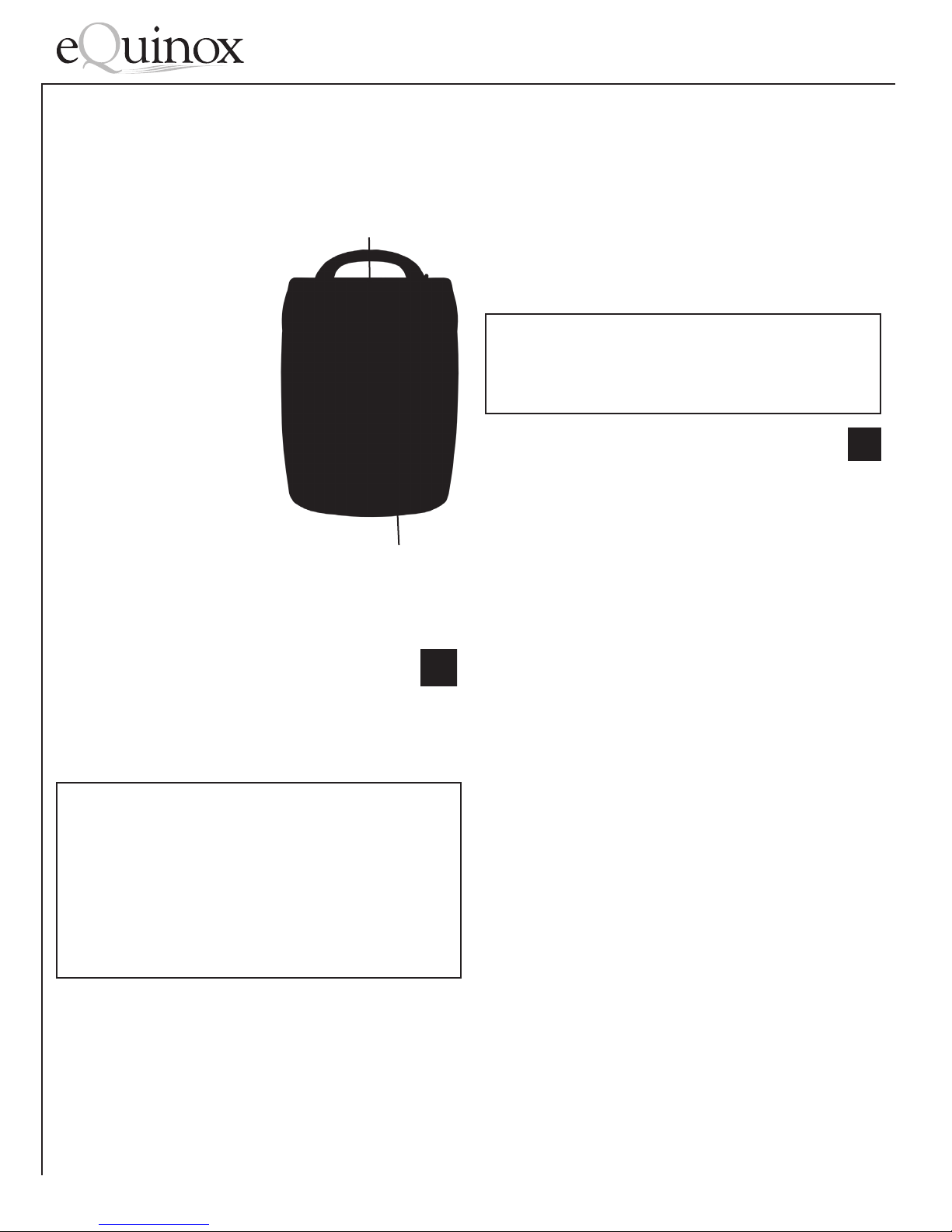
Première utilisation du système eQuinox
Étape 1 : positionnement de votre système eQuinox
Placez le système eQuinox dans un lieu correctement ventilé et
éclairé. Vériez que les orices d'admission et d'évacuation de l'air
situés à l'arrière de l'appareil ne sont pas obstrués.
Filtre d'admission d'air
Positionnez le système eQuinox de
façon à ce que les indicateurs ou les
alarmes sonores et visuels soient
parfaitement visibles et audibles.
Vériez que le ltre d'admission
d'air est en place avant d'utiliser
votre système eQuinox. Si le ltre
d'admission d'air est manquant,
contactez votre organisme de soins
de santé à domicile. Si le ltre
d'admission d'air est encrassé,
lavez-le avec de l'eau savonneuse
tiède, puis rincez-le à l'eau claire
et laissez-le sécher avant de le
remettre en place dans l'appareil.
Remplacez-le par un ltre
d'admission d'air neuf et propre si
nécessaire.
Connectez l'appareil à une prise d'alimentation secteur CA ou à
une source d'alimentation CC, ou assurez-vous qu'une batterie
totalement chargée est installée.
Orifice d'évacuation
Étape 2 : mise en MARCHE de l'appareil et
temps de préchauffage
Appuyez sur la touche « MARCHE/ARRÊT » et maintenez-la
enfoncée durant deux (2) secondes pour mettre en MARCHE votre
système eQuinox. Un bref autotest visuel s'effectue au démarrage.
Remarque : si l'appareil émet trois bips lorsqu'il est connecté à
l'alimentation ou mis en marche pour la première fois, ceux-ci
indiquent un mauvais état de la batterie de 9 volts installée à l'intérieur du boîtier du système eQuinox. Contactez votre organisme
de soins de santé à domicile pour demander le remplacement de
la batterie de 9 volts Si trois bips continuent d'être émis de façon
intermittente une fois que l'appareil a été mis en marche et utilisé
pendant plusieurs minutes, il ne s'agit pas d'un mauvais état
de la batterie de 9 volts. Contactez votre organisme de soins de
santé à domicile pour toute réparation.
Le système eQuinox comporte un indicateur de concentration
d'oxygène intégré. Cet indicateur contrôle en permanence la sortie
d'oxygène de l'appareil. Il intègre des voyants vert (normal), jaune
(alerte) et rouge (alarme), ainsi qu'une alarme sonore. Ces voyants
s'allument tous durant l'autotest réalisé au démarrage. Après avoir
mis l'appareil en MARCHE pour la première fois, attendez jusqu'à
cinq (5) minutes pour que celui-ci atteigne ses caractéristiques de
performances. Lorsque seul le voyant vert est allumé, l'appareil a
atteint ses spécications de performances.
Étape 3 : connexion du tube d'alimentation en
oxygène, ou canule nasale, au port de sortie d'oxygène
Remplacez régulièrement la canule et le tube d'alimentation en
oxygène, comme recommandé par votre organisme de soins de
santé à domicile. Consultez votre organisme de soins de santé
à domicile pour obtenir des informations sur le nettoyage et le
remplacement de la canule et du tube d'alimentation en oxygène.
Remarque : vérifiez que la canule est entièrement insérée et convenablement positionnée afin que le concentrateur d'oxygène puisse correctement
détecter chaque inspiration pour délivrer l'oxygène requis. Durant l'inhalation, vous devez entendre ou sentir l'oxygène circuler dans les sondes de la
canule nasale.
Étape 4 : sélection du mode d'administration
Appuyez sur la touche de sélection du mode d'administration pour
sélectionner le mode souhaité. Appuyez sur cette touche de façon
répétée pour sélectionner alternativement le mode d'administration
intermittente et le mode d'administration à débit constant. Le
mode et le réglage appropriés doivent vous être prescrits par votre
médecin.
Fonctionnement en mode d'administration à débit constant
Lorsque vous utilisez l'appareil en mode d'administration à débit
constant, un ux continu d'oxygène circule dans le tube et la
canule nasale. Ce débit d'oxygène est mesuré en litres par minute
(l/min.). Il est possible d'utiliser un humidicateur uniquement
en mode d'administration à débit constant. VEILLEZ À NE PAS
incliner, transporter ou coucher le système eQuinox lorsqu'un
acon d'humidicateur est connecté.
Fonctionnement en mode d'administration intermittente
Lorsque vous utilisez l'appareil en mode d'administration
intermittente, un bolus d'oxygène mesuré en millilitres (ml) est
délivré à chaque inspiration. VEILLEZ À NE PAS utiliser un
humidicateur en mode d'administration intermittente.
Lorsqu'il est utilisé en mode d'administration intermittente,
le système eQuinox délivre un ux continu d'oxygène toutes
les 15 secondes si aucune inspiration n'est détectée. L'appareil
cesse de délivrer un ux continu d'oxygène et vérie de façon
répétée l'existence d'un effort respiratoire toutes les 15 secondes.
Lorsqu'une inspiration est détectée, l'appareil repasse en mode de
délivrance de bolus mesurés. Pour quitter le mode d'administration
intermittente et activer le mode d'administration à débit constant,
appuyez sur la touche de sélection du mode d'administration.
Demandez à votre médecin de vous prescrire la dose
d'administration intermittente appropriée pour vous assurer de
bénécier du niveau de saturation en oxygène nécessaire. Tenez
compte de vos besoins au repos, durant un effort et lorsque vous
voyagez en altitude. Contactez votre médecin pour obtenir des
formulaires de prescription et d'embarquement.
40 — 4805-C1 C (French)
Page 41
Mode d'administration intermittente et fonctionnalité autoSAT
Votre système eQuinox intègre une fonctionnalité nommée
®
autoSAT
. Celle-ci délivre un bolus d'oxygène de volume
constant jusqu'à 40 inspirations par minute (voir le tableau de
fréquence respiratoire max. ci-dessous). Lorsque votre fréquence
respiratoire augmente, par exemple lorsque vous marchez, la
fonctionnalité autoSAT contrôle l'appareil par servocommande
an de délivrer le volume de bolus déni. La technologie autoSAT
est une fonctionnalité exclusive de CAIRE et fonctionne en mode
d'administration intermittente uniquement.
Fréquence respiratoire max.
Réglage d'adminis-
tration intermittente
1 16 40
2 32 40
3 48 40
4 64 40
5 80 37
6 96 31
7 128 23
8 160 18
Volume de bolus (+/- 15 %)
Remarque : le volume de bolus diminue à mesure que la fréquence respiratoire dépasse la plage indiquée.
Remarque :
au réglage en l/min.
AU REPOS, DURANT UN EFFORT ET DURANT LES VOYAGES.
AVERTISSEMENT : IL EST POSSIBLE QUE LE SYSTÈME EQUINOX
NE DÉTECTE PAS TOUS LES EFFORTS RESPIRATOIRES EN MODE
D'ADMINISTRATION INTERMITTENTE. SI LE SYSTÈME EQUINOX NE
RÉPOND PAS À VOS EFFORTS RESPIRATOIRES, DEMANDEZ À VOTRE
ORGANISME DE SOINS DE SANTÉ À DOMICILE DE VÉRIFIER LE
RÉGLAGE DE SENSIBILITÉ.
9 192 15
le réglage d'administration intermittente de 1 à 9 n'est pas égal
AVERTISSEMENT : LES RÉGLAGES DU MODE D'ADMINISTRATION INTERMITTENT DOIVENT ÊTRE DÉTERMINÉS EN
FONCTION DES BESOINS INDIVIDUELS DE CHAQUE PATIENT
Volume de bolus
(± 15 %) en ml
Fréquence respira-
toire max.
Étape 5 : réglage du niveau de débit prescrit
À l'aide des touches de réglage du débit, dénissez le réglage de
débit qui vous a été prescrit par votre médecin.
AVERTISSEMENT : IL EST TRÈS IMPORTANT DE SÉLECTIONNER LE DÉBIT D'OXYGÈNE QUI VOUS A ÉTÉ PRESCRIT. NE
MODIFIEZ PAS LE RÉGLAGE DE DÉBIT SANS Y AVOIR ÉTÉ
INVITÉ PAR UN MÉDECIN.
Étape 6 : utilisation de votre système eQuinox
Respirez normalement au travers de la canule nasale.
Remarque : vous bénéficierez d'une plus longue autonomie de la batterie si
vous utilisez votre système eQuinox en mode d'administration intermittente
(mode approuvé par un médecin).
Étape 7 : utilisation du chariot eQuinox
Le chariot eQuinox est conçu pour être utilisé sur des surfaces
piétonnes.
Alignez le système eQuinox sur le socle du chariot de façon à ce qu'il
repose sur celui-ci en position verticale et de niveau.
Alignez la grande vis letée sur l'orice d'insertion situé à l'arrière
de l'appareil eQuinox. Serrez ensuite à la main la molette du chariot
eQuinox jusqu'à ce que celui-ci soit correctement xé à l'appareil.
Appuyez sur le bouton-poussoir situé sur la poignée du chariot
eQuinox pour régler la hauteur de celle-ci.
Remarque : à l'attention du fournisseur de l'équipement : les accessoires
d'administration d'oxygène recommandés avec cet appareil sont les
suivants :
• Canule nasale et tube de 2,1 mètres de long : Référence 5408-SEQ
• Pour consulter des accessoires recommandés supplémentaires, repor-
tez-vous au catalogue d'accessoires (référence ML-LOX0010) disponible à
l'adresse www.CAIREmedical.com.
• CAIRE propose l'OxySafe™ comme accessoire optionnel. Cet accessoire
est prévu pour être utilisé en association avec le concentrateur eQuinox. Il
permet de répondre aux exigences de la norme ISO 8359:1996/A1:2012.
L'OxySafe™ est un fusible thermique conçu pour stopper l'écoulement
de gaz en cas de combustion remontant depuis la canule ou la tubulure
d'oxygène. Il se place sur le circuit de la canule nasale/de la tubulure
d'oxygène, entre le patient et la sortie d'oxygène du système eQuinox.
Pour une utilisation correcte de l'OxySafe, reportez-vous toujours aux
instructions du fabricant (fournies avec chaque kit OxySafe).
CAIRE propose un kit OxySafe™ comprenant un embout de canule,
un OxySafe™ et un tube de 2,1 m (référence 20628667).
Remarque : VEILLEZ À NE PAS vous déplacer avec le système eQuinox lorsqu'un humidificateur est connecté. Retirez le flacon de l'humidificateur avant
de vous déplacer. VEILLEZ À NE PAS coucher le système eQuinox lorsqu'il est
connecté à un flacon d'humidificateur.
Étape 8 : arrêt de l'appareil
Appuyez sur la touche « MARCHE/ARRÊT » et maintenez-la
enfoncée durant deux (2) secondes pour ARRÊTER votre système
eQuinox.
Stockez le système eQuinox dans un lieu frais et sec durant une
période n'excédant pas 1 mois. Le système eQuinox doit être mis en
marche au moins 2 heures par mois pour garantir un fonctionnement
approprié de l'appareil.
eQuinox (Model 4000) User Manual — 41
Page 42
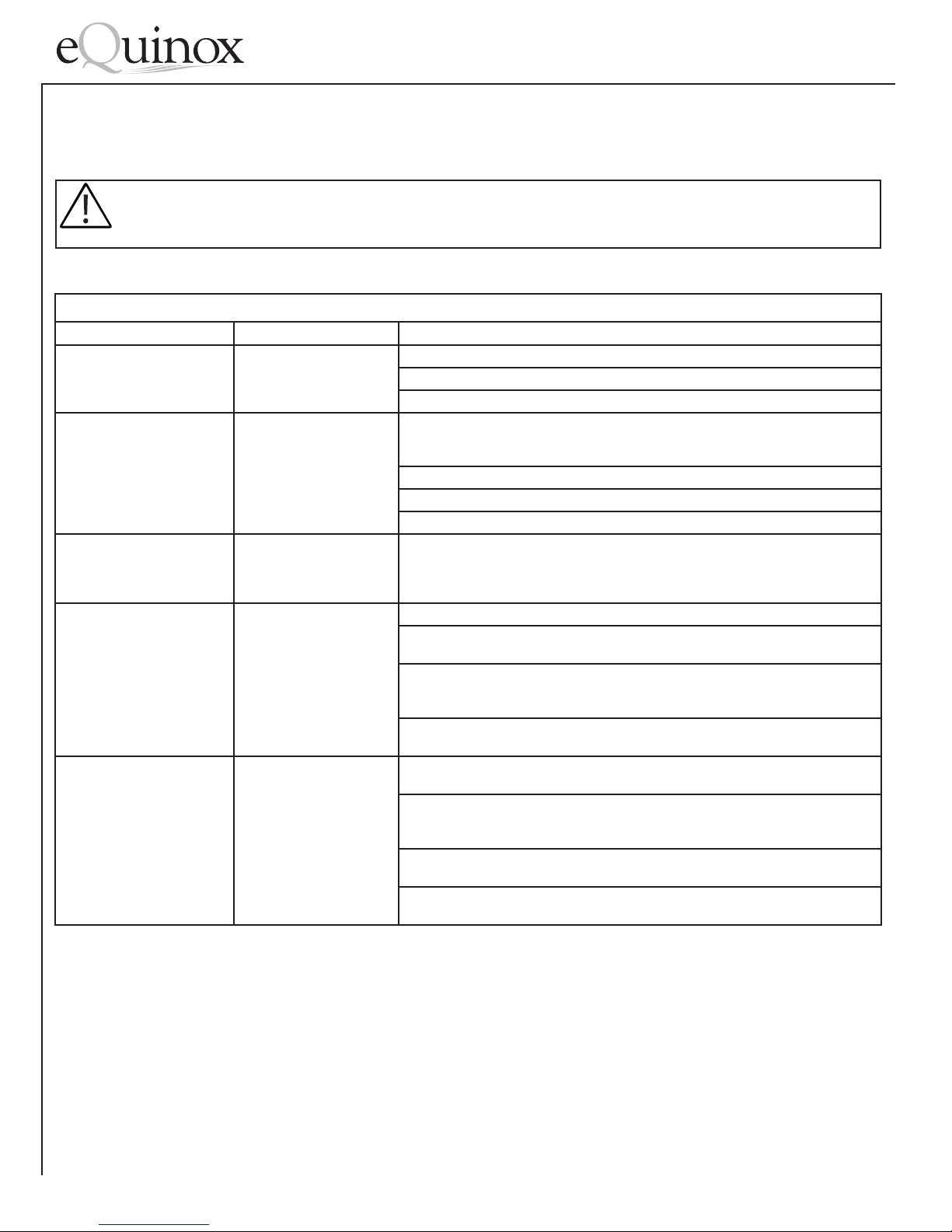
Tableau de dépannage
N'ignorez pas les alarmes.
AVERTISSEMENT : LE FABRICANT RECOMMANDE DE DISPOSER D'UNE AUTRE SOURCE D'ALIMENTATION EN OXYGÈNE EN CAS DE
COUPURE DE COURANT, DE DÉCLENCHEMENT D'ALARME DE L'APPAREIL OU DE PANNE MÉCANIQUE. CONSULTEZ VOTRE MÉDECIN
OU VOTRE FOURNISSEUR AGRÉÉ AU SUJET DU TYPE DE SYSTÈME DE RÉSERVE À UTILISER.
Voyant jaune
Problème Cause possible Action
Le voyant jaune reste allumé de
façon fixe. L'alarme émet 1 bip
toutes les 30 secondes.
Le voyant jaune clignote. L'icône
de batterie clignote. L'alarme
émet 1 bip toutes les 2 minutes.
Le voyant jaune clignote. L'icône
de batterie clignote. L'alarme
émet 2 bips toutes les 30 secondes.
Le voyant jaune clignote.
L'alarme émet 1 bip toutes les
2 minutes.
Le voyant jaune clignote. Aucune
alarme n'est émise.
Le système eQuinox a détecté
un problème concernant la
connexion de la batterie.
La batterie du système eQuinox est trop chaude.
La tension de la batterie du
système eQuinox est faible.
Le système eQuinox a détecté
une restriction du flux d'oxygène provoquant un débit
faible ou nul.
Le système eQuinox a détecté
un faible niveau d'oxygène.
1) Retirez la batterie et réinstallez-la de façon appropriée dans le concentrateur.
2) Si possible, installez une autre batterie dans le système eQuinox.
3) Si le problème persiste, contactez votre organisme de soins de santé à domicile.
1) Reconnectez le système eQuinox à une alimentation externe ou installez une batterie
totalement chargée dans l'appareil. Laissez la batterie excessivement chaude se refroidir à
l'extérieur du concentrateur durant 30 minutes.
2) Rechargez la batterie à l'aide d'une alimentation CA.
3) Remplacez la batterie si une autre est disponible.
4) Si le problème persiste, contactez votre organisme de soins de santé à domicile.
1) Branchez le système eQuinox à une alimentation CA et rechargez la batterie ou remplacez-la par une batterie totalement chargée.
1) Nettoyez ou remplacez le filtre d'admission du boîtier.
2) Vérifiez que la canule n'est pas coudée ou obstruée. Si vous utilisez un flacon d'humidificateur, vérifiez qu'il est correctement rempli et ne provoque pas d'obstruction.
3) Vérifiez que la ventilation du système eQuinox est appropriée. Le système doit être placé à
au moins 7 cm (3 pouces) de toute surface afin d'éviter toute obstruction des orifices d'admission et d'évacuation.
4) Si le problème persiste, utilisez une autre source d'oxygène et contactez votre organisme
de soins de santé à domicile pour obtenir de l'aide.
1) Vérifiez que le filtre d'admission d'air n'est pas colmaté ou obstrué. Nettoyez le filtre ou
remplacez-le si nécessaire.
2) Vérifiez que le système eQuinox se trouve dans un lieu correctement ventilé. Assurez-vous
que l'arrière du système eQuinox se trouve à au moins 7 cm (3 pouces) de tout élément
pouvant provoquer une obstruction (meuble, rideau, etc.).
3) Si vous utilisez l'appareil dans un véhicule, assurez-vous de positionner l'arrière du système
eQuinox vers l'avant sur le siège.
4) Si le problème persiste, utilisez une autre source d'oxygène et contactez immédiatement
votre organisme de soins de santé à domicile.
42 — 4805-C1 C (French)
Page 43
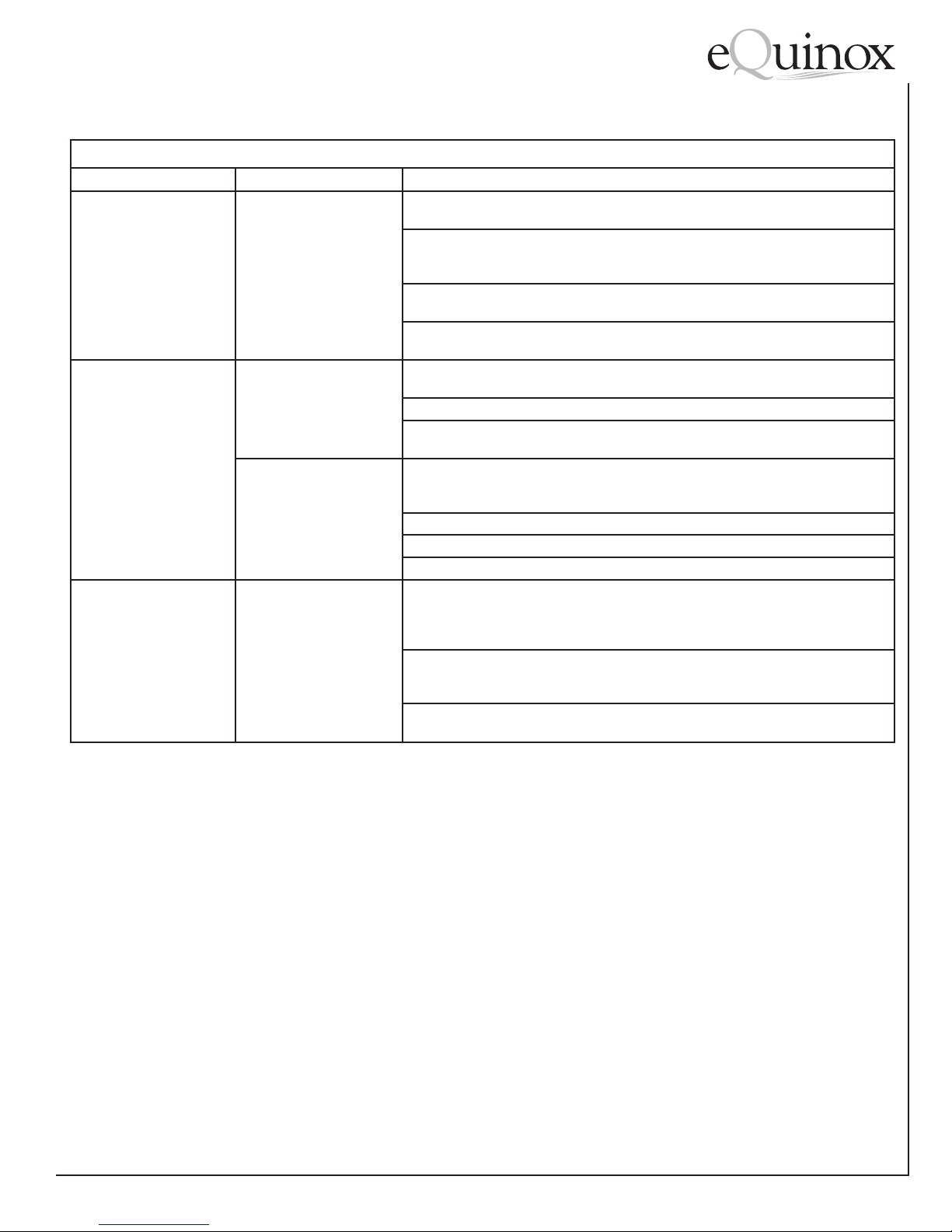
Voyant rouge
Problème Cause possible Action
1) Vérifiez que le filtre d'admission d'air n'est pas colmaté ou obstrué. Nettoyez le filtre ou
remplacez-le si nécessaire.
2) Vérifiez que le système eQuinox se trouve dans un lieu correctement ventilé. Assurez-vous
Le voyant rouge clignote.
L'alarme émet 3 bips toutes
les 2 minutes.
Le voyant rouge clignote.
L'alarme émet un bip continu.
L'écran LCD affiche les
caractères ********. Le
système eQuinox ne délivre
pas d'oxygène et ne se met
pas en marche.
Le voyant rouge reste allumé
de façon fixe. L'écran d'affi-
chage afche le message «
FAIL » (Échec). Le système
eQuinox ne délivre pas
d'oxygène et ne se met pas en
marche.
Le système eQuinox a détecté
un faible niveau d'oxygène.
Une coupure temporaire de
l'alimentation externe du système eQuinox est survenue.
L'alimentation du système
eQuinox a été interrompue
en raison du déchargement
complet ou d'une surchauffe
de la batterie.
Le système eQuinox a subi un
dysfonctionnement.
que l'arrière du système eQuinox se trouve à au moins 7 cm (3 pouces) de tout élément pouvant provoquer une obstruction (meuble, rideau, etc.).
3) Si vous utilisez l'appareil dans un véhicule, assurez-vous de positionner l'arrière du système
eQuinox vers l'avant sur le siège.
4) Si le problème persiste, utilisez une autre source d'oxygène et contactez immédiatement
votre organisme de soins de santé à domicile.
1) Inspectez l'alimentation (CA ou CC) externe et vérifiez qu'elle est correctement connectée au
système eQuinox, au transformateur et à la prise d'alimentation externe.
2) Si possible, essayez de connecter le système eQuinox à une autre prise d'alimentation CA ou CC.
3) Si le problème persiste, utilisez une autre source d'oxygène et contactez immédiatement
votre organisme de soins de santé à domicile.
1) Reconnectez le système eQuinox à une alimentation externe ou installez une batterie totalement chargée dans l'appareil. Laissez la batterie excessivement chaude se refroidir à l'extérieur
du concentrateur durant 30 minutes.
2) Rechargez la batterie à l'aide d'une alimentation CA.
3) Remplacez la batterie si une autre est disponible.
4) Si le problème persiste, contactez votre organisme de soins de santé à domicile.
1) Retirez la batterie et déconnectez l'alimentation CA ou CC du système eQuinox. Le voyant
rouge doit s'éteindre et le message « FAIL » (Échec) disparaître de l'écran une fois les sources
d'alimentation déconnectées. Patientez 20 secondes environ, reconnectez les sources d'alimentation et essayez de nouveau de mettre le système eQuinox en marche.
2) Si le système eQuinox se met en marche, surveillez l'écran pour déterminer si le message
« FAIL » (Échec) s'afche de nouveau. Si le message « FAIL » (Échec) s'afche de nouveau,
contactez immédiatement votre organisme de soins de santé à domicile.
3) Si le système eQuinox ne se met pas en marche, contactez immédiatement votre organisme
de soins de santé à domicile.
eQuinox (Model 4000) User Manual — 43
Page 44
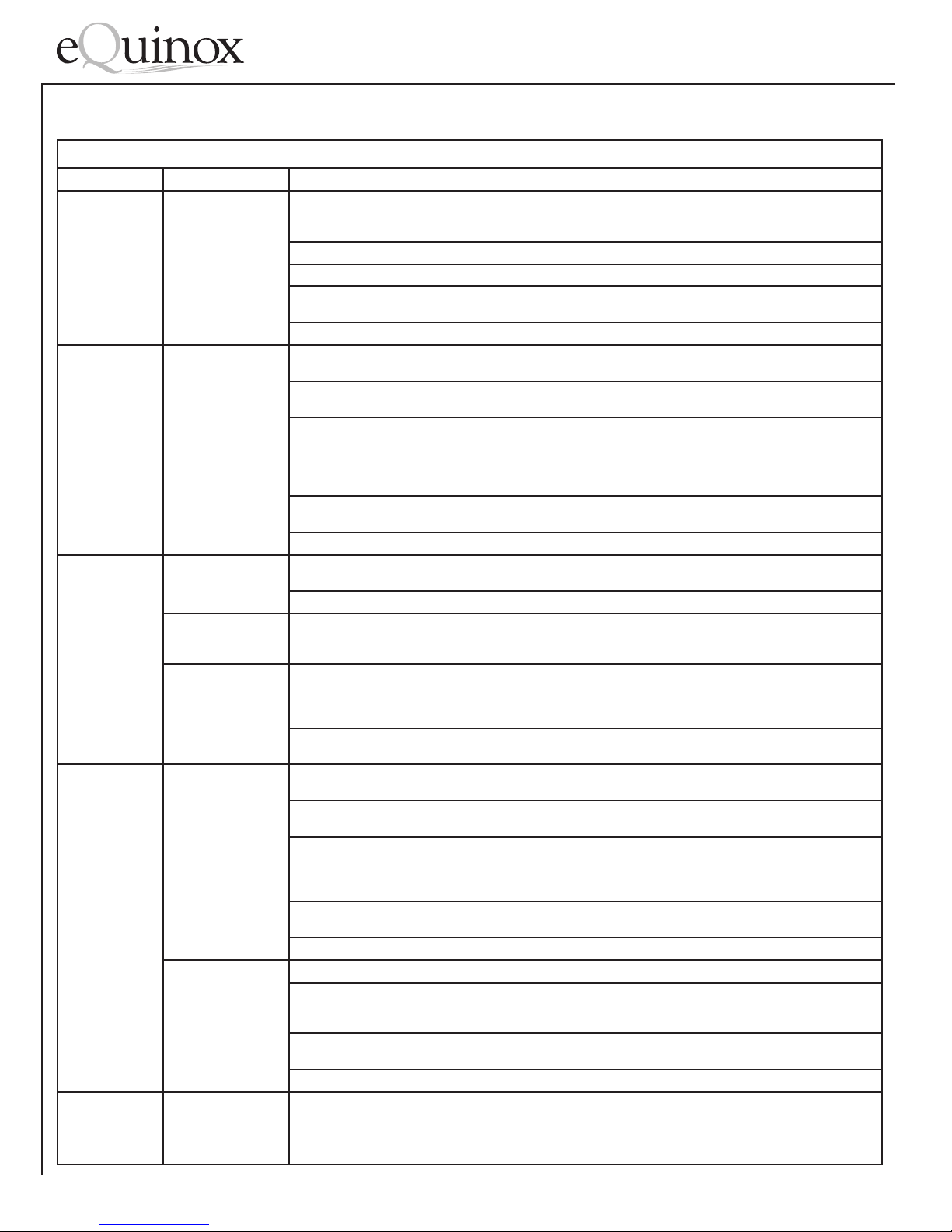
Problème Cause possible Action
1) Il est possible que le mode d'administration intermittente ne fonctionne pas correctement si l'utilisateur présente
une condition provoquant l'obstruction/l'encombrement des voies nasales (maladie, déviation de la cloison nasale,
etc.).
2) Vérifiez que la longueur de la canule n'excède pas 2,1 m (7 pieds).
3) Vérifiez que le tube de la canule n'est pas coudé ou obstrué.
4) Si un flacon d'humidificateur est connecté, retirez-le et connectez la canule directement au port de sortie. Le
mode d'administration intermittente ne fonctionne pas lorsqu'un flacon d'humidificateur est installé.
5) Si le problème persiste, contactez votre organisme de soins de santé à domicile.
1) Vérifiez que la prise secteur fonctionne correctement. Veillez à ne pas connecter l'alimentation sur un circuit doté
d'un gradateur ou sur une multiprise.
2) Vérifiez que les câbles de l'alimentation sont correctement connectés à la prise murale/du véhicule et au concentrateur. Si vous utilisez l'alimentation CA, vérifiez également la connexion du câble au transformateur.
3) Vérifiez que les voyants de vérification d'alimentation sont allumés.
- Un voyant vert s'allume sur le boîtier de l'alimentation.
- Un voyant vert représentant un cordon d'alimentation s'allume sur le panneau de commande du concentrateur
eQuinox.
4) Si les voyants de vérification d'alimentation sont éteints, débranchez toutes les connexions de l'alimentation
pendant 20 secondes, puis rebranchez-les.
5) Si le problème persiste, contactez votre organisme de soins de santé à domicile.
1) Connectez l'appareil à une alimentation CA pour recharger la batterie. Vérifiez que la batterie se charge durant
2 à 5 heures et que l'icône de la batterie est totalement allumée et ne clignote plus avant d'utiliser l'appareil.
2) Reportez-vous aux actions décrites pour le problème « La batterie ne se charge pas » ci-dessous.
1) Assurez-vous d'utiliser le niveau de débit prescrit par votre médecin et vérifiez que le mode d'administration
approprié (à débit constant ou intermittente) est sélectionné.
1) Essayez de décharger totalement la batterie. Pour ce faire, faites fonctionner le système eQuinox sur l'alimentation par batterie jusqu'à ce que l'appareil s'arrête complètement. Retirez ensuite la batterie et laissez-la refroidir
pendant 30 minutes environ. Une fois ce délai écoulé, réinstallez la batterie dans le système eQuinox et rechargez-la
à l'aide de l'alimentation CA.
2) Si l'autonomie de la batterie est toujours insuffisante après avoir suivi l'étape 1, contactez votre organisme de
soins de santé à domicile.
1) Vérifiez que la prise secteur fonctionne correctement. Veillez à ne pas connecter l'alimentation sur un circuit doté
d'un gradateur ou sur une multiprise.
2) Vérifiez que les câbles de l'alimentation sont correctement connectés à la prise murale/du véhicule et au concentrateur. Si vous utilisez l'alimentation CA, vérifiez également la connexion du câble au transformateur.
3) Vérifiez que les voyants de vérification d'alimentation sont allumés.
- Un voyant vert s'allume sur le boîtier de l'alimentation.
- Un voyant vert représentant un cordon d'alimentation s'allume sur le panneau de commande du concentrateur
eQuinox.
4) Si les voyants de vérification d'alimentation sont éteints, débranchez toutes les connexions de l'alimentation
pendant 20 secondes, puis rebranchez-les.
5) Si le problème persiste, contactez votre organisme de soins de santé à domicile.
1) Retirez la batterie et réinstallez-la de façon appropriée dans le concentrateur.
2) Inspectez le système eQuinox pour déterminer si le voyant jaune s'allume de façon continue lorsque la batterie
est installée ou si l'icône de batterie clignote lorsque le système essaie de charger la batterie. Si l'un de ces deux
symptômes est présent, passez à l'étape 3.
3) Si possible, installez une autre batterie dans le système eQuinox. Si la batterie de rechange fonctionne correctement, alors la batterie d'origine doit être remplacée.
4) Si le problème persiste, contactez votre organisme de soins de santé à domicile.
1) Contactez votre organisme de soins de santé à domicile.
En mode d'administration intermittente, le voyant du
mode d'administration intermittente clignote
rapidement durant
15 secondes.
La batterie se
décharge alors
que le système
est connecté à
une alimentation
CA/CC.
L'autonomie de
la batterie n'est
pas aussi longue
qu'elle le devrait.
La batterie ne se
charge pas.
Le système
eQuinox émet
3 bips lors de sa
première mise en
marche.
Le système eQuinox
ne parvient pas à
détecter les efforts
respiratoires de l'utilisateur. Reportez-vous
à la page 15 pour plus
d'informations sur le
mode d'administration intermittente.
Le système eQuinox
ne reçoit aucune
alimentation de l'alimentation connectée.
La batterie n'a pas été
totalement chargée.
Le système eQuinox
ne fonctionnait pas au
débit prévu.
Les performances de
la batterie ne sont
pas conformes aux
caractéristiques.
Le système eQuinox
ne reçoit aucune
alimentation CA pour
charger la batterie.
Le système eQuinox
ne communique pas
correctement avec
la batterie pour la
charger.
La batterie interne alimentant les alarmes
est faible.
Autres conditions d'alarme
44 — 4805-C1 C (French)
Page 45
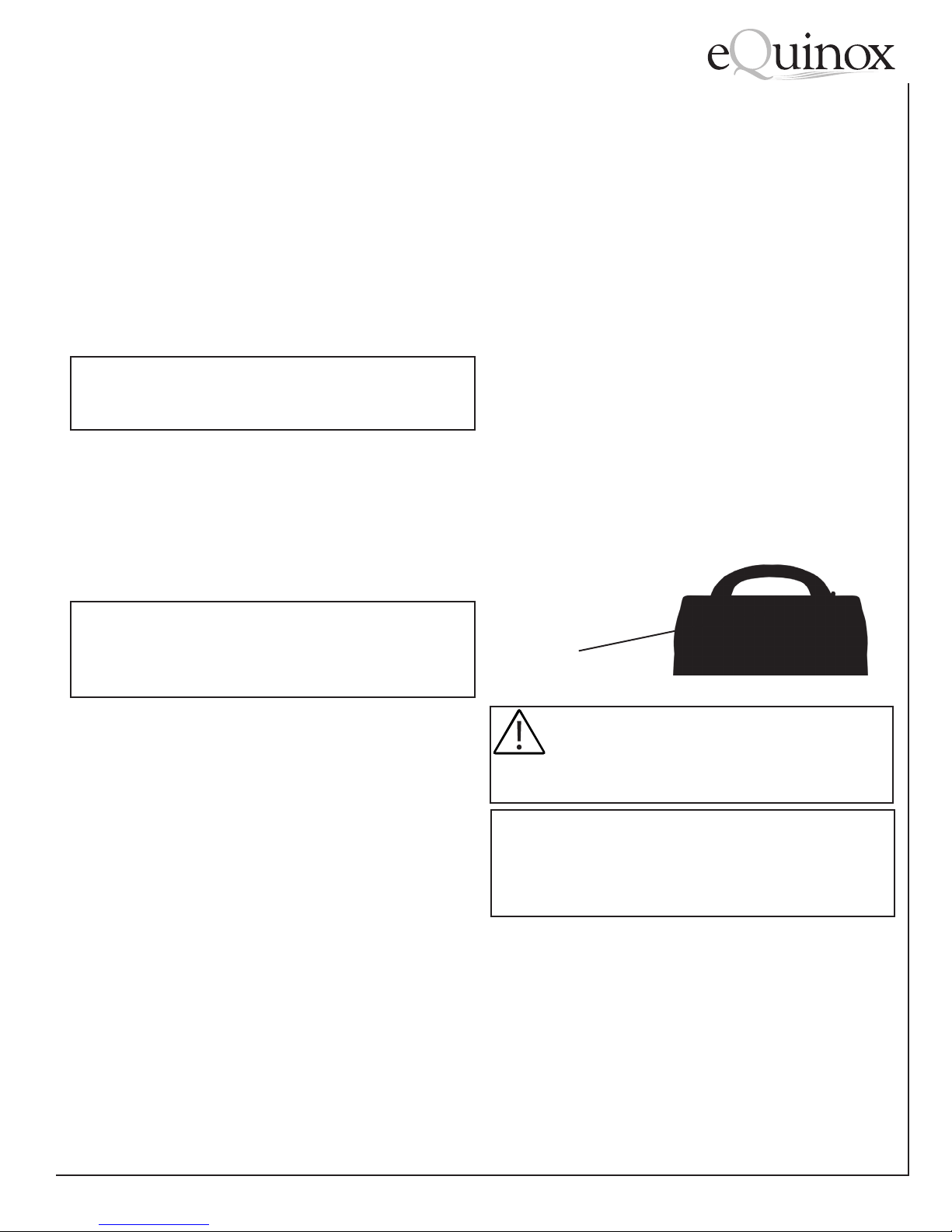
Nettoyage, entretien et maintenance régulière
Maintenance régulière
Seul un technicien qualié et agréé par CAIRE est habilité à
intervenir sur les composants internes du système eQuinox.
Une intervention de maintenance préventive doit être réalisée
chaque année. Contactez votre organisme de soins de santé à
domicile pour convenir d'un calendrier de maintenance préventive.
Votre organisme de soins de santé à domicile ou un technicien
qualié inspectera les composants suivants uniquement si
nécessaire : alarmes, batterie interne de 9 volts, batterie, ltres
internes et autres composants internes.
Remarque : si trois bips sont émis après l'autotest réalisé au démarrage, ceux-ci
indiquent un faible niveau de chargement de la batterie 9 V. Contactez votre organisme de soins de santé à domicile si vous entendez trois bips au démarrage.
Entretien et nettoyage de l'appareil
Remplacement de la canule
Remplacez régulièrement votre tube d'alimentation et votre canule,
comme recommandé par votre organisme de soins de santé à
domicile. Votre médecin ou votre organisme de soins de santé à
domicile vous fournira des informations concernant leur nettoyage,
leur désinfection et leur remplacement.
Filtre d'admission d'air
L'air ambiant est aspiré à l'intérieur de l'appareil via l'orice
d'admission d'air situé dans la partie arrière supérieure de l'appareil.
La tâche de maintenance la plus importante que vous devrez réaliser
en tant qu'utilisateur consiste à nettoyer le ltre d'admission d'air
pour préserver les performances appropriées de votre système
eQuinox. Contrôlez le ltre d'admission d'air quotidiennement
et nettoyez-le au moins une fois par semaine en appliquant la
procédure suivante :
1. Retirez le filtre d'admission d'air.
2. Nettoyez le filtre à l'eau courante tiède en utilisant une
solution de détergent savonneux doux.
3. Rincez soigneusement le filtre à l'eau claire et comprimezle pour évacuer l'eau en excès.
4. Laissez le filtre sécher à l'air libre.
5. Réinstallez le filtre dans le boîtier.
Conseil de nettoyage : assurez-vous de disposer d'un second ltre
propre utilisable pour remplacer un ltre en cours de séchage.
Remarque : pour une utilisation correcte de la canule, reportez-vous toujours
aux instructions du fabricant. Remplacez la canule jetable conformément aux
recommandations du fabricant ou du fournisseur
fournitures sont disponibles auprès de votre fournisseur.
de l’équipement. D’autres
Filtre d'ad-
mission
d'air
MISE EN GARDE : n’utilisez pas le concentrateur d'oxygène lorsque le filtre d'admission d'air n'est pas en
place. Si un second filtre est fourni, mettez-le en place
avant de nettoyer le filtre sale. Nettoyez le filtre encrassé à l'eau
savonneuse tiède, puis laissez sécher totalement avant de l'utiliser.
Remarque : le fabricant ne recommande pas de stériliser cet équipement.
Remarque : n’utilisez pas le concentrateur d'oxygène lorsque le filtre
d'admission d'air n'est pas en place. Si un second filtre est fourni, mettez-le
en place avant de nettoyer le filtre sale. Nettoyez le filtre encrassé à l'eau
savonneuse tiède, puis laissez sécher totalement avant de l'utiliser.
Le ltre d'admission d'air doit être remplacé chaque année. Si le
système eQuinox est utilisé dans un environnement poussiéreux,
il peut être nécessaire de remplacer le ltre plus fréquemment.
N'utilisez jamais le système eQuinox durant plus de 5 minutes si le
ltre d'admission d'air n'est pas installé.
eQuinox (Model 4000) User Manual — 45
Page 46
Alimentation CA, câble 12 V CC, cordon d'alimentation et
boîtier extérieur
Arrêtez le système eQuinox et déconnectez-le de l'alimentation
CA ou CC avant toute opération de nettoyage ou de désinfection.
VEILLEZ À NE PAS vaporiser de liquides directement sur le
boîtier extérieur. Utilisez une éponge ou un chiffon légèrement
humide. Vaporisez une solution de nettoyage douce sur l'éponge ou
sur le chiffon an de nettoyer le boîtier et les alimentations. Pour
désinfecter le système eQuinox, utilisez le désinfectant Lysol®
Brand II (ou un produit équivalent). Suivez les instructions du
fabricant du produit nettoyant.
AVERTISSEMENT : RISQUE DE CHOC ÉLECTRIQUE ARRÊTEZ
L'APPAREIL ET DÉBRANCHEZ LE CORDON D'ALIMEN-
TATION DE LA PRISE ÉLECTRIQUE AVANT DE NETTOYER
L'APPAREIL AFIN D'ÉVITER TOUT CHOC ÉLECTRIQUE ACCIDENTEL
OU RISQUE DE BRÛLURE. SEUL LE FOURNISSEUR DE L'APPAREIL
OU UN TECHNICIEN QUALIFIÉ EST HABILITÉ À RETIRER LES CAPOTS
OU RÉPARER L'APPAREIL. VEILLEZ À NE PAS UTILISER DE LIQUIDE
DIRECTEMENT SUR L'APPAREIL. LES AGENTS CHIMIQUES À ÉVITER
INCLUENT DE FAÇON NON EXHAUSTIVE LES PRODUITS ALCOOLISÉS
ET À BASE D'ALCOOL, LES PRODUITS À BASE DE CHLORE CONCENTRÉ (CHLORURE D'ÉTHYLÈNE) ET LES PRODUITS À BASE D'HUILE
(PINE-SOL®, LESTOIL®). CES PRODUITS NE DOIVENT PAS ÊTRE
UTILISÉS POUR NETTOYER LES PARTIES EN PLASTIQUE DU CONCENTRATEUR D'OXYGÈNE AU RISQUE DE LES ENDOMMAGER.
AVERTISSEMENT : RISQUE DE CHOC ÉLECTRIQUE DÉBRANCHEZ
LE CORDON D'ALIMENTATION DE LA PRISE ÉLECTRIQUE AVANT
DE NETTOYER L'APPAREIL AFIN D'ÉVITER TOUT CHOC ÉLECTRIQUE
ACCIDENTEL OU RISQUE DE BRÛLURE. SEUL LE FOURNISSEUR DE
L'APPAREIL OU UN TECHNICIEN QUALIFIÉ EST HABILITÉ À RETIRER
LES CAPOTS OU RÉPARER L'APPAREIL.
AVERTISSEMENT : PRENEZ TOUTES LES PRÉCAUTIONS NÉCESSAIRES
POUR ÉVITER DE MOUILLER LE CONCENTRATEUR D'OXYGÈNE ET
LA BATTERIE ET ASSUREZ-VOUS QU'AUCUN LIQUIDE NE PUISSE
PÉNÉTRER À L'INTÉRIEUR DE L'APPAREIL AFIN D'ÉVITER TOUT
DYSFONCTIONNEMENT OU ARRÊT DE CELUI-CI, AINSI QU'UN RISQUE
ACCRU DE CHOC ÉLECTRIQUE OU DE BRÛLURE.
AVERTISSEMENT : NETTOYEZ LE BOÎTIER, LE PANNEAU DE COMMANDE ET LE CORDON D'ALIMENTATION UNIQUEMENT À L'AIDE
D'UN DÉTERGENT DOUX APPLIQUÉ AU MOYEN D'UN CHIFFON OU
D'UNE ÉPONGE LÉGÈREMENT HUMIDE, PUIS ESSUYEZ TOUTES LES
SURFACES POUR LES SÉCHER. ÉVITEZ TOUTE PÉNÉTRATION DE LIQUIDE À L'INTÉRIEUR DE L'APPAREIL. INSPECTEZ TOUT PARTICULIÈRE-
MENT LA SORTIE D'OXYGÈNE AU NIVEAU DU RACCORDEMENT DE LA CANULE AFIN DE VÉRIFIER L'ABSENCE DE
POUSSIÈRES, D'EAU OU AUTRES PARTICULES.
AVERTISSEMENT : VEILLEZ À NE PAS UTILISER DE LIQUIDE DIRECTEMENT SUR L'APPAREIL. LES AGENTS CHIMIQUES À ÉVITER INCLUENT DE FAÇON NON EXHAUSTIVE LES PRODUITS ALCOOLISÉS ET À
BASE D'ALCOOL, LES PRODUITS À BASE DE CHLORE CONCENTRÉ
(CHLORURE D'ÉTHYLÈNE) ET LES PRODUITS À BASE D'HUILE (PINESOL®, LESTOIL®). CES PRODUITS NE DOIVENT PAS ÊTRE UTILISÉS
POUR NETTOYER LES PARTIES EN PLASTIQUE DU CONCENTRATEUR
D'OXYGÈNE AU RISQUE DE LES ENDOMMAGER.
Humidificateur optionnel
Si vous utilisez un humidicateur, nettoyez-le quotidiennement
pour réduire le risque de contamination. Suivez les instructions de
nettoyage fournies par votre organisme de soins de santé à domicile
ou par le fabricant de l'humidicateur. Remplacez l'humidicateur
chaque mois ou selon les recommandations du fabricant ou de votre
organisme de soins de santé à domicile (veillez à ne pas remplir
l'humidicateur de façon excessive).
MISE EN GARDE : VEILLEZ À NE PAS vous déplacer avec
le système eQuinox lorsqu'un humidificateur est con-
necté. Retirez le flacon de l'humidificateur avant de vous
déplacer. VEILLEZ À NE PAS coucher le système eQuinox lorsqu'il est
connecté à un flacon d'humidificateur.
Chariot eQuinox
Avant de nettoyer le chariot, retirez-le du système eQuinox.
Nettoyez le chariot à l'aide d'une éponge ou d'un chiffon légèrement
humide et d'une solution de détergent doux.
Batterie
La batterie du système eQuinox nécessite un entretien particulier
pour offrir une plus longue durée de vie et des performances
optimales. La batterie CAIRE est la seule batterie approuvée et
recommandée pour une utilisation avec le système eQuinox.
Nettoyez la batterie à l'aide d'une éponge ou d'un chiffon légèrement
humide. Vaporisez un détergent doux sur l'éponge ou sur le chiffon,
puis nettoyez le boîtier de la batterie et le loquet.
CAIRE recommande de remplacer la batterie après 2 ans
d'utilisation.
Recyclage de la batterie
Votre batterie est rechargeable et peut être recyclée. Retournez
toujours la batterie à votre organisme de soins de santé à domicile
pour qu'elle soit correctement recyclée. Vous pouvez également
contacter vos services municipaux locaux pour obtenir des
instructions concernant le recyclage approprié de la batterie.
Mise au rebut du système d'oxygénation eQuinox
Les lois et réglementations environnementales locales peuvent
interdire la mise au rebut des équipements électriques et/ou
électroniques tels que le système eQuinox ou l'alimentation
CA. Contactez vos services municipaux locaux pour obtenir des
instructions concernant le recyclage approprié des équipements
électriques ou électroniques. Vous pouvez également contacter
CAIRE Inc. pour obtenir des informations sur le recyclage.
46 — 4805-C1 C (French)
Page 47

Tableaux de compatibilité électromagnétique
Directives et déclaration du fabricant - Émissions électromagnétiques
Le système eQuinox est prévu pour une utilisation dans les environnements électromagnétiques spécifiés ci-dessous. Le client ou l'utilisateur du
système eQuinox doit s'assurer que celui-ci est utilisé dans un environnement de ce type.
Test d'émissions Conformité Environnement électromagnétique - Directives
Émissions RF
CISPR 11
Émissions RF
CISPR 11
Émissions de courant harmo-
nique
CEI 61000-3-2
Fluctuations de tension/papillotement
CEI 61000-3-3
Groupe 1
Classe B
Classe A
Conforme
Le système eQuinox utilise de l'énergie RF uniquement pour son fonctionnement
interne. Par conséquent, ses émissions RF sont très faibles et ne sont pas susceptibles de provoquer des interférences avec des équipements électroniques situés à
proximité.
Le système eQuinox convient à une utilisation dans tous les établissements, y compris les habitations et les établissements directement connectés au réseau d'alimentation public basse tension qui alimente les bâtiments à usage d'habitation.
eQuinox (Model 4000) User Manual — 47
Page 48

Directives et déclaration du fabricant - Immunité électromagnétique
Le système eQuinox est prévu pour une utilisation dans les environnements électromagnétiques spécifiés ci-dessous. Le client ou l'utilisateur du
système eQuinox doit s'assurer que celui-ci est utilisé dans un environnement de ce type.
Test d'immunité Niveau de test CEI 60601 Niveau de conformité Environnement électromagnétique - Directives
Environnement
électromagnétique Directives
CEI 61000-4-2
Transitoires électriques
rapides/Salves
CEI 61000-4-4
Surtension
CEI 61000-4-5
Contact ±6 kV
Air ±8 kV
±2 kV pour les lignes d'alimentation
±1 kV pour les lignes d'entrée/
sortie
±1 kV entre fils de ligne
±2 kV entre un fil et la terre
<5 % U
(baisse >95 % en U
T
)
T
pendant 0,5 cycle
Contact ±6 kV
Air ±8 kV
±2 kV pour les lignes d'alimentation
S/O
±1 kV entre fils de ligne
<5 % U
(baisse >95 % en U
T
)
T
pendant 0,5 cycle
Les sols doivent être en bois, en ciment ou carrelés.
Si les sols sont revêtus d'un matériau synthétique,
le taux d'humidité relative doit être d'au moins 30 %.
La qualité de l'alimentation secteur doit être celle
d'un environnement commercial ou médical standard.
La qualité de l'alimentation secteur doit être celle
d'un environnement commercial ou médical standard.
Creux de tension, coupures brèves et variations de tension sur
les circuits d'alimentation électrique
CEI 61000-4-11
Champ magnétique
à la fréquence du
réseau (50/60 Hz)
CEI 61000-4-8
REMARQUE : U
correspond à la tension secteur AC avant l'application du niveau de test.
T
40 % U
T
(baisse de 60 % en U
pendant 5 cycles
70 % U
T
(baisse de 30 % en U
pendant 25 cycles
<5 % U
T
(baisse >95 % en U
pendant 5 s
)
T
)
T
)
T
40 % U
(baisse de 60 % en U
pendant 5 cycles
70 % U
(baisse de 30 % en U
pendant 25 cycles
<5 % U
(baisse >95 % en U
pendant 5 s
3 A/m 3 A/m
T
)
T
La qualité de l'alimentation secteur doit être celle
d'un environnement commercial ou médical standard. Si l'utilisateur du système eQuinox nécessite
un fonctionnement continu de l'appareil en cas de
T
)
T
T
)
T
coupure de courant, il est recommandé d'utiliser le
système eQuinox avec une source d'alimentation
ininterruptible.
Les champs magnétiques à la fréquence du réseau
doivent correspondre à ceux d'un environnement
commercial ou médical standard.
48 — 4805-C1 C (French)
Page 49
Directives et déclaration du fabricant - Immunité électromagnétique
Le système eQuinox est prévu pour une utilisation dans les environnements électromagnétiques spécifiés ci-dessous. Le client ou l'utilisateur du
système eQuinox doit s'assurer que celui-ci est utilisé dans un environnement de ce type.
Test d'immunité Niveau de test CEI 60601 Niveau de conformité Environnement électromagnétique - Directives
RF conduites
CEI 61000-4-6
3 Vrms
150 kHz à 80 MHz
3 Vrms
Les équipements de communication RF portables
et mobiles ne doivent pas être utilisés à proximité
des composants de l'appareil, y compris les câbles,
à une distance inférieure à la distance de séparation
recommandée calculée sur la base de l'équation
RF rayonnées
CEI 61000-4-3
3 V/m
80 MHz à 2,5 GHz
3 V/m
applicable à la fréquence de l'émetteur.
Distance de séparation recommandée
d 8 1,2√ P
d 8 1,2√ P
d 8 1,2√ P
= 80 MHz à 800 MHz
= 800 MHz à 2,5 GHz
où P correspond à la puissance nominale de sortie
maximum de l'émetteur en watts (W), indiquée par
le fabricant de l'émetteur, et d correspond à la distance de séparation recommandée en mètres (m).
L'intensité des champs émis par des émetteurs RF
fixes, déterminée par l'étude électromagnétique d'un
a
site
, doit être inférieure au niveau de conformité
pour chaque plage de fréquences b.
Des interférences peuvent se produire à proximité
des équipements portant le symbole suivant :
REMARQUE 1 : à 80 MHz et 800 MHz, la plage de fréquences supérieure s'applique.
REMARQUE 2 : il est possible que ces directives ne s'appliquent pas à toutes les situations. La propagation électromagnétique dépend des
phénomènes d'absorption et de réflexion induits par les structures, les objets et les personnes.
a
L'intensité des champs produits par des émetteurs fixes, tels que les stations de base pour les radiotéléphones (cellulaires/sans fil) et
les radios mobiles, les radio amateurs, les radios AM et FM et la télévision ne peut pas être prédite théoriquement avec précision. Pour évaluer
l'environnement électromagnétique dû aux émetteurs RF fixes, une étude électromagnétique du site doit être envisagée. Si l'intensité du champ,
mesurée à l'emplacement où le système eQuinox est utilisé, dépasse le niveau de conformité RF applicable indiqué ci-dessus, il conviendra de
s'assurer du bon fonctionnement de système eQuinox dans un tel environnement. En cas d'anomalie, il pourra être nécessaire de réaliser des
mesures supplémentaires, par exemple en modifiant l'orientation ou la position du système eQuinox.
b
Sur la plage de fréquences de 150 kHz à 80 MHz, l'intensité des champs doit être inférieure à 3 V/m.
eQuinox (Model 4000) User Manual — 49
Page 50
Distances de séparation recommandée entre des équipements de communication RF portables et mobiles et le système eQuinox
Le système eQuinox est prévu pour une utilisation dans un environnement dans lequel les perturbations dues aux radiofréquences rayonnées
sont contrôlées. Le client ou l'utilisateur du système eQuinox peut prévenir les perturbations électromagnétiques en respectant les distances minimum recommandées ci-dessous pour la séparation entre les équipements de communication RF portables et mobiles (émetteurs) et l'appareil,
en fonction de la puissance maximum de sortie de l'équipement de communication.
Puissance nominale
de sortie maximum de
l'émetteur
W
0,01 0,12 0,12 0,23
0,1 0,38 0,38 0,73
1 1,2 1,2 2,3
10 3,8 3,8 7,3
100 12 12 23
Pour les émetteurs avec une puissance nominale de sortie maximum ne figurant pas dans le tableau ci-dessus, la distance de séparation recommandée d en mètres (m) peut être déterminée à l'aide de l'équation applicable à la fréquence de l'émetteur, où P correspond à la puissance
nominale de sortie maximum de l'émetteur en watts (W), indiquée par le fabricant de l'émetteur.
REMARQUE 1 : à 80 MHz et 800 MHz, la distance de séparation correspondant à la plage de fréquences supérieure s'applique.
REMARQUE 2 : il est possible que ces directives ne s'appliquent pas à toutes les situations. La propagation électromagnétique dépend des
phénomènes d'absorption et de réflexion induits par les structures, les objets et les personnes.
150 kHz à 80 MHz
d 8 1,2√ P
Distance de séparation en fonction de la fréquence de l'émetteur
m
80 MHz à 800 MHz
d 8 1,2√ P
800 MHz à 2,5 GHz
d 8 1,2√ P
50 — 4805-C1 C (French)
Page 51
Informations générales concernant les
Directives sur l'utilisation de batteries
voyages en avion
Pendant la circulation au sol, le décollage et l'atterrissage, le
système eQuinox doit être arrêté et rangé sous le siège ou dans un
autre compartiment de stockage approuvé an de ne pas bloquer
l'allée centrale ou l'entrée s'il n'est pas utilisé.
Pendant la circulation au sol, le décollage et l'atterrissage,
l'utilisateur doit occuper un siège approprié an de ne pas empêcher
les autres passagers d'accéder à ou d'utiliser toute issue de secours,
toute issue normale ou l'allée du compartiment passagers de l'avion
si le système eQuinox est utilisé.
Les utilisateurs ne sont pas autorisés à s'installer dans une rangée
située près d'une issue de secours s'ils utilisent le système eQuinox.
Si le système eQuinox est utilisé pendant une décompression de
la cabine et le déploiement du système d'oxygène de la cabine,
l'utilisateur doit cesser d'utiliser le système eQuinox et utiliser le
système d'oxygène d'appoint de l'avion. L'unité eQuinox doit être
arrêtée une fois que l'utilisateur a attaché le système d'oxygène
d'appoint de l'avion.
Avant tout déplacement, l'utilisateur doit inspecter le système
eQuinox an de vérier son bon fonctionnement.
durant les voyages en avion
Prévoyez le temps passé au sol (enregistrement, contrôles de sécurité, etc.) et les
escales.
La plupart des compagnies aériennes exigent que l'utilisateur
dispose du nombre adéquat de batteries pleinement chargées pour
alimenter l'appareil durant au moins 150 % de la durée maximum
estimée du voyage (temps de vol, temps au sol avant et après le vol
ou durant les correspondances, et retards imprévus).
Il est recommandé de toujours disposer d'une bat-
terie supplémentaire lors de vos déplacements.
Chaque compagnie aérienne applique ses propres exigences
concernant les usagers voyageant avec de l'oxygène.
Contactez votre compagnie aérienne au moins 48 heures avant
le départ an de l'informer que vous voyagerez avec l'appareil
eQuinox.
MISE EN GARDE : les réglementations du département
des transports des États-Unis et des Nations unies (ONU)
exigent que la batterie soit retirée de l'appareil sur tous
les vols internationaux si celui-ci est enregistré en tant que bagage.
Lors de l'expédition du concentrateur d'oxygène, il est également
impératif de retirer la batterie de l'appareil et de l'emballer correctement.
eQuinox (Model 4000) User Manual — 51
Page 52
CAIRE Inc.
®
2200 Airport Industrial Drive, Ste. 500
Ball Ground, GA 30107, États-Unis
1-800-482-2473
Site Web mondial : www.CAIREmedical.com
Medical Product Services GmbH
Borngasse 20
35619 Braunfels, Allemagne
Site Web mondial : www.CAIREmedical.com
CAIRE Inc. se réserve le droit d'interrompre la commercialisation de ses produits ou de modifier les tarifs, les matériaux,
les équipements, les niveaux de qualité, les descriptions, les caractéristiques et/ou les processus de ses produits, et ce à
tout moment, sans avertissement préalable et sans aucune autre obligation ni conséquence. Nous nous réservons tous
les droits non expressément stipulés dans le présent document, selon les conditions applicables.
52 — 4805-C1 C (French)
À la date de cette publication, eQuinox, SeQual et autoSAT, ainsi que leurs logos asso-
ciés (le cas échéant), sont des marques déposées de CAIRE Inc.
Lysol® est une marque déposée de Reckitt Benckiser, R-U.
OxySafe® est une marque déposée d'Applied Home Healthcare Equipment.
Pine-Sol® et Lestoil® sont des marques déposées de The Clorox Company.
Page 53
Bedienungsanleitung
eQuinox
TM
Modell 4000
eQuinox (Model 4000) User Manual — 53
Page 54
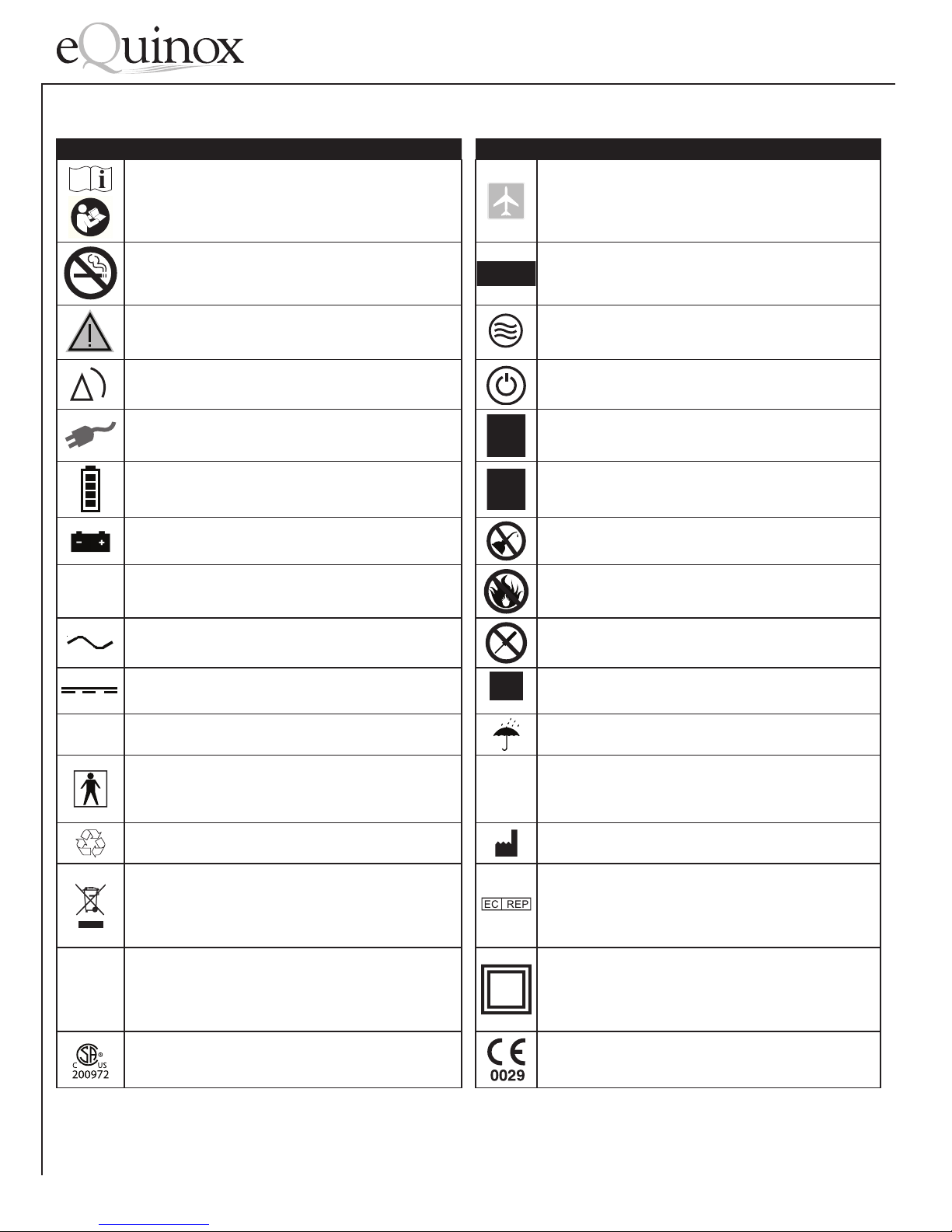
Steuerungselemente und Systemstatusanzeigen
Symbol Definition Symbol Definition
Lesen Sie vor der Verwendung des Gerätes diese
Bedienungsanleitung. Siehe die Anweisungen in der
Bedienungsanleitung.
Symbol „Zugelassen von FAA“: Die
Bundesluftfahrtbehörde der USA (Federal Aviation
Administration, FAA) hat dieses Gerät für die
Verwendung bei kommerziellen Flügen zugelassen.
A
Symbol „Rauchen verboten“: Nicht in der Nähe des
Geräts rauchen.
Anzeige für Warnungen/Alarme (gelb) Pulse-Dose-Betrieb
Anzeige für Alarme (rot) Gerät arbeitet normal, Einschalttaster
Anzeige für externe Stromversorgung Volumenstrom-Einstellung erhöhen
Batteriemodul-Ladeanzeige Volumenstrom-Einstellung senken
Batteriemodulsymbol Nicht mit Öl oder Fett schmieren.
Ampere Nicht offenem Feuer aussetzen.
Wechselstrom
IEC-Symbol für Gleichstrom (Eingang) Heiße Oberäche!
Volumenstrom-Einstellungsanzeige
Keine vom Benutzer wartbaren Teile enthalten.
Abdeckung nicht öffnen.
0
IP22
54 — 4805-C1 C (German)
Sauerstofeistung Vor Nässe schützen!
2
Typ BF-geschütztes Gerät (Schutz vor
elektrischem Schlag)
Recycling-Symbol Name und Adresse des Herstellers
Das Gerät muss gemäß der Richtlinie 2002/96/EG
über Elektro- und Elektronik-Altgeräte am Ende seiner
Lebensdauer zu einer geeigneten Recyclingstelle
gebracht werden und darf nicht mit dem normalen
Hausmüll entsorgt werden.
Tropfwassergeschützt und sicher vor Eindringen von
festen Fremdkörpern: Mit der Schutzart IP22 bietet
der eQuinox gemäß IEC 60529 Schutz vor den
schädlichen Einwirkungen von Flüssigkeiten und
festen Fremdkörpern.
Sowohl für den US- als auch für den kanadischen
Markt zugelassen; entspricht den US- und kanadischen
Normen.
IPX1
Tropfwassergeschütztes Gerät (Schutzart IPX1): Das
Batteriemodul und das Wechselstromnetzteil des
eQuinox sind gegen Schäden durch Eindringen von
Flüssigkeiten geschützt. (IPX1 gemäß IEC 60529)
Autorisierter Vertreter in der Europäischen
Gemeinschaft
Gerät der Schutzklasse II
Das Gerät entspricht den Vorgaben der Richtlinie
93/42/EWG für Medizinprodukte und darf daher das
hier dargestellte CE-Zeichen tragen.
Page 55

Inhalt
Steuerungselemente und Systemstatusanzeigen ................................................................................54
Kurzanleitung ........................................................................................................................................... 56
Gebrauchshinweise .................................................................................................................................59
Gegenanzeigen ........................................................................................................................................59
Sicherheitsrichtlinien ..............................................................................................................................59
Empfohlene Betriebsumgebungen ........................................................................................................61
Gebrauchsanweisung ..............................................................................................................................62
Sprachmodulbetrieb ...............................................................................................................................65
Inbetriebnahme des eQuinox ................................................................................................................. 66
Störungsbehebungstabelle für den Benutzer ......................................................................................68
Reinigung, Pflege und regelmäßige Wartung ....................................................................................... 71
EMV-Tabellen ...........................................................................................................................................73
Allgemeine Informationen zu Flugreisen .............................................................................................. 77
Batteriemodul und Flugreisen ................................................................................................................ 77
eQuinox (Model 4000) User Manual — 55
Page 56
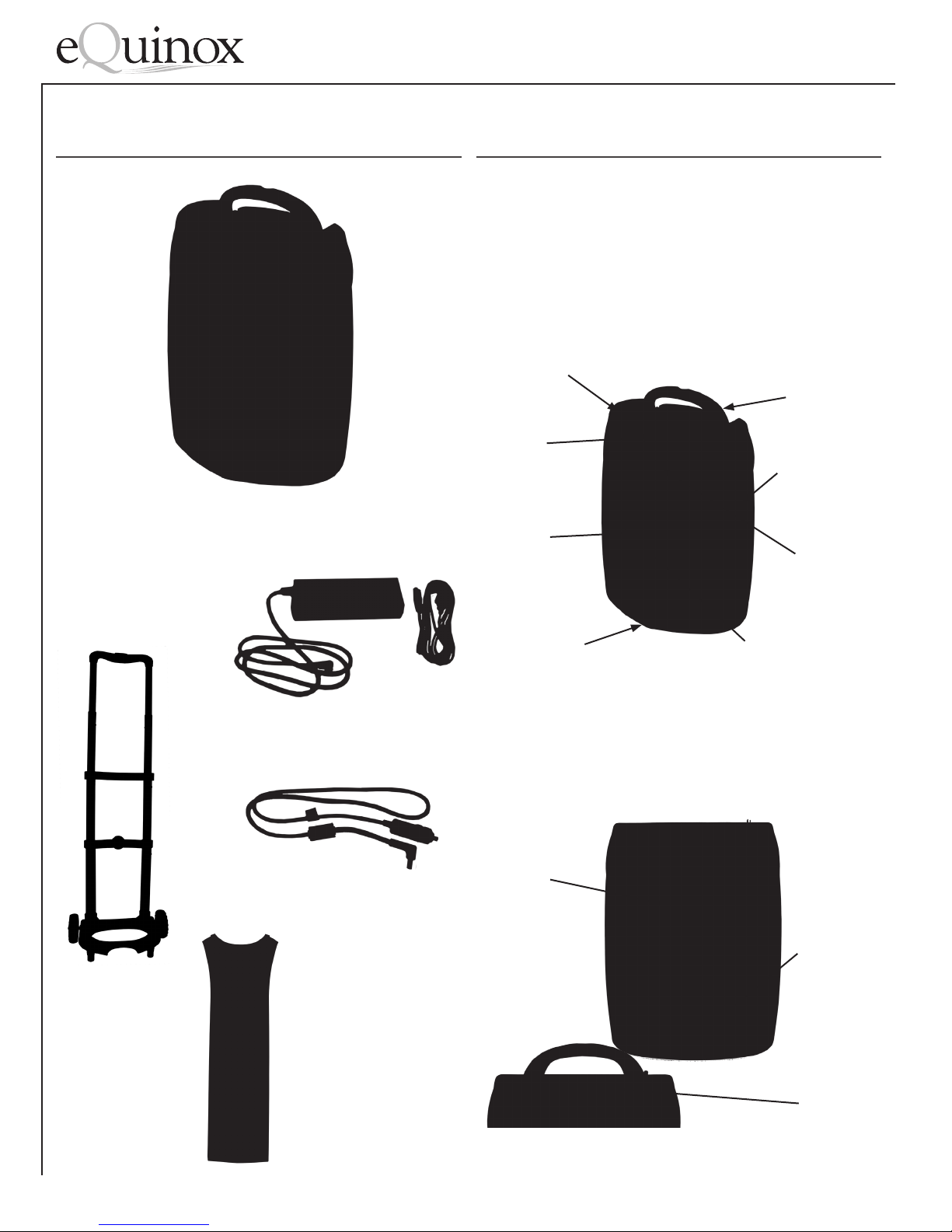
Kurzanleitung
1
Auspacken des eQuinox
Wechselstrom-Netzteil
Kennenlernen Ihres eQuinox
2
Lesen Sie sorgfältig alle Warnhinweise, Vorsichtshinweise und
zusätzlichen Informationen zum Gerät im Rest dieses Handbuches.
Machen Sie sich mit den wichtigsten Komponenten des eQuinox
sowie dem Bedienfeld vertraut.
Sauerstof
Bedienfeld
Symbol
„Zugelassen
von FAA“
fauslass
VORDERSEITE
Griff
Anschluss für
externe Stromversorgung
Batteriemodulriegel
eQuinox-Trolley
12-VDC-Kabel
Typenschild &
Seriennummer
Schaltschrank
Batteriemodul
RÜCKSEITE
Abluftöffnungen
Batteriemodul
(Batterie)
56 — 4805-C1 C (German)
Lufteinlassfilter
Page 57
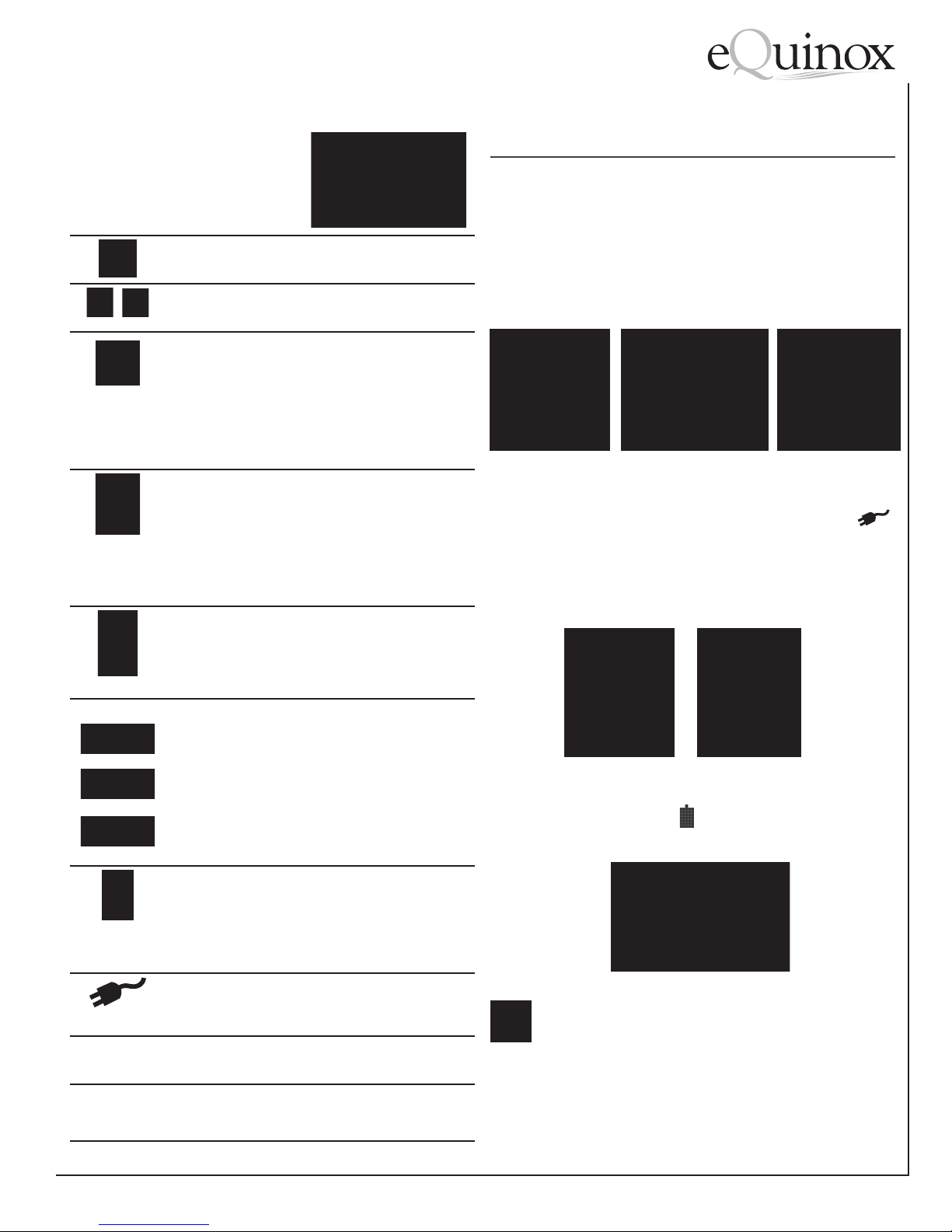
Das Bedienfeld des eQuinox zeigt
wichtige Betriebsinformationen an.
Ein-/Aus-Taster (grün): Mit diesem Taster wird das Gerät
ein- bzw. ausgeschaltet. Leuchtet der Taster grün, dann ist das
Gerät eingeschaltet und funktioniert ordnungsgemäß.
Taster zum Erhöhen bzw. Senken der Volumenstrom-Einstellung:
Akustisches Signal: Ein akustisches Signal weist Sie auf den Betriebszustand des
Gerätes hin, entweder eine Warnung oder eine Fehlfunktion, und bestätigt einen
gültigen Tastendruck.
Sprachmodul: Falls aktiviert, macht Sie ein gesprochener Hinweis auf den
Betriebszustand des Geräts, eine Änderung der Stromversorgung und Warnungen
oder Fehler aufmerksam.
Über diese Taster können Sie den Volumenstrom auf den Wert
einstellen, der Ihnen von Ihrem Arzt verschrieben wurde.
Betriebsmodus-Wahltaster und -Anzeige: Mit diesem
Taster können Sie zwischen dem Continuous-Flow-Modus
(konstanter Volumenstrom) und dem Pulse-Dose-Modus
(Sauerstoffbolus) umschalten. Der Pulse-Dose-Modus aktiviert
die autoSAT-Technologie. Dadurch erhöht sich die maximale
Betriebsdauer im Batteriebetrieb erheblich. Wenn der PulseDose-Modus aktiviert ist, leuchtet die grüne Pulse-Dose-Modusanzeige. Bei jedem Atemvorgang wird ein Sauerstoffbolus
verabreicht und die grüne Anzeige blinkt.
WARNANZEIGE (gelb) – Wenn diese Anzeige leuchtet, sind
aufgrund einer Warnung niedriger Priorität erhöhte Wachsamkeit oder Vorsicht erforderlich. Sie können das System
weiter verwenden. Ziehen Sie die Störungsbehebungstabelle
für die geeignete Maßnahme heran, oder setzen Sie sich mit
dem Pflegedienst in Verbindung. Blinkt die Anzeige gelb,
zeigt dies eine Warnung mittlerer Priorität an. Es sind schnelle
Maßnahmen erforderlich. (Typische Ursachen sind z. B. wenig
Sauerstoff oder eine niedrige Batteriekapazität.)
ALARMANZEIGE (rot) – Weist auf einen Alarm hoher Priorität
hin. Es sind unverzüglich Maßnahmen zu ergreifen. Konsultieren Sie die Störungsbehebungstabelle und setzen Sie sich
mit Ihrem Pflegedienst in Verbindung. (Typische Ursachen sind
eine Unterbrechung der Stromversorgung, wenig Sauerstoff
oder eine Störung.)
Informationsanzeige.
• C oder P – „C“ bedeutet Continuous-Flow-Modus (konstanter Volumenstrom), „P“ bedeutet Pulse-Dose-Modus
(Sauerstoffbolus).
• Batteriebetriebszeit – Im Batteriebetrieb wechselt die Anzeige alle 20 Sekunden und gibt die verbleibende geschätzte
Batteriebetriebszeit an.
• Einstellung (Volumenstrom oder Sauerstoffbolus) – Bei
Abschalten des Geräts werden der letzte Betriebsmodus sowie
die letzte Einstellung gespeichert. Bei erneutem Einschalten
werden diese wieder aufgerufen.
Batteriemodul-Ladeanzeige: Diese Anzeige zeigt die
verbleibende Batteriekapazität an. Jeder einzelne der fünf
Querbalken steht für etwa 20 % der gesamten Batterieladung.
Während des Ladevorgangs blinken die Ladeanzeigebalken
nacheinander stufenweise auf. Wenn kein Batteriemodul eingesetzt bzw. das Batteriemodul falsch eingesetzt ist, leuchtet
die Batteriemodul-Ladeanzeige nicht auf bzw. blinkt.
Anzeige für externe Stromversorgung: Wenn der eQuinox ordnungsgemäß über das Netzteil (Gleich- oder Wechselstrom)
mit dem Stromnetz (bzw. einer Stromquelle) verbunden ist,
erscheint dieses Symbol auf dem Bedienfeld.
Einschalten des eQuinox
3
Zum Anschluss des Wechselstrom-Netzteils: Schließen
Sie das Wechselstrom-Netzteilkabel sicher an der externen
Stromanschlussbuchse auf der rechten Seite des Gerätes an.
Verbinden Sie das Wechselstrom-Netzkabel mit dem Netzteil und
einer Wechselstrom-Steckdose.
Schritt 1 Schritt 2 Schritt 3
Wenn das eQuinox ordnungsgemäß angeschlossen ist, leuchtet eine
grüne Anzeige auf dem Wechselstrom-Netzteil. Auf dem Bedienfeld
leuchtet zusätzlich die Anzeige für die externe Stromversorgung.
Einsetzen der Batterie: Schieben Sie die Batterie in das leere
Batteriefach, bis sie hörbar einrastet. Sie schließt bündig mit der
Vorderseite des Geräts ab.
Wenn die Batterie ordnungsgemäß eingesetzt wurde und das
eQuinox eingeschaltet oder mit dem Stromnetz verbunden ist, wird
die Batteriemodul-Ladeanzeige
Ein-/Aus-Taster:
Halten Sie den Ein-/Aus-Taster für zwei (2) Sekunden gedrückt, um
das eQuinox einzuschalten. Beim Einschalten wird ein kurzer, hör-
und sichtbarer Selbsttest durchgeführt. Prüfen Sie, ob alle Lampen
leuchten und das akustische Signal drei (3) Sekunden lang ertönt.
Halten Sie den Ein-/Aus-Taster für zwei (2) Sekunden gedrückt, um
das eQuinox auszuschalten.
angezeigt.
eQuinox (Model 4000) User Manual — 57
Page 58
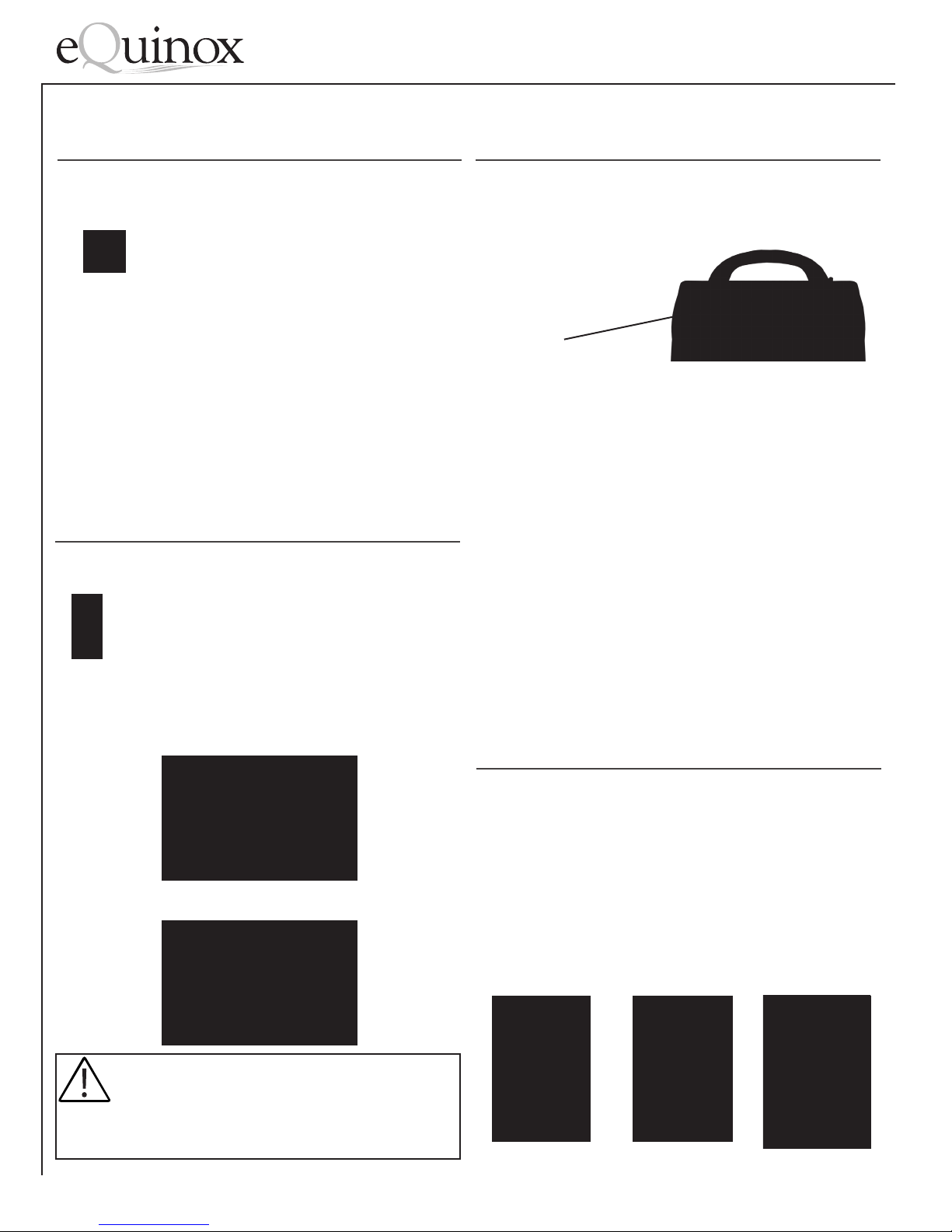
Wählen eines Modus
Verwenden des eQuinox beginnen
4
Moduswahltaster und -Anzeige
Drücken Sie den Moduswahltaster, um die gewünschte Betriebsart
auszuwählen. Durch wiederholtes Drücken kann zwischen dem
Pulse-Dose-Modus (Sauerstoffbolus) und dem Continuous-Flow-
Modus (konstanter Volumenstrom) umgeschaltet werden. Im
Continuous-Flow-Modus strömt der Sauerstoff mit einem konstanten
Volumenstrom von 0,5 und 3,0 Litern pro Minute. Dies wird mit dem
Buchstaben C angezeigt. Im Pulse-Dose-Modus wird der Sauerstoff
zu Beginn jedes Einatmens als Bolus bereitgestellt. Die Pulse-ModusEinstellungen 1–9 entsprechen Bolusgrößen von 16 ml bis 192 ml
und werden auf dem Display durch den Buchstaben P angezeigt.
Der Sauerstoffbolus kann auf Empndlichkeit und AtembolusVerabreichung eingestellt werden. Die Volumenstrom-Einstellungen
in beiden Modi sollten Ihnen von Ihrem Arzt verschrieben werden.
Einstellen des Volumenstroms auf die ver-
schriebenen Werte
5
Taster zum Erhöhen bzw. Senken der Volumenstrom-Einstellung:
6
Lufteinlassfilter
Luftein-
lassfilter
Ihr Gerät ist mit einem Lufteinlasslter ausgestattet. Ein zusätzlicher
Filter wird mitgeliefert. Überprüfen Sie den Filter täglich und
reinigen Sie ihn wöchentlich. Anweisungen zum Reinigen nden
Sie auf Seite 19.
Schließen Sie den Sauerstoffversorgungsschlauch an den
Sauerstoffauslass an; schließen Sie die Sauerstoffkanüle gemäß
Herstelleranweisungen oder den Anweisungen Ihres Pegedienstes
an.
Atmen Sie normal über die Nasenkanüle.
Im Batteriebetrieb ermöglicht der Pulse-Dose-Modus eine längere
Betriebsdauer des Geräts.
Über die Taster + und - können Sie die Einstellung auf die von
Ihrem Arzt verschriebene Einstellung ändern.
Anzeige Continuous-Flow-Modus (konstanter Volumen-
strom)
Anzeige Pulse-Dose-Modus (Sauerstoffbolus):
WARNUNG: STELLEN SIE UNBEDINGT NUR DIE VERORDNETE
MENGE SAUERSTOFF EIN. ÄNDERN SIE DIE EINSTELLUNG NUR,
WENN DIES AUF ANWEISUNG EINES APPROBIERTEN ARZTES
ERFOLGT. DER GEBRAUCH DES TRAGBAREN SAUERSTOFFKONZENTRATORS WÄHREND DES SCHLAFS DARF NUR AUF EMPFEHLUNG
DURCH QUALIFIZIERTES KLINISCHES PERSONAL ERFOLGEN.
Verwenden des eQuinox-Trolleys
7
Richten Sie den eQuinox am geformten Boden des Trolleys
aus, sodass er gerade und aufrecht steht. Richten Sie die große
Gewindeschraube auf die Bohrung an der Rückseite des eQuinox
aus. Ziehen Sie nun den Knauf am Trolley handfest an, bis der
Trolley fest mit dem Gerät verbunden ist. Drücken Sie den
Druckknopf am Teleskopgriff des Trolleys herunter und ziehen Sie
den Griff nach oben, um die Griffhöhe einzustellen.
58 — 4805-C1 C (German)
Page 59
Wichtig!
Sicherheitsrichtlinien
Warn- und Sicherheitshinweise sind folgendermaßen
gekennzeichnet:
WARNUNG: WEIST AUF GEFAHREN HIN, DIE SCHWERE VERLETZUNGEN ZUR FOLGE HABEN KÖNNEN.
VORSICHT: Weist auf Gefahren hin, die Schäden am eQuinox
verursachen können.
Hinweis: Besonders zu beachtende Informationen.
Gebrauchshinweise
Das eQuinox ist für die Verabreichung von Zusatzsauerstoff
bestimmt. Das Gerät ist nicht für lebenserhaltende Maßnahmen
ausgelegt und bietet keine Patientenüberwachung.
WARNUNG: STELLEN SIE UNBEDINGT NUR DIE VERORDNETE
MENGE SAUERSTOFF EIN. ÄNDERN SIE DIE EINSTELLUNG NUR,
WENN DIES AUF ANWEISUNG EINES APPROBIERTEN ARZTES
ERFOLGT. DER GEBRAUCH DES TRAGBAREN SAUERSTOFFKONZENTRATORS WÄHREND DES SCHLAFS DARF NUR AUF EMPFEHLUNG
DURCH QUALIFIZIERTES KLINISCHES PERSONAL ERFOLGEN.
WARNUNG: LAUT BUNDESGESETZ (USA) DARF DIESES GERÄT NUR AUF
ANORDNUNG EINES ARZTES ODER DURCH EINEN ARZT ODER EINE LIZENZIERTE PERSON AUS DEM KRANKENPFLEGEBEREICH VERKAUFT ODER
VERMIETET WERDEN.
WARNUNG: DIESES GERÄT IST NICHT FÜR LEBENSERHALTENDE
MASSNAHMEN GEEIGNET. BEI GERIATRISCHEN, PÄDIATRISCHEN UND
ANDEREN PATIENTEN, DIE EIN UNWOHLSEIN BEIM GEBRAUCH DES
GERÄTS NICHT MITTEILEN KÖNNEN, SIND GGF. ZUSÄTZLICHE ÜBERWACHUNGSMETHODEN NOTWENDIG. PATIENTEN MIT EINGESCHRÄNKTEM
HÖR- UND/ODER SEHVERMÖGEN BENÖTIGEN U. U. HILFE BEI DER
ALARMÜBERWACHUNG.
Gegenanzeigen
WARNUNG: DIE VERWENDUNG VON SAUERSTOFF OHNE
ÄRZTLICHE VERSCHREIBUNG IST UNTER UMSTÄNDEN GE-
FÄHRLICH. DAS GERÄT DARF NUR AUF VERSCHREIBUNG EINES
ARZTES VERWENDET WERDEN.
WARNUNG: DAS GERÄT DARF NICHT VERWENDET WERDEN, WENN
BRENNBARE ANÄSTHETIKA VORHANDEN SIND.
WARNUNG: WIE BEI JEDEM ELEKTRISCHEN GERÄT SIND AUCH BEIM
EQUINOX AUSFÄLLE AUFGRUND VON UNTERBRECHUNGEN DER STROMVERSORGUNG MÖGLICH BZW. IST ES EVENTUELL NOTWENDIG, DAS
GERÄT VON EINEM ENTSPRECHEND GESCHULTEN TECHNIKER WARTEN
ZU LASSEN. DER EQUINOX IST FÜR PATIENTEN, DIE AUFGRUND EINER
SOLCHEN VORÜBERGEHENDEN UNTERBRECHUNG GESUNDHEITLICHE
SCHÄDEN DAVONTRAGEN WÜRDEN, NICHT GEEIGNET.
WARNUNG: AN DIESEM GERÄT DÜRFEN KEINE MODIFIKATIONEN VORGENOMMEN WERDEN.
WARNUNG: FÜR DEN FALL EINES STROMAUSFALLS, ALARMS
ODER MECHANISCHEN VERSAGENS EMPFIEHLT DER HERSTELLER EINE ALTERNATIVE SAUERSTOFFZUFUHR. KONSULTIEREN SIE IHREN ARZT ODER GERÄTELIEFERANTEN BEZÜGLICH
DES TYPS DES BENÖTIGTEN RESERVESYSTEMS.
WARNUNG: DIESES GERÄT LIEFERT HOCHREINEN, HOCHENTZÜNDLICHEN
SAUERSTOFF. RAUCHEN ODER OFFENE FLAMMEN SIND IM RAUM, IN DEM
SICH (1) DAS GERÄT ODER (2) EIN SAUERSTOFF TRANSPORTIERENDES
ZUBEHÖRTEIL BEFINDEN, NICHT ERLAUBT. DIE MISSACHTUNG DIESER
WARNUNG KANN SCHWERE BRÄNDE, SACH- BZW. PERSONENSCHÄDEN
ODER DEN TOD ZUR FOLGE HABEN.
WARNUNG: BETREIBEN SIE DAS GERÄT NICHT IN EINEM EINGESCHRÄNKTEN ODER ENGEN BEREICH (Z. B. EINEM KLEINEN KOFFER ODER EINER
HANDTASCHE), IN DEM DIE BELÜFTUNG UNZUREICHEND SEIN KÖNNTE.
HIERDURCH KANN SICH DER SAUERSTOFFKONZENTRATOR ÜBERHITZEN
UND DIE LEISTUNG BEEINTRÄCHTIGT WERDEN.
WARNUNG: DER KONZENTRATOR DARF NICHT MIT RAUCH, SCHADSTOFFEN ODER DÄMPFEN IN KONTAKT KOMMEN.
WARNUNG: DER EINSATZ VON SAUERSTOFFBEHANDLUNGSZUBEHÖR, DAS
FÜR DIE VERWENDUNG MIT DIESEM SAUERSTOFFKONZENTRATOR NICHT
VORGESEHEN IST, KANN DIE LEISTUNG BEEINTRÄCHTIGEN. AUF EMPFOHLENES ZUBEHÖR WIRD IN DIESEM HANDBUCH VERWIESEN.
WARNUNG: IST DER SAUERSTOFFKONZENTRATOR HERUNTERGEFALLEN,
WURDE ER BESCHÄDIGT ODER WASSER AUSGESETZT, SOLLTEN SIE SICH
MIT IHREM PFLEGEDIENST IN VERBINDUNG SETZEN, UM DAS GERÄT
PRÜFEN ODER EVENTUELL REPARIEREN ZU LASSEN. VERWENDEN SIE DEN
SAUERSTOFFKONZENTRATOR NICHT, WENN STROMKABEL ODER STECKER
BESCHÄDIGT SIND.
WARNUNG: SICHERN SIE DEN SAUERSTOFFKONZENTRATOR MIT EINEM
GURT ODER ÄHNLICHEN VORRICHTUNGEN, WENN ER IN EINEM FAHRZEUG
TRANSPORTIERT WIRD, UM SCHÄDEN BZW. VERLETZUNGEN ZU VERMEIDEN.
WARNUNG: STELLEN SIE SICHER, DASS LUFTEINLASS UND -AUSLASS
NICHT BLOCKIERT WERDEN. FÜHREN SIE KEINE GEGENSTÄNDE IN DIE
GERÄTEÖFFNUNGEN EIN UND LASSEN SIE NICHTS IN DIESE HINEINFALLEN. HIERDURCH KANN SICH DER SAUERSTOFFKONZENTRATOR ÜBERHITZEN UND DIE LEISTUNG BEEINTRÄCHTIGT WERDEN.
WARNUNG: DER OPTIONAL ERHÄLTLICHE BEFEUCHTER DARF NICHT ÜBERFÜLLT WERDEN. DER OPTIONAL ERHÄLTLICHE BEFEUCHTER DARF NUR MIT
WASSER BEFÜLLT WERDEN. DAS FÜLLNIVEAU DARF DIE VOM HERSTELLER
DES BEFEUCHTERS ANGEZEIGTE HÖHE NICHT ÜBERSCHREITEN.
WARNUNG: LAUFEN SIE NICHT UMHER, WÄHREND DER EQUINOX IN
BETRIEB UND EIN BEFEUCHTER ANGESCHLOSSEN IST. NEHMEN SIE DIE
BEFEUCHTERFLASCHE VOR DEM UMHERLAUFEN AB. LEGEN SIE DEN EQUINOX NICHT FLACH HIN, WÄHREND DIESER AN EINE BEFEUCHTERFLASCHE
ANGESCHLOSSEN IST.
WARNUNG: DIE RICHTLINIEN DES VERKEHRSMINISTERIUMS DER USA
(DOT) SOWIE DER VEREINTEN NATIONEN (UN) SEHEN VOR, DASS DIE
BATTERIE AUS DEM GERÄT HERAUSGENOMMEN WERDEN MUSS, WENN
DIESES ALS GEPÄCK AUF INTERNATIONALEN FLÜGEN AUFGEGEBEN WIRD.
BEI VERSAND DES SAUERSTOFFKONZENTRATORS MÜSSEN DIE BATTERIEN
EBENFALLS AUS DEM GERÄT ENTNOMMEN UND ORDNUNGSGEMÄSS
VERPACKT WERDEN.
WARNUNG: VERWENDEN SIE DAS GERÄT NUR NACH EINGEHENDEM
STUDIUM UND VERSTÄNDNIS DIESES HANDBUCHS. VERSTEHEN SIE DIE
WARNUNGEN UND ANWEISUNGEN NICHT, WENDEN SIE SICH AN DEN
BEREITSTELLER DIESES GERÄTES, BEVOR SIE VERSUCHEN, ES ZU VERWENDEN. ANDERNFALLS KANN ES ZU PERSONEN- ODER SACHSCHÄDEN
KOMMEN.
eQuinox (Model 4000) User Manual — 59
Page 60
WARNUNG: ZIEHEN SIE BEI UNWOHLSEIN ODER EINEM MEDIZINISCHEN NOTFALL SOFORT ÄRZTLICHE HILFE ZU RATE.
WARNUNG: WIRD DER SAUERSTOFFKONZENTRATOR AUSSERHALB DES ANGEGEBENEN TEMPERATURBEREICHS VERWENDET, KANN DIES
DIE FÄHIGKEIT DES GERÄTS BEEINTRÄCHTIGEN, DIE ANGEGEBENEN SAUERSTOFFKONZENTRATIONEN ZU ERZEUGEN. TEMPERATURGRENZWERTE
FINDEN SIE IM ABSCHNITT „TECHNISCHE DATEN" IN DIESEM HANDBUCH.
WARNUNG: VERWENDEN SIE KEINE PRODUKTE AUF ÖL-, FETT- ODER
PETROLEUMBASIS ODER ANDERE ENTZÜNDLICHE PRODUKTE MIT DEM
SAUERSTOFFKONZENTRATOR ODER MIT DESSEN SAUERSTOFFTRANSPORTZUBEHÖR. ES SOLLTEN AUSSCHLIESSLICH WASSERBASIERTE, SAUERSTOFFVERTRÄGLICHE LOTIONEN ODER SALBEN VERWENDET WERDEN.
SAUERSTOFF BESCHLEUNIGT DIE VERBRENNUNG ENTZÜNDLICHER
SUBSTANZEN.
WARNUNG: EIN NICHT ORDNUNGSGEMÄSSER GEBRAUCH DER BATTERIE
KANN ZU EINEM ERHITZEN UND ENTZÜNDEN DER BATTERIE FÜHREN, WAS
SCHWERE VERLETZUNGEN ZUR FOLGE HABEN KANN. DURCHBOHREN
SIE DIE BATTERIE NICHT UND SCHLAGEN UND TRETEN SIE NICHT AUF DIE
BATTERIE. LASSEN SIE DIE BATTERIE NICHT FALLEN UND SETZEN SIE DIE
BATTERIE AUCH KEINEN SONSTIGEN HEFTIGEN SCHLÄGEN ODER STÖSSEN
AUS. DIE VERWENDUNG EINER BESCHÄDIGTEN BATTERIE KANN ZU VERLETZUNGEN FÜHREN.
WARNUNG: DER SAUERSTOFFKONZENTRATOR SOLLTE NICHT DIREKT
NEBEN ANDEREN GERÄTEN ODER MIT ANDEREN GERÄTEN GESTAPELT
VERWENDET WERDEN. IST EINE SOLCHE SITUATION NICHT ZU VERMEIDEN,
MUSS DAS GERÄT AUF ORDNUNGSGEMÄSSEN BETRIEB HIN ÜBERWACHT
WERDEN.
VORSICHT: Wenn ein Alarm auftritt oder Sie eine Fehlfunk-
tion des Sauerstoffkonzentrators bemerken, schlagen Sie im
Abschnitt „Störungsbehebung“ in diesem Handbuch nach.
Wenden Sie sich an den Bereitsteller des Geräts, wenn Sie das Problem
nicht lösen können.
VORSICHT: Befolgen Sie alle Anweisungen des Herstellers, damit die
Garantie ihre Gültigkeit behält.
WARNUNG: VERSUCHEN SIE NICHT, DAS GERÄT – ABGE-
SEHEN VON DEN IN DIESEM HANDBUCH AUFGEFÜHRTEN
STÖRUNGSBEHEBUNGEN – ZU WARTEN. ENTFERNEN SIE
KEINE ABDECKUNG. NUR DER BEREITSTELLER DES GERÄTES ODER EIN
QUALIFIZIERTER WARTUNGSTECHNIKER DÜRFEN DIE ABDECKUNGEN
ENTFERNEN ODER DAS GERÄT WARTEN.
WARNUNG: VERWENDEN SIE NUR VOM HERSTELLER EMPFOHLENES
ZUBEHÖR. DIE VERWENDUNG ANDEREN ZUBEHÖRS KANN ZU EINER
SCHWEREN BESCHÄDIGUNG DES SAUERSTOFFKONZENTRATORS SOWIE
ZUM ERLÖSCHEN DER GARANTIE FÜHREN.
WARNUNG: FÜR DEN FALL EINES STROMAUSFALLS, ALARMS
ODER MECHANISCHEN VERSAGENS EMPFIEHLT DER HER-
STELLER EINE ALTERNATIVE SAUERSTOFFZUFUHR. KONSULTIEREN SIE IHREN ARZT ODER GERÄTELIEFERANTEN BEZÜGLICH DES TYPS
DES BENÖTIGTEN RESERVESYSTEMS.
WARNUNG: STELLEN SIE SICHER, DASS LUFTEINLASS UND -AUSLASS
NICHT BLOCKIERT WERDEN. FÜHREN SIE KEINE GEGENSTÄNDE IN DIE
GERÄTEÖFFNUNGEN EIN UND LASSEN SIE NICHTS IN DIESE HINEINFALLEN. HIERDURCH KANN SICH DER SAUERSTOFFKONZENTRATOR
ÜBERHITZEN UND DIE LEISTUNG BEEINTRÄCHTIGT WERDEN.
WARNUNG: RAUCHEN WÄHREND DER SAUERSTOFFVERABREICHUNG IST DER HAUPTGRUND FÜR VERLETZUNGEN UND
TODESFÄLLE BEI BRÄNDEN. DIESE SICHERHEITSWARNUNGEN
MÜSSEN UNBEDINGT BEFOLGT WERDEN:
WARNUNG: RAUCHEN, KERZEN ODER OFFENE FLAMMEN SIND IN
DEM RAUM, IN DEM SICH DAS GERÄT ODER EIN SAUERSTOFF BEFÖRDERNDES ZUBEHÖRTEIL BEFINDEN, VERBOTEN.
WARNUNG: RAUCHEN WÄHREND DES TRAGENS EINER SAUERSTOFFKANÜLE KANN ZU GESICHTSVERBRENNUNGEN UND ZUM TODE
FÜHREN.
WARNUNG: WENN SIE RAUCHEN, KÖNNEN DIESE 3 SCHRITTE IHR
LEBEN RETTEN: SCHALTEN SIE DEN SAUERSTOFFKONZENTRATOR AUS,
NEHMEN SIE DIE KANÜLE AB UND VERLASSEN SIE DEN RAUM, IN DEM
SICH DAS GERÄT BEFINDET.
WARNUNG: SCHILDER MIT DER AUFSCHRIFT „RAUCHEN VERBOTEN –
SAUERSTOFF IN GEBRAUCH“ MÜSSEN IM HAUS ODER AN DEM ORT,
AN DEM DER SAUERSTOFF VERWENDET WIRD, DEUTLICH ERKENNBAR
ANGEBRACHT SEIN. PATIENTEN UND PFLEGEPERSONAL MÜSSEN ÜBER
DIE GEFAHREN DES RAUCHENS IN DER NÄHE ODER WÄHREND DES
GEBRAUCHS VON MEDIZINISCHEM SAUERSTOFF AUFGEKLÄRT WERDEN.
WARNUNG: VERWENDEN SIE DEN SAUERSTOFFKONZENTRATOR NICHT
BEI VORHANDENSEIN ENTZÜNDLICHER GASE. DIES KANN ZU SCHNELLEN BRÄNDEN FÜHREN, DIE SACHSCHÄDEN, VERLETZUNGEN ODER DEN
TOD ZUR FOLGE HABEN KÖNNEN.
WARNUNG: EIN ABNEHMEN DER KANÜLE UND EINE LAGERUNG AUF
KLEIDUNG, BETTWÄSCHE, SOFAS ODER ANDEREM POLSTERMATERIAL
FÜHRT BEI VORHANDENSEIN EINER ZIGARETTE, WÄRMEQUELLE ODER
FLAMME ZU EINER VERPUFFUNG.
WARNUNG: LASSEN SIE EINE KANÜLE NICHT AUF ODER UNTER KLEIDUNG, BETTWÄSCHE ODER STUHLPOLSTERN LIEGEN. WENN DAS GERÄT
EINGESCHALTET IST, ABER NICHT BETRIEBEN WIRD, WIRD DAS MATERIAL DURCH DEN SAUERSTOFF ENTFLAMMBAR. SCHALTEN SIE DEN
SAUERSTOFFKONZENTRATOR AUS, WENN ER NICHT IN GEBRAUCH IST.
VORSICHT: Trennen Sie den Wechselstrom-Stecker immer zuerst von der Wandsteckdose, bevor Sie das Wechselstrom-Kabel vom Sauerstoffkonzentrator trennen.
VORSICHT: Platzieren Sie Stromkabel und Sauerstoffschläuche so, dass
eine Stolpergefahr vermieden wird.
VORSICHT: Wenn Sie den Sauerstoffkonzentrator in einem Auto, Boot
oder mit anderen Gleichstromquellen verwenden, stellen Sie sicher,
dass der Motor des Fahrzeugs läuft, bevor Sie den Sauerstoffkonzentrator anschließen. Wenn die Anzeige für die externe Stromversorgung
auf dem eQuinox nicht leuchtet und das Gerät neu gestartet werden
muss, trennen Sie das 12-VDC-Kabel von der Gleichstromquelle, lassen
Sie das Fahrzeug neu an und verbinden Sie das 12-VDC-Kabel wieder
mit der Gleichstromquelle. Die Nichtbeachtung dieser Anweisungen
kann dazu führen, dass der Sauerstoffkonzentrator keinen Strom
erhält.
VORSICHT: Wenn das Automobil, in dem Sie den Sauerstoffkonzentrator verwenden, nicht läuft, trennen Sie das Gerät vom Automobil und
entfernen Sie es. Lagern Sie den Sauerstoffkonzentrator nicht in einem
sehr heißen oder sehr kalten Automobil oder in ähnlichen Umgebungen, die extreme Temperaturen aufweisen.
Hinweis: Tragbare und mobile HF-Kommunikationsausrüstung kann medizinische elektrische Geräte beeinträchtigen.
60 — 4805-C1 C (German)
Page 61
Empfohlene Betriebsumgebungen
Beachten Sie für die ordnungsgemäße Verwendung des Geräts die
folgende Tabelle. Die Tabelle enthält wichtige Informationen zu den
empfohlenen Betriebsumgebungen oder Betriebsbedingungen.
Technische Daten
Betriebstemperatur
Relative Luft-
feuchtigkeit
Transport-/Lagerung-
stemperatur
Stromversorgung Verwenden Sie keine Verlängerungskabel. Verwen-
Höhe über N.N. 0 bis 4.000 Meter
Standort Die Lufteinlassöffnungen (Rückseite, obere Abdeck-
Umgebung Frei von Rauch, Schadstoffen und Dämpfen
Betriebsdauer Rund um die Uhr bei Anschluss an eine externe
Hinweis: Wurde der Sauerstoffkonzentrator für einen längeren Zeitraum
außerhalb seiner üblichen Betriebstemperaturen gelagert, sollte dem Gerät
vor dem Anschalten Zeit gelassen werden, die übliche Betriebstemperatur
anzunehmen. (Siehe den Abschnitt „Technische Daten“ in diesem Handbuch).
0 °C bis 40 °C
10 % bis 95 % bei 28 °C Taupunkttemperatur
-25 °C bis 70 °C
Relative Luftfeuchtigkeit: bis zu 95 %, nicht konden-
sierend
-20 °C bis 50 °C für Batteriemodule
den Sie keine Steckdosen, die über einen Schalter
ein- und ausgeschaltet werden können.
ung) oder die Abluftöffnungen (Rückseite, unten
links) dürfen nicht blockiert werden. Stellen Sie das
Gerät in einer Entfernung von mindestens 7,5 cm zu
Wänden, Vorhängen, Möbeln usw. auf.
Stromversorgung (Gleich- oder Wechselstrom).
Korrekte Standortwahl für den eQuinox
Wählen Sie den Standort für das Gerät so, dass weder Rauch,
Dämpfe noch Schadstoffe aufgenommen werden können. Bei
korrekter Aufstellung des Geräts muss ausreichend Luft durch den
Lufteinlasslter oben auf der Rückseite des Geräts einströmen
können. Außerdem muss die Abluft ungehindert aus den
Abluftöffnungen unten rechts am Gerät austreten können.
Platzieren Sie das Gerät so, dass die akustischen Alarme hörbar
sind.
Legen Sie den Sauerstoffversorgungsschlauch so, dass dieser nicht
knicken oder blockiert werden kann.
WARNUNG: VERWENDEN SIE DEN SAUERSTOFFKONZENTRATOR NICHT BEI VORHANDENSEIN ENTZÜNDLICHER GASE. DIES
KANN ZU SCHNELLEN BRÄNDEN FÜHREN, DIE SACHSCHÄDEN,
VERLETZUNGEN ODER DEN TOD ZUR FOLGE HABEN KÖNNEN. VERWENDEN SIE KEINE PRODUKTE AUF ÖL-, FETT- ODER PETROLEUMBASIS
ODER ANDERE ENTZÜNDLICHE PRODUKTE MIT DEM SAUERSTOFFKONZENTRATOR ODER MIT DESSEN SAUERSTOFFTRANSPORTZUBEHÖR. ES
SOLLTEN AUSSCHLIESSLICH WASSERBASIERTE, SAUERSTOFFVERTRÄGLICHE LOTIONEN ODER SALBEN VERWENDET WERDEN. SAUERSTOFF
BESCHLEUNIGT DIE VERBRENNUNG ENTZÜNDLICHER SUBSTANZEN.
WARNUNG: DIESES GERÄT LIEFERT HOCHREINEN, HOCHENTZÜNDLICHEN SAUERSTOFF. RAUCHEN ODER OFFENE FLAMMEN SIND IM RAUM,
IN DEM SICH (1) DAS GERÄT ODER (2) EIN SAUERSTOFF TRANSPORTIERENDES ZUBEHÖRTEIL BEFINDEN, NICHT ERLAUBT. DIE MISSACHTUNG
DIESER WARNUNG KANN SCHWERE BRÄNDE, SACH- BZW. PERSONENSCHÄDEN ODER DEN TOD ZUR FOLGE HABEN.
Hinweis: Wenn das Automobil, in dem Sie den Sauerstoffkonzentrator
verwenden, nicht läuft, trennen Sie das Gerät vom Automobil und entfernen
Sie es. Lagern Sie den Sauerstoffkonzentrator nicht in einem sehr heißen oder
sehr kalten Automobil oder in ähnlichen Umgebungen, die extreme Temperaturen aufweisen. Lassen Sie den Sauerstoffkonzentrator oder das Stromkabel
NICHT eingesteckt, wenn die Zündung ausgeschaltet ist. Es kann dabei zu
einer Entladung der Fahrzeugbatterie kommen.
VORSICHT: Betreiben Sie das Gerät nicht in einem einges-
chränkten oder engen Bereich (z. B. einem kleinen Koffer oder
könnte. Hierdurch kann sich der Sauerstoffkonzentrator überhitzen und
die Leistung beeinträchtigt werden. Stellen Sie sicher, dass Lufteinlass
und -auslass nicht blockiert werden. Hierdurch kann sich der Sauerstoffkonzentrator überhitzen und die Leistung beeinträchtigt werden.
einer Handtasche), in dem die Belüftung unzureichend sein
eQuinox (Model 4000) User Manual — 61
Page 62
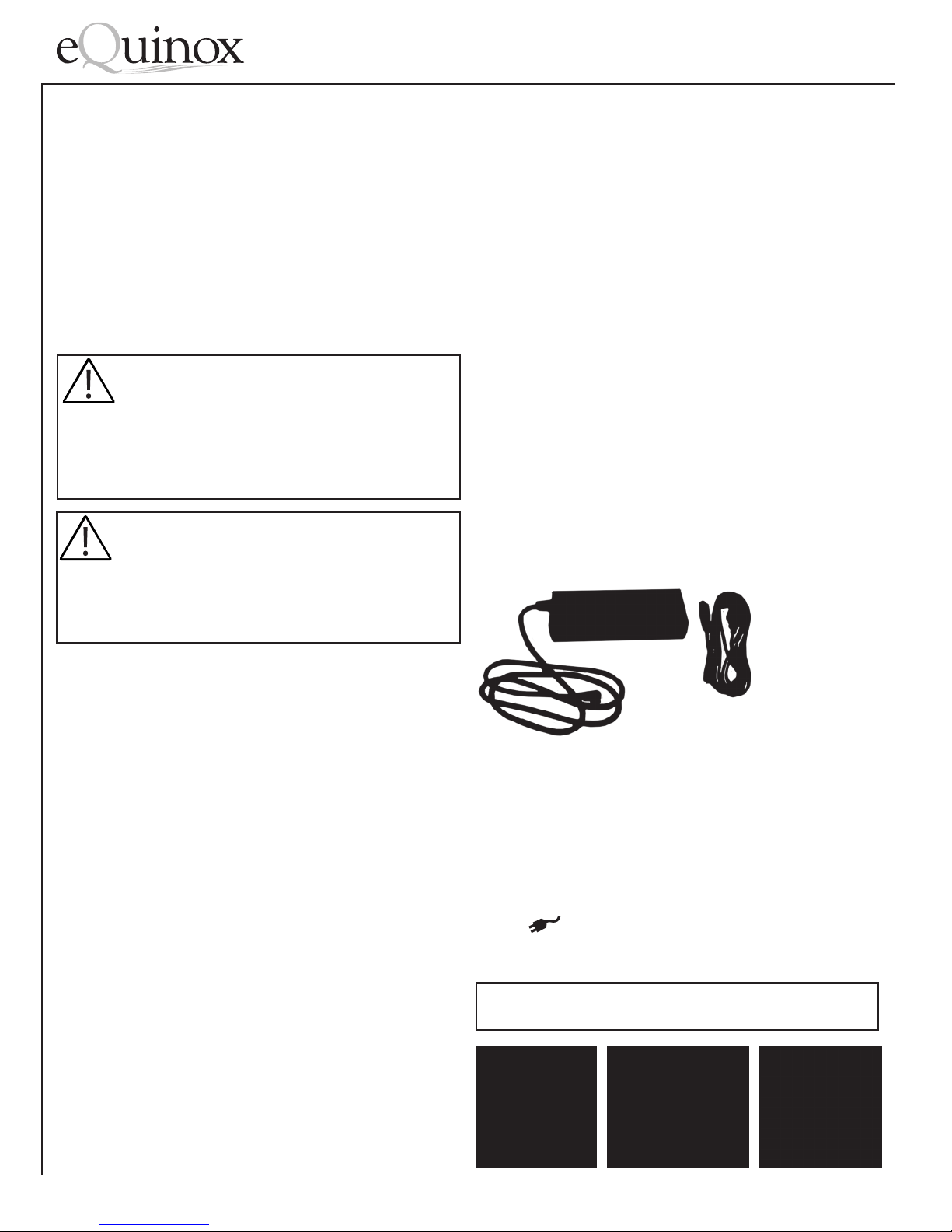
Gebrauchsanweisung
Vor der Inbetriebnahme
Diese Bedienungsanleitung soll Sie bei der Verwendung und
Wartung des Geräts unterstützen. Sollten Sie Fragen oder Probleme
haben, setzen Sie sich bitte mit Ihrem Pegedienst in Verbindung.
Wichtig! Sie dürfen den eQuinox erst in Betrieb nehmen, wenn Sie
das Kapitel „Sicherheitsrichtlinien“ in dieser Anleitung gelesen
haben. Befolgen Sie alle Gebrauchshinweise. Beachten Sie dabei
insbesondere auch alle Warnhinweise, die auf dem Gerät und in der
Bedienungsanleitung zu nden sind. Zur Verringerung von Brandund Verletzungsgefahren sowie von schweren Schäden am eQuinox
müssen zudem alle Sicherheitsvorkehrungen beachtet werden.
WARNUNG: REINIGEN SIE GEHÄUSE, BEDIENFELD UND
STROMKABEL NUR MIT EINEM SANFTEN HAUSHALTSREIN-
IGER, DER MIT EINEM FEUCHTEN (NICHT NASSEN) TUCH
ODER SCHWAMM AUFGETRAGEN WIRD. WISCHEN SIE ANSCHLIESSEND
ALLE OBERFLÄCHEN TROCKEN. LASSEN SIE KEINE FLÜSSIGKEITEN IN
DAS INNERE DES GERÄTES GELANGEN. ACHTEN SIE BESONDERS AUF
DEN SAUERSTOFFAUSGANG FÜR DIE VERBINDUNG ZUR KANÜLE UND
STELLEN SIE SICHER, DASS DIESER FREI VON STAUB, WASSER UND
PARTIKELN IST.
VORSICHT: Stellen Sie sicher, dass Lufteinlass und -auslass
nicht blockiert werden. Hierdurch kann sich der Sauerst-
offkonzentrator überhitzen und die Leistung beeinträchtigt
werden. Betreiben Sie den Sauerstoffkonzentrator nicht ohne eingesetzten Lufteinlassfilter. Wenn ein zweiter Filter vorhanden ist, setzen
Sie den Ersatzfilter ein, bevor Sie den verschmutzten Filter reinigen.
Reinigen Sie den verschmutzten Filter in warmem Seifenwasser und
trocknen Sie ihn vor der Verwendung gründlich ab.
Allgemeine Ladeinformationen
Der eQuinox kann mit externer Wechselstrom- oder
Gleichstromversorgung oder einer wiederauadbaren Batterie
betrieben werden. Zum System gehört ein intelligentes
Batterieladegerät. Damit wird die Batterie aufgeladen, wenn der
eQuinox mit einer externen Stromquelle verbunden wird. Das
System überwacht und steuert sowohl die externe Stromversorgung
als auch das Batterieladegerät.
Die Batterie des eQuinox wird geladen, wenn das Gerät an eine
Wechselstrom- oder Gleichstromquelle angeschlossen ist und die
Temperatur der Batterie ein sicheres Laden der Batterie zulässt.
Wird das Gerät von der externen Stromversorgung getrennt,
schaltet das Gerät selbsttätig auf Batteriebetrieb um, sofern die
Batterie eingesetzt und geladen ist. Wird das Gerät erneut mit der
Wechselstrom- oder Gleichstromquelle verbunden, wird es mit
der externen Stromversorgung betrieben und die Batterie wird
aufgeladen.
Richten Sie den Stromstecker am versenkten Anschluss aus, um
das Wechselstrom- bzw. das 12-VDC-Kabel richtig anzuschließen.
Der Anschluss für die externe Stromversorgung liegt vertieft auf
der rechten Seite des Geräts, wenn das Bedienfeld zu Ihnen zeigt.
Stecken Sie den Stromstecker in den Anschluss.
WECHSELSTROM-NETZTEIL
Einschalten des eQuinox
Das Gerät kann mit drei (3) verschiedenen Stromquellen betrieben
werden:
• Wechselstrom-Netzteil
• 12-VDC-Kabel
• Wiederauadbares Batteriemodul
Wechselstrom-Netzteil
Der Lieferumfang des eQuinox umfasst ein Universal-
Wechselstrom-Netzteil für die Verwendung zuhause bzw. an
allen Orten, an denen Wechselstrom zur Verfügung steht. Beim
Anschließen an eine Wechselstromquelle muss das Kabel des
Wechselstrom-Netzteils sicher mit dem versenkten externen
Anschluss verbunden werden. Außerdem muss das Kabel des
Wechselstrom-Netzteils mit einer Wechselstrom-Steckdose
verbunden werden. Wenn das eQuinox ordnungsgemäß
angeschlossen ist, leuchten eine grüne Anzeige auf dem
Wechselstrom-Netzteil und die Anzeige für die externe
Stromversorgung. Auf dem Bedienfeld leuchtet zusätzlich die
Anzeige
. Das CAIRE-Wechselstrom-Netzteil PN 4836 ist
die Hauptstromquelle für den tragbaren Sauerstoffkonzentrator
eQuinox. Es ist ein sehr wichtiges Element des Gesamtsystems.
Hinweis: Verwenden Sie nur die elektrische Spannung, die auf dem Geräteetikett mit den technischen Daten angegeben ist.
Schritt 1 Schritt 2 Schritt 3
62 — 4805-C1 C (German)
Page 63
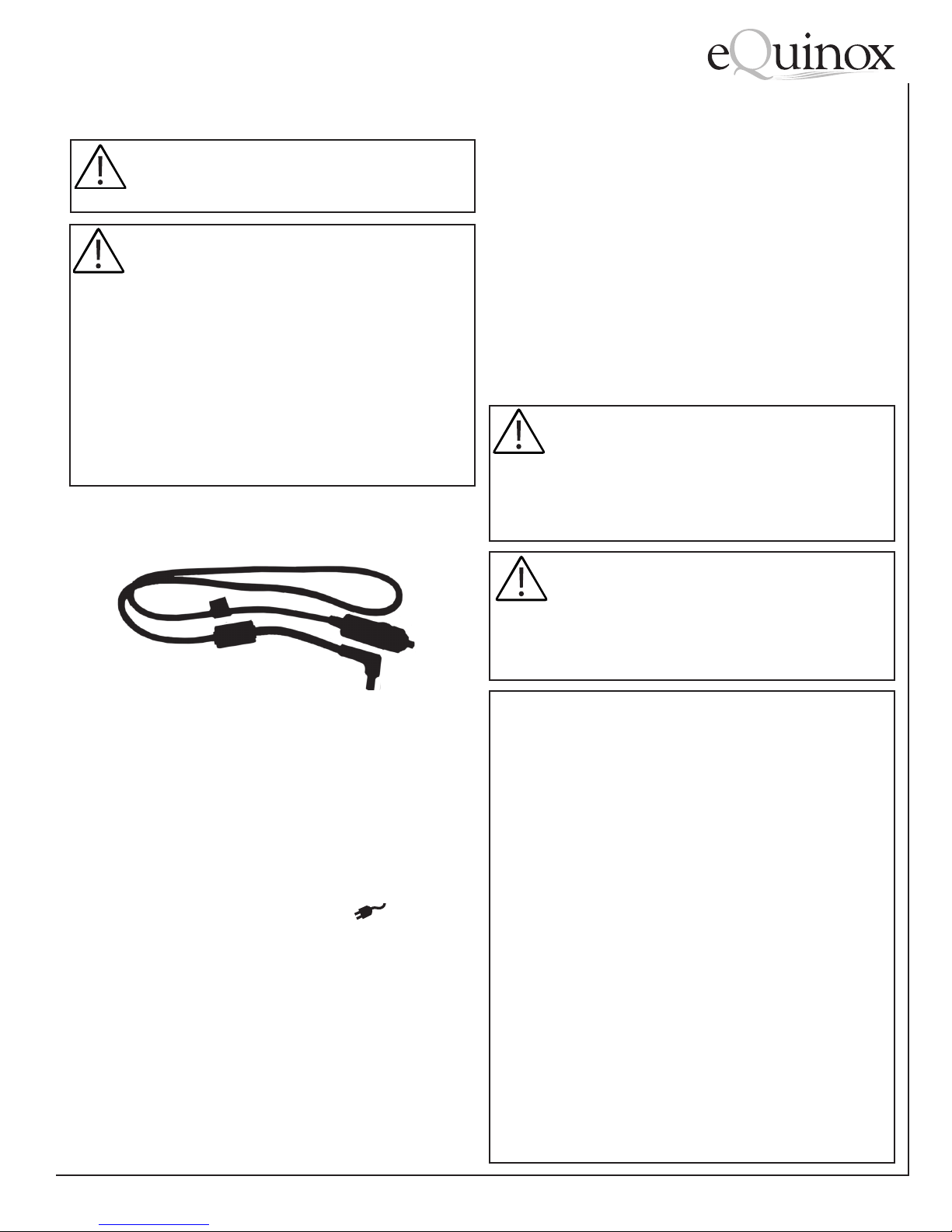
WARNUNG: BERÜHREN SIE DIE BATTERIEKONTAKTE UND
DEN PATIENTEN NICHT GLEICHZEITIG, WENN SIE DAS GERÄT
MIT DEM EXTERNEN NETZTEIL (WECHSELSTROM-NETZTEIL)
BETREIBEN UND KEIN BATTERIEMODUL INSTALLIERT IST.
VORSICHT: Verwenden Sie nur vom Hersteller empfohlenes
Zubehör. Die Verwendung anderen Zubehörs kann zu einer
schweren Beschädigung des Sauerstoffkonzentrators sowie
zum Erlöschen der Garantie führen.
VORSICHT: Verwenden Sie keine Verlängerungskabel für dieses Gerät
und verbinden Sie nicht zu viele Stecker mit derselben Steckdose. Die
Verwendung eines Verlängerungskabels kann die Leistung des Gerätes
beeinträchtigen. Die Verbindung zu vieler Stecker mit einer Steckdose
kann den Schaltschrank überlasten und zum Auslösen von Trennschalter/Sicherung oder bei Fehlfunktion von Trennschalter/Sicherung zum
Ausbruch eines Feuers führen.
VORSICHT: Die Verwendung von anderen Kabeln und Adaptern als den
angegebenen, mit Ausnahme der Kabel und Adapter, die vom Hersteller
des medizinischen elektrischen Geräts als Ersatzteile für interne Komponenten verkauft werden, kann zu erhöhten Emissionen oder einer
reduzierten Störfestigkeit des Sauerstoffkonzentrators führen.
12-VDC-Kabel
eQuinox-Gleichstromanschluss
Ist der eQuinox an den Gleichstromanschluss eines Fahrzeugs
angeschlossen, gilt Folgendes:
• Wird der eQuinox mit der Gleichstromversorgung eines Fahrzeugs
betrieben, arbeitet es mit allen Volumenstromeinstellungen von
0,5 bis 3,0 Litern pro Minute und allen Impulseinstellungen von
1 bis 9.
• Die Batterie wird nur geladen, wenn bei Betrieb des Geräts
mit dem vorgeschriebenen Volumenstrom genügend Reststrom
verfügbar ist. Der eQuinox nutzt die Stromversorgung zuerst für
den Betrieb des Geräts. Darüber hinaus verfügbare Leistung wird
zum Erhaltungsladen der Batterie genutzt. Wird die eQuinoxBatterie aufgeladen, blinken die Balken des Batteriesymbols
nacheinander stufenweise auf. Wird die eQuinox-Batterie nicht
aufgeladen, bleibt das Batteriesymbol konstant.
WARNUNG: STELLEN SIE SICHER, DASS LUFTEINLASS UND
-AUSLASS NICHT BLOCKIERT WERDEN. HIERDURCH KANN
SICH DER SAUERSTOFFKONZENTRATOR ÜBERHITZEN UND DIE
LEISTUNG BEEINTRÄCHTIGT WERDEN.
WARNUNG: FÄLLT DIE SPANNUNG DER GLEICHSTROMQUELLE DES
FAHRZEUGS UNTER 11,5 VOLT, SCHALTET DER EQUINOX AUF BATTERIEBETRIEB UM (SOFERN EINE BATTERIE EINGESETZT UND GELADEN IST).
12-VDC-Kabel
Mithilfe eines 12-VDC-Kabels kann das System mit
Gleichstromquellen betrieben werden, wie sie z. B. in Fahrzeugen
zu nden sind.
1. Starten Sie das Fahrzeug.
2. Stecken Sie das 12-VDC-Kabel in den versenkten
Stromanschluss an der Seite des Geräts.
3. Stecken Sie den Stecker des 12-VDC-Kabels in die
Gleichstromsteckdose im Fahrzeug.
Wenn das Gerät ordnungsgemäß angeschlossen ist und über die
Gleichstromquelle versorgt wird, leuchtet auf dem Bedienfeld die
grüne Anzeige für die externe Stromversorgung
.
VORSICHT: Wenn das Automobil, in dem Sie den Sauerstoffkonzentrator verwenden, nicht läuft, trennen Sie das
Gerät vom Automobil und entfernen Sie es. Lagern Sie den
Sauerstoffkonzentrator nicht in einem sehr heißen oder sehr kalten
Automobil oder in ähnlichen Umgebungen, die extreme Temperaturen
aufweisen. Lassen Sie den Sauerstoffkonzentrator oder das Stromkabel
NICHT eingesteckt, wenn die Zündung aus ist. Es kann dabei zu einer
Entladung der Fahrzeugbatterie kommen.
Hinweis: Wird das Gerät über ein 12-VDC-Kabel betrieben, wird die Batterie
eventuell nicht geladen.
Hinweis: Bei Betrieb des eQuinox über ein 12-VDC-Kabel wird empfohlen, den
Pulse-Dose-Modus zu verwenden, sofern die Gabe von Sauerstoffboli verschrieben wurde.
Hinweis: Um sicherzustellen, dass das Gerät tatsächlich über die Gleichstromquelle läuft, müssen Sie prüfen, ob die Anzeige für die externe Stromversorgung
leuchtet. Ertönt ein akustisches Signal, kann dies ein Zeichen dafür sein, dass
die externe Stromversorgung unterbrochen wurde. Prüfen Sie, ob die grüne
LED-Anzeige für die externe Stromversorgung ein- oder ausgeschaltet ist. Ein
Verlust der Batterieladung während des Gerätebetriebs über eine Gleichstromquelle kann vermieden werden, indem die Batterie entnommen wird. Leuchtet
die Anzeige nicht, läuft das Gerät im Batteriebetrieb.
Hinweis: Die tatsächliche Leistung des eQuinox kann je nach den Betriebsbedingungen des Fahrzeugs variieren. Die Gleichstromquelle mancher Fahrzeuge
unterstützt eventuell nicht den vollen Funktionsumfang des Geräts. Falls das
Fahrzeug für den Betrieb mit der aktuellen Einstellung nicht genügend Strom
zur Verfügung stellen kann, stoppt der eQuinox zuerst das Aufladen der Batterie
und setzt den Betrieb mit dem vorgeschriebenen Volumenstrom fort. Wenn
das Fahrzeug auch dann nicht genügend Leistung liefert, senkt der eQuinox
den Volumenstrom, wenn der Volumenstrom 2,0 Liter pro Minute oder mehr
beträgt. Ist der Volumenstrom kleiner als 2,0 Liter pro Minute, wird der eQuinox
ausgeschaltet.
Entfernen Sie bei niedrigem Volumenstrom alle anderen elektronischen Geräte,
die an die Stromversorgung des Fahrzeugs angeschlossen sind (GPS, Mobiltelefon-Ladegerät usw.). Wird wieder ausreichend Leistung bereitgestellt, wird
der Volumenstrom nicht automatisch auf den ursprünglichen Wert erhöht. Der
Benutzer muss den Volumenstrom manuell einstellen. Wenn der eQuinox noch
immer nicht mit dem vorgeschriebenen Volumenstrom arbeitet, versuchen Sie,
das Batteriemodul zu entfernen.
eQuinox (Model 4000) User Manual — 63
Page 64
Wiederaufladbares Batteriemodul
Der eQuinox kann mit dem mitgelieferten,
wiederauadbaren Batteriemodul betrieben
werden.
Einsetzen der Batterie: Setzen Sie die Batterie
so an das leere Batteriefach an, dass sie
hineingeschoben werden kann. Schieben Sie die
Batterie in das leere Batteriefach, bis sie hörbar
einrastet. Sie schließt bündig mit der Vorderseite
des Geräts ab. Wurde die Batterie ordnungsgemäß
eingesetzt und der eQuinox eingeschaltet,
wird auf dem Bedienfeld die BatteriemodulLadeanzeige angezeigt. (Wenn Sie KEINE
Batterie eingesetzt haben, wird die Batteriemodul-
Ladeanzeige nicht angezeigt.) Das Gerät kann in
diesem Fall über eine externe Stromversorgung
betrieben werden.
Wiederaufladbares
Batteriemodul
Um die Batterie zu entfernen, drücken Sie
den Entriegelungsknopf oben auf dem Batteriemodul. Ziehen Sie
die Batterie aus dem eQuinox, während Sie den Entriegelungsknopf
weiterhin nach UNTEN drücken.
Batterielaufzeit: Die Batterielaufzeit wird auf dem Bedienfeld
sowohl als Symbol als auch alphanumerisch angezeigt. Im
Batteriebetrieb wird die Batterieladeanzeige jederzeit angezeigt.
Die Anzeige wechselt, um die Stunden/Minuten der verbleibenden
Batterielaufzeit anzuzeigen. Die Batterielaufzeit wird von
verschiedenen Faktoren beeinusst, z. B. von der VolumenstromEinstellung, dem gewählten Betriebsmodus (Continuous-Flow
oder Pulse-Dose) sowie der Atemfrequenz. Die Tabelle „Typische
Laufzeiten neuer Batteriemodule“ enthält Schätzwerte für den
eQuinox bei Verwendung einer neuen, vollständig aufgeladenen
Batterie unter den angegebenen Volumenstrom-Einstellungen und
Betriebsbedingungen.
Hinweis: Der eQuinox wird werksseitig mit einer Batterie mit 12 Zellen
ausgeliefert. Eine Batterie mit 24 Zellen ist ein optionales Zubehör, das einen
längeren Batteriebetrieb ermöglicht.
Hinweis: Wird der Sauerstoffkonzentrator außerhalb des üblichen Temperaturbereichs betrieben, kann dies die Leistung beeinträchtigen, die Batterielaufzeit verringern und/oder die Ladezeit der Batterie erhöhen. (Siehe
den Abschnitt „Technische Daten“ in diesem Handbuch). Die maximale
Betriebsdauer im Batteriebetrieb kann verlängert werden, wenn der eQuinox
im Pulse-Dose-Modus (ärztlich zugelassener Modus) betrieben wird.
WARNUNG: FÜR MIT BATTERIEN AUSGESTATTETE SAUERSTOFFKONZENTRATOREN: LAGERN SIE DIE BATTERIE KÜHL
UND TROCKEN. AUF DIESE WEISE KANN DIE LEBENSDAUER
DER BATTERIE VERLÄNGERT WERDEN. WIRD DER SAUERSTOFFKONZENTRATOR LÄNGERE ZEIT BEI HOHER TEMPERATUR BZW. MIT EINER
VOLL GELADENEN/GANZ LEEREN BATTERIE GELAGERT, KANN DIES DIE
BATTERIEHALTBARKEIT BEEINTRÄCHTIGEN. VERSUCHEN SIE NICHT, DIE
BATTERIE ZU ÖFFNEN. SIE ENTHÄLT KEINE WARTBAREN TEILE. HALTEN
SIE KINDER VON BATTERIEN FERN.
Erstmaliges Laden der Batterie
Die mit dem eQuinox mitgelieferte neue Batterie ist im
Auslieferungszustand nicht voll geladen. Vor der ersten Verwendung
des eQuinox muss die Batterie daher zunächst vollständig geladen
werden.
Schließen Sie das Wechselstrom-Netzteil an und installieren Sie die
Batterie ordnungsgemäß. Warten Sie, bis die Batterie vollständig
geladen ist. Sobald die Batteriemodul-Ladeanzeige auf dem
Bedienfeld nicht mehr in Bewegung ist, ist die Batterie vollständig
geladen.
Der eQuinox kann verwendet werden, während die Batterie geladen
wird. Das Laden kann je nach Volumenstromeinstellung bis zu vier
Stunden dauern. Die Batterie wird auch geladen, wenn der eQuinox
an eine Wechselstromquelle angeschlossen und ausgeschaltet wird.
VORSICHT: Verwenden Sie nur die vom Hersteller bereitgestellten Batterien. Wenden Sie sich für Anweisungen zur
ordnungsgemäßen Batterieentsorgung an den Bereitsteller
Ihres Gerätes oder eine örtliche zuständige Stelle.
* Batterien und Akkus sind dem Recycling zuzuführen. *
Typische Laufzeiten neuer Batteriemodule
Betriebsart Batterietyp
12 Zellen 24 Zellen
Konstanter
Volumenstrom
1,0 l/min 2,16 Stunden (2 Std. 9 Min.) 4,84 Stunden (4 Std. 50 Min.)
2,0 l/min 1,2 Stunden (1 Std. 12 Min.) 2,75 Stunden (2 Std. 45 Min.)
3,0 l/min 0,8 Stunden (48 Min.) 1,83 Stunden (1 Std. 49 Min.)
Pulse-Dose-Modus
(bei 12 BPM, d. h.
Boli/min)
16 ml (1,0) 2,62 Stunden (2 Std. 37 Min.) 5,94 Stunden (5 Std. 56 Min.)
48 ml (3,0) 2,38 Stunden (2 Std. 22 Min.) 5,39 Stunden (5 Std. 23 Min.)
96 ml (6,0) 1,70 Stunden (1 Std. 41 Min.) 3,85 Stunden (3 Std. 51 Min.)
64 — 4805-C1 C (German)
Bei Ausfall der Gleich- oder Wechselstromversorgung ertönt
ein akustisches Signal und der eQuinox schaltet automatisch auf
Batteriebetrieb um, sofern eine geladene Batterie installiert ist.
Wenn die externe Stromversorgung wiederhergestellt ist, wird die
Batterie automatisch wieder geladen. Wenn die Batterie bei Ausfall
der Wechselstromversorgung nicht eingesetzt oder vollständig
entladen ist, wird der eQuinox ausgeschaltet und es wird ein
Alarm ausgelöst. Die Batterie ist vollständig entladen, wenn die
Batteriemodul-Ladeanzeige auf dem Bedienfeld leer dargestellt
wird. Auf dem Gerät leuchtet eine gelbe Lampe und es ertönt ein
Alarmsignal für niedrigen Batterieladestand. Dieser Zustand dauert
an, bis das Gerät vollständig ausgeschaltet wird. Dann leuchtet eine
rote Lampe und es ertönt ein dauerndes Alarmsignal. Der akustische
Alarm kann bis zu fünf Minuten dauern, bis das Gerät abschaltet
oder die externe Stromversorgung wiederhergestellt wird.
Hinweis: Halten Sie den Ein-/Aus-Taster des eQuinox für mindestens fünf
Sekunden gedrückt, um den Alarm „kein Strom“ zu quittieren. Der Alarm
wird ebenfalls beendet, wenn der eQuinox für zwei Minuten an eine externe
Wechselstromquelle angeschlossen wird.
Page 65

Typische Batterieladezeiten
Aktivieren/Deaktivieren des Sprachmoduls
Je nach Volumenstromeinstellung dauert es in der Regel zwei
bis fünf Stunden, um eine vollständig entladene Batterie auf eine
Kapazität von 80 % aufzuladen. Sobald die Batterie vollständig
geladen ist, hört die Batterieladeanzeige auf sich zu bewegen.
Die Batterie kann im Gerät auch dann geladen werden, wenn der
eQuinox ausgeschaltet und an das Stromnetz angeschlossen ist.
Erhitzt sich die Batterie während der Entladung zu stark, kann das
Wiederauaden erst dann beginnen, wenn die Batterie ausreichend
abgekühlt ist. Die Abkühlung kann durch das Entfernen der Batterie
beschleunigt werden.
Die Batterie kann sowohl mit Wechselstrom- als auch mit
Gleichstromquellen geladen werden. Die Batterie lässt sich ebenfalls
mit dem optionalen Ladegerät auaden.
Sprachmodulbetrieb
Anweisungen zum Sprachmodulbetrieb
Der eQuinox kann mündliche Benachrichtigungen zu Alarmen und
zum Betriebsstatus ausgeben. Diese mündlichen Benachrichtigungen
ergänzen die Informationen der LED-Anzeigen. Im Folgenden wird
erläutert, wie das Sprachmodul ein- und ausgeschaltet wird, wie die
Lautstärke eingestellt und die Sprache geändert wird.
1. Um das Sprachmodul zu aktivieren/deaktivieren, schalten Sie
das Gerät mit der AN/Standby-Taste ein.
2. Drücken Sie nach dem Einschalten des Geräts das
Rauchverbotsymbol und die verborgene Taste einmal.
3. Innerhalb von ein bis zwei Sekunden wird die Menüoption
„SPKR = ON“ oder „SPKR = OFF“ angezeigt.
4. Drücken Sie die Taste zum Erhöhen oder Verringern des
Volumenstroms, um die ausgewählte Option einzuschalten
(Sprachmodul aktivieren) oder auszuschalten (Sprachmodul
deaktivieren).
5. Die ausgewählte Option wird innerhalb von drei bis fünf
Sekunden aktiviert.
Hinweis: Damit wird das Sprachmodul nur einmal deaktiviert. Wenn das Gerät
ausgeschaltet und neu gestartet wird, wird das Sprachmodul automatisch
wieder aktiviert.
Erhöhen/Verringern der Lautstärke für sprachliche Benachrichtigungen
1. Um die Lautstärke sprachlicher Benachrichtigungen zu
erhöhen bzw. zu verringern, drücken Sie das Rauchverbotsymbol
und die verborgene Taste zweimal.
2. Das Menü zur Einstellung der Lautstärke „Volume = # -“ wird
angezeigt.
3. Drücken Sie die Taste zum Erhöhen oder Verringern des
Volumenstroms, um die Lautstärke von 1 bis 10 zu erhöhen oder
zu verringern.
4. Nach der Auswahl der gewünschten Lautstärke wird die
Option innerhalb von drei bis fünf Sekunden aktiviert.
Ändern der Sprache des Sprachmoduls
AN/Standby-An-
AN/Stand-
by-Taste
Rauchverbotsymbol
und verborgene
Taste
Flow-Modus-Taste
zeige
(grüne LED)
Modusanzeige
(grüne LED)
Alarmanzeige
(gelbe LED)
LCD-Display
Alarmanzeige
(rote LED)
Taste zum
Erhöhen des
Volumenstroms
Anzeige für
externe Stromver-
sorgung (grüne
LED)
Taste zum Verringern
des Volumenstroms
1. Wenn Sie die Sprache des Sprachmoduls ändern möchten,
drücken Sie das Rauchverbotsymbol und die verborgene Taste
fünf Mal, um auf die Sprachoptionen zuzugreifen.
2. Auf dem Display wird die aktuell aktivierte Sprache angezeigt.
Wenn das Sprachmodul die englische Sprache verwendet, wird
beim Zugriff auf das Menü mit den Sprachoptionen „English“ auf
dem Display angezeigt.
3. Drücken Sie die Taste zum Erhöhen oder Verringern des
Volumenstroms, um die verfügbaren Sprachen aufzurufen.
4. Sobald die gewünschte Sprache angezeigt wird, wird sie
innerhalb von drei bis fünf Sekunden automatisch eingestellt.
eQuinox (Model 4000) User Manual — 65
Page 66
Inbetriebnahme des eQuinox
Schritt 1: Aufstellen des eQuinox für die Verwendung
Stellen Sie den eQuinox in einer gut belüfteten und gut beleuchteten
Umgebung auf. Stellen Sie sicher, dass die Lufteinlass- und
Abluftöffnungen auf der Rückseite nicht blockiert sind.
Platzieren Sie den eQuinox so,
dass alle akustischen und visuellen
Signale leicht wahrgenommen
werden können.
Stellen Sie vor der Verwendung
des eQuinox sicher, dass der
Lufteinlasslter an seinem Platz
sitzt. Sollte der Lufteinlasslter
fehlen, setzen Sie sich mit Ihrem
Pegedienst in Verbindung. Ist
der Lufteinlasslter verschmutzt,
waschen Sie ihn mit warmem
Seifenwasser. Spülen Sie ihn
anschließend mit klarem Wasser
und lassen Sie ihn trocknen, bevor
Sie den Filter wieder im Gerät
montieren. Tauschen Sie den
Lufteinlasslter ggf. durch einen
neuen, sauberen Filter aus.
Schließen Sie das Gerät an eine Netzsteckdose oder eine
Gleichstromquelle an bzw. stellen Sie sicher, dass eine vollständig
geladene Batterie eingesetzt ist.
Lufteinlassfilter
Abluftöffnungen
Schritt 2: Schalten Sie das Gerät ein und
warten Sie, bis es sich aufgeheizt hat.
Halten Sie den Ein-/Aus-Taster für zwei (2) Sekunden gedrückt,
um den eQuinox einzuschalten. Beim Einschalten wird ein kurzer
sichtbarer Selbsttest durchgeführt.
Hinweis: Wenn beim erstmaligen Anschluss des Geräts an die Stromversorgung oder beim erstmaligen Einschalten drei akustische Signale ertönen,
ist dies ein Hinweis auf einen niedrigen Batteriestand der 9-Volt-Batterie im
Gehäuse des eQuinox. Setzen Sie sich bitte mit Ihrem Pflegedienst in Verbindung, damit die 9-Volt-Batterie von diesem ausgetauscht werden kann. Wenn
die drei Signaltöne nach dem Einschalten und dem Betrieb des Geräts für
mehrere Minuten weiter mit Unterbrechungen ausgegeben werden, bedeutet
dies nicht, dass die Kapazität der 9-V-Batterie niedrig ist. Setzen Sie sich für
die Wartung mit dem Pflegedienst in Verbindung.
Der eQuinox verfügt über eine integrierte SauerstoffkonzentrationsStatusanzeige (OCSI). Die OCSI überwacht die Sauerstoffabgabe
des Geräts kontinuierlich. Sie verfügt über eine grüne Lampe
(normal), eine gelbe Lampe (Warnung), eine rote Lampe (Alarm)
und einen akustischen Alarm. Beim Selbsttest des Geräts während
des Einschaltens leuchten diese Lampen gemeinsam auf. Warten Sie
nach dem ersten Einschalten bis zu fünf (5) Minuten, bis das Gerät
seine Betriebsbereitschaft erreicht hat. Wenn nur noch die grüne
Lampe leuchtet, ist das Gerät betriebsbereit.
Schritt 3: Schließen Sie den Sauerstoffversorgungsschlauch bzw. die Nasenkanüle an den Sauerstoffauslass an.
Tauschen Sie den Sauerstoffversorgungsschlauch bzw. die
Nasenkanüle regelmäßig entsprechend den Empfehlungen Ihres
Pegediensts aus. Informationen zur Reinigung und zum Austausch
der Kanüle bzw. des Versorgungsschlauchs erhalten Sie von Ihrem
Pegedienst.
Hinweis: Stellen Sie sicher, dass die Kanüle vollständig eingeführt ist und fest
sitzt. Damit wird sichergestellt, dass der Sauerstoffkonzentrator ein Einatmen
korrekt erkennen und Sauerstoff liefern kann. Während des Einatmens sollten
Sie den Sauerstofffluss zu den Stutzen der Nasenkanüle hören oder fühlen
können.
Schritt 4: Betriebsart auswählen
Drücken Sie den Moduswahltaster, um die Betriebsart auszuwählen.
Durch wiederholtes Drücken kann zwischen dem Pulse-Dose-
Modus (Sauerstoffbolus) und dem Continuous-Flow-Modus
(konstanter Volumenstrom) hin- und hergeschaltet werden. Welchen
Modus und welche Einstellung Sie wählen müssen, können Sie der
Verschreibung Ihres Arztes entnehmen.
Continuous-Flow-Modus (konstanter Volumenstrom):
Im Continuous-Flow-Modus wird eine konstante Menge Sauerstoff
durch den Schlauch bzw. die Nasenkanüle geleitet. Der Sauerstoff
wird in Litern pro Minute (LPM) gemessen. Einen Befeuchter
können Sie nur im Continuous-Flow-Modus verwenden. Sie dürfen
den eQuinox NICHT kippen, transportieren oder ach hinlegen,
wenn eine Befeuchterasche angeschlossen ist.
Pulse-Dose-Modus (Sauerstoffbolus):
Beim Pulse-Dose-Modus wird beim Einatmen ein Sauerstoffbolus
verabreicht. Dieser wird in Millilitern (ml) gemessen. Im PulseDose-Modus darf KEIN Befeuchter verwendet werden!
Wird im Pulse-Dose-Modus kein Atemzyklus erkannt, verabreicht
der eQuinox alle 15 Sekunden einen konstanten Sauerstoffstrom.
Alle 15 Sekunden unterbricht das Gerät den Volumenstrom und
prüft, ob ein Atemzyklus erkennbar ist. Sobald das Einatmen
wieder registriert wird, schaltet das Gerät zurück auf die Gabe der
eingestellten Bolusmenge. Betätigen Sie den Moduswahltaster, um
den Pulse-Dose-Modus zu verlassen und den Continuous-FlowModus zu aktivieren.
Lassen Sie sich von Ihrem Arzt den richtigen Sauerstoffbolus
verschreiben, damit Sie die richtige Sauerstoffsättigung erhalten.
Berücksichtigen Sie Ihren Bedarf bei Ruhe, bei Bewegung und beim
Reisen in größeren Höhen. Wenden Sie sich für eine Verschreibung
und Boarding-Formulare an Ihren Pegedienst.
66 — 4805-C1 C (German)
Page 67
Pulse-Dose-Modus und autoSat-Funktionen
Der eQuinox verfügt über eine Funktion mit dem Namen autoSAT
Sie liefert einen gleichmäßig großen Sauerstoffbolus für bis
zu 40 Atemzüge pro Minute (siehe unten stehende Tabelle für
maximale Atemfrequenz). Bei steigender Atemfrequenz, z. B. beim
Gehen, regelt die autoSAT-Funktion automatisch die Bolusmenge,
die vom Gerät verabreicht wird. Die autoSAT-Technologie von
CAIRE ist urheberrechtlich geschützt und kommt nur im Pulse-
Dose-Modus zum Einsatz.
Max. Atemfrequenz
Pulse-Dose-Einstel-
lung
1 16 40
2 32 40
3 48 40
4 64 40
5 80 37
6 96 31
7 128 23
8 160 18
9 192 15
Bolusgröße
(± 15 %) ml
Max. Atemfrequenz
Bolusmenge (+/-15 %)
Schritt 5: Volumenstrom-Einstellung auf verord-
®
.
netes Niveau einstellen
Über die Volumenstrom-Einstelltaster können Sie den
Volumenstrom bzw. die Bolusmenge an die von Ihrem Arzt
verordnete Einstellung anpassen.
WARNUNG: STELLEN SIE UNBEDINGT NUR DIE VERORDNETE
MENGE SAUERSTOFF EIN. ÄNDERN SIE DIE EINSTELLUNG NUR,
WENN DIES AUF ANWEISUNG EINES APPROBIERTEN ARZTES
ERFOLGT.
Schritt 6: Verwenden des eQuinox beginnen
Atmen Sie normal über die Nasenkanüle.
Hinweis: Die maximale Betriebsdauer im Batteriebetrieb kann verlängert
werden, wenn der eQuinox im Pulse-Dose-Modus (ärztlich zugelassener
Modus) betrieben wird.
Schritt 7: Verwenden des eQuinox-Trolleys
Der eQuinox-Trolley wurde für die Verwendung auf Oberächen
konzipiert, die üblicherweise von Fußgängern genutzt werden.
Richten Sie den eQuinox am Boden des Trolleys aus, sodass er
gerade und aufrecht steht.
Hinweis: Überschreitet die Atemfrequenz die angegebenen Werte, sinkt die
Bolusmenge.
Hinweis: Die Pulse-Dose-Einstellung 1 bis 9 ist nicht identisch mit LPM.
WARNUNG: DIE EINSTELLUNGEN FÜR DEN PULSE-DOSE-MODUS MÜSSEN FÜR JEDEN PATIENTEN INDIVIDUELL ENTSPRECHEND DEM PERSÖNLICHEN BEDARF IN RUHEPOSITION, BEI
BEWEGUNG ODER AUF REISEN ANGEPASST WERDEN.
WARNUNG: IM PULSE-MODUS KANN DER EQUINOX EVENTUELL NICHT
JEDEN ATEMZYKLUS ERKENNEN. WENN DER EQUINOX AUF IHREN
ATEMZYKLUS NICHT REAGIERT, BITTEN SIE IHREN PFLEGEDIENST UM
EINE PRÜFUNG DER EMPFINDLICHKEITSEINSTELLUNG.
Hinweis: An den Bereitsteller des Gerätes: Folgendes Sauerstoffanwendungszubehör wird für die Verwendung mit dem Sauerstoffkonzentrator
empfohlen:
• Nasenkanüle mit 2,1 m langem Schlauch: PN 5408-SEQ
• Weiteres empfohlenes Zubehör nden Sie im Zubehörkatalog
(PN ML-LOX0010) auf www.CAIREmedical.com.
• CAIRE bietet die OxySafe™ als optionales Zubehör an. Dieses Zubehör
ist für die Verwendung zusammen mit dem eQuinox-Konzentrator
vorgesehen. Für Kunden in Gebieten, in denen die Einhaltung von EN
ISO 8359:1996-Ergänzung 1:2012 erforderlich ist, erfüllt dieses Zubehör
diese Anforderung.
Die OxySafe™ ist eine thermische Sicherung, die den Gasuss stoppt,
wenn die flussabwärts gerichtete Kanüle oder der Sauerstoffschlauch Feuer
fängt und in Richtung OxySafe abbrennt. Die Sicherung wird linear zur
Nasenkanüle oder dem Sauerstoffschlauch zwischen dem Patienten und
dem Sauerstoffauslass des eQuinox eingesetzt.
Informationen zur richtigen Verwendung der OxySafe finden Sie in den An-
weisungen des Herstellers (im Lieferumfang jedes OxySafe-Kits enthalten).
CAIRE bietet ein OxySafe™-Kit an, das ein Kanülenkopfstück, OxySafe™
und einen 7’-Schlauch enthält: PN 20628667
Richten Sie die große Gewindeschraube auf die Bohrung an der
Rückseite des eQuinox aus. Ziehen Sie nun den Knauf am Trolley
handfest an, bis der eQuinox-Trolley fest mit dem Gerät verbunden
ist.
Drücken Sie den Druckknopf am Griff des eQuinox-Trolleys
herunter und stellen Sie die Griffhöhe ein.
Hinweis: Laufen Sie NICHT umher, während der eQuinox in Betrieb und ein
Befeuchter angeschlossen ist. Nehmen Sie die Befeuchterflasche vor dem
Umherlaufen ab. Legen Sie den eQuinox NICHT flach hin, während dieser an
eine Befeuchterflasche angeschlossen ist.
Schritt 8: Gerät ausschalten
Halten Sie den Ein-/Aus-Taster für zwei (2) Sekunden gedrückt, um
den eQuinox auszuschalten.
Lagern Sie den eQuinox kühl und trocken. Die Lagerungsdauer darf
einen (1) Monat nicht überschreiten. Der eQuinox muss mindestens
2 Stunden im Monat betrieben werden, um die ordnungsgemäße
Funktion des Geräts sicherzustellen.
eQuinox (Model 4000) User Manual — 67
Page 68
Störungsbehebungstabelle für den Benutzer
Ignorieren Sie keinen Alarm
WARNUNG: FÜR DEN FALL EINES STROMAUSFALLS, ALARMS ODER MECHANISCHEN VERSAGENS EMPFIEHLT DER HERSTELLER EINE
ALTERNATIVE SAUERSTOFFZUFUHR. KONSULTIEREN SIE IHREN ARZT ODER GERÄTELIEFERANTEN BEZÜGLICH DES TYPS DES BENÖTIGTEN
RESERVESYSTEMS.
Gelbe Lampe
Symptom Mögliche Ursache Maßnahme
1) Entfernen Sie das Batteriemodul und setzen Sie es erneut ein, um sicherzustellen, dass es
Die gelbe Lampe leuchtet
dauerhaft. Alle 30 Sekunden
ertönt ein Alarmsignal.
Die gelbe Lampe blinkt. Das
Batteriesymbol blinkt. Alle
2 Minuten ertönt ein Alarmsignal.
Die gelbe Lampe blinkt. Das
Batteriesymbol blinkt. Alle
30 Sekunden ertönen zwei
Alarmsignale.
Die gelbe Lampe blinkt. Alle
2 Minuten ertönt ein einzelnes
Alarmsignal.
Die gelbe Lampe blinkt. Es
ist kein akustischer Alarm zu
hören.
Der eQuinox hat ein Problem mit
der Verbindung zum Batteriemodul festgestellt.
Das eQuinox-Batteriemodul ist
heiß.
Die Spannung des eQuinox-Batteriemoduls ist niedrig.
Der eQuinox hat eine Durchflussstörung festgestellt, die den
Durchfluss beeinträchtigt bzw.
verhindert.
Der eQuinox hat ein niedriges
Sauerstoffniveau festgestellt.
fest im Konzentrator sitzt.
2) Setzen Sie, sofern möglich, ein anderes Batteriemodul in den eQuinox ein.
3) Sollte das Problem fortbestehen, setzen Sie sich bitte mit Ihrem Pflegedienst in Verbindung.
1) Schließen Sie den eQuinox wieder an die externe Stromversorgung an oder setzen Sie ein
vollständig geladenes Batteriemodul in das Gerät ein. Lassen Sie das heiße Batteriemodul
außerhalb des Konzentrators für 30 Minuten abkühlen.
2) Laden Sie das Batteriemodul mittels Wechselstrom auf.
3) Ersetzen Sie das Batteriemodul, sofern Ihnen ein anderes zur Verfügung steht.
4) Sollte das Problem fortbestehen, setzen Sie sich mit Ihrem Pflegedienst in Verbindung.
1) Verbinden Sie den eQuinox mit dem Wechselstrom-Netzteil und laden Sie das Batteriemod-
ul auf. Alternativ können Sie das entladene Batteriemodul durch ein vollständig geladenes
ersetzen.
1) Reinigen Sie den Lufteinlassfilter bzw. tauschen Sie diesen aus.
2) Stellen Sie sicher, dass die Kanüle weder umgeknickt noch verstopft ist. Bei Verwendung
einer Befeuchterflasche ist sicherzustellen, dass diese ordnungsgemäß befüllt ist und keine
Blockierung verursacht.
3) Stellen Sie sicher, dass der eQuinox ordnungsgemäß belüftet wird. Das Gerät muss mind-
estens 7,5 cm von jeder Art von Oberfläche entfernt sein, um ein Blockieren der Lufteinlassund Abluftöffnungen zu verhindern.
4) Sollte das Problem fortbestehen, wechseln Sie zu einer alternativen Sauerstoffquelle und
setzen Sie sich mit Ihrem Pflegedienst in Verbindung.
1) Stellen Sie sicher, dass der Lufteinlassfilter nicht verstopft oder verdeckt ist. Reinigen Sie
den Filter bzw. tauschen Sie diesen ggf. aus.
2) Stellen Sie sicher, dass sich der eQuinox in einer gut belüfteten Umgebung befindet. Stellen
Sie sicher, dass zwischen der Rückseite des eQuinox und anderen Gegenständen (Möbel,
Vorhänge usw.) ein Mindestabstand von 7,5 cm eingehalten wird.
3) Stellen Sie bei der Verwendung des eQuinox im Auto sicher, dass die Rückseite des eQuinox
von der Sitzoberfläche weg zeigt.
4) Sollte das Problem fortbestehen, wechseln Sie zu einer alternativen Sauerstoffquelle und
setzen Sie sich umgehend mit Ihrem Pflegedienst in Verbindung.
68 — 4805-C1 C (German)
Page 69
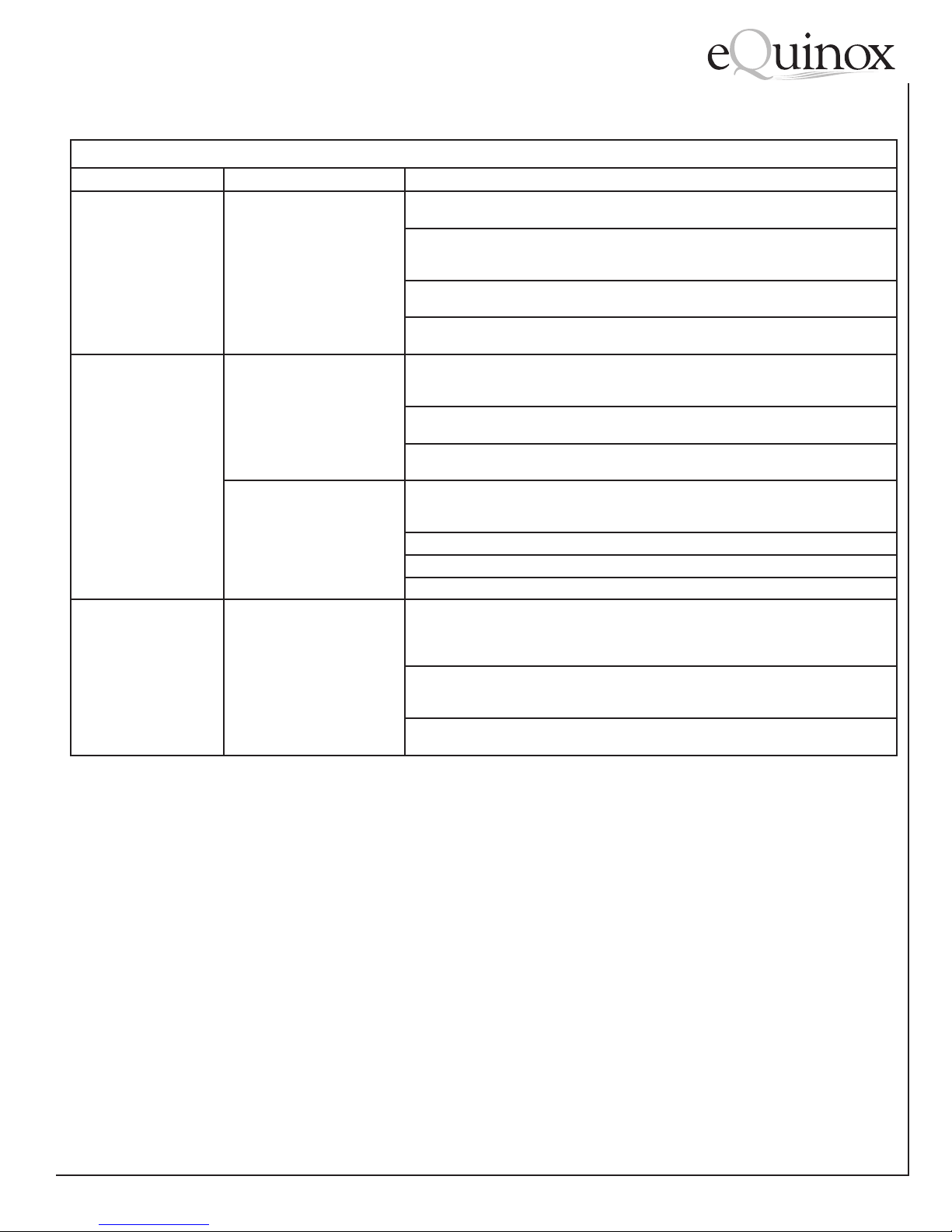
Rote Lampe
Symptom Mögliche Ursache Maßnahme
1) Stellen Sie sicher, dass der Lufteinlassfilter nicht verstopft oder verdeckt ist. Reinigen Sie den
Filter bzw. tauschen Sie diesen ggf. aus.
2) Stellen Sie sicher, dass sich der eQuinox in einer gut belüfteten Umgebung befindet. Stellen
Die rote Lampe blinkt. Alle
2 Minuten ertönen drei
Alarmsignale.
Die rote Lampe blinkt. Es
ertönt ein durchgehender
Alarmton. Auf dem LCD
wird ******** angezeigt.
Der eQuinox liefert keinen
Sauerstoff und lässt sich
nicht einschalten.
Die rote Lampe leuchtet
dauerhaft. Auf dem Display
erscheint die Meldung
„FAIL“. Der eQuinox liefert
keinen Sauerstoff und lässt
sich nicht einschalten.
Der eQuinox hat ein niedriges
Sauerstoffniveau festgestellt.
Der eQuinox hat bei Anschluss
an eine externe Stromversorgung
vorübergehend keinen Strom
erhalten.
Der eQuinox ist aufgrund eines
entladenen oder eines überhitzten Batteriemoduls stromlos.
Im eQuinox ist eine Systemstörung aufgetreten.
Sie sicher, dass zwischen der Rückseite des eQuinox und anderen Gegenständen (Möbel,
Vorhänge usw.) ein Mindestabstand von 7,5 cm eingehalten wird.
3) Stellen Sie bei der Verwendung des eQuinox im Auto sicher, dass die Rückseite des eQuinox
von der Sitzoberfläche weg zeigt.
4) Sollte das Problem fortbestehen, wechseln Sie zu einer alternativen Sauerstoffquelle und
setzen Sie sich umgehend mit Ihrem Pflegedienst in Verbindung.
2) Überprüfen Sie die externe Stromversorgung (Gleich- oder Wechselstrom) und stellen Sie
sicher, dass alle Steckverbindungen am eQuinox, am Transformator sowie an der Steckdose fest
sitzen.
3) Wenn Sie die Möglichkeit dazu haben, versuchen Sie, eine andere Steckdose (Gleich- oder
Wechselstrom) zu verwenden.
3) Sollte das Problem fortbestehen, wechseln Sie zu einer alternativen Sauerstoffquelle und
setzen Sie sich umgehend mit Ihrem Pflegedienst in Verbindung.
1) Schließen Sie den eQuinox wieder an die externe Stromversorgung an oder setzen Sie ein
vollständig geladenes Batteriemodul in das Gerät ein. Lassen Sie das heiße Batteriemodul
außerhalb des Konzentrators für 30 Minuten abkühlen.
2) Laden Sie das Batteriemodul mittels Wechselstrom auf.
3) Ersetzen Sie das Batteriemodul, sofern Ihnen ein anderes zur Verfügung steht.
4) Sollte das Problem fortbestehen, setzen Sie sich mit Ihrem Pflegedienst in Verbindung.
1) Entnehmen Sie das Batteriemodul und trennen Sie den eQuinox vom Gleich- bzw. Wechselstrom-Netzteil. Die rote Lampe muss erlöschen und die FAIL-Meldung vom Display verschwinden, wenn die Stromquellen getrennt werden. Warten Sie ca. 20 Sekunden, bevor Sie die
Stromquellen erneut anschließen. Versuchen Sie nun, den eQuinox erneut einzuschalten.
2) Wenn sich der eQuinox wieder einschalten lässt, beobachten Sie das Gerät weiterhin, um zu
prüfen, ob die FAIL-Meldung erneut angezeigt wird. Ist dies der Fall, setzen Sie sich umgehend
mit Ihrem Pflegedienst in Verbindung.
3) Wenn sich der eQuinox nicht wieder einschalten lässt, setzen Sie sich umgehend mit Ihrem
Pflegedienst in Verbindung.
eQuinox (Model 4000) User Manual — 69
Page 70

Andere Alarmbedingungen
Symptom Mögliche Ursache Maßnahme
1) Möglicherweise funktioniert der Pulse-Dose-Modus deshalb nicht einwandfrei, weil sich der Benutzer in einem
Zustand befindet, bei dem der Nasenraum verstopft oder verengt ist. (Dies kann bei Erkrankungen, einer verkrümmten Nasenscheidewand usw. der Fall sein.)
2) Stellen Sie sicher, dass die Kanüle eine Länge von 2,1 m nicht überschreitet.
3) Stellen Sie sicher, dass die Kanüle nicht umgeknickt oder verstopft ist.
4) Wenn eine Befeuchterflasche angeschlossen ist, nehmen Sie diese ab und verbinden Sie die Kanüle direkt mit
dem Sauerstoffauslass des Geräts. Der Pulse-Dose-Modus kann in Verbindung mit einer Befeuchterflasche nicht
verwendet werden.
5) Sollte das Problem fortbestehen, setzen Sie sich mit Ihrem Pflegedienst in Verbindung.
1) Prüfen Sie, ob auf der Steckdose Strom liegt. Schließen Sie das Netzteil nicht an dimmbare Stromkreise oder
Mehrfachsteckdosen an.
2) Prüfen Sie, ob die Kabelverbindungen der Netzteile fest in der Steckdose bzw. im Fahrzeuganschluss sowie im
Konzentrator sitzen. Bei Verwendung eines Wechselstrom-Netzteils ist zudem die Kabelverbindung am Transformator selbst zu prüfen.
3) Stellen Sie sicher, dass die Prüflampen für die Stromversorgung leuchten.
- Am Netzteil muss eine grüne Lampe leuchten.
- Am Bedienfeld des eQuinox muss eine grüne Lampe in Form eines Stromkabels leuchten.
4) Leuchten die Prüf-LEDs für die Stromversorgung nicht, trennen Sie alle Stromverbindungen für eine Dauer von
20 Sekunden und schließen Sie diese dann erneut an.
5) Sollte das Problem fortbestehen, setzen Sie sich mit Ihrem Pflegedienst in Verbindung.
1) Schließen Sie das Batteriemodul zum Aufladen an eine Wechselstromquelle an. Stellen Sie vor der erneuten
Verwendung sicher, dass die Batterie zwei bis fünf Stunden aufgeladen wird und das Batteriesymbol voll ist und
nicht mehr blinkt.
2) Gehen Sie zum Symptom „Das Batteriemodul lädt nicht auf“ und ergreifen Sie die dort genannten Maßnahmen.
1) Stellen Sie sicher, dass Sie den von Ihrem Arzt verschriebenen Volumenstrom bzw. die verschriebene Bolusmenge
verwenden und der richtige Betriebsmodus (Continuous-Flow/Pulse-Dose) eingestellt ist.
1) Versuchen Sie, das Batteriemodul vollständig zu entladen. Dies können Sie erreichen, indem Sie den eQuinox im
Batteriebetrieb laufen lassen, bis sich das Gerät vollständig abschaltet. Entnehmen Sie dann die Batterie und lassen
Sie diese für etwa 30 Minuten abkühlen. Setzen Sie danach die Batterie wieder in den eQuinox ein und laden Sie
die Batterie über eine Wechselstromquelle wieder auf.
2) Wenn die Batterie auch nach den Maßnahmen aus Schritt 1 nicht die vorgesehene Laufzeit erreicht, setzen Sie
sich mit Ihrem Pflegedienst in Verbindung.
1) Prüfen Sie, ob auf der Steckdose Strom liegt. Schließen Sie das Netzteil nicht an dimmbare Stromkreise oder
Mehrfachsteckdosen an.
2) Prüfen Sie, ob die Kabelverbindungen der Netzteile fest in der Steckdose bzw. im Fahrzeuganschluss sowie im
Konzentrator sitzen. Bei Verwendung eines Wechselstrom-Netzteils ist zudem die Kabelverbindung am Transformator selbst zu prüfen.
3) Stellen Sie sicher, dass die Prüflampen für die Stromversorgung leuchten.
- Am Netzteil muss eine grüne Lampe leuchten.
- Am Bedienfeld des eQuinox muss eine grüne Lampe in Form eines Stromkabels leuchten.
4) Leuchten die Prüf-LEDs für die Stromversorgung nicht, trennen Sie alle Stromverbindungen für eine Dauer von
20 Sekunden und schließen Sie diese dann erneut an.
5) Sollte das Problem fortbestehen, setzen Sie sich mit Ihrem Pflegedienst in Verbindung.
1) Entfernen Sie das Batteriemodul und setzen Sie es erneut ein, um sicherzustellen, dass es fest im Konzentrator sitzt.
2) Beobachten Sie, ob am eQuinox bei eingesetzter Batterie eine gelbe Lampe dauerhaft leuchtet oder beim
Versuch zu laden ein Batteriesymbol blinkt. Liegt eines dieser Symptome vor, setzen Sie die Störungsbehebung mit
Schritt 3 fort.
3) Setzen Sie, sofern möglich, ein anderes Batteriemodul in den eQuinox ein. Wenn die Ersatzbatterie ordnungsgemäß funktioniert, muss das entnommene Batteriemodul ausgetauscht werden.
4) Sollte das Problem fortbestehen, setzen Sie sich bitte mit Ihrem Pflegedienst in Verbindung.
1) Setzen Sie sich mit Ihrem Pflegedienst in Verbindung.
Im Pulse-Modus
blinkt die Pulse-Modus-LED schnell für
15 Sekunden.
Das Batteriemodul
entlädt sich, obwohl
das Gerät mit einer
externen Gleich- oder
Wechselstromquelle
verbunden ist.
Die Ladung des
Batteriemoduls hält
nicht so lange an, wie
sie sollte.
Das Batteriemodul
lädt nicht auf.
Beim ersten Einschalten des eQuinox
ertönen drei Alarmsignale.
70 — 4805-C1 C (German)
Der eQuinox kann den
Atemzyklus des Benutzers nicht erkennen.
Auf Seite 15 finden Sie
nähere Informationen
zum Pulse-Dose-Modus.
Der eQuinox erhält von
der externen Stromquelle keinen Strom.
Das Batteriemodul
wurde nicht vollständig
aufgeladen.
Der eQuinox hat nicht
den gewünschten
Volumenstrom bzw.
die gewünschte Bolusmenge geliefert.
Das Batteriemodul
zeigt nicht die spezifizierte Leistung.
Der eQuinox erhält
über die externe
Wechselstromquelle
keinen Strom zum
Aufladen der Batterie.
Der eQuinox signalisiert dem Batteriemodul
nicht ordnungsgemäß,
dass sich dieses nun
aufladen kann.
Die integrierte Batterie,
die den Alarm mit
Strom versorgt, ist
beinahe leer.
Page 71
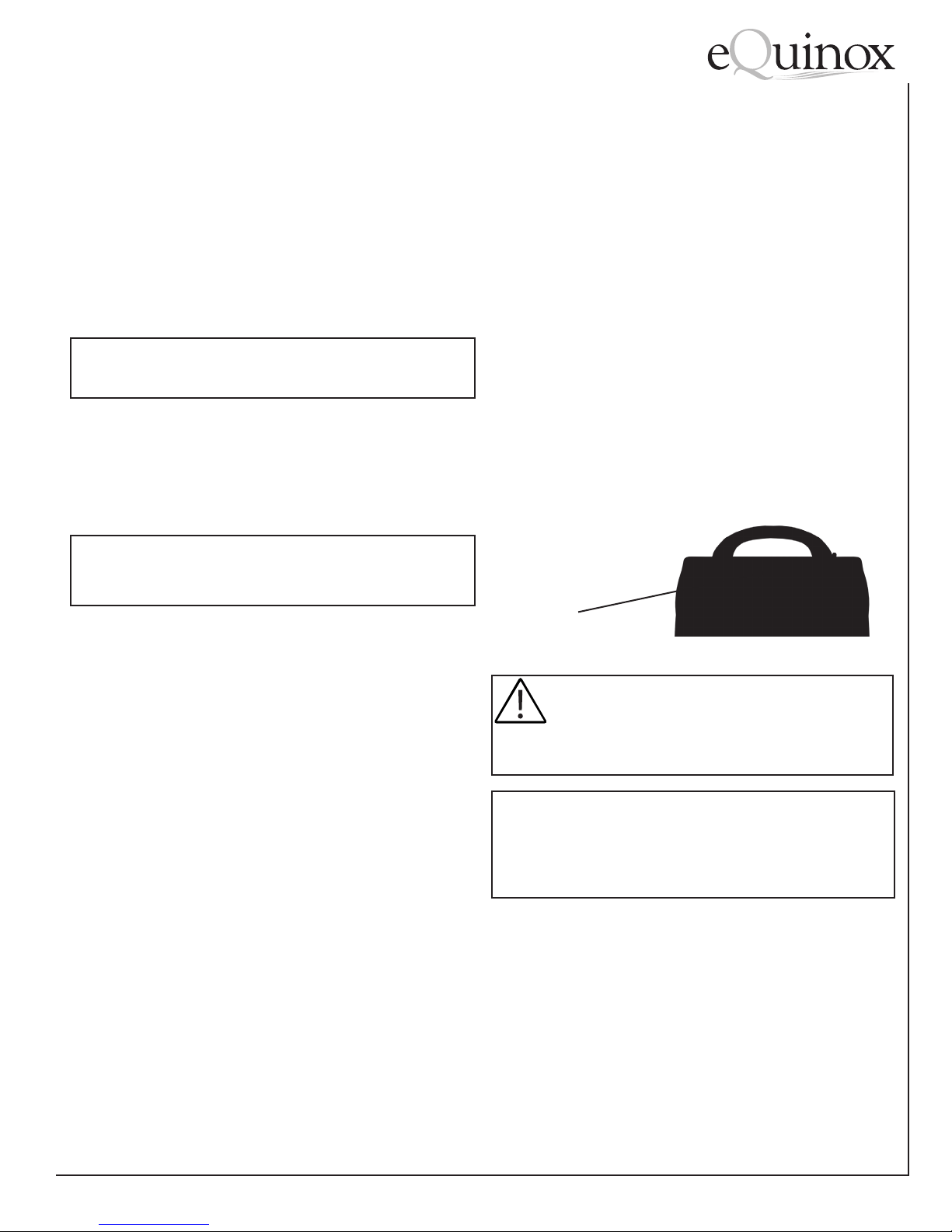
Reinigung, Pflege und regelmäßige Wartung
Regelmäßige Wartung
Arbeiten an den internen Teilen des eQuinox dürfen nur von einem
von CAIRE ausgebildeten und qualizierten Servicetechniker
ausgeführt werden.
Einmal jährlich sollte eine vorbeugende Wartung durchgeführt
werden. Setzen Sie sich für die Terminabsprache für die
vorbeugende Wartung mit Ihrem Pegedienst in Verbindung. Ihr
Pegedienst bzw. der qualizierte Techniker prüft die folgenden
Teile nur bei Bedarf: Alarme, interne 9-Volt-Batterie, Batterie,
interne Filter und andere interne Teile.
Hinweis: Wenn nach dem Einschaltselbsttest drei Signaltöne zu hören sind, ist
der Ladestand der 9-V-Batterie niedrig. Wenden Sie sich an Ihren Pflegedienste, wenn Sie drei Signaltöne hören.
Reinigung und Pflege des Geräts durch den Benutzer
Kanülenaustausch
Tauschen Sie den Versorgungsschlauch sowie die Kanüle gemäß
den Empfehlungen Ihres Pegediensts aus. Informationen zu
Reinigung, Desinfektion und Austausch erhalten Sie von Ihrem Arzt
oder Pegedienst.
Hinweis: Folgen Sie zum ordnungsgemäßen Gebrauch stets den Anleitungen
des Kanülenherstellers. Ersetzen Sie die Einweg-Kanüle gemäß den Empfehlungen des Kanülenherstellers oder des Bereitstellers Ihres Gerätes. Weiteres
Zubehör erhalten Sie vom Bereitsteller Ihres Gerätes.
Lufteinlassfilter
Durch die Lufteinlassöffnungen oben an der Rückseite des Geräts
wird Umgebungsluft in das Gerät gesaugt. Die Reinigung des
Lufteinlasslters ist die wichtigste Wartungsaufgabe, die Sie als
Benutzer verrichten. Durch die Reinigung des Lufteinlasslters
bleibt die Funktionsfähigkeit des eQuinox erhalten. Überprüfen Sie
den Lufteinlasslter täglich und reinigen Sie ihn wenigstens einmal
die Woche. Gehen Sie bei der Reinigung wie folgt vor:
1. Entfernen Sie den Lufteinlassfilter vom Gerät.
2. Waschen Sie den Filter unter warmem Leitungswasser mit
einem milden Spülmittel ab.
3. Spülen Sie den Filter gründlich mit klarem Leitungswasser aus
und pressen Sie das überschüssige Wasser heraus.
4. Lassen Sie den Filter an der Luft trocknen.
5. Setzen Sie den Filter wieder in das Gehäuse ein.
Tipp für die Reinigung: Halten Sie einen zweiten Filter vorrätig, der
verwendet wird, während der erste Filter trocknet.
Luftein-
lass-filter
VORSICHT: Betreiben Sie den Sauerstoffkonzentrator nicht
ohne eingesetzten Lufteinlassfilter. Wenn ein zweiter Filter
verschmutzten Filter reinigen. Reinigen Sie den verschmutzten Filter
in warmem Seifenwasser und trocknen Sie ihn vor der Verwendung
gründlich ab.
Hinweis: Der Hersteller empfiehlt, dieses Gerät nicht zu sterilisieren.
Hinweis: Betreiben Sie den Sauerstoffkonzentrator nicht ohne eingesetz-
ten Lufteinlassfilter. Wenn ein zweiter Filter vorhanden ist, setzen Sie den
Ersatzfilter ein, bevor Sie den verschmutzten Filter reinigen. Reinigen Sie den
verschmutzten Filter in warmem Seifenwasser und trocknen Sie ihn vor der
Verwendung gründlich ab.
vorhanden ist, setzen Sie den Ersatzfilter ein, bevor Sie den
Der Lufteinlasslter sollte jährlich ausgetauscht werden. Wird der
eQuinox in staubigen Umgebungen verwendet, muss der Filter
eventuell häuger ausgetauscht werden. Der eQuinox darf ohne
Lufteinlasslter nicht länger als 5 Minuten betrieben werden.
eQuinox (Model 4000) User Manual — 71
Page 72
Wechselstrom-Netzteil, 12-VDC-Kabel, Netzkabel und Gehäuseaußenseite:
Schalten Sie den eQuinox vor dem Reinigen oder Desinzieren
aus und trennen Sie ihn von der Stromversorgung (Gleich- oder
Wechselstrom). Sprühen Sie das Gehäuse von außen nicht ein.
Verwenden Sie ein feuchtes (nicht nasses) Tuch oder einen
Schwamm. Sprühen Sie das Tuch bzw. den Schwamm zunächst mit
mildem Reinigungsmittel ein und reinigen Sie dann das Gehäuse
sowie das Netzteil. Verwenden Sie zur Desinfektion des eQuinox
Lysol® Brand II oder ein ähnliches Desinfektionsmittel. Befolgen
Sie die Anweisungen des Reinigungsmittelherstellers.
WARNUNG: STROMSCHLAGGEFAHR. SCHALTEN SIE DAS
GERÄT AUS UND ZIEHEN SIE DAS NETZKABEL AUS DER STECK-
DOSE, BEVOR DAS GERÄT GEREINIGT ODER GEWARTET WIRD,
UM DIE GEFAHR EINES STROMSCHLAGS AUSZUSCHLIESSEN. NUR DER
BEREITSTELLER DES GERÄTES ODER EIN QUALIFIZIERTER WARTUNGSTECHNIKER DÜRFEN DIE ABDECKUNGEN ENTFERNEN ODER DAS GERÄT
WARTEN. VERWENDEN SIE KEINE FLÜSSIGKEIT DIREKT AUF DEM GERÄT.
ZU DEN NICHT VERTRÄGLICHEN CHEMISCHEN MITTELN ZÄHLEN UNTER
ANDEREM: ALKOHOL UND PRODUKTE AUF ALKOHOLBASIS, KONZENTRIERTE PRODUKTE AUF CHLORBASIS (ETHYLCHLORID) UND PRODUKTE
AUF ÖLBASIS (PINE-SOL®, LESTOIL®). DIESE DÜRFEN NICHT VERWENDET WERDEN, UM DAS KUNSTSTOFFGEHÄUSE DES SAUERSTOFFKONZENTRATORS ZU REINIGEN, DA SIE DEN KUNSTSTOFF BESCHÄDIGEN
KÖNNEN.
WARNUNG: STROMSCHLAGGEFAHR. ZIEHEN SIE DAS NETZKABEL AUS
DER STECKDOSE, BEVOR DAS GERÄT GEREINIGT ODER GEWARTET WIRD,
UM DIE GEFAHR EINES STROMSCHLAGS AUSZUSCHLIESSEN. NUR DER
BEREITSTELLER DES GERÄTES ODER EIN QUALIFIZIERTER WARTUNGSTECHNIKER DÜRFEN DIE ABDECKUNGEN ENTFERNEN ODER DAS GERÄT
WARTEN.
WARNUNG: ES MUSS DARAUF GEACHTET WERDEN, DASS DER SAUERSTOFFKONZENTRATOR UND DIE BATTERIE STETS TROCKEN BLEIBEN UND
KEINERLEI FLÜSSIGKEIT IN DAS GERÄT EINTRITT. ANDERNFALLS KANN
ES ZU EINER FEHLFUNKTION ODER ZUR ABSCHALTUNG KOMMEN ODER
ES BESTEHT EIN ERHÖHTES RISIKO EINES ELEKTRISCHEN SCHLAGS ODER
VON VERBRENNUNGEN.
WARNUNG: REINIGEN SIE GEHÄUSE, BEDIENFELD UND STROMKABEL
NUR MIT EINEM SANFTEN HAUSHALTSREINIGER, DER MIT EINEM
FEUCHTEN (NICHT NASSEN) TUCH ODER SCHWAMM AUFGETRAGEN
WIRD. WISCHEN SIE ANSCHLIESSEND ALLE OBERFLÄCHEN TROCKEN.
LASSEN SIE KEINE FLÜSSIGKEITEN IN DAS INNERE DES GERÄTES GELANGEN. ACHTEN SIE BESONDERS AUF DEN SAUERSTOFFAUSGANG FÜR
DIE VERBINDUNG ZUR KANÜLE UND STELLEN SIE SICHER, DASS DIESER
FREI VON STAUB, WASSER UND PARTIKELN IST.
WARNUNG: VERWENDEN SIE KEINE FLÜSSIGKEIT DIREKT AUF
DEM GERÄT. ZU DEN NICHT VERTRÄGLICHEN CHEMISCHEN
MITTELN ZÄHLEN UNTER ANDEREM: ALKOHOL UND PRODUKTE AUF ALKOHOLBASIS, KONZENTRIERTE PRODUKTE AUF CHLORBASIS
(ETHYLCHLORID) UND PRODUKTE AUF ÖLBASIS (PINE-SOL®, LESTOIL®).
DIESE DÜRFEN NICHT VERWENDET WERDEN, UM DAS KUNSTSTOFFGEHÄUSE DES SAUERSTOFFKONZENTRATORS ZU REINIGEN, DA SIE DEN
KUNSTSTOFF BESCHÄDIGEN KÖNNEN.
Optional erhältlicher Befeuchter
Wenn Sie einen Befeuchter verwenden, muss dieser täglich gereinigt
werden, um eine Kontaminationsgefahr zu vermeiden. Befolgen Sie
die Reinigungsempfehlungen des Pegediensts bzw. des Herstellers
des Befeuchters. Tauschen Sie den Befeuchter jeden Monat bzw.
in den vom Hersteller bzw. Ihrem Pegedienst empfohlenen
Intervallen aus. (Der Befeuchter darf nicht überfüllt werden.)
VORSICHT: Laufen Sie NICHT umher, während der eQuinox
in Betrieb und ein Befeuchter angeschlossen ist. Nehmen
Sie die Befeuchterflasche vor dem Umherlaufen ab. Legen
Sie den eQuinox NICHT flach hin, während dieser an eine
Befeuchterflasche angeschlossen ist.
eQuinox-Trolley
Entfernen Sie den eQuinox-Trolley vor der Reinigung vom
eQuinox. Verwenden Sie zum Reinigen ein feuchtes (nicht nasses)
Tuch oder einen Schwamm sowie ein mildes Reinigungsmittel.
Batteriemodul (Batterie)
Die in den eQuinox eingesetzte Batterie benötigt für eine lange
Lebensdauer und bestmögliche Leistung eine besondere Pege.
Es wird empfohlen, den eQuinox nur mit CAIRE-Batterien zu
betreiben.
Verwenden Sie zum Reinigen der Batterie ein feuchtes (nicht
nasses) Tuch oder einen Schwamm. Sprühen Sie das Tuch bzw. den
Schwamm zunächst mit einem milden Reinigungsmittel ein und
reinigen Sie dann das Batteriegehäuse sowie den Riegel.
CAIRE empehlt, das Batteriemodul nach 2 Jahren auszutauschen.
Entsorgung der Batterie
Die Batterie kann aufgeladen und wiederverwertet werden. Geben
Sie die Batterie zur ordnungsgemäßen Entsorgung an Ihren
Pegedienst zurück. Für Anweisungen zur ordnungsgemäßen
Entsorgung der Batterie können Sie sich zudem an die zuständigen
Stellen Ihres Wohnorts wenden.
Entsorgung des eQuinox-Sauerstoffsystems
Lokale Umweltvorschriften verbieten möglicherweise die Entsorgung
elektrischer und/oder elektronischer Geräte wie des eQuinox oder des
Wechselstrom-Netzteils. Wenden Sie sich an Ihre Stadtverwaltung,
um weitere Informationen zur ordnungsgemäßen Entsorgung
elektrischer oder elektronischer Geräte zu erhalten. Informationen zur
Entsorgung können Sie auch von CAIRE Inc. anfordern.
72 — 4805-C1 C (German)
Page 73
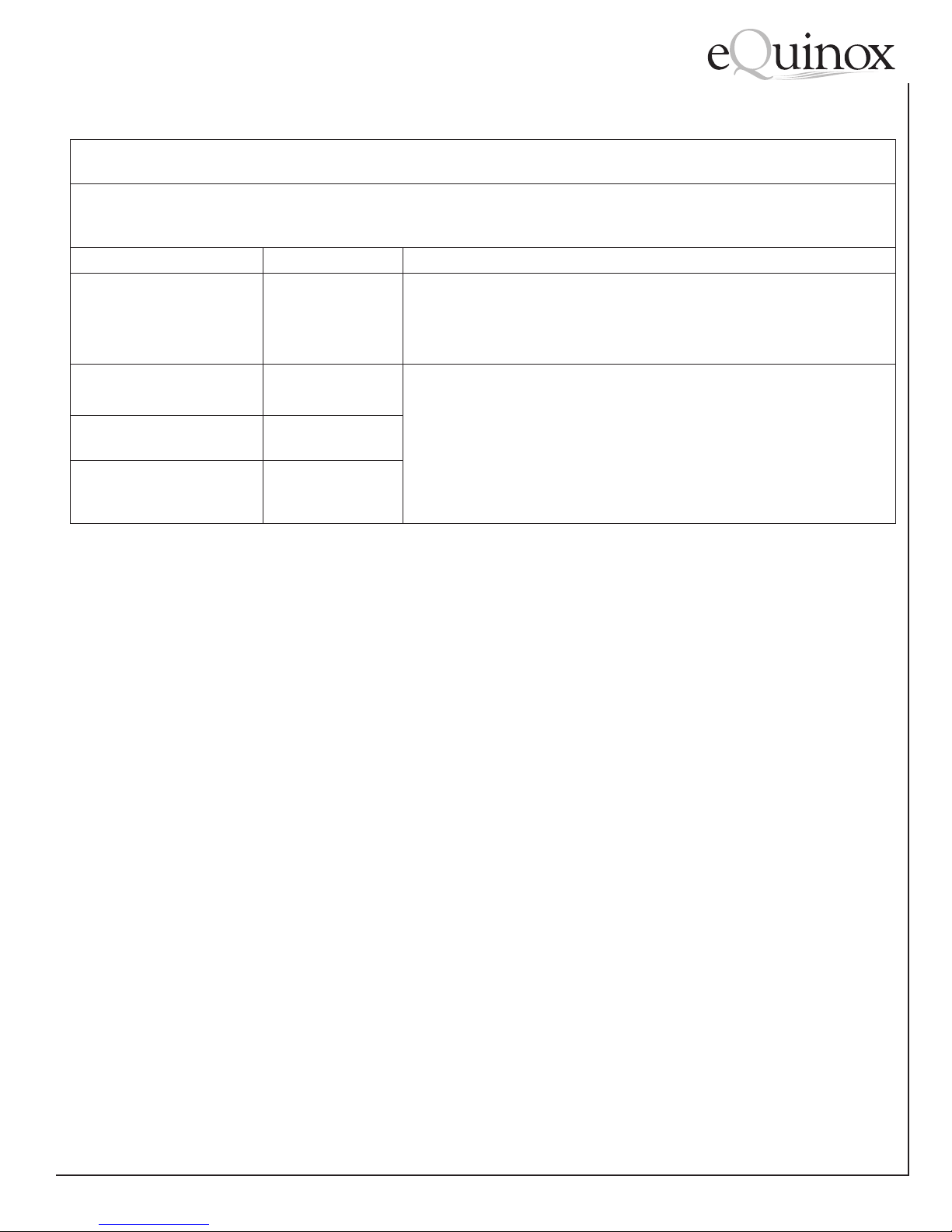
EMV-Tabellen
Leitlinien und Herstellererklärung – elektromagnetische Aussendungen
Der eQuinox ist für den Gebrauch in einer wie im Folgenden beschriebenen elektromagnetischen Umgebung bestimmt. Der Kunde oder Benutzer
des eQuinox muss sicherstellen, dass das Gerät in einer entsprechenden Umgebung verwendet wird.
Störaussendungsmessungen Übereinstimmung Elektromagnetische Umgebung – Leitlinien
HF-Aussendung
CISPR 11
HF-Aussendung
CISPR 11
Oberwellenaussendungen
IEC 61000-3-2
Spannungsschwankungen/
Flicker-Aussendung
IEC 61000-3-3
Gruppe 1
Klasse B
Klasse A
stimmt überein
Der eQuinox verwendet HF-Energie ausschließlich für den internen Betrieb. Daher
ist die HF-Aussendung sehr gering, und es ist unwahrscheinlich, dass benachbarte
elektronische Geräte gestört werden.
Der eQuinox ist für den Gebrauch in allen Einrichtungen einschließlich denen im
Wohnbereich und solchen geeignet, die unmittelbar an ein öffentliches Versorgungsnetz angeschlossen sind, das auch Gebäude versorgt, die zu Wohnzwecken benutzt
werden.
eQuinox (Model 4000) User Manual — 73
Page 74

Leitlinien und Herstellererklärung – elektromagnetische Störfestigkeit
Der eQuinox ist für den Gebrauch in einer wie im Folgenden beschriebenen elektromagnetischen Umgebung bestimmt. Der Kunde oder Benutzer
des eQuinox muss sicherstellen, dass das Gerät in einer entsprechenden Umgebung verwendet wird.
Störfestigkeitsprüfung IEC 60601 Prüfpegel Übereinstimmungspegel Elektromagnetische Umgebung – Leitlinien
Elektromagnetische
Umgebung – Leitlinien
IEC 61000-4-2
schnelle transiente
elektrische Störgrößen/
Bursts
IEC 61000-4-4
Stoßspannungen
IEC 61000-4-5
±6 kV Kontakt
±8 kV Luft
±2 kV für Netzleitungen
±1 kV für Eingangs- und
Ausgangsleitungen
±1 kV Gegentaktspannung
±2 kV Gleichtaktspannung
<5 % U
(>95 % Einbruch der U
T
)
T
für 0,5 Perioden
±6 kV Kontakt
±8 kV Luft
±2 kV für Netzleitungen
entfällt
±1 kV Gegentaktspannung
<5 % U
(>95 % Einbruch der U
T
)
T
für 0,5 Perioden
Fußböden sollten aus Holz oder Beton bestehen
oder mit Keramikfliesen versehen sein. Wenn der
Fußboden mit synthetischem Material versehen
ist, muss die relative Luftfeuchte mindestens 30 %
betragen.
Die Qualität der Versorgungsspannung sollte der
einer typischen Geschäfts- oder Krankenhausumgebung entsprechen.
Die Qualität der Versorgungsspannung sollte der
einer typischen Geschäfts- oder Krankenhausumgebung entsprechen.
Spannungseinbrüche,
Kurzzeitunterbrechungen
und Schwankungen der
Versorgungsspannung
gemäß IEC 61000-4-11
Magnetfeld bei der
Versorgungsfrequenz
(50/60 Hz) gemäß IEC
61000-4-8
HINWEIS U
ist die Netzwechselspannung vor der Anwendung des Prüfpegels.
T
40 % U
T
(60 % Einbruch der U
für 5 Perioden
70 % U
T
(30 % Einbruch der U
für 25 Perioden
<5 % U
T
(>95 % Einbruch der U
für 5 Sekunden
)
T
)
T
40 % U
(60 % Einbruch der U
für 5 Perioden
70 % U
(30 % Einbruch der U
für 25 Perioden
<5 % U
)
(>95 % Einbruch der U
T
für 5 Sekunden
3 A/m 3 A/m
T
)
T
Die Qualität der Versorgungsspannung sollte der
einer typischen Geschäfts- oder Krankenhausumgebung entsprechen. Wenn der Anwender des eQuinox
auch bei Unterbrechungen der Netzstromversorgung
T
)
T
T
)
T
auf einen fortgesetzten Betrieb angewiesen ist, wird
empfohlen, den eQuinox über eine unterbrechungsfreie Stromversorgung oder eine Batterie zu speisen.
Magnetfelder bei der Netzfrequenz sollten den typischen Werten, wie sie in der Geschäfts- und Krankenhausumgebung vorzufinden sind, entsprechen.
74 — 4805-C1 C (German)
Page 75
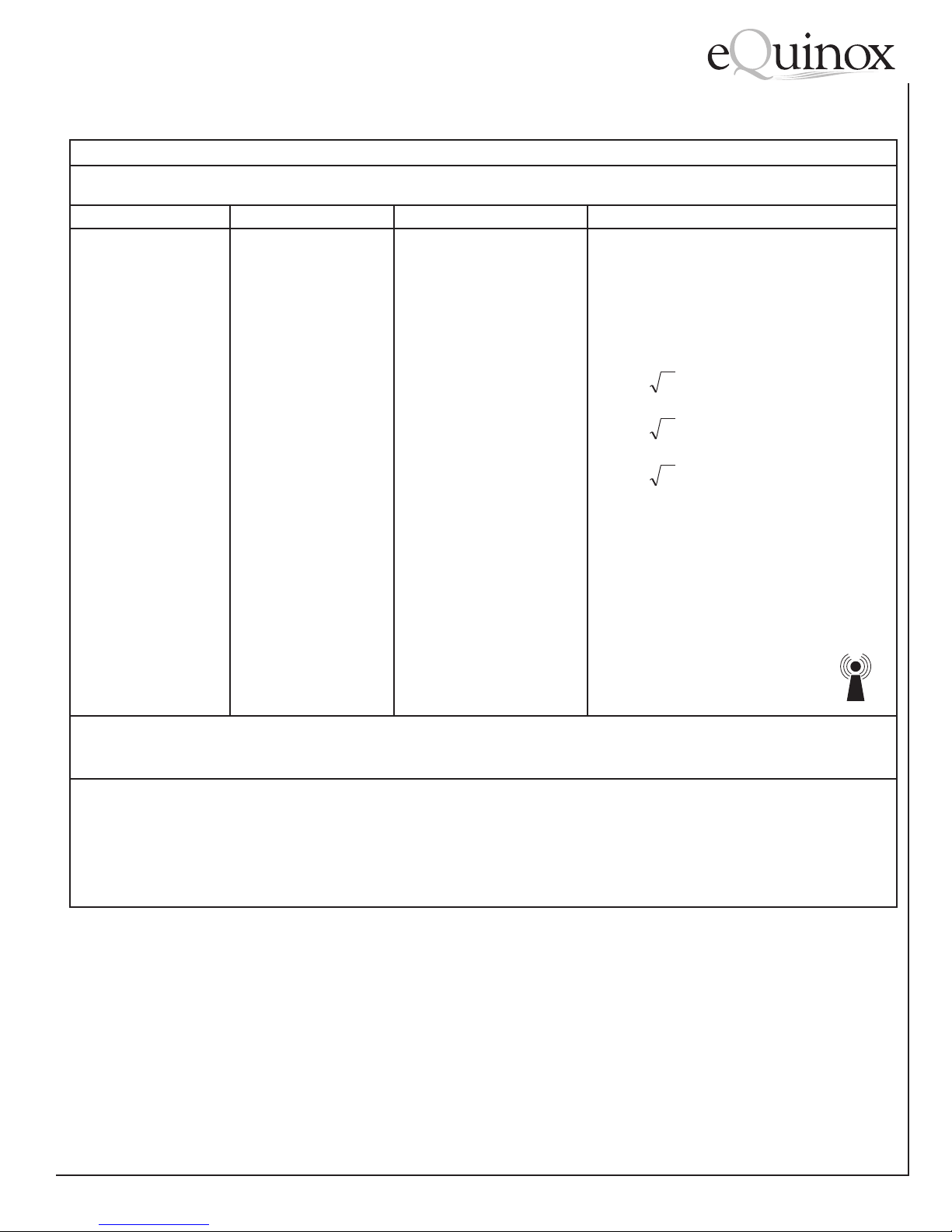
Leitlinien und Herstellererklärung – elektromagnetische Störfestigkeit
Pd 2.1
Pd 2.1
Pd 2.1
Der eQuinox ist für den Gebrauch in einer wie im Folgenden beschriebenen elektromagnetischen Umgebung bestimmt. Der Kunde oder Benutzer
des eQuinox muss sicherstellen, dass das Gerät in einer entsprechenden Umgebung verwendet wird.
Störfestigkeitsprüfung IEC 60601 Prüfpegel Übereinstimmungspegel Elektromagnetische Umgebung – Leitlinien
Geleitete HF
IEC 61000-4-6
3 Veff
150 kHz bis 80 MHz
3 Veff
Tragbare und mobile Funkgeräte sollten in keinem
geringeren Abstand zum eQuinox einschließlich der
Leitungen verwendet werden als dem empfohlenen
Schutzabstand, der nach der für die Sendefrequenz
zutreffenden Gleichung berechnet wird.
Gestrahlte HF
IEC 61000-4-3
3 V/m
80 MHz bis 2,5 GHz
3 V/m
Empfohlener Schutzabstand
= 1,2
= 1,2
= 1,2
= 80 MHz bis 800 MHz
= 800 MHz bis 2,5 GHz
Mit P als der Nennleistung des Senders in Watt (W)
gemäß Angaben des Senderherstellers und d als
empfohlenem Schutzabstand in Metern (m).
Die Feldstärke stationärer Funksender sollte bei allen
Frequenzen gemäß einer Untersuchung vor Ort
geringer als der Übereinstimmungspegel sein.
a
b
In der Umgebung von Geräten, die das folgende
Bildzeichen tragen, sind Störungen möglich:
ANMERKUNG 1 Bei 80 MHz und 800 MHz gilt der höhere Frequenzbereich.
ANMERKUNG 2 Diese Leitlinien sind möglicherweise nicht in allen Fällen anwendbar. Die Ausbreitung elektromagnetischer Wellen wird durch
Absorptionen und Reflexionen von Gebäuden, Gegenständen und Menschen beeinflusst.
a
Die Feldstärke stationärer Sender, z. B. Basisstationen von Funktelefonen und mobilen Landfunkgeräten, Amateurfunkstationen,
AM- und FM-Rundfunk- und Fernsehsendern, können theoretisch nicht genau vorherbestimmt werden. Um die elektromagnetische Umgebung
hinsichtlich der stationären Sender zu ermitteln, sollte eine Standortanalyse erwogen werden. Wenn die gemessene Feldstärke an dem Standort,
an dem der eQuinox benutzt wird, die obigen Übereinstimmungspegel überschreitet, sollte der eQuinox beobachtet werden, um die bestimmungsgemäße Funktion nachzuweisen. Wenn eine anormale Leistung festgestellt wird, können zusätzliche Maßnahmen erforderlich sein, z. B.
eine veränderte Ausrichtung oder ein anderer Standort des eQuinox.
b
Über den Frequenzbereich von 150 kHz bis 80 MHz muss die Feldstärke geringer als 3 V/m sein.
eQuinox (Model 4000) User Manual — 75
Page 76
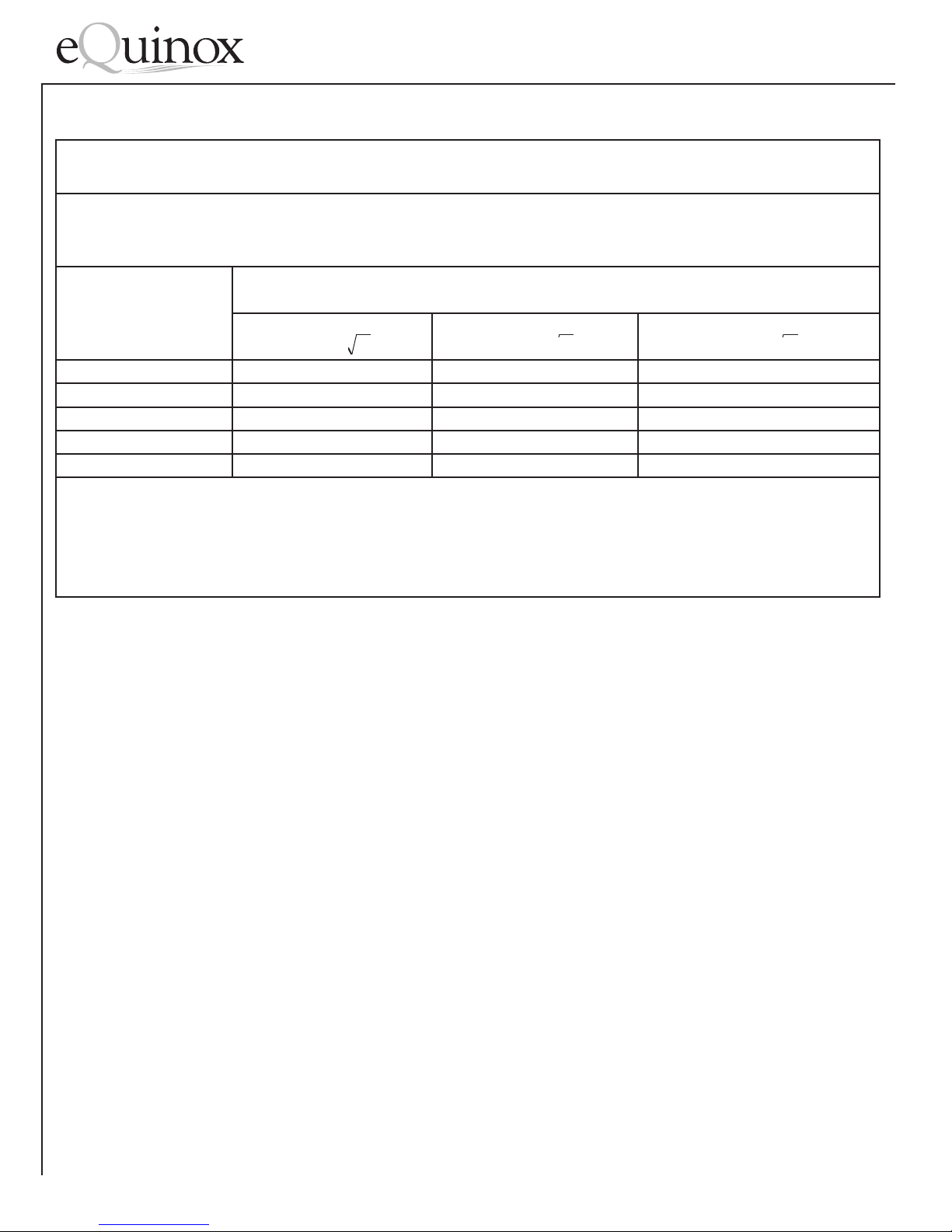
Empfohlene Schutzabstände
Pd 2.1
Pd 2.1
Pd 2.1
zwischen tragbaren und mobilen HF-Kommunikationsgeräten und dem eQuinox
Der eQuinox ist für den Betrieb in einer elektromagnetischen Umgebung bestimmt, in der die HF-Störgrößen kontrolliert sind. Der Kunde oder der
Benutzer des eQuinox kann dazu beitragen, elektromagnetische Störungen zu vermeiden, indem er den Mindestabstand zwischen tragbaren und
mobilen HF-Telekommunikationsgeräten (Sendern) und dem eQuinox – abhängig von der Ausgangsleistung des Kommunikationsgeräts – wie
unten angegeben einhält.
Nennleistung des Senders
W
150 kHz bis 80 MHz
= 1,2 = 1,2 = 1,2
0,01 0,12 0,12 0,23
0,1 0,38 0,38 0,73
1 1,2 1,2 2,3
10 3,8 3,8 7,3
100 12 12 23
Für Sender, deren maximale Nennleistung in obiger Tabelle nicht angegeben ist, kann der empfohlene Schutzabstand d in Metern (m) unter Verwendung der Gleichung ermittelt werden, die für die jeweiligen Sendefrequenz gilt. Dabei ist P die maximale Nennleistung des Senders in Watt
(W) gemäß Angabe des Senderherstellers.
ANMERKUNG 1 Bei 80 MHz und 800 MHz gilt der Schutzabstand für den höheren Frequenzbereich.
ANMERKUNG 2 Diese Leitlinien sind möglicherweise nicht in allen Fällen anwendbar. Die Ausbreitung elektromagnetischer Wellen wird durch
Absorptionen und Reflexionen von Gebäuden, Gegenständen und Menschen beeinflusst.
Schutzabstand abhängig von der Sendefrequenz
m
80 MHz bis 800 MHz
800 MHz bis 2,5 GHz
76 — 4805-C1 C (German)
Page 77
Allgemeine Informationen zu Flugreisen
Wenn der eQuinox bei Rangiervorgängen sowie während des
Starts und der Landung nicht verwendet wird, muss der eQuinox
ausgeschaltet bleiben und unter dem Sitz bzw. in einem anderen
zugelassenen Stauraum so verstaut werden, dass weder der
Mittelgang noch der Zugang in die Sitzreihe blockiert werden.
Wenn der eQuinox bei Rangiervorgängen sowie während des Starts
und der Landung verwendet wird, muss sich der Benutzer in einer
Sitzposition benden, die andere Passagiere nicht am Zugang bzw.
an der Nutzung von Notausgängen, normalen Ausgängen sowie
Mittelgängen in der Passagierkabine des Flugzeugs hindert.
Eine Person, die einen eQuinox verwendet, darf nicht in einer
Sitzreihe platziert werden, in der sich ein Ausgang bendet.
Kommt es während der Verwendung des eQuinox in der Kabine zu
einem Druckabfall und fallen die Sauerstoffmasken heraus, muss
die Nutzung des eQuinox beendet und das Zusatzsauerstoffsystem
des Flugzeugs genutzt werden. Der eQuinox muss nach dem
Anlegen der Sauerstoffmasken abgeschaltet werden.
Vor dem Antritt der Reise muss der eQuinox vom Benutzer auf
einwandfreien Betrieb geprüft werden.
Batteriemodul und Flugreisen
Kalkulieren Sie die Zeit am Boden (Check-in vor
dem Flug, Sicherheitskontrollen usw.) sowie
eventuelle Wartezeiten mit ein.
Die meisten Fluggesellschaften fordern, dass eine ausreichende
Zahl an vollständig geladenen Batterien zur Stromversorgung
des Geräts mitgeführt werden muss, die für 150 % der erwarteten
maximalen Reisezeit (Flugdauer, gesamte Zeit am Boden, d. h.
Zeiten vor und nach dem Flug sowie während des Umsteigens und
unerwartete Verspätungen) ausreicht.
Es wird empfohlen, stets eine zusätzliche Batterie auf
die Reise mitzunehmen.
Jede Fluggesellschaft hat ihre eigenen Bestimmungen bezüglich
der Mitnahme von Sauerstoff.
Setzen Sie sich mindestens 48 Stunden vor dem Abug mit der
Fluggesellschaft in Verbindung und teilen Sie dieser mit, dass Sie
den eQuinox mit auf die Reise nehmen.
VORSICHT: Die Richtlinien des Verkehrsministeriums der USA
(DOT) sowie der Vereinten Nationen (UN) sehen vor, dass
wenn dieses als Gepäck auf internationalen Flügen aufgegeben wird.
Bei Versand des Sauerstoffkonzentrators müssen die Batterien eben-
falls aus dem Gerät entnommen und ordnungsgemäß verpackt werden.
die Batterie aus dem Gerät herausgenommen werden muss,
eQuinox (Model 4000) User Manual — 77
Page 78
CAIRE Inc.
®
2200 Airport Industrial Drive, Ste. 500
Ball Ground, GA 30107 USA
1-800-482-2473
Weltweit: www.CAIREmedical.com
Medical Product Services GmbH
Borngasse 20
35619 Braunfels, Deutschland
Weltweit: www.CAIREmedical.com
Chart Industries behält sich das Recht vor, die Vermarktung seiner Produkte einzustellen bzw. Preise, Werkstoffe, Ausrüstungsteile,
Qualität, Beschreibung, Spezifikationen bzw. Prozesse ohne Vorankündigung zu einem beliebigen Zeitpunkt zu ändern, ohne dass hieraus irgendwelche Verpflichtungen oder Rechtsfolgen entstehen. Alle hier nicht ausdrücklich genannten Rechte bleiben im gesetzlich
zulässigen Rahmen Chart Industries vorbehalten.
78 — 4805-C1 C (German)
Zum Zeitpunkt der Veröffentlichung dieses Handbuchs sind eQuinox, SeQual und autoSAT
sowie die zugehörigen Logos (falls zutreffend) von CAIRE Inc. eingetragene Marken.
OxySafe
®
Lysol
ist eine eingetragene Marke von Reckitt Benckiser (Großbritannien).
®
ist eine eingetragene Marke von Applied Home Healthcare Equipment.
®
Pine-Sol
und Lestoil® sind eingetragene Marken der The Clorox Company.
Page 79
Manual del usuario
eQuinox
TM
Modelo 4000
eQuinox (Model 4000) User Manual — 79
Page 80
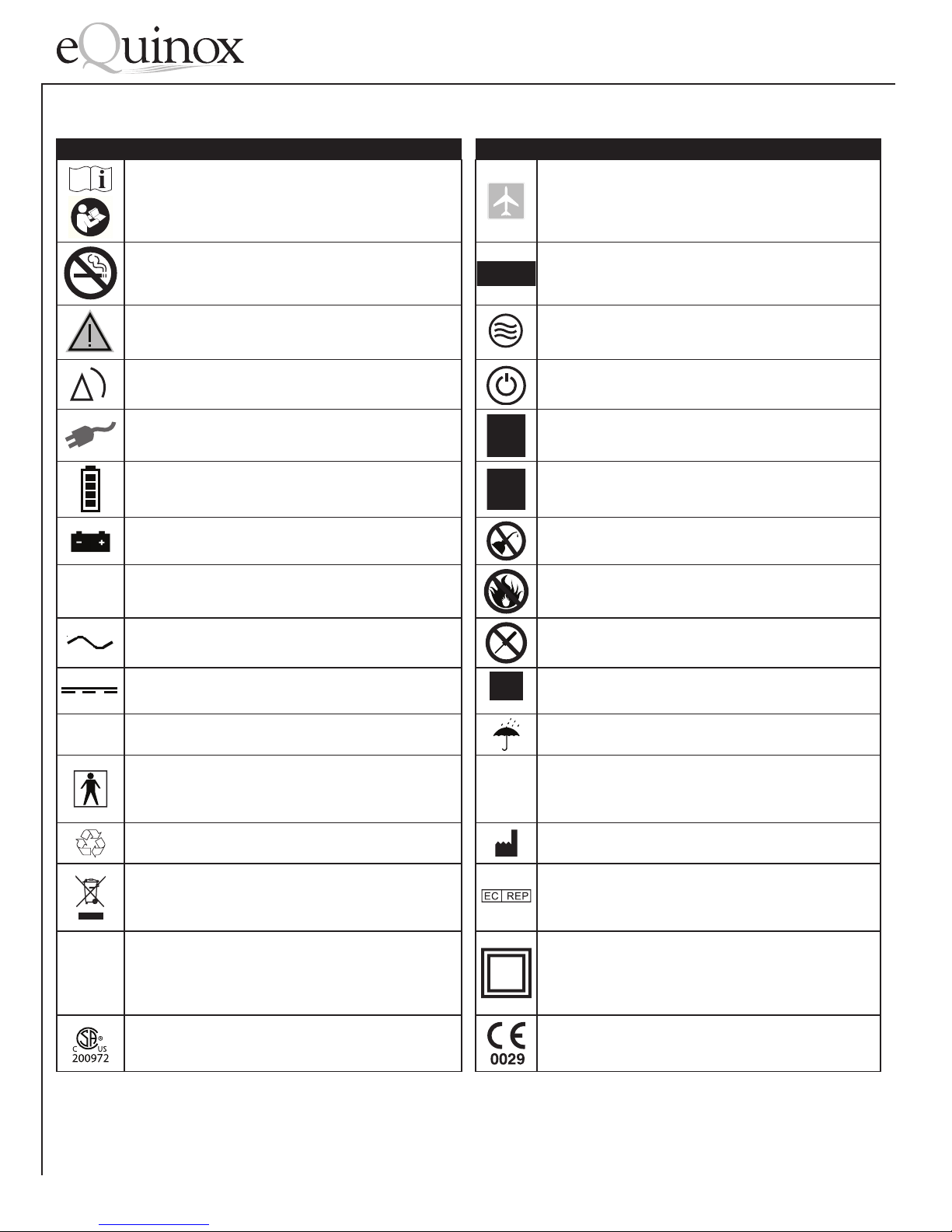
Controles del usuario e indicadores de estado del sistema
Símbolo Definición Símbolo Definición
Símbolo de Aprobado por la FAA: La Administración
Lea el manual del usuario antes de utilizar el equipo.
Lea el manual del usuario para obtener instrucciones.
Federal de Aviación (FAA) de los Estados Unidos ha
aprobado el uso de este dispositivo a bordo de aviones
comerciales.
A
Icono de Prohibido fumar: No fumar en las
proximidades de la unidad.
Indicador de Advertencias/ALERTA (amarillo) Funcionamiento en modo de dosis pulsada
Indicador de ALARMA (rojo) El dispositivo opera normalmente; botón de encendido
Indicador de alimentación externa Aumento del ajuste de ujo
Indicador de estado del paquete de baterías (batería) Reducción del ajuste de ujo
Símbolo del paquete de baterías No utilizar sustancias oleosas ni grasas.
Amperios No utilizar con llamas vivas.
Corriente alterna
Icono de CEI para la alimentación de CC (entrada) Supercie caliente.
Indicador del ajuste de ujo
No contiene piezas reparables en el interior. No abrir la
cubierta.
0
IP22
80 — 4805-C1 C (Spanish)
Salida de oxígeno No mojar.
2
Pieza aplicada de tipo BF (grado de protección contra
descargas eléctricas)
Símbolo de reciclaje Nombre y dirección del fabricante
Este símbolo recuerda a los propietarios de los equipos
que deben devolverlos a una instalación de reciclado al
nal de su vida útil, según la Directiva de Residuos de
Aparatos Eléctricos y Electrónicos (RAEE).
Prueba de ingreso de goteo y elementos sólidos:
El sistema eQuinox proporciona protección contra los
efectos dañinos por ingreso de objetos extraños sólidos
y líquidos, de conformidad con la normativa CEI
60529 con calicación de IP22.
Certicado para los mercados de los EE. UU. y el
Canadá, según las normas aplicables de ambos países.
IPX1
Equipo IPX1 a prueba de goteo: El paquete de baterías
(batería) de eQuinox y la fuente de alimentación de CA
proporcionan protección contra los efectos dañinos por
ingreso de líquidos. (IPX1, según CEI 60529)
Representante autorizado en la Comunidad Europea
Equipo de clase II
Este dispositivo cumple con los requisitos de la
Directiva 93/42/CEE sobre dispositivos médicos.
Por consiguiente, lleva la marca CE como se muestra.
Page 81

Índice
Controles del usuario e indicadores de estado del sistema ................................................................80
Guía de inicio rápido ............................................................................................................................... 82
Indicaciones de uso .................................................................................................................................85
Contraindicaciones de uso ...................................................................................................................... 85
Directrices de seguridad ......................................................................................................................... 85
Entornos de operación recomendados ..................................................................................................87
Instrucciones de funcionamiento ...........................................................................................................88
Funcionamiento del módulo de voz .......................................................................................................91
Operación del sistema eQuinox por primera vez .................................................................................92
Tabla de solución de problemas del usuario .......................................................................................94
Limpieza, cuidados y mantenimiento periódico ...................................................................................97
Tablas de CEM ..........................................................................................................................................99
Información general para viajes aéreos ..............................................................................................103
Paquete de baterías y viajes aéreos ....................................................................................................103
eQuinox (Model 4000) User Manual — 81
Page 82
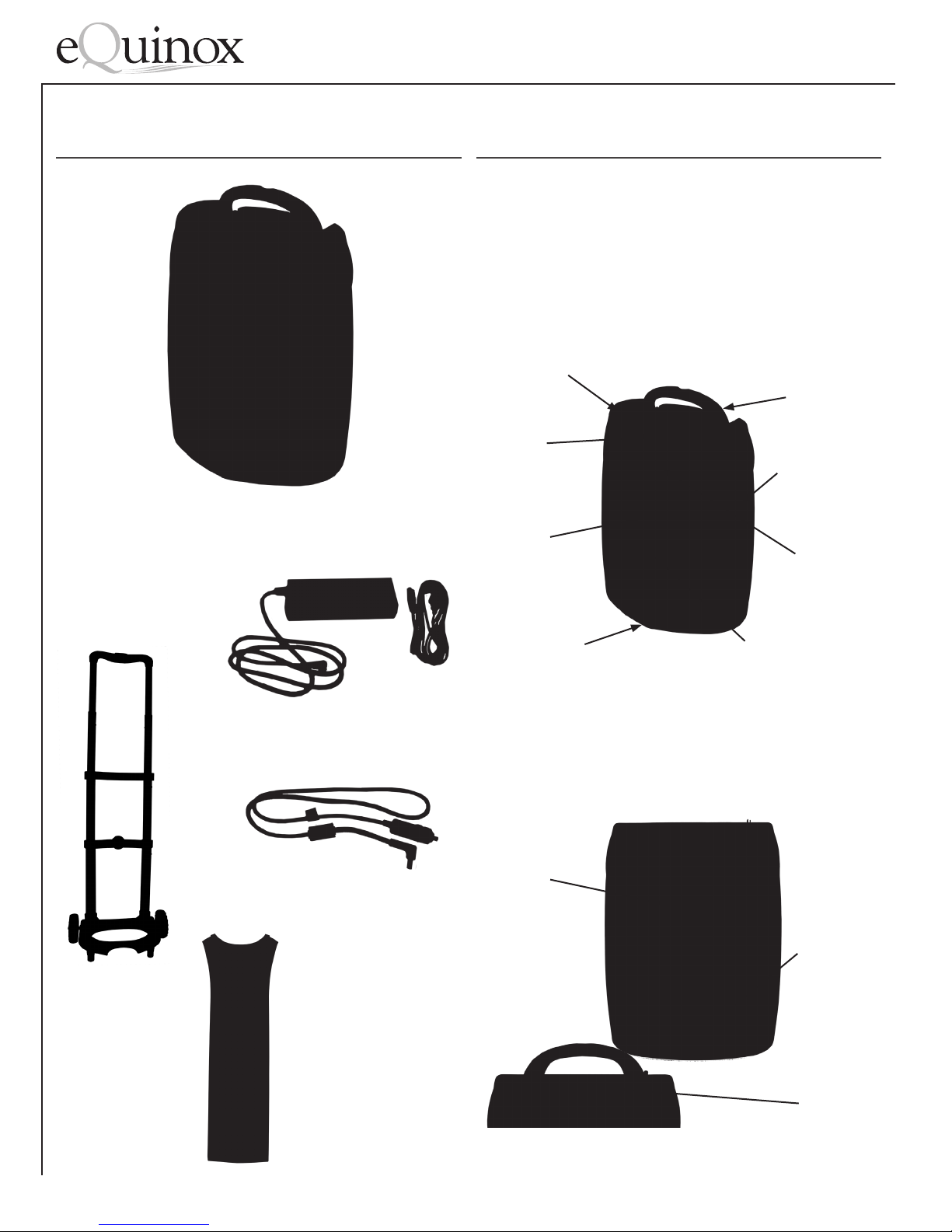
Guía de inicio rápido
Desembalaje de su sistema eQuinox
1
Carrito para el eQuinox
Fuente de alimentación de CA
Conocimiento de su sistema eQuinox
2
Revise todas las advertencias, las precauciones y la información
adicional del dispositivo en el resto de este manual.
Familiarícese con las funciones clave del sistema eQuinox y con
el panel de control del usuario.
Puerto de
salida de
oxígeno
Panel de
control
Icono de
Aprobado
por la FAA
Ubicación de
la etiqueta de
clasificación
y del número
de serie
PARTE DELANTERA
Asa
Toma de alimentación externa
Cierre del
paquete de
baterías
Paquete de
baterías
Cable de 12 VCC
Paquete de
baterías (bat-
ería)
82 — 4805-C1 C (Spanish)
Gabinete de
servicio
PARTE TRASERA
Aberturas
de escape
Filtro de en-
trada de
aire
Page 83
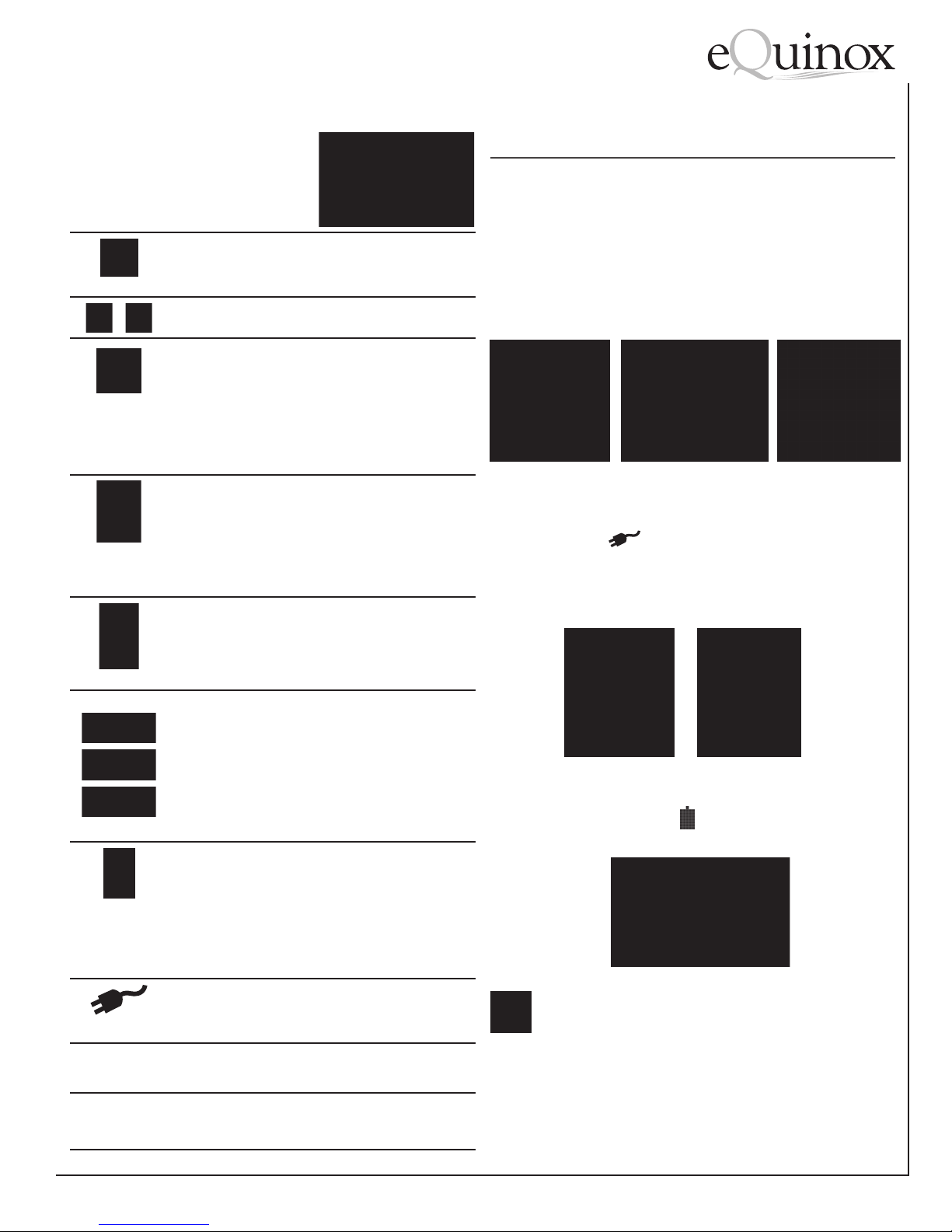
El panel de control del usuario del
sistema eQuinox muestra información
de funcionamiento importante.
Encender el sistema eQuinox
3
Indicador (verde) y botón de ENCENDIDO/APAGADO: Este
botón ENCIENDE y APAGA el dispositivo. El indicador verde
se enciende cuando el dispositivo está encendido y funciona de forma correcta.
Botones de aumento o disminución del ajuste de flujo: Utilice
Timbre: Una alarma sonora le advierte acerca de la condición de funcionamiento
del dispositivo, ya sea una advertencia o falla, y confirma la pulsación de una
tecla válida.
Módulo de voz: Si está activado, un indicador de voz le advertirá acerca
de la condición de funcionamiento del dispositivo, cambios en la fuente de
alimentación y condiciones de advertencias o fallas.
estos botones para ajustar el flujo al parámetro prescrito.
Indicador y botón del modo de suministro: El botón cambia
entre flujo continuo y modo de dosis pulsada. El modo de
dosis pulsada activa la tecnología autoSAT. Esto permite un
aumento significativo en el tiempo operativo mientras es
accionado por el paquete de baterías (batería). Cuando se
activa el modo de dosis pulsada, se enciende la luz verde
del indicador del modo de dosis pulsada. Se suministra un
pulso de oxígeno y el indicador verde parpadea con cada
esfuerzo inspiratorio.
Indicador de ALERTA (amarillo): cuando está encendido,
indica una condición de atención de baja prioridad o
precaución. Siga utilizando su sistema. Consulte la tabla
de solución de problemas para conocer la acción correcta
o póngase en contacto con el proveedor de atención domiciliaria. Una luz parpadeante amarilla indica una alerta de
prioridad media. Se necesita una respuesta rápida. (Normalmente, indica un nivel bajo de oxígeno o de la batería).
Indicador de ALARMA (rojo): indica una condición de alarma de alta prioridad. Se necesita una respuesta inmediata.
Consulte la tabla de solución de problemas y póngase
en contacto con su proveedor de atención domiciliaria.
(Normalmente, indica una pérdida de energía, un nivel de
oxígeno bajo o un funcionamiento defectuoso).
Pantalla de información:
• C o P: "C" indica modo de ujo continuo y "P" indica
modo de dosis pulsada.
• Tiempo en la batería: la pantalla se apagará y se encenderá cada 20 segundos cuando funcione con alimentación
de la batería para indicar el tiempo restante estimado en
ella.
• Ajuste (ujo continuo o dosis pulsada): cada vez que
encienda el dispositivo, se ha guardado el último modo y/o
ajuste y se utilizará en el inicio.
Indicador de estado del paquete de baterías (batería): Este
indicador muestra la carga restante de la batería. Cada
una de las cinco barras grises horizontales representa
aproximadamente el 20 % de la carga total de la batería.
Cuando se carga la batería, las barras del indicador de
carga parpadearán en forma continua. Si la batería no
está instalada, o si está instalada de forma incorrecta, el
indicador de estado del paquete de baterías (batería) no se
iluminará ni parpadeará.
Indicador de alimentación externa: Cuando el sistema
eQuinox esté correctamente enchufado y utilice la fuente
de alimentación de CA o de 12 VCC, este indicador se
iluminará en el panel de control del usuario.
Para conectar a una fuente de alimentación de CA: Inserte el cable
de la fuente de alimentación de CA rmemente, en el receptáculo
de alimentación externa, en el lado derecho del dispositivo. Conecte
el cable de alimentación de CA en la fuente de alimentación en la
salida de CA.
Paso 1 Paso 2 Paso 3
Cuando el sistema eQuinox se conecta debidamente, se enciende
un indicador verde en la fuente de alimentación de CA. También
se encenderá el indicador de alimentación externa en el panel de
control del usuario.
Para instalar la batería: Deslice la batería hacia el interior del
compartimiento vacío hasta que se trabe en su posición. Quedará
nivelada con la parte delantera del dispositivo.
Cuando la batería esté instalada correctamente y el sistema eQuinox
esté encendido o conectado a una alimentación de CA, aparecerá el
indicador de estado del paquete
Indicador (verde) y botón de ENCENDIDO/APAGADO
Mantenga pulsado el botón de ENCENDIDO/APAGADO durante
dos (2) segundos para encender su sistema eQuinox. Se iniciará una
breve prueba automática visual y sonora de encendido. Verique
que todos los indicadores estén iluminados y que el timbre suene
por tres (3) segundos. Mantenga pulsado el botón de ENCENDIDO/
APAGADO durante dos (2) segundos para apagar el sistema
eQuinox.
de baterías.
eQuinox (Model 4000) User Manual — 83
Page 84
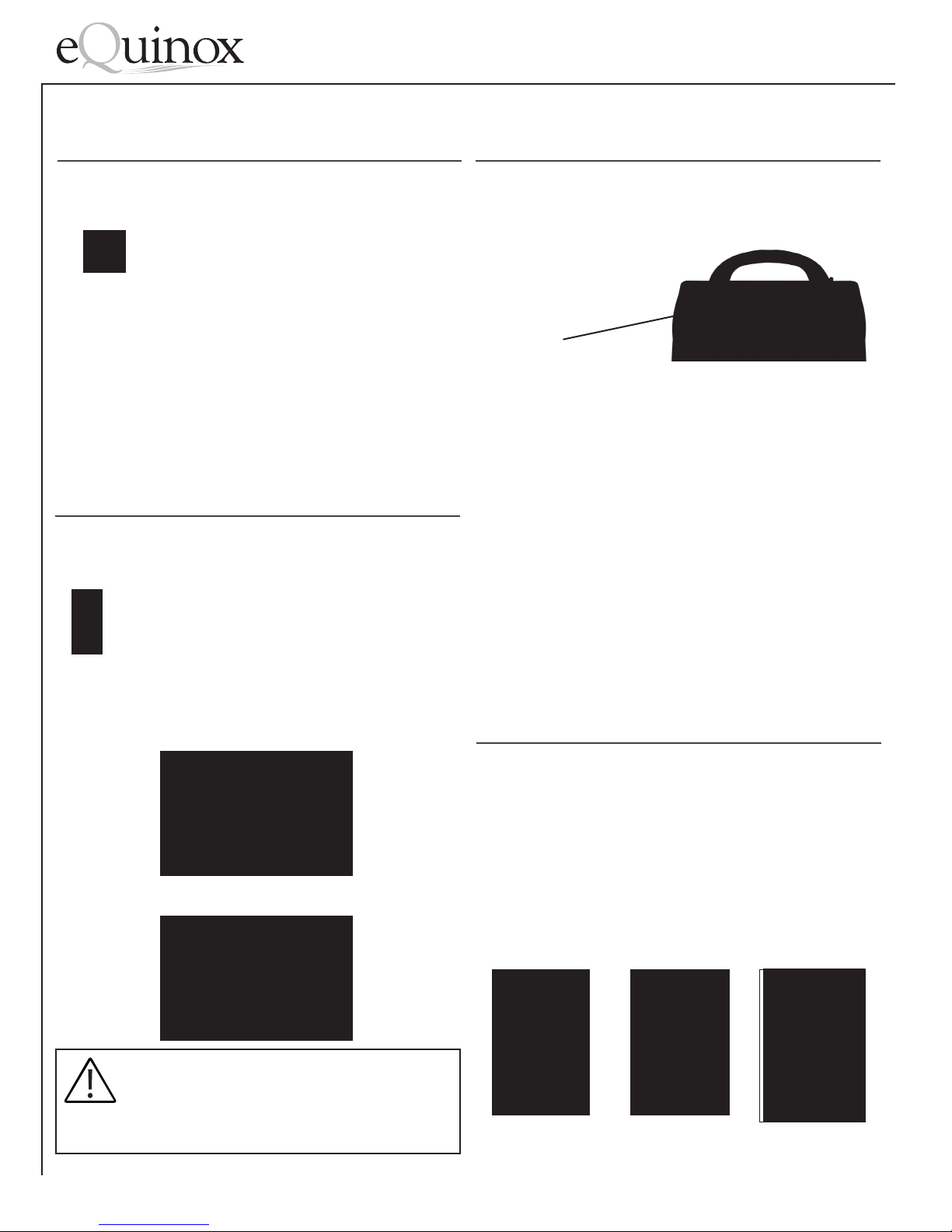
Seleccionar el modo de entrega de flujo
Comenzar a usar el sistema eQuinox
4
Indicador y botón del modo de flujo
Pulse el botón de modo de ujo para seleccionar el modo de ujo
deseado. Al pulsar este botón repetidas veces, alternará entre el
modo de ujo continuo y el modo de dosis pulsada. En el modo de
ujo continuo, el oxígeno es proporcionado en una frecuencia de
ujo constante entre 0,5 y 3,0 LPM, indicada por la letra C. En el
modo de dosis pulsada, el oxígeno es suministrado en un bolo al
comienzo da cada inhalación. Los ajustes del modo de dosis pulsada
1–9 proporcionan tamaños de bolos que van de 16 ml a 192 ml
y están designados con la letra P en la pantalla. La dosis pulsada
puede ajustarse en relación a la sensibilidad y al suministro del bolo
para la respiración. Los ajustes de ujo en ambos modos deben ser
prescritos por su médico.
Adecuar el ajuste de flujo al nivel indicado
5
Botones de aumento o disminución del ajuste de
6
Filtro de entrada de aire
Filtro de
entrada
de aire
Su unidad está equipada con un ltro de entrada de aire (ltro
adicional provisto). Compruébelo diariamente y límpielo una vez a
la semana. Las instrucciones para la limpieza están en la página 19.
Conecte el tubo de suministro de oxígeno a la salida de oxígeno y
conecte la cánula de oxígeno según las instrucciones provistas con
la cánula, o según las instrucciones de su proveedor de atención
domiciliaria.
Respire con normalidad a través de la cánula nasal.
Al operar con la energía de la batería, con la utilización del modo de
dosis pulsada se obtendrá una mayor duración de uso.
Usando los botones + o -, adapte el ajuste según la indicación
provista por su médico.
Pantalla de modo de flujo continuo
Pantalla de modo de dosis pulsada
ADVERTENCIA: ES MUY IMPORTANTE SELECCIONAR SOLO EL
NIVEL DE OXÍGENO PRESCRITO. NO CAMBIE LA SELECCIÓN
DE FLUJO A MENOS QUE UN PROFESIONAL MÉDICO ACREDIT-
ADO ASÍ SE LO HAYA INDICADO. EL CONCENTRADOR DE
OXÍGENO PORTÁTIL PUEDE USARSE AL DORMIR SI SE LO HA RECOMENDADO UN PROFESIONAL CUALIFICADO.
Funcionamiento del carrito para el eQuinox
7
Alinee el sistema eQuinox con la plataforma moldeada del carrito,
de modo que quede apoyado de forma plana y vertical. Alinee el
tornillo roscado grande con la inserción de la parte posterior del
sistema eQuinox. A continuación, ajuste manualmente la manija
del carrito hasta que el carrito esté rmemente sujeto al dispositivo.
Apriete el botón del asa telescópica del carrito y tire hacia arriba
para ajustar la altura del asa.
84 — 4805-C1 C (Spanish)
Page 85
¡Importante!
Directrices de seguridad
Las instrucciones de seguridad se definen de la siguiente manera:
ADVERTENCIA: INFORMACIÓN DE SEGURIDAD IMPORTANTE
SOBRE PELIGROS QUE PUEDEN CAUSAR LESIONES GRAVES.
PRECAUCIÓN: Información importante sobre la prevención
de daños en el sistema eQuinox.
Nota: Información que requiere atención especial.
Indicaciones de uso
El sistema eQuinox está destinado para la administración de
oxígeno complementario. El dispositivo no está destinado para
soporte vital ni tiene capacidad de monitoreo del paciente.
ADVERTENCIA: ES MUY IMPORTANTE SELECCIONAR SOLO EL
NIVEL DE OXÍGENO PRESCRITO. NO CAMBIE LA SELECCIÓN
DE FLUJO A MENOS QUE UN PROFESIONAL MÉDICO ACREDIT-
ADO ASÍ SE LO HAYA INDICADO. EL CONCENTRADOR DE
OXÍGENO PORTÁTIL PUEDE USARSE AL DORMIR SI SE LO HA RECOMENDADO UN PROFESIONAL CUALIFICADO.
ADVERTENCIA: LAS LEYES FEDERALES (DE LOS ESTADOS UNIDOS)
RESTRINGEN ESTE DISPOSITIVO A SU VENTA O ALQUILER POR PARTE DE
UN MÉDICO U OTRO PROVEEDOR DE ATENCIÓN MÉDICA ACREDITADO.
ADVERTENCIA: ESTA UNIDAD NO DEBE UTILIZARSE PARA SOPORTE
VITAL. EN LOS PACIENTES GERIÁTRICOS, PEDIÁTRICOS O CUALQUIER
OTRO PACIENTE INCAPAZ DE COMUNICAR SU INCOMODIDAD MIENTRAS
USA ESTE DISPOSITIVO, PODRÍA SER NECESARIO UTILIZAR UN SISTEMA
DE VIGILANCIA ADICIONAL. LOS PACIENTES CON DISCAPACIDADES AUDITIVAS Y/O VISUALES PUEDEN NECESITAR AYUDA CON LAS ALARMAS
DE VIGILANCIA.
Contraindicaciones de uso
ADVERTENCIA: EN ALGUNAS CIRCUNSTANCIAS, EL USO DE
OXÍGENO NO PRESCRITO PUEDE SER PELIGROSO. ESTE
DISPOSITIVO SOLO DEBERÁ UTILIZARSE CUANDO LO
PRESCRIBA UN MÉDICO.
ADVERTENCIA: NO UTILIZAR EN PRESENCIA DE ANESTÉSICOS INFLAM-
ABLES.
ADVERTENCIA: AL IGUAL QUE CON CUALQUIER OTRO DISPOSITIVO
ELÉCTRICO, EL USUARIO PODRÍA EXPERIMENTAR PERÍODOS DE NO
FUNCIONAMIENTO, DEBIDO A INTERRUPCIONES ELÉCTRICAS O A LA
NECESIDAD DE QUE EL TÉCNICO CUALIFICADO REVISE EL SISTEMA
EQUINOX. EL SISTEMA EQUINOX NO ES ADECUADO PARA PACIENTES
QUE PUEDAN SUFRIR CONSECUENCIAS DAÑINAS PARA LA SALUD A
CAUSA DE DICHAS INTERRUPCIONES TEMPORALES.
ADVERTENCIA: NO SE PERMITEN MODIFICACIONES A ESTE
EQUIPO.
ADVERTENCIA: EL FABRICANTE RECOMIENDA DISPONER DE
UNA FUENTE ALTERNATIVA DE OXÍGENO COMPLEMENTARIO
EN CASO DE CORTE ELÉCTRICO, CONDICIÓN DE ALARMA O
FALLA MECÁNICA. CONSULTE A SU MÉDICO O PROVEEDOR
DEL EQUIPO PARA DETERMINAR EL TIPO DE SISTEMA DE RESERVA QUE
NECESITA.
ADVERTENCIA: ESTE DISPOSITIVO SUMINISTRA OXÍGENO DE ALTA CONCENTRACIÓN, LO QUE LO HACE MUY INFLAMABLE. NO PERMITA QUE
SE FUME NI LA PRESENCIA DE LLAMAS VIVAS DENTRO DE LA MISMA
HABITACIÓN EN LA QUE SE ENCUENTRA (1) ESTE DISPOSITIVO NI (2)
NINGÚN ACCESORIO QUE CONTENGA OXÍGENO. SI NO SE TIENE EN
CUENTA ESTA ADVERTENCIA, PUEDE PRODUCIRSE UN INCENDIO GRAVE,
DAÑOS MATERIALES Y/O TENER COMO RESULTADO LESIONES FÍSICAS
O LA MUERTE.
ADVERTENCIA: NO OPERE LA UNIDAD EN UN ESPACIO RESTRINGIDO O CONFINADO (P. EJ., UNA CAJA O BOLSO PEQUEÑO) DONDE LA
VENTILACIÓN PUEDE SER LIMITADA. ESTO PUEDE OCASIONAR QUE EL
CONCENTRADOR DE OXÍGENO SE SOBRECALIENTE Y PERJUDIQUE EL
RENDIMIENTO.
ADVERTENCIA: EL CONCENTRADOR DEBE UBICARSE PARA EVITAR EL
HUMO, LOS CONTAMINANTES O LOS GASES TÓXICOS.
ADVERTENCIA: EL USO DE ALGUNOS ACCESORIOS PARA LA ADMINISTRACIÓN DE OXÍGENO NO ESPECIFICADOS PARA ESTE CONCENTRADOR
DE OXÍGENO PUEDE AFECTAR SU FUNCIONAMIENTO. LOS ACCESORIOS
RECOMENDADOS SE MENCIONAN DENTRO DE ESTE MANUAL.
ADVERTENCIA: SI EL CONCENTRADOR DE OXÍGENO SE HA CAÍDO, HA
SUFRIDO DAÑOS O SE HA EXPUESTO AL AGUA, PÓNGASE EN CONTACTO
CON EL PROVEEDOR DE ATENCIÓN DOMICILIARIA PARA SU INSPECCIÓN
O POSIBLE REPARACIÓN. NO USE EL CONCENTRADOR DE OXÍGENO SI
TIENE EL CABLE DE ALIMENTACIÓN O EL ENCHUFE DAÑADOS.
ADVERTENCIA: ASEGURE FIRMEMENTE, COLÓQUELE EL CINTURÓN
DE SEGURIDAD O AFIRME DE OTRA FORMA EL CONCENTRADOR DE
OXÍGENO EN UN VEHÍCULO DURANTE SU TRANSPORTE PARA PREVENIR
DAÑOS O LESIONES.
ADVERTENCIA: NO PERMITA QUE SE BLOQUEE LA ENTRADA DE AIRE
NI LAS ABERTURAS DE SALIDA DE AIRE. NO DEJE CAER NI INSERTE
OBJETOS EN NINGUNA ABERTURA DEL DISPOSITIVO. ESTO PUEDE
OCASIONAR QUE EL CONCENTRADOR DE OXÍGENO SE SOBRECALIENTE
Y PERJUDIQUE EL RENDIMIENTO.
ADVERTENCIA: NO LLENE DEMASIADO EL HUMIDIFICADOR OPCIONAL.
LLENE EL HUMIDIFICADOR OPCIONAL CON AGUA SOLO HASTA EL NIVEL
INDICADO POR EL FABRICANTE DEL HUMIDIFICADOR.
ADVERTENCIA: NO CAMINE Y UTILICE EL SISTEMA EQUINOX MIENTRAS
EL HUMIDIFICADOR ESTÉ ACOPLADO. QUITE LA BOTELLA HUMIDIFICADORA ANTES DE ANDAR. NO RECUESTE EL SISTEMA EQUINOX MIENTRAS LA BOTELLA HUMIDIFICADORA ESTÉ ACOPLADA.
ADVERTENCIA: LOS REGLAMENTOS DEL DEPARTAMENTO DE TRANSPORTE (DOT, POR SUS SIGLAS EN INGLÉS) ESTADOUNIDENSE Y DE LAS
NACIONES UNIDAS (ONU) REQUIEREN LA EXTRACCIÓN DE LA BATERÍA
DEL DISPOSITIVO PARA TODOS LOS VIAJES EN AEROLÍNEAS INTERNACIONALES CUANDO SE FACTURE EL CONCENTRADOR DE OXÍGENO
COMO EQUIPAJE. CUANDO SE ENVÍA EL CONCENTRADOR DE OXÍGENO,
LA BATERÍA TAMBIÉN DEBE EXTRAERSE DEL DISPOSITIVO Y EMBALARSE
ADECUADAMENTE.
ADVERTENCIA: NO UTILICE ESTE EQUIPO SIN LEER PRIMERO Y COMPRENDER ESTE MANUAL. SI NO COMPRENDE LAS ADVERTENCIAS E
INSTRUCCIONES, CONTACTE A SU PROVEEDOR DEL EQUIPO ANTES DE
INTENTAR USAR EL EQUIPO; DE LO CONTRARIO, PODRÍAN PRODUCIRSE
LESIONES O DAÑOS.
eQuinox (Model 4000) User Manual — 85
Page 86
ADVERTENCIA: SI SIENTE MOLESTIAS O SUFRE UNA
EMERGENCIA MÉDICA, BUSQUE ASISTENCIA MÉDICA DE
INMEDIATO.
ADVERTENCIA: LA OPERACIÓN DEL CONCENTRADOR DE
OXÍGENO FUERA DE LAS ESPECIFICACIONES DE LA TEMPERATURA DE
FUNCIONAMIENTO PUEDE LIMITAR LA CAPACIDAD DEL CONCENTRADOR DE CUMPLIR CON LAS ESPECIFICACIONES DE CONCENTRACIÓN
DE OXÍGENO. CONSULTE LA SECCIÓN DE ESPECIFICACIONES DE ESTE
MANUAL PARA CONOCER LOS LÍMITES DE TEMPERATURA.
ADVERTENCIA: NO USE ACEITE, GRASA, PRODUCTOS CON BASE DE
PETRÓLEO NI OTROS PRODUCTOS INFLAMABLES CON LOS ACCESORIOS
DE TRANSPORTE DE OXÍGENO O CON EL CONCENTRADOR DE OXÍGENO.
SOLO DEBEN USARSE LOCIONES O BÁLSAMOS COMPATIBLES CON EL
OXÍGENO, CON BASE DE AGUA. EL OXÍGENO ACELERA LA COMBUSTIÓN
DE LAS SUSTANCIAS INFLAMABLES.
ADVERTENCIA: EL USO INCORRECTO DE LA BATERÍA PUEDE OCASIONAR
QUE ESTA SE CALIENTE O SE ENCIENDA, Y PUEDE CAUSAR LESIONES
SERIAS. ASEGÚRESE DE NO PERFORAR, GOLPEAR, PISAR, DEJAR CAER
O SOMETER DE OTRA FORMA LA BATERÍA A IMPACTOS O GOLPES
FUERTES. EL USO DE BATERÍAS QUE ESTÉN DAÑADAS PODRÍA CAUSAR
LESIONES FÍSICAS.
ADVERTENCIA: EL CONCENTRADOR DE OXÍGENO NO DEBE USARSE
ADYACENTE A O APILADO CON OTROS EQUIPOS. SI EL USO ADYACENTE
O APILADO ES INEVITABLE, EL DISPOSITIVO DEBE OBSERVARSE PARA
VERIFICAR SU FUNCIONAMIENTO NORMAL.
PRECAUCIÓN: En el caso de que se produzca una alarma o si
observa que el concentrador de oxígeno no funciona
debidamente, consulte la sección de solución de problemas
de este manual. Si no puede resolver el problema, consulte
con su proveedor del equipo.
PRECAUCIÓN: Para evitar la anulación de la garantía, siga todas las
instrucciones del fabricante.
ADVERTENCIA: FUMAR MIENTRAS SE USA OXÍGENO ES LA
CAUSA PRINCIPAL DE LESIONES POR INCENDIOS Y MUERTES
RELACIONADAS. DEBE SEGUIR LAS ADVERTENCIAS DE
SEGURIDAD:
ADVERTENCIA: NO DEJE CIGARRILLOS ENCENDIDOS, VELAS O LLAMAS
VIVAS EN LA MISMA HABITACIÓN EN QUE SE ENCUENTRA EL DISPOSITIVO O LOS ACCESORIOS QUE TRANSPORTAN OXÍGENO.
ADVERTENCIA: FUMAR MIENTRAS SE USA UNA CÁNULA DE OXÍGENO
PUEDE CAUSAR QUEMADURAS FACIALES Y POSIBLEMENTE LA MUERTE.
ADVERTENCIA: SI FUMA, ESTOS 3 PASOS PUEDEN SALVAR SU VIDA:
APAGUE EL CONCENTRADOR DE OXÍGENO, RETIRE LA CÁNULA Y SALGA
DE LA HABITACIÓN DONDE SE UBICA EL DISPOSITIVO.
ADVERTENCIA: DEBEN EXHIBIRSE LETREROS DE "NO FUMAR: OXÍGENO
EN USO" EN EL HOGAR, O EN EL SITIO DONDE SE USE EL OXÍGENO. LOS
PACIENTES Y LOS CUIDADORES SANITARIOS DEBEN RECIBIR INFORMACIÓN ACERCA DE LOS PELIGROS DE FUMAR AL USAR OXÍGENO
MEDICINAL O EN PRESENCIA DE ESTE.
ADVERTENCIA: NO USE SU CONCENTRADOR DE OXÍGENO EN PRESENCIA DE GASES INFLAMABLES. ESTO PUEDE RESULTAR EN UN FUEGO
RÁPIDO QUE PUEDE CAUSAR DAÑOS MATERIALES, LESIONES CORPORALES O LA MUERTE.
ADVERTENCIA: RETIRAR LA CÁNULA Y COLOCARLA SOBRE LA ROPA,
CAMA, SOFÁ U OTRO MATERIAL ACOLCHADO CAUSARÁ UNA LLAMARADA SI SE LA EXPONE A UN CIGARRILLO, FUENTE DE CALOR O LLAMA.
ADVERTENCIA: NO DEJE UNA CÁNULA NASAL SOBRE O DEBAJO DE LA
ROPA, DE LOS COBERTORES DE LA CAMA O ALMOHADONES DE UNA
SILLA. SI LA UNIDAD ESTÁ ENCENDIDA PERO NO EN USO, EL OXÍGENO PODRÍA VOLVER INFLAMABLES ESOS MATERIALES. COLOQUE EL
CONCENTRADOR DE OXÍGENO EN LA POSICIÓN 0 (APAGADO) CUANDO
NO ESTÉ EN USO.
ADVERTENCIA: NO INTENTE REALIZAR TAREAS DE MANTEN-
IMIENTO DIFERENTES DE LAS POSIBLES SOLUCIONES
ENUMERADAS EN ESTE MANUAL. NO RETIRE LAS CUBIER-
TAS, SOLO SU PROVEEDOR DEL EQUIPO O UN TÉCNICO DE
SERVICIO CUALIFICADO DEBEN REVISAR O RETIRAR LAS CUBIERTAS DE
ESTE DISPOSITIVO.
ADVERTENCIA: USE SOLO ACCESORIOS RECOMENDADOS POR EL FABRICANTE. EL USO DE OTRO ACCESORIO PUEDE SER PELIGROSO, CAUSARÁ
DAÑOS GRAVES A SU CONCENTRADOR DE OXÍGENO Y ANULARÁ LA
GARANTÍA.
ADVERTENCIA: EL FABRICANTE RECOMIENDA DISPONER DE
UNA FUENTE ALTERNATIVA DE OXÍGENO COMPLEMENTARIO
EN CASO DE CORTE ELÉCTRICO, CONDICIÓN DE ALARMA
O FALLA MECÁNICA. CONSULTE A SU MÉDICO O PROVEEDOR
DEL EQUIPO PARA DETERMINAR EL TIPO DE SISTEMA DE RESERVA QUE
NECESITA.
ADVERTENCIA: NO PERMITA QUE SE BLOQUEE LA ENTRADA DE AIRE
NI LAS ABERTURAS DE SALIDA DE AIRE. NO DEJE CAER NI INSERTE
OBJETOS EN NINGUNA ABERTURA DEL DISPOSITIVO. ESTO PUEDE
OCASIONAR QUE EL CONCENTRADOR DE OXÍGENO SE SOBRECALIENTE
Y PERJUDIQUE EL RENDIMIENTO.
PRECAUCIÓN: Siempre desconecte la fuente de alimentación
de CA de la pared antes de desconectar la fuente de
alimentación de CA del concentrador de oxígeno.
PRECAUCIÓN: Siempre coloque el tubo de suministro de oxígeno y los
cables de corriente de forma tal que evite el riesgo de tropiezos.
PRECAUCIÓN: Al usar el concentrador de oxígeno en un automóvil, un
bote o en otras fuentes de CC con el cable de 12 VCC, asegúrese de
que el vehículo esté funcionando antes de conectar el concentrador
de oxígeno. Si la luz de alimentación externa del sistema eQuinox no
se ilumina y requiere un reajuste, desconecte el cable de 12 VCC de la
toma de CC, vuelva a iniciar su vehículo y luego reconecte su cable de
12 VCC a la toma de salida de CC. Si no se siguen estas instrucciones, la
fuente de alimentación podría no suministrar energía al concentrador
de oxígeno.
PRECAUCIÓN: Cuando el automóvil en el que se usa la unidad del concentrador de oxígeno se apague, desconecte y retire el dispositivo del
automóvil. No almacene el concentrador de oxígeno en un automóvil
muy caliente o muy frío o en otro ambiente similar de alta o baja
temperatura.
Nota: Los equipos de comunicaciones portátiles y móviles de radiofrecuencia pueden afectar los equipos eléctricos médicos.
86 — 4805-C1 C (Spanish)
Page 87
Entornos de operación recomendados
Para el uso correcto del dispositivo, consulte el siguiente cuadro.
El cuadro presenta información importante sobre los entornos
operativos recomendados o las condiciones operativas.
Especificaciones
Temperatura de
funcionamiento
Humedad de
funcionamiento
Temperatura de
transporte/alma-
cenamiento
Especificaciones
eléctricas
Altitud De 0 a 4000 metros (de 0 a 13 123 pies)
Colocación NO bloquee la entrada de aire (cubierta de la parte su-
Ambiente No debe haber humo, contaminantes ni gases.
Tiempo de fun-
cionamiento
Nota: Si el concentrador de oxígeno se ha almacenado por un período
prolongado fuera de su intervalo de temperatura de funcionamiento normal,
debe permitirse que la unidad vuelva a la temperatura de funcionamiento
normal antes de encenderla. (Consulte la sección de especificaciones en este
manual).
De 0 °C a 40 °C (de 32 °F a 104 °F)
Del 10 % al 95 % en un punto de condensación de 28 °C
(82,4 °F)
-25 °C a 70 °C (-13 °F a 158 °F)
Humedad: Hasta el 95 % sin condensación
-20 °C a 50 °C (-4 °F a 122 °F) para paquetes de batería
No utilice cables de extensión. No utilice tomas eléctricas
controladas por un interruptor.
perior trasera) ni las aberturas de escape (parte inferior
izquierda de la parte trasera). Coloque el dispositivo a
una distancia mínima de 7,5 cm (3 pulg.) de paredes,
cortinas, muebles, etc.
24 horas al día cuando está conectado a una fuente de
alimentación de CA o CC.
Colocación adecuada del sistema eQuinox
Seleccione una ubicación para el dispositivo en la que no haya
entrada de humo, gases ni contaminantes. La colocación correcta
del dispositivo debería permitir la entrada de aire a través del ltro
de entrada de aire en la parte superior trasera del gabinete. También
debería permitir que el aire de escape deje libremente las aberturas
de escape en la parte inferior derecha del dispositivo.
Coloque el dispositivo de forma que puedan oírse las alarmas.
Coloque el tubo de suministro de oxígeno de tal forma que no se
curve ni ocluya.
ADVERTENCIA: NO USE SU CONCENTRADOR DE OXÍGENO EN
PRESENCIA DE GASES INFLAMABLES. ESTO PUEDE RESULTAR
EN UN FUEGO RÁPIDO QUE PUEDE CAUSAR DAÑOS
MATERIALES, LESIONES CORPORALES O LA MUERTE. NO USE
ACEITE, GRASA, PRODUCTOS CON BASE DE PETRÓLEO NI OTROS
PRODUCTOS INFLAMABLES CON LOS ACCESORIOS DE TRANSPORTE DE
OXÍGENO O CON EL CONCENTRADOR DE OXÍGENO. SOLO DEBEN
USARSE LOCIONES O BÁLSAMOS COMPATIBLES CON EL OXÍGENO, CON
BASE DE AGUA. EL OXÍGENO ACELERA LA COMBUSTIÓN DE LAS
SUSTANCIAS INFLAMABLES.
ADVERTENCIA: ESTE DISPOSITIVO SUMINISTRA OXÍGENO DE ALTA CONCENTRACIÓN, LO QUE LO HACE MUY INFLAMABLE. NO PERMITA QUE
SE FUME NI LA PRESENCIA DE LLAMAS VIVAS DENTRO DE LA MISMA
HABITACIÓN EN LA QUE SE ENCUENTRA (1) ESTE DISPOSITIVO NI (2)
NINGÚN ACCESORIO QUE CONTENGA OXÍGENO. SI NO SE TIENE EN
CUENTA ESTA ADVERTENCIA, PUEDE PRODUCIRSE UN INCENDIO GRAVE,
DAÑOS MATERIALES Y/O TENER COMO RESULTADO LESIONES FÍSICAS
O LA MUERTE.
Nota: Cuando el automóvil en el que se usa la unidad del concentrador de
oxígeno se apague, desconecte y retire el dispositivo del automóvil. No almacene el concentrador de oxígeno en un automóvil muy caliente o muy frío o
en otro ambiente similar de alta o baja temperatura. NO deje el concentrador
de oxígeno ni la fuente de alimentación enchufados en el vehículo si se
encuentra apagado. De lo contrario, podría agotar la batería del vehículo.
PRECAUCIÓN: No opere la unidad en un espacio restringido
o confinado (p. ej., una caja o bolso pequeño) donde la
ventilación puede ser limitada. Esto puede ocasionar que el
concentrador de oxígeno se sobrecaliente y perjudique el rendimiento.
No permita que se bloquee la entrada de aire ni las aberturas de salida
de aire. Esto puede ocasionar que el concentrador de oxígeno se
sobrecaliente y perjudique el rendimiento.
eQuinox (Model 4000) User Manual — 87
Page 88
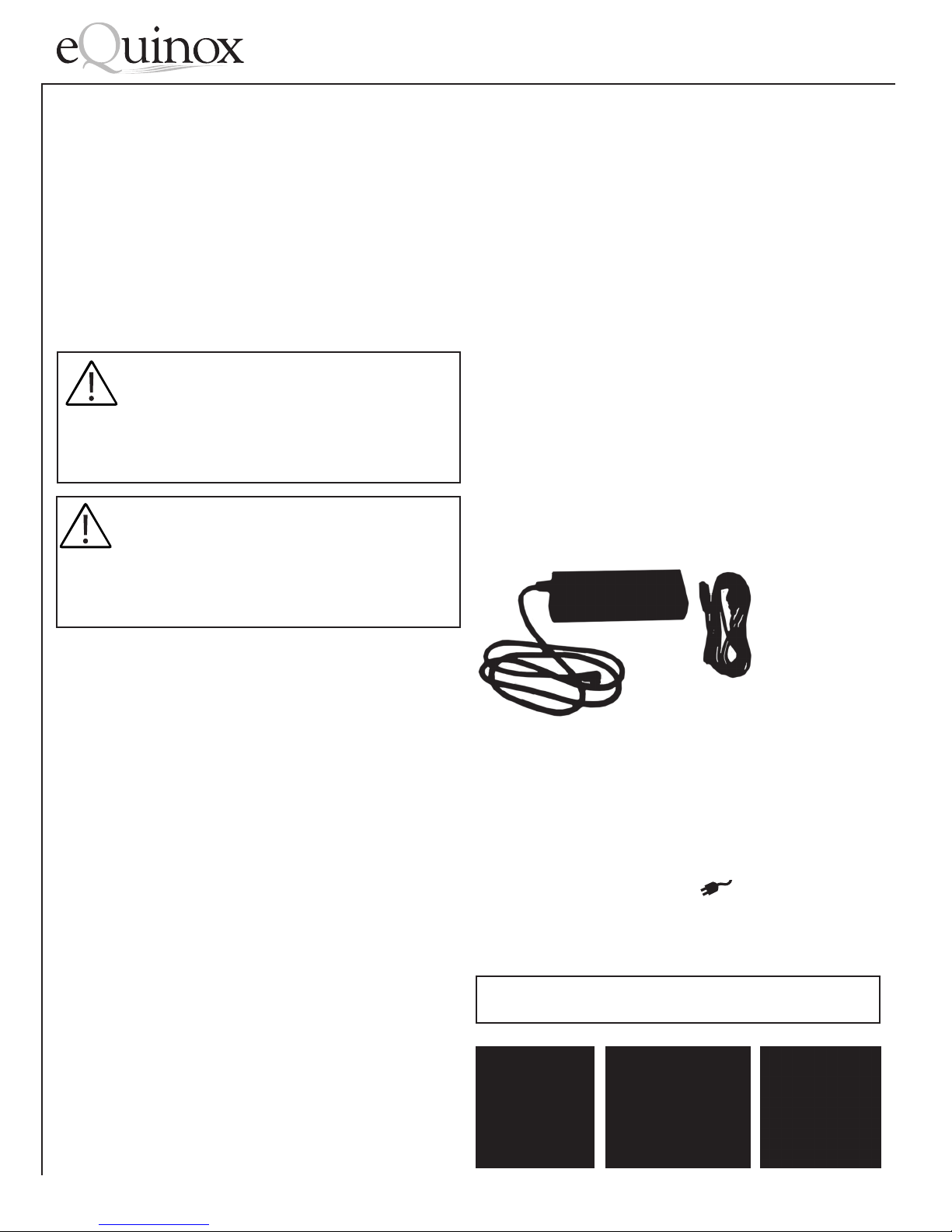
Instrucciones de funcionamiento
Antes de utilizar
Este manual del usuario sirve como referencia para ayudarle a usar
el dispositivo y llevar a cabo su mantenimiento. Si tiene alguna
pregunta o duda, llame al proveedor de atención domiciliaria.
¡Importante! NO intente poner en funcionamiento el sistema
eQuinox sin leer primero la sección Directrices de seguridad de este
manual. Siga todas las instrucciones de funcionamiento. Observe
todas las Advertencias del dispositivo y del Manual del usuario.
Para reducir el riesgo de incendios, lesiones físicas y daños graves
en el sistema eQuinox, preste atención a todas las precauciones de
seguridad.
ADVERTENCIA: LIMPIE EL GABINETE, EL PANEL DE CONTROL
Y EL CABLE DE ALIMENTACIÓN SOLO CON UN LIMPIADOR
DOMÉSTICO APLICADO CON UN PAÑO HÚMEDO (NO
MOJADO) O ESPONJA, Y LUEGO SEQUE TODAS LAS SUPERFICIES. NO PERMITA QUE NINGÚN LÍQUIDO ENTRE EN EL DISPOSITIVO.
PRESTE ESPECIAL ATENCIÓN A LA SALIDA DE OXÍGENO PARA LA
CONEXIÓN DE LA CÁNULA PARA ASEGURARSE DE QUE PERMANEZCA
LIBRE DE POLVO, AGUA Y PARTÍCULAS.
PRECAUCIÓN: No permita que se bloquee la entrada de aire
ni las aberturas de salida de aire. Esto puede ocasionar que
el concentrador de oxígeno se sobrecaliente y perjudique
el rendimiento. No opere el concentrador de oxígeno sin el
filtro de entrada de aire colocado. Si dispone de un segundo filtro, coloque este filtro de "reemplazo" antes de limpiar el filtro sucio. Limpie
el filtro sucio con una solución tibia de agua y jabón, y luego seque por
completo antes de usar.
Información general de carga
El sistema eQuinox funciona con alimentación de CA, alimentación
de CC o una batería recargable. El sistema incluye un "cargador de
batería inteligente". Este recarga la batería cada vez que el sistema
eQuinox se conecta a una fuente de alimentación externa. El sistema
supervisa y controla la fuente de alimentación y el cargador de la
batería.
El sistema eQuinox carga la batería mientras se utiliza la fuente de
alimentación de CA o CC y la temperatura de la batería se encuentra
en un intervalo seguro. Cuando la fuente de alimentación externa
se desconecta, el dispositivo pasa automáticamente al uso con
batería, si esta está instalada y cargada. Cuando vuelve a conectarse
a una salida de CA o CC, el dispositivo funciona con la fuente de
alimentación externa y recarga la batería.
Alinee el enchufe de alimentación con el toma de corriente externa
para conectarlo correctamente a la fuente de CA o al cable de
12 VCC. El toma de corriente empotrado se encuentra en el lado
derecho del dispositivo al mirar de frente el panel de control.
Introduzca el enchufe en el toma de corriente empotrado.
FUENTE DE ALIMENTACIÓN DE CA
Encendido del sistema eQuinox
El dispositivo puede operarse con tres (3) fuentes de alimentación
diferentes:
• Fuente de alimentación de CA
• Cable de 12 VCC
• Paquete de baterías recargable (batería)
Fuente de ali-
mentación de CA
El sistema eQuinox incluye una fuente de alimentación de
CA universal para su uso en el hogar o donde esté disponible
la alimentación de CA estándar. Para conectar a una fuente
de alimentación de alimentación de CA, enchufe el cable de
alimentación de CA de forma segura en el toma de corriente
externa. También asegúrese de que el cable de la fuente de
alimentación de CA esté enchufado a una salida de CA. Cuando
el sistema eQuinox sea enchufado correctamente, se iluminarán el
indicador verde en la fuente de alimentación de CA y el indicador
de alimentación externa. El indicador
en el panel de control
del usuario también se iluminará. La fuente de alimentación de
CA CAIRE PN 4836 es la fuente de alimentación principal para
el concentrador de oxígeno portátil eQuinox. Es una parte muy
importante del sistema en general.
Nota: Use únicamente el voltaje eléctrico indicado en la etiqueta de especificaciones adherida al dispositivo.
Paso 1 Paso 2 Paso 3
88 — 4805-C1 C (Spanish)
Page 89
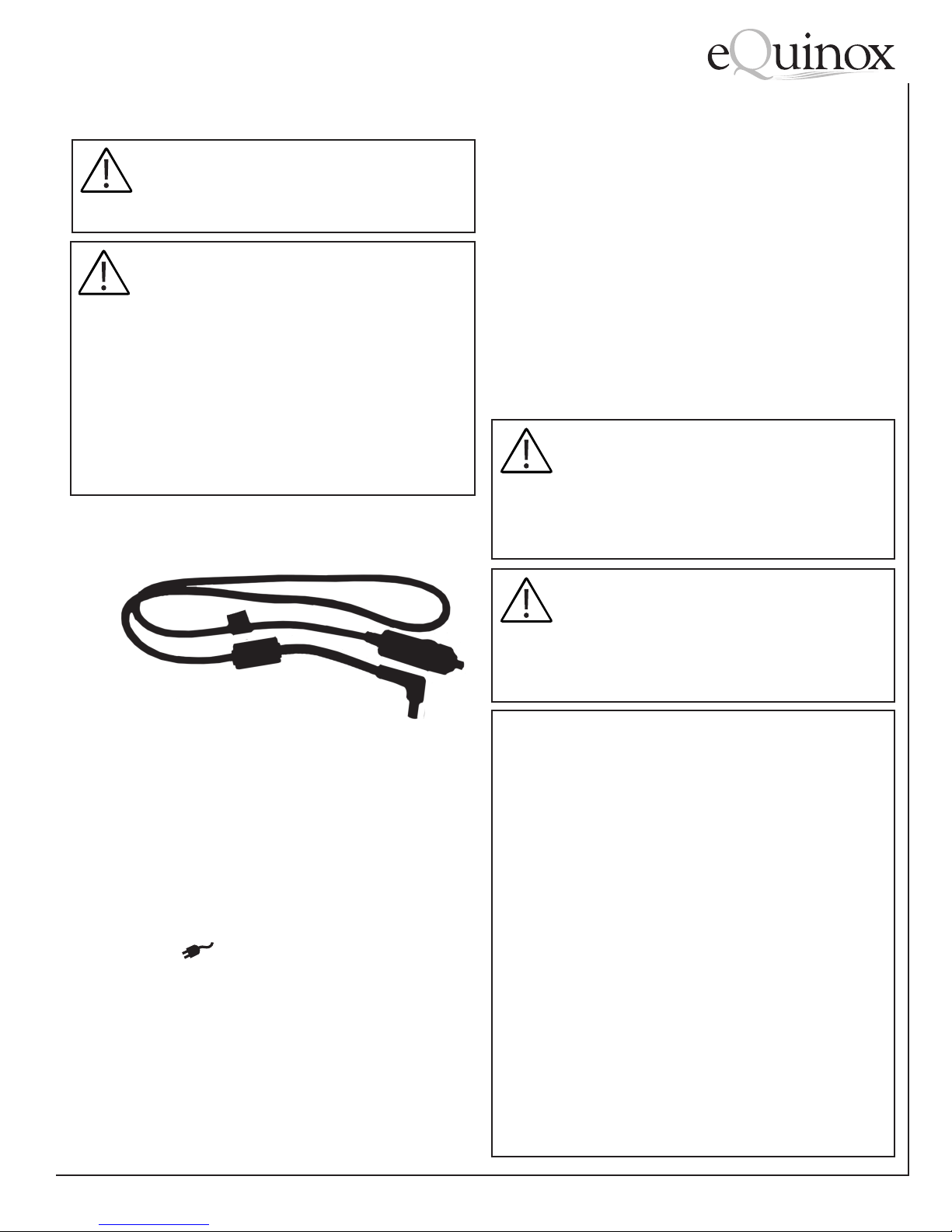
ADVERTENCIA: NO TOQUE LOS CONTACTOS DE LA BATERÍA
Y AL PACIENTE AL MISMO TIEMPO CUANDO ENERGICE LA
UNIDAD CON LA FUENTE DE ALIMENTACIÓN EXTERNA
(FUENTE DE ALIMENTACIÓN DE CA) Y SIN NINGÚN PAQUETE
DE BATERÍAS INSTALADO.
PRECAUCIÓN: Use solo accesorios recomendados por el
fabricante. El uso de cualquier otra fuente de alimentación
puede ser peligroso, provocar daños graves en el concentrador de oxígeno y anulará la garantía.
PRECAUCIÓN: No utilice cables de extensión en esta unidad ni conecte
demasiados enchufes a la misma toma eléctrica. El uso de cables de extensión podría afectar de forma adversa el rendimiento del dispositivo.
Demasiados enchufes en una toma pueden ocasionar una sobrecarga al
panel eléctrico y hacer que el disyuntor/fusible se active o dispare si el
disyuntor o el fusible no funciona.
PRECAUCIÓN: El uso de cables y adaptadores diferentes a los especificados, con excepción de los cables y de los adaptadores vendidos por
el fabricante del equipo médico eléctrico como piezas de repuesto para
componentes internos, puede resultar en una mayor emisión o una
menor inmunidad del concentrador de oxígeno.
Cable de 12 VCC
Cable de 12 VCC
Conexión de la fuente de CC de eQuinox
Cuando el sistema eQuinox se conecta a una fuente de CC en un
vehículo, se cumplen las siguientes condiciones:
• El sistema eQuinox funcionará con todos los ajustes de flujo
continuos de 0,5–3,0 LPM y todos los ajustes de pulso de
1–9 mientras funciona con la fuente de CC en un automóvil.
• La batería solo se cargará si queda suficiente alimentación
después de que el dispositivo funcione con la frecuencia de
flujo indicada. El sistema eQuinox aplicará la alimentación
suministrada para hacer funcionar la unidad primero. La
alimentación que quede se utilizará como una carga de
compensación para recargar la batería. Si se carga la batería del
sistema eQuinox, el símbolo de la batería parpadeará. Si la batería
del sistema eQuinox no carga, el símbolo de la batería se mostrará
permanentemente encendido.
ADVERTENCIA: NO PERMITA QUE SE BLOQUEE LA ENTRADA
DE AIRE NI LAS ABERTURAS DE SALIDA DE AIRE. ESTO PUEDE
OCASIONAR QUE EL CONCENTRADOR DE OXÍGENO SE
SOBRECALIENTE Y PERJUDIQUE EL RENDIMIENTO.
ADVERTENCIA: SI LA FUENTE DE ALIMENTACIÓN DE CC DEL VEHÍCULO
CAE POR DEBAJO DE LOS 11,5 VOLTIOS, EL SISTEMA EQUINOX PASARÁ
AL FUNCIONAMIENTO CON BATERÍA (SI ESTA ESTÁ INSTALADA Y CARGADA).
PRECAUCIÓN: Cuando el automóvil en el que se usa la
unidad del concentrador de oxígeno se apague, desconecte
y retire el dispositivo del automóvil. No almacene el
concentrador de oxígeno en un automóvil muy caliente o
muy frío o en otro ambiente similar de alta o baja temperatura. NO
deje el concentrador de oxígeno o la fuente de alimentación enchufados en el vehículo si se encuentra apagado. De lo contrario, podría
agotar la batería del vehículo.
Una fuente de alimentación de 12 VCC permite el funcionamiento
del sistema desde tomas de CC, como las de los vehículos
motorizados.
1. Arranque el vehículo.
2. Introduzca el cable de 12 VCC en la toma de corriente del
lateral del dispositivo.
3. Introduzca el enchufe del cable de 12 VCC en la toma de
alimentación de CC del vehículo motorizado.
Cuando el dispositivo esté correctamente conectado y reciba energía
de la fuente de alimentación de CC, se iluminará un indicador verde
de energía externa
en el panel de control.
Nota: Mientras utilice el dispositivo con un cable de 12 VCC, la batería puede
no cargarse.
Nota: Cuando utilice el sistema eQuinox con un cable de 12 VCC, se
recomienda el uso del modo de dosis pulsada, siempre que se haya prescrito
el uso de un dispositivo de dosis pulsada.
Nota: Para asegurarse de que el dispositivo está utilizando la alimentación
de CC, compruebe que el indicador de alimentación externa esté iluminado.
Si oye un pitido, puede ser que exista una pérdida de alimentación externa.
Compruebe si la LED verde del indicador de alimentación externa está encendida o apagada. Si mientras la unidad está funcionando con alimentación
de CC se quita la batería, esto asegurará que no se produzca una pérdida
de carga. Si el indicador no está iluminado, entonces el dispositivo está
funcionando con la batería.
Nota: El rendimiento real del sistema eQuinox puede variar en función de las
condiciones de uso del vehículo motorizado. Es posible que algunos vehículos no puedan admitir la funcionalidad completa con alimentación de CC. En
el caso de que un vehículo no pueda suministrar suficiente alimentación para
funcionar con el ajuste actual, el sistema eQuinox primero dejará de cargar
la batería y seguirá funcionando con la frecuencia de flujo indicada. Si el
vehículo aún no puede suministrar suficiente energía, el sistema eQuinox reducirá la frecuencia de flujo si esta es de 2,0 LPM o superior. Si la frecuencia
de flujo es inferior a 2,0 LPM, el sistema eQuinox se apagará.
Si se perciben frecuencias de flujo bajas, quite todos los demás dispositivos electrónicos conectados al circuito de alimentación (GPS, cargador de
teléfono celular, etc.). Si se recupera alimentación suficiente, las frecuencias
de flujo no aumentarán automáticamente al ajuste original; el usuario debe
hacer el ajuste de forma manual. Si el sistema eQuinox aún no funciona con
la frecuencia de flujo indicada, intente quitar el paquete de baterías.
eQuinox (Model 4000) User Manual — 89
Page 90
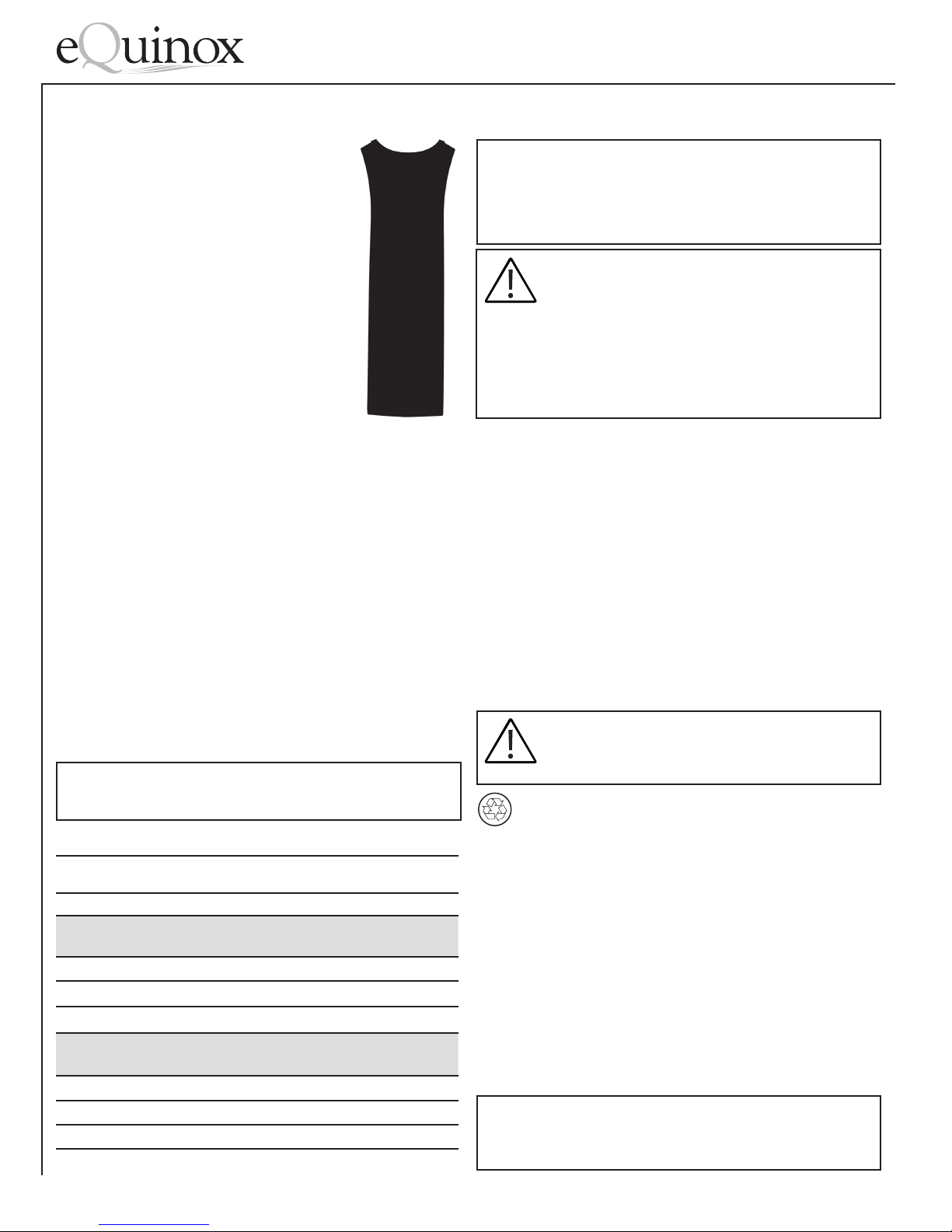
Paquete de baterías recargable (batería)
El sistema eQuinox puede funcionar con el
paquete de baterías (batería) recargable que se
suministra con el dispositivo.
Instalación de la batería: Alinee la batería para
que se deslice hacia el interior del compartimento
de la alimentación que está vacío. Empuje la
batería hacia el interior del compartimento
de alimentación hasta que se trabe (se ajuste)
en su posición. Quedará nivelada con la parte
delantera del dispositivo. Cuando la batería esté
correctamente instalada y el sistema eQuinox esté
encendido, el indicador de estado de la batería
aparecerá en el panel de control. (Si la batería NO
está instalada, el indicador de estado del paquete
de baterías se encenderá). La unidad seguirá
funcionando con una fuente de alimentación
externa.
Paquete de baterías
recargable (batería)
Para quitar la batería, presione el botón de desbloqueo en la parte
superior del paquete de baterías. Mantenga la palanca de desbloqueo
hacia ABAJO y tire de la batería para extraerla del sistema eQuinox.
Nota: Si el concentrador de oxígeno se opera fuera de su intervalo de temperatura de funcionamiento normal, se puede ver afectado el rendimiento y
reducirse el tiempo de funcionamiento de la batería y/o aumentar el tiempo de
carga de la batería. (Consulte la sección Especificaciones en este manual). Obtendrá un mayor tiempo de funcionamiento con la batería, si utiliza el sistema
eQuinox con el modo de dosis pulsada (modo aprobado por el médico).
ADVERTENCIA: PARA CONCENTRADORES DE OXÍGENO
EQUIPADOS CON BATERÍAS: PARA GARANTIZAR LA DURACIÓN DE LA VIDA DE LA BATERÍA, MANTÉNGALA ALMACE-
NADA EN UN LUGAR FRESCO Y SECO. GUARDAR EL CONCENTRADOR DE OXÍGENO DURANTE UN LAPSO PROLONGADO A ALTAS
TEMPERATURAS O CON UNA BATERÍA TOTALMENTE CARGADA/
DESCARGADA PUEDE REDUCIR LA VIDA ÚTIL GENERAL DE LA BATERÍA.
NO INTENTE ABRIR LA BATERÍA, YA QUE NO DISPONE DE PIEZAS QUE
PUEDAN REPARARSE EN SU INTERIOR. MANTENGA LAS BATERÍAS LEJOS
DE LOS NIÑOS.
Carga inicial de la batería
La batería nueva suministrada con el sistema eQuinox no está
cargada completamente cuando se envía de fábrica. Antes de utilizar
el sistema eQuinox la primera vez, primero debe cargar la batería
completamente.
Tiempo de funcionamiento de la batería: El tiempo de
funcionamiento de la batería se muestra en el panel de control,
en los formatos simbólico y alfanumérico. Cuando el dispositivo
funcione con alimentación de la batería, el indicador de estado de
la batería se mostrará todo el tiempo. La pantalla programará las
horas/minutos del tiempo restante de la batería. Distintos factores,
como el ajuste de ujo, el modo de ujo continuo o de dosis pulsada
y la frecuencia respiratoria, afectarán el tiempo de funcionamiento
de la batería. La tabla Tiempo de funcionamiento típico del nuevo
paquete de baterías ofrece cálculos del tiempo de funcionamiento
estimativo del sistema eQuinox, para cuando utilice una batería
nueva con carga completa de acuerdo con el ajuste de ujo y las
condiciones de funcionamiento indicadas.
Nota: El sistema eQuinox viene con una batería de 12 celdas cuando se envía
desde fábrica. La batería de 24 celdas es un accesorio opcional para una
duración más prolongada de la batería.
Tiempo de funcionamiento típico del nuevo paquete de baterías
Tipo de funciona-
miento
de 12 celdas de 24 celdas
Modo
continuo
1 LMP 2,16 h (2 h, 9 min) 4,84 h (4 h, 50 min)
2 LPM 1,2 horas (1 hora, 12 min) 2,75 h (2 h, 45 min)
3 LPM 0,8 h (48 min) 1,83 h (1 h, 49 min)
Modo de dosis pul-
sada (a 12 bpm)
16 ml (1,0) 2,62 h (2 h, 37 min) 5,94 h (5 h, 56 min)
48 ml (3,0) 2,38 h (2 h, 22 min) 5,39 h (5 h, 23 min)
96 ml (6,0) 1,70 h (1 h, 41 min) 3,85 h (3 h, 51 min)
Tipo de batería
Conecte la fuente de alimentación de CA e instale la batería
correctamente. Permita que la batería se cargue completamente.
La batería está cargada completamente cuando el indicador de
estado del paquete de baterías en el panel de control deja de
parpadear en forma continua y queda permanentemente encendido.
El sistema eQuinox puede usarse mientras la batería se recarga.
Puede tardar hasta 4 horas para cargarse, dependiendo del ajuste del
ujo. La batería también se cargará al enchufar el sistema eQuinox
a una toma de CA y al apagarlo.
PRECAUCIÓN: Solo use las baterías provistas por el fabrican-
te. Para la eliminación correcta de la batería, contacte a su
proveedor del equipo o a su organismo gubernamental local
a fin de conocer los requisitos de eliminación.
* Las baterías son reciclables. *
En caso de que se produzca una interrupción de la alimentación
de CA o de CC, el sistema eQuinox emitirá un pitido y pasará
automáticamente al funcionamiento con batería, siempre que esta
esté instalada y cargada. Cuando se devuelve la alimentación
externa, la batería comenzará a cargarse nuevamente de forma
automática. Si falta la batería o si esta está completamente
descargada cuando se interrumpe la alimentación de CA, el sistema
eQuinox se apagará y emitirá una alarma. La batería está descargada
completamente cuando el indicador de estado del paquete de
baterías en el panel de control aparece vacío. El dispositivo
mostrará una luz amarilla y emitirá una alarma de batería baja. Esto
continuará hasta que el dispositivo se apague por completo con una
luz roja y una alarma constante. La alerta sonora puede continuar
por un máximo de 5 minutos hasta que el dispositivo se apague o se
restituya la alimentación externa.
Nota: Mantenga pulsado el botón de ENCENDIDO/APAGADO del sistema
eQuinox durante un mínimo de 5 segundos para silenciar la alarma de pérdida de energía. La conexión del sistema eQuinox a una fuente de alimentación
de CA externa durante 2 minutos también eliminará esta alarma.
90 — 4805-C1 C (Spanish)
Page 91

Tiempo típico de recarga de la batería
Activación/desactivación del módulo de voz
Por lo general, se tarda de 2 a 5 horas para recargar una batería
completamente agotada a un 80 % de su capacidad, según el ajuste
de ujo que se utilice. Cuando la batería esté completamente
cargada, el indicador de la batería dejará de parpadear en forma
continua. La batería puede cargarse en la unidad cuando el sistema
eQuinox esté apagado y enchufado.
Si la batería se calienta demasiado durante la descarga, la recarga no
se iniciará hasta que la batería se haya enfriado lo suciente. Quitar
la batería puede acelerar el proceso de enfriamiento.
La batería puede recargarse a partir de fuentes de alimentación
de CA o CC. La batería también se cargará desde el cargador de
escritorio opcional.
Funcionamiento del módulo de voz
Instrucciones operativas del módulo de voz
El sistema eQuinox puede suministrar noticaciones verbales
o alarmas y el estado operativo. Estas noticaciones verbales
complementan la información en la pantalla de diodos emisores
de luz (LED). La siguiente información proporciona instrucciones
sobre cómo encender y apagar la función del módulo de voz, ajustar
el volumen y cambiar el idioma.
Tecla de
ENCENDIDO/
Espera
Indicador de EN-
CENDIDO/Espera
(LED verde)
Indicador de
alerta (LED am-
arillo)
Indicador de alar-
ma (LED rojo)
Tecla de frecuen-
cia de aumento
de flujo
1. Para activar/desactivar la función del módulo de voz, encienda
la unidad presionando la tecla de ENCENDIDO/Espera.
2. Después de que se encienda la unidad, presione el ícono de
Prohibido fumar y la tecla Ocultar una vez.
3. En 1 o 2 segundos, aparecerá el elemento del menú SPKR =
ON (ALTAVOZ = ENCENDIDO) o SPKR = OFF (ALTAVOZ=
APAGADO).
4. Presione la tecla de aumento o reducción de la frecuencia de
flujo para cambiar la selección a ENCENDIDO [ON] (activar
el módulo de voz) o APAGADO [OFF] (desactivar el módulo
de voz).
5. En un tiempo de 3 a 5 segundos, se activará la opción
seleccionada.
Nota: Esto solo desactivará la función del módulo de voz una vez. Cuando el
dispositivo se apague y se reinicie, la función del módulo de voz se activará
automáticamente.
Aumento/disminución del volumen de las notificaciones vocales
1. Para subir o bajar el volumen de las notificaciones vocales,
presione el ícono de Prohibido fumar y la tecla Ocultar dos veces.
2. Aparecerá Volume = # - (Menú de ajuste del volumen).
3. Presione la tecla de aumento o reducción de la tasa de flujo
para subir o bajar el nivel del volumen de 1 a 10.
4. Después de seleccionar el nivel de volumen deseado, la opción
se activará/ajustará después de 3 a 5 segundos.
Cambiar el idioma del módulo de voz
1. Para cambiar el idioma del módulo de voz, presione el ícono
de Prohibido fumar y la tecla Ocultar cinco veces para acceder a
las opciones de idioma.
2. El idioma activado actualmente estará indicado en la pantalla.
Por ejemplo, si el módulo de voz está en idioma inglés cuando se
accede al menú de opciones de idioma, en la pantalla aparece el
texto "English" (inglés).
3. Presione la tecla de aumento o reducción de la frecuencia de
flujo para desplazarse por los idiomas disponibles.
4. Cuado aparezca el idioma deseado, este se ajustará
automáticamente en un tiempo de 3 a 5 segundos.
Ícono de Pro-
hibido fumar y
tecla Ocultar
Tecla de modo
de flujo
Indicador de
modo de flujo
(LED verde)
Pantalla
LCD
Indicador de
presencia de
alimentación
externa
(LED verde)
Tecla de frecuen-
cia de reducción
de flujo
eQuinox (Model 4000) User Manual — 91
Page 92
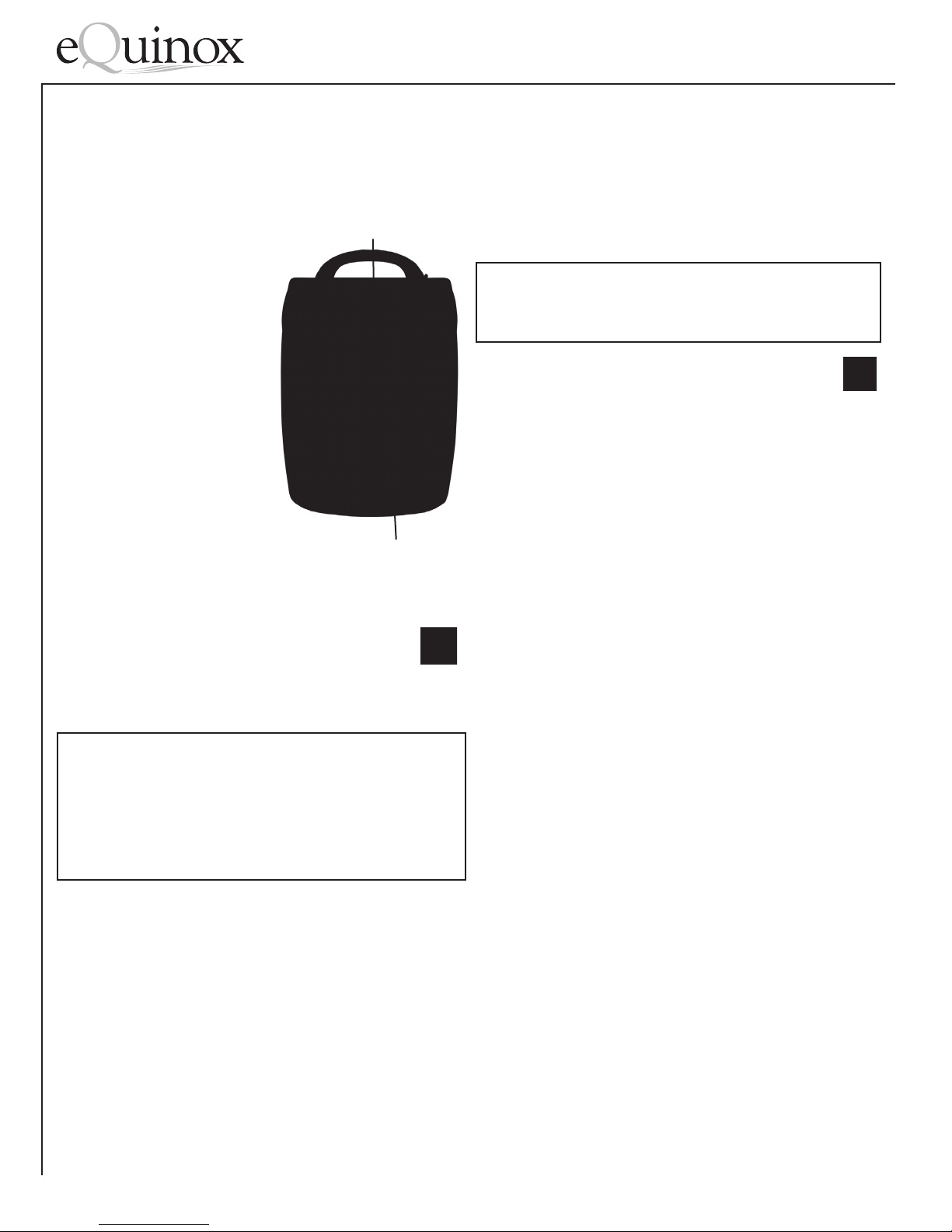
Operación del sistema eQuinox por primera vez
Paso 1: Colocación del sistema eQuinox para su uso
Coloque el sistema eQuinox en una zona iluminada y con buena
ventilación. Asegúrese de que la entrada de aire y las aberturas de
ventilación en la parte trasera no estén bloqueadas.
Coloque el sistema eQuinox de
modo que los indicadores visuales
y sonoros puedan verse y oírse
fácilmente.
Asegúrese de que el ltro de entrada
de aire esté bien colocado antes de
utilizar el sistema eQuinox. Si no
se incluye el ltro de entrada de
aire, póngase en contacto con su
proveedor de atención domiciliaria.
Si el ltro de entrada de aire
está sucio, lávelo con agua tibia
jabonosa. Luego, enjuáguelo con
agua limpia y déjelo secar antes de
colocar el ltro de entrada de aire
en el dispositivo. Si fuera necesario,
sustitúyalo por uno nuevo y limpio.
Enchufe el dispositivo en una
toma de CA o en una fuente de
alimentación de CC, o asegúrese de que haya instalada una batería
completamente cargada.
Filtro de entrada de aire
Aberturas de escape
Paso 2: Encendido del dispositivo y su preparación en reposo
Mantenga pulsado el botón de "ENCENDIDO/APAGADO" durante
dos (2) segundos para encender el sistema eQuinox. Se producirá
una breve prueba automática visual.
Nota: Si se producen tres pitidos cuando el dispositivo se conecta primero
a la alimentación o es activado, esto indica una condición de nivel bajo de la
batería para la batería de 9 voltios que está dentro del gabinete del sistema
eQuinox. Póngase en contacto con su proveedor de atención domiciliaria y
pídale que sustituya la batería de 9 voltios. Si los tres pitidos continúan intermitentemente después de que la unidad ha sido activada y ha funcionado por
varios minutos, no se trata de una condición de nivel bajo de la batería de 9 V.
Comuníquese con su proveedor de atención médica para obtener el servicio.
El sistema eQuinox posee un indicador de estado de la
concentración de oxígeno (OCSI, del inglés oxygen concentration
status indicator) integrado en el dispositivo. El OCSI continuamente
supervisa la salida de oxígeno del dispositivo. Utiliza una luz verde
(normal), una luz amarilla (alerta), una luz roja (alarma) y una
alarma sonora. Estos indicadores se iluminarán durante la prueba
automática de encendido al iniciarse el sistema. Tras el encendido
inicial del dispositivo, deje un período de cinco (5) minutos para
que el dispositivo alcance sus especicaciones de rendimiento. Solo
cuando se encienda la luz verde del indicador, el dispositivo habrá
alcanzado las especicaciones de rendimiento adecuadas.
Paso 3: Conexión del tubo de suministro de oxígeno
o la cánula nasal a la salida de oxígeno
Reemplace la cánula y el tubo de suministro de oxígeno con
regularidad, como recomiende su proveedor de atención domiciliaria.
Solicite al proveedor de atención domiciliaria información sobre la
limpieza y la sustitución de la cánula y del tubo de suministro.
Nota: Asegúrese de que la cánula esté bien insertada y esté firme. Esto
asegura que el concentrador de oxígeno pueda detectar apropiadamente la
inspiración para la entrega de oxígeno. Durante la inhalación, debe escuchar
o sentir el flujo de oxígeno hacia el extremo de la cánula nasal.
Paso 4: Selección del modo de flujo
Presione el botón del modo de ujo para seleccionar
el modo. Al pulsar este botón más de una vez, alternará entre el
modo de dosis pulsada y el modo de ujo continuo. El médico le
prescribirá el modo y el ajuste adecuados.
Funcionamiento del modo de flujo continuo:
Cuado el dispositivo funcione en el modo de ujo continuo, un
suministro constante de oxígeno uirá a través de la cánula nasal
y el tubo. El oxígeno se mide en litros por minuto (LPM). Puede
utilizar un humidicador cuando se use el modo de ujo continuo
únicamente. NO incline, transporte ni recueste el sistema eQuinox
mientras la botella del humidicador esté acoplada.
Funcionamiento del modo de dosis pulsada:
Cuando utilice el modo de dosis pulsada, se suministrará con cada
inhalación un bolo de oxígeno medido en mililitros (ml). NO utilice
un humidicador con el modo de dosis pulsada.
Cuando utilice el modo de dosis pulsada, al no detectar respiración,
el sistema eQuinox suministra un ujo continuo de oxígeno cada
15 segundos. El dispositivo detendrá el ujo continuo y comprobará
continuamente cada 15 segundos el esfuerzo inspiratorio. Una vez
detectada la inspiración, el dispositivo volverá a suministrar un bolo
medido. Para salir del modo de dosis pulsada e iniciar el modo de
ujo continuo, pulse el botón de modo de ujo.
Solicite a su médico que le prescriba la dosis pulsada correcta para
asegurarse de recibir la saturación de oxígeno adecuada. Tenga en
cuenta sus necesidades al descansar, al ejercitarse y cuando viaja en
zonas elevadas. Contacte a su proveedor de servicios sanitarios para
obtener una receta y los formularios de embarque.
92 — 4805-C1 C (Spanish)
Page 93
Funciones del modo de dosis pulsada y de autoSat
®
Su sistema eQuinox tiene una función denominada autoSAT
.
Esta suministra un bolo de tamaño consistente de oxígeno de hasta
40 inhalaciones por minuto (consulte la tabla de frecuencia respiratoria
máxima). A medida que su frecuencia respiratoria aumenta, como
cuando camina, la función autoSAT servo-controla el dispositivo,
suministrando el tamaño de bolo denido. La tecnología autoSAT es
propiedad de CAIRE y se utiliza durante el modo de dosis pulsada.
Frecuencia respiratoria máxima
Paso 5: Regulación del ajuste de flujo al nivel prescrito
Con los botones de ajuste de ujo, regule el ajuste de ujo
y dena los parámetros prescritos por el médico.
ADVERTENCIA: ES MUY IMPORTANTE SELECCIONAR SOLO EL
NIVEL DE OXÍGENO PRESCRITO. NO CAMBIE LA SELECCIÓN
DE FLUJO A MENOS QUE UN PROFESIONAL MÉDICO ACREDITADO ASÍ SE LO HAYA INDICADO.
Ajuste de dosis
pulsada
1 16 40
2 32 40
3 48 40
4 64 40
5 80 37
6 96 31
7 128 23
8 160 18
9 192 15
Tamaño del bolo
(± 15 %) ml
Frecuencia respirato-
ria máxima
Volumen del bolo (+/- 15 %)
Nota: El volumen del bolo disminuye a medida que la frecuencia respiratoria
supera la frecuencia respiratoria máxima publicada.
Nota: El ajuste de dosis pulsada (bolo) 1-9 no es equivalente a LPM.
ADVERTENCIA: LOS AJUSTES DEL MODO DE DOSIS PULSADA
DEBEN DETERMINARSE PARA CADA PACIENTE INDIVIDUALMENTE, SEGÚN SUS NECESIDADES EN ESTADO DE REPOSO, AL
REALIZAR EJERCICIO Y AL VIAJAR.
ADVERTENCIA: ES POSIBLE QUE EL SISTEMA EQUINOX NO PUEDA DETECTAR TODOS LOS ESFUERZOS RESPIRATORIOS EN EL MODO DE DOSIS
PULSADA. SI EL SISTEMA EQUINOX NO RESPONDE A SUS ESFUERZOS DE
RESPIRACIÓN, SOLICITE A SU PROVEEDOR DE ATENCIÓN DOMICILIARIA
QUE VERIFIQUE EL AJUSTE DE LA SENSIBILIDAD.
Paso 6: Comienzo de la utilización del sistema eQuinox
Respire con normalidad a través de la cánula nasal.
Nota: Obtendrá un mayor tiempo de funcionamiento con la batería, si utiliza
el sistema eQuinox con el modo de dosis pulsada (modo aprobado por el
médico).
Paso 7: Funcionamiento del carrito eQuinox
El carrito eQuinox está diseñado para el uso en supercies para
caminar.
Alinee el sistema eQuinox con la plataforma del carrito de modo
que quede vertical y nivelado.
Alinee el tornillo roscado grande con la inserción de la parte
posterior del sistema eQuinox. A continuación, apriete a mano la
manija del carrito hasta que el carrito eQuinox esté rmemente
sujeto al dispositivo.
Apriete el botón del asa del carrito eQuinox para ajustar la altura del
asa.
Nota: Al proveedor del equipo: Se recomiendan los siguientes accesorios para
la administración de oxígeno para usar con el concentrador de oxígeno:
• Cánula nasal con un tubo de 2,1 m (7 pies): NP 5408-SEQ
• Para ver accesorios recomendados adicionales, consulte el catálogo de
accesorios (NP ML-LOX0010), disponible en www.CAIREmedical.com.
• CAIRE ofrece el OxySafe™ como accesorio adicional. Está destinado para
ser utilizado conjuntamente con el concentrador eQuinox. Para clientes en
regiones que requieren el cumplimiento con EN ISO 8359:1996-Enmienda
1:2012, este accesorio cumplirá esta necesidad.
El OxySafe™ es un fusible térmico que detiene el ujo de gas en caso de
que la cánula descendente o el tubo de oxígeno se enciendan y ardan hacia
el OxySafe. Se coloca en línea con la cánula nasal o el tubo de oxígeno
entre el paciente y la salida de oxígeno del Equinox.
Para el uso correcto del OxySafe, consulte siempre las instrucciones del
fabricante (incluidas con cada conjunto de OxySafe).
CAIRE ofrece un conjunto de OxySafe™ que incluye un accesorio de la
cánula para la cabeza, OxySafe ™ y un tubo de 7’: NP 20628667
Nota: NO camine y utilice el sistema eQuinox mientras el humidificador esté
acoplado. Quite la botella humidificadora antes de andar. NO recueste el
sistema eQuinox mientras la botella humidificadora esté acoplada.
Paso 8: Apagado del dispositivo
Mantenga pulsado el botón de ENCENDIDO/APAGADO durante
dos (2) segundos para apagar el sistema eQuinox.
Almacene el sistema eQuinox en un lugar fresco y seco durante un
período no superior a 1 mes. El sistema eQuinox debe funcionar
un mínimo de 2 horas al mes para garantizar un funcionamiento
adecuado de la unidad.
eQuinox (Model 4000) User Manual — 93
Page 94
Tabla de solución de problemas del usuario
No ignore las alarmas
ADVERTENCIA: EL FABRICANTE RECOMIENDA DISPONER DE UNA FUENTE ALTERNATIVA DE OXÍGENO COMPLEMENTARIO EN CASO DE
CORTE ELÉCTRICO, CONDICIÓN DE ALARMA O FALLA MECÁNICA. CONSULTE A SU MÉDICO O PROVEEDOR DEL EQUIPO PARA DETERMINAR
EL TIPO DE SISTEMA DE RESERVA QUE NECESITA.
Luz amarilla
Síntoma Causa posible Acción
1) Extraiga el paquete de baterías y vuelva a instalarlo para asegurarse de que esté bien
La luz amarilla está fija.
La alarma emite 1 pitido cada
30 segundos.
La luz amarilla está parpadeando. El ícono de la batería
está parpadeando. La alarma
emite 1 pitido cada 2 minutos.
La luz amarilla está parpadeando. El ícono de la batería
está parpadeando. La alarma
emite 2 pitidos cada 30
segundos.
La luz amarilla está parpadeando. La alarma emite 1 pitido
cada 2 minutos.
La luz amarilla está parpadeando. No hay alarma sonora.
El sistema eQuinox ha detectado
un problema de conexión con el
paquete de baterías.
El paquete de baterías del eQuinox está tibio.
El voltaje del paquete de
baterías del sistema eQuinox
es bajo.
El sistema eQuinox ha detectado
una restricción del flujo que
provoca un bloqueo o un nivel
bajo de flujo.
El sistema eQuinox ha detectado
niveles bajos de oxígeno.
sujeto en el concentrador.
2) De ser posible, instale un paquete de baterías separado en el sistema eQuinox.
3) Si el problema persiste, póngase en contacto con el proveedor de atención sanitaria.
1) Vuelva a enchufar el sistema eQuinox a una fuente de alimentación externa o instale un
paquete de baterías completamente cargado en el eQuinox. Espere durante 30 minutos hasta
que el paquete de baterías tibio se enfríe fuera del concentrador.
2) Vuelva a cargar el paquete de baterías usando alimentación de CA.
3) Sustituya el paquete de baterías si hay otro disponible.
4) Si la condición persiste, póngase en contacto con el proveedor de atención sanitaria.
1) Enchufe el sistema eQuinox a una fuente de alimentación de CA y vuelva a cargar o susti-
tuya el paquete de baterías por un paquete de baterías completamente cargado.
1) Limpie y sustituya el filtro de entrada de aire del gabinete.
2) Asegúrese de que la cánula no esté retorcida ni bloqueada. Si está utilizando el sistema
con una botella humidificadora, asegúrese de que la haya llenado correctamente sin crear
una obstrucción.
3) Asegúrese de que el sistema eQuinox tenga una ventilación adecuada. Debe estar situado,
al menos, a 7,5 cm (3 pulg.) de cualquier superficie para asegurarse de que las aberturas de
escape no estén bloqueadas.
4) Si el problema persiste, cambie a otra fuente de oxígeno alternativa y póngase en contacto
con el proveedor de atención sanitaria para obtener ayuda.
1) Asegúrese de que el filtro de entrada de aire no esté obstruido ni comprimido. Limpie
y sustituya el filtro si fuera necesario.
2) Asegúrese de que el sistema eQuinox se encuentre en un lugar con buena ventilación.
Asegúrese de que exista una distancia de 7,5 cm (3 pulg.) entre la parte posterior del sistema
eQuinox y cualquier obstáculo posible (muebles, cortinas, etc.).
3) Si utiliza el sistema eQuinox en el coche, asegúrese de que la parte posterior de este mire
hacia afuera en el asiento.
4) Si la condición persiste, cambie a otra fuente de oxígeno alternativa y póngase en contacto
con el proveedor de atención sanitaria inmediatamente.
94 — 4805-C1 C (Spanish)
Page 95
Síntoma Causa posible Acción
1) Asegúrese de que el filtro de entrada de aire no esté obstruido ni comprimido. Limpie y sustituya el filtro si fuera necesario.
2) Asegúrese de que el sistema eQuinox se encuentre en un lugar con buena ventilación.
La luz roja está parpadeando. La alarma emite 3
pitidos cada 2 minutos.
La luz roja está parpadeando. La alarma emite un pitido constante. La pantalla
de LCD muestra ********.
El sistema eQuinox no está
suministrando oxígeno y no
se enciende.
La luz roja está fija.
La pantalla muestra el
mensaje "FAIL" (ERROR).
El sistema eQuinox no está
suministrando oxígeno y no
se enciende.
El sistema eQuinox ha detectado
niveles bajos de oxígeno.
El sistema eQuinox ha perdido
alimentación temporalmente
mientras funcionaba con alimentación externa.
El eQuinox ha perdido alimentación debido al agotamiento de la carga del paquete de
baterías (paquete de baterías)
o el sobrecalentamiento del
paquete de baterías.
El sistema eQuinox ha experimentado un mal funcionamiento
del sistema.
Asegúrese de que exista una distancia de 7,5 cm (3 pulg.) entre la parte posterior del sistema
eQuinox y cualquier obstáculo posible (muebles, cortinas, etc.).
3) Si utiliza el sistema eQuinox en el coche, asegúrese de que la parte posterior de este mire
hacia afuera en el asiento.
4) Si la condición persiste, cambie a otra fuente de oxígeno alternativa y póngase en contacto
con el proveedor de atención sanitaria inmediatamente.
2) Compruebe la fuente de alimentación externa (CA o CC) y asegúrese de que las conexiones están bien sujetas al sistema eQuinox. Examine también el transformador y la toma de
alimentación externa.
3) Si fuera posible, utilice otra toma eléctrica (CA o CC) para encender el sistema eQuinox.
3) Si la condición persiste, cambie a otra fuente de oxígeno alternativa y póngase en contacto
con el proveedor de atención sanitaria inmediatamente.
1) Vuelva a enchufar el sistema eQuinox a una fuente de alimentación externa o instale un
paquete de baterías completamente cargado en el eQuinox. Espere durante 30 minutos hasta
que el paquete de baterías tibio se enfríe fuera del concentrador.
2) Vuelva a cargar el paquete de baterías usando alimentación de CA.
3) Sustituya el paquete de baterías si hay otro disponible.
4) Si la condición persiste, póngase en contacto con el proveedor de atención sanitaria.
1) Quite el paquete de baterías y desconecte la fuente de alimentación de CA o de CC del sistema eQuinox. La luz roja debería apagarse y el mensaje "FAIL" (ERROR) tendría que desaparecer de la pantalla al quitar la fuente de alimentación. Espere 20 segundos aproximadamente,
vuelva a conectar la fuente de alimentación e intente encender de nuevo el sistema eQuinox.
2) Si el sistema eQuinox se enciende, obsérvelo para determinar si el mensaje FAIL (ERROR)
vuelve a producirse. Si el mensaje FAIL (ERROR) se produce de nuevo, póngase en contacto con
el proveedor de atención sanitaria inmediatamente.
3) Si el sistema eQuinox no se vuelve a encender, póngase en contacto con el proveedor de
atención sanitaria inmediatamente.
Luz roja
eQuinox (Model 4000) User Manual — 95
Page 96

Síntoma Causa posible Acción
1) Es posible que el modo de dosis pulsada no funcione correctamente si el usuario padece alguna afección que
pueda provocar el bloqueo/obstaculización de las fosas nasales. (Enfermedad, desviación de mucosidad, etc.).
2) Asegúrese de que la cánula no tenga más de 2 m (7 pies) de largo.
3) Asegúrese de que los tubos de la cánula no estén retorcidos ni obstruidos.
4) Si hay una botella humidificadora conectada, quítela y conecte la cánula directamente al puerto de salida.
El modo de dosis pulsada no funcionará con una botella humidificadora instalada.
5) Si la condición persiste, póngase en contacto con el proveedor de atención sanitaria.
1) Compruebe que el toma de corriente esté suministrando energía. No conecte la fuente de alimentación a un
circuito de atenuación ni a una regleta.
2) Compruebe que las conexiones de los cables de las fuentes de alimentación estén fijas a la pared/vehículo
y al concentrador. Si está utilizando una fuente de alimentación de CA, compruebe también la conexión de los
cables del transformador de la fuente de alimentación.
3) Asegúrese de que las luces de verificación de energía estén encendidas.
- Habrá una luz verde en la caja de la fuente de alimentación.
- Habrá una luz verde en el panel de control del concentrador eQuinox con forma de cable de alimentación.
4) Si los LED de verificación de energía no están encendidos, quite todas las conexiones de la fuente de alimentación durante 20 segundos y, a continuación, vuelva a conectarlas.
5) Si la condición persiste, póngase en contacto con el proveedor de atención sanitaria.
1) Conéctese a una fuente de alimentación de CA para recargar la batería. Compruebe que la batería cargue
durante 2-5 horas y, antes de utilizarla, compruebe que el icono de batería esté lleno y que no parpadee.
2) Consulte las acciones para el síntoma "El paquete de baterías no carga" que se muestra a continuación.
1) Asegúrese de que está utilizando la velocidad de flujo prescrita por el médico, y de que ha seleccionado el
modo de flujo continuo o de dosis pulsada, según sea necesario.
1) Intente descargar el paquete de baterías por completo. Para ello, encienda el sistema eQuinox con la alimentación de la batería hasta que la máquina se apague por completo. A continuación, quite la batería y deje
que se enfríe durante 30 minutos aproximadamente. Transcurrido este tiempo, vuelva a introducir la batería en
el sistema eQuinox y recárguela utilizando alimentación de CA.
2) Si la batería sigue sin durar el tiempo estimado después de llevar a cabo el paso 1, póngase en contacto con
el proveedor de atención sanitaria.
1) Compruebe que el toma de corriente esté suministrando energía. No conecte la fuente de alimentación a un
circuito de atenuación ni a una regleta.
2) Compruebe que las conexiones de los cables de las fuentes de alimentación estén fijas a la pared/vehículo
y al concentrador. Si está utilizando una fuente de alimentación de CA, compruebe también la conexión de los
cables del transformador de la fuente de alimentación.
3) Asegúrese de que las luces de verificación de energía estén encendidas.
- Habrá una luz verde en la caja de la fuente de alimentación.
- Habrá una luz verde en el panel de control del concentrador eQuinox con forma de cable de alimentación.
4) Si los LED de verificación de energía no están encendidos, quite todas las conexiones de la fuente de alimentación durante 20 segundos y, a continuación, vuelva a conectarlas.
5) Si la condición persiste, póngase en contacto con el proveedor de atención sanitaria.
1) Extraiga el paquete de baterías y vuelva a instalarlo para asegurarse de que esté bien sujeto en el concentrador.
2) Compruebe el sistema eQuinox para ver, cuando se instale la batería, si se enciende una luz amarilla fija o si
el icono de batería parpadea al intentar cargarla. Si se presenta alguno de estos síntomas, siga con el paso 3.
3) De ser posible, instale un paquete de baterías separado en el sistema eQuinox. Si la batería de recambio
funciona correctamente, entonces debe reemplazar la batería original.
4) Si el problema persiste, póngase en contacto con el proveedor de atención sanitaria.
1) Póngase en contacto con el proveedor de atención sanitaria.
Mientras utilice el
modo de dosis pulsada, el LED del modo
de dosis pulsada parpadea rápidamente
por 15 segundos.
El paquete de
baterías se está
descargando mientras
está enchufado a
una fuente de alimentación de CA/CC.
La carga del paquete
de baterías (batería)
no dura todo lo que
debería.
El paquete de
baterías (batería) no
carga.
El sistema eQuinox
emite un pitido 3
veces cuando se
enciende por primera
vez.
96 — 4805-C1 C (Spanish)
El sistema eQuinox
no puede detectar el
esfuerzo respiratorio
del usuario. Consulte
la página 15 para obtener más información
sobre el modo de dosis
pulsada.
El sistema eQuinox
no está recibiendo
energía de la fuente de
alimentación acoplada.
El paquete de baterías
no estaba cargado
completamente.
El sistema eQuinox no
estaba funcionando
a la velocidad de flujo
prevista.
El paquete de baterías
no está funcionando
según las especificaciones.
El sistema eQuinox no
recibe alimentación de
CA externa para cargar
la batería.
El sistema eQuinox no
se está comunicando
adecuadamente con
el paquete de baterías
para cargarlo.
La batería interna que
enciende la alarma
tiene una carga baja.
Otras condiciones de alarma
Page 97
Limpieza, cuidados y mantenimiento periódico
Mantenimiento periódico
Únicamente un técnico de servicio capacitado y cualicado por
CAIRE debe trabajar con las piezas internas del sistema eQuinox.
El mantenimiento preventivo (MP) debe realizarse anualmente.
Consulte al proveedor para organizar el programa de MP. Su
proveedor de atención domiciliaria o técnico cualicado revisarán
las siguientes piezas cuando sea necesario: alarmas, batería interna
de 9 V, batería, ltros internos y otras piezas internas.
Nota: Si se perciben tres pitidos después de la prueba automática de encendido, esto indica que la batería de 9 V tiene poca energía. Si escucha tres
pitidos, comuníquese con su proveedor de atención domiciliaria.
Cuidados y limpieza del dispositivo por parte del
usuario
Reemplazo de la cánula
Sustituya el tubo de suministro y la cánula con la frecuencia que
el proveedor de atención domiciliaria recomiende. El médico o
proveedor de atención domiciliaria le facilitarán información sobre
la limpieza, desinfección y sustitución de piezas.
Nota: Siempre siga las instrucciones del fabricante de la cánula para un uso
correcto. Reemplace la cánula desechable de acuerdo con las recomendaciones del fabricante de la cánula o de su proveedor del equipo. Su proveedor
del equipo dispone de accesorios de repuesto.
Filtro de entrada de aire
El aire ambiente entra en el dispositivo a través de la entrada de aire
situada en la parte superior trasera del dispositivo. Limpiar el ltro
de entrada de aire es la actividad de mantenimiento más importante
que debe realizar como usuario. Limpiar el ltro de entrada de
aire mantendrá su sistema eQuinox funcionando correctamente.
Compruebe el ltro de entrada de aire a diario y límpielo, al menos,
una vez a la semana de la siguiente manera:
1. Extraiga el filtro de entrada de aire.
2. Lave el filtro con agua del grifo tibia y una solución jabonosa
suave.
3. Aclare el filtro en profundidad con agua del grifo limpia,
y apriete hasta que salga toda el agua.
4. Deje que el filtro se seque al aire.
5. Vuelva a introducir el filtro en la caja.
Sugerencia de limpieza: Conserve un segundo ltro limpio como
reemplazo para su uso cuando un ltro se está secando.
Filtro de
entrada
de aire
PRECAUCIÓN: No opere el concentrador de oxígeno sin el
filtro de entrada de aire colocado. Si dispone de un segundo
filtro, coloque este filtro de "reemplazo" antes de limpiar el
agua y jabón, y luego seque por completo antes de usar.
Nota: El fabricante no recomienda la esterilización de este equipo.
Nota: No opere el concentrador de oxígeno sin el filtro de entrada de aire
colocado. Si dispone de un segundo ltro, coloque este ltro de "reemplazo"
antes de limpiar el filtro sucio. Limpie el filtro sucio con una solución tibia de
agua y jabón, y luego seque por completo antes de usar.
filtro sucio. Limpie el filtro sucio con una solución tibia de
El ltro de entrada de aire debe reemplazarse anualmente. Si se
utiliza el sistema eQuinox en un entorno polvoriento, es posible que
haya que reemplazar el ltro con mayor frecuencia. No debe utilizar
el sistema eQuinox durante más de 5 minutos sin que haya un ltro
de entrada de aire instalado.
eQuinox (Model 4000) User Manual — 97
Page 98
Fuente de alimentación de CA, cable de 12 VCC, cable de alimentación y carcasa exterior:
APAGUE el sistema eQuinox y desconéctelo de la alimentación
de CA o de CC antes de limpiarlo o desinfectarlo. NO pulverice
directamente sobre la carcasa externa. Utilice un paño húmedo
(no mojado) o una esponja. Pulverice el paño o la esponja con una
solución de limpieza suave para limpiar el gabinete y la fuente
de alimentación. Para desinfectar el sistema eQuinox, utilice
el desinfectante Lysol® Brand II (o uno equivalente). Siga las
indicaciones del fabricante del producto de limpieza.
ADVERTENCIA: RIESGO DE DESCARGA ELÉCTRICA. APAGUE
LA UNIDAD Y DESCONECTE EL CABLE DE ALIMENTACIÓN DE
LA TOMA ELÉCTRICA ANTES DE LIMPIAR LA UNIDAD PARA
PREVENIR UNA DESCARGA ELÉCTRICA ACCIDENTAL O
RIESGO DE QUEMADURAS. ÚNICAMENTE SU PROVEEDOR DE EQUIPOS O
UN TÉCNICO DE SERVICIO CUALIFICADO DEBEN QUITAR LAS TAPAS O
DAR SERVICIO A LA UNIDAD. NO USE LÍQUIDO DIRECTAMENTE EN LA
UNIDAD. A CONTINUACIÓN, SE INCLUYE UNA LISTA DE ALGUNOS
AGENTES QUÍMICOS DESACONSEJABLES, ENTRE OTROS: ALCOHOL Y
PRODUCTOS A BASE DE ALCOHOL, PRODUCTOS A BASE DE CLORO
CONCENTRADO (CLORURO DE ETILENO) Y PRODUCTOS A BASE DE
ACEITE (PINE-SOL®, LESTOIL®). ESTOS NO DEBEN USARSE PARA
LIMPIAR LA CARCASA DE PLÁSTICO DEL CONCENTRADOR DE OXÍGENO,
YA QUE PUEDEN DAÑAR EL PLÁSTICO DE LA UNIDAD.
ADVERTENCIA: RIESGO DE DESCARGA ELÉCTRICA. DESCONECTE EL CABLE DE ALIMENTACIÓN DE LA TOMA ELÉCTRICA ANTES DE LIMPIAR LA
UNIDAD PARA EVITAR UNA DESCARGA ELÉCTRICA ACCIDENTAL O RIESGOS DE QUEMADURAS. ÚNICAMENTE SU PROVEEDOR DE EQUIPOS O
UN TÉCNICO DE SERVICIO CUALIFICADO DEBEN QUITAR LAS TAPAS O
DAR SERVICIO A LA UNIDAD.
ADVERTENCIA: DEBE TENERSE CUIDADO DE EVITAR QUE EL CONCENTRADOR DE OXÍGENO Y LA BATERÍA SE MOJEN Y NO DEBE PERMITIRSE
QUE NINGÚN LÍQUIDO ENTRE EN LA UNIDAD. ESTO PUEDE CAUSAR UNA
FALLA O DESACTIVACIÓN Y PRODUCIR UN MAYOR RIESGO DE DESCARGA ELÉCTRICA O QUEMADURAS.
ADVERTENCIA: LIMPIE EL GABINETE, EL PANEL DE CONTROL Y EL CABLE
DE ALIMENTACIÓN SOLO CON UN LIMPIADOR DOMÉSTICO APLICADO
CON UN PAÑO HÚMEDO (NO MOJADO) O ESPONJA, Y LUEGO SEQUE
TODAS LAS SUPERFICIES. NO PERMITA QUE NINGÚN LÍQUIDO ENTRE EN
EL DISPOSITIVO. PRESTE ESPECIAL ATENCIÓN A LA SALIDA DE OXÍGENO
PARA LA CONEXIÓN DE LA CÁNULA PARA ASEGURARSE DE QUE PERMANEZCA LIBRE DE POLVO, AGUA Y PARTÍCULAS.
ADVERTENCIA: NO USE LÍQUIDO DIRECTAMENTE EN LA UNIDAD.
A CONTINUACIÓN, SE INCLUYE UNA LISTA DE ALGUNOS AGENTES
QUÍMICOS DESACONSEJABLES, ENTRE OTROS: ALCOHOL Y
PRODUCTOS A BASE DE ALCOHOL, PRODUCTOS A BASE DE
CLORO CONCENTRADO (CLORURO DE ETILENO) Y PRODUC-
TOS A BASE DE ACEITE (PINE-SOL®, LESTOIL®). ESTOS NO
DEBEN USARSE PARA LIMPIAR LA CARCASA DE PLÁSTICO DEL
CONCENTRADOR DE OXÍGENO, YA QUE PUEDEN DAÑAR EL PLÁSTICO DE
LA UNIDAD.
Humidificador opcional
Si utiliza un humidicador, límpielo a diario para reducir la
posibilidad de contaminación. Siga las indicaciones de limpieza
indicadas por el proveedor de atención domiciliaria o por
el fabricante del humidicador. Sustituya el humidicador
mensualmente, o según lo indique el fabricante o el proveedor
de atención domiciliaria. (No llene demasiado el humidicador).
PRECAUCIÓN: NO camine y utilice el sistema eQuinox
mientras el humidificador esté acoplado. Quite la botella
humidificadora antes de andar. NO recueste el sistema
eQuinox mientras la botella humidificadora esté acoplada.
Carrito para el eQuinox
Antes de limpiar el carrito eQuinox, quítelo del sistema eQuinox.
Utilice un paño húmedo (no mojado) o una esponja con una
solución de limpieza suave para limpiar el carrito.
Paquete de baterías (Batería)
La batería del sistema eQuinox requiere un cuidado especial para
prolongar su vida útil y garantizar el mayor nivel de rendimiento.
La batería CAIRE es la única batería recomendada para el uso con
el sistema eQuinox.
Utilice un paño húmedo (no mojado) o una esponja para limpiar la
batería. Primero pulverice el paño o la esponja con un detergente
suave y, a continuación, limpie la carcasa de la batería y el cierre.
CAIRE recomienda la sustitución del paquete de baterías cada
2 años.
Eliminación de la batería
La batería es recargable y puede reciclarse. Devuelva siempre
la batería al proveedor de atención domiciliaria para su correcta
eliminación. También puede ponerse en contacto con las ocinas de
su ciudad para obtener instrucciones sobre la correcta eliminación
de la batería.
Eliminación del sistema de oxígeno eQuinox
Es posible que por las leyes ambientales locales no se permita la
eliminación de equipos electrónicos y/o eléctricos como el sistema
eQuinox o la fuente de alimentación de CA. Póngase en contacto
con las ocinas de su ciudad para obtener instrucciones sobre la
manera correcta de eliminar equipos eléctricos o electrónicos.
También puede ponerse en contacto con CAIRE Inc. para obtener
información sobre la eliminación.
98 — 4805-C1 C (Spanish)
Page 99

Tablas de CEM
Orientación y declaración del fabricante: emisiones electromagnéticas
El sistema eQuinox está destinado para su uso en el ambiente electromagnético que se especifica a continuación. El cliente o el usuario del
sistema eQuinox deben verificar que se use en tal ambiente.
Prueba de Emisiones Cumplimiento Ambiente electromagnético: orientación
Emisiones de radiofrecuencia
CISPR 11
Emisiones de radiofrecuencia
CISPR 11
Emisiones armónicas
IEC 61000-3-2
Fluctuaciones de voltaje/emisiones de flicker
IEC 61000-3-3
Grupo 1
Clase B
Clase A
Cumple
El sistema eQuinox usa energía de radiofrecuencia solo para su función interna. En
consecuencia, sus emisiones de radiofrecuencia son muy bajas y no es probable que
causen interferencias en equipos electrónicos cercanos.
El sistema eQuinox es adecuado para usar en todos los establecimientos, incluidos
los establecimientos domésticos y aquellos conectados directamente a la red pública
de energía eléctrica de bajo voltaje que alimenta edificios usados para fines domésticos.
eQuinox (Model 4000) User Manual — 99
Page 100

Orientación y declaración del fabricante: inmunidad electromagnética
El sistema eQuinox está destinado para su uso en el ambiente electromagnético que se especifica a continuación. El cliente o el usuario del
sistema eQuinox deben verificar que se use en tal ambiente.
Prueba de inmunidad
Ambiente electromagnético: orientación
IEC 61000-4-2
Ráfagas eléctricas
de transitorios muy
rápidos
IEC 61000-4-4
Onda errante
IEC 61000-4-5
Nivel de prueba IEC 60601 Nivel de cumplimiento Ambiente electromagnético: orientación
Contacto de ± 6 kV
Aire de ± 8 kV
± 2 kV para las líneas de
alimentación
Contacto de ± 6 kV
Aire de ± 8 kV
± 2 kV para las líneas de
alimentación
Los pisos deben ser de madera, concreto o cerámica.
Si los pisos están cubiertos con material sintético, la
humedad relativa debe ser de al menos un 30 %.
La calidad de la red eléctrica debe ser la de un ambi-
ente comercial u hospitalario típico.
± 1 kV para líneas de entrada/
salida
± 1 kV línea(s) a línea(s)
N/D
± 1 kV línea(s) a línea(s)
La calidad de la red eléctrica debe ser la de un ambi-
ente comercial u hospitalario típico.
± 2 kV línea(s) a tierra
< 5 % U
(Caída > 95 % en U
para 0,5 ciclos
T
)
T
< 5 % U
(Caída > 95 % en U
T
)
T
para 0,5 ciclos
Caídas de voltaje,
interrupciones por
cortocircuitos y variaciones de voltaje en
las líneas de entrada
de las fuentes de alimentación IEC 610004-11
Campo magnético
a frecuencia industrial (50/60 Hz)
IEC 61000-4-8
NOTA: U
es el voltaje de CA de la red eléctrica antes de la aplicación del nivel de prueba.
T
40 % U
T
(Caída del 60 % en U
para 5 ciclos
70 % U
T
(Caída del 30 % en U
para 25 ciclos
< 5 % U
T
(Caída > 95 % en U
para 5 segundos
)
T
)
T
)
T
40 % U
(Caída del 60 % en UT )
para 5 ciclos
70 % U
(Caída del 30 % en U
para 25 ciclos
< 5 % U
(Caída > 95 % en U
para 5 segundos
3 A/m 3 A/m
T
La calidad de la red eléctrica debe ser la de un ambi-
ente comercial u hospitalario típico. Si el usuario del
sistema eQuinox requiere un funcionamiento contin-
uo durante cortes de la red eléctrica, se recomienda
T
)
T
T
)
T
que el eQuinox se alimente desde una fuente de
alimentación sin interrupciones o desde una batería.
Los campos magnéticos a frecuencia industrial
deben tener un nivel característico de una ubicación
típica en un ambiente comercial u hospitalario típico.
100 — 4805-C1 C (Spanish)
 Loading...