

Page 1
SAFETY DATA SHEET
Issuing Date 15-Aug-2014 Revision Date 15-Aug-2014 Revision Number 0
1. IDENTIFICATION OF THE SUBSTANCE/PREPARATION AND THE COMPANY/UNDERTAKING
GHS product identifier
Product Name Asidufoam® Foaming Bathroom Cleaner
Other means of identification
Product Code(s) 33732, 33701, 33705, 33755
UN-Number
Synonyms
Recommended use of the chemical and restrictions on use
Recommended Use
Uses advised against
Supplier's details
Supplier Address
ITW PRO BRANDS
805 E. Old 56 Highway
Olathe, KS 66061
TEL: 1-800-443-9536
Emergency telephone number
Emergency Telephone
Number
UN1760
None
Bathroom cleaner
No information available
800-535-5053 Infotrac
2. HAZARDS IDENTIFICATION
Classification
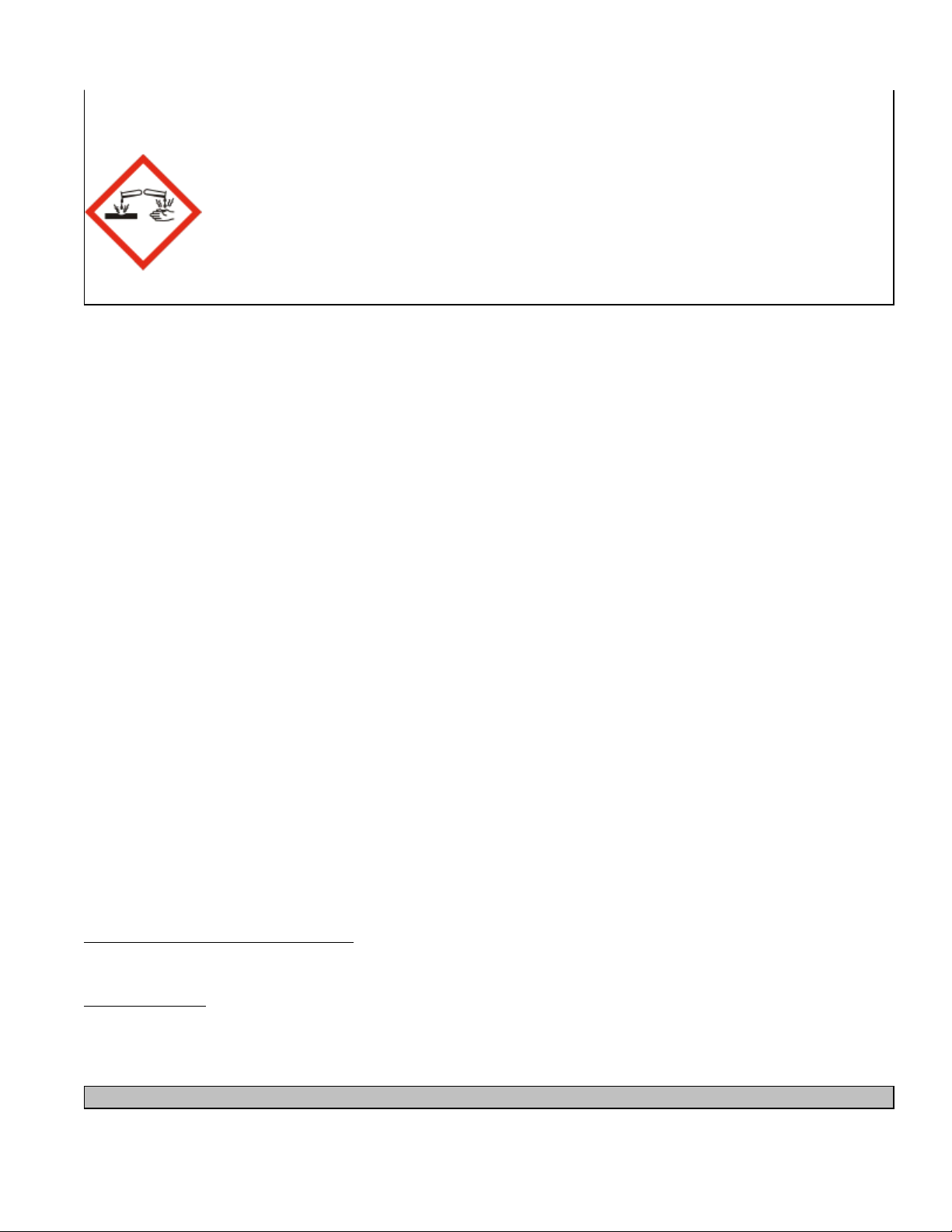
This chemical is considered hazardous according to the OSHA Hazard Communication Standard 2012 (29 CFR 1910.1200)
Skin Corrosion/Irritation Category 1
Serious Eye Damage/Eye Irritation Category 1
GHS Label elements, including precautionary statements
Emergency Overview
_____________________________________________________________________________________________
Page 1 / 10
Page 2
WPS-ITW-039 - Asidufoam® Foaming Bathroom Cleaner
Revision Date 15-Aug-2014
_____________________________________________________________________________________________
Signal Word Danger
Hazard Statements
• Causes severe skin burns and eye damage
Appearance Yellow
Precautionary Statements
Prevention
• Do not breathe dust/fume/gas/mist/vapors/spray.
• Wash face, hands and any exposed skin thoroughly after handling.
• Wear protective gloves/protective clothing/eye protection/face protection.
General Advice
• Immediately call a POISON CENTER or doctor/physician.
• Specific treatment (see supplemental first aid instructions on this label)
Eyes
• IF IN EYES: Rinse cautiously with water for several minutes. Remove contact lenses, if present and easy to do. Continue
rinsing.
• Immediately call a POISON CENTER or doctor/physician.
Skin
• IF ON SKIN (or hair): Take off immediately all contaminated clothing. Rinse skin with water/shower.
• Wash contaminated clothing before reuse.
Inhalation
• IF INHALED: Remove victim to fresh air and keep at rest in a position comfortable for breathing.
Ingestion
• IF SWALLOWED: Rinse mouth. DO NOT induce vomiting
Fire
• None
Physical State Liquid. Odor Pine
Spills and Leaks
• None
Storage
• Store locked up.
Disposal
• Dispose of contents/container to an approved waste disposal plant.
Hazard Not Otherwise Classified (HNOC)
Not applicable
Other information
Toxic to aquatic life. Harmful to aquatic life with long lasting effects
1.5% of the mixture consists of ingredient(s) of unknown toxicity.
3. COMPOSITION/INFORMATION ON INGREDIENTS
_____________________________________________________________________________________________
Page 2 / 10
Page 3
WPS-ITW-039 - Asidufoam® Foaming Bathroom Cleaner
Revision Date 15-Aug-2014
_____________________________________________________________________________________________
Chemical Name CAS-No Weight % Trade secret
Cocamidopropyl betaine 61789-40-0 3 -7 *
Diethylene glycol monobutyl ether 112-34-5 1-5 *
Citric acid 77-92-9 1-5 *
Sulfamic acid 5329-14-6 1-5 *
2-Butoxyethanol 111-76-2 1-5 *
*The exact percentage (concentration) of composition has been withheld as a trade secret.
4. FIRST AID MEASURES
Description of necessary first-aid measures
General Advice
Immediate medical attention is required.
Eye Contact
Skin Contact
Inhalation
Ingestion
Protection of First-aiders
Most important symptoms/effects, acute and delayed
Most Important Symptoms/Effects
Indication of immediate medical attention and special treatment needed, if necessary
Notes to Physician
Keep eye wide open while rinsing. Immediate medical attention is required. Rinse
immediately with plenty of water, also under the eyelids, for at least 15 minutes. Do not rub
affected area.
Wash off immediately with soap and plenty of water removing all contaminated clothes and
shoes. Immediate medical attention is required.
Move to fresh air. If breathing is difficult, give oxygen. If symptoms persist, call a physician.
Do NOT induce vomiting. Never give anything by mouth to an unconscious person. Drink
plenty of water. Call a physician or Poison Control Center immediately.
Use personal protective equipment. Avoid contact with skin, eyes and clothing.
No information available.
Treat symptomatically. Product is a corrosive material. Use of gastric lavage or emesis is
contraindicated. Possible perforation of stomach or esophagus should be investigated. Do
not give chemical antidotes. Asphyxia from glottal edema may occur. Marked decrease in
blood pressure may occur with moist rales, frothy sputum, and high pulse pressure.
5. FIRE-FIGHTING MEASURES
Suitable Extinguishing Media
Use extinguishing measures that are appropriate to local circumstances and the surrounding environment.
Unsuitable Extinguishing Media
Specific Hazards Arising from the Chemical
The product causes burns of eyes, skin and mucous membranes. Thermal decomposition can lead to release of irritating gases
and vapors. In the event of fire and/or explosion do not breathe fumes.
Explosion Data
Sensitivity to Mechanical Impact
Sensitivity to Static Discharge
Protective Equipment and Precautions for Firefighters
As in any fire, wear self-contained breathing apparatus pressure-demand, MSHA/NIOSH (approved or equivalent) and full
protective gear.
CAUTION: Use of water spray when fighting fire may be inefficient.
None.
None.
6. ACCIDENTAL RELEASE MEASURES
Personal precautions, protective equipment and emergency procedures
_____________________________________________________________________________________________
Page 3 / 10
Page 4
WPS-ITW-039 - Asidufoam® Foaming Bathroom Cleaner
Revision Date 15-Aug-2014
_____________________________________________________________________________________________
Personal Precautions
Evacuate personnel to safe areas. Use personal protective equipment. Avoid contact with
skin, eyes and clothing. Keep people away from and upwind of spill/leak. High risk of
slipping due to leakage/spillage of product.
Other Information
Refer to protective measures listed in Sections 7 and 8.
Environmental Precautions
Environmental Precautions
Prevent further leakage or spillage if safe to do so. Do not allow material to contaminate
ground water system. Prevent product from entering drains. Avoid release to the
environment. See Section 12 for additional Ecological Information.
Methods and materials for containment and cleaning up
Methods for Containment
Methods for Cleaning Up
Prevent further leakage or spillage if safe to do so.
Small spillage: Wipe up with absorbent material (e.g. cloth, fleece) Large spillage: Use a
non-combustible material like vermiculite, sand or earth to soak up the product and place
into a container for later disposal. Clean any slippery coating that remains using a
detergent/soap solution or another biodegradable cleaner.
7. HANDLING AND STORAGE
Precautions for safe handling
Handling
Conditions for safe storage, including any incompatibilities
Handle in accordance with good industrial hygiene and safety practice. Wear personal
protective equipment. Avoid contact with skin, eyes and clothing. Avoid breathing vapors or
mists. In case of insufficient ventilation, wear suitable respiratory equipment. Ensure
adequate ventilation. Do not take internally. Wash thoroughly after handling.
Storage
Keep container closed when not in use. Keep out of the reach of children. Do not
contaminate food or feed stuffs.
Incompatible Products
Strong oxidizing agents. Strong reducing agents. Alkalis. Reactive metals.
8. EXPOSURE CONTROLS / PERSONAL PROTECTION
Control parameters
Exposure Guidelines
Chemical Name ACGIH TLV OSHA PEL NIOSH IDLH
2-Butoxyethanol
111-76-2
Immediately Dangerous to Life or Health. ACGIH TLV: American Conference of Governmental Industrial Hygienists - Threshold
Limit Value. OSHA PEL: Occupational Safety and Health Administration - Permissible Exposure Limits. NIOSH IDLH:
Other Exposure Guidelines
Vacated limits revoked by the Court of Appeals decision in AFL-CIO v. OSHA, 965 F.2d 962
(11th Cir., 1992).
Appropriate engineering controls
Engineering Measures
Showers
Eyewash stations
Ventilation systems
TWA: 20 ppm TWA: 50 ppm
TWA: 240 mg/m
(vacated) TWA: 25 ppm
(vacated) TWA: 120 mg/m
(vacated) S*
S*
3
3
IDLH: 700 ppm
TWA: 5 ppm
TWA: 24 mg/m
3
Individual protection measures, such as personal protective equipment
_____________________________________________________________________________________________
Page 4 / 10
Page 5

WPS-ITW-039 - Asidufoam® Foaming Bathroom Cleaner
Revision Date 15-Aug-2014
_____________________________________________________________________________________________
Eye/Face Protection
Skin and Body Protection
Respiratory Protection
Tightly fitting safety goggles.
Impervious gloves. Impervious clothing.
No protective equipment is needed under normal use conditions. If exposure limits are
exceeded or irritation is experienced, NIOSH/MSHA approved respiratory protection should
be worn.
Hygiene Measures
When using, do not eat, drink or smoke. Remove and wash contaminated clothing before
re-use. Provide regular cleaning of equipment, work area and clothing. Keep away from
food, drink and animal feeding stuffs. Contaminated work clothing should not be allowed out
of the workplace. Avoid contact with skin, eyes and clothing. For environmental protection,
remove and wash all contaminated protective equipment before re-use. Wear suitable
gloves and eye/face protection.
9. PHYSICAL AND CHEMICAL PROPERTIES
Information on basic physical and chemical properties
Physical State
Odor
Property Values Remarks/ - Method
pH
Melting Point/Range
Boiling Point/Boiling Range
Flash Point
Evaporation rate
Flammability (solid, gas)
Flammability Limits in Air
upper flammability limit
lower flammability limit
Vapor Pressure
Vapor Density
Specific Gravity
Water Solubility
Solubility in other solvents
Partition coefficient: n-octanol/water
Autoignition Temperature
Decomposition Temperature
Viscosity
Liquid
Pine
1.3 None known
No data available None known
100 °C / 212 °F None known
No data available None known
No data available None known
No data available None known
No data available
No data available
No data available None known
> 1 (air = 1) None known
1.011 @ 70°F None known
Completely soluble None known
No data available None known
No data available None known
No data available None known
No data available None known
2.5 cps
Appearance
Odor Threshold
None known
Yellow
No information available
Flammable Properties
Explosive Properties
Oxidizing Properties
Other information
VOC Content (%)
Not flammable
No data available
No data available
1.00%
10. STABILITY AND REACTIVITY
Reactivity
No data available.
Chemical stability
Stable under recommended storage conditions.
Possibility of hazardous reactions
None under normal processing.
_____________________________________________________________________________________________
Page 5 / 10
Page 6
WPS-ITW-039 - Asidufoam® Foaming Bathroom Cleaner
Revision Date 15-Aug-2014
_____________________________________________________________________________________________
Hazardous Polymerization
Hazardous polymerization does not occur.
Conditions to avoid
Incompatible products.
Incompatible materials
Strong oxidizing agents. Strong reducing agents. Alkalis. Reactive metals.
Hazardous decomposition products
Carbon monoxide (CO). Carbon dioxide (CO2). Sulfur oxides. Ammonia.
11. TOXICOLOGICAL INFORMATION
Information on likely routes of exposure
Product Information
Inhalation
Eye Contact
Skin Contact
Ingestion
May cause irritation of respiratory tract.
Causes serious eye damage. Corrosive to the eyes and may cause severe damage
including blindness.
Corrosive. Causes severe skin burns.
May be harmful if swallowed.
Chemical Name LD50 Oral LD50 Dermal LC50 Inhalation
Cocamidopropyl betaine = 4900 mg/kg ( Rat ) - -
Diethylene glycol monobutyl ether = 3384 mg/kg ( Rat ) = 2700 mg/kg ( Rabbit ) -
Citric acid 3000 mg/kg ( Rat ) - -
Sulfamic acid = 1450 mg/kg ( Rat ) - -
2-Butoxyethanol = 470 mg/kg ( Rat ) 220 mg/kg ( Rabbit )
2270 mg/kg ( Rat )
= 2.21 mg/L ( Rat ) 4 h = 450 ppm
( Rat ) 4 h
Symptoms related to the physical, chemical and toxicological characteristics
Symptoms
No information available.
Delayed and immediate effects and also chronic effects from short and long term exposure
Sensitization
Mutagenic Effects
Carcinogenicity
Chemical Name ACGIH IARC NTP OSHA
2-Butoxyethanol A3 Group 3
No information available.
No information available.
The table below indicates whether each agency has listed any ingredient as a carcinogen.
ACGIH: (American Conference of Governmental Industrial Hygienists)
A3 - Animal Carcinogen
IARC: (International Agency for Research on Cancer)
Group 3: Not Classifiable as to its Carcinogenicity to Humans
Reproductive Toxicity
STOT - single exposure
STOT - repeated exposure
Chronic Toxicity
No information available.
No information available.
No information available.
Avoid repeated exposure. Possible risks of irreversible effects. Chronic exposure to
corrosive fumes/gases may cause erosion of the teeth followed by jaw necrosis. Bronchial
irritation with chronic cough and frequent attacks of pneumonia are common.
Gastrointestinal disturbances may also be seen. May cause adverse liver effects. May
cause adverse effects on the bone marrow and blood-forming system.
Target Organ Effects
Liver. Kidney. Respiratory system. Eyes. Skin. Central nervous system (CNS). Blood.
Hematopoietic system.
Aspiration Hazard
No information available.
Numerical measures of toxicity - Product
_____________________________________________________________________________________________
Page 6 / 10
Page 7
WPS-ITW-039 - Asidufoam® Foaming Bathroom Cleaner
Revision Date 15-Aug-2014
_____________________________________________________________________________________________
Acute Toxicity
1.5% of the mixture consists of ingredient(s) of unknown toxicity.
The following values are calculated based on chapter 3.1 of the GHS document:
LD50 Oral
LD50 Dermal
Inhalation
dust/mist
Vapor
19758 mg/kg; Acute toxicity estimate
60612 mg/kg; Acute toxicity estimate
150 mg/L; Acute toxicity estimate
1100 mg/L; Acute toxicity estimate
12. ECOLOGICAL INFORMATION
Ecotoxicity
Toxic to aquatic life. Harmful to aquatic life with long lasting effects.
Chemical Name Toxicity to Algae Toxicity to Fish Toxicity to
Cocamidopropyl betaine
61789-40-0
Diethylene glycol monobutyl
ether
112-34-5
Citric acid
77-92-9
Sulfamic acid
5329-14-6
2-Butoxyethanol
111-76-2
Persistence and Degradability
EC50 72 h: 1.0 - 10.0 mg/L
(Desmodesmus
subspicatus)
EC50 96 h: = 0.55 mg/L
(Desmodesmus
subspicatus)
EC50 96 h: > 100 mg/L
(Desmodesmus
subspicatus)
No information available.
LC50 96 h: 1.0-10.0 mg/L
(Brachydanio rerio)
LC50 96 h: = 2 mg/L
semi-static (Brachydanio
rerio)
LC50 96 h: = 1300 mg/L
static (Lepomis macrochirus)
LC50 96 h: = 1516 mg/L
static (Lepomis macrochirus)
LC50 96 h: = 14.2 mg/L
static (Pimephales
promelas)
LC50 96 h: = 1490 mg/L
static (Lepomis macrochirus)
LC50 96 h: = 2950 mg/L
(Lepomis macrochirus)
Bioaccumulation
Chemical Name Log Pow
Citric acid -1.72
2-Butoxyethanol 0.81
Other Adverse Effects
No information available.
Microorganisms
Daphnia Magna (Water
Flea)
EC50 48 h: = 6.5 mg/L
(Daphnia magna)
EC50 24 h: = 2850 mg/L
(Daphnia magna) EC50 48
h: > 100 mg/L (Daphnia
magna)
EC50 72 h: = 120 mg/L
(Daphnia magna)
EC50 24 h: 1698 - 1940
mg/L (Daphnia magna)
EC50 48 h: > 1000 mg/L
(Daphnia magna)
13. DISPOSAL CONSIDERATIONS
Waste Disposal Methods
Contaminated Packaging
US EPA Waste Number
California Hazardous Waste Codes
Dispose of in accordance with federal, state, and local regulations
Do not re-use empty containers.
D002
791
14. TRANSPORT INFORMATION
DOT
UN-Number
Proper shipping name
Hazard Class
Packing Group
Description
Emergency Response Guide
Number
_____________________________________________________________________________________________
Page 7 / 10
UN1760
Corrosive liquid, n.o.s.
8
III
UN1760, Corrosive liquid, n.o.s. (Sulfamic acid, Citric acid), 8, III
154
Page 8

WPS-ITW-039 - Asidufoam® Foaming Bathroom Cleaner
Revision Date 15-Aug-2014
_____________________________________________________________________________________________
TDG
UN-Number
Proper Shipping Name
Hazard Class
Packing Group
Description
MEX
UN-Number
Proper Shipping Name
Hazard Class
Packing Group
Description
ICAO
UN-Number
Proper shipping name
Hazard Class
Packing Group
Description
IATA
UN-Number
Proper Shipping Name
Hazard Class
Packing Group
ERG Code
Description
UN1760
Corrosive liquid, n.o.s.
8
III
UN1760, Corrosive liquid, n.o.s. (Sulfamic acid, Citric acid), 8, III
UN1760
Corrosive liquid, n.o.s.
8
III
UN1760, Corrosive liquid, n.o.s. (Sulfamic acid, Citric acid), 8, III
UN1760
Corrosive liquid, n.o.s.
8
III
UN1760, Corrosive liquid, n.o.s. (Sulfamic acid, Citric acid), 8, III
UN1760
Corrosive liquid, n.o.s.
8
III
8L
UN1760, Corrosive liquid, n.o.s. (Sulfamic acid, Citric acid), 8, III
IMDG/IMO
UN-Number
Proper Shipping Name
Hazard Class
Packing Group
EmS No.
Marine Pollutant
Description
RID
UN-Number
Proper Shipping Name
Hazard Class
Packing Group
Classification Code
Description
ADR
UN-Number
Proper Shipping Name
Hazard Class
Packing Group
Classification Code
Tunnel Restriction Code
Description
ADN
Proper Shipping Name
Hazard Class
Packing Group
Classification Code
Special Provisions
Description
Limited Quantity
UN1760
Corrosive liquid, n.o.s.
8
III
F-A, S-B
Product is a marine pollutant according to the criteria set by IMDG/IMO
UN1760, Corrosive liquid, n.o.s. (Sulfamic acid, Citric acid), 8, III
UN1760
Corrosive liquid, n.o.s.
8
III
C9
UN1760, Corrosive liquid, n.o.s. (Sulfamic acid, Citric acid), 8, III
UN1760
Corrosive liquid, n.o.s.
8
III
C9
(E)
UN1760, Corrosive liquid, n.o.s. (Sulfamic acid, Citric acid), 8, III, (E)
Corrosive liquid, n.o.s.
8
III
C9
274
UN1760, Corrosive liquid, n.o.s. (Sulfamic acid, Citric acid), 8, III
5 L
_____________________________________________________________________________________________
Page 8 / 10
Page 9
WPS-ITW-039 - Asidufoam® Foaming Bathroom Cleaner
Revision Date 15-Aug-2014
_____________________________________________________________________________________________
15. REGULATORY INFORMATION
International Inventories
TSCA
Legend
TSCA - United States Toxic Substances Control Act Section 8(b) Inventory
DSL/NDSL - Canadian Domestic Substances List/Non-Domestic Substances List
U.S. Federal Regulations
Section 313 of Title III of the Superfund Amendments and Reauthorization Act of 1986 (SARA). This product does not contain any
chemicals which are subject to the reporting requirements of the Act and Title 40 of the Code of Federal Regulations, Part 372.
SARA 311/312 Hazard Categories
Acute Health Hazard
Chronic Health Hazard
Fire Hazard
Sudden Release of Pressure Hazard
Reactive Hazard
Clean Water Act
This product does not contain any substances regulated as pollutants pursuant to the Clean Water Act (40 CFR 122.21 and 40
CFR 122.42).
CERCLA
This material, as supplied, contains one or more substances regulated as a hazardous substance under the Comprehensive
Environmental Response Compensation and Liability Act (CERCLA) (40 CFR 302):
Complies
Yes
Yes
No
No
No
Chemical Name Hazardous Substances RQs Extremely Hazardous Substances
RQs
Citric acid - - RQ Section number 180.950
RQ
U.S. State Regulations
California Proposition 65
This product does not contain any Proposition 65 chemicals.
U.S. State Right-to-Know Regulations
"X" designates that the ingredients are listed on the state right to know list.
Chemical Name New Jersey Massachusetts Pennsylvania Illinois Rhode Island
Diethylene glycol monobutyl
ether
Sulfamic acid X
2-Butoxyethanol X X X X X
Isobutyl acetate X X X X
X X X
U.S. EPA Label Information
EPA Pesticide Registration Number
Not applicable
16. OTHER INFORMATION
NFPA Health Hazard 3 Flammability 0 Instability 0 Physical and Chemical
Hazards -
HMIS
Health Hazard 3 Flammability 0
Physical Hazard 0 Personal Protection X
Prepared By
Product Stewardship
23 British American Blvd.
Latham, NY 12110
1-800-572-6501
Issuing Date
Revision Date
15-Aug-2014
15-Aug-2014
_____________________________________________________________________________________________
Page 9 / 10
Page 10

WPS-ITW-039 - Asidufoam® Foaming Bathroom Cleaner
Revision Date 15-Aug-2014
_____________________________________________________________________________________________
Revision Note
General Disclaimer
The information provided on this SDS is correct to the best of our knowledge, information and belief at the date of its publication. The
information given is designed only as a guide for safe handling, use, processing, storage, transportation, disposal and release and is not
to be considered as a warranty or quality specification. The information relates only to the specific material designated and may not be
valid for such material used in combination with any other material or in any process, unless specified in the text.
Initial Release.
End of Safety Data Sheet
_____________________________________________________________________________________________
Page 10 / 10
 Loading...