

Page 1
Date Printed: 9/22/2015 Date Revised: 9/22/2015
Safety Data Sheet
according to OSHA Hazard Communication
29 CFR Part 1910.1200
Section 1. Identification
Identification Number:
Product Name:
Product Use/Class:
SUPPLIER: MANUFACTURER:
RDL Marketing
2600 West 19th St.
Chicago, IL 60608
CHEMTREC 1-800-424-9300
24 Hr. Emergency Hotline
Safety Data Sheet Coordinator:
25-31900
D B IND OIL ALKYD PRMR
Industrial Maintenance Coating
RDL Marketing
2600 West 19th St.
Chicago, IL 60608
CHEMTREC 1-800-424-9300
24 Hr. Emergency Hotline
J. Michael Jacobs (614) 253-8511
Section 2. Hazard(s) Identification
EMERGENCY OVERVIEW: Harmful if inhaled. Harmful if swallowed. May cause target organ or system damage (e.g., lung,
nervous system, blood disorders, liver, kidney, immune system, cardiovascular system, thyroid, testicular, ovarian, etc.). Vapors
irritating to eyes and respiratory tract. High vapor concentrations may cause drowsiness. FLAMMABLE liquid and vapor. Vapors
may cause flash fire or explosion.
GHS Classification
Carc. 1A, Flam. Liq. 3, STOT SE 3 NE
Symbol(s) of Product
Signal Word
Danger
GHS HAZARD STATEMENTS
Flammable Liquid, category 3 H226 Flammable liquid and vapor.
STOT, single exposure, category 3, NE H336 May cause drowsiness or dizziness.
Carcinogenicity, category 1A H350 May cause cancer. Classified as carcinogenic Category 1 on the basis of
epidemiological and/or animal data.
PRECAUTIONARY STATEMENTS: DISPOSAL
P501 Dispose of contents/container according to applicable local, national, and international
regulations.
PRECAUTIONARY STATEMENTS: PREVENTION
P201 Obtain special instructions before use.
P202 Do not handle until all safety precautions have been read and understood.
P210 Keep away from heat, hot surfaces, sparks, open flames and other ignition sources. No
smoking.
P233 Keep container tightly closed.
P240 Ground/bond container and receiving equipment.
Page 1 / 8
Page 2

Date Printed: 9/22/2015 Date Revised: 9/22/2015
P241 Use explosion-proof electrical/ventilating/lighting equipment.
P242 Use only non-sparking tools.
P243 Take precautionary measures against static discharge.
P261 Avoid breathing dust/fume/gas/mist/vapors/spray.
P271 Use only outdoors or in a well-ventilated area.
P280 Wear protective gloves/protective clothing/eye protection/face protection.
P281 Use personal protective equipment as required.
PRECAUTIONARY STATEMENTS: RESPONSE
P303+P361+P353 IF ON SKIN (or hair): Take off immediately all contaminated clothing. Rinse skin with
water/shower.
P304+P340 IF INHALED: Remove person to fresh air and keep comfortable for breathing.
P308+P313 IF exposed or concerned: Get medical advice/attention.
P312 Call a POISON CONTROL CENTER/doctor if you feel unwell.
P370+P378 In case of fire: use recommended media to extinguish.
PRECAUTIONARY STATEMENTS: STORAGE
P403+P233 Store in a well-ventilated place. Keep container tightly closed.
P403+P235 Store in a well-ventilated place. Keep cool.
P405 Store locked up.
Section 3. Composition/Information on Ingredients
Chemical Name CAS-No. Wt. % GHS Symbols GHS Statements
ALIPHATIC HYDROCARBON(MS) 64742-47-8 10-15 GHS02-GHS07 H226-336
TITANIUM DIOXIDE 13463-67-7 1-2 GHS06-GHS08 H317-330-334-351-373
CRYSTALLINE SILICA 14808-60-7 0-1 GHS08 H350-373
CYCLOHEXANONE 108-94-1 0-1 GHS02-GHS05-
GHS07
H226-302-312-315-318-332
Section 4. First-Aid Measures
FIRST AID - INHALATION: Rescuers should put on appropriate protective gear. Remove from area of exposure. If not breathing,
give artificial respiration. If breathing is difficult, give oxygen. Keep victim warm. Get immediate medical attention.
FIRST AID - SKIN CONTACT: Wash with soap and water. Get medical attention if irritation develops or persists.
FIRST AID - EYE CONTACT: Immediately flush eyes with plenty of water. Get medical attention if irritation persists.
FIRST AID - INGESTION: If swallowed, do NOT induce vomiting. Give victim a glass of water or milk. Call a physician or poison
control center immediately. Never give anything by mouth to an unconscious person.
MOST IMPORTANT SYMPTOMS: Eye irritation signs/symptoms may include a burning sensation, redness, swelling, and/or blurred
vision. Skin irritation signs/symptoms may include a burning sensation, redness, swelling, and/or blisters. If inhaled signs/symptoms
may include coughing, choking, wheezing, difficulty in breathing, chest congestion, shortness of breath, and/or fever. Onset of
respiratory symptoms may be delayed for several hours following exposure. Inhalation of high vapor concentrations may cause
central nervous system depression resulting in dizziness, light-headedness, headache, nausea, and loss of coordination. Continued
inhalation may result in unconsciousness and death.
INDICATION OF IMMEDIATE MEDICAL ATTENTION IF NECESSARY: If symptoms persist call a poison control center or a
doctor/physician.
Section 5. Fire-Fighting Measures
UNUSUAL FIRE AND EXPLOSION HAZARDS: Vapors may form explosive mixture with air. Vapors can travel to a source of ignition
and flash back. Flammable Liquid. Can release vapors that form explosive mixtures at temperatures at or above the flashpoint.
"Empty" containers retain product residue (liquid and/or vapor) and can be dangerous. DO NOT PRESSURIZE, CUT, WELD,
BRAZE, SOLDER, DRILL, GRIND, OR EXPOSE SUCH CONTAINERS TO HEAT, FLAME, SPARKS, STATIC ELECTRICITY, OR
OTHER SOURCES OF IGNITION; THEY MAY EXPLODE AND CAUSE INJURY OR DEATH. Empty containers should be completely
drained, properly sealed, and promptly recycled or properly disposed of. Vapors are heavier than air and may travel along the ground
or may be moved by ventilation and may be ignited by pilot lights, other flames, sparks, heaters, smoking, electric motors, static
discharge, or other ignition sources at locations distant from material handling point. Eliminate or shut off ALL ignition sources prior to
usage.
Page 2 / 8
Page 3
Date Printed: 9/22/2015 Date Revised: 9/22/2015
SPECIAL FIREFIGHTING PROCEDURES: Containers can build up pressure if exposed to heat (fire). As in any fire, wear selfcontained breathing apparatus (MSHA/NIOSH approved or equivalent) and full protective gear. Water runoff can cause
environmental damage. Dike and collect water used to fight fire. Move containers from fire area if it can be done without risk.
EXTINGUISHING MEDIA: Alcohol Foam, Carbon Dioxide, Dry Chemical, Foam, Water Fog
Section 6. Accidental Release Measures
PERSONAL PRECAUTIONS, PROTECTIVE EQUIPMENT, AND EMERGENCY PROCEDURES: ELIMINATE all ignition sources
(no smoking, flares, sparks, flames, or motor vehicles of any kind in the immediate area). All equipment used when handling the
product must be grounded. Do not touch or walk through spilled material. Stop leak if you can do so without risk.
ENVIRONMENTAL PRECAUTIONS: Prevent entry into waterways, sewers, basements, and other confined spaces.
STEPS TO BE TAKEN IN CASE MATERIAL IS RELEASED OR SPILLED: Contain and absorb spill with inert material (e.g. dry sand
or earth), then place in a chemical waste container. Avoid runoff into storm sewers and ditches which lead to waterways.
Section 7. Handling and Storage
HANDLING: FLAMMABLE LIQUID. Avoid heat, sparks and open flames. Use in well ventilated area. To avoid ignition of vapors by
static electricity discharge all metal parts of the equipment must be grounded. Do not use compressed air for filling, discharging or
handling. Wash thoroughly after handling. Ground and bond containers when transferring material. Use spark-proof tools and
explosion-proof equipment.
STORAGE: Keep away from heat, sparks and flame. Keep container closed when not in use.
Section 8. Exposure Controls/Personal Protection
Ingredients with Occupational Exposure Limits
Chemical Name ACGIH TLV-TWA ACGIH-TLV STEL OSHA PEL-TWA
ALIPHATIC HYDROCARBON(MS) 100 ppm N.E. N.E. N.E.
TITANIUM DIOXIDE 5 mg/m3 20 mg/m3 5 mg/m3 N.E.
CRYSTALLINE SILICA 0.05 mg/m3 N.E. 0.1 mg/m3 N.E.
CYCLOHEXANONE N.E. N.E. N.E. N.E.
Legend: MEL = Maximum Exposure Limit OES = Occupational Exposure Standard SUP = Supplier's Recommendation Sk =
Skin Sensitizer N.E. = Not Established
OSHA PEL-CEILING
Protective Measures
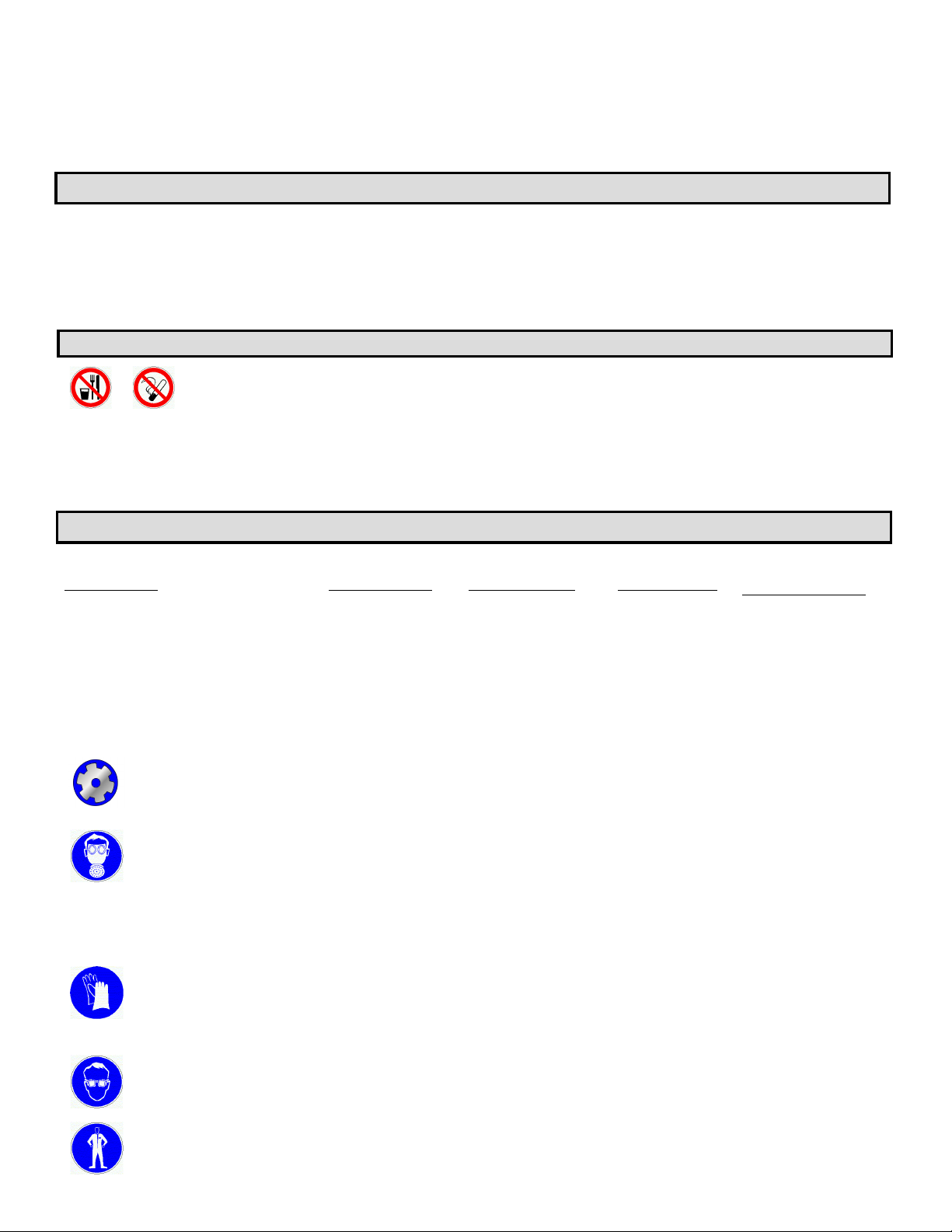
ENGINEERING CONTROLS: Use explosion-proof ventilation equipment. Facilities storing or utilizing this material
should be equipped with an eyewash facility and a safety shower. Local exhaust ventilation may be necessary to
control any air contaminants to within their TLVs during the use of this product.
RESPIRATORY PROTECTION: A NIOSH/MSHA approved air purifying respirator with an organic vapor cartridge or
canister may be permissible under certain circumstances where airborne concentrations are expected to exceed
exposure limits. Protection provided by air purifying respirators is limited. Use a positive pressure air supplied
respirator if there is any potential for an uncontrolled release, exposure levels are not known, or any other
circumstances where air purifying respirators may not provide adequate protection. A respiratory protection program
that meets OSHA 1910.134 and ANSI Z88.2 requirements must be followed whenever workplace conditions warrant a
respirator's use.
SKIN PROTECTION: Use chemical resistant splash goggles and face shield (ANSI Z87.1 or approved equivalent). The
glove(s) listed below may provide protection against permeation. Gloves of other chemically resistant materials may not
provide adequate protection. Rubber, nitrile or neoprene to prevent skin contact. Permeation resistant gloves (Butyl
rubber, nitrile, or polyvinyl alcohol) are recommended. Note that polyvinyl alcohol degrades in contact with water.
EYE PROTECTION: Wear safety glasses with side shields (or goggles) and a face shield.
OTHER PROTECTIVE EQUIPMENT: Where splashing is possible full chemically resistant protective clothing (e.g. acid
suit) and boots are required.
Page 3 / 8
Page 4

Date Printed: 9/22/2015 Date Revised: 9/22/2015
HYGIENIC PRACTICES: Wash hands before eating. Remove contaminated clothing and wash before reuse. Use only
in a well ventilated area. Follow all SDS/label precautions even after container is emptied because they may retain
product residues. Avoid prolonged or repeated contact with skin. Avoid breathing vapors from heated material. Avoid
contact with eyes, skin, and clothing.
Section 9. Physical and Chemical Properties
Appearance:
Odor: Odor Threshold:
Specific Gravity:
Freeze Point, °C:
Solubility in Water:
Decompostion Temp., °C:
Boiling Range, °C: 100 - 196
Evaporation Rate:
Vapor Density:
(See "Other information" Section for abbreviation legend)
Gray Liquid
Organic Solvent
1.250
N.D.
Soluble
N.D.
Slower than Diethyl Ether
Heavier than air N.D.
Physical State:
pH:
Viscosity:
Partition Coefficient, n-octanol/
water:
Explosive Limits, vol%:
Flash Point, °C:
Vapor Pressure:
Liquid
N.D.
N.A.
83-88 KU
N.D.
0.5 - 6.0
40.5
Section 10. Stability and Reactivity
REACTIVITY: No Information
STABILITY: This product is stable under normal storage conditions.
POSSIBILITY OF HAZARDOUS REACTIONS: None under normal processing conditions.
CONDITIONS TO AVOID: Heat, sparks and open flames.
INCOMPATIBILITY: None reasonably foreseeable.
HAZARDOUS DECOMPOSITION PRODUCTS: May produce fumes when heated to decomposition, as in welding or fire. Fumes
may contain: Carbon Monoxide, Carbon Dioxide and various other hydrocarbons.
Section 11. Toxicological Information
Practical Experiences
EFFECT OF OVEREXPOSURE - INHALATION: Harmful if inhaled. Headaches, dizziness, nausea, decreased blood pressure,
changes in heart rate and cyanosis may result from over-exposure to vapor or skin exposure. Prolonged inhalation may be harmful.
Proper respiratory equipment MUST be worn when sanding or abrading surfaces painted with this product. Sanding or abrading the
dried paint film increases the risk of exposure. When incorporated in the liquid paint, pigments or extenders pose minimal risk of
exposure.
EFFECT OF OVEREXPOSURE - SKIN CONTACT: Causes skin irritation. Allergic reactions are possible. Prolonged or repeated
contact can result in defatting and drying of the skin which may result in skin irritation and dermatitis (rash).
EFFECT OF OVEREXPOSURE - EYE CONTACT: Liquid, aerosols and vapors of this product are irritating and can cause pain,
tearing, reddening and swelling accompanied by a stinging sensation and/or a feeling like that of fine dust in the eyes.
EFFECT OF OVEREXPOSURE - INGESTION: This material may be harmful or fatal if swallowed. Irritating to mouth, throat and
stomach.
PRIMARY ROUTE(S) OF ENTRY: Eye Contact, Ingestion, Inhalation, Skin Absorption, Skin Contact
STOT - SINGLE EXPOSURE
No Additional Information
STOT - REPEATED EXPOSURE
No Additional Information
Page 4 / 8
Page 5
Date Printed: 9/22/2015 Date Revised: 9/22/2015
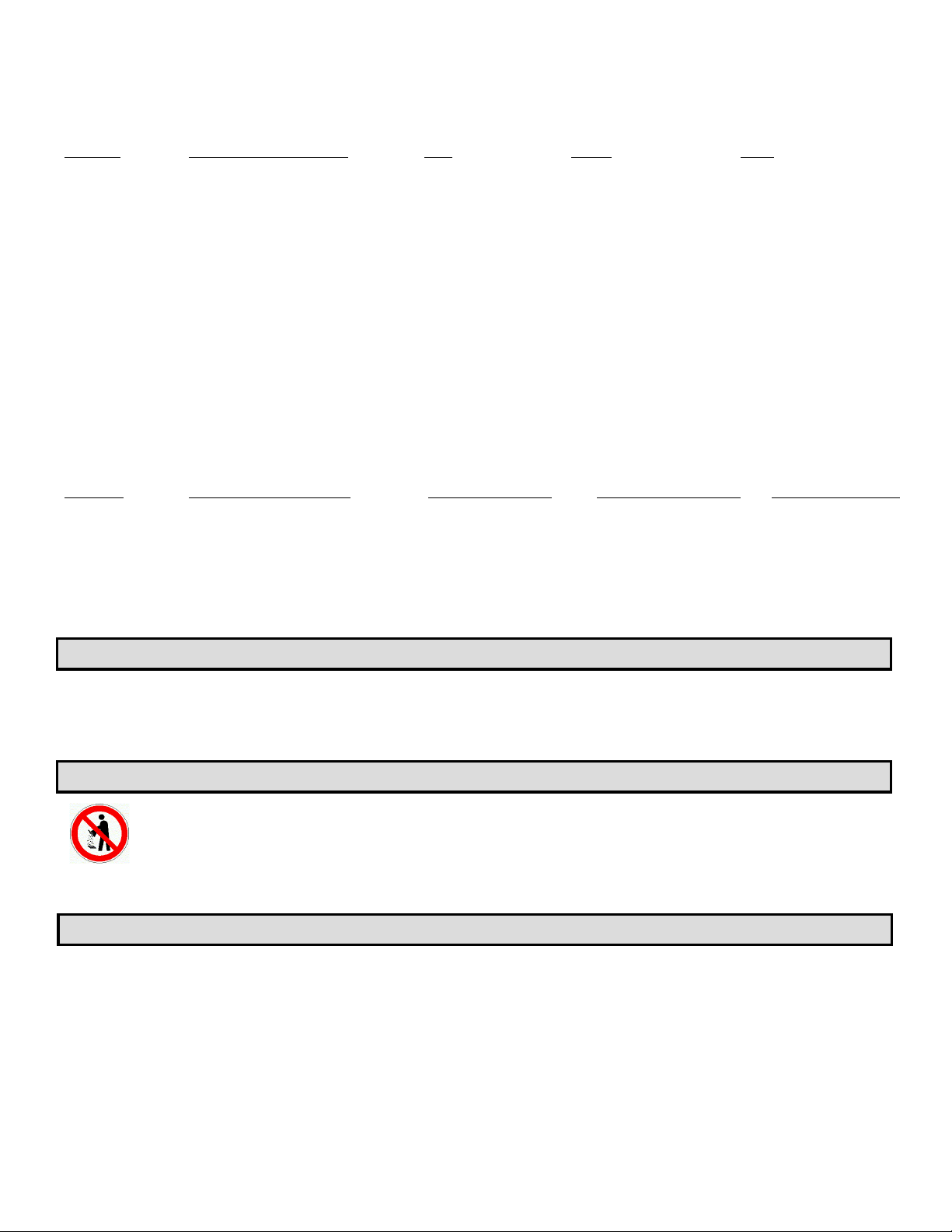
Carcinogenicity: The information below indicates whether each agency has listed any
ingredient as a carcinogen if present at levels greater than or equal to 0.1 %.
CAS-No. Name according to EEC NTP OSHA IARC
64742-47-8 ALIPHATIC HYDROCARBON(MS)
13463-67-7 TITANIUM DIOXIDE
14808-60-7 CRYSTALLINE SILICA
108-94-1 CYCLOHEXANONE
National Toxicological Program (NTP), Occupational Safety & Health Association (OSHA), International
Agency for Research on Cancer (IARC) Group 1: Carcinogenic to Humans, Group 2A: Probably
Carcinogenic to Humans, Group 2B: Possibly Carcinogenic to Humans, Group 3: Not Classifiable as to its
Carcinogenicity to Humans
Not listed by NTP Not listed by OSHA Not listed by IARC
Not listed by NTP Not listed by OSHA Group 2B
Known carcinogen Labeled by OSHA Group 1
Not listed by NTP Not listed by OSHA Not listed by IARC
Acute Toxicity Values
The acute effects of this product have not been tested. Data on individual components are tabulated below:
CAS-No. Name according to EEC Oral LD50 (mg/kg) Dermal LD50 (mg/kg) Vapor LC50 (mg/L)
64742-47-8 ALIPHATIC HYDROCARBON(MS) >5000 (rat) >5000 (rabbit) No Information
13463-67-7 TITANIUM DIOXIDE No Information No Information No Information
14808-60-7 CRYSTALLINE SILICA No Information No Information No Information
108-94-1 CYCLOHEXANONE No Information No Information No Information
Section 12. Ecological Information
ECOLOGICAL INFORMATION: No Information
MOBILITY IN SOIL: No Information
OTHER ADVERSE EFFECTS: No Information
Section 13. Disposal Considerations
Product
DISPOSAL METHOD: Dispose of in accordance with all local, state, and federal regulations. Approved incinerator or approved
hazardous waste facility.
Section 14. Transport Information
SPECIAL TRANSPORT PRECAUTIONS: No Information
ENVIRONMENTAL HAZARDS: No Information
TRANSPORT IN BULK: See DOT Information below.
DOT Proper Shipping Name: PAINT Packing Group: III
DOT UN/NA Number: UN 1263 Hazard SubClass: N.A.
DOT Hazard Class: 3 Resp. Guide Page: 128
DOT Technical Name: N.A.
Exception: This material may be reclassified as a COMBUSTIBLE LIQUID and can be shipped as a NON-
HAZARDOUS material per DOT:1.) If transported In non-bulk packaging, container size less than
450 liters Or 119 gallons, (e.g. 55 gallon drums) per 49 CFR 173.150(f)(2) And, 2.) If Not
transported As a liquid at a temperature at Or above its flash point(e.g.Not heated For transport)
per 49 CFR 173.150(f)(4)(iii).
Page 5 / 8
Page 6

Date Printed: 9/22/2015 Date Revised: 9/22/2015
Section 15. Regulatory Information
U.S. Federal Regulations:
CERCLA - SARA Hazard Category
This product has been reviewed according to the EPA ‘Hazard Categories’ promulgated under Sections 311 and 312 of the
Superfund Amendment and Reauthorization Act of 1986 (SARA Title III) and is considered, under applicable definitions, to
meet the following categories:
Fire Hazard, Reactive Hazard, Acute Health Hazard, Chronic Health Hazard
SARA SECTION 313:
This product contains the following substances subject to the reporting requirements of Section 313 of Title III of the
Superfund Amendment and Reauthorization Act of 1986 and 40 CFR part 372:
Chemical Name CAS-No.
ETHYLENE GLYCOL MONOBUTYL ETHER
XYLENE (HAP) 1330-20-7
ETHYL BENZENE (HAP)
TOXIC SUBSTANCES CONTROL ACT:
This product contains the following chemical substances subject to the reporting requirements of TSCA 12(b) if exported from
the United States:
No TSCA 12(b) components exist in this product.
U.S. State Regulations:
PENNSYLVANIA RIGHT-TO-KNOW
The following non-hazardous ingredients are present in the product at greater than 3%. For hazardous components see
Section 3.
Chemical Name
H2O 7732-18-5
CALCIUM CARBONATE 1317-65-3
LONG OIL ALKYD PROPRIETARY
CAS-No.
CALIFORNIA PROPOSITION 65 CARCINOGENS
Warning: The following ingredients present in the product are known to the state of California to cause Cancer:
Chemical Name
CRYSTALLINE SILICA
CARBON BLACK
ETHYL BENZENE (HAP)
CAS-No.
14808-60-7
1333-86-4
100-41-4
CALIFORNIA PROPOSITION 65 REPRODUCTIVE TOXINS
Warning: The following ingredients present in the product are known to the state of California to cause birth defects, or other
reproductive hazards.
No Proposition 65 Reproductive Toxins exist in this product.
International Regulations: As follows -
CANADIAN REGULATORY INFORMATION:
This SDS has been prepared in compliance with Hazardous Product Regulations (HPR).
Canadian DSL: No Information
Page 6 / 8
Page 7

Date Printed: 9/22/2015 Date Revised: 9/22/2015
Section 16. Other Information, Including Date of Preparation of the Last Revision
Revision Date:
Datasheet produced by: Regulatory Department
9/22/2015
Supercedes Date:
New MSDS
HMIS Ratings:
Health: 1* Flammability: 2 Reactivity: 0 Personal Protection: H
Volatile Organic Compounds, lb/gal:
Volatile Organic Compounds Applied, lb/gal
Volatile Organic Compounds, gr/ltr:
Volatile Organic Compounds Applied, gm/ltr
Legend: N.A. - Not Applicable, N.E. - Not Established, N.D. - Not Determined, N.I. - No Information, STOT - Specific Target
Organ Toxicity
The information on this safety data sheet corresponds to our present knowledge. It is not a specification and it does not guarantee
specific properties. The information is intended to provide general guidance as to health and safety based upon our knowledge of the
handling, storage, and use of the product. It is not applicable to unusual or non-standard uses of the product, or where instructions
and recommendations are not followed. The user assumes all risks incident to the use of the product and must communicate to
employees and customers all warnings that relate to the potential exposure to this product. It is the responsibility of the user to
comply with all Federal, State, and Local laws, regulations, and ordinances, and to assure that all workplace and disposal practices
are in compliance with such. ALL WARRANTIES, INCLUDING WARRANTIES OF MERCHANTABILITY OR FITNESS FOR A
PARTICULAR PURPOSE, ARE EXPRESSLY EXCLUDED. IN NO EVENT SHALL THE SUPPLIER BE LIABLE FOR ANY
INCIDENTAL OR CONSEQUENTIAL DAMAGES.
2.57
1.34
308
160
Page 7 / 8
Page 8

Date Printed: 9/22/2015 Date Revised: 9/22/2015
Page 8 / 8
 Loading...