

Page 1
RF COMMUNICATIONS PRODUCTS
20 19 18 17 16 15 14 13 12 11
MIXER
IF
AMP
OSCILLATOR
EB
RSSI
+–
V
REG
LIMITER
QUAD
+–
AUDIO
SA607
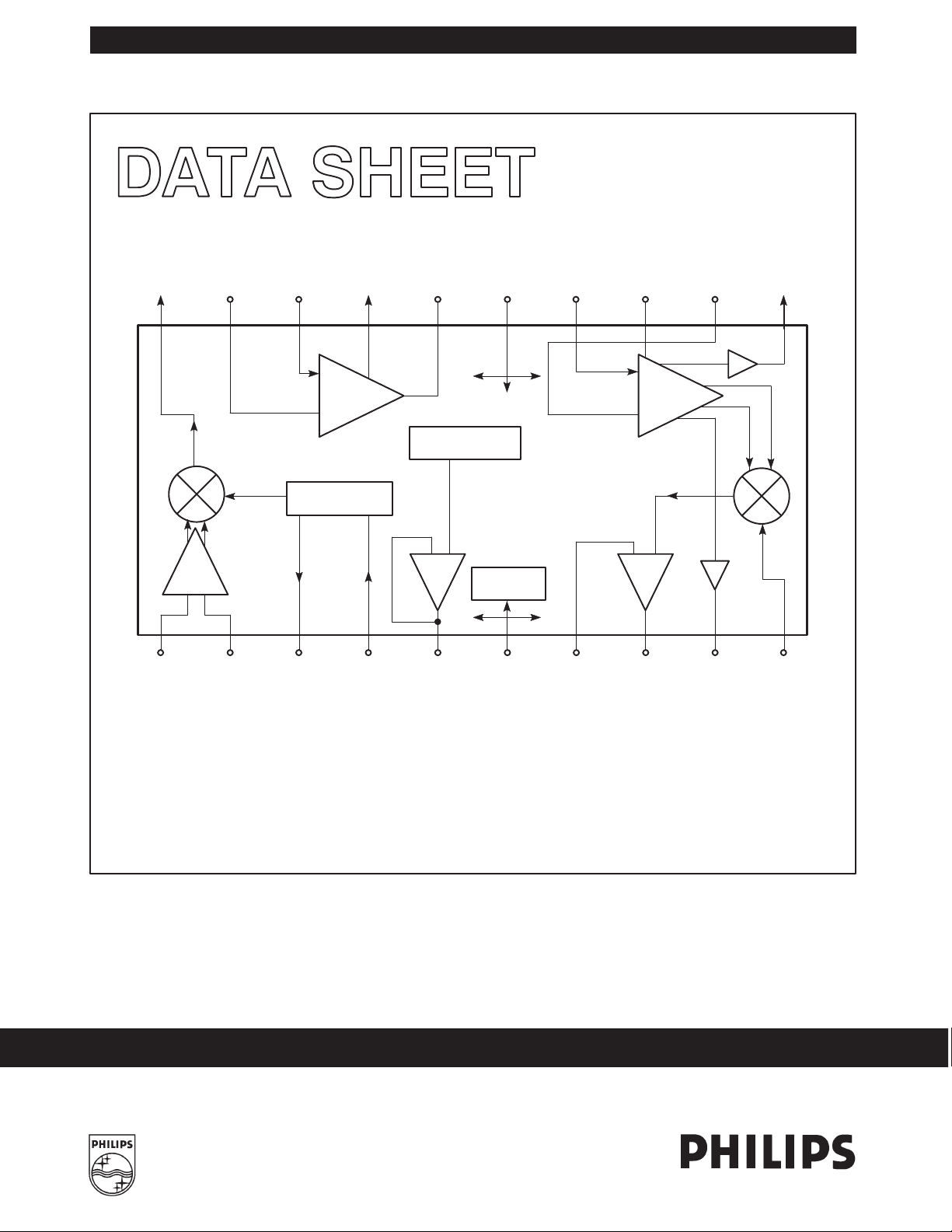
Low-voltage high performance mixer
10987654321
FM IF system
Product specification
Replaces data of November 3, 1992
IC17 Data Handbook
Philips Semiconductors
1997 Nov 07
Page 2
Philips Semiconductors Product specification
SA607Low voltage high performance mixer FM IF system
DESCRIPTION
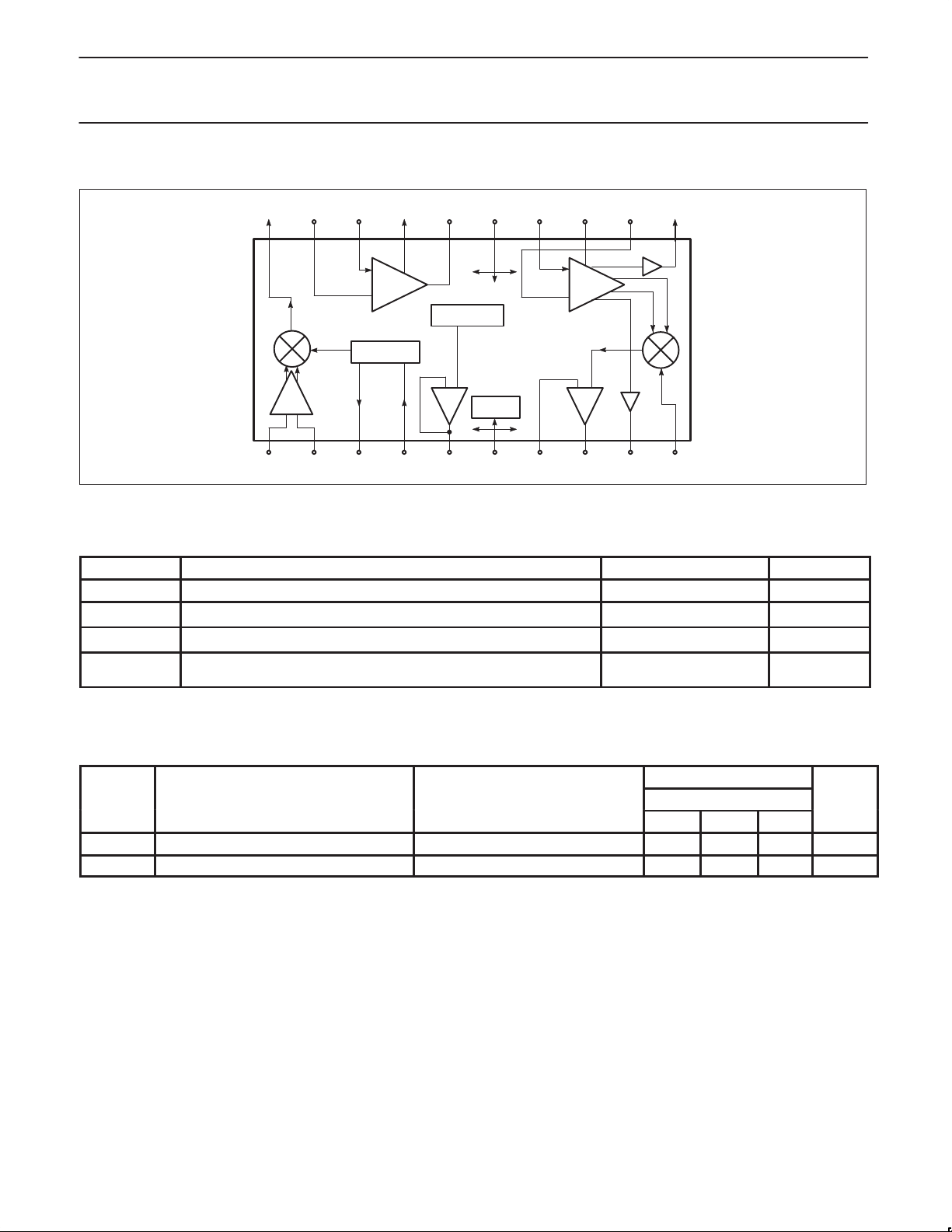
The SA607 is a low voltage high performance monolithic FM IF
system incorporating a mixer/oscillator, two limiting intermediate
frequency amplifiers, quadrature detector, logarithmic received
signal strength indicator (RSSI), voltage regulator and audio and
RSSI op amps. The SA607 is available in 20-lead SOL
(surface-mounted miniature package) and 20-lead SSOP package.
The SA607 was designed for portable communication applications
and will function down to 2.7V. The RF section is similar to the
famous SA605. The audio output has an internal amplifier with the
feedback pin accessible. The RSSI output is buffered. The SA607
also has an extra limiter output. This signal is buffered from the
output of the limiter and can be used to perform frequency check.
This is accomplished by comparing a reference frequency with the
frequency check signal using a comparator to a varactor or PLL at
the oscillator inputs.
FEA TURES
•Low power consumption: 3.5mA typical at 3V
•Mixer input to >150MHz
•Mixer conversion power gain of 17dB at 45MHz
•XTAL oscillator ef fective to 150MHz (L.C. oscillator or external
oscillator can be used at higher frequencies)
•102dB of IF Amp/Limiter gain
•2MHz limiter small signal bandwidth
•Temperature compensated logarithmic Received Signal Strength
Indicator (RSSI) with a 90dB dynamic range
•Low external component count; suitable for crystal/ceramic/LC
filters
•Excellent sensitivity: 0.31µV into 50Ω matching network for 12dB
SINAD (Signal to Noise and Distortion ratio) for 1kHz tone, 8kHz
deviation with RF at 45MHz and IF at 455kHz
•SA607 meets cellular radio specifications
•Audio output internal op amp
•RSSI output internal op amp
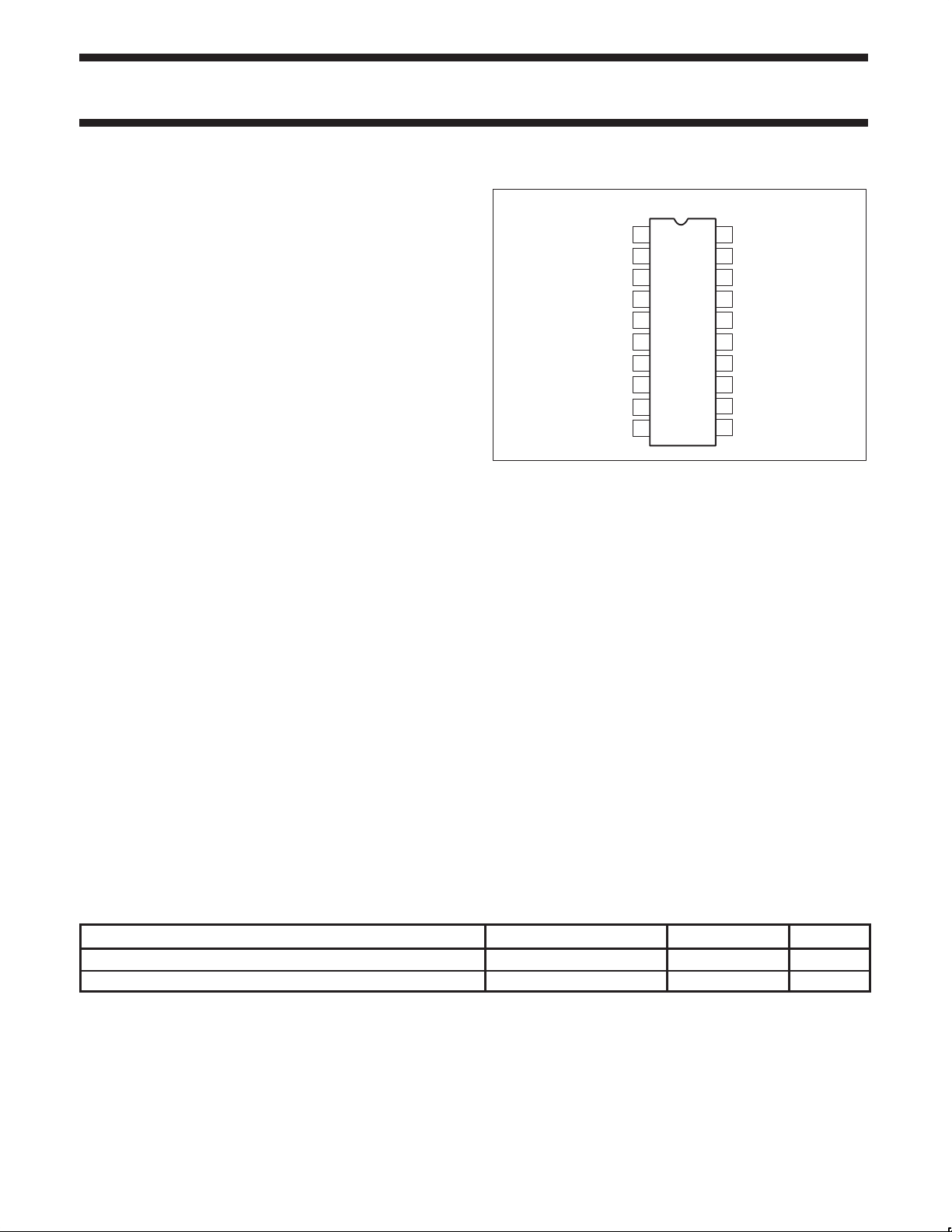
PIN CONFIGURATION
D and DK Packages
1
RF IN+
RF IN– DECOUPLING
OSC
OUT
OSC
IN
RSSI
V
AUDIO FEEDBACK
FREQ CHECK/LIM OUT (–)
QUADRATURE IN
CC
AUDIO
Figure 1. Pin Configuration
2
3
4
5
6
7
8
9
10
20 MIXER OUT
IF AMP DECOUPLING
19
18 IF AMP IN
17
IF AMP DECOUPLING
16 IF AMP OUT
15 GND
14 LIMITER IN
LIMITER DECOUPLING
13
12
LIMITER DECOUPLING
11
LIM OUT(+)
•Buffered frequency check output
•Internal op amps with rail-to-rail outputs
•ESD protection: Human Body Model 2kV
Robot Model 200V
APPLICA TIONS
•Portable cellular radio FM IF
•Cordless phones
•Narrow band cellular applications (NAMPS/NTACS)
•RF level meter
•Spectrum analyzer
•Instrumentation
•FSK and ASK data receivers
•Log amps
•Portable high performance communication receivers
•Single conversion VHF receivers
•Wireless systems
SR00387
ORDERING INFORMATION
DESCRIPTION TEMPERATURE RANGE ORDER CODE DWG #
20-Pin Plastic Small Outline Large (SOL) package (Surface-mount) -40 to +85°C SA607D SOT163-1
20-Pin Plastic Shirnk Small Outline Package (SSOP) (Surface-mount) -40 to +85°C SA607DK SOT266-1
1997 Nov 07 853-1677 18665
2
Page 3
Philips Semiconductors Product specification
SA607Low voltage high performance mixer FM IF system
BLOCK DIAGRAM
20 19 18 17 16 15 14 13 12 11
MIXER
IF
AMP
OSCILLATOR
EB
RSSI
+–
V
REG
LIMITER
QUAD
+–
AUDIO
10987654321
Figure 2. Block Diagram
ABSOLUTE MAXIMUM RATINGS
SYMBOL PARAMETER RATING UNITS
T
V
θ
CC
STG
T
A
JA
Single supply voltage 7 V
Storage temperature range –65 to +150
Operating ambient temperature range SA607 –40 to +85
Thermal impedance D package
DK package
90
117
SR00388
°C
°C
°C/W
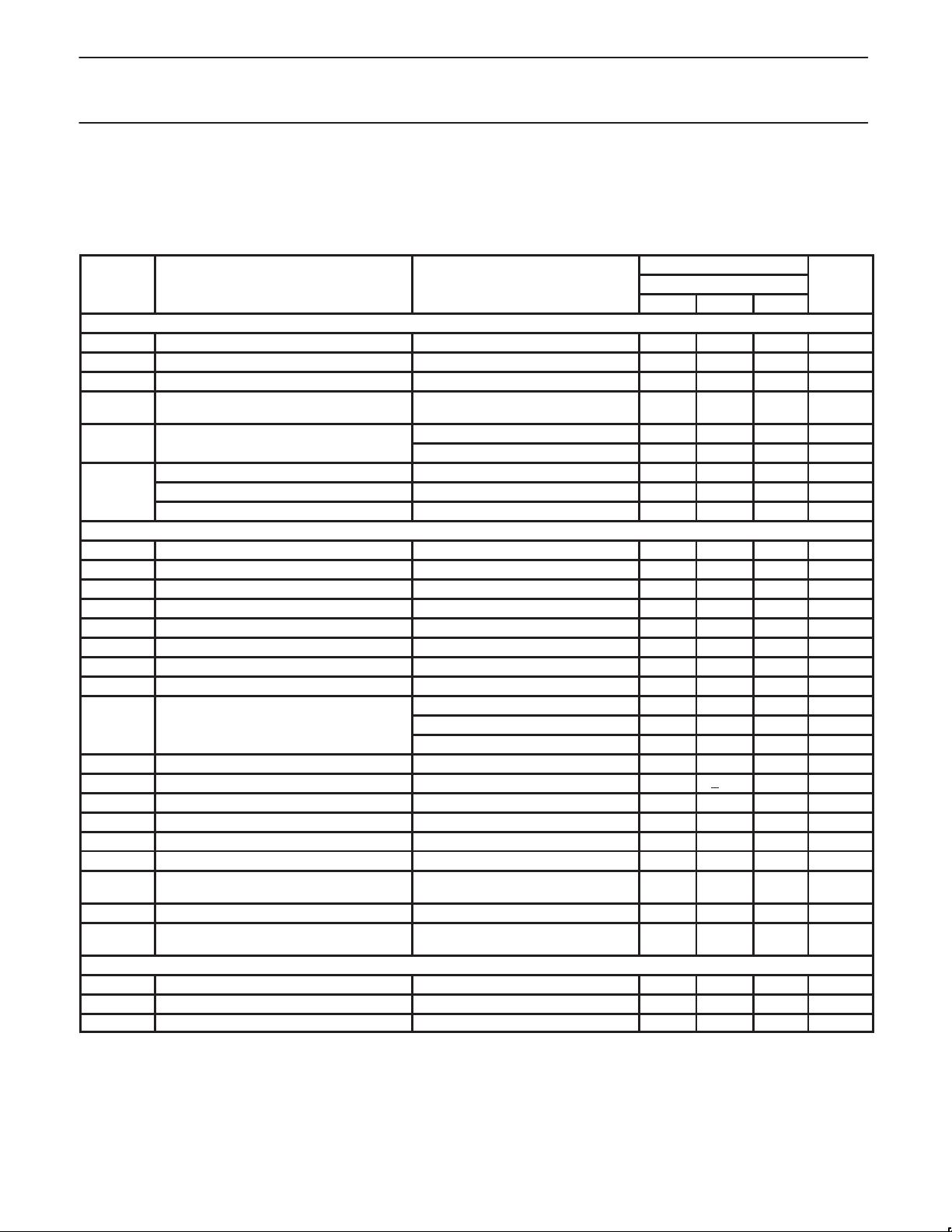
DC ELECTRICAL CHARACTERISTICS
VCC = +3V, TA = 25°C; unless otherwise stated.
LIMITS
SYMBOL PARAMETER TEST CONDITIONS SA607 UNITS
MIN TYP MAX
V
CC
I
CC
Power supply voltage range 2.7 7.0 V
DC current drain 3.5 4.2 mA
1997 Nov 07
3
Page 4
Philips Semiconductors Product specification
SA607Low voltage high performance mixer FM IF system
AC ELECTRICAL CHARACTERISTICS
TA = 25°C; VCC = +3V, unless otherwise stated. RF frequency = 45MHz + 14.5dBV RF input step-up; IF frequency = 455kHz; R17 = 2.4k; R18
= 3.3k; RF level = –45dBm; FM modulation = 1kHz with ±8kHz peak deviation. Audio output with de-emphasis filter and C-message weighted
filter. Test circuit 3. The parameters listed below are tested using automatic test equipment to assure consistent electrical characterristics. The
limits do not represent the ultimate performance limits of the device. Use of an optimized RF layout will improve many of the listed parameters.
LIMITS
SYMBOL PARAMETER TEST CONDITIONS SA607 UNITS
MIN TYP MAX
Mixer/Osc section (ext LO = 220mV
f
OSC
f
IN
Input signal frequency 150 MHz
Crystal oscillator frequency 150 MHz
Noise figure at 45MHz 6.2 dB
Third–order input intercept point (50Ω
source)
Conversion power gain Matched 14.5dBV step–up 13.5 17 19.5 dB
RF input resistance Single–ended input 8 kΩ
RF input capacitance 3.0 4.0 pF
Mixer output resistance (Pin 20) 1.25 1.5 kΩ
IF section
IF amp gain 50Ω source 44 dB
Limiter gain 50Ω source 58 dB
Input limiting –3dB, R17 = 2.4k Test at Pin 18 –109 dBm
AM rejection 80% AM 1kHz 45 dB
Audio level Gain of two (2kΩ AC load) 70 120 160 mV
SINAD sensitivity RF level –110dB 17 dB
THD Total harmonic distortion –35 –50 dB
S/N Signal–to–noise ratio No modulation for noise 62 dB
IF RSSI output, R9 = 2kΩ
RSSI range 90 dB
RSSI accuracy +1.5 dB
IF input impedance 1.3 1.5 kΩ
IF output impedance 0.3 kΩ
Limiter input impedance 1.30 1.5 kΩ
Limiter output impedance (Pin 11) 200 Ω
Limiter output level
Frequency check/limiter output impedance (Pin 9) 200 Ω
Frequency check/limiter output level
RF/IF section (int LO)
Audio level 3V = VCC, RF level = –27dBm 120 mV
System RSSI output 3V = VCC, RF level = –27dBm 2.2 V
System SINAD sensitivity RF level = –117dBm 12 dB
NOTE:
1. The generator source impedance is 50Ω, but the SA607 input impedance at Pin 18 is 1500Ω. As a result, IF level refers to the actual signal
that enters the SA607 input (Pin 18) which is about 21dB less than the “available power” at the generator.
RMS
1
)
f1 = 45.0; f2 = 45.06MHz
Input RF Level = –52dBm
–9 dBm
50Ω source +2.5 dB
IF level = –118dBm 0.3 0.8 V
IF level = –68dBm .70 1.1 1.80 V
IF level = –23dBm 1.2 1.8 2.5 V
(Pin 11) No load
5kΩ load
(Pin 9) No load
5kΩ load
130
115
130
115
mV
mV
RMS
RMS
RMS
1997 Nov 07
4
Page 5

Philips Semiconductors Product specification
SA607Low voltage high performance mixer FM IF system
CIRCUIT DESCRIPTION
The SA607 is an IF signal processing system suitable for second IF
systems with input frequency as high as 150MHz. The bandwidth of
the IF amplifier and limiter is at least 2MHz with 90dB of gain. The
gain/bandwidth distribution is optimized for 455kHz, 1.5kΩ source
applications. The overall system is well-suited to battery operation
as well as high performance and high quality products of all types.
The input stage is a Gilbert cell mixer with oscillator. Typical mixer
characteristics include a noise figure of 6.2dB, conversion gain of
17dB, and input third-order intercept of –9dBm. The oscillator will
operate in excess of 200MHz in L/C tank configurations. Hartley or
Colpitts circuits can be used up to 100MHz for xtal configurations.
Butler oscillators are recommended for xtal configurations up to
150MHz.
The output impedance of the mixer is a 1.5kΩ resistor permitting
direct connection to a 455kHz ceramic filter. The input resistance of
the limiting IF amplifiers is also 1.5kΩ. With most 455kHz ceramic
filters and many crystal filters, no impedance matching network is
necessary. The IF amplifier has 43dB of gain and 5.5MHz
bandwidth. The IF limiter has 60dB of gain and 4.5MHz bandwidth.
To achieve optimum linearity of the log signal strength indicator,
there must be a 12dB(v) insertion loss between the first and second
IF stages. If the IF filter or interstage network does not cause
12dB(v) insertion loss, a fixed or variable resistor or an L pad for
simultaneous loss and impedance matching can be added between
the first IF output (Pin 16) and the interstage network. The overall
gain will then be 90dB with 2MHz bandwidth.
The signal from the second limiting amplifier goes to a Gilbert cell
quadrature detector . One port of the Gilbert cell is internally driven
by the IF. The other output of the IF is AC-coupled to a tuned
quadrature network. This signal, which now has a 90
relationship to the internal signal, drives the other port of the
multiplier cell.
The demodulated output of the quadrature drives an internal op
amp. This op amp can be configured as a unity gain buffer, or for
simultaneous gain, filtering, and 2nd-order temperature
compensation if needed. It can drive an AC load as low as 5kΩ with
a rail-to-rail output.
A log signal strength completes the circuitry. The output range is
greater than 90dB and is temperature compensated. This log signal
strength indicator exceeds the criteria for AMPs or TACs cellular
telephone. This signal is buffered through an internal unity gain op
amp. The frequency check pin provides a buffered limiter output.
This is useful for implementing an AFC (Automatic Frequency
Check) function. This same output can also be used in conjunction
with limiter output (Pin 11) for demodulating FSK (Frequency Shift
Keying) data. Both pins are of the same amplitude, but 180° out of
phase.
NOTE: Limiter output or Frequency Check output has drive
capability of a load minimum of 2kΩ or higher to obtain 115mV
output level.
NOTE: dB(v) = 20log V
OUT/VIN
° phase
1997 Nov 07
5
Page 6
Philips Semiconductors Product specification
SA607Low voltage high performance mixer FM IF system
–25dB,
1500/50
50.5
3880
Ω PAD
SW9
–10dB,
50/50
Ω PAD
96.5
2430
32.6
C24 C22
FLT1
C23
929/50
71.5
SW8
C21
20 19 18 17 16 15 14
IF
AMP
MIXER
OSCILLATOR
C4
C5
EXT.
LOC
OSC
44.545
SW3 SW4SW1
C8
C7
L2
R6
178
R7
30.5
X1
C6
45.06
MHZ
C1
L1
C2
R4
51.1
SW2
R1
C3
R2
R3
45MHZ
MINI–CIRCUIT ZSC2–1B
Automatic Test Circuit Component List
100pF NPO Ceramic
C1
390pF NPO Ceramic
C2
C5
100nF +
22pF NPO Ceramic
C6
1nF Ceramic
C7
10.0pF NPO Ceramic
C8
C9
100nF +
C10
10
C12
2.2µF
C14
100nF +
10pF NPO Ceramic
C15
C17
100nF +10% Monolithic Ceramic
C18
100nF +
C21
C23
C25
*NOTE: This value can be reduced when a battery is the power source.
10% Monolithic Ceramic
10% Monolithic Ceramic
µF Tantalum (minimum) *
10% Monolithic Ceramic
10% Monolithic Ceramic
10% Monolithic Ceramic
100nF +
100nF +
100nF +
10% Monolithic Ceramic
10% Monolithic Ceramic
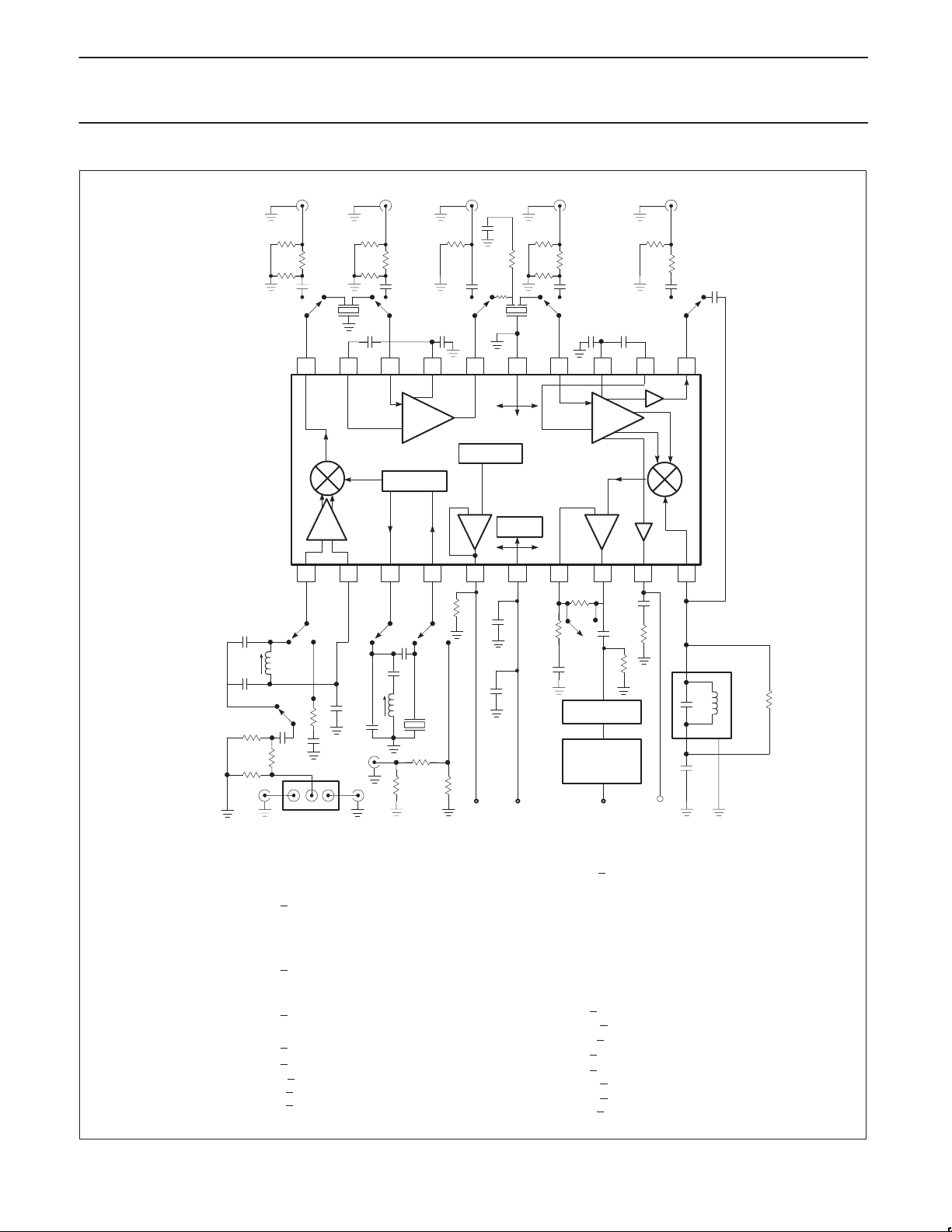
Figure 3. SA607 45MHz Test Circuit (Relays as shown)
–29dB,
Ω PAD
51.5
C20
SW7
–
R9
R8
39.2
RSSI
+
C26
R18
3.3k
R17
2.4k
C9
C10
V
REG
V
CC
IFT 1
50/50
FLT2
C26
C27
Flt 1
Flt 2
R10
R11
R12
R14
R17
R18
R19
–10.6dB,
Ω PAD
96.5
71.5
32.8
C19
SW6 SW5
C18
156k/50
C17
–36dB,
51.7
Ω PAD
1.3k
C16
C15
13 12 11
LIMITER
QUAD
+
–
AUDIO
10987654321
C26
R11
R10
SW10
C27
DEEMPHASIS
”C” WEIGHTED
MEASUREMENT
C12
FILTER
AUDIO
CIRCUIT
AUDIO
R14
R12
FREQ
CHECK
C14
0.1µF +10% Monolithic Ceramic
2.2µF
Ceramic Filter Murata SFG455A3 or equiv
Ceramic Filter Murata SFG455A3 or equiv
455kHz (Ce = 180pF) Toko RMC–2A6597H
L1
147–160nH Coilcraft UNI–10/142–04J08S
L2
µH nominal
0.8
Toko 292CNS–T1038Z
X1
44.545MHz Crystal ICM4712701
R9
2kΩ +
1% 1/4W Metal Film
8.2kΩ +
1%
10kΩ +1%
2kΩ +
1%
5kΩ +
1%
2.4kΩ +
5% 1/4W Carbon Composition
3.3kΩ +
5% 1/4W Carbon Composition
16kΩ +5% 1/4W Carbon Composition
IFT1
16k
R19
SR00389
1997 Nov 07
6
Page 7

Philips Semiconductors Product specification
SA607Low voltage high performance mixer FM IF system
C26
R18
3.3k
R17
2.4k
C15
45MHz
INPUT
FLT1
C23
C21
20 19 18 17 16 14 13 12 11
IF
AMP
MIXER
OSCILLATOR
RSSI
+
–
15
V
REG
FLT2
C18
–
5 9
R11
C1
C8
L1
C2
C5
C6
C7
L2
X1
C9
C10
R10
C27
C17
LIMITER
QUAD
+
AUDIO
C12
108764321
C19
R19
IFT1
11k
390pF
Application Component List
51pF NPO Ceramic
C1
220pF NPO Ceramic
C2
C5
100nF +
5-30pF trim cap
C6
1nF Ceramic
C7
10.0pF NPO Ceramic
C8
C9
100nF +
C10
10
C12
2.2µF +10% Tantalum
C14
100nF +
10pF NPO Ceramic
C15
C17
100nF +
C18
100nF +10% Monolithic Ceramic
C19
C21
*NOTE: This value can be reduced when a battery is the power source.
10% Monolithic Ceramic
10% Monolithic Ceramic
µF Tantalum (minimum) *
10% Monolithic Ceramic
10% Monolithic Ceramic
390pF +
100nF +
10% Monolithic Ceramic
10% Monolithic Ceramic
Figure 4. SA607 45MHz Application Circuit
RSSI
OUTPUT
SA607D/DK
V
CC
C23
C26
C27
Flt 1
Flt 2
IFT 1
L1
L2
X1
R5
R10
R11
R17
R18
R19
C14
AUDIO
FREQ
CHECK
100nF +
10% Monolithic Ceramic
100nF +
10% Monolithic Ceramic
2.2µF Tantalum
Ceramic Filter Murata SFG455A3 or equiv
Ceramic Filter Murata SFG455A3 or equiv
330
µH TOKO 303LN-1130
µH TOKO SCB-1320Z
.33
µH Coilcraft 1008C S-122
1.2
44.545MHz Crystal Hy–Q
Not Used in Application Board (see Note 8, pg 8)
5% 1/4W Carbon Composition
8.2k +
10k +5% 1/4W Carbon Composition
5% 1/4W Carbon Composition
2.4k +
5% 1/4W Carbon Composition
3.3k +
11k +
5% 1/4W Carbon Composition
SR00390
1997 Nov 07
7
Page 8

Philips Semiconductors Product specification
SA607Low voltage high performance mixer FM IF system
RF GENERATOR
45MHz
V
(+3)
CC
DC VOLTMETER
SCOPE
Figure 5. SA607 Application Circuit Test Set Up
NOTES:
1. C-message: The C-message and de-emphasis filter combination has a peak gain of 10 for accurate measurements. Without the gain, the
measurements may be affected by the noise of the scope and HP339 analyzer. The de-emphasis filter has a fixed -6dB/Octave slope
between 300Hz and 3kHz.
2. Ceramic filters: The ceramic filters can be 30kHz SFG455A3s made by Murata which have 30kHz IF bandwidth (they come in blue), or
16kHz CFU455Ds, also made by Murata (they come in black). All of our specifications and testing are done with the more wideband filter.
3. RF generator: Set your RF generator at 45.000MHz, use a 1kHz modulation frequency and a 6kHz deviation if you use 16kHz filters, or
8kHz if you use 30kHz filters.
4. Sensitivity: The measured typical sensitivity for 12dB SINAD should be 0.35µV or –116dBm at the RF input.
5. Layout: The layout is very critical in the performance of the receiver. We highly recommend our demo board layout.
6. RSSI: The smallest RSSI voltage (i.e., when no RF input is present and the input is terminated) is a measure of the quality of the layout and
design. If the lowest RSSI voltage is 500mV or higher, it means the receiver is in regenerative mode. In that case, the receiver sensitivity
will be worse than expected.
7. Supply bypass and shielding: All of the inductors, the quad tank, and their shield must be grounded. A 10-15µF or higher value tantalum
capacitor on the supply line is essential. A low frequency ESR screening test on this capacitor will ensure consistent good sensitivity in
production. A 0.1µF bypass capacitor on the supply pin, and grounded near the 44.545MHz oscillator improves sensitivity by 2-3dB.
8. R5 can be used to bias the oscillator transistor at a higher current for operation above 45MHz. Recommended value is 22kΩ, but should not
be below 10kΩ.
SA607 DEMO-BOARD
RSSI AUDIO
DE-EMPHASIS
FILTER
C–MESSAGE
HP339A DISTORTION
ANALYZER
SR00391
1997 Nov 07
8
Page 9

Philips Semiconductors Product specification
SA607Low voltage high performance mixer FM IF system
mA
6
5
4
V
= 7V
CC
V
= 5V
CC
= 3V
V
CC
3
2
–55 –35 –15 5 25 45 65 85 105 125
V
= 2.7V
CC
Figure 6. ICC vs Temperature
–8.0
–8.5
–9.0
–9.5
–10.0
–10.5
–11.0
–11.5
–12.0
50 INPUT INTERCEPT POINT (dBm)Ω
–12.5
–13.0
–13.5
–14.0
–40 –30 –20 –10 0 10 20 30 40 50 60 70 80
2.7V
7V
3V
Temperature (°C)
Figure 7. Third Order Intercept Point vs Supply Voltage
°C
SR00392
SR00393
1997 Nov 07
9
Page 10

Philips Semiconductors Product specification
SA607Low voltage high performance mixer FM IF system
8.00
7.75
7.50
7.25
7.00
6.75
6.50
6.25
NOISE FIGURE
6.00
5.75
5.50
5.25
5.00
–40 –30 –20 –10 0 10 20 30 40 50 60 70 80
TEMPERATURE (°C)
Figure 8. Mixer Noise Figure vs Supply Voltage
7.0V
3V
2.7V
SR00394
18.00
17.75
17.50
3V
17.25
17.00
16.75
CONVERSION GAIN (dB)
16.50
16.25
16.00
–40 –30 –20 –10 0 10 20 30 40 50 60 70 80
7.0V
TEMPERATURE (°C)
2.7V
Figure 9. Conversion Gain vs Supply Voltage
SR00395
1997 Nov 07
10
Page 11

Philips Semiconductors Product specification
SA607Low voltage high performance mixer FM IF system
20
10
0
RF = 45MHz
IF = 455kHz
–10
–20
–30
*50Ω INPUT
FUND PRODUCT
–40
IF OUTPUT POWER (–dBm)
–50
–60
–70
–80
–66 –56 –46 –36 –26 –16 –6 4 14 24 34
3rd ORDER PRODUCT
RF* INPUT LEVEL (dBm)
Figure 10. Mixer Third Order Intercept and Compression
SR00396
1997 Nov 07
11
Page 12

Philips Semiconductors Product specification
SA607Low voltage high performance mixer FM IF system
5
0
–5
–10
–15
–20
–25
–30
–35
DECIBELS (dB)
–40
–45
–50
–55
–60
–65
–125 –115 –105 –95 –85 –75 –65 –55 –45 –35 –25
AM REJECTION
AUDIO
RF LEVEL (dBm)
VCC = 3V
RF = 45MHz
DEVIATION = ±8kHz
AUDIO LEVEL = 104.9mV
NOISE
RMS
THD + NOISE
Figure 11. Sensitivity vs RF Level (–40°C)
SR00397
5
0
–5
–10
–20
–25
–30
DECIBELS (dB)
–35
–40
–45
–50
–55
–60
–65
–125 –115 –105 –95 –85 –75 –65 –55 –45 –35 –25
AM REJECTION
AUDIO
RF LEVEL (dBm)
VCC = 3V
RF = 45MHz
DEVIATION = ±8kHz
AUDIO LEVEL = 117.6mV
NOISE
RMS
THD + NOISE
Figure 12. Sensitivity vs RF Level (+25°C)
SR00398
1997 Nov 07
12
Page 13

Philips Semiconductors Product specification
SA607Low voltage high performance mixer FM IF system
5
0
–5
–10
–15
–20
–25
–30
DECIBELS (dB)
–35
–40
–45
–50
–55
–60
–65
–125 –115 –105 –95 –85 –75 –65 –55 –45 –35 –25
AM REJECTION
AUDIO
RF LEVEL (dBm)
VCC = 3V
RF = 45MHz
DEVIATION = ±8kHz
AUDIO LEVEL = 127mV
NOISE
RMS
THD + NOISE
Figure 13. Sensitivity vs RF Level (Temperature 85°C)
SR00399
5
0
–5
–10
–15
–20
–25
–30
DECIBELS (dB)
–35
–40
–45
–50
–55
–60
–65
–55 –35 –15 5 25 45 65 85 105 125
AUDIO
TEMPERATURE (°C)
VCC = 3V
RF = 45MHz
RF LEVEL = –45dBm
DEVIATION = ±8kHz
AUDIO LEVEL = +117.6mV
DISTORTION
AM REJECTION
NOISE
RMS
Figure 14. Relative Audio Level, Distortion, AM Rejection and Noise vs Temperature
SR00400
1997 Nov 07
13
Page 14

Philips Semiconductors Product specification
SA607Low voltage high performance mixer FM IF system
2.400
2.000
+85°C
1.600
ROOM
1.200
VOLTAGE (V)
0.800
0.400
–40°C
0.000
–95 –85 –75 –65 –55 –45 –35 –25 –15 –5 5
IF LEVEL (dBm)
Figure 15. RSSI (455kHz IF @ 3V)
2.1
2.0
1.9
1.8
1.7
1.6
1.5
1.4
1.3
1.2
VOLTAGE (V)
1.1
1.0
0.9
0.8
0.7
0.6
0.5
0.4
0.3
–125 –115 –105 –95 –85 –75 –65 –55 –45 –35 –25
RF LEVEL (dBm)
+85°C
+27°C
–40°C
Figure 16. RSSI vs RF Level and Temperature - VCC = 3V
SR00401
SR00402
1997 Nov 07
14
Page 15

Philips Semiconductors Product specification
SA607Low voltage high performance mixer FM IF system
V
300
V
= 7V
CC
V
= 5V
CC
V
= 3V
CC
RMS
mV
250
200
150
100
50
0
–55 –35 –15 5 25 45 65 85 105 125
VCC = 2.7V
Figure 17. Audio Output vs Temperature
°C
SR00403
1997 Nov 07
15
Page 16

Philips Semiconductors Product specification
SA607Low voltage high performance mixer FM IF system
607 Silk Screen
607 TOP
607 BOTTOM
NOTE;
All views are TOP VIEW and
not actual size. For reference only.
SR00404
Figure 18.
1997 Nov 07
16
Page 17

Philips Semiconductors Product specification
SA607Low voltage high performance FM IF system
SO20: plastic small outline package; 20 leads; body width 7.5 mm SOT163-1
1997 Nov 07
17
Page 18

Philips Semiconductors Product specification
SA607Low voltage high performance FM IF system
SSOP20: plastic shrink small outline package; 20 leads; body width 4.4 mm SOT266-1
1997 Nov 07
18
Page 19

Philips Semiconductors Product specification
SA607Low voltage high performance FM IF system
DEFINITIONS
Data Sheet Identification Product Status Definition
Objective Specification
Preliminary Specification
Product Specification
Formative or in Design
Preproduction Product
Full Production
Philips Semiconductors and Philips Electronics North America Corporation reserve the right to make changes, without notice, in the products,
including circuits, standard cells, and/or software, described or contained herein in order to improve design and/or performance. Philips
Semiconductors assumes no responsibility or liability for the use of any of these products, conveys no license or title under any patent, copyright,
or mask work right to these products, and makes no representations or warranties that these products are free from patent, copyright, or mask
work right infringement, unless otherwise specified. Applications that are described herein for any of these products are for illustrative purposes
only. Philips Semiconductors makes no representation or warranty that such applications will be suitable for the specified use without further testing
or modification.
LIFE SUPPORT APPLICA TIONS
Philips Semiconductors and Philips Electronics North America Corporation Products are not designed for use in life support appliances, devices,
or systems where malfunction of a Philips Semiconductors and Philips Electronics North America Corporation Product can reasonably be expected
to result in a personal injury. Philips Semiconductors and Philips Electronics North America Corporation customers using or selling Philips
Semiconductors and Philips Electronics North America Corporation Products for use in such applications do so at their own risk and agree to fully
indemnify Philips Semiconductors and Philips Electronics North America Corporation for any damages resulting from such improper use or sale.
Philips Semiconductors
811 East Arques Avenue
P.O. Box 3409
Sunnyvale, California 94088–3409
Telephone 800-234-7381
This data sheet contains the design target or goal specifications for product development. Specifications
may change in any manner without notice.
This data sheet contains preliminary data, and supplementary data will be published at a later date. Philips
Semiconductors reserves the right to make changes at any time without notice in order to improve design
and supply the best possible product.
This data sheet contains Final Specifications. Philips Semiconductors reserves the right to make changes
at any time without notice, in order to improve design and supply the best possible product.
Copyright Philips Electronics North America Corporation 1997
All rights reserved. Printed in U.S.A.
1997 Nov 07
19
 Loading...