

Page 1
Low Power-Loss Voltage Regulators
PQ7DV10
Variable Output, (1.5 to 7V) 10A Output Low Power-loss Voltage Regulator
PQ7DV10
■ Feature
¡10A output type
¡Low power-loss (Dropout voltage : MAX.0.5V at Io=
10A)
¡Variable output type (1.5 to 7V)
¡Low operating voltage (Minimum input voltage : 3.0V)
¡High-precision reference voltage type
(Reference voltage precision : ±2.0%)
¡TO-3P package
¡Built-in ON/OFF control function
¡Built-in overcurrent protection, overheat protection
function
■ Applications
¡Power supplies for various electronic equipment such as
personal computers
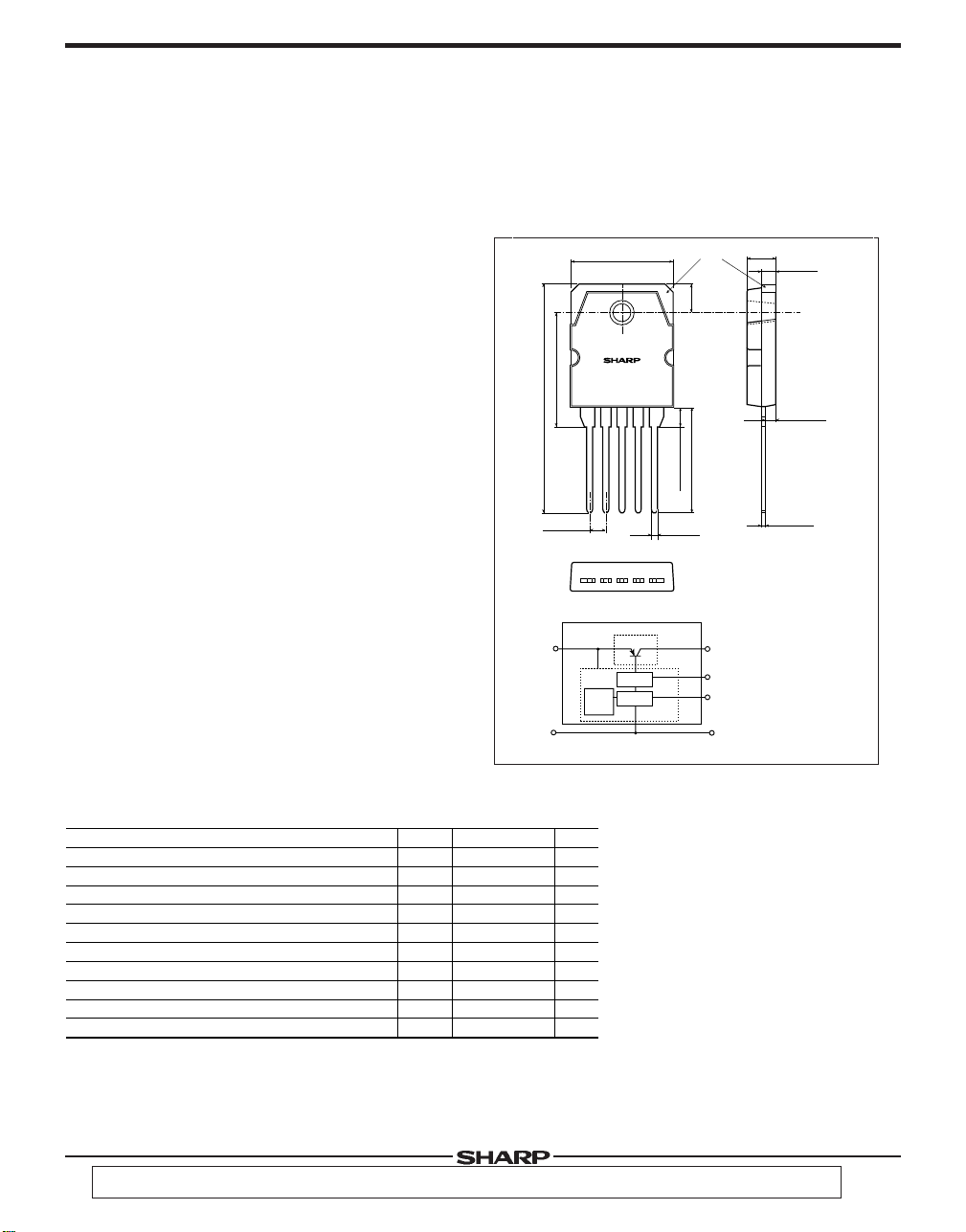
■ Outline Dimensions
17.0MAX
PQ7DV10
19±0.5
39.0MAX
4-(2.54)
1
12345
IC
chip
Reference
voltage
5-0.8±0.2
PNP Tr chip
Controller
Comparator
5±0.2
3.7MAX
6
17.0MIN
1 DC input (VIN)
2,6 DC output (V
2
6
3 GND
4 ON/OFF control
terminal (V
4
5 Output voltage minute
adjustment terminal (V
5
3
4.5±0.2
(Unit : mm)
2.0±0.2
(1.4)
(0.6)
O
)
C
)
ADJ
)
■ Absolute Maximum Ratings
*1
Input voltage
*1
ON/OFF control terminal voltage
*1
Output adjustment terminal voltage
Output current
Power dissipation (No heat sink)
Power dissipation (With infinite heat sink)
*2
Junction temperature
Operating temperature
Storage temperature
Soldering temperature
*1
All are open except GND and applicable terminals.
*2
Overheat protection may operate at 125=<T
“ In the absence of confirmation by device specification sheets,SHARP takes no responsibility for any defects that may occur in equipment using any SHARP devices
shown in catalogs,data books,etc.Contact SHARP in order to obtain the latest version of the device specification sheets before using any SHARP's device. ”
Parameter Symbol Rating Unit
V
IN
V
C
V
ADJ
I
O
P
D1
P
D2
T
j
T
opr
-20 to +80
T
stg
-40 to +150
T
sol
260 (For 10s)
j
=<150˚C.
(Ta=25˚C)
10
10
5
10
2.2
60
150
V
V
V
A
W
W
˚C
˚C
˚C
˚C
· Please refer to the chapter“ Handling Precautions ”.
Page 2
Low Power-Loss Voltage Regulators
PQ7DV10
■ Electrical Characteristics
(Unless otherwise specified, conditions shall be V IN=5V, Io=5A, Vo=3V(R1=2kΩ) Ta=25˚C)
Parameter Symbol Conditions
Input voltage
Reference voltage
Reference voltage
Load regulation
Line regulation
Temperature coefficient of output voltage
Ripple rejection
Dropout voltage
*3
ON-state voltage for control
ON-state current for control
OFF-state voltage for control
OFF-state current for control
Quiescent current
*3
In case of opening control terminal 4,output voltage turns on.
RegL
R
T
V
V
I
C (ON)
V
C (OFF)
I
C (OFF)
V
IN
V
O
V
ref
eg
CVO
RR
i
-o
C (ON)
I
q
I
O
=5mA to 10A
I
IN
=4 to 10V
V
j
=0 to 125˚C
T
IN
=3V, Io=10A
V
C
=2.7V
V
C
=0.4V
V
O
=0A
I
-
-
-
-
-
-
3
1.5
1.225
-
-
-
45
2
-
-
-
-
-
-
1.25
0.5
0.5
±0.01
55
-
-
-
-
-
-
1.275
- 40
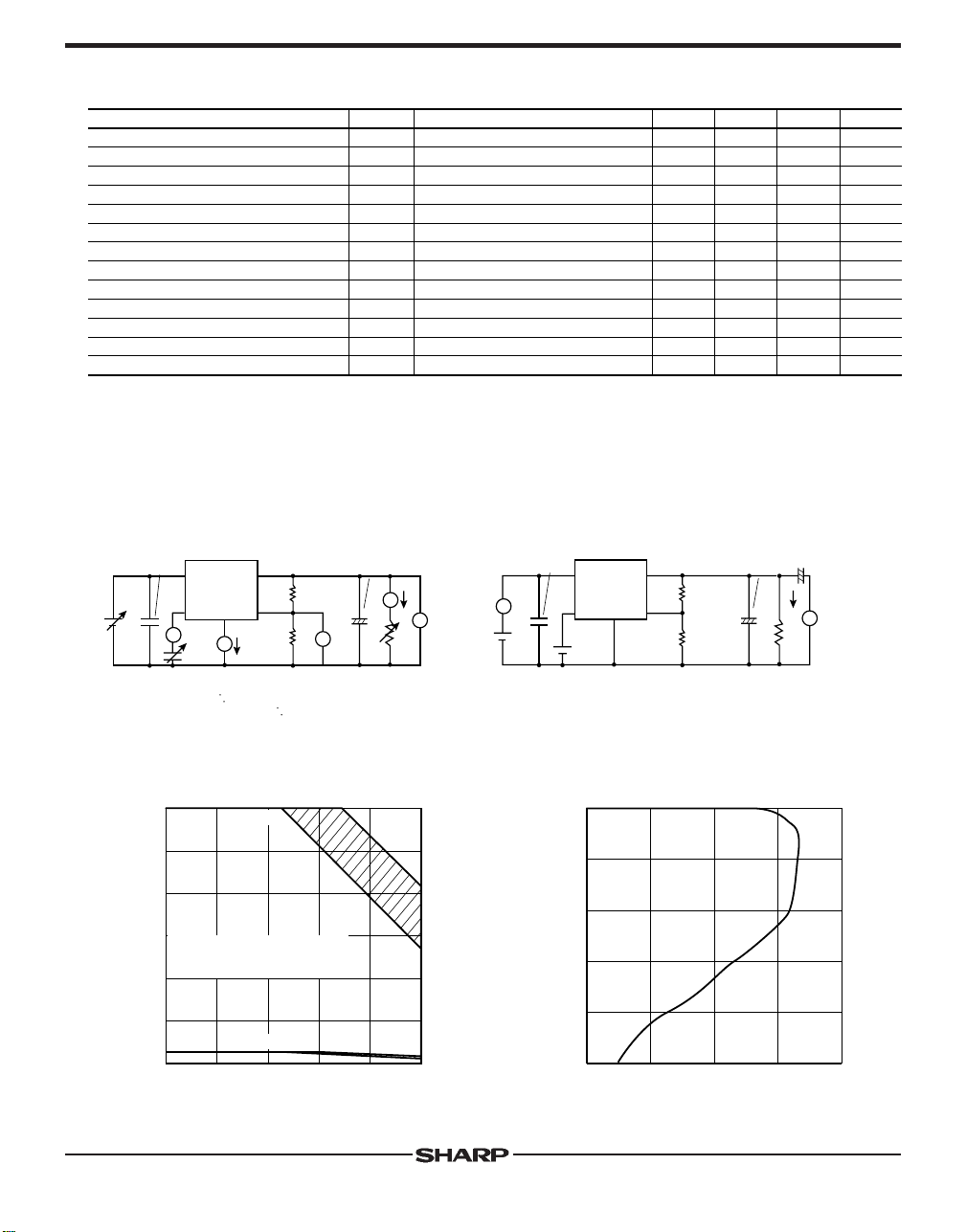
Fig.1 Test Circuit Fig.2 Test Circuit for Ripple Rejection
VIN
0.33µF
VC
VO
●2●1
R2
●4
●3
A
A
●5
Iq 2kΩ
Vref
R1
47µF
IO
A
+
V
R
V
L
0.33µF
ei
~
V
IN
●4 ●5
VC
2.7V
●2●1
R2
●3
Vref
R1
2kΩ
47µF
+
+
RL
IO
10
2.5
0.5
20
0.8
17
UnitMAX.TYP.NIN.
V
7
V
V
2
%
%
%/˚C
dB
-
V
-
V
µA
V
mA
mA
eo
V
~
o=Vref X (1+R2/R1)
V
X (1+R2/R1)
=1.25
1=2kΩ,Vref =1.25V]
[R
Fig.3 Power Dissipation vs. Ambient
Temperature
60
50
(W)
D
40
30
PD1 :No heat sink
P
D2
20
Power dissipation P
10
0
-20 0
Note) Oblique line portion:Overheat protection may operate
in this area.
P
D2
:With infinite heat sink
D1
P
4020 60 80
Ambient temperature Ta (˚C)
f=120Hz (sine wave)
i=0.5Vrms
e
VIN=5V
O=3V (R1=2kΩ)
V
O=0.5A
I
RR=20 log (e
i/eo)
Fig.4 Overcurrent Protection
Characteristics(Typical Value)
100
80
60
40
20
Relative output voltage (%)
0
0 5 10 15 20
Output current IO (A)
Page 3

Low Power-Loss Voltage Regulators
PQ7DV10
Fig.5 Output Voltage Adjustment
Characteristics
8
8
R
1
=2kΩ
7
7
6
6
(V)
O
5
5
4
4
3
3
2
2
Output voltage V
1
1
0
0
10
2
3
10
2
(Ω)
R
10
Fig.7 Output Voltage vs. Input Voltage
4
a =25˚C
T
VO=3V(R1=2kΩ,R2=2.8kΩ)
3
2
1
Output voltage VO (V)
L=0.6Ω
R
L=∞
R
L=0.3Ω
R
Fig.6 Output Voltage Deviation vs.
Junction Temperature
10
V
IN=5V
8
V
O=3V(R1=2kΩ,R2=2.8kΩ)
I
O=2.5A
6
4
2
0
-2
-4
-6
-8
Output voltage deviation ∆VO (mV)
4
-10
-25 0 25 50 75 100 125
Junction temperature Tj (˚C)
Fig.8 Circuit Operating Current vs. Input
Voltage
160
T
a
=25˚C
O
=3V(R1=2kΩ,R2=2.8kΩ)
V
(mA)
120
BIAS
80
R
L
=0.3Ω
L
=0.6Ω
40
R
0
012345
Input voltage VIN (V)
Fig.9 Dropout Voltage vs. Junction
Temperature
0.5
0.4
(V)
-O
i
0.3
0.2
Dropout voltage V
0.1
0
VO=3V(R1=2kΩ,R2=2.8kΩ)
IN
:Input voltage when output voltage
V
is 95% in comparison with the initial value
-25 0 5025 10075 125
Junction temperature Tj (˚C)
R
L
Circuit operating current I
0
052413
Input voltage V
=∞
IN
(V)
Fig.10 Ripple Rejection vs. Junction
Temperature
100
80
60
40
V
IN
=7V
20
O
=3V(R1=2kΩ,R2=2.8kΩ)
V
Ripple rejection RR (dB)
O
=0.5A,ei=0.5V
I
f=120Hz
0
-25 0 5025 10075 125
Junction temperature Tj (˚C)
rms
Page 4

Low Power-Loss Voltage Regulators
PQ7DV10
Fig.11 Quiescent Current vs. Junction
Temperature
20
IN =5V
V
V
O=3V(R1=2kΩ,R2=2.8kΩ)
I
O =0A
15
10
5
Quiescent current Iq (mA)
0
-25 0 25 50 75 100 125
Junction temperature Tj (˚C)
■ Typical Application
VIN
CIN
●1
●4
●2
R2
●5
●3
R
1
2kΩ
Fig.12 Ripple Rejection vs. Input Ripple
Frequency
100
80
60
40
VIN=5V
20
Ripple rejection RR (dB)
O
=3V(R1=2kΩ,R2=2.8kΩ)
V
Io=0.5A,e
T
0
0.1 101 100
VO
+
CO
Load
i
=0.5V
rms
a
=25˚C
,
Input ripple frequency f
(kHz)
ON/OFF
Signal
High or Open :Output ON
Low :Output OFF
 Loading...