

Page 1

IS489
IS489
Low Voltage Operating Type
High Sensitivity OPIC
Light Detector
■
Features Outline Dimensions
■
1. Low voltage operating type (Vcc : 1.4 to 7.0V)
2. High sensitivity type (E : TYP. 5 lx)
3. Built-in Schmidt trigger circuit
VHL
Internal connection diagram
4. Low level output under incident light
■
Applications
1. Amusement equipment
2. Battery-driven portable equipment
2 - C0.5
3-0.4
* OPIC (Optical IC) is a trademark of the SHARP Corporation. An OPIC consists of
a light-detecting element and signal-processing circuit integrated onto a single chip.
MAX.
1.0
Rugged resin
+ 0.3
- 0.1
1.6
6˚
6˚
1
6˚
(
(
2.54
3.0
1.7
2.8
1.5
)
± 1.0
+ 1.5
16.5
)
6˚
6˚
3
6˚
2
Amp.
- 1.0
18.0
4.0
60˚
3 0.4
3 - 0.4
(
4˚
4˚
1.27
+0.3
- 0.1
(Unit : mm)
3 V
CC
2 V
O
1 GND
1.15
0.75
4˚
R0.5
4˚
0.15
2.6
1.6
3-0.45
1 GND
2 V
O
3 V
CC
+ 0.3
- 0.1
0.3
0.1
)
MAX.
Gate burr
0.3
2- 0.8
1.4
■
Absolute Maximum Ratings
Parameter Symbol Rating
Supply voltage
*1
Output current
*2
Total power dissipation
Operating temperature
Storage temperature
*3
Soldering temperature
*1 Output current vs. ambient temperature : Per Fig. 1
*2 Total power dissipation vs. ambient temperature : Per Fig. 2
*3 For 5 seconds at the position of 1.4 mm from the resin edge
“ In the absence of confirmation by device specification sheets, SHARP takes no responsibility for any defects that occur in equipment using any of SHARP's devices, shown in catalogs,
data books, etc. Contact SHARP in order to obtain the latest version of the device specification sheets before using any SHARP's device.”
V
CC
Io mA
PmW
T
opr
T
stg
T
sol
- 0.5 to + 8
2
80
-25 to + 85
- 40 to +100
260 ˚C
(Ta=25˚C)
Unit
V
˚C
˚C
Page 2
Electro-optical Characteristics
■
Parameter Symbol MIN. TYP. MAX. Unit
Low level output voltage
High level output voltage
Low level supply current
High level supply current
*1
"High →Low"
threshold illuminance
*2
"Low→High"
threshold illuminance
*3
Hysteresis
"High→Low"
propagation delay time
"Low →High"
propagation delay time
Response time
Rise time
Fall time
Peak sensitivity wavelength λ
*1 E represents illuminance by CIE standard light source A (tungsten lamp) when output changes from "high" to "low".
VHL
*2 E represents illuminance by CIE standard light source A (tungsten lamp) when output changes from "low" to "high".
VLH
*3 Hysteresis standards for E /E .
■
Recommended Operating Conditions
VLH VHL
V
OL
V
OH
I
CCL
I
CCH
E
VHL
E
VLH
E
VLH/EVHL
t
PHL
t
PLH
t
r
t
f
P
Conditions
= 1mA,E
I
OL
= 0 lx
E
V
= 50 lx
E
V
= 0 lx
E
V
Ta = 25˚C -
Ta = 25˚C -
Ta = 25˚C -
Ev = 125 lx or equivalent
=3kΩ
R
L
Ta = 25˚C
-
(Ta=25˚C)
(Ta=0 to 70˚C, V =3V unless otherwise specified)
= 50 lx
V
-
-
Parameter Symbol MIN. MAX. Unit
Supply voltage
Output current
V
I
OL
1.4
CC
7.0
-mA
1.0
V
IS489
CC
0.1
- 0.4 V
2.9
-mA
-mA
-
0.6
0.4
0.55
-
-
- 0.1
-
- 900 nm
--V
0.6
0.4
4.8
3.7
0.75
1.3
8.5
1.2
0.5
15
-
22
--
0.95
15
30
lx
lx
µs
3.0
0.06
1.0
-
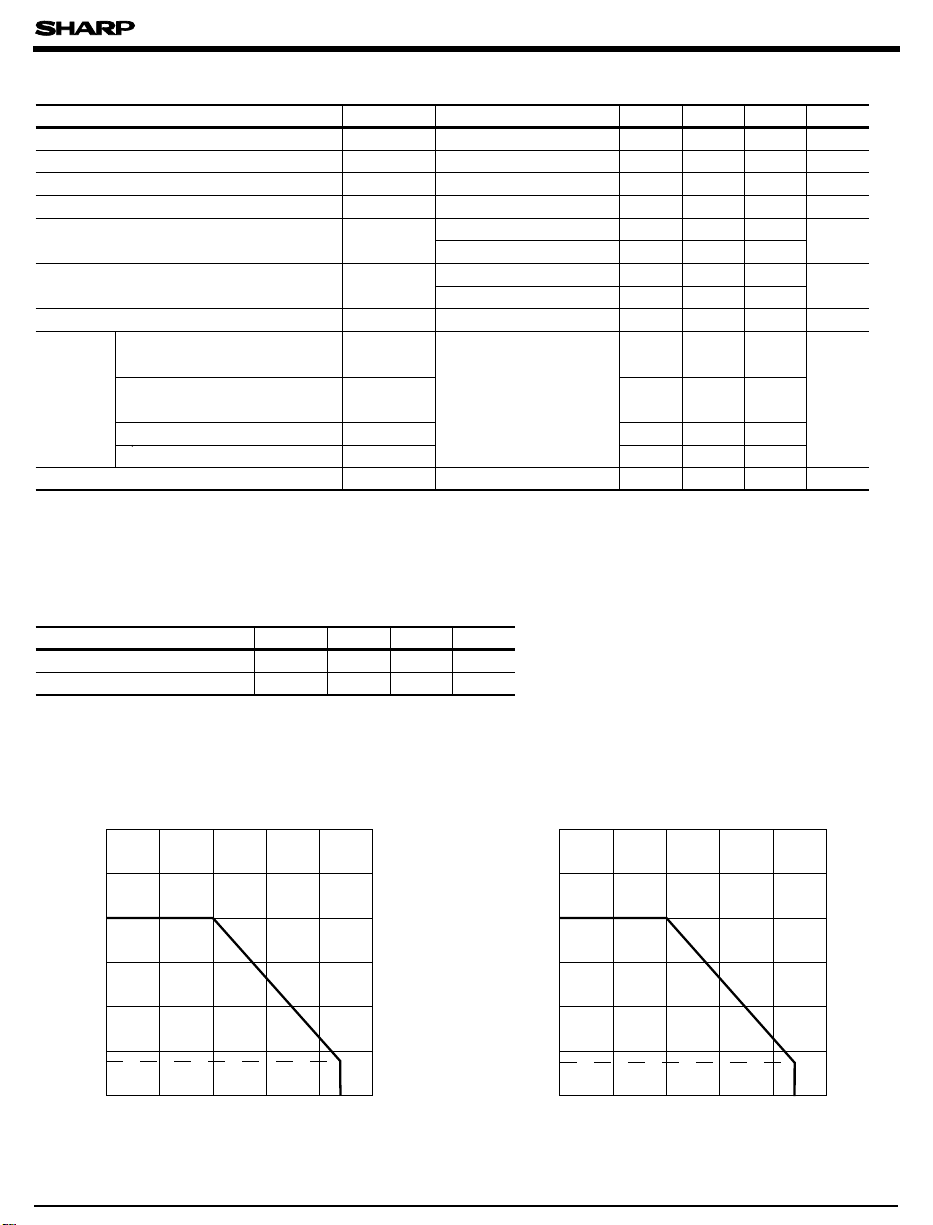
Fig. 1 Output Current vs. Ambient Temperature Fig. 2 Output Power Dissipation vs.
30
2.5
)
mA
2.0
(
OL
1.5
1.0
Output current I
0.5
0.4
0
0 25 10050 75 85-25
Ambient temperature Ta (˚C )
Ambient Temperature
300
100
80
60
40
Total dissipation P (mW)
20
16
0
-25
Ambient temperature Ta (˚C)
857550 100250
Page 3

IS489
Fig. 3 Low Level Output Voltage vs.
Low Level Output Current
1
)
V
(
OL
0.1
Vcc=3V,Ta=25˚C
Ev= 50 lx
Low level output voltage V
0.01
0.1 1 10
Low level output current IOL (mA
)
Fig. 5 Rise, Fall Time vs. Load Resistance
3
2.5
)
µ s
(
2
f
, t
r
1.5
1
Rise, fall time t
0.5
0
0.1
1 2 5 1.0 20 50 100
Load resistance RL (kΩ
Ta=25˚C Vcc=3V
Ev=125 lx or
equivalent
tr
tf
)
Fig. 4 Supply Current vs. Ambient
Temperature
2
)
1.5
mA
(
CC
1
Supply current I
0.5
0
-25
0 255075100
Vcc=8V
Vcc=3V
Ambient temperature Ta (˚C)
Test Circuit for Response Time
Input
= tf= 0.01µs
t
r
Zo= 50Ω
Input
Output
47Ω
t
PHL
Amp.
t
r
15kΩ
t
PLH
ICCL
ICCH
Vcc=3VVcc=8V
= 5V
V
cc
R
L
Output
0.01µF
50%
V
OH
90%
1.5V
10%
t
f
Fig. 6 Radiation Diagram
- 10˚- 20˚
-30˚
-40˚
-50˚
-60˚
-70˚
-80˚
-90˚
0
100
80
60
40
Relative sensitivity (%)
20
0
(Ta=25 ˚C)
+20˚+10˚
+30˚
+40˚
+50˚
+60˚
+70˚
+80˚
+90˚
Angular displacement θ
●
Please refer to the chapter "Precautions for Use". (Page 78 to 93)
Fig. 7 Spectral Sensitivity
100
Ta =25˚C
80
60
40
Relative sensitivity (%)
20
0
400 500 600 700 800 900 1000 1100 1200
Wavelength λ (nm)
 Loading...